The Law Offices of Anidjar and Levine can help injured victims prove fault, preserve evidence, and seek compensation after a drowsy driving crash. These cases may involve crash reports, witness statements, work schedules, medical records, vehicle data, and insurance disputes.
A Daytona Beach Car Accident Lawyer can evaluate fatigue, road conditions, employer responsibility, and comparative negligence while pursuing medical costs, lost income, and pain and suffering.
The sections below explain the key issues, legal rights, and claim options.
Main Takeaways
- A Daytona Beach driver fatigue lawyer investigates crashes, preserves evidence, and works to prove the drowsy driver caused your injuries.
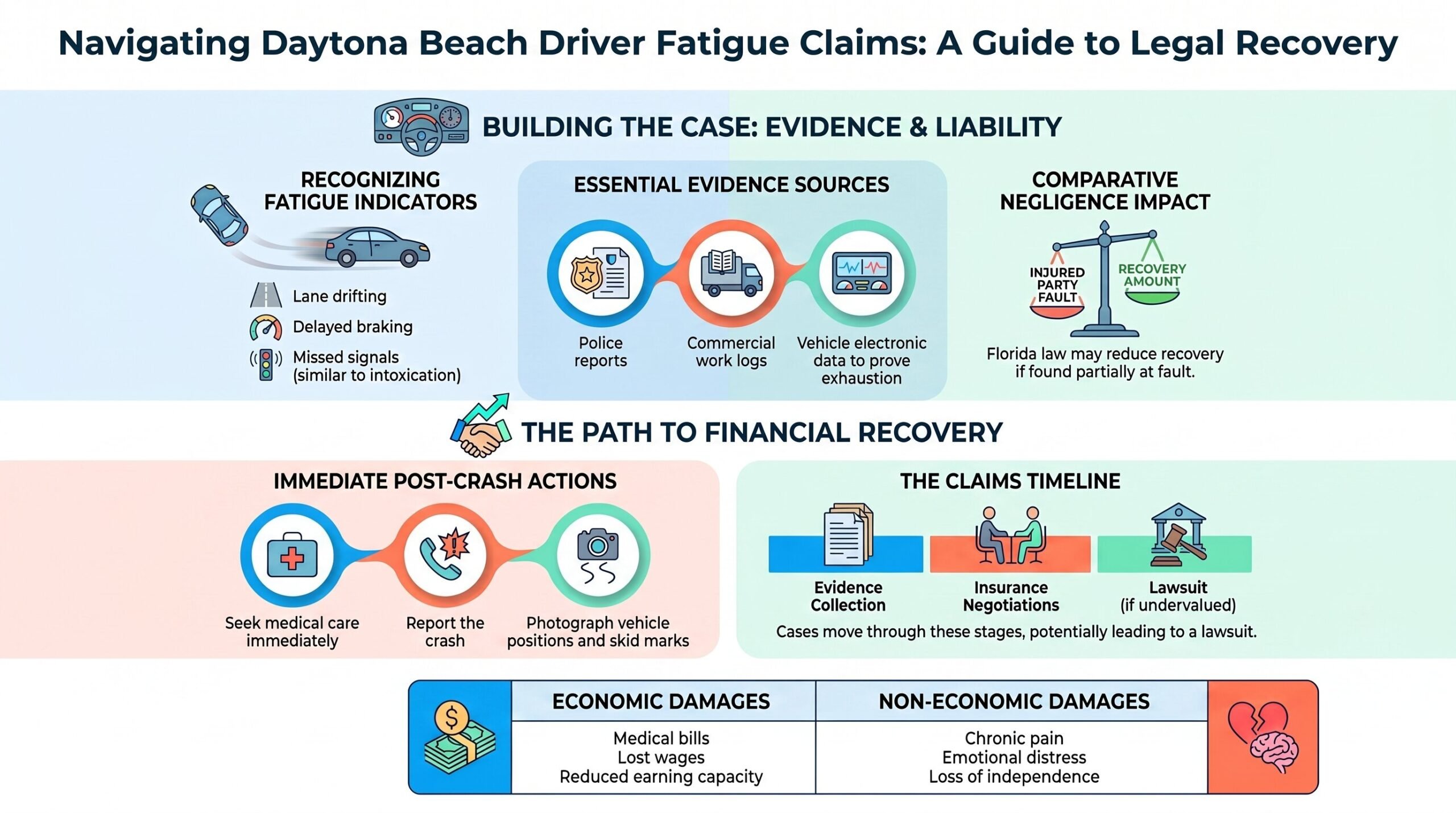
- Evidence may include police reports, witness statements, vehicle data, medical records, work schedules, logs, and dispatch communications.
- Fatigue-related crashes often involve slowed reactions, drifting lanes, delayed braking, missed signals, or failure to notice pedestrians and vehicles.
- Victims may seek compensation for medical bills, lost income, reduced earning ability, pain, suffering, and other crash-related losses.
- Florida comparative negligence, filing deadlines, insurance issues, and possible employer liability make prompt legal guidance important.


How We Can Help With Your Daytona Beach Driver Fatigue Car Accident Injury Claim
When a collision involves a fatigued driver, establishing fault often requires prompt investigation, careful review of the evidence, and a clear understanding of Florida injury law. A Daytona Beach driver fatigue car accident lawyer may assist by gathering crash reports, witness statements, vehicle data, medical records, and work schedules to show that exhaustion contributed to the wreck. This support can help injured people, families, and caregivers pursue accountability while focusing on recovery and continued service to those who depend on them.
Legal counsel may also evaluate whether Faulty Traffic signals, unsafe road conditions, or another contributing factor affected liability. Insurers may attempt to reduce payments, challenge medical treatment, or issue Insurance Denials, making organized documentation crucial. An attorney can prepare demand packages, communicate with adjusters, calculate losses, and pursue litigation when fair resolution is refused. Through structured advocacy, the claim can be presented with accuracy, dignity, and firm attention to the injured person’s needs.
OUR CONSULTATIONSARE FREE
START YOUR FREE CASE REVIEW

Understanding Daytona Beach Driver Fatigue Car Accident Injury Cases
Because fatigue can impair judgment, reaction time, and lane control in ways similar to intoxication, driver fatigue accident cases in Daytona Beach often require close examination of the motorist’s conduct before the crash. These cases may involve passenger vehicles, commercial trucks, delivery vans, or rideshare drivers whose alertness declined while operating near busy coastal roads, intersections, or highways.
An injury claim may focus on whether the driver showed warning signs of exhaustion, ignored safer choices, or experienced blackout moments that reduced control. In commercial vehicle matters, Truck driver rest records, trip logs, electronic data, and dispatch communications may help determine whether fatigue contributed to the collision.
Medical records, crash reports, witness statements, and vehicle damage patterns can also clarify how the impact occurred and how injuries affected the victim’s daily service to family, work, and community. Careful case review supports accountability while helping injured people pursue necessary treatment and financial recovery.
Common Causes of Daytona Beach Driver Fatigue Car Accident
Driver fatigue accidents in Daytona Beach often stem from preventable conditions that impair alertness, reaction time, and judgment. Common causes include lack of sleep, long driving hours, untreated sleep disorders, and medication side effects that may reduce a driver’s ability to operate a vehicle safely. Identifying these factors is important when evaluating liability, the circumstances of the accident, and the full scope of harm caused by fatigued driving.
Lack Of Sleep
Often, lack of sleep is a leading cause of driver fatigue, especially in Daytona Beach where work schedules, tourism activity, and late-night travel can keep motorists on the road while mentally and physically impaired. Drowsy driving may reduce alertness, slow reaction time, and impair judgment, creating serious risks for pedestrians, passengers, and other drivers.
A night-shift employee, hospitality worker, rideshare operator, or commercial driver may experience disrupted sleep patterns that make safe driving difficult. In some cases, a poorly managed водитель расписание can show that an employer ignored predictable fatigue risks. For those committed to serving injured people, these details matter. Sleep deprivation may support claims involving negligence, inadequate supervision, or truck safety violations when a crash results from a driver operating while insufficiently rested.
Long Driving Hours
Extended time behind the wheel can steadily erode a motorist’s attention, coordination, and ability to respond to sudden hazards. In Daytona Beach, long driving hours often affect commercial drivers, rideshare operators, delivery workers, and travelers moving through busy coastal corridors. Fatigue may develop gradually, making it harder for a driver to recognize lane drift, slowed reaction time, or poor speed control. Nighttime driving can increase these risks, especially when visibility is reduced and traffic patterns change.
After a fatigue-related collision, prompt medical attention may help identify injuries that are not immediately apparent. Those who serve injured victims understand that careful review of work schedules, trip duration, rest breaks, and driving records can clarify whether excessive hours contributed to the crash and resulting harm.
Untreated Sleep Disorders
When sleep disorders remain undiagnosed or untreated, a motorist may experience dangerous fatigue even after spending adequate time in bed. Conditions such as sleep apnea can interrupt breathing throughout the night, reducing oxygen levels and preventing restorative sleep. The person may awaken feeling functional, yet still face slowed reaction time, poor judgment, and reduced attention behind the wheel.
These conditions can also create nervous system effects that impair alertness during routine driving tasks. In Daytona Beach traffic, even a brief lapse in focus may endanger passengers, pedestrians, cyclists, and other motorists. Identifying untreated sleep disorders helps explain why a driver appeared exhausted despite normal rest. Careful review of medical history, sleep patterns, and witness observations may clarify whether preventable fatigue contributed to a crash.
Medication Side Effects
Medication side effects may also cause dangerous fatigue, even in drivers who do not have an underlying sleep disorder. Certain antihistamines, pain medications, muscle relaxants, antidepressants, and anxiety medications can slow reaction time, reduce alertness, and impair judgment behind the wheel. Prescription effects may be stronger when a driver begins a new medication, changes dosage, combines medicines, or consumes alcohol.
Responsible drivers are expected to read warning labels, follow physician instructions, and avoid driving when drowsiness, dizziness, or slowed thinking occurs. In Daytona Beach traffic, even brief lapses in attention can place passengers, pedestrians, bicyclists, and other motorists at risk. When medication-related fatigue contributes to a crash, investigators may examine pharmacy records, medical guidance, and driver conduct to determine whether preventable impairment played a role in causing harm.


Legal Rights of Daytona Beach Driver Fatigue Car Accident Injury Victims
Injured occupants, pedestrians, and other roadway users harmed by a fatigued driver in Daytona Beach may have the right to pursue compensation under Florida law. These rights can include claims for medical expenses, lost income, reduced earning capacity, pain and suffering, and other losses resulting from the crash.
Each claim requires careful review of evidence, insurance coverage, and the conduct of all involved parties.
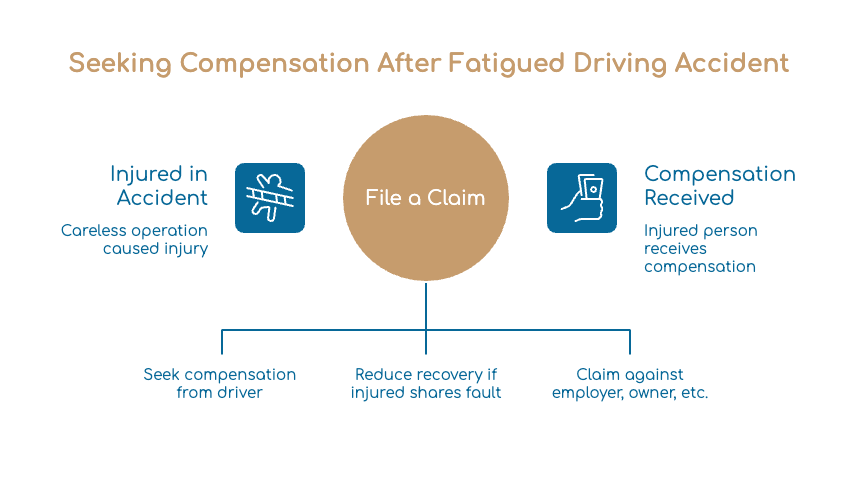
- Victims may file claims against the fatigued driver when careless operation caused injury.
- Florida’s comparative negligence rules may reduce recovery if the injured person shares fault.
- Third-party liability claims may apply when an employer, vehicle owner, or other responsible entity contributed legally.
A service-centered legal review can help preserve dignity, protect access to care, and identify available recovery resources. Timely action is important because filing deadlines, insurance notice requirements, and evidence preservation can affect the ability to obtain fair compensation after a fatigue-related collision.
Why Do Daytona Beach Driver Fatigue Car Accident Injuries Happen?
Often, Daytona Beach driver fatigue car accident injuries happen because tired drivers lose the alertness, judgment, and reaction time needed to respond safely to traffic conditions. Fatigue may result from long shifts, untreated sleep disorders, overnight travel, medication effects, or demanding caregiving and work schedules. On highways serving Daytona Beach, Interstate Fatigue can be especially dangerous because higher speeds leave little time to correct drifting, delayed braking, or missed traffic signals.
Commercial routes and tourism traffic may also involve drivers from other states, creating cross-border liability issues when employment practices, vehicle ownership, or insurance coverage extend beyond Florida. Fatigued drivers may follow too closely, ignore lane boundaries, or fail to notice pedestrians, cyclists, and emergency vehicles.
These collisions often reflect preventable choices and organizational pressures. Understanding these causes helps advocates, families, and community members support safer practices, protect vulnerable road users, and encourage accountability where fatigue contributed to serious harm and loss.
What Should You Do After a Daytona Beach Driver Fatigue Car Accident Injury?
After a Daytona Beach driver fatigue car accident injury, an injured person should seek prompt medical attention, even when symptoms appear minor. The crash should also be reported to law enforcement so that an official record can document the circumstances and the parties involved. Preserving crucial evidence, including photos, witness information, vehicle damage, and medical records, may help support any future injury claim.
Seek Medical Attention
Seek prompt medical care after a Daytona Beach driver-fatigue car accident, even if injuries appear minor at first. A physician can identify concussions, internal trauma, soft tissue damage, or delayed symptoms that may worsen without treatment. Prompt evaluation also creates medical records that connect injuries to the collision, which can support later claims and help caregivers coordinate appropriate assistance.
The injured person should share Emergency contact info with medical providers, especially when pain, confusion, or limited mobility affects communication. Reviewing Insurance coverage basics may also help clarify available benefits for emergency care, follow-up visits, rehabilitation, and prescriptions. Consistent treatment, attendance at appointments, and careful documentation of symptoms demonstrate responsible recovery efforts and assist those providing medical, legal, and practical support after the crash.
Report The Crash
When a Daytona Beach driver fatigue car accident causes injury, the crash should be reported to law enforcement as soon as it is safe to do so. Officers can secure the scene, assist injured persons, and prepare an official crash report that may guide later insurance documentation. A person helping at the scene should remain calm, provide accurate facts, and avoid assigning blame while speaking with police.
If emergency responders are already present, cooperation and clear communication support their efforts to protect everyone involved. The report should include visible injuries, vehicle positions, road conditions, and any known signs of drowsy driving. If Dashcam video is mentioned to officers, it may be noted in the report. Prompt reporting creates a reliable record, which can help injured people seek appropriate support and accountability.
Preserve Key Evidence
Because driver fatigue may not be apparent once the scene is cleared, preserving important evidence as early as possible can be essential after a Daytona Beach car accident. Photographs of vehicle positions, skid marks, debris, road conditions, and visible injuries may help clarify how the crash occurred. Those assisting an injured person should also safeguard medical documentation, repair estimates, and any insurance paperwork received after the collision.
Prompt witness follow-up can preserve details before memories fade, including observations of drifting, delayed braking, or a driver appearing drowsy. Cell phone records, work schedules, delivery logs, and surveillance footage may also support a fatigue-related claim. Filing deadlines should be tracked carefully, as lost time can weaken available remedies and reduce the ability to serve the injured person’s long-term needs.
Critical Evidence in a Daytona Beach Driver Fatigue Car Accident Injury Case
Evidence in a Daytona Beach driver fatigue accident case may determine whether negligence can be clearly established and supported. Primary materials often include:
- Police crash reports and witness statements
- Driver work logs and rest history
- Vehicle data records, including speed and braking information
These records can help identify fatigue-related conduct, confirm timelines, and strengthen an injury claim with objective proof.
Police Crash Reports
After a serious crash, the police crash report is often one of the first records reviewed in a Daytona Beach driver-fatigue car accident injury case. This report may identify drivers, passengers, witnesses, road conditions, citations, vehicle damage, and the officer’s observations at the scene. It can also note statements suggesting drowsiness, delayed reactions, lane departures, or failure to brake.
Although the report is not always admissible in full, it may guide further investigation and help preserve important leads. For those serving injured clients, careful review supports Deposition preparation by clarifying timelines, inconsistencies, and witness issues. It may also shape jury trial strategy, especially when official observations align with medical evidence, photographs, and testimony showing that fatigue contributed to preventable harm. Early analysis promotes accountability.
Driver Work Logs
While police crash reports may identify early signs of fatigue, driver work logs can provide a more detailed record of whether a motorist was operating beyond safe limits before a collision in Daytona Beach. These records may show hours worked, rest periods, shift changes, and delivery or service demands. When reviewed carefully, they can reveal evidence of fatigue that supports an injury claim and helps protect those harmed by unsafe conduct.
In commercial or employer-related cases, logs may also reveal employment negligence, especially when supervisors ignored sleep-deprivation metrics or pressured drivers to continue working. Driver scheduling policies can further reveal whether an organization prioritized efficiency over public safety. Preserving these records quickly is critical, because incomplete or altered logs may weaken accountability and hinder fair recovery.
Vehicle Data Records
In addition to work logs and scheduling records, vehicle data can provide objective insight into how a driver behaved in the moments before a fatigue-related crash in Daytona Beach. Electronic event data may show speed, braking, throttle use, wheel input, and sudden changes in movement. These details can help reveal delayed reactions, drifting, or a failure to slow when conditions required care.
Vehicle inspection results may also identify mechanical concerns that affected stopping distance, visibility, or handling. When reviewed alongside maintenance records, these findings can clarify whether fatigue, equipment issues, or both contributed to the collision. Preserving this evidence quickly is important, because some systems overwrite data. Careful analysis allows injured persons, families, and advocates to pursue accountability with accuracy, dignity, and a commitment to public safety.
Witness Statements
Objective vehicle data can establish how a crash unfolded, but witness statements often explain what was visible before impact and how the driver appeared to others on the road. In a fatigue-related collision in Daytona Beach, bystanders may report drifting, delayed braking, closed eyes, or erratic lane changes. Careful collection of statements preserves these details before memories fade.
Eyewitness credibility is assessed through vantage point, timing, consistency, and any relationship to the parties. When available, video corroboration from dash cameras, traffic cameras, or nearby businesses can strengthen or clarify witness accounts. Witness protection also matters, ensuring individuals are not pressured, intimidated, or discouraged from assisting. For injured people and those who serve them, organized witness testimony can support accountability, promote fair evaluation, and help reveal the human consequences of fatigued driving.
Long-Term Effects of Daytona Beach Driver Fatigue Car Accident Injuries
Driver fatigue crashes in Daytona Beach can leave injured individuals facing long-term complications, including chronic pain that limits mobility and daily function. Cognitive and emotional impacts, such as memory problems, anxiety, or depression, may also affect work, relationships, and overall stability. These lasting injuries often require ongoing medical care, rehabilitation, and careful documentation to establish the full extent of damages.
Chronic Pain Complications
Chronic pain can become one of the most disruptive long-term consequences of a Daytona Beach driver fatigue car accident, especially when injuries affect the spine, joints, nerves, or soft tissues. Persistent pain may limit mobility, reduce work capacity, and interfere with daily acts of service, caregiving, or community support. Medical providers may recommend therapy, injections, medication, or expert care, while related Head injury treatment must also be coordinated when symptoms overlap.
Effective long-term recovery planning considers future appointments, adaptive needs, and the cost of continuing care. For legal claims, careful documentation of damages helps connect ongoing pain to the collision, treatment history, and functional limitations. Practical insurance negotiation tips often include preserving records, following medical advice, and avoiding premature settlement before prognosis is reasonably understood.
Cognitive And Emotional Impacts
The cognitive and emotional effects of a Daytona Beach driver fatigue car accident may persist long after visible injuries begin to recover. Survivors may experience memory problems, reduced concentration, slowed processing, or difficulty making decisions, particularly when a Traumatic Brain injury is involved. These changes can affect employment, caregiving, and the ability to consistently serve family or community responsibilities.
Emotional harm may appear as stress symptoms, irritability, sleep disruption, or post-accident anxiety when driving, riding, or hearing crash-related sounds. Survivor coping often requires patience, structure, and support from loved ones who recognize that these struggles are not signs of weakness. When cognitive or emotional impairments persist, they may affect the full extent of harm associated with the collision and the survivor’s long-term stability.
Ongoing Medical Needs
Beyond cognitive and emotional challenges, many survivors of Daytona Beach driver fatigue car accidents face ongoing medical needs that continue well after emergency treatment ends. Follow-up care may include orthopedic treatment, neurological evaluations, pain management, physical therapy, and medication monitoring. These services can exert sustained pressure on injured individuals and their families, especially when mobility limits their ability to manage daily responsibilities or caregiving roles.
Sleep-related expenses may also arise when injuries disrupt rest, require specialized bedding, or lead to evaluations for sleep disorders intensified by trauma. For those who serve others through employment, volunteer work, or caregiving, continued treatment can affect reliability and workplace safety. Careful documentation of appointments, limitations, and future care needs helps clarify the full impact of injury and supports responsible planning for long-term recovery and assistance.
Proving Liability in Daytona Beach Driver Fatigue Car Accident Injury Cases
Establishing liability in a Daytona Beach driver fatigue car accident requires evidence that the fatigued motorist breached a duty of care and caused the victim’s injuries. This process often begins with Evidence Preservation, including crash reports, vehicle data, photographs, medical records, and phone or employment records that may show inadequate rest. Careful documentation helps protect the injured person’s ability to seek justice and receive support.
Witness Interviews may also identify signs of drowsiness, such as drifting lanes, delayed braking, or a driver admitting exhaustion. When commercial drivers are involved, logbooks, schedules, and dispatch records may reveal unsafe driving hours or neglected safety policies. Attorneys may also consult accident reconstruction experts to connect fatigue-related conduct to the collision.
Because Insurance Disputes may arise over causation, severity, or shared fault, thorough proof is critical. Strong liability evidence helps hold responsible parties accountable while supporting recovery for injured victims and their families.
Dealing With Insurance Companies After a Daytona Beach Driver Fatigue Car Accident Injury
After a Daytona Beach driver fatigue car accident, insurance companies often begin evaluating the claim quickly, sometimes before the injured person fully understands the extent of the harm. Their representatives may request statements, records, or broad authorizations that can affect compensation. Careful communication helps protect the injured person while supporting a fair review.
Post-accident documentation should be preserved, including photographs, witness details, repair estimates, and notes about pain or limitations. Accurate medical records are also necessary, because insurers often compare treatment history with the claimed injuries. When an insurer questions causation, delays payment, or undervalues losses, organized evidence can help correct misleading conclusions.
A lawyer may assist by preparing claim denial responses that address policy language, factual disputes, and medical findings. If necessary, an Insurance appeal strategy can be developed to present additional proof, clarify damages, and promote a resolution that respects the injured person’s needs.
What to Expect During a Daytona Beach Driver Fatigue Car Accident Injury Claim Process
A Daytona Beach driver fatigue car accident injury claim typically begins with an initial case evaluation, where the facts, injuries, and available legal options are reviewed. The process then moves into evidence collection, including crash reports, medical records, witness accounts, and records that may show driver fatigue. Depending on the insurer’s response, the claim may proceed through negotiations or, if necessary, follow a potential lawsuit timeline.
Initial Case Evaluation
The initial case evaluation gives an attorney the opportunity to review how fatigue may have contributed to the collision, the extent of the injured person’s losses, and the available sources of compensation. During this meeting, the attorney may assess the client’s account, known injuries, employment impact, and immediate financial concerns. Medical expense documentation is often reviewed to understand treatment costs, ongoing care needs, and the burden on the injured person and family.
The attorney may also explain Florida insurance deadlines, including time-sensitive notice requirements that can affect the availability of benefits. This early review helps identify practical goals, potential claim value, and immediate steps needed to protect the injured person’s interests while supporting a careful, service-focused approach to recovery and accountability after a fatigue-related crash.
Evidence Collection Process
Once the initial review identifies major issues in the claim, evidence collection becomes the next focused step in determining whether driver fatigue contributed to the Daytona Beach car accident. This stage may involve obtaining crash reports, witness statements, vehicle data, photographs, medical records, and, when available, employment or driving schedules. Each item helps clarify timing, behavior, road conditions, and the physical harm suffered.
A careful record of treatment follow-up can show whether the injured person acted responsibly after the collision and supported recovery. Consistent pain documentation may also help connect symptoms to the crash, especially when injuries develop or worsen over time. Through organized evidence gathering, the claim file becomes stronger, more accurate, and better prepared for later evaluation by responsible parties and legal representatives.
Insurance Claim Negotiations
After the evidence has been organized, insurance claim negotiations often begin with a demand package that explains liability, injuries, medical treatment, lost income, and the role driver fatigue may have played in the Daytona Beach car accident. The insurer reviews records, photographs, witness statements, wage documents, and medical opinions before responding. Adjusters may question whether fatigue caused the crash, especially when Faulty liability evidence, disputes over damages, or gaps in treatment appear.
A lawyer serving an injured person may clarify the record, address unfair assumptions, and present the harm in practical terms. Negotiations can involve several exchanges, with each side evaluating risk, credibility, and future care needs. The goal is a fair resolution that supports recovery, accountability, and the injured person’s ability to move forward.
Potential Lawsuit Timeline
If negotiations do not produce a fair settlement, a Daytona Beach driver fatigue car accident claim may move into litigation, where the case follows a more structured timeline. Counsel may file a complaint, serve the negligent driver, and address the insurer’s response. Florida legal deadlines guide each step, including statutes of limitation, discovery periods, and court scheduling orders.
During discovery, parties exchange records, take depositions, and evaluate evidence of fatigue, such as work logs, phone data, or witness accounts. Mediation often follows, giving both sides another opportunity to resolve the dispute through a refined Insurance settlement strategy. If settlement remains unavailable, the case may proceed to trial. Throughout this process, careful preparation supports accountability, protects the injured person’s interests, and helps promote safer conduct for the community.
Compensation for Daytona Beach Driver Fatigue Car Accident Injury Damages
Medical bills, missed wages, and long-term physical limitations can create substantial financial pressure after a Daytona Beach driver fatigue car accident. Compensation may be pursued through an insurance claim or, when necessary, a civil lawsuit against the fatigued driver or another responsible party. A lawyer may evaluate available coverage, identify liable parties, and calculate documented losses supported by medical records, employment records, repair estimates, and expert assessments.
Effective evidence preservation is crucial because fatigue-related claims often depend on proof that the driver failed to rest, ignored warning signs, or violated work schedules. Phone records, dashcam footage, witness statements, vehicle data, and employer logs may help establish responsibility. Practical Insurance negotiation tips include avoiding recorded statements without counsel, documenting every expense, and rejecting early settlements that do not reflect future needs. This careful approach helps injured individuals seek fair compensation while maintaining a responsible process that supports recovery, accountability, and community safety.
Economic vs Non-Economic Damages in Daytona Beach Driver Fatigue Car Accident Cases
In Daytona Beach driver fatigue car accident cases, damages are generally divided into economic losses, such as medical bills and lost wages, and non-economic losses, such as pain and emotional harm. Economic damages are typically supported through records, invoices, pay statements, and expert assessments. Non-economic damages also require careful proof, often through medical evidence, personal testimony, and documentation showing how the accident affected daily life.
Medical Bills And Wages
After a Daytona Beach driver fatigue car accident, the financial consequences often begin with emergency treatment, hospital care, follow-up appointments, rehabilitation, prescription costs, and time missed from work. These losses are economic damages because they can be documented through invoices, employment records, tax information, and medical provider statements.
A careful review helps identify both current expenses and future income reductions tied to lasting physical limitations. In service to injured clients, a legal team may organize records, confirm wage history, and address insurance disputes with disciplined accuracy. Settlement negotiation strategy often depends on clearly presenting these losses while anticipating credibility challenges related to fatigue, work schedules, or the crash sequence. Reliable documentation can strengthen accountability and support fair compensation for measurable financial harm.
Pain And Emotional Harm
Pain and suffering losses often represent the physical discomfort, emotional distress, and reduced quality of life that follow a Daytona Beach driver fatigue car accident. Unlike medical bills or missed wages, these harms address deeply personal consequences, including chronic pain, anxiety, sleep disruption, loss of independence, and strain on family relationships. For injured persons focused on restoring stability and serving those who depend on them, these damages may be central to meaningful financial recovery options.
Attorneys may evaluate pain multiplier factors, such as injury severity, treatment duration, functional limits, and long-term prognosis. A careful courtroom evidence strategy may consider how to present non-economic losses without overstating them. Emotional distress documentation, including counseling records, symptom journals, and provider observations, can help reflect the human impact of negligent fatigued driving.
Proving Accident Damages
When a fatigued driver causes a collision, proving damages requires a clear distinction between financial losses and the personal harms that do not appear on an invoice. Economic damages may include medical bills, rehabilitation costs, lost income, reduced earning capacity, and vehicle repair expenses. Non-economic damages may involve pain, emotional distress, sleep disruption, loss of independence, and diminished daily functioning.
Damages documentation should be organized early, including records, receipts, wage statements, photographs, and medical opinions. Evidence preservation also supports the claim by protecting crash reports, witness information, vehicle data, and communications. Insurers may use insurance tactics to minimize fatigue-related claims or dispute ongoing symptoms. Careful presentation of both economic and non-economic losses strengthens settlement negotiation and helps ensure the injured person’s needs are addressed with dignity.
When a Daytona Beach Driver Fatigue Car Accident Injury Case Goes to Trial vs Settlement
Although many Daytona Beach driver fatigue car accident injury cases resolve through settlement, some must proceed to trial when the parties cannot agree on liability, causation, or the value of the damages. Settlement often provides a timely resolution, allowing injured people to secure medical support, replace lost income, and regain stability without the strain of courtroom proceedings. However, trial may become necessary when an insurer undervalues the harm or disputes the role of fatigue in the crash.
Effective Trial strategy focuses on clear evidence, credible witnesses, and a careful explanation of how drowsy driving caused lasting injury. Jury persuasion may involve medical records, employment documentation, crash analysis, and testimony that helps jurors understand the human impact.
Strong preparation can also improve settlement leverage, because opposing parties may reassess risk before trial. Accurate damage valuation remains central to both paths, ensuring that the injured person’s needs, recovery, and future care are presented with dignity and precision.
Florida Laws That May Affect Your Daytona Beach Driver Fatigue Car Accident Case
A strong trial or settlement strategy must account for the Florida laws that govern every Daytona Beach driver-fatigue car accident case. These laws guide how fault is evaluated, what evidence is relevant, and whether additional parties may share responsibility for preventable harm. Florida traffic statutes may support claims when a drowsy driver drifted out of their lane, followed too closely, or failed to maintain control.
- Comparative fault rules may reduce compensation if the injured person is assigned some blame.
- Employer liability may arise when a fatigued employee was driving within the scope of assigned duties.
- Claims involving negligent supervision, hiring, or retention may apply when a company ignored fatigue risks.
For clients and families seeking accountability, these rules can help identify who had a duty to protect others on the road. Careful legal analysis also preserves dignity, supports recovery, and encourages safer transportation practices throughout the Daytona Beach community after serious fatigue-related collisions.
The Statute of Limitations for Daytona Beach Driver Fatigue Car Accident Injury Cases
Because legal deadlines can determine whether an injured person may pursue compensation, the statute of limitations is a critical issue in Daytona Beach driver fatigue car accident cases. Under Florida law, most negligence-based injury claims must be filed within two years from the crash date. If the deadline passes, a court may dismiss the case, even when fatigue, unsafe driving, or severe harm appear well supported.
Timely action also serves the broader goal of responsible accountability. Driver fatigue cases may involve Shared Evidence Preservation, including vehicle data, work schedules, phone records, surveillance footage, and medical documentation. As time passes, records may be lost, overwritten, or harder to obtain.
Delays can also create Witness Reliability Challenges, because memories fade and important details become uncertain. For injured individuals, caregivers, and community members seeking fair outcomes, understanding the filing period helps protect the opportunity to present a complete claim within the required legal timeframe.
How a Daytona Beach Driver Fatigue Car Accident Lawyer Can Help You
Meeting legal deadlines is only one part of protecting an injury claim after a fatigue-related crash in Daytona Beach. A lawyer can organize the claim, preserve crucial evidence, and present the injured person’s losses with care and discipline. This support allows the claimant and family to focus on recovery, responsibilities, and service to others.
- Conducting Comparative fault analysis to address allegations that the injured person contributed to the crash.
- Building a damage documentation strategy using medical records, wage records, repair estimates, and testimony from those affected.
- Communicating with insurers, opposing counsel, and experts to reduce confusion and protect the claim’s value.
A Daytona Beach driver fatigue car accident lawyer can also examine driving logs, work schedules, phone records, and witness accounts for signs of exhaustion. By connecting evidence of fatigue to the collision and resulting harm, counsel helps present a clear, responsible claim grounded in facts, fairness, and accountability.
When to Contact a Daytona Beach Driver Fatigue Car Accident Lawyer
After a fatigue-related crash in Daytona Beach, legal advice should be sought as quickly as injuries, vehicle damage, or disputed fault become apparent. Early contact helps preserve records before details fade, including the crash timeline, witness observations, work schedules, and signs of Sleep debt. A prompt review may also support families, caregivers, and community members who are trying to protect an injured person’s wellbeing while maintaining order during a difficult period.
Contact is also appropriate when medical symptoms develop hours or days later. Symptom tracking, including pain levels, sleep disruption, dizziness, or reduced mobility, can help connect the collision to documented harm. Legal guidance may be useful before insurance communication begins, especially if adjusters request recorded statements, broad medical authorizations, or quick settlement discussions. When fault is unclear, commercial drivers are involved, or the fatigued driver denies impairment, timely assistance can help ensure important evidence is identified, organized, and preserved properly.
Why You Need an Experienced Daytona Beach Driver Fatigue Car Accident Lawyer
When a fatigue-related collision involves delayed reactions, inconsistent statements, or incomplete evidence, an experienced Daytona Beach driver fatigue car accident lawyer can help evaluate the facts with the level of scrutiny these cases require.
Fatigue can be difficult to prove because impairment may not appear in a chemical test, and responsible parties may minimize warning signs. Careful review of police reports, witness accounts, vehicle data, medical records, and Insurance documentation can reveal patterns that support a claim.
Experience matters because driver fatigue cases often depend on crash-timeline reconstruction, including work schedules, travel history, rest periods, and the moments before impact. A lawyer familiar with these issues can identify overlooked evidence, preserve records, and address defense arguments with precision.
This support helps injured individuals, families, and caregivers pursue accountability while focusing on recovery, stability, and service to those who depend on them. Strong legal guidance can also promote safer conduct within the community.
How to Choose the Right Daytona Beach Driver Fatigue Car Accident Lawyer for Your Case
Selecting the right Daytona Beach driver fatigue car accident lawyer requires careful attention to experience, investigative resources, and familiarity with fatigue-related evidence. A suitable attorney should understand how sleep deprivation, long work hours, medication use, and commercial driving schedules can affect liability. The lawyer’s approach should reflect both legal skill and a commitment to helping injured people regain stability.
Client screening questions can reveal whether the attorney is prepared to evaluate police reports, medical records, witness statements, electronic data, and employer policies. A careful lawyer should explain what evidence may support the claim and how communication with insurers will be handled. Clarity in the fee structure is also important, as clients should understand costs, contingency arrangements, and case-related expenses before representation begins.
The right choice often involves professionalism, responsiveness, and the ability to serve the client’s broader needs while pursuing fair compensation through disciplined case preparation and advocacy.
About The Law Offices of Anidjar & Levine
For those injured in a fatigue-related crash, The Law Offices of Anidjar & Levine provides legal representation focused on careful investigation, clear communication, and the pursuit of fair compensation.
The firm assists Daytona Beach clients by examining crash reports, medical records, witness statements, and evidence that may show driver fatigue contributed to the collision.
Its legal team understands that injured people often need guidance while also managing medical care, financial strain, and family responsibilities.
Through consistent Client Communication, the firm helps clients understand each stage of the legal process and the decisions before them.
Regular Case Updates allow clients to stay informed without having to carry the burden of contacting insurers or tracking deadlines.
The Law Offices of Anidjar & Levine also works to identify liable parties, calculate damages, and negotiate with insurance companies.
Its approach reflects a commitment to service, accountability, and diligent advocacy for people harmed by negligent drivers.
Frequently Asked Questions
Can Fatigue-Related Crashes Affect My Driver’s License Status?
Yes, fatigue-related crashes can affect a driver’s license status, especially when citations, injuries, or evidence of unsafe driving are involved. Authorities may assess points, impose suspensions, or require reviews, depending on the severity. License implications often turn on fault, prior history, and statutory violations. Legal defenses may address proof of fatigue, causation, or procedural errors, helping protect responsible individuals who seek to continue serving others safely.
Are Drowsy Driving Accidents More Common During Certain Times?
Yes, drowsy driving accidents are more common during predictable high-risk periods, especially late night, early morning, and the Evening commute when fatigue accumulates. They also occur more often on stretches of highway, where steady speeds and limited stimulation reduce alertness. Those serving injured motorists should recognize these patterns, because timing, roadway type, work schedules, and sleep history may help identify fatigue as a contributing factor in a serious crash.
Can Sleep Disorders Impact a Fatigue Accident Claim?
Yes, sleep disorders can materially affect a fatigue accident claim. Conditions such as sleep apnea may support evidence of impairment, especially if medical records show untreated symptoms, poor sleep quality, or warnings against driving while fatigued. Investigators may review diagnosis history, treatment compliance, and work schedules. For those serving injured people, this evidence helps clarify responsibility, establish preventability, and support fair compensation when drowsiness contributed to unsafe driving decisions.
Do Rideshare Drivers Face Different Rules in Fatigue Crashes?
Yes, rideshare drivers may face different rules because app activity, company policies, and commercial coverage can affect liability. Careful data collection from the platform, vehicle records, and phone use may clarify duty status. Witness testimony can support service-focused fact-finding, especially when signs of fatigue were observed. Common misconceptions often ignore driver independence, while insurance practices may vary depending on whether the driver was waiting, en route, or transporting passengers.
Can Vehicle Technology Prove a Driver Was Fatigued?
Yes, vehicle technology can help prove fatigue when data is preserved and interpreted carefully. Dashcam analysis may reveal lane drifting, delayed braking, head nodding, or prolonged eye closure. Event data recorders, telematics, phone records, and driver-assistance alerts may also show fatigue indicators, including inconsistent speed or missed warnings. Professionals serving injured people can use this evidence to clarify conduct, support accountability, and present a reliable timeline of the crash.
—————————
Driver fatigue accidents can leave victims facing serious injuries, financial strain, and intricate legal questions.
A Daytona Beach Car Accident Lawyer can help evaluate liability, gather evidence, address insurance issues, and pursue fair compensation.
The Law Offices of Anidjar and Levine provide experienced guidance for injured clients seeking accountability after preventable crashes.
Prompt legal assistance can protect important rights, preserve evidence, and support a more effective injury claim from the earliest stages.