

The Law Offices of Anidjar and Levine investigates whether defective parts, inadequate maintenance, improper repairs, unsafe operation, or insufficient warnings caused a vehicle or equipment-related injury in Boynton Beach.
Counsel can preserve vehicles, machinery, photographs, maintenance records, electronic data, and witness accounts before evidence changes.
Legal representation may also identify manufacturers, employers, contractors, property owners, or insurers responsible for medical expenses, lost income, disability, and pain.
Early consultation with a Boynton Beach Personal Injury Lawyer helps protect claims under Florida deadlines and provides guidance on important next steps.
Main Takeaways
- A Boynton Beach vehicle and equipment failure lawyer investigates the incident and identifies manufacturers, employers, contractors, property owners, or other responsible parties.
- Counsel can promptly preserve vehicles, machinery, worksites, maintenance records, inspection reports, photographs, video, and witness statements.
- Legal professionals evaluate defective parts, inadequate maintenance, manufacturing errors, improper repairs, training failures, and unsafe operating conditions.
- Seek immediate medical care and preserve treatment records documenting physical symptoms, emotional distress, rehabilitation, and employment-related effects.
- Engineers and other experts may analyze failures, explain technical evidence, and help establish liability for injuries caused by malfunctioning equipment.


How We Can Help With Your Boynton Beach Vehicle & Equipment Failure Injury Claim
When a vehicle or piece of equipment fails and causes an injury, an experienced Boynton Beach personal injury lawyer can investigate the incident, identify responsible parties, and pursue available compensation. The legal team may arrange a prompt inspection of the vehicle, machinery, or worksite before conditions change or important evidence disappears.
Counsel can collect Liability evidence, including maintenance records, inspection reports, operator training materials, photographs, witness statements, and communications concerning known defects. This process may help establish whether a manufacturer, distributor, employer, property owner, contractor, or another party contributed to the incident.
The firm can also organize medical documentation, employment records, rehabilitation information, and other materials that demonstrate the injury’s effects. Attorneys may communicate with insurers, address disputed responsibility, and seek payment for medical expenses, lost income, future care, and other legally recognized losses. Throughout the claim, the legal team can provide clear updates, meet deadlines, and help injured individuals and their families make informed decisions while preserving their ability to serve others.
OUR CONSULTATIONSARE FREE
START YOUR FREE CASE REVIEW

Understanding Boynton Beach Vehicle & Equipment Failures Injury Cases
Understanding a Boynton Beach vehicle or equipment failure injury case begins with identifying how the incident occurred and which parties may bear legal responsibility. The evaluation generally considers the equipment’s condition, maintenance records, workplace procedures, and the injured person’s account. A dewatering pump, for example, may require records showing who selected, installed, maintained, and supervised its use.
Evidence can include photographs, incident reports, purchase documents, medical records, and witness statements. Operator training records may help determine whether workers received appropriate instruction and understood applicable safeguards. Safety inspections, service logs, and warnings can further establish whether responsible parties acted reasonably.
A qualified investigation may involve engineers or other professionals who conduct failure analysis, preserve physical evidence, and explain technical findings in accessible terms. Legal responsibility can involve manufacturers, employers, property owners, contractors, or other entities, depending on the evidence. Prompt assistance helps protect records, support injured individuals, and promote accountability while preserving the ability to pursue available compensation.
Common Causes of Boynton Beach Vehicle & Equipment Failures
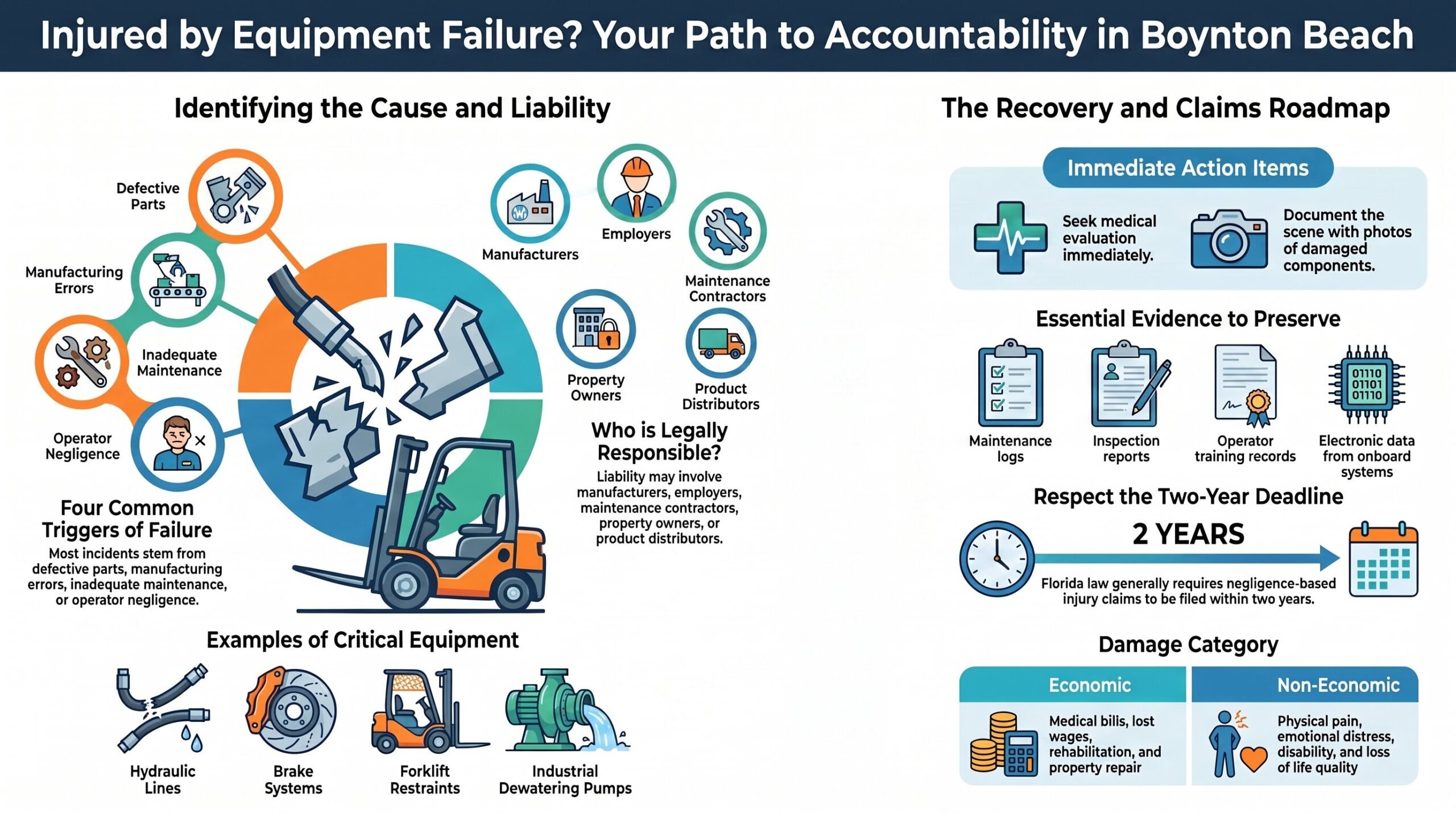
Boynton Beach vehicle and equipment failures may result from defective vehicle parts, poor maintenance, or manufacturing defects that compromise safe operation. Operator negligence, including improper use or failure to follow safety procedures, can also contribute to serious incidents. Identifying the underlying cause is crucial to determining responsibility and evaluating potential legal claims.
Defective Vehicle Parts
Defective vehicle parts can cause sudden failures that leave drivers, passengers, workers, and bystanders vulnerable to serious injury. Faulty brakes, steering components, tires, restraints, hydraulic lines, or electrical systems may fail due to design defects, manufacturing errors, contaminated materials, or inadequate quality assurance. These hazards can affect cars, trucks, construction machinery, and workplace equipment, even when operators use them properly.
A safety inspection may reveal unusual wear, fractured components, improper assembly, or warning signs that manufacturers or distributors should have addressed. A maintenance check can also identify parts subject to equipment recalls, allowing responsible parties to remove them before an incident occurs. When a defective component contributes to a collision or mechanical failure, preserving the part, purchase records, and inspection documentation may help establish what happened and support injured individuals seeking accountability.
Poor Equipment Maintenance
When vehicles or equipment are not maintained according to the manufacturer’s specifications, worn or damaged components can fail without adequate warning. Missed servicing, delayed repairs, inadequate lubrication, and improper replacement of consumable parts may increase the risk of collisions or workplace injuries. Employers and operators generally have a responsibility to establish a Safety inspection schedule, promptly address identified hazards, and maintain accurate maintenance logs.
These records can help determine whether required inspections occurred and whether known problems were ignored. Liability standards may consider the foreseeability of a failure, the reasonableness of maintenance practices, and the operator’s response to warning signs. Regular compliance audits can identify gaps before they endanger workers, passengers, or members of the public. When maintenance duties are neglected, injured individuals may require legal guidance regarding available remedies.
Manufacturing Defects
Manufacturing defects can cause a vehicle or piece of equipment to fail even when maintenance schedules are followed and operators use the product properly. These defects may involve flawed components, weak materials, improper assembly, or inadequate safety testing. A defective brake system, control mechanism, lift, or electrical component can malfunction without warning, posing serious risks to workers, passengers, and the public. Manufacturers may issue recalls after identifying recurring failures, but affected products can remain in service before notice reaches every owner.
Clear design recall policies help identify hazards and guide timely repairs or replacements. Disputes may also arise over warranty coverage when manufacturers deny responsibility or limit available remedies. Documentation of inspections, purchase records, failure symptoms, and recall notices can help determine whether a manufacturing defect contributed to an injury.
Operator Negligence
Operator negligence can cause a vehicle or piece of equipment to fail when a person disregards safety procedures, exceeds operating limits, or uses the product for an unintended purpose. Employee training gaps may leave workers unable to recognize warning signs, follow manufacturer instructions, or respond appropriately to changing conditions. Inadequate supervision can compound these problems, particularly when personnel operate machinery without sufficient experience or authorization.
Failure to perform equipment safety checks may allow worn parts, fluid leaks, damaged guards, or defective controls to go unnoticed. Negligent operation can contribute to collisions, rollovers, mechanical breakdowns, and serious injuries affecting employees, customers, or bystanders. A careful investigation may examine training records, inspection logs, maintenance documentation, witness accounts, and workplace policies to determine whether unsafe conduct contributed to the failure.


Legal Rights of Boynton Beach Vehicle & Equipment Failure Injury Victims
Victims injured by defective vehicles or equipment in Boynton Beach may have the right to pursue compensation from parties whose negligence, misconduct, or failure to provide adequate warnings contributed to the incident. Potential claims may address medical expenses, lost income, reduced earning capacity, pain, and other legally recognized losses. A careful review can help preserve evidence and identify responsible manufacturers, distributors, employers, or insurers.
Victims may consider:
- Reporting the incident promptly and documenting injuries
- Obtaining medical evaluation and following recommended care
- Preserving photographs, maintenance records, and damaged equipment
- Consulting counsel before accepting a settlement or giving recorded statements
Florida deadlines can affect filing rights, making the timing of insurance claims important even when liability appears clear. Liability insurance may address bodily injury, while property damage coverage can help repair or replace damaged vehicles, tools, or other personal property. A lawyer serving injured community members can assess available remedies, communicate with insurers, and protect a victim’s interests throughout negotiations or litigation. Each claim depends on its facts, evidence, and applicable law.
Why Do Boynton Beach Vehicle & Equipment Failures Injuries Happen?
Vehicle and equipment failure injuries in Boynton Beach often result from defects, inadequate maintenance, improper repairs, or unsafe operating conditions. Cars, trucks, forklifts, construction machinery, and industrial tools can malfunction when critical components wear out or are installed incorrectly. Employers may also contribute to these incidents by providing insufficient workplace training or failing to enforce established safety procedures.
Some failures originate from design or manufacturing errors that make a product dangerous during ordinary use. Others occur because businesses overlook manufacturer recalls, postpone necessary servicing, or permit equipment to operate beyond recommended limits. Inadequate inspection standards can allow cracked parts, faulty brakes, electrical hazards, and other warning signs to remain undiscovered.
Environmental conditions may further increase risks. Poor lighting, uneven surfaces, excessive loads, and congested work areas can make a minor defect more hazardous. Understanding these contributing factors helps determine whether responsibility may lie with an employer, manufacturer, maintenance provider, property owner, or another negligent party.
What Should You Do After a Boynton Beach Vehicle & Equipment Failure Injury?
After a Boynton Beach vehicle or equipment failure injury, the injured person should seek immediate medical care, even when symptoms initially appear minor. Documenting the accident scene, including visible damage, hazardous conditions, and witness information, can help preserve important evidence. Consulting an experienced injury lawyer can clarify legal rights and support potential claims for compensation.
Seek Immediate Medical Care
Prompt medical evaluation should be obtained as soon as possible following a vehicle or equipment failure injury in Boynton Beach, even when the injured person believes the condition is minor. A healthcare professional can identify hidden trauma, develop a treatment plan, and create records that link symptoms to the incident. The injured person should explain every symptom, including pain, dizziness, numbness, or emotional distress, and follow all recommended instructions.
If transportation is unsafe, assistance should be requested from a trusted person or an Emergency hotline. An injury checklist may help organize medications, symptoms, appointments, and provider directions. Medical bills and treatment records should be preserved, while an insurance refusal should be reported to legal counsel. Counsel may also issue a document request to obtain relevant medical information.
Document the Accident Scene
At the accident scene, the injured person should document the failed vehicle or equipment, surrounding conditions, and any visible injuries, provided it is safe to do so. Photos and footage should capture damaged components, roadway or worksite hazards, lighting, weather, warning signs, and any apparent maintenance issues. Images should be taken from several angles without disturbing equipment or creating additional danger. Witness identification is also important. Names, telephone numbers, and brief statements can help preserve accounts from people who observed the failure or its immediate consequences.
The individual should note the time, location, sequence of events, and equipment involved, as long as those details remain clear. Any available incident reports, security recordings, or inspection information should be requested through appropriate channels. Evidence should be stored securely and left unaltered for accurate review.
Consult an Injury Lawyer
Consulting an injury lawyer can help determine which parties may be responsible for a Boynton Beach vehicle or equipment failure and what evidence is needed to support a claim. Legal counsel can review medical records, maintenance histories, employment relationships, inspection reports, and applicable safety regulations. The lawyer may also preserve evidence before a damaged vehicle or machine is repaired, altered, or discarded. Safety documentation, including training records, warnings, and incident reports, can clarify whether preventable hazards contributed to the injury.
Witness interviews may identify operational failures, unsafe instructions, or prior complaints that are not reflected in written records. An attorney can communicate with insurers, protect the injured person from premature statements, and assess available compensation. Prompt consultation also helps coordinate benefits and supports a fair process focused on recovery and accountability.
Don’t Wait. Call Our Florida Personal Injury Lawyers Now!
Critical Evidence in a Boynton Beach Vehicle & Equipment Failures Injury Case
Critical evidence can establish how a vehicle or equipment failure occurred and who may be legally responsible for resulting injuries.
Key materials may include:
- Accident scene documentation
- Vehicle maintenance records
- Defective equipment analysis
- Witness statements and testimony
Preserving these materials promptly can support a thorough evaluation of liability, causation, and damages.
Accident Scene Documentation
Accident scene documentation can preserve essential evidence in a Boynton Beach vehicle or equipment-failure injury case before conditions change or physical evidence disappears. Photographs should capture vehicle positions, damaged components, roadway conditions, warning signs, lighting, and surrounding hazards from multiple angles. Witness names and statements can help establish what occurred, including whether Driver safety violations contributed to the incident. Reports should also identify employees, supervisors, contractors, and emergency responders present at the location.
In workplace incidents, records of posted procedures, protective equipment, training notices, and other visible conditions may reveal OSHA compliance issues without requiring immediate conclusions about fault. A prompt inspection by qualified professionals can accurately document measurements and physical conditions. Preserving this information supports injured individuals, witnesses, and families seeking accountability while helping legal representatives evaluate responsibility.
Vehicle Maintenance Records
Vehicle maintenance records can provide important evidence in a Boynton Beach vehicle or equipment failure injury case by showing whether inspections, repairs, and safety-related service were completed as required. These documents may identify missed service intervals, unresolved warnings, repeated breakdowns, or work performed shortly before the incident. The importance of their maintenance logs extends beyond routine documentation because they can help establish what responsible owners, employers, and operators knew or should have known about the vehicle’s condition.
A review of recall history may also reveal whether the manufacturer issued safety notices and whether corrective work was completed. Relevant records can include invoices, inspection forms, fleet schedules, technician notes, and electronic service entries. Preserving these materials promptly may assist an injured person and counsel in evaluating compliance, notice, and responsibility without altering or overstating the available evidence.
Defective Equipment Analysis
When equipment fails during operation, a defective equipment analysis can help determine whether a design defect, manufacturing error, inadequate warning, or unsafe component contributed to the injuries. Qualified engineers may inspect the vehicle or machinery, preserve failed parts, and compare the equipment with applicable safety standards, manuals, and recall information. They may also evaluate maintenance conditions to distinguish an inherent defect from improper servicing or ordinary wear.
Accident reconstruction experts can examine control inputs, impact forces, operating speeds, and component positions to explain how the failure occurred and whether it caused or worsened the harm. Photographs, testing data, electronic records, and inspection findings can preserve key evidence before repairs or disposal alter the equipment. This analysis may assist injured individuals and their families in pursuing accountability and informed recovery.
Witness Statements and Testimony
Gathering witness statements and testimony can clarify how a vehicle or equipment failure developed, how personnel responded, and whether unsafe conditions were apparent before the incident. Coworkers, passengers, supervisors, emergency responders, and bystanders may describe warnings, unusual sounds, maintenance concerns, or operating practices that are not documented elsewhere. Their accounts can help establish an accident timeline, identify conflicting explanations, and show whether reasonable safety measures were followed.
Prompt interviews are important because memories may fade, details can be influenced, and witnesses may become difficult to locate. Evidence preservation should occur alongside statement collection, including securing photographs, video recordings, inspection reports, and relevant communications. A careful record should identify each witness, preserve the person’s exact observations, and distinguish firsthand knowledge from assumptions. This information can assist injured individuals and their families in pursuing accountability while supporting a fair evaluation of responsibility.
Long-Term Effects of Boynton Beach Vehicle & Equipment Failures Injuries
Vehicle and equipment failures can produce chronic pain, permanent disability, and lasting limitations on a person’s ability to work or perform daily activities. Emotional and psychological effects, including anxiety, depression, and trauma-related symptoms, may also continue long after the physical injuries occur. These consequences can lead to significant financial strain and substantial changes to a person’s lifestyle, relationships, and future plans.
Chronic Pain And Disability
Because vehicle and equipment failures can cause severe musculoskeletal, neurological, and spinal injuries, affected individuals may face chronic pain and permanent disability long after the initial incident. Persistent pain may limit mobility, strength, concentration, and the ability to perform routine activities or return to prior employment. Some individuals require surgeries, rehabilitation, assistive devices, medication, or continuing personal support. Functional limitations can also reduce earning capacity and increase medical expenses over many years.
Thorough medical documentation helps establish the injury’s duration, severity, and relationship to the failure. Records concerning worksite safety, maintenance, training, and equipment history may further clarify responsibility. Consistent statements from coworkers and other witnesses can strengthen witness credibility when conditions or events are disputed. A careful evaluation of future care and losses supports appropriate compensation.
Emotional And Psychological Impact
When a vehicle or equipment failure causes serious injury, the emotional and psychological effects may persist long after physical wounds begin to recover. The trauma aftermath can include fear, irritability, sleep disruption, depression, or difficulty concentrating. Some injured individuals develop anxiety disorders, particularly when reminders of the incident trigger distress or avoidance. Others may experience reduced confidence, emotional numbness, or persistent concern about personal safety.
These responses can affect relationships and participation in ordinary activities, even when medical examinations show physical recovery. Recognition of psychological symptoms is an important part of compassionate, thorough care. Licensed mental health professionals may provide counseling, coping strategies, and evidence-based treatment. Documentation of these effects can help healthcare providers understand the injury’s full impact and support appropriate recovery for affected individuals and their families.
Financial And Lifestyle Changes
Long-term financial and lifestyle changes may follow injuries caused by vehicle or equipment failures, particularly when recovery limits work capacity or everyday independence. Medical bills, rehabilitation costs, transportation needs, and reduced earnings can place sustained pressure on a household. Budgeting after surgery may require prioritizing crucial expenses, modifying housing arrangements, or seeking assistance with caregiving and household tasks. Some injured individuals may need vocational retraining, workplace accommodations, or a gradual return to employment.
Others may experience lasting limitations that affect recreation, family responsibilities, and community involvement. Adjusting daily routines can support safety and preserve independence, but these changes may also create continuing expenses. Careful documentation of lost income, necessary services, and lifestyle disruptions can help clarify the full scope of long-term damages for those seeking fair compensation.
Proving Liability in Boynton Beach Vehicle & Equipment Failure Injury Cases
Proving liability in Boynton Beach vehicle and equipment failure injury cases requires evidence that connects the defective vehicle, component, or maintenance practice to the resulting harm. Investigators may examine inspection records, repair invoices, manufacturer notices, operating manuals, and employee training materials. Maintenance logs can reveal missed service requirements, while expert analysis may identify a design defect, manufacturing error, or foreseeable equipment hazard.
Witness statements can clarify how the incident occurred and whether safety procedures were ignored. Video evidence from nearby businesses, dashboard cameras, job sites, or traffic systems may establish vehicle movements, equipment conditions, and timing. Records concerning Negligent hiring, supervision, or retention may support claims when an employer placed an unqualified operator in a position involving public safety. Preserving damaged equipment is also important because testing may reveal the cause of the failure. A thorough investigation can identify responsible parties, including manufacturers, owners, contractors, maintenance providers, or operators, and document the conduct and conditions that link each party to the injury.
Dealing With Insurance Companies After a Boynton Beach Vehicle & Equipment Failure Injury
Insurance companies may respond to a Boynton Beach vehicle and equipment failure injury claim with requests for recorded statements, medical authorizations, employment records, and detailed accounts of the incident. Claimants should understand that each response can affect how the insurer evaluates responsibility, causation, and damages. Insurance adjuster tactics may include emphasizing prior medical conditions, questioning gaps in treatment, seeking broad authorizations, or encouraging quick settlements before the full impact of an injury is known. A careful review of communications and documents can help ensure accuracy and prevent unintended admissions.
Counsel may also conduct a policy limits analysis to determine available coverage, identify potentially responsible insurers, and assess whether compensation reasonably reflects medical expenses, lost income, rehabilitation needs, and long-term limitations. Individuals serving injured community members should preserve correspondence, follow medical advice, and avoid speculative statements about recovery. Professional guidance can support respectful communication while safeguarding the claimant’s rights during negotiations with insurers and other parties.
What to Expect During a Boynton Beach Vehicle & Equipment Failure Injury Claim Process
A Boynton Beach vehicle and equipment failure injury claim typically begins with an initial case evaluation to assess liability, injuries, and available legal remedies. The evidence collection process may involve obtaining medical records, accident reports, photographs, witness statements, and relevant maintenance or product documentation. After reviewing the evidence, the parties may negotiate insurance claims before resolving the injury claim through settlement or, when necessary, litigation.
Initial Case Evaluation
During an initial case evaluation, a Boynton Beach vehicle or equipment failure injury lawyer examines the circumstances of the incident, the resulting injuries, and the evidence that may establish liability. The discussion generally covers how the failure occurred, where the incident happened, and which parties may bear responsibility. The lawyer may review the medical treatment timeline to understand diagnoses, procedures, recovery concerns, and potential future care.
Attention may also focus on insurance documentation issues, including incomplete forms, disputed coverage, recorded statements, or communications that could affect available benefits. The client may receive an explanation of applicable deadlines, claim procedures, and realistic legal options. This evaluation helps determine whether representation is appropriate and identifies steps that may protect the injured person’s interests while supporting a fair resolution for affected families.
Evidence Collection Process
Once representation is considered, the evidence collection process begins with preserving information that may clarify how the vehicle or equipment failed and who may be responsible. Counsel may request maintenance records, inspection reports, repair invoices, operator training materials, photographs, video footage, and electronic data from onboard systems. Witness names and statements can help establish what occurred before, during, and after the incident.
Medical documentation steps include obtaining treatment records, diagnostic results, medication information, and providers’ opinions regarding injury causes and limitations. Investigators may inspect the scene and equipment, while preservation notices can help prevent the alteration or destruction of relevant materials. An insurance investigation strategy generally involves organizing verified facts and identifying responsible parties, without making premature conclusions. Careful collection supports accurate evaluation and helps protect the injured person’s ability to serve family and community.
Negotiating Insurance Claims
Insurance negotiations generally begin after the available evidence, medical documentation, and potential sources of liability have been organized. An insurer may review incident reports, equipment records, witness statements, and treatment information before presenting questions or an initial position. A careful negotiation strategy considers the full impact of the injury, including ongoing care, lost income, functional limitations, and documented expenses.
Documentation preparation helps establish a clear factual foundation and reduces opportunities for misunderstandings. Communications are typically measured, since statements about recovery, fault, or prior conditions may affect the insurer’s evaluation. Counsel may respond to requests, identify missing information, and explain why the proposed valuation does not reflect the available evidence. Throughout this stage, injured individuals can focus on medical care while representatives protect their interests through organized, professional communication.
Resolving Your Injury Claim
Resolving a vehicle or equipment failure injury claim typically involves evaluating the evidence, confirming the responsible parties, and determining the full extent of the claimant’s losses. Counsel may review medical records, incident reports, maintenance histories, photographs, witness statements, and applicable safety standards. This information supports an insurance claim strategy designed to address liability, causation, and damages while promoting a fair resolution.
Claimants may receive settlement proposals, requests for additional information, or denials requiring further negotiation. Careful attention to deadlines and communication can help prevent unnecessary complications in the claim. Common documentation mistakes to avoid include inconsistent injury descriptions, missing treatment records, unsupported expense calculations, and premature statements about fault. If negotiations fail, litigation may become necessary. Throughout the process, informed guidance helps injured individuals pursue accountability and preserve resources for recovery.
Compensation for Boynton Beach Vehicle & Equipment Failures Injury Damages
When a defective vehicle or piece of equipment causes an injury, the injured person may seek compensation for the full range of losses supported by the evidence. A careful evaluation begins with medical records, employment information, repair documents, witness accounts, and other materials connecting the failure to the harm. Compensation may address treatment already received, rehabilitation, prescription expenses, necessary modifications, and future medical costs reasonably related to the injury. It may also account for lost earnings, reduced work capacity, and other documented consequences affecting the person’s ability to meet ordinary responsibilities.
A knowledgeable representative can develop insurance negotiation strategies based on liability evidence, policy limits, medical projections, and the injury’s lasting effects. If negotiations do not produce a fair resolution, the claimant may consider litigation. Prompt investigation is important because vehicle data, maintenance records, and equipment components may be altered, lost, or discarded. A thorough claim presentation helps protect the injured person’s interests while promoting an accurate, responsible resolution for all involved parties.
Economic vs Non-Economic Damages in Boynton Beach Vehicle & Equipment Failures Cases
Economic damages may cover medical expenses, lost income, rehabilitation costs, and other verifiable financial losses resulting from a vehicle or equipment failure. Non-economic damages address less-measurable harms, including pain, emotional distress, disability, and diminished quality of life. Proving total compensation requires reliable documentation and evidence connecting each claimed loss to the incident.
Economic Damages
A vehicle or equipment failure may cause substantial economic damages when an injured person incurs measurable financial losses as a result of the incident. Economic losses can include emergency treatment, hospitalization, rehabilitation, prescription medication, diagnostic services, and transportation required for medical care. Documentation such as invoices, receipts, pay records, and employer statements can help establish the amount and connection to the failure.
If injuries limit a person’s ability to work, compensation may address lost wages and reduced future earnings, including diminished earning capacity when supported by reliable evidence. Property damage and necessary replacement services may also qualify, depending on the circumstances. Insurance coverage may provide an initial source of payment, although policy limits, exclusions, and disputes over fault can affect recovery. A careful evaluation helps identify losses and preserve supporting records.
Non-Economic Damages
Non-economic damages address the physical pain, emotional distress, inconvenience, and reduced quality of life that may follow a vehicle or equipment failure in Boynton Beach. Unlike medical bills or lost wages, these damages involve personal effects that lack a fixed market price. A claimant may seek compensation for ongoing discomfort, pain and suffering, anxiety, sleep disruption, scarring, disfigurement, or limitations on ordinary activities. Emotional distress can also arise when an injury prevents someone from working, caring for family, or participating in community life.
The seriousness and duration of the injury often influence the value of these losses. Each person’s experience is different, and the law recognizes that meaningful recovery should account for both visible harm and the quieter burdens that affect dignity, independence, and daily well-being.
Proving Total Compensation
When establishing total compensation in a Boynton Beach vehicle or equipment failure case, an injured person must present evidence of both economic and non-economic damages. Economic damages may include emergency care, rehabilitation, medication, lost wages, reduced earning capacity, property damage, and anticipated medical needs. Organized bills, employment records, expert projections, and medical opinions help demonstrate these measurable losses.
Non-economic damages address pain, emotional distress, disfigurement, disability, loss of enjoyment, and diminished quality of life. Personal testimony, treatment records, and statements from family members or caregivers may support these claims. Evidence preservation is required; photographs, maintenance records, product data, incident reports, and electronic information can clarify how the failure occurred and its consequences. Witness credibility also matters, because consistent, knowledgeable testimony can strengthen the connection between the defect, injury, and requested compensation. A complete presentation enables fair service to injured individuals.
When a Boynton Beach Vehicle & Equipment Failure Injury Case Goes to Trial vs Settlement
Because each vehicle or equipment failure case depends on its specific facts, the decision to pursue settlement or proceed to trial requires a careful assessment of liability, medical evidence, damages, insurance coverage, and the strength of the available evidence. Settlement may provide a defined result, reduced uncertainty, and earlier financial support for injured individuals and their families. Strong documentation, credible witnesses, and clear evidence of responsibility can improve negotiation leverage while encouraging meaningful discussions.
A trial may become appropriate when insurers dispute responsibility, undervalue losses, or refuse a reasonable resolution. A jury trial strategy generally requires organized evidence, persuasive testimony, careful preparation, and the ability to explain how the failure caused the claimed harm. The process can involve greater time, expense, and emotional demands, with no guaranteed outcome. Counsel may evaluate whether a proposed agreement adequately serves the injured person’s long-term needs. Throughout negotiations or litigation, the focus remains on accountability, accurate compensation, and protecting the client’s interests.
Don’t Wait. Call Our Florida Personal Injury Lawyers Now!
Florida Laws That May Affect Your Boynton Beach Vehicle & Equipment Failures Case
Florida laws may affect a Boynton Beach vehicle or equipment failure case by establishing filing deadlines, liability standards, safety obligations, and the types of damages an injured person may seek.
These rules can guide responsible decision-making while counsel investigates the incident and identifies each potentially responsible party.
- Florida comparative negligence rules may reduce recovery when an injured person shares responsibility.
- Product liability principles may address design defects, manufacturing defects, warnings, or maintenance failures.
- Negligence rules may apply to drivers, employers, property owners, manufacturers, and service providers.
- Limited liability defenses may affect claims involving government entities, workers’ compensation, or contractual protections.
Damages may include medical expenses, lost income, reduced earning capacity, rehabilitation costs, and non-economic losses. Applicable statutes and regulations can also impose safety duties on commercial operators and equipment owners. Because statute of limitations rules differ by claim type and defendant, early legal review helps preserve available options without delaying necessary care. A qualified attorney can evaluate evidence, explain procedural requirements, and pursue accountability in a manner that supports the injured person and the broader community.
The Statute of Limitations for Boynton Beach Vehicle & Equipment Failure Injury Cases
The statute of limitations sets the deadline for filing a Boynton Beach vehicle or equipment failure injury lawsuit, and missing that deadline may prevent recovery regardless of the strength of the claim. Florida generally provides a two-year statute of limitations for many negligence-based injury claims, although the applicable period can vary depending on the defendant, the injury, and the legal theory. Claims involving government entities may require earlier notice and additional procedural compliance. A wrongful-death claim is also subject to specific statutory deadlines that should be evaluated promptly.
The filing period may begin on the accident date, but certain facts can affect when time starts or whether an exception applies. Because these rules are fact-sensitive, injured individuals and families should identify potential deadlines without delay. A timely evaluation can support a Comparative fault assessment, clarify responsible parties, and protect available remedies. Evidence preservation steps, including securing maintenance records, photographs, witness information, and defective components, are also important before evidence disappears or conditions change. These measures promote accountability and help protect those affected.
How a Boynton Beach Vehicle & Equipment Failure Injury Lawyer Can Help You
When a vehicle or equipment failure causes an injury, a Boynton Beach vehicle and equipment failure injury lawyer can examine the incident, identify potentially responsible parties, and pursue appropriate compensation. The lawyer may coordinate evidence collection as long as conditions remain documented and witnesses are available.
Key assistance may include:
- Reviewing maintenance records, inspection reports, warnings, and repair histories
- Consulting engineers, medical professionals, and other qualified experts
- Evaluating claims involving manufacturers, employers, contractors, property owners, or insurers
- Handling communications, negotiations, and procedural requirements on the client’s behalf
Counsel can also explain how emergency response planning, workplace practices, and equipment safeguards may affect liability. Dealing with delays from insurers, incomplete records, or disputed responsibility requires organized follow-up and careful documentation. A lawyer may calculate medical expenses, lost income, rehabilitation needs, and other legally recognized losses, then present supported demands for resolution. By managing the legal process, counsel allows injured individuals and their families to focus on recovery and serving others without assuming unnecessary administrative burdens. This assistance promotes accountability and protects the integrity of the claim.
When to Contact a Boynton Beach Vehicle & Equipment Failure Injury Lawyer
Prompt legal consultation can be important after a vehicle or equipment failure causes injury, particularly when the incident involves serious harm, disputed responsibility, or uncertainty about the available evidence. A timely conversation may help preserve records, identify witnesses, and clarify which parties could bear responsibility. This is especially relevant when injuries require continuing treatment, prevent work, or affect a person’s ability to serve family and community responsibilities.
A lawyer may also explain the applicable statute of limitations, which establishes the deadline for pursuing a claim. Waiting too long can restrict available remedies, even when the injury’s full effects become clear later. Early guidance can help organize medical documentation, employment records, photographs, maintenance histories, and communications related to the incident.
Contact may be appropriate before providing recorded statements, signing releases, or accepting an insurer’s settlement offer. A consultation can further clarify the court filing process, required notices, and practical deadlines, enabling the injured person to make informed decisions without unnecessary delay.
Don’t Wait. Call Our Florida Personal Injury Lawyers Now!
Why You Need an Experienced Boynton Beach Vehicle & Equipment Failures Injury Lawyer
Because vehicle and equipment failure claims often involve technical evidence and multiple potentially responsible parties, an experienced Boynton Beach injury lawyer can provide dedicated guidance throughout the legal process. Such counsel can investigate maintenance records, inspection reports, operator training, product specifications, and accident-scene conditions before important information disappears. Evidence preservation may require prompt notices to employers, manufacturers, property owners, or insurers, along with careful documentation of injuries and financial losses.
An experienced lawyer can also identify whether negligent maintenance, defective design, inadequate warnings, unsafe premises, or improper operation contributed to the incident. This analysis helps ensure that each potentially responsible party is evaluated under applicable Florida law. During insurance negotiation, informed representation can address disputed liability, medical documentation, lost income, rehabilitation needs, and future care. Counsel can communicate with insurers while protecting the injured person from premature statements or inadequate settlement proposals. Through organized investigation and consistent advocacy, legal guidance supports fair treatment and helps families receive injured relatives with greater confidence.
How to Choose the Right Boynton Beach Vehicle & Equipment Failures Injury Lawyer for Your Case
Choosing the right Boynton Beach vehicle and equipment failure injury lawyer requires more than comparing advertising claims or settlement figures. A careful selection process considers experience with defective vehicles, unsafe machinery, maintenance failures, and complicated injury evidence. The lawyer should explain how responsibility may involve manufacturers, employers, contractors, owners, or other parties, without promising a particular result.
Client communication is another important consideration. A dependable lawyer establishes clear expectations for updates, responds to reasonable questions, and explains legal developments in terms the injured person and family can understand. Accessibility matters when medical treatment, work limitations, and financial pressure create urgent concerns.
Potential clients should also request fee transparency before signing an agreement. The lawyer should describe contingency percentages, case expenses, liens, and circumstances that could affect the final recovery. Reviews of professional standing, relevant results, and courtroom experience may provide additional perspective. A lawyer who listens carefully, evaluates evidence honestly, and prioritizes the client’s well-being can help families pursue accountability with informed expectations.
About The Law Offices of Anidjar & Levine
The Law Offices of Anidjar & Levine represent individuals and families pursuing compensation after vehicle or equipment failures cause serious injuries.
Its attorneys assist clients who need clear guidance, careful preparation, and determined advocacy after crashes, defective products, or hazardous machinery incidents.
The firm evaluates liability basics by examining maintenance records, design concerns, operating procedures, warnings, and the conduct of responsible parties.
Early Evidentiary preservation can help protect photographs, electronic data, inspection reports, witness accounts, and other information that may become unavailable.
Attorneys also coordinate Medical documentation to connect diagnosed conditions, treatment needs, lost income, and anticipated care with the incident.
When insurers seek recorded statements, question injury severity, or propose inadequate settlements, the firm manages insurer negotiations and communicates with adjusters on the client’s behalf.
Its approach emphasizes informed decisions, organized evidence, and respect for each person’s circumstances.
The firm’s services are intended to help injured individuals pursue accountability while allowing families to focus on recovery, stability, and required daily responsibilities.
Frequently Asked Questions
Can I Afford a Vehicle and Equipment Failure Injury Lawyer?
Affordability depends on the lawyer’s fee structure, the case’s circumstances, and available community resources. Many injury attorneys offer payment contingency fees, meaning the client generally pays no attorney fee unless compensation is recovered. Prospective clients should confirm the percentage, litigation costs, and responsibility for expenses during an initial consultation. Those with limited resources may also investigate affordable legal aid, nonprofit referrals, or bar association programs serving injured individuals and families.
Will My Case Require Testimony From Medical or Mechanical Experts?
A case may require testimony from medical or mechanical experts, depending on the injuries, disputed causes, and available records. Medical experts can explain diagnosis, treatment, prognosis, and whether the incident caused the condition. Mechanical experts may evaluate defective parts, maintenance, design, or operator error. Counsel typically weighs the strength of this medical proof against expert cost, case value, and complexity before retaining specialists. Their testimony can clarify technical issues for a jury.
Can Family Members Bring a Claim After a Fatal Equipment Failure?
Family members may bring a wrongful death claim after a fatal equipment failure, depending on state law and their relationship to the deceased. The personal representative typically files on behalf of eligible survivors, who may seek compensation for lost financial support, funeral expenses, and emotional losses. An investigation should preserve equipment, maintenance records, and witness statements. Available insurance coverage can affect recovery, while liability may involve manufacturers, employers, contractors, or property owners.
What Happens if the Defective Vehicle or Equipment Was Recalled?
A recall does not automatically eliminate liability when a defective vehicle or equipment causes injury. It may provide evidence that the manufacturer knew of a dangerous condition, although defendants may assert liability defenses involving misuse, unauthorized repairs, or failure to follow warnings. Claimants should preserve the recalled parts, maintenance records, and recall notices. They must also observe reporting deadlines and notice requirements, which vary by claim type and jurisdiction, to protect available remedies.
Can I Still Pursue Compensation if I Was Injured at Work?
Yes, an injured worker may still pursue compensation, even when a defective vehicle or equipment contributed to the incident. Available workers’ comp options may cover medical treatment, wage benefits, and rehabilitation, while a separate claim against manufacturers or other responsible parties could provide additional recovery. Prompt documentation steps include reporting the injury, preserving equipment records, identifying witnesses, obtaining medical evaluation, and consulting qualified counsel before accepting settlements or waiving potential claims.
—————————
Vehicle and equipment failures can cause serious injuries, complex liability issues, and significant financial losses.
Victims may be entitled to compensation for medical expenses, lost income, rehabilitation, pain and suffering, and other damages.
The Law Offices of Anidjar and Levine can investigate the failure, identify potentially responsible parties, and protect a claimant’s legal interests.
Promptly consulting an experienced Boynton Beach vehicle and equipment failure injury lawyer may help preserve evidence, meet applicable deadlines, and support a strong claim.
Learn more by visiting our Boynton Beach Personal Injury Lawyer.

