

The Law Offices of Anidjar and Levine, a Boynton Beach Personal Injury Lawyer, investigates crashes involving alcohol, drugs, texting, or other unsafe conduct.Counsel may preserve cellphone records, surveillance footage, vehicle data, sobriety evidence, and witness accounts before they disappear. The legal team can review police reports and medical records, establish liability, link injuries to the collision, and communicate with insurers while pursuing compensation for medical care, lost income, pain, and future needs. Additional guidance explains available rights and practical next steps.
Main Takeaways
- Investigate whether alcohol, drugs, texting, fatigue, or other distractions contributed to the Boynton Beach crash.
- Preserve phone records, surveillance footage, vehicle data, toxicology results, and sobriety evidence before they disappear.
- Review police reports, witness statements, roadway conditions, and video to establish fault and driver conduct.
- Connect emergency records, diagnostic imaging, treatment plans, and bills to crash-related injuries and continuing care.
- Coordinate insurers and pursue accountability while helping injured individuals and families focus on recovery.


How We Can Help With Your Boynton Beach Car Accident Impaired & Distracted Driving Injury Claim
When impaired or distracted driving causes a Boynton Beach car accident, an attorney can help an injured person pursue compensation while protecting the evidence necessary to establish fault. Counsel may investigate the collision, obtain crash reports, preserve vehicle data, and identify witnesses before essential information disappears. The review can include cellphone records, surveillance footage, toxicology evidence, and roadway conditions relevant to liability.
An attorney may also assess whether an employer contributed through Negligent supervision, inadequate training, or failure to address known safety concerns. Evidence of traffic signal violations, unsafe lane changes, or other driving conduct may support the injured person’s account and clarify how the crash occurred. Counsel can coordinate medical documentation, communicate with insurers, and calculate losses involving treatment, income, transportation, and continuing care. By handling procedural demands and presenting organized evidence, legal support allows the injured person and family to focus on recovery. The attorney’s role remains centered on principled advocacy, accurate information, and a fair effort to secure available compensation.
OUR CONSULTATIONSARE FREE
START YOUR FREE CASE REVIEW

Understanding Boynton Beach Car Accident Impaired & Distracted Driving Injury Cases
Understanding an impaired or distracted driving injury case requires examining how the driver’s conduct caused the Boynton Beach collision and how that conduct relates to the resulting harm. A careful evaluation considers police reports, witness statements, medical records, and available roadway evidence. Florida roadside sobriety observations may help establish impairment, while toxicology results can provide additional support when properly collected and interpreted. A dashcam footage review may clarify vehicle movements, traffic conditions, driver attention, and the timing of impact. The injured person’s medical evaluation is equally important because symptoms may appear immediately or develop over time. Documentation should connect diagnosed injuries, treatment requirements, lost income, and other losses to the crash. Insurance communications and comparative-fault issues may also affect recovery. An attorney serving injured individuals can organize evidence, protect applicable rights, and communicate with insurers while the person focuses on treatment and rehabilitation. Each case requires an individualized assessment grounded in verified facts.
Common Causes of Boynton Beach Car Accident Impaired & Distracted Driving
Common causes of impaired and distracted driving accidents include drunk driving, drug-impaired driving, and texting behind the wheel. Other distractions, such as eating, adjusting vehicle controls, or using a mobile device, can also reduce a driver’s attention and reaction time. These behaviors may create conditions that contribute to serious collisions and injuries in Boynton Beach.
Drunk Driving Accidents
Drunk driving accidents occur when alcohol impairs a motorist’s judgment, reaction time, coordination, or ability to maintain control of a vehicle. Common contributing circumstances include excessive consumption, driving after leaving a bar or gathering, and underestimating impairment. Alcohol may cause speeding, unsafe lane changes, delayed braking, and failure to yield, placing passengers, pedestrians, and other motorists at risk. Investigators typically conduct a police review that includes statements, roadway evidence, video footage, and chemical testing, when available. Although a Challenge loan, distracted routes, and medication errors may appear in related accident discussions, they do not establish alcohol impairment and require separate evaluation. Affected individuals may benefit from prompt medical care, preservation of evidence, and informed legal guidance. Responsible community members can help prevent harm by arranging sober transportation and intervening before an impaired driver leaves.
Drug-Impaired Driving
When prescription medications, illicit substances, or over-the-counter drugs impair a driver’s judgment, coordination, alertness, or reaction time, the resulting conduct may constitute drug-impaired driving. Some medications cause drowsiness, blurred vision, slowed responses, or confusion, particularly when combined with alcohol or other substances. Illicit drugs may produce agitation, poor concentration, distorted perception, or dangerous risk-taking. Over-the-counter drugs can also affect driving ability, even when obtained legally, because labeling warnings may be overlooked or misunderstood. Officers investigating suspected impairment may use roadside sobriety evaluations, although these assessments do not identify every substance or medical condition. Chemical testing and medical evidence may become important when determining causation and liability. Individuals injured by an impaired driver may benefit from prompt medical attention, careful documentation, and guidance from a qualified attorney regarding available legal remedies.
Texting Behind The Wheel
Texting while driving diverts a driver’s visual attention, manual control, and mental focus from the roadway, substantially increasing the risk of a collision. A driver who reads or sends a message may miss traffic signals, pedestrians, lane changes, or developing hazards. This form of phone distraction can cause delayed braking and reduced awareness, even when the exchange appears brief. Florida texting laws generally prohibit manually typing or sending messages while operating a motor vehicle, subject to specific exceptions and enforcement requirements. Violations may support evidence that a driver failed to exercise reasonable care after a crash. Investigators may examine phone records, witness statements, vehicle data, and surrounding circumstances to determine whether texting contributed to the event. Those injured may benefit from prompt legal guidance while evidence remains available for review and preservation.
Distracted Driving Behaviors
Distracted driving behaviors commonly include using a mobile device, adjusting navigation or entertainment systems, eating, grooming, reaching for objects, and engaging with passengers. Each activity can divert visual, manual, or mental focus from traffic conditions. Persistent phone-distraction habits, including checking notifications or composing messages, may create dangerous moments when a driver fails to notice changing signals, pedestrians, or nearby vehicles. Even brief lapses in driver attention can prevent timely braking or corrections to directional control. Other conduct, such as searching under a seat or turning to address a passenger, may compromise vehicle control and situational awareness. Drivers who recognize these risks should secure loose items, program routes before departure, silence devices, and maintain full attention on the roadway. These precautions help protect passengers, other motorists, cyclists, and pedestrians from preventable collisions.
Don’t Wait. Call Our Florida Personal Injury Lawyers Now!


Legal Rights of Boynton Beach Car Accident Impaired & Distracted Driving Injury Victims
Victims injured in Boynton Beach car accidents caused by impaired or distracted drivers may have legal rights to pursue compensation for medical expenses, lost income, property damage, and pain and suffering. A claim may also address future treatment, reduced earning capacity, and lasting disability when supported by medical and financial evidence.
Boynton Beach car accident victims may pursue compensation for medical costs, lost income, property damage, and pain and suffering.
Potential legal protections include:
- The right to investigate fault through crash reports, witness accounts, medical records, and available electronic evidence.
- The right to pursue insurance benefits and, when appropriate, a personal injury lawsuit within Florida’s applicable deadlines.
- The right to challenge Comparative Negligence arguments that attempt to reduce an injured person’s recovery.
Employer Liability may apply when a negligent driver was acting within the scope of employment, although responsibility depends on the facts and applicable law. Preserving evidence, documenting losses, and obtaining timely legal guidance can help protect a victim’s interests. A qualified attorney may communicate with insurers, evaluate settlement offers, and pursue fair compensation while treating the injured person and family with dignity.
Why Do Boynton Beach Car Accident Impaired & Distracted Driving Injuries Happen?
Understanding the causes of impaired and distracted driving injuries can help establish how a Boynton Beach crash occurred and which parties may bear responsibility. Impairment commonly results from alcohol, cannabis, prescription medication, or other substances that reduce judgment, coordination, vision, or reaction time. Fatigue can produce similar dangers, particularly when a driver continues operating a vehicle despite diminished alertness.
Distraction may be visual, manual, or cognitive. Texting, adjusting navigation, eating, grooming, conversing with passengers, and interacting with dashboard technology can divert attention from traffic. Some collisions involve several contributing factors, including speeding, aggressive driving, poor roadway design, or inadequate vehicle maintenance.
Accurate investigation helps clarify these circumstances. Evidence preservation can protect phone records, surveillance footage, vehicle data, and sobriety information. Medical documentation can link diagnosed injuries to the collision, while witness interviews may describe the driver’s behavior before impact. Assembling these materials can support liability proof and promote fair accountability for injured individuals and their families.
What Should You Do After a Boynton Beach Car Accident Impaired & Distracted Driving Injury?
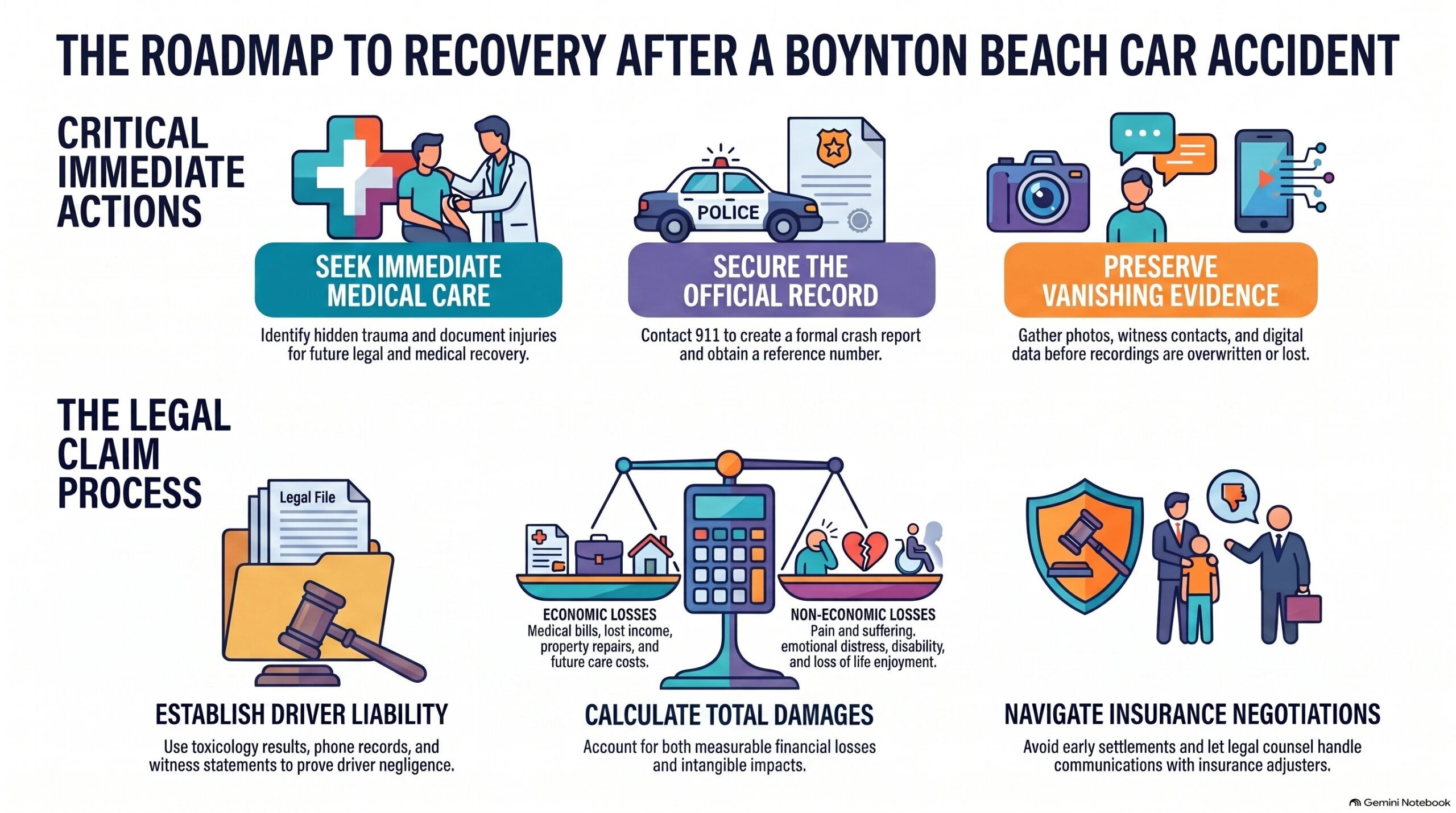
After an impaired or distracted driving collision, the injured person should seek immediate medical care, even if symptoms initially appear minor. The accident should be reported to law enforcement, and medical evaluations, treatment records, and official reports should be preserved. Photos, witness information, vehicle damage, and other evidence should also be documented promptly to support an accurate account of the injuries and collision.
Seek Immediate Medical Care
Because injuries from an impaired or distracted driver may not appear immediately, anyone involved in a Boynton Beach car accident should seek prompt medical care, even if symptoms initially seem minor. A qualified medical professional can identify hidden trauma, document observed conditions, and recommend appropriate treatment. Car accident symptoms may include headaches, dizziness, neck pain, numbness, confusion, or difficulty breathing. Some injuries worsen when left untreated, potentially affecting recovery and daily responsibilities. Emergency personnel should be contacted when severe pain, loss of consciousness, bleeding, or other urgent signs occur. Medical records can also help establish the nature and timing of injuries. Individuals concerned about emergency treatment costs may ask providers about payment options, insurance procedures, or available assistance. Prompt evaluation supports safer recovery and helps protect each injured person’s interests.
Report the Accident
How should the accident be reported? After a Boynton Beach collision involving suspected impaired or distracted driving, the injured person should contact 911 if anyone needs medical assistance or if roadway hazards threaten scene safety. Emergency response personnel can treat injuries, secure traffic, and prepare an official crash report. Even when injuries initially appear minor, contacting law enforcement creates a formal record and allows each driver to provide information separately. The injured person should obtain the report number and ask how to request a copy. Prompt notice to the applicable insurer is also important, but statements should remain accurate and limited to known facts. Insurance documentation, including policy details and correspondence, should be preserved. A lawyer can explain the claim timeline, reporting deadlines, and communications that may affect recovery.
Document Evidence and Injuries
When documenting a Boynton Beach car accident involving suspected impaired or distracted driving, the injured person should preserve evidence while the events and symptoms remain clear. Photographs should show vehicle positions, road conditions, visible injuries, property damage, and relevant signs or signals. Witness names and contact information, police reports, medical records, prescriptions, and employment absences should be retained. Prompt medical evaluation can connect symptoms to the collision and create reliable documentation for a damages calculation.
The injured person should avoid speculation, public statements, or recorded conversations with insurers until they obtain guidance. Careful evidence preservation may address liability defenses concerning causation, comparative fault, or the driver’s conduct. When negotiating insurance, organized records can help representatives evaluate medical expenses, lost income, treatment needs, and other losses. A legal professional may also identify missing evidence and protect the injured person’s interests throughout the claim.
Critical Evidence in a Boynton Beach Car Accident Impaired & Distracted Driving Injury Case
Important evidence can establish whether impaired or distracted driving caused the Boynton Beach collision and the resulting injuries.
- Police accident reports and medical records document the crash, suspected impairment, treatment, and injury progression.
- Witness statements, phone records, and video evidence may corroborate driver conduct and liability.
A Boynton Beach car accident lawyer can assess how these sources support the injured person’s claim.
Police Accident Reports
A police accident report can serve as important evidence in a Boynton Beach car accident injury case involving suspected impaired or distracted driving. Officers may document roadway conditions, vehicle positions, apparent violations, statements, citations, and observations suggesting alcohol, drug, phone, or other distraction. Although the report is not automatically conclusive, it can help establish an investigative timeline and identify evidence that requires preservation. It may also list witnesses whose accounts can be evaluated using witness credibility factors, including consistency, opportunity to observe, and potential bias. Reviewing the report promptly can support Insurance claim timelines by clarifying when notice was provided, what facts were recorded, and which parties may bear responsibility. A careful legal review can identify inaccuracies, omissions, or favorable details while guiding respectful communication with insurers, investigators, and affected families.
Medical Records
Medical records provide an objective foundation for evaluating injuries after a Boynton Beach car accident involving suspected impaired or distracted driving. Emergency department notes, diagnostic images, treatment plans, and billing records document symptoms, diagnoses, and the progression of recovery. They may also reveal whether an injury required surgery, rehabilitation, medication, or continuing care. Prompt medical evaluation helps connect reported symptoms to the collision and identifies preexisting conditions that may require careful analysis. Attorneys can organize these materials as part of a deposition strategy, using consistent clinical documentation to examine testimony and challenge unsupported claims. Causation experts may review imaging, examination findings, and treatment history to determine whether the crash caused or aggravated specific conditions. Complete records also assist in calculating future medical needs and presenting a clear, service-focused claim for injured individuals.
Witness Statements
Witness statements can preserve critical firsthand information about an impaired or distracted driving collision in Boynton Beach. People who observed the crash may describe vehicle movements, traffic conditions, driver behavior, sounds, and apparent signs of impairment before impact. Their accounts can help establish how the collision occurred and whether the driver appeared inattentive or unable to respond appropriately.
Eyewitness credibility checks evaluate each person’s opportunity to observe, distance from the roadway, visibility, consistency, and potential bias. Investigators may obtain contact information promptly because memories can change over time. Surviving victim interviews should be conducted with patience and sensitivity, recognizing that pain, medication, and trauma may affect recollection. Statements should be compared with medical records, physical evidence, and other accounts. Accurate witness information can support accountability and assist injured individuals and their families in pursuing fair treatment.
Phone And Video Evidence
When available, phone records and video footage can provide objective evidence of whether a driver was distracted or impaired before a Boynton Beach collision. Cellphone forensics may reveal calls, text messages, application activity, navigation use, or other interactions occurring around the time of the crash. Investigators can compare this information with vehicle data, witness accounts, and emergency-service records to establish a reliable timeline. Traffic camera footage, business surveillance footage, dashboard camera footage, and recordings from nearby vehicles may reveal lane departures, delayed reactions, unsafe speeds, or visible impairment. Attorneys may promptly request preservation of these materials because recordings can be overwritten and digital data may change or disappear. Properly obtained evidence can help clarify disputed facts, support injured individuals seeking accountability, and assist courts or insurers in evaluating responsibility and damages.
Long-Term Effects of Boynton Beach Car Accident Impaired & Distracted Driving Injuries
Impaired or distracted driving injuries from a Boynton Beach car accident may produce chronic pain conditions that require continuing medical care and limit daily activities. Emotional trauma, including anxiety, depression, or post-traumatic stress, can also affect long-term recovery and personal relationships. Ongoing treatment, lost income, and reduced earning capacity may create substantial financial challenges for injured individuals and their families.
Chronic Pain Conditions
Chronic pain can develop after a Boynton Beach car accident caused by impaired or distracted driving, even when the initial injuries appear manageable. Persistent neck, back, joint, or nerve pain may arise as damaged tissues heal imperfectly or as underlying conditions become more apparent. Spinal injury symptoms can include numbness, weakness, radiating pain, restricted movement, and changes in balance, all of which require timely medical evaluation and consistent documentation. Some survivors also develop widespread pain and sensitivity associated with fibromyalgia triggers, including physical trauma, disrupted sleep, and prolonged strain on the body. Treatment may involve rehabilitation, medication, injections, or coordinated care from experts. Accurate medical records can help clarify the injury’s progression, support appropriate care decisions, and establish the long-term effects for individuals seeking accountability and assistance after a serious collision.
Emotional Trauma
Emotional trauma may persist long after a Boynton Beach car accident caused by impaired or distracted driving, even after visible injuries have begun to recover. Survivors may experience anxiety, nightmares, irritability, depression, or heightened fear when traveling near the crash location. Some may avoid driving, withdraw from relationships, or struggle to resume ordinary responsibilities. These responses can affect concentration, sleep, and confidence, while family members may also experience distress after witnessing the survivor’s suffering. Mental health professionals can evaluate symptoms and recommend grief counseling, trauma-focused therapy, or other appropriate support. Structured coping strategies, including gradual exposure, relaxation techniques, consistent routines, and trusted social connections, may assist recovery. Recognizing emotional symptoms early can help survivors obtain compassionate care and preserve their sense of safety and independence.
Financial Challenges
When injuries from an impaired or distracted-driving collision continue to affect a survivor’s ability to work, financial difficulties may extend well beyond the initial medical bills. Reduced hours, missed promotions, or permanent employment changes can result in sustained loss of income, while treatment, rehabilitation, prescription, and transportation costs continue to accumulate. This combination often places significant strain on the budgets of survivors and their households, particularly when another person must provide unpaid caregiving or assist with daily activities. Long-term financial pressure may also affect housing stability, education plans, insurance coverage, and access to necessary medical care. A careful record of pay losses, expenses, and anticipated needs can help demonstrate the injury’s broader economic consequences. Legal guidance may assist families in evaluating compensation for present and future damages while helping them meet crucial obligations.
Don’t Wait. Call Our Florida Personal Injury Lawyers Now!
Proving Liability in Boynton Beach Car Accident Impaired & Distracted Driving Injury Cases
Proving liability in a Boynton Beach car accident involving impaired or distracted driving requires evidence that establishes the driver’s unsafe conduct, the resulting collision, and the injuries or losses sustained. Evidence preservation should begin promptly, including photographs of vehicle damage, roadway conditions, traffic signals, and visible injuries. Witness statements, nearby surveillance recordings, police reports, and vehicle event data may help clarify how the crash occurred. Records concerning driver impairment, such as toxicology results, field sobriety observations, admissions, or criminal charges, may support claims involving alcohol or drugs. For distracted driving, phone records, application data, onboard systems, and witness testimony can indicate texting, calling, or other attention-diverting conduct. Medical documentation must connect the collision to treatment, limitations, and anticipated care. Accident reconstruction professionals may analyze impact points, vehicle positions, and timing when facts are disputed. A careful investigation helps protect injured individuals and families by presenting a coherent account of negligence, causation, and compensable harm. Witness credibility and consistent records can further strengthen the liability analysis.
Dealing With Insurance Companies After a Boynton Beach Car Accident Impaired & Distracted Driving Injury
After a Boynton Beach car accident involving impaired or distracted driving, injured individuals may face insurance companies focused on restricting claim payments rather than fully evaluating the harm suffered. Timely, precise communication can protect a claimant’s interests while supporting a fair assessment of medical expenses, lost income, property damage, and continuing limitations.
Insurance communication timelines should be monitored carefully. Written notices, claim forms, medical records, and requested documentation should be submitted within applicable deadlines, with copies retained for organized reference. Statements to adjusters should remain factual and should not downplay pain, disability, or future treatment needs. A claimant should avoid signing broad releases or accepting early settlements before understanding the injury’s full impact.
When coverage or responsibility is disputed, Claim denial response strategies may include requesting the denial in writing, reviewing the stated reasons, correcting factual errors, and providing relevant evidence. Legal guidance can help protect communications, evaluate settlement proposals, and ensure injured people are treated fairly throughout insurance negotiations.
What to Expect During a Boynton Beach Car Accident Impaired & Distracted Driving Injury Claim Process
The claim process typically begins with an initial case evaluation to assess liability, injuries, damages, and available legal options. Evidence is then gathered, followed by negotiations with the insurance company regarding compensation. If settlement efforts fail, the matter may proceed to trial, where the evidence and legal arguments will be presented before a court.
Initial Case Evaluation
When a prospective client consults with a Boynton Beach car accident lawyer about an impaired or distracted driving injury, the initial case evaluation determines whether the claim has a viable legal and factual basis. The attorney typically asks about the collision, reported injuries, medical care, and circumstances suggesting impairment or distraction. The prospective client may provide Contact information, insurance details, and a preliminary case timeline, including the accident date and significant treatment events. This discussion also addresses applicable deadlines, potential responsible parties, and the types of compensation that may be available. The lawyer explains the representation process, communication expectations, and potential challenges without guaranteeing a specific outcome. A careful evaluation helps determine appropriate next steps while ensuring the injured person receives informed, respectful guidance tailored to the claim’s circumstances and needs.
Evidence Gathering Process
During the evidence-gathering process, a Boynton Beach car accident lawyer works to establish how the impaired or distracted driving caused the collision and contributed to the resulting injuries. Counsel may inspect police reports, citation records, medical documentation, vehicle damage, and available traffic-camera or phone records. Accident scene photography can preserve roadway conditions, vehicle positions, visibility concerns, and relevant signs before circumstances change. Investigators may interview witnesses and conduct eyewitness credibility assessments by considering each person’s location, opportunity to observe, consistency, and possible bias. The lawyer may also seek toxicology information, sobriety-testing results, employment records, and electronic data through lawful requests. Medical professionals can connect documented injuries to the crash and explain expected treatment. This organized process protects reliable evidence and supports a clear, fact-based presentation of the injured person’s claim.
Insurance Claim Negotiations
Once liability and damages are supported by admissible evidence, insurance claim negotiations focus on determining the compensation owed for a collision caused by impaired or distracted driving. The injured person’s representative typically presents medical records, income documentation, repair estimates, and evidence describing ongoing limitations. The insurer reviews those materials, assesses coverage, and may request additional information before responding.
A sound settlement strategy accounts for past expenses, projected treatment, lost earning capacity, pain, and other legally recognized losses. Adjusters may challenge medical causation, dispute the seriousness of symptoms, or attribute responsibility to the injured person. Responses should remain evidence-based and avoid premature statements that could undermine the claim.
Policy limits also require careful review. Underinsured motorists coverage may provide another source of compensation when the responsible driver’s insurance cannot fully address documented damages. Negotiations should protect the injured person’s interests while maintaining accurate, professional communication throughout the claims process.
Settlement Or Trial
Settlement negotiations may resolve an impaired or distracted driving claim without the uncertainty and expense of a trial, but the injured person is not required to accept an inadequate offer. Counsel typically reviews medical records, lost income, vehicle damage, insurance coverage, and evidence showing impairment or distraction before recommending a response. This risk assessment considers potential recovery, litigation costs, disputed facts, and the client’s long-term needs. If negotiations fail, the claim may proceed through discovery, depositions, motions, and trial preparation. A lawyer may develop a jury strategy that explains liability clearly, presents credible medical evidence, and addresses arguments about comparative fault. The injured person generally decides whether to accept a settlement, while counsel provides informed guidance. Any resolution should account for future treatment, financial losses, and the service-oriented goal of protecting the injured person’s well-being.
Compensation for Boynton Beach Car Accident Impaired & Distracted Driving Injury Damages
Compensation for injuries caused by impaired or distracted driving in Boynton Beach may include payment for medical treatment, lost income, property damage, and the physical pain and emotional distress resulting from the collision. The available recovery depends on evidence, applicable insurance policies, and the extent of the responsible driver’s conduct. Insurance coverage basics include identifying the at-fault driver’s liability policy, reviewing available personal injury protection benefits, and determining whether uninsured or underinsured motorist coverage may apply. Liability proof strategies may involve obtaining crash reports, medical records, witness statements, photographs, surveillance footage, and evidence of intoxication or phone use. Prompt documentation can help preserve information that might otherwise disappear. A qualified legal professional may also coordinate with insurers, communicate with medical providers, and protect an injured person from premature settlement demands. This support allows families to focus on treatment while pursuing accountability and a resolution that reflects the collision’s demonstrated consequences under Florida law.
Economic vs Non-Economic Damages in Boynton Beach Car Accident Impaired & Distracted Driving Cases
Economic damages may include medical expenses, lost income, property damage, and future treatment costs resulting from impaired or distracted driving collisions. Non-economic losses can encompass pain and suffering, emotional distress, disability, and diminished quality of life. Establishing these damages typically requires medical records, financial documentation, expert testimony, and evidence linking the driver’s impairment or distraction to the injuries.
Economic Damage Categories
A car accident claim in Boynton Beach may involve several categories of damages, particularly when impaired or distracted driving contributes to the collision. Economic damages represent measurable financial losses resulting from the crash. Medical expenses documentation may include hospital bills, physician charges, prescription costs, rehabilitation invoices, and related treatment records. Wage loss support can establish missed work, reduced earning capacity, and employment benefits lost during recovery. Property damage valuation addresses vehicle repairs, replacement value, damaged personal items, towing, and storage expenses. When injuries require continuing assistance, long-term care costs may include home modifications, attendant services, medical equipment, and future treatment. Organized records help demonstrate the amount and necessity of each loss. A qualified legal professional can assist affected individuals and families in presenting complete, reliable documentation to responsible parties, insurers, or courts.
Non-Economic Losses
Although non-economic losses lack a fixed value, they may constitute a substantial portion of a Boynton Beach car accident claim involving impaired or distracted driving. A damages overview should distinguish these losses from medical bills, repair expenses, and lost income. Non-economic damages generally address pain and suffering, emotional distress, diminished enjoyment of life, inconvenience, and lasting physical limitations. They may also reflect scarring, disfigurement, sleep disruption, and the effects of trauma on family relationships. The value depends on the injury’s severity, recovery period, prognosis, and impact on ordinary activities rather than on a single receipt or invoice. Careful evaluation helps ensure that an injured person’s broader needs receive appropriate recognition. In serious cases, these damages may constitute a significant portion of fair compensation, even when financial losses are separately documented.
Proving Impaired Driving Damages
When impaired or distracted driving contributes to a Boynton Beach crash, proving damages requires separate documentation of financial losses and non-economic harm. Economic damages may include emergency care, rehabilitation, medication, vehicle repairs, lost income, and reduced future earning capacity. Medical records, invoices, employment documentation, and repair estimates help establish these amounts.
Non-economic damages address pain, emotional distress, disability, disfigurement, loss of enjoyment, and diminished quality of life. Consistent treatment records, testimony from family members, and professional evaluations may demonstrate how injuries affect daily living. Evidence concerning Field sobriety procedures, breathalyzer challenges, drug recognition observations, and toxicology testing can support impaired-driving liability, although liability and damages remain distinct issues. A qualified attorney can organize evidence, consult appropriate experts, and present a complete claim that seeks fair compensation while protecting the injured person’s dignity and interests.
When a Boynton Beach Car Accident Impaired & Distracted Driving Injury Case Goes to Trial vs Settlement
The decision to resolve a Boynton Beach car accident injury claim through settlement or trial depends on the strength of the evidence, the severity of the injuries, and the parties’ willingness to accept financial and legal risk. Settlement can provide a defined recovery without the uncertainty, delay, and expense of courtroom proceedings. It may also help an injured person obtain resources for medical care, rehabilitation, and household needs sooner.
A trial may become necessary when the opposing party denies responsibility, disputes the extent of harm, or makes an inadequate offer. Counsel may evaluate witness credibility, medical records, collision evidence, and Damages Proof before recommending that course. Comparative Fault arguments can also affect negotiations and trial strategy by shifting attention toward each driver’s conduct.
A settlement requires informed consent and careful review of its long-term consequences. Trial places the outcome in a judge’s or jury’s hands, with no guaranteed result. In either setting, diligent preparation supports a fair resolution and protects the injured person’s ability to serve family and community while recovering.
Don’t Wait. Call Our Florida Personal Injury Lawyers Now!
Florida Laws That May Affect Your Boynton Beach Car Accident Impaired & Distracted Driving Case
Several Florida laws may shape a Boynton Beach car accident claim involving impaired or distracted driving, including statutes addressing driving under the influence, texting while driving, traffic violations, and comparative fault.
These rules can influence liability, available damages, and the evidence needed to protect an injured person’s interests.
- Florida’s DUI laws may make Alcohol evidence, chemical results, witness observations, and roadside testing relevant when impairment is suspected.
- Florida’s texting and driving restrictions can support a claim when distracted driving proof shows that a driver used a wireless device before impact.
- Comparative negligence principles may reduce recovery if an injured party is assigned a percentage of responsibility, making careful investigation crucial.
Police reports, citations, surveillance footage, medical records, and phone records may help establish how the collision occurred. A legal professional can evaluate statutory violations, preserve evidence, and present the facts responsibly while seeking fair treatment for those affected. Each case depends on its specific circumstances and available proof.
The Statute of Limitations for Boynton Beach Car Accident Impaired & Distracted Driving Injury Cases
Although Florida law imposes strict filing deadlines, an injured person may need time to determine how impairment, distraction, and resulting damages contributed to a Boynton Beach collision. Generally, Florida provides two years to file a negligence lawsuit after a motor vehicle accident, though exceptions can alter that period. Claims involving a government entity may require earlier notice, while wrongful-death actions and cases involving minors can follow different rules. The deadline may also depend on when an injury was discovered or reasonably should have been discovered.
Prompt investigation remains important because medical records, crash evidence, witness accounts, and electronic data can clarify liability and damages. Comparative fault defenses may reduce recovery if another driver’s conduct contributed to the collision. Separately, insurance deadline impacts can arise from policy notice requirements, personal injury protection procedures, and uninsured-motorist claims. Missing a statutory or contractual deadline can jeopardize otherwise valid compensation. Timely legal evaluation helps preserve options while responsibly serving the injured person’s interests.
How a Boynton Beach Car Accident Impaired & Distracted Driving Lawyer Can Help You
Prompt legal action can help preserve a claim when impaired or distracted driving may have caused a Boynton Beach collision. A qualified lawyer can serve the injured person by coordinating evidence, protecting legal rights, and pursuing accountability through informed representation.
The lawyer may:
Prompt legal action helps preserve evidence, protect rights, and pursue accountability after an impaired or distracted driving collision.
- Review crash reports, medical records, vehicle damage, and available surveillance to identify negligence.
- Address self-incrimination myths by explaining that truthful, carefully prepared statements can protect credibility without sacrificing legal protections.
- Assist with hiring investigators who can locate witnesses, preserve video, examine phone-use evidence, and evaluate roadway conditions.
Counsel can also communicate with insurers, challenge unsupported fault allegations, calculate medical expenses and lost income, and assess longer-term effects on health and independence. When impaired driving is suspected, the lawyer may examine alcohol testing, drug-related evidence, officer observations, and applicable procedural requirements. This work allows families and injured individuals to focus on restoration while a legal professional develops a responsible, evidence-based claim and seeks fair compensation commensurate with the documented harm.
When to Contact a Boynton Beach Car Accident Impaired & Distracted Driving Lawyer
A person involved in a Boynton Beach collision should consider contacting an impaired and distracted driving lawyer as soon as immediate medical needs are addressed. Early guidance can help protect legal rights while relevant facts remain available and witnesses’ recollections are fresh.
A lawyer may assist with Evidence preservation by identifying surveillance footage, vehicle data, photographs, witness information, and police records that could clarify driver negligence. Prompt representation can also help organize medical documentation, including treatment records, diagnoses, prescriptions, and information concerning future care. These materials may be important when evaluating the collision’s effects and communicating with insurers.
Contacting counsel before providing a recorded statement or signing a settlement may help the injured person understand the potential consequences. Counsel can address insurance negotiation, deadlines, correspondence, and requests for additional information. A consultation is particularly appropriate when injuries are serious, fault is disputed, impairment is suspected, or an insurer delays payment. Early contact supports informed decisions and helps preserve the opportunity to seek appropriate compensation.
Why You Need an Experienced Boynton Beach Car Accident Impaired & Distracted Driving Lawyer
Selecting experienced legal representation can materially affect how an impaired or distracted driving claim is investigated, valued, and presented. A knowledgeable Boynton Beach attorney can preserve time-sensitive evidence, identify responsible parties, and coordinate communication with insurers while protecting the injured person’s interests.
Proving liability may require more than showing that a collision occurred. Counsel can examine crash reports, surveillance footage, witness accounts, vehicle data, and medical records to develop a coherent account of negligence. In suspected distracted-driving cases, texting evidence may include phone records, application data, messages, or testimony concerning device use. Impairment claims can likewise involve toxicology results, field observations, and relevant statutory requirements.
Experienced representation also helps connect injuries to the collision, document financial losses, and clearly present future care needs. This disciplined approach can reduce avoidable delays and support fair treatment for those affected. By handling legal demands and procedural obligations, counsel allows injured individuals and families to focus on recovery and serving their communities.
How to Choose the Right Boynton Beach Car Accident Impaired & Distracted Driving Lawyer for Your Case
When evaluating counsel for an impaired or distracted driving claim, an injured person should consider the lawyer’s experience with comparable collisions, knowledge of Florida negligence law, and ability to investigate complex evidence. The attorney should understand how phone records, surveillance footage, toxicology results, witness accounts, and vehicle data may establish fault and damages.
During the client’s first consultation, the injured person can assess whether the lawyer listens carefully, explains available options clearly, and treats the individual’s recovery and dignity as priorities. Questions should address anticipated communication, case strategy, evidence preservation, and the lawyer’s role in negotiations or litigation. A qualified attorney should also describe potential challenges without promising a particular result.
Fee arrangements require equal attention. A contingency fee structure may allow representation without an upfront legal fee, but the agreement should specify the percentages, case expenses, and responsibility for costs. Comparing qualifications, communication practices, investigative resources, and written fee terms can help an injured person select counsel who is prepared to handle the claim responsibly.
About The Law Offices of Anidjar & Levine
The Law Offices of Anidjar & Levine represents individuals who have suffered injuries in Boynton Beach car accidents, including collisions involving impaired or distracted drivers.
The firm evaluates each matter carefully, helping injured people understand available legal options and potential sources of compensation.
Its attorneys examine crash reports, medical records, witness statements, and other evidence to assess liability and damages.
A central part of this review involves explaining the basics of negligence, including the duty drivers owe others, breaches of that duty, and how careless conduct may contribute to a collision.
The firm also considers whether impairment, mobile-phone use, fatigue, or other distractions affected the driver’s decisions.
Individuals seeking guidance may request legal consultations to discuss their circumstances with an attorney.
During this process, counsel can explain procedural requirements, communicate with insurers, and address questions about pursuing a claim.
The firm’s approach emphasizes informed decision-making, thorough preparation, and respectful service for clients and their families.
Frequently Asked Questions
Can I Still Recover Damages if I Was Not Wearing a Seat Belt?
Yes, an injured person may still recover damages for not wearing a seat belt, although compensation may be reduced. Under Florida’s Comparative negligence principles, a court may assign partial responsibility if nonuse worsened the injuries, rather than caused the collision. Seatbelt admissibility rules govern whether evidence about restraint use may be presented and how it is evaluated. Because these issues depend on evidence, medical findings, and current law, qualified legal guidance is advisable.
What Happens if the At-Fault Driver Fled the Accident Scene?
If the at-fault driver fled, the injured person should promptly seek medical care and contact law enforcement. Wrongful evasion may constitute a criminal offense and can affect insurance claims, particularly when the driver remains unidentified or lacks coverage. Officer reporting creates an official record, while witness statements, photographs, surveillance footage, and vehicle details support the preservation of evidence. Crash abandonment does not automatically eliminate recovery, but timely legal guidance helps identify applicable uninsured-motorist benefits and responsible parties.
Can Passengers File Separate Claims After an Impaired-Driving Crash?
Yes, passengers may file separate claims after an impaired-driving crash, particularly when they suffered different injuries, losses, or insurance circumstances. Each passenger can seek compensation for medical expenses, lost income, pain and suffering, and other damages. Joint claims may sometimes streamline negotiations, but separate representation can protect individual interests. Liability apportionment may involve the impaired driver, vehicle owner, employers, or other responsible parties, depending on the evidence and applicable law.
Will a Car Accident Affect My Employment or Professional Licensing?
A car accident can affect employment or professional licensing, but consequences depend on the incident, driving conduct, and job requirements. Employment impact may arise when injuries limit attendance, transportation, or job performance. Professional licensing authorities may review convictions, substance impairment, or required disclosures, while benefits eligibility can depend on medical documentation and employment status. Reputational consequences may also occur, particularly in public-facing professions. Prompt legal and professional guidance can help protect rights and reporting obligations.
Can Family Members Pursue Compensation After a Fatal Distracted-Driving Accident?
Yes. Eligible family members may pursue compensation through a wrongful death action after a fatal distracted-driving accident, depending on state law and their relationship to the deceased. Potential damages can include funeral expenses, lost income, loss of companionship, and emotional suffering. The estate may also preserve surviving claims for medical costs, pain, or other losses incurred before death. Prompt legal guidance helps protect deadlines, evidence, and the interests of dependents.
—————————
Victims of impaired or distracted driving crashes in Boynton Beach may face serious injuries, financial losses, and uncertainty about their legal options.
Prompt guidance can help preserve evidence, identify responsible parties, and pursue compensation for medical care, lost income, property damage, and related losses.
The Law Offices of Anidjar and Levine evaluate each claim carefully and advocate for injured clients throughout the process.
Learn more from a Boynton Beach Personal Injury Lawyer.
An initial consultation can clarify potential rights and appropriate next steps after a collision.

