

The Law Offices of Anidjar and Levine help Boynton Beach car accident victims investigate fault, preserve evidence, document medical and financial losses, and address insurance claims. Legal support may involve reviewing police reports, witness accounts, vehicle damage, coverage limits, and communications with adjusters. Florida’s no-fault system generally provides initial medical benefits through personal injury protection, while serious injuries may support additional recovery from responsible parties. Comparative fault and filing deadlines can affect compensation. Learn more by consulting a Boynton Beach Personal Injury Lawyer about available legal options and claim considerations.
Main Takeaways
- A Boynton Beach car accident lawyer reviews liability, insurance coverage, injuries, property damage, and available compensation.
- Legal support helps preserve police reports, photographs, witness information, medical records, repair documentation, and other critical evidence.
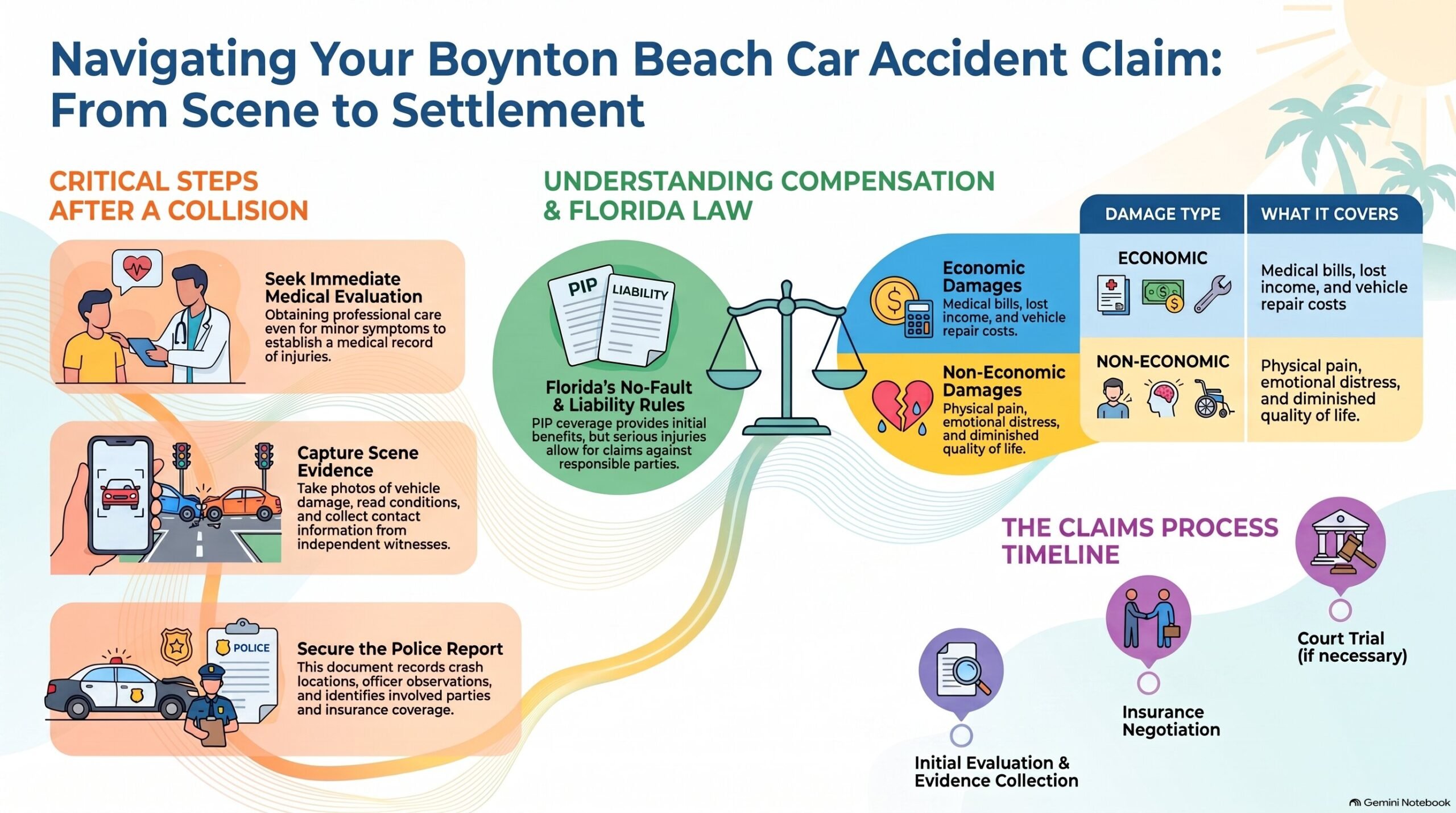
- Florida’s PIP coverage may provide initial medical benefits, while serious injuries can support claims against responsible parties.
- Compensation may include medical expenses, lost income, vehicle damage, pain and suffering, and future treatment or reduced earning capacity.
- Prompt medical care and legal advice help protect deadlines, address comparative fault, and prevent damaging communications with insurers.


How We Can Help With Your Boynton Beach Car Accident Claims & Compensation Injury Claim
When a Boynton Beach car accident causes injuries, an experienced personal injury lawyer can manage the legal process while protecting the claimant’s rights and interests. Counsel can begin by reviewing the collision details, identifying responsible parties, and explaining available legal options in clear terms. This support allows an injured person to focus on medical care while necessary tasks receive timely attention.
The lawyer can gather police reports, witness statements, photographs, medical records, and other evidence needed to present a well-organized claim. Insurance proof issues may require careful review of policy information and coverage limits, as well as communication with insurers. Counsel can also address car repair documentation, including estimates, invoices, photographs, and records showing how property damage relates to the incident.
A representative may communicate with adjusters, organize supporting materials, and help prevent avoidable statements or procedural errors. Through diligent service, the legal team can promote an orderly process and ensure the claimant’s information, concerns, and legal interests receive appropriate consideration.
OUR CONSULTATIONSARE FREE
START YOUR FREE CASE REVIEW

Understanding Boynton Beach Car Accident Claims & Compensation Injury Cases
Understanding a Boynton Beach car accident claim begins with recognizing how liability, injury evidence, insurance coverage, and financial losses interact. A claim may involve medical treatment, documented limitations, vehicle damage, lost income, and other measurable consequences. Reliable records help establish the connection between the collision and the injuries, while statements, photographs, and official reports may clarify responsibility.
Florida no-fault basics require most drivers to seek initial medical benefits through personal injury protection coverage, subject to applicable conditions and limits. Serious injuries or losses beyond available benefits may support an additional claim against a responsible party. Policy limits explained are critical because an insurer’s maximum obligation can restrict potential recovery, even when damages are substantial.
A careful evaluation considers available policies, the injured person’s expenses, future needs, and comparative responsibility. Legal guidance can help preserve evidence, communicate with insurers, and pursue compensation consistent with the facts. This process allows families, employers, and communities to receive informed, dependable assistance during difficult circumstances.
Common Causes of Boynton Beach Car Accident Claims & Compensation
Boynton Beach car accident claims commonly arise from distracted driving, speeding, and other forms of reckless operation. Drunk driving collisions also remain a significant cause, often resulting in severe injuries and intricate liability issues. Poor road conditions, including inadequate maintenance or hazardous defects, may further contribute to crashes and potential compensation claims.
Distracted Driving Accidents
Distracted driving accidents occur when a motorist’s attention is diverted from the roadway, reducing the ability to perceive hazards, make timely decisions, and control the vehicle safely. Phone distraction remains a leading source of these collisions, including texting, dialing, reading notifications, or using navigation applications while driving. Other distractions may involve eating, adjusting entertainment systems, conversing with passengers, or attempting to reach objects inside the vehicle. Even brief inattention can prevent a driver from recognizing a pedestrian, cyclist, stopped vehicle, or changing traffic signal. Red light mistakes may occur when a distracted motorist fails to notice a signal, stops beyond the intersection, or proceeds without confirming that traffic has cleared. Injured individuals may benefit from documenting witnesses, photographs, medical treatment, and communications with insurers, and from evaluating available legal remedies with qualified counsel.
Speeding And Reckless Driving
When a driver exceeds posted speed limits or operates a vehicle in deliberate disregard of traffic laws, the increased speed and reduced reaction time can substantially heighten the risk of a collision. Speeding may worsen injuries, extend stopping distances, and reduce a driver’s ability to respond to changing traffic conditions. Reckless conduct can include unsafe passing, aggressive lane changes, tailgating, or ignoring signals and right-of-way rules. Establishing fault often requires reviewing crash reports, vehicle data, photographs, witness statements, and available surveillance footage. These materials may help resolve speeding liability disputes and identify evidence of reckless acts. A qualified legal professional can assess whether the conduct caused the collision and contributed to medical expenses, lost income, property damage, or other losses. Prompt documentation also helps preserve information necessary for a fair claim.
Drunk Driving Collisions
Impaired driving collisions occur when alcohol or drugs diminish a driver’s judgment, coordination, reaction time, or ability to follow traffic laws. In Boynton Beach, these crashes may cause severe injuries because an impaired motorist can drift across lanes, miss signals, or respond too slowly to hazards. Evidence may include police reports, witness accounts, toxicology results, and video recordings. Sobriety checkpoint procedures can affect how officers identify suspected impaired drivers and whether evidence was gathered lawfully. Questions regarding DUI breathalyzer accuracy may also arise, particularly when calibration, maintenance, administration, or timing is disputed. Injured individuals and families may benefit from preserving medical records, photographs, and communications with insurers. A qualified attorney can assess liability, available insurance coverage, and potential compensation while helping affected people pursue accountability and necessary support.
Poor Road Conditions
Poor road conditions can contribute substantially to car accidents in Boynton Beach by creating hazards that drivers cannot reasonably anticipate or avoid. Potholes, uneven pavement, inadequate drainage, and loose debris on the roadway may reduce vehicle control, damage tires, or force sudden maneuvers. Faded lane markings, missing signs, and malfunctioning signals can further confuse motorists, particularly at night or during heavy rain. Hazardous intersections may result when sight distances are obstructed, traffic controls are poorly maintained, or roadway designs fail to accommodate ordinary traffic patterns. Government agencies and maintenance contractors generally have responsibilities to inspect, repair, and warn about dangerous conditions. When a failure to address a known hazard contributes to a collision, injured individuals may pursue compensation for medical expenses, lost income, property damage, and other legally recognized losses. Documentation can support accountability.
Don’t Wait. Call Our Florida Personal Injury Lawyers Now!


Legal Rights of Boynton Beach Car Accident Claims & Compensation Injury Victims
Boynton Beach car accident injury victims have legal rights that may allow them to pursue compensation for medical expenses, lost income, property damage, and pain and suffering. Those rights can help injured individuals obtain necessary care and protect household stability while claims are evaluated.
A victim may generally:
- Seek payment from an at-fault driver’s insurer
- Present evidence supporting liability and damages
- Request compensation for future treatment and reduced earning capacity
- Challenge an insurer’s inadequate settlement offer
- Consult a qualified attorney before signing a release
Comparative negligence impacts recovery when more than one party contributed to an accident. Florida’s modified comparative negligence rules may reduce compensation according to the victim’s assigned share of fault, and recovery can be barred when that share exceeds the applicable statutory threshold. Florida injury deadlines also require prompt attention because statutes of limitation can restrict the time available to file a lawsuit. Medical records, wage documentation, photographs, and witness information can preserve evidence. Legal guidance may help victims understand available remedies and serve their families responsibly.
Why Do Boynton Beach Car Accident Claims & Compensation Injuries Happen?
Car accident injuries in Boynton Beach commonly result from driver negligence, hazardous road conditions, vehicle defects, or a combination of contributing factors. Distracted driving, speeding, impairment, aggressive maneuvering, and failure to yield can prevent motorists from recognizing hazards or responding safely. Poorly maintained pavement, inadequate signage, limited lighting, standing water, and construction zones may also increase the risk of collisions. In some cases, defective brakes, tires, airbags, or other components can cause severe injuries, leading to potential claims against manufacturers, repair facilities, or vehicle owners.
Injuries may include fractures, spinal damage, traumatic brain injuries, internal bleeding, and emotional distress. Their seriousness often depends on impact speed, occupant positioning, restraint use, and medical vulnerability. Afterward, Evidence Preservation can become important because vehicle damage, roadway conditions, witness accounts, and records may clarify causation. Insurance Pressure may further complicate claim evaluation when insurers seek rapid statements or settlements before the full medical and financial consequences are understood. These factors explain why careful legal assessment remains valuable for injured individuals and families.
What Should You Do After a Boynton Beach Car Accident Claims & Compensation Injury?
After a car accident in Boynton Beach, the injured person should seek immediate medical care, even if symptoms initially appear minor. The accident scene should be documented with photographs, witness information, and relevant records when circumstances permit. Prompt consultation with a personal injury lawyer can help protect legal rights and guide the claims process.
Seek Immediate Medical Care
Because some accident-related injuries do not appear immediately, anyone involved in a Boynton Beach collision should obtain prompt medical evaluation, even when symptoms seem minor or absent. A healthcare professional can identify trauma that may worsen without treatment, including concussions, internal injuries, soft-tissue damage, and spinal conditions. Medical records also establish the timing, nature, and severity of reported complaints, supporting a clear account of the injury’s progression. The injured person should describe every symptom accurately and disclose relevant medical history. Hidden Injury Symptoms may develop over hours or days, so instructions from the treating provider should be followed carefully. Follow-up examinations may be necessary to monitor recovery, adjust treatment, and identify complications. Prompt care demonstrates responsible attention to health while helping preserve information needed for a potential claim.
Document The Accident Scene
When conditions permit, an injured person or another responsible individual should document the Boynton Beach accident scene before vehicles, debris, or other physical evidence are moved. Photographs should show vehicle positions, damage, lane markings, traffic signs, weather, lighting, and visible injuries without creating additional danger. Road hazard documentation can record potholes, standing water, obstructed views, or other conditions that may have contributed to the collision. Individuals should note the approximate time, location, direction of travel, and sequence of events while memories remain clear. Witness contact info, including names and telephone numbers, may help preserve independent accounts. Traffic signal footage may be available from nearby businesses or public agencies, while dashcam evidence should be saved in its original format. Documentation should remain factual, organized, and respectful of everyone involved.
Contact A Personal Injury Lawyer
Preserving accident-scene information can help establish how a Boynton Beach collision occurred, but evaluating liability and pursuing compensation often requires legal guidance. A personal injury lawyer can review medical records, insurance communications, photographs, and police reports to identify responsible parties and protect a client’s rights. Early consultation also supports the preservation of evidence, including vehicle inspections, video recordings, and witness contact, before information becomes unavailable. Counsel can explain compensation options for medical expenses, lost income, property damage, and pain-related losses while addressing applicable deadlines. If a collision causes a fatality, surviving relatives may need advice regarding a wrongful death claim and available damages. A lawyer may also communicate with insurers, assess settlement proposals, and coordinate documentation, allowing an injured person to focus on recovery and assisting others affected by the accident.
Critical Evidence in a Boynton Beach Car Accident Claims & Compensation Injury Case
Significant evidence can establish liability, document injuries, and support the value of a Boynton Beach car accident claim.
Relevant materials commonly include:
- Accident scene photographs
- Police reports
- Medical treatment records
- Witness statements
- Vehicle damage and repair records
Careful preservation of these materials helps clarify the accident’s circumstances and strengthens the injured party’s compensation case.
Accident Scene Photos
Photographs taken at a Boynton Beach car accident scene can provide objective evidence of vehicle damage, road conditions, traffic controls, debris patterns, and visible injuries. Prompt images may preserve details that disappear after vehicles move, weather changes, or repairs begin. Vehicle damage documentation should include wide views, close-ups, license plates, airbag deployment, broken glass, tire marks, and nearby property damage. If safe, individuals should photograph the surrounding area from several angles without interfering with emergency care or traffic. Images can help explain how forces affected each vehicle and may support evaluations of injury claims, repair costs, and disputed facts. Clear, time-stamped photographs can also assist Insurance adjuster interviews by providing a consistent visual reference. Photos should be stored securely, preserved in original form, and shared with qualified legal counsel before settlement discussions.
Police Reports
When law enforcement responds to a Boynton Beach car accident, the resulting police report may provide important evidence for an injury claim or compensation dispute. It typically records the crash location, involved vehicles, witness information, statements, apparent traffic violations, and the officer’s observations. Although a report is not conclusive proof of fault, its details can help establish an initial account of events and identify inconsistencies in later statements. A careful review may also reveal references to photographs, roadway conditions, citations, or opportunities to preserve available surveillance and dashcam footage. Promptly obtaining the report supports an organized timeline for evidence collection, particularly before records become difficult to locate. Individuals assisting accident victims should preserve the original report, note any inaccuracies, and coordinate requests for additional evidence through appropriate legal channels.
Medical Treatment Records
Medical treatment records can establish the nature, severity, and duration of injuries claimed after a Boynton Beach car accident. These records may include emergency evaluations, diagnostic imaging, physician notes, prescriptions, therapy reports, and surgical documentation. Together, they link reported symptoms to professional findings and show whether treatment followed a consistent course.
Record accuracy is essential. Dates, diagnoses, limitations, and treatment recommendations should correspond across providers, reducing questions about gaps or inconsistencies. Disability documentation can further explain missed work, restricted duties, or continuing functional impairments when supported by medical opinions.
Detailed records also help identify Common medical costs, including hospital services, rehabilitation, medication, and anticipated future care. Billing verification confirms that charges relate to accident-related treatment and are properly documented. Preserving complete records allows a claim to be evaluated fairly and supports responsible assistance for injured individuals.
Witness Statements
Witness statements can provide essential evidence in a Boynton Beach car accident claim by describing how the collision occurred, the traffic conditions, and the conduct of the involved drivers. Independent accounts may clarify disputed facts, identify unsafe actions, and support liability explanations when physical evidence is incomplete. Attorneys often assess Eyewitness credibility tips, including the person’s vantage point, consistency, attentiveness, and relationship to the parties. Prompt interviews can preserve accurate recollections before memories change or become influenced by later discussions. Claimants should focus on preserving contact details for witnesses, such as names, telephone numbers, and email addresses, along with brief notes on what each person observed. Investigators may also obtain signed statements, photographs, or recordings when appropriate. Respectful communication helps witnesses understand their role in serving an accurate, fair resolution for everyone affected.
Long-Term Effects of Boynton Beach Car Accident Claims & Compensation Injuries
Long-term injuries from Boynton Beach car accidents may result in chronic pain, reduced mobility, and permanent disability that affect a person’s ability to work and perform daily activities. Emotional and psychological trauma, including anxiety, depression, and post-traumatic stress, may also persist after physical wounds have recovered. Ongoing medical expenses for treatment, rehabilitation, medication, and supportive care can create substantial financial burdens that may be considered in a compensation claim.
Chronic Pain and Disability
When injuries from a Boynton Beach car accident persist beyond the expected recovery period, chronic pain and disability may substantially affect an individual’s ability to work, perform daily activities, and maintain independence. Ongoing symptoms can require Work restrictions, modified duties, assistive equipment, or periodic medical treatment. Functional limitations may prevent lifting, standing, walking, driving, or completing tasks at a prior pace. Daily living impairments can make bathing, dressing, household maintenance, and caregiving more difficult, creating a need for family assistance or professional support. A lasting condition may also reduce earning capacity through missed work, diminished productivity, career changes, or the inability to return to a former occupation, resulting in vocational loss. Documentation from physicians, therapists, employers, and vocational professionals can help establish the injury’s continuing effects and support a claim for appropriate compensation.
Emotional and Psychological Trauma
Persistent physical limitations may also produce emotional and psychological trauma after a Boynton Beach car accident. Individuals may experience anxiety, depression, irritability, sleep disruption, or fear of driving, particularly when injuries interfere with independence and family responsibilities. Some survivors repeatedly revisit the collision or remain constantly alert to potential danger, symptoms associated with post-traumatic stress disorder. The aftermath of stress can affect employment, relationships, concentration, and participation in everyday community activities. Recognizing these effects is critical because psychological harm may persist even after visible injuries improve. A qualified mental-health professional can evaluate symptoms and develop counseling, behavioral, or trauma-focused strategies to support PTSD recovery. Family members and caregivers can assist by providing patience, encouragement, and practical support without minimizing the survivor’s experience. Thorough documentation may help clarify the trauma’s impact during a claim.
Ongoing Medical Expenses
Ongoing medical expenses may become a substantial component of Boynton Beach car accident claims when injuries require extended treatment, medication, rehabilitation, or expert care. A complete claim may account for anticipated surgeries, physical therapy, diagnostic testing, assistive equipment, prescription costs, and necessary modifications to the patient’s home or vehicle. Medical records, treatment plans, physician opinions, and life-care projections can help establish the probable duration and value of future care. When complications arise, the responsible party may dispute whether expenses relate to the collision, making thorough documentation particularly important. Separate legal issues may exist if Medical malpractice worsens accident-related injuries. Ongoing treatment can also create wage loss when appointments or disability prevent employment. Legal counsel may coordinate medical evidence, insurance claims, and settlement evaluations to protect long-term financial security.
Proving Liability in Boynton Beach Car Accident Claims & Compensation Injury Cases
Establishing liability in a Boynton Beach car accident claim requires evidence showing that another driver’s negligence caused the collision and resulting injuries. Negligence Standards generally require proof that the driver owed a duty of reasonable care, breached that duty, and directly caused measurable harm. Common examples include speeding, distracted driving, impaired driving, unsafe lane changes, and following too closely.
Evidence Preservation should begin promptly. Accident reports, photographs, traffic-camera recordings, vehicle damage, witness statements, and electronic data may help establish how the crash occurred. Medical records can connect documented injuries to the collision, while employment records may demonstrate related limitations. A careful investigation may also identify roadway conditions, vehicle defects, or other contributing factors that affect responsibility.
A legal professional serving injured individuals can organize these materials, identify inconsistencies, and consult accident-reconstruction or medical experts when necessary. Because evidence may disappear or memories may fade, prompt action supports a fair evaluation of fault and the full consequences of the incident.
Dealing With Insurance Companies After a Boynton Beach Car Accident Claims & Compensation Injury
After a Boynton Beach car accident, injured individuals often must communicate with insurers while managing medical treatment and financial disruptions. Insurance representatives may request recorded statements, medical authorizations, photographs, or other information. Such requests should be reviewed carefully before a response is provided, because statements or documents can influence how an insurer evaluates responsibility and damages. An injured person should avoid speculating about fault, minimizing symptoms, or accepting an early settlement before the full medical impact becomes reasonably clear. Promptly reporting the collision remains important, but communication should remain accurate and limited to relevant facts. Policyholders may also need to examine available uninsured motorist coverage when the responsible driver lacks insurance or cannot be identified. Florida claim deadlines can affect the ability to pursue compensation, making timely legal guidance particularly valuable. A qualified attorney can communicate with insurers, protect the injured person’s interests, and help ensure that financial recovery efforts do not interfere with ongoing care or service to affected family members.
Don’t Wait. Call Our Florida Personal Injury Lawyers Now!
What to Expect During a Boynton Beach Car Accident Claims & Compensation Injury Claim Process
A Boynton Beach car accident claim typically begins with an initial case evaluation to assess liability, injuries, damages, and available legal options. The process may then involve collecting medical records, accident reports, witness statements, and other evidence while negotiations with the insurance company proceed. If settlement efforts do not produce a fair resolution, the claim may proceed to trial.
Initial Case Evaluation
During an initial case evaluation, a Boynton Beach car accident claims and compensation lawyer reviews the circumstances of the collision, the available evidence, and the claimant’s injuries to determine whether a viable personal injury claim exists. The discussion typically addresses medical treatment, insurance communications, employment effects, and the claimant’s recovery concerns. Counsel may explain potential legal theories, applicable deadlines, comparative fault issues, and realistic compensation categories without promising a particular result. A medical documentation strategy can help organize treatment records, diagnoses, bills, and physician opinions so that injuries are accurately presented. The lawyer may also recommend evidence preservation steps, including retaining relevant correspondence and avoiding statements that could undermine the claim. This evaluation allows informed decisions about representation and supports a service-centered approach focused on protecting the injured person’s interests.
Evidence Collection Process
When a Boynton Beach car accident injury claim moves beyond the initial evaluation, the evidence collection process establishes the factual and medical foundation of the case. A legal team may obtain crash reports, photographs, video footage, vehicle damage records, witness statements, and available roadway or traffic data. Medical documentation is organized to show diagnoses, treatment, restrictions, expenses, and the connection between the collision and reported injuries. A clear Medical records timeline can identify treatment gaps and explain recovery progress without overstating the evidence. Employment records may document missed work and reduced earning capacity. Clients generally assist by preserving receipts, maintaining symptom notes, following medical instructions, and promptly sharing correspondence. Insurance negotiation tips may be discussed later, but this stage focuses on accuracy, preservation, verification, and the assembly of reliable support for the claim.
Insurance Claim Negotiations
Once the available evidence is organized, insurance claim negotiations focus on how the insurer evaluates liability, medical documentation, damages, and the requested compensation amount. During this stage, the insurer may review police reports, witness statements, photographs, treatment records, wage information, and other materials relevant to fault determination. A representative may ask for clarification, identify alleged inconsistencies, or request additional documentation before assessing the claim. Careful preservation of evidence remains important because missing or altered records can weaken the presentation of injuries and financial losses. A claim representative or attorney may prepare a demand supported by medical opinions, billing records, employment documentation, and a reasoned explanation of responsibility. Communication should remain accurate and consistent, while deadlines and insurer correspondence require prompt attention. These efforts help protect the injured person’s interests throughout the evaluation process.
Settlement Or Trial
Settlement or trial represents the point at which a Boynton Beach car accident injury claim may conclude through negotiated compensation or proceed to a formal court decision. During settlement discussions, the injured person’s legal representative evaluates medical records, lost income, future care needs, liability evidence, and available insurance coverage. An effective Insurance negotiation strategy seeks compensation that reflects both current losses and foreseeable consequences, while protecting the claimant from premature resolution. If negotiations fail, the case may proceed to trial. Trial evidence planning then becomes vital, including witness preparation, expert testimony, accident reconstruction, and organized presentation of medical documentation. A judge or jury will assess credibility, responsibility, and damages before issuing a decision. Throughout either path, careful communication helps the injured person understand options, obligations, timelines, and potential risks before making informed decisions.
Compensation for Boynton Beach Car Accident Claims & Compensation Injury Damages
Compensation for Boynton Beach car accident injuries may cover medical expenses, lost income, property damage, and the physical or emotional harm caused by another party’s negligence. A claim generally requires clear evidence connecting the accident to the responsible person’s conduct. Medical expense documentation, including hospital records, invoices, prescriptions, and rehabilitation statements, can establish the care required and the charges incurred. Employment records and wage statements may support income-related losses, while repair estimates and ownership documents can help verify vehicle damage. Proving fault elements typically involves showing that the other driver owed a duty of care, breached that duty, and caused the collision and resulting injuries. Witness accounts, photographs, traffic-camera footage, and crash reports may strengthen that showing. Prompt medical attention and consistent follow-up can also help demonstrate injury progression. A lawyer may organize evidence, communicate with insurers, and pursue compensation that reflects the claimant’s documented losses and the need for fair treatment throughout the process.
Economic vs Non-Economic Damages in Boynton Beach Car Accident Claims & Compensation Cases
Boynton Beach car accident claims may include both economic and non-economic damages, depending on the losses sustained. Economic damages address measurable costs such as medical bills, lost income, and property damage, while non-economic damages concern pain, emotional distress, and diminished quality of life. Comparing these compensation types requires careful assessment of the evidence and the accident’s broader impact.
Economic Damages Explained
Economic damages represent the measurable financial losses resulting from a car accident, including medical expenses, lost income, property damage, and anticipated future costs. In Boynton Beach claims, economic damage calculation methods typically compare documented bills, wage records, repair estimates, and expert projections to determine the full financial impact. Medical costs may include emergency treatment, hospitalization, rehabilitation, prescriptions, and necessary follow-up care. Lost earnings can include missed work, reduced earning capacity, and employment benefits unavailable during recovery. Proving medical documentation requires organized records that connect treatment to the collision, including invoices, physician reports, diagnostic results, and care plans. Future expenses may require testimony from medical or financial professionals. Accurate documentation enables a claim to present verifiable losses and supports a fair compensation request for affected individuals and their families.
Non-Economic Damages Assessed
While economic damages cover documented financial losses, non-economic damages compensate for the personal impacts of a car accident that lack a fixed market value. In Boynton Beach claims, these damages may reflect physical pain, emotional distress, inconvenience, disfigurement, loss of enjoyment, and diminished quality of life. Assessment commonly considers injury severity, treatment duration, prognosis, daily limitations, and credible testimony from the injured person, family members, and medical professionals. A claimant’s consistent records and evidence preservation steps, including maintaining treatment notes and documenting functional changes, can support a persuasive evaluation. Counsel may also examine Trial vs settlement strategies when presenting these effects to insurers or a jury. The assessment should remain individualized, grounded in reliable evidence, and focused on how the collision altered the claimant’s ordinary life and relationships.
Comparing Compensation Types
A complete damages analysis in a Boynton Beach car accident claim compares measurable financial losses with the personal harm documented through non-economic damages. Economic damages may include emergency treatment, rehabilitation, medication, vehicle repairs, lost wages, and reduced future earning capacity. Records, invoices, employment evidence, and expert testimony generally support these amounts. Attorneys may also address future loss calculations when injuries require continuing care or limit a person’s ability to work.
Non-economic damages compensate for pain, emotional distress, inconvenience, disfigurement, loss of enjoyment of life, and diminished quality of life. These losses lack fixed invoices, so medical opinions, personal accounts, and testimony from family members may help establish their impact. Uninsured motorist coverage can provide an additional source of recovery when the at-fault driver lacks adequate insurance. A careful comparison ensures every affected person receives appropriate consideration and lawful compensation.
When a Boynton Beach Car Accident Claims & Compensation Injury Case Goes to Trial vs Settlement
When liability, injuries, and damages remain disputed, a Boynton Beach car accident claim may proceed to trial rather than resolve through settlement. Settlement allows the parties to negotiate compensation without presenting evidence before a judge or jury. It may provide greater predictability, lower costs, and earlier resolution, although the injured person must accept an agreed-upon amount.
Trial preparation requires organized medical records, witness testimony, accident evidence, and documentation supporting lost income and related losses. Damages valuation becomes especially important when the parties disagree about treatment, long-term effects, or the causal link between the accident and the claimed injuries. A legal professional can help present this information clearly while protecting the claimant’s interests.
The Trial timeline may extend from initial filings through discovery, motions, hearings, and courtroom proceedings. No outcome is guaranteed, and a decision may depend on credibility and evidence. Whether pursuing settlement or trial, counsel should explain risks, likely costs, and practical consequences so the injured person can make an informed decision.
Florida Laws That May Affect Your Boynton Beach Car Accident Claims & Compensation Case
Florida law establishes the deadlines, liability standards, insurance requirements, and damage rules that may shape a Boynton Beach car accident claim. Understanding these rules helps an injured person, their family, or a community advocate pursue fair treatment and make informed decisions.
Florida law shapes Boynton Beach accident claims through deadlines, insurance rules, liability standards, and damage requirements.
- Comparative negligence rules may reduce compensation when an injured party shares responsibility for the crash.
- Florida’s no-fault system generally requires personal injury protection coverage before pursuing certain injury damages from another driver.
- No-fault policy limits can restrict initial medical and wage-loss benefits, depending on policy terms and injury severity.
- Liability coverage may apply when damages exceed available personal injury protection or when statutory injury thresholds are met.
- Evidence such as collision reports, medical records, photographs, and witness statements can support fault and damage calculations.
Florida law also distinguishes economic losses from noneconomic damages and may impose specific requirements for proving permanent injuries. Insurance disclosures, medical documentation, and careful claim evaluation can help protect the interests of those seeking to serve injured individuals.
Don’t Wait. Call Our Florida Personal Injury Lawyers Now!
The Statute of Limitations for Boynton Beach Car Accident Claims & Compensation Injury Cases
For Boynton Beach car accident injury cases, the statute of limitations establishes the deadline for filing a lawsuit against a potentially responsible party. In Florida, the applicable period may depend on the injury, parties involved, and legal theory supporting the claim. Missing the deadline can result in dismissal, even when evidence strongly indicates another party’s negligence.
Wrongful Death actions follow separate timing requirements, generally measured from the date of death rather than the accident itself. Claims involving governmental entities may require earlier notice and additional procedural compliance. Insurance Denials do not necessarily extend the time available to file a civil action, and settlement discussions may not pause the statutory period.
Because exceptions and deadlines can vary, it is important to preserve records, medical documentation, witness information, and accident reports. Timely attention supports an orderly process and helps protect the interests of injured individuals and surviving families. A clear understanding of the filing period can prevent avoidable loss of legal rights and promote fair accountability.
How a Boynton Beach Car Accident Claims & Compensation Lawyer Can Help You
A Boynton Beach car accident claims and compensation attorney can evaluate the circumstances of a collision, identify potentially liable parties, and develop a legal strategy supported by evidence.
The attorney can also serve injured individuals and their families by coordinating communications, clarifying available remedies, and protecting their interests throughout the claims process.
- Explain rights, damages, and potential sources of compensation.
- Provide Evidence preservation tips, including how to secure photographs, records, and witness information.
- Review the medical documentation and link the losses to the collision.
- Handle Insurance dispute resolution steps, including negotiations and responses to inadequate offers.
- Prepare pleadings, evidence, and arguments if litigation becomes necessary.
This assistance allows claimants to focus on medical care and family responsibilities while a qualified representative manages procedural demands. The lawyer may consult accident reconstruction professionals, medical doctors, and financial experts when their opinions strengthen the claim. By organizing facts and presenting them clearly, legal counsel can promote fair treatment, reduce avoidable delays, and pursue compensation consistent with the documented injuries and losses.
When to Contact a Boynton Beach Car Accident Claims & Compensation Lawyer
Prompt legal guidance can protect a person’s rights after a collision, particularly when injuries, disputed liability, or significant financial losses are involved. A Boynton Beach car accident claims and compensation lawyer should be contacted promptly when medical treatment is necessary, symptoms worsen, or recovery may require ongoing care. Early consultation can help preserve records, identify deadlines, and organize information while the events are still clear.
Legal assistance may also be appropriate when an insurer delays payment, offers inadequate compensation, or issues a denial. Insurance denial appeals often require careful review of policy language, medical documentation, and liability evidence. A lawyer can explain available responses without encouraging unnecessary conflict.
Professional guidance is particularly important if another driver disputes responsibility, multiple vehicles are involved, or Florida traffic citations have been issued. Contact may also be warranted after a fatal crash, a hit-and-run, or substantial property damage. Individuals seeking to support injured family members or community members can encourage timely consultation, allowing informed decisions before statements, settlements, or procedural deadlines affect the claim.
Why You Need an Experienced Boynton Beach Car Accident Claims & Compensation Lawyer
When a collision involves serious injuries, disputed fault, or substantial financial losses, an experienced Boynton Beach car accident claims and compensation lawyer can provide informed guidance throughout the claim process. Such representation helps preserve evidence, assess medical documentation, and identify the full range of recoverable damages. Counsel can also manage communications with insurers, whose settlement offers may not account for ongoing treatment, lost income, rehabilitation, or necessary support services.
A knowledgeable lawyer can investigate roadway conditions, driver conduct, maintenance records, and potential vehicle defects. When injuries from a faulty product contribute to a crash, the claim may involve manufacturers, distributors, or other responsible parties in addition to the drivers. Recognizing these issues requires careful investigation and familiarity with applicable Florida law. Legal guidance also supports families caring for injured relatives by reducing administrative burdens and helping meet important deadlines. Experienced representation can promote a thorough, fair evaluation of the claim while allowing injured individuals to concentrate on recovery and vital personal responsibilities during a difficult period.
How to Choose the Right Boynton Beach Car Accident Claims & Compensation Lawyer for Your Case
Selecting the right Boynton Beach car accident claims and compensation lawyer requires more than reviewing advertising or general practice experience. A suitable attorney should demonstrate a focused record handling comparable collisions, serious injuries, disputed liability, and insurance negotiations. Prospective clients should ask how the lawyer evaluates damages, communicates case developments, and coordinates with medical professionals while protecting the client’s interests.
The attorney should explain essential deadlines, including filing limitations and notice requirements, in language the injured person can understand. Effective representation also requires recognizing insurer tactics that may minimize payments, shift blame, or pressure an early settlement. During an initial consultation, the lawyer should discuss evidence preservation, such as securing photographs, vehicle records, witness information, and electronic data before it disappears. Thorough medical documentation is equally important because treatment records and physician opinions help connect injuries to the crash and establish future needs. A lawyer who offers attentive guidance, realistic assessments, and a service-oriented approach can help clients pursue fair compensation with confidence and informed expectations.
About The Law Offices of Anidjar & Levine
The Law Offices of Anidjar & Levine represents individuals pursuing compensation after car accidents in Boynton Beach and throughout Florida.
The firm’s attorneys evaluate crash circumstances, identify potentially responsible parties, and explain legal options to clients seeking a fair resolution.
Their work may involve gathering records, communicating with insurers, consulting qualified experts, and preparing claims for negotiation or litigation.
The firm emphasizes responsive communication and individualized attention throughout the legal process.
By examining medical documentation, employment losses, property damage, and other evidence, its team works to present a complete account of the client’s losses.
This approach can help individuals and families make informed decisions during a difficult period.
Clients may also benefit from the firm’s familiarity with Local resources, Florida insurance requirements, and court procedures.
Because laws and claims practices can change, the attorneys monitor relevant legal updates and apply current information when developing case strategies.
Prospective clients can contact the firm to discuss their circumstances and available next steps.
Frequently Asked Questions
Can I Afford a Boynton Beach Car Accident Lawyer Without Paying Upfront Fees?
Many accident lawyers allow injured clients to pursue claims without paying legal fees upfront. Contingency payment options generally mean the attorney receives an agreed-upon percentage of any settlement or court award, rather than an hourly fee. An upfront retainer may also be required, although clients should confirm whether case expenses, such as filing fees or expert costs, are billed separately. Before hiring counsel, the client should carefully review the fee agreement, potential expenses, and terms of representation.
Will My Car Accident Claim Affect My Health Insurance or Government Benefits?
A car accident claim generally does not cancel private health insurance, but insurers may seek repayment for accident-related medical expenses from any settlement. Medicaid eligibility can be affected by settlement proceeds, particularly if funds increase countable assets or income. Government benefits, including disability assistance, may also involve reporting requirements and benefit reimbursement claims. A qualified lawyer can coordinate with healthcare providers and benefit agencies, protect eligibility when possible, and explain required disclosures before accepting compensation.
Can Family Members File Claims for Emotional Distress After a Fatal Car Accident?
Family members may file emotional-distress claims after a fatal car accident, but eligibility depends on state law and the claimant’s relationship to the deceased. The Surviving Family may pursue Separate Claims when Negligent Conduct caused legally recognized psychological injury, such as severe trauma or diagnosed conditions. Courts generally require Proof Of Harm, supported by medical records and professional testimony. Damages may also include loss of companionship and support, as well as funeral expenses.
What Happens if the At-Fault Driver Has No Insurance or Cannot Be Located?
If the at-fault driver has no insurance or cannot be located, the injured person may pursue Uninsured Motorist coverage under their own automobile policy, subject to policy limits, exclusions, and required notice. A lawyer can also investigate available assets, identify other potentially responsible parties, and preserve evidence supporting the claim. The Locate claimant process may involve police reports, witnesses, vehicle records, and documented search efforts before uninsured-motorist benefits are pursued.
Can I Switch Attorneys if I Am Unhappy With My Current Car Accident Lawyer?
A client can generally change attorneys if dissatisfied, although the process for replacing an attorney depends on the representation agreement, the stage of the case, and court requirements. The client should review the termination provisions, notify current counsel in writing, and promptly consult with replacement counsel to avoid missing deadlines. A Client loyalty question may arise, but professional obligations require protecting the client’s interests. Fees, liens, and transfer of the case file should be addressed before the shift.
—————————
After a Boynton Beach car accident, injured individuals may face medical expenses, lost income, property damage, and lasting physical or emotional effects.
Understanding legal rights and filing requirements is essential to protecting potential compensation.
An experienced car accident lawyer can investigate the collision, establish liability, communicate with insurers, and pursue a fair resolution.
Boynton Beach Personal Injury Lawyer at The Law Offices of Anidjar and Levine evaluates each claim carefully and provides informed guidance throughout the legal process, helping clients make confident decisions about their recovery.

