

F
The Law Offices of Anidjar and Levine help injured individuals in Boynton Beach pursue compensation when another party’s negligence causes harm. A Boynton Beach Personal Injury Lawyer evaluates duty, breach, causation, and comparative negligence while gathering medical records, photographs, witness statements, incident reports, and financial documentation.
Potential compensation may include medical expenses, lost income, rehabilitation costs, property damage, reduced earning capacity, and nonfinancial losses. Legal guidance may also address insurer disputes, evidence preservation, deadlines, settlement negotiations, and litigation.
Main Takeaways
- A Boynton Beach injury lawyer evaluates negligence, liability, causation, and whether you have a valid compensation claim.
- Potential compensation may include medical expenses, lost income, rehabilitation costs, property damage, and nonfinancial losses.
- Evidence such as medical records, photographs, witness statements, incident reports, and financial documents can strengthen your claim.
- Claims may involve vehicle collisions, slip and falls, workplace injuries, medical negligence, defective products, or inadequate security.
- Prompt medical treatment, evidence preservation, and legal guidance can help address insurer disputes and protect your Florida injury claim.


How We Can Help With Your Boynton Beach Claims & Compensation Injury Claim
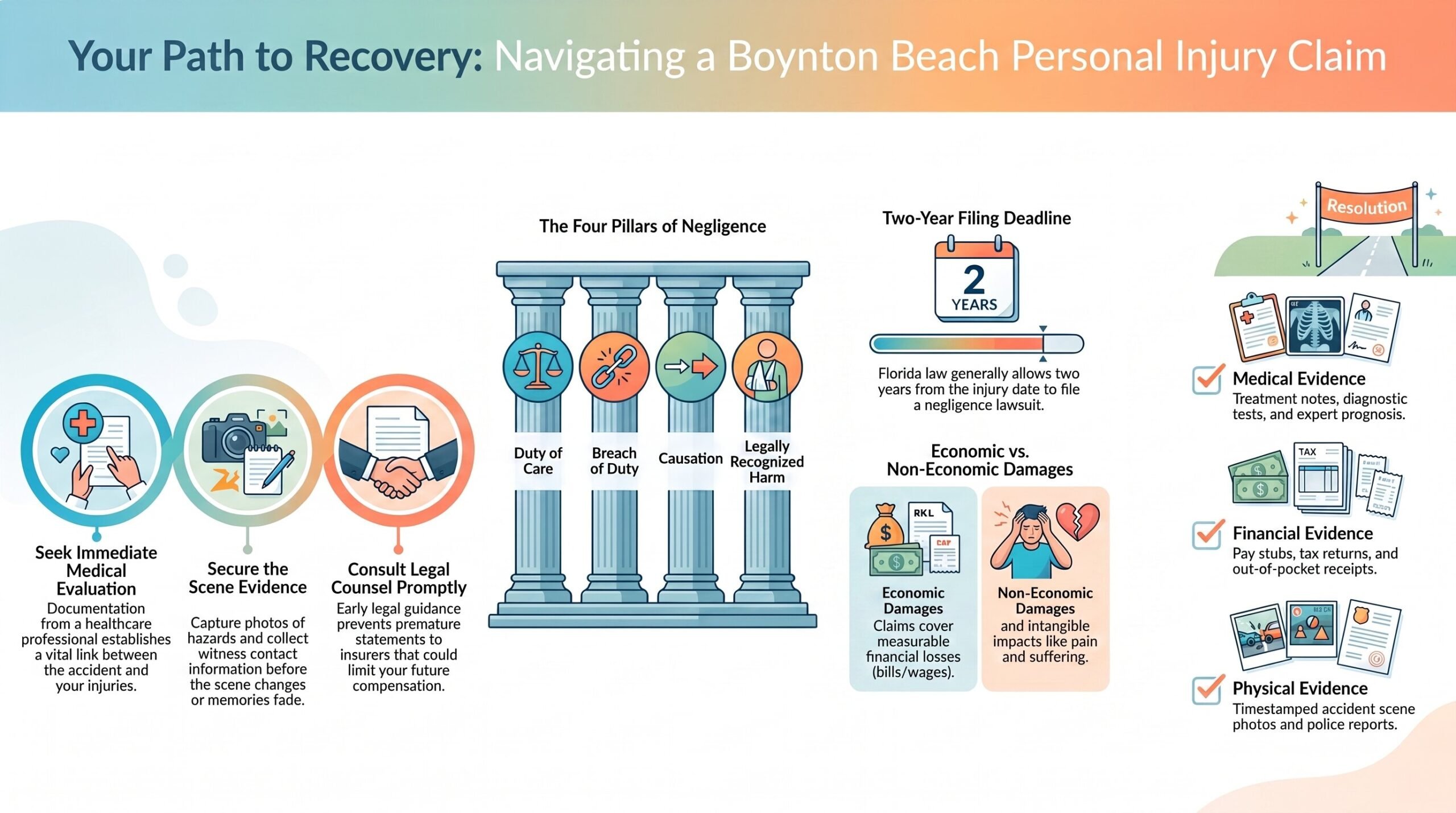
When an injury results from another party’s negligence, a Boynton Beach claims and compensation injury lawyer can help determine whether a valid claim exists and identify the compensation available under Florida law. Legal support may include reviewing incident records, preserving evidence, identifying responsible parties, and coordinating communication with insurers. This assistance allows an injured person to focus on medical recovery while informed decisions are made on the claim.
Counsel can also evaluate medical expenses, lost income, property damage, and other documented losses to develop a practical Settlement strategy. When insurance disputes arise, a lawyer may analyze policy language, challenge unsupported denials, and respond to inadequate offers with evidence-based arguments. Negotiations are handled with attention to deadlines, documentation, and the client’s long-term needs.
For individuals committed to serving others, professional guidance can help protect an injured person’s ability to obtain appropriate support without making premature statements or accepting an unfair resolution. Each matter requires careful assessment because applicable remedies depend on the facts, coverage, and available evidence.
OUR CONSULTATIONSARE FREE
START YOUR FREE CASE REVIEW

Understanding Boynton Beach Claims & Compensation Injury Cases
Boynton Beach claims and compensation injury cases generally arise when a person suffers harm because of another party’s negligence, unsafe conduct, or failure to meet a legal duty. These matters require a careful review of the facts, applicable laws, and available evidence before responsibility can be evaluated. Negligence proof may include medical records, witness statements, photographs, incident reports, and documentation showing how the injury affected daily life. Liability standards determine whether the responsible party owed a duty, breached it, and caused legally recognized harm.
The nature and extent of losses also influence the valuation of damages, including medical expenses, lost income, rehabilitation needs, and nonfinancial impacts. A claim may be resolved through litigation or settlement negotiations, depending on the strength of the evidence and the parties’ positions. Because deadlines, procedural requirements, and comparative responsibility rules can affect recovery, timely legal guidance helps preserve rights and supports informed decisions while promoting fair treatment for injured individuals.
Common Causes of Boynton Beach Claims & Compensation
Common causes of Boynton Beach claims and compensation matters include motor vehicle collisions, slip-and-fall accidents, workplace injuries, and medical negligence. Each circumstance may involve distinct liability standards, evidence requirements, and damages. Understanding how these incidents occur helps clarify the legal considerations affecting potential claims.
Motor Vehicle Collisions
Motor vehicle collisions are a leading source of personal injury claims in Boynton Beach, often resulting from distracted driving, speeding, impaired operation, unsafe lane changes, or failure to yield. These crashes may cause fractures, spinal injuries, traumatic brain injuries, and other conditions requiring extensive medical care and rehabilitation. Evidence such as photographs, witness statements, vehicle damage, police reports, and medical records can help clarify responsibility and support a claim.
Pedestrian safety remains a significant concern, particularly near intersections, school areas, and heavily traveled roads. Traffic signal disputes may arise when drivers and pedestrians provide conflicting accounts of who had the right of way. A careful investigation can identify negligent conduct, preserve relevant evidence, and assist injured individuals in pursuing compensation for medical expenses, lost income, and related losses.
Slip And Fall Accidents
When property owners or occupiers fail to address hazardous conditions, slip-and-fall accidents may result in significant injuries and liability claims in Boynton Beach. Common causes include wet floors, uneven walkways, loose carpeting, inadequate lighting, and debris left in public areas. Parking lot hazards, such as potholes, broken pavement, poor drainage, and insufficient warning signs, may create additional dangers for visitors. Under premises liability principles, an injured person may pursue compensation when a responsible party knew or reasonably should have known about a hazardous condition and failed to correct it.
Negligent security can also contribute when inadequate lighting or unsafe access to the property increases fall risks. Although winter slip risks are less common locally, temporary cold-weather conditions can still affect travelers and visitors. Prompt reporting, medical attention, and careful documentation help protect potential claims.
Workplace Injuries
Workplace injuries in Boynton Beach may arise from unsafe conditions, inadequate training, defective equipment, overexertion, falls, vehicle collisions, or exposure to hazardous substances. Employers have a responsibility to maintain safe worksites, provide appropriate protective equipment, and train personnel regarding known risks. OSHA violations, including inadequate machine safeguards or unsafe procedures, may contribute to serious harm and support an investigation into responsibility.
Construction, manufacturing, hospitality, health care, and transportation workers can face distinct hazards while performing critical services for the community. Injured employees may need to document incidents, identify witnesses, preserve safety records, and promptly report concerns. Wage theft policies may also affect compensation when workers are denied required overtime or misclassified. Legal guidance can help clarify workers’ compensation benefits and potential claims against negligent third parties.
Medical Negligence Claims
Medical negligence claims may arise when a health care provider’s failure to meet the accepted standard of care causes preventable injury or worsens a patient’s condition. Common examples include misdiagnosis, delayed diagnosis, medication errors, surgical mistakes, inadequate monitoring, and failures to provide appropriate follow-up care. A Doctor-Patient Breach may occur when a provider disregards established treatment protocols, overlooks vital symptoms, or fails to communicate necessary medical information.
Informed Consent Failures can also support a claim when patients are not told about significant risks, alternatives, or expected outcomes before treatment. Evidence may include medical records, expert opinions, billing documents, and witness testimony. Individuals pursuing compensation often benefit from prompt legal guidance, careful preservation of evidence, and compassionate support as they address medical, financial, and personal consequences.


Legal Rights of Boynton Beach Claims & Compensation Injury Victims
Boynton Beach injury victims have legal rights that may allow them to pursue compensation for medical expenses, lost income, property damage, and pain and suffering.
Understanding those rights helps individuals make informed decisions while protecting their ability to support family members and serve their communities.
- Victims may seek fair compensation from responsible parties, provided evidence establishes liability and legally recoverable losses. Documentation, witness accounts, and professional guidance can help present a clear claim.
- Comparative negligence may reduce an award when a victim contributed to the harm. A careful assessment of the facts is essential before accepting a settlement or making formal statements.
- Insurance deadlines can limit recovery if notice or claim documents are not submitted promptly. Victims should review applicable policies, preserve relevant records, and communicate cautiously with insurers.
A qualified Boynton Beach attorney can explain procedural requirements, evaluate available remedies, and advocate for a resolution that respects the victim’s rights and long-term needs. This guidance also promotes responsible, informed assistance for others facing similar circumstances.
Why Do Boynton Beach Claims & Compensation Injuries Happen?
Don’t Wait. Call Our Florida Personal Injury Lawyers Now!
Understanding how injuries occur can help identify responsible parties and support a well-documented compensation claim. In Boynton Beach, incidents may result from negligent driving, unsafe premises, defective products, inadequate security, workplace hazards, or professional errors. In many situations, a preventable failure to follow safety standards creates the conditions for physical harm, financial losses, and long-term disruption.
Claims may also arise when property owners ignore dangerous conditions, employers overlook training requirements, or manufacturers distribute products without adequate warnings. Establishing causation requires examining conduct, applicable duties, medical evidence, and the circumstances surrounding the event. Insurance tactics can further complicate the process, particularly when carriers dispute fault, minimize injuries, or propose settlements before the full impact becomes clear.
Understanding these causes helps injured individuals, families, and community advocates recognize patterns of negligence while preserving fairness for all parties. Case timelines often depend on medical recovery, investigations, liability disputes, and statutory deadlines, making careful legal evaluation crucial to responsible service and informed compensation decisions.
What Should You Do After a Boynton Beach Claims & Compensation Injury?
After an injury in Boynton Beach, the injured person should seek immediate medical care, even when symptoms initially appear minor. The accident scene should be documented with photographs, witness information, and relevant records to preserve important evidence. Contacting an experienced injury lawyer can help protect your legal rights and guide you through the claims process.
Seek Immediate Medical Care
Prompt medical evaluation should be a priority following an injury, even when symptoms initially appear minor or manageable. A qualified clinician can identify hidden trauma, document symptoms, and establish appropriate treatment before a condition worsens. Emergency response timing matters, particularly when there is severe pain, bleeding, difficulty breathing, confusion, loss of consciousness, or suspected spinal injury. Calling emergency services and following their instructions can protect the injured person while providing required assistance to others nearby.
Medical records, examination findings, prescriptions, and discharge instructions may also support later claims by creating a reliable account of the injury and its effects. This preservation of evidence should be achieved through consistent medical care and careful adherence to treatment recommendations. Individuals should accurately disclose all symptoms, attend follow-up appointments, and avoid minimizing discomfort when communicating with healthcare professionals.
Document the Accident Scene
Once immediate medical needs are addressed, the accident scene should be documented as soon as conditions permit. A responsible person should photograph vehicle positions, visible damage, road conditions, traffic signs, lighting, weather, and any hazards that may have contributed to the incident. Images should be taken from several distances and angles without entering unsafe traffic areas or disturbing evidence. Contact information for witnesses should be recorded, along with concise statements describing what each person observed.
If a Traffic camera, nearby security system, or business recording may have captured the event, its location and identifying details should be noted promptly. Official reports and relevant records should be preserved. These materials can support negligence proof by establishing conditions, timelines, and actions while memories remain clear, helping protect everyone affected by the accident.
Contact an Injury Lawyer
When should you contact an injury lawyer? An injury lawyer should be consulted promptly after a Boynton Beach accident, particularly when injuries require medical care, another party disputes responsibility, or insurance representatives request statements. Early guidance can protect the injured person’s interests while supporting a fair resolution. Counsel can explain applicable deadlines, communicate with insurers, and coordinate the preservation of evidence before records, photographs, or witness recollections become difficult to obtain.
A lawyer may also review medical documentation, employment records, and accident reports to evaluate liability and develop a damages calculation. This assessment can include treatment costs, lost income, property damage, and potential future needs. By seeking legal assistance early, an injured individual can make informed decisions and avoid statements or agreements that may limit available compensation. Professional representation also helps families understand their options.
Critical Evidence in a Boynton Beach Claims & Compensation Injury Case
Critical evidence can establish liability, document injuries, and substantiate the financial impact of a claim.
Critical materials typically include:
- Medical records and treatment documentation
- Accident scene photographs and witness statements
- Financial loss records, including wage and expense documentation
Preserving these materials promptly can strengthen the evaluation and presentation of a Boynton Beach injury case.
Medical Records
Medical records provide important evidence in a Boynton Beach personal injury claim by documenting the nature, severity, and progression of the injuries at issue. Emergency evaluations, diagnostic testing, treatment notes, and expert opinions can establish an injury timeline from the incident through recovery. This information helps demonstrate when symptoms began, whether conditions worsened, and how medical professionals connected the injuries to the reported event. Records may also identify required procedures, prescribed medications, rehabilitation, limitations, and anticipated future care.
Consistent documentation can support claims for medical expenses, lost income, pain, and continuing needs while clarifying the level of assistance required. Gaps, inconsistent statements, or delayed treatment may invite disputes, making complete and timely Accident documentation important. A legal professional can organize these records and protect their evidentiary value.
Accident Scene Photos
Accident scene photos can preserve objective evidence that may otherwise disappear before a Boynton Beach injury claim is investigated. Images should capture vehicle positions, road conditions, lighting, traffic controls, visible hazards, property damage, and surrounding landmarks. Multiple angles and close views can help establish scale, impact points, and conditions relevant to liability. Photographs should be taken safely and, when possible, as soon as practical after the incident. Original files, timestamps, and device information should be retained because edits or unclear sources may reduce evidentiary value.
This documentation also supports the preservation of Witness testimony by helping individuals accurately recall physical conditions without replacing their independent accounts. During communication with insurance adjusters, organized photographs can clarify damages and discourage premature conclusions. A legal professional may identify additional images needed to present the claim responsibly and effectively.
Witness Statements
Witness statements can provide independent accounts of what occurred, helping establish the sequence of events, contributing conditions, and potential responsibility in a Boynton Beach injury claim. Promptly identifying witnesses allows their observations to be recorded before memories fade or circumstances change. Each account should describe only what the person personally saw, heard, or experienced, without speculation or exaggerated conclusions. Witness credibility may depend on the individual’s proximity, ability to observe, relationship to the parties, and willingness to provide an impartial account.
Statement consistency also matters when comparing testimony with accident scene photos, medical records, and other available evidence. A witness may provide a written statement, speak with an investigator, or testify under oath. Careful documentation helps preserve accurate information and supports a fair evaluation of the injured person’s claim.
Financial Loss Documentation
How can financial losses be established without reliable documentation? Medical bills, pharmacy receipts, rehabilitation invoices, and transportation records provide objective evidence of accident-related expenses. Pay stubs, tax returns, employment records, and employer statements can help demonstrate lost wages or reduced earning capacity. Each document should identify dates, amounts, services, and the connection to the injury. A claimant may also maintain a chronological ledger describing out-of-pocket costs and missed work, while preserving digital copies of every record.
Organized evidence strengthens the Insurance claim timeline by showing when losses occurred and how they developed. It also supports a settlement negotiation strategy based on documented damages rather than estimates. Counsel may review incomplete records, request supporting statements, and identify future financial impacts through qualified professionals. Such preparation promotes accurate compensation and responsible advocacy.
Long-Term Effects of Boynton Beach Claims & Compensation Injuries
Long-term injuries may require ongoing medical treatment, rehabilitation, medication, or expert care. They can also reduce earning capacity when physical or cognitive limitations affect a person’s ability to work. Emotional distress and lasting lifestyle changes may further influence daily activities, relationships, and overall independence.
Ongoing Medical Treatment
When an injury from a Boynton Beach accident requires continuing care, the resulting medical treatment may extend well beyond the initial emergency visit. Patients may need expert consultations, physical therapy, prescription medication, diagnostic testing, or corrective procedures. Consistent attendance and compliance with medical recommendations can support recovery while documenting the injury’s continuing effects. Treatment records, invoices, and provider statements are important during Evidence gathering because they clarify the nature, duration, and cost of necessary care.
Insurance disputes may arise when a carrier questions whether treatment remains related to the accident or considers certain services excessive. A legal professional can help organize medical documentation, address requests for additional records, and present qualified opinions concerning future treatment needs. This process supports fair compensation for the care required by the injury.
Lost Earning Capacity
Medical records and treatment history may also establish whether an injury has reduced a person’s ability to earn income over time. Lost earning capacity may arise when lasting limitations prevent a return to prior duties, require reduced hours, or restrict advancement opportunities. A vocational assessment can compare the individual’s education, work history, skills, physical abilities, and employment prospects before and after the incident. Financial documentation, including tax returns, pay records, employment evaluations, and industry data, may help calculate anticipated income and benefits.
A wage reduction does not always reflect the full economic effect; diminished future promotions, retirement contributions, and career longevity may also require consideration. Accurate analysis enables counsel to present a supported claim that addresses continuing financial needs and promotes fair compensation for services, responsibilities, and opportunities the injured person can no longer pursue.
Emotional And Lifestyle Changes
In addition to physical limitations, an injury may produce lasting emotional distress and alter a person’s ability to participate in ordinary activities. Anxiety, depression, irritability, and reduced confidence can affect relationships, employment, and independence. Some individuals may avoid social events, recreation, or community responsibilities because pain, fear, or embarrassment makes participation difficult. These changes may also disrupt a person’s daily routine, including sleep, household tasks, and personal care.
Documented counseling, prescribed treatment, and therapeutic support can help address emotional consequences and demonstrate the injury’s continuing impact. Family members and caregivers may provide valuable assistance while affected individuals adjust to new limitations. When evaluating compensation, the full effect on quality of life should be considered, including diminished enjoyment, strained relationships, and reduced ability to serve others or pursue previously meaningful activities.
Proving Liability in Boynton Beach Claims & Compensation Injury Cases
Establishing liability in Boynton Beach claims and compensation injury cases requires evidence showing that another party’s negligent or wrongful conduct caused the injury. The injured person generally must demonstrate a duty of care, a breach of that duty, and a direct connection between the breach and the resulting harm. Medical records, photographs, witness statements, incident reports, and qualified testimony may help establish these facts.
Liability Standards vary according to the circumstances. A driver, property owner, employer, manufacturer, or professional may face different legal obligations, so careful analysis is necessary to identify the responsible party and applicable rules. Florida’s Comparative Negligence system can reduce compensation when the injured person shares responsibility for the incident. Evidence should thus address all contributing actions, not merely the other party’s conduct.
A careful, objective investigation supports accurate conclusions and protects the interests of individuals seeking assistance. Legal guidance can help preserve evidence, evaluate causation, and present a well-supported claim within applicable deadlines.
Dealing With Insurance Companies After a Boynton Beach Claims & Compensation Injury
After a Boynton Beach injury, insurance companies may request statements, records, and other information while evaluating a claim. Claimants should provide accurate facts, but they should avoid speculation, minimizing symptoms, or making comments that could be interpreted as accepting responsibility. Insurance communication should remain focused, documented, and respectful. Written requests, medical updates, and conversations should be preserved for reference.
An insurer’s initial offer may not reflect the full value of medical care, lost income, property damage, or continuing needs. Before accepting payment or signing a release, an injured person may benefit from reviewing the offer with a qualified attorney. Legal counsel can assess coverage, identify unfair valuation methods, and protect the claimant from premature decisions.
During settlement negotiations, representatives may present organized evidence supporting reasonable compensation while communicating the client’s circumstances clearly. A careful approach helps preserve available rights and promotes fair treatment. Individuals who have limited resources or significant injuries may also seek guidance from qualified professionals committed to serving injured members of the Boynton Beach community.
What to Expect During a Boynton Beach Claims & Compensation Injury Claim Process
A Boynton Beach injury claim typically begins with an initial case evaluation to assess liability, damages, and available legal options. The process then involves gathering evidence, communicating with insurers, and pursuing negotiations based on the documented losses. If settlement efforts fail, the matter may proceed to trial, where the parties present evidence and legal arguments for resolution.
Initial Case Evaluation
During an initial case evaluation, a Boynton Beach claims and compensation injury lawyer reviews the circumstances of the incident, identifies potentially responsible parties, and assesses whether the available facts support a legal claim. The discussion typically covers the client’s injuries, treatment status, financial effects, and personal objectives. Counsel may explain potential legal theories, applicable deadlines, likely procedural stages, and practical limitations that could affect recovery.
The lawyer also considers whether representation would promote the client’s interests and serve the broader goal of obtaining fair treatment. Early guidance may address communication with insurers, including expectations for Insurance negotiation and risks associated with recorded statements or premature settlements. Counsel may also recommend preserving evidence, reserving detailed collection strategies for later. The evaluation concludes with a candid assessment of options, responsibilities, and anticipated next steps.
Evidence Gathering Process
Once representation is established, the evidence-gathering process organizes the facts needed to evaluate liability, document injuries, and support a claim for compensation. Counsel may request incident reports, photographs, video recordings, witness statements, medical records, billing documents, employment records, and relevant communications. The injured person may be asked to accurately describe symptoms, treatment, daily limitations, and prior conditions. Investigators can identify responsible parties, preserve time-sensitive evidence, and compare accounts with available documentation.
Understanding How Insurance Works helps explain why policy information, coverage limits, and claim-related correspondence require careful review. Medical providers and employers may receive authorized requests for records, while experts can help clarify prognosis and future needs. Accurate evidence also supports realistic settlement timelines, enabling informed decisions and reducing delays that could affect the interests of those seeking fair compensation and recovery.
Insurance Negotiation Steps
After the evidence is organized, insurance negotiations typically begin with a formal demand that explains liability, medical treatment, documented losses, and the compensation sought. The insurer then reviews the claim and may request additional records, statements, or clarification about the incident. A representative evaluates coverage, responsibility, and the relationship between the injury and reported damages. Prompt responses help prevent delays, while careful review can identify faulty documentation or inconsistencies that could weaken the claim.
During claim filing, accurate forms and supporting materials should be submitted by applicable deadlines and in accordance with policy requirements. Negotiations may involve written responses, information exchanges, and revised demands based on available evidence. A representative can communicate professionally, protect sensitive information, and keep the injured person informed while seeking a fair, evidence-based resolution.
Settlement Or Trial
Settlement or trial generally becomes the central decision after liability, injuries, and financial losses have been evaluated and the available evidence has been reviewed. During insurance negotiation, the injured person may receive a settlement proposal covering medical expenses, lost income, property damage, and other documented losses. A legal representative can assess whether the offer reflects the claim’s present and future impact, including ongoing treatment or reduced earning capacity.
If negotiations do not produce a fair resolution, filing a lawsuit may become necessary. Both sides then exchange information, question witnesses, and prepare evidence for court. Evidence preservation remains important throughout the process, including the maintenance of medical records, photographs, correspondence, and employment documentation. Trial outcomes are uncertain, so the decision should consider costs, timing, risks, and the claimant’s long-term needs.
Compensation for Boynton Beach Claims & Compensation Injury Damages
Compensation for Boynton Beach injury claims depends on the nature and severity of the harm, the available evidence, and the legal responsibility of each party involved. A careful review may identify damages connected to medical care, recovery needs, lost work, and other consequences supported by reliable documentation. The injured person’s statements, witness accounts, photographs, incident reports, and professional evaluations can help establish how the event occurred and how it affected daily life.
A lawyer may coordinate Insurance negotiation with liability carriers, presenting organized evidence and a reasoned demand for fair compensation. Insurers may question responsibility, the extent of harm, or the necessity of treatment, making accurate records particularly important. If negotiations do not produce an appropriate resolution, trial preparation may include obtaining testimony, consulting qualified experts, preserving exhibits, and developing clear arguments for the court. Throughout the process, counsel should communicate respectfully, protect the client’s interests, and pursue accountability while recognizing the needs of everyone affected.
Economic vs Non-Economic Damages in Boynton Beach Claims & Compensation Cases
Don’t Wait. Call Our Florida Personal Injury Lawyers Now!
Boynton Beach claims may involve economic damages, which cover measurable financial losses such as medical expenses, lost income, and property damage. Non-economic damages address less quantifiable harm, including pain and suffering, emotional distress, and diminished quality of life. Comparing these compensation types helps clarify how the total value of an injury claim may be determined.
Economic Damages Explained
Economic damages represent the measurable financial losses arising from an injury, including medical expenses, lost wages, reduced earning capacity, property damage, and necessary rehabilitation or household services. Documentation is central to proving these losses. Helpful records may include invoices, wage statements, employment records, repair estimates, prescriptions, and treatment plans. A careful claim assessment should distinguish expenses already incurred from reasonably expected future costs.
In Boynton Beach cases, insurers may question causation, necessity, or the connection between an injury and claimed losses. Accurate records and consistent reporting can counter liability-denial strategies and reduce the risk of insurance claim errors. A lawyer may organize supporting evidence, consult appropriate financial or medical professionals, and present a damages calculation that reflects the claimant’s actual economic burden. This process helps protect resources needed for recovery and continued service to others.
Non-Economic Damages Explained
Beyond documented financial losses, non-economic damages address the personal effects of an injury, including physical pain, emotional distress, mental anguish, disfigurement, loss of enjoyment of life, and disruption of family relationships. In Boynton Beach claims, these losses may be established through consistent testimony, treatment records, and evidence describing changes in daily functioning. Medical documentation can support the severity and persistence of symptoms, while statements from family members, coworkers, or caregivers may clarify their broader impact.
Causation proof remains important because compensation generally depends on connecting the harm to the incident and the responsible party. An insurance denial does not eliminate a valid claim, although it may require additional evidence and careful legal evaluation. Because these injuries can evolve, the settlement timeline should reflect ongoing treatment and a reasonably supported assessment of lasting effects.
Comparing Compensation Types
A complete injury claim typically includes both economic and non-economic damages, which address different aspects of the harm suffered. Economic damages reimburse measurable financial losses, including medical expenses, rehabilitation costs, property damage, and lost wages. Records such as Insurance documentation, invoices, employment statements, and payment receipts can help establish these amounts. Non-economic damages address less tangible consequences, including physical discomfort, emotional distress, diminished quality of life, and the pain and impact of lasting limitations.
Unlike economic losses, these damages do not have fixed prices; their value depends on the severity of the injury, the recovery period, and the effects on daily activities. A careful claim compares both categories rather than emphasizing only immediate bills. By presenting complete evidence, a claimant can support fair compensation and preserve resources needed for recovery, family responsibilities, and future care.
When a Boynton Beach Claims & Compensation Injury Case Goes to Trial vs Settlement
When liability, damages, and available insurance coverage remain disputed, a Boynton Beach injury claim may proceed to trial rather than be resolved through settlement. Settlement typically offers a faster, more predictable resolution, allowing an injured person to receive compensation without the uncertainty, expense, and time associated with courtroom proceedings. Negotiations may also preserve privacy and reduce the strain placed on families seeking to support recovery.
Trial becomes more likely when the parties cannot agree on fault, the seriousness of injuries, or the value of losses. Counsel may present medical records, witness testimony, expert opinions, and other evidence to explain the claimant’s circumstances. Jury verdicts can provide substantial compensation, but they are never guaranteed and may result in less than the proposed settlement.
Throughout negotiations, credible preparation can create leverage for settlement. A lawyer serving the client’s interests evaluates litigation risks, communicates realistic expectations, and recommends settlement or trial based on the evidence, financial needs, and long-term consequences rather than pressure alone.
Florida Laws That May Affect Your Boynton Beach Claims & Compensation Case
Regardless of whether a Boynton Beach injury claim settles or proceeds to trial, Florida law establishes deadlines, liability standards, and compensation rules that may affect the outcome.
Several legal principles can guide responsible assistance to injured individuals:
- Comparative negligence rules: Florida may reduce a recovery when an injured person shares responsibility for the incident. Evidence concerning conduct, causation, and fault allocation can thus influence negotiations and trial results.
- Economic and noneconomic damages: Medical expenses, lost income, rehabilitation, pain, and reduced quality of life may be evaluated separately. Documentation and credible testimony help demonstrate the extent of each loss.
- Liens medical treatment: Health insurers, government programs, and treatment providers may assert liens or reimbursement claims against settlement proceeds. Proper identification and resolution of these interests can help the claimant avoid later disputes.
Other Florida statutes may address governmental claims, premises liability, vehicle insurance, and required disclosures. Because legal rules interact with individual facts, careful review by a qualified Boynton Beach injury lawyer can help clarify available remedies and support fair treatment for everyone affected.
The Statute of Limitations for Boynton Beach Claims & Compensation Injury Cases
The statute of limitations sets the deadline for filing a personal injury lawsuit in Florida, and missing it may permanently bar recovery. For many negligence claims, Florida law generally provides a two-year statute of limitations from the date of injury, although specific circumstances can create different deadlines. Wrongful death actions, medical negligence matters, claims involving government entities, and cases involving minors may follow distinct statutory requirements. Prompt attention is thus crucial when an injured person seeks accountability and hopes to preserve resources for affected families and communities.
The filing deadline is separate from insurance statute timelines. Insurers may impose notice, proof-of-loss, or policy-based deadlines that arise before litigation and can affect available coverage. Comparative fault rules may also reduce compensation when an injured party shares responsibility, but they do not extend the limitations period. Certain events may pause or alter the deadline, yet such exceptions are narrowly applied and fact-dependent. Accurate dates, medical records, incident reports, and communications can help establish the applicable period. Understanding these rules supports responsible decision-making and protects a claimant’s opportunity to pursue lawful recovery.
How a Boynton Beach Claims & Compensation Injury Lawyer Can Help You
Don’t Wait. Call Our Florida Personal Injury Lawyers Now!
An experienced Boynton Beach claims and compensation injury lawyer can provide structured guidance from the initial case assessment through settlement negotiations or trial. The lawyer’s role may include:
- Investigating liability by reviewing reports, gathering records, interviewing witnesses, and coordinating qualified experts when necessary.
- Documenting damages, including Medical expenses, lost income, rehabilitation costs, and the measurable effects of lasting limitations on daily responsibilities.
- Developing a settlement strategy that reflects the evidence, anticipated treatment, and the client’s long-term interests while communicating professionally with insurers and opposing counsel.
Legal representation also helps organize intricate information into a persuasive claim. Counsel can evaluate disputed facts, identify weaknesses in an insurer’s position, and protect the accuracy of submitted documentation. When negotiations do not produce appropriate compensation, the lawyer can prepare pleadings, manage discovery, and present evidence in court. This work allows injured individuals and their families to focus on recovery and serving household or community needs without personally managing every procedural demand. The lawyer also clearly explains significant decisions, supporting informed and responsible participation throughout the claim.
When to Contact a Boynton Beach Claims & Compensation Injury Lawyer
Prompt consultation can be important after an injury, particularly when fault is disputed, medical treatment is ongoing, or an insurer requests a recorded statement or settlement agreement. A Boynton Beach claims and compensation injury lawyer may help identify immediate concerns and clarify practical next steps without disrupting necessary care.
Contact may also be appropriate when an injury affects employment, daily responsibilities, or a person’s ability to support family members. Early attention helps organize relevant information while memories remain clear and records are available. A documentation checklist may include incident details, photographs, witness information, medical records, bills, wage documentation, and insurer correspondence.
Statutes of limitations can limit the time available to pursue a claim, and different circumstances may impose different filing requirements. Consultation should accordingly occur promptly rather than after treatment concludes or negotiations begin. Individuals should preserve evidence, avoid deleting communications, and follow medical instructions. Timely guidance can help protect information needed to evaluate available compensation and serve affected households responsibly.
Why You Need an Experienced Boynton Beach Claims & Compensation Injury Lawyer
Because injury claims often involve disputed facts, evolving medical evidence, and insurer scrutiny, experienced legal guidance can materially affect how a Boynton Beach claim is evaluated and presented. An experienced lawyer helps organize medical records, employment documentation, witness accounts, and other evidence so the claim reflects the injury’s full effect on the individual and family.
Knowledgeable counsel can also identify insurance tactics that may minimize responsibility, delay communications, or encourage an undervalued settlement. By evaluating liability, damages, applicable deadlines, and available coverage, the lawyer establishes a reasoned settlement strategy rather than relying on speculation or pressure. If negotiations fail, preparation for litigation can preserve leverage and protect the claimant’s interests.
This representation also supports service to others by ensuring injured people receive clear information and fair advocacy during difficult circumstances. Careful legal work can promote accountability, reduce avoidable confusion, and help a claim seek compensation proportionate to medical needs, lost income, ongoing limitations, and other documented consequences of the injury.
How to Choose the Right Boynton Beach Claims & Compensation Injury Lawyer for Your Case
Selecting the right Boynton Beach claims and compensation injury lawyer requires careful consideration of the attorney’s experience, communication practices, and ability to handle cases similar to the claimant’s. A prospective client should review the lawyer’s background with personal injury claims, including relevant trial and negotiation experience. Professional credentials, prior case outcomes, and knowledge of Florida deadlines may help indicate whether counsel is prepared to protect the client’s interests.
Client communication should also receive close attention. The attorney should clearly explain legal options, respond within reasonable timeframes, and ensure the claimant understands important decisions before proceeding. During an initial consultation, questions about strategy, potential challenges, and expected participation can reveal whether the relationship will be productive.
Fee transparency is equally important. The lawyer should describe the fee structure, case-related expenses, and any payment obligations in writing. Comparing several qualified attorneys can help the claimant select representation grounded in competence, accessibility, integrity, and a genuine commitment to serving injured individuals.
About The Law Offices of Anidjar & Levine
The Law Offices of Anidjar & Levine represent individuals pursuing compensation after accidents and other injury-causing events in Boynton Beach and throughout Florida.
The firm’s work may involve motor vehicle collisions, premises incidents, workplace injuries, and other claims requiring careful evaluation of liability and damages.
Its attorneys provide structured guidance from the initial consultation through negotiations, litigation, or resolution.
The Client intake process is designed to gather relevant facts, medical records, insurance information, and potential evidence while identifying immediate concerns affecting the injured person’s recovery.
This organized approach can help clients understand available legal options and make informed decisions.
Local attorney proficiency may assist with issues specific to Boynton Beach, including local courts, insurers, businesses, and community conditions.
The firm evaluates each matter individually rather than applying a uniform strategy.
Its legal team communicates case developments, explains procedural requirements, and advocates for compensation supported by the evidence.
Individuals seeking to serve their families and protect their rights may benefit from prompt, informed legal guidance.
Frequently Asked Questions
Can I Afford a Boynton Beach Claims and Compensation Injury Lawyer?
Many injured individuals can afford legal representation because firms often offer contingency fees, meaning payment is collected only if compensation is recovered. Prospective clients should compare payment options, ask whether case expenses are advanced, and request written fee transparency before signing. Attorney affordability depends on the claim’s complexity, potential damages, and the agreement’s terms. A careful consultation can clarify financial obligations, protect the client’s interests, and help determine whether representation is practical without requiring upfront payment.
Will My Injury Lawyer Communicate Directly With Medical Providers?
An injury lawyer may communicate directly with medical providers, typically after receiving the client’s authorization. This communication can help obtain records, clarify treatment plans, monitor recovery, and address billing concerns. The lawyer may also provide phone updates so the injured person understands important developments without having to manage every conversation. Through insurance coordination, counsel can help organize claim requirements and protect medical information, while ensuring treatment decisions remain between the patient and qualified healthcare professionals.
Can I Change Lawyers During an Ongoing Boynton Beach Injury Case?
Yes, an injured person may generally change lawyers during an ongoing Boynton Beach injury case, although timing and contractual obligations require careful review. The client should notify current counsel in writing, request the complete case file, and consult replacement counsel before ending representation. Conflict resolution can address disagreements professionally, while organized case transition can protect deadlines, evidence, medical documentation, and communication with insurers or opposing parties. Fee arrangements and court approval may also affect the process.
What Happens if the At-Fault Party Has No Insurance?
If the at-fault party has no insurance, an injured person may pursue compensation through their own uninsured motorist coverage, subject to policy limits and applicable requirements. An Uninsured driver can also face personal liability, although collecting damages may be difficult if assets are limited. A claim denial should be reviewed carefully, because alternative compensation may include medical-payment benefits, third-party claims, or negotiated settlements. Legal guidance can clarify deadlines, evidence, and available remedies.
Are Consultations With Boynton Beach Injury Lawyers Confidential?
Yes, consultations with injury lawyers are generally confidential, allowing individuals to discuss events, injuries, and potential claims candidly. Professional duties typically protect these communications, even when representation has not been formally established. However, confidentiality limits may apply in specific circumstances, such as legal requirements, conflicts, or statements involving intended wrongdoing. Clients should understand potential evidence sharing, particularly when information must be disclosed to insurers, courts, or opposing parties during a claim or litigation.
—————————
Boynton Beach injury claims may involve complex liability issues, insurance negotiations, and strict legal deadlines.
An experienced personal injury lawyer can evaluate the circumstances, identify potentially responsible parties, document damages, and pursue appropriate compensation on the injured person’s behalf.
Boynton Beach Personal Injury Lawyer services from The Law Offices of Anidjar and Levine can provide guidance throughout the process, helping clients understand their rights and legal options.
Prompt consultation may help preserve valuable evidence, strengthen a claim, and allow injured individuals to focus on recovery.

