At the Law Offices of Anidjar and Levine, we protect your rights after a Jacksonville I‑95 collision by securing medical care, preserving evidence, and handling insurance claims with precision.
Our team promptly documents the scene, gathers police reports, witness statements, and medical records, and coordinates specialist reconstruction to establish liability.
We negotiate with insurers to maximize economic and non‑economic damages while meeting strict deadlines, and we’re prepared to litigate if necessary.
Continue to discover how our skills guarantee the full compensation you merit.
For more information, visit our Jacksonville Car Accident Lawyer.
Main Takeaways
- Contact a Jacksonville I‑95 car accident lawyer within 24‑48 hours to preserve evidence and meet insurance notice deadlines.
- Provide the attorney with police reports, accident‑scene photos, witness statements, and medical records for a comprehensive liability analysis.
- Ensure the lawyer documents all communications with insurers, including claim numbers and representative names, to protect your rights.
- Discuss long‑term medical treatment, pain logs, and potential disability impacts to accurately assess damages and future costs.
- Rely on the lawyer’s use of forensic reconstruction and expert testimony to strengthen your claim and negotiate a fair settlement.


How We Can Help With Your Jacksonville I-95 Car Accident Claim
We’ll assess every facet of your Jacksonville I‑95 car accident claim to make certain you receive the compensation you’re entitled to.
We begin by gathering post‑crash documentation, including police reports, photographs, and witness statements, to establish a clear factual foundation.
Our team then coordinates medical follow-up appointments, ensuring that all injuries are properly recorded and that treatment timelines align with the legal timeline of your case.
We provide settlement tips that prioritize your long‑term health and financial stability, such as evaluating future medical costs and lost earning potential before accepting any offer.
Throughout the process, we maintain open communication, explaining each procedural step and its impact on your claim.
OUR CONSULTATIONSARE FREE
START YOUR FREE CASE REVIEW

Understanding Jacksonville I-95 Car Accident Cases
After gathering documentation and coordinating medical follow‑up, we turn our focus to the specific dynamics that shape Jacksonville I‑95 car accident cases. We examine how traffic patterns on this major corridor influence the likelihood of collisions, noting peak‑hour congestion, seasonal tourism spikes, and construction‑induced lane shifts. These factors affect vehicle speed, driver visibility, and reaction time, creating a complex backdrop for each claim.
We also assess emergency response efficiency by tracking how quickly police, fire, and medical units arrive and how their actions affect evidence preservation and injury assessment. Understanding the interplay between traffic flow and response protocols enables us to reconstruct events accurately, identify liable parties, and evaluate damages thoroughly. By integrating these observations, we provide clients with a clear, data‑driven narrative that supports resilient negotiation and litigation strategies, ensuring their rights are protected and recovery is maximized.
Common Causes of Jacksonville I-95 Car Accidents
We see that speeding and aggressive driving, distracted behavior such as texting, improper lane changes, and weather‑related road hazards each contribute markedly to I‑95 collisions in Jacksonville. These factors often intersect, creating intricate scenarios that increase the likelihood of severe accidents.
Understanding how each cause operates helps us assess liability and protect our clients more effectively.
Speeding and Aggressive Driving
We observe that speeding fatalities rise sharply during peak commuter hours, reflecting how excess speed shortens reaction time and amplifies crash severity.
Aggressive tailgating further erodes safety margins, as drivers follow too closely and often force abrupt braking.
Our experience shows that these behaviors not only endanger the offenders but also jeopardize the safety of families, coworkers, and fellow community members.
By addressing these patterns, we can reduce preventable injuries and uphold our responsibility to protect others on the road.
We urge drivers to respect limits, maintain safe distances, and prioritize collective well‑being.
Distracted Driving and Texting
Typically, drivers on Jacksonville’s I‑95 corridor divert their attention from the road to mobile devices, creating a pervasive hazard that markedly contributes to accidents. We see mobile distraction manifest as texting, scrolling, or operating apps while the vehicle is in motion, which reduces reaction time and impairs judgment.
Additionally, passenger interference often compounds the risk, as conversations or sudden movements distract the driver from vital cues. By acknowledging these behaviors, we can educate the community about the severe consequences of divided attention.
Our role includes advising clients on liability and helping them understand how negligence is established when a driver texts or when a passenger disrupts their focus. This awareness is indispensable for preventing future incidents and protecting public safety.
Improper Lane Changes
Drivers on Jacksonville’s I‑95 often execute lane changes without confirming a clear path, creating a hazardous environment that frequently leads to collisions.
We observe that many motorists neglect lane discipline, cutting across multiple lanes in a rush, which compromises the safety of everyone on the road.
When drivers fail to check blind spots, they expose themselves and others to sudden impacts, especially during peak traffic periods.
We recommend maintaining a steady speed, using mirrors, and signaling well before any maneuvering.
By respecting lane discipline and actively scanning blind spots, we reduce the likelihood of side‑impact crashes and protect fellow travelers.
Our guidance emphasizes vigilance, courteous behavior, and adherence to traffic laws to foster a safer driving community.
Weather‑Related Road Hazards
When heavy rain, fog, or sudden thunderstorms sweep across Jacksonville’s I‑95, the roadway’s grip diminishes and visibility drops sharply, creating conditions that often precede serious collisions.
We see drivers underestimate the loss of road visibility, and the resulting hydroplaning risk becomes a pivotal factor in many accidents. Our team emphasizes that wet surfaces reduce tire traction, while standing water creates a thin film that can lift tires off the pavement.
We advise motorists to reduce speed, increase following distance, and avoid sudden steering inputs when conditions deteriorate. By staying alert to changing weather and adjusting driving habits, we can collectively lower accident rates and protect the community.
Our know‑how helps you pilot these hazards safely and responsibly.


Legal Rights of Jacksonville I-95 Car Accident Victims
Justice demands that we comprehend the full scope of our legal protections after a collision on Jacksonville’s I‑95. We must recognize that victim compensation isn’t merely a financial remedy but a right that restores dignity and supports recovery.
Justice demands recognizing our full legal protections after a Jacksonville I‑95 collision, restoring dignity beyond mere financial remedy.
Our collective responsibility includes steering insurance disputes with diligence, ensuring that insurers honor their obligations without undue delay.
By staying informed, we empower each other to demand fair treatment and uphold the standards of justice that serve our community.
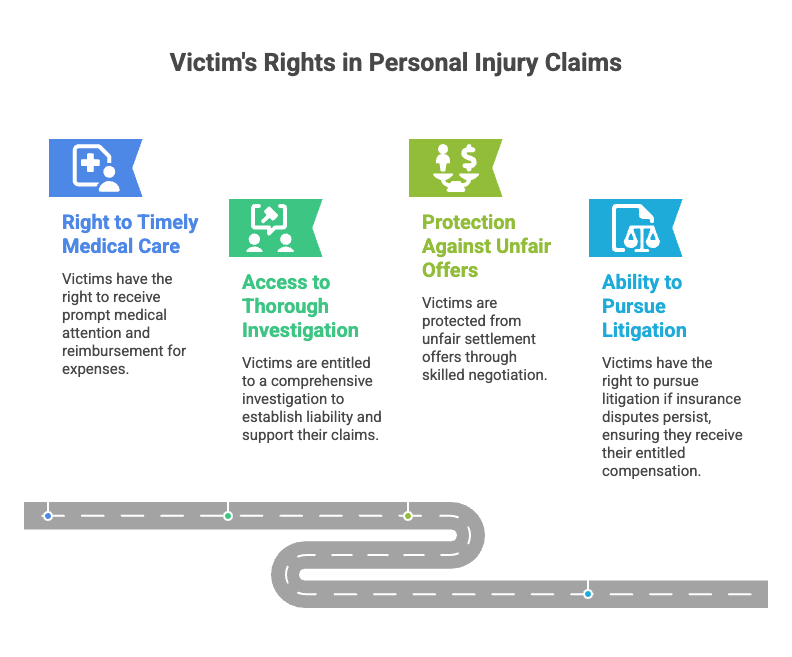
- The right to timely medical care and related expense reimbursement.
- Access to a thorough investigation that establishes liability and supports claims.
- Protection against unfair settlement offers through skilled negotiation.
- Ability to pursue litigation when insurance disputes persist, safeguarding our entitled compensation.
Steps to Take After a Jacksonville I-95 Car Accident
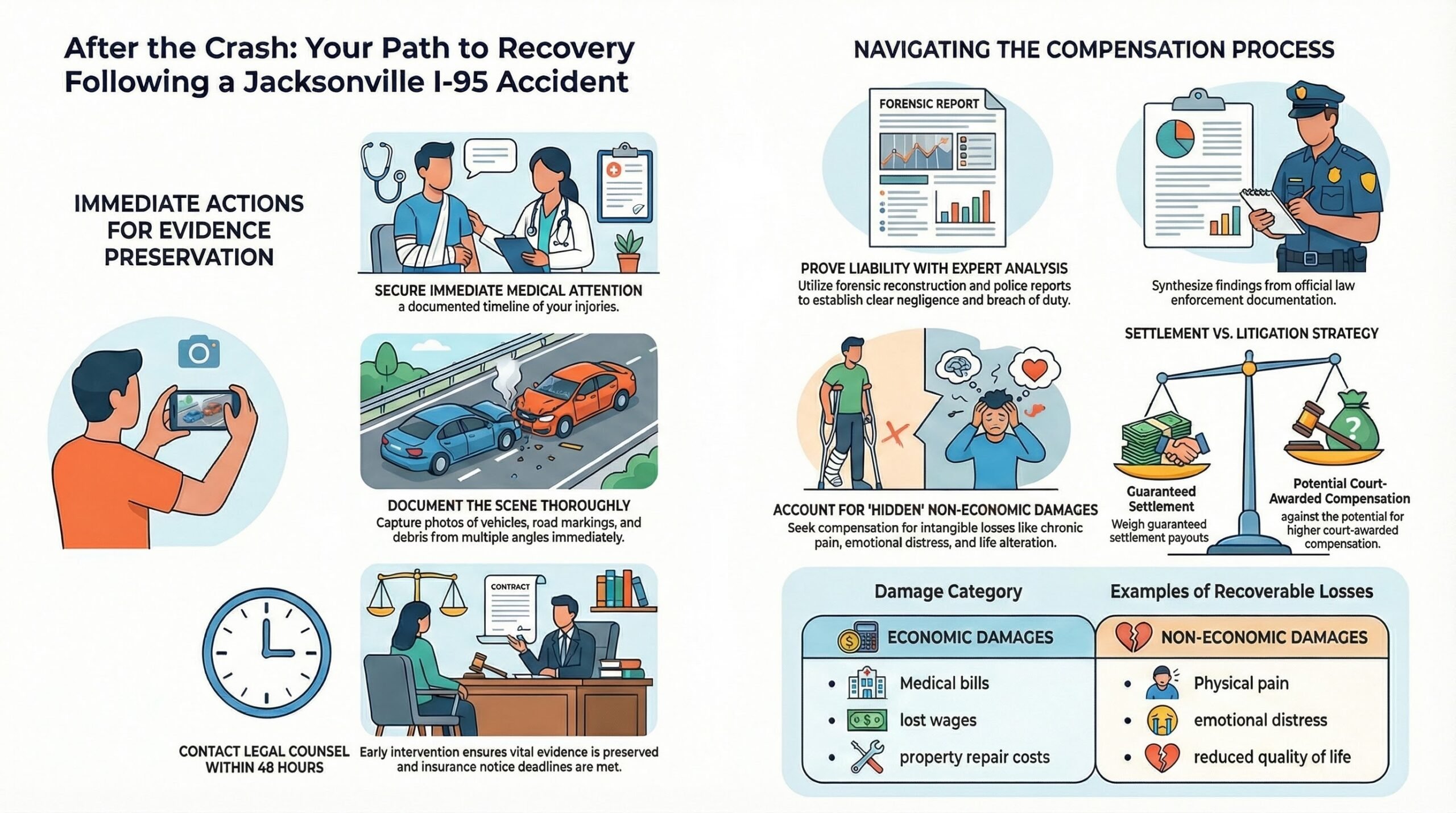
We should first secure medical attention for anyone injured, because health and safety are paramount.
Next, we document the accident scene thoroughly, gathering photos, witness statements, and police reports to preserve essential evidence.
Finally, we promptly notify our insurance provider, ensuring the claim process begins without delay.
Secure Medical Attention
If you’ve just been involved in a Jacksonville I‑95 car accident, securing prompt medical attention is vital not only for your health but also for preserving essential evidence that will support any future legal claim. We advise calling emergency transport immediately if injuries appear serious, ensuring that paramedics document your condition before any treatment.
After the initial assessment, we recommend obtaining a detailed medical report, as this will form the backbone of your injury documentation. Schedule follow-up appointments without delay; each visit reinforces the timeline of symptoms and demonstrates consistent care.
Keep all records, prescriptions, and therapist notes organized, and share them with your legal team promptly. By acting swiftly, we protect your recovery and strengthen the factual foundation of any claim.
Document Accident Scene
Capture every detail of the accident scene promptly, because thorough documentation forms the backbone of any successful claim.
We advise you to photograph all vehicles, road markings, and any debris from multiple angles, ensuring the lighting accurately captures color and damage.
Take scene sketches illustrating vehicle positions, traffic signs, and lane markings, and label each element clearly.
Record voice memos describing the sequence of events, weather conditions, and any audible cues, such as braking or horns, while the memory is fresh.
Collect witness contact information and ask them to confirm your notes.
Preserve any physical evidence, like broken glass or tire tracks, in sealed bags.
This systematic approach creates a reliable record that supports your claim and demonstrates diligence to insurers and courts.
Notify Insurance Provider
Contacting your insurance provider promptly after a Jacksonville I‑95 collision is vital to protect your rights and preserve the integrity of your claim. We advise you to call your insurer within the first 24 hours and provide a clear, factual summary of the incident, noting any policy reminders that may affect coverage.
Document the conversation, including the representative’s name and claim number, and ask for written confirmation of the report. Understanding claim deadlines is imperative; most policies require formal notice within a specific window, often 30 days, to avoid denial.
How a Jacksonville I-95 Car Accident Lawyer Can Help You
Navigating the aftermath of a collision on Jacksonville’s I‑95 corridor demands more than just filing a claim; it requires a strategic approach that protects your rights and maximizes compensation.
Navigating the aftermath of the Jacksonville I‑95 collision requires strategic, rights‑protecting actions to maximize compensation.
We begin by gathering vital documentation, including medical records, police reports, and witness statements, and ensure emergency contacts are promptly notified to coordinate care.
Our team evaluates liability, negotiates with insurers, and outlines realistic settlement timelines so you can plan your recovery without uncertainty.
By leveraging our expertise, we reduce your burden, allowing you to focus on recuperation while we pursue the full restitution you merit.
- Conduct a thorough investigation of the accident scene and vehicle damage.
- Coordinate with medical providers to document injuries and treatment costs.
- Negotiate with insurance adjusters to secure fair compensation within projected settlement timelines.
- Prepare and file all necessary legal paperwork to protect your rights throughout the process.
Long-Term Effects of Jacksonville I-95 Car Accident Injuries
We recognize that chronic pain often persists long after the collision, requiring ongoing medical treatment and careful medication management.
We also understand that emotional and psychological impacts, such as anxiety or depression, can develop and affect daily functioning.
Finally, we consider long‑term disability implications, which may alter work capacity and necessitate future financial planning.
Chronic Pain Management
When the impact of a Jacksonville I‑95 collision leaves survivors with lingering discomfort, chronic pain often becomes the most persistent and debilitating aftermath. We guide clients through systematic pain tracking, encouraging daily logs of intensity, location, and triggers, which inform targeted treatment plans.
By integrating alternative therapies such as acupuncture, physical therapy, and mindfulness‑based stress reduction, we help reduce reliance on narcotic pain medications while enhancing functional recovery. Our multidisciplinary approach emphasizes evidence‑based modalities, regular reassessment, and coordinated care among physicians, therapists, and legal counsel.
We educate patients on realistic expectations, emphasizing gradual improvement and the importance of adherence to prescribed regimens. This all‑encompassing strategy aims to restore quality of life and support long‑term well‑being for those affected by severe I‑95 injuries.
Emotional and Psychological Impact
Although the physical injuries from a Jacksonville I‑95 collision often dominate the initial conversation, the emotional and psychological repercussions can be equally persistent and debilitating. We recognize that survivors may develop anxiety, depression, or post‑traumatic stress, which can erode confidence and impair daily functioning. Trauma counseling offers structured support, helping individuals process the event, rebuild coping mechanisms, and regain a sense of control.
Sleep disruption frequently accompanies these conditions, leading to fatigue, reduced concentration, and heightened irritability, which in turn hampers recovery and productivity. By acknowledging these hidden wounds, we can advocate for all‑inclusive care that addresses both mind and body, ensuring that our clients receive the full spectrum of assistance necessary for lasting recovery.
Long‑Term Disability Considerations
If a Jacksonville I‑95 collision leaves you with lingering pain or reduced mobility, the long‑term disability implications can reshape your daily life and financial stability.
We must assess how chronic injuries affect your ability to work, and whether they trigger eligibility for disability benefits.
Understanding policy exclusions is vital, as insurers may deny claims for pre‑existing conditions or certain injury classifications.
We guide you through vocational rehabilitation options, helping you acquire new skills or modify duties to remain employable.
By documenting medical prognosis and functional limitations, we strengthen your claim and protect future income.
Our proficiency ensures you navigate intricate legal and insurance landscapes, securing the support needed for sustained recovery and continued service to others.
Proving Liability in Jacksonville I-95 Car Accident Injury Cases
Establishing liability in Jacksonville I‑95 car‑accident cases requires us to systematically gather and analyze evidence that demonstrates each party’s breach of duty, causation, and resulting damages.
We begin by documenting the accident scene, securing police reports, and collecting witness statements that establish who had the legal duty to act reasonably.
When the party’s negligence is clear, the burden shifting doctrine may apply, allowing us to request that the defendant demonstrate a lack of fault.
To strengthen our claim, we often enlist expert testimony; accident reconstruction practitioners can illustrate how speed, visibility, and road conditions contributed to the collision.
These experts translate technical data into understandable conclusions for judges and jurors.
Dealing With Insurance Companies After a Jacksonville I-95 Car Accident
We begin by gathering all documentation the insurance company will demand, then we systematically organize it to protect our client’s interests. We request police reports, medical records, repair estimates, and any correspondence that evidences loss.
Once compiled, we review the policy language to identify coverage limits and exclusions and prepare a clear narrative that aligns with statutory obligations.
During policy negotiation, we present the evidence concisely, emphasizing liability and actual damages, while remaining vigilant for any signs of claim denial. If the insurer issues a denial, we assess whether it stems from a legitimate coverage issue or a potential bad faith practice, such as unreasonable delay or failure to investigate.
We then draft a formal response, citing relevant case law and statutory duties, and, if necessary, file a complaint with the state regulator.
Throughout, we keep the client informed, ensuring they understand each step and can make informed decisions about settlement or further litigation.
What to Expect During a Jacksonville I-95 Car Accident Claim Process
We’ll guide you through filing the initial claim, gathering the necessary evidence, preparing for negotiations with insurers, and outlining the typical litigation timeline.
Our approach emphasizes clear documentation and strategic communication to strengthen your position at each stage.
Initial Claim Filing
Submitting your initial claim after a Jacksonville I‑95 car accident sets the foundation for the entire recovery process. We advise you to act promptly, because filing deadlines are strict and missing them can jeopardize your entitlement.
Our team prepares an all-encompassing paperwork checklist that includes the police report, medical records, repair estimates, and insurance correspondence. By gathering these documents early, we streamline the review and demonstrate credibility to the insurer.
We also draft a concise narrative outlining liability and damages to ensure the claim accurately reflects your situation. Throughout this stage, we keep you informed of each requirement, monitor progress, and adjust the filing strategy as needed to protect your rights and facilitate a fair settlement.
Evidence Collection Strategies
When you begin gathering evidence for a Jacksonville I‑95 car accident claim, you’ll quickly discover that thorough documentation is the cornerstone of a successful settlement. We start by securing a detailed police report and requesting the accident scene photos, then we commission forensic mapping to reconstruct vehicle positions and impact forces.
Our team conducts systematic witness interviewing, recording statements that confirm timelines and driver behavior. We collect medical records, repair estimates, and any traffic‑camera footage that corroborates our narrative.
All documents are organized chronologically in a secure digital repository, ensuring easy access for later review. By preserving each piece of evidence with meticulous care, we strengthen the claim’s credibility and protect the client’s right to fair compensation.
Negotiation With Insurers
We’ll start by outlining the typical stages you’ll encounter as insurers move from the initial claim filing to settlement negotiations.
First, we gather all documentation and submit the claim, then the adjuster reviews policy updates and assesses liability.
Next, we receive a preliminary offer, which often reflects the insurer’s initial assessment of damages and medical costs.
We then engage in structured negotiations, presenting detailed expense records and expert opinions to justify a higher figure.
Throughout this phase, we monitor settlement timelines, ensuring the insurer adheres to statutory deadlines and promptly addresses any delays.
Litigation Timeline Overview
If your Jacksonville I‑95 car accident claim proceeds to litigation, you’ll encounter a defined sequence of stages that shape the case’s trajectory from filing the complaint to the final resolution.
We begin by drafting and serving the complaint, then move into discovery, during which both parties exchange evidence, including depositions and medical records.
Throughout this phase, we monitor mediation timelines to encourage settlement before trial, recognizing that early resolution benefits all parties.
Should mediation not yield a result, we proceed to trial preparation, jury selection, and the trial itself.
After a verdict, we assess post-trial appeals options, evaluating grounds for reversal or modification.
Throughout each step, we maintain transparent communication, ensuring you understand deadlines, obligations, and strategic choices that protect your interests.
Compensation for Jacksonville I-95 Car Accident Damages
Although the aftermath of a Jacksonville I‑95 car accident can be overwhelming, we focus on securing the full range of damages you’re entitled to.
Our team evaluates every element of loss, beginning with the tangible costs such as vehicle repair, medical expenses, and lost wages. We also assess non‑tangible impacts, including pain valuation, which quantifies the physical and emotional suffering endured.
When the at’s conduct is especially reckless, we pursue punitive awards to deter future misconduct and to compensate you beyond ordinary damages. By gathering comprehensive evidence—police reports, medical records, and witness statements—we construct a sturdy claim that reflects both economic and non‑economic harm.
Our approach guarantees that the compensation you receive aligns with the full extent of your injuries and hardships, reinforcing our commitment to serve you with diligence, knowledge, and unwavering advocacy.
Economic vs Non-Economic Damages in Jacksonville I-95 Car Accident Cases
We’ll explain how economic damage types—such as medical bills, lost wages, and property repair costs—are quantified alongside non‑economic harm factors like pain, emotional distress, and reduced quality of life.
By outlining the criteria for each category, we can show how total compensation is calculated to reflect both measurable losses and intangible suffering.
This framework helps you understand the full scope of recovery available in Jacksonville I‑95 car accident cases.
Economic Damage Types
When evaluating a Jacksonville I‑95 car accident claim, we must distinguish between economic and non‑economic damages because each category is calculated and proven differently.
Economic damages encompass quantifiable losses that directly affect the plaintiff’s finances. We calculate lost wages by documenting the victim’s earnings before the accident, the duration of the inability to work, and any reduction in future earning capacity. Medical bills, rehabilitation costs, and prescription expenses also fall under this umbrella. Property damage includes repair estimates, replacement values, and depreciation for the vehicle and any other personal belongings harmed in the crash.
Non‑Economic Harm Factors
We begin by distinguishing non‑economic harm from its economic counterpart, recognizing that the former encompasses intangible losses that courts assess through subjective criteria rather than invoices.
We explain that pain valuation involves quantifying physical suffering, emotional distress, and loss of enjoyment, which lack a clear monetary ledger but profoundly affect a victim’s daily experience.
We also address life alteration, noting how a crash can disrupt relationships, career trajectories, and personal aspirations, creating a ripple effect that extends beyond medical bills.
By focusing on these factors, we help clients understand how courts weigh intangible damages alongside economic losses.
Our guidance guarantees that victims receive a thorough assessment that reflects both measurable expenses and the deeper, lasting impact on their lives.
Calculating Total Compensation
Because total compensation hinges on both quantifiable losses and intangible suffering, we begin by separating economic damages—such as medical bills, lost wages, and property repair costs—from non‑economic damages, which cover pain, emotional distress, and diminished quality of life.
In Jacksonville I‑95 cases, we calculate economic losses by itemizing current expenses and projecting future damages, including ongoing treatment and lost earning capacity.
Non‑economic damages require a nuanced assessment of suffering, often guided by precedent and the severity of injury.
We also evaluate the possibility of punitive awards when conduct was reckless or intentional, recognizing that they serve as a deterrent and a means of punishing egregious behavior.
When a Jacksonville I-95 Car Accident Case Goes to Trial vs Settlement
If your Jacksonville I‑95 car accident case reaches the courtroom, the dynamics shift dramatically from negotiation to litigation, and we must evaluate the strategic implications of trial versus settlement.
In trial dynamics, a jury or judge determines liability and damages, demanding thorough evidence, expert testimony, and persuasive advocacy. This route can yield higher compensation but entails longer timelines, higher costs, and the uncertainty of a verdict.
Settlement incentives, on the other hand, encourage parties to resolve disputes promptly, often resulting in a guaranteed payout without the stress of a public trial.
We consider the client’s financial needs, the strength of the case, and the opposing party’s willingness to negotiate. By weighing the potential for a favorable jury award against the risk of reduced recovery, we guide clients toward the option that best aligns with their goals and resources, ensuring that every decision serves their best interests while preserving the integrity of the legal process.
The Statute of Limitations for Jacksonville I-95 Car Accident Cases
When a Jacksonville I‑95 car accident occurs, the clock starts ticking on the statutory deadline for filing a claim, and understanding that timeline is vital to protecting your rights. We must recognize that Florida law generally imposes a two‑year statute of limitations on personal injury claims arising from motor vehicle collisions.
However, statute nuances can affect this period; for example, if the injured party is a minor or mentally incapacitated, the clock may pause until the disability is removed. We also note filing exceptions that can extend or shorten the deadline, such as claims against a government entity, which require a notice of claim within 180 days of the accident.
When to Contact a Jacksonville I-95 Car Accident Lawyer After a Jacksonville I-95 Car Accident
Even after the shock of a Jacksonville I‑95 collision subsides, we should begin gathering evidence and consulting a qualified attorney without delay.
Our post-accident checklist includes photographing vehicle damage, securing medical records, and obtaining police reports; these steps protect the rights of all parties involved.
We recommend contacting a Jacksonville I‑95 car accident lawyer as soon as possible, ideally within 24 to 48 hours, to ensure that vital information is preserved and that we can accurately assess liability.
Early involvement allows the attorney to advise on settlement timing, preventing premature negotiations that could diminish compensation.
By acting promptly, we demonstrate responsibility to victims and witnesses, while also safeguarding our own legal position.
Delaying contact risks loss of evidence and may complicate insurance discussions, ultimately affecting the fairness of any settlement.
Consequently, we prioritize immediate legal consultation to uphold justice and support those affected.
Why You Need an Experienced Jacksonville I-95 Car Accident Lawyer
Having gathered the necessary evidence and secured early legal counsel, we now recognize that the intricacy of a Jacksonville I‑95 car accident case demands more than a generic attorney. We must emphasize that local knowledge directly influences how we steer municipal traffic ordinances, lane‑closure protocols, and regional insurance practices, all of which affect claim outcomes.
Our experience on the trial bench equips us to assess liability, quantify damages, and present persuasive arguments before a jury, ensuring that victims receive fair compensation. We appreciate that insurers often exploit procedural nuances; our familiarity with local court calendars and procedural rules prevents costly delays.
How to Choose the Right Jacksonville I-95 Car Accident Lawyer for Your Case
If you’re steering the aftermath of a Jacksonville I‑95 car accident, selecting the right lawyer can determine whether you secure a fair settlement or face unnecessary setbacks.
We begin by gathering Local referrals from trusted community members, physicians, and fellow accident victims, because personal endorsements often reflect a lawyer’s commitment to client service. Next, we examine Fee structures, preferring firms that offer transparent, contingency‑based agreements that align their compensation with the case outcome, thereby reducing our financial risk.
We also assess the attorney’s track record on similar I‑95 incidents, looking for proven results and courtroom experience. A thorough consultation should reveal clear communication, empathy for our situation, and a strategic plan that balances aggressive advocacy with realistic expectations.
Finally, we verify licensing and professional standing through the Florida Bar, ensuring the lawyer adheres to ethical standards. By following these steps, we increase our chances of obtaining the compensation we merit.
About The Law Offices of Anidjar & Levine
The Law Offices of Anidjar & Levine has served the Jacksonville community for decades, providing dedicated representation for victims of I‑95 car accidents.
Our firm’s background reflects a commitment to justice and a track record of securing favorable settlements for injured drivers.
We emphasize attorney profiles that showcase extensive trial experience, negotiation skills, and a deep understanding of Florida traffic law.
Each lawyer on our team is known for meticulous case preparation and compassionate client communication, ensuring every victim receives personalized attention.
We’ve built a culture of service, prioritizing the needs of those harmed by negligent motorists.
By integrating rigorous legal analysis with a client‑first philosophy, we consistently achieve results that restore financial stability and peace of mind.
Our office remains a trusted resource for anyone seeking accountability after a severe I‑95 collision, and we continue to uphold the highest standards of professional integrity.
Frequently Asked Questions
Can I Claim Damages for Lost Future Earnings Due to Delayed Injury Recovery?
Yes, you can claim damages for lost future earnings if your injury delays recovery.
We’ll assess your projected income loss, considering your career trajectory and any vocational rehabilitation needed to restore employability.
Our team quantifies future income deficits using expert testimony and economic models, ensuring the claim reflects both immediate and long‑term financial impacts.
Will My Claim Be Affected if the Other Driver Was Uninsured?
We’ll tell you that an uninsured motorist can indeed affect your claim, but personal injury protection may mitigate the impact.
If the at-fault driver lacks coverage, your insurer’s uninsured motorist coverage typically steps in, allowing you to pursue compensation for medical costs, lost wages, and pain.
However, the extent of recovery depends on policy limits and statutory requirements, so we advise you to promptly review your PIP and uninsured motorist provisions.
How Does a Pre-Existing Condition Impact My Compensation?
We explain that a pre‑existing condition can affect your compensation by influencing the extent of pre‑existing aggravation, which is the additional injury caused by the accident.
We advise full disclosure of medical history because insurers assess whether new damages exceed baseline health.
We assess causation, quantify incremental losses, and argue for damages proportionate to the aggravation, ensuring your claim reflects the true impact beyond prior conditions.
Can I Receive Compensation for Emotional Distress Alone?
We can secure compensation for emotional distress alone when it’s documented as emotional trauma and supported by psychiatric treatment records.
Courts typically require proof that the distress stems directly from the incident and that the treatment was necessary and reasonable.
We’ll gather medical statements, therapy invoices, and expert testimony to demonstrate the severity and causation, thereby establishing a viable claim for non‑economic damages.
What Documents Are Essential for Proving Pain and Suffering?
We recommend gathering thorough medical records, detailed witness statements, and any related documentation to substantiate pain and suffering.
Medical records should include physician notes, diagnostic test results, treatment plans, and summaries of ongoing care.
Witness statements must identify observers, describe the incident, and confirm the impact on daily activities.
Collectively, these documents create a clear, credible narrative that quantifies your injuries and supports a compelling claim for non‑economic damages.
—————————
We stand ready to protect your rights and secure the compensation you merit after a Jacksonville I‑95 car accident.
The Law Offices of Anidjar and Levine combine extensive legal knowledge with proven litigation strategies, ensuring every claim is handled meticulously.
By partnering with us, you gain a dedicated advocate who will steer you through intricate procedures, negotiate with insurers, and, if necessary, pursue a trial.
Trust our experience to deliver the decisive results you need to move forward with confidence.
For more information, visit our Jacksonville Car Accident Lawyer page.