The Law Offices of Anidjar and Levine help Cape Coral car accident victims understand how the type of collision can affect liability, injuries, and available insurance coverage. Whether a crash involved a rear-end impact, intersection, sideswipe, head-on collision, or rollover, we review the evidence, medical records, insurance communications, and documented losses. Florida’s comparative negligence rules may reduce compensation if you share fault, so preserving evidence and seeking prompt medical care can matter. Learn more from a Cape Coral Personal Injury Lawyer about essential claim considerations and how legal guidance may help.
Main Takeaways
- A Cape Coral car accident lawyer can assess rear-end, intersection, head-on, sideswipe, and multi-vehicle collision claims.
- Collision type, road conditions, vehicle damage, and witness accounts can help clarify how a crash occurred and who may be at fault.
- Florida comparative negligence rules may reduce compensation when an injured person shares responsibility for a collision.
- Preserve photos, witness details, police information, medical records, and insurance communications; avoid recorded statements until you understand your rights.
- A lawyer can review applicable insurance coverage, documented losses, and deadlines, then explain potential next steps without promising a particular outcome.


How We Can Help With Your Cape Coral Car Accident Collision Types Injury Claim
We help injured drivers and passengers pursue claims after many types of Cape Coral car accidents, including rear-end, intersection, head-on, sideswipe, and multi-vehicle collisions. We’ll listen carefully, learn how your injuries affect your responsibilities, and explain practical options for pursuing compensation. We begin with a focused review of available records, insurance communications, and documented losses. We can identify unanswered questions, request relevant information, and help you avoid steps that could weaken your claim.
We’ll develop a Personalized Claim Strategy based on your circumstances and priorities, not a generic checklist. You’ll know what information we need and why it matters. We’ll also establish Attorney Communication Expectations, including how to reach us, when we’ll provide updates, and who will respond to your questions. As you focus on recovery and caring for those who depend on you, we’ll handle claim discussions and keep you informed about important decisions. Our goal is to provide steady, respectful guidance while protecting your ability to make informed choices throughout the process.
OUR CONSULTATIONSARE FREE
START YOUR FREE CASE REVIEW

Understanding Cape Coral Car Accident Collision Types Injury Cases
Because each collision type creates different risks, understanding how a crash occurred can help clarify the injuries, evidence, and insurance issues involved. We can help you assess how the impact affected you and what information may support your claim.
A rear-end collision may strain the neck and back, while a side-impact crash can expose occupants to direct force where vehicle doors offer limited protection. Head-on impacts may cause severe injuries because the vehicles’ combined movement increases the force transferred to occupants. In rollover cases, roof damage, restraint use, and occupant movement can help explain the harm. These vehicle dynamics matter when we connect the collision to your medical records and recovery needs.
Intersection types also shape how we evaluate a case, including whether vehicles approached from opposing directions or crossed paths. We review available photographs, reports, vehicle damage, and treatment details to build a clear account. By understanding the collision pattern, we can help you explain your injuries and pursue fair consideration from insurers.
Common Causes of Cape Coral Car Accident Collision Types
We’ll examine how distracted driving, speeding, and reckless behavior contribute to common collision types in Cape Coral. We’ll also explain how impaired driving and failure to yield can cause crashes and affect questions of fault. Understanding these causes can help you recognize the circumstances that may matter when pursuing an injury claim.
Distracted Driving
Distracted driving occurs when a motorist’s attention shifts from the road, even briefly, and it can lead to serious collisions in Cape Coral. Phone distraction remains a common cause, whether a driver reads a message, makes a call, or checks an alert. In-car technology, including navigation systems and touchscreens, can also draw a motorist’s eyes and thoughts away from traffic. Even hands-free devices may divide attention and delay a driver’s response to changing conditions. When these choices cause a collision, other road users may face injuries, medical costs, and disruption to daily life. We can help you understand how investigators assess distraction, preserve relevant evidence, and identify responsible parties. By taking these steps, we support injured people and their families as they seek accountability and pursue appropriate compensation under Florida law.
Speeding and Reckless Driving
When drivers exceed safe speeds or disregard traffic laws, they have less time to respond to hazards and may cause severe collisions on Cape Coral roads. Speeding increases stopping distance and impact force, putting drivers, passengers, pedestrians, and cyclists at risk. Reckless conduct, such as tailgating, unsafe lane changes, or ignoring signals, can also trigger crashes at intersections and on busy roads.
We can help you examine the circumstances and identify evidence that may clarify how a collision occurred. Speed threshold evidence, including vehicle data and roadway records, may help establish whether a driver traveled too fast for the conditions. We can also assess aggressive driving patterns and witness accounts. By carefully reviewing these details, we can help you pursue accountability and seek support for those affected by preventable harm.
Impaired Driving
Alcohol, illegal drugs, and some prescription medications can impair judgment, coordination, and reaction time, increasing the risk of serious collisions on Cape Coral roads. Drivers may drift between lanes, brake unpredictably, travel at inconsistent speeds, or respond slowly to changing conditions. Recognizing warning signs of impaired driving can help us protect passengers, pedestrians, and other road users. If we suspect someone is impaired, we should keep a safe distance and contact law enforcement rather than confront the driver. DUI prevention strategies include arranging a sober ride, using a designated driver, or choosing a taxi or rideshare before drinking or taking medication that causes drowsiness. We can also support friends by helping them get home safely. When impaired driving causes a crash, victims may need medical care and legal guidance.
Failure to Yield
Failure to yield occurs when a driver doesn’t give another road user the right of way required by traffic laws or road conditions. In Cape Coral, these crashes often happen when motorists turn left across oncoming traffic, enter busy roads from driveways, or proceed through intersections without checking for pedestrians and cyclists. Drivers may misjudge another vehicle’s speed or overlook signs and signals. Poor Intersection sightlines, including obstructed views from parked vehicles or landscaping, can make it harder to assess approaching traffic, but drivers must still proceed cautiously.
Understanding right-of-way rules helps us recognize when a driver’s decision may have caused a collision. If you’ve been injured, we can help you preserve evidence, identify witnesses, and understand your options. Prompt action may support a fair assessment of responsibility and help protect everyone affected.
Don’t Wait. Call Our Florida Personal Injury Lawyers Now!


Legal Rights of Cape Coral Car Accident Collision Types Injury Victims
The type of collision can affect how we establish fault, document injuries, and pursue compensation under Florida law. Whether a crash involves a rear-end impact, a sideswipe, or a failure to yield, we can help you understand your rights and protect your recovery. A driver who disregards your right of way may be responsible, but Florida’s comparative negligence rules can reduce your compensation if you share fault.
The type of collision can shape fault, compensation, and how Florida’s comparative negligence rules affect your recovery.
After a collision, your choices can affect your health, finances, and ability to support those who rely on you:
- Seek appropriate medical care and keep records of treatment, symptoms, and expenses.
- Preserve any available evidence and avoid giving recorded statements until you understand your rights.
- Learn whether you may seek payment for medical costs, lost income, and other legally recognized losses.
We can assess the circumstances, explain potential claims, and communicate with insurers. You merit clear guidance while you focus on recovering and caring for your family and community.
Why Do Cape Coral Car Accident Collision Injuries Happen?
Why do collision-related injuries happen in Cape Coral? They occur when a crash transfers force to people faster than their bodies can absorb it. The severity depends on impact mechanics, including vehicle speed, direction of travel, braking, and whether the collision involves a front, side, rear, or rollover impact. Even a crash at a modest speed can cause harm when a person’s head, neck, or chest moves abruptly.
Vehicle compatibility also matters. When vehicles differ greatly in size, weight, or structural design, the smaller vehicle may absorb more force. Safety features such as seat belts, airbags, and crumple zones can reduce injury risk, but they can’t prevent every injury. Road conditions, visibility, distraction, impairment, and unsafe following distances may contribute to collisions by limiting a driver’s ability to react.
By recognizing these factors, we can better understand why injuries vary from one crash to another and support safer choices that protect everyone sharing Cape Coral’s roads.
What Should You Do After a Cape Coral Car Accident?
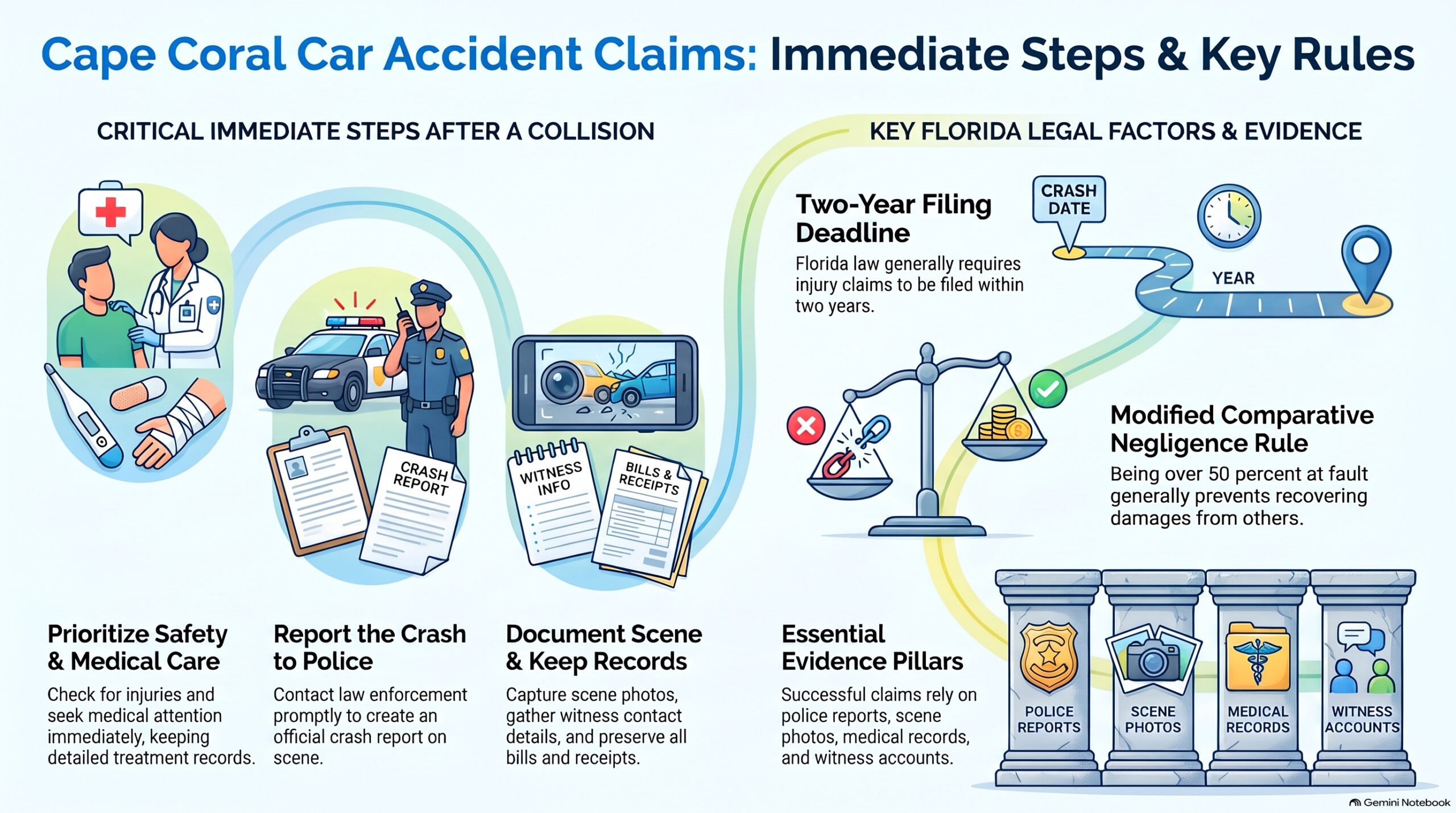
After a Cape Coral collision, first check yourself and others for injuries, and call emergency services if anyone needs immediate help. Document the scene by photographing vehicle damage, road conditions, and other relevant details, and exchange information with the other driver. Even if injuries seem minor, we should seek medical care promptly so a qualified professional can assess them and record our condition.
Check for Injuries
If you’re involved in a Cape Coral car accident, check yourself and others for injuries as soon as it’s safe. Our immediate assessment can help identify urgent needs and guide us toward appropriate action. Ask whether anyone feels pain, dizziness, numbness, or difficulty breathing, but don’t move an injured person unless danger, such as fire or traffic, makes movement necessary. We should call 911 for serious injuries, loss of consciousness, heavy bleeding, or uncertainty about someone’s condition. Follow the dispatcher’s instructions and reassure the person while help is on the way. Even if injuries seem minor, symptoms may develop later. Encourage everyone involved to seek medical evaluation promptly, especially after a forceful impact. Acting carefully protects others and helps ensure no one’s health concerns are overlooked.
Document the Collision
Once everyone’s safety is addressed, document the collision while the details are still clear. Use a phone to photograph each vehicle from several angles, capturing damage, license plates, and vehicle positioning. Include the surrounding intersection, traffic signals, lane markings, weather conditions, and any roadway debris that may help explain how the crash occurred. If witnesses are willing, we should ask for their names and contact information, then note what they observed without pressuring them to take sides. We should also exchange contact and insurance details with the other driver and record the responding officer’s name and report number. Keep our notes factual, including the time and location. These careful steps can preserve useful evidence and help us support everyone affected as the claims process moves forward.
Seek Medical Care
Photographs and witness details can help explain a Cape Coral collision, but medical care should come first if anyone may be injured. We should call 911 for severe pain, bleeding, trouble breathing, loss of consciousness, or other emergencies. Even when injuries seem minor, prompt medical attention can identify problems that aren’t immediately apparent. Urgent evaluation matters after a head impact, suspected fracture, or sudden change in how someone feels.
We can help others by arranging safe transportation to a clinic or emergency department and sharing relevant details with medical staff. Follow the provider’s instructions, keep appointments, and describe all symptoms accurately. Symptom monitoring can reveal delayed pain, dizziness, confusion, numbness, or limited movement. We should record when symptoms begin and how they change, then contact a healthcare professional if they worsen. Keep copies of medical records and bills.
Don’t Wait. Call Our Florida Personal Injury Lawyers Now!
Critical Evidence in a Cape Coral Car Accident Collision Types Injury Case
We can help you preserve evidence that clarifies how the collision occurred and documents the harm you’ve suffered.
Essential records may include:
1. Crash scene photographs that capture damage and roadway conditions; 2. Police reports and witness statements that may support your account; 3. Medical records that connect your injuries to the crash.
Crash Scene Photographs
At a Cape Coral crash scene, clear photographs can preserve details that may disappear within hours. If you’re able, we encourage you to photograph vehicle positions, damage, skid marks, debris, traffic signals, road signs, and visible hazards from several angles. Include wide views that show the roadway and closer images that capture specific details. Don’t enter traffic or put yourself at risk to get a photo; your safety and others’ come first.
Record the date, time, location, and scene lighting, since shadows or darkness can affect how images appear. Preserve photos: keep original files, avoid edits, and back them up securely. If injuries prevent you from taking pictures, ask a trusted person to help when it’s safe. These images may help us explain how the collision occurred and support a clear account of resulting harm.
Police Accident Reports
Establishing what happened before and after a collision from memory alone can be difficult. A police accident report can provide an official account of the response, location, involved vehicles, and observations recorded at the scene. We can review these details to see how they may support your injury claim, but a report isn’t a final determination of fault. Access to the report may depend on agency procedures and eligibility rules, so we can help you identify where to request a copy and what information to provide. Read the report carefully for errors in names, dates, vehicle details, or crash descriptions. If you find an inaccuracy, we can explain the available record-correction procedures and help you submit supporting documentation. Prompt, careful review can preserve useful evidence and help us serve your interests responsibly.
Witness Statements
Because witnesses may notice details that drivers miss, their statements can help clarify how a Cape Coral collision occurred. They may describe traffic signals, vehicle positions, road conditions, or actions immediately before impact. We can help you identify people who saw the crash and gather their accounts while their memories are fresh. Witness credibility matters: consistent, firsthand observations may carry more weight than assumptions or secondhand information. We should record each witness’s contact details and ask open questions without suggesting answers. Promptly preserving statements can protect useful evidence if memories fade or witnesses become hard to reach. If you’re assisting an injured person, sharing witness information with our team can support a careful investigation and help us assess how the collision happened. We’ll compare accounts with other available evidence and address inconsistencies responsibly.
Medical Records
Medical records can help establish the nature, severity, and timing of injuries after a Cape Coral car accident. We can use emergency department notes, diagnostic images, treatment plans, and follow-up records to show how a collision affected your health. These documents may also connect symptoms to the crash and explain why you needed particular care. Consistent treatment records can help clarify your recovery, while gaps may invite questions about the cause or extent of an injury.
Record organization matters. We can arrange records by provider and date, preserve billing statements, and identify missing documents. Provider correspondence may help clarify diagnoses, referrals, or treatment decisions when records are incomplete or unclear. With your authorization, we can request relevant materials and review them alongside witness statements and other evidence. Careful preparation helps us present your experience accurately and support a fair claim.
Long-Term Effects of Cape Coral Car Accident Collision Types Injuries
After a Cape Coral car accident, we can help you understand how collision-related injuries may affect your health and daily life over time. Chronic pain and lasting mobility limitations may interfere with work, household tasks, and independence. Emotional trauma can also persist, so we’ll consider these effects when evaluating your recovery and potential claim.
Chronic Pain
Chronic pain can persist long after a Cape Coral car accident, even when visible injuries have mended. Neck, back, and joint pain may follow different collision types, including rear-end crashes and side impacts. We encourage you to seek medical evaluation when discomfort continues or worsens, since timely documentation can help identify its cause and guide treatment.
Pain management may involve coordinated care from physicians and other qualified providers. Your treatment plan should reflect your symptoms, medical history, and recovery goals. Persistent pain can also disrupt sleep, affect concentration, and make daily responsibilities harder to manage. These effects may strain family relationships and limit your ability to serve others at work or in your community. We can help you understand how treatment records, symptoms, and related expenses may support a compensation claim.
Lasting Mobility Limitations
When a Cape Coral car accident damages the structures that support movement, lasting mobility limitations may affect how you walk, bend, lift, or complete daily tasks. Spinal, joint, or limb injuries can reduce strength and range of motion, sometimes requiring ongoing treatment and rehabilitation. We can help you understand how these limitations may affect your ability to care for family, serve your community, and perform your job. A physician’s records, therapy notes, and functional assessments can document the restrictions and their expected duration. Adaptive equipment, such as braces or mobility aids, may support safer movement, while workplace accommodations can help you continue working when medically appropriate. We encourage you to follow your treatment plan and keep records of related costs and limitations. These details may help establish the long-term effects of your injuries in an injury claim.
Emotional Trauma
A Cape Coral car accident can leave emotional injuries that persist long after physical wounds begin to recover. You may experience anxiety, sleep disruption, or fear when traveling through places connected to the collision. Post-traumatic stress can also affect concentration, relationships, and your ability to return to work or daily routines. These effects warrant attention, even when others cannot see them.
We encourage you to seek support from a qualified mental health professional and discuss persistent symptoms with your healthcare provider. Emotional recovery may take time, and treatment can help you regain stability and confidence. Keep records of appointments, diagnoses, and related expenses. When we help you understand how the crash affected your life, we can present a clearer account of your losses and pursue compensation that reflects both physical and emotional harm.
Proving Liability in Cape Coral Car Accident Collision Types Injury Cases
Proving liability after a Cape Coral car accident requires evidence that shows how the collision occurred and who failed to use reasonable care. We can help you identify the facts that connect another party’s conduct to your injuries while respecting your recovery and responsibilities to others.
Useful evidence may include police reports, photographs, witness statements, traffic camera footage, and medical records. Vehicle damage analysis can reveal the direction and force of impact, while an accident reconstruction expert may assess vehicle positions, road conditions, and timing. These findings can help clarify whether a driver sped, followed too closely, ignored a signal, or made an unsafe turn.
We’ll also examine whether other factors, such as a roadway hazard or vehicle defect, contributed to the crash. Preserving evidence promptly matters because physical conditions and witness recollections can change. By organizing reliable documentation and consulting qualified professionals when needed, we can build a clear account of what happened and support your claim for accountability.
Dealing With Insurance Companies After a Cape Coral Car Accident: Collision Types and Injuries
Once we’ve documented how a Cape Coral collision occurred, we can help you handle the insurance discussions that follow. Insurers may ask for details about the crash, your injuries, and your recovery. We’ll help you respond accurately, protect your interests, and keep the focus on the care you need.
Before giving recorded statements, consider how stress, pain, or incomplete information could affect your account. We can explain what an insurer is asking, help you prepare, and advise you about whether to provide a statement. Don’t guess about events or minimize symptoms just to appear cooperative.
Insurance representatives may also request records or offer an early settlement before your medical needs are clear. We can review communications, identify concerns, and explain the potential consequences of signing a release. If the insurer raises disputes or issues claim denials, we’ll examine the stated reasons and respond with relevant evidence. Our guidance helps you make informed decisions while preserving time and energy for your health and responsibilities.
What to Expect During a Cape Coral Car Accident Collision Types Injury Claim Process
We’ll begin by reviewing your claim and gathering evidence to establish how the collision occurred and how it affected you. Next, we’ll negotiate with the insurer for a fair settlement and explain your options if negotiations don’t resolve the claim. If a lawsuit becomes necessary, we’ll guide you through the legal process toward resolution.
Initial Claim Review
What happens during an initial claim review after a Cape Coral car accident? We begin by listening to your account and learning how the collision affected your health, work, and daily responsibilities. This conversation helps us understand your priorities and identify immediate concerns, such as medical bills or missed income.
Next, we conduct a Coverage assessment to determine which insurance policies may apply, including available liability and personal injury protection coverage. We explain potential options in clear terms, so you can make informed decisions without losing sight of your recovery or family obligations.
We also prioritize your claim, addressing urgent needs and important deadlines first. At this stage, we outline the process, discuss what to expect, and answer your questions. We won’t promise a particular outcome, but we’ll help you understand the path ahead.
Evidence Collection
Because evidence shapes how insurers evaluate a Cape Coral car accident claim, we start by identifying and preserving records that clarify how the collision occurred and how it affected you. We gather photographs of vehicle damage, the roadway, traffic signs, and visible injuries. We also request the crash report, witness contact information, and relevant medical records to document your losses and care. Vehicle telematics may record speed, braking, or steering shortly before impact, while roadway surveillance could capture the collision or surrounding traffic conditions. Because some recordings are erased quickly, we act promptly to identify potential sources and request that available footage be preserved. We organize these materials into a clear account of the event and its consequences, helping guarantee that your experience and the needs of those who depend on you are accurately represented.
Settlement Negotiations
Once we’ve organized the available evidence, we use it to support settlement negotiations with the insurer. We explain how the collision affected your health, work, daily responsibilities, and ability to care for others. This clear account helps the insurer understand the full impact of your injuries, not just the immediate expenses.
During Demand evaluation, we review medical records, lost income, repair costs, and other documented losses to assess a reasonable claim value. We also consider future treatment needs when supported by medical guidance. The insurer may respond with questions or an offer that doesn’t reflect the evidence. We discuss each response with you and develop a counteroffer strategy grounded in the documented facts. Throughout negotiations, we keep you informed, explain your options, and work toward a fair resolution while protecting your interests and priorities.
Lawsuit and Resolution
If settlement negotiations don’t produce a fair resolution, we may recommend filing a lawsuit to pursue your claim. We’ll explain the legal steps, review the evidence, and help you understand what to expect as the case moves forward. Filing deadlines matter, so we’ll track applicable dates and promptly prepare required documents. After filing, both sides may exchange information, question witnesses, and assess the strength of the evidence. We’ll keep you informed and help you make decisions that support your recovery and responsibilities to those who depend on you. If the case proceeds to trial, we’ll explain courtroom procedure, present your claim, and respond to the opposing side’s arguments. A judge or jury may decide liability and damages, though the parties can still reach a settlement before a final decision.
Compensation for Cape Coral Car Accident Collision Types Injury Damages
The compensation available after a Cape Coral car accident depends on the collision, the injuries it caused, and the evidence supporting your losses. We can help you identify damages from a rear-end crash, side-impact collision, rollover, or other event. Depending on the facts, you may seek payment for medical care, rehabilitation, and future treatment, as well as wages lost while you recover. If your injuries affect your ability to work, we can document that impact and present supporting records.
A claim may also address damage to your vehicle. Vehicle replacement may be appropriate when repairs aren’t practical, while rental reimbursement can help cover transportation during repairs or until you obtain another vehicle. We’ll review repair estimates, invoices, medical records, and other evidence to determine the amount you’re owed. Because insurers may dispute responsibility or the extent of a loss, we can organize the documentation and explain how the collision affected your daily needs. Our goal is to pursue fair compensation to support your recovery and help you move forward.
Economic vs. Non-Economic Damages in Cape Coral Car Accident Collision Types Cases
We’ll first identify economic damages, such as medical bills, lost wages, and repair costs. We’ll then consider non-economic losses, including pain, emotional distress, and reduced quality of life. Comparing these categories helps us explain how each may contribute to the compensation you seek after a collision.
Economic Damage Categories
After a Cape Coral car accident, we separate damages into economic losses, which have a measurable financial value, and non-economic losses, which reflect harder-to-quantify personal harm. Economic damages help us account for the practical costs an injured person faces and support a fair claim. They may include medical bills, prescription costs, rehabilitation expenses, and necessary transportation to appointments. We can also document Lost wages when injuries keep you from working, using pay records and employer statements to establish the amount. If your injuries limit what you can do at work or reduce your future income, Reduced earning capacity may be part of the claim. We should preserve bills, receipts, tax records, and employment documents. Careful documentation helps us present these losses clearly and seek compensation that reflects their financial impact.
Non-Economic Losses
Beyond financial costs, a Cape Coral car accident can cause non-economic losses that affect how you feel, function, and participate in daily life. We can help you understand how these personal effects may shape a claim. Pain, emotional distress, and disrupted sleep can make ordinary tasks difficult and strain relationships with family, friends, and coworkers. Loss of enjoyment can occur when injuries keep you from pursuing hobbies, attending community events, or helping people who depend on you. Disfigurement can also affect confidence, social interactions, and your sense of identity, especially when visible scars or lasting changes follow a collision. These experiences warrant careful attention. We’ll listen to how the crash has changed your daily life and help document its effects, so your account receives serious consideration during the claims process.
Comparing Damage Types
A Cape Coral car accident claim may include both economic and non-economic damages, and distinguishing between them helps clarify what the collision has cost you. Economic damages cover measurable financial losses, including medical bills, rehabilitation expenses, lost income, and the cost to repair or replace your vehicle. We can document these amounts with invoices, employment records, and repair estimates.
Non-economic damages cover personal harm without a fixed price, such as pain, emotional distress, and a reduced ability to enjoy daily activities. A front impact or side impact may cause injuries that affect your work, family responsibilities, and independence. We’ll consider how those effects connect to the crash and its lasting consequences.
Both categories matter when we assess a claim. By organizing evidence and clearly explaining each loss, we can help you pursue fair compensation while supporting your family and community.
Don’t Wait. Call Our Florida Personal Injury Lawyers Now!
When a Cape Coral Car Accident Collision Types Injury Case Goes to Trial vs Settlement
Whether a Cape Coral car accident injury case settles or goes to trial often depends on the strength of the evidence, the extent of the injuries, and the parties’ willingness to resolve the dispute. We’ll review the available records, witness accounts, and medical information with you, then explain the practical differences between settlement and trial. A settlement may offer a more predictable resolution and avoid the time and uncertainty of going to trial. However, we won’t recommend accepting an offer that fails to account for your documented losses and future needs.
If negotiations don’t produce a fair result, we can present your case to a jury. Trial testimony preparation helps you understand what to expect and communicate your experience clearly. We’ll also consider Jury deliberation dynamics when organizing evidence and presenting a coherent account of the collision and its effects. Throughout either process, we’ll keep you informed, answer your questions, and help you make decisions that support your recovery and responsibilities to those who depend on you.
Florida Laws That May Affect Your Cape Coral Car Accident Collision Case
Florida law shapes how we evaluate a Cape Coral car accident case, from determining fault to setting claim-filing deadlines. We’ll explain how these rules may affect your options and help you make informed decisions while protecting the people who depend on you.
- Florida No-Fault: Most drivers must first seek benefits through their personal injury protection coverage, which may cover certain medical expenses and lost wages regardless of fault. Serious injuries may allow you to file a claim against the at-fault driver.
- Comparative Negligence: Florida’s modified comparative negligence rule can reduce compensation when an injured person shares responsibility. If that person bears more than half the fault, recovery may be barred. A careful review of crash evidence can clarify how responsibility is assigned.
- Insurance and evidence: Coverage terms, medical records, witness accounts, and collision reports can influence negotiations and claims. We can help you understand these factors and pursue a fair outcome without losing sight of your family’s needs.
These laws apply differently to each collision, so we’ll assess the facts before advising you.
The Statute of Limitations for Cape Coral Car Accident Collision Types Injury Cases
Deadlines matter as much as fault and insurance when you pursue compensation after a Cape Coral car accident. Florida law generally gives you two years from the crash date to file a personal injury lawsuit. If someone dies from collision-related injuries, the wrongful death claim generally also carries a two-year deadline, measured from the date of death. Filing deadlines can determine whether a court will hear your case, even when the evidence strongly supports your account.
Some situations may affect when the time limit begins or how it applies. The Discovery rule may matter when an injury or its connection to the collision wasn’t reasonably apparent right away, though it doesn’t automatically extend every deadline. Exceptions can be narrow, and different rules may apply to claims involving government entities or other special circumstances. We encourage you to preserve records and note important dates so you don’t miss a legal deadline and undermine your pursuit of accountability and support for those affected. Consult current Florida law promptly.
How a Cape Coral Car Accident Collision Types Lawyer Can Help You
After a Cape Coral car accident, a lawyer can help you identify the collision issues that affect your claim and take practical steps to protect your interests. We can examine how the crash occurred, whether it involved a rear-end impact, side collision, or multiple vehicles, and what evidence may clarify responsibility. Our Attorney Experience helps us assess records, witness accounts, and insurance communications while explaining your options in clear terms.
We can develop a Case Strategy tailored to your circumstances and the losses your household faces. That support can help you focus on recovery and the people who depend on you:
- We can preserve photographs, reports, and other evidence before important details are lost.
- We can organize medical bills, wage records, and repair estimates to show the collision’s effects.
- We can address insurer questions and pursue compensation that reflects your documented losses.
We’ll keep you informed, answer your questions, and handle claim-related tasks with care so you can make decisions based on reliable information and protect your family’s stability.
When to Contact a Cape Coral Car Accident Collision Types Lawyer
When should you contact a Cape Coral car accident collision types lawyer? We recommend reaching out as soon as you can after a crash, especially if anyone is injured, fault is disputed, or several vehicles were involved. An early legal consultation can help us identify deadlines, preserve evidence, and explain practical next steps while you focus on recovery and your responsibilities to your family or community.
You don’t need to wait until you know the full extent of your losses or have every document in hand. If an insurer asks for a recorded statement, offers a settlement, or requests a broad medical authorization, seek legal guidance before responding. Prompt advice can help you make informed choices without delaying necessary care.
Attorney Selection Timing matters because evidence may change or disappear, and legal deadlines apply. We can discuss your circumstances early, clarify what information may be useful, and help you decide whether to proceed. If you’re unsure, an initial conversation can provide direction without requiring an immediate commitment.
Why You Need an Experienced Cape Coral Car Accident Collision Types Lawyer
An experienced Cape Coral car accident collision types lawyer can assess how the crash occurred, identify the key evidence, and explain how Florida law may apply to your claim. We can examine whether the collision involved a rear-end impact, a sideswipe, or another pattern, then connect those details to available records and witness accounts. This work helps us present a clear account of what happened and how the injuries have affected your life.
Attorney Experience matters when insurers dispute responsibility, question medical needs, or minimize losses. We can communicate with insurers, organize supporting documentation, and address gaps before they weaken your claim. Our Case Strategy should reflect the specific facts, your recovery needs, and the legal issues involved, not a generic approach.
How to Choose the Right Cape Coral Car Accident Collision Types Lawyer for Your Case
Choosing the right Cape Coral car accident lawyer starts with finding someone who can evaluate your collision type and explain how it may affect your claim. Start by asking how the lawyer handles rear-end impacts, side collisions, rollovers, or multi-vehicle crashes. Their answers should show a clear understanding of how crash details, evidence, and injuries shape legal strategy.
During Attorney Selection, we should review the lawyer’s experience with similar cases, communication practices, and approach to investigating fault. Ask who will handle the case, how updates will be provided, and what information the legal team needs from us. A careful consultation helps us assess Case Compatibility and decide whether the lawyer’s methods align with our needs.
We should also discuss fees, potential challenges, and realistic next steps before deciding. By comparing qualified lawyers and asking direct questions, we can choose representation that respects our circumstances, helps us pursue a fair resolution, and protects our ability to support those who depend on us.
About The Law Offices of Anidjar & Levine
After comparing attorneys and their experience with different crash claims, we can learn more about The Law Offices of Anidjar & Levine and how the firm approaches car accident cases. When considering a firm, review its history, services, and approach to client communication. These details can help you decide whether its experience aligns with your needs after a collision.
We can also look at how the firm investigates crashes, gathers records, and evaluates potential claims. A careful review may help identify relevant evidence, including photographs, witness accounts, and medical documentation. Ask who will handle your case, how they provide updates, and what steps may follow.
Community involvement can offer another perspective on a firm’s priorities and connection to the people it serves. As you assess your options, consider whether the attorneys explain your choices clearly and treat your concerns with respect. We encourage you to verify credentials, discuss fees, and compare firms before deciding whom to trust with your claim.
Frequently Asked Questions
What Are the Most Common Types of Car Accidents in Cape Coral?
In Cape Coral, rear-end collisions, intersection crashes, and head-on crashes are among the most common types of car accidents. Rear-end impacts often occur when drivers follow too closely or fail to stop in time, while intersection collisions may result from missed signals or failure to yield. Head-on crashes are less frequent but can cause severe injuries. We can help you understand these risks and support safer choices that protect everyone on the road.
How Do T-Bone Collisions Differ From Sideswipe Accidents?
T-bone collisions occur when one vehicle’s front strikes another vehicle’s side, creating a direct lateral impact. Sideswipe accidents happen when vehicles traveling alongside each other make contact along their sides, often while changing lanes or merging. This difference in Impact direction can shape injury patterns: T-bone crashes may expose occupants to force near doors, while sideswipes often cause less severe initial contact but can trigger loss of control. We can help you understand the risks and support those affected.
Can a Low-Speed Collision Cause Serious Injuries?
Yes, a low-speed collision can cause serious injuries, even when vehicle damage appears minor. We encourage you to seek medical evaluation promptly, since forceful movement can injure the neck, back, or head without obvious signs at the scene. Watch for Whiplash symptoms, including stiffness, pain, and headaches, and report delayed injury signs to a clinician. Taking these concerns seriously helps protect your health and support others who may depend on you.
What Is a Multi-Vehicle Pileup, and Who May Be Involved?
A multi-vehicle pileup is a crash involving several vehicles, often when one collision triggers others. These chain-reaction crashes may involve passenger cars, trucks, motorcycles, buses, and commercial vehicles, along with drivers, passengers, and sometimes pedestrians. We can help you understand why identifying each participant matters: a careful liability investigation examines driver conduct, vehicle positions, road conditions, and available evidence to determine how the sequence unfolded and which parties may bear responsibility for resulting injuries and losses.
Are Parking-Lot Collisions Handled Differently From Roadway Crashes?
Yes, parking-lot collisions can be handled differently because they often occur on private property, where traffic rules and insurance procedures may differ from roadway cases. We can assess Parking lot liability by examining right-of-way, signs, vehicle movements, and available camera footage. Private property claims may also involve the property owner if unsafe conditions contributed to the crash. We’ll help you identify responsible parties, preserve evidence, and pursue a fair resolution for everyone affected.
—————————
After a Cape Coral car accident, understanding the type of collision and how it occurred can help you protect your health and legal rights. The Law Offices of Anidjar and Levine can review the evidence, explain your options, and pursue compensation for your injuries and related losses. Florida’s deadlines and insurance rules may affect your claim, so don’t delay seeking guidance from a Cape Coral Personal Injury Lawyer. We’ll assess your circumstances and help you take informed steps toward resolving your case.