The Law Offices of Anidjar and Levine help Port Charlotte car accident victims understand how collision types, evidence, and Florida’s comparative negligence rules may affect an injury claim. Frontal, side-impact, rear-end, and rollover crashes can cause different injuries, but the impact alone doesn’t establish liability or predict recovery. We review crash reports, photographs, witness accounts, medical records, and insurance coverage to assess responsibility and documented losses. Prompt medical care and preserved evidence can support your claim. Learn more from a Port Charlotte Personal Injury Lawyer. Below, we explain essential factors, legal options, and when to seek guidance.
Main Takeaways
- A Port Charlotte car accident lawyer can explain how frontal, side-impact, rear-end, and rollover crashes may affect injuries and evidence.
- Collision type alone does not establish fault; liability depends on evidence such as reports, photographs, witness accounts, and available video.
- Seek prompt medical care and keep records of symptoms, treatment, prescriptions, bills, and follow-up appointments.
- Preserve crash-scene photos, vehicle repair records, witness details, and insurance correspondence; request surveillance footage before it is overwritten.
- Florida’s comparative negligence rules and PIP policy terms may affect compensation, so discuss deadlines and coverage with a lawyer.
How We Can Help With Your Port Charlotte Car Accident Collision Types Injury Claim
If another driver’s negligence caused your collision, we can help you pursue compensation for your injuries and related losses. We’ll listen carefully, explain your options, and build a claim focused on the support you need to recover and serve the people who depend on you.
Our team can gather records, communicate with insurers, and organize evidence that supports your losses. We’ll review medical expenses, lost income, and other documented costs while keeping in mind how the disruption affects your daily responsibilities. You’ll receive clear updates, and our attorney will be your reliable point of contact for questions and decisions.


Every case follows its own Claim timeline, shaped by treatment, investigation, and negotiations. We’ll explain important steps, identify deadlines, and prepare you for what may come next. When an insurer disputes responsibility or undervalues your losses, we can respond with evidence and pursue a fair resolution. Our goal is to handle the legal demands so you can focus on recovering and caring for others.
Understanding Port Charlotte Car Accident Collision Types Injury Cases
OUR CONSULTATIONSARE FREE
START YOUR FREE CASE REVIEW

The type of collision can affect how injuries develop, what evidence matters, and how insurers assess a claim. We consider the impact pattern alongside your symptoms, medical records, and the circumstances surrounding the crash. This helps us explain how the event may have caused or worsened your injuries.
Side impact collisions can expose occupants to force from the side, where vehicles may offer less protection than at the front or rear. We review vehicle damage, photographs, witness accounts, and medical findings to understand the likely direction and severity of the impact. Rollover crashes may involve repeated movement and several points of contact, so injuries can vary widely. We carefully review the available evidence rather than assuming an outcome based on the collision type.
For every case, we focus on your individual experience and the support you need. Clear documentation can help us present the injury’s effects, treatment needs, and financial losses accurately while keeping your priorities at the center of the claim.
Common Causes of Port Charlotte Car Accident Collision Types


We often trace Port Charlotte collisions to distracted driving, speeding, or reckless behavior that leaves drivers little time to respond. Impaired driving can also compromise judgment and control, increasing the risk of serious crashes. We’ll also examine how failure to yield can cause collisions at intersections and during merges.
Distracted Driving
Distracted driving occurs when a motorist’s attention shifts from the road, even briefly, to a phone, navigation system, passenger, or other task. In Port Charlotte, phone distraction can cause a driver to miss a changing traffic signal, overlook a pedestrian, or fail to notice another vehicle. Dashboard notifications may draw a motorist’s eyes away from traffic, while hands-free systems can still divert attention from driving. A moment of inattention may contribute to rear-end, intersection, or sideswipe collisions. We encourage drivers to silence alerts, set navigation before traveling, and pull over safely before handling a device. If you’ve been hurt in a crash, we can help you examine whether distraction played a role and identify evidence that may support your account, including witness statements, available video, and phone records.
Speeding and Reckless Driving
Excessive speed and reckless driving can turn routine trips through Port Charlotte into serious collisions. When drivers travel too fast for traffic, weather, or road conditions, they have less time to react and need more distance to stop. A high-speed impact can cause severe injuries, damage vehicles, and place other road users at risk.
Florida’s posted limits establish legal Speed Thresholds, but driving below a limit doesn’t automatically make a speed safe. We can help you determine whether a driver’s speed or conduct contributed to a crash, including unsafe passing, tailgating, or running red lights. Reckless Driving Penalties may apply when conduct shows a willful disregard for others’ safety. After a collision, we can review available evidence, explain your options, and help you pursue accountability and support for those affected.
Impaired Driving
When alcohol, drugs, or certain medications impair a driver, they can slow reaction time, weaken judgment, and make it harder to control a vehicle. In Port Charlotte, impaired driving can cause severe collisions and life-changing injuries for drivers, passengers, and others on the road. We can help you understand what evidence may show, including toxicology results, witness statements, and police reports. DUI checkpoints may deter impaired driving, but they cannot prevent every crash. If a person or business served alcohol to someone who later caused a collision, dram shop liability may also be relevant under Florida law. We’ll review the circumstances, identify potentially responsible parties, and explain your options for pursuing compensation. By holding negligent parties accountable, we can support your recovery and help protect others from preventable harm.
Failure to Yield
Failure to yield can lead to serious collisions when a driver ignores a traffic signal, stop sign, or another vehicle’s right of way. In Port Charlotte, these crashes often happen when motorists turn left across oncoming traffic, enter intersections without stopping, or merge without checking for approaching vehicles. Understanding intersection right-of-way helps drivers make safer decisions and protect everyone sharing the road. Yield sign violations can also cause preventable injuries, especially when a driver assumes another motorist will slow down or stop. If you’ve been hurt in a collision, we can help you understand how investigators assess fault, including traffic controls, witness accounts, and available evidence. By identifying the cause and documenting your losses, we can pursue accountability and seek compensation while keeping your recovery and needs at the center of the process.
Legal Rights of Port Charlotte Car Accident Collision Types Injury Victims
After a Port Charlotte car accident, your legal rights may depend on how the collision occurred and the injuries you suffered. We can help you understand available options, protect your interests, and pursue fair compensation while you focus on recovery and responsibilities to those who depend on you.
Florida law may provide several avenues:
- Use available benefits: PIP coverage may pay a portion of medical expenses and lost income, subject to policy terms and deadlines.
- Seek compensation from others: When another party’s negligence caused your injuries, you may pursue damages for losses not covered by insurance.
- Review uninsured motorists coverage: If the at-fault driver lacks adequate insurance, your policy may offer another source of recovery.
- Preserve your claim: Keep medical records, bills, and insurance correspondence, and avoid signing a settlement before understanding its effect.
We’ll review the collision evidence, identify potentially responsible parties, and clearly explain your options. Prompt legal guidance can help you meet filing deadlines and make informed decisions without compromising your recovery or ability to support others.
Don’t Wait. Call Our Florida Personal Injury Lawyers Now!
Why Do Car Accident Injuries Happen in Port Charlotte?
Why do car accident injuries happen in Port Charlotte? Collision forces can injure people when vehicles strike, stop suddenly, or roll over. Even when a crash looks minor, the body can absorb rapid movement that strains muscles, damages joints, or causes head injuries. The type and severity of harm depend on how the collision unfolds and the protection available inside the vehicle.
Impact Direction affects how force travels through a car and its occupants. A frontal crash may throw people forward, while a side impact can place pressure near the torso and head. Rear-end collisions can cause abrupt neck movement, and rollovers may expose occupants to repeated impacts. Occupant Position also matters: seat location, restraint use, and proximity to the point of impact can change injury risks.
We can help you understand how crash mechanics may relate to reported injuries. Careful attention to these factors supports a clearer account of what happened and how people were affected.
What Should You Do After a Port Charlotte Car Accident Collision Types Injury?
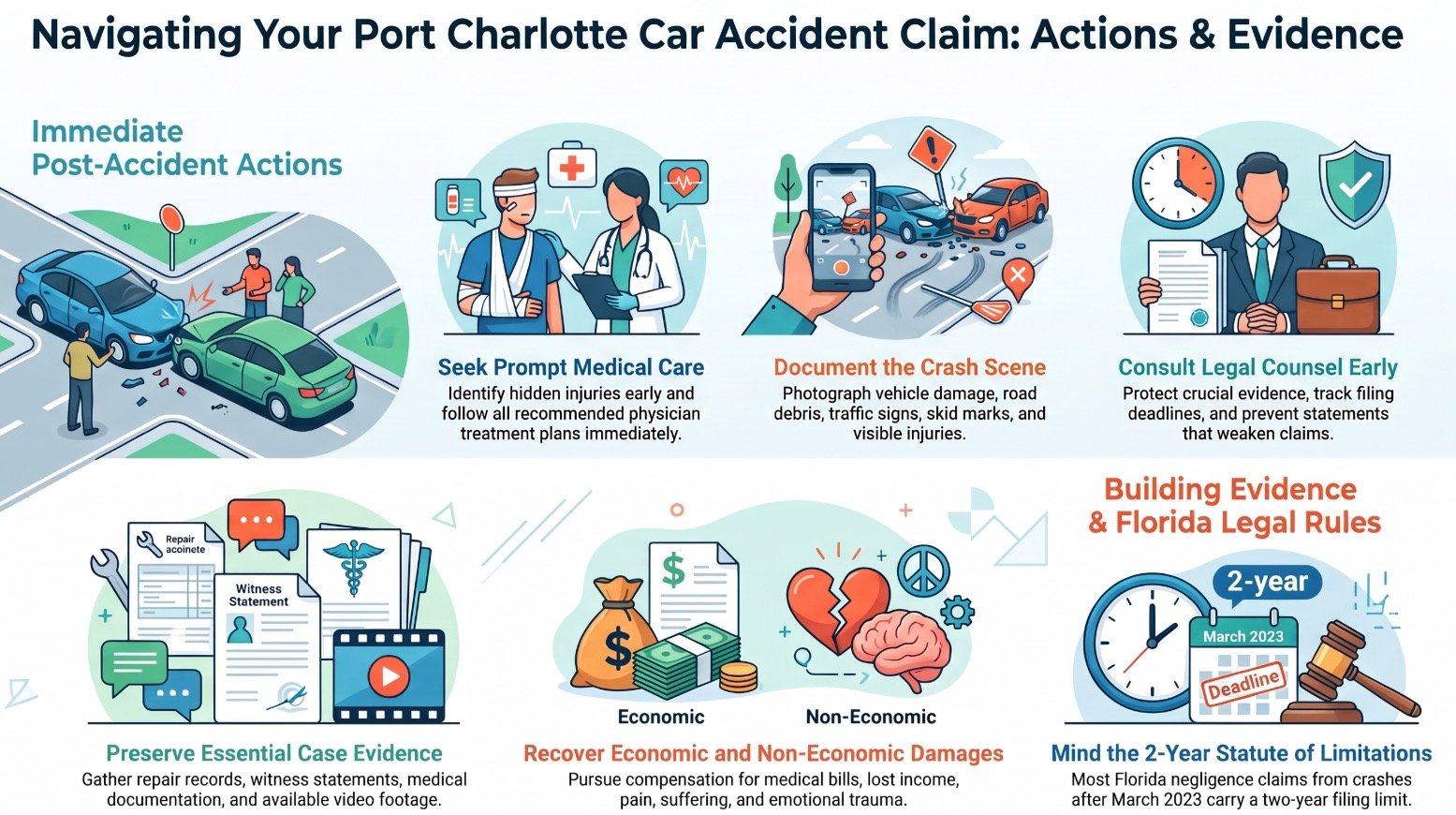
After a Port Charlotte collision, seek medical care promptly, even if your injuries seem minor. Document the scene by photographing vehicle damage, road conditions, and visible injuries, and collect witness contact information. We should also contact a lawyer to understand our options and protect our rights.
Seek Medical Care
Seek medical care promptly after a Port Charlotte car accident, even if you feel well or believe your injuries are minor. Some conditions, including head, neck, and internal injuries, may not cause obvious symptoms right away. A prompt evaluation can help identify concerns early and guide appropriate treatment.
Call 911 or go to an Emergency room if you have severe pain, trouble breathing, bleeding, confusion, or other urgent symptoms. For less serious concerns, contact a healthcare provider as soon as possible and explain that you were in a collision. Follow the provider’s treatment instructions, take prescribed medication as directed, and attend all follow-up appointments. If symptoms worsen or new problems develop, seek care again without delay. By taking these steps, we protect our health and help clinicians provide the care we need to recover.
Document The Scene
Once we’ve addressed immediate medical needs, we can document the Port Charlotte crash scene when it’s safe. First, move away from traffic and follow instructions from emergency responders. If we can do so without risk, we can photograph vehicle positions, damage, license plates, traffic signals, road markings, and nearby signs. We should also record Roadway debris, skid marks, visibility, and weather conditions, since these details may help explain how the collision occurred. We can note the time, location, and witnesses’ names, then ask for their contact information. Avoid disturbing evidence or entering an unsafe area to get a better image. If taking photos isn’t possible, write down what you remember as soon as you can. Careful documentation preserves useful details and supports accurate accounts of the crash.
Contact A Lawyer
When should we contact a lawyer after a Port Charlotte car accident? Seek legal guidance promptly, especially if you’ve suffered injuries, face substantial medical expenses, or dispute responsibility for the crash. Early advice can help us protect evidence, understand deadlines, and avoid statements or agreements that could weaken a claim.
We can gather the crash report, photographs, medical records, insurance correspondence, and witness details before speaking with counsel. A lawyer can assess how the collision occurred, explain your options, and communicate with insurers while you focus on recovery and your responsibilities to family and community.
Ask whether the firm offers a Free consultation and discuss contingency fees, including how costs and payment work, before choosing representation. We should share accurate information, raise concerns, and make decisions with a clear understanding of the process and potential outcomes.
Critical Evidence in a Port Charlotte Car Accident Collision Types Injury Case
We can strengthen your Port Charlotte car accident claim by preserving evidence that clarifies how the collision occurred and how it affected you. Collect these records promptly, since details may become harder to verify over time.
Crucial evidence includes:
- Crash scene photographs can document vehicle positions, road conditions, traffic signs, and visible injuries.
- Vehicle damage records can help show the collision’s force and support an account of how it happened.
- Witness statements may provide independent observations about the crash and the events leading up to it.
- Medical documentation can connect your injuries to the collision and track your diagnosis, treatment, and recovery.
Crash Scene Photographs
Photographs taken at a Port Charlotte crash scene can preserve details that may disappear before an investigation is complete. We can use images of roadway markings, traffic signs, debris, weather conditions, and sightlines to help explain how a collision occurred. If you can do so safely, take photos from several angles, including both wide views and close details. Avoid entering traffic or disturbing evidence to get an image. Photo metadata may record when and where a photograph was captured, helping establish its context. We can compare scene photographs with witness accounts and other available evidence to identify questions that need further investigation. Clear, unaltered images can also help insurers, attorneys, and others assess the circumstances fairly. Preserving these details may support accountability and help protect everyone affected.
Vehicle Damage Records
Vehicle damage records can reveal how a collision unfolded and help connect the impact to reported injuries. We can review repair estimates, invoices, and inspection reports to identify the damaged areas, repair methods, and costs. These documents may clarify whether the damage matches the reported collision type and whether the vehicle could be driven safely afterward. Keep original records and request copies from repair shops, insurers, and towing providers. We can also examine pre-crash maintenance records to distinguish older problems from collision-related damage. If repairs reduce the vehicle’s market value, documentation may support a diminished value claim. Accurate records can help us present a clear account of your losses and pursue fair treatment. By preserving this evidence, you help protect your interests and support a reliable evaluation of your injury claim.
Witness Statements
Repair records document the physical damage, while witness statements can help explain how a collision occurred and what happened immediately afterward. We can use independent accounts to clarify traffic signals, vehicle movements, visibility, and the sequence of events. These details may support a fair assessment of responsibility and help protect everyone affected.
Witness credibility matters. Note each witness’s name and contact information, where they stood, what they could see, and whether anything limited their view. Ask open-ended questions and avoid suggesting answers. A witness’s direct observations can carry more weight than assumptions or secondhand information.
Prompt statement preservation is important because memories can fade and contact information may change. We can record accounts promptly, preserve original messages or notes, and share them with our legal team. Careful documentation helps us present a clear, reliable account of the collision.
Medical Documentation
When an accident causes injuries, medical records can connect the collision to the care you received and document how your condition changed over time. We can help you preserve appointment notes, test results, prescriptions, and discharge instructions. Collectively, these records may show when symptoms began, what treatment providers recommended, and whether your injuries affected daily activities or work.
A clear treatment chronology helps explain the progression from initial evaluation to ongoing care. Follow medical advice, attend scheduled visits, and tell each provider about new or worsening symptoms. Consistent provider coordination can reduce gaps in care and help guarantee your records accurately reflect your condition. If you receive treatment from several professionals, keep copies of bills and reports, and confirm that relevant records are complete. We can review this documentation with you and identify evidence that supports a fair account of your injuries.
Long-Term Effects of Port Charlotte Car Accident Collision Types Injuries
After a Port Charlotte car accident, we can help you understand how your injuries may affect daily life over time. Some people experience chronic pain or lasting mobility limitations that require ongoing care. Emotional trauma can also persist, and we’ll explain how these effects may factor into your recovery and legal claim.
Chronic Pain
Chronic pain can persist long after a Port Charlotte car accident, even when visible injuries have recovered. Neck, back, and joint injuries may cause ongoing discomfort, while nerve damage can produce burning, tingling, or sharp sensations. These symptoms can interfere with work, family responsibilities, and the care we provide to others. Pain management may involve medical evaluations, prescribed treatment, physical therapy, or other approaches recommended by qualified professionals. Keeping records of symptoms, appointments, and expenses can help us explain how the injury affects daily life and support an insurance claim. Chronic discomfort may also disrupt sleep, cause fatigue, and make it hard to concentrate. Seek timely medical guidance and follow treatment recommendations, even if symptoms seem manageable at first. Consistent documentation helps connect persistent pain to the collision and its consequences.
Lasting Mobility Limitations
A Port Charlotte car accident can leave lasting mobility limitations, particularly when a collision damages the spine, joints, or muscles. You may find that walking, standing, lifting, or completing routine tasks now takes more time and requires support. These changes can affect your ability to work, care for family, and serve others in your community. We can help you document how restricted movement affects daily life, including the need for physical therapy, home modifications, or adaptive equipment. If driving becomes difficult, you may need accessible transportation for medical appointments and other responsibilities. Keep records of treatment, mobility challenges, and related expenses, and follow your providers’ recommendations. This information can help establish the lasting impact of your injuries when pursuing compensation. We’ll work to present your needs clearly and pursue resources that support your independence.
Emotional Trauma
Mobility limitations are not the only lasting effects a Port Charlotte car accident can cause; emotional trauma may also disrupt sleep, concentration, relationships, and daily routines. Emotional shock can follow a collision, even when physical injuries appear minor. You may experience fear while driving, persistent anxiety, or difficulty returning to activities that once felt ordinary. For some people, post-traumatic stress symptoms continue long after the crash and interfere with work, family responsibilities, and service to others.
We encourage you to take these changes seriously and seek support from a qualified mental health professional. Early care may help you manage symptoms and rebuild a sense of safety. Keep records of treatment, symptoms, and how they affect daily life. When we comprehend the full impact of an accident, we can better explain your needs and pursue compensation for documented emotional harm.
Proving Liability in Port Charlotte Car Accident Collision Types Injury Cases
Proving liability after a Port Charlotte car accident requires showing how another party’s actions caused the collision and your injuries. We can help you identify the evidence needed to establish what happened and who may be responsible. This may include police reports, photographs, witness statements, vehicle damage, and medical records connecting your injuries to the crash.
When the facts are disputed, Accident reconstruction can help explain vehicle movements, impact points, and timing. We may consult qualified professionals to evaluate physical evidence and clarify how a driver’s conduct contributed to the collision. Evidence of speeding, distraction, unsafe turns, or failure to yield may support a negligence claim.
Florida’s comparative negligence rules can affect compensation if you share responsibility for the crash. We’ll assess the available evidence carefully and explain how your actions may influence your case. We focus on protecting your interests while helping you pursue accountability and support for your recovery. Clear documentation and timely investigation can strengthen your claim’s factual basis.
Dealing With Insurance Companies After a Port Charlotte Car Accident Collision Types Injury
After a Port Charlotte car accident, insurance companies may contact you quickly to discuss the collision, your injuries, and possible compensation. We can help you respond carefully while keeping your recovery and responsibilities in view. An adjuster may ask for details before you understand the full extent of your injuries. You don’t have to accept an early offer or provide recorded statements without first considering how your words could affect your claim.
We can review communications, explain policy terms, and help you assess whether an offer reflects your documented losses. Policy limits may restrict available coverage, but the insurer should still evaluate the evidence fairly. Keep copies of letters, bills, repair estimates, and messages, and avoid guessing when answering questions. If you’re uncertain, we can communicate with the insurer on your behalf and help protect your interests. Clear, accurate information supports a fair evaluation and lets you focus on recovering and caring for those who depend on you.
Don’t Wait. Call Our Florida Personal Injury Lawyers Now!
What to Expect During a Port Charlotte Car Accident Collision Types Injury Claim Process
We’ll begin by reviewing your claim, identifying the collision details, injuries, and available insurance coverage. Next, we’ll gather evidence and negotiate with the insurer, keeping you informed as we assess each settlement offer. If negotiations don’t resolve your claim fairly, we’ll prepare for trial and explain what to expect at each stage.
Initial Claim Review
During the initial claim review, we examine how the collision occurred, the injuries you sustained, and the evidence available to support your claim. We’ll discuss the types of vehicles involved, the sequence of events, and any factors that may affect responsibility. This early assessment helps us identify the legal and practical issues that could shape your recovery.
We’ll also review your medical treatment, current limitations, and how your injuries affect your work and daily responsibilities. Our goal is to understand what support you need, not to reduce your experience to a claim value. Coverage screening helps us identify potentially applicable insurance and policy limits. We’ll explain relevant options in clear terms and answer your questions.
Deadline tracking is part of this review, so we can help protect your right to pursue compensation within required time limits.
Evidence Collection
After the initial claim review, we gather and assess evidence to clarify how the collision occurred and who may be responsible. We may obtain the crash report, photographs, witness statements, and medical records to document the incident and your injuries. When available, Black Box Data can show vehicle speed, braking, or other actions before impact. We also look for Roadway Surveillance footage from nearby businesses, traffic cameras, or residences, since recordings may be overwritten quickly. We’ll help preserve relevant materials and request records from drivers, insurers, and other parties. Your account matters, too, so we’ll ask you to describe what you remember while details remain clear. By organizing reliable evidence, we can build a factual picture of the collision and support your claim as it moves through the process.
Settlement Negotiations
Once we’ve organized the evidence and assessed your injuries, we can begin settlement negotiations with the at-fault party’s insurer. We’ll prepare a demand that explains how the collision affected your health, income, and daily responsibilities, supported by records and other evidence. During Demand evaluation, the insurer may question fault, treatment, or the value of your losses. We’ll review its response with you, identify any gaps, and present reasoned counteroffers. Our goal is to pursue fair compensation while protecting your ability to focus on recovery and the people who depend on you. If discussions stall, we may consider mediation, where a neutral mediator helps both sides explore a resolution. We’ll explain your options, assess each proposal, and seek your informed approval before accepting any settlement. A settlement is voluntary and ends the claim.
Trial Preparation
If settlement negotiations don’t resolve your claim, we may prepare to present your case at trial. We’ll organize medical records, crash reports, witness accounts, and other evidence to explain how the collision affected your health, work, and daily responsibilities. We’ll also prepare you for questions from opposing counsel and review the courtroom process so you know what to expect. Before testimony begins, the court selects a jury to identify impartial jurors. Each side may question potential jurors and raise concerns about bias. During opening statements, we’ll outline the evidence and explain how it supports your claim. You’ll need to answer questions truthfully and follow the judge’s instructions. We’ll present your case carefully, challenge unsupported arguments, and help the jury understand your losses and the compensation you’re seeking.
Compensation for Port Charlotte Car Accident Collision Types Injury Damages
The compensation available after a Port Charlotte car accident depends on the collision, the injuries it caused, and the evidence linking those injuries to the crash. A rear-end impact, side collision, or rollover may cause different harm and require distinct medical care. We can help you identify available coverage and present records that connect your treatment to the event.
Medical expense coverage may help pay for eligible treatment under your insurance policy, regardless of who caused the crash. Florida’s no-fault rules can affect how benefits apply, so we’ll carefully review your policy and the circumstances. If your injuries keep you from working, wage replacement benefits may provide partial income support, subject to applicable limits and requirements.
You may also pursue a claim against an at-fault driver when the law permits. We’ll gather medical records, crash reports, and other evidence to support your request. By explaining each option clearly, we help you make informed decisions while protecting your ability to focus on recovery and your responsibilities to others.
Economic vs. Non-Economic Damages in Port Charlotte Car Accident Collision Types Cases
We’ll distinguish economic damages, such as medical bills and lost income, from non-economic damages, including pain and reduced quality of life. The types of losses you can claim may depend on how the collision affected you. We’ll also explain how you can document and prove your losses.
Economic Damages
After a Port Charlotte car accident, economic damages cover the measurable financial losses caused by the collision. We can help you identify and document these costs so you can pursue compensation based on reliable evidence. They may include hospital bills, medication, rehabilitation, and other reasonable medical expenses related to your injuries. Keep invoices, receipts, insurance statements, and treatment records, since these documents can help establish what you’ve paid and what care you may still need.
You may also recover lost wages when injuries prevent you from working. If your ability to earn income has been reduced, diminished earning capacity may account for expected future losses. We can review pay records, employer statements, and relevant professional assessments to support these claims. Careful preparation helps us present a clear financial picture and seek fair recovery for the burdens you’ve faced.
Non-Economic Damages
Financial records can show the economic cost of a Port Charlotte car accident, but they don’t capture every effect an injury may have on your life. Non-economic damages cover personal losses that don’t have a fixed price. They may include Pain and suffering, such as physical discomfort, emotional distress, and the strain of adjusting to lasting limitations. Loss of enjoyment may also matter when injuries keep you from hobbies, family activities, or community service that once gave your days meaning. These harms can affect your relationships and ability to participate in the roles you value. We can help you understand how non-economic damages differ from medical bills, lost income, and other measurable expenses. Considering both categories gives a fuller picture of how a collision has changed your life and what fair compensation may involve.
Proving Your Losses
Proving your losses after a Port Charlotte car accident requires evidence that connects the collision to both your financial costs and personal hardships. We can organize medical bills, repair estimates, wage records, and receipts to document economic damages. If injuries affect your ability to work, employment records and expert opinions can help establish lost income and future earning limits. Financial forecasting may clarify anticipated treatment costs and other long-term expenses.
Non-economic damages, including pain, emotional distress, and reduced enjoyment of daily activities, require different proof. We can use treatment notes, personal journals, and statements from people who have observed changes in your life. Consistent, specific records strengthen the valuation of your loss and help us present your experience accurately. By documenting both measurable expenses and personal effects, we can support a fair claim and protect your ability to care for yourself and those who depend on you.
When a Port Charlotte Car Accident Collision Types Injury Case Goes to Trial vs Settlement
Whether a Port Charlotte car accident injury case settles or goes to trial often depends on how strongly the evidence supports liability and the full value of your losses. We’ll compare the available proof, including collision reports, witness accounts, medical records, and documentation of your financial and personal harms. A settlement can resolve your claim sooner and with greater certainty, while trial places the outcome in a jury’s hands. Neither option is right for everyone.
When evaluating a settlement offer, we’ll explain what it covers, how it compares with your documented losses, and what risks remain if you reject it. We’ll also consider your priorities, including your need for timely resources and the ability to focus on recovery or caring for others. Jury decision factors may include witness credibility, evidence consistency, and how clearly your injuries affect daily life. If negotiations don’t produce a fair result, we can prepare to present your case at trial and seek a decision based on the evidence.
Florida Laws That May Affect Your Port Charlotte Car Accident Collision Types Case
Florida law shapes how we evaluate a Port Charlotte car accident claim, from determining fault to setting deadlines and recovery limits. We’ll review the rules that may affect your options and help you make informed decisions while protecting the interests of those who depend on you.
- Florida no-fault rules: Your personal injury protection coverage generally pays certain medical expenses and lost wages regardless of fault. We’ll assess whether your injuries meet the legal threshold for pursuing compensation from another driver.
- Comparative negligence changes: Florida’s modified comparative negligence rule may reduce recovery based on your share of fault. If you’re found more than 50% responsible, you generally can’t recover damages from another party.
- Evidence and responsibility: Police reports, witness accounts, vehicle damage, and medical records can help establish how a collision occurred. We’ll examine this evidence carefully.
- Available damages: Depending on the facts, a claim may include medical costs, lost income, and noneconomic harm. We’ll explain which losses the law may permit you to pursue.
The Statute of Limitations for Port Charlotte Car Accident Collision Types Injury Cases
Because filing deadlines can determine whether you may pursue compensation, we’ll identify the statute of limitations that applies to your Port Charlotte car accident injury case. For most negligence claims arising from crashes on or after March 24, 2023, Florida law generally allows two years from the date of the accident to file a lawsuit. For crashes before that date, a four-year deadline may apply. The date and circumstances of your collision consequently matter.
A Filing Deadline can differ if the injured person is a minor, the defendant is a government entity, or another legal exception applies. Florida’s Discovery Rule may affect when a deadline begins in certain cases involving injuries that weren’t immediately apparent, but it doesn’t automatically extend every car accident claim. Wrongful death claims generally have a separate two-year limit.
We should confirm the applicable period promptly, since missing it can bar recovery. Acting within the deadline also helps preserve evidence and supports accountability to everyone affected by the crash.
How a Port Charlotte Car Accident Collision Types Lawyer Can Help You
How can a lawyer help after a Port Charlotte car accident? We can examine how the collision occurred, protect your interests, and pursue accountability while you focus on your recovery and responsibilities to those who depend on you.
- We gather reports, photographs, witness statements, and available video to preserve evidence and establish a reliable account of the crash.
- Through Collision pattern analysis and, when needed, crash reconstruction, we assess vehicle damage, impact direction, and other evidence that may clarify how the collision unfolded.
- We identify potentially responsible parties and review insurance coverage, helping you understand the options available under Florida law.
- We document your injuries, treatment, lost income, and other losses, then present a supported claim to insurers or, when appropriate, in court.
We’ll explain each step in clear terms and respond to your questions. By building a careful, evidence-based case, we can seek fair compensation and help reduce the burden on your family and community.
When to Contact a Port Charlotte Car Accident Collision Types Lawyer
Contact a Port Charlotte car accident lawyer as soon as you can after a collision, especially if you’re injured, fault is disputed, or an insurer asks you to give a statement or accept a settlement. Early Consultation can help us identify practical next steps while details remain fresh. We can explain what information to preserve, such as photographs, medical records, witness names, and repair estimates, so you can protect your interests and focus on recovery.
Don’t wait until a deadline is near to ask for guidance. Claim Deadlines may limit how long you have to bring a case, and the applicable period can depend on the circumstances. Prompt action also gives us time to review communications, document losses, and address questions before you make decisions that may affect your claim. If another person depends on you, timely advice can help you plan responsibly. Reach out when you’re unsure what to do next; we can discuss your situation and your options.
Why You Need an Experienced Port Charlotte Car Accident Collision Types Lawyer
When a collision involves disputed fault, serious injuries, or complicated evidence, an experienced Port Charlotte car accident lawyer can help you understand your options and protect your claim. We can investigate how the crash occurred, preserve important records, and identify evidence that might otherwise be overlooked. This work may include reviewing vehicle damage, witness accounts, photographs, and available traffic or medical records.
When the parties disagree about how a crash happened, Collision Reconstruction can help clarify the sequence of events and support a fact-based assessment. We can also explain how Comparative Negligence may affect your recovery if another party argues that you share responsibility. Florida’s legal rules and insurance procedures can be difficult to manage while you focus on recovering and supporting your family.
How to Choose the Right Port Charlotte Car Accident Collision Types Lawyer for Your Case
Choosing the right Port Charlotte car accident lawyer starts with finding someone who can assess the collision evidence and explain how Florida law may affect your claim. Start by asking how the attorney has handled cases like yours, such as a rear-end collision, sideswipe, or intersection impact. Their answers should show careful preparation and a clear understanding of how evidence supports liability and damages.
We should also review Attorney credentials, including Florida licensure, relevant experience, and any disciplinary history. Ask who will manage our case, how the lawyer will communicate updates, and what records or information we should provide. A dependable attorney should listen closely, answer questions directly, and treat our concerns with respect.
Before signing an agreement, we should understand the fee structure, including whether fees depend on recovery and which case costs may apply. Comparing clear written terms helps us make an informed choice. We can choose counsel with relevant skill, transparent communication, and a commitment to pursuing fair compensation.
About The Law Offices of Anidjar & Levine
Among the firms serving injured people in Port Charlotte, The Law Offices of Anidjar & Levine represents clients pursuing compensation after car accidents. We work to help you understand your options and pursue a claim based on the facts of your collision. Our attorneys can review evidence, communicate with insurers, and explain the steps involved, so you can make informed decisions while focusing on your recovery.
Firm history matters when you choose counsel. We bring experience handling injury claims and a commitment to treating clients with respect. Every case presents different questions, including how the collision occurred, what injuries resulted, and which parties may bear responsibility. We assess those details carefully and discuss potential paths forward without promising a particular outcome.
Our community involvement reflects a broader commitment to serving people beyond the courtroom. If you’ve been hurt in Port Charlotte, we can listen to your concerns, answer questions, and explain how legal representation may help you seek fair compensation after a crash.
Don’t Wait. Call Our Florida Personal Injury Lawyers Now!
Frequently Asked Questions
Can I Recover Damages if a Collision Involved an Uninsured or Underinsured Driver?
Yes, you may recover damages after a collision with an uninsured or underinsured driver. We can help you review your insurance policy for Uninsured Motorist Coverage, which may pay for eligible losses when the at-fault driver lacks sufficient insurance. Underinsured Driver Claims may also involve pursuing available coverage from the other driver and your own policy. We’ll assess liability, policy limits, deadlines, and documented damages to identify practical options for seeking fair compensation.
What Happens if a Defective Vehicle Part Contributed to the Collision?
If a defective vehicle part contributed to your collision, we can investigate whether product liability claims may apply. We’ll examine maintenance records, repair history, manufacturer notices, and the damaged component to determine whether a design defect, manufacturing flaw, or failure to warn caused harm. Mechanical failure may also involve a parts supplier or repair shop. Preserve the vehicle and relevant records, as evidence can help establish responsibility and support your compensation claim.
Can Passengers File Separate Claims After a Multi-Vehicle Collision?
Yes, passengers can file separate claims after a multi-vehicle collision. We can help you understand Passenger Injury Claims and identify each potentially responsible driver, vehicle owner, or other liable party. When multiple claimants are involved, insurers may dispute fault or available coverage, so each passenger should document injuries, treatment, and losses independently. We’ll review the evidence, explain your options, and help protect your right to pursue compensation without compromising another person’s claim.
How Are Accident Reconstruction Experts Used in Complex Collision Cases?
We use accident reconstruction experts to explain how a complicated collision occurred and identify the factors that contributed to it. Through Crash scene analysis, they examine vehicle positions, damage, skid marks, road conditions, and available photographs. They apply vehicle dynamics to assess speed, direction, braking, and the sequence of impacts. Their findings can clarify disputed accounts, help us evaluate responsibility, support an injured person’s claim, and provide reliable evidence to insurers or a court.
Can I Pursue a Claim if a Collision Occurred in a Rental Car?
Yes, you can pursue a claim after a collision in a rental car if another party’s negligence caused your injuries or losses. We can help you identify responsible parties, document damages, and review applicable insurance policies. Rental Coverage may affect which policy pays first, while Borrowed Vehicles can involve different coverage terms. We’ll assess the rental agreement, available insurance, and evidence so you can understand your options and take informed steps.
—————————
A collision can leave you facing medical bills, lost income, and uncertainty about what comes next. A Port Charlotte Personal Injury Lawyer can review how the crash happened, explain your legal options, and help you pursue evidence-backed compensation. Acting promptly can help protect important records and strengthen your claim. The Law Offices of Anidjar and Levine can answer your questions and guide you through each step, so you can make informed decisions while focusing on your recovery.