
The Law Offices of Anidjar and Levine help Cape Coral car accident victims document injuries and losses, understand potential compensation options, and pursue claims against potentially responsible parties. Depending on the evidence, insurance coverage, and circumstances, compensation may include medical expenses, lost income, property damage, and other accident-related losses. We can help organize records, communicate with insurers, assess settlement offers, and explain relevant deadlines. Learn more about working with a Cape Coral Personal Injury Lawyer. The following sections outline common causes, legal rights, and practical steps that may help you evaluate your claim and decide what to do next.
Main Takeaways
- A Cape Coral car accident lawyer can assess liability, insurance coverage, and potential compensation after a crash.
- Florida’s no-fault insurance rules may affect how you claim medical expenses and other losses.
- Compensation may include eligible medical costs, lost income, and damages for pain and effects on daily life.
- Preserve crash reports, photos, witness details, medical records, bills, and work documentation to support your claim.
- Seek prompt medical care and legal guidance; deadlines and shared-fault rules can affect recovery.


How We Can Help With Your Cape Coral Car Accident Claims & Compensation Injury Claim
After a car accident in Cape Coral, you may face medical expenses, lost income, and pressure from insurance companies while trying to recover. We can help you manage the demands of a claim while you focus on your health and responsibilities. Our team listens to your concerns, explains your options, and identifies practical next steps based on your circumstances.
During a Legal Consultation, we’ll review the information you provide, discuss your priorities, and answer questions about working with our firm. We can communicate with insurers on your behalf, organize relevant records, and keep you informed as the matter progresses. We’ll also explain the Claim Timeline, including important deadlines and what to expect at each stage, so you can make informed decisions.
We recognize that every client’s needs differ. We’ll handle your case with care, respect your time, and keep you updated. Our goal is to offer steady, reliable support while you work through a difficult period and consider your next steps.
OUR CONSULTATIONSARE FREE
START YOUR FREE CASE REVIEW

Understanding Cape Coral Car Accident Claims & Compensation Injury Cases
When a car accident in Cape Coral causes injuries, the claims process often involves questions about fault, insurance coverage, medical expenses, and lost income. We help you understand how these issues shape a potential injury claim and what information may support your request for compensation.
Claim Eligibility depends on the facts of your case, the available insurance policies, and the evidence connecting the accident to your injuries. We’ll review medical records, bills, wage documentation, and other relevant materials to assess your losses. Florida’s insurance rules may affect how you pursue recovery, so we’ll explain the options that apply to your circumstances.
Settlement Timelines vary. Some claims resolve after treatment clarifies the extent of an injury, while others take longer if insurers dispute responsibility or damages. We’ll keep you informed as the claim progresses and discuss important decisions before you make them. By understanding each stage, you can focus on your health while we work to protect your interests and pursue fair compensation.
Common Causes of Cape Coral Car Accident Claims & Compensation
We often see Cape Coral car accident claims arise from distracted driving, speeding, reckless behavior, and impaired driving. Dangerous road conditions can also contribute to collisions, even when drivers take reasonable precautions. As we review these causes, we’ll explain how they may affect your claim and the compensation available.
Distracted Driving
Distracted driving can turn an ordinary trip through Cape Coral into a serious collision when a driver’s attention shifts from the road. A driver may look at a phone, adjust navigation, eat, or reach for an item instead of watching traffic. Even brief visual or manual distractions can delay a response to changing conditions and put passengers, pedestrians, and other motorists at risk.
Distraction can also be cognitive. Cognitive Distraction occurs when a driver focuses on a conversation or task rather than driving, even with their eyes on the road. Hands-free technology may reduce the need to handle a phone, but it doesn’t eliminate mental distraction. We can help you examine how a driver’s conduct contributed to a crash, preserve relevant evidence, and pursue compensation for your injuries and losses.
Speeding And Reckless Driving
Excessive speed and reckless driving can leave Cape Coral motorists with little time to avoid a collision. When a driver travels too fast for traffic, weather, or road conditions, even a brief mistake can cause serious harm. Aggressive actions such as tailgating, unsafe lane changes, and ignoring traffic signals also put others at risk.
Speed limit enforcement helps discourage dangerous conduct, but violations still occur on local roads and highways. Florida law may impose reckless driving penalties when a person drives with willful or wanton disregard for others’ safety. These penalties can include fines, license consequences, and other sanctions.
If another driver’s conduct injures you, we can help you understand your options. We’ll review the evidence, explain how fault may affect your claim, and pursue compensation for your losses while supporting your recovery.
Impaired Driving
When alcohol, prescription medication, or other drugs impair a driver’s judgment and reaction time, a collision can happen before others have a chance to respond. Impaired drivers may misjudge distance, overlook signals, or fail to notice people sharing the road. Their choices can cause serious injuries and leave families facing medical expenses, lost income, and uncertainty.
We can help you understand how evidence of impairment may affect a Cape Coral car accident claim. Police reports, witness accounts, test results, and available video may help establish what happened and who bears responsibility. Although DUI penalties address criminal consequences, a separate civil claim may seek compensation for harm caused by the crash. Sobriety checkpoints can deter impaired driving, but they cannot prevent every collision. If you’ve been injured, we can explain your options and help you pursue accountability while protecting your interests.
Dangerous Road Conditions
Poorly maintained roads, unclear signs, and hazardous construction zones can contribute to serious crashes in Cape Coral. When you’re injured, we can help you understand whether a dangerous condition played a role and what steps may protect your claim.
Road maintenance failures can leave potholes, broken pavement, faded lane markings, or missing warning signs that make safe driving difficult. Heavy rain may also create drainage hazards, standing water, or slick surfaces that reduce traction and visibility. Construction areas can add risk when barriers, detours, or temporary signs are confusing or poorly placed.
Responsibility may rest with a government agency, contractor, or property owner, depending on who controlled the roadway and knew about the hazard. We can help preserve photographs, witness accounts, and maintenance records, then assess how the condition contributed to your injuries and losses. Prompt action matters because deadlines and notice requirements may apply.
Don’t Wait. Call Our Florida Personal Injury Lawyers Now!


Legal Rights of Cape Coral Car Accident Claims & Compensation Injury Victims
Cape Coral car accident victims have legal rights that can help them pursue compensation and protect their interests after a crash. We can help you understand these protections and make informed decisions while you focus on recovery and supporting those who depend on you.
- Seek compensation: You may pursue payment for medical expenses, lost income, property damage, and other losses from a responsible party.
- Use available coverage: Your policy may include uninsured motorist coverage, which can help when an at-fault driver lacks insurance or sufficient coverage.
- Expect fair treatment: Insurers must handle claims appropriately. If an insurer engages in Insurance bad faith, we can assess possible legal remedies.
- Preserve your options: Florida deadlines and evidence requirements can affect your claim. We can help you document losses, communicate with insurers, and evaluate settlement offers before you agree.
You don’t have to handle these issues alone. By understanding your rights early, we can work jointly to protect your interests and pursue a fair resolution.
Why Do Car Accidents Happen in Cape Coral?
Understanding what causes a crash can help us identify who may be responsible and what evidence could support your claim. In Cape Coral, collisions often result from preventable choices, unsafe conditions, or a combination of factors. Drivers may cause serious injuries by speeding, following too closely, running red lights, or driving while distracted, impaired, or fatigued. These actions can endanger passengers, pedestrians, cyclists, and other motorists who share the road.
Road and environmental conditions also matter. Heavy rain can reduce traction, while poor weather visibility may make it harder to see traffic signals, road hazards, or people crossing. Inadequate lighting, obstructed signs, and poorly maintained pavement can further contribute to a collision. Vehicle design and maintenance may play a role when defective brakes, tires, airbags, or other components fail to protect occupants.
We can examine how these factors interacted to clarify potential responsibility and the injuries that followed. Understanding the cause helps us assess the circumstances surrounding your claim.
What Should You Do After a Cape Coral Car Accident Injury?
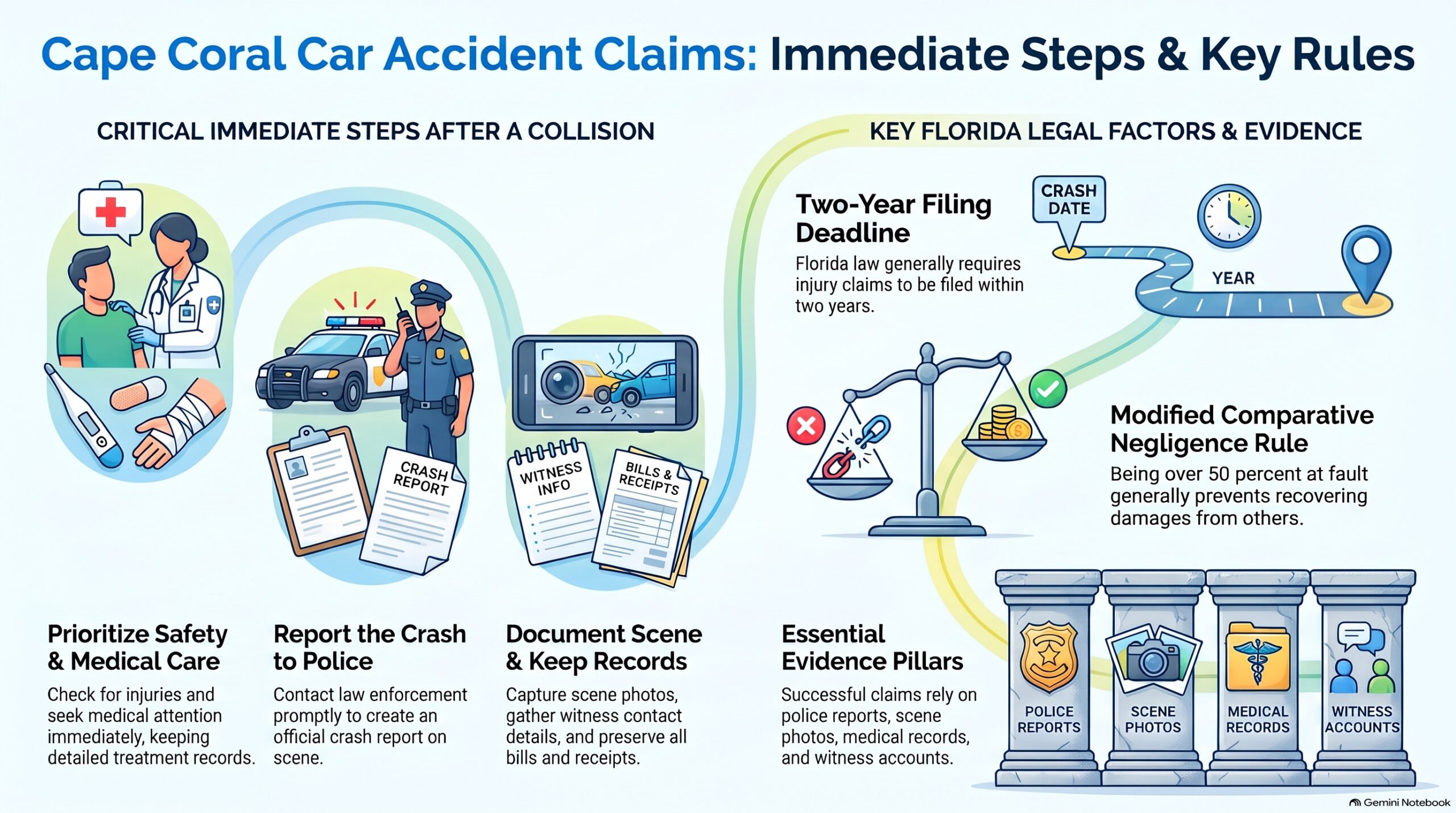
After a Cape Coral car accident, we should first check for injuries and seek prompt medical care, even if symptoms seem minor. Then report the crash to law enforcement and provide accurate information about what happened. Finally, document your claim by preserving photos, witness details, medical records, and other relevant evidence.
Check for Injuries
First, check yourself and anyone else involved for injuries, but don’t move someone who may have a neck, back, or head injury unless an immediate danger requires it. Ask whether anyone feels pain, dizziness, confusion, or difficulty breathing; shock can conceal serious symptoms. If someone is unconscious, bleeding heavily, or struggling to breathe, call 911 immediately and follow the dispatcher’s instructions. Keep injured people as still and comfortable as possible, and offer reassurance without giving food, drink, or medication. If you can do so safely, check for hazards such as fire, leaking fuel, or passing traffic. Emergency roadside safety depends on vehicle positioning and the surrounding conditions, so don’t approach a damaged vehicle if it presents a risk. Stay with those who need help until trained responders arrive, and protect their privacy.
Report the Accident
Once everyone is safe, report the crash to law enforcement when required, and request an officer if anyone is injured, a driver appears impaired, or the vehicles create a hazard. In Cape Coral, promptly contacting the appropriate authorities helps protect everyone involved and supports an orderly response. If the collision is minor and no officer is dispatched, follow law enforcement instructions on exchanging information and completing any required report. Don’t leave before you’ve met your legal responsibilities, unless you must seek urgent medical care. If a vehicle blocks traffic and can be moved safely, ask an officer whether vehicle relocation is appropriate; don’t risk another collision to clear the road. Keep Emergency contacts accessible, and call for help when someone needs assistance. Cooperating calmly can also ease stress for other people at the scene.
Document Your Claim
What you document in the hours and days after a Cape Coral car accident can help establish how the collision occurred and how it affected you. Save the crash report, photographs, witness contact details, and messages from insurers or other drivers. Keep copies of medical records, prescriptions, bills, and receipts for travel or other injury-related costs. Record your symptoms, missed work, and limits on daily activities, noting dates and changes over time. This information helps us present a clear account of your losses, support a fair claim, and protect your ability to focus on recovery and care for those who depend on you. Use a secure folder or digital file to organize your claim, and track deadlines for insurer requests, medical appointments, and legal filing periods. Don’t alter original records.
Don’t Wait. Call Our Florida Personal Injury Lawyers Now!
Critical Evidence in a Cape Coral Car Accident Claims & Compensation Injury Case
Strong evidence can help us establish how the crash happened, who was responsible, and how your injuries affected you. We’ll look for records and accounts that support your claim and preserve important details.
Crucial evidence may include:
- Police accident reports documenting the crash and officers’ observations.
- Photographs and video showing vehicle damage, road conditions, and the scene.
- Medical records connecting your injuries to the collision and tracking your treatment.
- Witness statements that may confirm how the crash occurred.
Police Accident Reports
A police accident report can provide important evidence in a Cape Coral car accident claim by recording the crash location, involved parties, witness statements, and the responding officer’s observations. We can use this record to understand how authorities documented the collision and to identify information that may support your account. However, a report isn’t a final decision about fault, and it may contain errors or omit relevant details. We’ll review it carefully alongside other evidence and explain how its contents may affect your claim.
Report access procedures may vary, so we can help you request the report from the appropriate agency. If you find an inaccuracy, correction requests should be supported with clear, reliable information. We’ll help you address discrepancies respectfully and preserve an accurate record, serving your interests while treating everyone involved fairly.
Photographs and Video
Photographs and video can preserve details of a Cape Coral car accident that may change or disappear soon after the collision. If you’re able, use your phone to document vehicle positions, damage, skid marks, traffic signals, road conditions, and nearby signs. Capture several scene angles, including wide views that show how the vehicles relate to the intersection or roadway. Take close-up images of damage, but don’t enter traffic or put yourself at risk to get them. Ask witnesses whether they recorded the crash, and preserve any dash-camera footage promptly before it’s overwritten. Keep original files and note when and where you captured them. These images may help us explain what happened, support a careful investigation, and protect your ability to seek fair compensation while serving the interests of everyone affected.
Medical Records
While photographs and video can document the crash scene, medical records show how the collision affected your health. We can use these records to connect your injuries to the crash and explain the care you needed. Keep appointment notes, diagnostic reports, prescriptions, treatment plans, and bills from every provider. Consistent treatment can help demonstrate the extent of your injuries, while gaps may prompt questions about your recovery.
Record Organization matters. We can organize documents by date and provider, then confirm the file reflects your treatment from the initial evaluation through follow-up care. Provider Statements may clarify diagnoses, symptoms, restrictions, and expected recovery when the records need further explanation. Share accurate information with your care team and follow recommended treatment. Careful documentation helps us present your claim clearly and supports a fair assessment of your losses.
Witness Statements
If people witnessed the collision, their statements may help clarify what happened and who was responsible. We can contact witnesses promptly while their memories are fresh and ask what they saw before, during, and after the impact. Their accounts may explain traffic signals, vehicle positions, speed, or driver conduct that physical evidence alone cannot establish.
Witness credibility matters. We’ll consider each person’s opportunity to observe, consistency, and possible bias, then compare their account with photographs, police reports, and other evidence. If statement inconsistencies arise, we’ll examine whether time, stress, or limited visibility explains them, rather than assuming dishonesty. Careful documentation preserves useful details and helps us address disputes fairly.
Long-Term Effects of Cape Coral Car Accident Claims & Compensation Injuries
We’ll consider how car accident injuries can cause chronic pain that continues long after initial treatment. You may also face mobility limitations that affect daily activities and independence. We’ll explain how emotional distress can persist and how these lasting effects may influence a compensation claim.
Chronic Pain
Chronic pain can persist long after a Cape Coral car accident, even after visible injuries have recovered. You may experience ongoing soreness, burning sensations, headaches, or tenderness that interferes with daily responsibilities. Pain can also affect your concentration and patience, making it harder to support family members, coworkers, and others who rely on you. We encourage you to document symptoms, treatment visits, and how discomfort affects your routine. Consistent records can help your medical providers assess your condition and guide appropriate Pain management. Follow their recommendations and report changes rather than minimizing persistent symptoms. Sleep disruption is another common consequence, as discomfort may make it difficult to fall asleep or remain rested. If another party caused the crash, evidence of continuing pain and related care may help establish the lasting effects of your injuries when pursuing compensation.
Mobility Limitations
Mobility limitations after a Cape Coral car accident can make routine tasks, such as walking, climbing stairs, or driving, difficult long after initial treatment. Spinal, joint, or limb injuries may reduce strength, balance, and range of motion. We can help you document how these restrictions affect daily activities, work, and your ability to care for others. Medical records, therapy assessments, and provider recommendations can show the need for ongoing treatment or changes at home. Depending on your needs, Wheelchair accessibility modifications or adaptive equipment may support safer movement and greater independence. We’ll also consider transportation costs, rehabilitation, and assistance with household tasks when evaluating potential compensation. A clear account of your limitations can help connect the accident’s lasting effects to the damages you seek.
Emotional Distress
How can a car accident affect your emotional well-being long after physical injuries begin to recover? Emotional distress may persist even as your mobility improves. You might experience Anxiety symptoms, such as persistent worry, irritability, or fear when traveling, and sleep disruption that leaves you tired and less able to manage daily responsibilities. These changes can affect your relationships, work, and capacity to care for others.
We encourage you to take these effects seriously rather than dismissing them as temporary stress. A qualified mental health professional can help assess your needs and recommend appropriate support. Keep notes about symptoms, treatment, and how distress affects your routine. This information may also help document the broader impact of your injuries when pursuing a claim. Seeking care supports your recovery and helps you remain present for the people who depend on you.
Proving Liability in Cape Coral Car Accident Claims & Compensation Injury Cases
To recover compensation after a Cape Coral car accident, we must show that another party’s negligence caused the crash and your injuries. We start by identifying each person or organization whose conduct may have contributed, then gather evidence to explain what happened.
Police reports, photographs, witness statements, traffic-camera footage, and physical evidence can help establish how the collision occurred. We may also examine vehicle inspections and maintenance records to determine whether a mechanical defect or neglected repair played a role. When the sequence of events remains disputed, Accident reconstruction experts can analyze vehicle damage, road conditions, and other available evidence.
We’ll also connect the crash to your injuries through medical records and other reliable documentation. This step matters because a clear account of your losses helps show how the collision affected your health, work, and daily responsibilities. By organizing the evidence and evaluating possible causes, we can build a focused claim that supports accountability and your recovery. Each case requires careful review of its specific facts.
Dealing With Insurance Companies After a Cape Coral Car Accident Claims & Compensation Injury
After a Cape Coral car accident, insurance companies may contact you quickly, but their interests may not align with yours. We can help you respond carefully while protecting your health and financial interests. Adjusters may ask for details before you understand the full extent of your injuries or have gathered reliable records. You don’t need to guess, speculate, or accept blame to appear cooperative.
Before providing Recorded statements, consider speaking with a lawyer. Your words may be reviewed later, and an inaccurate estimate about pain, timing, or events could complicate your claim. We can help you communicate accurately and keep discussions focused on verified facts.
Review any settlement offer with care, since it may not account for future treatment, missed work, or other losses. Insurance policies may also include exclusions that affect coverage. We can examine the applicable terms, explain your options, and help you make informed decisions while you focus on recovery and supporting those who depend on you.
What to Expect During a Cape Coral Car Accident Claims & Compensation Injury Claim Process
We’ll begin by reporting the accident and documenting your injuries, expenses, and other losses. Next, we’ll present the evidence and negotiate with insurers to pursue fair compensation. After we review any settlement offer, we’ll help you resolve the claim or consider next steps.
Report the Accident
Promptly reporting a crash in Cape Coral helps create an official record and supports your injury claim. First, prioritize Roadside safety: move away from traffic if possible, check whether anyone needs urgent help, and call 911 when injuries or hazards require a response. Share your location and key details with the dispatcher, then follow their instructions while responders arrive. If the collision is not an emergency, contact the Cape Coral Police Department or the appropriate law enforcement agency to ask how to report it. Give officers accurate information, answer questions clearly, and request the report number and instructions for obtaining a copy. Notify your insurer promptly, but keep your account factual and avoid guessing about fault. We can help you understand reporting steps and protect your rights as you assist others. Keep emergency contacts accessible.
Document Injuries and Losses
Because a car accident can cause injuries that worsen over time, seek medical care and keep records of your diagnosis, treatment, prescriptions, and symptoms. We can help you identify details that clarify how the crash affected your health and daily responsibilities. Keep a Personal journal to note pain levels, mobility limits, missed work, and tasks you can no longer manage. Consistent Symptom tracking can show changes over time and help you describe them accurately during appointments. Save medical bills, receipts for prescribed care, pay records, and documentation of other accident-related expenses. Ask providers for copies of relevant records, and store everything securely in date order. If family members or coworkers help, note what they did and when. Clear, organized documentation supports a complete account of your injuries and losses.
Negotiate With Insurers
As your medical treatment and losses become clearer, we can present a documented demand to the insurer and negotiate for compensation supported by the evidence. We’ll explain how the collision affected your health, work, and daily responsibilities, using records and other proof to support each requested amount. The insurer may question fault, treatment, or the value of your losses, and we’ll respond with facts rather than unsupported claims. We’ll also review available Policy limits, since coverage can shape the practical range of negotiations. Consistent medical care, clear documentation, and a willingness to follow sound advice can strengthen your settlement leverage. We’ll keep you informed about offers and counteroffers, explain the reasoning behind each position, and help you assess whether the insurer’s arguments fairly reflect the evidence and your documented needs.
Resolve Your Claim
Once negotiations conclude or the evidence supports a final decision, we’ll help you resolve your claim through a settlement or, when necessary, a lawsuit. We’ll review the proposed terms with you, explain what the payment covers, and confirm whether it addresses your medical costs, lost income, and other documented losses. Before accepting, consider future treatment needs and any continuing effects on your ability to work or serve your community. A settlement typically requires you to sign a release, ending your right to seek further compensation for the same accident. If the insurer won’t offer fair terms, we can discuss filing suit and explain the steps ahead. The Settlement timeline depends on the evidence, negotiations, and court schedules. We’ll keep you informed throughout claim resolution and help you make decisions with confidence.
Compensation for Cape Coral Car Accident Claims & Compensation Injury Damages
After a Cape Coral car accident, compensation may cover medical expenses, lost income, reduced earning capacity, property damage, and the physical and emotional effects of an injury. We’ll help you identify crash-related losses and document how they affect your daily responsibilities, family, and ability to serve others. Keep medical records, bills, repair estimates, wage statements, and notes about ongoing symptoms. These materials can support a clear account of your needs and help us assess the claim.
Claim valuation depends on the available evidence, the nature of your injuries, and the losses you’ve experienced. We’ll review relevant records and explain how insurers may evaluate your request, while recognizing that each case is different. Don’t accept an offer before you understand what it covers or whether future care remains uncertain. Settlement timing can vary with treatment, investigation, and negotiations. We’ll keep you informed, address questions, and help you consider whether a proposed resolution fairly reflects your documented losses and priorities.
Economic vs Non-Economic Damages in Cape Coral Car Accident Claims & Compensation Cases
We’ll distinguish economic damages, such as medical bills and lost income, from non-economic losses, including pain and reduced quality of life. We’ll also explain how records, expert opinions, and other evidence can support your claim’s value. Understanding these categories can help you assess the compensation you may seek.
Economic Damage Categories
In a Cape Coral car accident claim, economic damages cover measurable financial losses, while non-economic damages address harm that doesn’t have a precise dollar value. We can help you identify and document the financial costs connected to your injuries, so your claim reflects the support you need and the responsibilities you still carry.
Economic damage categories may include medical bills, rehabilitation expenses, prescription costs, and future treatment recommended by your providers. If your injuries prevent you from working, Wage Replacement can cover lost income and, with supporting evidence, reduced future earning capacity. You may also need help with Household Services, such as cleaning, meal preparation, or childcare, if your condition keeps you from completing those tasks.
We’ll organize records, pay information, and care estimates to present these losses clearly and support a fair, evidence-based claim.
Non-Economic Losses
Although non-economic losses don’t come with bills or receipts, they can substantially affect your life after a Cape Coral car accident. These damages address the human consequences of an injury, including physical pain, emotional distress, and reduced enjoyment of daily activities. You may struggle to sleep, return to hobbies, care for family members, or participate in community service that once mattered to you. These quality-of-life impacts can also strain relationships and limit your independence. Unlike medical expenses or lost wages, these losses don’t have a fixed dollar amount. Valuing these losses requires careful consideration of how the collision has changed your routine, well-being, and future outlook. We’ll assess these effects alongside your economic damages to present a complete picture of your losses and pursue compensation that recognizes the harm you’ve experienced.
Proving Your Damages
To prove your damages in a Cape Coral car accident claim, we must support each loss with evidence that shows how the crash affected you. For economic damages, we can gather medical bills, repair estimates, wage records, and receipts for related expenses. These documents help establish measurable costs and connect them to the collision. For non-economic damages, such as pain, emotional distress, and reduced enjoyment of daily activities, we can use treatment notes, personal journals, and statements from people who have observed changes in your life. Consistent loss documentation strengthens your account and helps us clearly explain its impact. Damage valuation considers both current losses and reasonably expected future effects. We’ll carefully review the available evidence, identify gaps, and present a supported claim that reflects your needs and the assistance you deserve.
Don’t Wait. Call Our Florida Personal Injury Lawyers Now!
When a Cape Coral Car Accident Claims & Compensation Injury Case Goes to Trial vs Settlement
A Cape Coral car accident injury claim may settle through negotiations or proceed to trial if the parties can’t agree on liability or compensation. We’ll assess the evidence, your injuries, and the other side’s offer to help you weigh each path. Settlement can resolve a claim sooner and provide a defined payment, but you’ll generally give up the right to pursue further compensation for the same injuries. We’ll explain the proposed terms before you decide whether to accept.
At trial, we present evidence and question witnesses before a judge or jury. You may provide courtroom testimony about the crash, your treatment, and how your injuries affect daily life. The process can take longer, and the outcome remains uncertain. After both sides present their cases, the jury deliberates to decide whether the claimant proved the case and, where applicable, the amount of damages. We’ll prepare you for each stage and keep your priorities at the center, helping you make an informed choice that supports your recovery and responsibilities.
Florida Laws That May Affect Your Cape Coral Car Accident Claims & Compensation Case
Florida law can shape how we pursue compensation after a Cape Coral car accident, from meeting filing deadlines to proving fault and documenting losses. Understanding these rules helps us protect your interests while supporting the people who depend on you.
- PIP coverage: Florida generally requires drivers to carry personal injury protection. We can review whether your policy may cover medical expenses and lost income, subject to its limits and requirements.
- Comparative negligence: Florida’s modified comparative negligence rule may reduce recovery if you share responsibility. If you’re found more than 50 percent at fault, you generally can’t recover damages from another party.
- Evidence and fault: We can gather crash reports, witness accounts, photographs, and medical records to help establish what happened and connect your injuries to the collision.
- Damage claims: Serious injuries may support claims beyond PIP benefits. We can assess medical costs, lost earnings, and other documented losses, while explaining how applicable rules may affect your case.
These steps can help us pursue fair compensation with care and accountability.
The Statute of Limitations for Cape Coral Car Accident Claims & Compensation Injury Cases
How long do you have to file a car accident injury claim in Cape Coral? In Florida, the Filing Deadline for most negligence-based injury claims is two years from the crash date. Missing this deadline can prevent you from seeking compensation in court, even when another driver caused your injuries. We encourage you to mark the date promptly and protect your ability to pursue a claim.
Some cases follow different rules. A wrongful death claim generally must be filed within two years of the death, while claims against government entities may involve additional notice requirements and shorter time limits. If the injured person is a minor or legally incapacitated, special rules may apply.
The Discovery Rule can affect when a deadline begins in certain cases, but it doesn’t routinely extend the time for ordinary crash injuries. Evidence and memories can also fade while a claim is delayed. Acting within the applicable period preserves your opportunity to seek accountability and support those who depend on you.
How a Cape Coral Car Accident Claims & Compensation Lawyer Can Help You
Meeting the filing deadline preserves your right to pursue a claim, but building a strong case takes careful work. We help you understand your options and pursue compensation while keeping your responsibilities to family, work, and community in view.
Our support can include:
- Investigating the crash: We gather reports, photographs, witness accounts, and other evidence to clarify how the collision occurred.
- Documenting losses: We organize medical records, repair estimates, wage information, and details about how injuries affect daily life.
- Developing Case Strategy: We assess liability, damages, and available evidence, then shape a claim suited to your circumstances and goals.
- Managing negotiations: We communicate with insurers, evaluate settlement proposals, and explain the trade-offs so you can make informed decisions.
Through careful Attorney Selection, you can choose counsel whose experience and approach fit your needs. We present your claim accurately and protect your interests, so you can focus on recovery and the people who rely on you. Our guidance can also help you understand each decision as the case progresses.
When to Contact a Cape Coral Car Accident Claims & Compensation Lawyer
Contact a Cape Coral car accident claims and compensation lawyer as soon as possible after a crash, especially if you’ve suffered injuries, face disputed fault, or receive pressure from an insurer to settle. Early guidance can help us protect important deadlines and keep you from making decisions before you understand your options.
Consider an Immediate legal consultation if you’re unsure what to say to an adjuster, have medical expenses, or need time to assess the full impact of your injuries. We can review your circumstances and explain which records may support your claim. Prompt contact also gives us a chance to identify any applicable filing deadlines.
You don’t need to wait until treatment ends or every detail is settled. Ask about attorney fee structures during your first conversation, including how fees and case costs are handled. Clear answers can help you decide whether to seek representation while keeping your focus on recovery, family, and the people who depend on you.
Why You Need an Experienced Cape Coral Car Accident Claims & Compensation Lawyer
An experienced Cape Coral car accident claims and compensation lawyer can help you make informed decisions after a crash and protect your interests as the claim develops. We can assess how the collision affected your health, work, and ability to support those who depend on you. An attorney can gather records, preserve evidence, and communicate with insurers while you focus on recovery and family responsibilities.
An experienced lawyer can also explain how Florida’s insurance rules may affect your options and identify potential sources of compensation. We can develop a case strategy based on the facts, document your losses, and address disputes about fault or the value of your claim. Careful preparation may help prevent avoidable delays and strengthen your position in negotiations or court.
Reviewing an attorney’s credentials can clarify their training and experience with injury claims. With informed guidance, you can make decisions that serve your long-term needs and help you continue caring for others.
How to Choose the Right Cape Coral Car Accident Claims & Compensation Lawyer for Your Case
Choosing the right Cape Coral car accident claims and compensation lawyer starts with evaluating the experience, communication, and resources your case requires. Look for counsel who regularly handles collision claims, understands Florida’s insurance rules, and can explain how evidence may affect recovery. Ask how the lawyer will investigate the crash, identify responsible parties, and keep you informed as the case progresses.
During Attorney selection, we can compare relevant experience, availability, and approach to settlement negotiations and trial preparation. A lawyer should listen carefully, answer questions directly, and respect your priorities. That matters when we’re seeking compensation not only for ourselves but also for family members who depend on us.
Discuss Fee structures before signing an agreement. Ask whether fees depend on obtaining compensation, which costs may be charged separately, and how those expenses are handled if the claim doesn’t succeed. Review the written contract closely, clarify anything unclear, and choose representation with transparent terms and a practical plan to pursue your claim.
About The Law Offices of Anidjar & Levine
When a car accident disrupts your life, The Law Offices of Anidjar & Levine can help you understand your legal options and pursue compensation.
We recognize that injuries can affect your health, work, and ability to care for the people who depend on you.
Our role is to explain the claims process, assess your circumstances, and help you make informed decisions.
Our firm’s history reflects a commitment to representing people facing difficult circumstances, including those harmed in traffic collisions.
We approach each claim with attention to the facts, the available evidence, and the losses you have experienced.
Our attorneys communicate clearly, answer your questions, and pursue a resolution supported by the facts of your case.
You can speak with us about the accident, your concerns, and possible next steps.
We’ll review the information you provide and explain how Florida law may apply.
If you choose to move forward, we’ll work to protect your interests while you focus on recovery and family responsibilities.
Frequently Asked Questions
Can I Pursue a Claim if the At-Fault Driver Was Uninsured?
Yes, we can help you pursue compensation after a crash with an uninsured driver. We’ll first review your policy for Uninsured motorist coverage, which may pay for eligible injuries and losses. Personal injury protection can also cover certain medical expenses and lost wages, regardless of fault. We’ll assess available coverage, document your damages, and explain your options, including whether another party may share legal responsibility for the collision and your resulting harm.
What Happens if I Was a Passenger in the Accident?
As a passenger, you can pursue compensation for injuries even if you didn’t cause the crash. We can help you identify available insurance, including coverage from your driver, another driver, or your own uninsured motorist policy. Passenger injury claims may involve multiple liable drivers, so we’ll review the evidence and applicable policies to determine responsibility. Prompt medical care and careful documentation can support your claim and help protect your recovery.
Can I Recover Compensation for Damaged Personal Belongings?
Yes, you may recover compensation for personal belongings damaged in a crash, including items such as a phone, glasses, or clothing. We can help you identify the responsible party and assess whether your claim may cover repair or replacement costs. Strong Belongings Damage Documentation, such as photographs, receipts, and repair estimates, supports Personal Property Valuation. When practical, keep damaged items and share records with us so we can present an accurate, well-supported claim.
Will My Car Accident Claim Affect My Insurance Premiums?
Your car accident claim may affect your insurance premiums, but an increase isn’t automatic. We can help you assess factors that may increase your premium, including fault, claim history, policy terms, and your insurer’s rules. If another driver caused the crash, your rates may stay the same, though outcomes vary by company and state. We can also review Rate protection options, such as accident forgiveness, and explain how reporting requirements may apply to your policy.
Can I File a Claim if the Accident Involved a Rental Car?
Yes, we can help you file a claim after an accident involving a rental car. Available Rental Car Coverage may come from your personal auto policy, credit card benefits, or the rental agreement, depending on the circumstances. We’ll identify which policies apply and notify the appropriate insurers. Rental Company Liability may also matter if a vehicle defect or maintenance failure contributed to the crash. Preserve records, photos, and rental documents to support your claim.
—————————
After a Cape Coral car accident, your decisions can affect your health, finances, and ability to recover compensation.
The Law Offices of Anidjar and Levine can review the facts, explain your legal options, and help you deal with insurers and meet claim deadlines.
You don’t have to manage the process alone or accept an offer without understanding its consequences.
Contact us to discuss your situation and learn how we can help protect your interests and pursue a fair resolution.
Learn more about a Cape Coral Personal Injury Lawyer.