

The Law Offices of Anidjar and Levine help Melbourne car accident victims understand how collision type, injury evidence, and Victorian claim requirements may affect their legal options. Head-on, rear-end, side-impact, and rollover crashes can cause different injuries, but vehicle damage alone doesn’t establish their severity or prove fault. We can review available records, explain relevant deadlines, and assess potential next steps, including Transport Accident Commission benefits or further action where another party caused harm. Learn more from a Melbourne Personal Injury Lawyer. The sections below explain what to keep in mind after a collision and when legal guidance may help.
Main Takeaways
- A Melbourne car accident lawyer can assess how the type of collision and its circumstances may affect an injury claim.
- Head-on, rear-end, side-impact, and rollover crashes can cause different injuries, but outcomes vary by person.
- Impact direction, vehicle structure, safety features, occupant position, and restraint use can influence how crash forces affect occupants.
- Medical records, photographs, witness accounts, vehicle damage, and crash reconstruction may help clarify injuries and disputed collision details.
- Seek prompt medical care, meet reporting deadlines, preserve evidence, and ask a lawyer about eligibility, fees, and next steps.
How We Can Help With Your Melbourne Car Accident Collision Types Injury Claim
We help people injured in Melbourne car accidents understand their options and pursue compensation for their losses. We listen carefully to your concerns, explain the available legal process, and help you make informed decisions during a difficult period. Our team reviews the circumstances of your injury, identifies relevant deadlines, and gathers records that may support your claim.
Claim eligibility depends on the facts of your situation and the applicable requirements. We review those details carefully, explain what information may be needed, and provide a realistic view of possible next steps. We’ll also communicate with insurers on your behalf and help you respond to requests without losing sight of your interests.


Through attorney collaboration, we coordinate legal guidance and practical support tailored to your needs. We keep you informed, answer questions promptly, and treat your concerns with respect. Our purpose is to reduce uncertainty so you can focus on your wellbeing while we work to protect your rights and pursue a fair outcome.
Understanding Melbourne Car Accident Collision Types Injury Cases
OUR CONSULTATIONSARE FREE
START YOUR FREE CASE REVIEW

How a crash occurs can shape the injuries involved, the evidence needed, and the legal issues that follow. Understanding the collision type helps us assess how forces moved through the vehicles and affected occupants. A head-on impact, side impact, rear-end collision, or rollover can produce different injury patterns, though each person’s experience is unique. We’ll consider medical records, vehicle damage, photographs, witness accounts, and other available evidence to build a clear picture of what happened.
Vehicle compatibility may also matter. Differences in vehicle size, structure, and safety features can influence how an impact affects people inside each vehicle. When the circumstances remain disputed, crash reconstruction may help explain the sequence and mechanics of the collision. Experts can examine physical evidence and provide an informed analysis, while we connect those findings to your injuries and losses.
Don’t Wait. Call Our Florida Personal Injury Lawyers Now!
Common Causes of Melbourne Car Accident Collision Types


We often see Melbourne collisions linked to distracted driving, speeding, and tailgating, which can leave drivers with little time to react. Failure to yield at intersections and other conflict points also contributes to serious crashes. Unsafe lane changes can trigger side-impact or rear-end collisions, so we’ll explain how these behaviors lead to different crash types.
Distracted Driving
Distracted driving occurs whenever a driver’s attention shifts away from the road, even briefly. A Phone notification may tempt someone to glance at a screen, while a dashboard distraction can divert attention to navigation, climate controls, or other vehicle settings. These moments can prevent drivers from noticing changing traffic conditions, pedestrians, cyclists, or hazards ahead. Distraction also includes mental and physical activities, such as reaching for an item or focusing on a conversation instead of driving. We all share responsibility for protecting people who use Melbourne’s roads. Drivers can reduce risk by silencing alerts, setting navigation before departure, and keeping necessary items within reach. If a collision occurs, we can help you understand how evidence of distraction may affect a claim and what steps may support your recovery.
Speeding And Tailgating
When drivers exceed safe speeds or follow too closely, they have less time and distance to respond to sudden changes in traffic. These choices can turn an ordinary journey into a serious collision, putting drivers, passengers, and other road users at risk. A safe Following distance gives us more room to brake if traffic slows, while appropriate speed helps us maintain control and react to hazards. Drivers should adjust both for road conditions, visibility, traffic, and the vehicle’s stopping capacity. Poor speed estimation can make it difficult to judge how quickly another vehicle is approaching or how much space remains. After a crash, we can help you understand how evidence such as impact damage, witness accounts, and available records may clarify whether speeding or tailgating contributed to your injuries and losses.
Failure To Yield
Failure to yield occurs when a driver doesn’t give another road user the right of way, often at intersections, roundabouts, pedestrian crossings, or when merging. These incidents can put drivers, passengers, cyclists, and pedestrians at risk, particularly when someone assumes others will stop or slow down. We can help you understand how Right of Way Rules apply to the circumstances of a collision and whether another road user failed to act with reasonable care. Yield Sign Violations may include ignoring a sign or entering an intersection without checking for approaching traffic. Drivers must also watch for people crossing and allow others to proceed when required. If a failure to yield caused your injuries, we can assess available evidence, explain your legal options, and help you pursue compensation while keeping your recovery and responsibilities in view.
Unsafe Lane Changes
Unsafe lane changes can cause serious collisions when drivers change lanes without checking blind spots, signaling clearly, or leaving enough space. In Melbourne, these errors can force nearby motorists, cyclists, and motorcyclists to brake suddenly or swerve, putting everyone at risk. Before changing lanes, we should check mirrors, complete Blind spot checks, signal in good time, and confirm there’s a safe gap. Proper mirror adjustment helps drivers monitor surrounding traffic, but mirrors can’t reveal every vehicle. We must also avoid changing lanes near intersections, through congested traffic, or when another road user occupies the space. If a collision occurs, we can help injured people by calling emergency services and sharing accurate details. A lawyer can assess how unsafe maneuvers contributed to the crash and explain available options.
Legal Rights of Melbourne Car Accident Collision Types Injury Victims
Melbourne car accident victims may have legal rights after collisions involving cars, motorcycles, trucks, pedestrians, or cyclists, but the options depend on how the crash occurred and the injuries sustained. We can help you understand available support, preserve important records, and take informed steps while respecting your recovery and responsibilities to others.
- Seek treatment and keep records. Medical notes, receipts, and details of how injuries affect daily life can support a claim.
- Check compensation options. Victoria’s Transport Accident Commission scheme may cover eligible treatment, income support, or other losses, subject to its rules and deadlines.
- Protect your position. We can help you report the collision, meet required time limits, and avoid statements that could complicate your matter.
- Consider further advice. If another party’s conduct caused harm, a lawyer can assess whether additional legal action may be available.
Victim advocacy also means helping injured people access clear guidance without pressure. By pursuing fair treatment and supporting community prevention, we can contribute to safer, more accountable outcomes for everyone.
Why Do Melbourne Car Accident Collision Types Injuries Happen?
Understanding how different collisions cause injuries can help victims make sense of their symptoms and identify what information may matter when seeking support. The forces involved vary with the crash, so we can’t assess injury risk from vehicle damage alone.
Impact direction affects how a person’s body moves. In a rear-end collision, the head and neck may move suddenly, straining soft tissues. A side impact can expose occupants to force close to their bodies, while a head-on crash may cause rapid forward movement and contact with interior surfaces. Seatbelts and airbags reduce some risks, but they can’t prevent every injury.
Vehicle compatibility also matters. Differences in vehicle size, weight, structure, and safety features can influence how crash energy transfers between vehicles and occupants. Position in the vehicle, restraint use, and individual health may further affect outcomes. Symptoms can appear immediately or develop later, and injuries may not match visible damage. Understanding these factors helps us explain why each person’s experience can differ and supports a more informed, compassionate response.
What Should You Do After a Melbourne Car Accident Collision Types Injury?
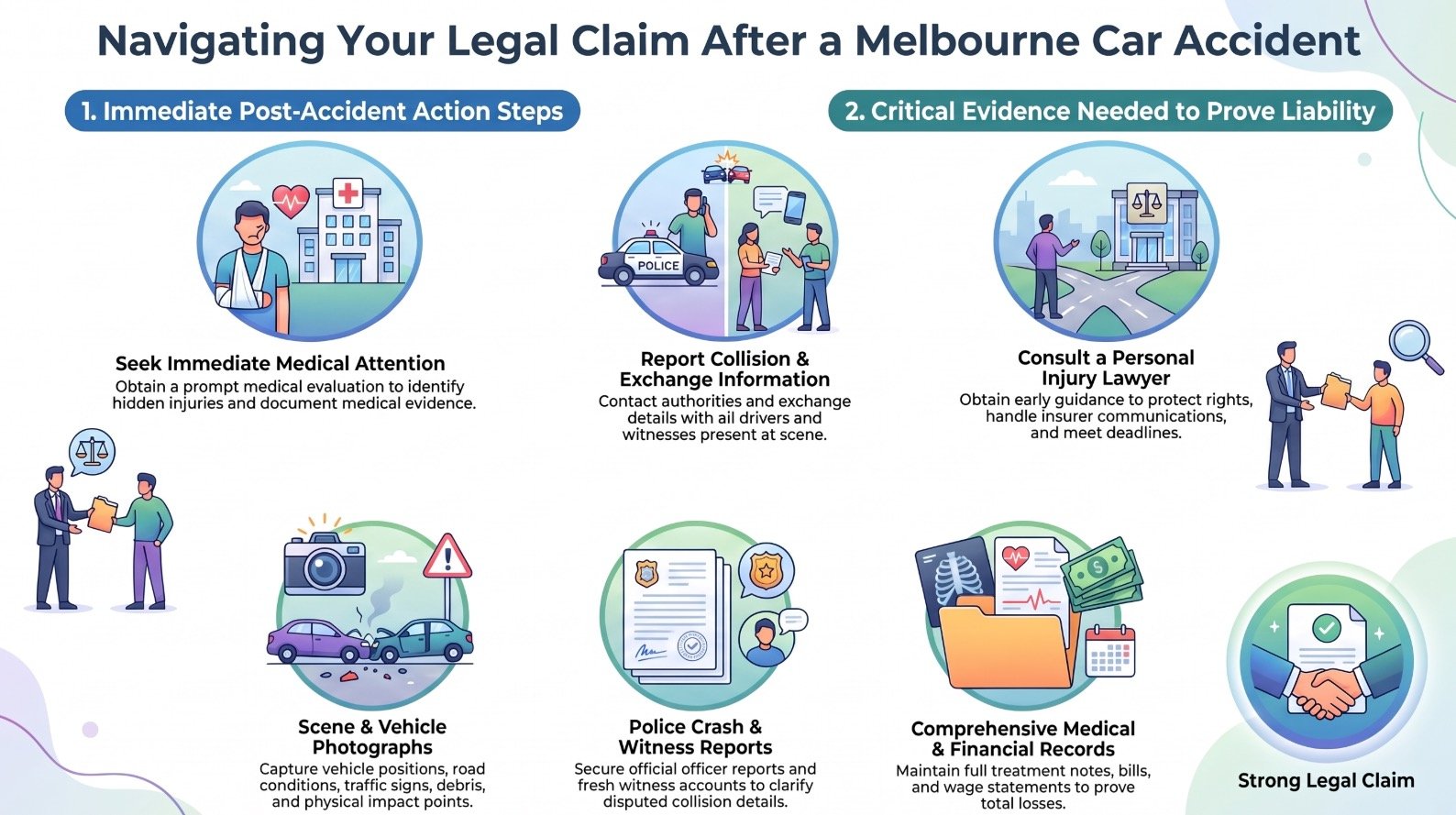
After a Melbourne car accident, we should seek medical attention promptly, even if our injuries seem minor. We should report the collision to the appropriate authorities and keep a record of relevant details. We can then contact a lawyer to understand our options and protect our legal interests.
Seek Medical Attention
Even if a collision seems minor, seek medical attention as soon as possible, because some injuries may not cause symptoms straight away. A qualified clinician can assess you, identify hidden injuries, and recommend appropriate treatment. If you have severe pain, difficulty breathing, heavy bleeding, confusion, or loss of consciousness, call emergency services or go to an Emergency room immediately. Don’t drive yourself if your condition could make travel unsafe.
Tell the clinician how the collision happened and describe every symptom, even if it seems mild. Follow their advice, attend recommended appointments, and keep records of your diagnosis and treatment. We can support others by taking their concerns seriously and helping them access care, without assuming they’re uninjured because they appear well. Continue symptom monitoring after your assessment, and seek prompt medical advice if symptoms develop, worsen, or return.
Report The Collision
If anyone is injured, call 000; otherwise, report the collision to Victoria Police as soon as possible if required by law. We can check Victoria Police guidance to confirm whether reporting is mandatory, including when a person is injured, a driver fails to stop or exchange details, or property is damaged and its owner cannot be contacted.
Follow Emergency contact procedures calmly: give the operator our location, describe any injuries and hazards, and follow their instructions. We should provide accurate details to police and exchange names, contact information, registration numbers and insurance details with the other driver. If witnesses are present, we can ask for their contact details.
Observe roadside safety precautions while waiting. Move to a safe place if possible, use hazard lights, and avoid standing in traffic. Record the scene only when safe.
Contact A Lawyer
Once we’ve reported the collision and exchanged details, we can contact a Melbourne car accident lawyer to understand our options, particularly if anyone was injured. Prompt advice can help us protect our rights, meet relevant deadlines, and focus on supporting those affected while a professional assesses the claim.
At an Initial consultation, we can explain how the collision occurred, describe our injuries, and share available records, such as medical reports, photographs, and witness details. We should ask what further evidence may help and whether the lawyer has experience with similar cases.
Before proceeding, we should clarify Legal fees, including how charges are calculated, what expenses may arise, and when payment is due. We can compare this information and decide whether the proposed approach suits our circumstances. Clear communication helps us make informed decisions and pursue fair outcomes responsibly.
Critical Evidence in a Melbourne Car Accident Collision Types Injury Case
We’ll assess the evidence that can help establish how the collision occurred and how it caused your injuries.
Essential records and accounts include:
- Police crash reports
- Scene photographs
- Medical records
- Witness statements
Police Crash Reports
After a Melbourne collision, how can a police crash report support an injury claim? It may record the crash location, date, vehicles involved, driver details, witness accounts, and the attending officer’s observations. We can use this information to establish a reliable timeline and identify evidence that supports your account of the collision. The report may also note apparent injuries or statements made at the scene, though it doesn’t determine legal responsibility or prove every injury.
Access to the report can depend on who requests it and the circumstances of the crash. We can help you identify the appropriate process and review the report for missing or inaccurate details. If you find an error, data corrections may require supporting records or a formal request to the relevant authority. Prompt review helps us preserve accurate evidence and serve your claim responsibly.
Scene Photographs
How can scene photographs strengthen an injury claim after a Melbourne car accident? Clear images can show vehicle positions, road conditions, traffic signs, debris, and visible damage. These details may help explain how a collision occurred and support a fair assessment of responsibility. If you can do so safely, photograph the scene before vehicles or objects move, and capture wide views as well as close details.
Use varied camera angles to record distances, sightlines, skid marks, and points of impact. Include landmarks that establish where each image was taken. Photo metadata, such as timestamps and location data, may help verify when and where images were captured. Preserve original files and avoid editing them. We can review photographs alongside other available evidence to present a clear, reliable account of the collision.
Medical Records
Medical records can provide vital evidence in a Melbourne car accident injury claim by documenting your symptoms, diagnosis, treatment, and recovery over time. We can use these records to connect your injuries to the collision and show how they affect daily activities, work, and your ability to care for others. Seek prompt medical attention, describe all symptoms accurately, and follow your providers’ treatment recommendations. Consistent documentation can help explain changes in your condition and support the care you’ve needed.
With your permission, we can coordinate with doctors, hospitals, and therapists to obtain relevant records. Provider Coordination helps ensure important information is complete and consistent. Keep copies of bills, referrals, prescriptions, and appointment summaries, and ask providers to correct factual errors. Good Record Retention can prevent gaps and help us present a clear account of your medical needs and recovery.
Witness Statements
Medical records document the injuries and treatment that follow a collision, while witness statements can help explain how it happened. People who saw the crash may describe vehicle movements, traffic signals, road conditions, or events immediately before impact. Their accounts can support your version of events and help clarify disputed details.
We can help you identify potential witnesses and obtain their contact information while memories remain fresh. Witness credibility matters: courts and insurers may consider whether a person had a clear view, recalls events consistently, and has any connection to those involved. We’ll assess each account carefully rather than assume every statement carries equal weight.
Promptly preserving statements can protect important evidence. We can record accounts promptly, keep original notes and contact details, and compare statements with photographs, medical records, and other available evidence.
Long-Term Effects of Melbourne Car Accident Collision Types Injuries
When we assess the long-term effects of collision injuries, we consider how they may affect your health and daily life well after the crash. Chronic pain and lasting mobility issues can limit routine activities, while psychological effects may influence your sense of safety and well-being. We’ll explain what to watch for and how these ongoing impacts may factor into your recovery and legal claim.
Chronic Pain
Chronic pain can persist long after a Melbourne car accident, even when visible injuries have recovered. We may experience ongoing discomfort after a collision, and its effects can reach beyond the injured area. Pain can interfere with work, family responsibilities, and our ability to support others in daily life. Sleep disruption may also affect concentration, mood, and energy, making ordinary demands harder to manage.
A medical professional can assess persistent symptoms and recommend suitable Pain management, which may include treatment, medication, or counseling. We should keep records of symptoms, appointments, and how pain affects daily activities. This information can help clinicians plan care and may also support an injury claim. If pain continues or changes, we should seek medical advice rather than dismissing it. Early, consistent attention can help us understand our options and communicate clearly with those involved in our recovery.
Lasting Mobility Issues
How can a Melbourne car accident affect our mobility long after the initial injuries recover? Spinal, joint, nerve, or limb damage may limit walking, standing, lifting, or using stairs. These restrictions can persist after wounds mend and may require ongoing rehabilitation, mobility aids, or assistance with daily tasks. When we recognize these needs, we can help protect a person’s independence and make practical support easier to arrange.
Accessible home modifications, such as ramps, grab rails, and widened doorways, can reduce barriers and improve safety. Adaptive vehicle controls may help someone travel to medical appointments, work, or community activities. We should also consider how collision-related limitations affect caregiving responsibilities and access to vital services. Medical assessments and clear records can guide suitable adjustments and support discussions about rehabilitation, compensation, and future care needs.
Psychological Effects
Psychological effects can continue long after the physical injuries from a Melbourne car accident have recovered. You may experience anxiety, low mood, sleep difficulties, or fear when traveling, even after treatment for visible injuries ends. Post-traumatic stress can involve intrusive memories, heightened alertness, and avoidance of reminders of the collision. These symptoms can affect work, relationships, and your ability to support others, so we encourage you to seek assistance from a qualified mental health professional.
Emotional recovery takes time and may require counseling, medical care, or practical support from people you trust. Keeping records of symptoms and treatment can help explain how the accident has affected your daily life. If another party’s negligence caused the collision, we can help you understand whether psychological harm may form part of a compensation claim.
Don’t Wait. Call Our Florida Personal Injury Lawyers Now!
Proving Liability in Melbourne Car Accident Collision Types Injury Cases
Liability in a Melbourne car accident case depends on evidence showing how the collision occurred and who failed to take reasonable care. We can help you identify the key facts, whether your crash involved a rear-end impact, a side collision, or a vehicle turning across traffic. Police reports, photographs, witness accounts, medical records, and vehicle damage may help establish the sequence of events and connect the collision to your injuries.
When accounts conflict, we may examine Vehicle dynamics, road conditions, sightlines, braking, and impact points. An expert can apply a sound reconstruction methodology to evaluate how the vehicles moved and whether a driver could have avoided the crash. We’ll also consider whether fatigue, distraction, speeding, or failure to obey road rules contributed.
Your clear, timely account can help preserve important details. By carefully gathering and evaluating evidence, we can present a reliable explanation of what happened and support a fair determination of responsibility.
Dealing With Insurance Companies After a Melbourne Car Accident Collision Types Injury
Once the evidence clarifies how a Melbourne collision occurred, insurers may contact you to discuss the crash and your injuries. We can help you prepare for these conversations while keeping your recovery and responsibilities in view. Before responding, review the relevant policy and note any Policy exclusions that may affect coverage. Ask the insurer to explain unclear terms in writing, and don’t assume every expense or injury will be covered.
An adjuster may request recorded statements soon after the collision. We should encourage you to answer accurately, but you don’t need to speculate, minimize symptoms, or agree with an account you believe is incomplete. If you’re unsure about a question, say so and seek advice before responding. Keep communications courteous and factual, and retain copies of letters, emails, and documents you provide. Report important changes in your condition promptly and follow medical guidance. By approaching insurers carefully, we can protect your ability to support those who depend on you while ensuring your account remains clear and consistent.
What to Expect During a Melbourne Car Accident Collision Injury Claim Process
We’ll begin by explaining how to report the collision and gather medical evidence to support your injury claim. Next, we’ll outline how to lodge your claim and what information you’ll need to provide. We’ll also cover how insurers assess claims and how the process may resolve.
Reporting the Collision
After a collision in Melbourne, prompt and accurate reporting can protect your health and support a later injury claim. We can help you take practical steps while keeping other road users safe. If anyone faces immediate danger, call 000 and follow the operator’s instructions. Where it’s safe, Exchange details with the other driver, including names, contact information, registration numbers and insurance details. Record the time, location and circumstances, and note the names of witnesses. Don’t speculate about fault or sign documents you don’t understand.
Notify authorities when required, including Victoria Police if someone is injured, a driver fails to exchange details, or a vehicle needs towing. Report the collision to your insurer promptly and keep copies of correspondence, forms and reference numbers. Clear, timely records can help us explain what happened and support a fair claim.
Gathering Medical Evidence
If you’ve been injured in a Melbourne car accident, seek medical care promptly and keep records of your treatment. Follow your clinician’s advice and attend recommended appointments, even when symptoms seem manageable. Consistent care supports your recovery and creates a clear record of how the collision affected you.
Keep copies of consultation notes, prescriptions, referrals, invoices, and certificates, and record changes in your symptoms. If your clinician recommends diagnostic imaging, retain the reports and discuss the results with them. We can help you understand which records may explain your injuries and treatment needs.
Provider coordination can help make sure your treating professionals share relevant information, with your consent. Tell each provider about the collision and any earlier health conditions. Accurate, complete records help us assess the medical evidence and explain your circumstances clearly, while keeping your recovery central throughout the process.
Lodging Your Claim
Once you’ve gathered your medical records, the next step is to lodge the appropriate claim and provide accurate details about the collision, your injuries, and any treatment received. We can help you identify the correct process, which may depend on where and how the crash occurred. Check Claim filing deadlines promptly, as missing a statutory time limit can affect your ability to seek compensation. We’ll also help you assemble the required documentation, such as accident reports, medical records, receipts, and details of lost income. Keep copies of everything you submit and record when and how you lodge each form. If you’re unsure about a question, seek advice before responding rather than guessing. Clear, complete information helps protect your interests and supports a properly lodged claim while you focus on recovery and responsibilities to those who rely on you.
Claim Assessment and Resolution
With your claim lodged, the insurer or relevant authority will assess the available evidence, including how the collision occurred, the injuries you sustained, and the treatment and losses you’ve documented. We’ll help you respond to information requests and identify any gaps that could affect the outcome. Medical reports, receipts, income records, and witness accounts may all support claim valuation. The assessment may also consider liability, future care needs, and the effect of your injuries on daily life and work. Once we review the evidence, Settlement negotiations may begin. We’ll explain any offer, compare it with the documented losses, and discuss whether it reflects your circumstances. If the parties can’t agree, we’ll advise you about available dispute resolution steps and applicable deadlines. Our focus remains on pursuing a fair resolution while helping you make informed decisions.
Compensation for Melbourne Car Accident Collision Types Injury Damages
The compensation available after a Melbourne car accident depends on the collision, the injuries sustained, and their effect on your life and work. We’ll assess how a rear-end impact, side collision, or multi-vehicle crash caused harm and what support you need to recover. Our role is to help you pursue a fair outcome while protecting your ability to care for yourself and those who depend on you.
Valuing your damage requires reliable evidence, including medical reports, treatment records, and expert opinions when needed. We’ll consider the severity and duration of your injuries, your recovery outlook, and any lasting restrictions on daily activities. Clear documentation helps connect the collision to your losses and supports a properly assessed claim.
Compensation limits and eligibility rules can affect what you may recover, so we’ll explain the relevant requirements and timeframes. Each case turns on its facts, and no particular amount is guaranteed. By reviewing the evidence carefully and addressing insurers’ questions, we can help you make informed decisions and seek compensation that reflects your circumstances.
Economic vs Non-Economic Damages in Melbourne Car Accident Collision Types Cases
When evaluating a Melbourne car accident claim, we distinguish economic losses, such as medical expenses and lost income, from non-economic harm, including pain and reduced quality of life. We’ll explain how each category may apply to different collision types and what evidence can support your claim. By comparing these damages, we can help you understand how insurers and courts may assess compensation.
Economic Losses
After a Melbourne car accident, economic losses are the measurable financial costs caused by your injuries, while non-economic damages address less tangible harm, such as pain and loss of enjoyment of life. We can help you identify and document the financial impact of your injuries, so you can focus on recovery and responsibilities to those who depend on you.
Economic losses may include medical treatment, rehabilitation, medication, travel to appointments, and necessary care or assistance. Lost income can arise when injuries prevent you from working or reduce your hours. If your ability to earn money has declined over the longer term, diminished earning capacity may also be relevant. We’ll assess available records, including payslips, invoices, medical reports, and employment evidence, to support your claim. Keeping clear records of expenses and work absences can help us establish the losses attributable to the collision.
Non-Economic Harm
Non-economic harm reflects the personal effects of a Melbourne car accident, rather than expenses or lost income. These effects can shape how you feel, function, and participate in daily life long after a collision. Emotional distress may include anxiety, fear, or ongoing psychological strain, while physical pain can limit ordinary activities and relationships. Loss of enjoyment of hobbies, family time, or community involvement may also reflect the accident’s impact. We recognize these changes affect more than one person; they can add pressure on those who support and care for you. When we assess non-economic harm, we listen carefully to your account and consider how the injury has altered your routines, independence, and wellbeing. Clear records and professional assessments can help explain these personal effects in a claim.
Comparing Damage Claims
Comparing economic and non-economic damages helps clarify how a Melbourne car accident claim may address both financial losses and personal harm. Economic damages cover measurable costs, including vehicle repairs, medical treatment, rehabilitation, lost income, and necessary travel. Repair cost estimates, invoices, and wage records can help us document these losses and show how the collision affected your finances. If your vehicle is worth less after repairs, diminished value may also be relevant, depending on the evidence and circumstances.
Non-economic damages address harm that doesn’t come with a straightforward price tag, such as pain, emotional distress, and reduced enjoyment of daily activities. We can help you explain these effects through consistent records and supporting evidence. By considering both categories, we can present a fuller account of your losses and pursue fair compensation while respecting the impact on your family and community.
When a Melbourne Car Accident Collision Types Injury Case Goes to Trial vs Settlement
Whether a Melbourne car accident injury claim settles or proceeds to trial depends on the evidence, the extent of the injuries, and whether the parties can agree on liability and compensation. We’ll assess the available records, witness accounts, and medical evidence to understand your claim’s strengths and limits. Settlement negotiations may resolve the dispute without a hearing, giving you greater certainty and avoiding the demands of a trial. We’ll explain any offer clearly, including how it compares with your documented losses and future needs, so you can decide with confidence.
If the parties can’t reach a fair agreement, we may prepare to present your case in court. Trial preparation involves organizing evidence, preparing witnesses, and developing a clear account of how the collision affected your life. A judge or jury will then decide disputed issues and determine any compensation. We’ll guide you through each stage, protect your interests, and keep your recovery and responsibilities to those who depend on you in view.
Don’t Wait. Call Our Florida Personal Injury Lawyers Now!
Florida Laws That May Affect Your Melbourne Car Accident Collision Types Case
Florida law can affect how we establish fault, pursue compensation, and meet deadlines after a Melbourne car accident. Understanding these rules helps us protect your interests while supporting those who depend on you.
Several laws may shape a collision claim:
- Florida’s no-fault system generally requires drivers to seek initial medical benefits through their own Personal Injury Protection (PIP Coverage), subject to policy limits and eligibility requirements.
- When injuries meet the legal threshold, you may pursue damages from an at-fault driver for losses that PIP doesn’t cover, including certain pain and suffering damages.
- Comparative Fault can reduce your recovery if you share responsibility. Florida’s modified comparative negligence rule generally bars recovery when your fault exceeds 50 percent, with exceptions.
- Drivers must carry required insurance, and evidence such as reports, photographs, and witness accounts can help clarify how a crash occurred and who bears responsibility.
We can assess how these rules apply to your circumstances, explain available options, and help you make informed decisions that serve your family and community.
The Statute of Limitations for Melbourne Car Accident Collision Types Injury Cases
Because deadlines can affect your right to seek compensation, we should review the statute of limitations as soon as possible after a Melbourne car accident. Florida law generally gives an injured person two years from the date of a negligence-based crash to file a lawsuit. Missing this deadline may prevent you from pursuing compensation in court, even when your injuries and losses are serious.
Limitation deadlines can differ when a claim involves a government entity, a fatal crash, or a person who couldn’t legally act for themselves. Special notice requirements may also apply, so we shouldn’t assume the standard period governs every case. Acting promptly helps protect your options and supports those who depend on you.
Filing extensions aren’t automatic, and courts allow them only in limited circumstances. Certain facts may pause or affect the deadline, but waiting for an exception is risky. We should confirm the applicable dates, preserve relevant records, and act promptly so a preventable delay doesn’t undermine your claim.
How a Melbourne Car Accident Collision Types Lawyer Can Help You
After a Melbourne car accident, a lawyer can help you identify the claims that may apply, gather evidence, and meet important deadlines. We can also explain your options clearly, so you can make informed decisions while focusing on your recovery and responsibilities to others.
After a Melbourne car accident, legal guidance can help you understand your options, preserve evidence, and meet important deadlines.
- Assess the collision: We review the circumstances, available reports, and relevant records to understand how the crash occurred and who may be responsible.
- Preserve evidence: We help obtain photographs, witness accounts, medical records, and other material that can support your account and document your losses.
- Develop a case strategy: We consider the evidence, applicable rules, and your priorities to plan a practical response to insurers or other parties.
- Manage communications: We handle correspondence, clarify requests, and explain settlement proposals, helping you avoid decisions without a clear understanding of their consequences.
An Attorney consultation can also identify unresolved questions and outline possible next steps. With informed guidance, we can pursue a fair outcome while treating everyone involved with care and respect.
When to Contact a Melbourne Car Accident Collision Types Lawyer
Contact a Melbourne car accident lawyer as soon as you can if you’re injured, liability is disputed, or an insurer requests a statement or offers a settlement. Early consultation can help us identify important deadlines, preserve evidence, and clarify what information you should provide. If you’re supporting passengers, family members, or others affected by the collision, prompt guidance can also help you coordinate practical next steps while protecting your own interests.
You don’t need to wait until you understand every detail of the crash. Contact us after a collision involving multiple vehicles, a side impact, a rear-end strike, or another disputed collision type, especially if injuries appear later or your circumstances change. We can explain the process and help you assess whether legal assistance is appropriate.
When choosing a lawyer, ask about communication, fees, and experience handling claims like yours. Bring available documents, such as medical records, photographs, and insurer correspondence. If you’ve already spoken with an insurer, tell us what was discussed so we can advise you on a careful response.
Why You Need an Experienced Melbourne Car Accident Collision Types Lawyer
An experienced Melbourne car accident lawyer can assess how the collision type affects liability, evidence, and the options available to you. We’ll examine the circumstances of a rear-end, side-impact, or multi-vehicle crash to identify relevant facts and explain how they may influence your claim. Each collision presents different questions, and a careful assessment can help protect your interests while supporting a fair outcome.
Lawyer Experience matters when insurers dispute responsibility or interpret evidence in ways that may disadvantage you. We can gather and review records, witness accounts, photographs, and expert opinions, then connect those details to the events that caused the crash. This work helps us present your account clearly and respond to challenges with relevant evidence.
A considered Case Strategy also allows us to address your needs and the practical effects of your injuries. We’ll explain available steps, likely issues, and potential risks so you can make informed decisions. By handling demanding discussions and deadlines, we help you focus on recovery and the people who depend on you.
How to Choose the Right Melbourne Car Accident Collision Types Lawyer for Your Case
Choosing the right Melbourne car accident lawyer means finding someone who can assess your collision type, explain your options, and build a case around reliable evidence. We should look for a lawyer with experience with crashes like yours, including rear-end impacts, intersection collisions, and multi-vehicle accidents. Ask how the lawyer investigates fault, obtains records, and addresses disputes with insurers. Clear answers can help us judge whether their approach fits our needs.
We should also discuss the fee structure before deciding. Ask what costs may arise, when fees are payable, and whether we’ll owe anything if the claim doesn’t succeed. A written explanation helps us choose confidently and avoid surprises.
During a consultation, we can assess whether the lawyer listens carefully, explains risks clearly, and answers questions without pressure. We should choose someone who respects our concerns and communicates consistently. A thoughtful selection helps us pursue fair compensation while keeping the process clear and focused on our recovery.
About The Law Offices of Anidjar & Levine
After evaluating the right legal support for a collision claim, we can learn more about The Law Offices of Anidjar & Levine and the services it offers. The firm represents people injured in motor vehicle crashes and helps clients understand their options after a collision. Its attorneys can investigate the circumstances, gather relevant records, communicate with insurers, and pursue compensation when the evidence supports a claim.
When considering a firm’s history, look at its experience handling injury matters and its familiarity with the needs of people facing medical bills, missed work, and other losses. We should also assess attorney values, including clear communication, careful preparation, and respect for each client’s decisions. These qualities can help you determine whether the firm’s approach fits your circumstances.
Frequently Asked Questions
Can I File a Claim if I Was Partly at Fault for a Melbourne Car Accident?
Yes, we can help you pursue a claim even if you were partly at fault for a Melbourne car accident. Comparative Negligence and Shared Liability rules may affect how responsibility is assessed and the compensation available, but partial fault doesn’t automatically prevent recovery. We’ll review the evidence, explain how your actions may influence the outcome, and help you meet applicable deadlines while protecting your interests and supporting a fair resolution for everyone involved.
Can Passengers Pursue Compensation After a Melbourne Car Collision?
Yes, passengers can pursue compensation after a Melbourne car collision, even if the driver caused the crash. We can help you assess Passenger injury eligibility and identify the transport accident benefits available under Victoria’s scheme. Your entitlement may depend on your injuries, treatment needs, and circumstances, so report the collision promptly and keep medical records. We’ll guide you through the claim process and explain any deadlines, helping you seek support while protecting your rights.
What if the At-Fault Driver Was Uninsured or Underinsured?
If the at-fault driver lacks insurance or adequate coverage, we can help you assess your recovery options. Uninsured driver compensation may be available through your own policy, depending on its terms and the circumstances. For underinsured driver options, we can review whether your coverage may cover losses that exceed the other driver’s policy limits. We’ll also help you document injuries, expenses, and lost income, then clearly explain deadlines and next steps.
Can I Claim Compensation for Psychological Injuries After a Collision?
Yes, you may claim compensation for psychological injuries caused by a collision, including anxiety, depression, or PTSD, if medical evidence supports your condition and the applicable legal requirements are met. We can help you document symptoms, treatment, and their effects on daily life, while identifying available claim pathways. PTSD eligibility depends on the evidence and relevant scheme rules. You may also seek recovery of reasonable counseling expenses and other eligible treatment costs.
Do I Need a Lawyer if My Car Accident Injuries Seem Minor?
You may not need a lawyer if your injuries are minor, but we recommend seeking advice when liability is disputed, symptoms worsen, or an insurer challenges your claim. Early symptoms can develop after the collision, so arrange medical care promptly and follow your clinician’s guidance. We can help you preserve medical documentation, understand deadlines, and assess available options. These steps can also help you support others who depend on you.
—————————
If you’ve been injured in a Melbourne car accident, the collision type and circumstances may affect your legal options. We can review the available evidence, explain relevant deadlines, and help you understand what steps to take next. At The Law Offices of Anidjar and Levine, we work to protect your interests and pursue compensation supported by the facts. Learn more about our Melbourne Personal Injury Lawyer services, or contact us to discuss your situation and whether we can assist with your injury claim.

