

A Spring Hill car accident collision types lawyer at The Law Offices of Anidjar and Levine can help you understand how a head-on, side-impact, or rear-end crash may have caused your injuries and what evidence could support a claim. We can review medical records, photographs, witness accounts, crash reports, and available footage to assess fault, insurance coverage, and potential losses. Seek prompt medical care and preserve relevant records. Learn more from a Spring Hill Personal Injury Lawyer. Below, we explain common collision causes, your legal options, and how claim support may help.
Main Takeaways
- A Spring Hill car accident lawyer can investigate head-on, side-impact, and rear-end collisions to assess how the crash occurred.
- Collision type alone does not establish fault; evidence must show negligence caused the crash and injuries.
- Photos, witness accounts, crash reports, vehicle records, and medical documentation can help support a claim.
- Seek prompt medical care and follow treatment recommendations, even if symptoms appear minor or develop later.
- A lawyer can review liability, injuries, and available evidence to explain potential options after a Spring Hill collision.
How We Can Help With Your Spring Hill Car Accident Collision Types Injury Claim
Whether your crash involved a rear-end impact, a side collision, or a rollover, we can help you pursue a Spring Hill car accident injury claim. We’ll listen carefully, explain your options, and help you take practical steps toward recovery while protecting your interests.
During Claim intake, we’ll ask about the incident, your injuries, medical care, and related expenses. You can share documents and concerns at your own pace, and we’ll identify information that may support your claim. We’ll also review Case eligibility, including deadlines and the circumstances that may affect your ability to seek compensation.
Our team can communicate with insurers, organize records, and assess available evidence. We’ll keep you informed, answer your questions, and discuss important decisions before you act. If you’re focused on caring for family or serving others in your community, we can manage the legal process so you can focus on what matters most. We’ll provide clear guidance without promising a particular outcome.
Don’t Wait. Call Our Florida Personal Injury Lawyers Now!
Understanding Spring Hill Car Accident Collision Types Injury Cases
How a collision happens can shape your injuries, the evidence available, and the questions insurers raise about fault. Understanding the impact pattern helps us assess your case and explain how the crash affected your health, work, and family responsibilities.


Head-on collisions can expose occupants to force from the front of the vehicle, leading to injuries involving the head, chest, neck, or limbs. T-bone impacts may transfer force through a vehicle’s side, where occupants often have less structural protection. Yet no collision type alone determines an injury. Vehicle damage, medical findings, witness accounts, and the timing of treatment all help establish what happened and how the injuries developed.
We review these details carefully so you can focus on recovery while we address your legal questions. If you serve others through your work or caregiving, we’ll consider how your injuries affect those commitments. Clear documentation can support a fair evaluation of your losses and needs.
Common Causes of Spring Hill Car Accident Collision Types
OUR CONSULTATIONSARE FREE
START YOUR FREE CASE REVIEW

We often see Spring Hill collisions caused by distracted driving, speeding, and other reckless behavior. Drivers who fail to yield or drive while impaired can also create serious risks for others. We’ll explain how these actions contribute to common collision types and the injuries they may cause.
Distracted Driving
Distracted driving can turn an ordinary trip through Spring Hill into a serious collision when a driver looks away from the road, takes a hand off the wheel, or shifts attention from driving. A text, phone call, navigation screen, meal, or conversation can divide a driver’s focus at a crucial moment. Even brief inattention can keep someone from noticing a stopped vehicle, a pedestrian, or a changing traffic signal. Distracted driving statistics show how often preventable choices contribute to crashes, though each collision depends on its specific facts. We encourage drivers to silence notifications, set directions before leaving, and pull over safely when they need to respond. Attention Restoration takes time; after an interruption, a driver may not immediately regain full focus. If you’ve been injured, we can help you understand your options and pursue accountability.
Speeding And Reckless Driving


When drivers exceed safe speeds or make reckless choices, they have less time to respond to traffic, road conditions, and unexpected hazards in Spring Hill. Speed-related collisions can cause severe injuries because greater speed increases the force of impact and may leave occupants with little protection. Drivers who follow too closely, weave through traffic, or accelerate aggressively put everyone nearby at risk. These Reckless Actions can lead to rear-end crashes, sideswipes, and loss-of-control collisions. We can help you understand how a driver’s conduct may have contributed to your injuries and what evidence could support your claim. Witness accounts, crash reports, photographs, and vehicle damage may help establish what happened. By pursuing accountability, we can seek resources for your recovery and help protect others from preventable harm on Spring Hill roads.
Failure To Yield
Beyond speeding and reckless actions, failure to yield can cause serious Spring Hill collisions, especially at intersections, when drivers enter traffic, or when they turn across another vehicle’s path. Drivers who disregard Intersection rules may strike people crossing legally or vehicles proceeding with a green signal. Others may pull from parking lots, driveways, or side streets without checking for approaching traffic. These choices leave little time for another driver to avoid a collision.
After a crash, right-of-way disputes may arise because witnesses remember events differently or the signals are unclear. We can help you review available evidence, including photographs, vehicle damage, traffic camera footage, and witness accounts. By carefully establishing what happened, we can support your effort to seek accountability and pursue compensation for injuries, lost income, and other documented losses.
Impaired Driving
Impaired driving can cause serious Spring Hill collisions because alcohol, illegal drugs, and some prescription medications can slow reaction time, impair judgment, and make it harder to maintain control. A driver may drift across lanes, miss a signal, or fail to stop in time, putting passengers, pedestrians, and other motorists at risk. We can help you understand how evidence of impairment, including test results, witness accounts, and crash records, may affect an injury claim. Law enforcement officers follow DUI checkpoint procedures to screen drivers, while courts may impose penalties when someone drives under the influence. Ignition interlock requirements can also restrict a convicted driver’s ability to operate a vehicle. If you’ve been harmed, we can explain your options and pursue accountability while keeping your recovery and community’s safety in focus.
Legal Rights of Spring Hill Car Accident Collision Types Injury Victims
The type of collision you experience in Spring Hill may affect how we establish fault, document injuries, and pursue compensation, but it doesn’t determine your rights by itself. We can help you understand your options and protect your interests while you focus on recovery and your responsibilities to those who depend on you.
Depending on the circumstances, you may be entitled to recover medical expenses, lost income, and other legally recognized losses. We’ll assess the evidence, applicable insurance, and deadlines, then explain the next steps in clear terms. Florida’s Comparative fault rules may reduce recovery if you share responsibility.
Uninsured motorists coverage may provide another potential source of benefits, depending on your policy.
- Seek prompt medical care and keep treatment records.
- Preserve photographs, witness details, and collision documents.
- Notify insurers carefully and avoid unsupported statements.
- Review available coverage, including uninsured motorists protection.
- Consult counsel before accepting a settlement or missing deadlines.
We’ll treat your concerns with care and pursue a fair resolution grounded in the facts.
Why Do Spring Hill Car Accident Collision Types Injuries Happen?
Understanding how a collision occurred can help explain why certain injuries developed and what evidence may support a claim. Injuries happen when a vehicle’s sudden movement transfers force to the people inside or nearby. The direction and speed of impact, vehicle size, restraint use, and occupant position can all affect how that force travels through the body. In a rear-end crash, for example, a person’s head and neck may move abruptly, while a side impact can expose the torso to concentrated force.
Impact biomechanics helps us examine how these forces interact with the body. Injury mechanisms may include direct contact with a vehicle surface, rapid acceleration or deceleration, or twisting during the collision. Even when damage appears minor, internal injuries or symptoms can emerge later. We can consider crash reports, vehicle damage, medical findings, and witness accounts jointly to understand what happened. This careful analysis helps us explain how a collision led to the harm you suffered.
What Should You Do After a Spring Hill Car Accident Collision Types Injury?
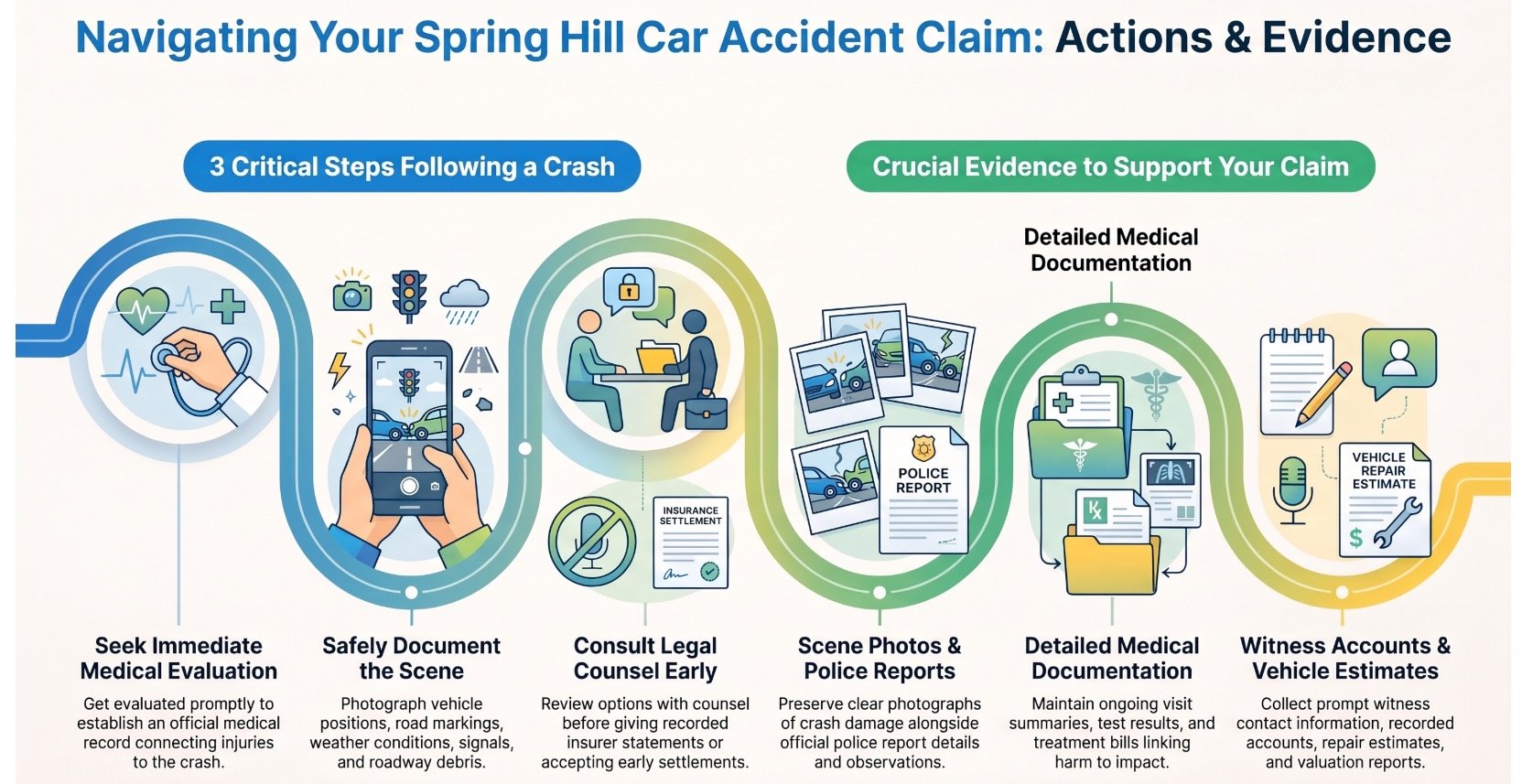
After a Spring Hill collision, we encourage you to seek medical care promptly, even if your injuries seem minor. We can help you document the crash, preserve evidence, and record how your injuries affect you. A lawyer can explain your options and help protect your interests as you pursue a claim.
Seek Medical Care
Even if a Spring Hill collision seems minor, seek medical care promptly because some injuries may not cause noticeable symptoms right away. We should help you prioritize your health and the well-being of anyone who depends on you by arranging an evaluation as soon as possible. If emergency symptoms arise, call 911 rather than driving yourself. Otherwise, contact your doctor or visit an appropriate urgent care clinic. Explain how the collision occurred and describe every symptom, including pain, dizziness, confusion, or numbness. Follow the clinician’s recommendations, take prescribed medication as directed, and ask when you should return if symptoms change. A Provider Directory may help you locate suitable care. Keep appointments and follow Follow Up Scheduling instructions so your provider can assess your recovery and adjust treatment when needed.
Document The Collision
Once you’ve addressed immediate medical needs, document the collision while the details are still clear, and it’s safe to do so. If you can remain at the scene without entering traffic or creating another hazard, use your phone to photograph the vehicles, their positions, visible damage, and the surrounding area. Capture traffic signals, signs, weather conditions, and Roadway Markings that may help explain how the crash occurred. Document debris by photographing broken glass, vehicle parts, or other material on the road before it is moved, but never step into traffic to collect evidence. Write down the time, location, and events you remember, and preserve any relevant messages or records. Ask witnesses for their names and contact information. Share accurate information with responding officers, and keep a copy of the report details.
Contact A Lawyer
If you’ve received medical care and documented the collision, consider contacting a Spring Hill car accident lawyer to discuss your options. We can help you understand how the crash type, your injuries, and available evidence may affect a claim. During a Free consultation, ask how the attorney would assess your case, what deadlines may apply, and which records you should preserve. Discuss attorney availability, including who will answer questions and provide updates as your matter progresses. Bring medical bills, treatment records, photographs, witness details, and insurance correspondence if you have them. We’ll explain your circumstances clearly and ask direct questions so you can make an informed decision. You don’t need to accept an offer or sign documents before receiving advice. Prompt guidance can help protect your interests while you focus on recovery and supporting those who depend on you.
Critical Evidence in a Spring Hill Car Accident Collision Types Injury Case
Strong evidence can help us establish how a Spring Hill crash occurred and how it caused your injuries. We should preserve records promptly, since photographs, witness accounts, and medical documentation may become harder to obtain over time.
Crucial evidence may include:
- Crash scene photographs: Images of vehicle positions, road conditions, traffic signs, and visible injuries.
- Vehicle damage records: Repair estimates, inspection reports, and photographs documenting the damage.
- Witness statements: Names and contact details, along with accounts of what witnesses saw or heard.
- Medical documentation: Examination notes, test results, treatment records, and bills linking injuries to the collision.
- Official crash reports: The responding officer’s report, which may record parties, observations, and initial findings.
Crash Scene Photographs
What can photographs reveal about a Spring Hill car accident? They can help us document the scene before traffic, weather, or cleanup changes important details. We can photograph vehicle positions, roadway markings, traffic signals, debris, and visible hazards from several distances. Clear Camera angles show how these features relate to one another and may help explain the collision sequence. Timestamp accuracy also matters because it establishes when images were taken and supports a reliable timeline. If you’re able, take photographs safely without entering traffic or delaying emergency care. We can also preserve original files and note who took each image, where, and when. These records may help investigators, insurers, and legal teams assess what happened. By documenting the scene carefully, we can support a fair review and help protect everyone affected.
Vehicle Damage Records
Vehicle damage records can help show how a Spring Hill collision occurred and how force moved through the vehicles. We can review repair estimates, inspection reports, photographs, and invoices to document the damage’s location and severity. These records may support an account of the impact and help connect vehicle damage with injuries, though they don’t establish fault on their own.
If an insurer declares a vehicle a total loss, its total loss valuation can affect the amount offered. We can compare that valuation with condition records, mileage, and local market data to identify possible errors. Keep copies of all estimates, payment decisions, and repair documents, and share them with your legal team. Careful records help us assess losses accurately, pursue fair compensation, and support the people who depend on you.
Witness Statements
When available, witness statements can clarify how a Spring Hill collision occurred and what each driver did before impact. We can help you identify people who saw the crash, including passengers, nearby residents, or workers at local businesses. Ask witnesses to describe what they observed in their own words, and record their contact information promptly. Details may fade, so timely accounts can preserve useful facts for everyone seeking a fair resolution. Statement consistency matters when we compare accounts with vehicle damage records and other available evidence. Differences do not automatically undermine a witness; people may have seen separate parts of the event. We also consider witness credibility by evaluating their opportunity to observe, possible bias, and willingness to provide a clear account. Careful documentation helps us present the collision accurately and responsibly.
Medical Documentation
Prompt medical care can protect your health and create a clear record of injuries after a Spring Hill car accident. We encourage you to follow your treatment plan, attend appointments, and tell each provider about every symptom, even if it seems minor. These steps support your recovery and help document how the collision affected your daily life.
Treatment timelines can show when symptoms began, how they changed, and what care you received. Keep copies of visit summaries, test results, prescriptions, referrals, and bills. If you miss an appointment, record the reason and reschedule when possible.
Provider coordination also matters. With your permission, we can help gather records from doctors, therapists, and other treating professionals. Consistent documentation may clarify the connection between the crash, your injuries, and necessary treatment while supporting a fair review of your claim.
Don’t Wait. Call Our Florida Personal Injury Lawyers Now!
Long-Term Effects of Spring Hill Car Accident Collision Types Injuries
After a Spring Hill car accident, we can help you understand how collision-related injuries may affect your health over time. Chronic pain and lasting mobility issues can limit daily activities, while emotional trauma may continue after physical injuries mend. We’ll explain what to consider when evaluating these long-term effects and their impact on your recovery.
Chronic Pain
Chronic pain can persist long after a Spring Hill car accident, even when the initial injuries seemed minor. We recognize that ongoing discomfort can affect your work, family responsibilities, and ability to serve others. Neck, back, and soft-tissue injuries may cause persistent soreness or nerve-related symptoms that require continued medical attention. Pain flare-ups can occur unpredictably, making everyday tasks harder to manage and complicating recovery. Sleep disruption may also reduce concentration and energy, affecting both your well-being and your relationships. We encourage you to document symptoms, follow your clinician’s treatment plan, and attend recommended appointments. Consistent records can help explain how pain has changed over time. If another party’s negligence caused the collision, we can help you understand your legal options and pursue compensation for treatment and related losses.
Lasting Mobility Issues
Lasting mobility issues can develop after a Spring Hill car accident damages the spine, joints, muscles, or nerves, limiting your ability to walk, lift, or do routine tasks. These limitations may affect work, caregiving, and community participation. We can help you understand how an injury’s lasting effects may shape your daily needs and future care.
Your treatment team can assess mobility and recommend rehabilitation, home modifications, or Adaptive equipment, such as a brace, walker, or wheelchair. Accessible transportation may also be necessary for medical appointments, employment, and family responsibilities. Keep records of treatment, mobility restrictions, equipment costs, and services you need. These details can help us evaluate the practical consequences of your injuries when pursuing compensation. A lawyer can review available evidence and explain your options for seeking damages related to ongoing limitations and necessary support.
Emotional Trauma
Emotional trauma can persist long after a Spring Hill car accident, affecting sleep, concentration, relationships, and a person’s ability to travel or return to daily routines. Even when physical injuries improve, fear, anxiety, or recurring memories may continue to disrupt daily life. Trauma triggers, such as sudden braking, traffic noise, or passing an accident scene, can cause distress and make travel difficult. We encourage you to take these effects seriously and seek support from a qualified mental health professional. Treatment may help you understand your reactions, restore confidence, and reconnect with people who depend on you. Coping strategies, including counseling, gradual exposure to travel, and support from trusted loved ones, can aid recovery. If emotional symptoms follow a collision, document their effects and discuss them with your healthcare provider and legal representative.
Proving Liability in Spring Hill Car Accident Collision Types Injury Cases
Proving liability after a Spring Hill car accident requires evidence that another driver acted negligently and that this conduct caused the collision and your injuries. We can help you identify the facts that establish responsibility and support a clear account of what happened.
Useful evidence may include photographs of vehicle damage, road conditions, traffic signals, and visible injuries. Witness statements and available video can also clarify how the crash unfolded. We may review police reports and medical records to connect the collision with your injuries and document their effects.
In more complicated cases, Fault reconstruction can help explain vehicle movement, impact points, and timing. Our liability analysis considers whether a driver failed to use reasonable care, such as by speeding, turning unsafely, or ignoring a signal. We’ll also examine whether other circumstances contributed to the crash.
Dealing With Insurance Companies After a Spring Hill Car Accident Collision Types Injury
After a Spring Hill car accident, insurance companies may contact you to discuss the collision and your injuries. We can help you respond carefully, protect your interests, and focus on your recovery. An adjuster may ask for details about the crash, your medical care, or your daily activities. Before answering, make sure you understand the question, and don’t guess about facts you can’t confirm.
You don’t have to provide recorded statements to another driver’s insurer simply because an adjuster requests one. Statements made before you know the full extent of your injuries may be misunderstood or used to challenge your account. We can review requests and help you communicate accurately without speculation.
Ask about Policy limits, since available coverage may affect what compensation can be pursued. Keep copies of messages, letters, and documents you receive, and don’t sign a release or accept payment without understanding its effect. Thoughtful communication helps us serve you responsibly and preserve your options.
What to Expect During a Spring Hill Car Accident Collision Types Injury Claim Process
We’ll begin by reviewing your claim and identifying the issues that may affect your recovery. Then, we’ll gather evidence and organize your medical records to document how the collision injured you. Once we grasp the claim’s value, we’ll negotiate with the insurer and assess any settlement offer.
Initial Claim Review
What happens during an initial claim review after a Spring Hill car accident? We begin by listening to your account and identifying the collision type, injuries, and immediate concerns. This conversation helps us understand how the crash affected your ability to work, care for others, and meet daily responsibilities. We’ll explain the claim process and clarify what decisions may require your attention.
Next, we conduct a Coverage assessment, reviewing potentially applicable insurance policies and the limits that may affect recovery. We also evaluate claim eligibility by considering whether the circumstances support a personal injury claim and which parties may bear responsibility. We’ll discuss possible deadlines and answer questions about your options. At this stage, we focus on defining the claim’s scope and setting practical next steps, without promising a particular result. We’ll keep you informed as we assess your situation.
Evidence Collection
Because reliable evidence can clarify how a collision occurred and how it affected you, we start by identifying what to preserve. We may gather photographs of vehicle damage, roadway conditions, traffic signs, and visible debris, along with witness names and statements. We also review police reports and request available surveillance or traffic-camera footage before it disappears. Evidence preservation matters because vehicles may be repaired, records overwritten, and witnesses’ recollections change over time. When relevant, we seek vehicle data, phone records, or other electronic information through appropriate legal channels. Digital forensics can help authenticate and interpret certain files, including images, messages, or event data. We’ll organize these materials to assess fault and support your collision account. Throughout the process, we’ll explain what we’re seeking and why each item may matter to your claim.
Medical Documentation
Medical records help connect your injuries to the collision and document the care you’ve received. We can help you organize visit summaries, test results, prescriptions, and referrals so the claim reflects your treatment. Keep copies of bills and follow your providers’ instructions, even when symptoms change or appointments feel difficult to manage. Consistent care supports your recovery and creates a clearer record of how the injuries affect daily activities and your ability to serve others.
Medical record timelines matter because insurers may review when symptoms began, when you sought care, and how treatment progressed. With your authorization, we can request relevant records from each clinic, hospital, or expert. Provider coordination helps address gaps or conflicting notes and ensures records reflect the same collision-related concerns. Tell us about new treatment or changes in your condition so we can keep the documentation accurate and current.
Settlement Negotiations
Once we comprehend your injuries, treatment, and the collision circumstances, we can begin settlement negotiations with the insurer. We’ll review medical records, wage information, repair estimates, and other evidence to support your claim. Demand calculation involves evaluating documented losses, future care needs, and how the crash has affected your daily life. We’ll present a clear demand and explain how the evidence supports it. The insurer may dispute fault, question treatment, or propose less than the claim warrants. We’ll examine each response and use a counteroffer strategy grounded in the facts, not pressure or speculation. Throughout discussions, we’ll keep you informed and seek your approval before accepting any offer. Our goal is a fair resolution that recognizes your losses and helps you focus on recovery and responsibilities to those who depend on you.
Compensation for Spring Hill Car Accident Collision Types Injury Damages
The compensation available after a Spring Hill car accident depends on the collision, the injuries it caused, and the financial losses you can document. We’ll examine how the crash occurred, whether it involved a rear-end impact, a side collision, or a rollover, and how those details relate to your injuries. Clear evidence helps us present your claim accurately and support your efforts to protect your family and community.
Compensation calculations should reflect the full effect of your injuries, not just the first bills you receive. We can gather medical records, treatment plans, wage information, repair estimates, and other evidence that shows how the collision disrupted your life. A careful damage valuation also considers whether you’ll need continued care or face lasting limits on daily activities. Insurers may challenge the cause or extent of claimed losses, so we’ll organize reliable documentation and address those disputes directly. By building a well-supported claim, we can seek compensation that fairly reflects your losses and helps you move forward with greater stability.
Economic vs. Non-Economic Damages in Spring Hill Car Accident Collision Types Cases
We distinguish economic losses, such as medical bills and lost income, from non-economic harm, including pain and emotional distress. The type of collision may affect your injuries and losses, but each claim depends on its specific facts. We’ll explain how records, expert opinions, and other evidence can help establish the damages you’re seeking.
Economic Losses and Expenses
The cost of a Spring Hill car accident depends on more than the initial damage to a vehicle. We can help you identify the financial losses tied to the collision and organize records that show their value. These economic damages may include medical bills, prescription costs, rehabilitation, and follow-up care expenses. If injuries keep you from working, you may also recover lost wages and reduced earning capacity if your ability to work changes long-term. Keep pay stubs, employer statements, invoices, and receipts to document these losses. Out-of-pocket costs, such as transportation to appointments or necessary medical supplies, can add up quickly. We’ll review available evidence and explain which expenses may support your claim, so you can pursue fair compensation while maintaining the support others depend on.
Non-Economic Harm and Suffering
Although medical bills and lost income can be measured in dollars, a Spring Hill car accident may also cause harder-to-quantify harm. Non-economic damages address a collision’s personal effects rather than its direct financial costs. Pain and Suffering may include physical discomfort, emotional distress, anxiety, or disruption to daily life. These effects can continue after treatment ends and may affect how you care for family, work, or serve your community.
A crash can also cause Loss of Enjoyment when injuries prevent you from taking part in activities that once brought meaning or connection. We recognize that every person experiences these changes differently, and no single amount captures their full impact. When we consider a claim, we account for how the collision has changed your routines, relationships, and well-being alongside the economic losses you’ve experienced.
Proving Damages After Collisions
To prove damages after a Spring Hill car accident, we link the collision to your financial losses and personal harm. We gather medical records, bills, repair estimates, and wage statements to show economic damages, including treatment costs, lost income, and property loss. Careful loss documentation helps establish when each expense arose and how the crash caused it. We also explain non-economic harm, such as pain, emotional distress, and limits on daily activities. Your account, supported by treatment notes and statements from people who know you, can help show how injuries changed your life. Damage valuation considers both measurable costs and these personal effects. We review the evidence, identify future care or earnings needs when supported, and present a clear, accurate claim. This process helps protect your recovery and responsibilities.
When a Spring Hill Car Accident Collision Types Injury Case Goes to Trial vs Settlement
Whether a Spring Hill car accident injury case settles or goes to trial often depends on the strength of the evidence, the extent of the injuries, and the parties’ willingness to negotiate fairly. We can help you weigh these factors while keeping your recovery and responsibilities to loved ones in view. Settlement may provide a more predictable resolution and avoid the time and uncertainty of a courtroom. However, an offer that doesn’t account for your documented losses may not meet your long-term needs.
If negotiations do not produce a fair agreement, we may present your case at trial. You’ll need to understand that a judge or jury will evaluate the evidence, including medical records, witness accounts, and Trial Testimony. Jury Deliberations follow the presentation of evidence and arguments, but no outcome is guaranteed. We’ll prepare you for each stage, explain practical considerations, and help you make informed decisions. Collectively, we can pursue a resolution that reflects the harm you’ve experienced.
Florida Laws That May Affect Your Spring Hill Car Accident Collision Types Case
The decision to settle or proceed to trial also depends on how Florida law applies to your Spring Hill car accident case. We can explain how these rules may shape your options and help you pursue a fair outcome while respecting everyone affected.
Florida law can shape your options for settling or going to trial after a Spring Hill car accident.
- Florida no-fault coverage generally requires drivers to seek initial medical benefits through their own personal injury protection insurance, regardless of fault.
- Serious injuries may permit an injured person to pursue compensation from the at-fault driver beyond those benefits.
- Comparative negligence rules can reduce recovery when an injured person shares responsibility for a crash.
- Florida’s modified comparative fault system may bar recovery if the injured person’s share of fault exceeds 50 percent.
- Insurance policy limits and available coverage can affect the compensation we seek.
The type of collision, the evidence, and each party’s conduct may affect how these laws apply. We can review medical records, witness accounts, and crash evidence to assess liability and damages. By explaining the legal framework clearly, we help you make informed decisions and protect your ability to support your family and community.
The Statute of Limitations for Spring Hill Car Accident Collision Types Injury Cases
Although the type of collision may affect how we investigate your injuries, Florida’s filing deadlines apply to car accident claims regardless of how the crash occurred. For most negligence-based injury claims, Florida law generally allows you to file a lawsuit within two years of the accident. Missing that deadline can prevent you from seeking compensation in court, even when another driver caused the crash.
Deadline calculation depends on the facts and the claim involved. Different rules may apply to wrongful death cases, claims involving government entities, or situations where the injured person is a minor. Tolling exceptions may pause or alter a filing period in limited circumstances, but you shouldn’t assume an exception applies without confirming the law and relevant facts.
Prompt attention helps preserve your ability to seek accountability and support those who depend on you. Keep records of the crash and your injuries, and note important dates. Because deadlines can be strict, act promptly to determine which filing period applies to your case.
How a Spring Hill Car Accident Collision Types Lawyer Can Help You
How can a lawyer help after a car accident in Spring Hill? We can investigate the collision, explain your options, and protect your interests while you focus on recovery and responsibilities to those who depend on you. Effective Case strategy begins with understanding how the crash occurred and documenting its consequences. Our lawyer can help you communicate with insurers and pursue a fair, evidence-based resolution.
A lawyer may:
- Review the crash report, photographs, witness accounts, and available video.
- Identify the collision type and assess how it may affect liability.
- Gather medical records and other evidence of your injuries and losses.
- Handle insurer communications and evaluate settlement proposals.
- Present your claim through negotiation or, when appropriate, in court.
We can also explain each step in clear terms, helping you make informed decisions without losing sight of your family, work, or community commitments. Our role is to provide focused guidance and pursue accountability with care, diligence, and respect for your needs.
When to Contact a Spring Hill Car Accident Collision Types Lawyer
Contact a Spring Hill car accident lawyer as soon as you can after a collision, especially if you’ve suffered injuries, fault is disputed, or an insurer has contacted you. Early guidance can help us understand your immediate concerns and identify time-sensitive steps. If you’re caring for family members, supporting coworkers, or serving your community, addressing the claim promptly can also help you protect the stability others depend on.
We can discuss what happened, review available documents, and explain possible next steps during an Initial Consultation. Bring the crash report, photographs, medical records, insurance correspondence, and contact details for witnesses, if available. You don’t need to have every detail settled before speaking with us.
Ask about Fee Arrangements, including how legal fees and case costs are handled, before deciding whether to proceed. Contact us promptly if you receive a settlement offer, face a filing deadline, or are unsure how to respond to an insurer. Timely communication can help you make informed decisions.
Don’t Wait. Call Our Florida Personal Injury Lawyers Now!
Why You Need an Experienced Spring Hill Car Accident Collision Types Lawyer
An experienced Spring Hill car accident lawyer can investigate the collision, assess how the evidence supports your claim, and address disputes with insurers. We can examine vehicle damage, witness accounts, roadway conditions, and available records to clarify how the crash occurred. This work matters when another party disputes responsibility or minimizes your injuries.
Local collision experience helps us understand how area roads, traffic patterns, and common crash circumstances may affect a case. We can use that knowledge to identify relevant evidence and explain its significance. Because each collision affects people differently, we also develop a personalized legal strategy around your injuries, financial losses, and recovery needs.
Our role includes communicating with insurers, organizing documentation, and pursuing fact-based compensation. We’ll keep you informed about important decisions and explain your options in clear terms. With focused legal support, you can focus more on recovering and supporting those who depend on you.
How to Choose the Right Spring Hill Car Accident Collision Types Lawyer for Your Case
Choosing the right Spring Hill car accident lawyer starts with evaluating the experience, communication, and resources your case requires. Ask how often the attorney handles collisions like yours, including rear-end crashes, intersection impacts, or multi-vehicle accidents. An attorney’s experience with similar claims can help us assess fault, preserve evidence, and explain realistic options without promising a specific result.
Pay attention to communication style from your first conversation. We should receive clear answers, timely updates, and an explanation of who will handle questions as the case proceeds. A lawyer should listen carefully, respect your priorities, and describe fees and next steps in language you understand.
Consider whether the attorney has the time and resources to investigate the crash, consult qualified experts when needed, and negotiate with insurers. Ask about the proposed strategy and how decisions remain yours. By comparing these factors, we can choose counsel prepared to protect our interests while helping us pursue fair compensation and regain stability.
About The Law Offices of Anidjar & Levine
After comparing an attorney’s experience, communication, and resources, we can consider how The Law Offices of Anidjar & Levine approaches car accident claims. We work to help injured people understand their options and pursue compensation for losses supported by the facts. Our role includes listening to your concerns, explaining the claims process, and communicating with insurers on your behalf. We also recognize that many clients want to protect their families and return to serving their communities. Clear guidance can help you make informed decisions during a difficult period.
When reviewing Firm History, consider the firm’s experience handling injury claims, its approach to client communication, and the resources it can devote to a case. Attorney Recognition may offer additional context, but awards or professional distinctions don’t guarantee a particular result. We encourage you to ask about the lawyer who would handle your matter, relevant case experience, fees, and expected next steps. By discussing these details directly, we can help you assess whether the firm’s services fit your needs and goals.

Frequently Asked Questions
What Are the Main Types of Car Collisions in Spring Hill?
The main car collision types in Spring Hill include rear-end collisions, head-on crashes, side-impact collisions, sideswipes, single-vehicle crashes, and rollover crashes. We can help you understand how each type occurs and why its consequences may differ. Rear-end collisions often happen when drivers follow too closely, while side impacts commonly occur at intersections. Rollover crashes may involve sudden maneuvering or vehicle instability. Recognizing these patterns helps us support safer roads and informed decisions after a collision.
Can a Collision Type Affect How a Crash Reconstruction Expert Analyzes an Accident?
Yes, the collision type can shape how we analyze a crash because each impact pattern leaves different evidence. We examine vehicle damage, rest positions, roadway marks, and available photographs, then select a reconstruction methodology suited to the event. For example, a sideswipe may require different measurements than a head-on collision. We also consider witness accounts and vehicle data, where available. This analysis can support clear, reliable expert testimony and help you understand how investigators reached their conclusions.
What Is the Difference Between a Sideswipe and a Broadside Collision?
A sideswipe occurs when vehicles traveling alongside one another strike each other along their sides; a broadside, or T-bone, happens when one vehicle strikes another’s side, often at an intersection. We assess Sideswipe collision liability by examining lane positions, vehicle damage, and driver actions. For broadside injury claims, we consider impact direction, right-of-way, and the injuries involved. Understanding this distinction helps us identify relevant evidence and support a fair, accurate assessment of responsibility and losses.
Are Multi-Vehicle Pileups Handled Differently From Two-Car Collisions?
Yes, multi-vehicle pileups are often handled differently because several drivers, vehicles, and insurance policies may be involved. We help you identify each responsible party, preserve evidence, and understand how fault may be shared. Coordinated Claims can require careful communication among Multiple Insurers, whose coverage decisions may affect compensation. We’ll review the sequence of impacts, witness accounts, and available records to support a clear, fair resolution while protecting your interests throughout the process.
Can Vehicle Damage Patterns Help Identify the Type of Collision?
Yes, vehicle damage patterns can help us identify how a collision occurred, though they rarely prove it alone. Vehicle Crush Patterns may show the direction and force of impact, while Paint Transfer Evidence can help identify contact between vehicles. We should compare these findings with photographs, witness accounts, and crash reports before drawing conclusions. Careful analysis helps us serve everyone affected by a collision and distinguish reliable evidence from assumptions.
—————————
After a collision in Spring Hill, you don’t have to manage an injury claim alone. We can investigate how the crash happened, identify potentially responsible parties, and pursue compensation supported by the evidence. Acting promptly may help preserve important records and protect your legal options. The Law Offices of Anidjar and Levine can explain the process, answer your questions, and work to advance your claim while you focus on recovery. Learn more about working with a Spring Hill Personal Injury Lawyer or contact us to discuss your situation.

