A St. Petersburg car accident collision types lawyer at The Law Offices of Anidjar and Levine can help you understand how the impact, available evidence, and Florida law may affect your injury claim. We review crash reports, photographs, witness accounts, medical records, and available vehicle data to assess how the collision happened and who may be responsible. Because injuries and symptoms can emerge or change over time, we also consider your treatment and daily limitations. Learn more from a St. Petersburg Personal Injury Lawyer. Below, we explain collision types, claim considerations, and how legal help may support your next steps.
Main Takeaways
- A St. Petersburg car accident lawyer can assess how a front, side, rear-end, or angled collision occurred.
- Collision type alone does not establish fault; evidence such as photos, witness accounts, and crash reports can clarify events.
- Liability review may consider traffic signals, vehicle paths, road conditions, driver actions, and applicable driving rules.
- Seek medical care promptly, since some crash injuries and symptoms may appear hours or days later.
- Preserve medical records, expenses, photographs, and notes about how injuries affect work and daily activities.
How We Can Help With Your St. Petersburg Car Accident Collision Types Injury Claim
Whether your crash involved a rear-end impact, a sideswipe, or an intersection collision, we can help you pursue a St. Petersburg car accident injury claim. We’ll listen carefully, explain your options, and provide Personalized legal guidance based on your circumstances and priorities. We protect your interests while you focus on your health and responsibilities.
We can review available records, identify potentially responsible parties, and communicate with insurers on your behalf. Through careful claim strategy development, we’ll assess the evidence, outline practical next steps, and work to present your losses clearly. We’ll also keep you informed, answer your questions, and help you make decisions with a clear understanding of potential risks and benefits.


Every client merits respectful attention and diligent representation. We’ll approach your claim with care, pursue fair compensation supported by the facts, and remain focused on the outcome that best serves you and your family. You won’t have to maneuver through the process alone; we’ll provide steady guidance from the initial review through resolution.
Understanding St. Petersburg Car Accident Collision Types Injury Cases
Understanding how a collision occurred can help clarify the injuries, evidence, and legal issues involved in a St. Petersburg car accident case. We can examine the crash pattern and available records to explain how the impact may relate to your injuries and claim.
OUR CONSULTATIONSARE FREE
START YOUR FREE CASE REVIEW

Intersection crashes may involve impacts from the front, side, or multiple directions. The vehicles’ positions, damage, and witness accounts can help us assess how the collision unfolded. Rear-end collisions may appear straightforward, but the force can cause injuries that emerge hours or days later. Medical evaluations and consistent treatment records can help document those effects.
Every case depends on its specific facts. We can review photographs, reports, medical documentation, and other evidence to identify questions that need further investigation. We’ll also consider how the collision affected your ability to work, care for family, and take part in daily life. By understanding these details, we can present your experience clearly, pursue accountability, and help you make informed decisions about next steps.
Don’t Wait. Call Our Florida Personal Injury Lawyers Now!
Common Causes of St. Petersburg Car Accident Collision Types


We often trace St. Petersburg collisions to distracted driving, speeding, or reckless decisions that reduce a driver’s ability to respond safely. Impaired driving and unsafe lane changes can also cause serious crashes, especially when drivers misjudge traffic conditions. By identifying these common causes, we can better explain how a collision occurred and what evidence may help establish responsibility.
Distracted Driving
Distracted driving occurs when a motorist’s attention shifts from the road to a phone, navigation system, passenger, or other task. Phone distraction can involve texting, calling, or checking notifications, while dashboard interaction may require a driver to look away or take a hand from the wheel. Even brief lapses can prevent motorists from noticing traffic changes, pedestrians, or vehicles entering an intersection. These actions may contribute to rear-end, side-impact, or intersection collisions, placing drivers, passengers, and others at risk. We can help you determine whether distraction contributed to your crash by reviewing available records, witness accounts, and other evidence. If you’ve been injured, understanding how the collision occurred can help you make informed decisions, pursue accountability, and protect your ability to focus on recovery and support those who depend on you.
Speeding And Reckless Driving
When drivers exceed safe speeds or ignore traffic laws, they have less time to respond to hazards and may cause serious collisions. In St. Petersburg, speeding can make it harder to stop for traffic, pedestrians, or changing road conditions. A posted speed limit sets a legal maximum, but a safe speed may be lower when visibility, weather, or congestion demands caution. Reckless actions, such as aggressive lane changes, tailgating, or running a red light, can put everyone nearby at risk. These choices may lead to rear-end crashes, side-impact collisions, or loss of vehicle control. After a crash, we can help you review available evidence, including witness accounts, vehicle damage, and traffic records, to understand how a driver’s conduct contributed to the crash. By seeking accountability, we can support your recovery and help protect others on the road.
Impaired Driving
Because alcohol, drugs, or certain medications can impair judgment and reaction time, impaired drivers may fail to brake, yield, or maintain their lane. These failures can cause rear-end, intersection, or head-on collisions, putting drivers, passengers, pedestrians, and cyclists at risk. We can help you understand how impairment may have contributed to a crash and what evidence could support your claim. Police reports, witness accounts, toxicology results, and alcohol testing may help establish a driver’s condition. DUI checkpoints can deter impaired driving, but they don’t prevent every collision. If you’ve been injured, seek medical care promptly and preserve relevant records, photographs, and contact information. We’ll review the circumstances, explain your options, and pursue accountability where the evidence supports it, while keeping your recovery and well-being in focus.
Unsafe Lane Changes
Unsafe lane changes can cause sideswipe, rear-end, and multi-vehicle collisions on St. Petersburg roads. Drivers may change lanes without checking nearby traffic, misjudge a vehicle’s speed, or react too late to congestion. Failing to use lane-change signals can leave other motorists little time to respond. Skipping blind-spot checks may also hide a car, motorcycle, or bicycle beside your vehicle. These choices put everyone sharing the road at risk, including passengers and people traveling to work or providing vital services. We can reduce these dangers by signaling early, checking mirrors and blind spots, and changing lanes only when there’s a safe opening. When a careless lane change causes a crash, we can help injured people understand their options and pursue accountability for the harm they’ve suffered.
Legal Rights of St. Petersburg Car Accident Collision Types Injury Victims
After a car accident in St. Petersburg, you have legal rights that can help you pursue compensation and protect your family’s stability. We can help you understand your options, preserve evidence, and make informed decisions while you focus on recovery.
Your claim may address medical expenses, lost income, property damage, and other losses supported by evidence.
- Seek fair compensation. We can document your losses and present a demand to the responsible party’s insurer. Keep records of treatment, expenses, and missed work.
- Understand shared fault. Under Florida’s comparative negligence rules, your compensation may be reduced if you share responsibility. An insurer’s assessment isn’t necessarily final.
- Protect your claim. Filing deadlines apply, and missing them can prevent recovery. We can identify the applicable deadline and promptly handle required filings.
You also have the right to decline an inadequate settlement and seek legal guidance before signing a release. By acting carefully, we can support your interests and help you pursue accountability without losing sight of your recovery.
Why Do St. Petersburg Car Accident Collision Types Injuries Happen?
Why do car accident injuries happen in St. Petersburg? A collision transfers force to people inside a vehicle, and the resulting harm depends on how that force reaches the body. Impact direction matters: a frontal, side, rear-end, or angled crash can move occupants differently and strain distinct areas. Even when a vehicle’s safety systems work as designed, occupants may still experience abrupt movement that injures the head, neck, chest, or limbs.
Vehicle deformation also influences injury risk. The vehicle’s structure absorbs some crash energy, but the degree and location of damage can affect how much force reaches the passenger compartment. Seat belts and airbags reduce certain risks, yet they can’t prevent every injury, especially in severe or unexpected impacts. Speed, vehicle size, occupant position, and whether someone is properly restrained may further shape the outcome. Understanding these factors helps us explain why people can suffer different injuries in similar collisions and why careful investigation matters when serving injured neighbors and families.
What Should You Do After a St. Petersburg Car Accident Collision Types Injury?
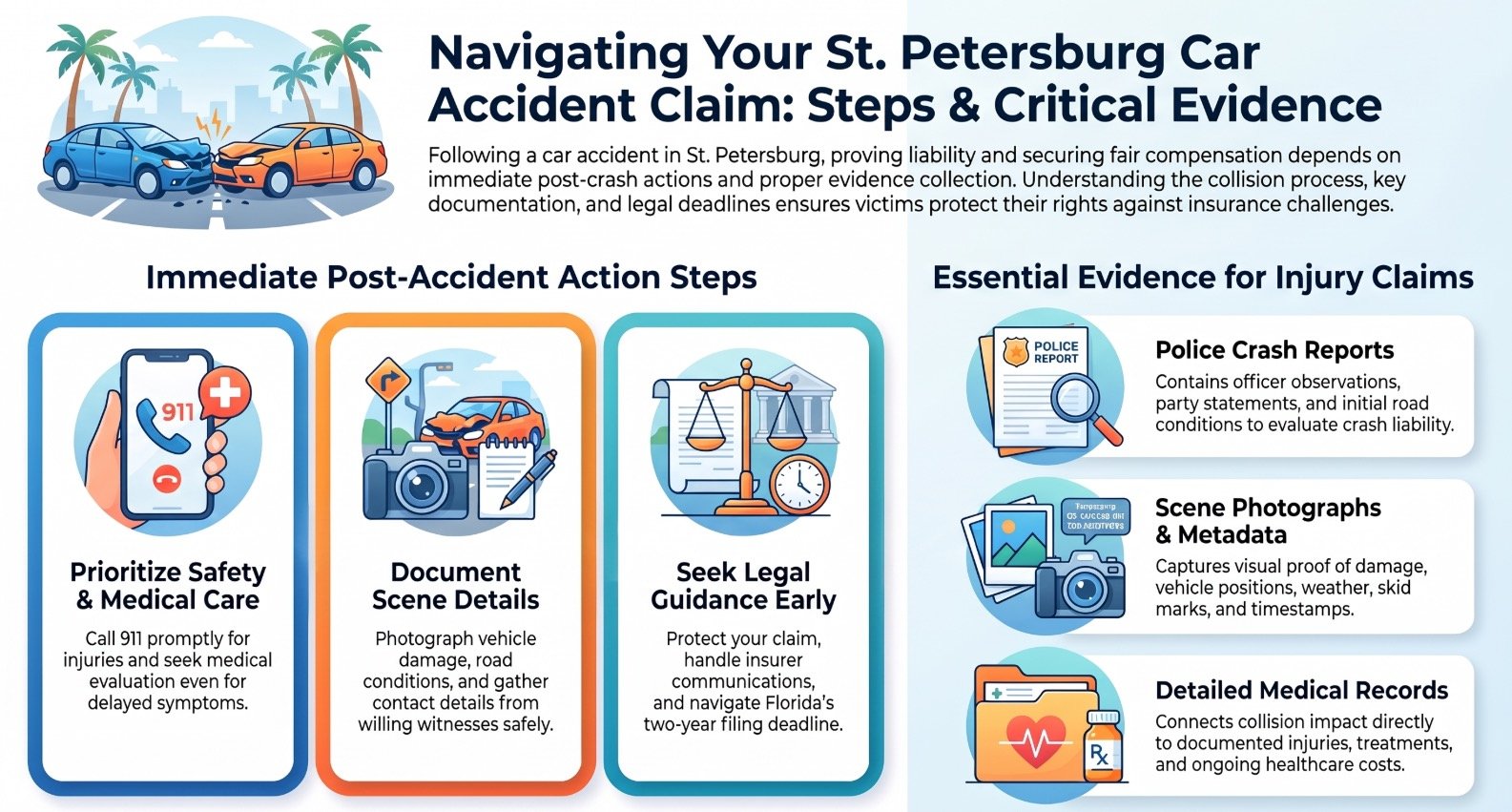
After a St. Petersburg collision, first check for injuries and call emergency services if needed. Document the scene, vehicle damage, and relevant details while avoiding actions that could compromise safety. Once we address immediate needs, we can contact a lawyer to discuss our options and protect our interests.
Check for Injuries
Check yourself and your passengers for injuries as soon as the vehicles stop, but don’t move anyone who may have a head, neck, or back injury unless immediate danger requires it. Ask others involved whether they’re hurt, and offer calm assistance without putting yourself or anyone else at risk. For Emergency symptom recognition, watch for severe bleeding, difficulty breathing, confusion, fainting, or intense pain. Call 911 promptly if anyone has serious symptoms, appears unresponsive, or needs urgent medical attention. Even when everyone seems well, hidden injury signs may emerge later; shock and adrenaline can mask pain, and some injuries aren’t immediately apparent. We can help protect everyone by staying alert, avoiding unnecessary movement, and following emergency dispatchers’ instructions. Encourage anyone who feels unwell to seek medical evaluation, and don’t assume an absence of visible wounds means no injury.
Document the Collision
Once everyone’s immediate safety is addressed, document the collision while the details are still clear. If it’s safe, photograph each vehicle from several angles, capturing damage, license plates, road conditions, traffic signs, debris, and visible skid marks. Include wide shots showing where the vehicles stopped relative to the intersection or roadway. Vehicle damage mapping helps us record the location and extent of each impact, while collision diagramming clarifies vehicle directions, lanes, and points of contact. Note the time, weather, lighting, and any details you may later forget. Exchange contact and insurance information with the other driver, and collect names and phone numbers from willing witnesses. Keep your account factual, avoid guessing about fault, and preserve original photos and records for accurate review.
Contact a Lawyer
When should you contact a lawyer after a St. Petersburg car accident? Reach out promptly if you suffered injuries, face disputed fault, or encounter pressure from an insurer. Early guidance can help us preserve evidence, identify responsible parties, and protect your ability to pursue compensation while you focus on recovery and supporting those who depend on you.
We can review the collision details, medical records, insurance communications, and available documentation to explain your options. Ask whether the lawyer offers a Free consultation and how contingency fees work. Under a contingency arrangement, legal fees generally depend on recovering a settlement or judgment, but you should confirm the terms, costs, and responsibilities in a written agreement.
Before signing anything, make sure you understand the proposed representation. We can help you assess the lawyer’s experience with your collision type and how they keep you informed.
Critical Evidence in a St. Petersburg Car Accident Collision Types Injury Case
We can strengthen your claim by preserving evidence that shows how the collision occurred and how it caused your injuries.
Focus on these three sources:
- Police crash reports and scene photographs
- Witness statements
- Medical records
Police Crash Reports
A police crash report can provide important evidence after a St. Petersburg collision by documenting the responding officer’s observations, driver and witness statements, and reported road or vehicle conditions. We can use these details to understand how the crash occurred and identify information that may support an injury claim. However, a report isn’t a final determination of fault, and it may contain errors or omit relevant facts.
You can request a copy from the investigating agency. Report access may depend on the agency’s release rules and the report’s availability. We can review the document with you, compare its account with other available evidence, and explain correction procedures if it includes inaccurate information. Raising a factual concern promptly may help preserve an accurate record. We’ll also consider how the report relates to your injuries and the collision’s circumstances.
Scene Photographs
Photographs taken at a St. Petersburg crash scene can preserve details that disappear when vehicles move, and debris is cleared. We can use images to show vehicle damage, skid marks, road conditions, traffic controls, and the cars’ positions after impact. These details may help explain how a collision occurred and support a careful assessment of injuries and responsibility.
Camera angles matter. Wide views establish the scene, while close images capture specific damage or hazards. We should document each vehicle and relevant roadway features from several directions, without altering the original files. Photo metadata, including timestamps and location information, may help establish when and where images were taken. We can organize these materials promptly and share them with the right professionals to protect your interests and support a fair resolution for everyone affected.
Witness Statements
When available, witness statements can clarify how a St. Petersburg collision unfolded and who may have contributed to it. We can help you identify people who saw the crash, including passengers, nearby drivers, pedestrians, and workers at nearby businesses. Their accounts may explain vehicle movements, traffic signals, road conditions, and what happened immediately before impact. Witness credibility matters, so we’ll consider each person’s opportunity to observe, consistency, and possible bias. We should gather names and contact details promptly, while memories remain clear and witnesses are easier to locate. By carefully preserving statements, we can document accounts accurately and retain relevant recordings or written notes. Respectful, focused questions help protect each account’s integrity and support a fair review. These statements can help us present a clearer account of the collision.
Medical Records
How clearly do medical records document injuries after a St. Petersburg collision? They can show when symptoms began, what treatment you received, and how your condition changed over time. We’ll help you understand why complete records matter when you’re seeking fair compensation and protecting your ability to recover.
Organizing medical records can make this evidence easier to review. We can gather emergency department notes, diagnostic images, prescriptions, therapy records, and follow-up evaluations, then arrange them by date. This timeline may connect the crash to your injuries and show how those injuries affected daily activities.
Provider communication also matters. Tell your doctors about new or worsening symptoms, attend recommended appointments, and ask questions when records contain errors. We can help identify missing documentation and explain how consistent, accurate records support your claim while keeping your care and recovery central.
Long-Term Effects of St. Petersburg Car Accident Collision Types Injuries
We’ll examine how collision-related injuries can cause chronic pain and limit your mobility long after the crash. We’ll also consider cognitive and emotional changes that may affect daily life and work. These lasting effects can require ongoing treatment, increasing medical expenses over time.
Chronic Pain and Mobility
Although some injuries from a St. Petersburg car accident improve with time, others can leave you with chronic pain and lasting mobility limits. A rear-end collision may aggravate spinal injuries, while a side-impact crash can damage joints or limbs. We can help you understand how these effects may interfere with walking, working, caregiving, and serving your community.
Your treatment plan may include physical therapy, medication, or other Pain management strategies. When movement remains difficult, adaptive equipment such as braces, canes, or modified seating may support daily tasks and help you preserve independence. Keep records of symptoms, appointments, expenses, and changes in your abilities. These details can help us assess the long-term consequences of your injuries and explain how ongoing care needs may affect your claim.
Cognitive and Emotional Changes
A St. Petersburg car accident can affect more than our physical health. A collision may cause a brain injury or emotional distress that changes how we think, feel, and relate to others. You might notice memory lapses, difficulty concentrating, or trouble making decisions. Mood swings, anxiety, irritability, and persistent sadness can also disrupt family relationships, work, and the care you provide to people who depend on you.
These changes may emerge gradually, so we shouldn’t dismiss them as ordinary stress or a personal failing. Tell your doctor what you’ve noticed and when symptoms began. A careful assessment can identify possible causes and guide appropriate treatment. We can also help you document how these effects influence daily responsibilities and relationships, preserving important information as you seek answers and support after the crash.
Ongoing Medical Expenses
When collision injuries require ongoing care, medical expenses can continue long after the initial treatment ends. St. Petersburg crashes may cause lasting pain, reduced mobility, or cognitive difficulties that call for repeated appointments and specialized support. We can help you document these needs so you can focus on recovery and continue caring for the people who depend on you.
Future treatment may include physical therapy, medication, surgery, counseling, or assistive equipment. Because costs and needs can change, medical forecasting should rely on qualified providers’ assessments of your condition, likely progress, and recommended care. We’ll gather records, treatment plans, and cost estimates showing how an injury may affect your long-term needs. This evidence can help us pursue compensation that reflects anticipated expenses, not only bills you’ve already received. Proper planning can protect your access to necessary care.
Proving Liability in St. Petersburg Car Accident Collision Types Injury Cases
Proving liability in a St. Petersburg collision injury case begins with establishing how the crash occurred and who failed to use reasonable care. We’ll examine the collision type, such as a rear-end impact, sideswipe, or intersection crash, because each may raise different questions about driver conduct. Our goal is to build a clear account that supports your recovery and helps protect your family’s well-being.
Evidence can include police reports, photographs, vehicle damage, witness statements, and available video. Vehicle trajectory analysis may help explain each vehicle’s movement before impact, while intersection sightlines can show whether a driver had a reasonable opportunity to see and avoid danger. We’ll also review traffic signals, road conditions, and applicable driving rules.
You can support the investigation by preserving records and sharing an accurate timeline. We’ll carefully compare evidence, identify inconsistencies, and determine whether another party’s actions caused or contributed to your injuries. A well-supported liability finding can clarify responsibility and provide a sound basis for pursuing accountability.
Dealing With Insurance Companies After a St. Petersburg Car Accident Collision Types of Injury
After a St. Petersburg collision causes injuries, insurance conversations can affect your ability to recover fair compensation. We can help you communicate carefully while you focus on treatment and your responsibilities to family, coworkers, and community. Report the crash promptly, provide basic facts, and keep copies of correspondence, medical bills, and repair estimates. Avoid guessing about speed, distance, or fault when details remain unclear.
Insurance adjusters may request broad medical authorizations, question whether an injury came from the collision, or offer a quick settlement before they understand your condition. You don’t have to accept an offer or sign documents without reviewing their effect. Be cautious about recorded statements; an adjuster may use imprecise wording to challenge your account later. We can prepare you for questions, help protect private information, and address communications on your behalf. Share accurate information, follow medical advice, and let us assess which documentation supports your losses before you decide.
What to Expect During a St. Petersburg Car Accident Collision Types Injury Claim Process
We’ll begin by evaluating your claim and identifying the evidence needed to support it. As you receive treatment, we’ll help document your injuries, expenses, and recovery. We’ll then evaluate settlement options and, if necessary, prepare to pursue your claim in court.
Initial Claim Assessment
During an initial claim assessment, we review how the collision occurred, the injuries you sustained, and the available evidence to identify the issues that may affect your St. Petersburg claim. We’ll discuss your immediate needs, treatment, and how the injuries have changed your daily responsibilities, so we can understand the practical impact on you and those who depend on you.
Our Liability screening considers which parties may have contributed to the crash and what facts could influence responsibility. We also conduct a Coverage review to identify potentially applicable insurance policies and limits. These early steps help us explain possible paths forward, assess whether the claim warrants further action, and address questions about the process. We’ll give you a clear overview of your options and next steps, without promising a particular outcome.
Evidence Collection
When we preserve and organize evidence early, we can better evaluate how the collision occurred and how it affected you. We’ll gather available photographs, witness statements, traffic camera footage, and police reports, then compare those records with the damage to each vehicle. Vehicle inspections may reveal impact points or mechanical issues that help clarify how the crash unfolded. When available, Black box data can show speed, braking, and other events shortly before impact. We’ll also identify evidence that could be lost or overwritten and take reasonable steps to preserve it. Your account matters, so we’ll work with you to document what you remember while details remain clear. By organizing reliable evidence, we can assess the claim carefully and present a clearer account of the collision to insurers or other decision-makers.
Treatment And Documentation
Evidence can help explain how a crash occurred, while treatment records show how it affected your health. After a collision, we encourage you to seek prompt medical care, even if symptoms seem minor. Tell your provider how the crash happened and describe every symptom, including changes that develop later. Consistent documentation helps connect your injuries to the event and gives your care team a clearer picture of your needs.
Choose a provider who understands your condition and accepts your coverage; select based on your medical needs, not pressure from others. Follow the treatment plan, attend appointments, and ask questions when instructions are unclear. Keep copies of visit summaries, prescriptions, test results, and bills. We can help you organize these records and track follow-up scheduling so important care details stay accessible as your recovery progresses.
Settlement Or Litigation
After we assess your injuries, treatment records, and available evidence, we can advise whether settlement or litigation may best serve your claim. We’ll explain each option and help you weigh the practical consequences before deciding how to proceed.
During settlement discussions, we’ll present documented losses and respond to the insurer’s position. Effective Settlement Negotiation Tactics can support a fair resolution, but we won’t recommend accepting an offer that fails to account for your medical needs, lost income, and other damages. If negotiations stall, we can file a lawsuit and prepare to present your case in court.
We’ll discuss Litigation Cost Considerations, including time, expenses, and the possibility of an uncertain result. Throughout the process, we’ll keep you informed, answer your questions, and protect your interests while you focus on recovery and responsibilities to those who depend on you.
Don’t Wait. Call Our Florida Personal Injury Lawyers Now!
Compensation for St. Petersburg Car Accident Collision Types Injury Damages
The type of collision can shape both the injuries a person suffers and the compensation they may pursue. A rear-end crash may cause neck or back injuries, while a side-impact collision can lead to fractures or other serious harm. We’ll examine how the crash occurred, the medical evidence, and how your injuries affect daily life to identify losses the responsible party may need to address.
Compensation may also account for damage to your vehicle. Repair cost recovery can help pay for reasonable work needed to restore it after the collision. If repairs don’t return the vehicle to its prior market value, diminished vehicle value may also be relevant. We’ll review estimates, invoices, photographs, and valuation evidence to support your claim.
Every case depends on the facts, including the severity of the impact and the evidence available. By carefully documenting your injuries and property damage, we can help you pursue a fair resolution so you can focus on your family and community.
Economic vs. Non-Economic Damages in St. Petersburg Car Accident Collision Types Cases
We assess economic damages by calculating documented losses such as medical bills, lost income, and repair costs. Non-economic damages address harms that don’t come with a fixed price, including pain, emotional distress, and reduced quality of life. We’ll explain how evidence can connect these losses to your collision and support your claim.
Economic Damage Calculations
When a St. Petersburg car accident leaves you unable to work, we can help document the financial losses tied to your injuries. Economic damages cover measurable costs, including medical bills, rehabilitation expenses, prescription costs, and wages you missed during recovery. We’ll review pay records, tax returns, employer statements, and other reliable evidence to accurately calculate Lost income. If your injuries limit the work you can perform or reduce your future earnings, we may also assess diminished earning capacity. This calculation can involve your occupation, work history, expected career path, and medical restrictions. We’ll organize the supporting records and explain how each amount relates to the collision. Careful documentation helps us present a clear, evidence-based claim and pursue compensation that reflects the financial impact of your injuries and recovery.
Non-Economic Losses
Beyond medical bills and lost wages, a St. Petersburg car accident can cause losses that don’t appear on a receipt. Non-economic damages address the human impact of a collision, including physical pain, emotional distress, and the strain of living with lasting limitations. These harms may affect how you sleep, interact with loved ones, or manage ordinary responsibilities. Loss of enjoyment may also arise when injuries prevent you from pursuing hobbies, community activities, or other experiences that gave your life meaning. Unlike economic damages, which reflect measurable financial costs, non-economic losses don’t have a fixed price. Still, they merit serious consideration because your recovery involves more than restoring income or paying expenses. We can help you understand how these harms fit into a claim and what compensation Florida law may provide.
Proving Collision-Related Damages
To prove collision-related damages, we must connect each claimed loss to the crash and support it with reliable evidence. Economic damages include medical bills, rehabilitation costs, lost income, and future care needs. We can document these losses with invoices, employment records, treatment plans, and expert opinions. Non-economic damages cover pain, emotional distress, and limits on daily activities. Your account, medical notes, and testimony from people who have observed these changes can help establish their impact.
Collision reconstruction may clarify how the crash occurred and whether the forces involved match your injuries. Damage valuation can help assess vehicle losses, but property damage alone doesn’t determine injury severity. We should preserve records, follow treatment recommendations, and avoid overstating claims. By presenting a clear, well-supported account, we can pursue fair compensation and protect your ability to care for yourself and others.
When a St. Petersburg Car Accident Collision Types Injury Case Goes to Trial vs Settlement
Most St. Petersburg collision injury cases settle, but some go to trial when the parties can’t agree on responsibility or fair compensation. We’ll review the evidence with you, explain each option, and help you weigh the likely benefits, costs, and uncertainty. A settlement can provide a defined recovery without waiting for a court decision, while trial gives both sides an opportunity to present their positions to a judge or jury.
If negotiations don’t produce an acceptable offer, we may prepare your case for trial. That process can include presenting medical records, witness accounts, and Trial testimony about how the collision affected your health and daily life. You may need to answer questions in court, and we’ll help you understand what to expect. After hearing the evidence, jurors deliberate before reaching a decision. We’ll keep your goals and responsibilities in view throughout, so you can make informed choices while focusing on recovery and the people who depend on you.
Florida Laws That May Affect Your St. Petersburg Car Accident Collision Types Case
Florida law can shape how we evaluate a St. Petersburg collision claim and pursue compensation for your injuries. We’ll review the rules that may affect your recovery, explain your options, and help you make informed decisions while you focus on your family and community responsibilities.
- No Fault Threshold: Florida’s no-fault system generally requires you to seek initial medical benefits through your own personal injury protection coverage. To pursue pain and suffering damages against another driver, your injuries must meet the legal No Fault Threshold, such as a significant and permanent loss of an important bodily function or permanent injury.
- Comparative Negligence: Florida applies modified comparative negligence. If you’re found more than 50 percent responsible, you generally can’t recover damages. Otherwise, your compensation may be reduced by your share of fault.
- Evidence and coverage: Police reports, witness accounts, medical records, and insurance policies can help establish how a crash occurred, who bears responsibility, and what losses may be covered. We’ll assess these details carefully before advising you.
The Statute of Limitations for St. Petersburg Car Accident Collision Types Injury Cases
Because filing deadlines can determine whether you may pursue compensation, we’ll identify the limitation period that applies to your St. Petersburg car accident injury case. Under Florida law, you generally have two years from the date of a crash to file a negligence lawsuit for injuries. If you miss this Filing deadline, a court may dismiss your claim, leaving you unable to recover damages through litigation.
Some situations may affect when the period begins or how long you have. The Discovery rule may apply when an injury or its connection to the collision wasn’t reasonably apparent at first, but courts assess these circumstances carefully. Different deadlines can also govern wrongful death claims, claims involving government entities, or cases involving minors. Don’t assume an exception applies without confirming the facts and current law.
Prompt attention helps preserve options and supports a fair process for everyone affected. We encourage you to note the crash date, keep relevant records, and promptly verify the deadline. Missing a deadline can prevent your claim from moving forward.
How a St. Petersburg Car Accident Collision Types Lawyer Can Help You
After a collision, a St. Petersburg car accident collision types lawyer can help you understand your options and protect your interests while you focus on recovery and responsibilities to those who depend on you. We’ll examine how the crash occurred, explain relevant insurance issues, and develop a claim strategy based on the available evidence and your documented losses.
A collision lawyer can explain your options, review the evidence, and help protect your interests while you focus on recovery.
Our support may include:
- Investigating the collision: We’ll review reports, photographs, witness accounts, and other records to clarify how the impact happened and who may be responsible.
- Organizing your claim: We’ll help gather medical bills, repair estimates, wage information, and other documentation that can support your request for compensation.
- Managing communications: We’ll handle discussions with insurers and respond to settlement proposals, explaining their potential effects before you decide how to proceed.
During an Attorney consultation, we’ll listen to your concerns, answer questions, and outline practical next steps. Our goal is to provide clear guidance and pursue a fair resolution with care, professionalism, and respect for your circumstances.
When to Contact a St. Petersburg Car Accident Collision Types Lawyer
When should you contact a St. Petersburg car accident collision types lawyer? Contact us as soon as you can after a crash, especially if someone is injured, fault is disputed, or multiple vehicles are involved. An early legal consultation can help us identify which records matter and what deadlines apply. Prompt guidance is also useful when an insurer requests a statement or offers a settlement before you know the full extent of your losses.
You don’t need to wait until you’ve gathered every document or finished medical care. We can discuss the collision, explain practical next steps, and identify information you may want to preserve, such as photographs, witness details, and repair estimates. If you’re helping an injured family member, ask about their wishes and whether they can participate.
Before choosing counsel, ask about attorney fee structures, costs, and how fees are handled if there’s no recovery. Clear answers can help you decide when and how to proceed.
Don’t Wait. Call Our Florida Personal Injury Lawyers Now!
Why You Need an Experienced St. Petersburg Car Accident Collision Types Lawyer
An experienced St. Petersburg car accident collision types lawyer can help you understand how the crash occurred and what evidence may establish responsibility. Different collisions, including rear-end impacts, side-impact crashes, and multi-vehicle pileups, raise distinct questions about fault, injuries, and available insurance coverage. We’ll carefully review the circumstances so you can make informed decisions while focusing on your recovery and your responsibilities to those who depend on you.
Attorney Experience matters when insurers dispute how a collision happened or whether it caused your injuries. We can identify relevant records, preserve important evidence, and explain how Florida’s rules may affect your claim. Our Case Strategy will reflect the specific facts, the losses you’ve experienced, and the documentation available to support them.
With knowledgeable guidance, you won’t have to navigate complex procedures alone. We’ll communicate with insurers, address challenges to your account, and pursue a fair resolution grounded in evidence. This support can help protect your interests and preserve your ability to care for yourself and others.
How to Choose the Right St. Petersburg Car Accident Collision Types Lawyer for Your Case
Choosing the right St. Petersburg car accident collision types lawyer starts with finding someone who understands your specific crash. A rear-end collision, sideswipe, or intersection crash may raise different questions about fault, evidence, and damages. We can choose carefully by asking how the lawyer handles cases like yours and what information they need to assess your claim.
Attorney selection should include more than reviewing advertisements. We should confirm the lawyer is licensed in Florida, ask who will handle daily communication, and discuss fees and potential costs before signing an agreement. Clear answers help us make an informed decision and focus on recovery.
Case specialization matters because experience with similar collision patterns can help counsel identify useful evidence, such as photographs, witness accounts, vehicle data, or medical records. We should also ask how the lawyer will explain our options, provide updates, and pursue fair compensation. Choose a professional who listens carefully, communicates plainly, and respects your priorities throughout the process.
About The Law Offices of Anidjar & Levine
At The Law Offices of Anidjar & Levine, we represent people injured in car accidents and help them understand their legal options. When a collision disrupts your health, work, or family responsibilities, we’ll listen to your concerns and explain the steps you can take to pursue a claim. Our attorneys handle many types of crashes, and we work to determine how the collision occurred, who may be responsible, and what losses you can document.
Our firm’s history reflects a commitment to helping injured people seek accountability and fair compensation. We prepare each case carefully, communicate its progress, and answer questions clearly. You’ll have the opportunity to discuss your circumstances with our team and learn how we can help.
We also value community involvement and the role local service plays in building stronger neighborhoods. If you’re recovering from a St. Petersburg car accident, we can review your situation and help you make informed decisions about what’s next.

Frequently Asked Questions
What Are the Main Types of Car Collisions?
The main types of car collisions include rear-end, head-on, side-impact, sideswipe, and single-vehicle crashes. We can also encounter fixed-object collisions, when a vehicle strikes a barrier, tree, or other stationary object, and rollover crashes, in which a vehicle tips onto its side or roof. Each collision type presents distinct risks and may cause serious injuries. By understanding how crashes occur, we can better support those affected and promote safer decisions on the road.
How Do Head-On Collisions Differ From Rear-End Crashes?
Head-on collisions occur when two vehicles strike front-to-front, while rear-end crashes happen when one vehicle hits another from behind. We assess the impact direction because it helps explain how force moved through each vehicle and affected occupants. Injury patterns can differ: head-on crashes may cause severe injuries from forward motion and frontal impact, while rear-end crashes often strain the neck and back. Understanding these differences helps us identify risks and support informed safety decisions.
Which Collision Types Are Most Common at Intersections?
At intersections, the most common crashes involve turning vehicles, angle impacts, and rear-end collisions. These Intersection crash patterns often occur when drivers misjudge gaps, fail to yield, or follow too closely as traffic slows. Turning collisions can happen when a driver crosses another vehicle’s path while turning left or right. We can help you understand how signal timing, visibility, and driver decisions contribute, so you can better support people affected by these serious crashes.
Can a Low-Speed Collision Still Cause Serious Vehicle Damage?
Yes, a low-speed collision can cause serious vehicle damage, even when the exterior appears intact. We recommend arranging a prompt inspection because Hidden structural damage may affect safety systems, alignment, or the vehicle’s ability to protect occupants in another crash. A qualified repair professional can identify damage that a visual check might miss and explain likely bumper repair costs. By documenting findings and keeping repair records, we can help protect everyone who depends on safe transportation.
What Does a Sideswipe Collision Look Like?
A sideswipe collision occurs when two vehicles traveling alongside one another make contact along their sides. You may see scraped panels, dents, broken mirrors, or Visible paint transfer from one vehicle to the other. Parallel vehicle contact often leaves damage running lengthwise across doors or fenders, though the marks can vary with speed and angle. We encourage you to document the scene carefully and check everyone involved for injuries before moving vehicles, if safe.
—————————
The type of collision may affect how we investigate an injury claim, but the evidence and circumstances of the crash matter most. We can review your records, explain your legal options, and help you pursue compensation for documented losses. If you’ve been injured in a St. Petersburg car accident, contact The Law Offices of Anidjar and Levine to discuss your case. Visit our St. Petersburg Personal Injury Lawyer page to learn more. We’ll provide clear guidance and work to protect your interests throughout the claims process.