

A Daytona Beach U-Haul truck accident lawyer can investigate liability, preserve rental and vehicle records, and address insurance disputes involving renters, owners, and other responsible parties.
The Law Offices of Anidjar and Levine can help document injuries, medical expenses, lost income, property damage, and long-term pain or disability.
Victims should seek medical care, preserve evidence, avoid careless statements to insurers, and consider Florida filing deadlines.
Learn more from a Daytona Beach Truck Accident Lawyer about potential claims, common causes, available compensation, and when professional legal assistance may be appropriate.
Main Takeaways
- A Daytona Beach U-Haul truck accident lawyer can investigate negligence, vehicle ownership, rental agreements, insurance coverage, and other liability issues.
- Potential compensation may include medical expenses, lost income, property damage, and pain-related losses caused by another party’s negligence.
- Important evidence includes police reports, photographs, medical records, witness statements, rental documents, maintenance records, and surveillance footage.
- A lawyer can address insurance denials, coverage limits, exclusions, comparative fault allegations, and disputes involving preexisting conditions.
- Seek prompt medical care, preserve evidence, avoid careless insurer statements, and discuss Florida filing deadlines with a qualified attorney.
How We Can Help With Your Daytona Beach U-Haul Truck Accident Injury Claim
When a U-Haul truck accident causes injuries in Daytona Beach, the resulting claim may involve complex questions concerning negligence, vehicle ownership, insurance coverage, and liability. A qualified legal team can help an injured person understand available options while treating the claim with care, diligence, and respect. Counsel may review medical records, accident reports, photographs, vehicle information, and communications with insurers to identify issues affecting recovery. Independent witness statements can provide an objective account of traffic conditions, vehicle movements, and the collision itself. An Evidence preservation strategy may also protect surveillance footage, electronic records, maintenance documentation, rental agreements, and other materials that could become unavailable over time.
Legal representatives can communicate with insurance companies, organize supporting documentation, assess claimed losses, and explain significant decisions before action is taken. Their assistance allows the injured individual to focus on medical treatment while the claim receives thorough, service-oriented attention. Where appropriate, counsel may pursue negotiations or litigation to seek fair compensation.
Understanding Daytona Beach U-Haul Truck Accident Injury Cases


Daytona Beach U-Haul truck accident injury cases often involve more complicated liability and insurance issues than standard passenger-vehicle collisions. The vehicle may be rented, operated under a commercial arrangement, or covered by several potentially applicable policies. Determining which parties owe legal duties requires careful review of rental documents, ownership records, employment relationships, and available insurance coverage.
OUR CONSULTATIONSARE FREE
START YOUR FREE CASE REVIEW

Injured individuals may face significant medical expenses, lost income, rehabilitation needs, and lasting limitations. Proving Damages generally requires organized medical documentation, employment records, expert opinions, and evidence connecting the claimed losses to the collision. A case may also involve questions concerning comparative fault, notice requirements, policy exclusions, or coverage limits.
Insurance Denials can delay necessary compensation, particularly when insurers dispute responsibility or characterize injuries as preexisting. A thorough evaluation helps identify responsible parties and preserve supporting evidence. Legal guidance can assist injured people and their families in presenting accurate claims while protecting their rights throughout negotiations or litigation.
Common Causes of Daytona Beach U-Haul Truck Accident


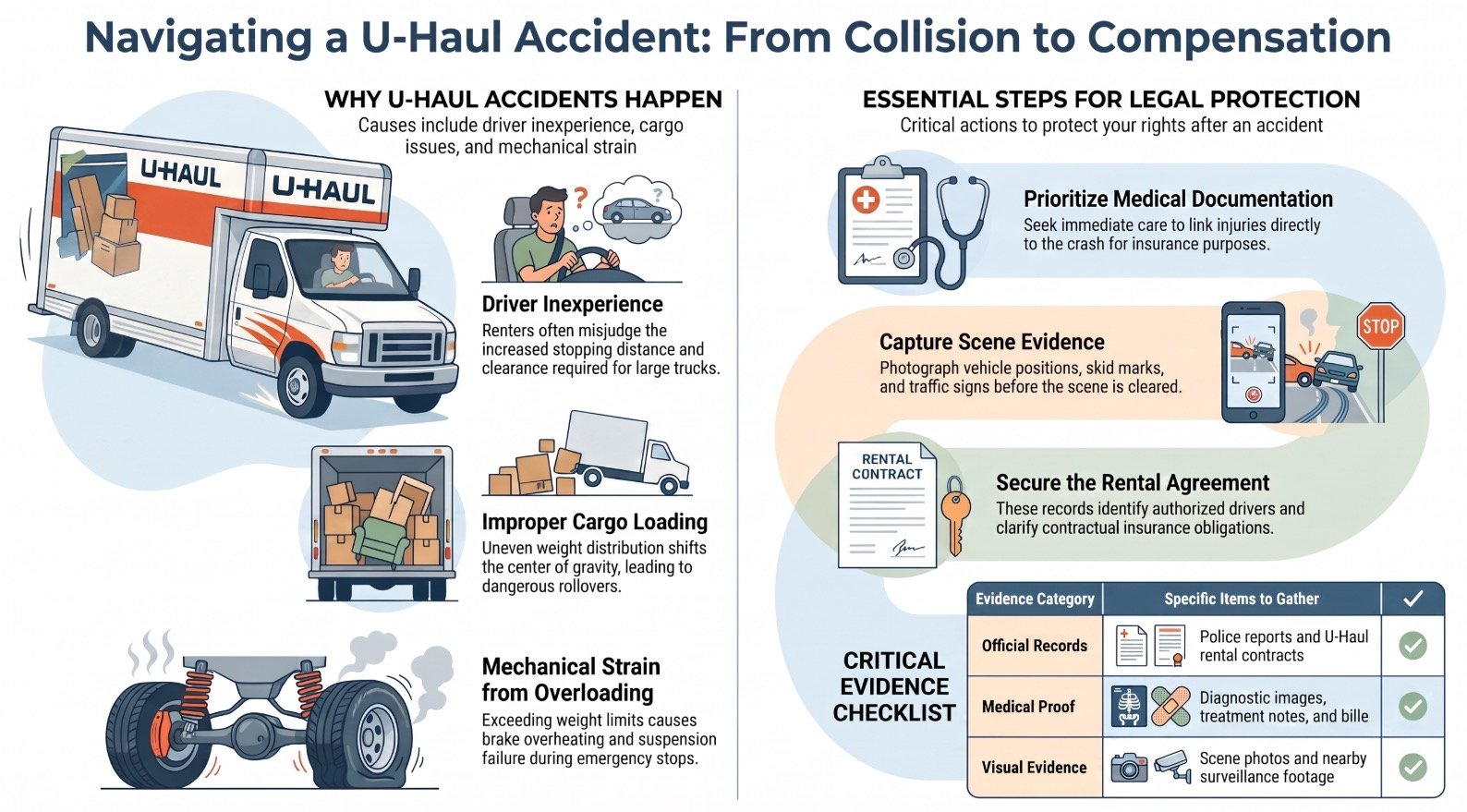
Common causes of Daytona Beach U-Haul truck accidents include driver inexperience, overloaded rental trucks, and improper vehicle loading. Distracted or fatigued driving may further impair a driver’s judgment, reaction time, and control of the vehicle. Examining these contributing factors helps clarify how preventable rental-truck collisions may occur.
Driver Inexperience
Driver inexperience is a significant factor in Daytona Beach U-Haul truck accidents, particularly when a person operates a large rental vehicle without understanding its increased size, weight, or stopping distance. Many renters have limited experience with commercial-style vehicles and may misjudge turns, lane changes, clearance, or braking needs. Training and licensing issues can further increase danger when operators lack instruction about vehicle controls, mirror use, or defensive driving techniques.
Unfamiliar route planning may lead drivers onto narrow streets, congested roads, or routes with low clearances, creating sudden hazards for surrounding motorists and pedestrians. Inexperienced drivers may also hesitate or react improperly in heavy traffic, especially near intersections and highway entrances. Recognizing these risks can help injured individuals and their families seek informed guidance, preserve evidence, and understand available legal options.
Overloaded Rental Trucks
When a U-Haul truck is loaded beyond its safe capacity, the added weight can impair braking, handling, acceleration, and overall vehicle stability. Cargo overcapacity impacts may become especially serious during emergency stops, sharp turns, or roadway changes requiring immediate driver response. Excess weight can increase stopping distances and reduce tire traction, making collision avoidance more difficult for the operator and nearby motorists. Brake strain effects may include overheating, accelerated component wear, or reduced braking performance during prolonged travel. Overloaded trucks may also place excessive stress on suspension systems, tires, axles, and the transmission, increasing the likelihood of mechanical failure. Rental companies and drivers have a responsibility to recognize weight limits and protect other road users.
Individuals injured in resulting crashes may benefit from prompt medical attention, documentation, and legal guidance.
Improper Vehicle Loading
Improper vehicle loading can create serious safety risks by shifting the truck’s center of gravity, restricting the driver’s visibility, or allowing cargo to move during transit. U-Haul renters may place heavy items too high, fail to distribute weight evenly, or neglect to secure furniture and boxes with appropriate restraints. These conditions can reduce control over driving, increase stopping distances, and contribute to rollovers or collisions, particularly during sudden operations. Weather conditions may intensify these dangers when rain, wind, or standing water affects traction and vehicle stability. Tire maintenance issues, including underinflation or excessive wear, can further reduce handling capacity under an improperly balanced load.
Proper loading procedures, weight distribution, and pre-trip inspections help protect occupants, other motorists, and roadside responders from preventable harm.
Distracted Or Fatigued Driving
Fatigue or distraction can substantially impair a U-Haul driver’s ability to perceive hazards, maintain lane position, and respond promptly to changing traffic conditions. Cellphone distraction, including texting, calling, or adjusting applications, diverts visual, manual, and cognitive attention from surrounding traffic. Similarly, fatigue effects may include reduced alertness, impaired judgment, and involuntary microsleeps, particularly during long-distance moves or overnight travel. These conditions can lengthen reaction time when a pedestrian enters the roadway, traffic stops suddenly, or another vehicle changes lanes. Drivers have a responsibility to prioritize driving safety by securing adequate rest, limiting electronic-device use, and taking breaks when concentration declines.
Evidence of distraction or fatigue, such as phone records, witness accounts, surveillance footage, or delivery schedules, may help clarify how a crash occurred and support injured individuals seeking appropriate assistance.
Legal Rights of Daytona Beach U-Haul Truck Accident Injury Victims
Daytona Beach U-Haul truck accident injury victims may have legal rights to pursue compensation when another party’s negligence caused the collision. Potential recovery may address medical expenses, lost income, property damage, and pain-related losses. An attorney can help preserve evidence, identify responsible parties, and communicate with insurers while the injured person focuses on recovery and family responsibilities.
Key considerations may include:
- Filing an insurance claim within applicable insurance claim timelines and responding carefully to requests for statements or records.
- Understanding comparative negligence laws, which may reduce compensation if the injured person is assigned a portion of fault.
- Documenting treatment, work limitations, expenses, and other losses to support a complete damages assessment.
Victims may also have rights against parties whose conduct contributed to unsafe conditions, depending on the evidence and governing law. Florida deadlines can limit the time available to file a lawsuit, making prompt legal evaluation important. A qualified Daytona Beach attorney can explain available remedies, protect communications, and pursue a resolution that supports fair treatment without placing unnecessary burdens on the injured individual.
Why Do Daytona Beach U-Haul Truck Accident Injuries Happen?
U-Haul truck accident injuries in Daytona Beach commonly result from the vehicle’s size, limited handling, and the driver’s failure to adjust to its handling requirements. Inexperienced renters may misjudge stopping distances, turning radii, or blind spots, increasing risks for occupants, pedestrians, and other motorists.
Mechanical problems can also contribute when renters or companies overlook U Haul safety checks. Worn tires, defective brakes, inadequate mirrors, or lighting problems may reduce control and visibility. Although maintenance responsibilities vary, neglected inspections can create dangerous conditions.
Common loading mistakes present another significant cause. Unevenly distributed cargo can shift the truck’s center of gravity, while unsecured furniture or equipment may move during braking and affect balance. Overloading can further strain tires, suspension, and brakes. Drivers may also become distracted by unfamiliar controls, navigation demands, or pressure to complete a move quickly. Weather, congestion, construction, and narrow Daytona Beach streets can compound these hazards, making careful preparation and responsible operation important for community safety.
What Should You Do After a Daytona Beach U-Haul Truck Accident Injury?
After a Daytona Beach U-Haul truck accident injury, the injured person should seek immediate medical care, even if symptoms initially appear minor. Documenting the accident scene, including injuries, vehicle damage, and witness information, may help preserve important evidence. The individual should also contact a qualified truck accident lawyer to evaluate potential claims and protect legal rights.
Seek Immediate Medical Care
Because some injuries may not be immediately apparent, anyone involved in a U-Haul truck collision should seek prompt medical evaluation, even if symptoms initially seem minor. A physician can identify internal trauma, head injuries, fractures, or soft-tissue damage that may worsen without treatment. The emergency treatment timeline should be documented through medical records, discharge instructions, prescriptions, and follow-up recommendations. Prompt care also helps establish a clear connection between the collision and reported symptoms, supporting a person’s recovery and any later legal claim. Until medical advice is received, injured individuals should avoid strenuous activity and monitor changes in pain, mobility, alertness, or breathing. Avoiding insurer contact until legal guidance is obtained may help prevent unintentional statements that minimize injuries or affect available compensation. Medical care should remain the immediate priority.
Document The Accident Scene
When circumstances permit, documenting the Daytona Beach U-Haul truck accident can preserve evidence that may later clarify how the collision occurred and who may be responsible. Before taking photographs, injured individuals should prioritize scene safety precautions, including moving away from traffic when possible and avoiding unstable vehicles or spilled fluids. Photographs may show vehicle positions, damage, road conditions, traffic signs, skid marks, and visible injuries. A person should record the date, time, weather, location, and any unusual circumstances while details remain fresh. Witness statement collection can also be valuable. Witnesses may provide names and contact information and briefly describe what they observed, without being pressured or coached. Copies of relevant documents, including medical discharge papers and insurance information, should be preserved securely for later reference.
Contact A Truck Accident Lawyer
Contacting a truck accident lawyer can help an injured person understand available legal options after a Daytona Beach U-Haul collision. A lawyer can evaluate medical records, photographs, witness accounts, and other Florida evidence before advising the injured person about potential claims. Prompt legal guidance may also help preserve evidence, identify responsible parties, and communicate with insurers without compromising the claim. Because commercial rental vehicles can involve drivers, rental companies, maintenance providers, or other entities, determining responsibility may require careful investigation. The lawyer can explain Comparative negligence and how an injured person’s conduct might affect compensation under Florida law.
Individuals should follow medical recommendations, avoid recorded statements about fault, and provide complete information to counsel. Seeking assistance promptly supports informed decisions and protects the person’s ability to serve family and community.
Critical Evidence in a Daytona Beach U-Haul Truck Accident Injury Case
Critical evidence can establish how the Daytona Beach U-Haul truck accident occurred and document the resulting injuries and liability.
- Accident scene photographs and police reports
- Medical documentation describing diagnosis and treatment
- U-Haul rental records concerning the vehicle and renter
Together, these records may clarify the accident’s circumstances and support an injured party’s claim.
Accident Scene Photos
Immediately after a Daytona Beach U-Haul truck accident, photographs of the scene can preserve evidence that may otherwise disappear or change. Images should capture vehicle positions, lane markings, traffic signs, skid marks, debris, road conditions, lighting, and nearby obstructions from multiple angles. Close photographs can document crushed panels, broken glass, tire damage, and other conditions relevant to a careful damage assessment. Wider views may show how the roadway, vehicles, and surrounding environment relate to one another. If safe, photographs should be taken before vehicles or debris are moved, while avoiding interference with emergency care. Images can support witness statements by confirming locations and physical conditions described by observers. Clear timestamps and original files may strengthen their reliability. Preserving this evidence can help injured individuals and their families pursue fair treatment.
Police Reports
A police report can serve as important evidence in a Daytona Beach U-Haul truck accident injury case by documenting the reported circumstances of the collision and the responding officer’s observations. It may identify involved drivers, vehicle positions, roadway conditions, citations, and apparent contributing factors. Witness statements recorded at the scene can preserve accounts before memories change, although those statements may require confirmation through later investigation. The report may also indicate whether video evidence exists from traffic cameras, businesses, dashboard systems, or nearby residences. A police report is not necessarily conclusive proof of fault, particularly when information is incomplete or based on preliminary observations.
Careful review can reveal inconsistencies, identify additional witnesses, and support efforts to obtain related records. Promptly preserving the report helps those serving injured individuals evaluate the claim responsibly and accurately.
Medical Documentation
When a Daytona Beach U-Haul truck accident causes injury, medical documentation can provide objective evidence of the nature, timing, and extent of the harm. Emergency department records, diagnostic images, physician evaluations, prescriptions, and treatment notes may connect reported symptoms to the collision. Consistent documentation also helps establish whether injuries required follow-up care, rehabilitation, subspecialty referrals, or work restrictions. Patients should describe symptoms accurately and attend recommended appointments, while retaining bills, discharge instructions, and records from every provider. These materials can clarify Insurance claim timelines by showing when care began, how treatment progressed, and whether gaps require explanation.
They also support Damages proof, including medical expenses, anticipated care, lost earning capacity, and pain-related limitations. Complete, organized records allow insurers, attorneys, and courts to evaluate the injury claim fairly and responsibly.
U-Haul Rental Records
Beyond medical documentation, U-Haul rental records can help establish who rented the vehicle, when possession began, and whether the truck was being used during the time of the Daytona Beach collision. The records may identify the U-Haul customer, authorized drivers, pickup location, return date, and selected equipment. A Rental Contract can clarify contractual responsibilities, restrictions on vehicle use, and whether another person was permitted to operate the truck. The Billing History may confirm payment activity, mileage charges, extensions, or additional rental periods that place the vehicle at a particular location. Attorneys may request these materials through appropriate legal procedures and compare them with police reports, photographs, and witness accounts. This evidence can strengthen efforts to determine Accident Liability and support an injured person’s pursuit of fair compensation.
Long-Term Effects of Daytona Beach U-Haul Truck Accident Injuries
Long-term injuries from a Daytona Beach U-Haul truck accident may result in chronic pain, reduced mobility, or permanent disability that affects daily activities and employment. Survivors may also experience emotional and psychological trauma, including anxiety, depression, or post-traumatic stress. Ongoing medical expenses can include treatment, rehabilitation, medication, assistive equipment, and future care.
Chronic Pain and Disability
Chronic pain and permanent disability can develop after a Daytona Beach U-Haul truck accident, particularly when victims suffer spinal cord damage, traumatic brain injuries, severe fractures, or other conditions that do not fully resolve with treatment. These impairments may limit mobility, reduce strength, interfere with sleep, and restrict a person’s ability to work or complete ordinary activities independently. Ongoing medical care may include surgeries, rehabilitation, prescription medication, assistive devices, and personal support. Victims may also require workplace modifications or vocational assistance when previous employment becomes impossible.
Claims for Non-Economic Damages can address the diminished quality of life associated with persistent pain, physical limitations, and lost independence. Although Emotional Trauma is a separate concern, its presence may further demonstrate the broad consequences of injuries requiring long-term assistance and compassionate legal guidance.
Emotional and Psychological Trauma
When a Daytona Beach U-Haul truck accident causes serious injury, emotional and psychological trauma may persist long after visible wounds have recovered. Survivors may experience anxiety, depression, sleep disruption, irritability, or post-traumatic stress, particularly when driving, traveling near trucks, or recalling the collision. These symptoms can interfere with concentration, employment, personal independence, and participation in ordinary activities. Some individuals avoid social settings or become excessively vigilant, while others struggle to communicate their needs.
Family Relationship changes may follow as relatives assume caregiving responsibilities, adjust to altered routines, or misunderstand changes in mood and behavior. Professional counseling and support from trusted people can help address these effects. Documentation of symptoms and their impact may also assist those evaluating the accident’s long-term consequences and seeking appropriate accountability for the harm endured.
Ongoing Medical Expenses
Facing serious injuries from a Daytona Beach U-Haul truck accident, an injured person may require medical care well beyond the initial emergency treatment. Ongoing expenses can include expert visits, physical therapy, prescription medications, diagnostic testing, medical equipment, and potential surgeries. Some conditions may require rehabilitation or personal assistance for months or years, creating financial obligations that are difficult to predict immediately after the collision.
Accurate records help establish the relationship between necessary care and accident-related injuries. Medical billing timelines should be monitored because providers, insurers, and collection departments may issue statements at different stages. Regular treatment plan updates can document changing symptoms, recommended services, and expected future needs. Preserving invoices, insurance explanations, mileage records, and provider notes may assist in evaluating compensation for past and anticipated medical expenses while protecting access to appropriate care.
Proving Liability in Daytona Beach U-Haul Truck Accident Injury Cases
Establishing liability in a Daytona Beach U-Haul truck accident injury case requires evidence showing that another party’s negligence caused the collision and resulting harm. This may include photographs, witness statements, traffic-camera footage, police reports, and medical records documenting the injuries. Maintenance histories, rental agreements, driver qualifications, and electronic data may also help determine whether the U-Haul company, another motorist, a maintenance provider, or a vehicle owner contributed to the crash.
A careful investigation must connect each negligent act to the person’s losses. Attorneys may examine speeding, unsafe lane changes, distracted driving, inadequate training, defective equipment, or improper loading. Florida comparative negligence can reduce compensation when an injured person shares responsibility, making accurate evidence especially important. Multiple parties may bear percentages of fault under the state’s rules.
Insurance bad faith is a separate concern and should not replace the central liability analysis. Clear documentation preserves the injured person’s ability to seek accountability and supports a fair evaluation of medical, financial, and personal consequences.
Dealing With Insurance Companies After a Daytona Beach U-Haul Truck Accident Injury
After a Daytona Beach U-Haul truck accident injury, insurance communications can materially affect the evaluation and resolution of a claim. Injured individuals may benefit from directing adjusters to an authorized representative, particularly when injuries, treatment, and financial losses remain under review. Statements should be accurate, limited to confirmed facts, and free from speculation about fault or recovery.
Effective Negotiation strategies may include presenting organized medical records, wage documentation, photographs, and evidence concerning the U-Haul vehicle, while avoiding premature settlement decisions. Representatives can assess applicable policy limits, including potentially separate coverage for the rental company, driver, or other responsible parties. When an insurer issues a denial, careful denial responses should identify disputed facts, request the stated policy basis, and address supporting evidence without unnecessary confrontation.
Attention to claim timelines is also important. Insurers may impose reporting requirements, and legal deadlines can affect available remedies. Professional guidance helps preserve cooperation, protect privacy, and support a fair review while serving the injured person’s immediate and long-term interests.
What to Expect During a Daytona Beach U-Haul Truck Accident Injury Claim Process
A Daytona Beach U-Haul truck accident injury claim typically begins with an assessment of liability, injuries, damages, and available insurance coverage. The evidence collection process may include gathering medical records, accident reports, photographs, witness statements, and relevant vehicle or rental documents. The claim may then proceed through insurance negotiations, concluding with a settlement or, if necessary, preparation for trial.
Initial Claim Assessment
When a Daytona Beach U-Haul truck accident is reported, the initial claim assessment begins with a structured review of the collision, the available evidence, and the injured party’s losses. The assessment generally considers the nature of the injuries, treatment status, and how the incident has affected daily responsibilities and financial stability. Medical records help clarify diagnoses, recommended care, and recovery expectations, while documented expenses may include hospital bills, prescriptions, transportation, and lost income. A liability investigation examines the circumstances that may connect the truck driver, rental company, maintenance providers, or other parties to the accident. Witness statements can provide context about traffic conditions and conduct before impact. This preliminary review helps determine claim value, potential legal issues, and appropriate next steps while ensuring that the injured person’s needs remain central.
Evidence Collection Process
Because evidence can determine how liability and damages are evaluated, the collection process typically begins with preserving records from the Daytona Beach U-Haul truck accident. An attorney may request police reports, medical records, photographs, repair estimates, rental agreements, maintenance files, and electronic data connected to the vehicle. Witness statement collection can document observations about traffic conditions, driver conduct, vehicle movement, and the moments immediately following impact. Statements are generally recorded while recollections remain clear and may be compared with physical findings. Physical evidence preservation can include securing damaged vehicles, clothing, roadway debris, and photographs showing impact points, visibility, weather, and surrounding conditions.
Medical documentation should also reflect diagnoses, treatment, limitations, and prognosis. Organized evidence helps clarify responsibility, demonstrate injuries, and support a complete, service-oriented presentation of the claimant’s circumstances.
Insurance Company Negotiations
During insurance company negotiations, the claimant’s attorney typically presents documented evidence establishing liability, medical expenses, lost income, and other accident-related losses. The attorney may explain how driver conduct, vehicle defects, faulty safety equipment, or maintenance failures contributed to the Daytona Beach collision. The rental contract can also clarify U-Haul’s responsibilities, authorized drivers, insurance provisions, and inspection obligations. Insurers commonly review medical records, wage documentation, photographs, witness statements, and accident reports before responding to a demand. Adjusters may request additional information, question treatment decisions, or challenge whether specific damages resulted from the crash.
The attorney evaluates these inquiries, protects the claimant from inaccurate statements, and communicates with the insurer on the claimant’s behalf. Accurate documentation and consistent medical care help present the claim clearly while supporting fair, informed negotiations.
Settlement Or Trial
Settlement or trial marks the stage at which a Daytona Beach U-Haul truck accident claim is resolved through negotiated compensation or presented to a court for decision. After reviewing medical records, damages, and liability evidence, the parties may pursue a settlement designed to address treatment costs, lost income, and other documented losses. Mediation readiness can improve productive discussions by ensuring that evidence and settlement positions are clearly organized. If negotiations fail, the claim may proceed to trial. Each side presents testimony, documents, and legal arguments before a judge or jury. The claimant must establish the truck operator’s or company’s responsibility and prove the extent of resulting harm. Following closing arguments, jury deliberations may determine whether compensation is awarded. Counsel generally explains risks, timelines, and options throughout.
Compensation for Daytona Beach U-Haul Truck Accident Injury Damages
When a U-Haul truck accident in Daytona Beach causes bodily injuries, the injured party may seek compensation for damages supported by medical evidence and other reliable documentation. Potential recovery may address treatment expenses, rehabilitation, prescription costs, and future care recommended by qualified providers. Records should connect each expense to the collision and reflect the services reasonably required for relief.
Lost wages may be documented through payroll records, employer statements, tax materials, or other evidence showing missed work and reduced earning capacity. An injured person may also seek transportation costs incurred while traveling to medical appointments, therapy, or necessary evaluations when driving is unsafe or unavailable.
Documentation should describe pain persistence, functional limitations, sleep disruption, and the household impact of the injury. Statements from healthcare professionals, family members, and employers may help establish how symptoms affect daily responsibilities. Careful preservation of records enables a claim to present the injured person’s circumstances accurately and supports fair consideration by insurers, opposing parties, or a court.
Economic vs Non-Economic Damages in Daytona Beach U-Haul Truck Accident Cases
Economic damages may include medical expenses, lost wages, property damage, and other measurable financial losses. Non-economic damages address harms such as pain, emotional distress, disability, and diminished quality of life. Establishing damage value generally requires medical records, financial documentation, expert analysis, and evidence connecting the losses to the U-Haul truck accident.
Economic Damage Types
After a Daytona Beach U-Haul truck accident, economic damages generally compensate an injured person for verifiable financial losses caused by the crash. Recoverable amounts may include emergency treatment, hospital bills, medication, rehabilitation, and future medical care supported by medical evidence. Lost wages can be claimed when injuries prevent work, while reduced earning capacity may apply if lasting limitations affect future employment. Property damage, towing, storage, and transportation expenses may also qualify when documented.
Families pursuing wrongful death damages may seek funeral costs, medical expenses incurred before death, and lost financial support. Rental liability disputes can complicate recovery when insurers, U-Haul, or other parties contest responsibility for the vehicle or collision. Receipts, wage records, expert evaluations, and insurance documents help establish the value and necessity of these losses for affected individuals and families.
Non-Economic Damage Types
Non-economic damages address the personal harm that cannot be measured through bills, pay records, or other direct financial documentation. In Daytona Beach U-Haul truck accident cases, these damages may include physical pain, emotional distress, mental anguish, loss of enjoyment of life, disfigurement, and inconvenience caused by lasting injuries. They can also reflect reduced ability to maintain family relationships, participate in community activities, or provide ordinary support to others. The seriousness of an injury, its duration, and its effect on daily functioning generally influence the category and significance of these losses. Transportation regulations may help establish the circumstances of a collision, but they do not determine personal suffering. Damages caps may apply in particular claims, depending on applicable Florida law, the defendant’s status, and the legal theory pursued in court.
Proving Damage Value
Establishing the value of damages in a Daytona Beach U-Haul truck accident case requires evidence that connects the collision to both measurable financial losses and personal harm. Economic damages may include medical bills, rehabilitation costs, lost wages, reduced earning capacity, property damage, and future treatment expenses. Medical records, employment statements, receipts, expert projections, and insurance documentation can substantiate these amounts. Non-economic damages address pain, emotional distress, disability, disfigurement, loss of enjoyment, and disruption of family relationships. Because these losses lack fixed prices, testimony from the injured person, relatives, treating professionals, and mental health providers may help mitigate their effects.
A careful valuation compares documented losses with anticipated needs and applicable legal limits. This evidence supports a negotiation strategy that presents a complete, credible account of the harm sustained.
When a Daytona Beach U-Haul Truck Accident Injury Case Goes to Trial vs Settlement
When a Daytona Beach U-Haul truck accident injury case cannot be resolved through negotiations, the injured party may need to decide whether to accept a settlement or proceed to trial. Settlement offer timing can affect how carefully damages, medical needs, and future losses are evaluated before a decision is made. During insurance negotiation, carriers may present offers designed to conclude the claim quickly, but an injured person may benefit from reviewing the offer’s adequacy with qualified counsel.
Settlement provides greater predictability, typically resolves the matter sooner, and avoids the uncertainty and expense of courtroom proceedings. Trial, however, may become appropriate when liability is disputed, damages are substantial, or the insurer refuses to provide fair compensation. A trial requires evidence, witness testimony, preparation, and patience, with no guaranteed result. The decision should reflect the injured party’s medical condition, financial circumstances, tolerance for delay, and goals for serving family and community needs. Careful legal guidance can help compare risks, costs, and potential outcomes.
Florida Laws That May Affect Your Daytona Beach U-Haul Truck Accident Case
Florida law can substantially influence the evaluation and resolution of a Daytona Beach U-Haul truck accident claim. Several legal principles may affect responsibility, available compensation, and the evidence needed to protect an injured person’s interests.
A careful review may involve:
- Comparative negligence, which can reduce a claimant’s recovery if that person is assigned a share of fault.
- Traffic signal liability, which may involve a driver, governmental entity, or other responsible party when signal timing, visibility, or maintenance contributes to a collision.
- Commercial vehicle regulations, including requirements concerning licensing, inspection, loading, and safe operation.
Florida’s negligence rules generally require proof that another party breached a duty of reasonable care and that the breach caused compensable harm. Evidence may include crash reports, photographs, witness accounts, vehicle data, medical records, and maintenance documentation. U-Haul’s role, a rental customer’s conduct, and the actions of other motorists may each require separate analysis. Legal guidance can help organize evidence, communicate with insurers, and pursue a fair outcome while respecting the needs of injured individuals and their families.
The Statute of Limitations for Daytona Beach U-Haul Truck Accident Injury Cases
Although a person may have substantial evidence of fault and serious injuries, a Daytona Beach U-Haul truck accident claim must generally be filed within Florida’s applicable statute of limitations. For most negligence-based injury claims, Florida law provides two years from the accident date, although specific circumstances may alter that deadline. Claims involving wrongful death, governmental entities, minors, or other legally protected parties can involve different periods and notice requirements.
Missing the deadline may result in dismissal, even when another driver, a rental company, or a maintenance provider appears responsible. Comparative negligence may also affect recovery by reducing damages according to an injured person’s share of fault, but it generally does not extend the filing period. Prompt evidence preservation is crucial. Medical records, photographs, witness information, vehicle data, rental documents, and communications should be maintained before materials disappear or memories fade. An accurate accident date and timely review of applicable deadlines help protect the interests of injured individuals and their families.
How a Daytona Beach U-Haul Truck Accident Lawyer Can Help You
A Daytona Beach U-Haul truck accident lawyer can evaluate the collision, identify potentially responsible parties, and pursue compensation supported by the available evidence. The lawyer may investigate vehicle maintenance, loading procedures, driver conduct, roadway conditions, and the rental agreement to clarify how the crash occurred. This review can help injured people and their families understand available legal remedies while preserving an accurate account for insurers and other parties.
A lawyer may also:
- Explain Rental insurance options and assess whether purchased protections apply to vehicle damage or liability.
- Examine passenger injury coverage, including policies that may address medical expenses and related losses.
- Coordinate evidence collection, communicate with insurers, and calculate damages involving treatment, lost income, rehabilitation, and future needs.
The lawyer can identify claims against a driver, rental company, insurer, maintenance provider, or another responsible entity when supported by the facts. By organizing the process, counsel helps clients focus on recovery and serving their families while legal responsibilities are addressed with care and diligence.
When to Contact a Daytona Beach U-Haul Truck Accident Lawyer
When injuries, disputed fault, or significant property damage follow a U-Haul truck collision, contacting a Daytona Beach U-Haul truck accident lawyer promptly can help protect the injured person’s legal interests. Early guidance may be appropriate before recorded statements are provided, settlement documents are signed, or evidence becomes difficult to obtain. A lawyer can help preserve photographs, medical records, witness information, vehicle data, and communications concerning the rental.
Prompt contact is particularly important when a driver, rental company, insurer, employer, or another motorist contests responsibility. Counsel can evaluate Liability dispute strategies, identify applicable deadlines, and help organize facts without compromising the injured person’s position. Individuals may also benefit from an Insurance documentation checklist covering policies, claim numbers, repair estimates, bills, wage records, and correspondence.
Legal assistance should be considered when symptoms develop after the crash, treatment continues, expenses increase, or an insurer delays or minimizes payment. Timely consultation allows the injured person and supporting family members to make informed decisions while focusing on recovery and serving immediate household needs.
Why You Need an Experienced Daytona Beach U-Haul Truck Accident Lawyer
Selecting qualified legal representation can materially affect how a Daytona Beach U-Haul truck accident claim is investigated, valued, and resolved. An experienced lawyer understands the operational issues that may distinguish a rental-truck collision from an ordinary passenger-vehicle crash, including vehicle condition, rental records, insurance provisions, and commercial policies. That knowledge supports a thorough evaluation of liability and helps preserve evidence before it becomes difficult to obtain.
Effective counsel can also coordinate medical documentation, communicate with insurers, and identify damages affecting income, mobility, household responsibilities, and long-term care. Trial strategy preparation may strengthen negotiations because responsible parties recognize that the claim is being developed for every potential outcome, not merely a quick settlement. Settlement timeline evaluation helps determine when available evidence and medical information provide a responsible basis for resolution, while preventing unnecessary pressure on an injured person. By managing these responsibilities carefully, legal representation helps protect claimants and their families while supporting a fair, orderly process.
How to Choose the Right Daytona Beach U-Haul Truck Accident Lawyer for Your Case
Selecting the right Daytona Beach U-Haul truck accident lawyer requires careful evaluation of experience, resources, and communication practices. A qualified attorney should demonstrate familiarity with commercial vehicle collisions, insurance investigations, and the injuries commonly associated with rental-truck crashes. Reviewing professional credentials, relevant case experience, and disciplinary history can help clarify whether the lawyer is prepared to address the claim responsibly.
Client communication expectations should be established during the initial consultation. The prospective client should understand who will provide updates, how swiftly questions are answered, and which decisions require direct approval. Clear explanations of fees, litigation risks, and available legal strategies are equally important.
Case timeline planning can help organize medical documentation, insurance communications, evidence preservation, and potential filing deadlines. The lawyer should explain how these stages may affect the claim and identify information the client must provide. A careful selection process supports informed decisions and helps ensure that injured individuals receive dependable guidance while pursuing fair compensation.
About The Law Offices of Anidjar & Levine
The Law Offices of Anidjar & Levine represents individuals injured in U-Haul truck collisions and other motor-vehicle accidents throughout Florida. The firm’s attorneys evaluate accident circumstances, identify potentially responsible parties, and explain legal options to clients seeking meaningful assistance after a serious crash.
In Daytona Beach cases, representation may involve reviewing police reports, medical records, rental agreements, maintenance histories, and insurance coverage. Counsel may also coordinate with investigators and qualified professionals to clarify how the collision occurred and how injuries affect a client’s life. Evidence preservation is an important early consideration because vehicle conditions, surveillance footage, witness recollections, and electronic records can change or disappear.
The firm addresses issues such as negligence, commercial or rental-vehicle responsibility, uninsured coverage, and Comparative fault. Attorneys may negotiate with insurers or pursue litigation when appropriate, while keeping clients informed about significant decisions. Its stated approach emphasizes responsive communication, careful preparation, and advocacy designed to protect injured individuals and their families throughout the legal process.
Frequently Asked Questions
Can I Still Rent a U-Haul After Being Involved in an Accident?
A person may still rent a U-Haul after an accident, but approval is not guaranteed. The company may review the prior incident, driving record, and insurance eligibility before authorizing another rental. Rental restrictions can apply when damage, licensing concerns, or unresolved liability exists. The individual should provide accurate information, complete any required claim filing, and ask the location about current requirements. A representative can explain available options and help prevent further complications.
Does U-Haul Offer Safety Training or Driving Assistance for Inexperienced Renters?
U-Haul generally provides basic vehicle orientation, rental instructions, and safety materials, but it does not typically offer thorough behind-the-wheel instruction for inexperienced renters. Customers may ask staff about vehicle controls, loading procedures, and recommended routes before departure. They should review available driver training options and confirm licensing requirements. Understanding U Haul liability policies is also important, because coverage limitations may affect responsibility after a collision or property damage.
What Types of U-Haul Vehicles Are Available in Daytona Beach?
U-Haul locations in Daytona Beach generally offer several vehicle categories, depending on inventory and reservation demand. Options may include pickup trucks, Compact pickups, cargo vans, ten-foot through twenty-six-foot moving trucks, and larger box trucks for substantial relocations. Customers may also find trailers, including cargo trailers, utility trailers, and vehicle transport equipment. Availability, dimensions, towing requirements, and rental policies vary by location, so renters should confirm specifications and suitability before reserving equipment.
Can Passengers File Claims if They Were Injured Inside a U-Haul Truck?
Yes, passengers injured inside a U-Haul truck may file claims, depending on the vehicle’s design, permission to ride, and applicable insurance coverage. Passenger eligibility can be affected if the individual knowingly occupied an unauthorized cargo area or ignored safety instructions. Investigators may assess driver negligence, defective equipment, and unsecured cargo. Prompt injury documentation, including medical records, photographs, witness statements, and incident details, helps establish liability and damages for an injured passenger.
Are U-Haul Accident Reports Available to the Public?
Whether U-Haul accident reports are available to the public depends on who prepared them and applicable state law. Law enforcement reports are often public records, although access may be delayed or limited while an investigation continues. Personal information, medical details, and confidential witness information may be redacted. Private company reports generally are not automatically public. Injured passengers may request official records, consult an attorney, or submit a formal public-records request to the investigating agency.
—————————
Victims of Daytona Beach U-Haul truck accidents may suffer serious injuries, financial losses, and complex insurance disputes. Determining liability may involve reviewing driver conduct, vehicle maintenance, rental records, and roadway conditions.
An experienced Daytona Beach Truck Accident Lawyer can help protect your legal rights, preserve evidence, and pursue appropriate compensation.
The Law Offices of Anidjar and Levine carefully evaluates each claim and provides informed guidance throughout the process, helping injured individuals make decisions based on the specific circumstances of their case.

