The Law Offices of Anidjar and Levine helps injured victims document aggressive conduct, preserve evidence, and evaluate available compensation after a road rage crash. A Daytona Beach Car Accident Lawyer can handle cases involving tailgating, brake checking, unsafe lane changes, threats, or intentional impacts.
Legal review may include police reports, dashcam footage, witness statements, medical records, insurance coverage, lost income, and long-term limitations.
Careful claim handling can protect fault, causation, and damages from insurer challenges.
The sections below explain crucial steps, rights, and considerations for claims.
Main Takeaways
- A Daytona Beach road rage lawyer can help prove aggressive driving, negligence, or intentional misconduct caused the crash.
- Important evidence includes police reports, dashcam footage, witness statements, medical records, and crash scene photographs.
- Road rage crashes often involve tailgating, brake checking, unsafe lane changes, speeding, threats, or deliberate vehicle contact.
- Compensation may include medical bills, lost income, property damage, pain, and long-term physical limitations.
- After a road-rage crash, seek medical care, report the incident, preserve evidence, and avoid careless communications with insurers.


How We Can Help With Your Daytona Beach Road Rage Car Accident Injury Claim
After a road rage collision, an injury claim may require evidence that shows not only how the crash occurred, but also how the aggressive driver’s conduct caused measurable harm. A Daytona Beach road rage car accident lawyer can help by preserving records, identifying witnesses, reviewing police reports, and carefully organizing medical documentation. This support allows injured people to focus on recovery, family responsibilities, and community obligations while the legal work proceeds.
Counsel may evaluate insurance coverage under Florida no-fault rules, determine whether additional claims are available, and measure losses related to treatment, lost wages, and lasting limitations. By applying Negligence standards to the driver’s conduct, the lawyer can assess whether speeding, tailgating, unsafe lane changes, threats, or intentional intimidation contributed to the collision. Clear communication with insurers, careful valuation, and timely filing practices help protect the claim. The goal is disciplined advocacy that seeks fair compensation while respecting the client’s dignity and needs.
OUR CONSULTATIONSARE FREE
START YOUR FREE CASE REVIEW

Understanding Daytona Beach Road Rage Car Accident Injury Cases
When aggressive driving escalates into a collision, a Daytona Beach road rage car accident injury case may involve both negligence and intentional misconduct. These cases often require careful review because the injured person may face medical expenses, lost income, property damage, and lasting physical limitations. A legal team may examine police reports, witness statements, medical records, and roadway conditions to determine liability and the full value of harm suffered.
In this context, dashcam evidence handling can be pivotal, as video may preserve conduct, timing, vehicle positioning, and post-crash behavior. Proper preservation helps prevent disputes over what occurred. Insurance negotiation tactics also matter, because insurers may attempt to reduce payment by questioning injuries, fault, or causation. A measured approach can help protect the claimant’s rights while supporting fair accountability. For those committed to helping injured individuals recover stability, understanding these cases means recognizing both the human impact and the legal proof required.
Common Causes of Daytona Beach Road Rage Car Accident
Road rage crashes in Daytona Beach often arise from specific driving behaviors that quickly escalate ordinary traffic disputes into dangerous collisions. Common causes include tailgating and brake checking, aggressive lane changes, speeding through traffic, and confrontations after collisions. Identifying these factors helps clarify how reckless conduct may contribute to injury, liability, and the need for legal evaluation.
Tailgating And Brake Checking
Because traffic conditions in Daytona Beach can shift quickly, tailgating and brake checking are especially dangerous forms of aggressive driving that often lead to rear-end collisions and multi-vehicle crashes. Tailgating reduces reaction time, leaving drivers unable to respond safely when vehicles slow for pedestrians, signals, or congestion. Brake checking, often used to intimidate a following driver, can escalate tension and create sudden hazards for nearby motorists.
These actions endanger families, workers, visitors, and those committed to serving the community each day. After such a crash, careful investigation may involve documenting injuries, reviewing vehicle damage, and gathering witness accounts to establish fault. Legal guidance can also support negotiating settlements that reflect medical expenses, lost income, and lasting harm caused by preventable aggressive driving behavior and related losses.
Aggressive Lane Changes
On busy Daytona Beach roads, aggressive lane changes can quickly turn ordinary traffic into a dangerous situation, especially where congestion, tourists, motorcycles, and commercial vehicles share limited space. Drivers who cut across lanes without signaling, force others to yield, or weave between vehicles may create confusion and leave little room for safe reactions.
These actions can reflect Reckless behavior patterns, particularly when they are repeated during a dispute or after perceived discourtesy. For injured motorists, passengers, cyclists, or pedestrians, careful documentation may help establish how the crash occurred. The value of eyewitness testimony can be significant, as neutral observers may describe unsafe movements, lane positions, and driver conduct before impact. Such evidence may support accountability while helping injured people access needed care and lawful compensation.
Speeding Through Traffic
In heavy traffic, speeding drivers can escalate a road rage encounter by reducing reaction time and increasing the force of a collision. When an angry motorist accelerates between vehicles, tailgates, or rushes through gaps, nearby drivers may have little room to respond safely. This conduct is especially dangerous near intersections, crosswalks, and construction zones, where speeding can endanger workers, pedestrians, and families traveling for daily needs.
Distracted driving may worsen the risk, as a driver focused on anger, a phone, or surrounding traffic may overlook braking vehicles or changing signals. For those committed to protecting others, recognizing these hazards supports safer choices and timely reporting. In Daytona Beach, speed driven by hostility can turn congestion into a preventable crash within seconds, often with severe injuries.
Confrontations After Collisions
A crash caused or worsened by aggressive speed can lead to further danger when drivers confront one another after impact. In Daytona Beach, raised voices, threats, or sudden movements may escalate a collision scene into a road rage incident. Injured parties, passengers, and witnesses are best served when calm decision-making replaces blame. Effective de-escalation strategies include staying inside the vehicle when safe, contacting law enforcement, limiting conversation, and documenting facts without argument.
Avoiding retaliation is equally important, because hostile gestures, pursuit, or physical contact can worsen injuries and complicate liability. Those who assist others after a crash should prioritize medical needs, scene safety, and clear communication with emergency responders. Careful restraint helps preserve evidence, reduce further harm, and support a fair legal review.


Legal Rights of Daytona Beach Road Rage Car Accident Injury Victims
After a road rage collision in Daytona Beach, injured victims may have the right to pursue compensation when another driver’s aggressive or reckless conduct caused the crash. These rights may include recovery for medical care, lost income, property damage, and pain arising from the collision.
Careful documentation helps protect claims, especially when faulty medical records, disputed injuries, or unclear settlement timelines create barriers.
- Victims may report the incident to law enforcement to preserve evidence of aggressive driving.
- Medical evaluation should be obtained promptly for both treatment and claim support.
- Witness statements, photographs, and video footage may strengthen evidence of liability.
- Insurance communications should be handled carefully, because early statements may affect recovery.
- Legal guidance may help align compensation efforts with the victim’s physical, financial, and family needs.
For those committed to serving others, protecting an injured person’s rights also supports stability, accountability, and safer community conduct after harmful roadway behavior.
Why Do Daytona Beach Road Rage Car Accident Injuries Happen?
Why do road rage crashes in Daytona Beach lead to serious injuries? They often occur because anger turns ordinary traffic decisions into dangerous acts. A driver may follow too closely, cut off another vehicle, speed through a Traffic Signal, or swerve without regard for nearby motorists, cyclists, and pedestrians. These choices reduce reaction time and increase crash force, especially on busy corridors near beach access roads, intersections, and tourist areas.
Injury risks also rise when aggressive driving causes sudden braking, side-impact collisions, rollovers, or multi-vehicle crashes. Victims may suffer head injuries, spinal trauma, fractures, or internal harm that affects their ability to work, care for family, and serve their communities.
Legal Presumptions may become important when evidence shows a traffic violation, reckless behavior, or failure to yield. In that setting, responsibility may be evaluated through crash reports, witness statements, and physical evidence showing how aggression caused preventable harm.
What Should You Do After a Daytona Beach Road Rage Car Accident Injury?
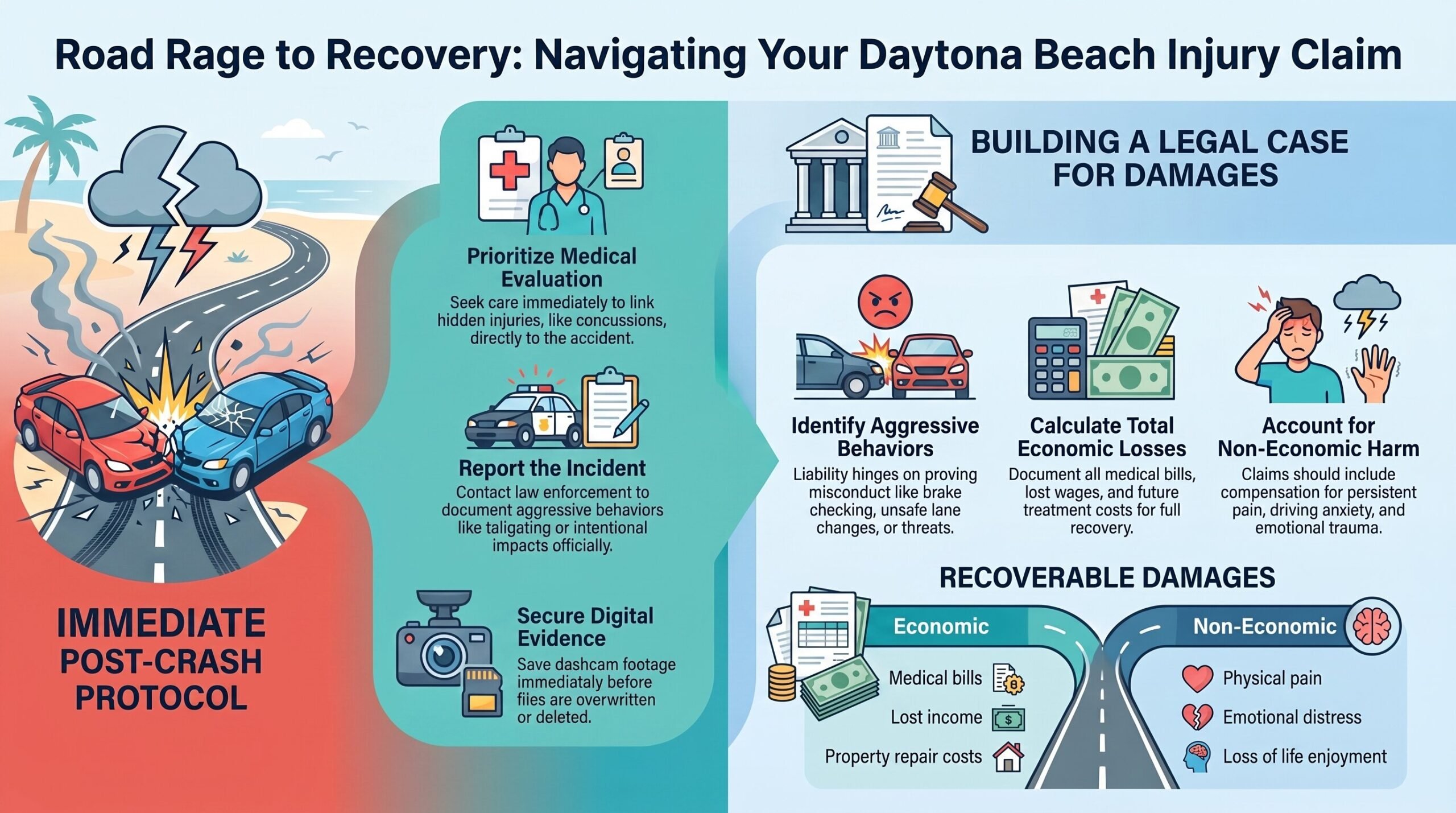
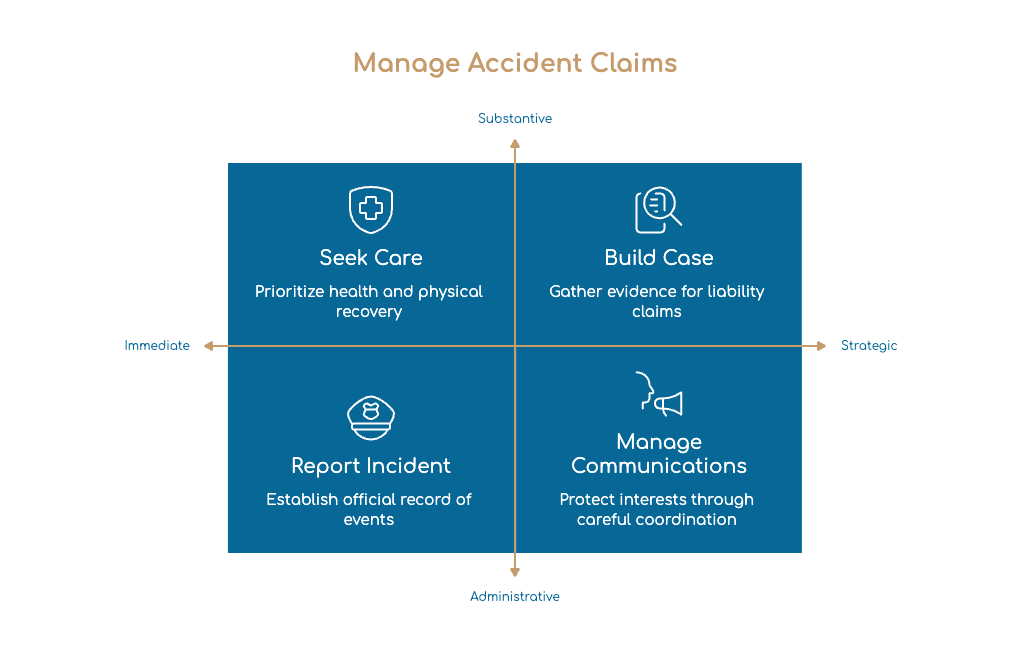
After a Daytona Beach road rage car accident injury, the injured person should first seek medical attention, even when symptoms appear minor or delayed. The incident should also be reported to law enforcement, so an official record can document the aggressive driving behavior and crash details. Preserving crucial evidence, including photographs, witness information, medical records, and insurance communications, may help protect any future legal claim.
Prioritize Medical Attention
Following a Daytona Beach road rage car accident, medical attention should take priority even when injuries appear minor. Prompt evaluation and repair of the injured person’s health help identify hidden trauma and create treatment records that may later support a claim. Those assisting others should encourage calm movement, request emergency care when needed, and avoid letting an injured person dismiss pain, dizziness, confusion, or numbness.
Medical providers can assess soft tissue injuries, concussions, fractures, and delayed symptoms that may worsen without care. Follow-up appointments should be kept, prescriptions followed, and all treatment instructions preserved. While later steps may involve gathering police records and documenting witness names, immediate focus should remain on diagnosis, stabilization, and recovery. Consistent medical documentation can connect the injury to the crash and strengthen future legal review.
Report The Incident
When immediate medical needs have been addressed, the road rage incident should be reported to law enforcement as soon as possible. A prompt report helps establish an official record, supports public safety, and allows officers to assess whether aggressive driving, threats, or criminal conduct contributed to the collision. Contact law enforcement even when injuries appear limited, because delayed symptoms and disputed accounts can complicate the matter later.
Those involved should provide accurate, calm, and complete information, including the location, vehicle descriptions, observed conduct, and any known witnesses. Cooperation with responding officers also helps preserve evidence at the scene without creating unnecessary conflict or risk. If the other driver remains hostile, maintain distance until officers arrive. A clear police report can later assist injury claims and responsible resolution.
Preserve Key Evidence
Because road rage collisions often involve disputed conduct, critical evidence should be preserved as early as conditions safely allow. Injured persons or trusted helpers may photograph vehicle damage, skid marks, traffic signals, road debris, injuries, and the surrounding scene. They should save dashcam footage, nearby surveillance sources, and contact details for witnesses willing to assist. An Emergency contact can help secure belongings, record medical updates, and maintain communication when the injured person cannot respond.
Police reports, medical records, repair estimates, and insurance letters should be stored in one organized file. This careful preservation supports accurate liability review and a fair compensation calculation. When evidence is protected promptly, attorneys can better serve the injured person, evaluate aggressive driving conduct, and pursue accountability through the proper legal process.
Critical Evidence in a Daytona Beach Road Rage Car Accident Injury Case
Critical evidence in a Daytona Beach road rage car accident injury case helps establish fault, document injuries, and connect aggressive conduct to the resulting harm. Critical evidence may include:
- Police reports
- Dashcam footage
- Witness statements
- Medical records
- Photographs of vehicle damage and the crash scene
Each item can strengthen the injured party’s claim by preserving facts that may otherwise be disputed or lost over time.
Police Reports
After a road-rage collision in Daytona Beach, the police report is often one of the first records reviewed in an injury claim. This document may identify drivers, passengers, vehicles, location, weather, apparent violations, and statements made at the scene. Officers may note aggressive conduct, unsafe lane changes, following too closely, or threats reported by those involved. Eyewitness interviews can help confirm whether hostility or reckless behavior contributed to the crash.
Traffic camera logs may also be referenced, when available, to support the timeline and direction of travel. For injured people and those assisting them, the report can guide medical, insurance, and legal decisions with greater order. Although not conclusive, a police report may preserve facts before memories fade, helping establish responsibility and the need for accountability.
Dashcam Footage
A police report may provide an organized account of a road rage collision, but dashcam footage can show the conduct itself with far greater precision. Video may reveal sudden braking, aggressive lane changes, tailgating, blocking actions, or deliberate impacts that explain how the crash unfolded. For an injured person seeking accountability, this evidence can help attorneys, insurers, and courts evaluate fault with care and fairness.
Dashcam admissibility may depend on authenticity, relevance, chain of custody, and whether the recording was altered or taken out of context. Consequently, preserving footage should occur quickly, before automatic deletion or overwriting. A Daytona Beach road rage car accident lawyer may request copies from involved vehicles, nearby commercial fleets, or public agencies, helping ensure valuable visual evidence is secured for a claim.
Witness Statements
When road rage occurs in traffic, neutral witnesses may provide important details that video or physical evidence does not fully capture. Bystanders, passengers, pedestrians, and nearby drivers may describe aggressive gestures, unsafe lane changes, tailgating, sudden braking, threats, or the sequence of impacts. Their accounts can help confirm whether hostile conduct contributed to the crash and whether the injured person responded reasonably.
A Daytona Beach road rage car accident lawyer may work promptly to obtain eyewitness information before memories fade or contact details are lost. Statements should identify what each witness saw, where they were located, and whether traffic, lighting, or weather affected their view. Witnesses may also help document injuries observed at the scene, including visible distress, limitations, or requests for emergency assistance.
Medical Records
Witness statements may explain how a road rage crash occurred, but medical records help establish the physical harm that followed. Emergency room notes, diagnostic imaging, physician evaluations, therapy records, and discharge instructions can connect injuries to the collision with necessary detail. These documents also help place treatment within the Accident Timeline, showing when symptoms appeared, how quickly care was sought, and whether conditions worsened.
Prescription Records may further confirm pain levels, mobility limits, inflammation, anxiety, or other crash-related consequences requiring medication. For advocates, caregivers, and legal professionals seeking to serve injured persons well, complete medical documentation supports fair evaluation of damages and future needs. Gaps in treatment may be questioned, so organized records provide clarity, protect credibility, and help demonstrate the true impact of the road rage crash.
Long-Term Effects of Daytona Beach Road Rage Car Accident Injuries
Road rage collisions in Daytona Beach can leave victims with long-term injuries that extend well beyond the initial crash. Chronic pain complications, emotional trauma, and ongoing medical needs may affect daily functioning, employment, and overall quality of life. These lasting consequences often become central issues when evaluating damages and pursuing fair compensation.
Chronic Pain Complications
After a road rage collision in Daytona Beach, chronic pain may become one of the most disruptive long-term consequences for an injured person. Persistent neck, back, shoulder, or nerve pain can limit mobility, reduce earning capacity, and interfere with daily responsibilities that support family and community life. These complications often require ongoing treatment, including medical expert evaluations, therapy, medication management, or diagnostic testing.
Careful medical documentation tips include consistently reporting symptoms, attending appointments, tracking pain levels, and preserving records that link the injury to the crash. A thoughtful Insurance negotiation strategy should account for future care needs, functional limitations, and diminished quality of life. When chronic pain is properly documented, advocates can more effectively pursue compensation that reflects the sustained burden on the injured person.
Emotional Trauma Effects
Although physical injuries may be easier to identify, emotional trauma from a Daytona Beach road rage collision can create lasting harm that affects nearly every part of an injured person’s life. Survivors may struggle with fear while driving, irritability, isolation, or a reduced ability to trust others on the road. PTSD symptoms can include intrusive memories, heightened alertness, panic reactions, and avoidance of locations associated with the crash.
Changes in post-accident sleep may also affect concentration, patience, and daily responsibilities. For those committed to serving family, coworkers, or community members, these effects can limit reliability and emotional availability. Recognizing psychological harm is crucial because it may influence relationships, work performance, and the injured person’s capacity to return to a stable, purposeful life.
Ongoing Medical Needs
Emotional and psychological trauma is often accompanied by continuing physical support requirements, especially when a Daytona Beach road rage collision causes injuries that do not fully resolve with emergency treatment. Victims may require orthopedic follow-ups, neurological evaluations, rehabilitation, medication monitoring, or pain management to preserve function and dignity. For those assisting injured individuals, careful documentation supports future treatment planning and helps identify services that may be needed months or years later.
The damages valuation should account for recurring appointments, assistive devices, home modifications, and reduced capacity to work or to provide care for others. Long-term budgeting also matters, because delayed complications can create financial pressure after initial insurance payments cease. A thorough review of medical opinions, treatment history, and projected costs can help ensure ongoing needs are recognized and addressed.
Proving Liability in Daytona Beach Road Rage Car Accident Injury Cases
When a road rage crash occurs in Daytona Beach, proving liability often requires more than showing that one driver acted aggressively. Investigators must connect the hostile conduct to a specific negligent or intentional act, such as unsafe lane changes, tailgating, brake-checking, speeding, or forcing another vehicle off the road. This process may involve witness statements, crash reports, vehicle damage patterns, and physical evidence from the scene.
Surveillance footage from nearby businesses, traffic cameras, or residential systems may help establish how the confrontation began and how the collision occurred. Social media posts can also become relevant when they reveal admissions, threats, or comments about the incident. A careful review of phone records, dashcam video, and 911 calls may further support the injured person’s account.
For those committed to helping victims recover, proving liability means building a clear, well-supported record that identifies wrongful conduct and links it directly to the injuries suffered.
Dealing With Insurance Companies After a Daytona Beach Road Rage Car Accident Injury
After a Daytona Beach road-rage collision, insurance companies may evaluate the claim with heightened scrutiny because aggressive or intentional conduct can complicate coverage issues. Adjusters may question how the crash occurred, whether injuries relate to the impact, and whether any policy exclusions apply. Careful communication helps safeguard the injured person’s position while supporting a fair review.
Prompt evidence preservation is particularly important. Photographs, dash camera footage, witness information, medical records, and police reports can help clarify facts before memories fade or records disappear. A lawyer may also help prevent statements from being taken out of context.
Insurance carriers often use Negotiation tactics designed to reduce payouts, including early settlement offers, disputed medical treatment, or partial fault arguments. A measured response can help ensure the claim reflects medical needs, lost income, property damage, and the broader harm caused by the event, while keeping the focus on accountability and recovery.
What to Expect During a Daytona Beach Road Rage Car Accident Injury Claim Process
A Daytona Beach road-rage car accident injury claim typically begins with an initial case evaluation, in which the facts, injuries, and potential liability are assessed. The process then moves to evidence collection and insurance claim negotiations, which may involve police reports, medical records, witness statements, and insurer communications. If a fair settlement cannot be reached, the claim may proceed toward litigation, where the injured party’s damages and legal rights are presented in court.
Initial Case Evaluation
Because road rage collisions often involve aggressive driving, intentional misconduct, or disputed fault, the initial case evaluation is a pivotal first step in determining the strength of an injury claim. During this review, a lawyer assesses the reported facts, the nature of the injuries, available coverage, and the client’s immediate needs. Medical urgency considerations receive careful attention, since delayed care may affect both recovery and claim value.
The evaluation also identifies Insurance claim pitfalls, including recorded statements, early settlement offers, and blame-shifting by insurers. For individuals focused on restoring stability and serving family or community responsibilities, this stage provides clear direction. It helps determine whether legal action is appropriate, what compensation may be pursued, and how the claim should proceed with discipline and care after the crash.
Evidence Collection Process
Once representation begins, the evidence collection process focuses on preserving facts before they are lost, altered, or disputed. A lawyer may request police reports, witness statements, dispatch records, medical documentation, and vehicle damage records. Investigators may collect scene photos, skid-mark locations, debris patterns, traffic signals, and roadway conditions to clarify how the road-rage collision occurred.
They may also seek surveillance footage from nearby businesses, dash cameras, or traffic systems, while confirming video metadata to support authenticity and timing. Clients are often advised to preserve communications, including texts, voicemails, social media messages, and correspondence with the insurer related to the incident. This organized approach helps protect the injured person’s account, supports responsible advocacy, and provides a factual foundation for later claim decisions without relying on assumption.
Insurance Claim Negotiations
During insurance claim negotiations, the injured person’s lawyer typically presents evidence of fault, medical treatment, financial losses, and the broader effects of the collision to the appropriate insurance carriers. In road rage cases, this presentation may include police reports, witness statements, medical records, repair estimates, and Policyholder documentation identifying coverage limits and claim responsibilities. The lawyer also addresses disputed issues, such as comparative fault or the insurer’s claim that the conduct was unrelated to the crash.
A careful settlement leverage strategy may focus on clear liability, consistent medical care, lasting limitations, and the community harm caused by aggressive driving. Throughout this stage, the lawyer communicates with adjusters, evaluates offers, and protects the injured person from statements or releases that could unfairly reduce recovery.
Settlement Or Litigation
After negotiations reach a meaningful point, a Daytona Beach road rage car accident injury claim may be resolved through settlement or proceed to litigation if the insurer refuses to offer fair compensation. Settlement can provide closure, reduce delay, and preserve resources needed for recovery, family support, and community service. A careful Negotiation strategy weighs medical evidence, lost income, pain, future care, and the conduct that caused the crash.
Counsel may also evaluate insurance tactics, including low offers, delay, disputed liability, or attempts to minimize injuries. If resolution is not possible, litigation may involve filing a lawsuit, discovery, depositions, motions, mediation, and trial preparation. Throughout this process, the injured person’s interests remain central, while legal advocates pursue accountability and compensation through disciplined, evidence-based action and focused guidance.
Compensation for Daytona Beach Road Rage Car Accident Injury Damages
For individuals injured in a Daytona Beach road rage accident, compensation may address the financial, physical, and personal losses caused by an aggressive driver’s conduct. A lawyer may evaluate crash reports, medical records, witness statements, and video evidence to connect the driver’s hostility to the resulting injuries. This careful review supports a claim that reflects the full impact of the collision while serving the injured person’s need for stability and accountability.
An effective Insurance negotiation strategy may involve presenting organized evidence, documenting treatment progress, and responding firmly to attempts to minimize the claim. When insurers dispute liability or the severity of injury, legal counsel can pursue a resolution that honors the harm suffered and the recovery required. Although compensation focuses on losses after a crash, Defensive driving prevention remains important for community safety, helping reduce future confrontations. In each case, the goal is a fair outcome that supports repairing, dignity, and responsible conduct on local roads.
Economic vs Non-Economic Damages in Daytona Beach Road Rage Car Accident Cases
In Daytona Beach road rage car accident cases, damages are generally divided into economic losses, such as medical bills and lost wages, and non-economic losses, such as pain and emotional distress. Economic damages are typically supported by records, invoices, and employment documentation, while non-economic damages require careful evidence of how the injuries affected daily life. Proving these damages is vital to presenting a complete and credible claim for compensation.
Medical Bills And Lost Wages
When a road rage crash causes physical injury, the financial impact often begins with emergency treatment and extends into months of medical care, missed work, and reduced earning capacity. Economic damages may include ambulance fees, hospital charges, surgery, physical therapy, medication, follow-up appointments, and needed assistive devices. Lost wages can also reflect time missed for treatment, recovery, or medical restrictions that prevent regular duties.
In these cases, careful documentation helps establish the connection between the collision and each financial loss. Pay records, tax documents, medical invoices, and provider statements may support the claim. Disputes can arise over fault vs negligence, especially when aggressive driving conduct is contested. Witness credibility issues may also affect insurers’ acceptance of how the crash occurred, making accurate records essential to serving the injured person’s needs.
Pain And Emotional Distress
Beyond the immediate financial losses, a Daytona Beach road rage crash may cause pain and emotional distress that are harder to measure but still central to an injury claim. These non-economic damages may include persistent physical discomfort, anxiety while driving, sleep disruption, fear, irritability, and loss of enjoyment in daily service to family, work, or community.
The Recovery timeline can influence how these harms are understood, especially when symptoms continue after medical treatment begins or daily responsibilities remain limited. A careful lawsuit strategy considers how the violent nature of road rage may intensify emotional harm, while still separating genuine suffering from speculation. For an injured person focused on rebuilding life and supporting others, fair compensation should reflect both bodily pain and the personal burdens that follow the crash.
Proving Your Damages
Proving damages after a Daytona Beach road rage car accident requires clear evidence that connects the crash to both financial losses and personal harm. Economic damages may include medical bills, rehabilitation costs, lost wages, reduced earning capacity, and vehicle repair expenses. Non-economic damages may address pain, emotional distress, loss of enjoyment, and lasting trauma caused by aggressive driving.
A careful Traffic camera review can help confirm fault, while post-crash documentation supports the extent of injuries and daily limitations. Medical records, employment statements, repair invoices, and witness accounts should be organized promptly. Because insurance dispute deadlines can affect recovery, timely action is critical. A well-prepared claim helps guarantee the injured person’s needs are recognized with dignity, accuracy, and responsible advocacy throughout the legal process.
When a Daytona Beach Road Rage Car Accident Injury Case Goes to Trial vs Settlement
Although many Daytona Beach road rage car accident injury cases resolve through settlement, trial may become necessary when liability, damages, insurance coverage, or the credibility of the parties remains disputed. Settlement can provide a measured resolution when evidence is strong, injuries are documented, and insurers accept responsibility for fair compensation. It may also reduce delay, stress, and expense for injured people seeking stability and care.
A trial may be appropriate when an opposing party minimizes aggressive conduct, disputes medical needs, or offers compensation that fails to reflect the harm suffered. Preparation often includes Witness identification strategies, Insurance documentation reviews, medical record analysis, expert consultation, and careful evaluation of vehicle damage, photographs, and statements. These steps help clarify what happened and support a complete presentation of losses.
Counsel may recommend settlement when it serves the client’s interests, but trial remains an important path when accountability requires a public, evidence-based decision.
Florida Laws That May Affect Your Daytona Beach Road Rage Car Accident Case
When a road rage collision occurs in Daytona Beach, Florida law may affect nearly every part of the injury claim, from fault allocation to insurance benefits and available compensation. These rules help identify responsibility while protecting injured people, families, and community members who depend on lawful accountability.
Florida law can affect fault, insurance benefits, and compensation after a Daytona Beach road-rage collision.
- Comparative negligence rules may reduce compensation if an injured person shares responsibility, such as escalating a confrontation or driving carelessly.
- Florida’s no-fault insurance system may require injured occupants to first seek benefits through personal injury protection coverage.
- Evidence of intentional aggression, threats, or reckless driving may support stronger arguments for liability against the hostile driver.
- Wrongful death claims may be available when road rage causes a fatal crash, allowing eligible survivors to seek defined losses.
- Punitive damages may be considered when conduct shows intentional misconduct or gross negligence.
Each law should be evaluated carefully, because compassionate service to victims requires disciplined investigation, accurate documentation, and strategic legal judgment.
The Statute of Limitations for Daytona Beach Road Rage Car Accident Injury Cases
Florida’s liability and insurance rules must be considered alongside another controlling issue: the deadline for filing a lawsuit. In Florida, most negligence-based car accident injury claims must be filed within 2 years of the crash. This limitation period applies to road rage collisions in Daytona Beach when an injured person seeks compensation for medical costs, lost income, pain, and related harm.
Missing the filing deadline can prevent a claim from moving forward, regardless of how serious the injuries may be. Timely action also supports the preservation of evidence, including vehicle damage records, surveillance footage, police reports, witness statements, and medical documentation. These materials may become harder to locate as time passes.
Comparative fault rules may also affect the value of a claim when both drivers’ conduct is reviewed. Because road rage cases often involve disputed actions, deadlines and preserved proof can shape whether accountability is effectively pursued through the civil justice system.
How a Daytona Beach Road Rage Car Accident Lawyer Can Help You
A lawyer can provide essential guidance after a Daytona Beach road rage car accident by identifying the legal issues, preserving evidence, and evaluating all available sources of compensation. This support allows injured persons and their families to focus on recovery while pursuing accountability with dignity.
- Investigating aggressive driving conduct, including threats, unsafe lane changes, tailgating, or intentional collisions.
- Collecting eyewitness statements, police reports, video footage, and vehicle damage records to establish responsibility.
- Reviewing medical records, lost income, pain, and long-term needs to present the full scope of harm.
- Addressing an insurance dispute, including denied claims, low settlement offers, or unfair blame-shifting.
- Coordinating with experts when needed, so the claim reflects both the collision mechanics and the human impact.
Through careful advocacy, a lawyer can help protect the injured person’s rights, support fair treatment, and pursue compensation that serves the client’s future stability.
When to Contact a Daytona Beach Road Rage Car Accident Lawyer
Timely legal guidance can affect the strength of a Daytona Beach road rage accident claim, especially where evidence may disappear quickly, or insurers begin shaping the facts early. A person should consider contacting a lawyer soon after receiving medical care, reporting the crash, and ensuring immediate safety. Early legal consultation may be appropriate when injuries are significant, fault is disputed, or another driver’s aggression contributed to the collision.
Escalation indicators may include tailgating, blocking, threats, intentional contact, sudden braking, pursuit, or attempts to force a vehicle from the roadway. These facts can influence how the incident is documented and evaluated. Prompt contact may also help preserve witness information, camera footage, evidence of vehicle damage, and medical records.
For those committed to protecting others and restoring order after harm, seeking guidance early supports responsible decision-making. It also helps prevent avoidable mistakes in communications with insurers, the police, or opposing parties as the claim develops.
Why You Need an Experienced Daytona Beach Road Rage Car Accident Lawyer
Selecting an experienced Daytona Beach road rage car accident lawyer can help ensure that aggressive driving conduct is properly investigated, documented, and presented as part of a civil injury claim. Road rage cases often involve more than ordinary negligence, because hostile actions, intimidation, or reckless tactics may show a heightened disregard for public safety. A lawyer can gather witness statements, police reports, medical records, video footage, and vehicle data before essential information is lost.
Effective Document preservation supports the injured person’s ability to serve the truth and protect others from similar harm. Legal guidance also helps address insurance delays, which may arise when carriers dispute fault, minimize injuries, or question the connection between aggression and the collision.
By organizing evidence and communicating with insurers, counsel helps reduce confusion during recovery. Experienced representation also supports a claim for appropriate compensation, including medical expenses, lost income, pain, and long-term limitations caused by the crash.
How to Choose the Right Daytona Beach Road Rage Car Accident Lawyer for Your Case
Evaluate each attorney’s background carefully, because road rage collision claims often require proof that the at-fault driver acted with aggression, recklessness, or intentional disregard for safety. A suitable lawyer should understand police reports, witness statements, traffic camera evidence, medical records, and insurance tactics. Experience with injury claims involving hostile driving can help identify facts that support liability and damages.
Prospective clients should also assess Client Communication Strategies. A dependable attorney explains legal options, provides timely updates, and answers questions with patience and respect. This approach serves injured individuals who may be overwhelmed, while helping them make informed decisions.
Case Valuation Methods merit close review as well. The lawyer should consider medical expenses, lost income, diminished earning capacity, pain and suffering, and long-term care needs. Strong case evaluation also accounts for available insurance coverage and litigation risks. Careful selection helps guarantee the claim is handled with diligence, integrity, and a clear commitment to recovery.
About The Law Offices of Anidjar & Levine
The Law Offices of Anidjar & Levine represents injured clients in Daytona Beach and throughout Florida, including those harmed in crashes involving road rage, reckless driving, and aggressive behavior behind the wheel.
The firm approaches each matter with disciplined attention to Florida injury law, recognizing that every client merits respectful guidance, timely communication, and practical support during a difficult period.
Its attorneys and staff focus on building organized claims through investigation, documentation, and careful client case screening.
This process helps identify liability issues, available insurance coverage, medical needs, and damages that may affect the value of a claim.
By handling legal burdens, the firm allows injured individuals and their families to focus on recovery, stability, and service to one another.
The Law Offices of Anidjar & Levine also emphasizes accessibility, helping clients understand their options without unnecessary complication.
Its work reflects a commitment to accountability, diligent advocacy, and the responsible pursuit of fair compensation.
Frequently Asked Questions
Can Road Rage Lead to Criminal Charges in Daytona Beach?
Yes, road rage can lead to criminal charges in Daytona Beach when conduct involves threats, reckless driving, assault, battery, or intentional collision. Prosecutors may evaluate police reports, video evidence, injuries, and the credibility of witness statements. Beyond criminal penalties, injured parties may pursue compensation, including for emotional distress, when aggressive conduct causes harm. Those serving affected individuals should encourage prompt reporting, medical evaluation, and careful documentation to preserve evidence and support accountability.
What if the Aggressive Driver Fled the Crash Scene?
If the aggressive driver fled the crash scene, authorities may treat the incident as a hit-and-run, requiring prompt reporting and careful documentation. Victims should seek medical care, preserve evidence, and provide Witness Identification when possible, including descriptions, plates, or camera locations. Insurance Responsibilities may include promptly notifying the insurer and exploring uninsured motorist coverage. Proper action supports accountability, protects recovery rights, and serves community safety through responsible cooperation.
Can Dashcam Footage Prove Road Rage Behavior?
Yes, dashcam footage can help prove road rage behavior when it captures aggressive driving, threats, tailgating, brake-checking, or reckless lane changes. Its value depends on dashcam quality, including clarity, angle, audio, timestamp accuracy, and whether the full sequence is preserved. When properly authenticated, the recording may become admissible evidence. Those assisting injured parties should promptly secure the footage, avoid altering files, and provide it to legal counsel for review.
Are Road Rage Crashes Handled Differently Than Regular Accidents?
Yes, road rage crashes may be handled differently because investigators often examine conduct beyond ordinary negligence. Intent evidence, such as threats, aggressive pursuit, or deliberate impact, can affect liability findings and potential punitive damages. Insurance implications may also arise, since intentional acts are often treated differently than careless driving. Those assisting injured individuals should preserve reports, witness accounts, and video evidence, ensuring claims are evaluated with accuracy, fairness, and disciplined attention to harm.
Can Passengers File Claims After a Road Rage Crash?
Yes, passengers may file claims after a road rage crash when another person’s conduct causes injury. Liability claims may be brought against an aggressive driver, a negligent driver, or other responsible parties. Insurance coverage often determines available compensation, including medical expenses and lost income. Passenger negligence may reduce recovery if unsafe conduct contributed to harm. Third-party recovery can help protect injured passengers while supporting their care, stability, and lawful interests.
—————————
Road rage accidents can leave victims facing serious injuries, financial losses, and uncertainty about their legal options.
A Daytona Beach Car Accident Lawyer can evaluate the facts, identify liable parties, and pursue compensation through insurance claims or litigation.
Timely legal guidance may help protect important evidence and filing deadlines.
The Law Offices of Anidjar and Levine provides informed representation for injured victims seeking accountability after aggressive or reckless driving incidents in Daytona Beach.