The Law Offices of Anidjar and Levine helps injured victims build claims against drivers impaired by illegal drugs, prescriptions, or mixed substances. A Daytona Beach Car Accident Lawyer can investigate toxicology evidence, police reports, witness accounts, video footage, vehicle data, and medical records to connect impairment with negligent driving and resulting losses.
Legal support may also include insurance communication, wage loss review, settlement negotiation, and damage documentation. The sections below explain how these claims are evaluated and pursued.
Main Takeaways
- A Daytona Beach drug-impaired driving accident lawyer investigates crashes, preserves evidence, and documents how impairment caused injuries and losses.
- Key evidence may include police reports, toxicology results, medical records, witness statements, video footage, photographs, and vehicle data.
- Victims may seek compensation for medical care, lost income, diminished earning capacity, pain, suffering, and related damages.
- Impairment cases often examine prescription misuse, illegal drugs, mixed substances, fatigue, reaction time, judgment, and vehicle control.
- Prompt medical care, law enforcement reporting, and consistent follow-up strengthen injury documentation and insurance or legal claims.


How We Can Help With Your Daytona Beach Drug-Impaired Driving Accident Injury Claim
After a drug-impaired driving crash, an injury claim often requires prompt investigation, careful documentation, and a clear showing of how the impaired driver’s conduct caused the victim’s losses. A Daytona Beach drug-impaired driving accident lawyer can guide the injured person with steady, service-focused support while protecting the claim from preventable mistakes. The legal team may gather police reports, medical records, witness statements, video footage, toxicology information, and vehicle data, applying Evidence preservation basics to secure materials before they are lost or altered.
Counsel may also communicate with insurers, document treatment needs, evaluate wage loss, and identify the full effect of the injury on daily life. This work helps present damages with accuracy and dignity. A thoughtful Settlement negotiation strategy can then be developed, supported by liability evidence and measured valuation. If the insurer refuses fair compensation, the lawyer may prepare the claim for litigation while continuing to serve the client’s long-term interests.
OUR CONSULTATIONSARE FREE
START YOUR FREE CASE REVIEW

Understanding Daytona Beach Drug-Impaired Driving Accident Injury Cases
Understanding Daytona Beach drug-impaired driving accident injury cases begins with recognizing how impairment can affect perception, reaction time, judgment, and vehicle control. These cases often require careful review because the effects of drugs may not appear as obvious as alcohol impairment, yet they can still create serious harm for injured people, families, and the wider community.
A thorough case assessment may involve crash reports, medical records, witness statements, officer observations, and testing information. Toxicology timelines can be especially important, as they may help clarify when substances were present and whether their effects were relevant to the collision. Evidence preservation also serves a crucial role, since video footage, vehicle data, photographs, and roadway details may become harder to secure as time passes.
For those committed to serving injured individuals with integrity, understanding these elements supports fair accountability, informed decisions, and a disciplined approach to pursuing recovery after a drug-impaired driving crash.
Common Causes of Daytona Beach Drug-Impaired Driving Accident
Drug-impaired driving accidents in Daytona Beach often arise from several identifiable factors, including prescription medication misuse, illegal drug use, and impairment caused by multiple substances. These risks may be heightened when fatigue combines with drug effects, reducing reaction time, judgment, and vehicle control. Understanding these common causes helps clarify how impairment occurs, and why liability may depend on careful review of the driver’s condition and conduct.
Prescription Medication Misuse
In Daytona Beach, prescription medication misuse is a frequent cause of drug-impaired driving accidents because many lawful medications can reduce alertness, slow reaction time, and impair judgment when taken incorrectly. Sedatives, sleep aids, anti-anxiety drugs, pain medications, and certain allergy treatments may create dangerous driving conditions when doses are exceeded, combined, or taken without understanding side effects.
Medication vs opioid distinctions can matter, yet any impairing prescription may place motorists, passengers, pedestrians, and caregivers at risk. Prescription compliance issues often arise when a patient skips instructions, uses another person’s medication, mixes prescriptions with alcohol, or drives before knowing personal reactions. Those committed to serving injured people should recognize that lawful access does not equal safe operation, especially when responsible use requirements are ignored or misunderstood by drivers on public roads.
Illegal Drug Use
Along Daytona Beach roads, illegal drug use remains a serious cause of drug-impaired driving accidents because controlled substances can distort perception, reduce coordination, and weaken decision-making behind the wheel. Substances such as cocaine, methamphetamine, heroin, and marijuana may alter reaction time, attention, speed judgment, and awareness of surrounding traffic conditions.
When impaired drivers ignore signals, drift between lanes, or drive aggressively, their Reckless behavior can place pedestrians, cyclists, passengers, and other motorists at severe risk. For those committed to serving injured community members, identifying illegal drug involvement may help clarify fault and support accountability. Police reports, toxicology results, witness accounts, and crash reconstruction evidence may become important during Insurance negotiation, especially when insurers dispute causation or minimize damages after a preventable collision in Daytona Beach.
Mixed Substance Impairment
When more than one impairing substance is present, the effects can become less predictable and more dangerous for everyone on the road. Mixed substance impairment may involve alcohol combined with prescription medications, cannabis, illegal drugs, or over-the-counter products. These combinations can intensify slowed reaction time, poor judgment, lane drifting, and reduced coordination. Cannabis impairment patterns may differ from alcohol-related impairment, making careful investigation critical after a Daytona Beach crash.
Alcohol drug detection can help clarify whether multiple substances contributed to unsafe driving decisions. For those committed to protecting others, recognizing mixed impairment supports accountability and public safety. Evidence may include toxicology results, officer observations, witness statements, medical records, and crash reconstruction findings. A thorough review can identify how combined substances affected the driver’s ability to operate responsibly.
Fatigue And Drug Effects
Behind many drug-impaired driving crashes, fatigue can intensify the effects of medications, alcohol, cannabis, or illegal substances in ways that reduce a driver’s ability to remain alert and responsive. Sleep deprivation slows judgment, weakens coordination, and increases the likelihood that a driver will miss traffic signals, drift between lanes, or react too late to hazards.
When combined with medication side effects, such as drowsiness, dizziness, or blurred vision, fatigue can create a dangerous level of impairment even when a person believes they are safe to drive. In Daytona Beach, these risks may affect commuters, tourists, and workers traveling late or after long shifts. Careful investigation can help identify whether fatigue and drug effects contributed to a crash, supporting accountability and protection for injured community members.


Legal Rights of Daytona Beach Drug-Impaired Driving Accident Injury Victims
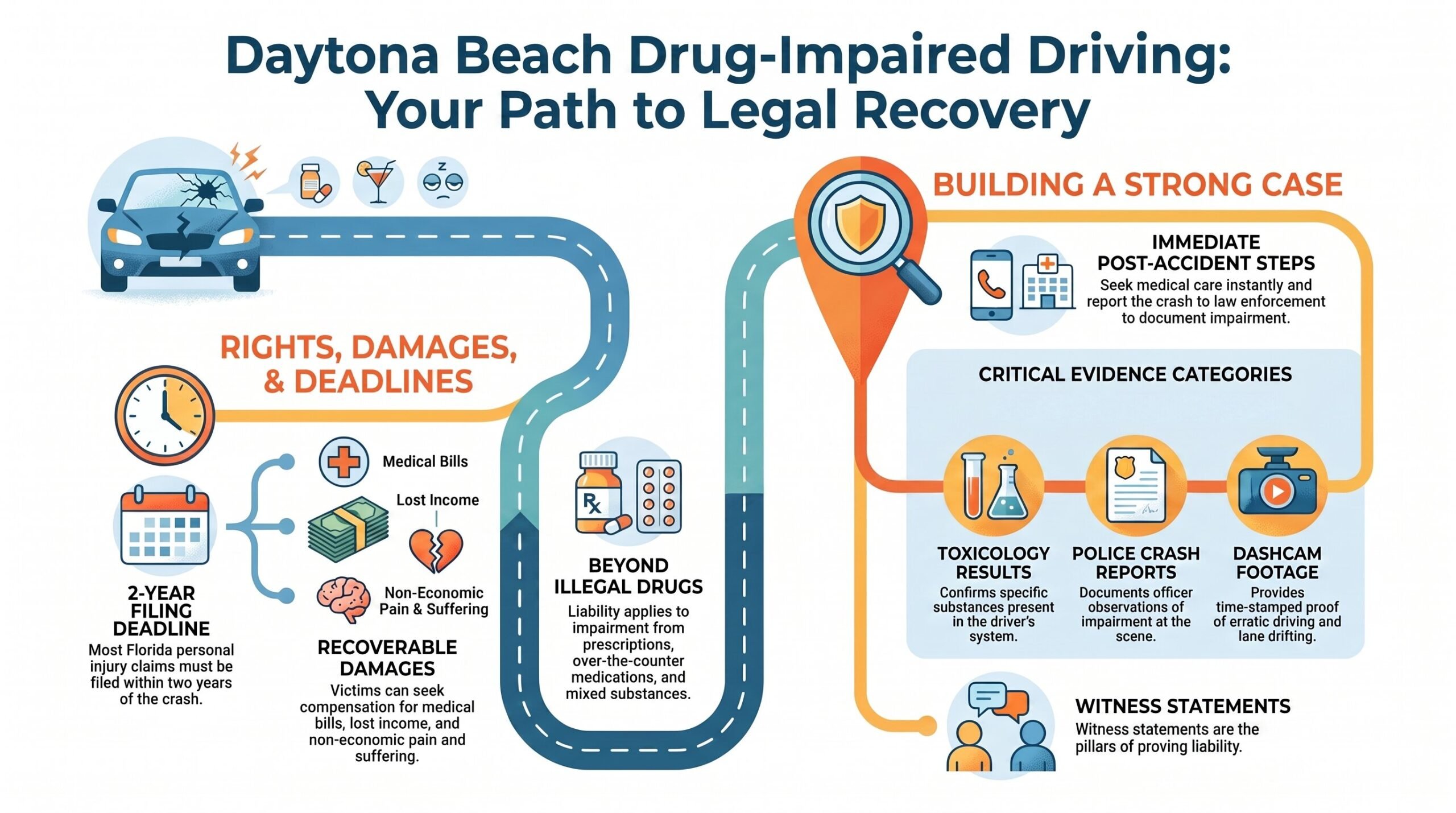
After a drug-impaired driving collision in Daytona Beach, injured victims may have the right to pursue compensation from the impaired driver and any other party whose negligence contributed to the crash.
These rights can support recovery for medical care, lost income, diminished earning capacity, pain, suffering, and related losses.
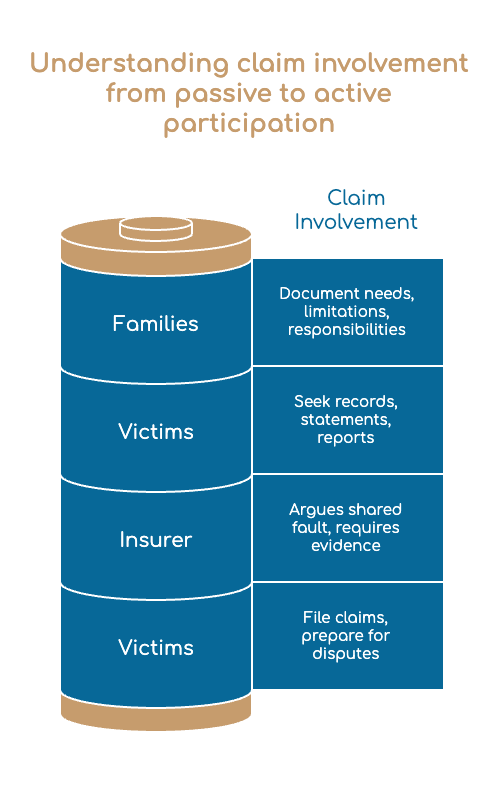
- Victims may file insurance claims against available policies, while preparing for insurance coverage disputes involving limits, exclusions, or denied responsibility.
- Comparative negligence rules may affect recovery if an insurer argues the injured person shared fault, making careful evidence preservation essential.
- Victims may seek records, witness statements, toxicology evidence, and crash reports to establish impairment, causation, and damages.
- Families and caregivers may help protect the claim by documenting treatment needs, daily limitations, and service-related responsibilities affected by the injury.
These legal rights help injured people secure resources needed for healing, stability, and continued care.
Why Do Daytona Beach Drug-Impaired Driving Accident Injuries Happen?
Although each collision has unique facts, Daytona Beach drug-impaired driving accident injuries often occur because controlled substances, prescription medications, or over-the-counter drugs interfere with the skills required for safe vehicle operation. These substances may slow reaction time, distort judgment, reduce coordination, or impair a driver’s ability to recognize hazards near pedestrians, cyclists, and other motorists.
Medication side effects can also create serious risks, particularly when a driver misunderstands warnings, combines prescriptions with alcohol, or operates a vehicle while drowsy or disoriented. Even lawful medication use may become dangerous when it compromises attention, vision, or decision-making. In other cases, drug impairment contributes to distracted driving patterns, such as drifting between lanes, delayed braking, inconsistent speed, or failure to obey traffic signals.
Such conduct places vulnerable people at risk and can cause injuries that affect families, caregivers, and communities. Understanding these causes supports accountability and promotes safer roads in Daytona Beach.
What Should You Do After a Daytona Beach Drug-Impaired Driving Accident Injury?
After a Daytona Beach drug-impaired driving accident injury, the injured person should seek immediate medical care, even when symptoms appear minor. The crash should also be reported to law enforcement, because an official record may document impairment, road conditions, and witness information. Crucial evidence, including photographs, medical records, vehicle damage, and insurance communications, should be preserved to support any later injury claim.
Seek Immediate Medical Care
Following a Daytona Beach drug-impaired driving accident, an injured person should seek medical care as soon as possible, even if symptoms appear minor at the scene. Prompt evaluation can identify hidden injuries, including concussion, internal trauma, soft tissue damage, or delayed pain conditions. Medical records also create a reliable timeline connecting the crash to the injury, which may support later treatment decisions and accountability efforts.
Consistent follow-up care is equally important. Providers should receive accurate information about symptoms, prior conditions, medications, and physical limitations. The injured person should document expenses, keep prescriptions, therapy notes, and billing records, and follow all medical instructions. These steps may assist with Filing insurance claims. When Choosing legal representation, a free consultation can help clarify how medical documentation may protect future recovery.
Report The Crash
When a drug-impaired driving crash occurs in Daytona Beach, the incident should be reported to law enforcement as soon as it is safe to do so. Prompt reporting allows officers to respond, secure assistance, and document observations that may be important later. A responsible witness, caregiver, or uninjured party may call 911, provide the location, describe injuries, and identify any urgent hazards.
This step helps guarantee victim safety while allowing emergency personnel to coordinate care. Injured individuals should cooperate with officers, but avoid guessing about facts or minimizing symptoms. The official crash report may later support insurance claims or legal review. After reporting, victims should preserve medical records from treatment connected to the collision, because consistent documentation helps clarify injuries, care needs, and the crash’s lasting effects.
Preserve Critical Evidence
Because evidence can disappear quickly, victims and witnesses should preserve anything that may help explain how the Daytona Beach drug-impaired driving crash occurred. Photographs of vehicle positions, road conditions, debris, injuries, and nearby traffic signs can provide needed context for investigators and advocates. Contact information for witnesses should be collected promptly, since Witness testimony reliability often depends on early, accurate recollections.
Clothing, damaged personal items, dashcam recordings, and surveillance footage from nearby businesses should be safeguarded before they are lost or altered. Medical records, pharmacy information, and Prescription misuse documentation may also clarify whether impairment involved controlled medications or improper drug use. By protecting these materials, concerned parties help law enforcement, medical providers, insurers, and legal representatives pursue accountability while serving the injured person’s recovery and long-term needs.
Critical Evidence in a Daytona Beach Drug-Impaired Driving Accident Injury Case
Critical evidence in a Daytona Beach drug-impaired driving accident injury case may determine how fault, causation, and damages are established. Critical materials often include: 1. Toxicology test results 2. Police crash reports 3. Witness statements 4. Dashcam video evidence. Each item can help clarify the impaired driver’s condition, the sequence of events, and the strength of the injured party’s claim.
Toxicology Test Results
Although every collision requires careful investigation, toxicology test results can be especially important in a Daytona Beach drug-impaired driving accident injury case. These results may identify controlled substances, prescription medications, or impairing compounds present in a driver’s system near the time of the crash. A qualified Toxicology Lab can measure substances and, when appropriate, explain how they may affect perception, reaction time, judgment, and coordination.
Proper handling is vital, because the Chain Of Custody helps confirm that each sample was collected, stored, transferred, and tested without compromise. For injured people and families seeking accountability, these records may help connect impairment to unsafe driving conduct. Careful review by legal and medical professionals can also reveal limitations, timing concerns, or testing issues that require further evaluation and explanation.
Police Crash Reports
When a suspected drug-impaired driver causes a collision in Daytona Beach, the police crash report often becomes one of the first records used to understand what happened and why. This report may identify the drivers, vehicles, location, roadway conditions, citations, observed impairment signs, and the officer’s initial assessment of contributing causes. For an injured person, it can guide early case evaluation and help caregivers, advocates, and legal professionals respond with purpose.
Evidence preservation tactics may include promptly obtaining the report, reviewing listed facts for accuracy, and securing related photographs, measurements, or officer notes before they become harder to access. Medical documentation basics also matter, because treatment records should align with the crash history, reported symptoms, and timing of care, supporting a complete and reliable injury claim.
Witness Statements
After a drug-impaired driving collision in Daytona Beach, witness statements can provide important details that may not appear fully in the police crash report. Bystanders, passengers, nearby workers, and first responders may describe erratic driving, delayed braking, odor, confusion, or other signs of impairment. Their accounts can help clarify how the crash occurred and support an injured person’s need for fair recovery.
Attorneys serving injured clients often review statements promptly, because memories can fade and details may become less precise. Eyewitness credibility checks may consider vantage point, lighting, distance, distractions, and any relationship to the parties involved. Statements consistency analysis can compare multiple accounts with physical evidence and reported timelines. Reliable witness information may strengthen liability arguments and help protect the interests of those harmed.
Dashcam Video Evidence
In a Daytona Beach drug-impaired driving accident injury case, dashcam video may provide direct, time-stamped evidence of how the collision occurred. Footage can show lane position, braking, speed patterns, traffic signals, and the impaired driver’s conduct before impact. For injured people, this evidence may help clarify responsibility and support a fair evaluation of losses.
Proper digital video preservation is critical, because recordings may be overwritten, altered, or lost if not secured quickly. Attorneys may send preservation letters, request metadata, and review chain-of-custody details to protect reliability. Dashcam admissibility often depends on authentication, relevance, and whether the footage fairly represents the event. When properly preserved and presented, dashcam evidence can assist insurers, courts, and advocates seeking accountability while serving the injured with accuracy and care.
Long-Term Effects of Daytona Beach Drug-Impaired Driving Accident Injuries
Drug-impaired driving accidents in Daytona Beach can leave victims with long-term injuries that extend well beyond initial emergency treatment. Chronic pain complications and lasting cognitive impairment may affect employment, daily functioning, and overall independence. Future medical costs, including rehabilitation, expert care, and ongoing treatment, are essential factors in evaluating the full value of an injury claim.
Chronic Pain Complications
When a serious collision involves an impaired driver, injuries may leave a victim with chronic pain that lasts long after the initial medical treatment ends. Persistent neck, back, joint, or nerve pain can limit work, caregiving, mobility, and ordinary service to family or community. In the subtopic chronic pain, liability evidence may include diagnostic records, treatment notes, crash reports, witness accounts, and expert opinions connecting ongoing symptoms to the drug-impaired crash.
Careful evaluation also considers the subtopic medication side effects, because pain relievers, muscle relaxants, or injections may cause fatigue, dizziness, or reduced function. Long term documentation is necessary, including follow-up visits, therapy records, pain journals, and employment impacts. These materials help show the continuing burden and support a complete injury claim for recovery.
Lasting Cognitive Impairment
Although physical injuries often receive immediate attention after a serious crash, lasting cognitive impairment can create equally severe long-term consequences for an injured person. After a drug-impaired driving accident in Daytona Beach, trauma to the head or disrupted oxygen flow may affect memory, concentration, judgment, and communication. These limitations can make routine decisions difficult, reduce independence, and strain family members or caregivers who seek to provide steady support.
Medication side effects may further complicate recovery, especially when pain treatment or neurological care contributes to fatigue, confusion, or slowed thinking. Brain fog effects can also interfere with work, education, appointments, and meaningful service within the community. Careful documentation of these cognitive changes helps show how the crash altered daily functioning, personal responsibility, and long-term stability.
Future Medical Costs
Because serious injuries may require care long after the initial emergency treatment, future medical costs are a central concern after a drug-impaired driving accident in Daytona Beach. Victims may face repeated surgeries, experts visits, medication, diagnostic testing, mobility equipment, and in-home assistance. Rehabilitation needs can continue for months or years, especially when brain, spinal cord, orthopedic, or internal injuries limit independence.
A careful legal evaluation may consider physician opinions, therapy plans, life-care projections, and the cost of transportation to medical appointments. Some injured people also require workplace retraining when physical or cognitive limitations prevent a return to prior employment. Estimating these expenses helps protect access to necessary care and reduces the risk that families, caregivers, or community support systems must absorb preventable financial burdens later.
Proving Liability in Daytona Beach Drug-Impaired Driving Accident Injury Cases
Proving liability in a Daytona Beach drug-impaired driving accident requires more than showing that a driver used drugs before the crash. The injured person must connect impairment to negligent conduct, such as speeding, drifting lanes, failing to yield, or reacting too slowly. Evidence may include police reports, drug recognition evaluations, toxicology results, witness statements, vehicle damage, traffic camera footage, and medical records. Each item can help establish duty, breach, causation, and damages.
A careful investigation also considers whether other parties contributed to the harm, including vehicle owners, employers, or entities responsible for unsafe road conditions. Preserving evidence early is important, especially when memories fade and digital records may be lost. The Statute of limitations sets strict filing deadlines, so prompt action supports accountability.
Strong liability proof also strengthens Insurance negotiation strategies, allowing advocates to present clear facts, protect the injured person’s dignity, and pursue fair compensation for medical needs, lost income, and suffering.
Dealing With Insurance Companies After a Daytona Beach Drug-Impaired Driving Accident Injury
After a Daytona Beach drug-impaired driving accident, insurance companies often begin evaluating the claim before the injured person fully understands the extent of the harm. Adjusters may request recorded statements, medical authorizations, or quick settlements that do not reflect future treatment needs. Careful communication helps protect the injured person’s position and preserves the ability to serve dependents, coworkers, and others affected by the recovery process.
A lawyer may handle insurer contact, review policy limits, and prevent statements from being used out of context. Independent witness gathering can also strengthen the presentation of facts, especially when impairment, speed, or unsafe manoeuvres are disputed. Witness credibility evaluation helps determine whether accounts are consistent, reliable, and useful in supporting fair compensation.
Medical records, crash reports, and documented wage losses should be organized before negotiations occur. This measured approach encourages accountability while reducing the risk that an insurer will undervalue the injury or overlook long-term consequences.
What to Expect During a Daytona Beach Drug-Impaired Driving Accident Injury Claim Process
A Daytona Beach drug-impaired driving accident injury claim typically begins with an initial case evaluation, followed by focused evidence gathering to establish fault, causation, and damages. The process may then move into insurance claim negotiations, where liability disputes, medical documentation, and settlement value are carefully assessed. If a fair resolution is not reached, the claim may proceed toward litigation, with the potential lawsuit timeline depending on court deadlines, discovery, and trial preparation.
Initial Case Evaluation
During the initial case evaluation, a Daytona Beach drug-impaired driving accident lawyer reviews the facts of the crash, the available evidence, and the injured party’s losses to determine the strength and direction of the claim. This review may include the collision timeline, police observations, toxicology concerns, medical treatment, wage loss, and insurance coverage. The lawyer considers whether evidence preservation concerns exist, including vehicles, photographs, electronic data, or written communications that may support accountability.
Existing witness interview notes may also help clarify how impairment affected the driver’s conduct. This early assessment allows the injured party to understand potential legal options, likely challenges, and immediate priorities. It also helps the lawyer develop a responsible plan that supports recovery, protects rights, and promotes fair resolution.
Evidence Gathering Steps
Once the initial case evaluation identifies the main issues, evidence gathering becomes the next organized step in building a Daytona Beach drug-impaired driving accident injury claim. This phase may include securing crash reports, toxicology records, body-camera footage, photographs, medical records, and vehicle damage documentation. Investigators may also locate passengers, bystanders, first responders, and medical providers who can describe what they observed.
Each statement is reviewed for accuracy, consistency, and witness credibility, especially when impairment, reaction time, or roadway conduct is disputed. Attorneys may preserve surveillance video, obtain 911 recordings, and analyze timelines to support a clear account of the collision. Careful documentation also helps shape a Cross examination strategy, allowing the injured person’s representatives to challenge unreliable accounts while presenting dependable evidence with dignity and purpose.
Insurance Claim Negotiations
Insurance negotiations often begin after liability evidence, medical documentation, and damage calculations have been organized into a claim package for the insurer’s review. In drug-impaired driving cases, the insurer may evaluate police reports, toxicology findings, witness accounts, treatment records, and proof of income loss. A careful Medical documentation review helps connect injuries to the crash, confirm ongoing care needs, and support fair valuation.
Demand letter strategy is also important, because the initial presentation should explain fault, describe harm, and state compensation demands with supporting evidence. Adjusters may respond with questions, disputes, or lower settlement offers. The injured person’s representative may then clarify facts, address service-related family hardships, and negotiate toward a resolution that reflects medical needs, lost stability, and responsible accountability.
Potential Lawsuit Timeline
When negotiations do not resolve a Daytona Beach drug-impaired driving accident claim, the case may move into litigation through the filing of a personal injury lawsuit. After filing, the defendant is served, and the court sets deadlines for responses, discovery, motions, mediation, and trial preparation. During discovery, attorneys exchange records, question witnesses, and review toxicology findings, crash reports, medical documentation, and expert opinions.
Evidence preservation remains vital, especially when impaired driving proof, vehicle data, or surveillance footage may influence liability. A sound Negotiation strategy continues during litigation, as mediation or renewed settlement discussions may occur before trial. If resolution is not reached, the case proceeds to trial, where a judge or jury evaluates fault, damages, and compensation needed to support the injured person’s recovery.
Compensation for Daytona Beach Drug-Impaired Driving Accident Injury Damages
Because drug-impaired driving collisions often cause serious physical, financial, and personal harm, compensation in a Daytona Beach injury claim may address a wide range of damages. A claim may seek payment for emergency treatment, hospitalization, rehabilitation, medication, lost income, reduced earning ability, property damage, and necessary support services. When injuries disrupt caregiving, employment, mobility, or community responsibilities, the recovery may also account for the practical burdens placed on the injured person and family.
Non economic losses may be considered when pain, emotional distress, disfigurement, or loss of normal daily life follows the crash. A careful settlement strategy often requires documentation from medical providers, employers, witnesses, and qualified experts.
Counsel may evaluate insurance limits, liability evidence, impairment proof, and long-term care needs before negotiations begin. By presenting the full effect of the collision, an injury claim can pursue compensation that supports stability, treatment, and restored dignity.
Economic vs Non-Economic Damages in Daytona Beach Drug-Impaired Driving Accident Cases
Damages in Daytona Beach drug-impaired driving accident cases are generally divided into economic and non-economic losses. Economic damages may include medical bills, lost wages, and property damage, while non-economic damages may address pain, suffering, emotional distress, and loss of enjoyment of life. Proving the value of each category requires clear documentation, credible evidence, and careful presentation of how the crash affected the injured person’s life.
Economic Damage Examples
Economic damages in a Daytona Beach drug-impaired driving accident case refer to measurable financial losses caused by the crash. These losses may include ambulance charges, emergency treatment, hospitalization, surgery, rehabilitation, diagnostic testing, and follow-up care. Medical documentation helps establish the necessity, cost, and duration of treatment, including prescriptions for pain medication when supported by a treating provider.
Economic damages may also cover lost wages, diminished earning capacity, property damage, vehicle repair or replacement, rental transportation, and out-of-pocket expenses related to recovery. In service-focused legal work, careful accounting helps ensure that injured individuals are not left carrying burdens created by impaired conduct. Attorneys often gather bills, wage records, repair estimates, and receipts to present a clear financial picture, allowing insurers or courts to evaluate compensation accurately and responsibly.
Non-Economic Damage Examples
Financial records can show what an injured person paid or lost, but they do not fully capture the personal impact of a drug-impaired driving crash. Non-economic damages address harms that affect daily life, dignity, and human well-being. These may include Pain and suffering from lasting injuries, limited mobility, chronic discomfort, or the loss of ordinary activities once performed with ease.
They may also include emotional distress, such as anxiety, fear of driving, sleep disruption, or grief connected to a changed future. In serious Daytona Beach cases, injured individuals may experience loss of enjoyment of life, strain in family relationships, or reduced independence. These damages recognize that service to the harmed person involves more than replacing money; it also requires acknowledging burdens that cannot be measured by receipts alone.
Proving Damage Value
To prove the value of a claim after a drug-impaired driving crash, the injured person must connect each loss to reliable evidence and the circumstances of the collision. Economic losses may include medical bills, rehabilitation costs, lost wages, and reduced earning ability. Non-economic losses require proof through medical opinions, daily limitations, pain records, and testimony from those who observe the person’s struggle.
Damages calculation should reflect both immediate harm and future needs, especially when injuries affect work, caregiving, or community service. Evidence preservation is critical, including photographs, treatment records, pharmacy information, witness statements, and impairment-related reports. A careful presentation helps insurers, judges, or juries understand the full impact, while honoring the injured person’s dignity and the practical burdens placed on others.
When a Daytona Beach Drug-Impaired Driving Accident Injury Case Goes to Trial vs Settlement
Although many Daytona Beach drug-impaired driving accident injury claims resolve through negotiated settlement, some cases require trial when liability, damages, insurance coverage, or the extent of impairment remains disputed. Settlement may offer quicker support for injured people, reduce uncertainty, and preserve resources for medical recovery, caregiving, and family stability. However, a trial may become necessary when an insurer undervalues losses, questions causation, or refuses to account for serious harm.
Attorneys may use Negotiation leverage strategies by organizing medical proof, witness accounts, crash evidence, expert opinions, and impairment-related facts into a clear demand presentation. When settlement discussions fail, jury trial preparation becomes central. This preparation may include exhibit development, deposition review, expert coordination, and careful witness preparation.
A well-prepared case can show the full human impact of the collision while maintaining factual discipline. The decision to settle or proceed to trial depends on risk, evidence strength, and the client’s long-term needs.
Florida Laws That May Affect Your Daytona Beach Drug-Impaired Driving Accident Case
Because drug-impaired driving cases involve both criminal conduct and civil injury claims, Florida law can shape how fault, damages, evidence, and insurance issues are evaluated after a Daytona Beach crash. These rules help protect injured people while guiding responsible legal advocacy.
Florida law helps define accountability and recovery options after a drug-impaired driving crash in Daytona Beach.
- Negligence rules: A driver who operates a vehicle while impaired by drugs may be found negligent, especially when police reports, toxicology results, or witness accounts support unsafe conduct.
- Criminal penalties: DUI drug charges may lead to fines, license suspension, probation, or jail, and related findings may influence a civil injury claim.
- Evidentiary standards: Civil claims require proof by a preponderance of the evidence, while criminal cases require proof beyond a reasonable doubt, so outcomes may differ.
- Insurance and damages: Florida’s no-fault system, comparative fault rules, and available liability coverage may affect medical recovery, lost income claims, and compensation for long-term harm.
The Statute of Limitations for Daytona Beach Drug-Impaired Driving Accident Injury Cases
Florida law affects not only how liability and damages are evaluated after a drug-impaired driving crash, but also how long an injured person has to take legal action. In most Florida personal injury cases, including Daytona Beach drug-impaired driving accidents, the filing deadline is generally two years from the date of the crash. If the injured person dies from the collision, a wrongful death action is generally subject to a separate two-year deadline.
These time limits matter because delay can weaken a claim before it is ever reviewed on its merits. The Burden of proof remains on the injured party, and timely action helps preserve medical records, witness accounts, toxicology findings, crash reports, and other damages evidence.
For those who serve families, neighbors, and the broader community, understanding these deadlines supports responsible decision-making after harm occurs. Missing the statute of limitations can prevent recovery, regardless of the severity of the injuries involved.
How a Daytona Beach Drug-Impaired Driving Accident Lawyer Can Help You
After a drug-impaired driving crash, a Daytona Beach accident lawyer can help an injured person evaluate liability, preserve evidence, and pursue compensation through a structured legal process. The lawyer’s role is to protect the claim while allowing the injured person and family to focus on recovery, responsibilities, and service to others.
- Investigation: The lawyer reviews police reports, toxicology findings, crash data, medical records, and roadway conditions to identify negligent conduct and responsible parties.
- Evidence preservation: The lawyer sends preservation notices, secures photographs, obtains vehicle data, and tracks records before they are altered, lost, or destroyed.
- Witness interview: The lawyer contacts bystanders, passengers, first responders, and other relevant witnesses to clarify what occurred and strengthen the factual record.
- Claim development: The lawyer calculates medical costs, lost income, pain, future care needs, and related losses, then communicates with insurers and prepares the case for negotiation or litigation.
When to Contact a Daytona Beach Drug-Impaired Driving Accident Lawyer
When should an injured person contact a Daytona Beach drug-impaired driving accident lawyer? Contact should occur as soon as medical needs are stabilized, especially when impairment is suspected, injuries are serious, or police reports remain incomplete. Early communication may help preserve records, witness accounts, surveillance footage, and other information that can fade or disappear quickly.
Families serving an injured loved one should also seek guidance when hospital bills, missed work, or long-term care needs begin to develop. If the crash caused a fatality, relatives may need prompt clarification of Wrongful death eligibility, including who may bring a claim under Florida law. Legal contact is also important when there are limited driver details, such as uncertainty about insurance, vehicle ownership, or the driver’s identity.
Timely action allows responsible parties to be identified and deadlines to be monitored, while the injured person or family focuses on recovery, support, and practical caregiving responsibilities after the collision.
Why You Need an Experienced Daytona Beach Drug-Impaired Driving Accident Lawyer
Early legal contact is only part of protecting an injured person’s claim, because drug-impaired driving cases often require careful investigation, informed evidence review, and strategic handling from the beginning. An experienced Daytona Beach drug-impaired driving accident lawyer understands how impairment allegations affect liability, insurance defenses, and the value of resulting damages.
These cases may involve prescription medication, illegal substances, or combined drug and alcohol use. A lawyer can examine the Drug testing process, including timing, sample handling, officer observations, and whether the results support impairment at the time of the crash. This review helps prevent misleading conclusions from weakening a valid claim.
Experience also supports Evidence preservation, including crash reports, surveillance footage, vehicle data, witness statements, and medical records. By coordinating these details, counsel can present a clear account of harm and accountability. This work helps injured individuals, families, and caregivers pursue justice while focusing on recovery and service to those affected.
How to Choose the Right Daytona Beach Drug-Impaired Driving Accident Lawyer for Your Case
Because drug-impaired driving claims often involve disputed evidence and complex insurance issues, choosing the right Daytona Beach lawyer requires attention to both experience and case strategy. A suitable attorney should understand toxicology reports, crash investigations, medical documentation, and the methods insurers use to limit recovery. Families serving an injured loved one should look for counsel who communicates clearly, preserves evidence quickly, and explains each stage of the claim with practical guidance.
A Client consultation can help determine whether the lawyer has handled similar drug-impaired driving cases and can identify liable parties, including negligent drivers, vehicle owners, or other responsible entities. The discussion should also address expected timelines, available damages, and the evidence needed to support the claim.
Prospective clients should review the fee structure before signing any agreement. Clear terms promote trust, reduce uncertainty, and allow the injured person’s support system to make informed decisions while focusing on care, stability, and recovery.
About The Law Offices of Anidjar & Levine
As injured individuals evaluate their legal options after a drug-impaired driving crash, The Law Offices of Anidjar & Levine offers representation focused on investigation, communication, and client support.
The firm assists Daytona Beach clients by examining crash reports, medical records, witness accounts, and insurance issues with careful attention to detail.
Its attorneys understand how civil injury claims may intersect with the Criminal Charge Process, while keeping the client’s recovery and financial losses at the center of the case.
The firm’s approach emphasizes Evidence Preservation, timely case development, and clear updates for clients and families.
This support can include coordinating records, addressing insurer communications, and identifying damages related to medical care, lost income, and long-term limitations.
By handling legal tasks with diligence, the firm allows injured people to focus on treatment and stability.
Its representation reflects a service-oriented commitment to helping clients pursue accountability after preventable harm caused by impaired drivers in Daytona Beach and surrounding communities.
Frequently Asked Questions
Can Prescription Drugs Still Count as Impaired Driving in Florida?
Yes. In Florida, prescription drugs can still support an impaired driving charge when they affect a driver’s normal faculties, even if lawfully obtained. Prescription impairment may involve drowsiness, slowed reaction time, confusion, or poor coordination. Legal limitations depend on evidence, dosage, warnings, observed behavior, and testing. Those serving injured people should recognize that lawful medication use does not excuse unsafe driving when impairment creates preventable harm on Florida roads.
What if the Impaired Driver Was Using Marijuana Legally?
Legal marijuana use does not excuse impaired driving. Medical cannabis laws may permit possession and use, yet they do not authorize operating a vehicle while affected by THC. Under Florida’s criminal DUI standards, the central issue is impairment of normal faculties, not whether the substance was lawfully obtained. Those serving injured persons should recognize that lawful use may still support liability when impaired driving causes preventable harm on public roads.
Can Passengers Sue After a Drug-Impaired Driving Crash?
Yes, passengers may sue after a drug-impaired driving crash when evidence shows the driver breached a duty of care. Negligence liability may arise from impaired operation, unsafe decisions, or violations of traffic law. Passenger damages can include medical expenses, lost income, pain, disability, and future care needs. A careful claim helps protect injured passengers, supports accountability, and advances the broader duty to serve community safety.
Will Criminal Drug Charges Affect My Injury Claim?
Yes. Criminal drug charges can influence an injury claim, but they do not control it. A conviction or guilty plea may strengthen liability arguments, while pending charges may affect negotiations. The burden of proof differs in criminal and civil matters, so evidence must still support causation and damages. Insurance claim effects may include delays, coverage disputes, or settlement pressure. Injured parties should preserve records and seek guidance that protects community welfare.
Do Drug-Impaired Driving Cases Involve Punitive Damages?
Yes, drug-impaired driving cases may involve punitive damages when evidence shows reckless disregard for others’ safety. Courts examine impairment, conduct, and harm caused, while the injured party must meet the burden of proof required for punitive damages. Damages eligibility depends on facts, available evidence, and applicable law. For those committed to serving victims, careful documentation and legal guidance help pursue accountability while supporting recovery, dignity, and responsible community safety.
—————————
Drug-impaired driving accidents in Daytona Beach can cause serious injuries, complex insurance disputes, and lasting financial strain.
Victims may be entitled to pursue compensation for medical expenses, lost income, pain and suffering, and other losses.
A qualified Daytona Beach Car Accident Lawyer can investigate the crash, identify liable parties, and manage the legal process.
The Law Offices of Anidjar and Levine provides focused representation for injured clients seeking accountability and fair recovery.