The Law Offices of Anidjar and Levine can help injured victims preserve evidence, prove distraction, and pursue compensation for medical care, lost income, pain, and future losses after a texting while driving accident.
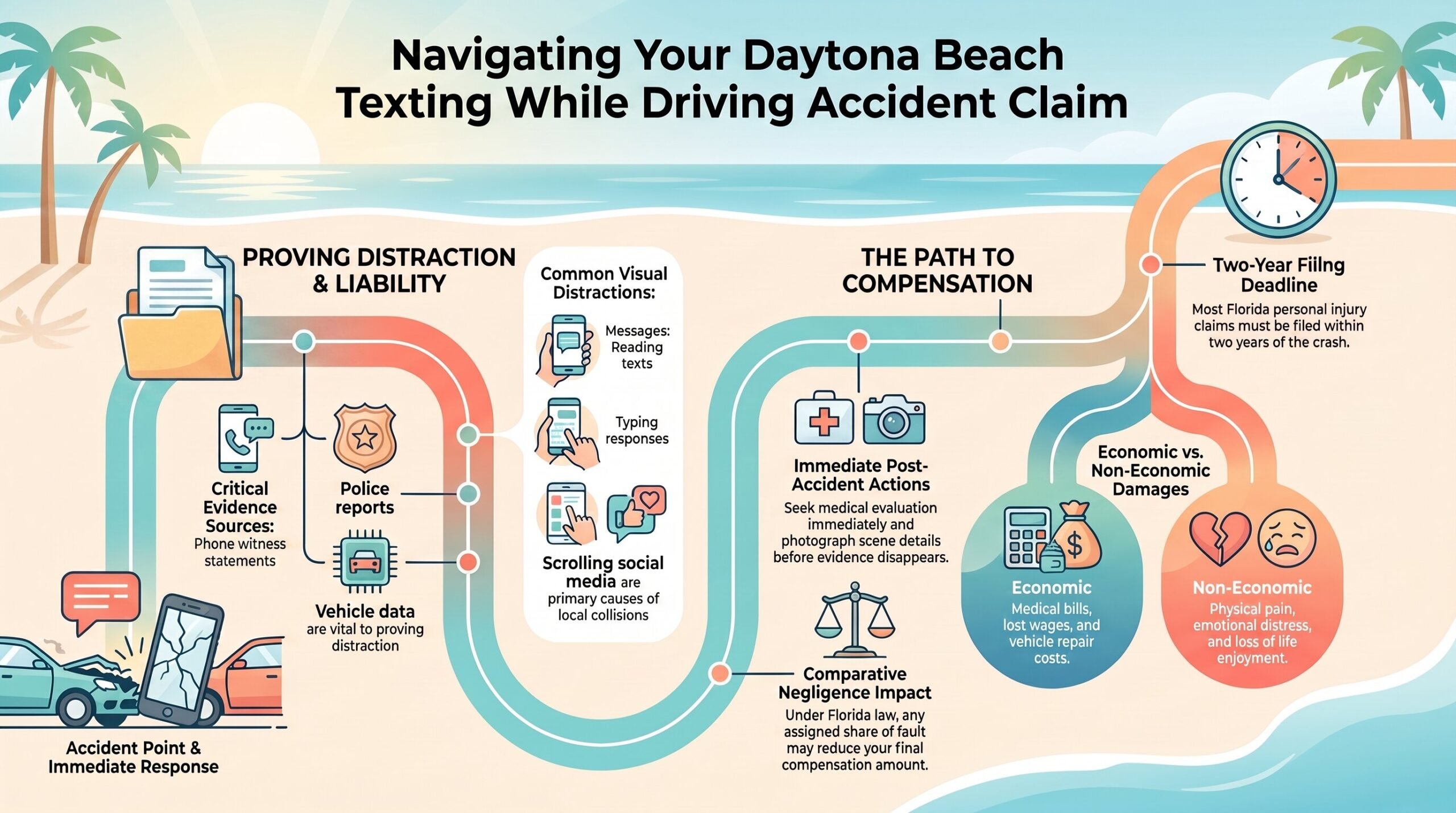
Local evidence may include police reports, witness statements, phone records, vehicle data, photographs, and medical documentation.
Legal support can also address insurance communications, coverage issues, comparative negligence, and settlement demands.
A Daytona Beach Car Accident Lawyer can provide early guidance, which is important because phone data and surveillance footage may disappear quickly.
Main Takeaways
- A Daytona Beach texting-while-driving accident lawyer can help investigate the causes of the accident, fault, injuries, and insurance coverage.
- Key evidence may include phone records, police reports, witness statements, vehicle data, photos, and medical documentation.
- Texting can cause delayed braking, lane departures, rear-end crashes, intersection collisions, and injuries to pedestrians or cyclists.
- Injury claims may seek compensation for medical care, lost income, pain, reduced mobility, and future treatment needs.
- Comparative negligence may affect recovery, so prompt preservation of evidence and careful claim documentation are important.


How We Can Help With Your Daytona Beach Texting While Driving Accident Injury Claim
After a texting while driving crash in Daytona Beach, an injury claim may require immediate investigation, careful evidence preservation, and a clear assessment of all available sources of compensation. A law firm can help by gathering police reports, witness statements, vehicle data, photographs, and phone-related evidence that may show distraction. Counsel may also coordinate a Medical records review to connect injuries, treatment needs, work limitations, and future care to the collision.
For clients and families seeking to serve recovery, stability, and accountability, legal guidance can reduce burdens while protecting important rights. The firm may communicate with insurers, evaluate coverage, document losses, and prepare well-supported settlement demands. If responsibility is disputed, Florida comparative fault rules require careful attention, because any assigned share of fault may affect compensation. Skilled advocacy can help present a complete claim, address defense arguments, and pursue a result that supports recovery and financial security.
OUR CONSULTATIONSARE FREE
START YOUR FREE CASE REVIEW

Understanding Daytona Beach Texting While Driving Accident Injury Cases
A Daytona Beach texting while driving accident injury case often turns on proof of distraction, the severity of the injuries, and the financial impact of the collision. These matters require careful review because injured people may face medical treatment, missed work, long-term limitations, and added household burdens. A thorough claim identifies how texting distraction affected reaction time, lane control, braking, or awareness before the crash.
Legal evaluation also focuses on establishing patterns of negligence through records, witness statements, crash reports, vehicle data, and medical documentation. This process helps connect the careless conduct to the harm suffered, while also supporting the full value of the claim. For those committed to helping others recover, understanding these cases means recognizing both the human needs and the legal standards involved. Each detail can support accountability, promote safer conduct, and help an injured person pursue fair compensation with dignity and purpose after a preventable collision in Daytona Beach.
Common Causes of Daytona Beach Texting While Driving Accident
Common causes of Daytona Beach texting-while-driving accidents include reading incoming texts, typing messages, and checking social media while operating a vehicle. These distractions remove a driver’s attention from traffic conditions, roadway hazards, and the movements of nearby vehicles. Even brief lapses can cause delayed driver reactions, increasing the risk of rear-end collisions, lane departures, and intersection accidents.
Reading Incoming Texts
Reading an incoming text can divert a driver’s eyes, hands, and attention long enough to cause a serious collision on the roads of Daytona Beach. When motorists glance down to review a message, they may miss slowing traffic, pedestrians, cyclists, or changing signals. Even brief distraction can reduce reaction time, especially near intersections, beach access points, and congested tourist areas where careful driving helps protect the community.
Reading incoming texts also creates cognitive distraction because the driver begins processing the message rather than monitoring road conditions. While the safety features of hands-free alternatives may reduce the need to handle a phone, they do not eliminate the risks of divided attention. Responsible drivers serve others by silencing notifications, securing devices, and waiting until they are parked before reviewing any messages.
Typing While Driving
Beyond reviewing incoming messages, typing while driving creates an even greater danger because it requires sustained visual, manual, and mental attention away from the roadway. A driver composing a response must look at the screen, remove at least one hand from the wheel, and concentrate on wording rather than traffic conditions. This conduct can delay braking, reduce lane control, and prevent timely recognition of pedestrians, cyclists, or stopped vehicles.
Reading messages may be brief, but typing often lasts longer and increases the distance traveled without proper awareness. In Daytona Beach, where local traffic includes residents, tourists, and service workers, such inattention threatens road safety and community well-being. Responsible driving requires postponing written communication until the vehicle is safely parked and fully stopped, without exception for convenience.
Social Media Distractions
On busy Daytona Beach roads, social media use can distract drivers as severely as traditional texting because it encourages repeated viewing, scrolling, posting, and responding while the vehicle is in motion. A driver who checks a notification, watches a short video, or uploads a photo shifts attention from traffic conditions to a screen. This conduct may place pedestrians, cyclists, passengers, and other motorists at unnecessary risk, particularly near beach access points, intersections, and congested commercial areas.
Personal injury basics recognize that preventable inattention can support claims when careless behavior causes harm. Those who serve injured individuals should also consider emotional trauma, which may follow a collision involving fear, confusion, or lasting distress. Social media activity can become important evidence when establishing distraction, negligence, and the circumstances surrounding a crash.
Delayed Driver Reactions
Reaction-time delays are a common and dangerous consequence of texting while driving, because even a brief glance away from the road can prevent a driver from braking, handling, or adjusting speed in time to avoid a collision. In Daytona Beach traffic, delayed responses may endanger pedestrians, cyclists, passengers, and other motorists who rely on attentive driving for safety.
Texting can disrupt visual focus, hand control, and judgment, creating distracted driving patterns that increase the risk of crashes at intersections, crosswalks, and congested corridors. Cell signal loss may also worsen the hazard when a driver repeatedly checks a device, resends messages, or looks for service instead of monitoring traffic. These preventable delays can cause rear-end impacts, sideswipe collisions, and serious injuries requiring careful legal review.


Legal Rights of Daytona Beach Texting While Driving Accident Injury Victims
When a driver’s texting causes a collision in Daytona Beach, injured victims may have the right to pursue compensation through a personal injury claim. These rights may include recovery for medical care, lost income, pain, reduced mobility, and future treatment needs. Comparative negligence may affect the amount recovered if fault is shared, making careful documentation important.
Effective insurance negotiation strategies can also help protect the victim from unfair settlement pressure.
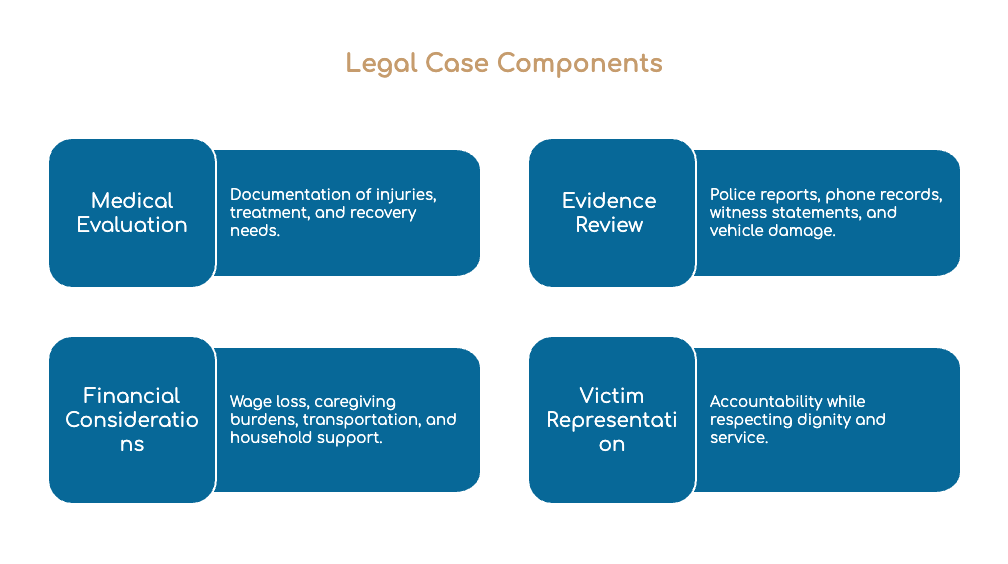
- Access to a medical evaluation documenting injuries, treatment, and expected recovery needs.
- Review of police reports, phone records, witness statements, and evidence of vehicle damage.
- Consideration of wage loss, caregiving burdens, transportation needs, and household support.
- Representation that seeks accountability while respecting the victim’s dignity and service to others.
A legal claim can provide structure during a difficult period. It may help injured people focus on mending, family responsibilities, and continued community service while their legal interests are professionally protected.
Why Do Daytona Beach Texting-While-Driving Accident Injuries Happen?
Why do texting while driving injuries occur so often in Daytona Beach traffic? These crashes often occur when a driver’s attention shifts from the road to a phone, even for a few seconds. In active corridors near beaches, hotels, schools, and intersections, that brief lapse can prevent timely braking, lane control, or awareness of pedestrians and cyclists.
Distracted driving is especially dangerous because it combines visual, manual, and cognitive distraction. A driver may look away, remove a hand from the wheel, and mentally focus on a message rather than surrounding traffic. Speed, congestion, unfamiliar tourist routes, and frequent stops increase the risk of serious injury.
Safety technology, such as collision warnings or lane alerts, may reduce some hazards, but it cannot replace responsible driving. Injuries continue to occur when drivers ignore alerts, overrely on systems, or choose convenience over the duty to protect others on the road.
What Should You Do After a Daytona Beach Texting-While-Driving Accident Injury?
After a Daytona Beach texting while driving accident injury, the injured person should seek medical care as soon as possible, even if symptoms appear minor. The crash should be documented through photographs, witness information, police reports, and records of all related losses. Contacting an attorney may help protect the claim, preserve evidence, and address communications with insurers.
Seek Medical Care
Even if an injury seems minor at first, prompt medical evaluation is essential after a Daytona Beach texting while driving accident. A careful assessment can identify concussions, internal injuries, soft tissue damage, or spinal trauma that may not be immediately obvious. Emergency room evaluation is especially important when pain, dizziness, confusion, numbness, or breathing difficulty appears after the crash. Medical professionals can provide timely treatment, recommend follow-up care, and help restore the injured person’s long-term health.
Urgent symptom monitoring also matters in the hours and days that follow. Family members, caregivers, or trusted supporters may assist by watching for worsening headaches, nausea, weakness, memory issues, or changes in mobility. Seeking care promptly reflects responsible concern for recovery and helps make sure that hidden injuries receive appropriate attention without delay.
Document The Crash
Because evidence can disappear quickly, careful documentation should begin as soon as it is safe to do so after a Daytona Beach texting while driving accident. Photographing scene details may help clarify how the collision occurred, including vehicle positions, skid marks, traffic signals, road conditions, debris, and visible injuries. If possible, a helper may gather names and contact information for witnesses, responding officers, and involved drivers, while treating everyone with patience and respect.
Preserving documents is equally important. Medical discharge papers, repair estimates, tow receipts, insurance letters, and the crash report can show the practical impact of the injury. Notes about pain levels, missed work, transportation needs, and caregiving duties may also assist later review. Organized records allow responsible parties to be evaluated with fairness, accuracy, and compassion.
Contact An Attorney
When injuries, disputed fault, or insurance pressure arise, contacting a Daytona Beach texting-while-driving accident lawyer can help protect the injured person’s rights and preserve important legal options. Counsel can review the facts of the collision, identify liable parties, and explain deadlines that may affect recovery. Early legal guidance also helps preserve evidence, including phone records, vehicle data, witness statements, and surveillance footage, before it is lost or altered.
A Free Consultation allows the injured person and supportive family members to ask informed questions without immediate financial commitment. An attorney may communicate with insurers, evaluate medical documentation, and help prevent statements that could weaken a claim. For those focused on caring for others while healing, legal representation can provide structure, reduce avoidable burdens, and support a fair pursuit of compensation.
Critical Evidence in a Daytona Beach Texting While Driving Accident Injury Case
Critical evidence in a Daytona Beach texting while driving accident injury case may establish distraction, fault, and the extent of resulting harm. Key materials often include:
- Cell phone records
- Police crash reports
- Witness statements
- Vehicle damage evidence
Together, these forms of proof can help clarify how the collision occurred and whether texting contributed to the driver’s negligence.
Cell Phone Records
In a Daytona Beach texting-while-driving accident injury case, cell phone records can provide pivotal evidence of whether a driver was using a mobile device near the time of the crash. These records may show calls, texts, data activity, application use, and timing details that help establish the presence of distraction. When obtained through proper legal channels, they can support an injured person’s claim and promote accountability for unsafe choices that endanger others.
Attorneys must also address privacy expectations, because phone data often contains personal information beyond the crash event. Careful requests can limit disclosure to relevant time periods and activity. Providers may require subpoenas, court orders, or preservation letters to prevent data loss. Admissibility disputes may arise, making accurate authentication and focused presentation essential in proving negligent phone use.
Police Crash Reports
Along with cell phone records, police crash reports often provide an early, structured account of a Daytona Beach texting-while-driving accident. These reports may identify the drivers, vehicles, location, weather, traffic controls, citations, and the officer’s preliminary assessment of contributing factors. For those seeking to serve an injured person with diligence, the report can help organize the investigation and preserve important facts before memories fade.
It may also note whether Dashcam footage exists, whether photographs were taken, or whether a vehicle blackbox should be examined for speed, braking, and impact data. Although a crash report is not the final word on fault, it can guide the collection of further evidence and support a careful review of how distracted driving may have caused preventable harm.
Witness Statements
When a texting-while-driving crash occurs, witness statements can help clarify what happened before, during, and immediately after impact. Neutral bystanders may describe a driver looking down, holding a phone, drifting between lanes, or failing to brake. These accounts can support injured parties by preserving details that official reports may not fully capture.
Proper witness interview procedures are important because memories can fade, and outside influence may affect accuracy. Investigators may record contact information, separate witnesses when possible, ask nonleading questions, and compare accounts for consistency. Eyewitness credibility depends on factors such as location, visibility, attention, timing, and any relationship to the people involved. In a Daytona Beach injury case, reliable statements can help establish distraction, responsibility, and the extent of harm caused by careless conduct.
Vehicle Damage Evidence
Because impact patterns often reveal how a collision occurred, evidence of vehicle damage can be crucial in a Daytona Beach texting-while-driving accident injury case. Crumpled bumpers, broken lights, frame distortion, and airbag deployment may help show direction of force, speed, and Impact Severity. This evidence can support injured persons, families, and advocates seeking accountability after preventable harm.
Photo documentation should include wide shots, close views, vehicle positions, skid marks, debris fields, and interior damage, when safely obtainable. Repair estimates, towing records, and inspection reports may further confirm the extent of loss. When preserved promptly, vehicle damage evidence can help compare driver statements with physical facts. In texting-while-driving claims, that comparison may reveal delayed braking, lane departure, or failure to avoid danger.
Long-Term Effects of Daytona Beach Texting While Driving Accident Injuries
Texting while driving collisions in Daytona Beach can cause injuries that extend far beyond the initial emergency treatment. Victims may face chronic pain complications, cognitive and emotional effects, and limitations that interfere with work, daily activities, and long-term independence. These consequences often create ongoing medical costs, making the full scope of future damages a significant issue in an injury claim.
Chronic Pain Complications
After a texting while driving crash in Daytona Beach, chronic pain can become one of the most disruptive long-term complications, even after visible injuries appear to recover. Persistent neck, back, shoulder, or nerve pain may limit mobility, reduce work capacity, and interfere with daily caregiving responsibilities. These conditions often require continuing medical evaluation, physical therapy, medication management, and coordinated support from providers focused on restoring function.
Post-accident counseling may also help injured individuals adjust to physical limitations without addressing unrelated mental effects. From a legal perspective, documentation is crucial because chronic pain can be difficult to measure objectively. Treatment records, expert opinions, and functional limitations may support insurance negotiations by demonstrating the ongoing cost of care, reduced earning capacity, and practical burdens on the injured person.
Cognitive And Emotional Effects
Frequently, the long-term effects of a Daytona Beach texting while driving accident extend beyond physical injuries to include cognitive and emotional difficulties that interfere with daily functioning. Victims may struggle with memory, concentration, decision-making, or slowed information processing, especially after head trauma or severe stress. Distracted driving psychology helps explain how sudden, preventable collisions can intensify feelings of vulnerability, mistrust, and frustration. These reactions may affect work performance, caregiving responsibilities, and participation in community or faith-based service. Anxiety, depression, sleep disruption, and heightened irritability can also develop when stress response patterns remain activated long after the crash. Careful documentation of these effects is important, because cognitive and emotional harm may be less visible than physical injury, yet still deeply disruptive to a person’s stability.
Ongoing Medical Costs
Cognitive and emotional harm can also increase the financial burden of recovery, especially when ongoing care is needed to address both physical injuries and related psychological symptoms. Victims may require repeated physician visits, pain management, physical therapy, counseling, medication, mobility support, or future surgical care. These costs can continue long after emergency treatment ends, placing a strain on families and caregivers committed to helping the injured person regain stability. Accurate documentation is crucial when evaluating long-term damages.
Medical records, billing statements, treatment plans, text message evidence, and eyewitness testimony may help establish how the crash occurred and why continued care is necessary. A careful review of these materials can support a claim that reflects present expenses, anticipated needs, and the lasting impact of injuries caused by distracted driving.
Proving Liability in Daytona Beach Texting While Driving Accident Injury Cases
When a crash involves suspected texting while driving, proving liability requires evidence that the at-fault driver breached a duty of care and caused the injured person’s losses. Establishing this connection often begins with Evidence preservation, including photographs, vehicle data, witness statements, and police findings. A careful review of texting timestamps may show whether a message was sent, read, or received near the moment of impact. These details can help identify driver distractions that diverted attention from the roadway.
In Daytona Beach injury cases, liability also depends on proving crash causation, meaning the texting conduct directly contributed to the collision and resulting harm. Attorneys may examine skid marks, traffic camera footage, phone records, medical documentation, and accident reconstruction findings. This process serves injured people by establishing a clear record of wrongdoing while respecting the need for accuracy, fairness, and accountability in every claim arising from a serious distracted driving crash.
Dealing With Insurance Companies After a Daytona Beach Texting While Driving Accident Injury
After a Daytona Beach texting while driving accident, dealing with insurance companies often becomes one of the most important and difficult parts of the injury claim process. Insurers may request recorded statements, medical authorizations, or early settlement discussions before the full extent of harm is known. For injured people and those assisting them, careful communication helps protect dignity, privacy, and financial stability.
Adjusters may question delayed treatments, argue that symptoms came from prior conditions, or minimize the role of distracted driving. Clear medical documentation, consistent reporting, and evidence preservation can help prevent unfair disputes. Photos, repair records, witness information, and phone-use evidence may all support a more accurate evaluation.
A Daytona Beach texting-while-driving accident lawyer can handle insurer contact, review settlement offers, and guard against pressure tactics. This support allows injured individuals and their families to focus on recovery while ensuring that communications remain accurate, timely, and aligned with the claim’s value.
What to Expect During a Daytona Beach Texting While Driving Accident Injury Claim Process
A Daytona Beach texting-while-driving accident injury claim typically begins with an initial case evaluation, followed by structured evidence collection to establish liability and damages. The process may then move into insurance claim negotiations, where medical records, crash reports, witness statements, and phone-use evidence can influence the outcome. If a fair settlement is not reached, the claim may proceed toward a lawsuit, with timing shaped by court deadlines, discovery, and the intricacy of the disputed issues.
Initial Case Evaluation
How an initial case evaluation is handled can influence the direction of a Daytona Beach texting-while-driving accident injury claim from the outset. During this review, an attorney considers the reported facts of the crash, injuries, medical care, insurance coverage, and potential fault issues. The goal is to identify whether the claim can support compensation while respecting the injured person’s need for guidance and stability.
The evaluation may include a discussion of texting evidence, such as suspected phone use, without moving into formal collection procedures. Any initial witness account may also be considered to understand what others observed before impact. This early assessment helps clarify priorities, possible challenges, and the next appropriate steps. A careful review allows the legal team to serve the injured person with informed direction and practical expectations.
Evidence Collection Steps
Once the claim moves beyond the initial evaluation, evidence collection becomes a central step in determining whether distracted driving contributed to the crash. Attorneys may obtain police reports, photographs, medical records, witness statements, traffic camera footage, and vehicle damage documentation. When appropriate, they may also seek phone records through lawful procedures to identify texting activity near the time of impact. Each item helps establish timing, conduct, injuries, and the connection between negligence and harm.
During this stage, injured individuals are often asked to preserve documents, avoid deleting messages, and record symptoms as recovery continues. Clear communication tips can help them provide accurate updates without speculation. Legal teams may also offer emotional support by explaining requests, reducing confusion, and helping clients participate responsibly in a process designed to serve truth and accountability.
Insurance Claim Negotiations
After evidence has been gathered and organized, insurance claim negotiations typically begin with a demand package that explains liability, injuries, medical treatment, lost income, and other documented losses. The insurer reviews liability proof, including crash reports, phone records, witness interviews, photographs, and any court evidence that may support the injured person’s position. Medical documentation helps connect the texting-related collision to diagnoses, treatment needs, limitations, and future care concerns.
During negotiations, adjusters may question fault, the severity of injuries, or the value of claimed damages. A careful response should correct inaccuracies, emphasize verified facts, and protect the claimant’s interests. This process serves injured people by seeking fair compensation without unnecessary delay, while ensuring that every documented loss is presented to the insurance carrier with dignity, accuracy, and purpose.
Potential Lawsuit Timeline
When settlement negotiations do not resolve a Daytona Beach texting-while-driving accident claim, the case may proceed to a lawsuit governed by structured deadlines and court procedures. The process often begins after pre-suit investigation, medical review, liability analysis, and evidence preservation have clarified the injured person’s losses. A complaint is filed, the defendant is served, and responsive pleadings follow.
Discovery then allows both sides to exchange records, question witnesses, and examine phone-use evidence relevant to distracted driving. Mediation may occur before trial, offering another opportunity for fair resolution. If the case proceeds, motions, hearings, and trial preparation require careful attention to deadlines. Throughout this timeline, counsel helps protect the claimant’s interests while pursuing accountability that supports safer conduct and community well-being for everyone affected.
Compensation for Daytona Beach Texting While Driving Accident Injury Damages
A person injured in a Daytona Beach texting while driving accident may be entitled to compensation for losses caused by the distracted driver’s negligence. The value of a claim often depends on clear proof of harm, timely treatment, and evidence connecting the crash to the injuries. Medical documentation helps establish the nature of the injuries, the care required, and the effect on daily responsibilities, including caregiving, employment, and community service.
Compensation may also reflect the need for long-term recovery, especially when injuries require therapy, follow-up care, or changes to ordinary routines. When an insurance dispute arises, careful presentation of records, witness statements, and crash evidence can support accountability. A sound settlement strategy considers the full impact of the collision to ensure the injured person is not pressured into an inadequate outcome while still focusing on stability, dignity, and responsible recovery after the accident.
Economic vs Non-Economic Damages in Daytona Beach Texting While Driving Accident Cases
Damages in Daytona Beach texting while driving accident cases are generally divided into economic and non-economic categories. Economic damages address measurable financial losses, while non-economic damages account for personal harm that is more difficult to quantify. Proving both forms of damages requires credible evidence, careful documentation, and a clear connection between the collision and the claimed losses.
Economic Damages Explained
In Daytona Beach texting-while-driving accident cases, economic damages refer to the measurable financial losses caused by the collision and the resulting injuries. These losses may include emergency care, hospital treatment, rehabilitation, prescription costs, medical equipment, lost wages, reduced earning capacity, vehicle repair, and other out-of-pocket expenses. When texting-distraction liability is proven, these documented costs help demonstrate the practical burden placed on the injured person and those who assist in their recovery.
An economic damages calculation often relies on bills, employment records, repair estimates, expert opinions, and future care projections. Careful documentation supports fair accountability and helps ensure that financial resources are available for treatment, stability, and continued service to family, work, and community responsibilities after a preventable distracted driving crash.
Non-Economic Damages Explained
Non-economic damages address the personal consequences of a Daytona Beach texting while driving accident that cannot be measured through receipts, invoices, or wage records alone. These losses may include physical pain, emotional distress, anxiety, inconvenience, disfigurement, loss of enjoyment of life, and strain on family relationships. For injured persons committed to caring for others, these harms can be especially difficult when daily service, household support, or community involvement becomes limited.
Unlike economic damages, non-economic losses focus on how the injury changes a person’s dignity, independence, and ordinary routines. In texting-related collisions, Text message logs and police report review may help identify the conduct that caused harm, while the damages themselves reflect the human impact that follows. Florida law allows careful consideration of these serious, personal consequences.
Proving Accident Damages
After identifying the personal impact of a texting-while-driving collision, the next issue is how those losses are proven with reliable evidence. Economic damages often require records of medical expenses, lost income, repair costs, and costs related to long-term recovery. Non-economic damages require a careful presentation of pain, emotional strain, reduced independence, and disruption to daily service or family responsibilities.
Strong documentation connects each claimed loss to the crash, not to unrelated conditions. Attorneys may use treatment notes, employment records, photographs, expert opinions, and witness accounts to clarify the full scope of harm. Liability facts also matter, because proof of distracted driving supports the connection between wrongful conduct and damages. This measured approach helps present claims with accuracy, dignity, and respect for the injured person’s future needs.
When a Daytona Beach Texting While Driving Accident Injury Case Goes to Trial vs Settlement
When liability is strongly supported by phone records, witness testimony, or crash reconstruction evidence, a Daytona Beach texting-while-driving accident injury case may resolve through settlement rather than trial. Settlement negotiation can allow injured individuals to obtain compensation without the delay, expense, and uncertainty of courtroom proceedings. Strong documentation of medical needs, lost income, pain, and long-term limitations can create leverage in negotiations, especially when the defense recognizes the risk of an unfavorable verdict.
A case may proceed to trial when insurers dispute fault, minimize injuries, or refuse to offer fair compensation. Trial strategy then becomes critical, including careful presentation of evidence, expert testimony, and a clear explanation of how distracted driving harmed the injured person’s life. Jury selection also matters, because jurors must be able to evaluate the evidence fairly and understand the responsibility drivers owe to others. Each path should serve the injured person’s recovery, dignity, and practical needs.
Florida Laws That May Affect Your Daytona Beach Texting While Driving Accident Case
Florida law can greatly influence how a Daytona Beach texting-while-driving accident case is investigated, valued, and resolved. These laws help determine whether a distracted driver violated a safety rule, how fault is allocated, and what evidence may be used to support an injured person’s claim.
- Florida prohibits texting while driving, which may support a negligence claim when a driver chooses distraction over public safety.
- Cell phone admissibility may depend on proper procedures, relevance, and whether records or device data reliably show driver conduct.
- Comparative negligence defenses may reduce compensation if the injured person is found to share responsibility for the crash.
- Insurance rules, medical documentation, and crash reporting requirements can shape how losses are presented and evaluated.
For people committed to serving others, these rules reflect a broader duty of care on Florida roads. A careful legal review can preserve evidence, answer fault arguments, and promote accountability after preventable harm.
The Statute of Limitations for Daytona Beach Texting While Driving Accident Injury Cases
In Daytona Beach texting-while-driving accident injury cases, the statute of limitations sets a strict deadline for filing a lawsuit against the responsible driver or other liable parties. Under Florida law, most negligence-based personal injury claims must be filed within 2 years of the crash. This Statute of Limitations timeline is significant because courts generally dismiss cases filed after the legal period has expired, regardless of the severity of the injuries.
For injured individuals and families committed to restoring stability and supporting one another, awareness of claim deadlines helps preserve the opportunity to seek compensation for medical care, lost income, and related losses. Certain circumstances may affect the filing period, including claims involving government entities, minors, or fatalities. Because evidence can fade and records may become harder to obtain over time, prompt attention to the applicable deadline is important. Timely action protects legal rights and promotes orderly resolution of the injury claim.
How a Daytona Beach Texting While Driving Accident Lawyer Can Help You
Secure legal guidance can help an injured person move from uncertainty toward an organized claim process after a Daytona Beach texting while driving accident. A lawyer may evaluate liability, preserve evidence, and measure losses with attention to the client’s medical, financial, and family responsibilities. This support can allow the injured person to focus on rehabilitation and continued service to loved ones or the community.
- Reviewing crash reports, phone records, witness accounts, and medical documentation
- Coordinating with healthcare providers to understand treatment needs and future limitations
- Building a Negotiation strategy for insurers that addresses fault and fair compensation
- Conducting trial preparation when settlement efforts do not responsibly protect the claim
A Daytona Beach texting-while-driving accident lawyer can also manage communication with insurance representatives, reduce procedural errors, and present damages in a clear record. Through disciplined advocacy, the attorney helps protect the injured person’s ability to regain stability and meet ongoing obligations.
When to Contact a Daytona Beach Texting While Driving Accident Lawyer
Timely legal involvement can strengthen the organized claims process described above, particularly when evidence may disappear quickly after a texting-while-driving collision. An injured person, or a family member acting with care and responsibility, should consider contacting a Daytona Beach lawyer soon after medical needs are addressed and safety is secured. Early guidance may support the preservation of texting evidence, including phone records, witness information, vehicle data, photographs, and roadway conditions.
Contact may also be appropriate when fault is disputed, injuries require ongoing treatment, insurance adjusters request statements, or the crash caused missed work, caregiving burdens, or long-term limitations. Florida negligence standards require careful attention to duty, breach, causation, and damages, so delays can affect how facts are documented. Prompt consultation allows the claim timeline to be evaluated before deadlines approach. For those focused on caring for an injured loved one, early action can help preserve accurate information and promote orderly communication.
Why You Need an Experienced Daytona Beach Texting While Driving Accident Lawyer
Because texting-while-driving cases often depend on evidence that is technical, time-sensitive, and strongly disputed, experience can make a meaningful difference in how a claim is evaluated and presented. An experienced Daytona Beach texting-while-driving accident lawyer understands how phone records, crash reports, witness statements, vehicle damage, and roadway conditions may work in concert to establish distraction and fault.
Experience also matters when the injured person needs clear advocacy during recovery. Medical documentation must be organized to connect injuries, treatment, limitations, and future needs to the collision. This careful presentation helps protect the person’s dignity while supporting a fair claim.
Insurance carriers often challenge liability, argue that injuries were preexisting, or minimize the value of care. A seasoned lawyer can respond with evidence, prepare for settlement negotiations, and pursue accountability without placing unnecessary burdens on the injured individual or family. Such guidance allows victims to focus on restoration and service to their community.
How to Choose the Right Daytona Beach Texting While Driving Accident Lawyer for Your Case
Selecting the right lawyer is the next important step after recognizing why experience matters in a texting-while-driving accident claim. A suitable attorney should demonstrate careful case evaluation, clear communication, and a disciplined approach to protecting the injured person’s rights. They should understand how distracted driving is proven, including the collection and review of Car crash evidence such as phone records, police reports, vehicle damage, surveillance footage, and witness statements.
Clients should also consider whether the lawyer prepares each claim with service-oriented attention to the person harmed, not merely the file. This includes explaining legal options, identifying available insurance coverage, and pursuing fair compensation with persistence. A strong deposition strategy is also important, because testimony may shape liability, credibility, and settlement value. The right lawyer will be organized, responsive, and prepared to guide the case with integrity, helping the injured person seek accountability while focusing on recovery.
About The Law Offices of Anidjar & Levine
When an injury claim involves a suspected texting-while-driving crash, The Law Offices of Anidjar & Levine provides legal representation focused on evidence, accountability, and client support.
The firm assists injured people and families in Daytona Beach by investigating collisions, preserving records, and addressing insurance matters with disciplined attention.
Its Daytona legal team evaluates police reports, witness statements, medical documentation, phone-use evidence, and crash circumstances to determine how distracted driving may have contributed to harm.
Through careful case strategy planning, the firm seeks to identify liable parties, measure losses, and pursue compensation that reflects medical needs, lost income, pain, and long-term consequences.
The Law Offices of Anidjar & Levine also emphasizes responsive communication, helping clients understand each stage of the process while reducing burdens during recovery.
Its approach is grounded in service, preparation, and advocacy, with the goal of supporting injured individuals as they seek justice after preventable roadway negligence in the Daytona Beach community.
Frequently Asked Questions
Can Passengers Sue After a Texting-While-Driving Crash?
Yes, passengers may sue after a texting while driving crash when another person’s negligence caused their injuries. Passenger standing generally allows an injured occupant to pursue claims against the texting driver, another at-fault motorist, or other responsible parties. Contributory negligence may be examined if the passenger’s own conduct affected safety. Those assisting injured passengers should preserve evidence, document losses, and seek qualified legal guidance promptly to protect recovery rights.
Do Texting Tickets Affect a Civil Injury Claim?
Yes. Texting tickets can affect a civil injury claim, but they do not automatically decide it. A citation may support Negligence per se if the violation caused the crash and injuries. Insurers and courts may weigh the ticket with other evidence, including witness accounts and phone records. Comparative fault may still reduce recovery if another party also contributed. Careful documentation helps injured people seek fair accountability and needed support.
Can Phone Records Prove a Driver Was Texting?
Yes. Phone records can help prove a driver was texting, especially when paired with crash timing, witness statements, and vehicle data. Records may show message activity, metadata logs, app usage, and GPS location near the collision scene. They may not reveal message content without proper legal authorization. For those serving injured people, this evidence can clarify responsibility, preserve truth, and support a careful claim focused on accountability and public safety.
What if the Texting Driver Was Working?
If the texting driver was working, Employer Liability may arise when the conduct occurred within the scope of employment. Courts examine whether Texting Duties, delivery schedules, dispatch messages, or supervisor instructions contributed to the crash. Work-related negligence can involve unsafe policies, inadequate training, or pressure to respond while driving. Those serving injured people should preserve employment records, phone data, and communications, because these materials may identify responsible parties beyond the driver.
Are Rental Car Companies Liable for Texting Crashes?
Rental car companies are usually not liable for a renter’s texting crash, because federal law often shields them from responsibility based solely on vehicle ownership. Liability may arise, however, if the company negligently entrusted the vehicle, ignored obvious risks, or failed required maintenance. Premises liability theories rarely apply unless on-site conditions contributed. Negligent hiring practices may matter if an employee caused the crash while serving customers or business operations.
—————————
A Daytona Beach texting while driving accident can leave victims facing serious injuries, financial losses, and intricate insurance issues.
Skilled legal representation helps protect their rights, establish liability, and pursue fair compensation for medical care, lost income, and related damages.
The Law Offices of Anidjar and Levine provide focused guidance throughout the claims process, including support from a Daytona Beach Car Accident Lawyer.
Victims should seek prompt legal support to preserve evidence, meet deadlines, and position their case for the strongest possible outcome.