The Law Offices of Anidjar and Levine helps injured victims preserve evidence, establish fault, and address insurance disputes after crashes involving red lights, left turns, failure to yield, or distracted driving.
Legal support may include reviewing police reports, traffic signal data, witness accounts, medical records, and vehicle damage photos.
Compensation may cover medical care, lost income, reduced earning ability, pain, and other documented losses.
Learn more from a Daytona Beach Car Accident Lawyer.
The sections below explain essential claim issues, evidence needs, and legal options.
Main Takeaways
- A Daytona Beach intersection car accident lawyer can investigate disputed fault using police reports, witness statements, video footage, signal timing data, and evidence of vehicle damage.
- Common causes of intersection crashes include red-light violations, failure to yield, distracted driving, speeding, and unsafe left turns.
- Prompt medical care and complete treatment records help document injuries, ongoing care needs, work limits, and damages.
- Compensation may include medical expenses, lost income, reduced earning capacity, pain, and other documented losses.
- Florida comparative negligence can reduce recovery, so preserving evidence quickly is critical after an intersection crash.


How We Can Help With Your Daytona Beach Intersection Car Accident Injury Claim
After an intersection collision in Daytona Beach, an injured person may face medical treatment, insurance calls, vehicle damage, missed work, and uncertainty about who was at fault. A law firm can provide steady guidance by organizing records, communicating with insurers, and protecting the claimant from avoidable errors. Insurance documentation mistakes can weaken a valid claim, so careful review of forms, statements, repair estimates, and correspondence is important.
Attorneys may also address medical billing delays by coordinating with providers and tracking charges, liens, and payment issues. Their work often includes proving negligence through available evidence, witness information, traffic signal data, photographs, and police reports. With a clear presentation of damages, counsel can apply settlement negotiation tactics that reflect the client’s losses and future needs. This support allows injured individuals and their families to focus on recovery while responsible professionals manage the claim process with diligence and service-minded care.
OUR CONSULTATIONSARE FREE
START YOUR FREE CASE REVIEW

Understanding Daytona Beach Intersection Car Accident Injury Cases
Effective legal support begins with a clear understanding of how intersection collisions occur and why these cases often involve disputed liability. In Daytona Beach, injury cases arising from intersections require careful review of traffic control devices, vehicle positions, witness accounts, police reports, and available video evidence. Each detail may affect fault determinations, insurance negotiations, and the ability to pursue compensation.
A structured claim also depends on prompt collection of medical records, because treatment history connects the collision to diagnosed injuries, ongoing care needs, and work limitations. Attorneys may evaluate emergency care, relevant expert consultations, therapy records, imaging results, and physicians’ opinions to present a complete picture of damages.
Financial recovery options may include compensation for medical expenses, lost income, reduced earning capacity, pain, suffering, and other documented losses. For individuals and families focused on recuperation and caring for others, informed legal guidance can help protect rights while the injured person concentrates on recovery with stability and dignity.
Common Causes of Daytona Beach Intersection Car Accident
Intersection crashes in Daytona Beach often result from preventable driver errors that disrupt traffic flow and create sudden points of conflict. Common causes include running red lights, failure to yield, distracted driving, and unsafe left turns, each of which can place motorists, passengers, pedestrians, and cyclists at serious risk. Identifying the specific cause is critical because it may determine fault, available evidence, and the legal options available after a collision.
Running Red Lights
Often, red-light violations at Daytona Beach intersections occur when a driver attempts to beat a changing signal, misjudges the time needed to stop, or disregards traffic controls entirely. These actions can place law-abiding motorists, passengers, cyclists, and pedestrians in sudden danger, especially where traffic volumes are heavy. Traffic signal violations often lead to broadside or high-speed angle collisions, which may cause severe injuries and significant disruption for families and caregivers.
Careful investigation can help clarify what occurred before impact. Liability determination strategies may include reviewing traffic-camera footage, witness accounts, vehicle damage patterns, police reports, and signal timing data. For those committed to helping injured community members, understanding how red-light conduct contributes to intersection crashes supports informed advocacy, accurate claim evaluation, and responsible pursuit of accountability after preventable harm.
Failure To Yield
When a driver fails to yield at a Daytona Beach intersection, the resulting confusion can quickly lead to a serious collision. Yielding rules guide traffic flow and help protect motorists, pedestrians, cyclists, and emergency responders. When drivers ignore stop signs, misjudge gaps, or enter a turn without allowing approaching traffic to proceed, they create preventable hazards for everyone nearby.
Right-of-way disputes often arise after these crashes, especially when witnesses disagree or roadway markings are unclear. A careful review of traffic signals, signage, lane position, and vehicle damage can help determine whether a driver acted unreasonably. Strong intersection safety depends on patience, attention, and respect for legal duties. Those serving injured community members may recognize how one failure to yield can cause lasting physical, financial, and personal hardship.
Distracted Driving
Failure to yield is frequently connected to a broader problem at Daytona Beach intersections: driver distraction. When motorists divide attention between the roadway and a device, traffic signal, passenger, or in-vehicle system, they may overlook pedestrians, bicyclists, emergency vehicles, and nearby cars.
Phone distraction is especially hazardous because it can remove a driver’s eyes, hands, and judgment at the same time. Texting while driving may delay recognition of stopped traffic, changing lights, or vehicles entering the intersection.
These crashes can leave injured people needing medical care, transportation support, and guidance through insurance claims. A careful investigation may examine phone records, witness statements, camera footage, and vehicle data to determine whether distraction contributed. Identifying distracted conduct helps protect vulnerable road users and supports accountability after serious intersection collisions.
Unsafe Left Turns
Unsafe left turns are a frequent cause of serious intersection accidents in Daytona Beach, particularly where drivers misjudge oncoming traffic or attempt to turn before a signal changes. These collisions often occur when a motorist fails to yield, ignores a left-turn signal, or misunderstands the intersection’s right-of-way. A turning vehicle may cross directly into the path of an approaching car, motorcycle, cyclist, or pedestrian, leaving little time for avoidance.
For those committed to public safety and community care, these incidents show the importance of attentive, patient driving. Investigating an unsafe left turn may involve reviewing signal timing, lane markings, witness statements, and crash damage. Clear evidence can help determine fault and support fair accountability for injured people and affected families.


Legal Rights of Daytona Beach Intersection Car Accident Injury Victims
After an intersection collision in Daytona Beach, injured victims may have the right to pursue compensation when another driver’s negligence caused or contributed to the crash. These rights may include recovery for medical care, lost income, diminished earning ability, pain, and other documented losses. Counsel often evaluates Florida comparative negligence, because assigned fault can reduce compensation. The burden of proof of liability remains with the injured party, requiring evidence connecting the careless conduct to the harm suffered.
Compensation after a Daytona Beach intersection crash depends on proof, documented losses, and Florida comparative negligence.
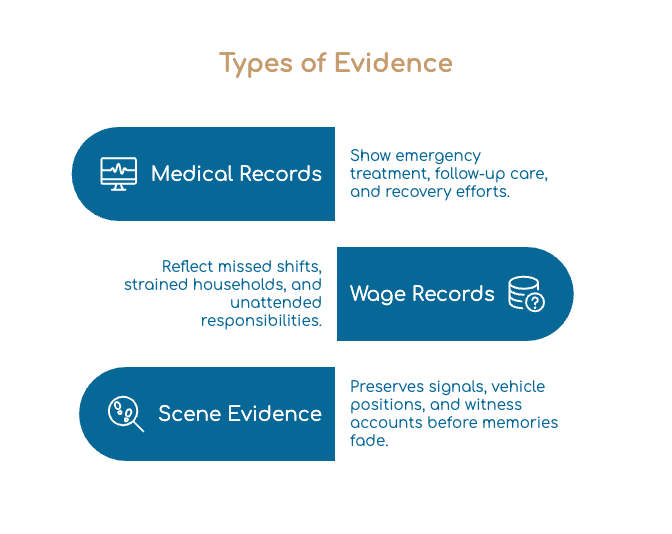
- Medical records may show emergency treatment, follow-up care, and the quiet effort of recovery.
- Wage records may reflect missed shifts, strained households, and service responsibilities left unattended.
- Scene evidence may preserve signals, vehicle positions, and witness accounts before memories fade.
Insurance settlement timelines can vary based on treatment progress, disputed fault, and documentation. Negotiating fair compensation requires careful preparation, patient advocacy, and attention to the victim’s long-term needs and community obligations.
Why Do Car Accident Injuries at Daytona Beach Intersections Happen?
Why do intersection crashes in Daytona Beach so often result in serious injuries? Intersections concentrate vehicles, pedestrians, cyclists, turning movements, traffic signals, and competing decisions into a limited space. When a driver runs a red light, fails to yield, turns left across traffic, follows too closely, or looks away briefly, the collision may occur at an angle that leaves occupants poorly protected. Side-impact and T-bone crashes often produce head, neck, spine, chest, and limb trauma, especially when speed is increased by hurried driving or congested roadway conditions.
Injury severity can also be shaped by vehicle size differences, seat belt use, airbag deployment, and the health of those involved. A clear Injury timeline and thorough medical documentation help show how harm developed after impact. These records may later affect an Insurance settlement, because insurers often dispute cause, severity, or duration. A careful claim negotiation strategy evaluates these factors while preserving the injured person’s dignity.
What Should You Do After a Daytona Beach Intersection Car Accident Injury?
After a Daytona Beach intersection car accident injury, the injured person should seek prompt medical attention to identify and treat any harm. It is also important to document the crash, including photographs, witness information, and relevant details from the scene. Contacting an attorney can help preserve legal rights, address insurance issues, and evaluate potential claims.
Seek Medical Attention
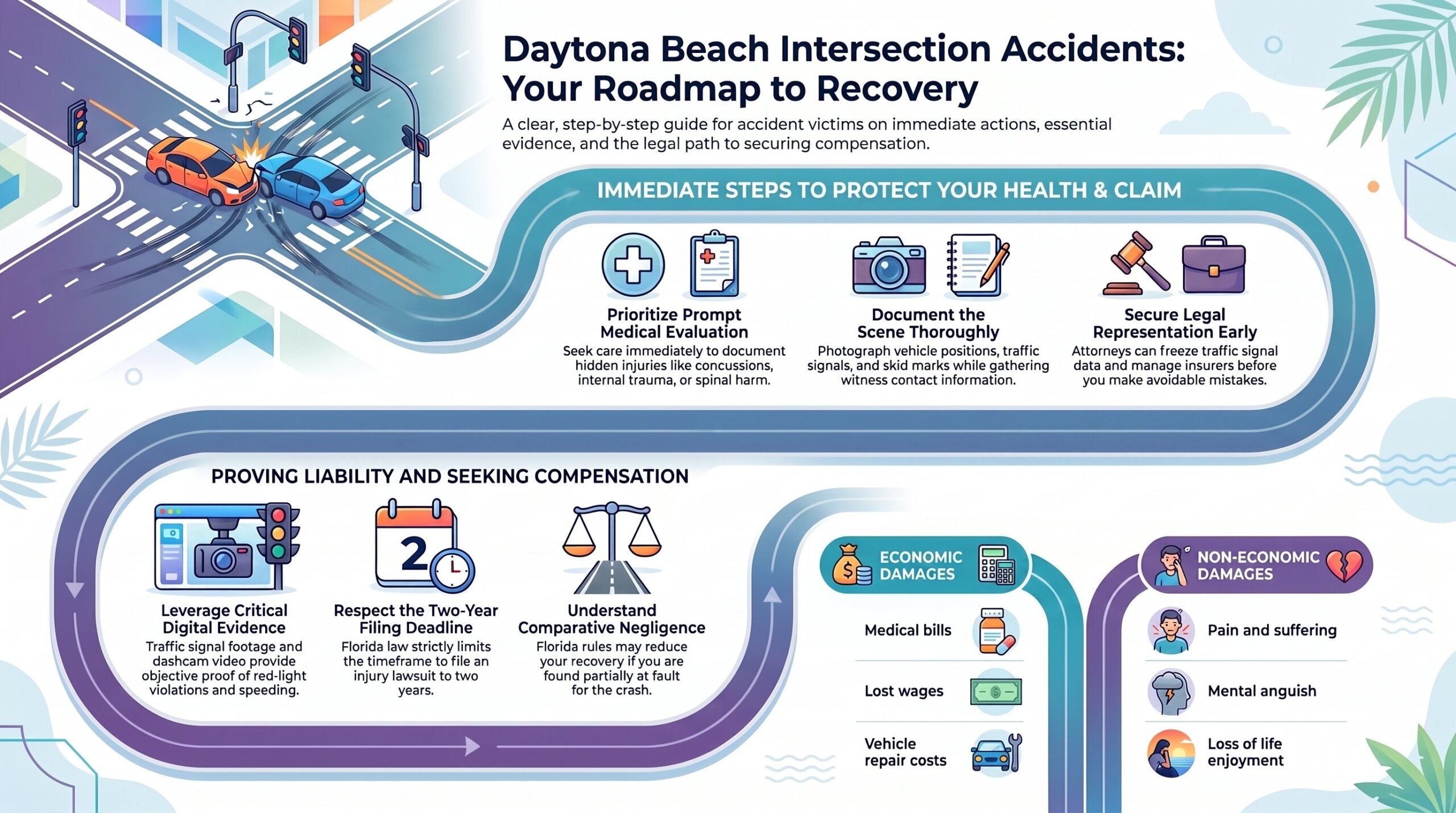
When an injury occurs in a Daytona Beach intersection collision, prompt medical attention should be the first priority. Even when symptoms appear minor, evaluation by emergency responders, urgent care staff, or a physician can identify hidden injuries, including concussions, internal trauma, soft tissue damage, or spinal harm. Seeking care also supports the injured person’s ability to recover, serve family responsibilities, and protect others from preventable complications.
Medical providers should be informed of how the collision occurred, where the pain is present, and whether symptoms changed after leaving the scene. Follow-up appointments, therapy, prescriptions, and expert referrals should be completed as directed. After crash documentation, Medical record retention becomes important because treatment notes, diagnostic results, and billing records may later help establish the injury’s nature, timing, and seriousness.
Document The Crash
Once immediate medical needs are addressed, careful documentation can help preserve important facts about a Daytona Beach intersection crash. If safe, an injured person or trusted helper should record the vehicles’ positions, traffic signals, lane markings, skid marks, debris, weather, lighting, and visible injuries. A practical Photos Evidence Checklist may include wide intersection views, close vehicle damage, license plates, nearby signs, and any obstructed sightlines.
Daytime Documentation Tips include photographing shadows, glare, construction zones, and traffic flow while conditions remain similar. Names and contact information for witnesses, passengers, responding officers, and available businesses with cameras should be noted. Written notes should describe pain, confusion, statements heard, and the sequence of events. Accurate records support fair review and help responsible parties understand what occurred.
Contact An Attorney
Why should legal counsel be contacted promptly following a Daytona Beach intersection car accident injury? Early legal consultation helps injured individuals safeguard their rights while they focus on recovery, family responsibilities, and community obligations.
An attorney can review crash documentation, determine liable parties, preserve evidence, and address timelines that may affect compensation. This guidance is especially important when intersection collisions involve disputed signals, multiple drivers, pedestrians, cyclists, or commercial vehicles.
Counsel also manages insurance negotiations, minimizing the risk that an injured person will accept an insufficient settlement before the full medical impact is known. By communicating with insurers, medical providers, and investigators, an attorney helps ensure the claim is organized, precise, and supported. Prompt representation allows the injured person to serve others while pursuing fair accountability.
Critical Evidence in a Daytona Beach Intersection Car Accident Injury Case
Important evidence can determine how fault is established after a collision at a Daytona Beach intersection, particularly when accounts of the crash conflict. Essential materials may include: 1. traffic signal footage showing vehicle movement and light phases, 2. police crash reports documenting initial findings, and 3. witness statements and vehicle damage photos preserving observations and impact patterns. Joined, these records help create a clearer reconstruction of the incident, supporting a more accurate assessment of liability and damages.
Traffic Signal Footage
How can traffic-signal footage affect the outcome of a Daytona Beach intersection car-accident injury case? This footage may provide objective evidence of signal phases, vehicle positions, lane usage, and driver conduct immediately before impact. When available, it can help clarify whether a motorist entered on a red light, failed to yield, or engaged in Speeding Violations near the intersection.
Footage may also support analysis of Nighttime Visibility, including lighting conditions, headlight use, and whether pedestrians or cyclists were reasonably observable. For injured individuals and those assisting them, quickly preserving this evidence is crucial because recordings may be overwritten within days. A Daytona Beach intersection car accident lawyer may seek timely preservation, review the footage with care, and use it to strengthen claims for accountability.
Police Crash Reports
After an intersection collision in Daytona Beach, a police crash report often becomes one of the first organized records of what occurred. It may identify involved drivers, vehicle positions, roadway conditions, traffic controls, citations, and an officer’s preliminary assessment. This accident documentation can help attorneys, insurers, and medical providers understand the circumstances while supporting careful service to an injured person’s recovery needs.
When available, Dashcam video may be referenced or preserved through timely follow-up, especially if a patrol vehicle or nearby source recorded the scene. Accurate police report requests are important because delays or errors can hinder evaluation of liability and damages. Although the report is not always conclusive, it provides a structured foundation for investigating fault, confirming critical details, and guiding the next steps.
Witness Statements
When an intersection crash occurs in Daytona Beach, witness statements can provide details that are not fully captured in the police crash report or the involved drivers’ accounts. Credible witnesses may describe traffic signals, vehicle speed, lane position, braking, evasive actions, or driver behavior before impact. Promptly collecting statements is important because memories can fade and contact information may become difficult to verify.
A careful review may compare witness accounts with 911 calls, observations from nearby businesses, and video footage from traffic or security cameras. These sources can support timeline reconstruction, helping clarify who entered the intersection, when signals changed, and whether a driver failed to yield. For injured people seeking fair treatment, witness testimony may strengthen accountability and assist professionals serving their recovery with accuracy, diligence, and care.
Vehicle Damage Photos
Along with witness accounts, vehicle damage photos can provide objective evidence of how a collision at a Daytona Beach intersection occurred and how force was distributed during impact. Clear images of crushed panels, broken glass, airbag deployment, and vehicle resting positions may help clarify speed, direction of travel, and points of contact. These photos can also support medical claims by connecting visible damage to reported injuries, while showing the importance of safety gear when seat belts, airbags, or child restraints affect outcomes.
Photographs should include close views and wider scenes, capturing skid marks, debris fields, traffic signals, signs, and road lighting systems. When preserved promptly, this evidence assists attorneys, insurers, and reconstruction professionals in evaluating fault accurately and serving injured people with diligence, care, and accountability after a serious intersection crash.
Long-Term Effects of Daytona Beach Intersection Car Accident Injuries
Intersection collisions in Daytona Beach can leave injured individuals facing long-term complications, including chronic pain that affects daily function and medical stability. Reduced mobility may limit employment, household responsibilities, and independence, especially when injuries involve the spine, joints, or soft tissue. Emotional trauma, such as anxiety, sleep disruption, or fear of driving, may also influence recovery and the overall value of an injury claim.
Chronic Pain Complications
Although some collision injuries appear to mend within weeks, chronic pain can persist long after a Daytona Beach intersection car accident and meaningfully affect a victim’s daily life. Ongoing neck, back, shoulder, or joint pain may follow whiplash symptoms, fractures, ligament damage, or nerve irritation. During knee injury recovery, recurring inflammation or deep aching can interfere with employment, caregiving, sleep, and community responsibilities. Long-term scarring may also create tenderness, sensitivity, or persistent discomfort near repaired tissue.
These complications often require continued medical care, pain management, therapy, and careful documentation. For individuals committed to serving family members, coworkers, or neighbors, unresolved pain can limit reliability and increase emotional strain. A legal evaluation may consider treatment costs, diminished function, and the lasting burden created by chronic post-collision pain.
Reduced Mobility Challenges
Persistent pain after a Daytona Beach intersection car accident can also lead to reduced mobility, especially when injuries affect the spine, hips, knees, ankles, shoulders, or major muscle groups. Limited movement may interfere with walking, standing, lifting, driving, bathing, preparing meals, or helping family members and community residents who depend on consistent support.
Some injured individuals require braces, canes, walkers, wheelchairs, therapy visits, or modified home spaces to maintain basic independence. Transportation limitations may restrict access to medical appointments, employment duties, volunteer commitments, and caregiving responsibilities. Road safety accommodations, including ramps, crosswalk timing, and safe drop-off areas, can become necessary for daily participation. Parking lot navigation may also present risks, particularly when uneven surfaces, long distances, or tight spaces increase strain and fall exposure after injury.
Emotional Trauma Effects
After a serious Daytona Beach intersection car accident, emotional trauma may continue long after physical injuries begin to improve. Survivors may struggle with Grief and PTSD, especially when the crash caused death, disability, or lasting family disruption. These conditions can affect judgment, relationships, work capacity, and the ability to participate in rehabilitation.
Caregivers, advocates, and legal professionals should recognize that emotional harm is often expressed through anxiety and insomnia, irritability, avoidance of traffic, or sudden panic near intersections. Consistent documentation from counselors, physicians, and support providers can help establish the continuing impact of these symptoms. Compassionate attention to mental health allows injured individuals to receive appropriate care, while also preserving evidence of damages that may be important in a Daytona Beach intersection accident claim.
Proving Liability in Daytona Beach Intersection Car Accident Injury Cases
When an intersection collision occurs, proving liability requires a careful review of how each driver approached and entered the crossing. Evidence may include traffic signal timing, stop sign compliance, lane position, speed, turn movements, and whether a driver failed to yield. Witness statements, police reports, vehicle damage patterns, and nearby camera footage can help establish the sequence of events with greater accuracy.
A lawyer evaluating a Daytona Beach intersection injury case may also consider whether distracted driving, impairment, aggressive driving, or poor visibility contributed to the crash. Comparative fault defenses may arise when the opposing party claims the injured person shared responsibility, making precise evidence crucial. Florida no-fault thresholds also matter, because certain injury claims require proof of serious or permanent harm before additional recovery may be pursued. Clear liability analysis supports accountability, protects the injured person’s rights, and serves the broader purpose of promoting safer conduct at busy intersections.
Dealing With Insurance Companies After a Daytona Beach Intersection Car Accident Injury
Although insurance companies may appear cooperative at first, their primary obligation is to limit claim exposure and protect financial interests. After a Daytona Beach intersection crash, adjusters may request recorded statements, broad medical authorizations, or quick settlement discussions before the full impact of the injury is known. An injured person, especially one focused on family, work, or community responsibilities, may benefit from careful guidance before responding.
A lawyer can help evaluate policy language, document losses, and address communications that may undervalue medical care, lost income, or long-term limitations. Negotiating medical bills may also be necessary when treatment costs exceed available coverage or when providers seek payment from any recovery. If an insurer disputes fault, questions the treatment, or refuses payment, appeals of insurance denials may require organized records, clear legal arguments, and timely action. Careful handling of insurer contact helps preserve dignity, reduce unnecessary pressure, and support a fair resolution.
What to Expect During a Daytona Beach Intersection Car Accident Injury Claim Process
The injury claim process after a Daytona Beach intersection crash typically begins with reporting the collision and preserving important evidence. Each stage, including medical documentation, liability review, and insurance negotiations, can affect the strength and value of the claim. A clear understanding of how injury claims are resolved helps injured parties evaluate settlement offers and protect their legal interests.
Reporting The Crash
After an intersection collision in Daytona Beach, reporting the crash is a key first step that can affect the direction of an injury claim. Florida law may require notification to law enforcement when injuries, significant damage, or disputed fault are involved. A formal report helps establish the date, location, parties, and immediate observations, supporting Evidence preservation without placing that burden on injured individuals alone.
Accurate reporting also promotes witness reliability, because names and statements are recorded while memories remain fresh. For those committed to protecting others, prompt reporting helps guarantee hazards, impaired drivers, or unsafe conditions receive proper attention. The report may later support insurance documentation and align with medical records, creating a consistent foundation for the claim while respecting the injured person’s need for care and recovery.
Gathering Key Evidence
Once a crash has been properly reported, the injury claim often turns on the quality and completeness of the evidence collected. Preservation of evidence may include photographs of vehicle damage, skid marks, traffic signals, debris fields, and visible injuries. Those assisting the injured person should focus on securing witness contact information before memories fade or individuals leave the scene.
Retaining driver details, including license numbers, insurance information, vehicle descriptions, and employer information when applicable, supports a clear record of responsibility. Obtaining medical records is equally important because treatment notes connect the collision to documented injuries and future care needs. A Daytona Beach intersection car accident lawyer may help organize these materials, identify missing evidence, and preserve evidence so the claim rests on reliable documentation rather than assumptions or incomplete recollections.
Handling Insurance Negotiations
When an injury claim moves into the insurance phase, the process often becomes more structured and adversarial. Insurers review liability, medical records, wage loss, and repair documentation while comparing Claim valuation factors against their internal guidelines. Adjusters may request recorded statements, question treatment gaps, or challenge whether the intersection crash caused all claimed injuries. Common insurance denial reasons include disputed fault, insufficient documentation, preexisting conditions, or missed reporting deadlines.
Policy coverage limits also shape negotiations, because available compensation may depend on the at-fault driver’s bodily injury coverage and any applicable uninsured motorist benefits. A lawyer may use settlement negotiation tactics such as organized demand packages, documented damages, and firm responses to low offers, while ensuring the claimant’s needs remain central and decisions are made with informed judgment.
Resolving Injury Claims
As the claim moves toward resolution, the injured person can expect a process focused on proving liability, documenting damages, and determining whether settlement is possible without litigation. Counsel evaluates police reports, signal timing, witness statements, medical records, and roadway evidence to show how the collision occurred. Negligence standards guide this review, including whether a driver failed to yield, ran a red light, followed too closely, or drove while distracted.
The insurer may raise liability defenses, such as shared fault or disputes over injury severity, requiring careful responses supported by evidence. Damages may include medical expenses, lost income, pain, and future care needs. If settlement negotiations serve the person’s interests, the claim may resolve efficiently. If not, litigation may become necessary to seek fair accountability.
Compensation for Daytona Beach Intersection Car Accident Injury Damages
Injury-related losses after a Daytona Beach intersection crash may include far more than the immediate cost of emergency treatment. Compensation may cover ongoing care needs, rehabilitation, medication, follow-up visits, assistive devices, and other consequences resulting from the collision. A careful presentation of the claim helps connect these losses to the crash, especially when liability or the necessity of treatment is challenged.
Intersection collisions often involve competing accounts, multiple insurers, and complicated injury documentation. Car insurance denials may arise when an insurer questions fault, policy coverage, or the seriousness of the harm. Medical bill disputes may also occur when providers, health insurers, or auto insurers disagree over payment responsibility. In these situations, organized records, medical opinions, and consistent documentation serve an important role.
A Daytona Beach intersection car accident lawyer may assist by evaluating available coverage, preserving evidence, communicating with insurers, and pursuing appropriate compensation through negotiation or, when necessary, litigation on behalf of the injured person.
Economic vs Non-Economic Damages in Daytona Beach Intersection Car Accident Cases
Damages in Daytona Beach intersection car accident cases are generally divided into economic and non-economic categories, each addressing different forms of harm. Economic damages may include measurable financial losses, while non-economic damages account for more personal injuries, such as pain and reduced quality of life. Proving these losses requires clear documentation, credible evidence, and a careful connection between the accident and the claimed damages.
Economic Damages Explained
After an intersection crash in Daytona Beach, economic damages are the measurable financial losses a person incurs as a result of the collision. These losses may include Medical expenses for emergency care, surgery, rehabilitation, medication, and follow-up treatment. They can also include lost wages when injuries prevent a person from working, as well as reduced earning capacity if the injuries affect future employment.
Documentation is crucial because insurers and courts often rely on bills, pay records, repair estimates, and expert evaluations to calculate financial harm. Property repair costs for a damaged vehicle or other belongings may also be included. In some cases, witness accounts help confirm how the crash occurred, supporting claims tied to necessary expenses. Careful organization of these losses helps protect the injured person’s financial recovery.
Non-Economic Damages Explained
Financial losses are only one part of the harm that may follow an intersection collision in Daytona Beach, because some consequences cannot be measured by receipts, invoices, or wage records. Non-economic damages address the human impact of an injury, including Pain and suffering, emotional distress, mental anguish, and the loss of normal daily enjoyment.
These damages may reflect persistent discomfort, fear while traveling, sleep disruption, or the burden of living with lasting physical limitations. In serious cases, loss of companionship may affect spouses, children, or other close family members who depend on the injured person’s presence, care, and support. For those committed to serving others, recognizing these losses helps preserve dignity and accountability. Such damages acknowledge that recovery involves more than financial recovery after a preventable crash.
Proving Accident Losses
When an intersection crash leads to an injury claim, proving the full extent of loss requires evidence that connects the collision to both measurable expenses and personal harm. Economic damages may include medical bills, lost wages, rehabilitation costs, and reduced earning capacity, making documentation of medical expenses critical. Records, invoices, pay statements, and expert opinions help clarify the financial burden placed on the injured person and family.
Non-economic damages require different proof, including treatment notes, pain journals, testimony, and observations from caregivers. These materials may show how pain, anxiety, limited mobility, or loss of independence affects daily life. In Daytona Beach intersection cases, careful documentation also supports fair evaluation within Insurance settlement timelines, helping claims move forward while honoring the injured person’s need for stability and accountable recovery.
When a Daytona Beach Intersection Car Accident Injury Case Goes to Trial vs Settlement
Although many intersection accident claims in Daytona Beach resolve through settlement, some cases require trial when insurers dispute fault, minimize injuries, or refuse to offer fair compensation. A lawyer may evaluate medical records, crash evidence, witness accounts, and expert opinions to determine whether continued negotiation can serve the injured person’s needs. Settlement value often depends on the strength of the evidence, the severity of the harm, and the willingness of each party to accept risk.
When settlement discussions stall, trial strategy becomes central. Attorneys may refine exhibits, prepare testimony, and address contested issues with disciplined presentation. Jury selection also matters because decision-makers must understand the collision’s real impact while remaining fair to all parties. Effective negotiation tactics may continue as the trial approaches, since thorough preparation can encourage more reasonable offers. The goal remains practical and service-minded: securing accountability, supporting recovery, and helping injured people move forward.
Florida Laws That May Affect Your Daytona Beach Intersection Car Accident Case
Because intersection crashes often involve disputed right-of-way, signal timing, and driver conduct, Florida law can play a significant role in determining fault and compensation. A careful review may address traffic statutes, insurance duties, and roadway conditions, especially when injured people need resources to recover and serve their families.
- Comparative Negligence Rules may reduce recovery when the evidence shows more than one driver contributed, such as a hurried left turn that meets an oncoming vehicle.
- Florida no-fault insurance rules may require initial medical benefits through personal injury protection, like a first source of help after a sudden collision.
- Government Liability Claims may arise when poor signal maintenance, obstructed signs, or unsafe roadway design contributed, placing public agencies under scrutiny.
These laws can affect evidence gathering, settlement value, and responsibility among drivers, insurers, or public entities. A Daytona Beach intersection car accident lawyer may evaluate each rule and build a claim aligned with the injured person’s needs.
The Statute of Limitations for Daytona Beach Intersection Car Accident Injury Cases
Florida law does more than shape fault and insurance obligations after an intersection crash; it also sets strict deadlines for filing an injury lawsuit. For many Daytona Beach intersection car accident injury cases, the statute of limitations is two years from the date of the crash. If that deadline passes, an injured person may lose the right to seek compensation from a court, regardless of the severity of the harm.
This deadline matters even when treatment is ongoing, liability is disputed, or settlement discussions appear active. Insurance denial letters, delayed claim responses, and medical billing disputes do not automatically extend the filing period. Families, caregivers, and community members supporting an injured person should understand that time can affect both legal rights and financial stability.
Certain circumstances may alter the applicable deadline, but such exceptions are limited. Careful attention to the filing date helps preserve the opportunity to pursue accountability through the civil justice system.
How a Daytona Beach Intersection Car Accident Lawyer Can Help You
After an intersection crash, a Daytona Beach car accident lawyer can help protect an injured person’s claim by identifying liable parties, preserving evidence, and addressing insurance issues before they weaken the case. This support allows the injured person and family members to focus on care, stability, and service to others while the legal claim is managed with discipline.
- Evidence review: The lawyer may examine crash reports, signal timing, vehicle damage, camera footage, and witness accounts, as if gathering evidence from a busy roadway.
- Claim management: The lawyer can monitor the Insurance claim timeline, organize medical records, calculate losses, and respond to insurer requests with accurate documentation.
- Resolution strategy: The lawyer may assist with negotiating settlement terms that reflect medical needs, lost income, pain, and future limitations.
Through structured advocacy, the lawyer helps reduce confusion, prevent undervaluation, and present the claim clearly and persuasively.
When to Contact a Daytona Beach Intersection Car Accident Lawyer
When should an injured person seek legal guidance following an intersection crash in Daytona Beach? Contact should occur as soon as safety and medical needs allow, especially when injuries, disputed fault, commercial vehicles, pedestrians, cyclists, or uninsured drivers are involved. Early consultation helps preserve evidence, identify deadlines, and prevent avoidable mistakes during insurer communications.
A lawyer may also be contacted when medical treatment continues, wages are lost, or the crash creates duties for caregivers and service-minded family members. Timely guidance can support an Insurance negotiation strategy that accounts for medical records, repair estimates, witness statements, and long-term limitations. It may also assist with filing compensation paperwork before procedural deadlines affect the claim.
If an insurance adjuster requests a recorded statement, offers a quick settlement, or questions the seriousness of injuries, legal review becomes important. Prompt action allows the injured person to focus on recovery, family responsibilities, and community obligations while the claim is handled carefully.
Why You Need an Experienced Daytona Beach Intersection Car Accident Lawyer
Early legal contact is crucial, but the quality of that guidance can materially affect the direction of an intersection accident claim. An experienced Daytona Beach intersection car accident lawyer understands how traffic signals, right-of-way rules, turning movements, and evidence of distracted driving can shape liability. This knowledge supports a focused Legal Strategy that protects injured people, grieving families, and those responsible for helping them recover.
Intersection crashes often involve competing accounts, commercial insurers, municipal records, surveillance footage, and accident reconstruction issues. Skilled counsel can identify what evidence matters, preserve it quickly, and present it in a way that serves the client’s needs with dignity. In severe cases, including Wrongful Death claims, experience helps ensure losses are evaluated with care and accountability is pursued through appropriate legal channels. Effective representation can also reduce burdens on families, allowing them to focus on medical care, stability, and service to others while the claim is handled with discipline.
How to Choose the Right Daytona Beach Intersection Car Accident Lawyer for Your Case
How should an injured person identify the right lawyer after an intersection crash in Daytona Beach? Selection should begin with practical qualifications, not promises. A suitable attorney understands local traffic patterns, right-of-way disputes, signal timing issues, and comparative negligence arguments that often shape intersection claims.
The person should look for a lawyer who values Client communications, because consistent updates help injured clients make informed decisions while focusing on recovery and family responsibilities. The lawyer should also build an early evidence timeline, preserving crash reports, camera footage, witness statements, medical records, and vehicle damage documentation before details are lost.
A careful review should include the lawyer’s insurance strategy, including how damages are presented, how fault is challenged, and how settlement pressure is managed. Trial readiness also matters, even if negotiation is likely, because insurers may respond differently when counsel is prepared to litigate. The right lawyer combines service, discipline, and documented case preparation.
About The Law Offices of Anidjar & Levine
The Law Offices of Anidjar & Levine represents injured people in Daytona Beach and throughout Florida, including those harmed in intersection crashes involving disputed fault, red-light violations, left-turn collisions, and failure-to-yield incidents.
The firm’s attorneys focus on protecting clients while they recover, handling insurance communications, evidence collection, liability analysis, and settlement negotiations with careful attention to detail.
Its approach emphasizes Client communication, so injured parties understand the status of their claims, available legal options, and the practical steps involved in seeking compensation.
Each case strategy is developed around the facts, including crash reports, witness statements, medical records, roadway conditions, and insurer conduct.
The firm also recognizes that effective legal service supports families, medical providers, and communities affected by preventable collisions.
By managing the legal process with diligence and professionalism, The Law Offices of Anidjar & Levine helps clients pursue accountability and financial recovery after serious intersection accidents in Daytona Beach.
Frequently Asked Questions
Do Intersection Crashes Affect My Florida Driver’s License Points?
Yes. Intersection crashes can affect a Florida driver’s license points if a citation is issued and resolved as a conviction. Under the Florida Point System, common violations such as running a red light, failing to yield, or careless driving may add points. The Traffic Violation Impact can include higher insurance costs, the risk of license suspension, and reduced driving privileges, affecting those who depend on reliable transportation to serve others.
Can Tourists File Claims for Daytona Beach Intersection Accidents?
Yes, tourists may pursue intersection accident claims in Daytona Beach when another party’s negligence caused harm. Tourist eligibility generally depends on injury, evidence, insurance coverage, and compliance with Florida deadlines. Claim filing may involve the at-fault driver’s insurer, personal injury protection rules, medical records, and proof of losses. Those assisting injured visitors should encourage prompt documentation, professional medical care, and legal guidance to protect rights and preserve available compensation.
What if Road Construction Contributed to My Intersection Crash?
If road construction contributed to an intersection crash, responsibility may extend beyond the drivers involved. Construction zone liability can involve contractors, government agencies, or maintenance crews that failed to provide safe lane markings, signage, barriers, or traffic control. Traffic signal defects may also support a claim if malfunctioning lights caused confusion. A careful investigation helps identify fault, preserve evidence, and serve injured persons seeking fair compensation through proper legal channels.
Are Rideshare Passengers Covered After Intersection Accidents?
Yes, rideshare passengers are generally covered after intersection accidents, though coverage depends on driver status and available policies. Third-party coverage may apply through the rideshare company, the at-fault driver, or another responsible party. Insurance confirmation is critical, because app activity, trip acceptance, and passenger status affect benefits. A service-focused advocate would gather records, protect the passenger’s claim, and pursue appropriate compensation with careful attention to liability and documented losses.
Can I Switch Lawyers During My Intersection Accident Case?
Yes, a claimant may switch lawyers during an intersection accident case, provided no court order or contract issue prevents it. The process usually involves updating attorney information with insurers, opposing counsel, and the court. Before changing counsel, the claimant should consider time limits, case deadlines, and any fee agreements. A careful handoff helps protect the claim, preserves service-oriented advocacy, and supports continued pursuit of fair compensation.
—————————
Intersection crashes can leave victims facing serious injuries, medical expenses, lost income, and intricate insurance disputes.
A Daytona Beach Car Accident Lawyer can evaluate liability, preserve evidence, calculate damages, and pursue fair compensation through negotiation or litigation.
The Law Offices of Anidjar and Levine provides experienced legal guidance for injured clients and their families.
Prompt legal action can protect important rights, strengthen a claim, and help victims move forward with greater confidence.