The Law Offices of Anidjar and Levine can investigate whether defective parts, negligent repairs, poor maintenance, or missed recalls caused or worsened a crash. This work may involve preserving the damaged vehicle, reviewing service records, securing onboard data, examining recall history, and consulting mechanical experts.
Liability may extend to owners, repair shops, dealerships, manufacturers, or parts suppliers.
Injured victims may seek damages for medical care, lost income, pain, and long-term limitations with help from a Florida Car Accident Lawyer.
Main Takeaways
- A Florida mechanical failure car accident lawyer investigates whether a defect, negligent repair, or missed maintenance caused the crash.
- Preserving the vehicle, damaged parts, photos, diagnostic data, and repair records is critical to proving liability.
- Potentially responsible parties may include manufacturers, dealerships, repair shops, parts suppliers, owners, or other negligent drivers.
- Evidence may include maintenance invoices, recall notices, inspection reports, dashcam footage, witness statements, and expert mechanical analysis.
- Compensation may cover medical bills, ongoing pain, lost income, vehicle damage, and other crash-related losses.


How We Can Help With Your Florida Mechanical Failure Car Accident Injury Claim
After a crash caused by brake failure, tire defects, handling problems, or another mechanical issue, an injured person may face a difficult claim that requires more than a standard negligence review. A Florida mechanical failure car accident injury lawyer can help by preserving evidence, coordinating vehicle defect investigations, and identifying parties whose conduct or products may have contributed to the harm. This work may include reviewing maintenance records, repair histories, recall information, inspection reports, and available electronic data.
The lawyer may also address Insurance coverage disputes, including conflicts involving liability limits, exclusions, commercial policies, or uninsured and underinsured motorist benefits. By organizing documentation and communicating with insurers, counsel helps protect the injured person from avoidable delays in claims. This support allows the injured person and family members to focus on recovery, caregiving, and stability while the legal process is handled with discipline, care, and attention to accountability under Florida law.
OUR CONSULTATIONSARE FREE
START YOUR FREE CASE REVIEW

Understanding Florida Mechanical Failure Car Accident Injury Cases
When a collision appears to involve a mechanical failure, the injury claim often turns on whether the defect or malfunction caused the crash, worsened the impact, or revealed a preventable safety problem. These cases may involve injured drivers, passengers, pedestrians, or families seeking accountability after serious harm. In Florida, the legal focus is not only on the immediate accident but also on the responsibility of those who placed the vehicle or part into use.
A claim may require careful review of maintenance records, vehicle history, inspection findings, expert analysis, and preserved physical evidence. When Negligent Design contributed to unsafe performance, or when a defective component entered the market, product Liability principles may apply. The goal is to identify all responsible parties and protect the injured person’s right to a fair recovery. For those committed to helping others, understanding these cases helps ensure safer roads and more responsible driving practices.
Florida Mechanical Failure Car Accident Injury Lawyer
Common Causes of Florida Mechanical Failure Car Accidents
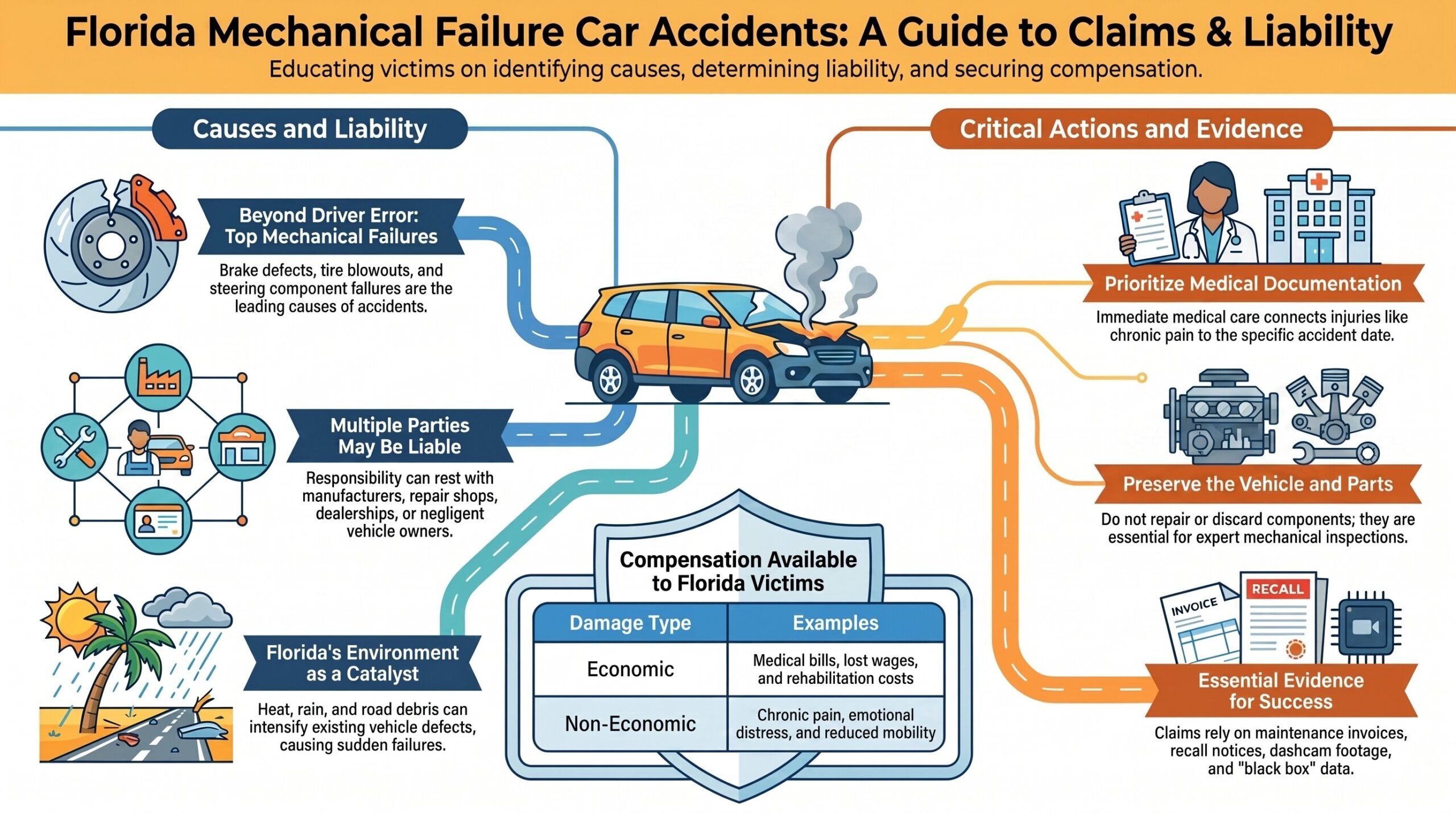
Common causes of Florida mechanical failure car accidents often include brake system defects, tire blowouts, steering component failures, and faulty vehicle maintenance. These failures can compromise a driver’s ability to stop, steer, or maintain control, creating serious risks on highways, intersections, and local roads. Identifying the specific mechanical issue is vital because liability may involve vehicle owners, repair facilities, parts manufacturers, or other responsible parties.
Brake System Defects
Because braking systems are important to safe vehicle operation, any defect in their design, maintenance, or repair can create a serious risk of collision on Florida roads. Defective brake pads, leaking hydraulic lines, faulty master cylinders, or malfunctioning anti-lock braking components may prevent a driver from stopping in time. These failures can place passengers, pedestrians, and other motorists in immediate danger, especially in congested traffic or during sudden emergencies.
Careful inspections, timely repairs, and attention to any vehicle recall are necessary parts of responsible driving safety. When a crash occurs, investigators may review service records, manufacturer notices, and component condition to determine whether negligence contributed to the harm. Identifying a brake defect can help injured individuals seek accountability and support safer vehicle practices within the community.
Tire Blowouts
On Florida highways and local roads, tire blowouts can cause sudden loss of vehicle control and lead to severe collisions. These failures often result from worn tread, improper inflation, overloading, heat exposure, or defective tire construction. When a tire ruptures at speed, the driver may drift, strike another vehicle, or leave the roadway, endangering passengers, responders, and nearby motorists. Investigations may examine maintenance records, tire age, recall history, and whether inspections were ignored.
Driver Negligence may be present when a motorist continues operating a vehicle despite visible damage, low-pressure warnings, or unsafe tread depth. Roadside Safety Tips include moving away from traffic when possible, activating hazard lights, and awaiting trained assistance. Careful review helps determine liability and supports injured individuals seeking accountability under Florida law.
Steering Component Failures
Steering component failures can be just as dangerous as tire blowouts, as both may cause a driver to lose control with little or no warning. When tie rods, steering columns, power steering systems, or related parts fail, a vehicle may drift, lock, or respond unpredictably during routine travel. These failures can place occupants, pedestrians, and nearby motorists in immediate danger, often creating roadside emergencies that require prompt assistance from police, medical personnel, or public servants responding to protect others.
In Florida injury claims, evidence may help determine whether a steering defect contributed to the crash. Dash camera footage, witness statements, vehicle data, and post-crash inspections may show sudden lane departures or unusual steering behavior. Careful review can support accountability and help injured parties pursue appropriate recovery.
Faulty Vehicle Maintenance
Neglecting routine vehicle maintenance can allow minor mechanical issues to develop into serious hazards, especially when brakes, tires, lights, fluids, or suspension components are not properly inspected and repaired. In Florida, poor maintenance may contribute to collisions that harm passengers, pedestrians, cyclists, and other motorists. Worn brake pads, underinflated tires, leaking fluids, or defective headlights can reduce a driver’s ability to stop, guide, or be seen.
When an owner ignores service needs, the conduct may support claims based on driver negligence. However, some crashes involve hidden defects that maintenance could not reasonably detect, which may raise issues commonly examined in vehicle defect lawsuits. Careful review of service records, inspection history, and repair decisions helps determine whether preventable maintenance failures caused or worsened the crash for injured victims.


Legal Rights of Florida Mechanical Failure Car Accident Injury Victims
When a vehicle defect or maintenance failure contributes to a crash, injured motorists, passengers, pedestrians, and other victims in Florida may have the right to seek compensation from every party whose conduct or product caused their losses. These rights can extend beyond the at-fault driver, especially when evidence shows negligent repairs, unsafe parts, or preventable inspection failures. Faulty maintenance documentation may help establish whether a service provider, fleet owner, or seller failed to act responsibly.
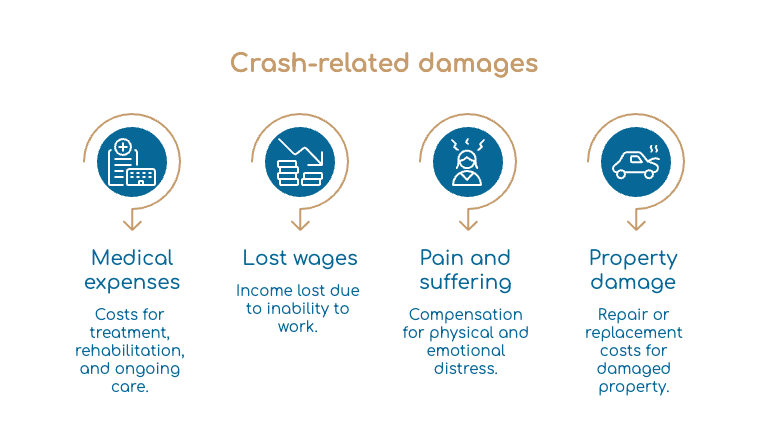
Victims may pursue claims for:
- Medical expenses, rehabilitation, and future care needs
- Lost wages, reduced earning capacity, and household support losses
- Pain, suffering, disability, and loss of daily function
- Property damage and other crash-related financial harm
In some cases, poor road design accidents may involve public entities with strict notice rules. A careful legal review helps identify liable parties, preserve evidence, and protect the victim’s ability to serve family and community while recovery continues.
Why Do Florida Mechanical Failure Car Accident Injuries Happen?
Understanding legal rights also requires examining why mechanical failure crashes occur in the first place. These incidents often occur when critical systems, such as brakes, guidance components, tires, or airbags, fail during routine vehicle operation. In Florida, heat, rain, heavy traffic, and road debris can intensify existing defects, turning a manageable hazard into a serious collision. Poor maintenance may contribute, but many injuries trace back to unsafe Vehicle Design, defective parts, negligent repairs, or inadequate inspections.
Manufacturers, dealerships, repair facilities, and parts suppliers may each play a role when a preventable failure harms occupants, pedestrians, or other drivers. The Recall Impact can be significant, especially when a known defect remains unrepaired or notice does not reach the vehicle owner in time. For those committed to protecting others, understanding these causes supports accountability, safer transportation practices, and an informed evaluation of how a mechanical failure led to severe Florida car accident injuries.
What Should You Do After a Florida Mechanical Failure Car Accident Injury?
After a mechanical failure car accident injury in Florida, the injured person should seek immediate medical care to document injuries and address urgent health concerns. Accident evidence, including vehicle condition, photographs, witness information, and repair records, should be preserved whenever possible. A lawyer may then evaluate liability, insurance issues, and available legal options based on the facts of the collision.
Seek Immediate Medical Care
Following a Florida car accident caused by mechanical failure, immediate medical care is essential, even if injuries appear minor at first. Prompt evaluation protects the injured person’s health, identifies hidden trauma, and creates a clear treatment record. Delayed symptoms, including concussion effects, internal injuries, or soft tissue damage, may worsen without professional attention. Medical providers can assess pain, document limitations, and recommend follow-up care that supports recovery.
For those assisting an injured person, arranging emergency transport or a prompt clinic visit reflects responsible care. Medical records also strengthen Insurance claim documentation by connecting injuries to the crash date and reported symptoms. While collecting witness statements may help explain what occurred, health needs should come first. Early treatment supports both physical restoration and later legal review of injury-related losses.
Preserve Accident Evidence
Once medical needs are addressed, preserving accident evidence can help clarify how the mechanical failure occurred and who may be responsible. A person assisting the injured should, when safe, photograph the vehicles, roadway, skid marks, debris, defective parts, warning lights, and visible injuries. Damage documentation should include close-up and wide views, timestamps if available, and notes on weather, traffic signals, and vehicle position.
The vehicle should not be repaired, discarded, or altered before important components are inspected, because brakes, tires, steering systems, or airbags may reveal crucial facts. Witness statements should be gathered promptly, including names, contact information, and observations about sounds, smoke, erratic movement, or loss of control. Receipts, maintenance records, recall notices, and towing reports should also be preserved in an organized file.
Contact A Lawyer
When legal questions arise after a mechanical failure crash, prompt contact with a Florida car accident injury lawyer can help protect the injured person’s rights and preserve the value of the claim. Counsel can assess Emergency legal options, identify liable parties, and guide communication with insurers, manufacturers, repair shops, or fleet owners. This guidance may help prevent statements or delays that weaken recovery efforts.
A lawyer can also coordinate Evidence preservation steps, including vehicle inspection, maintenance record requests, parts retention, and witness follow-up. For those serving injured family members or community members, early legal support provides structure during a difficult period. It allows medical needs, financial concerns, and accountability issues to be addressed with care, accuracy, and purpose under Florida law.
Critical Evidence in a Florida Mechanical Failure Car Accident Injury Case
In a Florida mechanical failure car accident injury case, essential evidence helps establish whether poor maintenance, defective parts, or ignored safety issues contributed to the crash. Primary evidence may include:
- Vehicle maintenance records
- Accident scene evidence
- Expert mechanical inspections
- Repair and recall history
Proper preservation and review of these materials can support liability findings and strengthen an injured person’s claim.
Vehicle Maintenance Records
Because mechanical failure claims often turn on what was known before a crash, vehicle maintenance records can become central evidence in a Florida car accident injury case. These records may show whether brakes, tires, control, lights, or other safety systems were inspected, repaired, or ignored before the collision. Service invoices, inspection reports, recall notices, and mileage logs can help determine whether an owner, employer, mechanic, or fleet operator acted responsibly.
When records reveal repeated complaints or missed repairs, they may support a claim beyond Negligent driving alone. A police report may note an apparent defect, but maintenance history can explain whether that defect was preventable. Careful review of these materials helps injured people pursue accountability while encouraging safer vehicle practices that protect the broader community.
Accident Scene Evidence
After a crash involving a suspected mechanical failure, the accident scene may contain evidence that quickly disappears unless it is identified and preserved. Skid marks, fluid trails, broken vehicle parts, debris fields, roadway gouges, and final vehicle positions can help clarify how the failure affected the collision. Prompt photographs, measurements, and location notes may support a later injury claim and protect those seeking accountability.
Witness statement collection is also important because nearby drivers, passengers, pedestrians, or first responders may describe sounds, smoke, loss of control, or visible defects before impact. Dashcam video capture from involved vehicles, commercial fleets, rideshare cars, or surrounding traffic may provide objective timing and movement details. Careful scene documentation helps responsible advocates serve injured people by preserving facts before weather, traffic, or cleanup efforts alter conditions.
Expert Mechanical Inspections
Scene evidence can show how a vehicle behaved during a collision, but expert mechanical inspections may explain why that behavior occurred. In a Florida mechanical failure injury case, qualified inspectors may examine brakes, steering systems, tires, suspension parts, lighting, and electronic data to identify defects or failures. Their findings can help determine whether a vehicle condition contributed to the crash, rather than driver error alone.
A careful review of the police report may guide the inspection by identifying reported impact points, roadway markings, or officer observations. Witness statement collection may also help inspectors compare mechanical findings with what others saw or heard before the collision. For injured people and those assisting them, this process can preserve truth, support accountability, and help ensure that preventable hazards are properly understood.
Repair And Recall History
When a crash may involve mechanical failure, repair and recall history can reveal whether the vehicle had a known problem before the collision. Service records, dealer invoices, recall notices, warranty claims, and inspection reports may show repeated brake, tire, guidance, or airbag concerns. In a Florida injury case, these materials help determine whether an owner, repair shop, dealership, or manufacturer ignored risks that should have been corrected.
They also help address Alternative causes of myths by distinguishing true mechanical defects from careless maintenance claims. Prompt collection is critical because errors in evidence preservation, such as discarding parts or losing service documents, can weaken a valid claim. Careful review supports accountability, protects injured people, and helps responsible parties promote public safety by ensuring safer repairs and recall compliance.
Long-Term Effects of Florida Mechanical Failure Car Accident Injuries
Mechanical failure crashes in Florida can leave injured parties with chronic pain conditions that persist long after initial treatment ends. Reduced mobility may also affect employment, daily activities, and overall independence, particularly when orthopedic or neurological injuries are involved. Ongoing medical costs, including therapy, medication, expert care, and future procedures, often become central factors in evaluating the injury’s full impact.
Chronic Pain Conditions
After a collision caused by brake failure, tire defects, driving problems, or other vehicle malfunctions, an injured person may develop chronic pain that continues long after the initial medical treatment ends. Persistent neck, back, shoulder, or nerve pain can affect sleep, concentration, employment, and the ability to care for family members. Medical providers may document ongoing symptoms through examinations, imaging, prescriptions, and therapy records.
For those supporting an injured person, careful attention to financial documentation can help demonstrate the costs of treatment, lost income, and future care needs. Evidence collection may include maintenance records, expert inspections, and medical histories that connect the malfunction to the injury. Claim deadlines must be monitored closely, because delay can weaken available remedies. Settlement negotiations should address continuing pain, not only immediate medical expenses.
Reduced Mobility
Although some injuries appear stable at first, reduced mobility can become a lasting consequence of a Florida car accident involving brake failure, tire defects, handling problems, or other mechanical malfunctions. Joint damage, spinal trauma, fractures, and nerve injuries may restrict walking, lifting, bending, or standing, limiting a person’s ability to work, volunteer, provide care, or participate in daily responsibilities. Reduced mobility can also require home adjustments, modified transportation, and support with personal tasks, creating practical burdens for families and caregivers.
Accurate disability documentation may help explain functional limits, prognosis, and the extent of assistance needed. Claims may also address assistive device costs, including braces, walkers, canes, or wheelchairs. Careful evaluation of mobility loss supports fair consideration of long-term limitations caused by mechanical failure crashes in Florida.
Ongoing Medical Costs
Reduced mobility often leads to continued medical needs, and those needs can create high long-term costs for people injured in Florida mechanical failure car accidents. Follow-up surgery, pain management, physical therapy, mobility equipment, home modifications, and prescription medication may continue for months or years. Careful documentation helps clarify how a defective brake, tire, direction-control system, or other failed component affected the injured person’s future care needs.
Medical providers, rehabilitation professionals, and life-care planners may help estimate reasonable expenses with a service-minded focus on stability and dignity. Insurance negotiation tactics can affect whether projected care costs are questioned, reduced, or delayed. Clear settlement timeline expectations are also important because unresolved treatment plans may influence case value. Accurate cost assessment supports responsible recovery planning and helps protect access to necessary medical support.
Proving Liability in Florida Mechanical Failure Car Accident Injury Cases
When a mechanical failure contributes to a Florida car accident, proving liability requires identifying why the part failed, who had a duty to prevent that failure, and how the defect or neglect caused the crash. Responsibility may rest with a vehicle owner who ignored maintenance, a repair shop that performed careless work, a parts manufacturer that released a defective component, or another party in the supply chain.
Evidence often includes inspection reports, service records, recall notices, expert analysis, and witness statements. A careful investigation helps establish whether the failure was foreseeable and preventable.
Florida’s Comparative Negligence rules may reduce recovery if the injured person also contributed to the collision, such as by speeding or failing to respond reasonably. Damage Caps may affect certain claims, depending on the type of damages and applicable law. Clear proof of fault allows injured people and their advocates to pursue accountability while supporting safer practices for the broader community.
Dealing With Insurance Companies After a Florida Mechanical Failure Car Accident Injury
After a Florida mechanical failure car accident, insurance companies often examine the claim with particular scrutiny because liability may involve several parties and competing policy issues. Adjusters may question maintenance records, driver conduct, repair history, or the role of a defective component. This review can affect injured persons who need timely support, medical care, and fair consideration during a difficult recovery.
Denied claim tactics may include shifting blame to the vehicle owner, minimizing the severity of injuries, disputing the cause of the crash, or requesting broad statements that may later be used against the claimant. Careful communication is crucial, especially when insurers seek quick responses before the full impact of the injury is known.
Negotiating settlements in these cases often requires organized evidence, clear documentation of damages, and awareness of applicable coverage. A lawyer may help protect the claimant’s interests while pursuing a resolution that reflects medical needs, lost income, and long-term consequences.
What to Expect During a Florida Mechanical Failure Car Accident Injury Claim Process
A Florida mechanical failure car accident injury claim typically begins with an initial review of the crash facts, medical records, insurance coverage, and available vehicle maintenance history. The process may then involve the investigation of a possible vehicle defect, the analysis of liability among drivers, manufacturers, repair shops, or other parties, and the careful evaluation of applicable insurance issues. Depending on the evidence and the insurer’s position, the claim may proceed toward settlement negotiations or, when necessary, litigation.
Initial Claim Review
During the initial claim review, a Florida mechanical failure car accident injury lawyer examines the available facts to determine how the defect, maintenance issue, or component failure may have contributed to the crash. This early assessment often includes reviewing police reports, medical records, repair invoices, photographs, witness statements, and insurance communications. The lawyer evaluates whether proof of negligence may exist against a driver, repair shop, parts supplier, fleet owner, or other responsible party.
This review also helps identify deadlines, coverage limits, and immediate steps needed to protect the injured person’s claim. Because insurance tactics may focus on shifting blame or minimizing injuries, careful organization of evidence is crucial. A thoughtful review supports fair advocacy, allowing the legal team to serve the injured person with diligence and purpose.
Vehicle Defect Investigation
When a mechanical failure is suspected, the vehicle defect investigation focuses on preserving and examining the evidence that may explain how the crash occurred. Investigators may secure the damaged vehicle, review maintenance records, photograph essential components, and request diagnostic data from onboard systems. Tires, brakes, steering parts, airbags, and electronic controls may be inspected to determine whether a defect existed before impact.
The review may also compare the component condition with Vehicle manufacturing standards and applicable recalls. In some cases, prior repair records or defect warranty claims may reveal patterns that help clarify the failure’s origin. This process supports an orderly, service-focused claim by identifying facts before reaching conclusions. Careful documentation helps protect the integrity of the evidence and guides later claim decisions.
Liability And Insurance
After the evidence surrounding a suspected mechanical failure is preserved, the liability and insurance review turns to identifying which parties may bear legal or financial responsibility for the crash. This assessment may include the driver, vehicle owner, repair shop, parts manufacturer, dealership, or maintenance provider, depending on the facts. Investigators examine service records, recall history, inspection results, and driver conduct to determine whether preventable neglect, defective design, or improper repair contributed to the harm.
Comparative negligence may also affect the claim if more than one party shares fault, including the injured person. Insurance coverage is reviewed across available policies, including bodily injury, property damage, commercial, and product-related coverage. This process helps clarify available resources, protect injured individuals, and support fair accountability under Florida law.
Settlement Or Litigation
Once liability and available insurance coverage are evaluated, a Florida mechanical failure car accident injury claim may proceed toward settlement negotiations or formal litigation. During negotiations, the injured person’s representatives present medical records, repair findings, expert opinions, and defect proof documents to insurers or responsible parties. The insurance settlement timeline may depend on the severity of the injury, disputed fault, policy limits, and whether a manufacturer, repair shop, or vehicle owner contests responsibility.
If fair compensation is not offered, litigation may become necessary to preserve the claim and compel disclosure of relevant evidence. In court, discovery, depositions, and expert analysis help clarify how the mechanical failure occurred and who had a duty to prevent harm. This process supports accountability while seeking practical relief for injured individuals and their families.
Compensation for Florida Mechanical Failure Car Accident Injury Damages
Because mechanical failures can cause severe collisions with little warning, compensation in a Florida car accident injury claim depends on identifying both the full extent of the damages and the party responsible for the defect or poor maintenance. A careful claim may involve the negligent driver, a repair shop, a parts manufacturer, a fleet operator, or another entity whose conduct placed others at risk.
Strong medical documentation helps connect the crash to the injuries, treatment needs, and long-term limitations. Service records, inspection reports, recall notices, and expert analysis may also support a finding of fault. Liability insurance often determines available recovery, but coverage disputes or multiple responsible parties can complicate resolution.
Comparative negligence may reduce compensation if the injured person is found partly responsible, such as by ignoring known vehicle warnings. Attorney fees are typically addressed through the fee agreement and applicable law, allowing injured people to seek advocacy while focusing on recovery and service to their families.
Economic vs Non-Economic Damages in Florida Mechanical Failure Car Accident Cases
In Florida mechanical failure car accident cases, damages are generally separated into economic losses, such as medical bills and lost wages, and non-economic losses, such as pain and emotional distress. Each category requires careful documentation because the value of a claim depends on evidence linking the mechanical defect or failure to the resulting harm. Proving the value of damages often involves medical records, employment documentation, repair findings, and credible testimony regarding the injured person’s physical and emotional condition.
Medical Bills And Lost Wages
Proving medical bills and lost wages is often a central part of a Florida mechanical failure car accident claim, particularly when a defective brake system, tire blowout, handling failure, or other mechanical issue causes serious injury. These economic damages may include ambulance charges, emergency response care, hospital treatment, surgery, rehabilitation, medication, diagnostic testing, and future medical needs. Wage losses may involve missed work, reduced earning capacity, or permanent limits on employment.
When third-party negligence contributes to the defect, such as poor maintenance, faulty repairs, or unsafe manufacturing, documentation becomes crucial. Attorneys may review invoices, employment records, tax returns, medical reports, and expert opinions to establish the financial impact. Accurate proof helps injured individuals seek compensation that supports recovery, stability, and continued service to their families and communities.
Pain And Emotional Distress
When a mechanical failure causes a serious crash, the financial losses may be easier to document than the physical pain, emotional distress, and disruption to daily life. Non-economic damages may reflect chronic discomfort, anxiety while traveling, sleep disturbance, reduced independence, and the loss of meaningful routines. Injured individuals may also experience symptoms after trauma, including fear, irritability, sadness, or difficulty concentrating, especially when the crash involved sudden loss of vehicle control.
These harms can affect family roles, caregiving duties, community involvement, and a person’s ability to serve others with consistency. Appropriate coping strategies, such as counseling, medical follow-up, spiritual support, and structured rest, may assist recovery. Florida claims may recognize these personal consequences when mechanical failure turns ordinary travel into lasting physical and emotional hardship for victims and families.
Proving Damage Value
After a crash caused by mechanical failure, the damage amount depends on evidence connecting the defect, the collision, and the resulting losses. Economic damages include ambulance bills, surgery costs, rehabilitation, lost wages, and reduced earning capacity. Documenting medical treatment, repair records, employment losses, and assistive needs helps establish measurable harm. Non-economic damages address pain, emotional distress, disability, and loss of enjoyment, which require credible testimony and consistent records.
In Florida, calculating payouts also requires attention to comparative fault, policy limits, and the seriousness of permanent injury. Proving negligence may involve maintenance histories, inspection failures, defective parts, or ignored recalls. When insurance delays occur, organized evidence can protect the injured person’s claim and support fair recovery, allowing caretakers and advocates to pursue responsible compensation with focused purpose.
When a Florida Mechanical Failure Car Accident Injury Case Goes to Trial vs Settlement
Although many Florida mechanical failure car accident injury claims resolve through settlement, some cases proceed to trial when liability, causation, or the value of damages remains disputed. Settlement may serve injured people by reducing delay, limiting stress, and providing needed resources sooner. However, trial may become necessary when an insurer, manufacturer, repair shop, or other party refuses to accept fair responsibility.
A careful case evaluation often guides this decision. Trial strategy may include expert testimony about failed brakes, tires, steering systems, maintenance records, and inspection findings. Jury selection also matters because jurors must understand how mechanical neglect can endanger families and communities. Strong evidence can create settlement leverage before trial, especially when the opposing side recognizes the risks of an adverse verdict.
Effective negotiation tactics may secure fair compensation without the need for courtroom proceedings. When settlement efforts fail, presenting a disciplined trial case can help pursue accountability, financial recovery, and safer conduct by responsible parties.
Florida Laws That May Affect Your Florida Mechanical Failure Car Accident Case
A mechanical failure car accident case in Florida is shaped not only by evidence and negotiation strategy but also by state laws governing fault, insurance coverage, filing deadlines, and available damages. These laws guide how injured people, insurers, repair shops, manufacturers, and drivers are evaluated when a brake failure, tire defect, handling issue, or poor maintenance contributes to harm.
Key legal considerations may include:
- Comparative Negligence Rules, which can reduce compensation when an injured person shares responsibility.
- No-fault insurance requirements, which may affect initial medical benefits after the crash.
- Product liability principles, which may apply when a defective vehicle part caused the collision.
- Rules against Fraudulent Insurance Claims, which require accurate reporting and documented losses.
For those committed to serving injured individuals with honesty and care, these laws reinforce the importance of careful investigation, truthful records, and responsible advocacy. Each legal issue can influence settlement value and case strategy.
The Statute of Limitations for Florida Mechanical Failure Car Accident Injury Cases
When a mechanical failure contributes to a Florida car accident, the statute of limitations sets the legal deadline for filing an injury lawsuit. In most negligence-based injury claims, Florida law generally allows two years from the date of the crash to bring a lawsuit. This deadline may affect injured drivers, passengers, pedestrians, or others harmed when defective brakes, tire failure, steering problems, or poor maintenance played a role.
Timely action supports evidence preservation, especially when a vehicle part must be inspected before repair, disposal, or alteration. Maintenance records, service invoices, inspection reports, and crash scene details may become harder to obtain over time. Comparative negligence may also influence the case because responsibility can be divided among drivers, vehicle owners, repair facilities, or manufacturers.
For those committed to protecting community safety and accountability, observing legal deadlines helps make sure valid claims are not lost before the facts can be properly reviewed.
How a Florida Mechanical Failure Car Accident Injury Lawyer Can Help You
Meeting the filing deadline is only one part of protecting a mechanical failure injury claim in Florida, because the strength of the case often depends on prompt investigation and technical evidence. A lawyer can help preserve the vehicle, obtain maintenance records, review recall history, and identify whether a negligent driver, repair shop, parts manufacturer, or commercial owner contributed to the crash.
Legal guidance also supports families and caregivers seeking accountability while continuing to serve injured loved ones with stability and compassion. Counsel may assist by:
- Coordinating inspections with qualified automotive and accident reconstruction experts
- Evaluating insurance coverage and available sources of recovery
- Responding to Comparative negligence arguments raised by insurers or defendants
- Preparing injury claims, and when necessary, wrongful death claims
When to Contact a Florida Mechanical Failure Car Accident Injury Lawyer
Because evidence of mechanical failure can disappear quickly, injured individuals should contact a Florida mechanical failure car accident injury lawyer as soon as a vehicle defect, poor repair, neglected maintenance, or component malfunction may have contributed to the crash. Early contact is especially important when a vehicle is towed, repaired, sold, or destroyed, because essential parts, diagnostic data, service records, and photographs may be lost.
A lawyer should also be contacted when another driver blames sudden brake loss, tire failure, handling problems, airbag nondeployment, or engine malfunction. Prompt guidance may help preserve the vehicle and identify responsible parties, including drivers, repair shops, manufacturers, or maintenance providers. Legal document review may be needed for insurance letters, repair invoices, inspection reports, and release forms before any signature is provided.
Recall vs warranty issues should be addressed early, since a recalled part or expired warranty may affect investigation strategy and available claims. Timely action supports accountability and public safety.
Why You Need an Experienced Florida Mechanical Failure Car Accident Injury Lawyer
Although mechanical failure crashes may appear straightforward at first, proving fault often requires a careful investigation that goes beyond the police report. An experienced Florida mechanical failure car accident injury lawyer understands how defective brakes, tire blowouts, guidance problems, or neglected maintenance can affect liability. This knowledge helps injured persons, families, and advocates pursue accountability with care and purpose.
Florida claims may involve drivers, repair shops, parts manufacturers, vehicle owners, or commercial carriers. Counsel can review maintenance records, inspection histories, recall notices, and expert findings to identify each responsible party. Familiarity with Police report requirements also helps guide that official records support, rather than limit, the claim.
Witness statement collection is equally important because bystanders, passengers, and first responders may describe warning signs, sounds, or driver conduct before impact. Careful legal guidance preserves evidence, protects deadlines, and helps secure compensation needed for medical care, lost income, and continued recovery.
How to Choose the Right Florida Mechanical Failure Car Accident Injury Lawyer for Your Case
When selecting a Florida mechanical failure car accident injury lawyer, the injured person should focus on proven experience with complex vehicle defect, maintenance, and liability issues. The lawyer should understand how to investigate failed brakes, tire blowouts, direction defects, negligent repairs, and manufacturer responsibility, while protecting the client’s medical and financial interests.
A careful review should include the lawyer’s history with accident reconstruction experts, maintenance records, insurance negotiations, and litigation involving multiple responsible parties. The injured person should also consider whether the firm respects Client communication preferences, including updates via phone, email, or secure messaging, to ensure the case process remains clear and supportive.
Fee agreement transparency is equally important. A responsible lawyer should explain contingency fees, case costs, and potential deductions before representation begins. This clarity allows the injured person to make informed decisions. The right lawyer combines legal skill, disciplined investigation, and service-minded guidance during a difficult recovery period.
About The Law Offices of Anidjar & Levine
For injured people seeking legal help after a Florida car accident, The Law Offices of Anidjar & Levine provides representation focused on personal injury claims, insurance disputes, and the practical burdens that follow a serious crash.
The firm assists clients affected by mechanical failure accidents, including collisions caused by defective brakes, tire blowouts, steering issues, or negligent maintenance.
Its attorneys evaluate liability, gather records, consult appropriate experts, and pursue compensation for medical expenses, lost income, pain, and other damages.
Their work reflects an understanding that injured individuals often need both legal direction and steady support while recovering.
The firm emphasizes Client communication, providing guidance intended to reduce uncertainty during the claims process.
Regular case updates help clients understand developments, deadlines, and available options.
Through organized preparation and attentive service, The Law Offices of Anidjar & Levine seeks to protect injured people while helping them move forward with dignity, stability, and informed confidence.
Frequently Asked Questions
Can I Sue if a Recalled Part Caused My Crash?
Yes, a person may sue if a recalled part caused a crash, provided evidence supports crash causation and legal fault. Products liability claims may be brought against a manufacturer, distributor, or repair provider, while recall eligibility can help establish notice of the danger. Insurance coverage should be reviewed, as benefits may affect recovery options. A careful investigation serves injured people by preserving evidence, identifying responsible parties, and pursuing appropriate compensation.
Do Mechanics Have Liability for Negligent Repairs?
Yes, mechanics may face liability when careless work violates negligent repair standards and contributes to a crash. A claimant generally must show the mechanic owed a duty, performed work below accepted professional practices, and that the defect caused harm. Proof of causation is crucial and often requires repair records, expert inspection, and crash analysis. Responsible claims can help protect injured persons and encourage safer service for the wider community.
Can Black Box Data Reveal Mechanical Failure?
Yes, black box data can reveal mechanical failure by recording speed, braking, throttle use, course input, and warning indicators before impact. Investigators may compare this information with physical inspections, repair records, and witness accounts to identify evidence of failure. However, black-box limitations remain important because the device may not capture every defect or its cause. Careful analysis helps responsible parties understand what occurred, support injured people, and promote safer service practices.
What if My Mechanic Denies Responsibility?
If a mechanic denies responsibility, the injured person should preserve repair documentation, invoices, diagnostic reports, and communications. Independent inspections may identify mechanical evidence showing negligent work, missed defects, or improper parts. An insurance denial does not end the matter, since liability may still be proven through records and expert review. Comparative negligence may affect recovery if vehicle maintenance, driver conduct, or third parties contributed to the collision.
Are Rental Car Companies Liable for Maintenance Failures?
Rental car companies may be liable when a maintenance failure results from negligent inspection, delayed repairs, or the retention of an unsafe vehicle in service. Responsibility depends on maintenance records, prior complaints, inspection practices, and applicable insurance coverage. A careful review can identify whether the company failed its duty to protect renters, passengers, and the public. Those serving injured individuals should preserve evidence, request records, and promptly assess all responsible parties.
—————————
Mechanical failure car accidents in Florida can involve intricate questions of liability, evidence, and damages. Injured victims may have claims against drivers, maintenance providers, manufacturers, or other responsible parties.
A qualified Florida mechanical failure car accident injury lawyer can investigate the cause, preserve crucial evidence, and pursue fair compensation.
The Law Offices of Anidjar and Levine provides experienced guidance for those seeking accountability after serious crashes caused by defective or poorly maintained vehicles.
Learn more from a Florida Car Accident Lawyer.