

A Miami spinal cord injury car accident lawyer, such as Law Offices of Anidjar and Levine, assists injured people by preserving evidence, securing medical documentation, and investigating liability. Counsel reviews crash reports, witness statements, imaging, and treatment records to connect the collision to spinal damage and future care needs.
The attorney also manages insurer communications, evaluates damages such as lost income and rehabilitation costs, and pursues fair compensation through negotiation or litigation.
For related legal support, see Miami Car Accident Lawyer.
The sections below explain the process, rights, and strategic considerations involved.
Main Takeaways
- Seek immediate medical evaluation after a Miami crash, as spinal cord symptoms may appear gradually, and early records help protect your health and claim.
- Preserve evidence by photographing the scene, vehicles, injuries, roadway conditions, and collecting witness information, police report details, and damaged items.
- A Miami spinal cord injury lawyer can investigate liability using crash reports, medical records, vehicle data, surveillance, and accident reconstruction experts.
- Compensation may include medical treatment, rehabilitation, lost income, pain, home modifications, assistive equipment, and long-term care needs.
- Early legal help can protect your rights under Florida insurance rules, avoid harmful insurer communications, and preserve evidence before it disappears.

How We Can Help With Your Miami Spinal Cord Car Accident Injury Claim
In the aftermath of a serious collision, a spinal cord injury claim often demands immediate legal attention and careful case management. A Miami legal team can assist by organizing records, preserving evidence, and communicating with insurers so families can focus on daily care and stability.
Their role often includes identifying damages that reflect both present needs and long-term support. This may involve coordinating medical documentation, reviewing employment losses, and presenting the practical cost of rehabilitation options. Counsel may also help clients obtain access to experts, case planners, and community resources that support emotional recovery during a difficult shift.
Throughout the process, effective representation emphasizes service, dignity, and accountability. It seeks outcomes that protect the injured person’s future while reducing avoidable strain on loved ones. By handling deadlines, negotiations, and claim development with discipline, counsel provides structure and advocacy when clear guidance is most needed after a life-changing crash.
Understanding Miami Spinal Cord Car Accident Injury Cases
Building on the practical role counsel plays after a catastrophic crash, a clear understanding of Miami spinal cord injury car accident cases begins with the nature of the injury itself and the legal issues that follow. These claims often involve paralysis, loss of sensation, chronic pain, reduced independence, and extensive future care needs that shape damage analysis.
A careful review commonly addresses emergency treatment, imaging, surgical records, rehabilitation plans, wage loss, home modifications, and long-term support. Medical evidence may also consider prognosis, functional limitations, and neuroplasticity rehabilitation, especially when recovery potential influences projected expenses and daily assistance requirements. On the legal side, counsel evaluates liability, comparative fault, causation, and the full measure of economic and non-economic losses.
Attention is also given to insurance policyization, policy limits, lien resolution, and documentation that connects the collision to present and future impairment. A disciplined case presentation helps families pursue accountability while protecting dignity, stability, and access to necessary care.
Common Causes of Miami Spinal Cord Injury Car Accident
Several recurring crash scenarios are often associated with spinal cord injuries in Miami car accidents. Rear-end collision impacts and high-speed highway crashes can generate severe force on the neck and back, while distracted driving accidents frequently lead to sudden, avoidable impacts. Drunk driving collisions also remain a significant cause, as impaired judgment and reduced reaction time increase the likelihood of catastrophic injury.
Rear-End Collision Impacts
Rear-end collisions frequently generate abrupt acceleration-deceleration forces that place considerable stress on the spine, particularly in the neck and lower back. Even at modest speeds, occupants may suffer disc damage, ligament strain, or spinal cord trauma when the body is thrown forward and backward within seconds.
From a service-oriented perspective, understanding seatbelt effectiveness and whiplash prevention can help communities protect vulnerable drivers and passengers. Proper headrest positioning, attentive driving, and adequate following distance reduce the likelihood of severe injury during these crashes. Medical evaluation remains important because symptoms may appear gradually, while underlying harm worsens without treatment. In many cases, rear-end impacts also affect daily caregiving, employment, and mobility, creating burdens that extend beyond the individual. Careful legal and medical support may consequently assist families seeking stability and responsible recovery.
High-Speed Highway Crashes
On Miami’s highways, high-speed crashes often produce some of the most severe spinal cord injuries because the force of impact increases sharply with speed and leaves little time for drivers to react. These collisions commonly involve rollovers, multivehicle pileups, guardrail strikes, or ejections, each capable of causing permanent neurological damage.
Contributing factors may include unsafe lane changes, aggressive merging, impaired driving, poor weather, and roadway conditions that magnify risk at higher speeds. In some cases, highway design, including short entrance ramps, limited shoulders, or confusing interchanges, may worsen crash severity. Failures in speed enforcement can also allow dangerous driving patterns to persist. For families seeking to support injured loved ones, understanding how these crashes happen can help identify responsibility and encourage safer travel throughout the Miami area and nearby communities.
Distracted Driving Accidents
Distracted driving contributes markedly to spinal cord injury collisions in Miami because even a brief lapse in attention can prevent a driver from recognizing traffic changes, hazards, or stopped vehicles in time to avoid a violent impact. These crashes often occur when motorists divide focus between the road and competing demands inside or outside the vehicle.
Common examples include phone distraction, dashboard controls, navigation devices, conversations with passengers, and pedestrian distraction near intersections or crosswalks. When attention shifts away, reaction time decreases, braking is delayed, and collisions become more severe. In service to injured people and their families, it is important to recognize how preventable these incidents are and why accountability matters. Careful driving practices, community education, and prompt legal guidance can help protect the public and support those facing life-altering spinal trauma.
Drunk Driving Collisions
Impairing judgment and slowing reaction time, drunk driving remains a major cause of spinal cord injury collisions in Miami. Intoxicated drivers often ignore traffic controls, misjudge distances, and fail to respond to changing road conditions, causing devastating impacts on occupants, pedestrians, and families.
When these crashes occur, careful investigation helps identify all responsible parties and supports accountability that may protect others from similar harm. Evidence may include toxicology results, witness statements, surveillance footage, and questions concerning breathalyzer accuracy. In some cases, service establishments that continued serving a visibly impaired patron may face bar liability under Florida law. A thorough legal review can clarify how negligence contributed to the collision and the resulting spinal cord trauma. This process supports injured individuals, encourages safer community conduct, and advances justice for those affected.
Legal Rights of Miami Spinal Cord Injury Car Accident Victims
Understanding these legal rights is vital for Miami spinal cord injury car accident victims, because the consequences of a serious collision often extend far beyond the initial medical emergency. Florida law may allow injured individuals to pursue compensation for medical care, rehabilitation, lost income, reduced earning capacity, and pain-related losses. It also safeguards medical privacy and may support employment protection when disabilities affect work responsibilities.
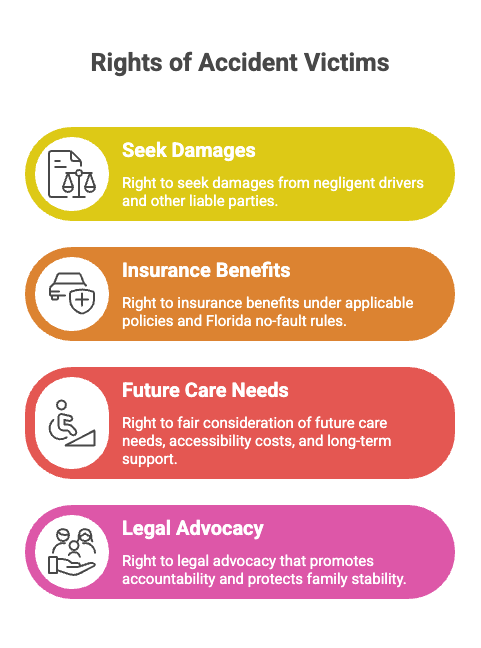
Key legal rights often include:
- The right to seek damages from negligent drivers and other liable parties.
- The right to insurance benefits under applicable policies and Florida no-fault rules.
- The right to fair consideration of future care needs, accessibility costs, and long-term support.
- The right to legal advocacy that promotes accountability and protects family stability.
These protections matter not only for personal recovery but also for preserving dignity, encouraging responsible conduct, and helping injured people continue to contribute to their families and communities through service and meaningful participation.
Steps to Take After a Miami Spinal Cord Injury Car Accident
After a Miami spinal cord injury car accident, prompt medical care is vital to identify the full extent of the injury and begin necessary treatment. It is also important to preserve crash-scene evidence, including photographs, witness statements, and official reports, as these materials may support a future claim. Early contact with a Miami lawyer can help protect legal interests and make certain that pivotal steps are taken without delay.
Seek Immediate Medical Care
In the hours immediately following a Miami spinal cord injury car accident, prompt medical evaluation should be treated as a priority, even when symptoms appear manageable at first. Early intervention can protect health, reduce complications, and support informed care decisions for the injured person and those assisting them.
A hospital or trauma provider can perform an urgent assessment, identify hidden neurological damage, and begin stabilization without delay. Even pain, numbness, weakness, or limited mobility that may seem minor can indicate a serious spinal condition requiring immediate attention. Medical records also create clear symptom documentation, which helps providers track changes and tailor treatment appropriately. Families, caregivers, and community members focused on serving others should encourage emergency personnel to provide transport and follow all discharge instructions carefully. Consistent follow-up care remains vital after the initial evaluation.
Preserve Crash Scene Evidence
Documenting the crash scene as thoroughly as circumstances allow can preserve crucial evidence for any later insurance claim or legal review. When it is safe to do so, those assisting should note vehicle positions, roadway conditions, skid marks, debris patterns, weather, traffic controls, and visible injuries. Careful photographic documentation from multiple angles can help create an accurate record for professionals evaluating how the collision occurred.
Names and contact information for witnesses should be gathered respectfully, and any responding officer’s name and report number should be recorded. If hazards remain, the placement of temporary barriers may help protect others until emergency personnel secure the area. Damaged personal items, torn clothing, and mobility devices should also be preserved when possible, as these items may help clarify the force of impact and the extent of disruption caused by the crash.
Contact A Miami Lawyer
Preserved evidence is often far more useful when reviewed promptly by legal counsel familiar with Miami spinal cord injury claims. After emergency care is secured, contacting a Miami lawyer can help protect the injured person, the family, and others, supporting a stable recovery and an accountable outcome.
An attorney can evaluate insurance communications, identify liable parties, and explain how local statutes may affect deadlines, comparative fault, and available damages. Early guidance also helps prevent harmful statements and lost documentation. Many firms offer a free consultation, allowing families to understand options without immediate financial pressure. In serious spinal cord injury cases, timely legal review supports organized decision-making, preserves important rights, and strengthens efforts to obtain resources for treatment, long-term care, rehabilitation, and continued service to loved ones.
How a Miami Spinal Cord Injury Car Accident Lawyer Can Help You
A Miami spinal cord injury car accident lawyer can provide vital guidance at every stage of a claim, from the initial investigation through settlement negotiations or trial. Counsel identifies liable parties, preserves evidence, and works with medical professionals to document injury severity and required care. This support often includes rehabilitation coordination and financial planning, helping families organize services and resources while protecting the value of the claim.
- Investigates crash facts, gathers records, and consults experts to clearly establish fault.
- Calculates damages, including medical expenses, lost income, home modifications, and caregiving needs.
- Communicates with insurers, resists unfair settlement tactics, and pursues compensation through negotiation or litigation.
- Provides steady direction, so injured people and loved ones can focus on treatment, service, and daily responsibilities.
Through careful case management, an attorney helps ensure that deadlines are met, legal standards are met, and every demand presented reflects the full scope of immediate losses and practical needs after a serious Miami collision.
Long-Term Effects of Miami Spinal Cord Car Accident Injuries
Spinal cord injuries from Miami car accidents often produce lasting consequences that extend well beyond the initial trauma. Many individuals face chronic pain challenges, reduced mobility, and a significant loss of independence that can affect daily functioning and quality of life. These injuries also frequently require ongoing medical needs, including rehabilitation, assistive equipment, and long-term clinical oversight.
Chronic Pain Challenges
Persistence of pain often becomes one of the most disruptive long-term effects of a Miami spinal cord injury after a car accident, even when other symptoms appear stable. Nerve damage may produce burning, stabbing, or radiating sensations that persist for months or years, limiting concentration and daily comfort.
These ongoing symptoms frequently contribute to Psychological fatigue and Sleep disruption, both of which can reduce emotional resilience and strain family relationships. Care teams often monitor how pain affects mood, appetite, and participation in treatment, because unmanaged discomfort can slow recovery and complicate overall health. Effective support may include medication oversight, rehabilitative therapies, counseling, and structured routines that help individuals maintain stability. For those seeking to serve injured loved ones well, understanding chronic pain can encourage patient, informed, and compassionate advocacy throughout long-term care.
Mobility And Independence
Diminished mobility often becomes one of the most consequential long-term effects of a Miami spinal cord injury after a car accident, altering how an individual moves through daily life and manages basic responsibilities. Tasks once completed without thought may require planning, assistance, or additional time.
As a result, independence can be greatly diminished in personal care, transportation, employment, and participation in family or community life. Adaptive equipment may help restore function, support safer movement, and allow more meaningful engagement with others. Home modifications, such as ramps, widened doorways, and accessible bathrooms, can also improve daily access and reduce avoidable barriers. Even with these adjustments, many individuals must redefine routines and depend on coordinated support. Those serving injured people should recognize how the loss of mobility affects dignity, choice, and long-term self-sufficiency.
Ongoing Medical Needs
Beyond the initial hospitalization, ongoing medical needs often define the long-term course of a Miami spinal cord injury after a car accident. Many individuals require consistent physician oversight, medication management, and monitoring for infections, pressure injuries, respiratory complications, and chronic pain. Treatment plans often evolve as the person’s condition changes over time.
Long term rehabilitation may include physical therapy, occupational therapy, assistive technology assessments, and home modifications that promote safety and dignity. Regular follow-up care can help preserve function, prevent secondary harm, and support participation in family and community life. In many cases, caregiver support becomes crucial for daily routines, transportation, and personal care. For those committed to serving injured people well, understanding these ongoing demands is important when evaluating recovery needs, financial burdens, and future legal considerations.
Proving Liability in Miami Spinal Cord Car Accident Injury Cases
Establishing liability in a Miami spinal cord injury car accident case requires a careful review of how the collision occurred, who failed to act reasonably, and whether that failure directly caused the injury. This process often includes examining police reports, witness statements, photographs, roadway conditions, and vehicle data to identify negligent conduct and preserve facts that may later support those in need.
Liability may rest with a distracted driver, an employer, a vehicle owner, or another party whose negligent vehicle maintenance contributed to brake failure, tire loss, or handling problems. In some cases, Florida law may recognize joint liability when multiple actors share responsibility for creating the conditions that led to catastrophic harm. Medical records, expert analysis, and accident reconstruction can help connect the force of impact to the spinal cord injury. A clear showing of duty, breach, causation, and damages allows injured individuals and supportive families to pursue accountability with confidence and informed purpose.
Dealing With Insurance Companies After a Miami Spinal Cord Car Accident Injury
In the aftermath of a Miami spinal cord injury car accident, interactions with insurance companies often become a pivotal part of the recovery process. Insurers may request statements, medical authorizations, and detailed records soon after the crash, even while the injured person and family are focused on care, stability, and supporting one another.
A careful approach is often necessary. Insurance tactics can include minimizing symptoms, questioning the need for treatment, or encouraging quick resolutions before the full impact of the injury is understood. Those assisting an injured loved one may help preserve records, track expenses, and maintain accurate, respectful communication. Clear documentation of diagnoses, rehabilitation needs, and daily limitations can reduce misunderstandings and protect the resources needed for long-term support.
Attention to settlement timing also matters because spinal cord injuries may involve evolving medical complications, future care costs, and significant life adjustments. Thoughtful preparation can help families respond to insurers in ways that honor both dignity and service.
What to Expect During a Miami Spinal Cord Car Accident Injury Claim Process
A Miami spinal cord injury car accident claim typically begins with an initial evaluation of liability, damages, and the available insurance coverage. The process then centers on gathering medical evidence documenting the severity of the injury, its long-term effects, and the required treatment, followed by structured negotiations with the insurer. If a fair resolution is not reached through settlement discussions, the claim may proceed to trial for judicial determination.
Initial Claim Evaluation
Early-stage claim review sets the framework for a Miami spinal cord injury car accident case, allowing counsel to assess liability, identify available insurance coverage, and estimate the full scope of losses. During this initial assessment, attorneys typically review crash reports, insurance policies, and witness statements to determine how the collision occurred and who may be responsible. They also consider the injured person’s immediate needs, household burdens, and likely recovery timeline when advising families and caregivers who want to serve responsibly.
This phase often includes a preliminary compensation estimate covering lost income, long-term assistance, accessibility modifications, and other practical consequences. By organizing key facts early, legal counsel can guide clients with discipline and care, reduce avoidable delays, and prepare the claim for informed decision-making throughout the process ahead.
Medical Evidence Gathering
Gathering medical evidence becomes a central part of a Miami spinal cord injury car accident claim, because the records created after the crash often determine how clearly the injury can be linked to the collision and how fully its long-term effects can be valued. Treatment notes, emergency evaluations, surgical reports, rehabilitation records, and physician opinions are commonly collected to document diagnosis, causation, and prognosis.
This stage may also involve forensic imaging, including MRI and CT scans, to show spinal damage more clearly. Care providers may be asked to explain functional limits, future care needs, and expected complications. Witness statements can support the timeline by describing immediate symptoms, physical changes, or pain observed after the collision. Careful evidence gathering helps those assisting injured people fully understand their needs and advocate for support grounded in documented medical facts.
Insurance Negotiation Steps
Navigate insurance negotiations with caution, as this phase often determines whether a Miami spinal cord injury car accident claim moves toward a fair resolution or a prolonged dispute. Adjusters usually request statements, records, and wage information early, then compare losses against coverage limits and internal valuation methods.
During this stage, counsel commonly organizes evidence, responds to document requests, and challenges Policy tactics designed to minimize severe-injury claims. Clear communication helps protect the claimant’s credibility and keeps the Claim timeline moving with purpose. Insurers may question medical necessity, future care costs, or causation, especially when injuries require long-term assistance. Effective negotiation consequently depends on thorough preparation, consistent documentation, and patience. Those assisting injured people should expect several exchanges, careful review of offers, and close attention to liens, benefits, and policy language before negotiations meaningfully progress.
Settlement Or Trial
Evaluating whether a claim should resolve through settlement or proceed to trial usually marks a pivotal turning point in a Miami spinal cord injury car accident case. Counsel generally compares liability evidence, medical documentation, future care costs, and the injured person’s long-term needs before recommending settlement alternatives or preparing for a jury trial.
A settlement may provide quicker financial support, reduced stress, and greater privacy, helping families focus on caregiving and rehabilitation. Trial, however, may become necessary when insurers dispute fault, minimize damages, or refuse fair compensation. During this stage, attorneys organize exhibits, prepare witnesses, and explain courtroom expectations with care and transparency. Each option should be weighed against risk, timing, and required resources, always with attention to the injured person’s dignity, recovery, and service-centered future.
Compensation for Miami Spinal Cord
Car Accident Injury Damages
Accountability becomes central when a spinal cord injury caused by a Miami car accident results in extensive physical, financial, and personal losses. Compensation may help address immediate treatment needs, long-term care planning, and the practical burdens placed on injured individuals and their families after a catastrophic collision.
In these claims, recovery often focuses on securing resources that support stability, dignity, and continued service to others. This can include rehabilitation funding for concentrated therapy, adaptive equipment, home modifications, transportation assistance, and case management. It may also involve employment protection concerns, such as documenting work limitations, preserving benefits, and supporting vocational planning when former duties cannot be performed safely.
A careful legal approach helps assemble medical records, expert opinions, and life care assessments that demonstrate the full scope of injury-related needs. By pursuing fair compensation, counsel seeks to protect the injured person’s future while also reducing strain on caregivers, households, and the broader community they continue serving.
Economic vs Non-Economic Damages in Miami Spinal Cord Injury Car Accident Cases
In Miami spinal cord injury car accident cases, damages are generally divided into economic losses, such as medical expenses and lost income, and non-economic losses, such as pain, suffering, and reduced quality of life. A proper evaluation of these categories requires clear documentation of financial harm and a careful assessment of losses that do not carry a fixed dollar amount. Claims involving long-term impairment also depend on persuasive evidence of future medical needs, diminished earning capacity, and other projected damages.
Economic Damage Categories
From a legal and financial standpoint, economic damages in a Miami spinal cord injury car accident case refer to the measurable monetary losses caused by the collision, while non-economic damages address the human consequences that do not come with fixed invoices or receipts. These categories often include emergency treatment, hospitalization, surgery, rehabilitation, medications, medical equipment, home modifications, and long-term attendant care.
They may also include lost wages, diminished earning capacity, and the cost of replacing vital household services the injured person can no longer perform. In addition, property damage may cover vehicle repair or replacement, as well as other personal items damaged in the crash. Careful documentation, billing records, employment information, and expert analysis help clearly establish these losses, allowing families and advocates to pursue the resources needed to support treatment, stability, and responsible future planning.
Non-Economic Loss Valuation
Valuing non-economic losses requires a different analysis than calculating medical bills or lost income, because these damages address harm that is real and substantial, even though it does not appear on invoices or payroll records. In Miami spinal cord injury cases, this review focuses on human consequences such as physical pain, emotional distress, loss of enjoyment, and reduced independence.
A careful pain valuation considers the severity, duration, and daily impact of symptoms, as well as how the injury affects relationships, routines, and personal dignity. Evidence often includes treatment notes, testimony from family members, and descriptions of necessary life adjustments. The goal is not sympathy, but a fair measure of losses that affect the injured person’s ability to participate in family life, community service, and other meaningful activities that support others and strengthen society.
Proving Future Damages
Certainty is rarely possible when proving future damages, yet the law permits recovery when the evidence shows that additional losses are reasonably likely to occur. In Miami spinal cord injury car accident cases, this often requires medical opinions, treatment projections, and testimony about long-term care needs.
Economic damages may include future surgeries, attendant care, home modifications, lost earning capacity, and vocational rehabilitation services. Experts may also assess life expectancy to estimate the duration of these costs with reasonable precision. Non-economic damages involve anticipated pain, emotional suffering, loss of independence, and the diminished ability to participate in family and community life.
A careful presentation of records, expert analysis, and practical projections helps courts and insurers understand the full human and financial impact, supporting fair compensation for future needs and continued service.
When a Miami Spinal Cord Car Accident Injury Case Goes to Trial vs Settlement
In many Miami spinal cord injury car accident cases, the path toward settlement or trial depends on the strength of the evidence, the extent of the injuries, and the willingness of the parties to dispute liability or damages. Settlement is often pursued when medical records, expert opinions, and financial losses present a clear picture of responsibility and long-term need.
Trial becomes more likely when insurers deny fault, minimize catastrophic harm, or resist fair compensation for lifelong care. Counsel may evaluate jury dynamics, witness credibility, and the consistency of rehabilitation evidence before recommending litigation in court. Although plea bargaining is a criminal concept, some clients use the term informally when discussing negotiated civil resolutions with insurers. A settlement can provide faster support for treatment, home modifications, and family stability. A trial, however, may be necessary to secure accountability and full damages when negotiations fail. Each course should be measured against the injured person’s needs, service priorities, and future quality of life.
The Statute of Limitations for Miami Spinal Cord


Car Accident Injury Cases
Whether a spinal cord injury car accident claim resolves through settlement or proceeds to trial, the time allowed to file suit can determine whether compensation remains available at all. In Florida, strict filing deadlines apply, and missing them can bar recovery even when injuries are catastrophic and liability appears clear. For families focused on care, rehabilitation, and long-term stability, understanding these limits helps them pursue resources that support recuperation and service to loved ones.
The applicable period can vary depending on the facts, the parties involved, and the legal theories asserted. Certain tolling exceptions may extend or pause the running of time, but they are narrow and should never be assumed. Claims involving minors, incapacitated individuals, or delayed discovery issues may raise additional questions. Because spinal cord injury cases often involve extensive medical evidence and future damages, attention to statutory timing remains crucial from the outset. Careful compliance preserves the opportunity to seek meaningful financial recovery.
When to Contact a Miami Spinal Cord Car Accident Injury Lawyer
Soon after a serious collision causes spinal cord trauma, contacting a Miami spinal cord injury car accident lawyer can help protect evidence, clarify legal options, and prevent early mistakes that may affect the value of a claim. Prompt action is often important because witness memories fade, vehicles are repaired, and electronic records may be lost.
Emergency timing matters when catastrophic injuries require immediate medical decisions, insurance reporting, and coordination with family members or caregivers. An early legal consultation can help preserve documentation of treatment, missed work, and daily limitations while the injured person focuses on recovery and service from supportive professionals. It may also reduce confusion during insurer communications and settlement discussions.
Many families hesitate because of concerns about Legal costs. A timely consultation can provide practical information about fee structures, case procedures, and what documents should be gathered next. Reaching out early supports informed choices, protects the claim process, and helps those involved respond responsibly to a life-changing event.
Why You Need an Experienced Miami Spinal Cord Car Accident Injury Lawyer
Why does experience matter so much after a collision causes spinal cord damage? An experienced Miami spinal cord injury car accident injury lawyer understands how these claims affect not only the injured person, but also the family members who often become caregivers. That knowledge helps counsel present the full scope of harm, including long-term medical needs, rehabilitation costs, lost earning capacity, and the practical changes required for daily life.
Experience also strengthens the ability to counter insurers that minimize severe injuries or dispute future losses. A seasoned lawyer works with medical and financial professionals to document the lasting consequences of paralysis, nerve damage, and chronic pain. This careful approach supports claims for treatment, home modifications, assistive equipment, and emotional recovery. It also protects families who are trying to serve a loved one while managing uncertainty. In serious spinal cord cases, experienced legal representation provides structure, credibility, and a clearer path toward financial stability and ongoing care.
How to Choose the Right Miami Spinal Cord Car Accident Injury Lawyer for Your Case
Experience in catastrophic injury litigation provides a strong foundation, but selecting the right Miami spinal cord injury car accident injury lawyer requires a focused review of qualifications, resources, and case strategy. Families and advocates should examine the attorney’s experience with spinal trauma claims, trial preparation, and insurance negotiations involving long-term medical needs and life care planning.
A careful Client interview can reveal whether counsel listens well, explains options clearly, and respects the client’s goals for recovery, accountability, and future stability. It is also prudent to assess access to medical experts, accident reconstruction professionals, and financial resources needed to build a persuasive case. Clear communication practices, realistic case evaluations, and consistent responsiveness often indicate dependable representation. Reviewing prior results, professional reputation, and disciplinary history may further support an informed decision. By choosing counsel with skill, compassion, and organizational strength, injured individuals and those assisting them can pursue justice while protecting vital care needs over time.
About The Law Offices of Anidjar & Levine
At The Law Offices of Anidjar & Levine, legal representation in serious car accident cases is guided by a client-centered approach and a disciplined focus on case development. The firm serves injured people and their families with organized advocacy, responsive communication, and careful attention to the facts that shape spinal cord injury claims.
Its firm history reflects sustained work on behalf of accident victims throughout Florida, with an emphasis on accountability, preparation, and practical support during difficult periods. Attorneys and staff coordinate investigations, gather medical and insurance records, and pursue compensation that may address long-term treatment, lost income, and rehabilitation needs. This service model is intended to reduce burdens on clients while preserving the strength of the case.
Client testimonials often describe professionalism, accessibility, and consistent follow-through, qualities that matter when a catastrophic injury changes daily life. In this setting, the firm presents itself as a steady legal resource for those seeking to help loved ones recover.
Frequently Asked Questions
Can I Switch Lawyers During My Spinal Cord Injury Case?
Yes, a person may change attorneys during a spinal cord injury case when representation no longer serves the client’s best interests. The process usually involves client substitution, notice to the court, and transfer of the case file. Fee arrangements may still affect any recovery, depending on the prior agreement. Careful review of timing, case strategy, and professional obligations helps protect the injured person while supporting accountable, service-centered legal representation.
Will My Case Stay Private or Become Public Record?
A case may remain partly private or become part of the public record, depending on how it resolves. If a lawsuit is filed, public docketing generally makes basic case information accessible. Medical records and sensitive materials may still receive limited protection through court rules or sealing requests. By contrast, confidential settlements reached before trial often remain private. Careful legal guidance helps protect dignity, service to others, and legitimate privacy interests throughout the process.
Can Family Members Recover Damages for Caregiving Responsibilities?
Yes, family members may recover damages for caregiving responsibilities when their assistance is necessary, documented, and connected to the injured person’s condition. Courts and insurers may consider family compensation for time, services, and out-of-pocket costs that would otherwise require paid professional care. Caregiver reimbursement often depends on medical evidence, treatment needs, and reliable records. Careful documentation helps demonstrate the reasonable value of support provided in service to recovery.
How Are Future Home Modification Costs Calculated After Paralysis?
Future home modification costs are calculated through expert assessments of medical needs, architectural plans, contractor estimates, and long-term accessibility requirements. Professionals evaluate necessary changes, such as wheelchair ramps, accessible bathrooms, widened doorways, and lift systems, then project present and future expenses based on inflation, maintenance, and replacement timelines. Economists may also apply life-care plans to guarantee the individual receives adequate support, preserving safety, independence, and the capacity to be cared for with dignity.
What if My Spinal Cord Injury Worsens Years Later?
If a spinal cord injury worsens years later, the individual may still face valid claims tied to long-term complications and delayed deterioration. Updated medical evaluations, imaging, and expert opinions often help establish the connection between the original trauma and present losses. Careful documentation supports access to treatment, supportive services, and financial recovery. Prompt review by qualified professionals is crucial because deadlines, causation issues, and future care needs can markedly affect outcomes.
—————————
A Miami spinal cord injury car accident claim often involves severe losses, intricate liability issues, and urgent legal deadlines. Prompt medical care, careful documentation, and informed legal guidance can materially affect the outcome. By understanding their rights and acting decisively, injured individuals may better protect their financial recovery and long-term interests.
A Miami Car Accident Lawyer can provide experienced representation in these difficult cases, helping clients pursue compensation with focus, diligence, and professional advocacy.

