
Law Offices of Anidjar and Levine helps survivors and families protect safety, preserve evidence, and pursue accountability in prison sexual abuse cases in Florida.
Counsel may secure records, request surveillance footage, document witness accounts, and address concerns about retaliation.
Legal review can identify potential civil, constitutional, or negligence claims and explain grievance rules, reporting options, and filing deadlines.
Prompt action often matters because prison evidence can disappear quickly.
The sections that follow explain how these cases work, what rights may apply, and when legal help becomes essential.
Learn more by visiting a Florida Sexual Assault Lawyer.
Main Takeaways
- A Florida prison sexual abuse lawyer helps protect victims, preserve evidence, and identify civil, administrative, and possible criminal remedies.
- Immediate action matters because lawyers can request records, surveillance footage, medical documentation, and witness statements before evidence is lost.
- Florida prison abuse claims may involve staff misconduct, transport abuse, isolation assaults, medical unit exploitation, retaliation, or supervisory failure.
- An attorney evaluates Eighth Amendment violations, PREA-related protections, negligence, assault, and deliberate indifference based on facility policies and prior warnings.
- Lawyers also guide confidential reporting, grievance deadlines, retaliation concerns, and family advocacy while pursuing accountability against responsible officials or contractors.


How We Can Help With Your Florida Prison Sexual Abuse Claim
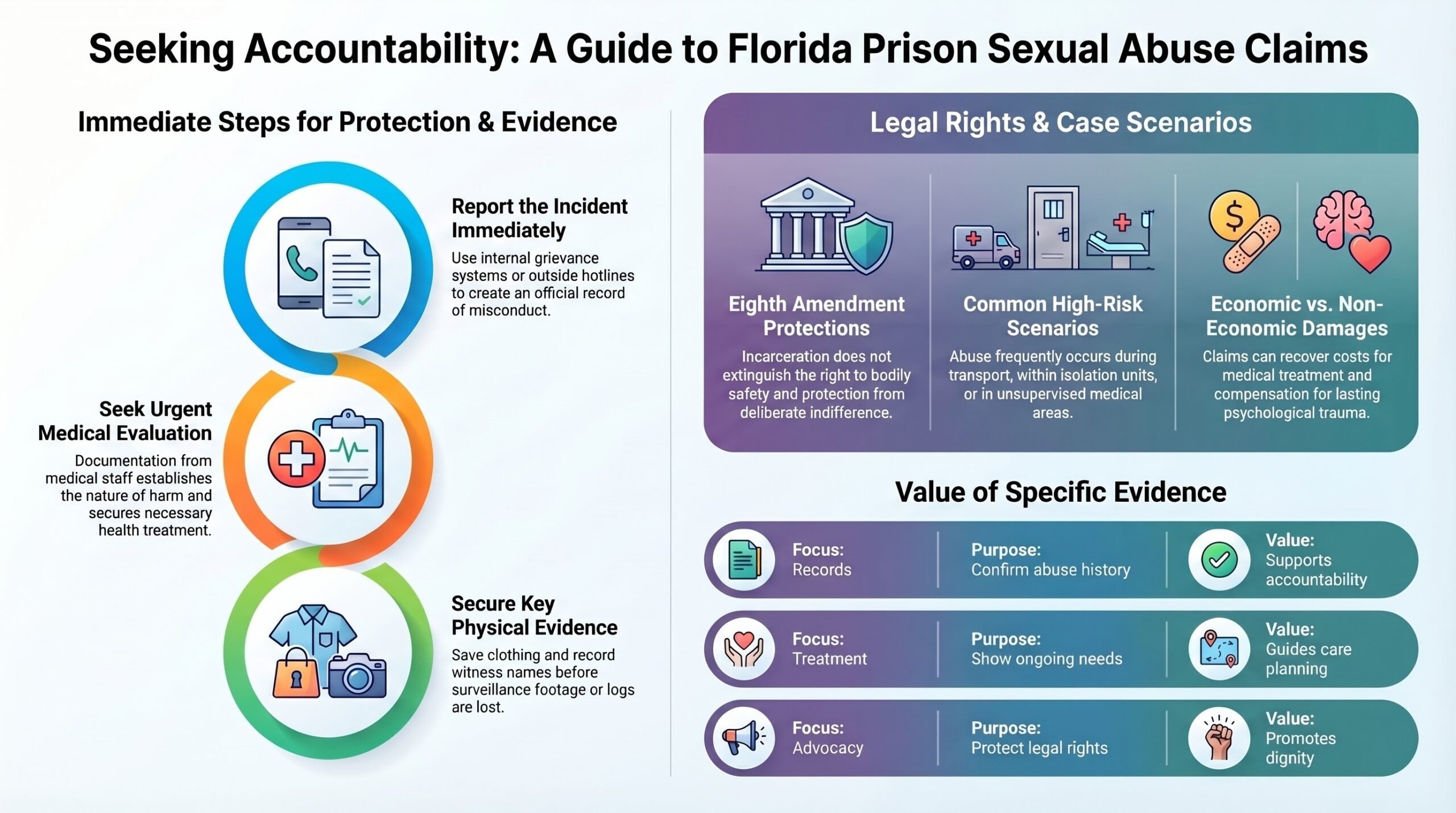
When a person has suffered sexual abuse in a Florida prison, legal counsel can play a pivotal role in identifying the available claims, preserving evidence, and pursuing accountability against the responsible parties. Attorneys may guide families and advocates through immediate protective steps, confidential reporting channels, and the documentation process needed to safeguard crucial facts, records, and witness information.
A law firm serving this need often coordinates Victim support with practical legal action. That work can include securing medical and mental health records, requesting surveillance footage, interviewing witnesses, and sending preservation notices before evidence is lost. Counsel may also communicate with correctional officials and outside agencies to reduce further harm and to protect a survivor’s dignity throughout each stage.
For those committed to helping others, this assistance offers structure, steadiness, and informed advocacy. It allows concerned relatives, faith leaders, and community members to support recovery while legal professionals manage deadlines, records, and strategic next steps.
OUR CONSULTATIONSARE FREE
START YOUR FREE CASE REVIEW

Understanding Prison Sexual Abuse Cases in Florida
Beyond the immediate steps involved in protecting a survivor and preserving evidence, a clear understanding of prison sexual abuse cases in Florida helps frame how these matters are investigated and pursued. These cases often involve overlapping administrative, civil, and criminal processes, each with distinct standards, reporting requirements, and consequences for institutions and individuals.
A careful review usually focuses on credibility, documentation, witness accounts, medical findings, surveillance records, and proper evidence collection. Florida claims may also require analysis of facility policies, staff supervision, prior complaints, and whether officials failed to act on known risks. In many matters, statute deadlines affect notice requirements, internal grievances, and the time available to file suit.
Service-minded advocates often emphasize accountability, dignity, and lawful treatment, while helping survivors understand how legal systems evaluate harm and responsibility. This broader perspective supports informed decisions, strengthens case preparation, and promotes a more effective response for those seeking protection, justice, and lasting institutional change.
Common Scenarios When Prison Sexual Abuse Might Take Place in Florida
Prison sexual abuse in Florida may arise in several recurring settings within correctional facilities and related operations. Common examples include staff-on-inmate misconduct, abuse during transport, assaults occurring in isolation units, and misconduct in medical areas where privacy and supervision can be limited. Identifying these patterns can help clarify how abuse occurs and where institutional safeguards may fail.
Staff-On-Inmate Misconduct
Although correctional facilities are expected to maintain strict professional boundaries, staff-on-inmate misconduct remains one of the most serious ways sexual abuse may occur in Florida jails and prisons. It may involve coercive contact, inappropriate searches, sexual comments, or exploitation of authority over vulnerable individuals.
In many cases, meaningful accountability depends on careful reporting and preservation of evidence. Witness accounts can support a survivor’s description of events, while proper documentation standards help establish timelines, injuries, complaints, and prior warning signs.
Some incidents persist because of staff retaliation against those who report abuse, including threats, disciplinary write-ups, or housing changes. Administrative neglect may also allow patterns to continue when supervisors ignore complaints, fail to investigate, or overlook repeated misconduct by employees entrusted with public care and institutional safety.
Abuse During Transport
When incarcerated individuals are moved between facilities, hospitals, court appearances, or work details, transport can create conditions in which sexual abuse is harder to detect and easier to conceal. Limited supervision, restrained movement, and time away from regular housing units may increase vulnerability, especially during long trips or medical transfers. In Florida facilities, allegations arising from transport often depend on timely documentation, preservation of vehicle logs, and prompt reporting by affected individuals or observers.
Those seeking to protect others should understand available Grievance process options and the importance of Witness interview procedures, because evidence may be brief and rapidly lost. A careful legal review can assess patterns involving specific routes, officers, or contractors, and can help determine whether institutional safeguards, training, and reporting protocols were inadequate under governing standards.
Assault In Isolation
Because isolation units operate with reduced visibility and limited inmate contact, sexual abuse in these settings may be easier to commit and harder to corroborate. In Florida facilities, a person may be placed alone for disciplinary, protective, or administrative reasons, creating conditions in which staff misconduct can occur without witnesses or prompt reporting.
Isolation can also be misused as a form of coercion. Threats of extended confinement, lost privileges, or harsher treatment may silence complaints and enable isolation retaliation after an inmate resists abuse or reports it. When placement decisions lack documentation, review, or meaningful notice, due process violations may conceal improper motives.
Those who serve affected individuals should recognize that isolation often limits access to support, evidence, and timely intervention, making careful investigation especially important for accountability, safety, and protection of vulnerable people.
Medical Unit Vulnerabilities
In prison medical units, privacy rules, medication practices, and periods of physical vulnerability can create conditions in which sexual abuse is more difficult to detect and report. Examinations may occur behind closed doors, and sedating medications can limit awareness, memory, or resistance. Patient screening weaknesses may also prevent staff from identifying prior trauma, developmental limitations, or communication barriers that increase risk.
Medical units can face staffing coverage gaps during nights, emergencies, transports, and shift changes, leaving incarcerated patients with reduced supervision. Individuals recovering from surgery, illness, or injury may depend on staff for bathing, toileting, or movement, which can blur professional boundaries when oversight is weak. For those committed to protecting others, these circumstances underscore the need for vigilance, reporting channels, trauma-informed care, and consistent institutional safeguards.


Legal Rights of Prison Sexual Abuse Victims in Florida
Although incarceration limits many freedoms, it does not strip a person of the right to bodily safety, dignity, and protection from sexual abuse under Florida and federal law. Prison sexual abuse victims retain enforceable legal rights that institutions and staff must respect, regardless of custody status, sentence length, or facility classification. These rights reflect basic human worth and public responsibility.
Incarceration restricts liberty, but it never extinguishes the right to bodily safety, dignity, and protection from sexual abuse.
- Protection from cruel and unusual punishment under the Eighth Amendment
- Access to grievance systems and other lawful channels without retaliation
- Victim protections under PREA standards and Florida correctional policies
- Potential civil claims for deliberate indifference, assault, or negligence
- Consideration of statutes of limitation and reporting deadlines under applicable law
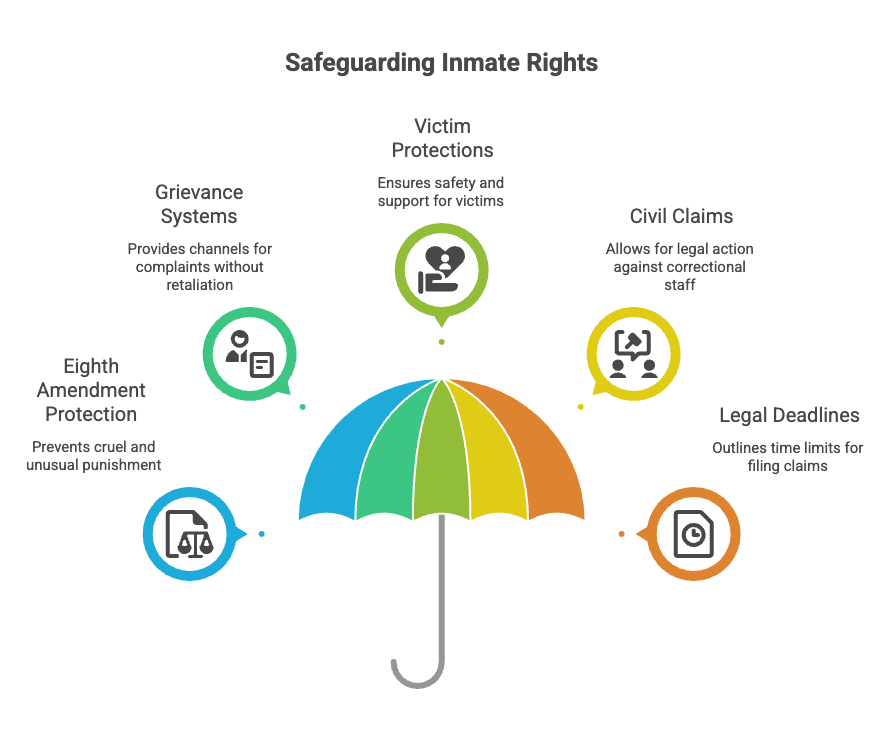
These legal safeguards exist to promote accountability, preserve evidence, and uphold humane treatment within correctional settings. When abuse occurs, the law recognizes that confinement does not excuse misconduct. Institutions may face scrutiny for failures in supervision, staffing, training, and response, especially where known risks were ignored.
Steps to Take After a Prison Sexual Abuse Incident in Florida
After a prison sexual abuse incident in Florida, the initial steps can affect both personal safety and any future legal claim. Victims are generally advised to report the abuse through available prison channels, obtain prompt medical care, and document the incident as thoroughly as possible. Preserving key evidence, including clothing, written notes, and medical records, may be critical to any internal investigation or civil action.
Report The Abuse
One of the most important steps following prison sexual abuse in Florida is to report the incident as soon as it is reasonably possible. Prompt reporting can help preserve facts, identify witnesses, and create an official record for later review. Many facilities provide several avenues for confidential reporting, including internal grievance systems, designated staff members, outside hotlines, or written complaints.
Those seeking to protect others should document basic details, such as dates, locations, names, and any prior threats, while adhering to applicable reporting timelines. Reports may also be submitted to oversight agencies or advocacy organizations when institutional channels appear unreliable. If retaliation is feared, that concern should be stated clearly in the report. A careful, timely report can support accountability, strengthen institutional response, and help safeguard other vulnerable individuals from harm.
Seek Medical Care
Immediate medical care is a pivotal step following prison sexual abuse in Florida, both to address urgent health concerns and to preserve evidence that may later support an investigation or legal claim. Prompt evaluation by qualified medical staff can identify injuries, assess exposure to sexually transmitted infections, and determine whether emergency treatment or medication is necessary. Timely care also creates medical documentation that may help establish the nature and extent of harm suffered.
In many cases, compassionate providers can connect the survivor with Trauma support, including crisis counseling and mental health services. Those assisting incarcerated individuals should encourage clear communication about symptoms, pain, and emotional distress, so providers can respond appropriately. Seeking medical care without delay promotes safety, dignity, and a more informed path toward accountability and recovery for all involved.
Preserve Key Evidence
Because critical details can be lost quickly, preserving vital evidence is an important step following a prison sexual abuse incident in Florida. Prompt documentation may support accountability, protect others from similar harm, and strengthen any later administrative, criminal, or civil action.
Helpful measures include saving clothing, bedding, letters, grievances, medical records, and names of involved staff or inmates. If possible, notes should record dates, times, locations, injuries, and statements made before memories fade. Witness statement preservation can be especially valuable when events occurred outside camera coverage or when official reports are incomplete.
Careful incident timeline reconstruction may also clarify how the abuse occurred, who had access, and whether prior warnings were ignored. A lawyer can later use preserved evidence to evaluate legal options and advocate for institutional reform efforts.
How a Florida Prison Sexual Abuse Lawyer Can Help You Initiate a Case
When sexual abuse occurs within a Florida correctional facility, a prison sexual abuse lawyer can help initiate a case by evaluating the facts, identifying potential claims, and explaining the legal options available under state and federal law. Counsel often begins by reviewing reports, medical records, witness statements, and grievance filings, while offering evidence-preservation tips and outlining the timeline for the legal claim.
A prison sexual abuse lawyer can help evaluate facts, preserve key evidence, and explain legal options under Florida and federal law.
A careful legal review may help survivors and supportive advocates understand how to proceed responsibly and effectively:
- Assess whether staff misconduct, negligence, or constitutional violations may be involved.
- Identify documents, communications, and records that should be preserved immediately.
- Explain filing requirements, notice rules, and relevant deadlines in Florida.
- Coordinate with investigators and experts to strengthen a well-documented case.
- Promote accountability in a manner that may help protect others from harm.
Long-Term Effects of Prison Sexual Abuse Trauma
Prison sexual abuse can produce serious emotional and psychological harm that continues long after the underlying incident has ended. Survivors may also experience lasting physical health issues, while the trauma often affects daily functioning and overall well-being. In many cases, these consequences extend into personal relationships, where trust challenges can disrupt family bonds, intimate connections, and social stability.
Emotional And Psychological Harm
Although the physical injuries associated with sexual abuse in custody may mend over time, the emotional and psychological harm often persists long after the abuse has ended. Survivors may experience anxiety, depression, hypervigilance, shame, sleep disturbance, and distrust of authority, all of which can impair daily functioning and relationships. Effective Survivor coping often requires consistent mental health support, stable environments, and informed advocacy.
For those seeking accountability, trauma disclosure can be difficult because fear, stigma, and institutional pressure often silence reporting. Legal confidentiality may help create safer conditions for sharing experiences, preserving dignity while supporting investigation and recovery. Service-minded advocates, attorneys, and care providers should recognize that trauma can alter memory, concentration, and emotional regulation. A careful, respectful response may strengthen trust and improve access to justice, treatment, and long-term stability.
Lasting Physical Health Issues
Even after the immediate assault has ended, sexual abuse in custody can produce lasting physical health problems that affect a survivor’s safety, functioning, and quality of life. Survivors may experience chronic pelvic pain, gastrointestinal distress, sleep disruption, headaches, sexually transmitted infections, and reproductive complications that require ongoing evaluation and care. Some also develop stress-related conditions, including elevated blood pressure, immune disruption, and persistent fatigue, which can interfere with daily tasks and recovery.
For those seeking accountability and support, prompt medical assessment remains important. Medical documentation can help identify injuries, establish treatment needs, and preserve evidence of long-term harm. In addition, trauma therapy may assist with managing physical symptoms that worsen under stress, while coordinated medical care can help survivors regain stability, protect future health, and access appropriate legal and institutional remedies.
Relationship And Trust Challenges
Beyond the lasting physical consequences, sexual abuse in custody often disrupts a survivor’s ability to form, maintain, and rely on personal relationships. Traumatic violations within coercive environments can distort perceptions of safety, intimacy, and loyalty, especially when power dynamics were exploited by authority figures or other inmates. As a result, survivors may struggle to trust family members, partners, employers, counselors, or faith leaders.
These difficulties frequently extend beyond release. Hypervigilance, shame, fear of betrayal, and victim isolation can interfere with communication, emotional regulation, and healthy boundaries. Some survivors withdraw to avoid harm, while others remain vulnerable to further exploitation because coercion has become normalized.
Service providers, advocates, and legal professionals should recognize these relational effects as serious, enduring injuries that require informed support, patient engagement, and trauma-responsive intervention over time.
What to Expect During a Florida Prison Sexual Abuse Claim Process
A Florida prison sexual abuse claim process typically begins with reporting the abuse through available internal channels and, when appropriate, to outside authorities. The process may then involve gathering crucial evidence, including medical records, witness statements, incident reports, and other documentation that can support the account. From there, legal claims may be filed, and the case may result in several outcomes, such as a settlement, administrative action, or civil court proceedings.
Reporting The Abuse
When sexual abuse occurs in a Florida prison, reporting the misconduct is often the first step in protecting the victim’s safety and preserving the basis for a legal claim. Reports may be made through prison grievance channels, designated hotlines, medical staff, or outside advocates, depending on the circumstances and urgency involved.
During this stage, victim safety planning is often vital, particularly when retaliation, continued contact, or housing instability is a concern. Trauma support resources may also help the victim communicate clearly, obtain emotional stabilization, and understand available protective options.
A lawyer or advocate may explain reporting requirements, institutional procedures, and deadlines in a careful, service-oriented manner. Prompt reporting can support accountability, encourage intervention by prison officials, and help ensure the victim receives appropriate medical attention and protective measures.
Gathering Key Evidence
Because evidence can be difficult to preserve inside a correctional setting, early documentation often plays a central role in a Florida prison sexual abuse claim. Helpful materials may include medical records, incident reports, witness statements, photographs of injuries, and mental health evaluations created soon after the abuse is disclosed.
Additional support may come from prison logs, staff rosters, grievance records, and Surveillance footage if cameras covered relevant areas. Careful attention to the chain of custody helps protect the reliability of physical items, clothing, bedding, or forensic samples collected during an examination.
Consistent timelines also matter because they can connect reports, treatment notes, and housing movements. For those committed to protecting vulnerable people, thorough evidence-gathering strengthens accountability efforts and helps professionals assess what occurred with greater accuracy and fairness.
Filing Legal Claims
Filing a legal claim in a Florida prison sexual abuse matter usually begins with a careful review of the facts, the available evidence, and the procedural rules that may apply to the case. Counsel typically assesses deadlines, identifies responsible parties, and determines whether internal grievance requirements must be completed before suit proceeds.
The filing stage often includes preparing a complaint, preserving records, and organizing Evidence documentation for clear presentation. Medical reports, incident logs, communications, and prior complaints may be assembled to support the allegations. Attorneys also evaluate Witness credibility, since consistent statements from victims, staff, or other incarcerated persons can affect how the claim is framed.
Throughout this process, careful communication and respectful guidance help ensure that the legal steps remain orderly, informed, and centered on protecting dignity and accountability.
Possible Case Outcomes
Although each claim follows its own factual and procedural path, possible outcomes in a Florida prison sexual abuse case generally include dismissal, negotiated settlement, administrative action, or a court judgment after litigation.
Dismissal may occur when deadlines are missed, immunity applies, or evidence challenges prevent proof. Settlement may provide compensation, policy changes, counseling access, or confidential terms that limit further dispute. Administrative action can include staff discipline, transfer decisions, and institutional reforms designed to protect others from harm. If litigation proceeds, a court may award damages, injunctive relief, or find no liability after reviewing testimony and records.
Some cases uncover related concerns, such as Wrongful conviction issues or retaliation, which may require separate legal review. Throughout the process, outcomes often depend on documentation, witness credibility, and whether officials fulfilled their duty to protect vulnerable individuals.
Compensation for Florida Prison Sexual Abuse Damages
A civil claim for prison sexual abuse in Florida may seek compensation for a range of physical, psychological, and financial damages resulting from the misconduct. In service to accountability and survivor well-being, the claim often depends on Evidence preservation, witness testimony, medical documentation, and an independent investigation. These elements can help show the harm endured and the support still required for recovery and stability.
| Focus | Purpose | Value |
|---|---|---|
| Records | Confirm abuse history | Supports accountability |
| Treatment | Show ongoing needs | Guides care planning |
| Corroboration | Strengthen credibility | Assists with fact-finding |
| Investigation | Identify failures | Encourages reform |
| Advocacy | Protect legal rights | Promotes dignity |
Compensation may address emergency treatment, counseling, medication, relocation concerns after release, and other necessary services linked to the abuse. It can also recognize lasting trauma, impaired daily functioning, and diminished trust in institutional safety, while helping survivors access meaningful care.
Economic vs Non-Economic Damages in Florida Prison Sexual Abuse Cases
In Florida prison sexual abuse cases, damages are generally divided into economic losses, which include measurable financial harms, and non-economic losses, which address pain, suffering, and other intangible effects. A proper assessment of these categories helps clarify the full scope of injury and the compensation that may be available under the law. Establishing the value of either form of damage often requires records, expert analysis, and other evidence that connects the abuse to the claimed losses.
Economic Damages Explained
When a prison sexual abuse claim proceeds in Florida, economic damages refer to measurable financial losses caused by the abuse, while non-economic damages address harms that do not come with a fixed dollar value. In this setting, economic damages focus on expenses and income reductions that can be documented with records, bills, wage statements, and expert analysis. A careful compensation calculation may include medical treatment, counseling costs, prescription expenses, transportation for care, and lost wages from missed work.
In severe cases, future earnings losses may also be considered when lasting trauma or physical injury limits employment capacity. For those committed to helping survivors rebuild stability, understanding these losses supports informed advocacy and responsible case evaluation. Courts and counsel often rely on clear evidence to connect each claimed financial loss to the abuse.
Non-Economic Losses Overview
Many non-economic losses in Florida prison sexual abuse cases involve profound harms that cannot be measured through invoices or wage records. These damages address the human impact of abuse, especially where survivors carry lasting emotional distress, fear, humiliation, and loss of dignity. In a service-centered legal context, non-economic recovery recognizes suffering that affects daily functioning, relationships, sleep, concentration, and sense of safety.
Trauma damages may also include anxiety, depression, shame, social withdrawal, and diminished enjoyment of life. Some survivors experience spiritual injury, mistrust of authority, or persistent psychological symptoms long after the abuse ends. Florida law permits consideration of these intangible harms because justice requires attention to the full person, not only financial consequences. This overview distinguishes non-economic losses as deeply personal injuries that warrant serious recognition and compassionate advocacy.
Proving Damage Value
Establishing damage value in a Florida prison sexual abuse case requires disciplined proof, careful documentation, and a clear connection between the abuse and the survivor’s losses. Economic damages may include medical treatment, counseling expenses, medication costs, and lost earning capacity when trauma disrupts future earning capacity. Non-economic damages address pain, humiliation, anxiety, and lasting psychological harm, which often require testimony from treating professionals, records, and credible personal accounts.
The importance of the evidence is substantial because insurers, agencies, and defense counsel often challenge causation, severity, and duration. A sound trial strategy consequently organizes records, expert opinions, incident reports, and witness statements to show how the abuse changed the survivor’s health, stability, and daily functioning. Careful valuation supports accountability and helps those advocating for survivors pursue relief that reflects the full scope of harm.
When a Florida Prison Sexual Abuse Case Goes to Trial vs Settlement
Two primary paths usually shape a Florida prison sexual abuse case: negotiated settlement or trial. In many matters, settlement negotiations begin after counsel evaluates liability, available insurance or governmental exposure, and the valuation of damages. This route may reduce delay, protect privacy, and deliver resources sooner for medical care, counseling, and family stability. It also allows parties to direct attention toward practical relief rather than prolonged courtroom conflict.
A case may proceed to trial when responsibility is disputed, institutional failures are denied, or settlement offers do not reflect the harm suffered. Trial evidence often includes records, witness testimony, expert opinions, and proof of reporting history. Jury considerations can involve credibility, the severity of injury, institutional policies, and whether officials acted with deliberate indifference or negligence. Trial can produce a public record and broader accountability, but it also brings uncertainty, longer timelines, and greater emotional demands. Counsel typically compares these factors carefully before recommending either path.
The Statute of Limitations for Florida Prison Sexual Abuse Cases
After counsel weighs the risks and benefits of settlement or trial, attention often turns to the filing deadline that can determine whether a claim may proceed at all. In Florida prison sexual abuse matters, limitation periods vary by the legal theory asserted, the parties involved, and whether the action proceeds in state or federal court.
Careful review of Florida tolling rules is often critical. Certain facts, such as minority, incapacity, fraudulent concealment, or other statutory exceptions, may pause or extend the running of time, though these rules are applied narrowly. Separate attention must also be given to the timing of federal claims, because constitutional or civil rights allegations may follow different accrual principles even when Florida law supplies the borrowed limitations period.
For those seeking accountability and safer institutions, these deadlines matter because courts can dismiss otherwise substantial cases as untimely. A disciplined, fact-specific limitations analysis helps preserve claims and supports responsible service to vulnerable people.
When to Contact a Prison Sexual Abuse Lawyer in Florida
Timing often shapes the strength and viability of a Florida prison sexual abuse claim, making early contact with counsel a prudent step when abuse is suspected, disclosed, or documented. Prompt action may help preserve medical records, witness statements, grievances, surveillance footage, and other evidence that can fade or disappear with time. It also helps concerned families, advocates, and community servants respond responsibly.
Contact is especially important after any report to staff, medical personnel, investigators, or outside agencies, and when warning signs suggest ongoing danger. Early guidance can assist with documenting injuries, recording timelines, and understanding reporting obligations without unnecessary delay. For individuals Dealing With Retaliation, timely legal communication may support safer planning and more careful recordkeeping.
Confidential Consultations can provide a private setting to share facts, assess immediate concerns, and identify practical next steps. In service-oriented communities, timely outreach helps protect dignity, encourage accountability, and support informed action for those facing confinement.
Why You Need an Experienced Florida Prison Sexual Abuse Lawyer
Early contact with counsel often leads to a more important question, namely, whether the attorney has the experience required to handle a prison sexual abuse claim in Florida. In these cases, experience matters because prison systems involve strict procedures, internal investigations, and intricate evidentiary issues. An experienced lawyer understands how to protect the survivor’s rights while addressing institutional resistance and preserving crucial records.
A seasoned attorney also strengthens the broader effort to secure accountability and meaningful Victim support. Knowledge of federal standards, state law, and correctional practices can improve case strategy from the outset. Effective counsel coordinates witness development, damages analysis, and trial preparation with care and discipline. This work helps survivors pursue justice without carrying the full burden alone.
For families, advocates, and faith-minded communities committed to serving others, experienced representation offers structure, credibility, and a clear path toward legal action, institutional reform, and long-term protection for vulnerable people in custody.
How to Choose the Right Prison Sexual Abuse Lawyer for Your Case in Florida
How should a survivor or family evaluate which attorney is best suited to handle a prison sexual abuse case in Florida? A careful review of experience, professionalism, and commitment to respectful service can guide that decision. The attorney should understand institutional abuse claims, promptly preserve evidence, and approach each matter with discipline and integrity.
Strong candidates often explain how they assess Witness credibility, gather trauma documentation, and build a record that can withstand scrutiny. They should also outline thoughtful case investigation planning, including review of medical records, grievances, staff reports, and potential surveillance evidence. Clear attorney-client communication is equally important because survivors and families need updates, realistic expectations, and compassionate listening throughout the process.
It also helps to review prior results, professional standing, and willingness to litigate when necessary. An attorney who combines legal skill with organized preparation and steady communication is often better positioned to pursue accountability and meaningful protection for vulnerable people.
About The Law Offices of Anidjar & Levine
Serving clients across Florida, The Law Offices of Anidjar & Levine provides legal representation in complex injury and abuse matters with a focus on careful case development and responsive client service.
The firm approaches prison sexual abuse claims with disciplined preparation, respect for dignity, and attention to the challenges survivors may face when seeking accountability.
Its attorneys emphasize clear communication, practical guidance, and steady advocacy throughout each stage of a claim.
Through Confidential consultations, individuals may discuss sensitive circumstances in a protected setting and learn about potential legal options.
An attorney case review helps identify relevant facts, available evidence, and possible avenues for pursuing compensation or other relief under Florida law.
The Law Offices of Anidjar & Levine is known for thorough investigation, organized case management, and a client-centered approach that supports informed decisions.
For those seeking to protect others by pursuing justice, the firm offers structured representation grounded in service, professionalism, and care.
Frequently Asked Questions
Can Family Members Report Prison Sexual Abuse on Behalf of an Incarcerated Loved One?
Yes, family members can often report prison sexual abuse on behalf of an incarcerated loved one through internal grievance systems, prison administrators, oversight agencies, or outside organizations. Many facilities and agencies offer confidential reporting options that can help protect the incarcerated person from retaliation. Family advocacy rights may also support persistent follow-up and requests for investigation. Direct consent from the incarcerated person may strengthen the report, but it is not always required.
Are Anonymous Reports of Prison Sexual Abuse Allowed in Florida Facilities?
Yes, anonymous reports of prison sexual abuse are generally allowed in Florida facilities, though procedures may vary by institution. Many facilities provide confidential reporting options through hotlines, written grievances, or third-party contacts. Anonymous reporting can alert staff and trigger the prison investigation process, but limited identifying details may affect evidence gathering. Those seeking to protect others should report promptly, preserve any information, and follow up through available oversight channels when possible.
Will Reporting Prison Sexual Abuse Affect Parole or Inmate Privileges?
Reporting prison sexual abuse should not lawfully alter parole timing or cause a negative privilege impact. Facilities are expected to protect reporting inmates from retaliation, including disciplinary abuse, housing changes used as punishment, or loss of programs and visitation. If parole timing or privileges appear affected after a report, that pattern may indicate unlawful retaliation. Careful documentation and prompt review by oversight authorities can help protect the inmate and support institutional accountability.
Can Prison Staff Be Criminally Charged for Sexual Abuse in Florida?
Yes. In Florida, prison staff can face criminal charges for sexual abuse of inmates, and Florida criminal liability may apply even when staff claims the contact was voluntary. Under strict consent standards, an inmate’s apparent agreement often carries little or no legal weight because of the power imbalance. Those seeking to protect vulnerable people should know that prosecution, administrative discipline, and civil consequences may all follow substantiated misconduct by staff.
Are Interpreters Available for Non-English-Speaking Prison Sexual Abuse Victims?
Yes, interpreters are often available for non-English-speaking prison sexual abuse victims through correctional systems, outside advocates, medical providers, and legal representatives. Effective Language Access is crucial so victims can report abuse, understand procedures, and participate in investigations without confusion or coercion. Professional interpretation also strengthens Victim Support by improving safety planning, access to services, and communication with officials responsible for protecting rights and addressing misconduct promptly.
—————————
Prison sexual abuse claims in Florida require prompt action, careful documentation, and informed legal guidance.
Victims may have important rights under state and federal law, and a qualified Florida Sexual Assault Lawyer can help protect those rights while pursuing accountability.
Law Offices of Anidjar and Levine assists clients by evaluating the circumstances, explaining available legal options, and advocating for fair compensation.
With experienced representation, victims can take meaningful steps toward justice, safety, and long-term recovery after serious institutional misconduct.