Law Offices of Anidjar and Levine helps survivors preserve evidence, document injuries and communications, and identify claims against the officer and any agency that failed to prevent the misconduct. Counsel can handle reporting issues, request records, protect deadlines, and manage contact with departments, insurers, and opposing counsel.
These cases often involve abuse of authority during stops, arrests, transport, detention, or questioning. The sections below explain rights, immediate steps, and how accountability is pursued, and how a Florida Sexual Assault Lawyer may be able to help.
Main Takeaways
- A Florida police sexual abuse lawyer preserves evidence quickly, including body camera footage, dispatch logs, records, clothing, and witness information.
- They evaluate claims involving abuse of authority during traffic stops, arrests, transport, jail detention, searches, or isolated questioning.
- The lawyer handles communications with police agencies, Internal Affairs, insurers, and opposing counsel to reduce pressure on survivors.
- They explain reporting options, deadlines, jurisdiction, and possible claims involving civil rights violations, negligence, or institutional failures.
- A lawyer helps document injuries, agency responses, and prior complaints to build a clear accountability case through negotiation or litigation.
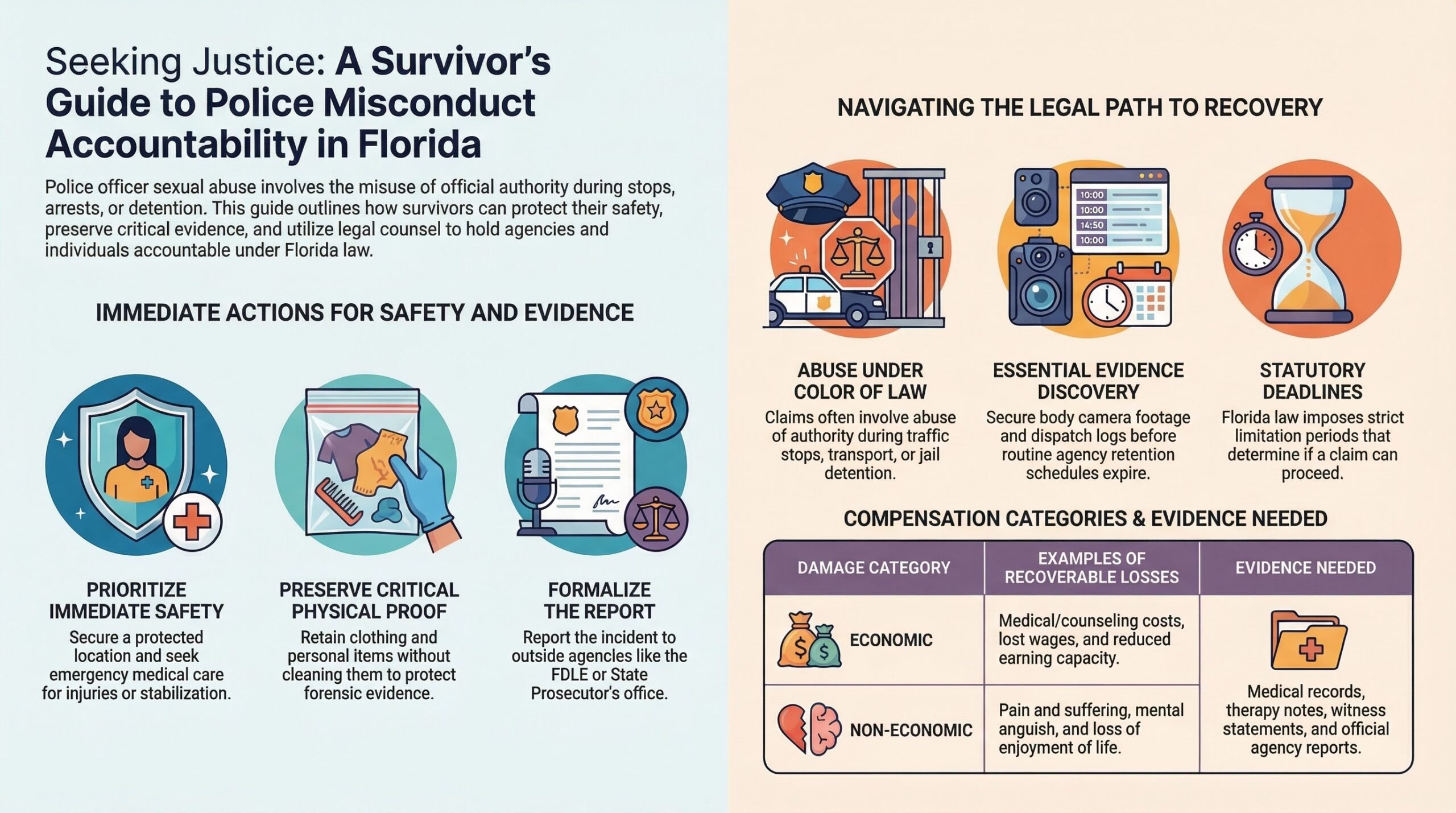


How We Can Help With Your Florida Police Officer Sexual Abuse Claim
When a person reports sexual abuse by a police officer in Florida, legal counsel can help protect that individual’s rights while building a clear and well-supported claim. Counsel may coordinate the immediate preservation of evidence, secure records, identify witnesses, and carefully document injuries, communications, and agency responses. This early work supports accountability and reduces the risk that important facts are lost, altered, or ignored.
Attorneys may also handle contact with departments, insurers, and opposing counsel, allowing the survivor to focus on safety, treatment, and family support. They can assess damages, explain available legal options, prepare filings, and pursue remedies through strategic negotiation or litigation. If a client fears intimidation, job consequences, or civil rights retaliation, counsel can take steps to address those risks and preserve the integrity of the claim. Throughout the process, effective representation serves not only the injured person, but also the broader public interest in lawful, trustworthy institutions and community safety.
OUR CONSULTATIONSARE FREE
START YOUR FREE CASE REVIEW

Understanding Police Officer Sexual Abuse Cases in Florida
In Florida, police officer sexual abuse cases involve allegations that an officer used the authority, access, or control granted by a law enforcement position to commit sexual misconduct, coercion, assault, or exploitation. These matters require careful legal analysis because the power imbalance can affect reporting, witness cooperation, and the preservation of facts.
A proper understanding begins with identifying whether the conduct violated criminal law, civil rights protections, departmental policy, or duties owed to the public. Investigating Credibility is necessary, yet this process should respect trauma, avoid assumptions, and focus on consistent, verifiable facts.
Evidence Documentation may include records, communications, medical findings, surveillance materials, personnel information, and prior complaints when permitted by law. In service to harmed individuals and community trust, legal review often examines agency supervision, reporting procedures, and possible institutional failures. A thorough case assessment helps clarify accountability, protect rights, and support informed decisions about safety, justice, and lawful remedies under Florida law.

Common Scenarios When Police Officer Sexual Abuse Might Take Place in Florida
Police officer sexual abuse in Florida may arise in several recurring settings where authority and limited oversight create opportunities for misconduct. These situations can include traffic stops and searches, conduct during arrest and transport, misconduct in jails or detention facilities, and abuse that occurs during questioning. Identifying these common scenarios helps clarify how abuse may occur and why careful legal review is often necessary.
Traffic Stops And Searches
Although most traffic stops and vehicle searches are routine law enforcement encounters, they can create isolated settings in which an officer may misuse authority to engage in sexual misconduct or coercive behavior.
In Florida, these encounters may involve requests to exit a vehicle, pat-downs, or consent searches conducted without proper safeguards. When supervision is limited, a vulnerable driver or passenger may face inappropriate comments, invasive touching, or pressure to be lenient. Such conduct may also overlap with wrongful interrogation, especially if sexual demands are linked to threats, citations, or arrest warnings.
In some cases, evidence mishandling or false justifications for a search may be used to conceal abuse. Careful documentation, prompt reporting, and independent legal review can help protect community members, support accountability, and preserve the dignity and safety of those affected.
During Arrest And Transport
When an arrest occurs, the combination of physical custody, heightened stress, and reduced public visibility can create conditions in which an officer abuses authority for sexual misconduct. During handcuffing, vehicle placement, questioning, or roadside delays, a person may be isolated and unable to challenge improper touching, sexual comments, coercive requests, or threats tied to release, charges, or safety.
In these encounters, Consent and boundaries are fundamentally compromised because custody removes meaningful freedom to refuse. Those assisting survivors often encourage prompt medical care, careful documentation of injuries, clothing, statements, and witness information, and attention to Evidence preservation. Dash camera footage, body camera records, dispatch logs, transport routes, and timing details may later clarify events. Early reporting can help protect others and support accountability through proper legal channels.
Jail And Detention Misconduct
Misconduct can continue after transport, as jails and detention facilities place individuals under sustained official control with limited privacy, restricted communication, and dependence on staff for basic needs and safety. In these settings, sexual abuse may arise during searches, shower access, medical escorts, cell checks, or housing assignments where oversight is weak and vulnerability is heightened.
Risks may increase when staffing shortages, poor supervision, retaliation concerns, and failures to separate vulnerable detainees create conditions for exploitation. Patterns sometimes appear alongside use-of-force complaints, ignored medical requests, missing surveillance footage, or inconsistent incident reports. Harm may also be linked to wrongful detention policies that prolong confinement or discourage reporting. A service-minded legal response seeks accountability, policy reform, and protection for those placed in government custody and care in Florida facilities.
Abuse During Questioning
Because questioning often occurs in isolated rooms with limited witnesses and a significant power imbalance, it can create conditions in which sexual abuse is harder to detect and easier to deny. During interviews, an officer may exploit fear, confusion, or threats of arrest to coerce sexual contact, invasive touching, or degrading conduct. Such misconduct may arise when a person is alone, restrained, intoxicated, young, or unsure of legal rights.
A service-minded response centers on safety, reporting, and evidence preservation. Prompt Trauma documentation can help record statements, timelines, and observable injuries. Medical evaluations may identify physical harm, support future care, and strengthen accountability efforts. Independent legal guidance can also help survivors understand options, protect dignity, and encourage institutions to prevent similar abuse against others in Florida communities statewide.


Legal Rights of Police Officer Sexual Abuse Victims in Florida
Although each case turns on its specific facts, police officer sexual abuse victims in Florida have important legal rights under both state and federal law. These rights may include access to civil remedies, protection from retaliation, and equal treatment within the justice system. Florida law and federal civil rights statutes can permit claims against individual officers and, in some circumstances, against agencies whose failures enabled misconduct.
Police accountability procedures and evidence disclosure rules may also affect whether institutions preserve records, disclose complaints, and answer for systemic neglect.
- Victims may seek compensation for physical injury, emotional harm, and related losses.
- Constitutional protections can apply when abuse occurs under color of law.
- Agency policies, supervision failures, and prior complaints may be legally significant.
- Confidentiality interests and dignity concerns merit careful respect throughout legal proceedings.
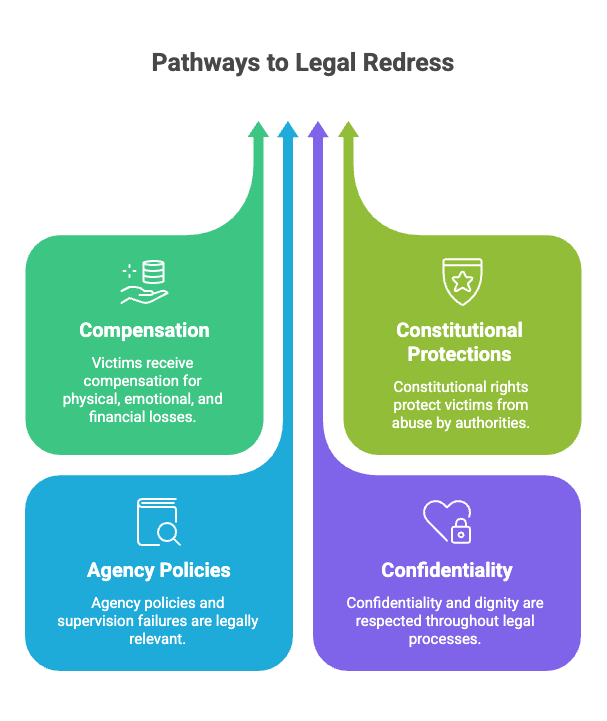
These legal protections serve a broader public purpose by reinforcing integrity, safeguarding vulnerable persons, and supporting communities that value lawful, service-centered policing.
Steps to Take After a Police Officer’s Sexual Abuse Incident in Florida
After a police officer’s sexual abuse incident in Florida, the first priority is to ensure immediate safety and seek a secure location away from further harm. The incident should then be reported to the appropriate authorities as soon as possible, because timely reporting may support both protection and accountability. It is also important to preserve crucial evidence, including clothing, messages, photographs, and medical records, as these materials may be essential in any future investigation or legal claim.
Ensure Immediate Safety
When sexual abuse by a police officer has occurred, the first priority is to secure immediate physical safety and move to a protected location away from the officer whenever possible. A survivor may seek refuge with a trusted person, public facility, shelter, or medical center where support is available.
If there are injuries, pain, breathing problems, or risk of further harm, Emergency Medical care should be obtained without delay. Assistance from advocates, hospital personnel, or community caregivers can help stabilize the situation and reduce isolation. Clothing, personal items, and communications should be preserved when feasible, and bathing or cleaning should be avoided if urgent treatment allows. In settings involving minors, elders, or vulnerable adults, caregivers should understand their Mandated Reporting duties and prioritize the protection, supervision, and compassionate, immediate care of the affected individual.
Report The Abuse
In the next key step, the abuse should be reported to an appropriate authority as soon as it is safe to do so, because prompt reporting can help protect the survivor, preserve evidence, and reduce the risk of further misconduct.
A report may be made to local law enforcement outside the officer’s agency, Internal Affairs, a sheriff’s office, the Florida Department of Law Enforcement, or a state prosecutor. Depending on the survivor’s age or circumstances, there may be mandatory reporting options through child protection or adult protective services.
Trusted advocates, attorneys, and victim support services can help explain procedures, accompany the survivor, and promote informed decisions. When possible, the report should clearly identify the officer, the agency involved, the location, and the general nature of the misconduct.
Preserve Key Evidence
Because physical and digital evidence can deteriorate quickly, preserving critical evidence should begin as soon as it is safe to do so. Clothing, bedding, photographs, messages, call logs, location data, and social media content may all help establish what occurred and when.
Careful Victim documentation can support later reporting and legal review. A survivor may record dates, times, locations, injuries, and the identities of involved officers or other persons present. Preserving contact information for potential witnesses is also important, as timely witness statements are often more reliable and complete.
Prompt medical evaluation can restore health and create medical records that document injuries, testing, and professional observations. If possible, items should be stored securely and handled as little as necessary. Organized evidence preservation can strengthen accountability efforts and protect others.
How a Florida Police Officer Sexual Abuse Lawyer Can Help You Initiate a Case
Many survivors find that the first step in pursuing a claim is clearer with guidance from a Florida police officer sexual abuse lawyer. Counsel can explain legal options, evaluate available facts, and help organize records, witness details, and timelines. This support often includes confidential reporting strategies, protection of privacy, and careful communication with investigators or agencies.
By clarifying the procedure early, counsel helps survivors act in ways that support truth, service, and police accountability.
- Reviews facts to identify viable claims and immediate next steps.
- Coordinates documentation, witness information, and official complaint preparation.
- Advises on deadlines, jurisdiction, and interactions with law enforcement bodies.
- Helps frame the case in terms of safety, dignity, and institutional responsibility.
A lawyer may also send preservation notices, request public records where appropriate, and prepare filings that accurately describe misconduct. Early representation can reduce avoidable errors and create a structured path toward accountability, protection, and informed decision-making for survivors and those supporting them.
Long-Term Effects of Police Officer Sexual Abuse Trauma
Police officer sexual abuse trauma can produce long-term emotional and psychological harm, including anxiety, depression, and persistent fear responses. It may also affect a survivor’s ability to form or maintain healthy relationships, as trust in authority figures and others is often considerably damaged. In many cases, these effects are accompanied by lasting physical symptoms, such as sleep disruption, chronic pain, and other stress-related health conditions.
Emotional And Psychological Impact
Often, the emotional and psychological impact of sexual abuse by a law enforcement officer extends well beyond the initial incident, affecting nearly every aspect of a survivor’s daily life. Many experience Trauma triggers that disrupt sleep, concentration, and a basic sense of safety. Anxiety, depression, shame, and hypervigilance may persist for years, especially when authority-related reminders intensify distress.
In many cases, post-incident coping involves withdrawal, emotional numbing, or overwork, all of which can mask profound internal suffering. Survivors may struggle with self-blame, reduced confidence, and chronic stress symptoms that impair employment, education, and routine responsibilities. Trust erosion can also affect how survivors view institutions, justice processes, and community support systems. Compassionate legal advocacy often recognizes these hidden injuries and helps survivors pursue accountability while protecting dignity and long-term emotional well-being.
Relationship And Trust Issues
Because abuse by a law enforcement officer exploits both personal boundaries and institutional power, its long-term effects frequently extend into a survivor’s closest relationships and ability to trust others. Survivors may struggle to feel safe with partners, relatives, coworkers, or helping professionals, especially when authority, secrecy, or dependence are involved. Ordinary interactions can become retraumatization triggers, causing withdrawal, hypervigilance, or difficulty interpreting intentions.
Consent boundaries may feel confusing or unstable, particularly after coercion distorted the meaning of choice and compliance. As a result, survivors may avoid intimacy, fear vulnerability, or remain in unhealthy dynamics to preserve perceived safety. Service-minded communities, advocates, and caregivers should recognize that these trust injuries are not personal failures. They often reflect adaptive responses to betrayal, and they require patient, consistent, trauma-informed support over time and accountability.
Lasting Physical Symptoms
Although the psychological impact of sexual abuse by a law enforcement officer is widely recognized, survivors may also experience persistent physical symptoms that continue long after the abuse ends. Chronic pain, headaches, gastrointestinal distress, sleep disruption, and cardiovascular changes may emerge as the body remains in a prolonged state of stress. Some individuals develop fatigue, muscle tension, or other functional impairment related to trauma, making daily tasks and work responsibilities more difficult.
These conditions may require ongoing evaluation, treatment, and careful Medical documentation to support both health needs and legal claims. In service-oriented advocacy, recognizing these physical effects is fundamental because they often reflect the lasting burden of abuse. A thorough understanding of symptom patterns can help professionals respond with accuracy, compassion, and appropriate resources for long-term recovery and accountability.
What to Expect During a Florida Police Officer Sexual Abuse Claim Process
A Florida police officer’s sexual abuse claim process typically begins with an initial case evaluation, during which the facts are reviewed, and the legal basis for the claim is assessed. The next stage generally involves gathering crucial evidence, followed by filing the claim in accordance with applicable legal procedures and deadlines. From there, the matter may proceed toward settlement negotiations or, if necessary, trial.
Initial Case Evaluation
When a survivor first consults a Florida police officer sexual abuse lawyer, the initial case evaluation is designed to assess the facts, identify potential legal claims, and explain the steps that may follow. During this meeting, the lawyer typically asks focused questions about the officer’s conduct, the setting, any prior reports, and resulting harm. Attention is also given to confidentiality concerns, available protections, and whether the circumstances suggest civil rights violations under state or federal law.
The lawyer may outline possible timelines, discuss filing deadlines, and explain how representation works. Survivors are generally encouraged to share only what they can comfortably describe, while the attorney provides a structured, respectful overview of options. This early consultation helps survivors understand their rights and make informed decisions about pursuing accountability and community protection.
Gathering Key Evidence
Because evidence often determines whether a claim can be substantiated, the gathering stage in a Florida police officer sexual abuse case is typically methodical and carefully paced. Attorneys generally work to preserve records, identify relevant timelines, and collect materials that may support a clear factual account.
This process may include obtaining medical documentation, electronic communications, internal agency records, and prior complaints involving the officer. Witness testimonies can help establish context, credibility, and patterns of conduct, especially when multiple sources describe similar events.
Surveillance footage, if available, may confirm movements, locations, or interactions that are otherwise disputed. Professionals may also advise clients to retain personal notes, photographs, or other contemporaneous items. A careful review of the evidence helps decision-makers assess the matter responsibly while honoring the needs of those seeking accountability and protection for others.
Filing The Claim
Initiating the claim typically involves a structured review of the facts, available evidence, and legal avenues that may apply under Florida law. Counsel commonly identifies responsible parties, confirms filing deadlines, and organizes records supporting liability and emotional damages.
The formal claim process may involve preparing a complaint, submitting required notices, and documenting prior reports, medical care, and witness accounts. Attention to evidence preservation remains important because digital communications, personnel records, and surveillance materials can be lost or altered without prompt action.
A service-minded approach emphasizes dignity, accuracy, and protection of the survivor’s interests throughout each filing step. Attorneys may also coordinate with investigators, trauma-informed professionals, and public agencies to strengthen the presentation while reducing unnecessary burdens on the injured person and any supporting family members.
Settlement Or Trial
Although many civil claims resolve before a courtroom verdict, a Florida police officer’s sexual abuse case may proceed through settlement discussions, mediation, or trial, depending on the strength of the evidence, the disputed facts, and the positions of the parties.
During settlement, counsel may present records, witness statements, and expert opinions to seek compensation without prolonged litigation. Mediation can encourage resolution while preserving privacy and reducing stress on survivors and their families. If negotiations fail, trial preparation intensifies, with depositions, motions, and testimony shaping the outcome. Credibility challenges and evidentiary disputes often influence whether a fair agreement can be reached.
At trial, a judge or jury evaluates liability and damages based on the presented proof. Throughout this phase, careful legal guidance helps survivors pursue accountability, protect community safety, and support future prevention efforts.
Compensation for Florida Police Officer Sexual Abuse Damages
When a Florida police officer’s sexual abuse causes lasting harm, the civil justice system may allow recovery for a range of damages tied to the survivor’s physical, emotional, and financial losses. Compensation can support accountability and restore stability, especially when evidentiary documentation clearly connects the abuse to ongoing harm and timely filing complies with the statutes of limitations.
| Consideration | Why It Matters |
|---|---|
| Medical records | Help show injury, treatment, and continuing care needs |
| Therapy notes | May demonstrate trauma’s persistence and functional impact |
| Witness statements | Can corroborate misconduct, reporting history, or institutional knowledge |
| Official reports | May reveal prior complaints, failures in supervision, or policy breaches |
A thorough claim often includes proof of treatment, changes in daily functioning, and credible testimony regarding the abuse’s effects. In service to survivors and their families, careful case preparation can strengthen a demand for fair compensation while reinforcing public responsibility, institutional transparency, and the protection of others from future misconduct.
Economic vs Non-Economic Damages in Florida Police Officer Sexual Abuse Cases
Florida police officer sexual abuse cases may involve both economic damages, such as medical expenses, lost income, and treatment costs, and non-economic damages, including pain and suffering, emotional distress, and loss of enjoyment of life. Distinguishing between these categories is important because each type of loss is assessed through different forms of evidence and legal analysis. Establishing the value of either category often requires documentation, expert opinion, and a clear connection between the abuse and the harm claimed.
Economic Damages Explained
Because compensation in these cases must account for both measurable financial loss and personal harm, Florida law distinguishes between economic and non-economic damages in police officer sexual abuse claims. Economic damages address objective losses that can be documented through records, invoices, employment files, and expert analysis.
In Florida police officer sexual abuse litigation, these damages may include medical treatment, counseling costs, prescription expenses, lost wages, reduced earning capacity, and out-of-pocket costs tied to reporting, relocation, or workplace harassment. They may also cover future care when professionals can reasonably project continuing financial needs. Accurate valuation often depends on organized evidence and careful rebuttal of common defense strategies that challenge causation, necessity, or the amount claimed.
By focusing on verifiable losses, economic damages help survivors secure resources needed to restore stability and continue serving their families and communities.
Non-Economic Losses
Although these losses do not appear on invoices or payroll records, non-economic damages often reflect some of the most serious harm in police officer sexual abuse cases. They address injuries that alter daily living, relationships, dignity, and a survivor’s sense of safety within the community.
Common non-economic loss types include pain and suffering, mental anguish, humiliation, loss of enjoyment of life, reputational harm, and trauma-related disruption of family connections. In many matters, emotional distress recovery is a central concern because abuse by an authority figure can damage trust, sleep, concentration, and the ability to engage in work, worship, or service to others. Florida law recognizes that these harms may persist long after physical evidence fades. A careful legal review helps identify the full human impact and supports a claim that reflects enduring personal consequences.
Proving Damage Value
When courts and insurers assess damage value in police officer sexual abuse cases, they examine both measurable financial loss and the broader personal harm supported by the evidence. Economic damages may include treatment costs, medication, lost wages, diminished earning capacity, and other out-of-pocket expenses linked to the abuse. Non-economic damages address pain, emotional distress, loss of dignity, and lasting psychological effects that disrupt daily living and relationships.
To prove value, careful Evidence preservation is critical. Contemporaneous records, witness statements, employment files, and digital communications can strengthen causation and credibility. Medical documentation often provides a foundation for showing the nature, duration, and severity of injury. In service to accountability and survivor well-being, a thorough presentation of both damage categories helps decision-makers reach fair, informed conclusions under Florida law.
When a Florida Police Officer Sexual Abuse Case Goes to Trial vs Settlement
Trial-versus-settlement decisions in a Florida police officer sexual abuse case depend on several factors, including the strength of the evidence, the extent of the survivor’s damages, the willingness of the parties to resolve the matter privately, and the legal risks associated with continued litigation. An effective trial strategy begins with a careful review of records, witness credibility, and evidence disclosure, all of which shape settlement leverage and damages negotiation.
A case may proceed to trial when liability is disputed, the defense minimizes harm, or public accountability is a central goal. Settlement may be appropriate when it can provide timely compensation, reduce stress on the survivor, and avoid the uncertainty of a jury verdict. Counsel evaluates whether the proposed terms reflect the full impact of the abuse, including emotional, physical, and financial losses. Throughout the process, the legal team’s role is to pursue an outcome that protects the survivor’s interests and supports meaningful accountability through a just legal resolution.
The Statute of Limitations for Florida Police Officer Sexual Abuse Cases
Beyond decisions about trial or settlement, the filing deadline can determine whether a Florida police officer’s sexual abuse claim may proceed at all. Florida law may apply different limitation periods depending on the legal theory asserted, the survivor’s age, and whether criminal conduct, Consent violations, or related civil rights abuses are involved.
Careful review of dates is accordingly critical. Some claims accrue when the abuse occurred, while others may involve delayed discovery issues or tolling rules. Separate notice requirements can also affect claims against government entities, and defenses such as qualified immunity may shape how a case is framed, though they do not replace statutory deadlines. Because courts expect timely filings, prompt evidence preservation, and organized witness interviews often matter greatly.
Records, reports, medical documentation, and electronic communications may all help establish chronology and accountability. For communities seeking justice and institutional reform, understanding these deadlines supports informed action, protects rights, and preserves the strongest possible factual foundation.
When to Contact a Police Officer Sexual Abuse Lawyer in Florida
Although many survivors spend time deciding what steps feel possible, early consultation with a police officer sexual abuse lawyer in Florida is often advisable once misconduct is suspected or disclosed. Prompt legal guidance can help preserve records, identify witnesses, and reduce avoidable mistakes when communicating with employers, agencies, or insurers. It may also assist families, caregivers, clergy, and community advocates who are trying to support a survivor responsibly and respectfully.
Contact is especially important when there are urgent safety concerns, possible retaliation, approaching deadlines, or questions about Mandated Reporting duties. A lawyer may also help a survivor understand options if a report has already been made, if internal complaints are underway, or if Criminal Investigations have begun. Early consultation does not require an immediate lawsuit or public action. Instead, it can provide a structured assessment of facts, available protections, and practical next steps, allowing service-minded supporters to respond with care, diligence, and informed judgment.
Why You Need an Experienced Florida Police Officer Sexual Abuse Lawyer
Once early legal guidance has clarified immediate concerns, the value of retaining an experienced Florida police officer sexual abuse lawyer becomes more apparent. These cases often involve powerful institutions, intricate reporting channels, and urgent decisions that can affect safety, accountability, and long-term recovery for survivors and their families.
An experienced lawyer understands how to pursue Evidence preservation before records disappear, memories fade, or agencies shape the narrative. Counsel can also coordinate trauma documentation in a manner that respects the survivor’s well-being while supporting a clear legal record. This work helps protect dignity, strengthen claims, and reduce avoidable harm during an already difficult process.
Experience also matters when addressing governmental immunity issues, internal investigations, and civil rights violations arising from misconduct by law enforcement officers. Skilled representation promotes a structured response, identifies responsible parties, and seeks remedies that may encourage institutional reform. In this way, legal action can support both individual rehabilitation and broader community protection.
How to Choose the Right Police Officer Sexual Abuse Lawyer for Your Case in Florida
Because these claims involve sensitive facts, institutional resistance, and strict procedural demands, selecting the right police officer sexual abuse lawyer in Florida requires careful evaluation rather than urgency alone. A suitable attorney should have direct experience handling civil rights abuse matters, familiarity with governmental defendants, and a record of trauma-informed representation.
Careful review should also focus on Client Communication, since survivors and families often need steady updates, honest timelines, and respectful guidance through difficult decisions. The lawyer should explain investigative steps clearly, including how Evidence Preservation will be addressed through records requests, witness identification, digital data retention, and coordination with experts when needed.
It is also prudent to assess courtroom readiness, professional discipline history, and the resources available for pursuing complex claims against powerful institutions. Consultations may help determine whether the attorney listens carefully, answers questions directly, and approaches the case with diligence, discretion, and a genuine commitment to accountability and public safety.
About The Law Offices of Anidjar & Levine
These considerations often prompt claimants to assess whether a firm has the experience, resources, and client-centered practices required for highly sensitive abuse cases.
The Law Offices of Anidjar & Levine is recognized in Florida for representing injured and vulnerable individuals with disciplined preparation and responsive communication.
In matters involving alleged police officer sexual abuse, a firm’s capacity to investigate thoroughly, coordinate evidence, and protect a claimant’s privacy can be especially important.
The firm presents itself as attentive to each client’s circumstances, offering confidential consultations and a process designed to reduce unnecessary burdens during legal proceedings.
Its approach emphasizes client-focused support, practical guidance, and consistent updates so claimants can make informed decisions.
By combining case management resources with advocacy tailored to serious misconduct claims, the firm seeks to pursue accountability while respecting the dignity of those affected.
For many, those qualities can help establish trust at a difficult time and promote confidence throughout proceedings.

Frequently Asked Questions
Can I Stay Anonymous When Filing a Police Officer Sexual Abuse Claim?
Yes, a person may sometimes remain anonymous when filing a police officer sexual abuse claim, though limits often apply. Available confidentiality options can include anonymous reporting, sealed records, and restricted disclosure during investigations or court proceedings. The extent of protection depends on the facts, the agency involved, and state law. Legal advocacy is often crucial to protecting privacy, preserving dignity, and helping survivors pursue accountability while minimizing unnecessary public exposure.
Will Reporting Affect My Immigration Status or Pending Visa Application?
Reporting generally does not, by itself, harm immigration status or a pending visa application. However, visa eligibility can depend on the facts of the case, prior record, and any related criminal allegations. Reporting timing concerns also matter, because delayed action may affect evidence and procedural options. A qualified immigration attorney should promptly examine the individual’s circumstances. Careful legal guidance helps protect rights, support accountability, and ensure informed decisions that serve both personal safety and community welfare.
Can I Sue if the Abuse Happened While I Was in Custody?
Yes, a person may sue if abuse occurred while in custody, including when a government officer or agency failed in its duty of care. Civil claims can seek accountability and support recovery, even where criminal charges are separate. Important factors include evidence, the role of custody rights, and the applicable statute of limitations. Prompt legal review helps protect claims, preserve records, and identify all responsible parties for those seeking justice and service.
Are Body Camera or Dashcam Recordings Available in These Cases?
Yes, body camera and dashcam recordings may be available in these cases, depending on agency retention policies, evidence disclosure rules, and any ongoing investigation. A claimant or attorney often requests them through discovery, subpoenas, or public records procedures. Access may be limited by privacy protections, redactions, or exemptions that protect victims, witnesses, and active criminal matters. Requests to preserve footage are important because agencies may delete footage under routine retention schedules.
What if the Officer Has Prior Complaints or Misconduct Allegations?
Prior complaints or allegations of misconduct may substantially strengthen a claim, especially when disciplinary records show a pattern of similar behavior. Such information can support credibility, notice, and possible supervisory failure. Prompt evidence preservation is crucial because internal files, witness statements, and electronic records may be lost or restricted over time. A careful legal review can determine whether earlier complaints are admissible and how they may help protect others from further harm.
—————————
Victims of police officer sexual abuse in Florida may have important legal options, and timely action can help protect both their rights and their well-being.
A qualified Florida Sexual Assault Lawyer can evaluate the facts, preserve key evidence, and pursue accountability against all responsible parties.
With informed legal guidance, survivors may seek justice and financial recovery through the civil process.
Law Offices of Anidjar & Levine represents clients with the experience, focus, and professionalism these serious cases require.