Law Offices of Anidjar and Levine assists survivors by evaluating the facts, identifying liable parties, and preserving essential evidence such as medical records, surveillance footage, and witness accounts. Counsel can explain civil remedies under Florida and federal law, address notice requirements, and manage urgent filing deadlines.
Legal representation also helps document trauma, policy failures, and supervision gaps while protecting claimant rights throughout the process. The sections below outline the process, rights, and strategic considerations in greater detail.
For related legal guidance, visit Florida Sexual Assault Lawyer.
Main Takeaways
- A Florida jail sexual assault lawyer investigates facts, identifies responsible parties, and explains possible civil claims under state and federal law.
- Counsel can preserve critical evidence, such as surveillance footage, medical records, grievance reports, staffing logs, and witness statements, before it is lost.
- Lawyers assess constitutional violations, deliberate indifference, and failures in supervision, staffing, classification, reporting, or jail safety procedures.
- They help meet urgent deadlines, including potential notice requirements for public entities, while preparing complaints and demand materials.
- Trauma-informed legal support can protect survivor rights, address retaliation concerns, and connect victims and families with medical and support resources.


How We Can Help With Your Florida Jail Sexual Assault Claim
When a person has suffered sexual assault in a Florida jail, legal counsel can help by evaluating the facts, identifying responsible parties, and pursuing all available civil remedies under state and federal law. Counsel serves by offering clear guidance, protecting the claimant’s rights, and managing urgent deadlines with disciplined attention to detail.
A focused legal team supports survivors through careful investigation steps, strategic evidence collection, and communication with agencies, witnesses, and medical providers. This assistance may include preserving records, reviewing reports, documenting injuries, and evaluating whether failures in supervision, staffing, reporting, or safety procedures contributed to the harm. Counsel also prepares demand materials, values losses, and addresses insurers or defense counsel from a position of strength.
Throughout the process, the objective remains service-centered: reducing burdens on the survivor, promoting accountability, and seeking resources that can support healing, stability, and future safety. Each action is guided by professionalism, discretion, and respect for the survivor’s well-being always.
OUR CONSULTATIONSARE FREE
START YOUR FREE CASE REVIEW

Understanding Jail Sexual Assault Cases in Florida
Why do jail sexual assault cases in Florida require careful legal and factual analysis? These matters often involve vulnerable people, controlled environments, and uneven power dynamics. A proper review must consider constitutional duties, jail policies, medical records, witness credibility, reporting timelines, and preservation of physical and digital evidence. It must also assess whether staff members or agencies failed to protect a person in custody from known dangers.
A disciplined evaluation also examines barriers that can distort the search for truth. Racial bias may influence reporting, investigation, credibility assessments, and institutional responses. Retaliation risks can discourage complaints, cooperation, and requests for medical or mental health care.
For those committed to serving others, understanding these pressures is crucial to pursuing accountability with fairness and care. Florida cases, therefore, require a measured approach that respects human dignity, identifies systemic failures, and distinguishes negligence, deliberate indifference, and criminal conduct under the applicable legal framework and standards.

Common Scenarios When Jail Sexual Assault Might Take Place in Florida
Jail sexual assault in Florida may arise in several recurring situations within correctional settings, each presenting distinct risks and legal concerns. Common examples include inmate-on-inmate assaults, staff misconduct incidents, abuse during transport or transfer, and acts that occur when a person is especially vulnerable in medical isolation. Identifying these scenarios helps clarify how such misconduct may occur and why careful investigation is often necessary.
Inmate-On-Inmate Assaults
Although correctional facilities are expected to maintain order and protect those in custody, inmate-on-inmate sexual assaults can occur in Florida jails under conditions that make vulnerable individuals easy targets. Overcrowding, poor supervision, housing misclassification, and delayed responses to threats may create opportunities for abuse in cells, showers, and isolated areas. Individuals who are younger, mentally ill, physically smaller, or new to detention may face increased risk.
When warning signs are ignored, harm may escalate quickly and leave lasting psychological and physical effects. A legal review may examine whether officials failed to separate known aggressors, respond to complaints, or enforce safety procedures. In these situations, meaningful victim support and trauma counseling can help survivors pursue protection, medical care, accountability, and a path toward stability while their rights and dignity remain central.
Staff Misconduct Incidents
In some Florida detention settings, sexual abuse may arise not only from inmate violence but also from staff misconduct during searches, transport, medical escorts, supervision rounds, or disciplinary interactions. Such incidents can involve coercive touching, exploitative viewing, sexual comments tied to authority, or retaliation after a complaint. They may also develop where boundaries collapse, reporting channels fail, or vulnerable detainees are isolated from witnesses and support.
Patterns often reflect broader Staff negligence issues, including weak training, poor supervision, incomplete documentation, and disregard of prior warnings. Some cases involve contraband abuse, where staff members exchange prohibited items for sexual access or silence. A service-minded review of these events focuses on accountability, protection of dignity, and safer detention practices that reduce opportunities for misuse of power and repeated harm to others.
Transport And Transfer Abuse
When detainees are moved between housing units, courthouses, hospitals, or other correctional facilities, the transport process can create conditions where sexual abuse is easier to conceal and harder to report. Limited visibility, hurried schedules, and temporary custody changes may reduce oversight and increase vulnerability during van rides, holding cells, stairwells, or intake corridors.
In these settings, abuse may involve staff, contractors, or other detainees positioned nearby without adequate supervision. Warning signs can include inconsistent logs, unexplained delays, damaged restraints, or sudden fear connected to specific routes or personnel. A Florida jail sexual assault lawyer may help families and survivors document transfer records, identify witnesses, and pursue accountability.
Effective advocacy also considers protections against retaliation, confidential reporting options, and post-release support so survivors can seek safety, stability, and informed legal guidance afterward.
Medical Isolation Vulnerabilities
Within medical isolation areas, detainees may face heightened risk because treatment spaces often involve privacy barriers, restricted movement, and fewer independent witnesses than general housing units. These conditions can create opportunities for abuse by staff, contractors, or other detainees when supervision is weak or improperly documented. Medical distress, sedation, and limited communication access may further reduce a person’s ability to report misconduct promptly.
From a service-centered legal perspective, careful review of records may reveal guard negligence, policy violations, and failures to follow monitoring procedures. Intake notes, camera gaps, medication logs, and staff assignments may all aid lawsuit documentation. Early Victim support is also crucial because compassionate reporting channels, medical evaluation, and trauma-informed advocacy can help protect dignity while preserving evidence for accountability and future safety reforms.


Legal Rights of Jail Sexual Assault Victims in Florida
Although incarceration limits many personal freedoms, it does not eliminate the fundamental right to bodily safety and protection from sexual abuse. In Florida, individuals in jail retain enforceable rights under the Constitution, federal civil rights law, and correctional standards that require humane treatment. These protections include reasonable safety measures, access to medical care,
Victim confidentiality and trauma support are designed to preserve dignity while reducing further harm. Institutions and staff may be held accountable when deliberate indifference, abuse of authority, or policy failures permit sexual violence.
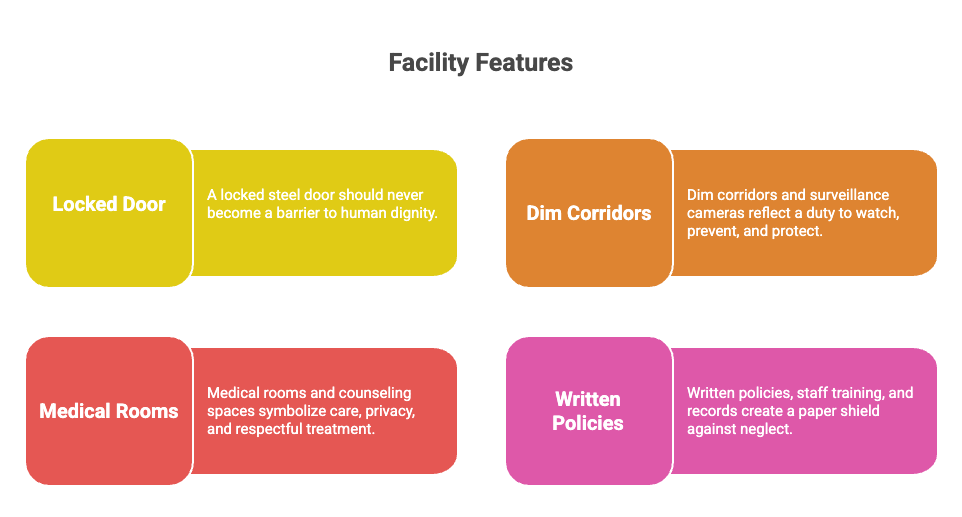
- A locked steel door should never become a barrier to human dignity.
- Dim corridors and surveillance cameras reflect a duty to watch, prevent, and protect.
- Medical rooms and counseling spaces symbolize care, privacy, and respectful treatment.
- Written policies, staff training, and records create a paper shield against neglect.
For those committed to serving others, these rights affirm that every person, regardless of custody status, remains worthy of protection, respect, and lawful recourse under Florida and federal justice systems.
Steps to Take After a Jail Sexual Assault Incident in Florida
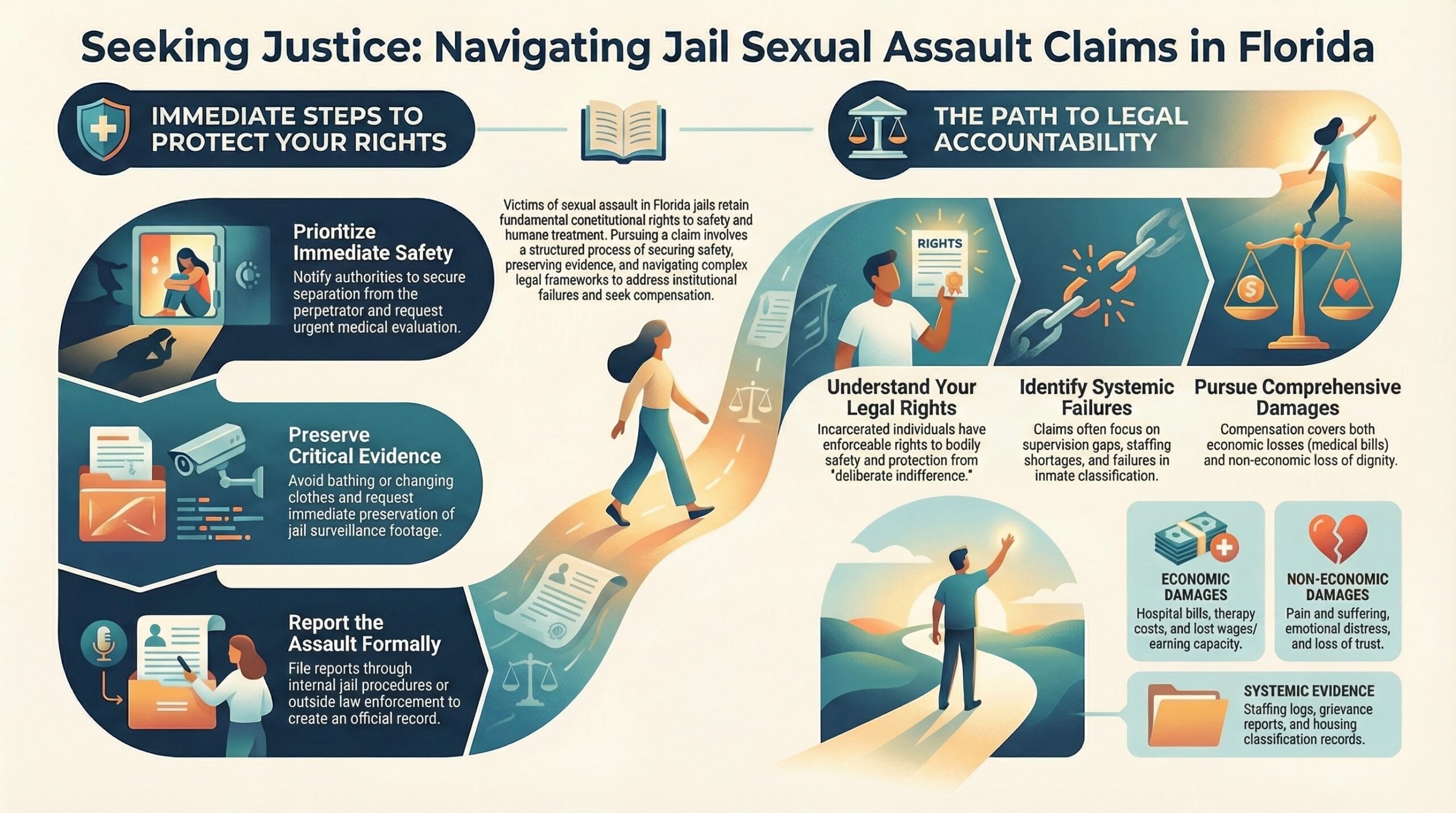
After a jail sexual assault incident in Florida, the first priority is to guarantee the victim’s immediate safety and separation from the alleged perpetrator. The incident should then be reported through the available jail procedures and, when possible, to outside authorities to create an official record. It is also important to preserve essential evidence, including clothing, injuries, and written communications, because these materials may be vital to any investigation or legal claim.
Ensure Immediate Safety
When a sexual assault occurs in a Florida jail, the first priority is to secure the victim’s immediate safety by removing the person from further contact with the alleged perpetrator and notifying appropriate staff or outside authorities at once. Immediate separation helps prevent additional harm and preserves the person’s dignity during a traumatic time. Victim protection may include transfer to a different housing area, heightened supervision, and access to medical care without delay.
In some circumstances, legal advocates may later help pursue restraining orders to reinforce safety planning. Crisis counseling should also be made available promptly, because emotional stabilization is an important part of early care. Those assisting should act calmly, document immediate needs, and focus on creating a safe environment where the victim can receive compassionate support and begin recovery with trusted professionals.
Report The Assault
If the individual can do so safely, the assault should be reported as soon as possible to jail supervisors, medical staff, or an outside law enforcement agency, because prompt reporting creates an official record and can trigger protective and investigative procedures. When direct reporting feels unsafe, a trusted family member, advocate, or attorney may help communicate the allegation clearly and respectfully.
Many facilities also maintain procedures for confidential reporting, which may reduce fear of retaliation while still alerting appropriate authorities. The report should identify the date, location, involved persons, and any immediate safety concerns, using factual language whenever possible.
Attorney guidance can help the individual understand reporting options, institutional policies, and legal rights under Florida and federal law. Early reporting often supports access to protection, medical care, counseling, and independent review thereafter.
Preserve Key Evidence
In the immediate aftermath of a jail sexual assault, preserving physical and documentary evidence can be critical to any medical, administrative, or legal response. If it is safe to do so, the survivor should avoid bathing, changing clothes, or discarding bedding until a medical examination is performed. Clothing, photographs of injuries, and written recollections may help establish an accurate timeline.
Those assisting should request prompt video preservation from the facility, including camera footage from housing units, hallways, transport areas, and medical stations. They should also identify potential witnesses and secure Witness statements as soon as possible, while memories remain fresh.
Copies of grievances, incident reports, medical requests, and disciplinary records should be retained. Careful documentation serves the broader goal of accountability, helping protect the survivor and others from further harm within the correctional environment.
How a Florida Jail Sexual Assault Lawyer Can Help You Initiate a Case
Although initiating a jail sexual assault case in Florida can feel procedurally complex, a Florida jail sexual assault lawyer helps establish the legal basis of the claim by identifying the proper parties, safeguarding necessary evidence, and explaining the available civil and administrative remedies.
A Florida jail sexual assault lawyer clarifies the legal path by identifying responsible parties, preserving evidence, and outlining available remedies.
Counsel often begins with a case investigation strategy that reviews incident reports, medical records, surveillance footage, and witness accounts. This early assessment supports an evidence preservation plan and helps prevent loss of critical materials.
Through trauma-informed advocacy, counsel communicates with care while guiding survivors and families toward victim support resources that strengthen informed decision-making and service to others.
- A locked records room, where reports, logs, and videos are secured before they disappear
- A quiet interview setting, where facts are gathered with dignity and patience
- A clear filing path, where deadlines, notices, and responsible parties are identified
- A support network, where legal guidance connects survivors with practical community assistance
Long-Term Effects of Jail Sexual Assault Trauma
Jail sexual assault trauma may produce lasting emotional and psychological harm, including anxiety, depression, post-traumatic stress, and persistent fear. It may also lead to serious physical health consequences, such as chronic pain, sleep disruption, and other stress-related conditions that continue well after the assault. Over time, these effects may impair daily life, interfering with employment, relationships, personal stability, and the ability to function normally.
Emotional And Psychological Harm
Because sexual assault in a correctional setting often combines physical violence, coercion, and extreme power imbalance, the resulting psychological harm can persist long after release or transfer. Survivors may experience chronic fear, shame, distrust, intrusive memories, and depression that interfere with daily functioning, relationships, and community reintegration. Ordinary sights, sounds, or authority interactions can become trauma triggers, causing panic, withdrawal, or emotional numbness.
Many also struggle with sleep disturbance, hypervigilance, irritability, and difficulty concentrating, which can undermine employment, education, and family stability. Some avoid reporting abuse or seeking help because they fear disbelief, retaliation, or renewed humiliation. In service-oriented legal and advocacy work, recognizing these effects supports compassionate communication, informed case development, and timely referral to qualified mental health support when survivors are ready and safe.
Physical Health Consequences
When sexual assault occurs in a correctional environment, the long-term physical effects may remain significant long after the immediate injuries have recovered. Survivors may face chronic pain, pelvic disorders, gastrointestinal complications, headaches, and sleep disruption, all of which can require ongoing evaluation and long-term care. Infection risk may also persist when exposure results in untreated sexually transmitted diseases, hepatitis, or other communicable conditions that demand careful monitoring.
Physical consequences can also overlap with trauma responses. PTSD symptoms may contribute to muscle tension, fatigue, elevated blood pressure, and other stress-related conditions that affect overall recovery. Some survivors experience sexual dysfunction, including pain, loss of desire, or difficulty with intimacy-related physical responses. In service to affected individuals, thorough medical assessment and consistent follow-up remain critical components of responsible care and informed advocacy.
Impact On Daily Life
Although the immediate event may be confined to a specific time and place, the long-term effects of sexual assault in a correctional setting often disrupt nearly every aspect of daily life. Survivors may struggle with sleep, concentration, employment stability, and trust in authority, limiting their ability to function consistently at home and in the community. Relationships with family, caregivers, and service providers can become strained as fear, shame, and hypervigilance alter ordinary interactions.
Daily routines may require ongoing therapy, medical care, and safety planning, especially when retaliation is a concern and Witness protection becomes relevant. Legal proceedings can intensify stress, as courtroom preparation often requires repeated disclosures and careful review of painful facts. For those committed to helping others, understanding these disruptions supports more informed, steady, and respectful advocacy over time.
What to Expect During a Florida Jail Sexual Assault Claim Process
A Florida jail sexual assault claim process generally begins with reporting the assault through appropriate internal and external channels, followed by the careful collection of evidence and supporting documentation. The next stage typically involves filing the claim in accordance with applicable legal procedures, while ensuring that records, witness statements, and medical information are preserved. Claimants should also expect the process to unfold over a variable timeline, with each phase shaped by the facts of the case, investigative steps, and procedural requirements.
Reporting The Assault
How should an inmate proceed after a sexual assault in a Florida jail, and what can reasonably be expected from the reporting process? The inmate should promptly notify a trusted jail official, a medical staff member, or a designated hotline, in accordance with facility procedures and safety needs. A report generally triggers administrative review, protective measures, and referral for medical assessment and mental health care, including Trauma therapy when appropriate.
Victim support services may also become available through advocates, counselors, or outside organizations authorized to assist incarcerated individuals. The reporting process often includes interviews, internal notifications, and coordination with supervisory personnel or law enforcement, depending on the circumstances. Those serving vulnerable populations should recognize that delays, fear of retaliation, and institutional barriers can affect reporting, yet timely notice usually improves access to protection and appropriate care.
Evidence And Documentation
When a sexual assault claim arises in a Florida jail, evidence and documentation often play a central role in evaluating what occurred, who had notice, and whether the facility responded appropriately. Helpful materials may include medical records, photographs, housing logs, witness statements, Surveillance footage, and incident reports created by officers or supervisors. These records can clarify timelines, identify gaps in supervision, and show whether prior complaints, threats, or policy violations were missed.
Careful preservation matters because detention facilities may routinely overwrite video or misplace internal records. A thorough review often examines staff rosters, grievance forms, disciplinary histories, and communication logs to determine whether warning signs existed. For those committed to protecting others, understanding how evidence is gathered and maintained can support accountability, improve safety practices, and help ensure vulnerable people are treated with dignity and care.
Filing The Claim
Although each case proceeds on its own facts, filing a Florida jail sexual assault claim typically begins with a careful review of the incident, the available records, and the legal deadlines that may control the matter. During initial consultations, counsel may assess jurisdiction, identify potential defendants, and explain whether notice requirements apply to a public entity.
The formal filing stage often follows substantial evidence gathering, including medical records, grievance reports, witness statements, surveillance requests, and internal jail documentation. A complaint is then prepared to state the alleged misconduct, the harm suffered, and the legal basis for relief.
Counsel may also address privacy concerns, protective measures, and preservation requirements to ensure that important information is not lost. Throughout this step, the process is structured to protect dignity, support accountability, and promote informed decisions for those seeking justice.
Case Timeline Expectations
After a claim is filed, attention often turns to the pace of the case and the stages that may follow over the months ahead. In Florida jail sexual assault matters, the timeline often depends on records requests, medical evidence, and an attorney’s investigation strategy. Early phases may include interviews, preservation letters, and coordination with witnesses to protect critical facts.
As the claim develops, counsel may review jail policies, surveillance footage, staffing logs, and prior complaints. Settlement discussions can arise before litigation, but some cases proceed into formal discovery, motions, and depositions. Courts may set deadlines that shape progress, while delays can occur when agencies resist disclosure or experts need additional review.
Throughout the process, informed legal guidance helps survivors and advocates understand expectations, support accountability, and pursue meaningful protection for others in institutional settings.
Compensation for Florida Jail Sexual Assault Damages
In Florida jail sexual assault cases, compensation may be available for both the immediate and long-term harm caused by the abuse, including physical injuries, psychological trauma, medical expenses, lost income, and pain and suffering. Such recovery can support recovery, accountability, and access to services that help survivors rebuild safe, stable lives after Fearful Trauma and related losses, including Non-Economic Damages.
| Area | Examples |
|---|---|
| Physical harm | Injuries, chronic pain |
| Emotional harm | Anxiety, depression |
| Care needs | Therapy, medication |
| Daily impact | Work limits, relationships |
| Personal losses | Dignity, enjoyment of life |
Courts may consider the severity of the assault, the duration of harm, and the effect on daily functioning. Documentation from medical providers, counselors, and witnesses often strengthens a claim. In service-oriented advocacy, compensation is viewed not only as financial recovery but also as a means of restoring dignity and supporting continued care for survivors and their families.
Economic vs Non-Economic Damages in Florida Jail Sexual Assault Cases
In Florida jail sexual assault cases, damages are often divided into economic losses and non-economic harm, each serving a distinct role in compensation. Economic damages generally include measurable financial losses, such as medical treatment costs, counseling expenses, lost income, and other documented out-of-pocket expenses. Non-economic damages address harms that are not easily reduced to a fixed dollar amount, and Florida compensation factors may include the severity of the abuse, its lasting psychological impact, and the specific circumstances of the case.
Economic Damage Categories
Beyond the immediate trauma of a jail sexual assault, Florida law may permit recovery for both economic and non-economic damages, each serving a distinct purpose in a civil claim. Economic damages focus on measurable financial losses tied to the assault and its aftermath. These may include emergency treatment, hospital bills, therapy expenses, medications, diagnostic testing, and future medical care supported by Medical documentation.
A civil claim may also address lost wages when injuries, treatment, or emotional disruption prevent employment after release. In some matters, diminished earning capacity may apply if long-term effects limit future work opportunities. Other recoverable losses can include transportation costs for treatment, rehabilitation expenses, and out-of-pocket payments for necessary services. Careful records, receipts, and professional evaluations often help establish these categories accurately and with integrity in court proceedings.
Non-Economic Harm Valuation
Although non-economic damages do not come with receipts or billing statements, they often represent some of the most significant harm alleged in a Florida jail sexual assault case. These losses address injuries that affect dignity, mental health, and daily functioning, even when no direct financial charge appears.
In this context, non-economic harm valuation focuses on emotional damages, trauma-related distress, humiliation, fear, loss of trust, and other forms of victim suffering. A careful presentation may rely on testimony from the survivor, relatives, counselors, or other witnesses who can describe changes in behavior, relationships, and overall well-being. Courts and counsel generally examine how the assault altered the person’s ability to feel safe, maintain stability, and participate in ordinary life. This category recognizes profound human harm that compassionate advocacy seeks to remedy.
Florida Compensation Factors
When compensation is evaluated in a Florida jail sexual assault case, the analysis generally separates damages into economic and non-economic categories to reflect both measurable financial loss and serious personal harm. Economic damages often include medical treatment, counseling costs, lost income, future care, and other expenses tied to the assault and its aftermath. Non-economic damages address pain, emotional distress, humiliation, loss of dignity, and lasting psychological effects that may impair daily functioning and relationships.
Courts and insurers may weigh the victim’s credibility, available records, witness accounts, and expert opinions when assessing value. Even where evidence gaps exist, credible testimony and consistent treatment history can remain significant. A careful damage evaluation helps advocates, families, and service-minded professionals pursue accountability while supporting recovery with practical resources, informed guidance, and sustained respect for the survivor.
When a Florida Jail Sexual Assault Case Goes to Trial vs Settlement
Because the path a Florida jail sexual assault claim takes depends on the strength of the evidence, the extent of the harm, and the position of the defendants, some cases resolve through settlement while others proceed to trial. Settlement is often considered when liability appears clear, injuries are well documented, and the parties seek a prompt resolution that limits further strain on the survivor and conserves public resources.
Trial becomes more likely when fault is disputed, institutional misconduct is denied, or the value of the claim remains sharply contested. Courts and counsel closely examine the credibility of witnesses, medical records, reporting history, and other supporting facts. They also weigh damage-proof elements, including physical injury, psychological harm, treatment needs, and long-term effects. A settlement can provide certainty and privacy, while a trial may offer fuller public accountability and a jury determination. The appropriate path is guided by evidence, litigation risk, and the goal of securing just, service-minded results.
The Statute of Limitations for Florida Jail Sexual Assault Cases
Time limits can determine whether a Florida jail sexual assault claim may be heard at all, regardless of whether the matter appears headed toward settlement or trial. Florida law applies different filing deadlines depending on whether the claim is civil, involves government actors, or relates to criminal prosecution, and each path may impose separate notice requirements.
Careful attention to Inmate reporting timelines matters because internal grievance deadlines can affect later claims, even when they do not replace court deadlines. In service-oriented settings, timely action helps protect vulnerable people and supports institutional accountability. Evidence preservation basics are equally important, since records, surveillance footage, medical findings, and witness recollections may fade or disappear with time.
Some cases involve tolling rules, delayed discovery issues, or exceptions for minors or incapacity, but those rules are fact-specific. Because limitation periods can overlap and conflict, accurate date tracking remains crucial to preserving claims and promoting a fair review of serious allegations.
When to Contact a Jail Sexual Assault Lawyer in Florida
Although a person may hesitate to seek legal help while events are still unfolding, early contact with a jail sexual assault lawyer in Florida is often critical to protecting both legal rights and indispensable evidence. Prompt action can help document injuries, preserve surveillance footage, identify witnesses, and support timely reporting through proper channels within the facility and outside agencies.
Contact is especially important when there are signs that records may disappear, memories may fade, or retaliation is feared. Family members, clergy, advocates, or other trusted supporters may also reach out when an incarcerated person cannot safely do so.
Early legal guidance may assist with evidence preservation, requests for medical attention, and access to trauma counseling or other supportive services. It may also help ensure that communication with officials is organized and that immediate concerns about safety, housing, and treatment are addressed. Acting quickly often serves both accountability and compassionate care for those harmed.
Why You Need an Experienced Florida Jail Sexual Assault Lawyer
Securing representation from an experienced Florida jail sexual assault lawyer can materially affect the strength and direction of a case. Such counsel helps protect inmates’ rights, identify urgent legal issues, and address barriers that often prevent accountability in custodial settings. First, a knowledgeable lawyer can explain reporting options, coordinate with the appropriate authorities, and reduce the risk of complaints being ignored, delayed, or mishandled.
Second, effective representation is critical to preserving evidence, including medical records, surveillance footage, witness statements, and institutional documents that may otherwise disappear. An experienced lawyer also recognizes patterns of negligence, abuse, or retaliation that may support broader claims and institutional reform.
In addition, counsel can help organize survivor support resources to promote stability while legal steps proceed. For individuals committed to protecting vulnerable people and improving detention conditions, experienced legal advocacy serves both the immediate interests of the survivor and the broader public interest by providing meaningful oversight, accountability, and safety.
How to Choose the Right Jail Sexual Assault Lawyer for Your Case in Florida
After recognizing the value of experienced representation, the next step is identifying counsel with the specific skills and judgment a Florida jail sexual assault case requires. Selection should focus on attorneys who handle custodial abuse matters, understand institutional procedures, and approach each claim with disciplined analysis and respect for the people affected.
A careful review of an attorney’s methods can reveal whether the representation will be effective. Important considerations include the lawyer’s approach to assessing credibility, experience evaluating witness credibility, and ability to develop a sound case strategy based on records, timelines, medical evidence, and facility policies. Strong counsel should also explain how a defense investigation may unfold and how the legal team plans to respond to disputed facts, missing documentation, or pressure from public agencies. For those seeking justice in the service of safety and accountability, the right lawyer is one who combines preparation, clear communication, and steady advocacy throughout the process.
About The Law Offices of Anidjar & Levine
When legal action involves allegations of sexual assault in a Florida jail, The Law Offices of Anidjar & Levine provides representation grounded in careful case review, factual development, and a clear understanding of how custodial abuse claims are examined.
The firm approaches these matters with disciplined attention to evidence, institutional records, witness accounts, and applicable Florida and federal standards.
Its work reflects Client advocacy that centers on accountability, dignity, and informed decision-making for those seeking justice after abuse in custody.
Through steady legal guidance, the firm helps survivors and families understand reporting options, civil claims, and the procedural demands that often shape these cases.
The Law Offices of Anidjar & Levine is also recognized for maintaining direct communication and responsive service throughout representation.
That approach supports people who wish to protect others from future harm while pursuing lawful remedies. In intricate jail assault litigation, the firm’s structured preparation and consistent focus on client needs remain central to its practice.

Frequently Asked Questions
Can Family Members Report Jail Sexual Assault on a Victim’s Behalf?
Yes, family members can often report jail sexual assault on a victim’s behalf, especially when the victim fears retaliation or cannot safely speak. Proper reporting procedures may allow relatives to notify jail administrators, outside oversight agencies, or law enforcement. However, victim consent remains important whenever possible, particularly regarding investigations and services. A prompt report can help preserve evidence, protect the victim, and support accountability while respecting the victim’s wishes.
Are Jail Phone Calls or Letters Used as Evidence in Claims?
Yes, jail phone calls or letters may be used as evidence in claims when they contain admissions, threats, inconsistencies, or reports of abuse. Investigators often examine phone recordings and written correspondence to assess credibility and timeline. Their value depends on authenticity, relevance, and lawful collection. Because privacy rules and evidentiary standards vary, careful attorney review helps determine admissibility, protect the victim’s interests, and support informed decisions that serve accountability and justice.
Can Immigration Status Affect a Florida Jail Sexual Assault Case?
Yes, immigration status can affect a Florida jail sexual assault case, especially regarding reporting, witness cooperation, and immigration consequences tied to related criminal allegations. However, a victim’s Due process rights and access to protection do not depend on citizenship or legal status. Courts, investigators, and advocates serving vulnerable people should evaluate credibility and safety without bias. Immigration concerns may also influence plea decisions, detention risks, and communication with law enforcement.
What if the Assault Occurred During Inmate Transport or Medical Transfer?
If the assault occurred during Inmate Transport or a Medical Transfer, liability may still extend to the facility, transport officers, medical staff, or private contractors responsible for supervision and safety. A careful investigation would review logs, video, witness accounts, restraint procedures, and reporting failures. Those facts can support criminal charges, civil claims, and protective measures. Prompt documentation and trauma-informed medical care often strengthen accountability and help protect others from similar abuse.
Are Correctional Officers Required to Wear Body Cameras in Florida Jails?
No, Florida law does not universally require correctional officers in jails to wear body cameras. Requirements often depend on local agency rules, funding, jail policies, and compliance standards. Some facilities use cameras to improve accountability, evidence collection, and staff conduct review. When misconduct is alleged, camera footage may affect investigations, civil claims, and victim compensation efforts. A facility’s written policies and preservation practices usually determine whether footage exists or is available.
—————————
Victims of jail sexual assault in Florida may have important legal options, and prompt action can help preserve evidence and protect their rights.
A qualified attorney can evaluate the facts, identify liable parties, and pursue appropriate compensation and accountability.
The Florida Sexual Assault Lawyer team at Law Offices of Anidjar & Levine provides guidance through each stage of the process, with a focus on clear communication and careful case preparation.
Legal support can be crucial in seeking justice after a serious institutional failure.