A Florida Uber sexual assault lawyer helps survivors protect essential evidence, report the assault properly, and evaluate civil claims against the driver, Uber, or other negligent parties.
The Law Offices of Anidjar and Levine may help preserve trip records, communications, medical documentation, and witness accounts while addressing urgent safety and privacy concerns.
Legal review often focuses on liability, damages, and time-sensitive filings under Florida law.
Survivors seeking guidance from a Florida Sexual Assault Lawyer can learn more about the main steps, rights, and case considerations below.
Main Takeaways
- Prioritize safety: leave the area, seek medical care, and call 911 if the driver remains nearby or the danger continues.
- Report the assault to Florida law enforcement promptly; Uber’s in-app report can help, but does not replace a police report.
- Preserve evidence immediately by saving screenshots of the trip, messages, clothing, photos, medical records, and witness contact information.
- A Florida Uber sexual assault lawyer can review trip data, timelines, driver identity, and company safety failures to identify liable parties.
- Legal counsel can handle preservation requests, insurance communications, and filings while supporting survivor-centered participation in a civil case.
How We Can Help With Your Florida Uber Sexual Assault Claim
When a person is assaulted during an Uber ride in Florida, legal counsel can help by investigating the incident, identifying all liable parties, and building a claim supported by evidence. Their role often begins with immediate civil evidence preservation, including trip records, communications, surveillance footage, medical documentation, and witness statements. They may also pursue ride account recovery to secure digital details that clarify timelines, locations, and driver information.
Counsel can coordinate with insurers, transportation companies, and third parties to prevent critical information from being lost or overlooked. They assess damages carefully, document physical and psychological harm, and calculate present and future losses with diligence. For clients focused on protecting others, this work can also encourage stronger safety practices and accountability. Throughout the process, legal counsel provides structured guidance, explains each step clearly, and prepares a claim for negotiation or litigation if needed.
The objective is practical support, dependable advocacy, and a thorough path toward financial recovery.
Understanding Uber Sexual Assault Cases in Florida


Why do Uber sexual assault cases in Florida often require close legal and factual review? These claims often involve overlapping criminal, civil, and corporate issues, each demanding careful attention to evidence, timing, and survivor protection. Courts and insurers may examine driver status, app records, communications, location data, and witness accounts before assessing responsibility. Questions about Passenger consent confusion can further complicate factual analysis, especially when trauma affects memory or reporting.
OUR CONSULTATIONSARE FREE
START YOUR FREE CASE REVIEW

Florida cases also require an evaluation of platform liability standards, including whether the rideshare company may be responsible for screening, supervision, safety practices, or response failures. A detached legal review helps identify which duties existed, who may have breached them, and what losses may be compensable under state law. This process is important for those seeking accountability in a way that honors dignity and public safety.
Careful case development can support informed decisions, strengthen advocacy, and help communities better protect vulnerable riders and promote safer transportation services.
Common Scenarios When Uber Sexual Assault Might Take Place in Florida
Several recurring circumstances may give rise to Uber sexual assault incidents in Florida, each presenting distinct safety and liability concerns. These situations can include misconduct by a driver during a ride, assault occurring after dropoff, encounters with individuals posing as authorized drivers, and heightened risks associated with shared ride arrangements. Identifying these common scenarios helps clarify how such incidents may occur and why careful legal review is often necessary.
Driver Assault During Ride


Although rideshare trips are expected to provide a safe means of transportation, driver assault during a ride remains one of the most serious situations in which Uber sexual assault may occur in Florida. Such incidents may involve unwanted touching, coercive comments, route deviations, locked doors, or threats intended to overpower a passenger’s ability to respond safely. In these situations, clear consent boundaries are ignored, and the rider may feel isolated despite being in a moving vehicle.
App tracking can provide useful location data, yet technology alone may not prevent misconduct once an assault begins. A service-minded legal review may help survivors understand reporting options, preserve evidence, and identify whether negligent screening, supervision, or safety failures contributed to the harm. Prompt documentation can support accountability and informed next steps.
Assault After Dropoff
When a ride has formally ended, the risk of misconduct does not necessarily end at drop-off. In some Florida cases, an assault may occur moments later, such as when a driver lingers, follows a passenger to a doorway, or pressures continued contact after the trip has closed. These incidents can involve a clear violation of consent, even though the ride record shows completion.
From a service-oriented legal perspective, careful attention to facts after dropoff may help protect both the survivor and others. Time, location data, messages, and witness observations may support a claim and clarify the reporting timeline. Prompt medical care and formal notice to law enforcement or the platform may preserve evidence. A lawyer may evaluate liability, document harm, and guide next steps with diligence and respect.
Impersonated Driver Encounters
Risk can also arise before any legitimate ride begins, particularly in encounters with someone posing as an Uber driver who targets a passenger expecting pickup. In these situations, an individual may wait near bars, airports, hotels, or event venues, watching for riders who appear distracted or rushed. By using a similar vehicle, saying the passenger’s name, or claiming there are app problems, the impersonator may persuade someone to enter the car without proper verification.
Once inside, the passenger may face isolation, coercion, or other violations of consent. These incidents raise serious concerns about public safety education, pickup procedures, and platform accountability. For those committed to protecting others, recognizing this scenario underscores the importance of careful identity confirmation and prompt reporting when suspicious conduct occurs in Florida communities statewide.
Shared Ride Vulnerabilities
In shared ride settings, additional vulnerabilities may emerge because multiple passengers, shifting drop-off sequences, and reduced privacy can create confusion about who is present in the vehicle and why. In Florida, these conditions may increase exposure to misconduct when riders are isolated after others exit, when seating arrangements limit escape, or when alcohol and fatigue impair awareness. Consent breakdowns may occur when boundaries are misread or deliberately ignored amid crowded, changing circumstances.
Privacy vulnerabilities can deepen when conversations, destinations, or personal conditions become known to strangers in the car. Questions about victim credibility may also arise if several witnesses recall events differently or leave before reporting becomes possible. Although app-based tracking can document routes and timing, it does not always capture harmful conduct occurring inside the vehicle.
Legal Rights of Uber Sexual Assault Victims in Florida
Under Florida law, victims of sexual assault involving an Uber driver or rideshare trip may pursue both civil and criminal remedies, each serving a distinct purpose. Florida recognizes that Victim Consent must be freely given, and any coercion, incapacity, or force can defeat it. Legal Protections may extend through criminal prosecution, civil injury claims, and potential claims against negligent parties whose conduct contributed to harm.
Florida law may allow survivors of rideshare sexual assault to pursue criminal charges, civil claims, and accountability for negligent parties.
- Victims may seek criminal accountability through state prosecution, which can result in penalties, supervision, and protective court orders.
- Victims may also pursue civil compensation for medical costs, counseling, lost income, pain and suffering, and other related losses.
- Florida law may permit claims for negligent hiring, retention, or supervision, or for failures in rideshare safety practices.
- Certain privacy rights, anti-retaliation safeguards, and access to victim advocacy resources can support dignity and continued service to others.
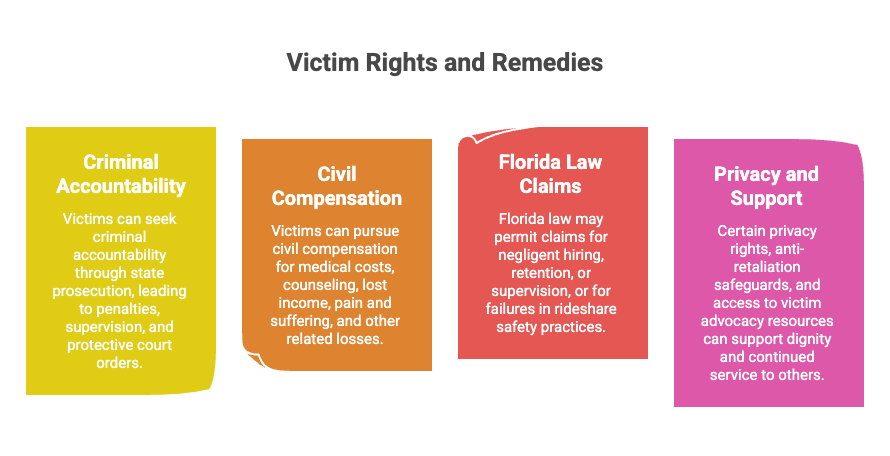
These rights help promote accountability, restoration, and public safety while respecting each survivor’s autonomy, privacy, and long-term well-being.
Steps to Take After a Uber Sexual Assault Incident in Florida
After an Uber sexual assault incident in Florida, the immediate priority is to guarantee personal safety by leaving the area, seeking medical attention, and contacting trusted support if needed. The assault should then be reported promptly to law enforcement and, where appropriate, through Uber’s reporting system to create an official record of the incident. It is also important to preserve crucial evidence, including clothing, medical records, ride details, messages, and screenshots, as these materials may support both criminal and civil proceedings.
Ensure Immediate Safety
A person subjected to sexual assault during an Uber ride in Florida should prioritize immediate physical safety by moving to a secure location as soon as possible, such as a public area, nearby business, or place where trusted assistance is available. Immediate victim support may include asking employees, security personnel, or bystanders for help, using a phone to reach a trusted contact, and remaining in a well-lit environment.
If injuries are present or danger continues, emergency medical care should be sought without delay. The individual should also contact local authorities if urgent protection is needed, especially when the assailant remains nearby. Preserving personal safety takes precedence over all other concerns. Calm, practical action can reduce further harm and create a safer setting for receiving care, support, and informed guidance in the immediate aftermath.
Report The Assault
When personal safety has been secured, the assault should be reported to law enforcement as soon as reasonably possible, because a prompt report can support both public safety and the preservation of crucial evidence. In Florida, victim reporting often begins with emergency services or local police, depending on the immediate circumstances and risk.
A clear account should be provided that identifies the driver, ride details, pickup and drop-off locations, and any witnesses. An organized incident timeline can help officers understand the sequence of events and respond effectively. Evidence documentation should include basic identifying information and the date and time the report was made, without delay. The assault may also be reported through Uber’s in-app safety tools, but reporting on the platform does not replace direct contact with police or a formal criminal report.
Preserve Key Evidence
Preserving available evidence should begin as soon as the incident is reported, because physical items, digital records, and contemporaneous observations can be altered, lost, or overwritten quickly. Clothing, messages, photographs, and medical documentation should be kept in their original condition whenever possible, as each item may assist investigators and advocates serving the survivor’s interests.
Screenshots should capture the app trip details, including a Digital timestamp, driver profile, route map, and ride receipts. The survivor or a trusted helper may also contact support through the platform to request preservation of trip data and communications. Names and contact information for potential witnesses should be recorded promptly, and brief summaries of their accounts should be written while memories are still fresh. These careful steps can strengthen accountability and support informed legal action.
How a Florida Uber Sexual Assault Lawyer Can Help You Initiate a Case
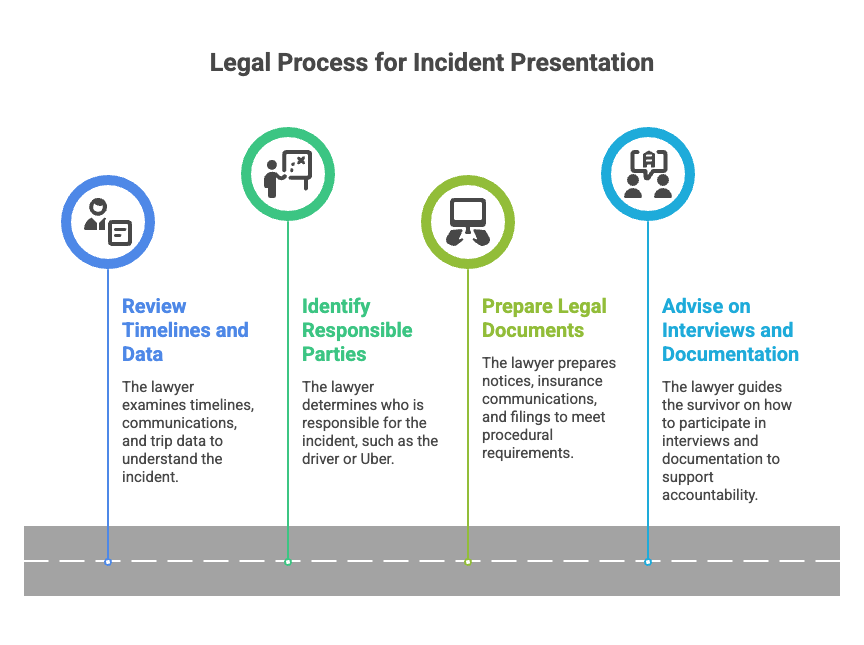
Although the first steps after an assault may feel unclear, a Florida Uber sexual assault lawyer can provide structure by evaluating the facts, identifying potential defendants, and explaining the legal options available under state law.
Counsel often begins by guiding evidence preservation efforts and securing rideshare records, medical documentation, witness information, and any police reports that may support a claim.
- The lawyer reviews timelines, communications, and trip data to determine how the incident may be presented clearly.
- The lawyer identifies responsible parties, which may include the driver, Uber, or other negligent actors.
- The lawyer prepares notices, insurance communications, and filings so procedural requirements are met on time.
- The lawyer advises on interviews and documentation, helping the survivor participate in ways that support accountability and service to others.
Long-Term Effects of Uber Sexual Assault Trauma
Uber sexual assault trauma may produce long-term emotional and psychological effects, including anxiety, depression, and persistent feelings of fear or mistrust. Survivors may also experience lasting relationship challenges, as trauma can affect communication, intimacy, and the ability to feel safe with others. In addition, these effects often disrupt daily life, interfering with work, sleep, routines, and overall functioning.
Emotional And Psychological Impact
Many survivors of sexual assault experience long-term emotional and psychological harm that extends far beyond the initial incident. They may face persistent anxiety, depression, panic, disrupted sleep, intrusive memories, and hypervigilance that interfere with daily functioning and community service. Trauma symptoms can also affect concentration, employment stability, academic performance, and confidence in routine activities, leaving survivors overwhelmed by ordinary demands.
In many cases, recovery requires structured treatment, practical coping strategies, and consistent support from informed professionals. Mental health documentation may help establish the extent of ongoing harm, especially when survivors must consider legal action or provide courtroom testimony. A careful record of counseling, diagnoses, and functional limitations can clarify the impact of the assault while also guiding appropriate care. Compassionate, trauma-informed assistance remains vital throughout long-term healing.
Lasting Relationship Challenges
Trauma from a sexual assault during a rideshare trip often extends into the survivor’s closest personal relationships, shaping how trust, safety, and emotional connection are experienced over time. Partners, relatives, and friends may observe withdrawal, heightened vigilance, or difficulty accepting support, even when care is genuine and consistent. Trust issues can alter communication patterns, reduce intimacy, and create uncertainty around dependence, vulnerability, and shared expectations.
In many cases, survivors require patient, informed support while boundary rebuilding becomes central to recovery. They may need greater control over touch, disclosure, and personal space, and the respect of limits can strengthen a sense of safety. Service-minded advocates, counselors, and loved ones can help by responding steadily, honoring autonomy, and recognizing that healthy relationships often recover gradually rather than quickly after profound interpersonal harm.
Daily Life Disruptions
Often, the long-term effects of a sexual assault during a rideshare trip interfere with ordinary routines long after the incident has ended. Survivors may struggle with commuting, shopping alone, sleeping regularly, or attending work without heightened vigilance and anxiety after assault.
These disruptions can affect concentration, punctuality, and confidence in public settings. A person may cancel appointments, avoid unfamiliar drivers, or rely heavily on trusted companions for transportation. Family members, caregivers, and community advocates often observe that simple tasks become exhausting because the survivor remains alert to possible danger. Over time, this strain may hinder professional responsibilities and personal independence.
Supportive counseling, trauma-informed medical care, and practical safety planning strategies can help restore stability. Consistent assistance from compassionate professionals may also strengthen daily functioning and encourage gradual reengagement with crucial responsibilities.
What to Expect During a Florida Uber Sexual Assault Claim Process
A Florida Uber sexual assault claim process generally begins with an initial claim evaluation, during which the facts, potential liability, and available legal options are assessed. It then moves into evidence collection, which may include medical records, police reports, digital ride data, witness statements, and other documentation relevant to the alleged assault. From there, the matter may proceed through settlement negotiations on an open timeline, and if no resolution is reached, formal court proceedings may follow.
Initial Claim Evaluation
When a Florida Uber sexual assault claim begins, the initial evaluation typically focuses on the known facts, the available evidence, and the legal options that may apply. Attorneys generally assess whether the reported events support a civil claim, identify potential defendants, and consider how Florida law may affect timing and liability. This stage often includes an Evidence timeline, allowing counsel to understand the sequence of events clearly and responsibly.
A police report review may also help clarify statements, dates, and agency involvement. Lawyers may discuss immediate concerns, including safety, privacy, and communication boundaries, so the claimant can make informed decisions while continuing to serve personal, family, or community responsibilities. The goal is a careful, respectful assessment that prepares the matter for the next steps without making premature assumptions or overlooking important legal considerations.
Evidence Collection Steps
Following the initial claim evaluation, the process generally turns to gathering and preserving evidence that may support the account and identify liable parties. Counsel often advises prompt medical care, both for health needs and for DNA preservation, while documenting injuries, clothing, and other physical conditions connected to the incident.
Additional steps may include securing police reports, ride records, app communications, GPS data, surveillance footage, and prior complaints involving the driver. Witness statements from passengers, bystanders, medical providers, or first responders can help clarify timing, behavior, and surrounding circumstances. Attorneys may also preserve digital evidence, including photographs, text messages, and social media activity, before material is altered or removed. Throughout this stage, careful documentation serves a broader purpose: protecting the survivor’s account and helping responsible parties be identified accurately and with care.
Settlement Negotiation Timeline
Although no two matters proceed on exactly the same schedule, settlement negotiations in a Florida Uber sexual assault claim typically begin only after sufficient evidence has been gathered to present a clear account of the incident, the resulting harm, and the parties who may bear responsibility.
From that point, counsel often evaluates the timing of the demand letter based on medical progress, documentation, and witness statements. A detailed demand may then be sent to insurers or other responsible entities, outlining losses and requesting compensation. Responses can take weeks or longer, depending on the intricacy and the number of parties involved. During negotiations, a careful settlement-offer strategy may include rejecting early, undervalued proposals, clarifying disputed facts, and presenting updated records.
This stage often requires patience, steady communication, and a continued focus on accountability, safety, and meaningful support for the survivor.
Possible Court Proceedings
If settlement efforts do not produce a fair resolution, a Florida Uber sexual assault claim may proceed into court, where the process becomes more structured and governed by formal procedural rules. The parties may exchange discovery requests, including documents, electronic records, and sworn testimony, to clarify disputed facts and identify supporting evidence. Attorneys may also file pretrial motions that ask the court to resolve legal issues, limit improper evidence, or dismiss unsupported claims before trial.
During hearings and trial preparation, the court sets deadlines, manages witness disclosures, and encourages orderly presentation of the case. If the matter reaches trial, each side presents testimony, expert opinions, and exhibits for judicial or jury review. Throughout this stage, careful legal guidance can help survivors pursue accountability while protecting dignity, privacy, safety, and meaningful justice.
Compensation for Florida Uber Sexual Assault Damages
A claim for damages in a Florida Uber sexual assault case may include compensation for both economic and non-economic losses arising from the incident. Counsel often helps survivors pursue accountable recovery while respecting Medical privacy and guiding insurance reporting requirements with care and professionalism.
| Area | Purpose |
|---|---|
| Treatment costs | Supports trauma-informed care |
| Counseling needs | Encourages emotional stabilization |
| Safety measures | Helps restore daily security |
Compensation may cover emergency treatment, follow-up care, therapy, medication, transportation to appointments, and costs associated with personal safety planning. It may also reflect the broader harm a survivor experiences after an assault, including disruption of family roles, service to others, and community participation. In many cases, legal counsel gathers records, witness statements, and expert opinions to present a clear picture of damages.
This process can help survivors seek resources that support healing, stability, and dignity, while, when permitted, holding responsible parties to a meaningful standard of accountability under Florida law.
Economic vs Non-Economic Damages in Florida Uber Sexual Assault Cases
In Florida Uber sexual assault cases, damages are generally divided into economic and non-economic categories, each addressing a different type of harm. Economic damages typically include measurable financial losses, such as medical expenses, therapy costs, and lost income, while non-economic losses may involve pain and suffering, emotional distress, and loss of enjoyment of life. Because the value of these damages often depends on records, expert opinions, and the specific impact on the survivor, proving their amount is central to the claim.
Economic Damages Explained
Under Florida law, economic damages refer to the measurable financial losses arising from an Uber sexual assault, while non-economic damages address the personal harms that do not come with a fixed price tag. In practice, these damages may include medical treatment bills, therapy costs, prescription expenses, transportation to appointments, and other documented out-of-pocket losses.
They may also include lost wages when injuries, trauma, or related care prevent a survivor from working. If the assault affects future earning capacity, that financial impact may be calculated through employment records, expert analysis, and testimony. Economic damages are supported by invoices, receipts, payroll data, and professional evaluations. By identifying these concrete losses with care and accuracy, counsel can help survivors pursue accountability and secure resources needed for safety, treatment, stability, and long-term recovery after trauma.
Non-Economic Losses
Because many consequences of an Uber sexual assault cannot be reflected in bills or wage records, Florida law also permits recovery for non-economic losses tied to the survivor’s personal harm. These damages may address pain, mental anguish, loss of dignity, humiliation, anxiety, sleep disruption, and diminished enjoyment of daily life. They recognize injuries that affect relationships, personal security, and the capacity to serve family and community with confidence.
In appropriate cases, courts may also consider Punitive damages to address especially wrongful conduct, although those damages serve a different legal purpose than non-economic compensation. Claimants should also understand that financial recovery can interact with obligations such as Medicaid liens, which may affect portions of a settlement. Careful legal guidance helps survivors pursue a result that respects the full human impact of abuse.
Proving Damage Value
Establishing the value of damages in a Florida Uber sexual assault case requires more than listing expenses, as the legal analysis must connect each loss to the assault with credible supporting evidence. Economic damages may include medical treatment, counseling costs, lost wages, and reduced earning capacity, all supported by records, billing statements, and expert evaluations.
Non-economic damages address pain, emotional distress, trauma, and loss of enjoyment of life, which often require consistent Survivor Documentation and professional testimony. Because these claims can face Credibility Challenges, attorneys often organize timelines, treatment histories, witness accounts, and employment records to show continuity and impact. This careful presentation helps courts, insurers, and juries assess fair compensation.
A thorough damage analysis also supports accountability, encourages informed decision-making, and helps survivors pursue resources needed for safety, treatment, and long-term recovery.
When a Florida Uber Sexual Assault Case Goes to Trial vs Settlement
Deciding whether a Florida Uber sexual assault case proceeds to trial or resolves through settlement depends on several case-specific factors, including the strength of the evidence, the extent of the survivor’s damages, disputes over liability, and the defendant’s willingness to negotiate in good faith. Counsel evaluates witness credibility, documentation, expert opinions, and company records before recommending next steps.
Settlement may be appropriate when liability is clear, and the defense offers compensation that reflects medical care, therapy, lost income, and pain. A trial may become necessary when Uber, the driver, or another party denies responsibility, minimizes the harm, or refuses to offer meaningful terms. Effective trial vs. mediation strategies help counsel weigh privacy concerns, litigation costs, and the survivor’s interest in closure while protecting the public from future harm.
If a trial is chosen, preparation often includes careful jury selection, organized exhibits, and measured jury persuasion tactics designed to explain trauma, establish accountability, and support a fair verdict for survivors.
The Statute of Limitations for Florida Uber Sexual Assault Cases
Although filing deadlines may seem procedural, the statute of limitations can determine whether a survivor of an Uber-related sexual assault in Florida may pursue a civil claim at all. Florida law sets specific time limits, which may vary depending on the facts, the survivor’s age, and the legal theory asserted. Missing the deadline can bar recovery, even when serious harm occurred, and liability appears clear.
Because of that reality, prompt evidence preservation often carries substantial importance. Digital trip records, app communications, witness accounts, medical documentation, and a police report may all become harder to obtain over time. Timely action can also affect insurance coverage questions, especially when multiple policies or corporate defendants are involved. In addition, organized survivor support may help individuals maintain records, follow treatment recommendations, and respond to requests for information. Careful attention to deadlines protects both legal rights and the integrity of the factual record.
When to Contact a Uber Sexual Assault Lawyer in Florida
When an Uber-related sexual assault is suspected or confirmed, contacting a Florida lawyer as early as possible can materially affect the protection of a survivor’s legal rights. Prompt action helps preserve records, secure witness information, and reduce the risk of evidence tampering. It also supports careful guidance on immediate decisions that may influence future claims and community safety.
Early legal contact is especially important when questions exist regarding Consent and capacity, delayed disclosure, or uncertainty about the facts. A lawyer can help a survivor understand reporting obligations to law enforcement, medical providers, schools, or employers, where applicable, without creating unnecessary confusion. Timely advice also promotes awareness of statutes, so important deadlines are not overlooked while a survivor focuses on recovery and support.
In service-oriented communities, early consultation can help families and advocates respond responsibly, protect privacy, and organize next steps in ways that honor both dignity and accountability for everyone involved.
Why You Need an Experienced Florida Uber Sexual Assault Lawyer
Because claims involving rideshare-related sexual assault often require proof that extends beyond the actions of a single driver, an experienced Florida Uber sexual assault lawyer can play a pivotal role in identifying every viable source of liability and evidence. Such representation helps connect app data, trip records, company policies, witness accounts, and prior complaints that may reveal preventable safety failures.
Experienced counsel also advances Evidence Preservation by quickly securing digital communications, GPS history, surveillance footage, and internal corporate records before they are lost or destroyed. This work supports a stronger claim while reducing the burden on survivors and their families. In addition, legal guidance can help coordinate Victim Support by addressing reporting options, protective measures, and access to services that promote stability during a difficult period.
Through careful investigation and informed advocacy, an experienced lawyer helps pursue accountability, encourages safer transportation practices, and supports the broader goal of protecting others in the community.
How to Choose the Right Uber Sexual Assault Lawyer for Your Case in Florida
Selecting the right Uber sexual assault lawyer in Florida requires careful attention to experience, case strategy, and the ability to handle claims involving both individual misconduct and potential corporate negligence. A qualified attorney should have a record of handling sexual assault and rideshare litigation and demonstrate respect, discretion, and consistent communication throughout the process.
Those evaluating counsel should look for firms that offer confidential consultations, clear explanations of legal options, and a practical plan for preserving evidence. Strong representation often includes investigating driver history, company policies, digital records, and any failures in screening or safety procedures. It is also important to confirm whether the lawyer works on a contingency fee basis, which can reduce financial pressure during recovery.
Finally, survivors and their families may benefit from choosing counsel that approaches each case with professionalism, patience, and a sincere commitment to accountability, community safety, and meaningful support for those seeking justice and healing.
About The Law Offices of Anidjar & Levine
Experience and client-focused advocacy define The Law Offices of Anidjar & Levine in matters involving serious personal injury and survivor-centered legal representation across Florida. The firm is recognized for approaching sensitive claims with discipline, discretion, and a strong commitment to dignity throughout each stage of the legal process.
Its attorneys and staff work to support survivors through careful case management, clear communication, and responsive guidance tailored to individual circumstances. Victim confidentiality remains a central priority, helping clients pursue accountability while protecting private information. The firm also emphasizes evidence preservation, understanding that timely documentation, digital records, witness statements, and medical findings can greatly affect a claim’s strength.
Frequently Asked Questions
Does Uber Conduct Background Checks on Drivers in Florida?
Yes, Uber generally conducts background checks on drivers in Florida. This Uber driver vetting process typically reviews criminal history and driving records before approval, and it may include periodic rechecks. Florida safety screening standards are intended to support passenger protection and informed service. However, screening systems have limits, and a passed check does not guarantee future conduct. Those seeking to serve others should still exercise caution and promptly report concerning behavior.
Can Passengers Request Enhanced Safety Features Before a Ride in Florida?
Yes, passengers may request certain Enhanced Safety measures before a ride in Florida, though availability depends on the rideshare platform and driver participation. Common pre-ride features can include ride verification tools, PIN matching, and trip-sharing options. Some requests, especially those involving recording or route changes, may also require Passenger Consent from all involved parties. Reviewing app settings before pickup helps passengers support safer transportation for everyone involved.
Are Uber Sexual Assault Claims Handled Differently From Lyft Cases?
Yes, Uber sexual assault claims may be handled somewhat differently from Lyft cases, although core legal principles often overlap. Each company has distinct insurance terms, reporting systems, arbitration provisions, and evidence preservation practices. Case evaluation usually focuses on driver liability, platform responsibility, and the specific facts surrounding notice, supervision, and rider safety. In service-oriented advocacy, careful comparison of corporate policies and applicable Florida law helps determine the strongest path forward.
What Evidence Does Uber Store After a Reported Incident?
Uber typically preserves trip records, GPS data, driver and rider profiles, in-app messages, call logs routed through the platform, payment records, and prior complaint history after a reported incident. It may also retain account access logs and metadata useful in Digital forensics. These materials help establish an incident timeline, support internal review, and assist those seeking to protect others through accurate reporting, accountability measures, and informed legal or regulatory action.
Can Anonymous Complaints Be Filed Against Uber Drivers in Florida?
Yes, anonymous complaints may be filed against Uber drivers in Florida, particularly through law enforcement or certain reporting channels. However, privacy limits can restrict how far an anonymous report proceeds, especially if investigators need follow-up details. Uber may review such complaints internally, yet no accountability concerns can arise when identities remain undisclosed. Those seeking to protect others are often encouraged to document facts carefully and report through official avenues that preserve confidentiality where possible.
—————————
Victims of Uber sexual assault in Florida may face significant legal and emotional challenges, but informed action can protect their rights and support recovery.
A qualified attorney can evaluate the facts, preserve important evidence, and pursue compensation from all responsible parties.
A Florida Sexual Assault Lawyer can provide experienced representation tailored to these sensitive cases.
Timely legal guidance can make a meaningful difference in building a strong claim and seeking accountability under Florida law.