A Florida Lyft sexual assault lawyer helps survivors protect their rights, preserve essential evidence, and evaluate civil claims against the driver, Lyft, or other responsible parties.
Law Offices of Anidjar and Levine can manage communications with insurers and investigators, address privacy concerns, and organize medical records, trip data, witness information, and loss documentation.
Because civil remedies are separate from criminal cases, prompt legal guidance from a Florida Sexual Assault Lawyer can be important.
The sections below explain major steps, legal options, and factors that may affect a claim.
Main Takeaways
- A Florida Lyft sexual assault lawyer explains your legal options and protects your claim from the earliest stages.
- Counsel helps preserve critical evidence, including ride records, screenshots, messages, medical records, and witness information.
- You may pursue civil compensation for physical injuries, emotional trauma, treatment costs, and lost income.
- Civil claims can proceed against the perpetrator and, when supported, against parties for negligent hiring, retention, or supervision.
- A lawyer manages communications with Lyft, insurers, and investigators while guiding reporting, privacy concerns, and filing deadlines.
How We Can Help With Your Florida Lyft Sexual Assault Claim
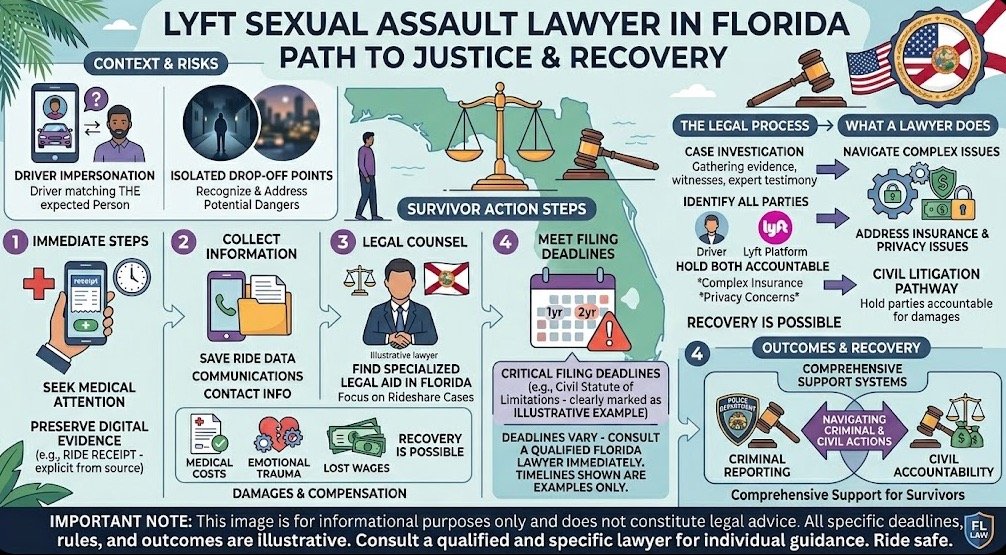
When a Lyft sexual assault claim arises in Florida, experienced legal counsel can provide structured guidance from the outset, helping a survivor understand available legal options and the steps required to protect the claim. Counsel may coordinate evidence preservation, document losses, manage insurer communications, and advise on deadlines, privacy concerns, and immediate safety planning.
A service-minded legal team also supports survivors by connecting them with Victim support resources, counselors, and community advocates who can help stabilize daily life during the legal process. Attorneys may assist with criminal reporting by explaining reporting procedures, preparing clients for interviews, and helping organize records that may later support a civil claim. They can communicate with Lyft, third parties, and investigators in a measured manner that reduces unnecessary stress on the survivor.
Throughout the matter, counsel maintains a steady focus on accountability, careful case development, and respectful client care, so the survivor can make informed decisions with confidence and dignity.
Understanding Lyft Sexual Assault Cases in Florida


Beyond the practical support counsel can provide, a clear understanding of how Lyft sexual assault cases arise in Florida helps place a survivor’s legal options in context. These matters often involve overlapping criminal and civil issues, platform policies, evidentiary challenges, and questions about institutional accountability.
OUR CONSULTATIONSARE FREE
START YOUR FREE CASE REVIEW

Florida claims may turn on timelines, digital trip records, witness statements, medical documentation, and passenger reporting made to Lyft or law enforcement. Some cases involve a defendant’s asserted confusion of consent, yet that argument does not eliminate the need for careful factual review. The police response may influence evidence collection, but a civil claim can still proceed under a different standard of proof.
Attorneys often examine whether Lyft’s screening, safety procedures, and complaint handling were reasonable under the circumstances. In service to survivor well-being, legal teams may also coordinate therapy support and other stabilizing resources while preserving documentation relevant to damages, credibility, and long-term recovery.

Common Scenarios When Lyft Sexual Assault Might Take Place in Florida


Certain circumstances may increase the risk of sexual assault during a Lyft ride in Florida, particularly during late-night trips, at isolated drop-off locations, or within shared ride arrangements. Risks may also arise when a perpetrator poses as a legitimate driver, creating confusion and reducing a passenger’s ability to verify the vehicle’s and driver’s identities. Recognizing these common scenarios helps frame how such incidents may occur and why prompt legal evaluation may be important.
Late Night Ride Risks
Late at night, Lyft rides may present heightened safety concerns because reduced public activity, limited witness presence, and rider fatigue can create conditions in which misconduct is more difficult to detect or prevent. These circumstances may affect judgment, communication, and awareness for both riders and companions.
Common risk factors include alcohol use, isolated pickup or drop-off points, and confusion related to nighttime consent issues. A rider who is tired, impaired, or unfamiliar with the area may have greater difficulty responding to boundary violations or seeking prompt assistance. From a community service perspective, ride safety planning can support prevention by encouraging the sharing of trusted contacts, route monitoring, and careful attention to unexpected stops.
When misconduct occurs during late-night trips, prompt documentation and reporting may help protect others and preserve important evidence.
Driver Impersonation Incidents
In these incidents, confusion at pickup points, crowded venues, and hurried decisions can allow an impersonator to gain a rider’s trust before concerns are recognized. The absence of verified trip data may complicate Victim identification, witness collection, and timely reporting to law enforcement. A perpetrator may also exploit a rider’s mistaken belief that the ride is legitimate, then later mischaracterize compliance as false consent.
For those committed to protecting others, recognizing impersonation patterns supports prevention efforts, strengthens accountability, and helps vulnerable riders receive informed, compassionate assistance after harm occurs.
Isolated Drop-Off Locations
Near secluded apartment entrances, dim parking lots, remote hotel access roads, or sparsely traveled residential streets, a rider may face heightened vulnerability when a Lyft trip ends in an isolated drop-off location. In these settings, limited lighting, reduced foot traffic, and delayed assistance can create conditions that enable misconduct without immediate intervention. Careful review of dashboard footage, ride records, and Witness statements may help clarify timing, driver conduct, and surrounding circumstances.
Service-minded advocates often examine whether route changes, unscheduled stops, or confusion at the destination increased risk. They may also consider whether prior concerns involving app-based impersonation influenced the rider’s decisions during the trip. Even where shared-ride consent exists, isolation at the final destination can still pose serious safety concerns that require close legal and factual evaluation.
Shared Ride Vulnerabilities
When a Lyft trip involves multiple passengers, the presence of others does not necessarily reduce the risk of sexual assault and may instead create distinct vulnerabilities. In Florida, shared rides can blur personal boundaries, limit a rider’s control over seating, and create confusion about who is responsible for intervention. A driver or co-passenger may exploit distractions, intoxication, or route changes while assuming witnesses will remain passive.
In some situations, riders become isolated when other passengers exit early, leaving one person unexpectedly alone in a vehicle. These circumstances often complicate reporting because accounts may conflict, and identifying participants can be difficult. For those committed to helping survivors, careful safety planning and timely victim advocacy can support documentation, reporting, and access to protective resources after a shared ride incident in Florida.
Legal Rights of Lyft Sexual Assault Victims in Florida
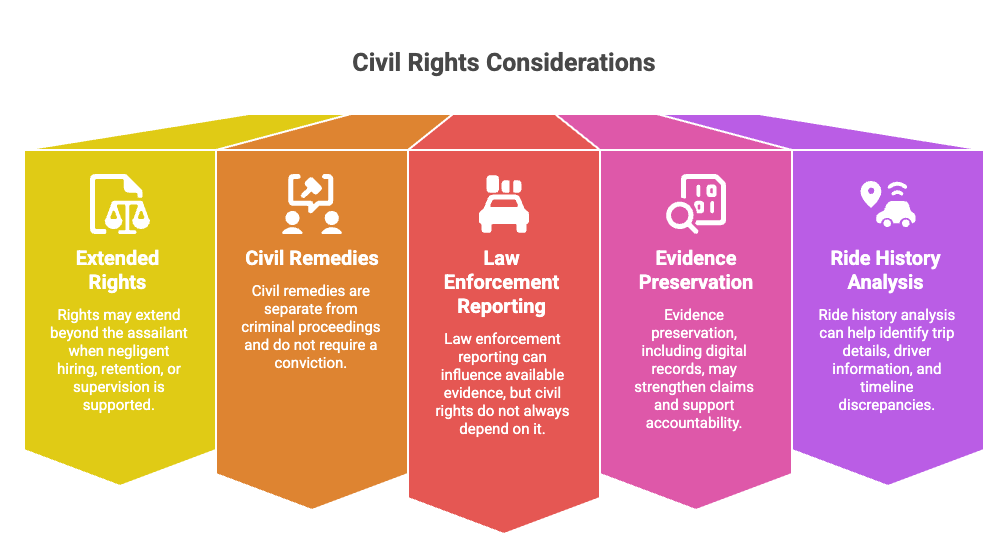
Although each case depends on its specific facts, Lyft sexual assault victims in Florida generally have the right to pursue legal action against the perpetrator and, where supported by the evidence, against other responsible parties. Florida law may permit civil claims seeking compensation for physical injuries, emotional harm, treatment costs, lost income, and other related losses, while respecting Victim protection principles.
- Rights may extend beyond the assailant when negligent hiring, retention, or supervision is supported.
- Civil remedies are separate from criminal proceedings and do not require a conviction.
- Law enforcement reporting can influence available evidence, but civil rights do not always depend on it.
- Evidence preservation, including digital records, may strengthen claims and support accountability.
- Ride history analysis can help identify trip details, driver information, and timeline discrepancies.
Statutes of limitation, confidentiality interests, and insurance issues may affect available options. A careful legal evaluation can clarify rights and support efforts centered on safety, accountability, and community care.
Steps to Take After a Lyft Sexual Assault Incident in Florida
After a Lyft sexual assault incident in Florida, the first priority is to guarantee immediate safety by leaving the area, reaching a secure location, and contacting emergency assistance when necessary. Attention should then turn to preserving critical evidence, including clothing, photographs, ride records, messages, and any other information that may support a future report or legal claim. It is also important to report the incident to law enforcement and Lyft while seeking medical care, emotional support, and guidance from appropriate professional resources.
Ensure Immediate Safety
If a Lyft sexual assault incident occurs, the first priority is to move to a safe location away from the driver and any immediate threat. A survivor may enter a public business, contact trusted people nearby, or request help from employees, bystanders, or law enforcement. It is important to call emergency services when danger continues or medical needs are urgent. Immediate medical attention can restore health and provide a basis for documenting injuries through appropriate care.
The person should also secure support contacts, including family, friends, or advocates who can provide calm assistance and transportation. Practical steps should remain focused on protection, stability, and informed decision-making. To reduce further risk, the individual should avoid retaliation, direct confrontation, or any attempt to reengage with the driver after reaching safety and obtaining help.
Preserve Key Evidence
Once personal safety has been addressed, attention should turn to preserving evidence that may later support a criminal investigation, an insurance claim, or a civil case against the driver or another liable party. Clothing, personal items, receipts, ride screenshots, GPS data, and visible injuries should be kept intact and photographed as soon as possible. Written notes that record the time, location, vehicle details, and sequence of events can strengthen accuracy later.
Forensic documentation may include photographs, saved messages, and any digital ride history connected to the Lyft account. If other passengers, bystanders, or nearby workers observed anything relevant, their names and contact information should be preserved for possible witness statements. Careful evidence preservation can protect the survivor’s interests and assist professionals in pursuing accountability and justice effectively later.
Report And Seek Help
Although preserving evidence is important, prompt reporting and support-seeking are equally crucial steps following a Lyft sexual assault incident in Florida. A survivor should contact law enforcement as soon as it is safe to do so and report the incident through Lyft’s app or support channels. Immediate reporting can strengthen documentation, help protect others, and connect the individual with trained responders.
Medical attention should be obtained promptly, even when injuries are not obvious. Hospitals, rape crisis centers, and emergency hotlines can provide confidential guidance, forensic care, and referrals to counseling. If personal contacts are unavailable, Stranger assistance from trusted bystanders, hotel staff, or business employees may help secure transportation or call authorities. Careful reporting and compassionate support often create a critical foundation for recovery, accountability, and any future legal action.

How a Florida Lyft Sexual Assault Lawyer Can Help You Initiate a Case
When a person decides to pursue legal action after a Lyft-related sexual assault in Florida, an attorney can provide the structure and guidance needed to begin the process properly. Counsel may explain legal options, preserve evidence, coordinate with criminal investigators, and support victim advocacy efforts to protect the client’s interests and dignity.
A Florida Lyft sexual assault lawyer may help by:
- evaluating the facts and identifying viable civil claims
- gathering records, ride data, witness statements, and communications
- sending preservation letters to prevent loss of crucial evidence
- managing insurer and company communications with care and accuracy
- filing the complaint within the deadlines required by Florida law
Long-Term Effects of Lyft Sexual Assault Trauma
The long-term effects of Lyft sexual assault trauma often extend well beyond the initial incident, affecting emotional stability and psychological health in significant ways. Many survivors also experience ongoing difficulties with trust and personal relationships, which can alter how they interact with others over time. In addition, the trauma may disrupt work performance, daily routines, and overall functioning, creating challenges that persist long after the assault.
Emotional And Psychological Impact
Because sexual assault during a Lyft ride can shatter a person’s basic sense of safety, the long-term emotional and psychological effects often extend well beyond the incident itself. Survivors may experience intrusive memories, sleep disruption, anxiety, depression, and heightened vigilance in ordinary settings.
Many develop coping mechanisms that help them function day to day, yet some responses may mask unresolved pain rather than reduce it. Trauma triggers, including rideshares, unfamiliar routes, or confined spaces, can provoke panic attacks and intense distress. Concentration, work performance, and overall well-being may decline over time without informed care. Compassionate intervention from counselors, physicians, and community advocates can support stabilization and recovery.
Strong support networks also play an important role by reinforcing safety, validating experiences, and encouraging consistent treatment that respects the survivor’s pace and dignity.
Relationship And Trust Struggles
Although physical injuries may recover over time, trauma from a Lyft sexual assault often alters how a survivor relates to other people and evaluates personal safety within close relationships. Loved ones may observe heightened vigilance, withdrawal, or difficulty accepting ordinary affection and support. Consent confusion can emerge, making previously familiar interactions feel uncertain or unsafe. In some cases, trauma bonds complicate judgment, especially when fear, shame, and dependency become intertwined.
These effects frequently contribute to communication breakdown within families, friendships, and intimate partnerships. A survivor may struggle to explain triggers, set boundaries, or interpret another person’s intentions without anxiety. Trust rebuilding often requires patient, informed support from people willing to listen carefully, respect autonomy, and avoid pressure. Compassionate, consistent relationships can help restore stability, dignity, and a stronger sense of security.
Work And Daily Disruption
When trauma remains unresolved, its effects often extend into employment, household responsibilities, and routine decision-making. Survivors may experience Work disruption through missed shifts, reduced concentration, or difficulty maintaining professional interactions. Tasks that once seemed manageable can require substantial effort, especially when anxiety, sleep disturbance, or intrusive memories interfere with focus. In service-oriented roles, these limitations may affect reliability, communication, and confidence.
Outside the workplace, the daily routine may also become unstable. Basic activities such as driving, shopping, attending appointments, or caring for family members can feel burdensome or unsafe. A detached observer may recognize that these changes are not signs of weakness, but common trauma responses that warrant informed support. Over time, practical assistance, counseling, and legal advocacy may help restore structure, stability, and a renewed sense of personal agency.
What to Expect During a Florida Lyft Sexual Assault Claim Process
A Florida Lyft sexual assault claim process often begins with an initial case evaluation, during which the facts, potential liability, and available legal options are assessed. The process then turns to evidence and documentation, including medical records, police reports, rideshare data, and witness information, followed by attention to claim-filing timelines and applicable legal deadlines. Depending on the strength of the evidence and the parties’ positions, the matter may proceed toward settlement negotiations or formal litigation.
Initial Case Evaluation
How does an initial case evaluation shape a Florida Lyft sexual assault claim? It establishes a clear understanding of the survivor’s circumstances, immediate needs, and legal options. During this meeting, counsel typically listens carefully, explains relevant Florida law, and outlines potential paths forward with professionalism and respect. Attention may also be given to trauma counseling resources that help survivors and their advocates prioritize safety, stability, and informed decision-making.
An initial evaluation also helps determine whether a claim may involve Lyft, a driver, or other responsible parties. The discussion often addresses timelines, communication protocols, and steps that support evidence preservation without pressuring the survivor. For those committed to serving others, this stage offers structure, compassion, and a practical foundation for pursuing accountability through a thoughtful legal process.
Evidence And Documentation
Because evidence often determines the strength of a Florida Lyft sexual assault claim, early documentation usually becomes a central part of the legal process. Attorneys commonly encourage survivors to preserve rideshare receipts, app communications, photographs, clothing, and any other materials that may help clarify what occurred. Medical records can provide important support by documenting injuries, treatment, and professional observations.
Witness statements may also strengthen the claim when passengers, bystanders, or confidants can confirm relevant facts or changes observed afterward. Lawyers often work carefully to obtain surveillance footage, trip data, and electronic records before they are lost or overwritten. This process helps create a clear factual foundation, allowing advocates, families, and service-minded supporters to respond with diligence, credibility, and respect for the survivor’s well-being throughout every stage.
Claim Filing Timeline
Although each case proceeds on its own timetable, a Florida Lyft sexual assault claim generally begins with an initial case review, followed by investigation, notice to the relevant parties, and the preparation of formal legal filings. Counsel typically gathers records, preserves digital evidence, and confirms compliance with accident reporting requirements and insurance deadlines.
After intake, counsel may coordinate with medical providers, advocates, and investigators to organize a clear chronology. This stage often includes identifying Lyft account data, trip details, witness information, and prior complaints. Formal filings must then be completed within the applicable statutory periods, which vary depending on the facts and the parties involved. Throughout the process, updates are provided so survivors and those supporting them can make informed, service-minded decisions. Careful timing helps protect legal rights, preserve evidence, and maintain accountability without unnecessary delay or confusion.
Settlement Or Litigation
When the investigation and initial filings are in place, a Florida Lyft sexual assault claim may proceed toward settlement discussions or, if necessary, formal litigation. During this phase, counsel evaluates Evidence, including collection, witness interviews, medical records, and digital communications, to assess liability and damages. Settlement negotiations often focus on insurance coverage, confidentiality terms, and compensation for physical, emotional, and financial harm.
If the parties cannot reach fair terms, litigation may begin through discovery, motions, depositions, and trial preparation. Courts may also consider whether punitive damages are appropriate when misconduct was especially reckless or intentional. Regardless of the path taken, legal representatives typically aim to protect the claimant’s dignity, preserve vital evidence, and pursue accountability in ways that support recovery, public safety, and responsible service to others affected by similar harm.
Compensation for Florida Lyft Sexual Assault Damages
While no monetary award can undo the harm caused by a Lyft sexual assault, Florida law permits survivors to seek compensation for the full scope of their losses. Recovery often depends on Proving Negligence through evidence that Lyft, a driver, or another party failed to exercise reasonable care. Case value may also be shaped by insurance terms, available assets, and questions about Damages Caps under Florida law.
| Concern | Why It Matters |
|---|---|
| Medical care | Supports healing and documents harm |
| Counseling needs | Reflects ongoing trauma-related treatment |
| Safety changes | Covers relocation or security expenses |
| Lost stability | Addresses disrupted daily functioning |
| Accountability | Encourages safer practices for others |
A careful claim can provide resources for treatment, personal support, and practical protection after an assault. In service to survivors and their families, counsel may pursue every lawful source of compensation while presenting clear evidence and respecting the survivor’s dignity throughout the legal process.
Economic vs Non-Economic Damages in Florida Lyft Sexual Assault Cases
In Florida Lyft sexual assault cases, damages generally fall into two categories: economic damages, which cover measurable financial losses, and non-economic damages, which address personal harm that is less easily quantified. Economic damages may include medical expenses, lost income, and other documented costs, while non-economic losses often involve pain and suffering, emotional distress, and loss of enjoyment of life.
Establishing the value of either category typically requires credible evidence, including records, expert opinions, and a clear connection between the assault and the claimed harm.
Economic Damages Explained
Because compensation in a Florida Lyft sexual assault case may cover more than immediate medical bills, it is important to distinguish economic damages from non-economic damages at the outset. Economic damages refer to measurable financial losses tied to the assault and its aftermath. These may include hospital treatment, counseling, medication, transportation to appointments, and lost wages from missed work.
They may also include future care costs when ongoing treatment is reasonably expected. Documentation often matters greatly, including invoices, employment records, and expert assessments. Medical privacy should be respected when gathering evidence, and police reporting may help establish a timeline of events. In many situations, victim support services and safety planning create additional necessary expenses.
A careful legal review helps identify recoverable losses, enabling affected individuals and those assisting them to pursue practical, accountable financial relief.
Non-Economic Losses Overview
Although economic damages address direct financial costs, non-economic damages concern the personal and often lasting harm that does not appear on a bill or wage statement. In Florida Lyft sexual assault cases, these losses may include pain, emotional distress, humiliation, anxiety, sleep disruption, and diminished enjoyment of daily life.
A careful review of non-economic harm often considers witness credibility, evidence timelines, and compliance with ride-share protocols, because these factors can clarify how an incident affected the survivor’s wellbeing. Records reflecting trauma counseling options, changes in relationships, or fear of transportation may also help explain the depth of personal harm.
For communities committed to protecting others, understanding non-economic losses underscores why legal action can address more than expenses alone, recognizing the human consequences that may persist long after the ride ends.
Proving Damage Value
At the damages stage, proving value requires more than identifying categories of loss; it requires evidence that connects each claimed harm to the assault and shows its practical effect on the survivor’s life.
Economic damages often include medical bills, therapy costs, lost wages, and future care needs, all supported by records, expert opinions, and careful Evidence preservation. Non-economic damages address pain, emotional distress, loss of enjoyment, and relational harm, which are evaluated through treatment notes, testimony, and daily-life changes. In Florida Lyft sexual assault cases, liability challenges frequently affect valuation because insurers and defendants may dispute victim credibility, minimize trauma, or argue unrelated causes.
Strong causation proof helps distinguish preexisting conditions from assault-related harm. A service-minded legal approach organizes documentation thoroughly, presents consistent facts, and frames losses in terms a jury can responsibly measure.
When a Florida Lyft Sexual Assault Case Goes to Trial vs Settlement
When a Florida Lyft sexual assault claim proceeds toward resolution, the path often turns on the strength of the evidence, the extent of the survivor’s damages, and the willingness of the parties to accept accountability without court intervention. Attorneys often begin with damage assessment, witness review, and settlement negotiation, seeking outcomes that conserve resources while honoring the survivor’s needs and long-term recovery.
A case may settle when liability appears clear, insurance coverage is available, and the defense recognizes the risk of significant verdict exposure. Trial strategy becomes more important when facts are disputed, credibility is challenged, or the parties differ sharply on compensation. In those circumstances, counsel prepares for discovery disputes, expert testimony, and jury selection, with careful attention to how jurors may evaluate trauma, corporate responsibility, and preventive failures.
Settlement can provide privacy and speed, while a trial may offer broader accountability and a public record. The appropriate course depends on evidence, objectives, and the survivor’s informed preferences.
The Statute of Limitations for Florida Lyft Sexual Assault Cases
Beyond questions of settlement or trial, timing often determines whether a Florida Lyft sexual assault claim may be pursued at all. Florida law imposes filing deadlines that vary by claim type, the survivor’s age, and the facts showing wrongful intent. Missing the applicable deadline can bar recovery, even where harm is severe and liability appears clear.
Civil claims arising from sexual assault may involve different limitation periods for personal injury, intentional torts, or related negligence theories against other parties. Criminal proceedings follow separate rules and do not automatically extend civil deadlines. Because records can disappear, evidence retention matters from the outset. Ride data, app communications, surveillance footage, medical records, and witness accounts may become harder to obtain over time.
Some exceptions can affect the timeline, including delayed discovery issues or circumstances involving minors. Careful attention to dates helps preserve accountability, supports informed decisions, and protects the ability to seek justice in a manner that honors community safety.
When to Contact a Lyft Sexual Assault Lawyer in Florida
Seek legal guidance as soon as practical after a Lyft-related sexual assault in Florida, because early attorney involvement can help protect both legal rights and crucial evidence. Prompt action often supports Evidence preservation, including rideshare records, communications, surveillance footage, witness information, and medical documentation that may become harder to obtain over time.
A survivor may also consider contacting counsel before speaking at length with insurers or accepting any payment offers. Early legal representation can help organize reporting steps, identify potential sources of insurance coverage, and reduce the risk that statements are misunderstood or used unfairly. It may also assist with coordinated communication among medical providers, law enforcement, and other involved parties, while allowing the survivor to focus on personal safety and recovery.
Reaching out promptly is especially important when questions arise regarding deadlines, documentation, or settlement negotiations, as delays can complicate fact-gathering and limit options for accountability and financial recovery in civil claims.
Why You Need an Experienced Florida Lyft Sexual Assault Lawyer
Because Lyft sexual assault claims in Florida often involve overlapping issues of carrier policies, insurance coverage, evidence control, and third-party liability, representation by an experienced attorney can materially affect the strength and direction of a civil case. Counsel can coordinate Evidence preservation, identify potential defendants, and prevent crucial records from being lost or altered.
Experienced legal representation also helps survivors and their families travel through reporting steps without losing sight of personal well-being. An attorney may organize documentation, communicate with insurers, and address procedural deadlines while reducing unnecessary burdens on those seeking accountability. This structure can strengthen survivor support by creating space for informed decisions and compassionate planning.
In addition, a seasoned Florida attorney can steer a claimant with trauma resources that support recovery during litigation. By aligning legal strategy with practical care needs, counsel serves both justice and human dignity, helping communities protect vulnerable riders and encourage safer transportation practices across Florida.
How to Choose the Right Lyft Sexual Assault Lawyer for Your Case in Florida
When evaluating a Lyft sexual assault lawyer in Florida, a survivor or family should focus on experience with sexual assault litigation, familiarity with rideshare liability issues, and a demonstrated ability to manage sensitive, high-stakes claims. The lawyer should communicate clearly, explain legal options, and approach each matter with dignity, patience, and respect for the victim’s support needs.
A careful review of the attorney’s background can reveal whether the firm understands evidence preservation, digital records, witness statements, and platform reporting procedures. Attention should also be given to courtroom experience, settlement history, and the ability to hold multiple parties accountable when appropriate.
A strong advocate will provide an honest assessment of the claim timeline, possible outcomes, and the demands of the process. Survivors and families often benefit from choosing counsel that responds promptly, protects privacy, and coordinates with counselors, medical providers, and other support professionals to reduce added burdens during recovery and help.
About The Law Offices of Anidjar & Levine
How does a law firm distinguish itself in sensitive and detailed rideshare assault litigation? The Law Offices of Anidjar & Levine presents a model centered on responsiveness, preparation, and respect for survivors.
In matters involving Lyft sexual assault claims in Florida, the firm is known for organized advocacy, careful investigation, and client-focused support that reflects the seriousness of each allegation.
Their approach emphasizes accessibility and practical assistance while pursuing accountability through insurance claims or civil litigation.
Attorneys and staff provide case-specific guidance, helping clients understand deadlines, evidence needs, and possible legal outcomes.
This structure can benefit families and community-minded individuals who value service, dignity, and informed decision-making.
The firm also prioritizes communication, so clients are not left uncertain about the status of their matters.
By combining legal knowledge with disciplined client care, The Law Offices of Anidjar & Levine demonstrates a professional commitment to pursuing justice for those harmed in deeply personal and complicated circumstances.

Frequently Asked Questions
Can Lyft Deactivate Drivers Accused of Sexual Assault in Florida?
Yes, Lyft can deactivate drivers accused of sexual assault in Florida, often while an investigation is pending. The company generally operates in accordance with its safety policies and contractual terms, even before criminal charges are filed. Such allegations may create criminal exposure for the driver and potential civil liability for multiple parties. Those assisting affected individuals should encourage prompt reporting, preservation of evidence, and careful legal review, as deactivation does not resolve the underlying claims.
Does Lyft Provide In-App Safety Features for Florida Passengers?
Yes, Lyft offers several in-app safety features for passengers in Florida. These commonly include emergency buttons that help users quickly contact 911, as well as location-sharing tools that allow trusted contacts to monitor a trip in real time. The platform may also offer ride verification and driver details for added awareness. Such features are intended to support passenger safety, promote informed decision-making, and assist those seeking to protect others responsibly.
Can a Passenger Request a Female Lyft Driver in Florida?
No, a passenger generally cannot request a female Lyft driver in Florida. Lyft does not offer driver-matching options based on sex for standard rides, and gender-preference requests are not a regular feature. Passengers seeking safer service may review driver profiles, share trip details, and use in-app safety tools. Those who serve vulnerable riders should understand platform limits, then plan transportation arrangements with care, diligence, and informed judgment.
Are Lyft’s background checks enough to Prevent Sexual Assault Incidents?
No, Lyft background checks alone are not enough to prevent sexual assault incidents. They may screen for some prior criminal history, but they cannot predict future misconduct or capture every risk factor. Effective prevention also depends on strong safety policies, rider awareness, in-app reporting, and prompt incident documentation. Those who serve vulnerable individuals should recognize background checks as one safeguard among many, rather than a complete solution to passenger safety.
How Common Are Lyft Sexual Assault Reports in Florida?
Precise statewide figures are limited, so Florida reporting statistics do not show a fully isolated count for Lyft-specific sexual assault reports. Available public disclosures suggest that such reports are comparatively uncommon relative to the total number of rides, yet incident frequency trends remain important for community safety efforts. A service-minded review favors careful reporting, survivor support, and continued scrutiny of rideshare practices, because underreporting may affect how often these incidents are formally documented statewide.
—————————
Victims of Lyft sexual assault in Florida may face serious legal, emotional, and financial challenges, but taking informed action can help protect their rights and support recovery.
A qualified Florida Sexual Assault Lawyer can assess the facts, preserve critical evidence, and seek accountability from all responsible parties.
The Law Offices of Anidjar & Levine provides focused advocacy and a strong understanding of these complex claims.
Prompt legal guidance may strengthen a case and help victims pursue the compensation and justice they deserve.