Law Offices of Anidjar and Levine protects Jacksonville Lyft accident victims by quickly securing evidence, preserving rights, and steering through intricate insurance and liability issues to maximize compensation.
Our team collects police reports, ride-share logs, dash-cam footage, and medical records while maintaining a chain of custody and using encrypted storage.
We assess liability across Lyft, the driver, and third parties, and negotiate with insurers to guarantee full reimbursement for medical costs, lost wages, and non-economic damages.
If you continue, you’ll discover how we guide you through every legal step.
For related help, visit our Jacksonville Car Accident Lawyer.
Main Takeaways
- Choose a Jacksonville attorney experienced in rideshare accidents and familiar with Lyft’s insurance policies and state regulations.
- Ensure the lawyer promptly preserves all evidence, including police reports, ride‑share logs, dash‑cam footage, and medical records.
- Verify the attorney can assess liability among Lyft, the driver, and any third‑party parties to develop a strong claim strategy.
- Confirm the lawyer will handle communications with Lyft’s rider support, insurers, and protect your rights.
- Look for a lawyer who offers a clear contingency fee structure and can negotiate or litigate to maximize compensation.


How We Can Help With Your Jacksonville Lyft Accident Claim
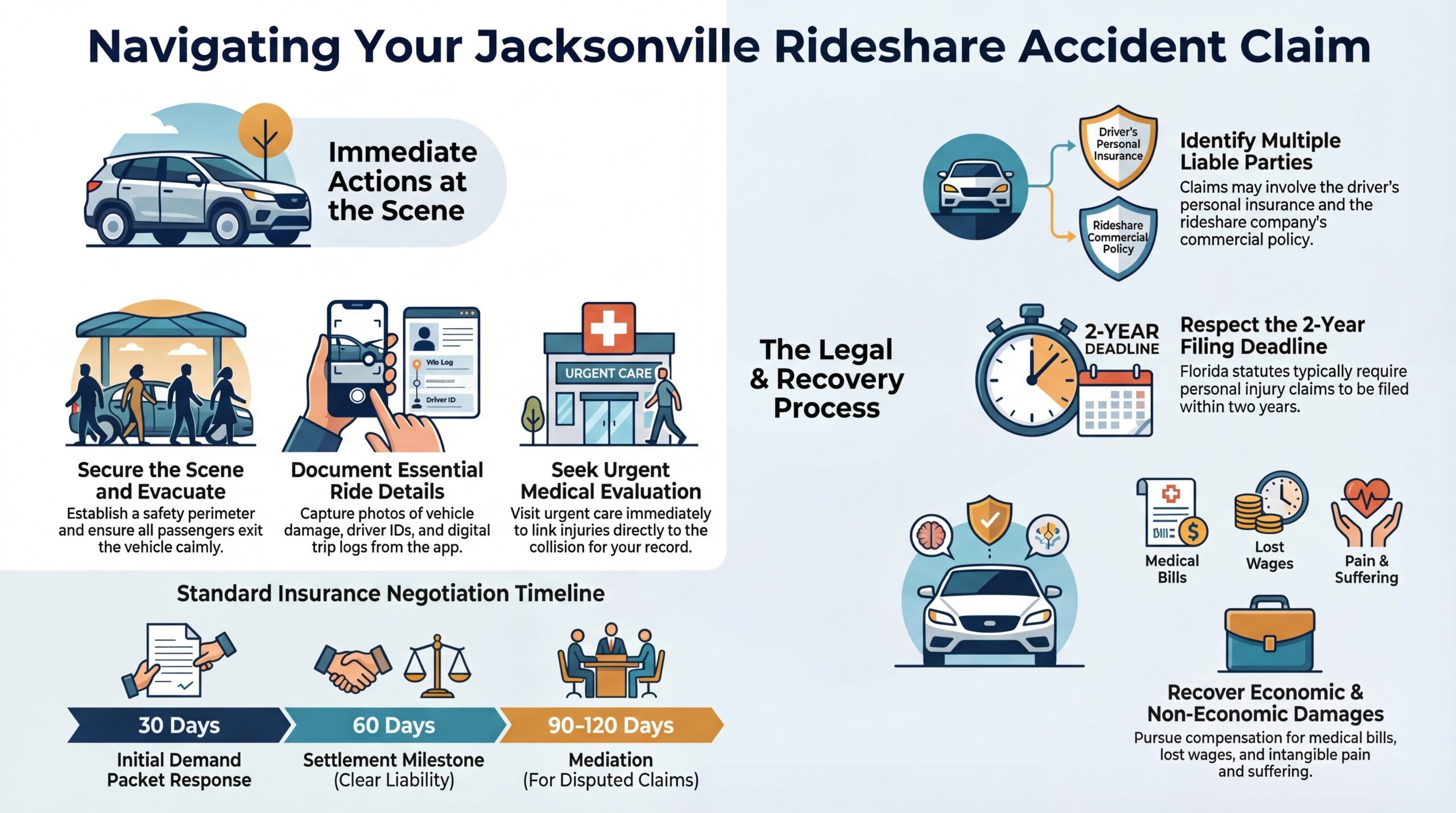
If you’ve been injured in a Lyft accident in Jacksonville, we’ll guide you through every step of the claims process, from gathering evidence to negotiating with insurers.
Our team begins by conducting thorough local outreach, connecting with witnesses and medical providers to secure reliable statements and records.
We conduct thorough local outreach to secure reliable statements and records from witnesses and medical providers.
We then assess liability, reviewing Lyft’s policies and the driver’s compliance with state regulations.
By leveraging policy advocacy, we guarantee your claim aligns with both contractual obligations and public safety standards, strengthening your position in settlement discussions.
Throughout the process, we maintain clear communication, updating you on progress and explaining each legal tactic.
Our know‑how allows us to anticipate insurer tactics and counter them effectively, preserving your right to fair compensation.
We also coordinate with community resources to address any ancillary needs, reinforcing our commitment to serving those affected.
Trust our professional, detail‑oriented approach to protect your interests and restore stability after the accident.
OUR CONSULTATIONSARE FREE
START YOUR FREE CASE REVIEW

Understanding Jacksonville Lyft Accident Cases
Because Lyft rides involve both a rideshare company and an independent driver, Jacksonville Lyft accident cases often raise intricate liability questions.
We examine how ride-hailing regulations intersect with insurance obligations, and why passenger rights education is vital for anyone seeking fair compensation.
By analyzing the contractual relationship between the driver, Lyft, and the passenger, we clarify who bears responsibility for negligence, vehicle maintenance, and driver screening.
We also outline the statutory duties imposed on rideshare platforms in Florida, which affect claim strategies and settlement calculations.
Our guidance emphasizes proactive steps—such as documenting injuries, preserving ride receipts, and promptly reporting incidents—to strengthen a claim.
We aim to empower victims with clear, actionable information, ensuring they understand their rights and the legal avenues available to them.
Ultimately, our thorough approach helps clients steer the complexities of Jacksonville Lyft accident cases with confidence and informed expectation.
Common Causes of Jacksonville Lyft Accidents
We’ve identified several crucial factors that frequently contribute to Lyft accidents in Jacksonville, including distracted driving, vehicle maintenance failures, improper passenger loading, and adverse weather conditions.
Each of these elements can compromise safety and increase the likelihood of collisions, especially when they intersect. Understanding how these causes operate helps us assess liability and protect riders more effectively.
Distracted Driving Incidents
Typically, distracted driving incidents occur when a Lyft driver diverts attention from the road to use a smartphone, navigation system, or another non‑driving task, and this lapse often leads to delayed reactions and loss of vehicle control. We emphasize that proper cellphone etiquette is vital; drivers must silence alerts, avoid texting, and keep devices out of sight while the vehicle is in motion.
Consistent roadway scanning allows drivers to anticipate hazards, maintain safe following distances, and adjust speed appropriately. By integrating these practices, we protect passengers, pedestrians, and fellow motorists.
When drivers neglect these responsibilities, the risk of collisions escalates dramatically, resulting in injuries and liability that could have been prevented through disciplined attention and adherence to safety protocols.
Vehicle Maintenance Failures
When a Lyft vehicle’s essential components are neglected, the likelihood of a crash rises sharply, and we see that brake wear, tire degradation, and faulty guidance systems are among the most frequent maintenance failures that lead to accidents in Jacksonville.
We must remind drivers that regular preventive inspections can catch worn pads, uneven tread, or misaligned steering before they become hazards.
Likewise, staying current with manufacturer recalls guarantees that known defects are repaired promptly, protecting passengers and other road users.
Our commitment to safety means we advocate for thorough maintenance logs and prompt corrective action when issues arise.
Improper Passenger Loading
Additionally, door design can exacerbate risk—narrow or poorly positioned doors make it difficult for passengers to secure themselves quickly, especially in tight urban traffic. We must emphasize that drivers should enforce clear limits on the number of occupants and ensure each rider is seated with a seat belt or other restraint where available. By adhering to these practices, we protect both passengers and drivers, reducing liability and fostering a safer ride‑sharing environment.
Poor Weather Conditions
Rain, sleet, and high winds frequently turn Jacksonville’s streets into hazardous zones for Lyft drivers, and we must recognize how these conditions directly impair vehicle control, visibility, and braking distance.
We appreciate that reduced road visibility hampers a driver’s ability to anticipate hazards, while diminished tire traction increases stopping distances and raises the likelihood of skidding.
In these environments, we prioritize safety by adjusting speed, increasing following distance, and ensuring that vehicle systems such as anti‑lock brakes are fully functional.
We also advise passengers to remain vigilant and report any sudden maneuvers that could compromise stability.


Legal Rights of Jacksonville Lyft Accident Victims
If you’ve been injured in a Lyft crash in Jacksonville, you possess specific legal rights that protect you and secure compensation for your losses. We appreciate that steering insurance disputes can be intimidating, and we emphasize the importance of gathering reliable witness testimony to strengthen your claim.
Our team works relentlessly to ensure that your rights are upheld and that you receive the full restitution you deserve for medical expenses, lost wages, and pain and suffering.
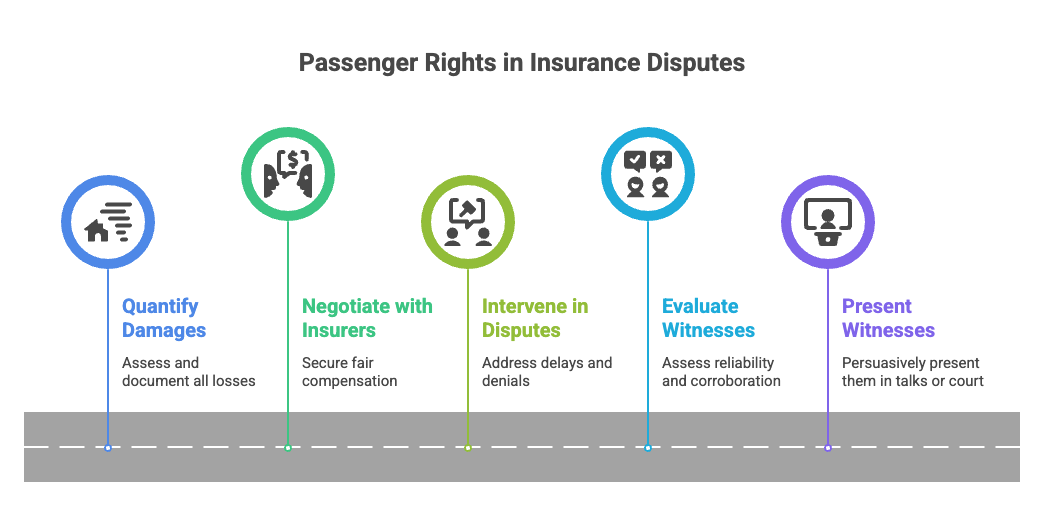
- Right to fair compensation – We help you quantify all damages and negotiate with insurers to avoid undervaluation.
- Right to pursue a claim despite insurance disputes – We intervene when insurers delay or deny payment, leveraging statutory deadlines and legal precedent.
- Right to rely on credible witnesses – We evaluate witness reliability, corroborate statements, and present them persuasively in settlement talks or court.
Steps to Take After a Jacksonville Lyft Accident
We should first secure all medical records and documentation of injuries, as these form the foundation of any claim.
Next, we must promptly notify Lyft and the relevant insurers while providing a factual account of the incident.
Finally, consulting an experienced attorney will ensure our rights are protected and that we navigate the complex legal process effectively.
Secure Medical Records
Collecting and preserving your medical records promptly after a Jacksonville Lyft accident is vital for building a strong personal injury claim.
We advise you to request complete documentation from every provider, including emergency reports, physician notes, and therapy invoices.
Store these files in encrypted storage to protect sensitive data from unauthorized access. Implement regular access audits to verify that only your legal team and designated medical professionals view the records.
Keep a chronological log of each document received, noting dates, signatures, and any amendments.
When sharing records with insurers or attorneys, use secure portals that support end‑to‑end encryption.
Notify Lyft and Insurers
After a Jacksonville Lyft accident, we must promptly notify both Lyft and the involved insurers to preserve our right to compensation and to initiate the claims process.
We should contact Lyft’s rider‑support line within 24 hours, providing the incident date, location, and a concise description.
Simultaneously, we must inform our own insurance carrier and the at’s insurer, ensuring that all third‑party notifications are documented in writing.
Accurate policy updates are crucial; we should request confirmation that the claim has been logged and note any reference numbers.
Keeping a detailed log of all communications helps us track deadlines and demonstrate diligence.
Consult an Experienced Attorney
Engaging an experienced attorney promptly after a Jacksonville Lyft accident is essential to safeguarding our legal rights and maximizing potential compensation.
We should schedule a thorough client consultation to review the incident, gather evidence, and assess liability. During this meeting, we explain fee structures clearly, outlining contingency terms and any upfront costs, so the client understands financial expectations.
Our approach emphasizes serving others, ensuring the injured party feels supported and informed. We advise the client to preserve medical records, photographs, and communication logs while we handle negotiations with Lyft and insurers.
How a Jacksonville Lyft Accident Lawyer Can Help You
When a Lyft ride ends in a collision, the legal nuances can quickly overwhelm anyone involved.
We guide you through every step, beginning with a thorough liability assessment that pinpoints responsible parties and quantifies their fault.
Our team then crafts a settlement strategy designed to maximize compensation while minimizing the risk of prolonged disputes.
By focusing on clear communication and diligent documentation, we guarantee your interests remain protected and your case proceeds efficiently.
- Liability assessment – we collect accident reports, witness statements, and expert analyses to establish fault.
- Settlement strategy – we negotiate with insurers, leveraging evidence to secure fair compensation.
- Client advocacy – we keep you informed, answer questions promptly, and prioritize your recovery over legal complications.
Long-Term Effects of Jacksonville Lyft Accident Injuries
We recognize that chronic pain often becomes a persistent challenge after a Lyft collision, requiring ongoing management and expert care.
We also understand that the emotional and psychological impact can extend far beyond the initial trauma, affecting mood, sleep, and daily functioning.
Finally, we acknowledge that future mobility limitations may arise, influencing work, recreation, and long‑term independence.
Chronic Pain Management
Managing chronic pain after a Jacksonville Lyft accident requires a thorough, long‑term strategy that addresses both physical symptoms and the psychological impact of sustained discomfort.
We guide patients toward medication optimization, balancing analgesics with adjunct therapies to minimize side effects while preserving function.
We also emphasize sleep hygiene, recommending consistent schedules, limiting stimulants, and creating a restful environment to enhance recovery.
Our approach integrates physical therapy, targeted exercises, and regular assessments to adjust treatment plans as healing progresses.
By collaborating with healthcare providers, we guarantee that each intervention aligns with the patient’s overall wellness goals.
This coordinated effort reduces pain intensity, improves mobility, and supports sustainable daily living for those we serve.
Emotional and Psychological Impact
Although the physical injuries from a Jacksonville Lyft accident often dominate initial treatment, the emotional and psychological repercussions can persist long after the body has recovered. We recognize that mental health challenges, such as anxiety, depression, and post‑traumatic stress, frequently follow the trauma of a crash.
Our approach emphasizes early identification of these issues, encouraging victims to seek trauma counseling before symptoms become entrenched. By fostering a supportive environment, we help clients rebuild confidence, restore daily functioning, and maintain productive relationships.
We also advise families and caregivers on how to recognize warning signs and provide consistent encouragement. Ultimately, addressing the psychological dimension guarantees thorough recovery, aligns with our commitment to serving others, and safeguards long‑term well‑being.
Future Mobility Limitations
Physical injuries from a Jacksonville Lyft accident often leave lasting effects on a victim’s ability to move freely, and these limitations can shape daily life for years to come.
We recognize that reduced mobility may prevent clients from performing routine tasks, and we must address these challenges with proactive planning. By evaluating each case, we identify how chronic pain, joint stiffness, or nerve damage will affect future independence.
We then recommend assistive technology—such as mobility scooters, adaptive vehicles, or home modifications—to restore functionality and preserve dignity. Our guidance includes coordinating with medical professionals, securing appropriate compensation, and ensuring that insurance coverage addresses long‑term needs.
Ultimately, we empower survivors to steer their futures with confidence and resilience.
Proving Liability in Jacksonville Lyft Accident Car Accident Cases
When a Lyft ride ends in a collision, we must first identify every party whose actions contributed to the accident.
When a Lyft ride ends in a collision, we must first identify every party whose actions contributed to the accident.
We examine the driver’s conduct, the passenger’s behavior, and any third‑party motorists who may have interfered. A dash cam recording often provides an objective view of speed, lane changes, and signal compliance, helping to isolate negligence.
We also assess whether Lyft’s safety protocols, such as driver screening and vehicle maintenance, were followed. Expert testimony becomes vital when reconstructing the crash dynamics; engineers can explain impact forces, braking distances, and visibility issues.
By gathering police reports, witness statements, and medical records, we build an all‑encompassing narrative that accurately assigns responsibility. This systematic approach guarantees that victims receive fair compensation while holding all accountable parties to the same standard of care.
Our dedication to meticulous investigation reflects our commitment to serving those affected by Lyft accidents.
Dealing With Insurance Companies After a Jacksonville Lyft Accident
After a Lyft collision in Jacksonville, we confront insurance companies that often prioritize their own financial interests over the victim’s needs.
We begin by gathering every document that supports our case, including medical bills, police reports, and ride‑share logs. When we present these records, insurers may raise policy disputes, questioning coverage limits or liability assignments. We respond by citing statutory definitions and prior case law, ensuring the insurer understands that our client’s rights are protected.
Throughout the process, we closely monitor claim timelines, noting statutory deadlines for filing and responding to requests for information. By maintaining organized records and adhering to these deadlines, we prevent the insurer from using procedural delays to diminish our client’s recovery.
We also advise our clients to avoid premature settlements, as early agreements often overlook long‑term medical costs. This disciplined approach safeguards the client’s interests and promotes a fair resolution.
What to Expect During a Jacksonville Lyft Accident Claim Process
We’ll begin by filing the initial report and gathering all relevant evidence, such as photographs, witness statements, and Lyft’s trip data, to build a solid foundation for your claim.
Next, we’ll guide you through the insurance negotiation timeline, keeping you informed of each step and ensuring that your interests are protected as adjusters assess liability and damages.
Finally, we’ll explain your options for settlement or litigation, helping you decide the most effective path based on the strength of your case and your desired outcome.
Initial Report Filing
We begin the claim by filing an initial report with Lyft and the appropriate Jacksonville authorities, a step that establishes the factual foundation for your case.
First, we make certain that police notification occurs promptly; the officer’s report becomes a cornerstone of the claim.
Next, we gather preliminary documentation, including driver and passenger statements, ride‑share trip details, and any available medical records.
We then submit these materials to Lyft’s incident portal, attaching the police report and a concise narrative of the event.
Throughout this process, we maintain clear communication with the client, explaining each requirement and its purpose.
Evidence Collection Steps
Having secured the initial report, we move on to gathering the concrete evidence that will substantiate your claim.
First, we ensure the chain of custody for all digital and physical records, securing ride‑share logs, driver communications, and any surveillance footage without alteration.
Next, we conduct thorough photograph documentation of vehicle damage, skid marks, and surrounding roadway conditions, capturing multiple angles and distances for clarity.
We also collect medical records, witness statements, and the Lyft driver’s accident narrative, preserving each item in its original form.
Throughout this process, we maintain meticulous logs of when and how each piece of evidence is obtained, guaranteeing that every detail remains admissible and reliable.
Insurance Negotiation Timeline
Gathering and reviewing all documentation early on sets the stage for a structured insurance negotiation timeline that we’ll guide you through step by step.
We begin by filing the claim within the insurer’s deadline, then we submit the medical records, police report, and Lyft incident details.
Next, the adjuster conducts an initial assessment, followed by a formal demand letter that outlines our valuation.
After the insurer reviews the demand, they may issue a counteroffer, prompting us to negotiate toward a fair settlement.
Throughout this claim timeline, we track settlement milestones, including receipt of the adjuster’s report, the first offer, and the final agreement.
Settlement or Litigation Options
When a Lyft accident occurs in Jacksonville, we first assess whether a settlement or litigation will best protect your interests, because the choice hinges on the strength of the evidence, the insurer’s willingness to negotiate, and the severity of your injuries.
We walk you through arbitration options that may resolve disputes faster than trial, while explaining how settlement taxation can affect the net recovery.
If negotiations stall, we prepare for litigation by filing a complaint and gathering discovery to build a compelling case.
Throughout, we maintain transparent communication, outlining timelines, costs, and potential outcomes.
Our goal is to safeguard your rights, maximize your compensation, and ensure the process aligns with your desire to serve others while securing justice.
Compensation for Jacksonville Lyft Accident Damages
Securing appropriate compensation for Jacksonville Lyft accident damages requires a thorough understanding of the various loss categories and the available legal avenues. We explain how to evaluate medical expenses, lost wages, and property repair costs, then guide you through the process of negotiating farewell settlements that reflect these quantifiable losses.
When liability is clear and the defendant’s conduct is egregious, we also pursue punitive damages to deter future misconduct and to reward the plaintiff for enduring undue hardship. Our team assesses the insurer’s offer, compares it against the total of documented expenses, and determines whether a settlement or litigation best serves the client’s interests.
Economic vs Non-Economic Damages in Jacksonville Lyft Accident Cases
We’ll explain how economic loss calculations, such as medical bills and lost wages, differ from non‑economic claims for pain and suffering and future care expenses. By comparing these categories, we can show how each impacts the total compensation in a Jacksonville Lyft accident.
Understanding this distinction helps us build a stronger, more accurate claim for our clients.
Economic Loss Calculations
Although many victims focus on the immediate injuries, we must also quantify the full scope of economic loss, including medical expenses, lost wages, and future earning capacity, while distinguishing it from non‑economic damages such as pain and suffering.
We calculate lost wages by reviewing pay stubs, tax records, and employer statements to determine both past income and projected earnings during recovery.
Property damage is assessed using repair estimates, replacement costs, and depreciation schedules to ensure we capture the true value of the vehicle and any personal items destroyed.
Future earning capacity requires a careful projection of career trajectory, accounting for age, experience, and industry trends.
Pain and Suffering
When a Lyft passenger in Jacksonville is involved in a collision, the distinction between economic and non‑economic damages becomes crucial to a fair settlement.
We explain that economic damages cover medical bills and lost wages, while non‑economic damages address pain and suffering, chronic discomfort, and psychological trauma. Our role is to quantify these impacts without inflating claims, ensuring victims receive compensation that reflects their real loss of quality of life.
We assess the severity of physical injuries, the duration of recovery, and the emotional toll that follows, using documented evidence and expert testimony. By presenting a balanced, fact‑based argument, we help insurers recognize the full scope of harm, fostering equitable resolutions that honor the victim’s experience.
Future Care Expenses
Evaluating future care expenses is crucial for distinguishing economic from non‑economic damages in Jacksonville Lyft accident cases. We assess long‑term care needs by projecting medical costs, therapy sessions, and home modifications required over the victim’s lifetime.
Our analysis includes the prices of assistive devices such as wheelchairs, communication tools, and specialized bedding, ensuring each item is accurately quantified. By separating these tangible, economic losses from intangible suffering, we help clients secure compensation that truly reflects their future burden.
We also consider inflation, wage growth, and potential changes in care standards to avoid underestimating the financial impact. This thorough, evidence‑based approach safeguards the victim’s financial stability while honoring their right to full restitution.
When a Jacksonville Lyft Accident Case Goes to Trial vs Settlement
If a Lyft accident in Jacksonville proceeds to trial, we must first assess the strengths of our evidence, the liability of the parties involved, and the potential damages that a judge or jury could award.
We examine jury dynamics, recognizing how jurors weigh testimony, medical records, and expert opinions, which can shape the verdict’s magnitude.
Simultaneously, we evaluate settlement leverage, using the case’s factual strength and liability clarity to negotiate fair compensation before trial.
When trial looms, we prepare thorough exhibits, rehearse direct and cross‑examination, and anticipate procedural hurdles.
If settlement remains viable, we leverage the risk of an adverse jury verdict to secure a timely, equitable resolution for the client.
Both paths require strategic foresight, disciplined communication, and a commitment to protecting the injured party’s rights while preserving resources.
Our approach balances assertive advocacy with pragmatic negotiation, ensuring the client receives the best possible outcome.
The Statute of Limitations for the Jacksonville Lyft Accident Case
After weighing the strengths of our evidence and the potential for settlement, we must also consider the time limits governing the filing of a claim.
In Jacksonville, the statute of limitations for a Lyft accident is typically two years from the date of injury, aligning with Florida’s personal injury framework. This deadline is critical because once it expires, the right to pursue compensation is extinguished, regardless of the case’s validity.
We must also track insurance timelines, which often impose their own filing requirements, usually within 30 days of the incident for notice of claim. Comparative deadlines arise when multiple parties are involved, such as the driver, Lyft, and third‑party insurers, each with distinct notice periods.
When to Contact a Jacksonville Lyft Accident Lawyer After a Jacksonville Lyft Accident
When a Lyft crash leaves you injured or your vehicle damaged, the urgency to engage a Jacksonville Lyft accident lawyer can’t be overstated. We advise you to reach out as soon as possible, ideally within 24 hours, because early involvement preserves evidence and safeguards your rights.
Immediate reporting to the police and Lyft’s safety team creates an official record that insurers and courts rely on. Simultaneously, we begin collecting medical documentation, including emergency‑room notes, diagnostic test results, and physician‑ordered treatment plans. This documentation establishes the extent of injuries and links them directly to the incident.
Delaying contact can result in lost witness statements, altered accident scenes, and weakened claims. By contacting us promptly, you enable a thorough investigation, protect your compensation potential, and make certain that every detail is accurately captured for future negotiations or litigation.
Our team is ready to guide you through each step, prioritizing your recovery and legal interests.
Why You Need an Experienced Jacksonville Lyft Accident Lawyer
Because Lyft rides involve multiple parties—including the driver, the company, and third‑party motorists—navigating the legal landscape after an accident demands expert knowledge that only an experienced Jacksonville Lyft accident lawyer can provide.
Navigating Lyft accident liability in Jacksonville requires an expert attorney familiar with the complexities of multi-party cases.
We appreciate that ride disputes often hinge on nuanced liability issues, and we can dissect the contractual obligations that bind drivers and Lyft alike. Our familiarity with driver screening standards enables us to assess whether a driver met the company’s safety criteria, which can be pivotal in establishing negligence.
By leveraging our experience, we protect your rights and coordinate with medical professionals and investigators to build a robust case. We also anticipate the tactics insurers may use to minimize payouts, and we counter them with precise documentation and persuasive arguments.
Ultimately, our commitment to serving others guarantees you receive fair compensation and the peace of mind that comes from competent, dedicated representation.
How to Choose the Right Jacksonville Lyft Accident Lawyer for Your Case
Maneuvering the complexities of a Lyft accident claim requires more than just legal knowledge; it demands a lawyer who understands the unique interplay of ride‑share contracts, insurance policies, and traffic regulations.
We begin by aligning the attorney’s experience with our client’s goals, ensuring the firm has a proven track record in ride‑share injury cases and a clear strategy for maximizing compensation.
Next, we evaluate fee structures, preferring transparent, contingency‑based arrangements that tie the lawyer’s success to our own.
We also assess communication practices, confirming that the lawyer will provide regular updates and respond promptly to inquiries.
Our review includes an examination of the firm’s resources, such as access to accident reconstruction experts and medical consultants, which are vital to building a strong case.
Finally, we verify that the attorney is licensed in Jacksonville and maintains a reputation for ethical conduct, guaranteeing that our representation upholds the highest professional standards.
About The Law Offices of Anidjar & Levine
Founded on decades of combined litigation experience, the Law Offices of Anidjar & Levine focus on representing clients injured in Lyft accidents throughout Jacksonville.
Our attorney profile highlights a team that blends seasoned trial skills with a commitment to compassionate advocacy, ensuring each client receives personalized attention as we navigate intricate insurance negotiations.
The firm’s history reflects steady growth rooted in ethical practice and a record of successful settlements and verdicts that protect victims’ rights.
We collaborate closely with medical professionals, accident reconstruction experts, and local authorities to build resilient cases that demonstrate liability and quantify damages.
Our approach emphasizes clear communication, transparent fee structures, and relentless pursuit of justice for those harmed by negligent drivers.
Frequently Asked Questions
Do Lyft Drivers Need Separate Insurance for Accidents?
Yes, Lyft drivers need separate insurance for accidents. Their personal policies typically don’t cover rideshare incidents, so they must rely on Lyft’s commercial policies, which provide liability and personal injury protection while the app is active.
However, those policies often leave a gap between personal coverage and rideshare exposure, so drivers should obtain gap coverage to bridge that interval and guarantee continuous protection when they’re transporting passengers.
Can I Sue Lyft if the Passenger Caused the Crash?
We can advise that you may sue Lyft if the passenger’s negligence caused the crash, because third‑party liability applies.
Lyft’s insurance typically covers incidents involving drivers, but it doesn’t shield the company from claims arising from a passenger’s reckless behavior.
We’ll help you establish the passenger’s fault, gather evidence, and pursue compensation through the appropriate legal channels, ensuring your rights are protected.
What if the Accident Involves a Rideshare Passenger?
If a rideshare passenger is involved, we assess passenger rights and coordinate the claim with the driver’s insurance and the rideshare company’s liability coverage.
We gather evidence, interview witnesses, and evaluate comparative fault to guarantee the passenger’s interests are protected.
Our team negotiates with insurers, files necessary paperwork, and, if required, litigates to secure appropriate compensation for injuries and losses.
Are There Special Damages for Emotional Distress?
We confirm that emotional compensation is available when psychological harm results from a rideshare accident. Victims may recover for anxiety, depression, or trauma that the accident caused, provided they can demonstrate a causal link and severity.
Courts typically require medical documentation and evidence of how the distress interferes with daily life. While statutes vary, we advise documenting all treatment, counseling sessions, and related expenses to substantiate these damages.
How Does Lyft’s Driver‑Screening Process Affect Liability?
We explain that Lyft’s driver‑screening process—which comprises thorough background checks and regular vehicle inspections—directly affects liability. By verifying criminal history, driving records, and substance use, Lyft reduces the risk of negligent behavior, while inspections guarantee mechanical safety.
These safeguards shift some responsibility to the company, but they don’t eliminate a driver’s personal liability for misconduct. Consequently, plaintiffs must assess both corporate oversight and individual fault when evaluating claims.
—————————
The Law Offices of Anidjar and Levine stand ready to protect your rights and secure the compensation you merit after a Lyft accident in Jacksonville.
Our team’s deep understanding of local statutes, insurance practices, and liability issues guarantees a meticulous approach to every case.
By partnering with us, you benefit from seasoned advocacy and strategic guidance, allowing you to focus on recovery while we handle the legal intricacies.
For more information, visit our Jacksonville Car Accident Lawyer page.
Trust us to deliver the know-how and dedication vital for a successful claim.