The Law Offices of Anidjar and Levine helps injured victims evaluate fault, preserve evidence, manage insurance issues, and pursue compensation after a careless lane movement causes harm.
These cases often involve crash reports, witness statements, vehicle damage, medical records, video footage, and Florida comparative negligence rules.
Prompt legal guidance can protect claim value, clarify coverage options, and reduce errors that delay recovery.
Learn more from a Florida Car Accident Lawyer about how these claims are handled and supported.
Main Takeaways
- A Florida unsafe lane-change injury lawyer helps evaluate liability by reviewing crash reports, witness statements, vehicle damage, photos, and video evidence.
- Florida law generally requires drivers to change lanes only when it can be done safely.
- Injury claims may involve PIP, bodily injury liability, uninsured motorist coverage, and other available insurance benefits.
- Prompt medical care and detailed documentation help connect injuries to the crash and support compensation claims.
- Quick legal guidance can protect evidence, address deadlines, and reduce insurance mistakes that may delay or weaken recovery.


How We Can Help With Your Florida Unsafe Lane Change Accident Injury Claim
After an unsafe lane change causes a collision, an injured person may face medical treatment, vehicle damage, missed income, and pressure from insurance companies seeking to limit payment. A Florida unsafe lane-change accident injury lawyer can provide organized support by reviewing reports, preserving evidence, identifying witnesses, and documenting the full impact of the crash on daily life. This assistance helps protect the injured person while allowing family members, caregivers, and community supporters to focus on recovery and practical needs.
Counsel may also evaluate Insurance coverage options, including personal injury protection, bodily injury liability, uninsured motorist coverage, and other available benefits. Careful claim preparation can reduce errors that delay payment or weaken recovery.
Legal timeline guidance is equally important because notice requirements, medical documentation, and filing deadlines can affect available compensation. Through steady communication and disciplined advocacy, a lawyer can pursue a fair result while relieving unnecessary administrative burden.
OUR CONSULTATIONSARE FREE
START YOUR FREE CASE REVIEW

Understanding Florida Unsafe Lane Change Accident Injury Cases
When a driver moves from one lane to another without proper caution, an unsafe lane-change accident may raise questions about traffic law, driver attention, roadway conditions, and preventable risk. In Florida, these cases often require careful review of how the driver maneuvered, where each vehicle was positioned, and whether the lane movement was reasonably safe under the circumstances.
Florida Lane Change Laws require drivers to change lanes only when it can be done safely, with proper observation and signaling when appropriate. A claim may depend on evidence such as crash reports, witness statements, vehicle damage, and available video footage.
For injured individuals, Medical Documentation is also critical, as it connects physical harm to the collision and supports the need for care, recovery time, and related losses. A clear legal evaluation can help injured persons, families, and advocates understand responsibility, preserve important evidence, and pursue fair accountability with diligence and compassion after such collisions.
Common Causes of Florida Unsafe Lane Change Accidents
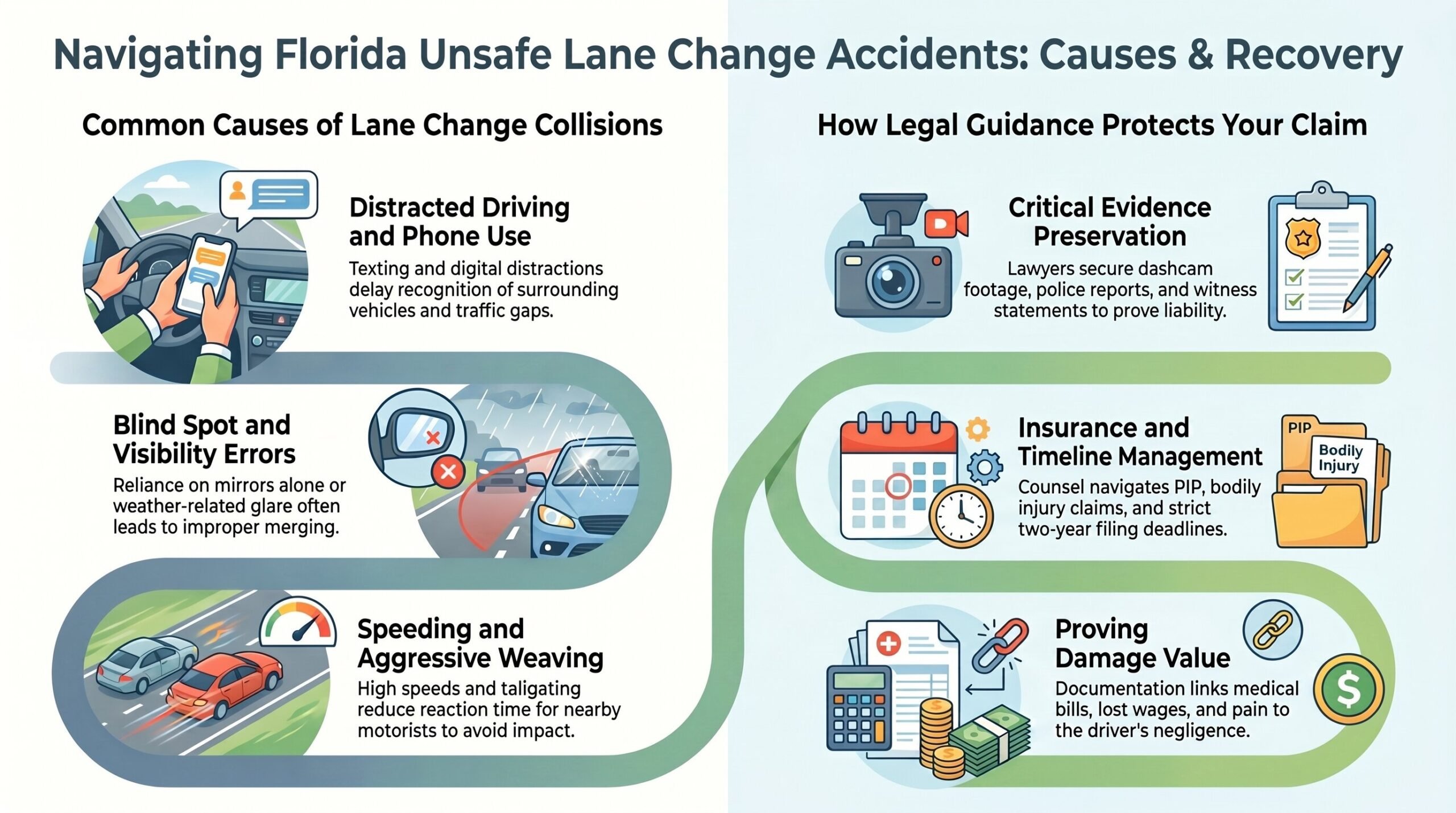
Unsafe lane-change accidents in Florida often stem from preventable driver conduct, including distracted driving, blind-spot errors, speeding, aggressive driving, and failure to signal. These factors can reduce reaction time, obscure nearby vehicles, and create sudden hazards for surrounding motorists. Identifying the cause of an unsafe lane change is critical when judging fault, liability, and the potential value of an injury claim.
Distracted Driving
How often does a brief glance away from the road lead to a dangerous lane change? In Florida traffic, distracted driving remains a significant cause of crashes involving unsafe merging and lane departures. Texting while driving can delay recognition of surrounding vehicles, traffic signals, and changing road conditions. Cellphone distraction also reduces a driver’s ability to maintain steady speed, judge safe gaps, and complete a lane change with proper caution.
These failures may endanger passengers, nearby motorists, pedestrians, and those who respond after a collision. For individuals committed to serving others, understanding this risk supports safer choices and greater accountability. When a crash occurs, evidence such as phone records, witness statements, and vehicle data may help determine whether distraction contributed to the unsafe lane change. Florida injury claims may depend on such proof.
Blind Spot Errors
A single missed blind spot check can turn an ordinary lane change into a serious Florida traffic collision. Blind spot errors occur when a driver relies only on mirrors, fails to turn and look, or misjudges the presence of a vehicle, motorcycle, cyclist, or service vehicle nearby. In Florida’s dense traffic corridors, these mistakes can place vulnerable road users and assisting motorists at immediate risk.
Weather-related visibility, including rain glare, fog, and low-light conditions, can further reduce a driver’s ability to detect adjacent traffic before moving over. Some unsafe movements may also follow Road Rage Tactics, such as crowding another vehicle or refusing to yield space, though the core danger remains the failure to confirm a clear path. Careful observation helps protect every person sharing the roadway.
Speeding And Aggressive Driving
When drivers exceed safe speeds or engage in aggressive driving actions, a routine lane change can become difficult for surrounding motorists to anticipate or avoid. Speeding reduces available reaction time, increases stopping distance, and may turn a minor sideswipe risk into a severe collision. Aggressive conduct, including tailgating, weaving through traffic, or attempting to force entry into another lane, can endanger families, workers, and public servants traveling Florida roads.
Careful case review may examine traffic citations, witness statements, dash-camera footage, and crash-reconstruction findings to assess Speed Limit Enforcement concerns and Road Rage Accountability. These facts can help identify whether a driver disregarded roadway safety and the well-being of others. Responsible legal evaluation supports injured individuals while promoting safer conduct across local communities.
Failure To Signal
Because turn signals provide advance notice of a driver’s intent, failure to signal is a common cause of unsafe lane change accidents on Florida roads. When a motorist moves without warning, nearby drivers may have little time to slow, yield, or adjust their position safely. This conduct can endanger commuters, families, pedestrians, and service workers who depend on predictable traffic movement.
It may also contribute to intersection crashes, especially where vehicles merge, turn, or cross multiple lanes within a short distance. In areas affected by roadway design, limited visibility or compressed merge zones can make signaling even more important. A careful legal review may examine witness statements, dash-camera footage, vehicle damage, and traffic patterns to determine whether the absence of a signal caused or exacerbated the collision.


Legal Rights of Florida Unsafe Lane Change Accident Injury Victims
In Florida, victims injured by an unsafe lane change may have the right to pursue compensation when another driver’s careless act causes a crash. These rights may include claims for medical expenses, lost income, reduced earning ability, pain, and related losses. A careful legal review can help protect injured individuals and support their recovery with dignity.
Florida crash victims may seek compensation when an unsafe lane change results in injury and financial hardship.
- Fault assessment: Florida’s Comparative Negligence Rules may affect recovery if more than one party shares responsibility, making accurate analysis crucial.
- Claim support: Evidence Preservation Tips include keeping photographs, medical records, repair estimates, witness information, and insurance communications in an organized file.
- Time-sensitive action: Injury victims generally benefit from prompt guidance, because delays may weaken proof, complicate insurance discussions, or affect legal deadlines.
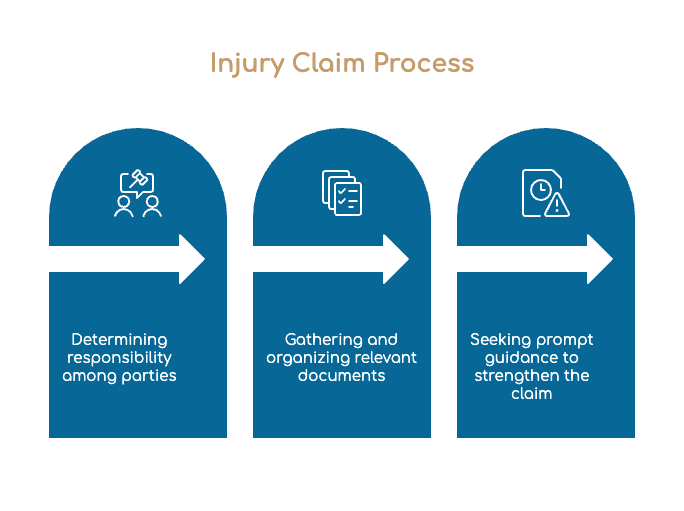
For those committed to helping others, understanding these rights encourages responsible action, fair accountability, and practical support for people harmed through no fault of their own after a collision.
Why Do Florida Unsafe Lane Change Accident Injuries Happen?
Many unsafe lane-change injuries in Florida occur when drivers fail to confirm that the adjacent lane is clear before moving their vehicle. These collisions often reflect inattention, hurried decision-making, or poor judgment in traffic. A driver may neglect mirrors, ignore blind spots, or change lanes without signaling, placing nearby motorists, passengers, cyclists, and pedestrians at risk.
Other causes may include Traffic light violations, vehicle defects, road rage incidents, alcohol impairment, and speeding through congested areas. Faulty mirrors, worn tires, or malfunctioning signals can reduce a driver’s ability to merge safely. Aggressive drivers may cut across lanes to intimidate others or gain a perceived advantage, creating danger for people who are simply trying to travel responsibly.
Alcohol impairment can slow reaction time and weaken lane control, making sudden movements more likely. Understanding these causes helps communities, caregivers, and safety advocates recognize preventable conduct and support accountability after serious harm occurs in Florida.
What Should You Do After a Florida Unsafe Lane Change Accident Injury?
After an unsafe lane-change accident in Florida, an injured person should take prompt steps to protect their health, preserve evidence, and safeguard any potential legal claim. Medical care should be sought as soon as possible, while crash evidence, such as photographs, witness statements, and police reports, should be carefully documented. Contacting an injury lawyer can help ensure that insurance issues, liability disputes, and compensation demands are handled with appropriate legal guidance.
Seek Medical Care
Any person injured in a Florida unsafe lane change accident should seek medical care as soon as possible, even when pain or visible injuries seem minor. Prompt evaluation helps identify conditions that may worsen without treatment, including concussions, soft tissue trauma, or internal injuries. Medical professionals also guide recovery, reduce complications, and support the person’s ability to return to family, work, and community responsibilities.
Timely care may also protect important legal interests. Treatment records can help connect injuries to the collision, which may become important for Florida negligence proof. Delays can create questions for insurers and may affect the insurance claim timeline, especially when benefits or liability are disputed. A person should follow medical instructions, attend appointments, and report any changes in symptoms to the treating provider.
Document Crash Evidence
When it is safe to do so, an injured person should begin documenting evidence from the Florida unsafe lane change accident as soon as possible. Photographs of vehicle positions, lane markings, traffic signals, debris, skid marks, and visible injuries may help preserve facts before conditions change. If able, the person should collect the other driver’s license, insurance, vehicle information, and any available details from the police report.
Names, phone numbers, and brief statements from witnesses can support Eyewitness credibility, especially when memories are recorded close to the event. Medical documentation should also be maintained, including discharge papers, diagnostic results, prescriptions, and follow-up instructions. Organized records may assist those responsible for evaluating what occurred and help caregivers, family members, and support networks understand the person’s practical needs after the crash.
Contact An Injury Lawyer
Organized crash documentation can be more useful when reviewed promptly by a Florida injury lawyer familiar with unsafe lane-change claims. Counsel can evaluate police reports, medical records, photographs, witness information, and roadway details to identify liability issues and preserve important deadlines. Early guidance also helps injured people understand the basics of insurance claims, including notice requirements, recorded statements, medical benefits, and communication with adjusters.
For individuals focused on supporting family members, patients, coworkers, or community responsibilities, this planning can reduce confusion and protect recovery efforts. Legal advice timing matters because delays may weaken evidence, complicate fault disputes, or allow insurers to frame the claim unfairly. A lawyer can explain available options, coordinate documentation, and pursue compensation while the injured person concentrates on treatment, stability, and responsible care.
Critical Evidence in a Florida Unsafe Lane Change Accident Injury Case
Critical evidence often determines how liability is evaluated in a Florida unsafe lane change injury case, particularly when fault is disputed. Key proof may include: 1. Police crash reports, 2. Dashcam video footage and witness statements, 3. Vehicle damage evidence. Each category can help establish vehicle positions, driver conduct, and the sequence of events leading to the collision.
Police Crash Reports
After an unsafe lane-change crash in Florida, the police crash report is often one of the first documents reviewed to understand how the collision occurred and who may be responsible. The report may identify drivers, witnesses, vehicle positions, roadway conditions, citations, and the officer’s observations. It can also note related conduct, such as traffic light violations or road rage escalation, when those facts help explain the sequence of events.
For injury victims and those assisting them, this document provides an organized starting point for evaluating fault and preserving important details. However, the report is not always complete or conclusive. Statements may conflict, diagrams may omit critical information, and later evidence may clarify disputed facts. A careful review helps determine what additional investigation is necessary in a claim.
Dashcam Video Footage
While a police crash report may summarize the officer’s initial findings, dashcam video can show the unsafe lane change as it occurred, often with far greater accuracy than written descriptions alone. In a Florida injury case, footage from a vehicle, a commercial fleet, a Safety camera, or a nearby business may clarify lane positions, speed, braking, turn-signal use, and the timing of impact.
It may also show whether traffic signals, congestion, or road markings affected the driver’s choices. Attorneys evaluating these recordings can preserve details that support accountability and protect injured people seeking fair treatment. Prompt action is important because some systems overwrite files quickly. When properly obtained and authenticated, dashcam footage can provide objective evidence that helps insurers, courts, and responsible advocates understand how the collision happened.
Witness Statements
When an unsafe lane change causes a collision, witness statements can help clarify what happened before, during, and immediately after impact. Neutral observers may describe turn signal use, traffic speed, blind-spot behavior, and whether either driver appeared distracted or aggressive. These accounts can support a police investigation by giving officers details not captured in reports, photographs, or recordings.
Witness credibility is often evaluated by consistency, vantage point, timing, and the absence of personal interest in the claim. Statements may also identify road conditions, such as rain, glare, construction, or lane markings, that affected safe movement. When reviewed with dashcam footage, vehicle inspection findings, and medical records, reliable witness testimony helps establish responsibility and protects injured people seeking fair treatment under Florida law after a lane-change crash.
Vehicle Damage Evidence
Witness statements may describe the sequence of events, but evidence of vehicle damage can provide physical confirmation of how an unsafe lane change occurred. Scrapes, crush patterns, paint transfer, broken mirrors, and side-panel deformation may show the angle of impact and the relative positions of the vehicles. This evidence can help clarify whether one driver moved laterally without adequate clearance.
Photographs, repair estimates, inspection notes, and insurance documentation should be preserved promptly, because later repairs may alter or remove important details. In serious cases, digital crash forensics may compare vehicle data, impact markings, and roadway evidence to support a careful reconstruction. For injured people and those assisting them, this documentation helps present a truthful account, supports fair evaluation, and encourages responsible resolution through verified physical facts rather than assumptions.
Long-Term Effects of Florida Unsafe Lane Change Accident Injuries
Unsafe lane change accidents in Florida can cause injuries that persist long after the initial collision, including chronic pain conditions that affect daily function. Some victims may face reduced mobility, permanent disability, or the need for ongoing medical care and assistive support. Emotional trauma, including anxiety, depression, and fear of driving, may also shape recovery and influence the value of an injury claim.
Chronic Pain Conditions
Although some crash injuries appear to recover within weeks, an unsafe lane change accident in Florida can leave a victim with chronic pain that persists for months or years. Neck, back, shoulder, and nerve pain may continue after fractures, soft tissue injuries, or spinal trauma have stabilized. This pain can disturb sleep, limit concentration, and reduce a person’s ability to work, care for family, or serve a community.
Medical providers may recommend post-accident rehabilitation, including therapy, strengthening, injections, or pain management. However, ongoing treatment can be costly, time-consuming, and physically demanding. Medication side effects may also create additional challenges, such as fatigue, dizziness, or impaired focus. Careful documentation of symptoms, treatment history, and medical opinions can help show the full impact of chronic pain.
Mobility And Disability
When the force of a lane change collision damages the spine, hips, knees, ankles, or nervous system, a victim’s ability to move independently may be seriously reduced. Long-term mobility limits can affect walking, standing, lifting, driving, and completing daily personal tasks. Some injured individuals may require braces, walkers, canes, prosthetic support, or wheelchair access in homes, vehicles, medical offices, and public spaces.
These needs often require coordinated assistance from physicians, rehabilitation consultants, family members, and community service providers. Disability may also affect earning capacity when physical duties become unsafe or impossible. In those circumstances, workplace accommodations, modified schedules, reassigned tasks, or remote work options may be necessary. Careful documentation helps identify practical needs, future limitations, and the resources required to preserve dignity, safety, and independence.
Emotional Trauma Effects
The emotional impact of a lane-change collision may linger long after physical wounds begin to mend. Survivors may experience anxiety, sleep disruption, intrusive memories, depression, or fear of driving, especially when the crash involved sudden impact or serious harm. These conditions can interfere with work, family duties, caregiving, and community service. Common physical injuries may be visible, yet emotional trauma often requires careful documentation through counseling records, medical evaluations, and witness observations.
In Florida injury claims, these effects may influence damages when they are connected to the unsafe lane change. Legal counsel may help organize evidence, coordinate treatment history, and address insurance dispute resolution when carriers minimize psychological harm. Proper attention to emotional recovery supports fair compensation and helps injured persons restore stability, purpose, and daily function after the collision.
Proving Liability in Florida Unsafe Lane Change Accident Injury Cases
In Florida unsafe lane-change accident cases, proving liability depends on showing that a driver failed to exercise reasonable care before changing lanes. Evidence may include police reports, witness statements, dash-camera footage, vehicle damage patterns, and nearby traffic-camera recordings. These materials help establish whether the driver signaled, checked blind spots, maintained speed, and yielded to vehicles already occupying the lane.
Liability may also involve roadway and traffic conditions. Faulty lane markings can confuse drivers and affect how responsibility is evaluated, particularly when markings are faded, missing, or inconsistent. Emergency vehicle interference may also be relevant if a driver suddenly changes lanes in response to sirens, lights, or approaching responders. Investigators often examine whether the reaction was reasonable under the circumstances.
A careful legal review supports injured people and their families by identifying responsible parties, preserving evidence, and presenting facts clearly. Strong proof helps promote accountability and safer driving conduct.
Dealing With Insurance Companies After a Florida Unsafe Lane Change Accident Injury
After a Florida unsafe lane change accident, insurance communications often become a crucial part of the injury claim process. Adjusters may request recorded statements, medical authorizations, or early settlement discussions, each of which requires careful attention. Clear documentation helps protect the injured person’s interests while preventing misunderstandings that could reduce available compensation. Those serving injured individuals should encourage accuracy, patience, and restraint before any statement is provided.
Insurance coverage may involve several sources, including the at-fault driver’s bodily injury coverage, personal injury protection benefits, and coverage for underinsured motorists. Policy exclusions can limit or deny payment, especially when insurers dispute causation, treatment necessity, or covered losses. A lawyer may review correspondence, preserve evidence, and respond to insurer requests with organized support. This approach helps ensure that communications remain focused on verified facts, documented injuries, and applicable coverage, rather than on pressure tactics or incomplete information from an insurance company.
What to Expect During a Florida Unsafe Lane Change Accident Injury Claim Process
A Florida unsafe lane-change accident injury claim typically begins with an initial case evaluation, during which liability, damages, and available insurance coverage are assessed. The process then involves evidence collection, including crash reports, medical records, witness statements, and vehicle damage documentation, followed by negotiations with the insurance company. If a fair settlement cannot be reached, the claim may proceed toward litigation and, when necessary, trial.
Initial Case Evaluation
Why does the initial case evaluation matter in a Florida unsafe lane change accident injury claim? It helps determine whether the injured person has a viable path to recovery and how service-oriented advocacy may protect that person’s stability. During this review, an attorney typically considers the crash description, injury timeline, available medical evidence, insurance coverage, and early communication from involved parties.
The evaluation also identifies potential Insurance company tactics, such as minimizing symptoms, disputing fault, or requesting broad statements before the claimant understands the case value. This stage is not a full investigation, but a measured assessment of legal options, deadlines, damages, and practical next steps. A careful evaluation supports informed decisions, preserves dignity, and helps ensure the claim begins with purpose, accuracy, and disciplined legal direction.
Evidence Collection Process
Once the initial case evaluation identifies a viable claim, the evidence collection process begins to shape the factual foundation of a Florida unsafe-lane-change accident injury case. Attorneys may gather crash reports, roadway photographs, vehicle damage records, medical documentation, witness statements, and available video footage. This step also involves preserving digital evidence, such as dashcam recordings or vehicle data, before it is lost.
Each item helps clarify lane position, signaling, speed, and driver awareness. How comparative negligence may affect responsibility is assessed through this evidence, especially when multiple drivers contributed to the collision. Careful organization supports accurate damage evaluation and future settlement negotiation strategy, without prematurely addressing insurer responses. This disciplined process serves injured individuals by protecting facts, promoting accountability, and preparing the claim for informed decision-making.
Insurance Claim Negotiations
During insurance claim negotiations, evidence gathered in a Florida unsafe lane-change accident case is used to present liability, damages, and the injured person’s need for compensation in a structured manner. The claim may include medical records, repair estimates, wage documentation, photographs, witness accounts, and expert opinions. Adjusters often review whether the lane change violated traffic duties and whether any shared fault applies under comparative negligence rules.
A careful presentation can address inaccurate assumptions, incomplete records, or a faulty investigation that undervalues the harm caused. Attorneys may communicate with insurers, respond to requests, and clarify the full effect of the injuries on daily life. This process helps protect the injured person’s interests while encouraging the insurance company to conduct a responsible evaluation before further legal steps become necessary.
Settlement Or Trial
If insurance claim negotiations do not yield a fair resolution, the unsafe lane-change accident claim may proceed to a settlement decision or trial preparation. At this stage, counsel evaluates liability evidence, medical documentation, witness testimony, and projected damages to determine whether resolution serves the injured person’s needs. Insurance negotiation tactics may continue, including revised demands, mediation, or structured discussions intended to avoid unnecessary delay and expense.
When settlement remains inadequate, courtroom trial strategy becomes central. Preparation may involve expert witnesses, demonstrative evidence, review of depositions, and a clear presentation of how the unsafe lane change caused harm. For those committed to serving injured individuals, the goal remains steady: secure accountability, protect dignity, and pursue compensation that supports recovery, stability, and responsible community safety under Florida law.
Compensation for Florida Unsafe Lane Change Accident Injury Damages
When an unsafe lane change causes a crash in Florida, the injured person may seek compensation for the physical, financial, and personal losses connected to the collision. This recovery may support treatment needs, household stability, and practical care responsibilities that arise after the accident.
A claim often requires careful documentation, including medical records, wage information, repair estimates, and evidence showing how the lane change created the harm. For many injured people, medical bills become an immediate concern, especially when emergency care, follow-up visits, medication, or diagnostic testing is required. Serious injuries may also involve long-term rehabilitation planning, including therapy, mobility support, and coordination with treating providers.
A Florida injury lawyer may evaluate available insurance coverage, communicate with insurers, and pursue a result that reflects the full impact of the crash. This process helps protect the injured person’s interests while supporting a responsible path toward recovery and renewed daily function.
Economic vs Non-Economic Damages in Florida Unsafe Lane Change Accident Cases
In Florida unsafe lane change accident cases, damages are generally divided into economic losses, such as medical bills and lost wages, and non-economic losses, such as pain and suffering. Economic damages often rely on records, invoices, and employment documentation, while non-economic damages require a careful evaluation of how the injury affects daily life. Proving the value of both categories is crucial to pursuing fair compensation after a collision.
Medical Bills And Wages
Calculating damages after an unsafe lane-change accident in Florida begins by separating economic losses from non-economic harms. Medical bills and lost wages are economic damages because they can be documented through records, invoices, and employer statements. A careful review may include ambulance charges, emergency care, diagnostic testing, surgery, therapy, prescriptions, and projected future treatment.
Wage losses may involve missed shifts, reduced hours, lost commissions, or diminished earning capacity when injuries limit continued service to an employer, family, or community. These figures often influence the insurance settlement timeline, since adjusters may wait for complete medical documentation before evaluating payment. When representation is arranged through an attorney-fee contingency, injured persons may pursue recovery without paying legal fees upfront, preserving resources for care and household stability.
Pain And Suffering
Pain and suffering damages address the human consequences of an unsafe lane change accident that do not appear on a bill, pay stub, or repair estimate. These non-economic losses may include physical discomfort, emotional distress, sleep disruption, anxiety while driving, and reduced enjoyment of daily life. A person enduring Broken bones recovery may face weeks of pain, limited mobility, dependence on caregivers, and frustration from interrupted family or service responsibilities.
Unlike economic damages, these harms reflect the personal burden carried beyond measurable expenses. In Florida unsafe lane change cases, pain and suffering may also account for lasting limitations, scarring, or the loss of independence after serious injuries. Medical records often show the nature of the injury and treatment, while the lived impact extends into dignity, purpose, and community participation.
Proving Damage Value
How can the value of an unsafe lane change injury claim be proven when some losses appear on paper and others affect daily life in less visible ways? Economic damages are supported through medical bills, wage records, repair estimates, and future care opinions. Non-economic damages require careful documentation of pain, mobility limits, anxiety, sleep disruption, and reduced family or community participation.
A thorough liability evidence review can connect the crash mechanics to the injuries, strengthening both categories of loss. Attorneys may also address Insurance adjuster tactics that minimize treatment needs, dispute causation, or undervalue suffering. By organizing records, witness observations, physician narratives, and consistent client statements, a claim can present a complete picture. This method helps decision makers measure financial harm and human loss with fairness and legal precision.
When a Florida Unsafe Lane Change Accident Injury Case Goes to Trial vs Settlement
When liability or damages remain in dispute, a Florida unsafe lane change accident injury case may proceed to trial rather than be resolved through settlement negotiations. Settlement often occurs when the parties agree on fault, injury severity, and fair compensation. Trial becomes more likely when insurers minimize Common damages, pain, suffering, or claim that another event caused the injuries.
Before either path is chosen, careful Evidence gathering, witness testimony, medical records, repair estimates, and expert evaluations help clarify the strength of the claim. A negotiated resolution may spare injured persons from delay, expense, and uncertainty, allowing resources to be directed toward recovery and service to their families or communities. Trial, however, may be necessary when a fair offer is refused or accountability requires public determination.
At trial, a judge or jury weighs credibility, documentation, and the human impact of the crash. Each option should be assessed with discipline, compassion, and a clear understanding of risk.
Florida Laws That May Affect Your Florida Unsafe Lane Change Accident Case
Several Florida laws may influence an unsafe lane change accident case, beginning with the traffic rules that require drivers to remain in a single lane until it is safe to change lanes. These rules help identify whether a driver failed to respect the safety of nearby motorists, passengers, pedestrians, or first responders.
- Lane change duties: A driver may be liable when drifting, merging, or changing lanes without proper lookout, signaling, or adequate clearance.
- Comparative negligence rules: Florida may reduce compensation if the injured person shares fault, making careful review of the evidence vital for fair accountability.
- Serious injury standards: Certain claims may require proof of significant harm, and cases involving death can implicate the traffic fatality threshold in related legal evaluations.
These laws guide how fault, damages, and responsibility are assessed, supporting a process that values public safety and helps injured people seek lawful recovery.
The Statute of Limitations for Florida Unsafe Lane Change Accident Injury Cases
Because filing deadlines can determine whether an injured person retains the right to pursue compensation, the statute of limitations is a critical issue in Florida unsafe lane change accident injury cases. In many negligence-based crash claims, Florida generally allows two years from the date of the accident to file a personal injury lawsuit. If that period expires, a court may dismiss the case, regardless of the severity of the injuries or the need to support a harmed individual.
Certain circumstances may affect timing, including claims involving government vehicles, minors, or delayed discovery of specific injuries. Separate insurance deadlines may also apply soon after the collision, requiring timely notice, documentation, or cooperation with policy requirements. Comparative negligence can influence the amount recoverable when more than one driver shares fault, but it does not extend the filing period. Careful attention to these limits helps preserve a person’s opportunity to seek lawful accountability and needed assistance.
How a Florida Unsafe Lane Change Accident Injury Lawyer Can Help You
After an unsafe lane change accident, a Florida injury lawyer can help identify the liable parties, preserve crucial evidence, and evaluate the full extent of the injured person’s losses. This support allows families and caregivers to focus on recovery, service, and stability while legal burdens are handled with care.
- Evidence development: The lawyer may gather crash reports, witness statements, vehicle damage records, medical documentation, and available camera footage to show how the unsafe lane change caused harm.
- Claim valuation: Through settlement value calculation, the lawyer can assess medical expenses, lost income, reduced earning ability, pain, and future care needs with attention to both immediate and lasting effects.
- Advocacy with insurers: Using Insurance negotiation strategies, the lawyer can respond to disputed liability, low offers, and delay tactics, while presenting a well-supported demand for fair compensation.
This guidance can strengthen the claim and protect the injured person’s interests.
When to Contact a Florida Unsafe Lane Change Accident Injury Lawyer
When injuries, vehicle damage, or disputed fault arise from an unsafe lane-change collision, contacting a Florida unsafe lane-change accident injury lawyer as soon as possible can help protect the claim against early mistakes. Early guidance is especially important when medical treatment is ongoing, witnesses may become unavailable, or an insurer requests a recorded statement before the facts are fully understood.
Prompt contact also helps preserve the accuracy of crash reports. If a report contains incomplete driver statements, unclear lane positions, or missing witness details, timely review may identify concerns before they affect liability discussions. This can serve the injured person’s need for a fair process and support responsible resolution.
Insurance claim deadlines also require attention. Delays may affect notice requirements, evidence collection, and access to available benefits. A person should seek legal input after emergency needs are addressed, particularly when pain persists, fault is questioned, or the insurer’s communications create uncertainty. Early action helps protect important rights.
Why You Need an Experienced Florida Unsafe Lane Change Accident Injury Lawyer
An experienced Florida unsafe lane change accident injury lawyer can identify the liability issues that often determine whether an injured person receives fair compensation. Unsafe lane change claims may involve disputed fault, unclear witness accounts, commercial vehicle policies, or incomplete crash reports. Careful legal analysis helps establish how the collision occurred and whether another driver failed to signal, checked mirrors improperly, or moved into traffic without adequate clearance.
This experience is especially important under Comparative negligence rules, which may reduce compensation if the injured person is assigned partial fault. A lawyer can evaluate evidence, challenge unsupported allegations, and present the harm in a manner that respects both justice and community responsibility.
Insurance dispute tactics may also delay payment, undervalue medical needs, or pressure a vulnerable claimant into an unfair settlement. Skilled representation helps protect the injured person’s rights while promoting accountability, careful driving, and responsible resolution after a preventable roadway injury.
How to Choose the Right Florida Unsafe Lane Change Accident Injury Lawyer for Your Case
Selecting the right Florida unsafe lane change accident injury lawyer requires careful attention to the attorney’s experience with traffic collision evidence, insurance negotiations, and disputed liability claims. A thoughtful selection process helps injured individuals protect their recovery while supporting family responsibilities, medical needs, and community obligations.
Prospective clients should review prior results in lane-change collisions, including cases involving blind spots, improper signaling, distracted driving, and conflicting witness accounts. Focus on attorney fees early, including contingency arrangements and case-cost responsibilities, so that financial expectations remain clear. Strong client communication is also vital because regular updates allow injured parties to make informed decisions without unnecessary confusion.
Effective representation should include case timeline planning, from medical documentation and liability investigation to demand preparation and possible litigation. Settlement negotiation prep should address damages, insurer defenses, and evidence presentation. A lawyer who combines preparation, transparency, and disciplined advocacy can help position the claim for a fair outcome.
About The Law Offices of Anidjar & Levine
For injured motorists seeking legal guidance after an unsafe lane-change crash, The Law Offices of Anidjar & Levine provides representation focused on investigation, insurance claims, and recovery of losses.
The firm assists clients by gathering evidence, reviewing crash reports, consulting medical records, and identifying liable parties whose negligence caused preventable harm.
Its attorneys develop a case strategy based on each client’s injuries, financial burdens, and long-term needs.
This approach may include documenting medical expenses, lost income, property damage, pain and suffering, and future care requirements.
The firm also communicates with insurers, allowing injured individuals and families to focus on recovery and service to their households, workplaces, and communities.
Client testimonials often emphasize responsiveness, guidance, and attention throughout the legal process.
The Law Offices of Anidjar & Levine offers free consultations, contingency-based representation, and support for Florida crash victims seeking compensation after unsafe lane change collisions caused by careless drivers.
Frequently Asked Questions
Can Tourists File Unsafe Lane Change Injury Claims in Florida?
Yes, tourists may file unsafe lane change injury claims in Florida when another driver’s negligence caused harm. Tourist eligibility generally depends on proving fault, injuries, damages, and proper insurance coverage. Claimants should comply with Florida notice requirements, including timely reporting to insurers and the preservation of evidence. Those assisting injured visitors should encourage prompt medical care, documentation, and legal guidance, because filing deadlines and no-fault insurance rules can materially affect recovery rights.
Do Unsafe Lane Change Claims Differ for Motorcycle Riders?
Yes, unsafe lane change claims can differ for motorcycle riders because visibility, road position, and injury severity often require closer review. Investigators may assess Helmet safety issues, signal use, blind spots, and whether lane-sharing mistakes contributed to the crash. Those assisting injured riders should quickly preserve evidence, including camera footage and witness statements, because insurers may wrongly blame motorcyclists despite a driver’s unsafe movement causing serious and preventable harm.
Can Passengers Sue After an Unsafe Lane Change Accident?
Yes, passengers may sue after an unsafe lane change accident when another party’s negligence caused injury. Passenger rights allow injured occupants to seek compensation from the at-fault driver, another motorist, or other responsible entities. Third-party liability may apply when careless driving, vehicle defects, or employer responsibility contributed to the crash. A careful claim helps protect medical needs, lost income, and recovery interests while promoting accountability and service to injured persons.
What if the At-Fault Driver Was Working?
If the at-fault driver was working, the employer may share liability when the crash occurred within job duties. Employer driving duties may include service calls, deliveries, or assigned travel. Evidence of shift-work negligence, worker-distracted driving, or unsafe scheduling may support a claim. Work-related supervision liability may arise if training, monitoring, or policies were deficient, thereby helping injured passengers seek accountability and compensation through appropriate legal channels.
Do Unsafe Lane Change Accidents Affect Commercial Driver Licenses?
Yes, unsafe lane change accidents can affect commercial driver licenses, especially when a citation, injury, or preventable crash is recorded. Regulators and employers may review the police report, driving history, and evidence collection to determine fault, safety risk, and possible discipline. Consequences may include points, suspension, termination, or reduced eligibility for driving roles. Careful documentation helps protect the public while ensuring each driver is evaluated fairly and responsibly.
—————————
Unsafe lane-change accidents can leave victims facing serious injuries, financial losses, and complex insurance disputes.
A qualified Florida unsafe lane change accident injury lawyer can evaluate liability, protect the victim’s rights, and pursue compensation for medical expenses, lost income, and related damages.
The Law Offices of Anidjar and Levine provides focused legal guidance, thorough case preparation, and dedicated representation for injured clients seeking accountability after preventable roadway collisions in Florida.
To learn more, contact a Florida Car Accident Lawyer.