The Law Offices of Anidjar and Levine can help injured victims preserve evidence, address disputed fault, and pursue compensation after aggressive or intentional driving causes harm. These cases may involve police reports, dashcam footage, witness statements, medical records, insurance deadlines, and comparative fault issues.
A Florida Car Accident Lawyer can communicate with insurers, prepare demand materials, evaluate settlement offers, and identify recovery sources, including uninsured motorist coverage.
The following sections explain crucial rights, evidence needs, and claim considerations.
Main Takeaways
- A Florida road rage injury lawyer can investigate aggressive driving, traffic violations, intentional misconduct, and crash-related liability.
- Key evidence may include police reports, citations, dashcam footage, surveillance video, witness statements, and vehicle damage patterns.
- Medical documentation, consistent treatment, symptom tracking, and therapy records help support injury, emotional trauma, and long-term damage claims.
- An attorney can communicate with insurers, monitor deadlines, prepare demand materials, and negotiate for fair compensation.
- Recoverable damages may include medical expenses, lost income, reduced earning capacity, pain, emotional distress, and crash-related financial losses.


How We Can Help With Your Florida Road Rage Car Accident Injury Claim
After a road rage crash in Florida, an injury claim may involve more than proving that another driver made an unsafe driving move. A law firm can assist by organizing evidence, preserving witness information, and communicating with insurers so the injured person can focus on recovery and service to family, work, and community.
Counsel may provide Medical documentation tips, including guidance on consistent treatment, symptom tracking, prescription records, imaging results, and follow-up appointments. Clear records help show the extent of harm, the need for care, and the effect on daily responsibilities.
A legal team also monitors insurance claim timelines, including notice requirements, response periods, and deadlines that may affect the availability of benefits. This oversight helps prevent avoidable delays or missed opportunities for compensation. By preparing demand materials, evaluating settlement offers, and coordinating with medical providers, counsel supports a disciplined claim process grounded in accuracy, diligence, and respect for the injured person’s needs.
OUR CONSULTATIONSARE FREE
START YOUR FREE CASE REVIEW

Understanding Florida Road Rage Car Accident Injury Cases
When aggressive driving escalates into a collision, a Florida road rage injury case may involve both traffic negligence and intentional misconduct. These matters often require careful evaluation because Driver anger can affect liability, insurance coverage, and the evidence needed to prove harm. An injured person may face medical expenses, lost income, vehicle damage, and the emotional toll that follows a threatening roadway event.
A lawyer reviewing such a case may examine police reports, witness statements, video footage, medical records, and insurance communications. The goal is to identify responsible parties, anticipate legal defenses, and present the full effect of the crash with accuracy and respect.
Florida’s comparative fault rules may also influence compensation if more than one driver is alleged to have contributed to the incident. For those committed to protecting families and communities, understanding these claims helps support accountability, safer conduct, and fair recovery after serious roadway harm.
Common Causes of Florida Road Rage Car Accidents
Common causes of Florida road rage car accidents often include heavy traffic congestion, aggressive lane changes, tailgating, speeding, and the actions of distracted or impaired drivers. These factors can escalate ordinary driving conflicts into dangerous encounters, particularly on crowded highways and urban roads. Understanding how these behaviors contribute to collisions is vital when evaluating fault, liability, and the resulting injury claims.
Heavy Traffic Congestion
During peak travel hours, heavy traffic congestion can create conditions for aggressive driving and road-rage collisions on Florida roads. Long delays, repeated stops, and perceived discourtesy may cause some motorists to act impatiently, increasing the risk to nearby drivers, passengers, pedestrians, and responding service providers. Congestion near work zones, tourist corridors, schools, and commuter routes can intensify stress, especially when drivers feel trapped or late.
Nighttime visibility may further reduce reaction time in heavy traffic, making sudden braking and hostile conduct more dangerous. Alcohol impairment can also worsen judgment, patience, and impulse control, turning ordinary delays into serious hazards. Attorneys evaluating these crashes often examine traffic volume, timing, witness accounts, and driver behavior to determine how congestion contributed to preventable harm. Early evidence preservation can support injured victims.
Aggressive Lane Changes
Heavy congestion often leaves little margin for error, and aggressive lane changes can quickly turn crowded Florida roadways into the scene of a serious road-rage collision. Drivers who cut across lanes, fail to signal, or force others to yield may create sudden hazards that leave nearby motorists with limited time to respond. In a lane-change context, even a brief act of impatience can endanger passengers, pedestrians, and others who depend on careful roadway conduct.
Establishing fault may require reviewing witness statements, vehicle damage, dash camera footage, and traffic patterns to determine whether the operation was unsafe or retaliatory. Legal professionals serving injured people may examine these details to protect accountability, support recovery, and promote safer choices within communities affected by aggressive driving incidents.
Tailgating And Speeding
Tailgating and speeding frequently intensify road rage incidents by reducing reaction time and increasing the force of impact in a collision. In Florida, these behaviors may show disregard for public welfare, especially when drivers crowd another vehicle or accelerate to intimidate. Safety first remains the guiding principle for motorists, passengers, and responders who assist after a crash.
A lawyer may examine skid marks, vehicle damage, traffic cameras, and event data to support evidence preservation and identify reckless conduct. Statements from neutral observers can be assessed through witness credibility factors, including location, consistency, and ability to observe. Clear documentation also strengthens insurance negotiation strategies, helping injured parties pursue fair compensation while encouraging accountability and safer conduct on Florida roads through careful legal review.
Distracted Or Impaired Drivers
Why do distraction and impairment so often escalate ordinary traffic disputes into dangerous road rage collisions? A distracted or impaired driver may miss braking signals, drift between lanes, or react aggressively to perceived slights. Phones, alcohol, drugs, fatigue, and cognitive distraction reduce judgment, patience, and control, creating conditions where a minor inconvenience becomes a preventable crash. In Florida, Nighttime Visibility can further limit reaction time, especially when impaired drivers already struggle to judge distance and speed.
Adverse Weather Conditions, including heavy rain or fog, can intensify confusion and frustration on crowded roads. Those committed to public safety recognize that these cases often involve vulnerable passengers, pedestrians, and careful motorists. Careful investigation can identify impairment, distraction, and related negligence, helping injured people pursue accountability and needed support.


Legal Rights of Florida Road Rage Car Accident Injury Victims
When road rage contributes to a Florida crash, injured victims may have the right to pursue compensation from the aggressive driver and any other responsible parties.
These rights can support medical care, lost income recovery, and the ability to continue serving family, work, and community responsibilities.
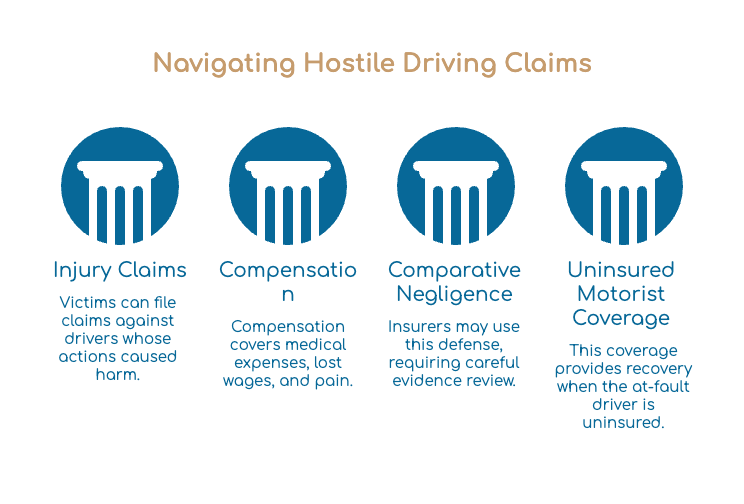
- Victims may file an injury claim against a driver whose hostile conduct caused or worsened the collision.
- Compensation may include emergency treatment, rehabilitation, property damage, lost wages, and pain caused by the crash.
- Insurers may raise comparative negligence defenses, so careful review of the evidence is important when fault is disputed.
- If the aggressive driver lacks insurance, uninsured motorist coverage may provide an additional source of recovery.
A Florida injury claim should be evaluated with attention to deadlines, available insurance, witness accounts, police reports, and medical documentation. Strong legal guidance can help preserve rights while allowing injured people to focus on recovery and responsibilities.
Why Do Florida Road Rage Car Accident Injuries Happen?
Although many crashes begin with ordinary traffic friction, road rage injuries often happen because a driver allows anger, impatience, or retaliation to override safe driving judgment. Aggressive tailgating, unsafe lane changes, sudden braking, blocking, and pursuit can turn a brief dispute into a violent collision. In Florida, crowded highways, tourist traffic, construction zones, and long commutes may increase frustration, but these conditions do not excuse reckless conduct.
Injury victims often suffer because an enraged driver creates hazards that others cannot reasonably avoid. A hostile move may force a caring parent, worker, volunteer, or visitor into a crash while simply trying to travel safely. These cases may also involve disputed fault, especially when the at-fault driver denies intent to cause harm.
Evidence of driving behavior can play a key role in a Florida insurance settlement, including witness accounts, vehicle damage patterns, and the preservation of dashcam footage. Understanding these causes helps explain why road rage collisions require careful legal and factual review.
What Should You Do After a Florida Road Rage Car Accident Injury?
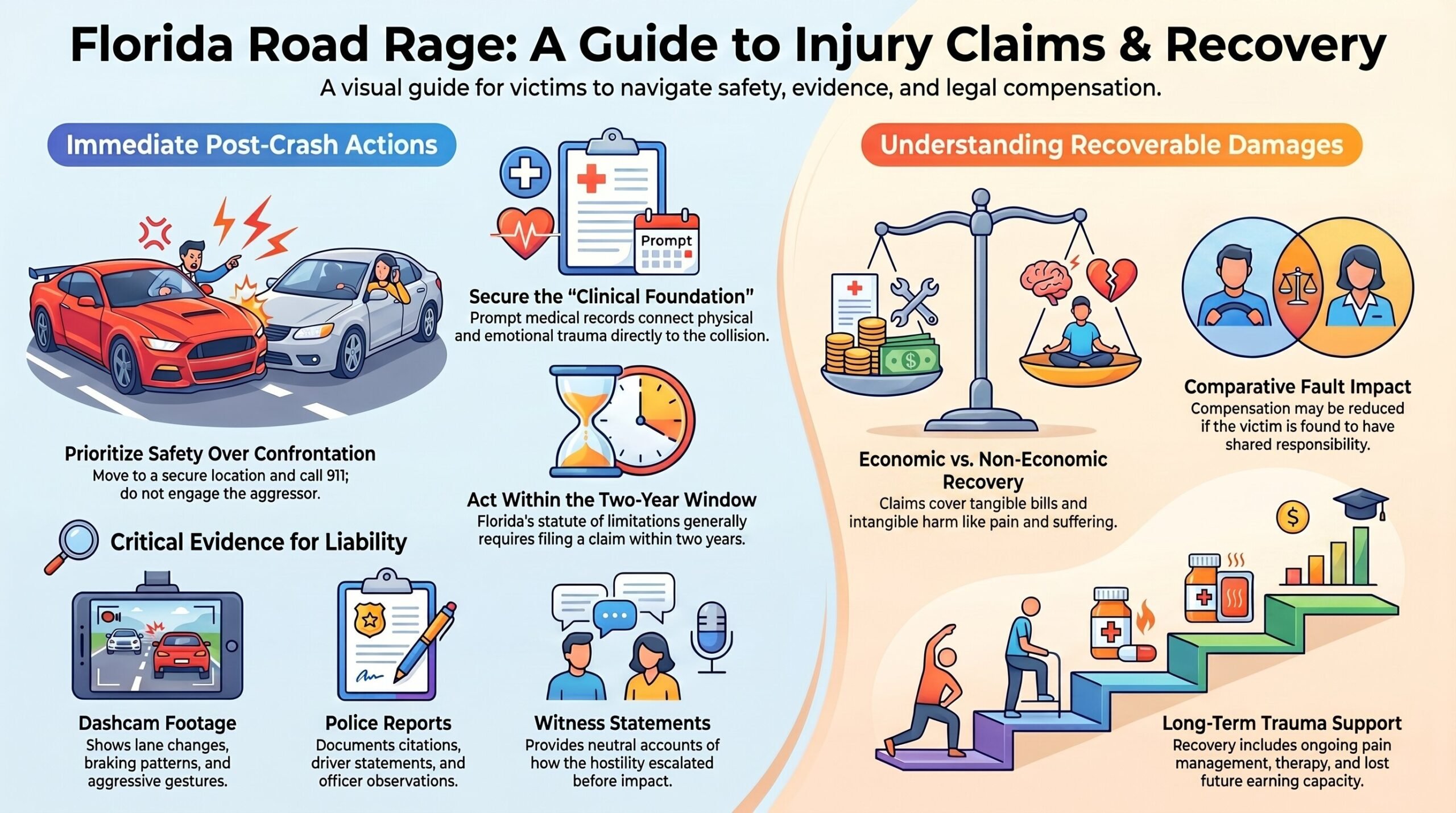
After a Florida road rage car accident injury, the injured person should first prioritize safety, including moving away from immediate danger when possible. The scene should then be documented with photographs, witness statements, and other relevant details that may support a later claim. Prompt legal help can assist in preserving evidence, addressing insurance issues, and protecting the injured person’s rights.
Prioritize Your Safety
In the immediate aftermath of a Florida road rage car accident, personal safety should take priority over confrontation, evidence gathering, or discussions about fault. Anyone involved should move to a secure location if possible, remain inside the vehicle when conditions are unsafe, and call 911 promptly. Defensive driving principles continue after impact, requiring judgment, restraint, and awareness of nearby traffic or aggressive behavior.
A person should stay calm, avoid confrontation, and not respond to threats, insults, or intimidation from another driver. If passengers, pedestrians, or others need assistance, help should be offered only when it can be done safely. Those who feel pain, dizziness, confusion, or emotional distress should seek medical care without delay, even when injuries appear minor at first after such incidents.
Document The Scene
Once personal safety is reasonably secured, documenting the scene can help preserve important facts about the Florida road rage car accident. A calm observer may begin with a Safety checklist, noting vehicle positions, traffic signals, skid marks, debris, weather, lighting, and visible injuries. If safe, evidentiary photography should include wide shots of the roadway, close-up images of damage, license plates, surveillance cameras, and any indicators of aggressive driving.
Witness names and contact details should be recorded respectfully, without interrupting emergency responders or escalating tensions. Written notes may include the time, location, statements heard, and the sequence of events as remembered. This careful recordkeeping can serve injured people, families, insurers, and investigators by preserving details that may otherwise fade, be moved, or become disputed later.
Contact Legal Help
Why should legal help be contacted promptly following a Florida road rage car accident injury? Early guidance helps protect the injured person, preserve evidence, and support responsible decision-making during a stressful period. An attorney can review police reports, witness accounts, medical records, and available video, then explain how Florida law may affect compensation.
Prompt action also helps families meet Insurance claim deadlines, which may limit recovery if ignored. When a crash causes fatal harm, counsel can discuss Wrongful death options with surviving relatives, including claims for financial losses and emotional harm. Legal support allows victims and families to focus on recovery, caregiving, and community responsibilities while a trained advocate handles insurers, liability disputes, and necessary filings with diligence and care after the collision.
Critical Evidence in a Florida Road Rage Car Accident Injury Case
Critical evidence can determine whether aggressive driving conduct is proven, liability is established, and damages are properly documented after a Florida road rage crash.
Critical materials often include 1. Police Reports, 2. Dashcam Footage, 3. Witness Statements, and 4. Medical Records. Each category may help clarify how the incident occurred, identify responsible parties, and support the injured person’s claim for compensation.
Police Reports
In a Florida road-rage car-accident injury case, a police report can provide an early, structured account of what happened, who was involved, and what evidence was observed at the scene. Officers may record driver statements, witness information, citations, roadway conditions, vehicle damage, and whether aggressive conduct contributed to the crash. This report can help injured people, insurers, and legal advocates understand the sequence of events with greater care and accuracy.
It may also document requests for emergency medical care, which can connect injuries to the collision. When officers note nearby cameras or involved vehicles, the report may support prompt preservation of dashcam footage without addressing the footage itself. A complete report can guide responsible service to victims by preserving facts before memories fade or evidence becomes difficult to locate.
Dashcam Footage
After a police report identifies the involved vehicles, witnesses, or nearby cameras, dashcam footage may provide a more direct view of the conduct that led to a Florida road rage car accident. It can show lane changes, braking, following distance, aggressive gestures, impact sequence, and whether a driver escalated danger before the collision. When preserved promptly, this footage may help clarify liability, support injury claims, and protect an injured person from unfair blame.
Attorneys may request recordings from the client, opposing parties, rideshare vehicles, commercial fleets, or nearby drivers, and also check whether any traffic camera captured related footage. Because recordings can be overwritten quickly, careful collection efforts matter. Dashcam review may also guide witness coordination, helping legal teams compare video timing with available accounts without relying on memory alone.
Witness Statements
Witness statements can provide an important account of a Florida road-rage crash, especially when the conduct prior to impact is disputed. Neutral drivers, passengers, pedestrians, or nearby workers may describe aggressive lane changes, tailgating, brake-checking, gestures, threats, or sudden acceleration. Eyewitness timelines can help establish the order of events, showing whether hostility escalated before the collision and whether a driver had time to avoid harm.
Investigators often compare each account with police reports, photographs, vehicle damage, and available video evidence. Statement credibility depends on the witness’s location, opportunity to observe, consistency, and lack of personal interest. Promptly gathered statements are often more reliable because memories may fade. In injury cases, careful witness documentation can support fair accountability while helping protect the safety and dignity of those harmed.
Medical Records
Medical records provide the clinical foundation for connecting a Florida road rage collision to the injuries claimed, complementing witness accounts with objective documentation from healthcare providers. Emergency reports, diagnostic imaging, treatment notes, prescriptions, and rehabilitation plans can show the nature, timing, and progression of physical harm. They may also document emotional trauma, including anxiety, sleep disruption, or fear of driving, when evaluated by qualified professionals.
Accurate records help attorneys, insurers, and courts assess causation, damages, and the need for future care. Consistent treatment history can strengthen credibility, while gaps may invite disputes. Prompt medical attention also supports compliance with insurance requirements and legal deadlines. For injured individuals seeking justice, organized medical documentation serves both accountability and care, helping secure that losses are evaluated with fairness, diligence, and informed judgment.
Long-Term Effects of Florida Road Rage Car Accident Injuries
The long-term effects of Florida road rage car accident injuries may extend far beyond the initial collision, often requiring ongoing medical care and chronic pain management. Victims may also face emotional trauma recovery, including anxiety, fear of driving, or distress linked to the violent nature of the incident. These consequences can create financial hardship in the future, particularly when medical expenses, lost income, and reduced earning capacity affect long-term stability.
Chronic Pain Management
When road rage collisions cause lasting injuries, key pain can become a defining part of the victim’s recovery and daily function. Injuries to the neck, back, joints, and nerves may require continuing evaluation, coordinated treatment, and careful documentation. Physicians may prescribe medication, physical therapy, injections, or rehabilitative care, depending on the severity and persistence of symptoms.
However, Medication side effects can limit a patient’s ability to work, drive, or provide care for others, making close medical supervision vital. Providers may also recommend pain relief alternatives, including therapeutic exercise, posture training, assistive devices, or interventional procedures. For injured individuals, consistent treatment records can help show how pain affects mobility, independence, and service to family, work, and community after a Florida road rage crash.
Emotional Trauma Recovery
Many injured individuals experience emotional trauma after a Florida road rage crash, especially when the collision involves threats, aggressive pursuit, or sudden violence. Survivors may develop anxiety, sleep disruption, irritability, or fear of driving, which can affect caregiving roles, employment duties, and community responsibilities. Recovery often requires counseling, medical evaluation, and structured stress reduction practices, such as controlled breathing, gradual exposure, and supportive routines.
For those serving families or vulnerable dependents, timely treatment can help preserve patience, judgment, and emotional stability. Documentation of symptoms, therapy expenses, and provider recommendations may also support a personal injury claim by showing the lasting psychological impact of the crash. Compassionate legal guidance can help ensure emotional harm is recognized alongside physical injury, allowing recovery needs to be addressed with care and dignity.
Financial Hardship Ahead
As injuries from a Florida road rage crash continue to affect daily life, financial strain can become one of the most serious long-term consequences. Medical bills, reduced income, rehabilitation costs, and home care needs may place sustained pressure on injured individuals and families. Those who serve others, including caregivers and community workers, may face additional hardship when physical limitations prevent them from performing dependable work or meeting service commitments.
Delays in the insurance claim timeline can further complicate budgeting, especially when treatment must continue before compensation is available. If the aggressive driver lacks adequate insurance, uninsured motorist coverage may provide crucial support, depending on policy terms. Careful documentation of losses, medical needs, and work restrictions helps establish the full financial impact and supports a more full recovery demand.
Proving Liability in Florida Road Rage Car Accident Injury Cases
Proving liability in a Florida road rage car accident injury case often requires evidence that the aggressive driver acted unreasonably, violated traffic laws, or intentionally created a dangerous situation. Useful proof may include police reports, traffic citations, dash camera footage, surveillance video, eyewitness statements, vehicle damage patterns, and medical records connecting the crash to the injuries.
When a driver tailgates, brake-checks, blocks traffic, forces another vehicle off the road, or engages in threatening behavior, those actions may constitute negligence or intentional misconduct.
Careful documentation also helps show how the incident affected the injured person’s daily life, work, and ability to serve family or community responsibilities. In serious cases, emotional distress damages may be considered when fear, anxiety, or trauma are supported by credible evidence. Establishing fault early can also protect the insurance claim timeline, because delays or missing records may weaken the connection between the aggressive conduct and the resulting harm.
Dealing With Insurance Companies After a Florida Road Rage Car Accident Injury
After evidence of liability has been gathered, the insurance process often becomes the next major challenge in a Florida road rage car accident injury claim. Insurers may question the severity of injuries, dispute whether aggressive driving caused the crash, or rely on incomplete records to reduce payment. A faulty dashcam can further complicate review if footage is unclear, missing, or incorrectly time-stamped.
Careful communication with adjusters is critical. Statements should remain accurate, limited, and supported by medical documentation, repair records, witness accounts, and police reports. Those assisting an injured person should help preserve records, track expenses, and avoid rushed settlements that overlook future care needs. Medical liens may also affect recovery because healthcare providers or benefit programs may require repayment from settlement funds.
A lawyer can evaluate coverage, challenge unfair positions, and coordinate lien issues so compensation reflects the full harm caused by the road rage collision. This support promotes orderly, responsible resolution.
What to Expect During a Florida Road Rage Car Accident Injury Claim Process
A Florida road-rage car accident injury claim usually begins by reporting the accident, documenting injuries, and preserving information that may establish fault. The process then focuses on gathering crucial evidence, including police reports, witness statements, medical records, and any available video footage. If negotiations with insurers do not result in fair compensation, the injured party may need to evaluate filing a lawsuit to protect the claim.
Reporting The Accident
When a road rage crash occurs in Florida, promptly reporting the accident helps create the official record that may later bolster an injury claim. Law enforcement should be contacted when injuries, vehicle damage, aggressive driving, threats, or unsafe roadway conditions are involved. Officers may document statements, identify drivers, and note conduct that could relate to Road rage penalties. This report can also guide insurers and attorneys as they evaluate responsibility, legal defenses, and the appropriate compensation strategy.
Those assisting an injured person should encourage calm communication, medical attention, and accurate reporting without speculation. If passengers or bystanders feel threatened, officers can address immediate safety concerns and potential witness protection needs. Timely reporting preserves order, supports accountability, and helps ensure injured individuals are treated with dignity.
Gathering Key Evidence
During a Florida road rage car accident injury claim, gathering important evidence is vital to showing how the collision occurred, who acted aggressively, and how the victim was harmed. Evidence may include police reports, photographs of vehicle damage, roadway conditions, skid marks, and visible injuries. Witness statements can help confirm threatening gestures, unsafe lane changes, tailgating, or deliberate impacts.
A review of surveillance footage may identify nearby traffic cameras, business security systems, or residential recordings that captured the incident. Dashcam video, 911 calls, and medical records may further support the timeline and injuries of the claim. Social media preservation is also key when posts, messages, or videos may reflect aggressive conduct or admissions. Careful evidence collection helps protect the injured person’s dignity while supporting a fair, service-focused pursuit of accountability.
Negotiating With Insurers
After the evidence has been collected and the injured person’s losses are documented, negotiations with insurers often become a central part of a Florida road rage car accident injury claim. The insurer may review medical records, repair estimates, wage loss estimates, witness statements, and police findings before making an offer. A careful liability investigation can help clarify whether aggressive driving, intimidation, or intentional misconduct contributed to the crash.
Evidence preservation remains important during this stage because adjusters may challenge the severity of injuries or the connection between the conduct and the damages. The injured person’s representative may present a demand package that explains losses in a structured, respectful manner. Negotiations should remain focused on accountability, fair compensation, and the practical support needed for recovery and continued service to others.
Filing A Lawsuit
If negotiations do not result in a fair resolution, filing a lawsuit may become the next step in a Florida road rage car accident injury claim. This process begins with a complaint filed in civil court that identifies the at-fault driver and outlines the injuries, losses, and requested damages. After service of process, the defendant responds, and both sides exchange evidence through discovery.
Medical records, witness statements, crash reports, and conduct showing aggressive driving may become central to proving liability. The Impact of insurance remains important, since policy limits and coverage disputes can affect litigation strategy. A lawsuit does not always mean trial, as mediation or continued negotiation may resolve the case. The settlement timeline may lengthen, but careful preparation supports accountability and meaningful recovery for the injured person.
Compensation for Florida Road Rage Car Accident Injury Damages
When road rage leads to a crash, injured victims in Florida may be entitled to compensation for both economic and non-economic damages. Recovery may depend on the circumstances of the collision, the severity of injuries, and the available insurance coverage. In road rage cases, conduct such as aggressive driving, intentional intimidation, or reckless acts may support a claim that another driver caused the harm.
Florida’s no-fault system can affect how compensation is pursued, making Fault vs insurance an important consideration. A victim may first seek benefits through personal injury protection, but serious injuries may justify a claim against the at-fault driver. Evidence such as police reports, witness accounts, medical records, and traffic camera footage can help establish liability.
Emotional distress claims may also arise when the crash causes trauma, anxiety, or lasting fear. Legal guidance can help guarantee victims are treated with dignity while pursuing fair compensation through proper channels.
Economic vs Non-Economic Damages in Florida Road Rage Car Accident Cases
In Florida road-rage car accident cases, damages are generally classified as economic or non-economic. Economic damages may include medical bills and lost income, while non-economic damages address harm such as pain and suffering. This distinction helps determine the full scope of compensation available to an injured person.
Medical Bills
Medical bills are among the most immediate economic damages in a Florida road rage car accident case, often beginning with emergency transport, hospital treatment, diagnostic testing, surgery, medication, and follow-up care. These expenses may also include rehabilitation, medical equipment, expert evaluations, and future care recommended by treating providers. Careful documentation helps establish the connection between the crash and the treatment received, supporting a clear demand for payment.
A complete record can also assist those serving injured individuals by identifying unmet needs and preventing overlooked costs. Because recovery may continue after a claim begins, long-term compensation can include reasonably expected future medical care. The Insurance claim timeline may affect when bills are reviewed, negotiated, or paid, making organized records indispensable throughout the case process.
Lost Income
Lost income often becomes a major economic damage category in a Florida road rage car accident case, especially where injuries prevent an individual from working during treatment or recovery. This loss may include missed wages, reduced hours, lost bonuses, and diminished future earning capacity. For those committed to serving others, such as caregivers, teachers, or emergency personnel, an injury can also disrupt crucial community support.
Documentation from employers, tax records, pay stubs, and medical restrictions can help establish the value of the claim. If the crash results in Wrongful Death, surviving family members may seek income-related losses tied to financial support. Florida’s Comparative Negligence rules may reduce recovery if the injured person shares fault, making accurate evidence and careful evaluation crucial for a fair economic assessment.
Pain And Suffering
Although economic losses can be measured through bills and wage records, pain and suffering reflect the non-economic harm that follows a Florida road rage car accident. This category may include physical discomfort, loss of sleep, anxiety, fear of driving, and reduced enjoyment of family, work, or community service. Courts and insurers may consider injury severity, treatment duration, daily limitations, and credible testimony from medical providers and witnesses.
Road rage motives can also affect how the conduct is viewed, especially when aggression or intimidation increases the victim’s trauma. Emotional distress effects may be substantial, even when financial records show only part of the loss. A careful presentation of the claim helps demonstrate how the crash changed the injured person’s life and supports fair compensation under Florida law for lasting non-economic damages.
When a Florida Road Rage Car Accident Injury Case Goes to Trial vs Settlement
When a Florida road rage car accident injury case advances beyond the initial claim stage, the decision to settle or proceed to trial often depends on the strength of the evidence, the severity of the injuries, the available insurance coverage, and the willingness of the parties to accept a reasonable resolution. A careful Trial strategy considers witness testimony, medical records, crash documentation, and any proof of aggressive conduct.
Settlement may serve injured people efficiently when it provides fair compensation without prolonged uncertainty. Strong courtroom evidence can improve settlement leverage, especially when liability and damages are clearly supported. Skilled negotiation tactics may encourage insurers or opposing parties to evaluate the claim responsibly and avoid unnecessary conflict.
Trial may become necessary when a reasonable offer is not made or when crucial facts remain in dispute. In that setting, the case is presented to a judge or jury, with the goal of securing accountability and meaningful recovery.
Florida Laws That May Affect Your Florida Road Rage Car Accident Case
Several Florida laws may affect how liability, compensation, and legal deadlines are assessed after a road-rage car accident. These rules help determine whether aggressive conduct, unsafe actions, or retaliatory driving caused preventable harm.
- Negligence standards: Drivers must use reasonable care, even when provoked. Tailgating, brake-checking, or weaving through traffic may support a finding of negligence.
- Florida comparative fault: Compensation may be reduced when an injured person shares responsibility, such as by escalating a confrontation or failing to avoid danger when reasonably possible.
- Traffic and criminal violations: Citations for reckless driving, improper lane changes, or aggravated speeding penalties may strengthen evidence of dangerous conduct, especially when public safety was disregarded.
- Insurance requirements: Florida’s no-fault system may affect initial medical benefits, while serious injuries can permit claims against the at-fault driver.
These laws encourage accountability, protect community safety, and support fair recovery for those harmed.
The Statute of Limitations for Florida Road Rage Car Accident Injury Cases
Because legal deadlines can determine whether an injured person may pursue compensation, the statute of limitations is a pivotal issue in Florida road rage car accident injury cases. Florida generally gives injured parties two years from the date of a negligence-based crash to file a personal injury lawsuit. If the case involves a death, the wrongful death deadline is also generally two years. Missing the applicable deadline may bar the claim, regardless of how severe the injuries appear or how clearly the other driver acted aggressively.
Timely action also supports Proving Negligence because witness memories, video footage, vehicle data, and police records may become harder to secure as time passes. The deadline further affects the Damages Calculation, since medical treatment, lost income, and long-term care needs must be documented carefully. Those seeking to serve injured victims should recognize that prompt attention protects legal rights and preserves the facts needed for fair evaluation.
How a Florida Road Rage Car Accident Injury Lawyer Can Help You
After a road rage crash, a Florida car accident injury lawyer can help evaluate the facts, identify liable parties, and protect the injured person’s right to pursue compensation. This support allows injured individuals and their families to focus on recovery while ensuring the legal process is handled with care and discipline.
- Evidence preservation: A lawyer may secure crash reports, witness statements, video footage, vehicle damage records, and medical documentation before important details are lost.
- Liability analysis: Counsel can examine aggressive driving conduct, traffic violations, and comparative fault issues to build a clear claim.
- Insurance negotiation: A lawyer may communicate with insurers, respond to low settlement offers, and present damages in a structured, persuasive manner.
- Damage documentation: Legal representation can help organize medical expenses, lost income, pain and suffering, and future care needs, supporting a claim that reflects the injured person’s losses and the services provided by caregivers.
When to Contact a Florida Road Rage Car Accident Injury Lawyer
When injuries, vehicle damage, or disputed facts are involved, contacting a Florida road rage car accident injury lawyer should occur as soon as reasonably possible. Early contact helps an injured person understand immediate reporting obligations, medical documentation needs, and practical steps that protect a potential claim. This timing is especially important when aggressive driving, threats, fleeing, or intentional conduct may affect how responsibility is evaluated.
Prompt legal guidance also supports Evidence preservation. Witness memories may fade, surveillance footage may be erased, and vehicle damage may be repaired before it is documented. A lawyer can identify time-sensitive materials, such as dashcam recordings, police reports, photographs, medical records, and communications with insurers.
Insurance claim deadlines also require careful attention. Missing a required notice or filing date can limit recovery options. By seeking assistance promptly, an injured person can focus on treatment and service to family or community while important claim-related steps are addressed in an orderly manner.
Why You Need an Experienced Florida Road Rage Car Accident Injury Lawyer
Early legal contact is valuable, but the quality of that representation can substantially affect how a road rage injury claim is developed and resolved. An experienced Florida road rage car accident injury lawyer understands that these cases often involve more than negligent driving. Aggressive conduct, threats, intentional acts, and disputed accounts may influence liability, damages, and available compensation.
Skilled counsel can gather evidence before it disappears, including dash-camera footage, witness statements, police findings, medical records, and crash-reconstruction details. This careful work supports injured people who need stability, treatment, and practical guidance after a frightening event.
Experience also matters when addressing Insurance coverage basics, because road rage cases may involve personal injury protection, bodily injury liability, uninsured motorist coverage, or exclusions for intentional conduct. A knowledgeable lawyer can evaluate these issues while preserving valid claims. The same focus helps document emotional distress claims, connecting trauma, medical care, and daily hardship to the broader damages analysis.
How to Choose the Right Florida Road Rage Car Accident Injury Lawyer for Your Case
Selecting the right Florida road rage car accident injury lawyer requires attention to experience, communication, and the lawyer’s ability to manage both negligence-based and intentional misconduct issues. A qualified attorney should understand Florida insurance rules, evidence preservation, police reports, medical documentation, and the heightened concerns that arise when aggressive driving causes harm. The selection process may include reviewing case results, professional reputation, responsiveness, and the lawyer’s willingness to explain each step patiently and respectfully.
Injured individuals may also consider Client consultation options, including phone, virtual, or in-person meetings, especially when mobility, caregiving duties, or work obligations create barriers. A dependable lawyer should listen carefully, assess liability, identify damages, and discuss a settlement negotiation strategy that reflects the client’s losses and long-term needs. The right legal advocate should serve the client’s interests with diligence, protect the claim from avoidable mistakes, and pursue fair compensation through organized, ethical, and focused representation.
About The Law Offices of Anidjar & Levine
For individuals injured in road rage collisions, The Law Offices of Anidjar & Levine provides legal representation focused on protecting clients’ rights, documenting losses, and pursuing compensation through a structured claims process.
The firm serves crash victims and families with attentive guidance, helping them address medical expenses, lost income, property damage, pain and suffering, and long-term care needs.
Its legal team reviews police reports, medical records, witness statements, and available video evidence to identify liable parties and support each claim.
When aggressive driving leads to fatal injuries, the firm also assists families with Wrongful Death Claims, seeking accountability with dignity and care.
The Law Offices of Anidjar & Levine also handles disputes involving Insurance Bad Faith, including delayed, denied, or undervalued claims.
Through investigation, negotiation, and litigation when necessary, the firm works to relieve clients of legal burdens so they can focus on recovery, family responsibilities, and rebuilding stability.
Frequently Asked Questions
Can Road Rage Lead to Criminal Charges in Florida?
Yes, road rage can lead to criminal charges in Florida when conduct shows criminal intent, such as threats, assault, battery, reckless driving, or use of a weapon. Authorities assess actions, statements, and risks posed to the public. Self-defense exceptions may apply when force is reasonably necessary, but retaliation is not protected. Those serving injured persons should recognize that criminal proceedings may occur alongside civil claims for damages.
Should I Report Aggressive Driving Before a Crash Happens?
Yes, aggressive driving should be reported before a crash when it can be done without increasing danger. Immediate safety remains the priority, so a passenger may call 911, or the driver should stop in a safe location first. Witness reporting helps protect others on the road and may support later legal strategy. Useful preservation steps include noting the vehicle description, location, direction of travel, and visible license plate details.
Can Dashcam Audio Help Prove Road Rage Intent?
Yes, Dashcam audio may help prove road-rage intent when it captures threats, aggressive statements, horn use, or confrontational behavior surrounding the incident. Its value depends on audio clarity, whether voices are identifiable, and whether the recording is complete. As intent evidence, it may support witness accounts and vehicle movements. Courts still apply admissibility standards, including authenticity, relevance, and privacy considerations, before allowing it to assist those seeking accountability.
What if the Road Rage Driver Fled the Scene?
If the road rage driver fled the scene, the incident should be reported immediately, and medical needs must be addressed first. Evidence preservation becomes important, including dashcam footage, vehicle damage, debris, location data, and nearby surveillance video. Eyewitness accounts may help identify the driver, vehicle, and aggressive conduct. A victim serving community safety should cooperate with law enforcement, carefully document losses, and seek legal guidance on insurance and accountability.
Are Road Rage Claims Different for Rideshare Passengers?
Yes, road rage claims can differ for rideshare passengers because multiple layers of insurance may apply. Rideshare liability often depends on whether the driver was logged into the app, transporting a passenger, or acting outside the platform’s rules. Passenger injuries may involve claims against the aggressive driver, the rideshare driver, or the rideshare company’s insurer. Careful investigation helps protect injured passengers, supporting fair compensation and service to those harmed.
—————————
Road rage collisions can leave victims facing serious injuries, financial losses, and intricate legal questions.
A Florida Car Accident Lawyer can evaluate liability, protect the victim’s rights, and pursue compensation through insurance claims or litigation when necessary.
The Law Offices of Anidjar and Levine provides focused legal support for injured motorists and passengers.
Prompt legal guidance can help preserve evidence, meet deadlines, and strengthen a claim for fair recovery.