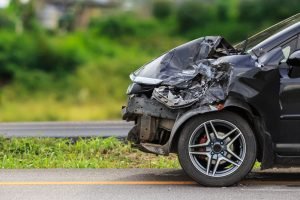
A Florida Car Accident Lawyer from The Law Offices of Anidjar and Levine helps injured victims prove negligence, preserve evidence, and pursue compensation for medical bills, lost income, property damage, and pain and suffering.
These cases often involve phone records, crash reports, witness statements, dashcam footage, medical documentation, and insurance disputes.
Legal support can also address comparative fault, long-term injuries, and future care needs.
The information below explains important rights, the steps to make a claim, and how legal guidance may support recovery.
Main Takeaways
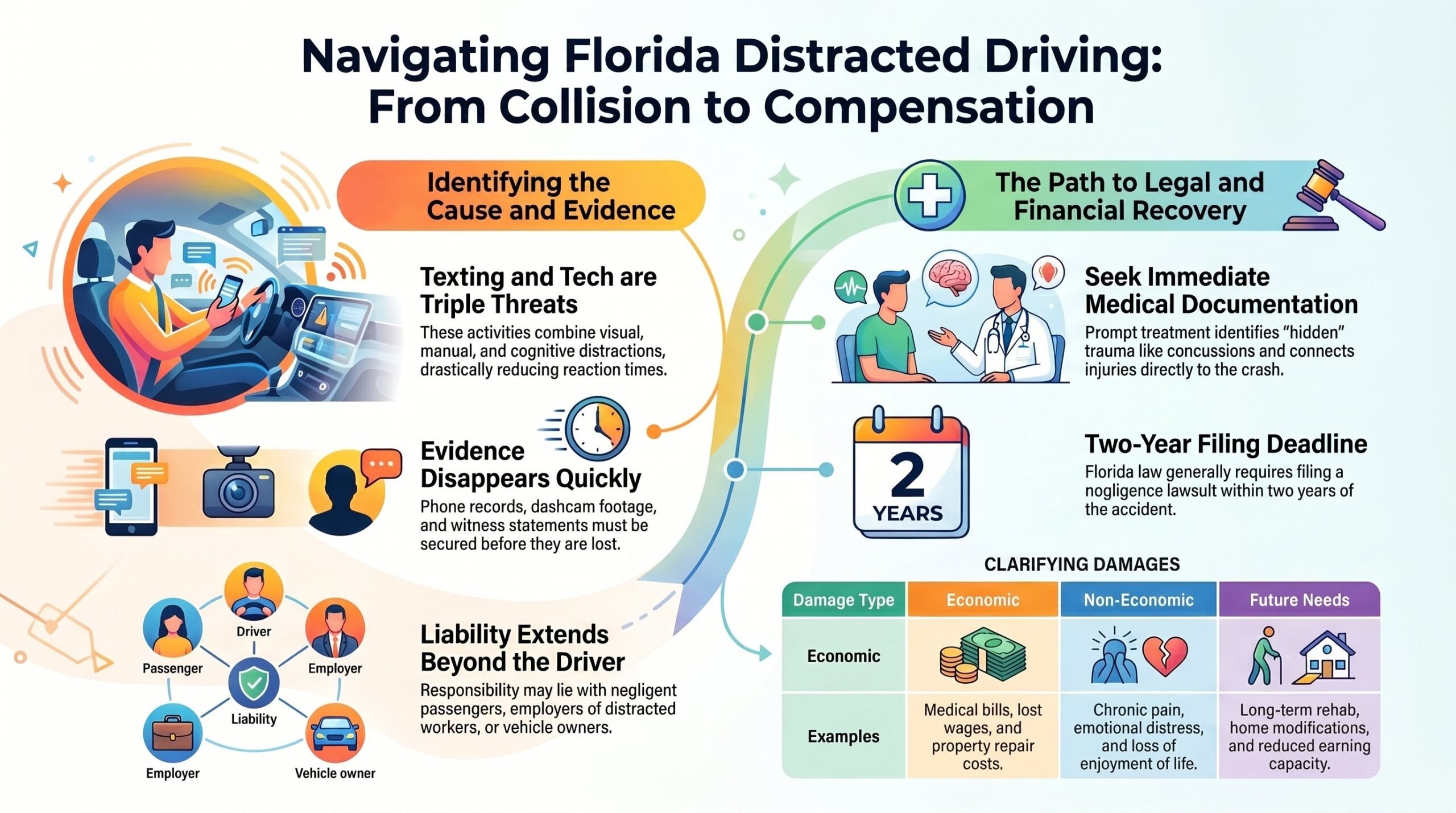
- A Florida distracted driving injury lawyer helps preserve crash reports, phone records, vehicle data, photos, and surveillance footage.
- Legal support can investigate texting, GPS use, eating, passenger interference, and other distractions that caused the crash.
- Prompt medical treatment documents injuries and connects concussions, soft tissue damage, or internal trauma to the collision.
- A lawyer can handle insurance negotiations, disputed liability, damages documentation, and communications while you focus on recovery.
- Florida claims may involve multiple responsible parties, including distracted drivers, negligent passengers, employers, or others who contributed to the harm.


How We Can Help With Your Florida Distracted Driving Car Accident Injury Claim
A Florida distracted-driving car accident injury claim often requires prompt investigation, careful preservation of evidence, and a clear understanding of how negligence is proven under state law. A qualified legal team can help injured individuals organize the facts, protect important records, and pursue accountability with diligence and respect for all affected parties.
Assistance may include Evidence preservation, such as securing crash reports, vehicle data, photographs, phone records, and surveillance footage before it is lost. Attorneys may also conduct witness interviews to clarify how the collision occurred and identify conduct that supports liability. Careful medical documentation is equally important because treatment records, physicians’ opinions, and future care evaluations help link injuries to the crash and quantify losses.
During insurance negotiation, counsel can present evidence, address disputed claims, and seek fair compensation while reducing burdens on the injured person. This support allows clients and families to focus on recovery, service, and restored stability.
OUR CONSULTATIONSARE FREE
START YOUR FREE CASE REVIEW

Understanding Florida Distracted Driving Car Accident Injury Cases
When a driver diverts attention from the road, even briefly, the resulting crash can raise complex questions about fault, causation, and damages under Florida law. These cases require careful review of conduct before impact, the injuries sustained, and the evidence linking inattention to harm. Distracted texting may support a negligence claim when records, witness statements, or vehicle data show that the driver failed to exercise reasonable care.
Florida injury cases also consider whether other parties contributed to the collision or worsened its consequences. A negligent passenger, for example, may become relevant if that person interfered with safe driving or knowingly encouraged dangerous conduct. For injured individuals and families seeking stability, the legal process can help identify responsible parties, document losses, and pursue compensation that supports recovery. Understanding these cases allows advocates, caregivers, and legal professionals to serve harmed people with diligence, compassion, and respect for the facts at issue.
Common Causes of Florida Distracted Driving Car Accidents
Common causes of Florida distracted driving car accidents often involve conduct that diverts a driver’s eyes, hands, or attention from the roadway. Texting while driving, eating behind the wheel, using in-car technology, and interacting with passengers can each reduce reaction time and impair safe vehicle control. These distractions may become important factors when evaluating fault, liability, and injury claims after a collision.
Texting While Driving
Texting while driving remains one of the most dangerous forms of distracted driving in Florida because it combines visual, manual, and cognitive distraction at the same time. When a driver reads or sends a message, attention shifts away from traffic conditions, safe following distance, lane position, and the needs of others sharing the roadway. Even brief glances at a phone can prevent timely responses to pedestrians, cyclists, emergency vehicles, or stopped traffic ahead.
Florida drivers may also underestimate the impact of hands-free distractions, since dictated texts, message alerts, and screen prompts still divide attention. Similarly, GPS navigation can become hazardous when entered, reviewed, or adjusted while the vehicle is moving. Responsible driving requires silencing nonessential alerts, planning routes before departure, and maintaining sustained focus on protecting everyone nearby.
Eating Behind the Wheel
Although it may seem routine, eating while driving can be a serious distraction that contributes to Florida car accidents. A driver who unwraps food, reaches for a drink, wipes a spill, or looks down at a meal may lose essential seconds needed to react. These moments can affect lane control, braking, and awareness of pedestrians, cyclists, and nearby vehicles.
For individuals committed to protecting others, safe commuting requires choices that reduce preventable risk. Eating before departure, stopping at a safe location, or waiting until arrival can help maintain focus on the roadway. Mindfulness reminders placed in a vehicle or planned into daily routines may encourage safer habits. When a distracted driver causes harm, injury victims may need legal guidance to evaluate responsibility and available recovery options.
In-Car Technology Distractions
Digital features in modern vehicles can be as distracting as food, especially when they draw a driver’s eyes or hands away from traffic conditions. Touchscreens, navigation systems, voice commands, music controls, and dashboard alerts may require split-second decisions that become dangerous at highway speeds. In Florida traffic, a brief glance at a route change or climate setting can prevent a driver from noticing braking vehicles, pedestrians, or lane shifts.
These distractions often complicate injury claims because data records, witness accounts, and vehicle settings may help show inattention. After a crash, injured individuals may need medical care, emotional stress management, and rehab support resources to restore stability. Legal evaluation can help identify whether in-car technology contributed to the collision and resulting harm.
Passenger Distractions
Inside a moving vehicle, passengers can become a serious source of distraction when conversation, conflict, caregiving duties, or sudden movements divert a driver’s attention from the road. In Florida traffic, even brief visual or mental disruption may reduce reaction time and increase crash risk. Children, elderly relatives, coworkers, rideshare passengers, or injured occupants may require assistance, creating competing duties for a driver who should remain focused.
Workplace distractions can also follow employees into company vehicles, particularly when passengers discuss assignments, schedules, or urgent service needs while the vehicle is in motion. Passenger cellphones may add risk through loud videos, navigation disputes, or requests to view messages or images. Responsible passengers can help by limiting interruptions, managing devices, and supporting the driver’s duty to protect everyone nearby.


Legal Rights of Florida Distracted Driving Car Accident Injury Victims
When a distracted driver causes a crash in Florida, injured victims may have the right to pursue compensation for medical expenses, lost income, reduced earning capacity, property damage, and pain and suffering. These rights may depend on insurance coverage, injury severity, filing deadlines, and Florida’s comparative fault rules.
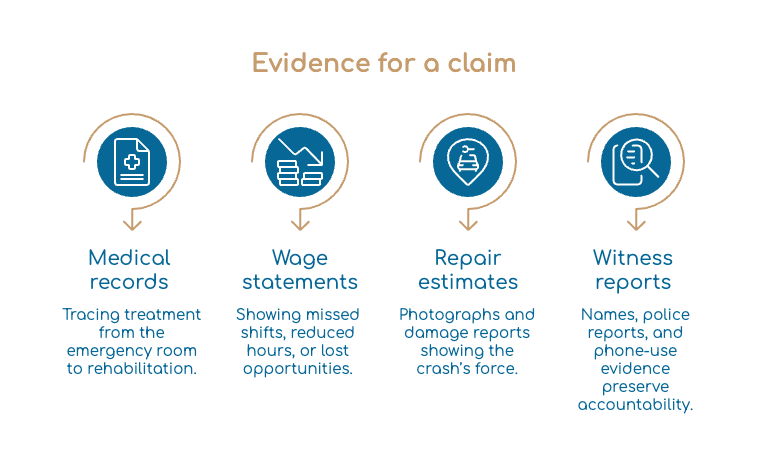
A careful claim documentation checklist can help preserve facts and support a fair recovery.
- Medical records tracing treatment from the emergency room to rehabilitation.
- Wage statements showing missed shifts, reduced hours, or lost opportunities.
- Repair estimates, photographs, and damage reports showing the crash’s force.
- Witness names, police reports, and phone-use evidence preserve accountability.
For those committed to serving families and communities, legal action may provide structure during hardship. An injury claim can help stabilize a household, protect access to care, and assign financial responsibility to the party whose conduct caused harm. Prompt guidance may also help victims avoid missed deadlines or preventable claim disputes.
Why Do Florida Distracted Driving Car Accident Injuries Happen?
Why do distracted driving injuries occur so often on Florida roads? They often result from momentary choices that remove a driver’s attention from safe operation. Phones, navigation systems, food, passengers, and roadside activity can each divide awareness, even when traffic conditions require full concentration. Poor cell phone etiquette, including reading messages at lights or holding calls in congested traffic, increases the risk because traffic can change within seconds.
Distracted driving also occurs when a driver’s mind is occupied by stress, anger, grief, or conflict. This emotional distraction can slow reaction time, narrow judgment, and reduce the ability to notice pedestrians, cyclists, stopped vehicles, or sudden lane changes. In busy Florida communities, where residents, visitors, and workers share crowded roads, these lapses can cause serious harm. Understanding these causes helps safety-minded individuals promote attentive driving, responsible conduct, and greater care for everyone who depends on public roadways each day throughout Florida.
What Should You Do After a Florida Distracted Driving Car Accident Injury?
After a Florida distracted driving crash, an injured person’s early actions can affect both medical recovery and any later injury claim. Prompt medical care, a timely crash report, and careful preservation of essential evidence help establish what happened and how the injuries occurred. These steps create a clearer record, which may be important when fault, damages, and insurance coverage are reviewed.
Seek Medical Care
Because injuries from a distracted driving collision may not be immediately apparent, prompt medical care is an essential first step after a Florida car accident. A physician can identify hidden trauma, including concussions, soft tissue damage, internal injuries, and worsening pain that may develop after shock subsides. Early treatment also creates medical records that connect injuries to the collision, which can help protect the injured person’s rights.
Care should continue as directed, including follow-up visits, diagnostic testing, therapy, and prescribed medication. Missed appointments may suggest that injuries are less serious than claimed. Medical documentation can also support later witness interviews and insurance paperwork by providing an accurate timeline of symptoms, treatment, and limitations. Seeking care promptly serves both personal recovery and responsible preparation for any injury claim.
Report The Crash
Prompt medical treatment should be accompanied by proper reporting of the crash to law enforcement and the appropriate insurance carriers. Safety first remains the guiding principle, so an injured person should move to a secure location when possible and request emergency assistance for anyone in need. Florida law may require a police report when injuries, death, or significant property damage occur, and an official record can help clarify the circumstances.
While waiting, a person may document scene details for reporting purposes, including location, vehicles involved, and visible hazards, without interfering with responders. Statements should be factual, courteous, and limited; individuals should avoid admissions or speculation about fault. After making required notifications, they should contact counsel to protect rights and support responsible, orderly claims handling.
Preserve Key Evidence
When a distracted driving crash occurs, essential evidence can disappear quickly, so preservation should begin as soon as safety and medical needs allow. Photographs of vehicle positions, roadway conditions, traffic signals, skid marks, debris, and visible injuries may help show how the collision happened. Preserving phone records, dash camera footage, surveillance video, and vehicle data can also support a careful investigation.
Witness statement collection should occur promptly, while memories remain clear and contact information is available. Medical records, repair estimates, police reports, and written notes about pain or limitations should be kept in an organized file. These materials may strengthen Insurance company negotiations by providing reliable proof of fault, injury, and damages. Responsible evidence preservation helps protect the injured person’s rights and supports fair accountability.
Critical Evidence in a Florida Distracted Driving Car Accident Injury Case
In a Florida distracted-driving car accident injury case, liability often depends on evidence showing what the driver was doing immediately before impact, how the crash occurred, and who observed the conduct. Essential evidence may include:
- Cell phone records showing calls, texts, or data use near the time of the collision
- Dashcam video footage capturing lane movement, speed, braking, or impact
- Police crash reports documenting statements, citations, diagrams, and officer findings
- Witness statements describing distracted behavior, sudden movements, or traffic conditions
This evidence can help establish negligence, challenge inaccurate accounts, and support the injured person’s claim for compensation.
Cell Phone Records
After a serious collision, cell phone records may provide critical evidence of whether a driver was texting, calling, using an app, or otherwise distracted in the moments before impact. These records can show call times, message activity, data use, and location information that may help establish a timeline. In Florida injury claims, attorneys may seek this evidence through proper legal channels, preserving privacy while pursuing accountability.
Cell phone records may also clarify disputed facts when witnesses disagree or memories are incomplete. They can help distinguish distraction from other contributing factors, such as Driver fatigue, roadway conditions, or the conduct of distracted pedestrians. For injured people and families, this evidence supports a careful search for truth, helping responsible advocates serve victims with accuracy, diligence, and respect for justice.
Dashcam Video Footage
Beyond cell phone records, dashcam footage can provide a direct visual account of the moments leading up to a distracted-driving collision in Florida. Footage may show lane departures, delayed braking, drifting, phone use, or a driver’s failure to observe traffic conditions. For injured people and those assisting them, this evidence can clarify responsibility and support a fair evaluation of harm.
Prompt crash scene preservation is important because video files may be overwritten, altered, or lost if not secured quickly. Attorneys may request footage from involved vehicles, commercial fleets, rideshare drivers, nearby motorists, or businesses with forward-facing cameras. Dashcam admissibility depends on authentication, relevance, accuracy, and the reliability of the recording’s preservation. Properly handled footage can strengthen a distracted driving injury claim.
Police Crash Reports
When a distracted-driving crash occurs in Florida, the police crash report is often among the earliest and most important records of the incident. Prepared by the responding officer, it may identify drivers, vehicles, roadway conditions, citations, diagrams, and observed evidence. For those serving injured people, this report can help organize the first stages of accountability and care.
It may also assist in evaluating how to prove distraction, especially when it notes phone use, inattention, admissions, skid marks, or inconsistent statements. Although the report is not always conclusive, it can guide further investigation and preserve important details before memories fade. It may also record witness credibility factors, such as location, opportunity to observe, and consistency, without replacing later testimony or independent evidence in Florida injury claims.
Witness Statements
In a Florida distracted driving injury case, witness statements can provide critical detail about what the at-fault driver was doing in the moments before impact. Independent observers may report phone use, lane drifting, delayed braking, or failure to notice traffic signals. These accounts help establish the Incident timeline and may support physical evidence, police findings, and medical records.
Attorneys often evaluate witness credibility by considering the person’s location, visibility, attentiveness, and lack of bias. Promptly gathered statements are especially valuable because memories can fade and details may become less reliable over time. When handled carefully, witness testimony can clarify disputed facts, strengthen accountability, and assist injured individuals seeking fair recovery after harm caused by distracted driving. Such evidence may also effectively guide negotiations with insurers.
Long-Term Effects of Florida Distracted Driving Car Accident Injuries
Distracted driving crashes in Florida can cause injuries that extend far beyond the initial medical emergency. Long-term effects may include chronic pain conditions, changes in cognitive function, and limitations that affect employment, daily activities, and personal independence. These consequences often create financial recovery challenges, making a careful assessment of future medical needs, lost income, and reduced earning capacity crucial.
Chronic Pain Conditions
Although some crash injuries appear to recover within weeks, a distracted driving accident can leave a Florida victim with chronic pain that persists for months or years. Neck trauma, back injuries, nerve damage, joint impairment, and soft tissue injuries may produce ongoing discomfort that limits mobility, sleep, and daily independence. For those committed to caring for families or serving communities, persistent pain can interfere with dependable responsibilities and meaningful participation.
Treatment may include therapy, injections, pain management, and prescription medication, yet Medication side effects can complicate recovery and reduce consistency in daily tasks. Some victims require workplace accommodations, modified schedules, assistive equipment, or reduced physical duties. Proper documentation from medical providers helps establish the duration, severity, and practical impact of chronic pain after a Florida distracted driving collision.
Cognitive Function Changes
Physical pain is not the only lasting consequence after a Florida distracted driving crash, as some victims also experience changes in memory, attention, processing speed, and decision-making. These cognitive changes may follow a concussion, traumatic brain injury, or prolonged stress response after the collision. A person who once managed daily responsibilities with ease may struggle to follow instructions, organize tasks, or respond quickly to changing conditions.
Workplace distractions can intensify these difficulties, especially in settings that require focus, safety awareness, or careful communication. Frequent exposure to social media may also worsen attention problems, making recovery routines harder to maintain. Caregivers, employers, and service providers can support injured individuals by encouraging structured schedules, written reminders, quiet environments, and timely medical evaluation when symptoms persist or interfere with functioning.
Financial Recovery Challenges
When injuries from a Florida distracted driving crash continue for months or years, financial recovery often becomes as difficult as physical or cognitive recovery. Medical appointments, therapy, medication, transportation, and home assistance may create ongoing pressure on an injured person’s household. Wage loss can deepen that strain when reduced hours, missed promotions, or permanent work restrictions limit earning capacity. Families focused on care may also face difficult choices about savings, housing, and required obligations.
Budgeting recovery requires careful documentation, realistic planning, and attention to future needs, not only immediate bills. Advocates serving injured individuals often help identify losses that may be overlooked, including caregiver time and diminished employment opportunities. A full assessment supports claims of long-term harm, preserving the resources needed for stability, treatment, and dignified daily living.
Proving Liability in Florida Distracted Driving Car Accident Injury Cases
Because distraction is often concealed or denied after a crash, proving liability in a Florida distracted driving car accident case requires a careful review of both direct and circumstantial evidence. Investigators may examine police reports, traffic citations, vehicle damage, roadway conditions, surveillance footage, and available phone records to determine whether a driver’s attention was diverted. Testimony from passengers, bystanders, and responding officers may also support a finding of fault, especially when witness credibility is carefully evaluated.
A strong liability presentation connects the distracted conduct to the collision and the resulting injuries. This connection also supports proving damages, including medical expenses, lost income, and reduced daily function. In serious cases, expert analysis may clarify speed, reaction time, and impact forces. Although insurance negotiations and case settlements may later depend on the strength of this proof, the central purpose remains accountability. Reliable evidence helps injured individuals pursue recovery while encouraging safer conduct that protects the broader Florida community.
Dealing With Insurance Companies After a Florida Distracted Driving Car Accident Injury
After a distracted driving collision, insurance companies often begin evaluating the claim before the injured person fully understands the extent of the harm. Adjusters may request statements, records, authorizations, or quick settlement discussions, all while protecting the insurer’s financial interests. Careful communication is vital because incomplete comments can affect how fault, injury severity, and damages are interpreted.
A lawyer serving an injured person can help organize Medical treatment documentation, respond to insurer inquiries, and present losses in a clear, supported manner. This includes documenting emergency care, follow-up treatment, lost income, vehicle damage, and the daily impact of the injuries.
When medical providers, health plans, or benefit programs assert repayment rights, negotiating lien payments may also become necessary to restore fair compensation. Thoughtful handling of these insurance issues helps ensure that the injured person’s needs remain central while reducing pressure from insurers seeking early, undervalued settlements. Counsel also evaluates coverage limits and policy exclusions.
What to Expect During a Florida Distracted Driving Car Accident Injury Claim Process
A Florida distracted-driving car accident injury claim typically begins with filing the initial claim, followed by a structured evidence-collection process involving reports, medical records, witness statements, and digital evidence when available. The insurance negotiation steps may include liability review, damage assessment, settlement demands, and the insurer’s responses. Potential case outcomes can range from a negotiated settlement to litigation, depending on the strength of the evidence, the extent of disputed fault, and the extent of the injured person’s losses.
Initial Claim Filing
The initial claim filing is the first formal step in seeking compensation after a Florida distracted driving accident, and it often shapes how the insurance company evaluates the case from the outset. During this stage, the injured person’s representative typically notifies the appropriate insurer, identifies the parties involved, and outlines the nature of the injuries and losses.
Careful filing helps protect deadlines, including Florida’s personal injury protection requirements and any applicable liability claims. A service-focused lawyer may also communicate respectfully with medical providers, family members, and insurers to reduce confusion for the injured person. While detailed proof is developed later, early attention to evidence preservation and potential witness interviews can prevent avoidable harm to the claim. Accurate initial information supports fair review and responsible claim handling.
Evidence Collection Process
Gathering evidence early can substantially affect the strength and direction of a Florida distracted driving car accident injury claim. Attorneys often review crash reports, photographs, vehicle damage, medical records, phone-use indicators, and roadway conditions to understand how distraction contributed to the collision. They may also seek surveillance footage, emergency response notes, and data from involved vehicles when available.
Witness statements are evaluated carefully because Witness credibility issues can influence how facts are interpreted and preserved. This process supports accountability while helping injured individuals receive respectful, organized advocacy during a difficult recovery. Evidence is also assessed for consistency, relevance, and admissibility, so the claim rests on reliable proof rather than assumptions. A well-documented record may later inform an Insurance negotiation strategy without prematurely addressing settlement discussions.
Insurance Negotiation Steps
Once evidence has been organized and reviewed, insurance negotiations in a Florida distracted-driving car accident injury claim typically begin with a careful evaluation of liability, damages, and available coverage. The insurer may examine police reports, medical records, witness statements, photographs, and documentation showing lost income or ongoing care needs. A demand package is then prepared, presenting the injured person’s losses in a clear, service-focused manner while emphasizing accountability and community safety.
During negotiations, adjusters may question fault, injury severity, or the connection between the crash and medical treatment. Evidence preservation remains important because phone records, vehicle data, and crash-scene materials can support the integrity of the claim. Counsel may respond to settlement offers, clarify disputed facts, and protect the claimant from unfair pressure during communications with insurers.
Potential Case Outcomes
Several outcomes may follow a Florida distracted driving car accident injury claim, depending on the strength of the evidence, the available insurance coverage, the severity of the injuries, and whether liability remains disputed. A claim may resolve through settlement when documentation supports fault, damages, and future care needs. In cases involving insurance disputes, additional records, expert opinions, or witness statements may be needed to clarify responsibility and losses.
If the insurer refuses to make a fair payment, the matter may proceed to litigation, where a court or jury evaluates the evidence. A careful negotiation strategy can help protect the injured person’s interests while encouraging a timely resolution. Outcomes may include payment for medical expenses, lost income, pain, and diminished quality of life, allowing resources to support recovery, family stability, and responsible community care.
Compensation for Florida Distracted Driving Car Accident Injury Damages
Compensation in a Florida distracted driving car accident claim may include both financial losses and the personal impact of the injury. For an injured person, this process helps restore stability, support recovery, and address burdens created by another driver’s inattention. A careful claim may account for emergency care, hospital treatment, surgery, medication, assistive devices, follow-up appointments, and transportation related to medical care. Medical expenses documentation can strengthen the claim by showing the treatment received, amounts billed, and the connection between the crash and the injuries.
Compensation may also address future needs when injuries require ongoing support. Long-term rehab costs, therapy, home health assistance, and modifications to living spaces may be considered when supported by medical opinions. Lost income, reduced earning ability, and the need for household help may also be included. Properly developed claims allow injured people and their families to pursue resources needed for care, dignity, and continued service to others.
Economic vs Non-Economic Damages in Florida Distracted Driving Car Accident Cases
In Florida distracted driving car accident cases, damages are generally separated into economic losses, which involve measurable financial harm, and non-economic losses, which reflect the personal impact of the injury. Economic damages may include medical expenses, lost income, and reduced earning capacity, while non-economic damages may address pain, suffering, and diminished quality of life. Proving these damages requires clear documentation, credible evidence, and a careful assessment of how the crash affected the injured person’s finances and daily life.
Economic Damages Explained
After a distracted-driving collision, economic damages are the measurable financial losses a person suffers as a result of the accident. These losses may include emergency care, hospitalization, surgery, rehabilitation, prescription costs, medical equipment, and future treatment needs. They may also include lost wages, reduced earning capacity, vehicle repair or replacement, rental transportation, and other documented out-of-pocket expenses.
In severe cases, economic damages can extend to home modifications or long-term care required because of permanent injuries. Wrongful death claims may involve funeral costs, burial expenses, lost financial support, and the value of services the deceased would have provided. Careful documentation helps establish the full financial impact. Punitive damages are separate from economic damages and may arise only in limited cases involving especially reckless conduct under Florida law.
Non-Economic Losses
Beyond the financial costs of a distracted-driving crash, non-economic losses reflect the personal harm that cannot be measured by bills, receipts, or wage records. These losses may include pain, emotional distress, anxiety, loss of enjoyment of life, scarring, disability, and strain on family relationships. For injured Floridians, such harm can disrupt daily routines, caregiving roles, community involvement, and the ability to serve others consistently and with dignity.
In distracted driving cases, non-economic damages often become the focus of insurance disputes because their value depends on the severity, duration, and impact of the injury. Comparative negligence may also affect recovery if the injured person is assigned part of the fault. Careful legal evaluation helps ensure these deeply personal losses receive fair consideration under Florida law in each claim.
Proving Your Damages
Proving damages gives structure to both economic and non-economic losses, especially when a distracted driving crash produces medical bills, missed work, lasting pain, or changes in daily life. In Florida, documentation often includes treatment records, wage statements, repair estimates, prescription costs, and opinions from medical or vocational professionals. These materials help connect the collision to measurable financial harm and to human losses, such as reduced mobility, anxiety, or loss of enjoyment.
A careful review also considers insurance coverage limits, because available policies may affect recovery options and settlement negotiation strategies. Attorneys serving injured people often organize evidence so insurers, judges, or juries can understand the full burden placed on the claimant. Clear proof supports accountability, promotes fair resolution, and helps restore stability after preventable harm from distracted driving.
When a Florida Distracted Driving Car Accident Injury Case Goes to Trial vs Settlement
In many Florida distracted driving injury cases, the path from claim to resolution turns on the strength of the evidence, the seriousness of the injuries, and the insurance company’s willingness to make a fair settlement offer. Settlement may serve an injured person’s need for stability when liability is clear, medical damages are well documented, and future care needs are reasonably valued. Careful settlement timing can protect the claimant from accepting less than the case requires before treatment, recovery, and wage loss are fully understood.
Trial may become necessary when the insurer disputes fault, minimizes injuries, or refuses to account for the full human and financial harm caused. Trial strategy then focuses on presenting records, expert testimony, and witness accounts in a clear, service-minded manner. Jury selection is also important, as impartial jurors must evaluate evidence of distracted driving fairly. Strong preparation often increases negotiation leverage, even before trial begins.
Florida Laws That May Affect Your Florida Distracted Driving Car Accident Case
A distracted driving case that cannot be resolved through settlement, or that must be prepared as if trial is possible, is shaped by several Florida laws affecting liability, damages, insurance coverage, and filing deadlines.
These rules guide how evidence is gathered, how fault is assigned, and how an injured person’s losses are carefully valued.
- A glowing phone on the console may serve as evidence that attention left the road.
- Comparative negligence may reduce recovery if the injured person also acted carelessly.
- Insurance rules may affect which benefits respond first after medical treatment begins.
- Expert testimony may explain crash forces, injuries, phone records, or future care needs.
Florida’s no-fault system, injury threshold standards, and evidentiary rules can influence each stage of the case. Attorneys serving injured people evaluate these laws with discipline, so the claim reflects both legal requirements and the human responsibility to protect those harmed.
The Statute of Limitations for Florida Distracted Driving Car Accident Injury Cases
Strict filing deadlines often determine whether a Florida distracted driving car accident injury claim may proceed, regardless of how serious the crash was or how strong the evidence appears. In many Florida negligence cases, an injured person has 2 years from the date of the crash to file a lawsuit. Missing that deadline can bar recovery, leaving medical costs, lost income, and long-term care needs unresolved.
Certain circumstances may affect timing, including claims involving government vehicles, minors, or delayed discovery of specific injuries. Because evidence of distracted driving can disappear quickly, early preservation steps are important, including securing crash reports, witness information, vehicle data, photographs, and available phone records.
These materials may also influence liability evaluations under Comparative negligence rules, which can reduce compensation when the injured person shares fault. Timely action protects the claim, supports accurate fact development, and helps preserve resources that may assist injured individuals and the families who depend on them.
How a Florida Distracted Driving Car Accident Injury Lawyer Can Help You
After a distracted driving crash, a Florida car accident injury lawyer can help identify the evidence needed to prove fault, measure damages, and protect the injured person’s claim from early mistakes. The lawyer may examine phone records, crash reports, witness accounts, Medical Records, and vehicle damage to build a clear account of what occurred and how the harm has affected daily life.
Support often includes:
- Preserving cellphone data before it disappears like tire marks after rain.
- Organizing treatment records into a timeline that shows pain, recovery, and ongoing needs.
- Responding to Insurance Denials with documented facts, legal arguments, and careful claim presentation.
- Calculating lost income, future care, and household burdens that may fall on family or helpers.
Through this work, the lawyer serves the injured person by reducing confusion, addressing insurer tactics, and presenting the claim with discipline, accuracy, and respect for the person’s recovery.
When to Contact a Florida Distracted Driving Car Accident Injury Lawyer
When injuries, vehicle damage, or disputed fault are present, an injured person should contact a Florida distracted driving car accident injury lawyer as soon as practical. Early contact supports timely Police reporting, evidence preservation, and organized communication with insurers. This is especially important when phone use, inattention, or conflicting witness accounts may affect responsibility.
Prompt legal guidance can help restore records that may otherwise be lost, including photographs, vehicle data, surveillance footage, and witness information. Medical documentation should also begin promptly, both for health reasons and to create a clear record of crash-related harm. If symptoms develop later, delayed care may complicate evaluation.
Contact is also appropriate when Insurance claim disputes arise, such as denied coverage, low settlement offers, or requests for recorded statements. By acting early, an injured person and those assisting them can promote orderly decision-making, reduce avoidable mistakes, and support a fair review of the claim.
Why You Need an Experienced Florida Distracted Driving Car Accident Injury Lawyer
Early legal involvement is most effective when the attorney has specific experience with distracted driving claims in Florida. These cases often require prompt action to identify phone use, navigation activity, witness accounts, traffic camera footage, and vehicle data before important proof is lost. A lawyer familiar with these matters can provide Evidence preservation tips that help protect the injured person’s rights while supporting a complete investigation.
Experience also matters because distracted driving claims may involve disputed fault, delayed medical documentation, and insurers seeking to minimize responsibility. A seasoned attorney can develop an Insurance claim strategy that connects the driver’s conduct, the resulting injuries, and the full scope of damages. This approach supports fair compensation for medical care, lost income, and long-term needs.
For individuals and families focused on recovery, service, and stability, experienced legal guidance helps carry the burden of the claim with discipline, accuracy, and purpose.
How to Choose the Right Florida Distracted Driving Car Accident Injury Lawyer for Your Case
How should an injured person evaluate which Florida distracted driving car accident injury lawyer is best suited for the case? The evaluation should begin with experience handling crashes involving texting, handheld devices, navigation systems, and other distractions. A qualified lawyer should understand how to investigate phone records, witness statements, vehicle data, and Social media evidence while protecting the client’s dignity and privacy.
The injured person should also consider communication practices, case strategy, and the lawyer’s willingness to explain each step clearly. A service-minded legal team should treat clients with respect, respond promptly, and help reduce burdens during recovery. Reviews, prior case results, and professional reputation may provide useful insight, but they should be weighed with the facts of the current claim.
Fee agreement basics also merit careful review. The lawyer should explain contingency fees, costs, and responsibilities in writing, allowing the injured person to make an informed, confident decision.
About The Law Offices of Anidjar & Levine
For injured people seeking representation after a distracted driving crash in Florida, The Law Offices of Anidjar & Levine offers legal support focused on personal injury claims, insurance negotiations, and accident-related damages.
The firm assists clients by reviewing the circumstances of crashes, identifying liable parties, and pursuing compensation for medical costs, lost income, pain, and related losses.
Its attorneys provide a structured case evaluation to determine available legal options and the evidence needed to support a claim.
This process may include examining police reports, medical records, witness statements, and insurance coverage.
Client communication remains a central part of the firm’s service, helping injured individuals understand case progress, deadlines, and settlement considerations.
The firm’s approach reflects a commitment to helping accident victims pursue accountability while reducing the burden of managing a claim alone.
For those serving families, communities, or workplaces, this support can help protect recovery, stability, and future responsibilities after a preventable collision.
Frequently Asked Questions
Can Passengers File Claims After a Distracted Driving Crash in Florida?
Yes, passengers may file claims after a distracted driving crash in Florida when another party’s negligence caused injury. They may seek compensation from the distracted driver, another at-fault motorist, or an owner responsible through Negligent supervision. Florida’s comparative fault rules can affect recovery, though passengers are rarely blamed unless their conduct contributed. Claims should document injuries, losses, insurance coverage, and liability to support fair outcomes for those serving injured individuals.
Are Commercial Drivers Held to Stricter Distracted Driving Standards?
Yes. Commercial drivers are held to stricter distracted-driving standards because their duties involve public safety, larger vehicles, and greater risk. Federal and state rules restrict cell phone misuse, including handheld calls and texting while driving, especially for drivers operating commercial motor vehicles. Employers may also impose policies, training, and monitoring. When violations cause harm, investigators often review logs, device records, and company practices to determine responsibility.
Can Dashcam Footage Prove the Other Driver Was Distracted?
Yes, dashcam footage can help prove another driver was distracted when it captures lane drifting, delayed braking, phone use, or failure to react. Investigators may treat it as evidence of distraction, especially when supported by witness accounts, vehicle data, or phone records. However, dashcam limitations matter, including camera angle, video quality, and missing audio. Those serving injured people should promptly preserve footage, as timely review can strengthen a responsible claim.
What if the Distracted Driver Was Using a Work Phone?
If the distracted driver was using a work phone, Employer Liability may apply when the driver acted within the scope of their job duties or furthered the employer’s interests. Work Phone Negligence can support claims through phone records, company policies, messaging logs, and witness testimony. A careful investigation may show whether the employer encouraged unsafe communication practices. Those serving injured individuals should promptly preserve evidence because employment relationships can affect insurance coverage and recovery.
Do Distracted Driving Crashes Increase Insurance Premiums in Florida?
Yes, distracted driving crashes can increase insurance premiums in Florida, especially when a driver is found at fault. The Florida premium impact depends on claim severity, prior history, insurer practices, and documented negligence. Distracted fault trends may lead carriers to reassess risk more strictly. Those serving injured people should understand that premium changes often accompany liability findings, property damage claims, injury payments, and repeated unsafe conduct.
—————————
Distracted driving collisions can leave victims facing serious injuries, financial losses, and complex legal questions.
A Florida Car Accident Lawyer can evaluate the evidence, identify liable parties, and pursue compensation through settlement negotiations or litigation.
The Law Offices of Anidjar and Levine provides focused legal guidance for injured clients across Florida.
Prompt legal review may help protect important rights, preserve evidence, and support a stronger claim for recovery.