The Law Offices of Anidjar and Levine helps injured people connect crash mechanics to diagnoses, preserve evidence, and pursue available compensation.
Knee claims may involve ligament tears, fractures, cartilage damage, dislocation, instability, chronic pain, or future treatment needs.
Legal counsel can secure medical records, consult providers, identify insurance coverage, document lost income, and manage insurer communications.
Early guidance from a Florida Car Accident Lawyer also helps meet deadlines and reduce claim disputes, while the sections below explain crucial rights, evidence, and practical next steps.
Main Takeaways
- A Florida car accident knee injury lawyer can review crash evidence, medical records, and insurance coverage to build your claim.
- Knee injury claims may involve ligament tears, fractures, cartilage damage, dislocation, instability, or aggravated pre-existing conditions.
- Strong evidence may include imaging results, emergency records, therapy notes, witness statements, and photos of swelling or limited mobility.
- Compensation may cover medical treatment, rehabilitation, lost wages, reduced earning capacity, pain, and future knee care needs.
- Legal guidance can help meet deadlines, handle adjusters, preserve evidence, and connect the crash mechanism to your knee injury.
How We Can Help With Your Florida Car Accident Knee Injury Claim
After a serious collision, a Florida car accident knee injury lawyer can help an injured person understand legal options, document the full extent of the injury, and pursue compensation from the responsible party or insurance carrier. Legal support may include reviewing crash reports, securing medical records, consulting with treating providers, and identifying all available sources of insurance coverage. An attorney can also communicate with adjusters, protect the claimant from unfair statements, and present evidence in a manner that supports a fair resolution.
For individuals focused on recovery, this assistance can provide structure, reassurance, and practical support during a demanding period. Counsel may evaluate comparative fault issues, calculate medical expenses, lost income, and future care needs, and explain realistic settlement timelines. When negotiations do not produce an appropriate result, the lawyer can prepare the claim for litigation while continuing to seek a resolution that reflects the injury’s impact and the claimant’s long-term wellbeing.
Understanding Florida Car Accident Knee Injury Cases


When a vehicle collision causes trauma to the knee, the resulting claim often depends on the nature of the injury, the medical evidence, and the way the crash occurred. Florida knee injury cases may involve ligament tears, fractures, cartilage damage, dislocation, or persistent knee instability that limits mobility and daily function. Careful documentation helps clarify how the injury affects work, caregiving duties, transportation, and service to family or community.
OUR CONSULTATIONSARE FREE
START YOUR FREE CASE REVIEW

A well-developed claim typically includes emergency records, diagnostic imaging, professional evaluations, therapy notes, and opinions regarding future treatment options. These materials assist in measuring medical costs, lost income, pain, physical limitations, and long-term impairment. Because knee injuries can worsen over time or respond unevenly to care, consistent follow-up is important. In Florida car accident claims, the relationship between the crash and the knee condition must be clearly established, especially when insurers question severity, prior conditions, or the need for ongoing care.
Common Causes of Florida Car Accident Knee
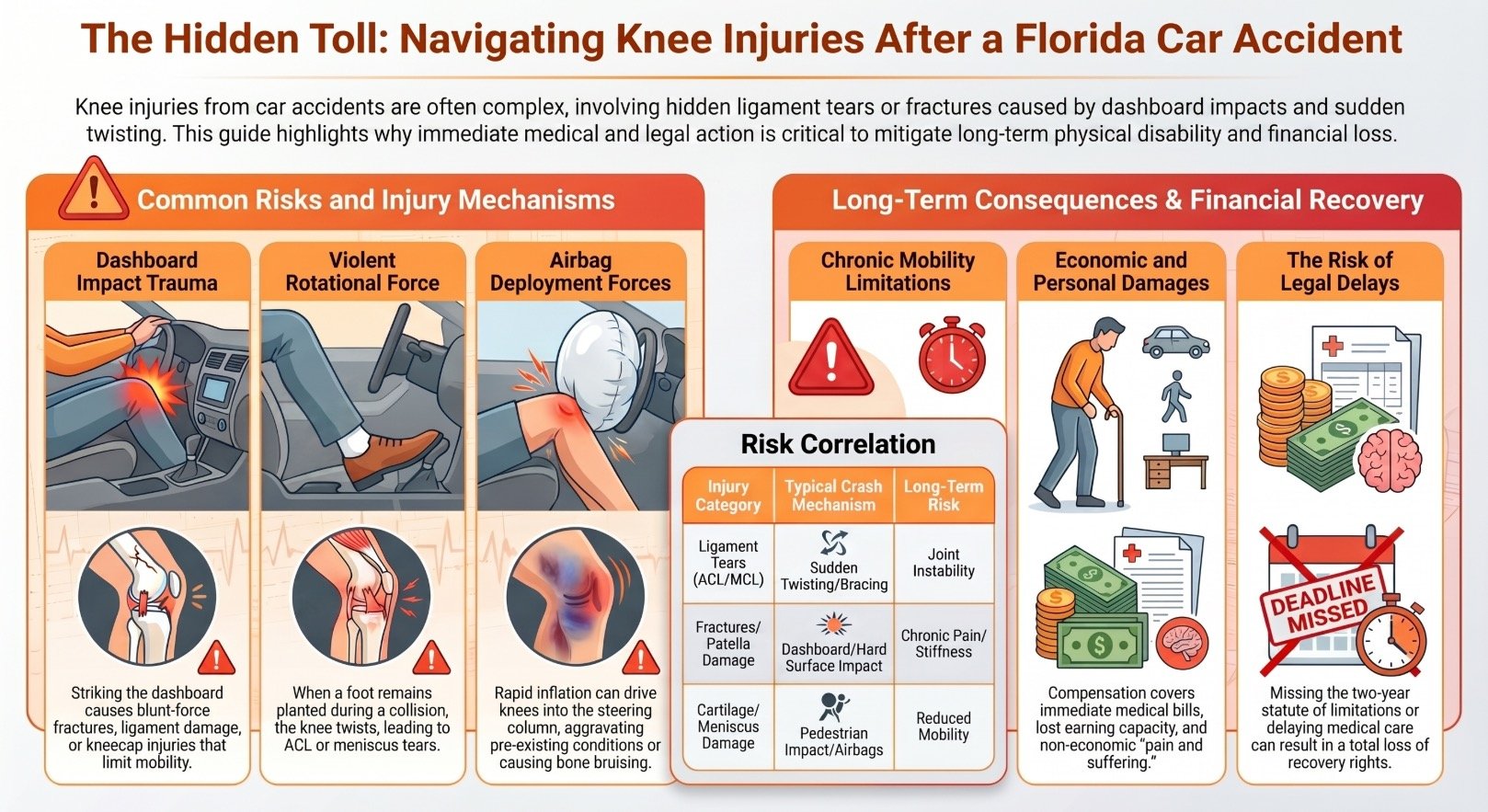
Florida car accidents can cause knee injuries through several distinct mechanisms, each affecting the joint in different ways. Common causes include dashboard impact injuries, twisting during collisions, pedestrian knee trauma, and forces created by airbag deployment. Understanding these causes helps clarify how the injury occurred, what medical issues may result, and how liability may be evaluated.
Dashboard Impact Injuries


One common source of knee trauma in a Florida car accident is direct impact with the dashboard during a collision. When a vehicle stops suddenly, an occupant’s knee may strike a hard surface ahead, causing bruising, fractures, ligament damage, or kneecap injury. These injuries can limit mobility, require imaging studies, and interfere with caregiving, employment, and daily service to others.
Legal evaluation often considers seat position, crash force, vehicle design, and medical documentation. Although distinct from Premises liability cases or Workers’ compensation claims, dashboard impact injuries require the same careful attention to causation, treatment records, and long-term limitations. A Florida car accident knee injury lawyer may help injured persons document losses, address insurance disputes, and pursue compensation that supports recovery and continued responsibility to family, work, and community.
Twisting During Collisions
During a collision, the knee may twist suddenly as the foot remains planted, the leg turns against the seat or floorboard, or the body rotates with the impact. This motion can strain ligaments, damage cartilage, or disturb joint alignment, especially when the occupant braces before impact. Such injuries may cause swelling, weight-bearing pain, reduced range of motion, and knee instability that affect daily care, work duties, and service to others. Medical evaluation often helps connect the twisting mechanism to specific diagnoses, including ACL, MCL, or meniscus injuries. In a Florida injury claim, proving negligence may require crash reports, witness accounts, vehicle damage evidence, and medical opinions showing how another driver’s unsafe conduct caused the knee trauma and related losses for the injured person.
Pedestrian Knee Trauma
When a vehicle strikes a pedestrian, the knee is often exposed to direct impact, twisting forces, or sudden collapse because there is no frame, seat belt, or airbag to absorb the collision. The bumper, hood, or pavement may drive the joint beyond its normal limits, causing ligament tears, meniscus damage, fractures, or severe bruising. These injuries can resemble slip-and-fall knee injuries, especially when the person is thrown down and lands awkwardly. In service-focused communities, prompt recognition helps injured pedestrians obtain medical care, mobility support, and documentation for any later claim. Workplace pedestrian harm may also occur when delivery drivers, road crews, or parking attendants are struck while performing duties. Careful evaluation of the impact path, symptoms, and imaging findings can clarify the cause and extent of knee trauma.
Airbag Deployment Forces
In many front-end collisions, airbag deployment can create powerful forces that contribute to knee injuries, even while the device helps reduce head and chest trauma. When the airbag inflates, an occupant’s body may shift abruptly, driving the knees into the dashboard, control column, or lower console. These impacts can strain ligaments, bruise bone, damage cartilage, or worsen preexisting joint conditions. Seatbelt restraint limits may reduce forward movement, but they do not always prevent lower-extremity contact during rapid deceleration. For caregivers, advocates, and legal professionals, careful documentation remains important, especially when pain appears hours later.
A timely post-collision swelling assessment can help connect symptoms to the crash mechanism. Medical evaluation may also identify instability, limited range of motion, or internal injury that requires ongoing treatment. Liability analysis should consider vehicle design.
Legal Rights of Florida Car Accident Knee Injury Victims
Because knee injuries can affect mobility, employment, and long-term medical needs, Florida car accident victims should understand the legal rights that may protect them after a crash. These rights may include pursuing compensation through insurance claims or civil actions when another party’s negligence contributed to the injury. Similar principles apply in premises liability matters, including slip-and-fall cases, where injured persons seek accountability and fair recovery.
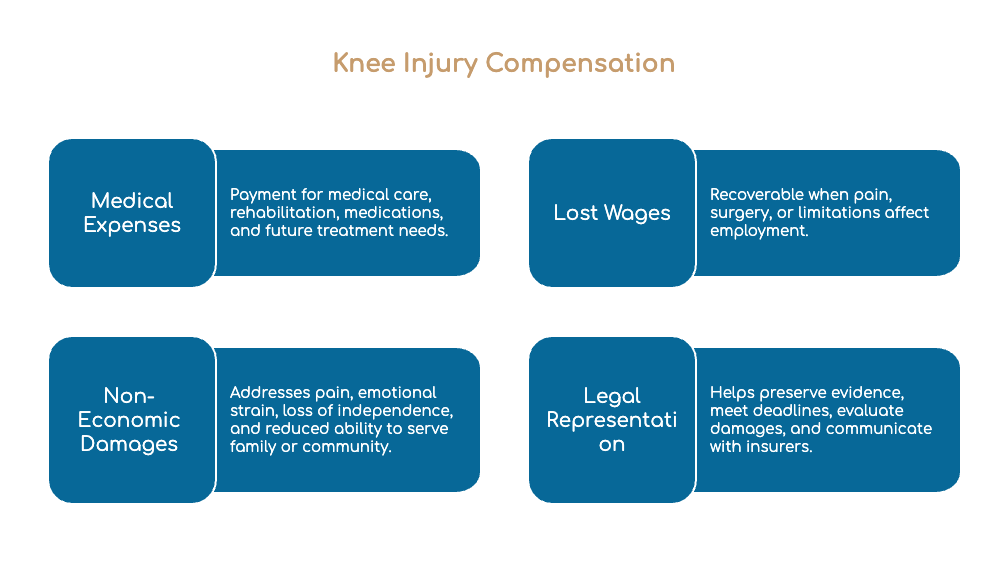
- Victims may seek payment for medical care, rehabilitation, medications, and future treatment needs related to the knee injury.
- Lost wages and reduced earning capacity may be recoverable when pain, surgery, or limitations affect employment.
- Non-economic damages may address pain, emotional strain, loss of independence, and reduced ability to serve family or community.
- Legal representation may help preserve evidence, meet deadlines, evaluate damages, and communicate with insurers.
Understanding these rights supports informed decisions and responsible recovery for injured individuals after a Florida collision.
Why Do Florida Car Accident Knee Injuries Happen?
Understanding legal rights is only part of evaluating a Florida car accident knee injury, as the cause of the injury often shapes liability, insurance coverage, and the value of a claim. Knee injuries frequently occur when a person’s leg strikes a dashboard, door panel, console, or another hard surface during impact. Sudden twisting, bracing before collision, or forceful deceleration may strain ligaments, tear cartilage, fracture the kneecap, or aggravate existing joint conditions.
These injuries may result from rear-end crashes, side-impact collisions, head-on impacts, pedestrian accidents, motorcycle crashes, or rideshare incidents. Poor road conditions, distracted driving, speeding, and impaired driving can also contribute to the mechanics of harm. For advocates serving injured people, understanding causation supports compensation basics and helps connect medical evidence to responsible conduct. It also informs settlement negotiation tactics, because insurers often dispute whether the crash, rather than age or prior degeneration, caused the knee condition at issue.
What Should You Do After a Florida Car Accident Knee Injury?
After a Florida car accident causes a knee injury, the injured person should seek immediate medical care to protect their health and create a clear treatment record. It is also important to document the accident, including photographs, witness information, and insurance details, before evidence becomes difficult to preserve. Contacting a lawyer can help the injured person understand available legal options, meet important deadlines, and pursue compensation for related losses.
Seek Immediate Medical Care
Following a Florida car accident, a knee injury should be evaluated by a medical professional as soon as possible, even when pain appears mild or mobility remains intact. Prompt care can identify fractures, ligament tears, cartilage damage, or swelling that may worsen without treatment. For individuals committed to serving their families, workplaces, and communities, early medical attention helps protect long-term function and supports responsible recovery.
A timely examination also provides evidence of underlying injury that may become important if symptoms progress after the collision. Medical providers can order imaging, assess range of motion, recommend bracing, therapy, or a referral to a consultant, and provide documentation of pain diagnosis. Delayed care may allow insurers to question whether the knee condition resulted from the crash, making immediate evaluation a practical and protective step.
Document The Accident
At the scene and in the days that follow, careful documentation can help preserve important facts about how a Florida car accident caused or worsened a knee injury. Documenting the Accident may include recording the time, location, weather, traffic conditions, vehicle positions, and any visible hazards. Photo Documentation should capture vehicle damage, skid marks, roadway debris, traffic signals, airbags, seat positions, bruising, swelling, braces, and mobility aids. Evidence Preservation also involves keeping damaged clothing, medical discharge papers, repair estimates, and written notes about pain, stiffness, instability, or reduced movement. Witness Collection is equally important, and names, phone numbers, addresses, and brief statements should be gathered when possible. These actions can support accurate reporting, protect vulnerable injury victims, and assist those serving their recovery needs responsibly.
Contact A Lawyer
Careful documentation can give an injured person a stronger factual foundation, but legal guidance may be needed to protect those facts and prevent costly mistakes. After a Florida car accident involving a knee injury, contacting a lawyer can help the person understand rights, duties, and practical next steps. Counsel may assist with preserving evidence, including vehicle damage records, witness information, imaging results, and photographs of swelling or mobility limitations.
A lawyer may also monitor the Insurance claim timeline, so deadlines, requests, and communications are handled with care. Accurate medical cost documentation, including therapy bills, surgical estimates, prescriptions, and future care opinions, can support a complete claim. With professional guidance, the injured person may focus on recovery while a trained advocate effectively handles the claim.
Critical Evidence in a Florida Car Accident Knee Injury Case
In a Florida car accident knee injury case, evidence must clearly connect the collision to the injury, treatment, and resulting damages. Essential proof often includes: 1. Medical records, 2. Accident scene photos, 3. Witness statements, and 4. Expert testimony. Each category may help establish liability, confirm the severity of the knee injury, and support a claim for fair compensation.
Medical Records
After a Florida car accident, medical records often become the basis of a knee injury claim because they document the injury, the treatment provided, and the relationship between the collision and the diagnosed condition. These records may include emergency evaluations, orthopedic notes, physical therapy reports, prescriptions, and surgical recommendations. Knee MRI results can identify ligament tears, meniscus damage, cartilage loss, or other trauma that may not appear on basic imaging. A clear treatment chronology also helps show whether the injured person sought care promptly and followed medical guidance responsibly.
For those assisting injured individuals, careful review of records supports accurate case evaluation and fair presentation of damages. Steady documentation can strengthen causation, confirm ongoing limitations, and help ensure that medical needs are addressed with dignity and proper attention.
Accident Scene Photos
Taken at the scene, accident photos can provide critical evidence in a Florida car accident knee injury case by preserving vehicle positions, impact points, roadway conditions, debris patterns, skid marks, traffic signals, weather conditions, and visible hazards. These images may help explain how force was transmitted through a vehicle and contributed to knee trauma, including dashboard impacts, twisting, or sudden bracing. Clear photographs can also support documentation of tourist accidents, especially when an injured visitor may leave Florida before a claim develops. Images of tire marks, damaged wheels, uneven pavement, or guiding components may reveal wheel alignment failures that contributed to loss of control. When collected promptly and respectfully, scene photos assist attorneys, insurers, and medical professionals in evaluating responsibility, injury mechanisms, and the full context of the care needed.
Witness Statements
Photographs can preserve what the scene looked like, but witness statements can explain what occurred before, during, and immediately after the collision. In a Florida car accident knee injury case, neutral observers may describe vehicle speed, traffic signals, evasive actions, impact force, and the injured person’s difficulty standing or walking. These accounts can help establish how the crash caused trauma to the knee, especially when insurance carriers question the mechanism of injury. Statements from passengers, nearby drivers, pedestrians, or responding personnel should be gathered promptly, while memory remains reliable. Medical documentation may later align with these observations, including complaints of swelling, instability, or restricted movement. A treating orthopedic provider’s findings can also reflect symptoms witnesses first observed, strengthening the overall presentation of causation and damages.
Expert Testimony
When a knee injury claim involves disputed causation, injury severity, or future medical needs, expert testimony can provide the analysis necessary to connect the collision to the diagnosed condition. Medical experts may explain ligament tears, cartilage damage, surgical recommendations, and long-term limitations in terms a court can evaluate. Accident reconstruction experts can address crash forces, vehicle movement, and the impact of road debris when liability is contested. Vocational or life-care planning experts may assess lost earning capacity, mobility restrictions, and future treatment costs. Their opinions can also identify inconsistencies, incomplete disclosures, or hidden medical records that affect the claim’s value. In service to the injured person’s recovery, qualified experts help present reliable evidence, reduce confusion, and support a fair evaluation of damages under Florida law.
Long-Term Effects of Florida Car Accident Knee Injuries
Florida car accident knee injuries may produce lasting consequences, including chronic pain and stiffness that interfere with daily activities and employment. Reduced mobility can limit walking, standing, driving, and other vital functions, particularly when ligament, cartilage, or joint damage remains unresolved. Future medical needs may include physical therapy, injections, surgery, medication, or long-term orthopedic care.
Chronic Pain And Stiffness
A knee injury from a motor vehicle collision can lead to chronic pain and stiffness that persists long after emergency treatment, physical therapy, or surgical repair. These lasting symptoms may arise from ligament strain, cartilage trauma, inflammation, or Tendon damage that fails to recover fully. For individuals committed to caring for families, patients, students, or community members, persistent knee discomfort can interfere with dependable service and daily responsibilities.
Careful symptom tracking helps document pain levels, swelling, stiffness, and triggers over time. Physicians may recommend a range of motion exercises, supervised rehabilitation, bracing, medication, or other pain management strategies to preserve function and reduce complications. In a Florida injury claim, consistent medical records can help connect ongoing knee limitations to the collision and support a fair evaluation of long-term harm.
Reduced Mobility
Reduced mobility can become one of the most disruptive long-term effects of a knee injury sustained in a car accident. When Knee stiffness limits bending, standing, or walking, daily responsibilities may become difficult to perform consistently. A person who once cared for family members, assisted others at work, or served the community may find that ordinary movement now requires planning and restraint. Reduced mobility can also create work limitations, especially in jobs requiring lifting, kneeling, climbing, driving, or prolonged standing. The treatment timeline may indicate whether limitations improve or persist after recovery efforts. In severe cases, restricted movement may contribute to long-term disability, affecting independence and earning capacity. Careful documentation of mobility loss helps clarify how the injury has changed practical, personal, and occupational functioning.
Future Medical Needs
Future medical needs may become a central issue when a knee injury from a car accident requires care beyond the initial recovery period. Ongoing treatment may involve orthopedic follow-up, physical therapy, Sports rehab coverage, and periodic evaluations to measure strength, stability, and function. When imaging delays occur, diagnosis and treatment may be prolonged, increasing the need for careful documentation and coordinated care. Some individuals require surgery recovery planning, including time away from work, mobility support, and home assistance during healing. Others may need pain management options, such as medication, injections, bracing, or supervised therapy.
A thorough assessment of future care helps secure that the injured person’s needs are recognized, supported, and valued, especially when long-term limitations affect family duties, employment, and community responsibilities after a serious collision.
Proving Liability in Florida Car Accident Knee Injury Cases
Proving liability in Florida car accident knee injury cases requires a careful review of how the crash occurred, who owed a duty of care, and whether that duty was breached through negligent conduct. Evidence may include police reports, witness statements, traffic camera footage, vehicle damage, medical findings, and expert analysis. Each item can help show whether speeding, distraction, unsafe lane changes, impaired driving, or failure to yield caused the collision and resulting knee injury.
A well-supported claim also considers how Florida’s fault rules may affect recovery. Comparative negligence defenses may allege that the injured person contributed to the crash, making accurate evidence crucial. Legal professionals serving injured clients often examine road conditions, driver behavior, and injury causation to protect the claim from unfair blame. Clear liability evidence can also shape a settlement negotiation strategy by persuasively demonstrating responsibility, damages, and the connection between the crash and ongoing knee limitations.
Dealing With Insurance Companies After a Florida Car Accident Knee Injury
Insurance companies often begin evaluating a Florida car accident knee injury claim soon after the crash, and their early communications may influence the case’s value and direction. Adjusters may request recorded statements, medical authorizations, or broad information that can later be used to limit responsibility. Careful responses help protect the injured person while preserving a fair opportunity for recovery.
A knee injury may involve disputed treatment, prior conditions, or questions about crash-related causation. Insurers sometimes rely on policy exclusions, narrow medical reviews, or incomplete records to reduce payment. When a wrongful denial occurs, the claimant may need legal assistance to challenge the decision and present stronger evidence in support. Repeated settlement delays may also place added strain on medical care and household stability. In serious cases, conduct that is unreasonable or deceptive may raise concerns about bad faith, requiring careful documentation and a disciplined legal response focused on accountability.
What to Expect During a Florida Car Accident Knee Injury Claim Process
A Florida car accident knee injury claim typically begins with prompt medical treatment and proper reporting of the crash to the appropriate parties. The process then focuses on proving the knee injury, including its cause, severity, and impact on the injured person’s daily life and ability to work. Once the evidence is developed, the claim often moves into insurance settlement negotiations, where documentation and legal strategy can strongly influence the outcome.
Seeking Medical Treatment
Seek medical care immediately after a Florida car accident when knee pain, swelling, instability, bruising, or limited movement appears, because early evaluation can identify injuries that may worsen without treatment. A physician may order X-rays, MRI studies, or orthopedic evaluations to determine whether the injury involves ligaments, cartilage, tendons, fractures, or joint damage. Treatment records also help establish the connection between the collision and the knee condition, supporting a later injury claim. Providers may discuss Pain management options, physical therapy, activity restrictions, and knee brace recommendations based on the diagnosis. Prompt care reflects responsible stewardship of health and helps injured persons restore their ability to work, serve family needs, and assist others. Follow-up appointments should be attended consistently, and symptoms should be documented accurately.
Reporting The Accident
After a Florida car accident causes a knee injury, the collision should be reported promptly to law enforcement and the appropriate insurers. A police report creates an official record, helps identify the parties involved, and supports orderly communication during the claims process. The injured person should provide accurate facts without guessing about fault or the full medical outcome. Proper documentation includes the report number, insurer contacts, vehicle information, and any notices received. Caregivers, family members, or advocates may assist with calls and records when mobility is limited. Reporting also helps preserve the timeline of injuries, including when pain, swelling, or instability first appeared. Attention to insurance claim deadlines is critical, as missed dates can affect available benefits. Medical appointment scheduling should continue alongside reporting duties, ensuring practical needs are addressed without unnecessary delay.
Proving Knee Injury
Once the accident has been reported and the claim has been opened, attention often turns to proving that the knee injury was caused by the collision and has resulted in measurable harm. Medical records become central, including emergency evaluations, orthopedic findings, therapy notes, and physician opinions linking symptoms to the crash. Imaging may also matter, particularly when comparing X-ray and MRI results, since fractures, ligament tears, cartilage damage, and soft-tissue injuries may appear differently. Consistent treatment helps document pain, limitations, and the need for continued care, while gaps may raise questions. A claimant’s ability to work, serve family members, and perform daily responsibilities may also support damages. This proof can influence settlement timelines, though evaluation should remain focused on medical evidence and documented loss.
Negotiating Insurance Settlement
When the medical condition has stabilized enough to evaluate the claim, settlement negotiations typically begin with a review of liability, insurance coverage, medical expenses, lost income, and the long-term effects of the knee injury. The process often requires careful medical documentation, including diagnostic images, treatment records, surgical opinions, therapy notes, and impairment assessments. Evidence preservation also supports fair evaluation, particularly when vehicle damage, crash reports, photographs, and electronic data clarify how the collision occurred. Witness interviews may address the severity of impact, pain complaints, mobility limitations, or changes in daily service responsibilities. Insurers may raise liability defenses, such as comparative fault or preexisting degeneration, to reduce payment. A well-supported demand should connect the knee injury to the crash, explain future care needs, and present a reasonable settlement range.
Compensation for Florida Car Accident Knee Injury Damages
For a Florida car accident victim, compensation for a knee injury may include both immediate financial losses and the long-term consequences of reduced mobility, chronic pain, or permanent impairment. A lawyer evaluates medical records, crash evidence, physician opinions, and rehabilitation needs to connect the injury to the collision and present a well-supported demand. This process helps protect the injured person from undervalued offers, delayed responses, or insurance claim denials that may prevent access to fair recovery.
Florida law also requires careful attention to Comparative negligence, because any assigned share of fault can reduce the amount recovered. When an insurer argues that the victim contributed to the crash, legal counsel may challenge inaccurate fault claims by presenting witness statements, accident reconstruction evidence, and consistent documentation. Effective representation seeks compensation that supports treatment, restores stability, and honors the practical needs of those who depend on the injured person’s care, service, and continued participation in daily life.
Economic vs Non-Economic Damages in Florida Car Accident Knee Cases
In Florida car accident knee injury cases, damages are generally divided into economic losses, such as medical bills and lost wages, and non-economic losses, such as pain and emotional distress. Each category requires careful documentation because insurers often challenge the extent, cause, and long-term impact of knee injuries. Proving these damages typically involves medical records, wage evidence, expert opinions, and a clear connection between the crash and the injured person’s limitations.
Medical Bills And Lost Wages
After a Florida car accident, a knee injury claim often involves both economic and non-economic damages. Medical bills and lost wages are economic losses because they can be measured through records, invoices, and employment documentation. Knee trauma may require emergency care, imaging, orthopedic visits, injections, therapy, surgery, braces, and follow-up treatment. Each expense should be carefully organized, especially when insurers question whether the care was necessary or related to the crash. Evidence timeline tracking helps connect symptoms, treatment dates, work restrictions, and medical opinions. Lost wages may include missed shifts, reduced hours, lost overtime, or diminished earning capacity during recovery. In comparative negligence disputes, clear wage records and medical proof can help establish the financial harm caused by the collision, supporting a fair and service-focused claim evaluation.
Pain And Emotional Distress
Although medical bills and lost income show measurable financial harm, pain and emotional distress reflect the personal impact of a knee injury after a Florida car accident. These losses may include chronic discomfort, reduced mobility, sleep disruption, anxiety while driving, and frustration caused by dependence on others. For an injured person who values caring for family, coworkers, or the community, such limitations can affect identity and daily purpose. Florida knee injury claims may account for these non-economic damages when evaluating overall harm. The Knee surgery recovery timeline can influence how long pain, rehabilitation, and emotional strain persist. A careful Settlement negotiation strategy should recognize that suffering is not abstract, but tied to real changes in routine, relationships, and dignity, while remaining distinct from documented financial losses.
Proving Knee Injury Damages
Proving knee injury damages requires connecting the physical injury to specific financial losses and personal consequences through reliable evidence. Economic damages may include emergency care, surgery, rehabilitation, medication, assistive devices, lost wages, and reduced earning capacity. Non-economic damages address pain, mobility limits, loss of independence, and diminished participation in family or community service. Medical records, physician opinions, diagnostic imaging, employment documents, and daily impact statements help support the valuation of damages. In settlement negotiation, careful presentation of both measurable costs and human consequences may encourage fair resolution. If liability or losses are disputed, courtroom strategy may involve expert testimony explaining prognosis, impairment, and future care needs. When an insurer unreasonably delays or denies valid benefits, insurance bad faith concerns may also affect the broader legal response and recovery.
When a Florida Car Accident Knee Injury Case Goes to Trial vs Settlement
When a Florida car accident causes a knee injury, the case may be resolved through settlement or proceed to trial, depending on liability, medical evidence, insurance limits, and the parties’ willingness to negotiate. A settlement may serve the injured person by providing compensation without the delay, cost, and uncertainty of courtroom litigation. The settlement timeline often depends on treatment progress, evaluation of Car accident damages, and the insurer’s response to documented losses.
Trial may become necessary when the insurer disputes fault, minimizes the knee injury, or refuses to offer fair compensation. In those circumstances, careful evidence collection can support the claim, including medical records, imaging results, expert opinions, wage documentation, and testimony about daily limitations. Trial preparation also requires organizing witnesses, exhibits, and legal arguments so the injured person’s needs are clearly presented. A lawyer may assess whether a settlement or a trial best advances accountability, protects dignity, and supports recovery through responsible compensation.
Florida Laws That May Affect Your Florida Car Accident Knee Case
Several Florida laws may influence a car accident knee injury case, including the state’s no-fault insurance system, comparative negligence rules, filing deadlines, and requirements for proving damages. These rules guide how injured people seek care, document losses, and pursue fair recovery while protecting the integrity of the process.
Florida law shapes how knee injury claims are documented, evaluated, and pursued after a car accident.
- Florida’s no-fault system generally requires injured drivers to first use personal injury protection benefits for medical expenses and certain lost income.
- Comparative fault rules may reduce compensation if an injured person shares responsibility for the crash, making careful review of the evidence essential.
- The Statute of Limitations sets important time requirements, so prompt action helps preserve claims, records, and witness information without unnecessary delay.
- Damages must be supported through medical records, diagnostic testing, employment records, and testimony showing how the knee injury affects daily responsibilities and service to others.
These laws shape strategy, negotiations, and the presentation of a knee injury claim.
The Statute of Limitations for Florida Car Accident Knee Injury Cases
For Florida car accident knee injury cases, the statute of limitations sets the legal deadline for filing a lawsuit after a crash. In most negligence cases arising from Florida motor vehicle collisions, an injured person generally has 2 years from the date of the accident to file suit. Missing this deadline may bar recovery, even when the knee injury is serious and the evidence appears strong.
This time limit encourages timely action, preserves witness memories, and supports fair service to all parties involved. Medical records, diagnostic imaging, treatment notes, and employment documentation are often easier to obtain soon after the collision. The deadline may interact with issues such as allegations of contributory negligence, although Florida follows comparative fault principles when assigning responsibility. Under those principles, damages may be reduced according to a person’s share of fault. Because timing affects legal rights, injured individuals should treat the limitation period as a vital part of the claim process.
How a Florida Car Accident Knee Injury Lawyer Can Help You
Meeting the filing deadline is only one part of protecting a knee injury claim after a Florida car accident. A lawyer helps organize evidence, evaluate losses, and pursue fair compensation with disciplined attention to the injured person’s needs.
- Case evaluation: The lawyer reviews medical records, crash reports, witness accounts, and treatment plans to connect the collision to the knee injury.
- Damage assessment: Counsel calculates medical bills, lost income, reduced mobility, future care needs, and daily limitations affecting work, family responsibilities, and community duties.
- Insurance review: The lawyer examines Insurance coverage limits, available policies, exclusions, and fault issues to identify realistic sources of recovery.
- Claim presentation: Counsel prepares demand materials, applies settlement negotiation tips, responds to adjuster arguments, and works to prevent undervaluation.
Through structured advocacy, a Florida car accident knee injury lawyer can reduce confusion, protect documentation, and support a claim grounded in evidence, responsibility, and fair accountability.
When to Contact a Florida Car Accident Knee Injury Lawyer
After a crash, an injured person should contact a Florida car accident knee injury lawyer as soon as knee pain, swelling, instability, or limited mobility indicates more than a minor strain. Early contact is especially important when medical care continues beyond an initial evaluation, imaging is ordered, work duties are affected, or a physician mentions injections, bracing, therapy, or knee surgery.
A lawyer’s review may also be appropriate when the injured person asks, “Do I need legal guidance before speaking further with insurers?” This question often arises when fault is contested, medical records are incomplete, or an insurance denial delays needed care. Prompt consultation can help preserve deadlines, organize documentation, and identify eligibility requirements for available benefits or claims.
For those devoted to family, work, and community service, timely action protects the ability to recover responsibly. It also helps ensure that necessary medical decisions are supported by accurate information and careful claim preparation.
Why You Need an Experienced Florida Car Accident Knee Injury Lawyer
Timely consultation is only the first step; the quality of legal guidance can materially affect how a knee injury claim is evaluated, documented, and pursued. An experienced Florida car accident knee injury lawyer understands how ligament tears, fractures, meniscus damage, and long-term mobility limits influence compensation. This guidance helps injured people protect medical evidence, communicate appropriately with insurers, and pursue resources needed for treatment, caregiving, and restored independence.
Experience also matters because Florida claims often involve disputed fault, policy limits, and medical causation questions. Comparative negligence may reduce recovery if the injured person is found partly responsible, so careful investigation and persuasive presentation are essential. Counsel can coordinate records, expert opinions, and wage documentation to show the true effect of the injury. A lawyer familiar with settlement timelines can also manage expectations, press for timely review, and recognize when delay tactics threaten fair resolution, helping the claim move forward with purpose and dignity.
How to Choose the Right Florida Car Accident Knee Injury Lawyer for Your Case
Choosing the right Florida car accident knee injury lawyer begins with examining whether the attorney has direct experience handling injury claims involving knee trauma, disputed causation, and long-term functional limitations. A qualified lawyer should understand how knee injuries affect mobility, employment, caregiving duties, and daily service to others. This insight helps shape a case strategy that reflects both medical evidence and practical consequences.
Prospective clients should consider the lawyer’s approach to Client communication, including whether updates are clear, timely, and respectful. Effective representation also requires careful review of insurance documentation, accident reports, medical records, and expert opinions. A lawyer should be prepared to identify coverage issues, challenge inadequate settlement offers, and explain each step of the claim process.
The right attorney will balance legal skill with disciplined preparation, ensuring that the injured person’s needs are presented accurately and with dignity. This careful selection can support a stronger claim and a more informed recovery path.
About The Law Offices of Anidjar & Levine
For injured clients seeking guidance after a collision, The Law Offices of Anidjar & Levine offers legal representation focused on personal injury claims, including cases involving knee injuries from Florida car accidents. The firm helps clients understand their rights, preserve evidence, and pursue compensation for medical care, lost income, and related losses.
Its Client intake process is designed to identify urgent needs, gather necessary facts, and determine how the injury has affected daily responsibilities. During the initial case review, the legal team may examine accident reports, medical records, insurance communications, and available witness information. This careful approach supports informed decisions and steady case development.
The firm’s role also includes handling insurer contact, explaining procedural steps, and preparing claims with attention to deadlines. By providing organized support, The Law Offices of Anidjar & Levine serves injured individuals who need dependable advocacy while they focus on recovery and family obligations.
Frequently Asked Questions
Can a Knee Injury Worsen After My Car Accident Claim Settles?
Yes, a knee injury can worsen after a car accident claim settles, especially when trauma causes delayed degeneration, instability, or chronic pain. After settlement, additional compensation is usually unavailable, creating Medical proof issues if future care was not documented. Careful evaluation, expert opinions, and settlement timing strategies help protect those responsible for serving injured clients. A claim should account for prognosis, treatment needs, and possible complications before final release is signed.
Will Prior Knee Problems Affect My Florida Car Accident Claim?
Yes, prior knee problems can affect a claim, but they do not automatically prevent recovery. Florida law allows compensation when an accident aggravates an existing condition. Medical Records are vital because they help distinguish old symptoms from new harm. In Preexisting Claims, insurers often argue that the pain was unrelated; therefore, clear treatment history, physician opinions, and consistent documentation help ensure the injured person is treated fairly and responsibly.
Do I Need Surgery to Have a Strong Knee Injury Case?
No, surgery is not required to have a strong knee injury case. The necessity of surgery depends on the diagnosis, treatment response, and physician recommendations. A case may be strong when medical records, imaging, therapy notes, work restrictions, pain reports, and functional limitations provide evidence of impairment. Decision-makers often consider how the injury affects daily functioning in family, work, and community, as well as credibility, consistency, and the documented need for future care.
Can I Recover Damages if I Delayed Knee Injury Treatment?
Yes, damages may still be recoverable after delayed treatment of a knee injury, but the delay can affect proof of causation and the value. Insurers may argue the injury was unrelated, worsened by inaction, or less serious. Strong treatment documentation, credible medical explanations, and consistent symptom history can help address those claims. Reimbursement timelines may also depend on insurance rules, medical billing practices, and evidence that the delay was reasonable under the circumstances.
How Are Knee Braces or Mobility Aids Covered in My Claim?
Knee braces or mobility aids may be covered as medical expenses when they are reasonably required for treatment, recovery, or daily functioning. Medical documentation should show the diagnosis, provider recommendation, cost, and linkage to the accident-related injury. Insurance coverage may include reimbursement through personal injury protection, liability claims, or settlement demands. A diligent claim presentation helps ensure these supportive devices are recognized as necessary, service-oriented care rather than optional convenience.
—————————
A Florida car accident knee injury can affect mobility, employment, and long-term financial stability. The Law Offices of Anidjar and Levine may help injured individuals pursue compensation for medical care, lost income, rehabilitation, and related damages.
A qualified Florida Car Accident Lawyer can evaluate liability, manage insurance communications, and protect the claimant’s interests throughout the legal process.
Those harmed in a collision should consider timely legal support to preserve evidence, meet deadlines, and pursue a fair resolution.