

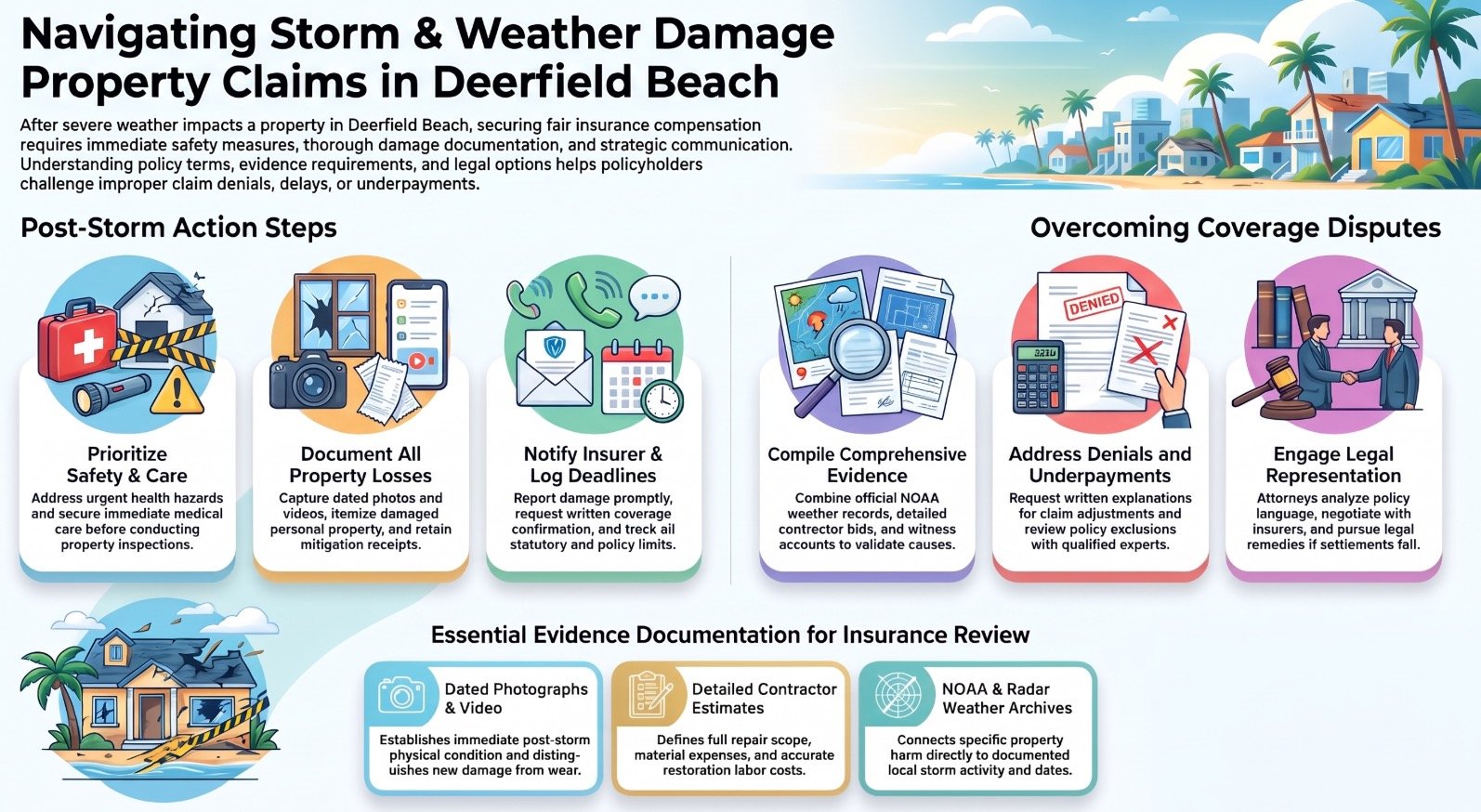
The Law Offices of Anidjar and Levine can review a Deerfield Beach property claim involving storm or weather damage, assess whether documented losses may be covered, and challenge an insurer’s denial, delay, or underpayment. The review may address policy limits, exclusions, notice requirements, and evidence such as photographs, inspection findings, repair estimates, and receipts. Property owners should prioritize safety, notify the insurer promptly, and preserve claim records. The following sections explain common causes of damage, claim options, and when legal assistance may help. For other legal concerns, visit our Deerfield Beach Personal Injury Lawyer page.
Main Takeaways
- A Deerfield Beach property-claim lawyer can review your policy’s storm coverage, exclusions, limits, and notice requirements.
- Storm claims may involve wind, hail, rain, flooding, or storm-surge damage, subject to policy terms.
- Document damage with photos, inspection findings, repair estimates, receipts, and insurer correspondence.
- Ask the insurer for written explanations of denied, reduced, or delayed payments.
- A lawyer can assess coverage disputes, help prepare responses, and explain options if negotiations fail.
How We Can Help With Your Deerfield Beach Property Claim Storm & Weather Damage Injury Claim
When a storm damages a home or business in Deerfield Beach, a property claim lawyer can help the owner assess the loss, document the damage, and pursue benefits under the insurance policy. Legal guidance can also help policyholders understand their responsibilities and communicate with insurers in an organized, timely manner.
A lawyer may conduct a Policy review to identify relevant protections, exclusions, deadlines, and documentation requirements. This review can help clarify which losses may qualify for payment and what evidence may support the claim. When Coverage disputes arise, counsel can examine the insurer’s decision, explain the available options, and prepare a clear response grounded in the policy and claim records.


Support may include organizing photographs, repair estimates, receipts, and correspondence, as well as addressing requests for additional information. If negotiations don’t resolve the matter, a lawyer can explain next steps and represent the policyholder’s interests. This assistance can reduce confusion and help owners make informed decisions while restoring their property and serving their families, employees, and communities.
Don’t Wait. Call Our Florida Personal Injury Lawyers Now!
Understanding Deerfield Beach Property Claim Storm & Weather Damage Injury Cases
OUR CONSULTATIONSARE FREE
START YOUR FREE CASE REVIEW

Storm and weather damage claims in Deerfield Beach may involve more than visible harm to a home or business. They may also raise questions about personal safety, temporary displacement, service interruptions, and property owners’ financial responsibilities. A careful review helps clarify what losses occurred, which parties may be affected, and what documentation can support a claim.
Insurance policies define the scope of available protection through coverage limits, conditions, and Policy exclusions. Their wording can determine whether repair costs, related expenses, or other documented losses qualify for payment. Photographs, inspection findings, repair estimates, receipts, and timely notice may help establish the extent and value of claimed damage. Preserve and organize records so insurers and other reviewers can assess the matter accurately.


For property owners seeking to protect occupants, employees, tenants, or neighbors, prompt attention to safety concerns is critical. A qualified legal professional can explain policy terms, evaluate claim handling, and identify options when coverage or payment is disputed, while keeping the focus on evidence and applicable obligations.
Common Causes of Deerfield Beach Property Claim Storm & Weather Damage
Storm and weather damage to Deerfield Beach properties commonly results from hurricane winds, heavy rainfall, and hail. These conditions can damage roofs, windows, and other structural components, while flooding and storm surge may affect buildings and belongings. Identifying the cause and extent of the damage can help clarify the basis of a property insurance claim.
Hurricane Winds
Hurricane winds can damage Deerfield Beach properties through direct pressure, flying debris, and sudden pressure changes that weaken roofs, windows, and exterior walls. Windborne debris, including branches and unsecured materials, may puncture surfaces or break glazing, allowing further damage inside. Roof uplift occurs when wind pressure lifts roofing materials or separates roof components, exposing structural areas and reducing the building’s protection. Damage may also affect siding, garage doors, fences, and attached structures, particularly where connections are weak or maintenance has been delayed. Property owners and claim professionals can document visible conditions, preserve damaged materials when safe, and compare observations with repair estimates. Accurate records help clarify the extent and likely cause of wind damage, supporting a fair evaluation of the property claim and timely repairs that protect occupants and neighboring properties.
Heavy Rainfall
Heavy rainfall can cause property damage in Deerfield Beach even when wind-related effects are limited. Rainfall intensity may exceed the drainage capacity of streets, yards, and building systems, allowing water to collect around foundations or enter through vulnerable openings. Prolonged rain can saturate soil, strain gutters and downspouts, and overwhelm storm drains. Resulting damage may affect flooring, drywall, electrical components, and personal property, while persistent moisture can contribute to mold growth.
Property owners who document affected areas, preserve damaged materials when safe, and take reasonable steps to limit further loss can support a clearer claim review. Records of rainfall, repair work, and communications with insurers may help explain the extent and timing of damage. A careful assessment can distinguish rain-related impacts from unrelated conditions and identify necessary repairs.
Hail Damage
Hail can damage Deerfield Beach properties by striking roofs, windows, siding, and outdoor equipment with enough force to crack, dent, or loosen materials. Hailstone formation occurs within strong thunderstorms, where rising air currents carry water droplets into freezing layers of the atmosphere. As ice grows and falls, hailstones may vary in size and cause damage ranging from cosmetic marks to openings that expose building interiors. Roof coverings can lose protective granules or develop fractures, while window impacts may create cracks that require prompt attention. Property owners can reduce future vulnerability by selecting impact-resistant roofing and maintaining exterior components. After a storm, a careful inspection and clear photographs can help document visible damage. Timely reporting and organized records support accurate claim review and help property owners address repairs responsibly.
Flooding and Storm Surge
When intense rainfall or coastal storms overwhelm drainage systems, flooding and storm surge can damage Deerfield Beach properties through rising water, shoreline overflow, and water intrusion. Storm surge can push seawater inland, while heavy rain may collect around foundations, enter ground-level rooms, and saturate building materials. These events can harm electrical systems, flooring, walls, and personal property, creating safety concerns and costly repairs. Property owners may document water levels, photograph visible damage, and keep records of cleanup expenses to support an insurance claim. Prompt reporting and careful preservation of damaged materials can help clarify the extent and cause of loss. Flood mitigation measures, including improved drainage and protective barriers, may reduce future exposure, but coverage depends on policy terms, exclusions, and applicable limits. A qualified professional can review disputed damage assessments and claim documentation.
Legal Rights of Deerfield Beach Property Claim Storm & Weather Damage Injury Victims
Storm and weather damage can create serious safety hazards and substantial property losses for Deerfield Beach residents, but injured victims and property owners may have legal rights under Florida law and their insurance policies. Those rights may support recovery for covered losses and help injured people seek accountability when another party’s conduct contributed to harm.
A careful review of policy terms, claim records, and applicable deadlines can clarify available options.
- Policy interpretation can determine whether a policy covers specific storm-related property damage.
- Coverage disputes may arise when an insurer denies, limits, or delays payment.
- Property owners may document damage, submit required information, and request a written explanation of claim decisions.
- Injured individuals may preserve medical records and other evidence relevant to a potential claim.
Florida law and insurance contracts impose requirements on both policyholders and insurers. Legal guidance can help residents understand those obligations, communicate accurately, and pursue fair treatment while protecting the interests of families and neighbors affected by severe weather.
Why Do Deerfield Beach Property Claim Storm & Weather Damage Injuries Happen?
Understanding the causes of storm-related injuries can help Deerfield Beach residents identify hazards and assess whether unsafe conditions contributed to their losses. Severe winds, heavy rain, flooding, and lightning can damage homes and create dangerous conditions for residents, visitors, and workers. Roof vulnerability may allow shingles, tiles, or structural materials to detach, while water entering through damaged areas can weaken ceilings and floors. Tree hazards also arise when saturated soil or strong gusts cause branches or entire trees to fall onto buildings, vehicles, or walkways.
Some injuries occur when property owners fail to maintain drainage systems, secure loose materials, trim unstable limbs, or address known structural weaknesses. Storm damage may also expose electrical wiring, create slippery surfaces, or obstruct exits. Inadequate warnings or delayed repairs can increase the danger to people on the property. Identifying how weather conditions and preventable maintenance issues combined helps clarify why an injury occurred and whether another party’s conduct contributed to the harm.
What Should You Do After a Deerfield Beach Property Claim Storm & Weather Damage Injury?
After storm-related property damage or injury, prioritize prompt medical care, even if symptoms initially seem minor. Photographs, repair estimates, and incident records can help document the damage and support a claim. The affected party should then notify the insurer promptly and retain copies of all communications.
Seek Medical Care
Anyone injured by storm-related property damage in Deerfield Beach should seek prompt medical care, even when symptoms initially appear minor. Urgent treatment can identify hidden injuries, including head trauma, fractures, or breathing problems caused by debris, dust, or water exposure. Emergency services are appropriate for severe pain, heavy bleeding, difficulty breathing, confusion, or loss of consciousness. For less urgent concerns, a qualified healthcare provider can assess symptoms and recommend suitable care. Following medical instructions supports recovery and reduces the risk of worsening injury. Symptom monitoring is also important because some effects may develop hours or days after an incident. The injured person should report new or worsening symptoms to a medical professional promptly. Timely attention protects personal health and helps individuals remain able to support family members and others affected by the storm.
Document the Damage
Once immediate safety and medical needs are addressed, property owners should document storm damage as soon as conditions permit. They can photograph and record affected rooms, roofs, windows, belongings, and exterior areas from several angles, while avoiding unsafe structures or debris. Dated images and brief notes can preserve the property’s condition before repairs alter the evidence. An Insurance inventory should list damaged or missing items, including each item’s description, approximate age, purchase information, and estimated value. Owners may also keep relevant receipts, warranties, and records showing the property’s prior condition. If temporary work is needed to prevent further harm, they should keep mitigation receipts and document the work performed. These organized records can help representatives, contractors, and community support workers understand the loss and identify practical needs without disturbing remaining evidence.
Contact Your Insurer
When conditions are safe, property owners should promptly notify their insurer of storm or weather damage and ask how to begin a claim. They should provide the date of loss, describe visible damage, and report any urgent steps taken to protect occupants or prevent further harm. A clear, factual account can help the insurer assess the matter and arrange an inspection. Property owners should request a claim number, the adjuster’s contact information, and written instructions for submitting photographs, receipts, and repair estimates. They should review the policy and ask for Coverage confirmation, including applicable deductibles, exclusions, and limits. Because policy deadlines may govern notice, proof of loss, or other required documents, confirm and record each deadline. Prompt, organized communication supports a fair review and helps preserve resources for affected households and communities.
Critical Evidence in a Deerfield Beach Property Claim Storm & Weather Damage Injury Case
Strong evidence can help establish the extent of storm damage and support a property claim. Records created soon after the event may clarify when the damage occurred and what repairs are needed.
Essential documentation includes:
- Dated photographs of the damage
- Weather records for the storm
- Repair estimates from qualified contractors
- Statements from witnesses who observed the damage or its effects
Dated Damage Photographs
Dated photographs can establish the condition of a Deerfield Beach property after a storm and help distinguish recent damage from preexisting wear. Clear images of roofs, ceilings, walls, flooring, and personal property can document the location and apparent extent of harm. Photo timestamps may help show when images were captured, while image metadata can provide additional details about their creation. These records are most useful when preserved in original form, with unedited files and organized copies that identify each room or affected area. Consistent photographs taken from both close and wide angles can clarify how damage relates to the property as a whole. A careful visual record may support accurate claim review and help property owners communicate conditions to insurers, contractors, and others involved in addressing the damage and restoring safe use of the property.
Weather Records
Weather records can help establish whether a storm affected a Deerfield Beach property and whether reported damage matches conditions at the time. NOAA archives may provide information about rainfall, wind speeds, and storm activity near the property. Radar history can show a storm’s path and timing, helping clarify whether severe weather passed through the area when damage occurred. These records may support a claim by connecting reported conditions to a specific date and location. They can also help distinguish storm-related damage from pre-existing conditions, especially when reviewed alongside dated photographs and other documentation. A property owner or representative should preserve relevant records and note their sources. Accurate weather evidence can help insurers, adjusters, and legal professionals evaluate a claim fairly and understand the circumstances affecting the property and those who depend on it.
Repair Estimates
Repair estimates help document the scope and cost of storm-related damage to a Deerfield Beach property. They can show which areas require attention, what materials and labor may be needed, and whether proposed work addresses the observed damage. A clear Repair Scope helps an insurer assess the claim and distinguish necessary restoration from unrelated maintenance. Contractor Bids may provide supporting cost information, particularly when they describe tasks, quantities, materials, and projected expenses in detail. Property owners may preserve dated estimates, photographs, invoices, and relevant correspondence to maintain an organized record. When estimates differ, the reasons for each variation can be reviewed, including differences in methods or included work. Accurate documentation helps claim reviewers evaluate repair needs fairly and supports timely decisions that enable affected households and businesses to restore safe, usable properties.
Witness Statements
When storm damage leads to an injury at a Deerfield Beach property, witness statements can help clarify how the incident occurred and what conditions were present. Accounts from residents, visitors, or employees may describe leaking roofs, standing water, loose materials, or delayed warnings before the injury. Neighbor accounts can also establish when damage first appeared and whether property conditions changed after severe weather. Contractor observations may document structural concerns, prior repairs, or hazards identified during an inspection. A clear statement should identify the witness, the date and location, and what the person directly saw or heard. Distinguish speculation from firsthand knowledge. Promptly recorded statements can preserve details that might otherwise fade, while photographs, repair records, and weather reports may provide useful context. Collectively, these sources can help assess responsibility and support a fair claim.
Long-Term Effects of Deerfield Beach Property Claim Storm & Weather Damage Injuries
Storm and weather damage may leave structural problems that remain hidden until they worsen or disrupt the property’s use. Persistent moisture can contribute to mold, material deterioration, and further repair needs. As damage progresses, delayed repairs may increase costs and complicate a property claim.
Lingering Structural Damage
Lingering structural damage can remain hidden after a storm or severe weather event, even when a property appears stable. Foundation shifting may develop when saturated ground, flooding, or wind pressure alters the support beneath a building. Framing separation can also occur as roof and wall components move under stress, weakening connections that help distribute structural loads. These changes may cause doors to misalign, floors to slope, or cracks to widen over time. A timely inspection by a qualified professional can identify damage that is not readily visible and help determine whether repairs are necessary. Clear records, photographs, and expert findings may help property owners assess a building’s condition and communicate with insurers. Addressing structural concerns promptly can help protect occupants, preserve property, and support safe recovery for the wider community.
Persistent Moisture Problems
Structural damage may be accompanied by persistent moisture that continues to affect a property after severe weather. Water can remain behind walls, beneath flooring, or within insulation even after visible surfaces appear dry. Over time, damp conditions may weaken materials, create persistent odors, and encourage mold growth that affects indoor air quality. Residents, especially children, older adults, and people with respiratory conditions, may face greater health concerns when moisture is not addressed. A careful inspection can identify concealed water intrusion and guide appropriate drying measures. Humidity monitoring helps determine whether indoor conditions have returned to a stable range, while mold prevention depends on removing moisture sources and maintaining adequate ventilation. Property owners documenting these conditions can support a clear account of storm-related damage and help protect occupants and the wider community.
Delayed Repair Costs
When storm or weather damage goes unrepaired, relatively minor defects can become costly property problems. A compromised roof may allow water to enter walls, ceilings, and insulation, increasing repair needs and creating conditions for mold. Delays can also expose electrical systems and structural components to further damage, complicating estimates and extending restoration work. For property owners seeking to protect occupants and serve their community, timely documentation and reasonable mitigation can limit preventable losses. Insurers may review whether repairs were delayed and whether resulting costs were connected to the original event. During extensive work, Temporary housing may be necessary, while emergency storage can protect belongings from additional harm. Keeping receipts, photographs, inspection reports, and repair communications helps clarify expenses and supports an accurate claim assessment.
Don’t Wait. Call Our Florida Personal Injury Lawyers Now!
Proving Liability in Deerfield Beach Property Claim Storm & Weather Damage Injury Cases
Proving liability in a Deerfield Beach storm or weather damage injury case requires more than showing that severe conditions caused harm. The injured person must generally establish that a responsible party owed a duty of care, failed to meet that duty, and caused the injury through that failure. Potentially responsible parties may include property owners, landlords, contractors, or management companies, depending on who controlled the site and the hazard.
Evidence can show whether a dangerous condition existed before the storm or remained after it passed. Maintenance negligence, such as failing to secure loose materials, clear blocked drains, or repair known roof damage, may support a claim. Code violations can also provide relevant evidence when they relate to the hazard and resulting injury. Photographs, inspection records, repair histories, witness accounts, and qualified assessments may help establish what occurred and when. Prompt documentation can preserve important details and support a careful evaluation of responsibility, while distinguishing unavoidable weather effects from preventable safety failures.
Dealing With Insurance Companies After a Deerfield Beach Property Claim Storm & Weather Damage Injury
After a storm-related injury on a Deerfield Beach property, insurance companies may investigate whether the hazard was preventable and who caused the resulting harm. Their review may also consider the property owner’s coverage, the incident circumstances, and whether reported losses fall within the policy’s terms. Injured visitors should provide accurate information and preserve relevant records, including photographs, medical documentation, and communications about the hazard. Clear, consistent details can help insurers evaluate the claim fairly.
Policy interpretation can affect whether coverage applies to storm-related conditions, maintenance duties, or resulting injuries. If an insurer questions coverage or issues a Claim denial, the injured person may request a clear explanation and review the stated reasons against the policy language and available evidence. A lawyer can communicate with the insurer, address disputed interpretations, and help protect the injured person’s interests while respecting the need for accurate, responsible reporting. This support can also help ensure legitimate concerns receive careful consideration.
What to Expect During a Deerfield Beach Property Claim Storm & Weather Damage Injury Claim Process
A storm or weather damage claim typically begins with an initial review of the policy, reported losses, and relevant deadlines. The claimant then documents the damage while the insurer investigates, which may include inspections and requests for supporting records. These steps inform the insurer’s decision and the claim’s eventual resolution.
Initial Claim Review
What happens during the initial review of a Deerfield Beach storm damage claim? The insurer generally confirms the policyholder’s identity, property location, reported event, and date of loss. This preliminary step establishes the claim’s basic circumstances and helps determine which policy provisions may apply.
A careful Policy review examines coverage limits, deductibles, exclusions, notice requirements, and deadlines. The terms in effect on the reported loss date guide the assessment, while endorsements may alter standard protections. Coverage analysis considers whether the reported storm or weather event falls within covered causes of loss and whether any restrictions could affect payment. These questions can be complicated, so a property owner may seek qualified guidance before responding to the insurer. Clear, timely communication supports an orderly review and helps all parties understand their responsibilities without prejudging the claim’s outcome.
Damage Documentation
How can a property owner support a Deerfield Beach storm damage claim? Clear, organized records can show the extent of the damage and help reviewers understand the losses. The owner should photograph and video affected areas as soon as conditions permit, capturing both wide views and close details. Date images when possible, and keep damaged items until you document their condition, unless safety or sanitation requires removal.
An Inventory checklist can list personal property, estimated age, purchase price, and current condition. Receipts, warranties, and repair estimates may support reported costs. Retain contractor correspondence, including written assessments, proposals, invoices, and messages about completed work. A dated record of temporary repairs and related expenses can also help preserve an accurate account while protecting the property from further harm.
Insurer Investigation
Once you assemble the documentation, the insurer typically investigates the Deerfield Beach property claim to assess the reported storm damage and determine coverage. An adjuster may inspect the property, photograph affected areas, review repair estimates, and compare observations with the submitted records. The insurer may also request statements, maintenance information, or access to damaged structures. Clear, timely cooperation can help the investigation proceed while preserving an accurate account of the loss. The review may consider the storm’s timing, the cause and extent of damage, and the policy’s terms. Policy exclusions, deductibles, and notice requirements can affect how the insurer evaluates the claim. If evidence appears incomplete or inconsistent, the insurer may seek clarification or conduct further inspection. A Claim denial may follow if the insurer concludes that coverage does not apply, subject to the policy and applicable law.
Claim Resolution
After the insurer completes its investigation, the Deerfield Beach property claim moves toward resolution through a coverage decision and, if applicable, payment for covered storm damage. The decision should explain which losses are accepted, how the policy limits and deductible apply, and whether any requested repairs are excluded. If the insurer approves the claim, Settlement options may include a payment for repairs, replacement costs, or additional covered expenses, subject to policy terms. The property owner should review the estimate and payment details before authorizing work. When the insurer denies part or all of a claim, coverage disputes may arise over the cause of damage, documentation, or policy language. Carefully reviewing the written decision and supporting records can clarify next steps. Timely, organized communication may help the parties reach a fair resolution.
Compensation for Deerfield Beach Property Claim Storm & Weather Damage Injury Damages
Storm damage can leave Deerfield Beach property owners facing substantial repair costs, lost use of their homes or businesses, and disputes over insurance coverage. Compensation may depend on the policy’s terms, the cause of the loss, and reliable evidence documenting the damage. A thorough claim can identify covered repairs, necessary cleanup, and other losses the policy recognizes.
When a residence becomes unsafe or uninhabitable, eligible benefits may include Temporary housing and related additional living expenses, subject to policy limits and conditions. Coverage may also extend to damaged belongings, such as furniture, clothing, and household equipment, when the policy insures personal property. Business owners may need to document physical damage and the resulting interruption, while confirming which losses their coverage addresses.
Photographs, inventories, repair estimates, receipts, and communications with the insurer can help substantiate requested compensation. Policyholders may seek a clear explanation of any reduction or denial and review available dispute procedures. Careful documentation and timely responses can support a fair claim assessment.
Economic vs Non-Economic Damages in Deerfield Beach Property Claim Storm & Weather Damage Cases
Storm and weather damage claims may involve economic losses, such as repair costs, damaged belongings, and temporary housing expenses. Non-economic harm may also be relevant when the event causes significant disruption or distress, subject to the policy and applicable law. Clear records, including estimates, receipts, photographs, and other supporting evidence, can help document claimed losses.
Economic Losses
Property damage claims may involve both economic and non-economic losses, but storm and weather damage disputes in Deerfield Beach generally focus on measurable financial harm. Economic losses may include reasonable costs to repair or replace damaged structures, personal property, and vital equipment. Policyholders may also document expenses for temporary housing, emergency mitigation, debris removal, or other measures needed to prevent further damage. For commercial property owners, Lost income and business interruption losses may arise when storm damage forces a temporary closure or limits operations. Supporting records can include repair estimates, invoices, payroll documents, tax returns, and sales reports. The applicable insurance policy determines which losses are covered, subject to its limits, exclusions, and conditions. Clear documentation helps insurers assess the claimed amount and enables property owners to pursue accurate, fair compensation.
Non-Economic Harm
Storm damage can disrupt more than repair costs, affecting a property owner’s comfort, privacy, and daily routines. When a home is unsafe, partially unusable, or exposed to the elements, residents may experience stress and uncertainty while repairs remain pending. Emotional distress and diminished enjoyment can arise from interrupted sleep, reduced access to familiar spaces, or concern about further damage. These effects differ from economic losses, such as repair expenses or temporary housing costs, because they involve personal well-being rather than measurable financial outlays. Florida property insurance policies generally cover physical loss and may not provide separate compensation for emotional harm. The scope of any recovery depends on policy language, the circumstances of the loss, and applicable law. A qualified attorney can explain how these distinctions may affect a claim.
Documenting Damages
After identifying the personal effects of storm damage, documenting measurable losses can help clarify the scope of a Deerfield Beach property claim. Economic damages may include repair costs, damaged belongings, temporary housing, and other expenses supported by receipts, estimates, or invoices. An Inventory checklist can record each affected item, its condition, approximate age, and replacement value. Photographs and dated videos can further show damage before cleanup or repairs begin. Contractor coordination helps make certain assessments describe necessary work and distinguish storm-related damage from preexisting conditions. Non-economic harm, such as disruption to daily routines or loss of comfort at home, may also be relevant, although it is less readily quantified. Consistent records allow insurers and claim reviewers to evaluate both categories fairly and help property owners present clear, organized information as they seek a reasonable resolution.
When a Deerfield Beach Property Claim Storm & Weather Damage Injury Case Goes to Trial vs Settlement
When a storm or severe weather event causes property damage in Deerfield Beach, a claim may be resolved through settlement or proceed to trial if the parties dispute coverage, liability, or the loss value. Settlement negotiations allow the property owner and insurer to assess evidence, repair estimates, and other documented losses while seeking a practical resolution. A settlement may reduce uncertainty and avoid the time and expense of a courtroom dispute, but you should evaluate the proposed amount against the full scope of damage.
If negotiations do not resolve important disagreements, the case may proceed to trial. Trial preparation can involve organizing photographs, inspection findings, invoices, expert opinions, and testimony to explain how the event affected the property. The parties present their positions, and a judge or jury evaluates the evidence before deciding. Each path requires careful assessment of the available documentation and the owner’s priorities. An informed approach can help property owners pursue fair compensation while preserving resources for repairs and recovery.
Florida Laws That May Affect Your Deerfield Beach Property Claim Storm & Weather Damage Case
Florida law can shape how a Deerfield Beach property owner reports, documents, and pursues a storm or weather damage claim. The policy’s terms, applicable insurance statutes, and evidence of the loss may affect coverage and the insurer’s response. A careful review can help property owners understand their obligations while protecting resources needed to maintain safe homes and serve their families and communities.
Reviewing Florida law, policy terms, and loss evidence can help Deerfield Beach owners understand their duties and protect their resources.
- Prompt notice: Policies may require timely notice and cooperation with reasonable inspections.
- Proof of loss: Insurers may request forms, repair estimates, photographs, and other supporting records.
- Policy exclusions: Exclusions for flooding, wear, or neglected maintenance may limit coverage, depending on the wording and facts.
- Appraisal clauses: These provisions may offer a process to resolve disagreements over the amount of damage, subject to policy requirements.
Florida law also regulates insurer conduct and claim handling. Disputes may turn on policy language, cause of damage, and whether each party met its duties. Qualified legal guidance can clarify available options without assuming that a particular loss is covered.
The Statute of Limitations for Deerfield Beach Property Claim Storm & Weather Damage Injury Cases
The deadline to file a storm or weather damage property claim may depend on the type of claim, the policy terms, and the date the damage occurred or was discovered. Florida law sets deadlines for lawsuits against insurers, and those periods may differ from deadlines for notifying an insurer or submitting proof of loss. Missing a required deadline can place recovery at risk, even when damage is substantial.
Policy language may impose additional notice, documentation, or appraisal requirements. Policy appraisal clauses can establish a process for resolving disputes over the amount of covered loss, but they do not necessarily pause or extend a lawsuit deadline. Limitation extensions may apply in limited circumstances, such as when a statute or agreement provides additional time; their availability depends on the facts and governing law.
Property owners seeking to preserve resources for household stability or community responsibilities should keep claim records and note relevant dates. Because deadlines can change and exceptions are fact-specific, prompt review of applicable law and policy terms is important.
Don’t Wait. Call Our Florida Personal Injury Lawyers Now!
How a Deerfield Beach Property Claim Storm & Weather Damage Lawyer Can Help You
After storm or weather damage, a Deerfield Beach property claim lawyer can help an owner assess policy requirements, document losses, and communicate with the insurer. The lawyer may review estimates, repair records, photographs, and other evidence to present a clear account of the property’s condition and financial impact. Policy interpretation can clarify applicable limits, exclusions, deadlines, and post-loss duties. When an insurer questions damage or offers less than the documented amount, counsel can assess coverage disputes and explain available options.
A lawyer may also help property owners pursue a fair, well-supported claim while considering the needs of occupants, employees, tenants, or others who depend on the property.
That work can include:
- Organizing damage evidence and repair documentation
- Reviewing insurer requests and claim correspondence
- Comparing estimates with policy terms and observed losses
- Explaining negotiation or dispute-resolution options
With careful guidance, owners can make informed decisions, respond accurately to the insurer, and seek resources needed to restore a safe, functional property for those who rely on it.
When to Contact a Deerfield Beach Property Claim Storm & Weather Damage Lawyer
Timely legal guidance may be useful when a storm damage claim becomes difficult to document, evaluate, or resolve. A property owner may consider contacting a Deerfield Beach property claim storm and weather damage lawyer after a hurricane, severe rain, wind, or hail event, particularly when the extent of damage is uncertain or repairs cannot wait. An early consultation can clarify what information matters and how to communicate with the insurer while keeping accurate records.
Legal guidance may also be appropriate if an insurer delays its response, disputes the cause or value of damage, requests additional documentation, or issues a denial or partial payment. Coverage deadlines and policy notice requirements can affect a claim, so reviewing them promptly may help prevent avoidable complications. A lawyer can explain available options and applicable time limits based on the policy and circumstances. Owners serving tenants, employees, or community members may benefit from addressing claim concerns early, while prioritizing safety and preserving repair records.
Why You Need an Experienced Deerfield Beach Property Claim Storm & Weather Damage Lawyer
Because storm damage claims can involve disputed causes, policy exclusions, and complicated repair estimates, an experienced Deerfield Beach property claim storm and weather damage lawyer can help property owners assess the issues and respond effectively. These claims may affect a family’s ability to return home, a business’s capacity to serve customers, or a community organization’s work. Careful legal support can help keep the claim focused on documented damage and the policy’s requirements.
A lawyer can help interpret the policy, explain how coverage exclusions may apply, and determine whether the insurer’s decision reflects the available evidence. Counsel may also review repair estimates, organize records, and address requests for additional information. When the extent or cause of damage is contested, a lawyer can present relevant reports and explain the property owner’s position clearly and promptly. This guidance can reduce avoidable delays and support informed decisions, allowing owners to pursue recovery while maintaining responsibilities to their households, employees, tenants, and neighbors.
How to Choose the Right Deerfield Beach Property Claim Storm & Weather Damage Lawyer for Your Case
Choosing a Deerfield Beach property claim storm and weather damage lawyer requires careful attention to the lawyer’s experience with disputed property claims, familiarity with Florida insurance requirements, and ability to clearly explain the available options. A careful selection can help property owners pursue a fair review while preserving time and resources for their families and communities.
Verify attorney credentials through Florida Bar records, relevant practice history, and experience handling storm-related insurance disputes. The lawyer should also describe how evidence, policy terms, and claim deadlines may affect the case. Clear answers can help clients make informed decisions without promising a particular result.
Fee structures warrant equal attention. Prospective clients should ask how fees are calculated, whether case expenses are separate, and when payment is due. Written terms can reduce uncertainty and support a productive working relationship. Comparing several qualified lawyers may reveal differences in communication, preparation, and approach. The right choice is one whose experience and explanations align with the claim’s needs and the client’s priorities.
About The Law Offices of Anidjar & Levine
The Law Offices of Anidjar & Levine represents Florida property owners in insurance disputes, including claims involving storm and weather damage. The firm assists clients facing denied, delayed, or underpaid claims and explains the options available under their policies. Its work may include reviewing claim documents, communicating with insurers, and pursuing legal remedies when a dispute cannot be resolved through ordinary adjustment.
Attorney Background can help property owners understand who will handle their matter and how the legal team approaches insurance conflicts. The firm’s attorneys evaluate each claim’s facts, identify relevant policy terms, and consider evidence such as repair estimates, photographs, and inspection reports. This preparation supports informed decisions throughout the process.
Firm Values include client service, clear communication, and attention to the practical effects of property loss. By listening to owners’ concerns and explaining next steps, the firm aims to help clients protect their interests while they focus on restoring their homes or businesses. Each matter depends on its specific facts and policy language.
Frequently Asked Questions
Does Homeowners Insurance Cover Hurricane Damage to Roofs in Deerfield Beach?
Homeowners insurance may cover hurricane roof damage in Deerfield Beach when wind or rain causes sudden, accidental damage, subject to the policy’s terms. Coverage can be limited by hurricane roof exclusions, roof age provisions, maintenance requirements, and separate windstorm deductible rules. Insurers may deny damage attributed to wear, deterioration, or preexisting conditions. Policyholders should document damage promptly, prevent further harm where safe, and review coverage with a qualified professional before accepting a settlement or repair estimate.
What Should I Do if My Home Floods After a Tropical Storm?
After a tropical storm floods a home, occupants should prioritize flood safety by avoiding standing water, switching off electricity only from a dry location, and leaving if the structure appears unsafe. Contact emergency services when needed, and keep others away from hazards. Once authorities confirm entry is safe, document damage with photographs, notify the insurer promptly, and arrange professional water removal to limit further damage. Preserve receipts and records.
Can I File a Claim for Mold Caused by Storm-Related Water Intrusion?
You may file a claim for mold caused by storm-related water intrusion, but coverage depends on the policy, the water source, and how promptly you reported and addressed the damage. Mold coverage may be limited or excluded, particularly when an insurer finds that delayed maintenance contributed to the growth. The homeowner should preserve photographs, repair records, and Moisture documentation, notify the insurer promptly, and take reasonable steps to prevent further damage while awaiting inspection.
Will Filing a Storm Damage Claim Increase My Homeowners Insurance Premiums?
Filing a storm damage claim may increase homeowners insurance premiums, but an increase is not automatic. Premium rate impact depends on the insurer’s rules, claim history, location, and whether the storm caused widespread losses. A policyholder may also lose claim-free discounts after filing. Before proceeding, the homeowner should review policy terms and ask the insurer how a claim could affect future costs, while ensuring necessary repairs and protecting household safety.
Can I Choose My Own Contractor to Repair Storm Damage?
Yes, a property owner can generally choose a contractor to repair storm damage, subject to the insurance policy and applicable claim requirements. The insurer may review contractor estimates and compare proposed work with covered damage, but that review does not necessarily require the owner to accept the insurer’s preferred contractor. Before authorizing repairs, the owner should verify licensing, insurance, scope, pricing, and repair warranties, and retain records to support the claim and protect occupants.
—————————
Storm damage can leave Deerfield Beach property owners facing costly repairs, disputed coverage, and uncertainty about what to do next. Reviewing the policy, documenting damage promptly, and acting within applicable deadlines can help protect a claim. The Law Offices of Anidjar and Levine help property owners evaluate storm-related losses and pursue available remedies. Those concerned about an insurer’s response can contact the firm to discuss their circumstances and potential options. For other legal matters, visit our Deerfield Beach Personal Injury Lawyer page.