The Law Offices of Anidjar and Levine help Lehigh Acres property owners address storm-damage claim disputes involving coverage, repair costs, or payment for documented losses. We review policy terms, insurer estimates, inspection findings, and communications to identify concerns and explain available options. Preserve photographs, receipts, repair records, and claim correspondence, and meet applicable policy deadlines. If an insurer denies or limits payment, request its reasons in writing and compare them with the evidence. The sections below explain how claims, injuries, and legal support may apply, including help from a Lehigh Acres Personal Injury Lawyer.
Main Takeaways
- A Lehigh Acres property claim lawyer can review whether your policy covers storm damage and explain relevant exclusions, deductibles, limits, and deadlines.
- Report damage promptly, follow your insurer’s inspection procedures, and keep records of all claim communications.
- Photograph damage, save weather alerts and repair records, and compare the insurer’s estimate with documented repair needs.
- If payment is delayed, denied, or insufficient, request written reasons and submit evidence supporting your claim.
- Review settlement terms carefully before accepting; a lawyer can explain potential options and consequences.
How We Can Help With Your Lehigh Acres Property Claim Storm & Weather Damage Injury Claim
When a storm damages your Lehigh Acres property, we can help you document the loss, review your insurance policy, and pursue the benefits you’re owed. We’ll listen carefully to your concerns and explain each step, so you can make informed decisions while focusing on your family, employees, or community.
Our team can organize photographs, repair estimates, receipts, and other records that support your claim. Through careful Policy interpretation, we’ll identify relevant coverage, exclusions, deadlines, and insurer requirements. We’ll also review the carrier’s estimate and explain where it may fail to account for the damage or necessary repairs.


With Claim advocacy, we communicate with the insurer, submit supporting information, and respond to questions or disputes. We’ll keep you informed, address delays, and help you understand available options if the carrier offers less than the documented loss. Our goal is to protect your interests with clear guidance and diligent representation, while treating your concerns with respect throughout the process. You don’t have to manage the claim alone.
Don’t Wait. Call Our Florida Personal Injury Lawyers Now!
Understanding Lehigh Acres Property Claim Storm & Weather Damage Injury Cases
OUR CONSULTATIONSARE FREE
START YOUR FREE CASE REVIEW

Storm and weather damage claims in Lehigh Acres can involve disputes over the cause of the damage, which repairs the policy covers, and whether the insurer’s payment reflects the full loss. We can help you understand the terms that shape your claim and the evidence needed to support it. Your policy may set limits, deductibles, and duties you must meet before receiving benefits. Policy exclusions can also affect coverage, so we’ll review the specific language rather than rely on assumptions.
A careful claim review connects the reported damage, repair estimates, photographs, inspection findings, and insurer communications. We can identify gaps in the evaluation and clearly explain your options. You should also track claim deadlines, preserve relevant records, and respond promptly to reasonable requests. Missing a required deadline or overlooking a policy condition may complicate recovery. By understanding these requirements, we can help you pursue a fair resolution while keeping your family, employees, tenants, or neighbors informed and supported throughout the process.
Common Causes of Lehigh Acres Property Claim Storm & Weather Damage


We often see storm-related property claims in Lehigh Acres after hurricane winds damage roofs, siding, and other structures. Heavy rainfall and hail can cause water intrusion and impact damage, while fallen trees may damage homes, vehicles, or other property. We’ll explain how these common causes can affect your claim and the evidence insurers may consider.
Hurricane Winds
How can hurricane winds damage a property even when the structure remains standing? Powerful gusts can loosen shingles, tear away siding, break windows, and compromise doors, leaving a building vulnerable to further harm. Roof uplift may occur when wind pressure gets beneath roofing materials and pulls them away from the structure. Windborne debris damage can puncture exterior surfaces, shatter glass, or strike equipment, creating costly repairs even without a collapse.
After a storm, we can help you document visible damage and identify less obvious effects, such as displaced materials or weakened connections. Prompt inspection and clear records may support an accurate property claim. If you’re responsible for protecting a home or business, we’ll explain the evidence insurers may need and help you understand your options. Careful attention to wind damage can help preserve safety and support a fair review of your loss.
Heavy Rainfall
When heavy rainfall overwhelms drainage systems or exposes weaknesses in a building’s exterior, water can enter and damage a property without causing visible structural collapse. Rainwater pooling near foundations may seep through cracks, while saturated soil can place added pressure on basement walls and undermine support. Roof leaks, clogged gutters, and poorly sealed windows can also let water reach ceilings, insulation, flooring, and personal belongings. Even after the storm passes, trapped moisture can encourage mold growth and worsen damage if repairs are delayed. We can help you document affected areas, preserve receipts, and review your insurance policy’s requirements. If your insurer disputes the cause or scope of loss, we can assess the claim and explain available options, so you can focus on protecting your household and restoring safe living conditions.
Hail Damage
Hail can damage a property even when the storm leaves no obvious signs of structural failure. In Lehigh Acres, hailstones may crack roof tiles, dent metal panels, loosen shingles, and damage screens or exterior equipment. Hailstone formation begins when strong updrafts carry water droplets into freezing air, where layers of ice build until the stones fall. Their size and speed can affect damage severity, so we shouldn’t judge a claim by appearance alone.
We can help you document impacts, arrange a qualified inspection, and review your policy’s requirements. Prompt action may limit further deterioration and support a clearer claim record. When choosing repairs or upgrades, ask contractors about hail-resistant roofing suited to local conditions. By addressing damage carefully, we can help protect your home and the people who depend on it.
Fallen Trees
Strong winds and saturated soil can cause trees to fall onto homes, vehicles, fences, and other structures in Lehigh Acres. When a storm damages your property, we can help you document the impact and understand the insurance process. If conditions allow, photograph the fallen tree, affected areas, and any damaged belongings before cleanup. Keep receipts for emergency work and take reasonable steps to prevent further damage, such as covering a roof opening. Tree removal may be necessary for safety, but preserve evidence and contact your insurer before starting nonurgent work. Arborist assessments can help explain whether a tree was healthy, weakened, or improperly maintained before the storm. We can review your policy, records, and claim communications to identify coverage issues and pursue a fair resolution while you focus on recovery.
Legal Rights of Lehigh Acres Property Claim Storm & Weather Damage Injury Victims
Lehigh Acres property owners and tenants have legal rights when storms or severe weather damage their property or cause injuries. We can help you understand those rights and take informed steps to protect your household, employees, or neighbors. Policyholder rights may include receiving a fair review of a covered claim, clear explanations for decisions, and payment for losses under the policy. Your specific coverage depends on the policy language and circumstances.
To preserve your options, we encourage you to:
- Review your policy and document relevant coverage provisions.
- Notify your insurer promptly and keep copies of communications.
- Track claim deadlines and submit required forms on time.
- Request written reasons if the insurer denies or limits payment.
You may also have legal options when another party’s conduct contributed to property damage or an injury. We can help you identify applicable duties, preserve records, and assess potential remedies. Acting carefully and promptly supports your interests while helping you pursue a fair resolution for everyone affected.
Why Do Storm & Weather Damage Injuries Happen in Lehigh Acres?
Why do storm and weather-related property injuries occur in Lehigh Acres? Severe rain, wind, lightning, and flooding can damage homes and shared spaces, creating hazards for residents, visitors, and responders. When roofs fail or trees fall, debris may block walkways, expose electrical wiring, or weaken structures. Floodwater can hide holes, sharp objects, and contaminated materials, while slippery floors increase fall risk.
Storm-related health hazards also arise when power outages interrupt vital equipment, refrigeration, or air conditioning. Heat, mold, and carbon monoxide from improperly used generators can threaten people who already face health challenges. These dangers may persist after the weather clears, especially when cleanup begins before buildings are safe.
We can reduce preventable harm through sound maintenance, clear drainage, secure outdoor items, and Neighborhood emergency preparedness. Property owners, managers, and community organizations all have a role in identifying risks and protecting those who depend on them. Understanding how hazards develop helps us support safer, more resilient neighborhoods.
What Should You Do After a Lehigh Acres Property Claim Storm & Weather Damage Injury?
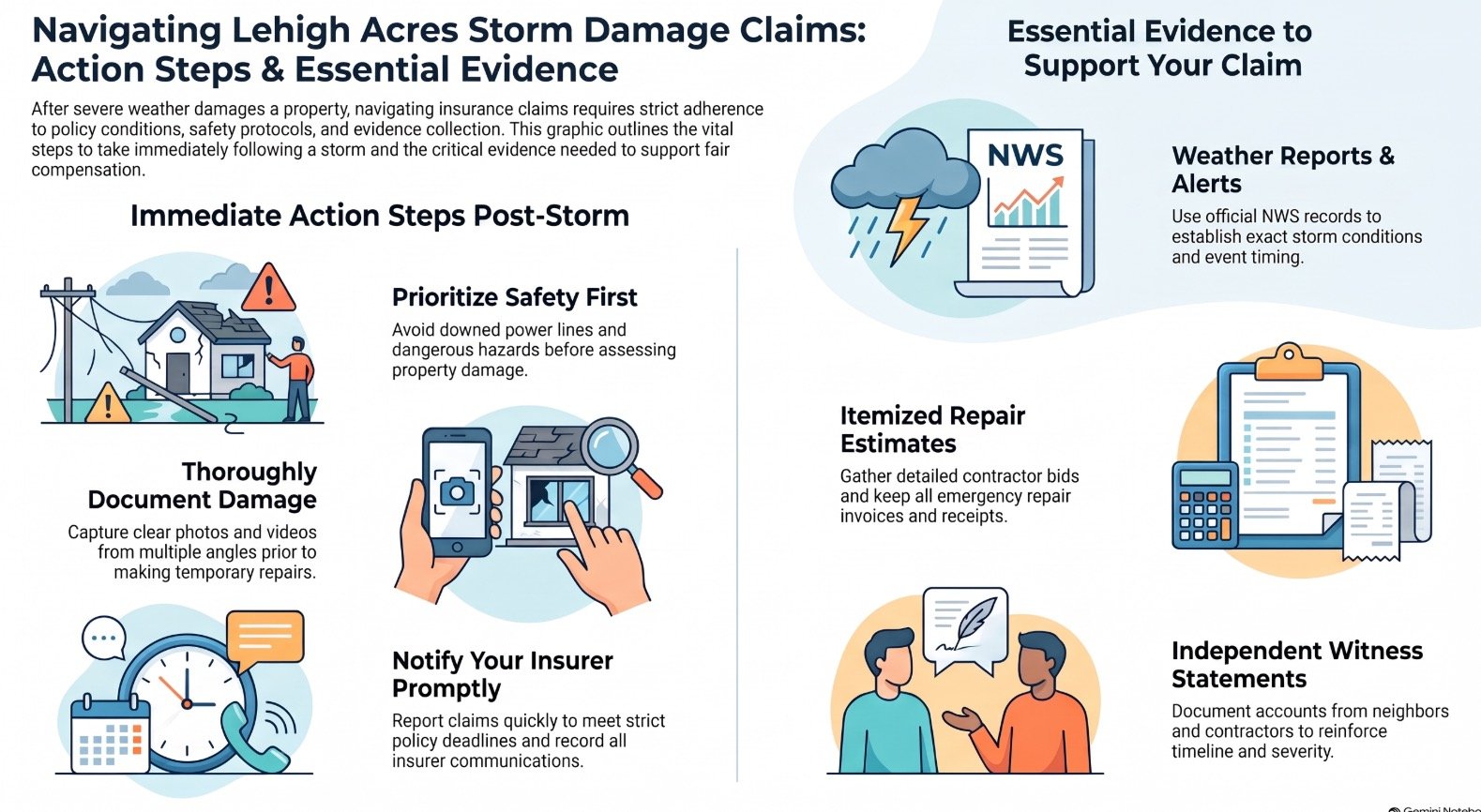
After storm damage, first protect yourself and others by avoiding unsafe areas and seeking emergency help when needed. Document the damage with clear photos, notes, and records before making non-emergency repairs. Then contact your insurer promptly and provide accurate information about the loss.
Prioritize Safety
If a storm or severe weather event injures you or someone else on someone else’s property in Lehigh Acres, prioritize immediate safety and medical care before addressing the damage or a potential claim. Move away from hazards such as downed power lines, unstable structures, broken glass, and rising water, but don’t risk worsening an injury to reach safety. Call 911 for serious or worsening symptoms, and seek prompt medical attention even if an injury initially seems minor. Follow emergency personnel’s instructions, and let them assist others when it’s safe. If you’re responsible for family members or neighbors, make sure they can leave safely and ask for help for anyone who needs it. Plan ahead with an Emergency shelter plan and household evacuation routes so you can protect yourself and support others during severe weather.
Document the Damage
Once you’re safe and have addressed urgent medical needs, document the storm damage as soon as conditions allow. Take clear photographs and videos of each affected area, including roofs, walls, belongings, and visible water intrusion. Capture wide views and close-ups, and note the date, location, and apparent cause of each loss. Keep damaged items available for inspection when practical, but don’t risk anyone’s safety to preserve evidence. Make a written account of what happened and how the damage has affected your household or business operations. Gather receipts, warranties, and inventory records showing ownership, condition, and value of the damaged property. Record any temporary repairs, save receipts, and photograph the work before and after completion. These careful records can help us explain the extent of your loss and support a thorough review of your claim.
Contact Your Insurer
Contact your insurer promptly to report the storm damage and begin the claims process. We should review our policy and use its Policy contact details to reach the correct claims department. Ask the representative to confirm the claim notification deadline, required forms, and any inspection procedures. Timely notice can help protect our rights and prevent avoidable delays.
When we report the loss, we should describe what happened clearly and distinguish observed damage from anything we haven’t confirmed. Provide photographs, videos, and a concise inventory of affected property, but keep copies of every document and message. Record the date, time, and name of each person we speak with, along with any claim number or instructions.
We shouldn’t discard damaged items or authorize permanent repairs before the insurer can inspect them, unless immediate work is necessary to prevent further harm.
Don’t Wait. Call Our Florida Personal Injury Lawyers Now!
Critical Evidence in a Lehigh Acres Property Claim Storm & Weather Damage Injury Case
We can strengthen your storm-damage claim by preserving evidence that documents the loss and its cause. Keep these four essential records: 1. storm damage photographs, 2. weather reports and alerts, 3. repair estimates and receipts, and 4. witness statements and timelines. Combined, these materials can help us establish what happened, when it occurred, and the resulting damage.
Storm Damage Photographs
Clear photographs taken soon after a storm can provide vital evidence in a Lehigh Acres property claim by documenting damage before repairs or further weather alter the scene. We recommend photographing each affected area from several angles, including wide views that show the location and close-ups that reveal specific damage. Capture damaged roofing, ceilings, windows, belongings, and any visible water intrusion, while avoiding unsafe areas. Include an object for scale when it helps show the size of a crack or opening. Preserve original files because Image metadata may record when and where a photograph was taken. Keep photo organization consistent by labeling images with dates, rooms, and brief descriptions, and store copies securely. These careful records can help us explain the loss clearly and support a fair review of your claim.
Weather Reports And Alerts
When a storm damages your Lehigh Acres property, official weather reports and alerts can help establish the conditions and timing of the event. We can use National Weather Service records to identify reported wind speeds, rainfall, hail, and storm warnings near your property. Lee County alerts may also document local emergency notices and the timing of hazardous conditions. These records can support your account of what happened and help connect observed damage to a particular weather event. Save alert messages, note when you received them, and preserve links or copies of relevant reports. We can compare this information with your photographs and other evidence to present a clearer claim. Accurate records also help us respond to questions from insurers and advocate for a fair review while protecting your household’s interests.
Repair Estimates And Receipts
Along with weather reports and alerts, repair estimates and receipts show the scope and cost of storm damage to your Lehigh Acres property. We can help you organize these records so insurers can evaluate your claim accurately and you can make informed repair decisions.
Obtain detailed Contractor bids that identify damaged areas, proposed work, materials, and labor costs. When possible, compare multiple bids and keep copies of any revised estimates. Save invoices, receipts, proof of deposits, and records of completed work. Clear payment tracking helps connect each expense to a specific repair and shows what you have paid or still owe.
Keep original documents and digital copies in a secure folder. Before discarding damaged materials, consider whether the insurer needs to inspect them. Organized records can support your request for fair compensation and help protect resources needed to restore your home.
Witness Statements and Timelines
Witness statements and a detailed timeline can help establish how storm damage occurred, when it began, and whether anyone was injured at your Lehigh Acres property. We can help you identify neighbors, visitors, contractors, or first responders who observed the weather, property conditions, or resulting harm. Ask each person to record what they personally saw or heard, when it happened, and how they know the date or time. Avoid coaching witnesses or asking them to guess; accurate, independent accounts support witness credibility.
To reconstruct the timeline effectively, compare statements with photographs, weather reports, repair records, and messages created near the event. Note when damage first appeared, when you reported it, and when temporary repairs began. Preserve original notes and contact information, and share relevant details with your insurer or legal representative. Clear documentation can help others assess your claim fairly.
Long-Term Effects of Lehigh Acres Property Claim Storm & Weather Damage Injuries
After storm or weather damage, we should consider how injuries may affect you long after the immediate crisis. Chronic pain and lasting mobility issues can limit daily activities, while emotional distress may also persist. We can help you understand how these effects may factor into a property claim.
Chronic Pain
When storm or weather damage causes an injury on a property, the effects may continue long after the immediate danger has passed. Chronic pain can persist after wounds recover, affecting how you work, care for family, and serve your community. We can help you understand how ongoing symptoms may relate to the incident and what evidence may support a property claim.
Consistent medical care helps document pain, treatment needs, and changes in daily life. Your providers may recommend Pain management strategies, such as medication, therapy, or other appropriate care. Keep records of appointments, expenses, and symptoms, and tell your clinician when sleep disruption affects your health or concentration. These details can help show the injury’s continuing impact. We can review available documentation, explain potential claim options, and help you pursue fair consideration while you focus on your health and responsibilities.
Lasting Mobility Issues
Storm-related injuries on a Lehigh Acres property can leave lasting mobility problems, even after the immediate wounds have recovered. You may struggle to walk, climb stairs, lift supplies, or travel safely, limiting your ability to work and serve others. We can help you document how these restrictions affect daily tasks, medical needs, and future independence. Your care team’s records, rehabilitation assessments, and treatment plans can show the extent of your limitations and the support you may require. Depending on your condition, you might need Workplace accommodations, such as modified duties or accessible facilities, to remain employed. You may also rely on adaptive transportation for medical visits and necessary activities. We can evaluate these needs as part of a property injury claim, including anticipated expenses and practical assistance required over time.
Emotional Distress
Emotional distress can persist long after storm-related injuries on a Lehigh Acres property have recovered, affecting sleep, concentration, relationships, and confidence in daily activities. We recognize that anxiety, persistent fear, or low mood may interfere with work and family responsibilities, even when physical wounds have healed. These effects warrant attention and shouldn’t be dismissed as temporary reactions.
We encourage you to seek support from qualified mental health professionals and trusted loved ones. Family support can help you manage daily demands while you pursue treatment and rebuild routines. Emotional resilience develops over time, and consistent care can help you regain a sense of stability.
When storm injuries and their lasting effects create financial or personal hardship, we can help you understand your property claim options. Keep records of treatment, symptoms, and related expenses to support your claim.
Proving Liability in Lehigh Acres Property Claim Storm & Weather Damage Injury Cases
Proving liability after storm or weather damage in Lehigh Acres requires more than showing that someone was injured on someone else’s property. We must establish that a responsible party failed to use reasonable care and that this failure contributed to your harm. Evidence may include photographs, witness accounts, maintenance records, inspection reports, and the property’s condition before and after the storm.
Owners and managers may face responsibility when Negligent maintenance leaves walkways, roofs, trees, or drainage systems unsafe despite warning signs or time to address hazards. A storm doesn’t automatically excuse every dangerous condition; the timing and foreseeability of the risk matter. In some cases, contractor liability may apply if a contractor’s careless repairs or work created or worsened the hazard.
We can help identify who controlled the property, what precautions were reasonable, and whether those precautions were taken. Prompt documentation preserves important details and helps clarify how the injury occurred. Our careful investigation supports accountability and helps protect others from similar preventable harm.
Dealing With Insurance Companies After a Lehigh Acres Property Claim Storm & Weather Damage Injury
After documenting how a dangerous property condition contributed to your injury, you may need to deal with an insurer that questions responsibility or the extent of your losses. We can help you communicate clearly, protect your interests, and keep the focus on your recovery. Provide accurate information, but avoid guessing about events or minimizing symptoms. An insurer may use casual statements to challenge your account, so we encourage you to review requests carefully before responding.
Effective Adjuster communication also means preserving relevant records, including messages, photographs, medical bills, and repair estimates. We can help you present consistent information that reflects how the storm-related hazard affected your health, work, and daily responsibilities. If the insurer delays, disputes responsibility, or offers less than your documented losses support, we can address those concerns directly.
Coverage disputes may involve policy language, exclusions, or disagreements about the cause of damage. We’ll explain the issues in plain terms and advocate for a fair assessment, so you can focus on serving your family and community while we protect your claim.
What to Expect During a Lehigh Acres Property Claim Storm & Weather Damage Injury Claim Process
We’ll guide you through filing your storm damage claim and preparing for the property inspection. We’ll also review your policy’s coverage and explain how it applies to your documented losses. As the claim progresses, we’ll assess settlement options and help you understand the steps toward resolution.
Claim Filing Steps
When a storm or severe weather damages your Lehigh Acres property, a clear filing process can help protect your claim. We can help you begin by reviewing your policy, identifying coverage provisions, and noting Policy deadlines for reporting damage and submitting required forms. Contact your insurer promptly, provide accurate details about when and how the loss occurred, and request confirmation that the claim has been opened. Keep copies of every form, email, letter, and call record as claim documentation. We should also help you organize receipts for urgent repairs and temporary expenses, while avoiding statements that speculate about causes or costs. Read each insurer request carefully and respond within its stated timeframe. If you’re uncertain about a requirement or receive a denial, we can explain available options and help you take informed next steps.
Damage Inspection
After you report the damage, the insurer will typically arrange an inspection to assess the loss and determine how your policy may apply. We can help you prepare by gathering photographs, repair estimates, receipts, and a clear timeline of the storm’s effects. During the visit, the adjuster may examine roofing, windows, interior finishes, and personal property, so point out every affected area, including damage that isn’t immediately visible. Thermal imaging and moisture mapping can help identify hidden water intrusion and document how it spreads. Take your own dated photographs and notes, ask questions, and request copies of the inspection findings. If the inspection feels rushed or overlooks damage, calmly explain what you’ve observed and provide supporting records. A thorough, respectful inspection helps create an accurate account of your loss.
Coverage Review
After the inspection, the insurer reviews your policy to determine which storm-related losses may be covered and what limits or exclusions apply. We’ll help you understand how the policy treats wind, hail, rain, or flooding, since each cause may be treated differently. We’ll also examine coverage limits, deductibles, and Policy exclusions that could affect your claim. The insurer may compare your reported damage with policy definitions and ask for records, photographs, repair estimates, or other supporting information. We can organize these materials and explain how they relate to the policy language. If the insurer’s interpretation appears inconsistent with your coverage, we’ll identify the issue and discuss your options. A careful review helps you make informed decisions while protecting your household and supporting the community members who depend on you.
Settlement Resolution
A settlement offer should reflect the covered storm damage, policy terms, and reliable evidence—not just the insurer’s initial estimate. We’ll compare the proposal with repair estimates, photographs, inspection findings, and relevant policy provisions. If the amount falls short, we can present supporting documentation and explain why additional payment is warranted.
Settlement negotiation may involve revised estimates, requests for clarification, and continued discussions with the insurer. We’ll help you evaluate each response and consider whether the proposed amount reasonably addresses covered losses. Before accepting, review the release terms carefully. They may limit your ability to seek further payment for the same claim, even if additional damage appears later.
We’ll explain your options, deadlines, and potential consequences so you can make an informed decision. Our goal is a fair resolution that supports your recovery and helps protect your household’s stability.
Compensation for Lehigh Acres Property Claim Storm & Weather Damage Injury Damages
When a storm damages your Lehigh Acres property, the compensation available may depend on your insurance policy, the cause and extent of the damage, and the evidence supporting your claim. We can help you review the policy and identify covered losses, including repairs to your home, roof, or other insured structures. Depending on your coverage, you may also seek payment for damaged belongings, debris removal, and reasonable expenses incurred while your property is unsafe to occupy. Temporary housing costs may be covered when storm damage forces you to leave your home, subject to policy limits and conditions. If the damage disrupts a covered business, business interruption benefits may help address lost income and necessary operating expenses. We’ll help you document the damage, preserve receipts, and present a clear claim supported by records and applicable policy terms. Careful preparation can help insurers assess your losses fairly and provide the benefits your coverage allows.
Don’t Wait. Call Our Florida Personal Injury Lawyers Now!
Economic vs. Non-Economic Damages in Lehigh Acres Property Claim Storm & Weather Damage Cases
We’ll distinguish economic losses, such as repair costs and temporary housing expenses, from non-economic harm, including the disruption and stress a storm can cause. Understanding these categories helps you identify the full impact of property damage. We’ll also explain how to document and prove your damages when pursuing a claim.
Economic Losses
Financial recovery after storm or weather damage in Lehigh Acres depends on identifying the losses your property claim can support. Economic losses are measurable financial costs caused by covered damage, and clear records help us present them. We can document repair estimates, emergency mitigation invoices, and receipts for damaged materials or equipment. If a storm makes a rental property uninhabitable, we may be able to recover lost rental income when policy terms and supporting records allow. For a local business, business interruption losses may include income lost during necessary repairs, subject to coverage limits and exclusions. We should preserve tax returns, leases, payroll records, and proof of ongoing expenses to establish the amount and duration of these losses. By organizing evidence promptly, we can support a claim that helps restore property and sustain services your community relies on.
Non-Economic Harm
Repair costs and lost income are measurable economic losses, but storm damage can also disrupt daily life in harder-to-quantify ways. When a damaged home no longer feels safe or comfortable, you may face stress, uncertainty, and Emotional suffering while trying to restore stability for your household. Displacement, disrupted routines, and concern for loved ones can affect sleep, relationships, and your ability to serve others in your community. These effects differ from invoices or documented income losses, yet they can meaningfully shape your recovery. Storm damage may also cause diminished enjoyment of your home and the activities you once valued there. We recognize that every family experiences these burdens differently. A property claim may address covered non-economic harm where applicable, alongside financial losses, depending on the policy and governing law.
Proving Your Damages
To prove damages in a Lehigh Acres storm or weather damage claim, we must connect each claimed loss to the covered event and support it with reliable evidence. We can organize repair estimates, photographs, inspection reports, and contractor invoices to show the property’s condition before and after the storm. For damaged belongings, a detailed inventory with receipts, photographs, and age information supports accurate Personal Property Valuation. We should also preserve records of Temporary Housing Costs, including lodging bills, meal expenses, and the dates our home was unsafe to occupy. Economic damages include these measurable expenses and repair costs. Non-economic harm, such as disruption and distress, may require clear explanations and supporting records. By presenting consistent evidence, we help insurers assess the full loss and protect the resources needed to restore our home and serve our family.
When a Lehigh Acres Property Claim Storm & Weather Damage Injury Case Goes to Trial vs. Settlement
When a storm or severe weather damages a Lehigh Acres property, the decision to settle or go to trial depends on the strength of the evidence, the insurer’s offer, and the losses at stake. We review the available proof with you, compare the proposed payment with documented repair costs and other covered losses, and discuss the practical risks of each option. A settlement may provide a more predictable resolution and avoid the time and expense of trial. However, we won’t recommend accepting an offer that fails to address the claim’s supported value.
If negotiations stall, we can prepare to present your case in court. Trial Preparation may include organizing records, consulting qualified experts, and preparing witnesses to clearly explain the damage. Jury Verdicts can vary, so a trial carries uncertainty even when evidence is strong. We’ll help you weigh that uncertainty against the insurer’s position and your priorities, then pursue the path that best supports a fair outcome for you and those who depend on your property.
Florida Laws That May Affect Your Lehigh Acres Property Claim Storm & Weather Damage Case
Florida law sets deadlines and standards that can affect how we pursue a Lehigh Acres storm or weather damage claim. Your policy’s terms, state statutes, and claim-handling rules may shape what evidence we gather and which options we consider. We’ll review the specific policy and circumstances, because protections and obligations can vary.
Florida deadlines, policy terms, and claim-handling rules can shape your Lehigh Acres storm damage claim and the options available to you.
Key rules may affect how we present your claim:
- Your policy may require prompt notice, reasonable cooperation, and documentation of damaged property.
- Florida policy appraisal may provide a process to resolve disagreements about the amount of a covered loss, subject to policy language and legal requirements.
- Hurricane deductible rules may apply when a qualifying storm causes damage; the policy and applicable law determine how the deductible works.
- Florida law regulates insurer communications and claim investigations, which can matter when responses or payment decisions are disputed.
We’ll explain how these rules apply to your situation and help you pursue a fair resolution. Clear records and timely cooperation can also support the community members and families who depend on your recovery.
The Statute of Limitations for Lehigh Acres Property Claim Storm & Weather Damage Injury Cases
Deadlines can affect both an insurance claim and a lawsuit arising from storm damage to your Lehigh Acres property. Florida law sets time limits for filing property insurance lawsuits, and the applicable period may depend on the loss date, policy terms, and current statutes. Missing a deadline can prevent you from seeking payment in court, even when the damage is significant.
Your policy also sets notice and proof-of-loss requirements. A Policy deadline may arrive sooner than the legal filing limit, so review your contract and record each required date. Notify your insurer promptly, preserve photographs and repair records, and keep copies of all communications. These steps can help protect the resources needed to maintain a safe home and support those who depend on you.
Some circumstances may affect how a deadline applies. Tolling exceptions are limited and fact-specific; don’t assume they extend your time. Because laws and policy provisions can change, confirm the relevant dates promptly and act before any deadline expires.
How a Lehigh Acres Property Claim Storm & Weather Damage Lawyer Can Help You
After storm or weather damage, a Lehigh Acres property claim lawyer can help you assess your policy, document the loss, and respond to an insurer’s decision. We work to protect your interests while helping you restore a home or business that supports your family, employees, or community.
Our assistance may include:
- Policy interpretation: We explain coverage terms, exclusions, deductibles, and claim requirements in clear language.
- Loss documentation: We organize photographs, repair estimates, receipts, and other records to support the damage assessment.
- Adjuster negotiation: We communicate with the insurer’s adjuster, address disputed findings, and present evidence supporting your claim.
- Claim review: We examine payment decisions and identify whether covered damage or repair costs may have been overlooked.
We can also help you understand the insurer’s requests and keep claim communications organized. By presenting accurate information and advocating for fair consideration, we aim to reduce confusion and help you focus on caring for those who depend on you. Our guidance is tailored to your policy and documented loss.
When to Contact a Lehigh Acres Property Claim Storm & Weather Damage Lawyer
Contact a Lehigh Acres property claim storm and weather damage lawyer when your insurer delays, disputes, or underpays your claim, or when you’re unsure how your policy applies to the damage. We encourage you to seek guidance as soon as questions arise, especially if severe weather has left your home unsafe or disrupted your family’s routine. Early advice can help you understand what information to provide and how to communicate clearly with the insurer.
Pay attention to Policy deadlines for reporting damage, submitting forms, and responding to requests. Missing a required date may complicate your claim, even when the storm caused substantial damage. If the insurer denies your claim, limits payment, or asks you to accept a settlement before you understand its terms, consider speaking with counsel promptly. Keep copies of letters, photographs, estimates, and repair records, and note important conversations. We can help you identify the next steps while you focus on protecting your household and supporting those who depend on you.
Why You Need an Experienced Lehigh Acres Property Claim Storm & Weather Damage Lawyer
Storm and weather damage claims can involve disputed causes, complex policy terms, and repair estimates that don’t reflect the full scope of your loss. An experienced Lehigh Acres property claim lawyer can help you address these challenges, protect your interests, and support your recovery.
We can review policy language, organize evidence, and determine whether the insurer overlooked damage or applied an exclusion incorrectly. A careful claim strategy connects the available documentation to the coverage you purchased and the losses your household or organization has sustained. We can also communicate with the insurer, respond to requests, and challenge an inadequate evaluation with clear supporting information.
Strong Policyholder advocacy matters when delays or disputes threaten repairs, safety, or the services your property provides to others. By managing your claim diligently, we help you understand your options and make informed decisions. Our guidance can reduce avoidable errors and keep attention on a fair resolution grounded in the facts and policy.
How to Choose the Right Lehigh Acres Property Claim Storm & Weather Damage Lawyer for Your Case
Choosing the right Lehigh Acres property claim lawyer can shape how effectively we address disputed storm damage, policy questions, and repair estimates. Start by looking for a lawyer experienced in property claims involving wind, hail, hurricanes, or flooding. Ask how the lawyer evaluates damage, reviews policy terms, and responds when an insurer disputes or delays payment.
Review Attorney credentials, including Florida licensure and relevant experience, and ask who will manage your case. A clear explanation of the process can help you make informed decisions and protect the resources needed to restore a home or business. During a consultation, discuss the evidence you should preserve, such as photographs, repair estimates, and insurer correspondence.
Understand fee arrangements before signing an agreement. Ask how fees and case expenses are calculated, when payment is due, and whether you may owe costs if the claim doesn’t succeed. Choose counsel who communicates clearly, answers questions directly, and treats your concerns with care.
About The Law Offices of Anidjar & Levine
When a property insurer disputes or delays payment, the Law Offices of Anidjar & Levine represents Florida policyholders pursuing property damage claims. We help homeowners respond to storm and weather losses, including damage caused by wind, rain, and hurricanes. We assess your claim, explain your options, and pursue the benefits your policy may provide.
Our firm’s history reflects a commitment to representing people facing difficult legal and insurance disputes. We understand that property damage can disrupt your household and make it harder to serve your family and community. We work to provide clear communication and practical guidance while handling the legal process.
Before choosing counsel, review attorney credentials, relevant experience, and the firm’s approach to client communication. We’ll explain how we can assist, what information may support your claim, and what steps could follow. Each matter depends on its facts and policy terms, so we evaluate your circumstances individually. Our goal is to advocate for your interests with care and diligence throughout the claim process.

Frequently Asked Questions
Does Homeowners Insurance Cover Damage From a Named Hurricane in Lehigh Acres?
Yes, homeowners insurance may cover damage from a named hurricane in Lehigh Acres, but coverage depends on the cause of loss and your policy terms. Wind damage is often covered, while flooding usually requires separate flood insurance. We can help you review hurricane coverage exclusions, document damage, and promptly notify your insurer. Check your policy’s windstorm claim deadlines, since late notice may jeopardize benefits. We encourage you to seek qualified guidance when coverage is disputed.
Can I File a Claim if My Roof Was Damaged Before the Storm?
Yes, we can help you assess whether to file, even if your roof had prior damage. Coverage often depends on whether the storm caused new damage or worsened an existing condition, and whether your policy excludes preexisting roof deterioration. We recommend documenting the roof’s condition before and after the storm, keeping repair records, and notifying your insurer promptly. We can review the policy and evidence to help you pursue a fair, accurate claim.
What Is a Hurricane Deductible, and How Does It Affect My Payout?
A hurricane deductible is the amount you must pay toward covered hurricane damage before your insurer contributes. We’ll review your policy because the deductible may be a percentage of your home’s insured value, not a flat dollar amount. Your payout depends on the covered repair costs, applicable limits, and deductible. We can also explain payout timing and help you document damage accurately, so you can pursue the benefits your policy provides.
Can I Choose My Own Contractor to Repair Storm Damage?
Yes, you can generally choose your own contractor to repair storm damage, although your policy and claim process may affect how payment is handled. We recommend confirming coverage and repair requirements with your insurer before authorizing work. Complete Contractor licensing verification, and obtain repair estimate documentation that clearly describes the damage, scope, and costs. We can help you review insurer communications, preserve claim records, and address disputes so repairs proceed responsibly and fairly.
What Happens if Storm Damage Causes Mold in My Home?
Storm damage can trap moisture in walls, flooring, and insulation, creating conditions for mold growth. We recommend documenting visible damage, limiting access to affected areas, and promptly contacting your insurer and qualified restoration professionals. Moisture testing can identify hidden water and guide appropriate Mold remediation. We can help you review policy requirements, preserve evidence, and address disputes over coverage or repair costs, so you can protect your household and support a safe recovery.
—————————
If a storm or severe weather has damaged your Lehigh Acres property, we can help you understand your policy, document your losses, and challenge an inadequate claim decision. Prompt action can preserve important evidence and help protect your right to seek the benefits your coverage provides. At The Law Offices of Anidjar and Levine, we’ll review your circumstances and explain practical next steps. Contact us to discuss your property claim and learn how we can assist. You can also learn more about a Lehigh Acres Personal Injury Lawyer.