

The Law Offices of Anidjar and Levine help Pinellas Park property owners address storm and weather damage claims by reviewing policy language, coverage limits, exclusions, and deadlines. We organize photographs, inspection findings, repair estimates, receipts, and insurer communications to document the loss. If an insurer delays, underpays, or denies a claim, we compare its explanation with the policy and available evidence. Learn more about our Pinellas Park Personal Injury Lawyer services and how informed legal guidance may help you pursue a fair claim outcome.
Main Takeaways
- A Pinellas Park storm-damage lawyer can review your policy, claim denial, settlement offer, and insurer’s stated reasons.
- Storm claims may involve hurricane winds, hail, rain intrusion, lightning, or flooding; coverage depends on policy terms and facts.
- Photograph damage, keep original files, obtain detailed repair estimates, and save receipts and insurer communications.
- Report damage promptly, confirm deadlines and inspection requirements, and make reasonable temporary repairs when safe.
- Avoid guessing about damage causes or costs; consider legal advice if the insurer disputes coverage, delays, or undervalues your claim.
How We Can Help With Your Pinellas Park Property Claim Storm & Weather Damage Injury Claim
When a storm damages your Pinellas Park property, we can help you understand your insurance coverage, document the loss, and pursue the benefits you’re owed. We’ll listen to your concerns, explain your options, and help you take practical steps to protect your home or business. Our Policy review examines relevant terms, exclusions, deadlines, and coverage limits so you can make informed decisions about your claim.
We’ll help organize photographs, repair estimates, receipts, and other records that show the damage and its impact. If your insurer requests information, we can help you respond clearly and keep the process moving. Our Claim strategy will reflect your policy, the available evidence, and your priorities, with careful attention to accurate documentation and fair treatment.


You shouldn’t have to handle a complicated claim alone while managing repairs and serving your family, employees, or community. We’ll communicate with you, address questions, and work to pursue the coverage your policy provides. Our goal is to offer steady guidance and dependable advocacy at each stage.
Don’t Wait. Call Our Florida Personal Injury Lawyers Now!
Understanding Pinellas Park Property Claim Storm & Weather Damage Injury Cases
OUR CONSULTATIONSARE FREE
START YOUR FREE CASE REVIEW

Understanding a Pinellas Park storm or weather damage claim starts with identifying what caused the loss and how your policy addresses it. We help you examine the policy’s terms, coverage limits, exclusions, and notice requirements so you can make informed decisions while restoring your property and serving those who depend on you.
Policy interpretation matters because similar damage may receive different treatment under different contracts. We compare the available evidence with the policy language and assess whether the insurer applied its requirements consistently. This review can clarify claim eligibility, the benefits you may request, and any documentation needed to support your position.


We also consider the insurer’s written explanation and the information gathered during its investigation. If important facts remain disputed, we can help organize records, identify unanswered questions, and communicate your concerns clearly. Our goal is to give you a reliable understanding of your options, deadlines, and responsibilities, so you can protect your interests without losing sight of your household or community’s needs.
Common Causes of Pinellas Park Property Claim Storm & Weather Damage
We often see Pinellas Park property claims arise from hurricane winds that tear roofing and siding, as well as hail that damages roofs, windows, and other exterior surfaces. Heavy rainfall can cause leaks and flooding, while lightning strikes may spark fires or damage electrical systems. We’ll explain how these weather events can affect your property and support an insurance claim.
Hurricane Wind Damage
Hurricane-force winds can damage Pinellas Park homes by tearing off shingles, breaking windows, and allowing rain to enter the structure. Roof uplift may loosen roofing materials or compromise connections, exposing the home to further weather damage. Windborne debris can strike siding, doors, and windows, creating openings that let water spread into interior rooms. These effects may also damage insulation, electrical systems, and personal belongings, requiring prompt attention to protect residents and limit additional loss.
After a storm, we can help you document visible damage and connect it to the reported weather event. Photograph affected areas, keep receipts for reasonable temporary repairs, and take steps to prevent further harm when safe. We can review your policy, assess the insurer’s investigation, and explain available options if the claim is delayed, undervalued, or denied. Our goal is to help you pursue a fair resolution.
Hail Impact
When hail strikes a Pinellas Park property, it can dent metal roofing, crack shingles, damage siding, and break windows or skylights. Hailstone sizes vary, and even smaller stones may loosen protective granules or create damage that isn’t obvious from the ground. Larger hail can puncture roofing materials, damage outdoor equipment, and leave marks on vehicles. Vehicle damage may help document the storm’s severity, but it doesn’t establish the extent of damage to your home or business. We encourage you to photograph visible impacts, keep damaged materials when practical, and arrange a qualified inspection. A careful record can help us assess the property claim and explain the loss to the insurer. If the carrier disputes covered damage or offers less than the documented repairs require, we can review the claim and discuss your options.
Heavy Rainfall
During periods of heavy rainfall, water can enter a Pinellas Park property through roof damage, failed seals, clogged drainage systems, or openings around windows and doors. When water penetrates the building, it may damage ceilings, walls, flooring, insulation, and personal belongings. Rainfall accumulation can also saturate soil around a foundation, increasing pressure and allowing moisture to seep into lower levels. If gutters, downspouts, or nearby drains cannot carry water away, drainage overflow may collect beside the structure or enter garages and other low areas. We can help you document visible damage, preserve receipts, and report the loss promptly to your insurer. A careful review of the policy and claim records can clarify coverage questions and help guarantee the insurer considers the full extent of storm-related damage.
Lightning Strikes
Heavy rain can expose a property’s weaknesses, while lightning can cause sudden damage even when the building appears intact. A strike can ignite a Lightning fire in a roof, attic, or nearby tree, putting residents and neighboring properties at risk. It can also travel through wiring, plumbing, or connected equipment, causing electrical surges that damage appliances, electronics, and safety systems. We recommend checking for scorch marks, burning odors, tripped breakers, and devices that stop working after a storm. Hidden damage may remain even without a visible fire, so schedule a qualified inspection before making repairs. Keep damaged items and receipts, and photograph affected areas when it’s safe. We can help you document losses, review policy requirements, and pursue a fair property claim while protecting those who depend on you.
Legal Rights of Pinellas Park Property Claim Storm & Weather Damage Injury Victims
Florida law gives property owners important rights after a storm or other weather event damages their homes or businesses. When you’re focused on restoring a safe place for your family, employees, or neighbors, understanding those rights can help you make informed decisions.
We can help you review your policy and communicate with your insurer.
- You may submit a claim for covered damage and provide records, photographs, and other relevant information supporting your request.
- Your insurer must assess the claim under the policy’s terms. Careful Policy interpretation matters, particularly when coverage exclusions may affect payment.
- If the insurer denies or underpays a valid claim, you may challenge that decision through available dispute procedures or seek legal guidance about your options.
Keep copies of correspondence, estimates, and claim documents, and note important deadlines. We can explain the process, help you understand the insurer’s position, and advocate for fair treatment while you focus on those who depend on you. Each claim turns on its specific facts and policy language.
Why Do Pinellas Park Property Claim Storm & Weather Damage Injuries Happen?
Storm and weather damage claims often arise when high winds, hail, heavy rain, or flooding harm roofs, windows, siding, and other parts of a property. In Pinellas Park, severe storms can expose construction or maintenance weaknesses, letting water enter and damage ceilings, walls, electrical systems, and belongings. We recognize that these losses can disrupt homes and businesses that serve families and the wider community.
Roofing standards matter because inadequate installation, aging materials, or neglected repairs may leave a structure less able to withstand strong winds and hail. Drainage design also affects how a property handles intense rainfall. Clogged gutters, poorly graded land, or undersized drains can direct water toward foundations and interior spaces. Flooding may also result from overwhelmed public drainage systems or nearby waterways.
When we examine why damage occurred, we consider the storm’s force, property conditions, and possible contributing failures. Understanding these factors helps explain how a covered event may have caused a loss.
What Should You Do After a Pinellas Park Property Claim Storm & Weather Damage Injury?
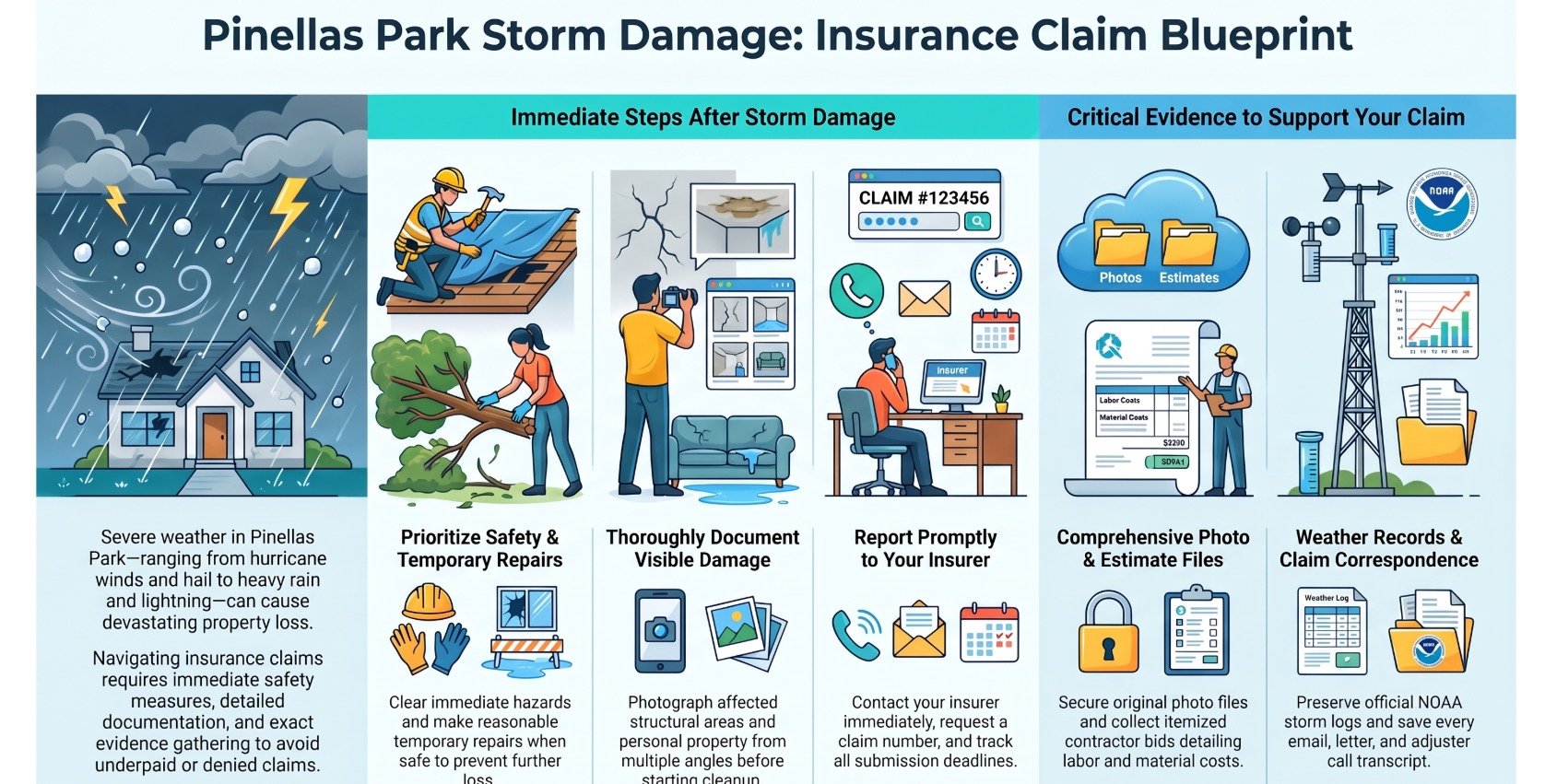
After a storm, we should first make sure you and others are safe, avoiding damaged areas and urgent hazards. Once conditions allow, we can help you document the damage with clear photographs, notes, and receipts. We should also contact your insurer promptly and keep records of all communications about your claim.
Prioritize Safety
If severe weather has damaged your property or caused an injury, prioritize immediate safety before documenting the loss or contacting your insurer. Check for immediate hazards, including downed power lines, gas odors, unstable structures, and standing water near electrical equipment. Don’t enter damaged areas until authorities or qualified professionals confirm they’re safe. If anyone is injured, call 911 and provide reasonable assistance without putting yourself or others at risk. Follow local emergency instructions, and leave promptly if officials advise evacuation. We can help loved ones and neighbors reach a safe location, especially children, older adults, and people with disabilities. Keep Emergency supplies, such as water, medication, and a flashlight, accessible. Review evacuation planning in advance so everyone knows where to go and how to contact one another if severe weather separates your household.
Document the Damage
Once everyone is safe, document the storm or weather damage as soon as you can, without entering hazardous areas. We can help create a clear record by photographing and recording each affected room, exterior area, and damaged item from several angles. Include wide views showing the location and close-ups capturing details. Note when you discovered the damage and write down visible changes, such as leaks, cracks, or fallen branches. Make an inventory of damaged Personal Property, including descriptions, approximate purchase dates, and available receipts or warranties. Keep damaged items until you’ve documented them, unless they pose a health or safety risk. Save copies of photos, videos, and notes in a secure location. If Temporary Relocation becomes necessary, retain records of related expenses and where you stayed.
Contact Your Insurer
Contact your insurer promptly to report the storm or weather damage and ask what steps you must take to open a claim. Provide accurate details about when the damage occurred, which areas were affected, and any immediate measures you took to protect people and property. Keep a record of the date, time, and name of each representative we speak with, along with copies of emails and letters. Ask the insurer to explain Policy deadlines, required forms, inspection procedures, and any limits on temporary repairs. Request written acknowledgment of the claim and a claim number, then confirm how and when the adjuster will contact us. Answer questions truthfully, avoid guessing, and promptly share relevant records. Clear communication helps us cooperate with the insurer while preserving an organized account of the claim.
Critical Evidence in a Pinellas Park Property Claim Storm & Weather Damage Injury Case
We can strengthen your storm damage claim by preserving clear, timely evidence of the loss.
Focus on these three records:
- Photographs documenting storm damage and repair estimates showing the cost of necessary work.
- Weather records that help establish when and how the storm affected your property.
- Insurance communications that track your reports, the insurer’s responses, and any claim decisions.
Storm Damage Photographs
Clear, timely photographs can help establish the extent and cause of storm damage to a Pinellas Park property. We recommend documenting affected areas as soon as it’s safe, before cleanup or temporary work changes what the storm left behind. Photograph the roof, ceilings, walls, flooring, windows, and damaged belongings from several angles. Include wide views that show each area’s location, then take close-ups that reveal specific damage. Photo timestamps can help show when you captured the images, while image metadata may provide additional information about when and where a device recorded them. Preserve original files and keep copies in a secure location. Avoid altering images, and note the date, location, and conditions for each set. By keeping clear records, we can help you present reliable evidence, support a fair review of your claim, and meet your household’s needs.
Repair Estimates
Accurate repair estimates can show the scope and cost of storm damage to a Pinellas Park property. We can use detailed estimates to explain which repairs are necessary, how each task relates to the observed damage, and what restoring the property may reasonably cost. Clear documentation helps you present a complete claim and supports a fair review.
Contractor bids can provide practical assessments of labor, materials, and the work required. We should compare bids carefully, confirm that they address the same repairs, and retain itemized descriptions rather than relying on a single total. Material pricing also matters because replacement costs can vary by product and availability. Keep invoices, written estimates, and records of completed work jointly. By organizing this evidence, we can help you communicate the property’s needs accurately and pursue resources needed to protect those who depend on it.
Weather Records
When did the storm occur, and how severe was it? We can help you establish the timing and intensity of the weather that may have damaged your Pinellas Park property. Reliable records can link observed damage to a specific storm, clarifying what happened and when.
We can review NOAA archives, local weather station reports, and radar history to identify rainfall, wind speeds, hail, and storm movement. These sources may also show whether conditions varied across nearby areas. We’ll compare the records with your photographs, inspection findings, and repair estimates to build a consistent account of the loss. Preserve dated images and notes on when you first noticed the damage; these details help us assess the evidence carefully. Accurate weather documentation supports a fair evaluation and helps protect everyone’s interests in your claim.
Insurance Communications
What you tell your insurer—and what the insurer tells you—can become important evidence in a Pinellas Park storm damage claim. We recommend keeping every email, letter, text, and claim portal message in one organized file. This Claim correspondence can show when you reported damage, what repairs you requested, and how the insurer responded. Keep notes of phone calls, including dates, participants, and important statements, then confirm important discussions in writing. Adjuster communications may document inspection findings, requests for records, or explanations for a payment or denial. Read each message carefully and respond accurately, without guessing about damage or accepting conclusions you cannot verify. If you’re helping a family member or neighbor, preserve their communications with permission and avoid speaking for them without authorization. A clear record helps us assess the claim and address disputes responsibly.
Long-Term Effects of Pinellas Park Property Claim Storm & Weather Damage Injuries
We’ll examine how storm damage can leave structural problems that persist long after the weather clears. We’ll also explain how lingering moisture and mold may affect your health and property. These problems can create lasting financial strain, especially when repairs or insurance payments are delayed.
Persistent Structural Damage
Storm and weather damage can leave structural problems that persist long after the visible damage appears repaired. In Pinellas Park, strong winds, heavy rain, and flooding can weaken foundations, framing, and load-bearing components. Watch for new cracks, sloping floors, sticking doors, or gaps around windows, as these changes may signal ongoing movement rather than ordinary wear. Foundation movement can shift walls and add stress to connected parts of a home. Beam separation may compromise support and allow damage to spread if repairs address only visible surfaces. We can help you document these warning signs and determine whether an insurer’s assessment covers the full scope of loss. By pursuing a thorough evaluation, we can protect your property and help preserve a safe, stable home for everyone who depends on it.
Mold and Health Risks
Moisture left after wind-driven rain or flooding can cause mold growth, even when a property’s surfaces appear dry. Hidden growth behind walls, beneath flooring, or inside ventilation systems may continue to affect indoor air quality long after a storm. You may notice musty odors, but mold can also spread without an obvious warning. Exposure can trigger respiratory symptoms, including coughing, wheezing, congestion, or irritation of the eyes and throat. People with asthma, allergies, weakened immune systems, and young children may face greater risks. We can help you recognize the importance of documenting visible growth, lingering moisture, and health concerns, then seeking qualified inspection and medical guidance. Prompt attention can protect occupants and support a safer recovery, especially when your household is caring for others or welcoming vulnerable visitors.
Lasting Financial Strain
Even after you address the immediate damage, storm-related injuries and property disruption can create lasting financial strain. Medical appointments, rehabilitation, and time away from work may continue long after a storm passes. At the same time, you may face repair costs, temporary housing expenses, or disputes over the value of your property claim. When payments arrive late or fall short, Financial instability can affect your ability to meet ordinary obligations and support the people who depend on you. Using savings or credit to cover necessary costs may also lead to debt accumulation, adding pressure during recovery. We can help you document losses, understand your policy, and pursue the benefits you’re entitled to. A careful claim review can protect your household’s resources and help you plan for future needs.
Proving Liability in Pinellas Park Property Claim Storm & Weather Damage Injury Cases
When a storm damages your Pinellas Park property, establishing liability requires more than showing that the loss occurred. We must identify who had a legal duty to protect the property and determine whether that party failed to meet it. A landlord, contractor, property manager, or another responsible party may have ignored a known hazard, delayed necessary maintenance, or failed to secure vulnerable areas before severe weather.
Negligence Evidence can include inspection records, maintenance histories, photographs, repair estimates, witness accounts, and building code requirements. We use these materials to show what the responsible party knew or should have known and what reasonable precautions could have prevented the damage. Causation Standards also matter: we must connect the breach of duty to the specific loss, while accounting for the storm’s force and any preexisting conditions.
Dealing With Insurance Companies After a Pinellas Park Property Claim Storm & Weather Damage Injury
After documenting the cause and extent of storm damage, we must also address the insurer’s review of your claim. We can help you communicate clearly with the insurance company while you focus on your family, employees, or neighbors who depend on you. Careful Policy interpretation matters because coverage may depend on exclusions, limits, deadlines, and the specific source of damage. We’ll compare the insurer’s position with the policy language and the evidence you’ve gathered, then identify any gaps or unsupported conclusions.
During adjuster negotiations, we can present repair estimates, photographs, inspection findings, and other relevant records in an organized manner. We’ll respond to requests accurately and avoid assumptions that could weaken your position. If the insurer disputes the extent of damage or delays a decision, we can explain your options and advocate for fair consideration. You merit a clear account of how the company assessed your loss, and we’ll help you seek a response grounded in the policy and documented facts.
Don’t Wait. Call Our Florida Personal Injury Lawyers Now!
What to Expect During a Pinellas Park Property Claim Storm & Weather Damage Injury Claim Process
We’ll start by promptly reporting the storm damage and documenting your property losses with clear records and photographs. We’ll review your insurance coverage to understand applicable limits, exclusions, and deadlines. From there, we’ll work with you to address the insurer’s evaluation and pursue a fair resolution of your claim.
Reporting Storm Damage
Promptly reporting storm damage to your insurer can help protect your Pinellas Park property claim and create a clear record of your loss. We recommend contacting your insurer as soon as it’s safe, using the policy’s listed phone number or online reporting process. Ask what information the insurer needs to open the claim and note the Prompt deadline for submitting required notices or forms. Meeting that deadline can help prevent avoidable disputes about late reporting.
During the call, describe when the storm occurred and the damage you’ve noticed, without guessing about causes or repair costs. Request a claim acknowledgment and the claim number, then confirm the adjuster’s contact details and next steps. We can help you understand policy requirements and communicate clearly, so you can focus on protecting your household and supporting others affected by the storm.
Documenting Property Losses
Clear documentation can help support your Pinellas Park property claim and show the extent of your storm-related losses. We can help you record damaged belongings, building materials, and cleanup expenses in a clear, consistent format. Start an Inventory checklist that identifies each item, its condition, approximate age, and estimated value. Photograph or film damage before moving items, and capture wide views as well as close details. Keep receipts, repair estimates, invoices, and proof of temporary expenses jointly through careful receipt organization. Note when and where each record was created, and save copies in a secure location. If you must discard unsafe or contaminated property, photograph it first and retain any available purchase information. Organized, accurate records can help others understand your losses and support a more complete claim review.
Reviewing Insurance Coverage
Your policy coverage can shape how we evaluate a storm damage claim and identify potential gaps. We review the declarations page, coverage sections, endorsements, and applicable deductibles to understand the protection you purchased. We also examine Policy exclusions, which may limit coverage for certain causes of loss or types of damage. Because storm events can involve wind, rain, flooding, or several causes, the policy’s wording matters when we assess how the damage occurred. We compare the documented losses with the policy’s terms and coverage limits, including any separate limits for particular property or expenses. This review helps us explain what protections may apply and what information could clarify your claim. By understanding your coverage, we can help you make informed decisions while protecting your household and the people who depend on you.
Resolving Your Claim
Once we’ve reviewed your coverage and documented the storm damage, we’ll help you understand the steps to resolve your claim. We’ll prepare and submit supporting records, including repair estimates, photographs, and relevant communications, so the insurer can assess your losses. During claim negotiation, we’ll respond to the insurer’s questions, explain why the evidence supports your requested payment, and keep you informed about each development. If the insurer disputes coverage or the amount owed, we’ll review its position and discuss practical options with you. Dispute resolution may involve further documentation, direct discussions, appraisal, mediation, or, when appropriate, litigation. We’ll explain the potential benefits and risks before you decide how to proceed. Throughout the process, we’ll protect your interests while helping you focus on your household, employees, and community.
Compensation for Pinellas Park Property Claim Storm & Weather Damage Injury Damages
When a storm damages your Pinellas Park property, the compensation available depends on your policy, the cause and extent of the loss, and the evidence supporting your claim. We can help you identify covered losses and present a clear, well-documented request to your insurer.
Depending on your coverage, payment may address repairs to your home, roof, or other insured structures, as well as replacement of damaged belongings. If the damage makes your home unsafe or unlivable, your policy may provide for Temporary housing while repairs proceed. A business owner may also have coverage for business interruption when storm damage prevents normal operations, subject to policy terms and limits.
We’ll review relevant policy provisions, estimates, photographs, receipts, and communications with the insurer to assess whether its offer reflects the covered damage. Keep records of expenses and take reasonable steps to prevent further harm. By carefully documenting your losses, we can help you pursue the benefits your policy provides and support a fair resolution for your household or organization.
Economic vs. Non-Economic Damages in Pinellas Park Property Claim Storm & Weather Damage Cases
We distinguish economic losses, such as repair costs and temporary housing expenses, from non-economic harm, including the disruption and stress caused by storm damage. To support your claim, we’ll identify which losses your policy may cover and assess how the damage has affected your daily life. Keep repair estimates, receipts, photographs, and other records to help document the full extent of your damages.
Economic Losses
Storm or weather damage can create both economic and non-economic losses, but property insurance claims generally focus on documented financial harm. Economic losses include reasonable costs to repair or replace damaged property, remove debris, and protect the building from further harm. We can help you identify covered expenses and organize estimates, invoices, receipts, photographs, and other records that support your claim.
If damage forces you to close a business, Business interruption losses may include eligible lost income and necessary operating expenses, subject to your policy’s terms. When a home becomes unsafe or unlivable, temporary relocation costs may also qualify for coverage. Keep records of each expense and communicate promptly with your insurer. By documenting how the storm affected your property and daily operations, we can present a clearer, more complete account of your financial losses.
Non-Economic Harm
The disruption caused by storm damage can affect more than a property’s market value or repair costs. When a home becomes unsafe, uncomfortable, or difficult to use, you may experience emotional distress and diminished enjoyment of daily life. These effects can be especially significant when damage interferes with family routines, privacy, or your ability to welcome and care for others.
Economic damages address measurable financial losses, such as repair expenses or damaged belongings. Non-economic harm concerns personal impacts that don’t have a direct price tag. Whether an insurance policy covers such harm depends on its terms, the type of claim, and applicable law. We can help you understand which losses may be relevant and how they differ from repair costs. A clear distinction supports a more complete review of your storm damage claim and the disruption you’ve faced.
Documenting Damages
How can you show the full impact of storm damage on your Pinellas Park property? We recommend building a detailed Damage Inventory that records each affected room, structure, and personal item. Include photographs, videos, purchase records, and repair estimates, and note when you discovered each loss. These materials help us link visible damage to the storm and assess economic losses, including repairs, replacement costs, and temporary housing.
Keep Mitigation Receipts for emergency work, including tarping, water removal, and debris cleanup. Prompt action can limit further harm, while organized receipts document reasonable expenses. We should also document non-economic effects, such as disrupted routines, lost use of living spaces, or stress that affects family responsibilities. A clear timeline and supporting statements can explain these impacts. In combination, thorough records help us present a complete, credible claim.
When a Pinellas Park Property Claim Storm & Weather Damage Injury Case Goes to Trial vs Settlement
When a storm or other weather event damages your Pinellas Park property, deciding whether to settle or take your claim to trial depends on the evidence, the insurer’s offer, and the losses you can prove. We can help you compare a proposed settlement with the documented cost of repairs, related expenses, and any continuing effects on your property. A fair resolution may provide funds sooner and reduce the uncertainty, time, and expense of litigation. However, accepting less than your supported losses could leave you responsible for costs that should have been addressed.
If the insurer disputes responsibility or refuses to make a reasonable offer, trial may be necessary. We’ll assess the strengths and gaps in your claim, explain the risks, and prepare you for each option. Trial preparation includes organizing records, securing qualified testimony when appropriate, and presenting a clear account of the damage. Careful preparation can also improve settlement leverage, helping us pursue a resolution that serves your family and community.
Don’t Wait. Call Our Florida Personal Injury Lawyers Now!
Florida Laws That May Affect Your Pinellas Park Property Claim Storm & Weather Damage Case
Because Florida law sets deadlines and standards for property insurance claims, those rules can shape your options after storm or weather damage in Pinellas Park. We can help you understand how policy terms and claim-handling requirements apply, so you can make informed decisions while protecting your home and the people who depend on you.
- Prompt notice and cooperation: Your policy may require timely notice, access for inspections, and records supporting the loss. We can help you organize photos, repair estimates, and communications so the insurer can assess the damage fairly.
- Coverage and exclusions: Policy exclusions may limit coverage for certain causes, while other provisions may cover resulting damage. We should compare the insurer’s explanation with the policy language and available evidence before accepting a denial or reduced payment.
- Dispute procedures: Appraisal clauses may offer a process for resolving disagreements about the amount of covered damage. Florida law and your policy can affect how that process works, so we can review its terms and explain options before you proceed.
The Statute of Limitations for Pinellas Park Property Claim Storm & Weather Damage Injury Cases
Florida law sets strict deadlines for filing lawsuits over property insurance disputes, and missing the applicable deadline can bar your claim. For many residential property policies, a policyholder generally must file a breach-of-contract lawsuit within five years after the date of loss. However, the deadline may depend on the policy, the type of dispute, and current law. A separate deadline applies to providing notice of a property insurance claim, so don’t assume the lawsuit deadline covers every required step.
Deadline calculation requires careful attention to when the damage occurred, when you discovered it, and whether the insurer made a coverage decision. Keep policy documents, inspection records, and claim correspondence so you can identify important dates. Although Florida law recognizes limited filing exceptions, you shouldn’t rely on an exception without confirming that it applies to your circumstances. Prompt action helps protect your ability to pursue payment and restore a home that supports your family and community. We can review the facts and clarify which deadline governs.
How a Pinellas Park Property Claim Storm & Weather Damage Lawyer Can Help You
A Pinellas Park property claim storm and weather damage lawyer can help you document losses, assess your policy, and respond to an insurer’s coverage decision. We work to clarify your options and protect the resources you need to repair your home and support those who depend on you.
- We organize photographs, repair estimates, receipts, and other records to present a clear account of storm damage. Thorough documentation can help connect reported losses to the weather event and address questions about the scope of repairs.
- Through careful Policy interpretation, we explain relevant coverage terms, exclusions, deadlines, and duties after a loss. We can identify how those provisions may apply to your circumstances and flag issues that require a response.
- We develop a claim strategy based on the evidence and policy language. We can communicate with the insurer, challenge unsupported decisions, and seek a fair evaluation while keeping you informed about important developments.
Our guidance helps you make informed choices and pursue a resolution with greater confidence.
When to Contact a Pinellas Park Property Claim Storm & Weather Damage Lawyer
Contact a Pinellas Park property claim storm and weather damage lawyer as soon as the insurer delays, disputes, or undervalues your claim, or when you’re unsure how to meet policy requirements. An early consultation can help us identify immediate steps while you focus on protecting your household and supporting those who depend on you.
Reach out after a storm if you find damage that wasn’t apparent at first, receive a reservation-of-rights letter, or face requests you don’t understand. We can review the policy language and help you organize records of damage, repairs, and communications. Don’t wait for a final denial if the insurer stops responding or proposes a settlement that may not cover documented losses.
Policy Deadlines may limit how long you have to report damage, submit documents, or pursue further action. We can help you track key dates and understand your policy requirements. Contact us promptly when circumstances change, so you can make informed decisions and preserve options for your property claim.
Why You Need an Experienced Pinellas Park Property Claim Storm & Weather Damage Lawyer
When a storm damages your property, an experienced Pinellas Park property claim storm and weather damage lawyer can help you address complicated policy requirements and respond to an insurer’s decisions. We can review your policy, explain its terms, and identify the evidence needed to support your claim. Careful Policy interpretation matters when coverage depends on the cause, timing, or extent of damage.
Insurers may question whether wind, rain, flooding, or another event caused the loss. We can assess the available records, organize repair estimates, and respond to Coverage disputes with clear documentation. If the insurer delays, underpays, or denies your claim, we can explain your options and help you pursue the benefits your policy provides.
A property loss can disrupt your household and the work you do for others. We’ll handle claim communications with care, keep you informed, and help you focus on recovery while we address the legal and insurance issues. Our guidance can bring structure to a difficult process and protect your interests.
How to Choose the Right Pinellas Park Property Claim Storm & Weather Damage Lawyer for Your Case
Choosing the right Pinellas Park property claim storm and weather damage lawyer starts with evaluating the lawyer’s experience handling property insurance disputes like yours. Ask whether they have handled claims involving similar damage, policy language, and insurer disputes. Their relevant experience can help us assess whether they understand the evidence and deadlines that may affect your case.
Review the attorney’s credentials, including Florida licensure and any disciplinary history. We should also ask how the lawyer investigates damage, documents losses, and responds when an insurer delays or disputes payment. Clear answers can help us understand the proposed approach without relying on promises of a particular result.
Consider communication style before making a decision. We need a lawyer who explains options plainly, answers questions promptly, and keeps us informed as the claim progresses. During an initial consultation, notice whether the lawyer listens carefully and treats your concerns with respect. Choosing counsel who values careful service can help us pursue a fair resolution while staying informed about important decisions.
About The Law Offices of Anidjar & Levine
The Law Offices of Anidjar & Levine represents people dealing with property insurance disputes, including claims involving storm and weather damage. When severe weather damages your home or business, we can help you understand your policy, communicate with the insurer, and consider your options for pursuing a claim. Our work focuses on helping clients address the practical and legal challenges that follow property loss.
Our firm’s history reflects a commitment to representing people facing difficult circumstances. We know an insurance dispute can disrupt your daily life and force you to make important financial decisions. We’ll explain the process clearly, answer your questions, and keep you informed as your matter progresses.
Our client philosophy centers on attentive service and respect for each person’s needs. We listen to your concerns, review the available information, and provide guidance tailored to your situation. If you’re dealing with a denied, delayed, or underpaid storm damage claim in Pinellas Park, we can discuss how we may assist and what steps could come next.
Frequently Asked Questions
Does Homeowners Insurance Cover Damage From Named Storms or Hurricanes in Pinellas Park?
Yes, homeowners insurance often covers hurricane damage in Pinellas Park, but coverage depends on your policy and the cause of loss. Wind damage is commonly covered, while flooding typically requires separate flood insurance. Your policy may impose a percentage-based storm deductible, which can substantially increase your out-of-pocket cost. We encourage you to review policy exclusions, report damage promptly, and document losses carefully to support your claim and protect your household.
What Is the Difference Between Windstorm Damage and Flood Damage Coverage?
Windstorm coverage generally pays for damage caused directly by wind, such as roof or siding damage, subject to your policy’s limits and deductible. Flood coverage applies to rising water that enters your home, including storm surge, which standard homeowners policies often exclude. Wind-driven rain coverage may depend on whether wind first damaged the building and allowed rain inside. We recommend reviewing your policy and promptly documenting damage so you can pursue the right benefits.
Can I File a Claim for Damage Caused by a Fallen Tree on My Property?
Yes, we can help you file a claim for damage caused by a fallen tree, but coverage depends on your policy and what caused the tree to fall. Insurers generally assess damage to your home or other covered structures, while Tree removal costs may be limited if the tree caused no covered damage. If a neighbor’s tree fell, Neighbor liability depends on evidence of negligence, such as ignored warnings about a hazardous tree. We can review your policy and circumstances.
What Should I Do if My Insurer Invokes a Hurricane Deductible?
If your insurer applies a hurricane deductible, ask for its calculation in writing and review your policy’s terms, including the storm’s official designation and deductible basis. We can help you request the adjuster’s estimate, confirm the applicable coverage limit, and compare the figures with your policy. Keep photographs, repair estimates, notices, and correspondence for a deductible documentation review. If the assessment appears incorrect, we can help you dispute it promptly and protect your claim.
Can I Dispute an Insurance Company’s Estimate for Storm-Related Property Repairs?
Yes, we can dispute an insurer’s estimate when it omits necessary work, understates material or labor costs, or overlooks storm damage. We should compare the estimate with contractor assessments, photographs, invoices, and relevant policy terms, then clearly document any repair-cost discrepancies. We can submit this evidence in writing, explain each disputed item, and request a supplemental payment. Keep copies of all communications, and meet policy deadlines while pursuing a fair, supportable settlement.
—————————
Storm damage can leave your property exposed, disrupt your routine, and create uncertainty about your insurance claim. The Law Offices of Anidjar and Levine can review your policy, assess the insurer’s response, and explain the options available under Florida law. If your claim has been delayed, underpaid, or denied, contact us to discuss the facts and next steps. We’ll work to protect your interests and pursue the compensation your covered losses may warrant. Learn more about a Pinellas Park Personal Injury Lawyer.

