
The Law Offices of Anidjar and Levine can help Vero Beach property owners with storm and weather damage claims by documenting losses, reviewing policy terms, and resolving disputes over coverage or payment. Claims may involve wind, flooding, hail, or water intrusion, while storm hazards can also cause injuries that raise separate liability questions. Photographs, repair records, medical documentation, and weather reports may help clarify what happened. For injury-related concerns, consult a Vero Beach Personal Injury Lawyer. Legal guidance can also explain applicable deadlines and options. The following sections outline important issues and practical steps.
Main Takeaways
- A Vero Beach storm-damage lawyer can review a property insurance claim involving wind, rain, flooding, hail, lightning, or storm surge.
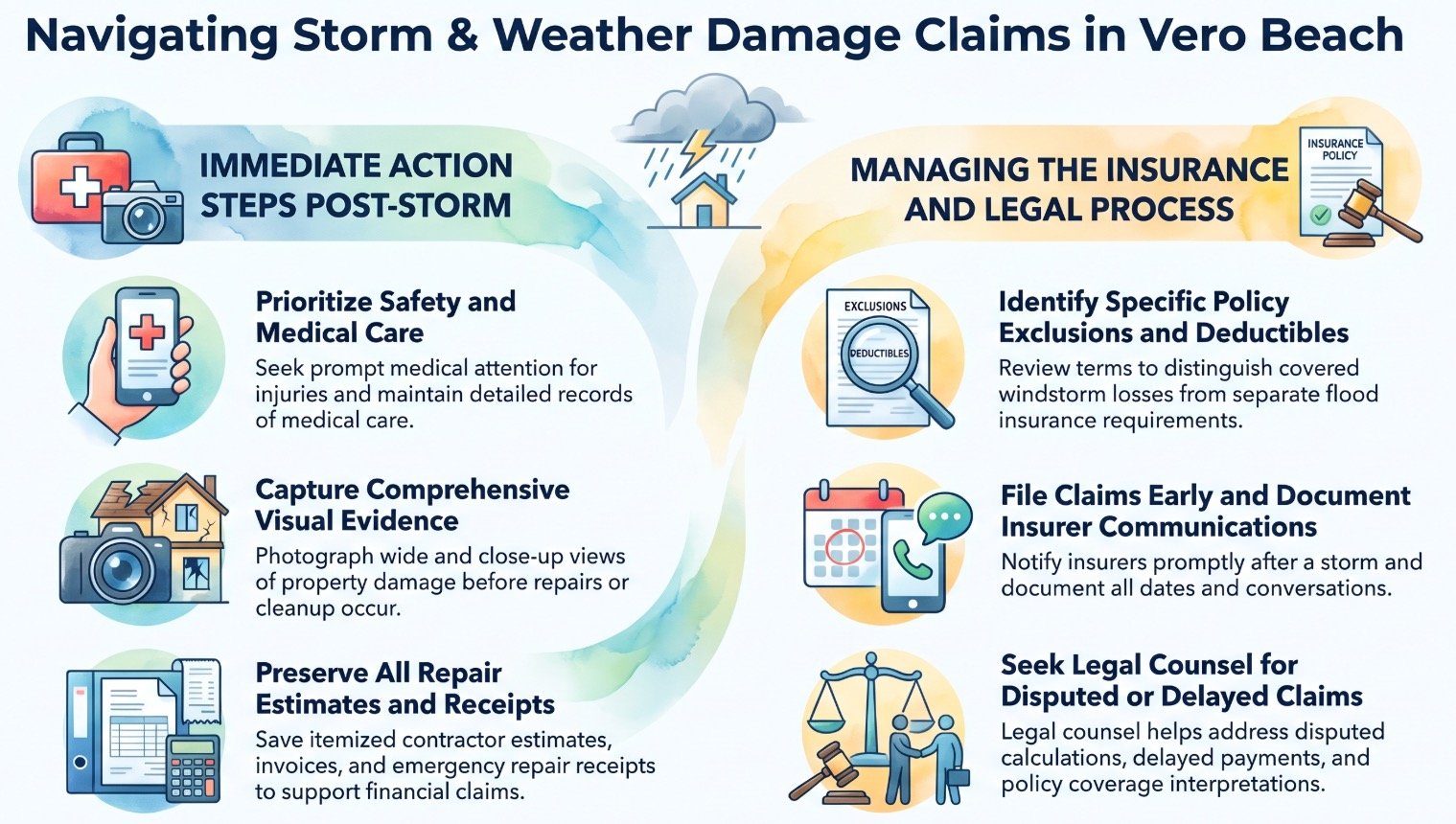
- Document damage safely with dated photos and videos, repair estimates, receipts, and insurer communications before cleanup changes the evidence.
- Review your policy, claim correspondence, and the insurer’s damage assessment to identify disputed coverage or repair costs.
- If storm hazards injured someone, preserve incident records and seek prompt medical care; property claims and injury claims may involve different issues.
- Liability and claim outcomes depend on the evidence, policy terms, and applicable law; consider consulting a qualified local attorney.
How We Can Help With Your Vero Beach Property Claim Storm & Weather Damage Injury Claim
Storms and severe weather can damage homes and businesses in Vero Beach and create hazards that cause injuries. A property claim lawyer can help policyholders address the insurance issues that follow, including damage to buildings, belongings, and other covered property. The lawyer may review policy language, explain applicable deadlines, and help organize photographs, repair estimates, receipts, and other records that support a claim.
Policy interpretation can be important when an insurer questions the cause or extent of storm damage. Counsel can assess the relevant terms and identify coverage exclusions that may affect the insurer’s position. When information is incomplete, or a decision appears inconsistent with the policy, the lawyer can communicate with the insurer, request clarification, and present supporting documentation.
This assistance can help property owners make informed decisions while managing repairs and community responsibilities. Legal guidance may also help prevent avoidable delays and preserve a clear record of claim communications. Each matter depends on its policy, evidence, and circumstances.
Don’t Wait. Call Our Florida Personal Injury Lawyers Now!
Understanding Vero Beach Property Claim Storm & Weather Damage Injury Cases


Severe weather in Vero Beach can cause property damage and create hazards that injure residents, visitors, or workers. These cases may involve both a property insurance dispute and a personal injury claim. Each requires careful review of the available evidence, applicable policy terms, and circumstances surrounding the injury. A property owner’s coverage may address certain losses, but Policy exclusions and specific conditions can limit or prevent payment. Injured people may also have rights to seek compensation from a responsible party, depending on the facts and applicable law.
OUR CONSULTATIONSARE FREE
START YOUR FREE CASE REVIEW

Prompt action can help preserve important records, document damage, and clarify how an incident occurred. Photographs, repair estimates, medical records, witness information, and communications with insurers may support an evaluation. Claim deadlines vary by policy and claim type, so delays can limit your options. A qualified attorney can assess potential claims, explain relevant requirements, and help individuals pursue fair outcomes while protecting affected parties’ interests.
Common Causes of Vero Beach Property Claim Storm & Weather Damage
Hurricane-force winds can damage Vero Beach properties, compromising roofs, windows, and other structural components. Wind-driven rain, flooding, and storm surge can cause water intrusion and related losses, while hail and lightning may damage roofing, exterior materials, and electrical systems. Identifying the source and extent of damage can help clarify the issues involved in a property claim.
Hurricane Winds


When hurricane-force winds reach Vero Beach, they can tear shingles from roofs, break windows, damage siding, and let rain into a property. These forces may also loosen roof decking, damage flashing, and compromise connections between structural components. Roof uplift occurs when wind pressure beneath a roof exceeds the forces holding it in place. If supports or load-bearing elements are weakened, structural failure may follow, creating hazards for occupants and neighboring properties.
After a storm, a careful inspection can help identify visible damage and conditions requiring prompt attention. Property owners may document affected areas, preserve repair records, and review insurance policy requirements before deciding whether to file a claim. A qualified professional can assess the building and explain the damage they observe. Clear, accurate documentation supports a fair evaluation and helps property owners address safety concerns while protecting household members’ interests and the wider community.
Wind-Driven Rain
Wind-driven rain can cause property damage even when a building’s roof and exterior remain largely intact. Strong gusts may force water beneath shingles, around flashing, through damaged seals, or into gaps near windows and doors. These Roof leak pathways can be hard to spot from the ground, yet moisture can reach insulation, ceilings, wall cavities, and flooring. Prompt inspection helps property owners document affected areas and limit further deterioration.
Interior moisture migration can extend damage beyond the visible entry point. Damp materials may support mold growth, weaken finishes, or affect electrical components if not addressed. A careful assessment should distinguish storm-related water intrusion from preexisting wear and record the condition of the structure, contents, and repairs. Clear documentation supports an accurate property claim and helps ensure necessary restoration protects occupants’ health and safety.
Flooding And Storm Surge
During severe storms, heavy rainfall, overflowing waterways, and coastal storm surge can inundate properties in Vero Beach, damaging buildings, contents, and surrounding land. Floodwater may enter through doors, foundations, and low-lying openings, while prolonged saturation can weaken structural materials and contaminate indoor spaces. Storm surge mechanics involve wind-driven seawater and pressure changes that push water inland, sometimes beyond areas residents expect to flood. Local drainage capacity, tides, and the storm’s path can influence how widespread and long-lasting inundation is. Flood zone mapping can help property owners understand designated risk areas, but it does not guarantee that locations outside mapped zones will remain dry. After flooding, prompt documentation of damage and reasonable steps to prevent further loss can support a property claim and help affected neighbors secure timely recovery resources.
Hail And Lightning Damage
Hail and lightning can cause distinct storm damage to Vero Beach properties, sometimes in the same weather event. Hail impact may crack roof tiles, dent metal roofing, damage siding, and break windows. Even when damage appears minor, compromised materials can let rain in and worsen problems over time. Lightning strikes may ignite fires, split trees, or damage electrical systems, appliances, and connected equipment. A surge can affect wiring without leaving obvious exterior evidence, making prompt inspection important. Property owners can help protect occupants and support accurate claim review by documenting visible damage, preserving damaged materials when safe, and arranging qualified assessments. Photographs, repair estimates, and storm records can clarify the loss’s extent and timing. Coverage depends on policy terms, exclusions, and evidence.
Legal Rights of Vero Beach Property Claim Storm & Weather Damage Injury Victims
Storm and severe weather damage can create significant legal and financial challenges for Vero Beach property owners, particularly when an insurer disputes or delays a claim. Florida law and the insurance policy may provide important protections, but the available remedies depend on the policy language, evidence, and applicable deadlines. Policyholder rights generally include submitting a claim, receiving a timely response, and obtaining a reasoned explanation for a denial or reduced payment. Review coverage exclusions carefully, because their wording and application can affect recovery.
A careful record can help owners and their representatives pursue a fair resolution while preserving resources for household needs and community responsibilities:
- Photograph roof damage, fallen branches, and water intrusion before repairs alter the scene.
- Save receipts, repair estimates, and communications with the insurer.
- Review deadlines and policy requirements promptly.
- Seek qualified legal guidance when a dispute remains unresolved.
These steps support informed decisions and may help protect a valid claim, but they don’t assume every loss is covered.
Why Do Storm & Weather Damage Injuries Happen in Vero Beach?
Severe weather can cause property damage and related injuries in Vero Beach when high winds, heavy rain, flooding, or falling debris compromise buildings and surrounding areas. These conditions may weaken roofs, walls, windows, and other structural components, creating hazards for residents, workers, visitors, and emergency personnel.
Roof collapse can occur when wind pressure, prolonged rainfall, or accumulated water overwhelms a building’s structure. Falling debris, including broken branches, roofing materials, and damaged signs, may strike people or obstruct walkways and exits. Floodwater can conceal uneven surfaces, electrical hazards, and sharp objects, increasing the risk of falls and other injuries. Wind-driven rain may also enter buildings, damage interior surfaces, and make floors slippery.
Injuries can arise during the storm or later, as weakened structures and unstable materials remain dangerous. The extent of harm depends on the storm’s severity, the property’s condition, and whether protective measures were adequate. These hazards can affect people who are present while assisting others or providing vital services.
What Should You Do After a Vero Beach Property Claim Storm & Weather Damage Injury?
After a storm-related injury, the affected person should seek prompt medical care and follow the provider’s recommendations. Document property damage with clear photos, videos, and records before making temporary repairs, when it is safe to do so. They should then contact their insurer promptly to report the loss and ask about required documentation and next steps.
Seek Medical Care
Anyone injured by falling debris, flooding, or other storm-related hazards should seek prompt medical care, even if symptoms initially seem minor. A timely evaluation can identify injuries that may worsen without treatment, including head trauma, fractures, infections, or respiratory problems. Emergency services should be contacted for severe pain, breathing difficulty, confusion, or uncontrolled bleeding. For less urgent symptoms, a clinician can assess the condition and recommend appropriate care. Choose experts when an injury requires focused treatment, such as orthopedic or neurological care. Patients should describe how the storm-related incident occurred and provide accurate information about symptoms and medical history. They should follow prescribed treatment plans and attend follow-up appointments, even when discomfort improves. Consistent care supports recovery and helps medical professionals identify complications that require further attention.
Document Weather Damage
Once the property owner has addressed immediate medical needs, they should document storm-related damage as soon as conditions are safe. Photographs and videos can show affected rooms, structural problems, damaged belongings, and visible hazards before cleanup or repairs alter the scene. Wide views and close-up images help establish the extent and location of each loss. A written record should note when you discovered the damage and describe any changes over time. Receipts, repair estimates, and records of mitigation expenses can support an accurate account of necessary protective work, such as temporary covering or water removal. A pre-loss inventory, purchase records, and prior photographs may help identify damaged or missing property. Copies of these materials should be stored securely. Careful documentation helps property owners provide clear information and support a reliable damage evaluation.
Contact Your Insurer
Prompt notice can help a property owner begin the insurer’s claim process and clarify what information is needed. After a storm causes damage, the owner should review the policy and use its listed Policy contact to report the loss through the required channel. A timely claim notification should state when the event occurred, describe the affected areas, and identify any immediate steps taken to protect the property. The owner should provide accurate facts and avoid guessing about the cause or extent of the damage. Photographs, repair estimates, receipts, and a record of conversations can support the report and help keep information organized. The insurer may assign an adjuster, request documents, or arrange an inspection. Prompt cooperation can help the claim move forward while preserving a clear record for everyone involved in addressing the loss.
Critical Evidence in a Vero Beach Property Claim Storm & Weather Damage Injury Case
A well-supported storm damage claim depends on evidence that links the weather event to the property loss and documents its extent.
Relevant records may include:
- Weather reports and alerts showing the storm’s timing and severity.
- Dated photos and videos capturing damage to the property.
- Repair estimates and receipts documenting costs and completed work.
- Witness statements and timelines describing when damage occurred and was observed.
Weather Reports and Alerts
When storms damage property or cause injuries in Vero Beach, official weather reports and alerts can help establish the conditions at the time of the incident. The National Weather Service issues forecasts, warnings, and advisories that may document wind speeds, rainfall, flooding, or severe weather risks near the affected location. Hurricane outlooks and storm updates can also clarify when hazards were anticipated and how conditions changed. These records may help determine whether a storm caused the reported loss, whether a warning was available, and whether reasonable precautions were taken. Relevant materials can include archived alerts, radar summaries, local rainfall measurements, and agency statements. Their timing and geographic coverage should be checked against the incident details. A careful review can support accurate claim evaluation and help affected property owners and injured people pursue fair compensation for their losses.
Damage Photos and Videos
Clear photos and videos can preserve vital evidence of storm-related property damage or injuries in a Vero Beach claim. Images taken promptly may show roof openings, fallen trees, water intrusion, damaged belongings, or visible injuries before conditions change. A careful record helps insurers, adjusters, and others understand what happened and supports a fair claim review. Photographs should capture both wide views that establish location and close details that reveal the extent of damage. Retain original photo files, since edits or screenshots may obscure useful information. Video metadata, including recording dates and times, can help establish when evidence was documented. Take images only from safe locations, without entering unstable areas or delaying necessary medical care. Clear, organized documentation can help protect evidence and support accountability efforts.
Repair Estimates and Receipts
Along with photographs and videos, repair estimates and receipts can document the financial impact of storm damage in a Vero Beach property claim. Written estimates can identify proposed repairs, materials, labor, and projected costs, helping clarify the scope of work needed to restore a property. Contractor invoices can show completed services and charges, while receipts for materials, temporary repairs, or emergency mitigation may support related expenses. Claimants can preserve dated copies and organize records by repair category to make review more efficient. Accurate payment tracking can distinguish amounts paid from outstanding balances and help reconcile contractor charges with insurer payments. These records may assist adjusters in evaluating claimed losses and can help property owners explain necessary costs. Careful documentation also supports fair, timely consideration of claims and responsible restoration decisions.
Witness Statements and Timelines
Witness statements and a well-organized timeline can help establish how storm or weather damage occurred and how it affected a Vero Beach property. Neighbors, tenants, contractors, and emergency responders may describe conditions before, during, and after the event. Their observations can help clarify when leaks began, which areas were affected, and whether damage worsened over time.
A timeline should connect these accounts with dated photographs, weather reports, repair estimates, receipts, and communications with the insurer. Consistent records can support a clear account of the loss and help claim evaluators understand its impact. Witness credibility depends on firsthand knowledge, accurate recollection, and consistent details. Identify and address any timeline inconsistencies with available documentation, rather than overlooking them. Careful organization helps claimants and their representatives present reliable evidence and pursue a fair review.
Long-Term Effects of Vero Beach Property Claim Storm & Weather Damage Injuries
Storm- and weather-related injuries may have lasting effects that extend beyond the initial recovery period. Chronic pain and reduced mobility can interfere with daily activities, work, and independence. Emotional distress may also persist, making thorough documentation of ongoing effects important in a property claim.
Chronic Pain
After storm or severe weather damage in Vero Beach, injuries sustained during cleanup or emergency repairs can cause chronic pain long after the immediate danger has passed. Persistent discomfort may follow falls, lifting injuries, or contact with damaged materials. It can interfere with sleep, concentration, and the ability to meet work or family responsibilities, limiting a person’s capacity to support others.
Chronic Pain Management may involve medical evaluation, prescribed treatment, and consistent follow-up to address symptoms and preserve daily function. Providers may recommend documenting pain levels, treatment responses, and related expenses. Identifying Pain Flare Triggers, such as prolonged activity, stress, or weather changes, can help patients and clinicians recognize patterns and adjust care. If pain persists, medical records can also clarify how the injury affects daily activities and whether further treatment is needed. Timely care supports recovery and creates a reliable account of ongoing effects.
Reduced Mobility
When storm damage leads to an injury, reduced mobility may persist after the immediate hazards have been addressed. Falls, impact injuries, or delayed access to medical care can affect balance, strength, and joint function. These limitations may interfere with routine activities, including walking through damaged areas, climbing stairs, or completing household tasks. A treating provider can document functional restrictions, recommend rehabilitation, and assess whether mobility aids are medically appropriate. Home accessibility may also need attention, including clear pathways, secure handrails, or temporary changes to essential living spaces. For property claim purposes, records of treatment, equipment costs, and necessary accessibility modifications can help explain the injury’s ongoing practical effects. Careful documentation helps insurers and decision-makers assess the support needed for safe daily movement and continued independence after a storm-related injury.
Emotional Distress
Emotional distress can remain a significant consequence of storm-related injuries, even after physical hazards have been addressed. In Vero Beach, damaged homes, disrupted routines, and lasting injuries may contribute to anxiety, sleep difficulties, or persistent fear during severe weather. Storm-related anxiety can affect concentration, relationships, and a person’s sense of security at home. These effects may continue after repairs are completed, particularly when recovery involves ongoing treatment or financial uncertainty.
Emotional recovery can take time and requires consistent support and appropriate professional care. Family members, caregivers, and community organizations can help by recognizing behavioral changes and connecting affected individuals with qualified resources. Keeping records of symptoms, treatment, and related expenses may also clarify the injury’s continuing impact. A property claim may cover documented losses, but each situation depends on the evidence, coverage, and applicable law.
Proving Liability in Vero Beach Property Claim Storm & Weather Damage Injury Cases
Proving liability in a Vero Beach storm or weather damage injury case requires more than showing that severe conditions caused an accident. The injured person generally must establish that another party owed a duty of care, failed to meet that duty, and caused a foreseeable injury. Evidence may show that a property owner ignored a known hazard, failed to secure loose materials, or neglected reasonable maintenance before a storm.
Contractor negligence may be relevant when faulty repairs, improper installation, or inadequate construction contributed to the harm. Building code violations can also help demonstrate that required safety standards were not followed, although a violation alone may not prove liability. Photographs, inspection records, repair histories, witness accounts, and qualified professional assessments can help clarify how the incident occurred and who may be responsible.
A careful investigation can preserve important evidence and support an accurate account of the injury. Establishing responsibility may also help protect others in the community from similar preventable hazards.
Don’t Wait. Call Our Florida Personal Injury Lawyers Now!
Dealing With Insurance Companies After a Vero Beach Property Claim Storm & Weather Damage Injury
After a storm-related injury on someone else’s property in Vero Beach, insurance companies may contact the injured person to investigate the incident and assess a claim. Representatives may request statements, photos, medical records, or other documents. The injured person can respond accurately without speculating about how the incident occurred or the extent of any injury. Keeping copies of communications and documents can help preserve a clear record.
Insurance coverage may depend on the policy’s language, the property owner’s responsibilities, and the circumstances of the storm. Careful policy interpretation can clarify which losses may be covered and whether exclusions or limits apply. An insurer’s initial assessment may not reflect the full impact of an injury, particularly when treatment or recovery is ongoing.
During claim negotiation, clear evidence and consistent information can support a fair evaluation. A Vero Beach property claim lawyer can communicate with insurers, address disputed coverage, and help protect the injured person’s interests while respecting others’ needs.
What to Expect During a Vero Beach Property Claim Storm & Weather Damage Injury Claim Process
A storm or weather damage claim generally begins with an initial review of the policy, reported losses, and relevant deadlines. The claimant should document the damage, while the insurer investigates the circumstances and evaluates coverage. The process may conclude with a settlement or proceed to a dispute if the parties disagree about the claim’s value or coverage.
Initial Claim Review
During the initial claim review, an insurer evaluates the reported storm or weather damage, the policy terms, and the supporting evidence to determine how the claim will proceed. This stage helps establish which questions require attention and whether further investigation is needed. A policy review identifies applicable limits, exclusions, deductibles, and notice requirements. Coverage analysis then considers whether the reported cause and resulting loss fall within the policy’s protections. The insurer may request clarification about the event, the property, or the claimant’s account before reaching a preliminary position. Timely, accurate responses can help keep the review moving and support a fair assessment. For property owners focused on protecting their households and serving their communities, understanding this process can clarify responsibilities and help them make informed decisions while the insurer evaluates the claim.
Damage Documentation
As the insurer reviews the policy and reported loss, clear documentation can help establish the extent and cause of storm or weather damage. Property owners may preserve dated photographs and videos of affected rooms, roofing, windows, belongings, and exterior areas before repairs alter the evidence. A written inventory can record damaged items, approximate ages, purchase details, and observed conditions. Receipts for emergency work and temporary lodging may also support the claim file.
Moisture Mapping can identify water migration beyond visible surfaces and help document areas requiring drying. Prompt Mold Prevention measures, including ventilation and removing wet materials when appropriate, can limit further damage while you maintain records. Copies of contractor assessments, repair estimates, and communications should be organized by date. Consistent records can help clarify the loss and support accurate claim evaluation without delaying necessary protective steps.
Insurer Investigation
What happens after a storm or weather damage claim is reported? The insurer typically assigns an adjuster to review the notice, policy, and available damage documentation. The adjuster may contact the property owner to arrange an inspection and request records, photographs, repair estimates, or information about when the damage occurred.
During the site visit, the adjuster examines affected areas and may document conditions with photographs or measurements. The inspection scope can influence which damage is considered, so the property owner should identify all observed concerns and provide access to relevant areas. The insurer then evaluates the evidence alongside policy terms, exclusions, and limits. This coverage interpretation determines how the reported loss is assessed under the contract. Clear, organized communication can help the investigation account for the property’s condition and the needs of those relying on it.
Settlement or Dispute
Once the insurer completes its investigation, it may approve the claim, offer partial payment, or deny coverage. The policyholder should review the decision against the policy terms, repair estimates, and storm-damage documentation. Settlement offers may not account for all covered losses, including concealed damage or reasonable temporary repairs. Before accepting payment, the policyholder can request a written explanation of the insurer’s calculations and identify any disputed items. If the parties cannot agree, dispute resolution may involve further negotiation, an appraisal process when the policy allows, or legal proceedings. A property claim attorney can assess the evidence, explain your options, and communicate with the insurer on your behalf. Prompt, organized responses help preserve relevant records and support a fair resolution while allowing property owners to focus on restoring safe conditions.
Compensation for Vero Beach Property Claim Storm & Weather Damage Injury Damages
Storm and severe weather damage can create substantial property losses, but compensation depends on the insurance policy, the cause and extent of the damage, and the evidence supporting the claim. A Vero Beach property owner may seek payment for covered repairs to a home, roof, or other insured structures. The policy may also provide benefits for damaged personal property, such as furniture, clothing, and household equipment, subject to applicable limits and exclusions.
When a residence becomes unsafe or uninhabitable, additional living expense coverage may help pay reasonable costs for Temporary housing and related necessities while repairs proceed. The available amount and duration depend on the policy terms and the circumstances of the loss. Insurers may require receipts, photographs, repair estimates, inventories, and proof that the damage resulted from a covered event. Prompt reporting and careful records can clarify the claim’s scope. A thorough review can identify applicable benefits and support a fair assessment, helping property owners restore safe homes and serve their families and communities.
Economic vs. Non-Economic Damages in Vero Beach Property Claim Storm & Weather Damage Cases
Storm and weather damage claims may involve economic losses, such as repair costs, damaged belongings, and temporary housing expenses. Non-economic harm may also be relevant when the loss causes substantial disruption or distress. Clear records and supporting evidence help establish the nature and extent of claimed damages.
Economic Losses
Economic losses in a Vero Beach property claim are the measurable financial costs caused by covered storm or weather damage. They may include reasonable repair expenses, replacement costs for damaged belongings, and emergency mitigation fees. When a home or business cannot be used safely, Temporary relocation expenses may also be recoverable, subject to policy terms and limits. Owners who rely on a property for income may face lost rent or Business interruption losses while repairs prevent normal operations. Documentation helps establish the amount and cause of each claimed expense. Useful records can include invoices, receipts, estimates, payroll information, and evidence of income before and after the event. Carefully review the insurance policy to clarify applicable coverage, exclusions, deductibles, and deadlines. Accurate accounting supports a fair assessment of financial losses.
Non-Economic Harm
Although property claims primarily address measurable financial losses, storm or weather damage can also create non-economic harm, such as stress, disruption, and loss of use. These effects may arise when a damaged home no longer provides a safe, comfortable place for daily life. Residents may experience interrupted routines, reduced privacy, or difficulty caring for family members while repairs remain unfinished. Loss of enjoyment can occur when storm damage prevents people from using rooms, outdoor areas, or household amenities as intended. Displacement may also limit access to familiar community spaces and support networks, contributing to Social isolation. Such impacts differ from repair costs, temporary housing expenses, and other economic losses. Recognizing non-economic harm helps describe the broader consequences of property damage for residents and households, while keeping attention on the claim’s distinct categories of loss.
Proving Damages
To support a Vero Beach property claim, the claimant must document how storm or weather damage caused both measurable financial losses and any claimed non-economic harm. Economic damages may include repair costs, replacement expenses, temporary housing, and lost income. Damage valuation should rely on dated photographs, contractor estimates, receipts, inspection reports, and records connecting each loss to the covered event. When practical, the claimant should preserve damaged materials and keep a written account of mitigation steps. Policy terms may affect whether payment reflects actual cash value or replacement cost, including depreciation recovery after completed repairs and submission of required proof. Non-economic harm, such as disruption, distress, or loss of use, requires credible, specific evidence rather than general statements. Organized documentation helps insurers, courts, and representatives assess losses fairly and supports informed decisions throughout the claim process.
When a Vero Beach Property Claim Storm & Weather Damage Injury Case Goes to Trial vs Settlement
When a storm or other weather event damages property in Vero Beach, the claim may resolve through settlement or proceed to trial if the parties cannot agree on coverage or compensation. Settlement can provide a more predictable resolution, reduce litigation costs, and allow property owners to focus on restoring homes or businesses and supporting affected occupants. Negotiations may rely on repair estimates, photographs, expert assessments, and records of related losses. A sound mediation strategy can help the parties identify disputed issues, evaluate possible outcomes, and consider practical terms without a courtroom decision.
If negotiations fail, a trial lets each side present evidence and arguments to a judge or jury. Trial preparation may include organizing claim documents, preparing witnesses, and consulting qualified experts about damage and repair needs. The process can take more time and cost more, and its outcome is less predictable than an agreed settlement. The appropriate path depends on the evidence, disputed issues, and the parties’ objectives. A careful evaluation helps property owners pursue a fair resolution while preserving resources for recovery.
Florida Laws That May Affect Your Vero Beach Property Claim Storm & Weather Damage Case
The decision to settle or proceed to trial depends in part on Florida laws governing insurance coverage, claim deadlines, and the evidence needed to support a loss. These rules shape how a Vero Beach property owner documents storm damage and evaluates a carrier’s response. Understanding them can help preserve resources for family, neighbors, and community responsibilities.
- Policy terms: Florida policy requirements and the specific contract determine covered perils, exclusions, duties after loss, and required proof.
- Hurricane deductibles: Hurricane deductible rules may apply when a storm meets defined conditions. The policy’s wording and applicable law affect how the deductible is calculated.
- Damage evidence: Photographs of roof openings, water intrusion, and damaged belongings, alongside repair estimates, can clarify the scope and cause of loss.
- Claim handling: State standards address insurer communications and investigation. A clear record of notices, inspections, and decisions can help determine whether the insurer handled the claim appropriately.
Because policies and circumstances differ, legal review may help owners understand their obligations and available options.
The Statute of Limitations for Vero Beach Property Claim Storm & Weather Damage Injury Cases
Because filing deadlines can determine whether a storm-related property claim may proceed, Vero Beach property owners should identify the limitations period that applies to their case. Florida law sets deadlines for bringing certain insurance disputes, and the applicable period may depend on the policy, the type of claim, and when the loss occurred. A property owner should not assume that ongoing discussions with an insurer pause or extend a legal deadline.
Separate requirements may apply before you can file a lawsuit. Contractual deadlines in an insurance policy can require prompt reporting, documentation, or other notice after storm damage. Policy notice requirements may differ from the statutory limitations period, and missing either deadline can place coverage or legal rights at risk. Records of the storm, damage, communications, and repair expenses can help establish relevant dates and preserve accurate information. Because deadlines and rules may change, owners should promptly verify current requirements. Timely attention also supports households, employees, and others who depend on the property’s safe recovery.
Don’t Wait. Call Our Florida Personal Injury Lawyers Now!
How a Vero Beach Property Claim Storm & Weather Damage Lawyer Can Help You
After storm or weather damage, a Vero Beach property claim lawyer can help an owner assess the policy, organize evidence, and communicate with the insurer. This support can clarify coverage questions while helping property owners protect homes, businesses, and the people who depend on them.
- The lawyer reviews policy terms, limits, deductibles, and Policy exclusions, explaining how each provision may apply to reported damage.
- The lawyer helps organize photographs, repair estimates, receipts, and inspection records into a clear account of the loss.
- The lawyer reviews the insurer’s estimate and correspondence, identifies disputed items, and prepares focused responses supported by available documentation.
- If valuation remains contested, the lawyer explains appraisal options and other procedures described in the policy, helping the owner understand the available process.
Through careful review and communication, counsel can reduce confusion and support a well-documented claim. This guidance may also help owners make informed repair decisions, maintain safe conditions, and keep operations running for families, employees, tenants, or community members affected by the damage.
When to Contact a Vero Beach Property Claim Storm & Weather Damage Lawyer
When a storm or weather-related loss raises questions about coverage, repair costs, or claim delays, contacting a Vero Beach property claim lawyer early may help protect the owner’s interests. Prompt guidance can help when damage is extensive, the insurer requests additional documentation, or a settlement offer seems inconsistent with repair estimates. Early review may also help the property owner understand policy deadlines and preserve relevant records, photographs, invoices, and communications.
Legal advice may be appropriate if a claim is denied, payment is delayed without explanation, or the insurer disputes whether wind, rain, flooding, or another event caused the damage. A lawyer can review the policy language, including coverage exclusions, and explain how those provisions may affect the claim. Owners may also seek counsel before Policy renewal if unresolved damage or claim history raises questions about future coverage. Timely consultation helps owners make informed decisions while allowing them to focus on household needs and community responsibilities.
Why You Need an Experienced Vero Beach Property Claim Storm & Weather Damage Lawyer
An experienced Vero Beach property claim storm and weather damage lawyer can help property owners address disputes that require careful review of policy terms, damage evidence, and insurer decisions. When a storm damages a home or business, the resulting claim may involve intricate coverage questions and competing assessments of the loss. An attorney’s experience supports a methodical review of repair estimates, photographs, inspection findings, and correspondence with the insurer.
Skilled policy interpretation helps clarify which provisions, exclusions, and deadlines may apply to a particular claim. A lawyer can identify gaps in the insurer’s explanation, organize supporting records, and present the property owner’s position in a clear, documented manner. This assistance may be especially valuable when a delayed or reduced payment affects repairs, safety, or continued operations. By handling claim communications and addressing disputed findings, counsel can help owners focus on restoring their property and serving family members, tenants, employees, or customers. The lawyer’s role is to pursue a fair resolution based on the policy and available evidence.
How to Choose the Right Vero Beach Property Claim Storm & Weather Damage Lawyer for Your Case
Choosing the right Vero Beach property claim storm and weather damage lawyer begins with evaluating the attorney’s experience handling disputes similar to the property owner’s case. Relevant experience may include claims involving wind, rain, hurricanes, disputed repair estimates, or delays in payment. A lawyer familiar with Florida insurance practices can assess policy language and explain available options in clear terms.
Property owners should review Attorney Credentials, including licensing, disciplinary history, and focused experience with property insurance disputes. They can ask how the lawyer investigates damage, communicates case developments, and prepares for negotiations or litigation. Clear answers help individuals make informed decisions while protecting the resources needed to restore their homes and support their families.
The Fee Structure should also be explained before representation begins. The attorney should explain how fees and case expenses are handled, when payment is due, and what happens if the claim does not succeed. Comparing these details, communication practices, and relevant experience can help a property owner select counsel suited to the claim.
About The Law Offices of Anidjar & Levine
The Law Offices of Anidjar & Levine represents property owners in insurance disputes, including claims involving storm and weather damage in Vero Beach. The firm assists clients seeking to understand policy terms, document losses, and address insurer decisions that may affect recovery. Its attorneys review each claim’s circumstances and explain available options, helping property owners make informed choices during a demanding process.
Firm history reflects a practice serving people facing legal challenges across Florida. The firm handles matters involving personal injury and insurance disputes, drawing on experience with claims that require careful investigation and clear communication. Its work includes reviewing damage evidence, organizing relevant records, and pursuing appropriate responses when coverage or payment is disputed.
The attorney values preparation, accountability, and attention to each client’s concerns. These principles guide how the firm communicates, evaluates evidence, and develops a strategy for a property claim. For Vero Beach residents, this approach provides practical guidance as they seek a fair resolution and work to restore damaged property.
Frequently Asked Questions
Does Homeowners Insurance Cover Damage From Named Storms or Hurricanes in Vero Beach?
Homeowners insurance in Vero Beach may cover hurricane damage, but coverage depends on the policy’s terms, exclusions, and cause of loss. Wind damage is often covered, while flooding typically requires separate flood insurance. Policyholders should review hurricane deductible rules, which may impose a higher deductible after a named storm. They should also check for named storm exclusions, document damage promptly, and report claims to their insurer without delay.
What Is the Difference Between Windstorm and Flood Insurance Coverage?
Windstorm insurance generally covers direct wind damage, while flood insurance covers rising water from sources such as heavy rainfall, overflowing waterways, or coastal flooding. Policies may treat storm surge coverage differently, so homeowners should confirm whether flood protection includes surge-related losses. Wind-driven rain exclusions can also limit coverage when rain enters through openings created by wind or through existing defects. Reviewing policy terms helps residents understand protections and identify coverage gaps before severe weather occurs.
Can I File a Claim if My Roof Leaked After a Storm but Shows No Visible Damage?
Yes, a property owner may file a claim when a roof leaks after a storm, even if no exterior damage is visible. Coverage depends on the policy, the storm’s cause, and whether the insurer finds evidence of a covered event. Roof Leak Documentation, including photographs, repair estimates, and a prompt inspection, can support the claim. A qualified professional can also identify Hidden Moisture Damage and help prevent further deterioration while the insurer investigates.
What Should I Do if My Insurer Requires Emergency Repairs Before Inspecting My Property?
If an insurer requires emergency repairs before inspecting the property, the policyholder should promptly prevent further damage while preserving evidence. Before work begins, photograph and video affected areas, retain damaged materials when practical, and keep itemized invoices and contractor communications as Emergency Repair Documentation. The policyholder should request written instructions and arrange Insurer Inspection Coordination, including an inspection date or approved alternative. Do not delay necessary repairs if waiting could increase damage or threaten safety.
Can My Insurance Company Cancel or Nonrenew My Policy After I File a Storm Damage Claim?
Yes, an insurer may sometimes cancel or decline to renew a policy after a storm claim, but it cannot necessarily do so solely because the policyholder sought coverage. Florida law and policy terms govern permissible reasons, timing, and notice requirements. Applicable nonrenewal protections may limit an insurer’s options, particularly after certain weather-related claims. The policyholder should review written notices, preserve claim records, and promptly consult Florida’s insurance regulator or qualified counsel.
—————————
Storm and weather damage claims in Vero Beach may involve complex policy terms, strict deadlines, and disputes about the cause or extent of property loss. The Law Offices of Anidjar and Levine can review your circumstances, explain your legal options, and help you pursue a fair claim. Acting promptly may preserve important evidence and protect your ability to seek recovery. If your insurer has denied, delayed, or undervalued your claim, consider consulting an experienced property claim lawyer. For other legal concerns, visit our Vero Beach Personal Injury Lawyer page.