

The Law Offices of Anidjar and Levine can evaluate whether negligent prenatal, labor, delivery, or newborn care caused preventable harm. A West Palm Beach Personal Injury Lawyer may review medical records, fetal monitoring strips, medication histories, consent documentation, witness accounts, and expert opinions.
Florida medical malpractice claims generally require proof of duty, breach, medical causation, and damages. Potential compensation may address medical expenses, rehabilitation, lost income, future care, and wrongful death losses, while additional information may explain evidence preservation, legal requirements, and available options.
Main Takeaways
- A West Palm Beach medical malpractice lawyer can evaluate whether negligent prenatal, delivery, or postpartum care caused preventable maternal or newborn injuries.
- Attorneys review medical records, fetal monitoring strips, delivery notes, neonatal evaluations, medication histories, and witness accounts.
- Florida claims generally require proof of duty, breach of the medical standard of care, causation, and compensable damages.
- Qualified medical experts may determine whether delayed intervention, monitoring failures, communication breakdowns, or medication errors caused harm.
- Preserve medical records, discharge instructions, photographs, bills, and symptom notes, and seek immediate care for serious warning signs.


How We Can Help With Your West Palm Beach Medical Malpractice Delivery Complications Injury Claim
When medical negligence contributes to delivery complications, a West Palm Beach medical malpractice lawyer can evaluate the circumstances, identify responsible parties, and determine whether the injury supports a legal claim. The review may include prenatal records, delivery notes, monitoring data, imaging, witness accounts, and consultations with qualified medical professionals. This process can clarify whether appropriate standards were followed and whether delayed action, inadequate communication, or improper treatment contributed to harm.
Legal guidance also helps preserve evidence, organize damages, and communicate with healthcare providers and insurers. Counsel may address an insurance appeal when coverage is denied, or benefits do not reflect documented medical needs. The firm can explain potential compensation for treatment, rehabilitation, lost income, care requirements, and related losses without promising a particular outcome.
Because statute of limitations can restrict the time available to pursue a claim, prompt evaluation is important. A lawyer can coordinate procedural requirements, protect the family’s interests, and present information respectfully while seeking accountability and meaningful support for affected individuals.
OUR CONSULTATIONSARE FREE
START YOUR FREE CASE REVIEW

Understanding West Palm Beach Medical Malpractice Delivery Complications Injury Cases
Delivery complication cases involve examining whether a healthcare provider’s actions deviated from accepted standards of care and caused preventable harm to the mother or child. In West Palm Beach, these claims generally require evidence establishing a professional duty, a breach, medical causation, and compensable damages. Review may include prenatal records, labor and delivery documentation, neonatal evaluations, medication histories, and statements from qualified medical professionals.
Florida hospital standards provide an important framework for evaluating whether care reflected accepted practices under comparable circumstances. The analysis may also consider communication between providers, documentation accuracy, and whether significant risks, alternatives, and proposed interventions were adequately explained. Informed consent violations can support a claim when a patient lacked material information needed to make a meaningful healthcare decision, although the specific legal requirements depend on the facts.
A careful evaluation should distinguish an unfortunate outcome from actionable negligence. Attorneys serving affected families can help preserve evidence, consult appropriate experts, and assess damages related to treatment, disability, rehabilitation, and future care.
Common Causes of West Palm Beach Medical Malpractice Delivery Complications
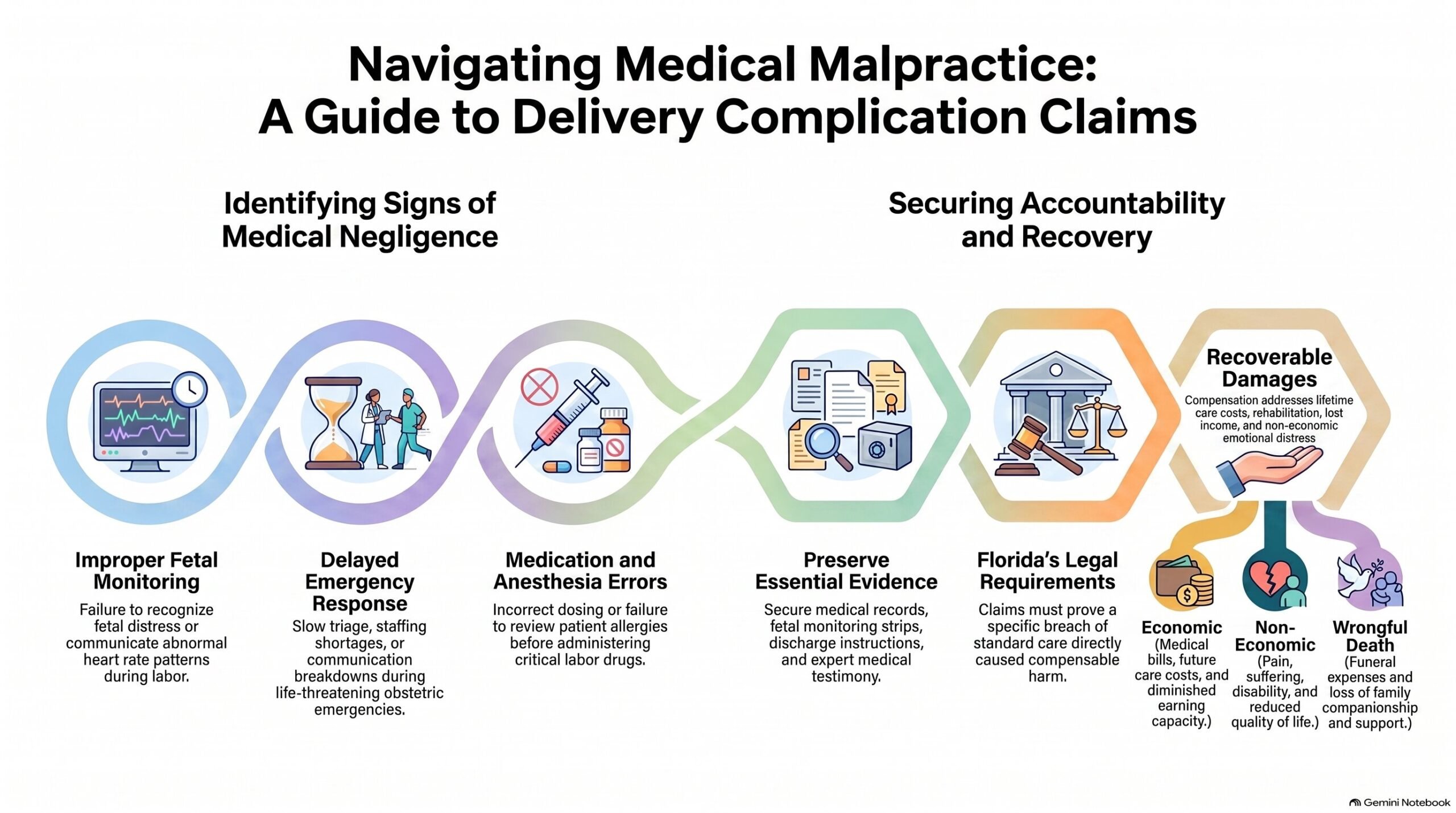
Common causes of West Palm Beach medical malpractice delivery complications may include delayed emergency responses and improper fetal monitoring, which can prevent timely recognition of maternal or fetal distress. Medication and anesthesia errors may also create avoidable risks during labor, delivery, or postpartum care. Birth injury mismanagement, including inadequate treatment or follow-up, can further worsen complications and support a potential malpractice claim.
Delayed Emergency Response
Although obstetric emergencies can develop rapidly, a delayed emergency response may prevent medical professionals from addressing fetal distress, maternal hemorrhage, or other life-threatening complications in time. Delayed triage protocols can delay recognition of a patient’s changing condition, particularly when symptoms are downplayed or critical information is not promptly documented. Communication breakdowns among nurses, physicians, anesthesiologists, and emergency personnel may further interfere with coordinated treatment. Staffing shortages can limit supervision, slow consultations, and leave urgent decisions to overextended clinicians. In addition, emergency escalation delays may occur when personnel fail to activate surgical, transfusion, or life-support resources without justification. Hospitals generally have a responsibility to maintain clear response procedures, adequate staffing, and reliable handoff systems. When avoidable delays contribute to injury, affected families may seek legal guidance regarding potential medical negligence.
Improper Fetal Monitoring
Accurate fetal monitoring is essential for identifying changes in a baby’s condition and determining whether timely intervention is necessary. During labor, staff should assess heart rate patterns, document findings, maintain equipment functionality, and promptly communicate any concerning developments. Improper monitoring may involve missed changes in signals, inadequate observation, delayed charting, or failure to escalate an abnormal pattern. Telemetry interpretation errors can cause clinicians to misunderstand whether a tracing reflects fetal distress, maternal activity, or equipment interference. Labor nurse negligence may also occur when required assessments are skipped, alarms are ignored, or significant findings are not reported to the obstetric provider. These failures can prevent timely evaluation and increase the risk of preventable birth injuries. A careful review of monitoring records, staffing practices, and communication may help identify whether professional standards were breached.
Medication And Anesthesia Errors
Medication and anesthesia errors during labor and delivery may expose the mother or newborn to preventable harm when drugs are selected, dosed, administered, or monitored improperly. Medication administration oversight can involve confusing similar medications, failing to review allergies, overlooking contraindications, or neglecting timely reassessment after treatment. Anesthesia dosing mistakes may cause inadequate pain control, excessive sedation, dangerous blood pressure changes, respiratory depression, or altered consciousness. These risks can increase when providers do not communicate clearly, verify orders, use appropriate monitoring, or respond promptly to concerning symptoms.
Errors involving oxytocin, antibiotics, anticoagulants, or emergency medications may also create serious complications for patients. Careful documentation, independent medication checks, and coordinated supervision help protect families. When preventable medication or anesthesia errors occur, a qualified legal professional can evaluate whether negligent care contributed to resulting harm.
Birth Injury Mismanagement
Birth injury mismanagement can occur when healthcare providers fail to recognize, prevent, or promptly respond to complications during labor and delivery. Common concerns include delayed cesarean delivery, improper fetal monitoring, misuse of forceps or vacuum devices, and failure to address oxygen deprivation. Inadequate assessment of maternal or fetal distress may increase the risk of brain injury, fractures, nerve damage, or other lasting conditions. Providers are expected to follow established standards, communicate significant changes, and coordinate timely intervention. Proper documentation and informed consent are also important, particularly when delivery methods carry foreseeable risks. After birth, careful monitoring may help identify newborn injuries and postpartum complications requiring immediate treatment. Families seeking to understand whether mismanagement contributed to harm may benefit from reviewing medical records with qualified professionals who can clarify the circumstances.
Don’t Wait. Call Our Florida Personal Injury Lawyers Now!


Legal Rights of West Palm Beach Medical Malpractice Delivery Complications Injury Victims
When negligent prenatal, labor, or postpartum care causes preventable harm, West Palm Beach delivery complications victims may have the right to pursue compensation under Florida medical malpractice law.
Legal guidance can help families understand the available remedies and protect their ability to care for an injured parent or child.
- Victims may seek damages for medical expenses, rehabilitation, lost income, and future care.
- Parents may pursue compensation for a child’s lifelong disabilities and related support needs.
- Informed Consent violations may support a claim when material risks or alternatives were not adequately disclosed.
- Hospital Negligence may create institutional liability when unsafe policies, staffing, supervision, or credentialing contributed to harm.
Florida law generally requires timely action, medical records, and qualified expert support establishing the applicable standard of care and a causal connection. An attorney can coordinate evidence collection, communicate with insurers, and evaluate settlement offers while treating the family with dignity. Prompt consultation may preserve evidence and clarify each victim’s legal rights, including claims involving wrongful death or diminished future earning capacity.
Why Do West Palm Beach Medical Malpractice Delivery Complications Injuries Happen?
Understanding the legal rights of families affected by delivery complications begins with identifying how preventable injuries occur. In West Palm Beach, these injuries may result when providers fail to recognize fetal distress, respond to abnormal maternal vital signs, or address complications during labor and delivery. Delayed monitoring, inadequate communication, medication errors, and improper use of equipment can increase risks for both parent and child.
Patient consent may be overlooked when treatment options, risks, or urgent procedures are not explained as required by the circumstances. Hospital policies can also contribute to harm when they are unclear, inconsistently enforced, or ignored. Staffing shortages may limit timely observation, consultations, or emergency intervention, particularly during intricate deliveries. In other cases, a provider may depart from an established care protocol without a medically justified reason. These failures do not automatically establish malpractice, but they may support a claim when negligent conduct causes a preventable injury.
What Should You Do After a West Palm Beach Medical Malpractice Delivery Complications Injury?
After a suspected delivery complication injury, the patient should seek immediate medical care to address urgent health concerns and establish a record of the condition. The patient or family should document symptoms, treatments, medical records, and related expenses. Consulting a qualified medical malpractice lawyer can help evaluate potential negligence and explain available legal options.
Seek Immediate Medical Care
Prompt medical evaluation is essential if a mother or newborn shows signs of injury following delivery, particularly when medical negligence may have contributed to the condition. A qualified clinician can assess symptoms, provide necessary treatment, and determine whether urgent intervention is required. Emergency warning signs may include severe bleeding, breathing difficulty, seizures, loss of consciousness, persistent vomiting, extreme weakness, unusual sleepiness, or a newborn’s failure to feed or respond normally. The mother or infant should be taken to an emergency department, or emergency services should be contacted when symptoms appear life-threatening. Prenatal risk assessment may have identified concerns before delivery, but new symptoms still require immediate attention after birth. Prompt care can restore health, reduce complications, and help families receive appropriate support while pursuing answers about the medical outcome.
Document the Complications
When a mother or newborn experiences a suspected delivery-related injury, detailed documentation can help clarify the medical condition and its progression. The family should preserve discharge papers, diagnostic reports, medication lists, and instructions provided by healthcare professionals. A dated record of symptoms, treatments, follow-up appointments, and changes in functioning may help establish postpartum recovery timelines and identify whether concerns are improving or worsening. Photographs, when appropriate, can document visible injuries, swelling, or changes over time. Parents should record questions, responses, and recommendations received during medical visits and keep copies of relevant communications. The importance of documentation accuracy cannot be overstated; entries should remain factual, specific, and free from speculation. These records can support continuity of care and help healthcare providers understand the impact of complications on the mother or child.
Consult a Malpractice Lawyer
Consulting a West Palm Beach medical malpractice lawyer can help a family determine whether a delivery complication may have resulted from negligent medical care. An attorney can review prenatal records, fetal monitoring strips, medication information, operative reports, and discharge documents to identify possible departures from accepted standards. The review may address delayed treatment, improper delivery techniques, inadequate monitoring, or failing to notify parents about significant risks and changes in the newborn’s condition. Patient Communication records, including messages, consent discussions, and follow-up instructions, may also clarify what providers explained and when. Families should preserve documents, avoid altering records, and promptly request complete medical files. A lawyer can explain applicable deadlines, coordinate qualified medical reviewers, and assess potential damages while helping the family pursue accountability and needed support.
Critical Evidence in a West Palm Beach Medical Malpractice Delivery Complications Injury Case
A West Palm Beach delivery-complications claim generally depends on organized evidence establishing the standard of care, the injury, and its financial consequences.
- Medical records
- Expert testimony
- Birth injury documentation
- Long-term care costs
Together, these materials can help clarify whether negligent medical treatment caused the child’s condition and support an evaluation of available damages.
Medical Records
Medical records are crucial evidence in a West Palm Beach medical malpractice delivery complications case because they document the mother’s prenatal care, labor and delivery, newborn assessments, and subsequent treatment. These records may reveal timing, symptoms, clinical decisions, medication administration, monitoring results, and responses to developing complications. Documentation concerning informed consent and patient communication can show whether providers explained material risks, alternatives, and recommended interventions. Nursing notes, fetal monitoring strips, operative reports, and neonatal records may help establish how events unfolded and whether concerns were recognized promptly.
Records also include postpartum follow-up and discharge instructions, including warnings about symptoms that require immediate care. Attorneys may review these materials to identify inconsistencies, missing entries, delays in treatment, or departures from documented plans, while helping affected families present an accurate account of the injury.
Expert Testimony
Building on the medical record, expert testimony can help explain whether the care provided during pregnancy, labor, delivery, or postpartum treatment met the applicable professional standard. Qualified obstetricians, neonatologists, nurses, or other experts may interpret clinical decisions and determine whether a preventable departure caused or worsened a delivery complication. Their opinions can clarify complicated issues without replacing the jury’s responsibility to decide disputed facts. A reliable expert should base conclusions on accepted medical knowledge, complete information, and a reasoned methodology. Common witness errors include speculation, exaggeration, inconsistent explanations, and opinions extending beyond the witness’s training. Jury credibility factors may include professional experience, familiarity with similar cases, neutrality, clarity, and the ability to acknowledge limitations. Careful testimony can help jurors evaluate competing explanations and reach a fair, informed decision for affected families.
Birth Injury Documentation
When a newborn suffers an apparent injury during labor or delivery, timely and complete documentation can become crucial evidence in a West Palm Beach medical malpractice delivery complications case. Medical records may show fetal monitoring results, medication decisions, delivery timing, examination findings, and communications among providers. Photographs, discharge instructions, and follow-up evaluations can further clarify when symptoms appeared and how clinicians responded. Families should preserve copies of records, billing statements, correspondence, and personal notes describing events while memories remain accurate. Documentation may also reveal an Improper Informed Consent process, including missing or unclear Consent Forms addressing material delivery risks. These records can help evaluate whether the Hospital Duty of Care was met and whether departures from accepted practice contributed to the injury. Prompt legal guidance may assist with preserving evidence and identifying responsible parties.
Long-Term Care Costs
Long-term care costs can provide critical evidence in a West Palm Beach medical malpractice delivery complications case by demonstrating the full financial impact of a birth injury. Records may document therapies, adaptive equipment, medications, attendant care, transportation, and anticipated residential or educational services. Medical experts and life-care planners can explain how these needs may develop over time and estimate reasonably necessary future expenses. Economic experts may then calculate lost earning capacity, the cost of replacement services, and inflation-adjusted costs. This evidence can help distinguish immediate bills from ongoing obligations that require substantial family resources. Attorneys may also compare the documented injuries with applicable Hospital negligence laws when evaluating liability and damages. If a fatal outcome occurs, similar financial records may inform Wrongful Death claims, including medical expenses, funeral costs, and losses suffered by surviving relatives. Clear documentation supports compassionate, accountable advocacy.
Don’t Wait. Call Our Florida Personal Injury Lawyers Now!
Long-Term Effects of West Palm Beach Medical Malpractice Delivery Complications Injuries
Long-term injuries from delivery complications may result in chronic physical disabilities that require ongoing medical care, rehabilitation, or assistance with daily activities. Developmental and cognitive challenges can affect learning, communication, independence, and future opportunities. These conditions may also create substantial emotional and financial strain for the child and family through continuing treatment costs, caregiving demands, and lost income.
Chronic Physical Disabilities
Chronic physical disabilities may result when medical malpractice during labor or delivery causes lasting injury to a child’s brain, spinal cord, nerves, or musculoskeletal system. These conditions can limit mobility, coordination, strength, balance, or the ability to perform daily activities independently. Some children may require wheelchairs, braces, adaptive equipment, orthopedic procedures, or assistance with personal care throughout life. Ongoing medical evaluations can identify changing needs and guide Rehabilitation planning across childhood and adulthood. Families may also face substantial costs for therapy, equipment, home modifications, transportation, and specialized caregiving. A legal review may help determine whether negligent monitoring, delayed treatment, improper delivery techniques, or other errors contributed to the injury. Potential compensation can address current expenses, future care, lost opportunities, and necessary child support while preserving the child’s dignity and participation.
Developmental And Cognitive Challenges
Developmental and cognitive challenges may arise when delivery-related medical malpractice causes brain injury, oxygen deprivation, or other neurological harm. A child may experience delays in speech, learning, memory, attention, motor planning, or social communication. These effects can emerge gradually as developmental expectations increase, making early evaluation and continued monitoring important. Medical records, developmental assessments, educational reports, and expert opinions may help identify the nature of the injury and its long-term consequences. When nursing negligence, inadequate fetal monitoring, delayed intervention, or improper newborn care is alleged, a careful review can clarify whether accepted standards were followed. Families may ask, “Why dispute damages?” Damages may be disputed because cognitive limitations are difficult to measure, may change over time, and can require extensive support, therapy, tailored education, and adaptive services throughout the child’s development.
Emotional And Financial Strain
When delivery-related medical malpractice injuries require lifelong care, the resulting emotional and financial strain can affect the entire family. Parents may experience exhaustion, anxiety, and uncertainty while coordinating therapies, medical appointments, transportation, and specialized equipment. Coping with grief may involve recognizing the loss of anticipated abilities or family routines while supporting the child’s dignity and development. Lost income can compound these demands when a caregiver reduces work hours or leaves employment. Insurance limitations and ongoing treatment costs may lead to debt and threaten household stability. Addressing childcare burdens often requires reliable assistance, respite services, and long-term planning. A legal claim may help families pursue compensation for past and future care, lost earnings, and related losses. Professional guidance can also connect families with community resources that promote stability, advocacy, and compassionate support.
Proving Liability in West Palm Beach Medical Malpractice Delivery Complications Injury Cases
Proving liability in a West Palm Beach medical malpractice delivery complications case requires evidence that a healthcare provider failed to meet the accepted standard of care and that the failure caused the mother’s or child’s injuries. Relevant proof may include prenatal records, fetal monitoring strips, delivery notes, laboratory results, medication histories, and testimony from qualified medical experts. These materials can show whether providers recognized warning signs, responded promptly, communicated vital information, and followed appropriate procedures during labor and delivery.
The investigation may also examine Hospital staffing standards, supervision, equipment, and policies when inadequate resources contributed to delayed or improper care. Establishing causation requires connecting the specific deviation to injuries such as oxygen deprivation, infection, hemorrhage, or permanent disability. Providers may raise Comparative negligence arguments, although such claims depend on evidence that a patient’s conduct contributed to the harm. A careful legal review preserves records, identifies responsible parties, and presents the facts clearly to support accountability and meaningful service to affected families.
Dealing With Insurance Companies After a West Palm Beach Medical Malpractice Delivery Complications Injury
After a West Palm Beach medical malpractice delivery complications injury, insurance companies may contact the family to gather information and evaluate a potential claim. Representatives may request medical records, recorded statements, employment details, or permission to access broad portions of the family’s history. Families should provide accurate information while avoiding speculation, admissions, or assumptions about fault. An insurer’s early settlement offer may not reflect future care, rehabilitation, lost income, or the child’s long-term needs. A qualified attorney can review communications, protect confidential information, and help establish a settlement negotiation strategy grounded in documented damages and professional medical opinions.
If coverage or responsibility is disputed, counsel may examine policy language, exclusions, and applicable deadlines. Denied coverage appeals may require organized records, written explanations, and prompt responses to preserve available remedies. Compassionate legal guidance can help families remain focused on caregiving while ensuring insurers address legitimate losses fairly and responsibly. All communications should be preserved for careful review before any agreement is signed.
What to Expect During a West Palm Beach Medical Malpractice Delivery Complications Injury Claim Process
A West Palm Beach medical malpractice delivery complications claim generally begins with an initial case evaluation to determine whether the available facts support legal action. The process may include gathering medical records and expert evidence, followed by negotiations with insurers regarding liability and compensation. If negotiations do not resolve the dispute, the claimant may need to prepare for trial through formal discovery, expert testimony, and presentation of the evidence.
Initial Case Evaluation
When a family consults a West Palm Beach medical malpractice delivery complications lawyer, the initial case evaluation typically begins with a detailed account of the pregnancy, labor, delivery, and resulting injuries. The attorney may ask about prenatal care, communications with providers, decisions made during delivery, and the child’s current medical needs. A preliminary Medical Record Review helps identify whether the reported facts may support a claim involving negligence, preventable harm, or failure to respond appropriately. The lawyer also explains potential legal theories, filing deadlines, responsible parties, and the challenges of proving causation and damages. During a Legal Fee Consultation, the family receives clear information about representation costs, contingency arrangements, and case expenses. This meeting enables informed decisions without promising a specific outcome or going beyond the initial assessment.
Gathering Medical Evidence
Medical evidence forms the foundation of a delivery complications claim once the initial evaluation identifies a potentially viable legal issue. Counsel may obtain prenatal records, labor and delivery charts, fetal monitoring strips, medication logs, imaging, neonatal records, and discharge documentation. These materials can clarify what providers knew, when decisions occurred, and whether treatment followed accepted standards. Witness statement collection may include accounts from parents, family members, nurses, and other individuals who observed communications or events surrounding delivery. Evidence preservation basics require securing complete records, maintaining original documents, recording relevant dates, and avoiding alterations to digital files. Authorizations may be needed to request protected health information from hospitals and providers. Independent medical reviewers can then assess causation, injury severity, and the relationship between alleged negligence and the child’s or parent’s condition.
Negotiating With Insurers
Once medical records and expert opinions establish the basis of a delivery complications claim, negotiations with insurers generally begin through a formal demand supported by evidence of negligence, causation, and resulting damages. The demand may describe medical expenses, future care, lost income, and the child’s or parent’s ongoing needs. Counsel evaluates negotiation strategy options, including requesting a structured settlement, presenting additional documentation, or engaging in mediation. Insurer settlement tactics can include delayed responses, disputed liability, low initial offers, and requests for broad medical authorizations. A careful review of each proposal helps determine whether compensation fairly reflects the injury’s present and anticipated effects. Communication should remain professional and evidence-based, and deadlines and applicable filing requirements should be monitored. The goal is a resolution that supports affected families without sacrificing lawful, full compensation.
Preparing for Trial
If settlement negotiations do not resolve a delivery complications claim, trial preparation begins with organizing evidence, identifying witnesses, and developing a clear theory of negligence and causation. Counsel typically reviews prenatal records, labor notes, monitoring strips, imaging, discharge materials, and communications with providers. Medical experts may evaluate whether the standard of care was breached and whether that breach caused the child’s or parent’s injuries. A carefully developed expert strategy helps present intricate medical issues in terms a jury can understand. Trial timelines vary depending on court schedules, discovery disputes, expert availability, and the claim’s complexity. The legal team may prepare the claimant and family members for testimony, depositions, and cross-examination. Demonstrative evidence can clarify timing and treatment decisions. Preparation also includes reviewing defenses, calculating damages, and preserving accurate, compassionate testimony.
Compensation for West Palm Beach Medical Malpractice Delivery Complications Injury Damages
When negligent care during labor, delivery, or the immediate postpartum period causes injury, the affected family may pursue compensation for the resulting damages. A claim may seek recovery for harm experienced by the mother, newborn, or both, depending on the evidence and applicable Florida law.
Potential relief can address the consequences of preventable errors, including lasting impairment, reduced quality of life, and the need for ongoing assistance. In fatal cases, Wrongful death claims may allow eligible survivors to seek damages authorized by statute, while also holding responsible parties accountable for the loss of a family member.
Punitive damages are reserved for conduct involving intentional misconduct or gross negligence and are not awarded in every malpractice case. Their availability depends on a heightened showing beyond ordinary carelessness. An attorney can evaluate medical records, expert opinions, and procedural requirements to identify viable sources of recovery. Prompt guidance may help preserve evidence and protect the family’s opportunity to pursue appropriate relief.
Economic vs Non-Economic Damages in West Palm Beach Medical Malpractice Delivery Complications Cases
In West Palm Beach delivery-complication malpractice cases, economic damages may cover medical expenses, rehabilitation, lost income, and future care costs. Non-economic damages address pain, emotional distress, disability, and reduced quality of life, which require careful evaluation because they lack fixed monetary values. Damage caps, evidentiary requirements, and calculation methods may affect the compensation ultimately available.
Economic Damages
Economic damages in West Palm Beach medical malpractice delivery-complications cases generally represent the measurable financial losses caused by negligent prenatal, labor, delivery, or postnatal care. Recoverable amounts may include emergency treatment, hospitalization, surgery, medication, rehabilitation, medical equipment, and ongoing therapies required because of an injury. Parents or guardians may also seek compensation for transportation, specialized childcare, home modifications, and other necessary services. Future medical expenses can require testimony from qualified physicians, life-care planners, and financial professionals who estimate the cost of continuing care. Future income loss may reflect diminished earning capacity when a child suffers a disabling condition or when a caregiver must reduce employment to provide support. Reimbursement documentation, including invoices, receipts, insurance records, payroll statements, and treatment summaries, helps establish the amount and necessity of claimed financial losses.
Non-Economic Damages
Non-economic damages address the human consequences of delivery-related malpractice that cannot be measured through bills or financial records. In West Palm Beach cases, they may recognize physical pain, loss of bodily function, reduced quality of life, and the enduring effects of injuries sustained by a parent or child. Emotional distress damages can address anxiety, trauma, grief, and other psychological harm connected to negligent care. When malpractice causes a death, surviving family members may pursue Wrongful Death claims seeking recognition of their loss, including the absence of companionship, guidance, and family support. These damages focus on personal suffering and relationships rather than treatment costs or lost income. A careful assessment helps present the injured person’s experiences respectfully and ensures that the legal process reflects the full human impact of the alleged medical error.
Damage Caps and Calculations
Damage calculations in West Palm Beach medical malpractice delivery-complication cases generally begin by separating economic losses from non-economic harm. Economic damages may include medical treatment, rehabilitation, medication, assistive equipment, lost wages, diminished earning capacity, and anticipated lifetime care. Non-economic damages address pain, disability, emotional distress, loss of enjoyment, and the impact of permanent injuries on family relationships. Florida law and evolving court decisions may affect whether statutory caps apply, particularly in claims involving governmental entities or specific defendants. Attorneys typically document expenses through records, expert projections, and employment evidence, and present credible descriptions of personal harm. Comparative fault rules may reduce an award if another party contributed to the injury. Healthcare provider defenses can also challenge causation, breach, or the necessity and amount of claimed damages.
When a West Palm Beach Medical Malpractice Delivery Complications Injury Case Goes to Trial vs Settlement
When a West Palm Beach medical malpractice delivery complications injury case proceeds, the decision to pursue settlement or trial depends on the strength of the evidence, the extent of the child’s injuries, and the parties’ willingness to accept a negotiated resolution. Settlement may provide families with earlier financial support, greater privacy, and more certainty regarding resources for treatment, therapy, and lifelong care. However, an offer may not adequately reflect the child’s needs or the service providers’ responsibility.
A trial requires a greater investment of time and preparation, but it allows witnesses, medical records, and expert opinions to be presented publicly. Juror Decision Factors may include the clarity of the evidence, the credibility of testimony, and whether the care fell below accepted professional expectations. Trial Strategy Considerations include organizing intricate medical information, addressing disputed causation, and presenting the child’s future needs respectfully. Counsel generally evaluates both paths carefully, seeking an outcome that supports the child and promotes accountability.
Don’t Wait. Call Our Florida Personal Injury Lawyers Now!
Florida Laws That May Affect Your West Palm Beach Medical Malpractice Delivery Complications Case
Florida laws governing medical malpractice claims can materially affect a West Palm Beach delivery-complications case, including the deadline for filing, the required pre-suit investigation, available damages, and the evidence needed to establish negligence.
These rules help determine whether an injured parent or child can pursue accountability and support.
- Florida medical consent principles may require proof that risks, alternatives, and relevant information were adequately disclosed before treatment.
- Hospital liability standards may differ depending on whether the conduct involved employed staff, independent contractors, or institutional policies.
- Florida’s presuit requirements generally require a reasonable investigation and notice to potential defendants before litigation begins.
- Damage rules can influence recovery for medical expenses, disability, lost earning capacity, and other legally recognized harm.
Medical records, fetal monitoring strips, staffing information, expert opinions, and witness testimony may clarify whether care departed from accepted standards. A careful legal review can protect a family’s interests while helping counsel present an organized, evidence-based claim focused on service, accountability, and the child’s long-term needs.
The Statute of Limitations for West Palm Beach Medical Malpractice Delivery Complications Injury Cases
Although the circumstances surrounding a birth injury may require extensive investigation, Florida’s medical malpractice statute of limitations imposes firm deadlines for filing a West Palm Beach delivery complications claim. Generally, an action must be filed within two years after the injured person, parent, or legal representative discovered, or should have discovered, the injury and its likely medical cause. Florida law also establishes an outside limit, commonly four years from the alleged negligent act, subject to limited exceptions.
Statute exceptions may apply when fraud, concealment, or misrepresentation prevented timely discovery. For children, special rules can affect when the limitations period begins, but they do not eliminate the need for prompt legal evaluation. Certain tolling periods may pause or extend the deadline under specific circumstances, including the defendant’s absence from Florida or legally recognized disabilities.
Because missed deadlines can permanently bar recovery, families should preserve medical records, document developmental concerns, and promptly determine the applicable filing date for the child’s circumstances.
How a West Palm Beach Medical Malpractice Delivery Complications Lawyer Can Help You
A West Palm Beach medical malpractice delivery complications lawyer can help a family determine whether negligent prenatal care, labor management, delivery assistance, or newborn treatment contributed to a child’s injury.
The lawyer may:
- Review medical records, fetal monitoring, imaging, and physician notes for departures from accepted standards.
- Consult qualified medical experts to evaluate causation, preventability, and the child’s future medical needs.
- Develop a case strategy that addresses liability, damages, insurance issues, and available legal remedies.
- Address client communication needs by clearly explaining evidence, procedural developments, and significant decisions.
Counsel can also organize documentation, interview witnesses, identify responsible parties, and calculate economic and non-economic losses. When appropriate, the lawyer may negotiate with insurers or present a well-supported claim in court. This assistance allows families to focus on caregiving while a professional protects their interests and seeks accountability. A careful legal review can also help preserve important evidence and establish a structured record of the child’s ongoing treatment, educational requirements, rehabilitation, and other long-term support services.
When to Contact a West Palm Beach Medical Malpractice Delivery Complications Lawyer
When a child experiences an unexpected injury during pregnancy, labor, delivery, or newborn care, the family should contact a West Palm Beach medical malpractice delivery complications lawyer promptly to assess whether medical negligence may have contributed. Early consultation can help preserve relevant information while memories remain clear and important deadlines are identified.
A lawyer may be contacted after signs of oxygen deprivation, infection, nerve damage, fractures, brain injury, or developmental concerns appear. Families should not wait for certainty, especially when emergency symptoms require immediate medical attention. At 2 a.m., the priority remains calling emergency services or seeking hospital care, not contacting counsel.
After stabilization, parents can gather discharge papers, prenatal records, test results, billing statements, and communications with providers. Hospital documentation may clarify what occurred, when decisions were made, and how staff responded. Prompt legal guidance allows the family to understand potential concerns, organize records, and consider appropriate next steps while protecting the child’s interests.
Why You Need an Experienced West Palm Beach Medical Malpractice Delivery Complications Lawyer
An experienced West Palm Beach medical malpractice delivery complications lawyer can evaluate complex medical records, identify departures from accepted standards of care, and determine whether those failures contributed to a child’s injury. This professional guidance supports families seeking accountability and resources for necessary medical care.
A thorough case investigation may include reviewing prenatal documentation, fetal monitoring strips, medication records, delivery notes, neonatal assessments, and relevant hospital policies. The lawyer may consult obstetric, nursing, and pediatric experts to clarify whether timely decisions could have prevented or reduced harm. This analysis helps distinguish an unfortunate outcome from potentially negligent treatment.
Experienced representation also provides structured insurance negotiation. Counsel can present documented damages, address disputed medical opinions, and protect the family from premature or inadequate settlement offers. If discussions do not produce a fair resolution, the lawyer can prepare the matter for litigation while continuing to treat the family’s concerns with respect. Skilled advocacy allows caregivers to focus on the child’s needs while the legal process proceeds carefully, efficiently, and responsibly.
How to Choose the Right West Palm Beach Medical Malpractice Delivery Complications Lawyer for Your Case
Selecting the right West Palm Beach medical malpractice delivery complications lawyer requires careful consideration of the attorney’s experience with birth injury claims, familiarity with Florida malpractice law, and ability to evaluate complex medical evidence. A qualified lawyer should explain potential liability, required proof, filing deadlines, and possible outcomes without promising results. The evaluation should include experience handling injuries involving delayed treatment, improper monitoring, oxygen deprivation, or other delivery-related complications.
Prospective clients should ask how the lawyer investigates records, consults medical experts, and identifies responsible healthcare providers. Client communication preferences also warrant attention; clear expectations about updates, meetings, response times, and decision-making can support a productive relationship. Financial arrangements should be reviewed carefully, including contingency fee options, litigation expenses, and any costs that may remain the client’s responsibility. A lawyer who listens respectfully, serves vulnerable families, and provides candid guidance can help protect a child’s interests while pursuing accountability through an informed legal strategy.
About The Law Offices of Anidjar & Levine
The Law Offices of Anidjar & Levine represents individuals and families pursuing compensation for injuries caused by medical negligence, including delivery-related complications.
Its legal team reviews medical records, consults qualified healthcare professionals, and develops evidence-based claims involving birth injuries, delayed treatment, inadequate monitoring, and other failures in care.
The firm’s approach emphasizes careful investigation and clear communication. Attorneys may examine whether providers followed accepted standards, recognized warning signs, responded appropriately to emergencies, and properly documented Patient Consent.
These issues can be significant when determining whether preventable conduct contributed to harm to a newborn or parent.
Through counsel, families can learn about available legal options, potential damages, and applicable filing requirements.
The firm also addresses Risk Mitigation by identifying responsible parties, preserving relevant evidence, and pursuing accountability through negotiation or litigation when appropriate.
Its work is intended to help injured clients obtain resources for medical treatment, rehabilitation, caregiving, lost income, and other consequences associated with delivery-related negligence.

Frequently Asked Questions
Can I Afford a Medical Malpractice Lawyer Without Paying Upfront Fees?
Yes, an individual may afford a medical malpractice lawyer through contingency-fee arrangements, which generally require no upfront costs. The lawyer typically receives an agreed percentage of any settlement or verdict, but fees and case expenses should be explained in writing. Some firms may offer payment plans when contingency representation is unavailable. A lawyer’s free consultation allows potential clients to review eligibility, risks, anticipated expenses, and alternatives before making an informed decision about representation and pursuing accountability.
Will My Child’s Medical Records Remain Confidential During the Legal Process?
A child’s medical records generally remain confidential during a legal process, although relevant information may be disclosed under controlled procedures. HIPAA protections limit unauthorized access, while consent and privacy requirements govern many releases. Attorneys typically address discovery limits and challenge overly broad requests for evidence. Courts may issue protective orders, restrict access, or redact sensitive details. A lawyer can explain applicable rules, obtain necessary authorization, and help ensure records are used only for legitimate case purposes.
Can I Change Lawyers if I Am Dissatisfied With My Current Representation?
A client can generally change lawyers if dissatisfied, although the process depends on the stage of the case, the fee agreement, and applicable court rules. The client should first consider resolving the conflict by clearly documenting concerns and requesting a direct discussion. If problems remain, an attorney replacement may be appropriate. The client should review contractual obligations, obtain the complete file, confirm deadlines, and coordinate with new counsel to prevent interruptions in representation or legal protection.
What Happens if the Healthcare Provider Involved Has Closed Their Practice?
A closed healthcare practice does not automatically eliminate a potential claim. Liability still exists if negligent treatment caused compensable harm, although identifying the responsible provider, obtaining medical records, and locating applicable insurance may require additional investigation. The claimant should act promptly because statute time limits continue to run, even after the practice closes. A qualified attorney can review records, identify proper defendants, preserve evidence, and determine whether a viable action remains available under applicable law.
Can Family Members Attend Meetings With My Medical Malpractice Attorney?
Yes, family members may attend meetings with a medical malpractice attorney with the client’s approval. However, family participation should be limited to individuals who provide meaningful support or relevant information. Attorney confidentiality generally protects communications between the attorney and client, but including additional people can affect confidentiality and privilege. The attorney should explain these implications before the meeting, obtain informed consent, and establish clear boundaries regarding discussion, documents, and decision-making.
—————————
Families affected by delivery complications may face significant medical, emotional, and financial consequences.
When negligent prenatal care, labor management, or emergency treatment contributes to injury, a qualified West Palm Beach Personal Injury Lawyer can evaluate the circumstances and identify available legal remedies.
The Law Offices of Anidjar and Levine investigate medical records, consult appropriate experts, and pursue accountability when malpractice is supported by evidence.
Prompt consultation is important because Florida law imposes strict deadlines on medical negligence claims.

