

The Law Offices of Anidjar and Levine can assess whether a specialty-specific error or failure to address a medical condition caused injury that could have been prevented. The review may examine records, test results, treatment decisions, and the timeline of care, with qualified medical professionals consulted when appropriate. A poor outcome alone does not establish negligence; evidence must support a departure from the applicable standard and a causal link to harm. For related legal information, visit our Miami Personal Injury Lawyer page. Further information can clarify possible claims, evidence, deadlines, and next steps.
Main Takeaways
- A Miami medical malpractice lawyer evaluates whether specialty-specific care fell below professional standards and caused preventable harm.
- Potential claims may involve diagnostic errors, surgical mistakes, medication errors, delayed treatment, or failures in monitoring and communication.
- A condition’s complexity and known complications matter; a poor outcome alone does not prove malpractice.
- Medical records, test results, timelines, and qualified expert review can help assess responsibility, causation, and losses.
- A lawyer can explain Florida deadlines, potential damages, and next steps; claim viability depends on the facts of your case.


How We Can Help With Your Miami Medical Malpractice Specialty & Condition Malpractice Injury Claim
Medical malpractice claims in Miami can arise from errors across many specialties and medical conditions, and each case requires careful review of the treatment, applicable standards of care, and resulting harm. A qualified legal team can help injured patients and families understand available options while treating their concerns with respect and care.
The process may begin with a focused case evaluation. Attorneys review relevant records, consult qualified medical professionals when appropriate, and assess whether the evidence supports a claim. This review can clarify important questions, identify missing information, and help clients make informed decisions without unnecessary pressure.
After evaluating the facts, counsel can develop a claim strategy suited to the circumstances. That work may include organizing documentation, communicating with insurers, calculating losses, and preparing for negotiation or litigation. Clear guidance helps clients understand deadlines, likely next steps, and their responsibilities.
OUR CONSULTATIONSARE FREE
START YOUR FREE CASE REVIEW

Understanding Miami Medical Malpractice Specialty & Condition Malpractice Injury Cases
Understanding a Miami medical malpractice case begins with examining how the care provided relates to the patient’s injury. Each claim requires careful review of the medical setting, the patient’s condition, and the decisions made during treatment. The applicable professional duties may differ across specialties, so specialty-specific standards help define what competent care is required in the circumstances. These standards are assessed in light of the information available to the provider at the time, rather than solely by the eventual outcome.
The nature of the patient’s illness or injury also matters. Condition-specific complications can affect diagnosis, treatment choices, recovery, and the extent of harm. A thorough evaluation considers whether the injury resulted from a departure from accepted care and whether that departure caused measurable losses. Medical records, expert opinions, and the patient’s account may help clarify these issues. This careful, patient-centered analysis supports a fair assessment of responsibility and helps injured people understand their options while preserving the dignity of everyone involved.
Common Causes of Miami Medical Malpractice Specialty & Condition Malpractice
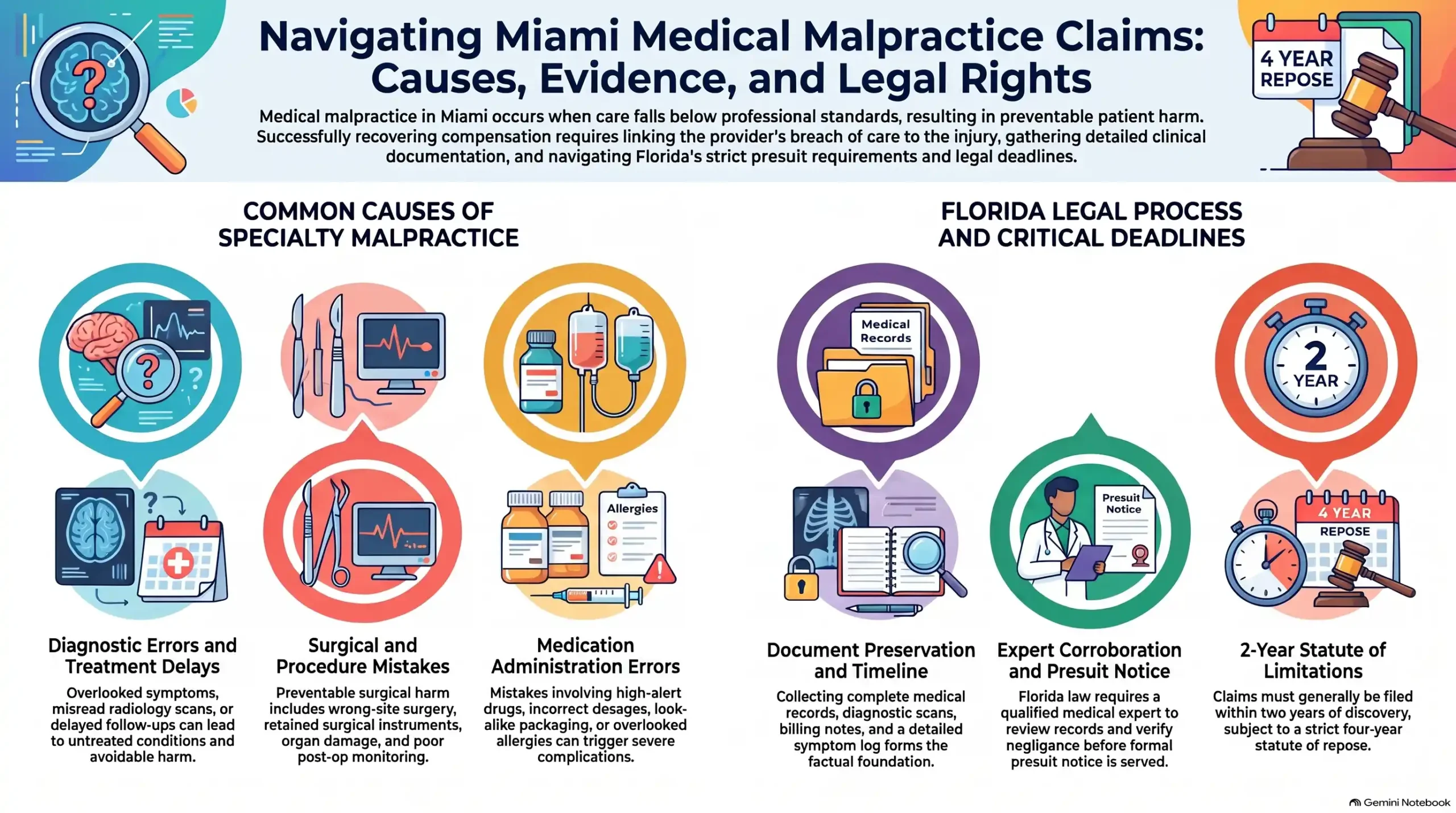
Common causes of medical malpractice include diagnostic errors, surgical mistakes, and medication errors that may lead to preventable patient harm. Delayed treatment can also worsen a condition when clinicians fail to act within a reasonable timeframe. The circumstances and applicable standards of care vary by medical specialty and condition.
Diagnostic Errors
When a serious condition is not recognized promptly, a patient may lose access to treatment that could limit harm or improve the outcome. Diagnostic errors can occur when symptoms are overlooked, test results are misinterpreted, or follow-up is delayed. In Miami, these failures may arise across specialties, including emergency medicine, primary care, and oncology. Radiology misreads can cause fractures, tumors, or internal injuries to go undetected, while pathology errors may lead to an incorrect diagnosis or missed disease. Other contributing factors include incomplete medical histories, inadequate communication among providers, and failure to order appropriate testing. A delayed or incorrect diagnosis does not automatically establish malpractice; the care must also fall below the applicable professional standard and cause harm. Careful review of records and expert analysis can help determine whether an error was preventable.
Surgical Mistakes
Surgical errors can cause serious injuries even when a procedure is medically necessary. In Miami, patients may experience preventable harm when surgical teams fail to follow established safety practices or communicate essential information. Wrong-site surgery, such as operating on the wrong body part or patient, may result from inadequate verification before an operation. Retained surgical instruments can cause infection, pain, or further complications and may require another procedure to remove them.
Other mistakes include damaging nearby organs or nerves, performing an operation without proper planning, and failing to monitor a patient’s condition during recovery. Not every poor outcome indicates malpractice; an error generally must involve a departure from accepted professional standards that causes injury. Careful review of medical records and surgical procedures can help determine whether preventable mistakes occurred and support patients seeking accountability.
Medication Errors
Medication errors can cause serious harm when a drug is prescribed, dispensed, or administered incorrectly. In Miami healthcare settings, these mistakes may involve an incorrect dose, the wrong medication, an overlooked allergy, or a failure to review a patient’s existing prescriptions. Look-alike packaging can contribute to selection errors when medications with similar names or containers are stored near one another. High-alert medications, including insulin and anticoagulants, require careful handling because even a small mistake may lead to severe consequences. Errors can occur at any stage, from prescribing and pharmacy preparation to administration and monitoring. Clear communication among clinicians, pharmacists, patients, and caregivers, along with accurate records and established safety checks, helps reduce preventable risks. When a medication error causes injury, a review may clarify whether appropriate professional standards were followed.
Delayed Treatment
Delayed treatment can worsen an illness or injury when warning signs are missed, test results are not reviewed promptly, or necessary care is postponed. In Miami, delays may arise when clinicians fail to recognize a patient’s changing condition, communicate urgent findings, or arrange timely expert evaluation. Breakdowns during a care handoff can also leave important information unavailable to the receiving team, increasing the risk that needed treatment will be overlooked.
Clear documentation, prompt communication, and reliable follow-up scheduling help support continuity of care. When a provider does not act on symptoms or diagnostic results within a reasonable timeframe, a patient may experience avoidable complications or reduced treatment options. A medical malpractice review may examine whether the delay fell below accepted professional standards and whether earlier intervention could have changed the outcome. These assessments focus on records, clinical circumstances, and resulting harm.
Don’t Wait. Call Our Florida Personal Injury Lawyers Now!


Legal Rights of Miami Medical Malpractice Specialty & Condition Malpractice Injury Victims
Miami medical malpractice victims may have legal rights when a healthcare provider’s negligence causes injury, regardless of the medical specialty involved or the condition being treated. These rights can help patients and families seek accountability, address losses, and support safer care for others.
Available options depend on the facts, applicable Florida law, and deadlines.
- Pursue compensation: An injured patient may seek damages for medical expenses, lost income, future care needs, and other legally recognized harm. A representative may act for a patient who cannot manage the process.
- Obtain and protect information: Patients may request relevant medical records and expect Patient confidentiality. Records can help clarify treatment decisions while privacy protections remain important.
- Review consent and legal options: Informed consent requires appropriate disclosure of material risks and alternatives. A patient may consult qualified counsel to assess whether rights were violated, understand procedural requirements, and evaluate possible claims.
Timely advice can preserve evidence and clarify available remedies. Each matter requires an individual review; no outcome is guaranteed.
Why Do Miami Medical Malpractice Specialty & Condition Malpractice Injuries Happen?
Understanding possible legal rights also requires examining how preventable medical injuries occur. In Miami, harm may arise when a provider fails to recognize symptoms, misreads test results, or delays treatment for a condition requiring timely care. Specialty-related errors can also occur when a clinician lacks relevant training or overlooks established standards for a particular diagnosis or procedure.
Systemic conditions may contribute to individual mistakes. Provider credentialing helps confirm that clinicians have appropriate qualifications and experience, while inadequate review can leave patients exposed to care beyond a provider’s competence. Hospital understaffing may increase workloads, disrupt communication, and limit time for careful monitoring. These pressures can affect medication administration, discharge decisions, and coordination among experts.
Other contributing factors include incomplete medical records, unclear handoffs, equipment problems, and failures to follow safety protocols. Not every poor outcome indicates negligence, since some conditions remain difficult to treat. However, preventable harm may occur when a provider or facility fails to meet the applicable standard of care.
What Should You Do After a Miami Medical Malpractice Specialty & Condition Malpractice Injury?
After a suspected medical malpractice injury, the affected person should seek prompt medical care to address immediate health needs and document the condition. They should preserve relevant medical records, test results, prescriptions, and communications with healthcare providers. Consulting a Miami medical malpractice lawyer can help clarify legal options and protect important deadlines.
Seek Immediate Medical Care
When a medical error causes a new or worsening injury, prompt evaluation by an independent healthcare provider can help protect the patient’s health and clarify the needed treatment. Emergency symptoms, including severe pain, difficulty breathing, sudden weakness, confusion, or uncontrolled bleeding, require immediate attention. The patient should call 911 or go to the nearest emergency department rather than wait for a routine appointment. For less severe concerns, an urgent evaluation by a qualified clinician can identify complications and prevent further harm. The patient should explain the suspected error, describe when symptoms began, and provide relevant details about recent procedures, medications, or treatment. A clinician can assess the condition, recommend appropriate care, and arrange follow-up when needed. Seeking timely medical help supports the patient’s recovery and reduces risks to others.
Preserve Medical Records
To support an accurate review of a suspected medical error, the patient should preserve records related to the care and resulting injury. These may include discharge instructions, test results, prescriptions, appointment summaries, billing statements, and messages exchanged with health care providers. Request copies from each facility and clinician involved, including records from follow-up treatment. The patient should keep original documents unchanged and store copies securely, noting dates and sources. A personal timeline of symptoms, treatments, and communications can help organize the information without replacing official records. Record retention practices vary, so requests should be made promptly, and confirmation of receipt should be retained. If a record appears incomplete or inaccurate, the patient should document the concern and preserve the version received. Careful amendment detection can help identify later changes while maintaining a clear record history.
Consult a Malpractice Lawyer
Preserved medical records can help a Miami malpractice lawyer assess whether a provider’s conduct may have caused an injury and identify the steps needed to evaluate a potential claim. A prompt consultation can clarify deadlines, explain available options, and help the injured person make informed decisions while protecting the ability to serve family and community responsibilities.
Consultation preparation may include organizing records, test results, bills, a treatment timeline, and questions about the injury’s effects. The lawyer may need details about providers, facilities, follow-up care, and communications. Accurate information helps counsel assess whether further review by a qualified medical professional is appropriate.
Attorney selection should focus on experience with medical malpractice claims, clear communication, and a careful explanation of fees and procedures. The injured person should ask how the firm evaluates cases and what information is needed next.
Critical Evidence in a Miami Medical Malpractice Specialty & Condition Malpractice Injury Case
A Miami medical malpractice claim may depend on evidence showing what care was provided, when decisions were made, and whether the treatment met accepted standards.
Essential evidence commonly includes:
- Medical records and diagnostic imaging
- Expert testimony on the applicable standard of care
- A treatment timeline documenting symptoms, decisions, and outcomes
Medical Records
Medical records often provide the clearest evidence of how a patient’s condition was assessed and treated. They may document symptoms, examination findings, diagnoses, medications, test results, and follow-up instructions. In a Miami medical malpractice case, these entries can help establish the sequence of care and show whether important information was recorded or omitted. Reviewing the complete file, including nursing notes, imaging, laboratory reports, and discharge documents, may reveal inconsistencies or gaps relevant to the patient’s injury.
Record retention practices affect whether necessary documents remain available when a claim is evaluated. Privacy safeguards also matter, because records contain sensitive personal information and must be handled securely. Patients or authorized representatives may request copies, while providers should preserve records according to applicable requirements. Careful organization helps confirm that the patient’s experience is accurately represented and that concerns can be assessed on a reliable factual basis.
Expert Testimony
When a Miami medical malpractice claim involves a specific specialty or condition, expert testimony can help explain whether the care met the applicable professional standard. A qualified expert may clarify how a reasonably careful practitioner in the same field would have acted under similar circumstances. This analysis can help connect the medical evidence to the alleged error and its effects on the patient.
Expert qualifications matter because the witness should have relevant training and experience to address the specialty or condition at issue. Counsel may review credentials, clinical background, and familiarity with applicable standards before selecting an expert. Testimony preparation can include reviewing records, identifying central opinions, and preparing the witness to explain intricate issues in clear, balanced terms. Reliable testimony supports a fair evaluation of the claim and helps decision-makers understand the evidence without overstating conclusions.
Diagnostic Imaging
Diagnostic imaging can provide crucial evidence in a Miami medical malpractice case involving a suspected diagnostic or treatment error. X-rays, CT scans, MRIs, and other studies may reveal injuries, disease, or findings that were overlooked or misread. A careful review can compare the images with the radiology report and assess whether the conclusions were supported by the visible evidence. Radiology image interpretation may also be evaluated against accepted professional standards and the patient’s symptoms and clinical circumstances. The quality of the study also matters. Imaging equipment calibration, image acquisition, and record preservation can affect whether a scan was reliable and suitable for diagnosis. Qualified reviewers may help clarify these issues, supporting a fair assessment of whether a preventable error occurred and whether it caused harm to the patient.
Treatment Timeline
A treatment timeline can show how a patient’s condition changed and whether care responded appropriately at each stage. In a Miami medical malpractice case, records from appointments, procedures, and follow-up visits can help establish the sequence of events. Appointment chronology may reveal delays in treatment, missed warning signs, or gaps in communication among providers. It can also show whether clinicians acted promptly after symptoms worsened or test results raised concerns.
Recovery milestones provide another measure of the care received. Notes documenting pain, mobility, medication changes, and new symptoms may indicate whether a patient improved as expected or required additional intervention. When the documented course differs from accepted practices, the timeline may help clarify where care fell short and how that failure contributed to injury. Accurate records allow reviewers to assess the evidence carefully and identify questions requiring further investigation.
Don’t Wait. Call Our Florida Personal Injury Lawyers Now!
Long-Term Effects of Miami Medical Malpractice Specialty & Condition Malpractice Injuries
Medical malpractice injuries may leave lasting physical limitations that affect a person’s mobility, independence, or ability to work. They can also cause ongoing emotional distress, including anxiety or depression, that requires continued support. Depending on the severity of the harm, long-term care needs may include rehabilitation, medication, or assistance with daily activities.
Lasting Physical Limitations
When negligent medical care causes lasting physical limitations, the effects may extend well beyond the initial injury. A patient may experience reduced mobility, chronic weakness, impaired coordination, or difficulty completing routine tasks. These changes can affect independence and make it harder to care for family members, contribute to community life, or continue serving others in a chosen role.
Rehabilitation, assistive services, and Adaptive equipment may help address practical needs, while workplace accommodations can support a safe return to employment. The appropriate measures depend on the nature and severity of the limitation, the patient’s daily responsibilities, and the expected course of recovery. Some individuals require ongoing treatment or modifications to their homes and work environments. Medical records, expert assessments, and documented functional changes can help clarify the injury’s long-term impact and the support required.
Ongoing Emotional Distress
Lasting physical limitations may also contribute to ongoing emotional distress after negligent medical care. A patient may experience persistent anxiety, sadness, frustration, or loss of confidence while adjusting to changes in health and daily life. These reactions can affect concentration, sleep, and participation in activities that once provided meaning. Emotional coping may become more difficult when symptoms continue or when the patient questions whether proper care could have prevented the injury. Family members and friends may also feel uncertainty as they try to offer support, and relationship strain can arise when responsibilities or communication patterns change. Access to counseling and supportive conversations may help patients and loved ones address these challenges. Recognizing emotional effects as part of the injury can support more informed decisions and encourage compassionate treatment throughout recovery.
Long-Term Care Needs
Depending on the severity of an injury, negligent medical care may leave a patient needing ongoing assistance long after initial treatment ends. Long-term needs can include help with bathing, dressing, mobility, medication management, and transportation to follow-up appointments. Families may need to assess Home accessibility and add ramps, grab bars, or other modifications that support safe movement and preserve the patient’s independence where possible. Caregiver coordination can help make certain that relatives, home health aides, and medical providers understand their responsibilities and share relevant updates. A consistent care plan may reduce avoidable complications and help promptly identify changes in the patient’s condition. These arrangements can require substantial time and financial resources. Documented care needs, expenses, and professional recommendations may help clarify the lasting effects of an injury and support informed decisions about future assistance.
Proving Liability in Miami Medical Malpractice Specialty & Condition Malpractice Injury Cases
Proving liability in a Miami medical malpractice case requires evidence that a health care provider failed to meet the applicable standard of care and that the failure caused the patient’s injury. Establishing that connection often requires a careful review of medical records, test results, treatment decisions, and the timeline of care. Qualified medical experts may explain what a reasonably competent provider would have done under similar circumstances and how the departure contributed to harm.
The responsible party may be a physician, nurse, hospital, or another health care professional, depending on the facts. In some cases, Provider credentialing and hospital privileging records may help clarify whether a facility properly evaluated a clinician’s qualifications and authorized scope of practice. Such records do not establish liability on their own, but they may inform the investigation.
Evidence can include witness statements, diagnostic materials, and documentation of follow-up care. A thorough, objective assessment helps identify responsible conduct and supports accountability while respecting the patient’s need for reliable care.
Dealing With Insurance Companies After a Miami Medical Malpractice Specialty & Condition Malpractice Injury
After a suspected medical error in Miami, insurers may contact the patient or request records while evaluating a potential claim. Their questions may concern treatment, symptoms, providers, and the effects of the injury. Patients can respond carefully, keep copies of correspondence, and avoid guessing about details or making broad statements before understanding their significance.
Claim adjusters represent the insurer’s interests, not the patient’s. A request for a recorded statement, medical authorization, or settlement discussion may have consequences, so patients may benefit from obtaining independent legal guidance before responding. Medical records can contain sensitive information, and an authorization should be reviewed to understand its scope and duration.
An attorney can communicate with insurers, help preserve relevant documents, and explain how coverage and policy limits may affect available compensation. Patients should continue appropriate medical care and retain bills, treatment records, and written communications. Clear, consistent documentation can support accurate evaluation while allowing the patient to focus on recovery and ongoing responsibilities to family, work, and community.
What to Expect During a Miami Medical Malpractice Specialty & Condition Malpractice Injury Claim Process
A Miami medical malpractice claim typically begins with an initial case review to assess the facts and potential legal issues. The process may then involve collecting medical records, obtaining expert review, and providing any required notice. Depending on the evidence and the parties’ positions, the claim may proceed through negotiation or litigation.
Initial Case Review
During an initial case review, a Miami medical malpractice lawyer assesses the available records, the reported injury, and the care provided to determine whether the facts may support a claim. The review considers whether a provider’s conduct fell below accepted standards and whether that conduct appears connected to the harm. This preliminary assessment helps clarify Case Eligibility without promising a particular result. The lawyer may ask about the treatment timeline, the patient’s condition before and after care, and the practical effects of the injury. These details can help identify questions requiring further evaluation by qualified medical professionals. The Review Timeline depends on the matter’s intricacy and the information already available. The review also gives the patient or family an opportunity to understand possible next steps and make informed decisions about pursuing accountability and protecting others.
Medical Record Collection
Once the initial review identifies records needed to assess the claim, the Miami medical malpractice lawyer may help the patient or family obtain relevant medical files. A Record request may be sent to hospitals, physicians, clinics, pharmacies, and other providers involved in the patient’s care. The request can cover treatment notes, test results, imaging, billing records, and discharge instructions, depending on the circumstances. Patients or authorized representatives may need to sign releases and provide identification before providers disclose protected information. Collection can take time, particularly when records are held by multiple facilities or older files require retrieval. The legal team may use document tracking to record request dates, follow up on delays, and identify missing materials. Organized records help preserve an accurate account of care and support a careful, responsible review of the patient’s concerns.
Expert Review And Notice
Before a medical malpractice claim proceeds, a qualified medical expert who practices in a relevant specialty typically reviews the records. The expert assesses whether the care provided met accepted professional standards and whether a departure may have caused the patient’s injury. This review helps distinguish an unfavorable outcome from potentially negligent care and identifies questions requiring further investigation. Expert corroboration may also be needed to support the claim under Florida’s pre-suit requirements. If the review supports proceeding, the claimant generally serves a pre-suit notice on the healthcare provider, accompanied by required information and documentation. The notice gives the provider an opportunity to investigate the allegations before a lawsuit is filed. These steps promote careful, evidence-based claims and help ensure that patient safety concerns are presented responsibly and with appropriate professional support.
Negotiation Or Litigation
After pre-suit review and notice, a Miami medical malpractice claim may proceed through settlement negotiations or litigation, depending on the evidence and the parties’ positions. During negotiations, counsel presents medical records, expert opinions, and documented losses to support a reasoned settlement request. A careful Demand strategy accounts for the patient’s ongoing care needs, lost income, and other legally recoverable harm while recognizing the strengths and limits of the evidence. The healthcare provider or insurer may respond with questions, counteroffers, or a denial. If the parties cannot reach a fair agreement, the claimant may file suit, subject to applicable deadlines and procedural requirements. Litigation involves discovery, depositions, expert testimony, and potentially trial. Throughout either path, counsel’s courtroom advocacy and preparation can help protect the patient’s interests and support accountability, while the final outcome remains uncertain.
Compensation for Miami Medical Malpractice Specialty & Condition Malpractice Injury Damages
Compensation for medical malpractice in Miami depends on the nature of the provider’s error, the resulting injury, and the losses the patient can document. A claim may address the practical consequences of negligent care, including additional treatment, rehabilitation, assistive services, and changes to a patient’s ability to manage daily responsibilities. The evidence must connect those needs to the alleged malpractice rather than to an unrelated condition.
Damage Valuation considers records, professional assessments, treatment plans, and credible descriptions of how the injury affects the patient’s life. For people who rely on others or provide care to family and community members, documentation may clarify support needs and the impact of lost independence. Careful valuation helps present the full scope of harm without overstating it.
Benefit Offsets may also require review. Certain payments or insurance arrangements can affect how a recovery is calculated, depending on applicable law and the facts. An attorney can assess relevant records and explain how these considerations may shape a claim.
Economic vs Non-Economic Damages in Miami Medical Malpractice Specialty & Condition Malpractice Cases
Medical malpractice damages may include economic losses, such as medical expenses, lost income, and future care costs. Non-economic damages address harm that is not readily measured in financial terms, including pain, disability, and loss of quality of life. Establishing either category generally requires clear evidence linking the injury to the provider’s conduct and supporting the claimed amount.
Economic Losses
When malpractice by a Miami healthcare provider causes injury, economic losses reflect the measurable financial consequences of that harm. These damages may include medical expenses for corrective treatment, rehabilitation, medication, and necessary follow-up care. Records such as invoices, payment statements, and provider reports can help establish the costs already incurred and support estimates of future treatment needs.
Lost wages may also be recoverable when an injury prevents a patient from working during recovery. If the harm limits the ability to perform a job or reduces future work opportunities, diminished earning capacity may be considered. Calculations can account for the patient’s occupation, income history, expected career path, and the duration of work limitations. A careful assessment helps distinguish documented financial losses from projections and provides a clear basis for evaluating the economic impact of the alleged malpractice.
Non-Economic Harm
Beyond documented financial losses, medical malpractice may cause non-economic harm, including pain, emotional distress, loss of independence, or reduced ability to enjoy daily activities. These effects can alter a person’s relationships, routines, and sense of personal dignity. Emotional suffering may include anxiety, grief, or lasting distress associated with an injury or an unexpected change in health. A patient who can no longer participate in family responsibilities, community service, or meaningful activities may experience diminished enjoyment even when financial costs are addressed. Non-economic damages recognize these personal consequences, which differ from measurable expenses such as treatment bills or lost income. Their significance depends on how the harm affects the individual’s life and well-being. In Miami malpractice cases, this category may complement economic damages, reflecting the broader human impact of negligent medical care.
Proving Damages
Establishing damages in a Miami medical malpractice case requires evidence linking the alleged negligence to specific losses. Economic damages may include medical bills, rehabilitation costs, lost income, and reduced earning capacity. Damage documentation, such as invoices, employment records, and expert assessments, can help demonstrate the amount and cause of these losses. For patients facing lasting injuries, future expenses may include continuing treatment, assistive services, or necessary changes to daily living arrangements. Non-economic damages address harm that cannot be measured by receipts, including pain, emotional distress, and diminished quality of life. Evidence may include medical records, testimony from the patient and family, and professional opinions about the injury’s effects. Clear, consistent proof helps a court assess both categories fairly while recognizing the practical needs of patients and their caregivers.
When a Miami Medical Malpractice Specialty & Condition Malpractice Injury Case Goes to Trial vs Settlement
A Miami medical malpractice case involving a particular medical specialty or condition may resolve through settlement or proceed to trial, depending on the evidence, the extent of the injury, and the parties’ willingness to accept the available terms. Settlement can provide a defined resolution and avoid the uncertainty, expense, and demands of a courtroom proceeding. It may also allow injured patients and families to focus on recovery and care responsibilities. Settlement leverage may depend on well-supported evidence, clear documentation of losses, and a credible account of how the care affected the patient. Negotiations can continue as the parties evaluate expert opinions and the strengths and limitations of their positions.
If the parties cannot agree on fair terms, the case may proceed to trial. Trial preparation includes organizing records, preparing witnesses, and presenting evidence about the care, injury, and resulting harm. A judge or jury then evaluates the disputed issues and determines the outcome. The decision between settlement and trial depends on case-specific circumstances and a careful review of available options.
Don’t Wait. Call Our Florida Personal Injury Lawyers Now!
Florida Laws That May Affect Your Miami Medical Malpractice Specialty & Condition Malpractice Case
Florida law sets deadlines, procedural requirements, and standards that may shape a Miami medical malpractice case involving a particular specialty or condition. These rules help evaluate whether care met applicable professional standards and whether a claim can proceed. They also support fair review of concerns raised by patients and families seeking accountability and safer care.
- Pre-suit screening: Before filing, a claimant generally must investigate the allegations and notify the prospective defendant. A qualified medical expert’s opinion is required to support the claim, allowing the parties to assess the evidence before litigation.
- Standards of care: Florida law evaluates whether a provider acted as a reasonably careful practitioner in the same specialty, under similar circumstances. The relevant condition, treatment, and clinical setting may affect that analysis.
- Provider immunity: Certain providers, including some public employees, may receive immunity when acting within their official duties. The applicable protections depend on the provider’s role and circumstances, and may affect who can be held responsible.
Careful legal review can clarify these requirements and preserve a patient’s ability to pursue a well-supported claim.
The Statute of Limitations for Miami Medical Malpractice Specialty & Condition Malpractice Injury Cases
Beyond pre-suit requirements and standards of care, the filing deadline can determine whether a Miami medical malpractice claim proceeds. Florida generally requires a medical negligence action to be filed within two years after the incident is discovered, or should have been discovered through reasonable diligence. This discovery rule may affect when the filing period begins, particularly when an injury or its connection to treatment was not immediately apparent.
A separate statute of repose generally bars claims more than four years after the incident, even if the injury is discovered later. Certain Deadline exceptions may apply, including cases involving fraud, concealment, or intentional misrepresentation, and claims brought on behalf of a minor may follow special rules. Florida law also generally requires pre-suit investigation and notice before filing, which can affect the time available. Because deadlines depend on the facts and statutory requirements, delay may permanently prevent a patient or family from pursuing accountability. Careful attention to the applicable dates helps preserve the opportunity to seek a fair resolution.
How a Miami Medical Malpractice Specialty & Condition Malpractice Lawyer Can Help You
An experienced Miami medical malpractice lawyer can evaluate whether a patient’s injury may have resulted from a failure to meet the applicable standard of care. The lawyer can explain how the relevant specialty’s practices apply to the facts and identify the evidence needed to assess responsibility. Specialty knowledge supports a careful review of intricate medical records and professional opinions.
A lawyer may assist by:
- Organizing records, treatment timelines, and other documentation to clarify how care unfolded.
- Consulting qualified medical professionals who can assess whether the provider’s conduct departed from accepted standards and contributed to the injury.
- Explaining legal options, evaluating documented losses, and presenting the matter through appropriate proceedings.
This work can help patients and families pursue accountability while preserving an accurate record of the care received. Patient advocacy also involves communicating clearly, protecting confidential information, and treating affected individuals with respect. By coordinating legal and medical analysis, counsel can help ensure concerns are considered fairly and that any claim is supported by reliable evidence. The approach should remain focused on facts, applicable law, and the patient’s needs.
When to Contact a Miami Medical Malpractice Specialty & Condition Malpractice Lawyer
When a patient experiences an unexpected injury, worsening condition, or delayed diagnosis after medical care, contacting a Miami medical malpractice lawyer promptly can help clarify whether the circumstances warrant further review. A consultation may be appropriate when symptoms persist despite treatment, a diagnosis changes without explanation, or a procedure leads to complications that were not adequately discussed. Early guidance can help patients and families understand what information may be relevant and how to preserve it.
Recognizing Subtle Symptoms is important because signs of a medical error may emerge gradually, rather than as an immediate crisis. Patients can record changes in their condition, follow-up appointments, and communications with providers. Family Advocacy may also help when a patient is too ill, overwhelmed, or unable to communicate concerns independently. Relatives can help organize records and ask clear questions about care.
Prompt contact is especially useful when a deadline may apply, or records could become difficult to obtain. Seeking an initial review does not establish that malpractice occurred; it allows concerns to be assessed carefully and responsibly.
Why You Need an Experienced Miami Medical Malpractice Specialty & Condition Malpractice Lawyer
Because medical malpractice claims often involve detailed records, clinical standards, and strict filing deadlines, an experienced Miami medical malpractice lawyer can help assess the evidence and explain the available options. These cases may involve care delivered across several specialties, making it necessary to understand the standards that applied at each stage. Specialty-specific experience can help counsel identify departures from accepted practice and distinguish preventable errors from known risks or unfavorable outcomes.
A lawyer can also coordinate review of medical records and consult qualified professionals to clarify how a suspected error affected a patient. Complicated causation analysis may be necessary when an injury has several possible causes, preexisting conditions, or a complicated treatment history. Careful evaluation helps connect the alleged breach to the harm and supports an evidence-based claim.
For patients and families seeking accountability, informed legal guidance can reduce uncertainty and preserve their ability to pursue appropriate remedies. Counsel can also manage communications and procedural requirements, allowing injured individuals to focus on treatment, recovery, and family responsibilities.
How to Choose the Right Miami Medical Malpractice Specialty & Condition Malpractice Lawyer for Your Case
Selecting the right Miami medical malpractice lawyer requires more than reviewing general experience; the attorney should understand the medical specialty involved and the condition or injury at issue. A focused review helps identify counsel prepared to assess whether accepted standards of care were followed and how a medical error affected the patient.
Potential clients can examine an attorney’s record with cases involving similar procedures, diagnoses, or injuries. Board certification, where applicable, may provide information about professional qualifications, but it should be considered alongside relevant case experience and knowledge of medical evidence. The attorney should also explain the legal process, potential challenges, and realistic outcomes without making unsupported promises.
Communication style matters, particularly for people balancing recovery with the demands of a claim. A lawyer should listen carefully, answer questions clearly, and provide timely updates. References, disciplinary history, and a direct discussion of fees can further inform the decision. Choosing carefully supports a fair evaluation of the claim and helps families pursue accountability while protecting their interests.
About The Law Offices of Anidjar & Levine
The Law Offices of Anidjar & Levine represents people in Miami and throughout Florida harmed by medical negligence.
The firm handles claims involving injuries linked to errors in diagnosis, treatment, surgery, and other aspects of medical care.
Its attorneys review each case’s circumstances, explain available legal options, and work to hold responsible parties accountable when evidence supports a claim.
Firm history reflects a practice focused on representing injured individuals and families across Florida.
Medical malpractice cases can involve complex records, expert opinions, and strict filing deadlines, so the firm investigates claims and communicates with clients about significant developments.
This work can help people understand their rights while they manage the consequences of an injury.
Community involvement also forms part of the firm’s presence in Florida.
By serving local residents and supporting community initiatives, the firm maintains ties to the people it represents.
Its role is to provide legal guidance while pursuing fair outcomes through the civil justice system.

Frequently Asked Questions
Can I Pursue a Claim if I Signed a Hospital Consent Form?
Yes, signing a hospital consent form does not automatically prevent a patient from pursuing a medical malpractice claim. Consent generally acknowledges known risks of a procedure; it does not excuse negligent care or establish that the patient received adequate Informed Consent. Consent Form Limits depend on the circumstances, including what was explained and whether care met professional standards. A qualified attorney can review records, identify potential harm, and assess applicable filing deadlines.
Can Family Members File a Claim on Behalf of a Patient Who Cannot Act?
Family members may sometimes pursue a claim for a patient who cannot act, but their relationship alone does not automatically grant authority. A court-appointed guardian or another person with valid Legal guardianship may have representative authority to make decisions and act for the patient. The proper process depends on the patient’s capacity, the family member’s legal status, and applicable state law. Prompt legal guidance can help protect the patient’s interests and preserve deadlines.
Are Medical Malpractice Claims Confidential?
Medical malpractice claims are not automatically confidential. Court filings and hearings are generally public, although a judge may restrict access to specific records when privacy or safety concerns justify it. Settlement confidentiality may be included in an agreement, limiting disclosure of settlement terms, but it does not necessarily seal the court record or prevent all discussion of the case. Patients should review proposed terms carefully and obtain legal advice before agreeing to confidentiality obligations.
Can a Doctor Face Professional Discipline Separately From a Civil Lawsuit?
Yes. A doctor may face professional discipline independently of a civil lawsuit because the proceedings serve different purposes. A civil case addresses compensation for harm, while a medical board investigation examines whether the physician violated professional standards or licensing rules. Depending on the evidence and applicable law, the board may impose corrective measures, fines, or suspend the physician’s license. The outcome of either proceeding does not automatically determine the result of the other.
Does a Malpractice Claim Affect My Ongoing Medical Care?
A malpractice claim does not automatically end a patient’s ongoing medical care, though changes may occur if the provider withdraws or the relationship becomes impractical. Continuity of care should remain a priority, and the patient can request records, referrals, and a handoff plan when needed. Clear provider communication can help address treatment needs and preserve accurate documentation. If care is interrupted or urgent symptoms arise, the patient should promptly seek another qualified clinician.
—————————
Medical malpractice injuries can affect a person’s health, independence, and financial stability.
When a medical professional’s conduct may have fallen below accepted standards, a careful review of the records and circumstances can help clarify legal options.
An experienced Miami medical malpractice lawyer can assess the claim, explain applicable deadlines, and pursue compensation supported by the evidence.
The Law Offices of Anidjar and Levine can provide guidance tailored to the facts of each case.
For help with other injury matters, consult a Miami Personal Injury Lawyer.

