

A Miami medical malpractice surgical errors lawyer can review whether a preventable departure from accepted care caused an injury. The Law Offices of Anidjar and Levine can evaluate concerns such as wrong-site surgery, anesthesia mistakes, retained instruments, and delayed treatment of complications. A review may include medical records, surgical notes, imaging, and expert opinions to distinguish negligence from an unavoidable complication. Patients should seek prompt medical care and preserve relevant records. Florida filing deadlines may apply. Learn more about a Miami Personal Injury Lawyer and potential legal options.
Main Takeaways
- A Miami surgical-error lawyer can assess whether a preventable departure from accepted medical standards caused your injury.
- Potential claims may involve wrong-site surgery, anesthesia errors, retained instruments, or inadequate postoperative care.
- Seek prompt medical attention for complications; call emergency services for severe bleeding, breathing difficulty, chest pain, or confusion.
- Preserve medical records, test results, discharge instructions, provider communications, and a dated journal of symptoms and recovery.
- A legal review may use surgical records, imaging, and qualified medical experts to evaluate liability, causation, and damages.


How We Can Help With Your Miami Medical Malpractice Surgical Errors Injury Claim
A Miami medical malpractice lawyer can help patients pursue a surgical error claim by reviewing medical records, consulting qualified medical experts, and evaluating whether the care fell below accepted professional standards. This assistance can help families understand available legal options while preserving their ability to make informed decisions.
Counsel may gather relevant documents, organize evidence, and assess how an injury has affected the patient’s health, work, and daily responsibilities. A careful review can clarify Claim eligibility and identify information that may require further investigation. The lawyer can also explain important deadlines and procedural requirements, helping clients avoid preventable delays.
Consistent attorney communication allows patients and families to receive updates, ask questions, and understand the status of their matter. Counsel may coordinate with medical professionals and other parties while protecting confidential information and accurately presenting the client’s concerns. By managing legal tasks with diligence and respect, a lawyer can reduce administrative burdens and help injured patients focus on treatment, recovery, and supporting those who depend on them.
OUR CONSULTATIONSARE FREE
START YOUR FREE CASE REVIEW

Understanding Miami Medical Malpractice Surgical Errors Injury Cases
When a surgical procedure results in an unexpected injury, determining whether malpractice occurred requires more than examining the outcome alone. A careful review considers the patient’s condition, the treatment provided, and the circumstances surrounding the procedure. An injury, by itself, does not establish that a medical professional acted improperly.
A claim generally examines whether the responsible providers followed applicable Surgical standards and whether any departure from those standards caused harm. Records, clinical notes, imaging, and testimony from qualified medical professionals may help clarify what occurred and whether the injury could have been avoided through appropriate care. The analysis may also consider whether the patient received adequate information about the procedure, its material risks, and available alternatives. Informed consent is relevant to that assessment, although it does not replace the separate review of the care delivered.
Understanding these issues can help patients and families seek accountability while supporting fair, evidence-based evaluation of a difficult medical experience.
Common Causes of Miami Medical Malpractice Surgical Errors
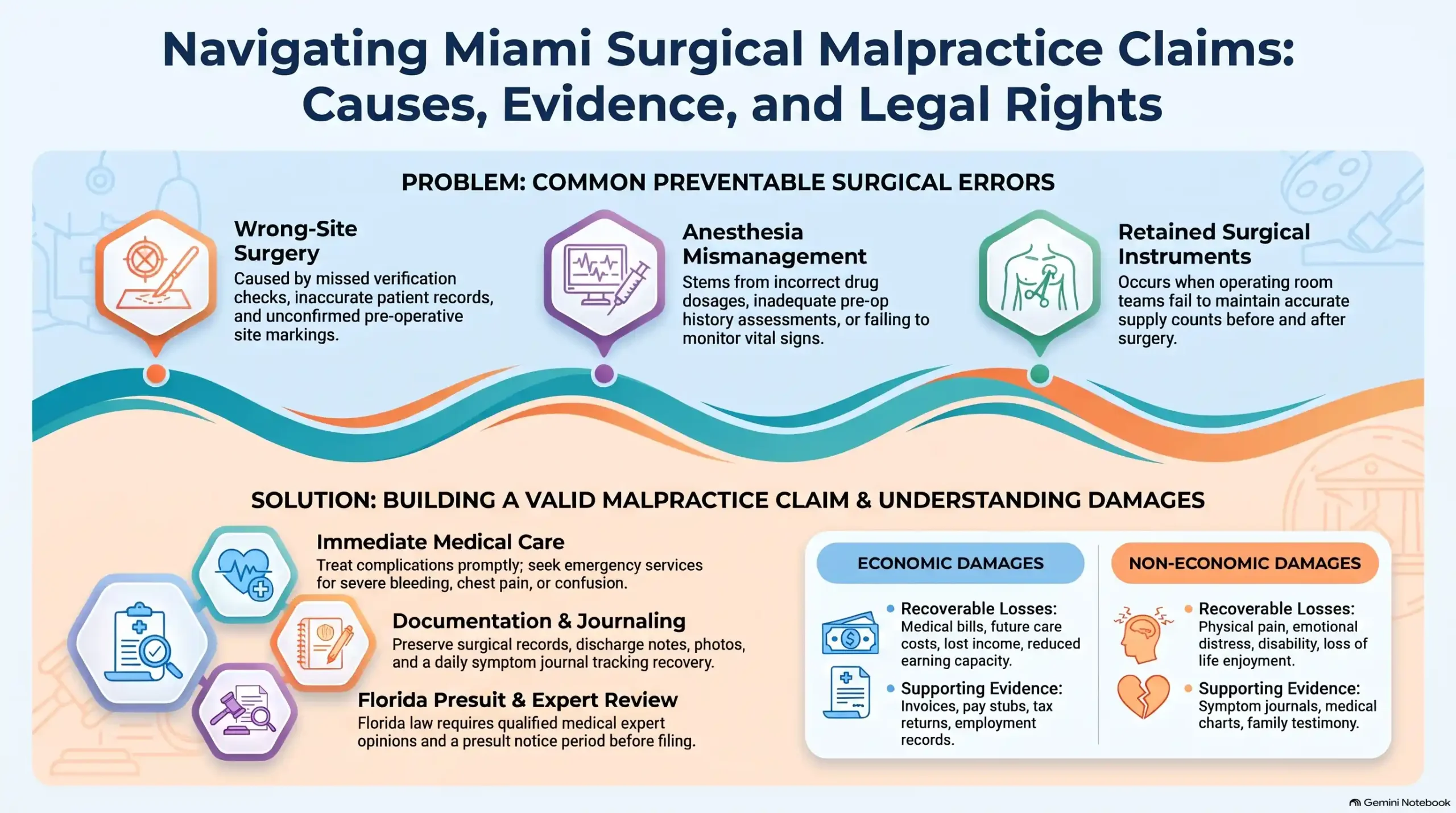
Surgical errors in Miami may arise from failures at several stages of care, including wrong-site surgery and anesthesia errors. Retained surgical instruments can also indicate a breakdown in operating-room procedures. Negligent postoperative monitoring or treatment may further contribute to patient harm.
Wrong-Site Surgery
Wrong-site surgery occurs when a procedure is performed on the wrong body part, the wrong side, or the wrong patient, and it is generally considered a preventable medical error. These incidents may result from inaccurate records, unclear communication, scheduling mistakes, or failure to confirm the planned procedure. A patient’s safety depends on coordinated checks among the surgical team before an operation begins.
Wrong-site prevention includes marking the intended site, reviewing relevant records, and confirming the patient’s identity and procedure. Surgical Verification should involve active communication among clinicians, with discrepancies resolved before care proceeds. Similar names, incomplete consent forms, and assumptions based on prior information can undermine these safeguards. Hospitals and surgical staff are expected to follow established protocols and document critical checks. When those steps are missed, patients may face avoidable harm, additional treatment, and lasting consequences. Reviewing the circumstances can help clarify whether accepted safety practices were followed.
Anesthesia Errors
Anesthesia errors can occur before, during, or after a procedure if a patient’s condition is not properly assessed, medication is incorrectly selected or administered, or critical signs are not closely monitored. A careful review of medical history, allergies, current prescriptions, and prior reactions helps the anesthesia team identify risks and choose an appropriate plan. Medication errors may involve incorrect dosages, unsuitable drugs, or failures to account for interactions, potentially causing breathing problems, heart complications, or delayed recovery. During surgery, continuous monitoring of oxygen levels, blood pressure, and heart rate is necessary to detect changes and respond promptly. Anesthesia awareness, in which a patient becomes conscious during a procedure, is uncommon but can cause lasting distress. Clear communication, attentive monitoring, and timely intervention help protect patients and support safer care.
Surgical Instrument Retention
When a surgical instrument or other foreign object remains inside a patient after an operation, the consequences can include infection, pain, tissue damage, or the need for another procedure. Such incidents may involve a Retained Sponge, needle, clamp, or other item left in the surgical site. They can occur when teams lose track of supplies, procedures change unexpectedly, or communication breaks down during an operation. A reliable Instrument Count before and after surgery helps staff identify missing items, while clear protocols and careful coordination support patient safety. A discrepancy may require a methodical search and appropriate imaging before the procedure ends. When an object is discovered later, medical records and operating-room practices may help explain how it was overlooked. The circumstances determine whether the event reflects a preventable error.
Postoperative Negligence
Postoperative negligence can occur when a surgical team fails to provide appropriate monitoring, follow-up care, or timely treatment after a procedure. Patients may face serious harm when warning signs such as fever, worsening pain, bleeding, or breathing difficulties are overlooked. A postoperative infection may develop or worsen if clinicians fail to identify symptoms, order appropriate tests, or provide timely treatment. Clear discharge instructions and discharge monitoring are also crucial, particularly for patients at elevated risk or those recovering without close supervision. Follow-up appointments should be arranged when needed, and concerns reported by patients or caregivers should receive appropriate attention. In Miami medical malpractice cases, the relevant question is whether providers met accepted standards of care and whether a failure caused injury. Careful review of records can help clarify these issues.
Don’t Wait. Call Our Florida Personal Injury Lawyers Now!


Legal Rights of Miami Medical Malpractice Surgical Errors Injury Victims
Miami patients injured by surgical errors may have legal rights if a medical professional’s negligence caused harm. A claim may allow an injured person to seek compensation and promote accountability, while preserving respect for the care relationship. Patient advocacy can help individuals understand available options, organize records, and communicate concerns. Informed consent may also be relevant when a procedure’s risks or alternatives were not adequately explained.
Depending on the circumstances, a patient may be entitled to:
- Request and review medical records related to the procedure and subsequent treatment.
- Seek an independent medical assessment to document injuries, prognosis, and care needs.
- Pursue compensation for medical expenses, lost income, pain, and other legally recognized losses.
- File a claim within Florida’s applicable deadlines, which may depend on when you discovered the injury.
A successful claim generally requires evidence of a professional duty, a breach of the accepted standard of care, and a connection between that breach and the injury. Legal guidance can clarify deadlines, evidence requirements, and practical next steps for patients and families.
Why Do Miami Medical Malpractice Surgical Errors Happen?
Surgical errors may occur when a preventable lapse in judgment, communication, or clinical practice disrupts a patient’s care. These injuries can arise before, during, or immediately after an operation, often when safeguards intended to protect patients are missed.
Surgical team communication is vital for confirming a patient’s identity, procedure, and relevant medical history. Incomplete handoffs, unclear instructions, or failure to share changes in a patient’s condition can lead to wrong-site surgery, medication mistakes, or delayed responses to complications. Fatigue, distractions, and inadequate staffing may further impair attention and coordination.
Operating room protocols help teams verify key details, maintain sterile conditions, and account for instruments and materials. When staff members skip required checks or depart from established procedures, preventable harm may result. Errors can also stem from insufficient preparation, improper equipment use, or delayed recognition of bleeding or infection. Not every poor outcome indicates negligence; the circumstances and applicable standards of care determine whether an error was preventable.
What Should You Do After a Miami Medical Malpractice Surgical Error Injury?
After a suspected surgical error, the patient should seek immediate medical care to address urgent complications and protect their health. They should document the injury by preserving medical records, photographs, and relevant communications. A malpractice lawyer can review the circumstances and explain potential legal options.
Seek Immediate Medical Care
When a patient suspects a surgical error, prompt medical evaluation should take priority, even if the symptoms seem manageable. A qualified healthcare professional can assess the patient’s condition, identify complications, and recommend appropriate treatment. Delaying care may allow an infection, internal injury, medication reaction, or other problem to worsen. If Emergency symptoms arise, such as severe bleeding, difficulty breathing, chest pain, confusion, high fever, or rapidly increasing pain, the patient should contact emergency services or go to the nearest emergency department. For concerning but less severe changes, the patient should promptly contact the surgeon or another treating provider and request urgent evaluation. The patient should clearly describe symptoms, when they began, and any changes since surgery. Timely care supports recovery and helps protect the patient’s health while clinicians determine the safest next steps.
Document the Surgical Injury
Once immediate medical needs are addressed, careful documentation can help create a clear record of the injury and its effects. The patient can maintain a Personal journal describing pain, mobility limits, sleep disruption, and changes in daily activities. Entries should include dates, times, severity, and any factors that worsen or relieve symptoms. A symptom timeline can show how the condition developed after surgery and how it changed following treatment or new medical advice. The patient should also retain discharge instructions, prescriptions, appointment summaries, test results, and photographs of visible injuries when appropriate. Copies of communications with healthcare providers may help clarify what was reported and when. Records should remain factual and organized, without speculation about the cause. Accurate documentation can support continuity of care and help others understand the injury’s practical effects.
Contact a Malpractice Lawyer
A Miami medical malpractice lawyer can review whether a surgical injury may involve a breach of the applicable standard of care and explain the patient’s legal options. After documenting the injury, the patient or a trusted representative can arrange a confidential discussion with counsel. A Free consultation may help clarify deadlines, potential evidence, and whether an independent medical review is appropriate. The patient should provide relevant records, discharge instructions, correspondence, and a clear account of events, while avoiding speculation about the cause. Counsel can assess whether the available facts support a claim and identify steps to preserve records and protect the patient’s interests. Questions about attorney availability, fees, and communication practices can help determine whether the lawyer is suited to the matter. Prompt legal guidance may also support accountability and safer care for others.
Critical Evidence in a Miami Medical Malpractice Surgical Errors Injury Case
Evidence in a Miami surgical malpractice case can help establish what occurred, whether the care met accepted standards, and how the patient was harmed.
Essential materials may include:
- Medical records
- Surgical notes
- Expert testimony
- Injury documentation
Together, these sources can clarify the events surrounding the procedure and support an assessment of the resulting injuries.
Medical Records
How can a surgical error be evaluated when its causes and consequences are disputed? Medical records provide a crucial timeline of a patient’s condition, treatment, and recovery. They may show what symptoms were reported, which tests were performed, and how the patient responded to care. Comparing these records can help qualified reviewers assess whether treatment decisions met accepted standards and whether a delay or mistake contributed to an injury.
Complete documentation also helps clarify the harm and identify care needed afterward. Record Retention requirements can affect how long providers must preserve records, so timely requests may be important. Privacy Rights remain relevant throughout the process; records should be obtained and shared through lawful, secure channels, with appropriate authorization. Careful review supports a fair evaluation and helps protect patients while their claims are investigated.
Surgical Notes
Beyond the broader medical record, surgical notes can provide a detailed account of what occurred during an operation. These records may identify the procedure performed, the personnel present, and any unexpected events or changes to the planned approach. Operative documentation can also describe instruments, findings, and steps taken to address complications. Such details may help clarify whether the care provided matched the documented plan and accepted procedures.
An intraoperative chronology can be especially important when questions arise about timing, communication, or responses to a developing problem. Notes may show when an issue was recognized and what actions followed. Missing, inconsistent, or incomplete entries can raise questions about the sequence of events but do not establish negligence on their own. In a Miami surgical injury claim, careful review of these records can help explain what occurred and support a clear, accurate account for those affected.
Expert Testimony
In a Miami surgical error claim, qualified medical experts can help explain whether the care met accepted professional standards and whether a departure from those standards caused harm. Their analysis may clarify intricate medical decisions for a judge or jury and connect the alleged error to the outcome. Expert qualifications matter: the witness should have relevant training, experience, and knowledge of the procedure or specialty at issue. Applicable rules may also govern whether an expert may offer particular opinions. Testimony preparation typically includes reviewing surgical notes and other case materials, identifying the applicable standards, and developing clear, evidence-based explanations. Careful preparation helps guarantee opinions remain consistent with the record and withstand scrutiny. By presenting reliable testimony, experts can support a fair evaluation of the claim and help clarify what responsible care required.
Injury Documentation
Accurate injury documentation can help establish the extent of harm allegedly caused by a surgical error and how that harm affected a patient’s health. Medical records, diagnostic results, prescriptions, and follow-up notes can create a reliable account of treatment and recovery. Patients may also preserve dated photographs in a Photo chronology to show visible changes, such as swelling, bruising, or surgical-site complications. A symptom journal can record pain, mobility limits, sleep disruption, and other changes, including when they began and how they progressed. These records may help clinicians assess ongoing needs and enable legal professionals to evaluate the claimed injury. Documentation should remain factual, organized, and consistent with medical guidance. Original records and files should be retained, with copies shared only through appropriate channels, to protect privacy and support a careful review of the case.
Don’t Wait. Call Our Florida Personal Injury Lawyers Now!
Long-Term Effects of Miami Medical Malpractice Surgical Errors Injuries
Surgical errors may cause chronic pain or lasting disabilities that interfere with a person’s ability to work and manage daily activities. The effects can also include emotional and psychological distress, such as anxiety or depression. Some injuries require ongoing medical care, including additional procedures, rehabilitation, or long-term treatment.
Chronic Pain and Disability
When a surgical error causes lasting nerve damage, infection, or impaired mobility, a patient may face chronic pain and disability long after the procedure. Chronic Pain can limit walking, lifting, sleeping, or completing routine tasks, reducing a person’s independence and ability to work. Some patients require continuing medication, rehabilitation, assistive devices, or additional corrective procedures. When an injury prevents substantial daily activities or employment, it may result in Permanent Disability. The extent of impairment depends on the injury, treatment needs, and recovery prospects, and may change over time. Accurate medical records and assessments can help document the condition, its functional limits, and expected future care. A careful review may also clarify whether the harm resulted from a preventable surgical error and identify support needed for ongoing treatment and daily living.
Emotional and Psychological Effects
The effects of a surgical error may extend beyond chronic pain and physical limitations to a patient’s emotional and psychological well-being. Emotional trauma can arise when a patient experiences unexpected complications, loss of trust, or a lasting change in independence. Some individuals may develop anxiety, depression, sleep difficulties, or fear of future medical treatment. These responses can affect relationships, employment, and participation in daily life, placing additional strain on patients and their caregivers. Psychological distress may also make it harder to communicate needs or make decisions during recovery. Each person’s response is different, and the duration and severity of symptoms can vary. Recognizing these effects helps families, caregivers, and legal professionals understand the broader consequences of surgical negligence and the importance of treating affected patients with dignity, patience, and respect.
Ongoing Medical Care
After a surgical error, some patients require ongoing medical care to address complications, manage lasting symptoms, or prevent further harm. This care may involve follow-up procedures, rehabilitation, medication, or regular monitoring by experts. A clear treatment plan helps patients understand their options and identify changes that require prompt attention. Coordinated Care among surgeons, primary care providers, therapists, and other clinicians can reduce gaps in treatment and support informed decisions. Treatment Continuity is especially important when patients change providers or need care over an extended period. Medical records, referral details, and documented symptoms can help each clinician understand prior interventions and current needs. Patients may also need assistance arranging appointments and communicating concerns. Consistent, responsive care can help limit avoidable complications, preserve function, and support daily activities while lasting effects are assessed and addressed.
Proving Liability in Miami Medical Malpractice Surgical Error Injury Cases
Establishing liability in a Miami surgical error case requires evidence that the medical provider failed to meet the accepted standard of care and that this failure caused the patient’s injury. A claim may involve a surgeon, anesthesiologist, nurse, or another member of the care team, depending on the circumstances. The patient must show that a provider-patient relationship created a legal duty and that the provider’s conduct fell below professional standards. This Duty Breach may include operating on the wrong site, leaving an instrument inside the body, or failing to respond appropriately to a complication.
Causation Analysis connects the alleged error to the harm. Medical records, imaging, operative reports, and testimony from qualified medical experts can help explain what occurred and whether proper care would likely have prevented the injury. The review may also distinguish harm caused by the error from complications that can arise despite appropriate treatment. Careful evidence gathering supports a fair assessment of responsibility and helps patients and families understand the basis of a claim.
Dealing With Insurance Companies After a Miami Medical Malpractice Surgical Error Injury
When a surgical error causes injury, communication with insurers can influence how a Miami medical malpractice claim is evaluated. Insurers may request records, bills, and details about the treatment and resulting harm. Patients and families can help promote accurate communication by organizing documents and keeping copies of correspondence. Information should be reviewed carefully before it is provided, particularly when forms contain broad authorizations or questions about prior conditions.
Recorded statements may be requested soon after an injury, when the patient may not yet understand the full consequences. A statement can later be compared with medical records, so accuracy and clarity matter. Legal counsel can explain the purpose of a request and help protect the patient’s interests without delaying necessary cooperation.
Claim denials may rely on disputed facts, policy terms, or causation arguments. A denial should be reviewed alongside the available records and written explanations. Careful, respectful communication supports a fair assessment while preserving the injured person’s ability to seek appropriate remedies.
What to Expect During a Miami Medical Malpractice Surgical Errors Injury Claim Process
A Miami surgical error claim typically begins with an initial case review to assess the circumstances and potential legal issues. The investigation then examines medical records and addresses Florida’s required notice procedures. If the claim proceeds, the parties work toward resolution through settlement negotiations or, when necessary, litigation.
Initial Case Review
During an initial case review, a Miami medical malpractice lawyer evaluates whether a surgical injury may have resulted from a failure to meet the accepted standard of care. The Intake consultation gives the patient or family an opportunity to explain what happened, describe the resulting harm, and identify their immediate concerns. The lawyer may ask about the procedure, the providers involved, when the injury was discovered, and how it has affected daily life. This discussion supports an eligibility assessment, which considers whether the circumstances may justify pursuing a claim and whether the matter falls within applicable legal requirements. The lawyer can also explain potential next steps, general timelines, and how legal representation may help protect the patient’s interests. No outcome is guaranteed, and the review provides an informed basis for deciding whether to proceed.
Medical Record Investigation
Medical record investigation helps determine whether a surgical injury may have resulted from a breach of the accepted standard of care. Attorneys typically collect hospital charts, operative reports, anesthesia records, imaging, laboratory results, and discharge instructions. These materials help establish the timeline of care and identify decisions or omissions that require closer review.
Record preservation is important because complete, reliable documentation supports a fair assessment. Investigators may request records from hospitals, surgeons, and other providers, then compare entries for consistency. Audit trails can show when electronic records were created, changed, or accessed, helping clarify whether documentation reflects events as they occurred. Qualified medical professionals may review the evidence to assess whether treatment met accepted standards and whether any departure contributed to the injury. This careful process can help families understand what happened and support accountability while protecting accurate evidence.
Florida Notice Requirements
Once the records have been gathered and reviewed, Florida law requires a claimant to complete specific presuit steps before filing a medical malpractice lawsuit. The claimant generally must serve a written presuit notice on each prospective defendant, identifying the alleged negligence and providing supporting information. This presuit notice begins a statutory investigation period, during which the parties may request relevant records and exchange information. Florida law also requires a provider disclosure, which gives the claimant information about the health care provider’s professional background and relevant insurance coverage. These requirements allow providers to evaluate the allegations and respond before litigation begins. Deadlines and service rules are strict, and errors may affect the right to proceed. A careful review of the applicable procedures helps protect the claimant’s opportunity to pursue accountability while respecting the process intended to support fair evaluation.
Claim Resolution Process
How a surgical error claim is resolved depends on the evidence, the parties’ positions, and the extent of the patient’s losses. After investigating the incident, the patient’s legal representative may present medical records, expert opinions, and documentation of financial and personal harm to the responsible parties. Settlement negotiation can follow, with each side evaluating liability, damages, and the risks of proceeding to trial. A proposed agreement should account for past and anticipated medical care, lost income, and other supported losses. If negotiations do not produce a fair outcome, the claim may proceed through litigation, where discovery and court proceedings can further clarify disputed issues. The resolution timeline varies with case intricacy, cooperation, and court schedules. Throughout the process, careful communication helps patients make informed decisions while protecting their interests and access to needed care.
Compensation for Miami Medical Malpractice Surgical Errors Injury Damages
When a surgical error in Miami causes preventable harm, compensation may address the resulting financial losses and personal injuries. A claim may seek payment for medical care required to correct the error, including additional surgery, rehabilitation, medication, and follow-up treatment. It may also account for future care needs when the injury causes lasting impairment or requires ongoing support.
The injured patient may lose wages during recovery and have a reduced ability to earn income if the harm limits future work. Compensation may also recognize physical pain, emotional distress, and the disruption of ordinary activities. Where an injury requires substantial life adjustments, the claim can describe how it affects independence, family responsibilities, and daily routines.
The available recovery depends on the evidence, the nature and extent of the injury, and applicable Florida law. Medical records, employment documentation, and qualified professional assessments can help establish the harm and its consequences. A careful evaluation can support a fair resolution while helping the patient pursue needed care and stability.
Economic vs Non-Economic Damages in Miami Medical Malpractice Surgical Error Cases
In Miami surgical error cases, economic damages may include medical expenses, lost income, and other measurable financial losses. Non-economic damages address harms such as pain, emotional distress, and reduced quality of life. Establishing either category requires evidence linking the losses to the alleged malpractice.
Economic Damages
After a surgical error, economic damages may include measurable financial losses such as additional medical expenses, rehabilitation costs, lost income, and reduced future earning capacity. These losses can include follow-up procedures, prescription medication, assistive equipment, and transportation to necessary appointments. Lost wages may reflect time away from work during treatment and recovery, supported by employment and income records. Reduced earning capacity may apply when lasting physical limitations prevent a patient from returning to the same occupation, schedule, or level of responsibility. Calculations may consider the patient’s work history, education, expected career path, and medical evidence about future limitations. In Miami medical malpractice claims, organized documentation helps establish the financial effect of a surgical error and distinguish expenses caused by the injury from costs that would have occurred otherwise. Accurate estimates can also account for future care needs.
Non-Economic Damages
While economic damages address measurable financial losses, non-economic damages concern the personal effects of a surgical error, such as physical pain, emotional distress, disability, and loss of enjoyment of life. These harms can affect a patient’s independence, relationships, and ability to participate in daily activities. In Miami medical malpractice cases, non-economic damages recognize that an injury may impose serious burdens beyond medical bills or lost income. Pain Compensation may account for ongoing discomfort, recovery-related suffering, or lasting physical limitations. Emotional Distress may include anxiety, grief, or trauma connected to the error and its consequences. The value of these damages depends on the circumstances and applicable law, rather than a fixed price for each harm. Recognizing these personal effects helps guarantee that injured patients receive consideration for the full impact of a surgical error.
Proving Your Losses
How can a patient establish the full extent of losses caused by a surgical error? A careful record of medical, financial, and personal effects can help show how the injury changed the patient’s life. Economic damages may include additional treatment costs, rehabilitation, medication, travel for care, and Lost wages supported by pay records, tax returns, or employer statements. If the patient needs help with daily activities, evidence of household assistance expenses may also demonstrate a measurable loss.
Non-economic damages address harms without a fixed price, such as pain, emotional distress, loss of independence, or reduced enjoyment of life. Medical records, personal accounts, and statements from family members may help explain these effects. In Miami, organized documentation and qualified professional opinions can clarify the connection between the surgical error and claimed losses, supporting a fair assessment of compensation.
When a Miami Medical Malpractice Surgical Errors Injury Case Goes to Trial vs Settlement
A Miami surgical error case may resolve through settlement or proceed to trial, depending on the evidence, the parties’ assessment of liability and damages, and their willingness to accept the risks of litigation. Settlement negotiations can provide a private, controlled way to seek compensation without asking a jury to decide the dispute. The parties may consider medical records, expert opinions, projected losses, and the practical costs of continuing the case. A settlement requires agreement and may offer a more predictable resolution, but its terms must be evaluated carefully.
If the parties cannot agree, trial preparation involves organizing evidence, preparing witnesses, and presenting a clear account of how the alleged error caused harm. At trial, a judge or jury evaluates the evidence and determines whether the claim is established and what damages may be appropriate. Trial can provide a formal opportunity to seek accountability, but its outcome is uncertain, and the process may take time. The choice depends on the case’s circumstances and the injured person’s priorities.
Don’t Wait. Call Our Florida Personal Injury Lawyers Now!
Florida Laws That May Affect Your Miami Medical Malpractice Surgical Errors Case
Because Florida law sets specific requirements for medical malpractice claims, those rules may shape a Miami surgical error case from its initial review through resolution. The framework addresses how claims are investigated, supported, and evaluated, helping parties pursue accountability while protecting patients and the public.
- Florida generally requires a claimant to obtain a qualified medical expert’s opinion before filing, supporting a good-faith basis for allegations.
- Pre-suit procedures may require notice to prospective defendants and an opportunity to investigate before a lawsuit proceeds.
- Comparative negligence rules may reduce recoverable damages if a patient’s own conduct contributed to the injury.
- Florida damage caps have changed through legislation and court decisions; their application can depend on the claim and current law.
These requirements can affect evidence gathering, negotiations, and the potential value of a claim. Surgical error allegations may involve complicated questions about accepted medical practice and causation. A careful review of records and expert analysis can help clarify whether the evidence supports a claim and which legal standards apply. The precise rules depend on the circumstances and applicable law.
The Statute of Limitations for Miami Medical Malpractice Surgical Error Injury Cases
In Miami surgical error cases, the deadline for filing a medical malpractice lawsuit can depend on when the injury was discovered and other claim-specific facts. Florida generally requires a malpractice action to be filed within two years after the incident is discovered, or should have been discovered through reasonable diligence. A separate four-year limit usually applies from the date of the alleged malpractice, regardless of discovery. The Discovery Rule may affect when the two-year period begins, particularly when an injury or its connection to surgery was not immediately apparent. Limited exceptions can apply, including certain cases involving fraud, concealment, or a foreign object left in the body. Florida also imposes special requirements for claims involving minors. Deadline Calculation can, as a result, involve several dates and statutory rules, not simply the date of surgery. Missing an applicable deadline may prevent a patient from pursuing compensation, even when the care provided caused serious harm. Prompt attention to these time limits helps preserve accountability and supports those affected.
How a Miami Medical Malpractice Surgical Errors Lawyer Can Help You
When a surgical error causes serious harm, a Miami medical malpractice lawyer can assess whether the care fell below accepted standards and whether that failure caused the patient’s injuries. The lawyer can investigate the events surrounding the procedure, explain the available legal options, and pursue accountability while protecting the patient’s interests.
A careful review may include:
- Obtaining medical records, consent forms, and relevant hospital policies.
- Consulting qualified medical professionals about the standard of care and the cause of harm.
- Identifying whether communication failures or inadequate informed consent contributed to the outcome.
- Calculating damages, including treatment costs, lost income, and future care needs.
This work can clarify how the error affected the patient and family, and help them seek resources for recovery. By examining Surgical safety practices, the lawyer may also identify preventable risks and support efforts to improve care for others. The legal process can involve negotiations or litigation, with evidence guiding each step and the remedy sought.
When to Contact a Miami Medical Malpractice Surgical Errors Lawyer
Prompt legal guidance may be important after a surgical complication raises concerns about preventable error. A patient or family member should consider contacting a Miami medical malpractice surgical errors lawyer when an unexpected injury, delayed diagnosis, or unexplained change in condition suggests that care may have fallen below accepted standards. Early Consultation Timing can matter because medical records, device information, and witness accounts may become harder to obtain as time passes.
A discussion with counsel may also help clarify whether the circumstances warrant further review, what documentation to preserve, and which deadlines could apply. Florida law imposes time limits on malpractice claims, and specific dates can depend on the facts. Prompt inquiry is consequently prudent, even if the patient is still receiving treatment or has not reached a final recovery.
Attorney Selection merits careful attention. A prospective client can seek a lawyer whose practice includes surgical malpractice matters and ask about the initial review process, communication, and potential costs before deciding whether to proceed.
Why You Need an Experienced Miami Medical Malpractice Surgical Errors Lawyer
An experienced Miami medical malpractice surgical errors lawyer can help determine whether a surgical injury resulted from a departure from accepted medical standards or from a known complication that occurred despite appropriate care. This distinction requires careful review of medical records, operative reports, and the decisions made before, during, and after surgery.
A lawyer can consult qualified medical professionals to assess whether the care met applicable standards and whether a different approach could have prevented the harm. This analysis may clarify how an injury affected a patient’s health, ability to work, and need for continuing treatment. It can also identify responsible parties, including a surgeon, other providers, or a medical facility.
Legal guidance can help families understand their rights and pursue accountability without losing sight of a patient’s recovery. By examining how care was delivered, counsel can support Hospital Accountability and broader Surgical Safety efforts, encouraging attention to preventable errors and practices that better protect patients across Miami.
How to Choose the Right Miami Medical Malpractice Surgical Errors Lawyer for Your Case
Choosing the right Miami medical malpractice surgical errors lawyer requires more than reviewing advertisements or comparing fees. A careful evaluation should begin with Attorney credentials, including relevant licensing, experience handling surgical error claims, and familiarity with Florida malpractice procedures. The lawyer’s record with cases involving missed diagnoses, surgical mistakes, or inadequate follow-up may help show whether the practice fits the circumstances.
Prospective clients should also assess communication style. A lawyer should explain the process clearly, respond within reasonable timeframes, and discuss both potential outcomes and uncertainties without making guarantees. This approach helps injured patients and families make informed decisions while managing practical concerns.
During an initial consultation, the injured person can ask who will handle the case, how evidence is reviewed, and what steps may be needed to obtain medical records or expert opinions. The lawyer should listen carefully and treat the patient’s concerns with respect. Comparing these factors can help identify counsel prepared to pursue accountability and support a fair resolution.
About The Law Offices of Anidjar & Levine
After evaluating a lawyer’s experience and approach, prospective clients may also consider the firm’s background and how it handles medical malpractice claims.
The Law Offices of Anidjar & Levine represents injured people and families in Florida, including individuals affected by surgical errors.
Its work may involve reviewing medical records, consulting qualified professionals, and determining whether a provider’s conduct contributed to harm.
These steps can help clients understand their options and make informed decisions about pursuing a claim.
Firm history and attorney philosophy may offer useful context when evaluating whether a firm suits a client’s needs.
The firm describes its practice as focused on advocating for people facing serious injuries and their consequences.
In medical malpractice matters, that commitment can include explaining legal procedures, communicating about case developments, and seeking accountability when evidence supports a claim.
Prospective clients can ask about relevant case experience, who will manage their matter, and how fees are structured.
A clear discussion can help determine whether the firm’s approach aligns with their priorities and circumstances.

Frequently Asked Questions
Can I File a Surgical Malpractice Claim if I Signed a Consent Form?
Yes, signing a consent form does not automatically prevent a patient from filing a surgical malpractice claim. Consent generally acknowledges known risks; it does not excuse negligent care or authorize treatment outside the agreed procedure. Consent Form Limitations matter when evaluating what the patient accepted. Informed Consent Duties require clinicians to explain material risks and alternatives. A claim’s viability depends on evidence, applicable law, and whether negligence caused harm, so legal review may clarify available options.
Does a Poor Surgical Outcome Automatically Mean Malpractice Occurred?
A poor surgical outcome does not automatically mean malpractice occurred. Some surgical complications arise despite appropriate treatment and reasonable precautions. A claim generally requires evidence that a healthcare professional failed to meet the applicable standard of care and that this failure caused injury. An independent medical review can help assess whether the treatment met professional standards, whether harm was preventable, and what records or other evidence may support a claim. The signed consent form does not settle these questions.
Can Family Members Bring a Claim if a Surgical Error Caused a Patient’s Death?
Yes. When a surgical error causes a patient’s death, eligible relatives may pursue a wrongful death claim under Florida law. Florida wrongful death eligibility generally includes the surviving spouse, children, and, in some circumstances, parents or other dependents. The personal representative of the deceased patient’s estate files the action on behalf of eligible survivors and the estate. Estate representative duties include identifying beneficiaries, documenting losses, and meeting applicable deadlines.
What if a Surgeon Discovers an Error and Corrects It During Surgery?
A surgeon’s correction of an error during surgery does not automatically eliminate potential liability. The outcome depends on whether the error resulted from a departure from accepted standards of care and caused harm, such as additional injury or prolonged recovery. Intraoperative error correction may reduce consequences, but disclosure obligations generally require appropriate communication with the patient or representative. A qualified medical professional can review the records to assess whether the response met applicable standards.
Can a Hospital Be Responsible for a Surgeon Who Is an Independent Contractor?
A hospital may be responsible for a surgeon’s conduct despite an independent-contractor arrangement, depending on the circumstances. Liability may arise through apparent agency if the hospital presented the surgeon as its provider and the patient reasonably relied on that representation. A hospital may also face a separate claim for negligent credentialing if it failed to properly assess the surgeon’s qualifications or history. The specific facts and applicable state law determine whether responsibility can be established.
—————————
A surgical error can cause lasting harm, additional treatment, and substantial financial strain.
Patients in Miami may have legal options when negligent care contributes to an injury, though deadlines and Florida’s medical malpractice requirements can affect a claim.
The Law Offices of Anidjar and Levine can review the circumstances, explain available rights, and pursue appropriate compensation.
For related legal guidance, visit a Miami Personal Injury Lawyer.
Prompt legal guidance can help preserve records and clarify next steps, allowing injured patients and their families to make informed decisions about a case.

