

The Law Offices of Anidjar and Levine can review medical records, test results, and treatment timelines to assess whether a provider’s misdiagnosis or failure to diagnose departed from accepted standards and caused preventable harm. Potential claims may involve missed testing, overlooked symptoms, misinterpreted results, or inadequate follow-up. Qualified medical experts may evaluate the standard of care and causation. Florida law and case-specific evidence affect whether a claim can proceed. Learn more about working with a Miami Personal Injury Lawyer. The following sections explain important considerations, possible damages, and ways to evaluate legal support.
Main Takeaways
- A Miami medical malpractice lawyer can assess whether a missed or delayed diagnosis may support a legal claim.
- Claims generally require evidence that care fell below accepted standards and caused preventable harm.
- Medical records, test results, communications, and a timeline can help document what happened.
- Qualified medical experts may review whether appropriate testing, interpretation, or follow-up was provided.
- Seek prompt medical care, preserve records, and ask a lawyer about deadlines and the investigation process.
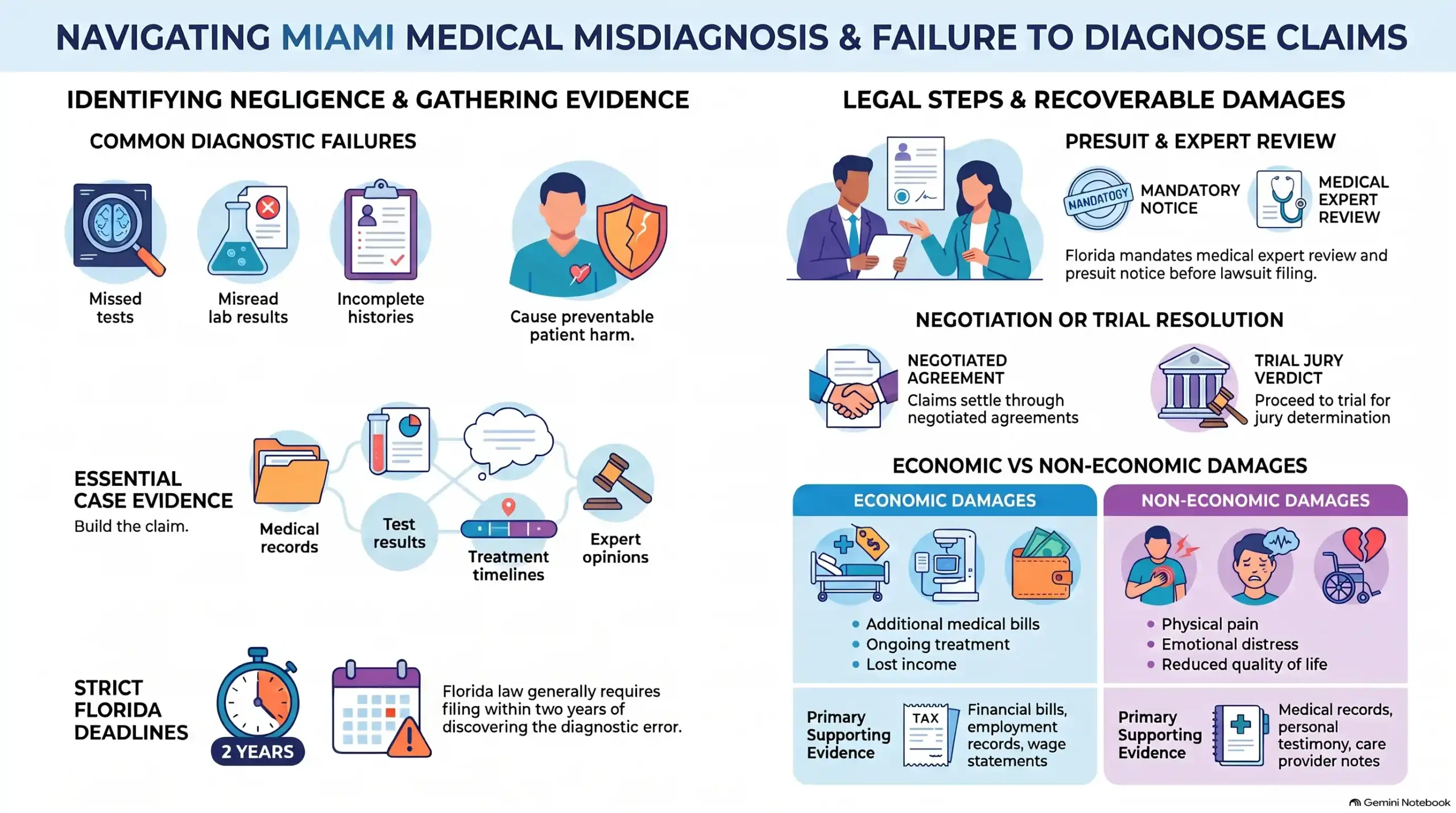


How We Can Help With Your Miami Medical Malpractice Misdiagnosis & Failure to Diagnose Injury Claim
When a medical provider fails to diagnose a condition or misdiagnoses it, the resulting delay or improper treatment may cause serious harm. A law firm can help an injured patient and family understand available options and pursue accountability with care and professionalism.
A diagnostic error can cause serious harm, but legal guidance can help families understand their options and pursue accountability.
The process may begin with a focused Claim Evaluation. Counsel can review medical records, treatment timelines, and relevant communications to identify questions requiring further investigation. When appropriate, qualified medical professionals may assess whether the care provided met accepted standards and whether the diagnostic error contributed to the injury.
A clear Case Strategy can then guide decisions about evidence, legal deadlines, and potential compensation. The legal team may gather records, communicate with insurers, and prepare the claim for negotiation or court proceedings. Throughout the matter, clients can receive updates and practical explanations, allowing them to make informed choices.
This support can reduce the burden of managing a complicated claim while keeping the patient’s needs at the center. Each case requires an individualized review, and outcomes depend on its specific facts and evidence.
OUR CONSULTATIONSARE FREE
START YOUR FREE CASE REVIEW

Understanding Miami Medical Malpractice Misdiagnosis & Failure to Diagnose Injury Cases
A medical misdiagnosis or failure to diagnose may occur when a provider overlooks symptoms, misinterprets test results, or does not order appropriate testing. These cases concern whether the care provided met accepted professional standards and whether a diagnostic error caused preventable harm. A delayed or missed diagnosis may allow an illness or injury to progress, limit treatment options, and affect a patient’s health, independence, or ability to serve family and community.
Diagnostic uncertainty can arise as providers assess changing symptoms and incomplete information. However, uncertainty does not remove the responsibility to evaluate a patient carefully, document relevant findings, and communicate meaningful concerns. Symptom interpretation should reflect the patient’s reported history, examination, and available test results. When care falls below the applicable standard, a patient may have grounds to seek review of the resulting injury.
A case assessment may examine medical records, timelines, treatment decisions, and expert opinions. This process helps clarify whether different care could have prevented or reduced the harm.
Common Causes of Miami Medical Malpractice Misdiagnosis & Failure to Diagnose
Misdiagnosis and failure to diagnose may result from missed diagnostic tests or incorrectly interpreted test results. Delays in reaching a diagnosis can also prevent patients from receiving timely treatment. An incomplete patient history may further contribute to diagnostic errors when relevant symptoms or medical details are overlooked.
Missed Diagnostic Tests
Missed diagnostic tests can delay treatment and allow a serious condition to worsen. In Miami, a healthcare provider may fail to order imaging, laboratory work, or other testing needed to investigate a patient’s symptoms. Such omissions can occur when a medical history is incomplete, warning signs are overlooked, or follow-up responsibilities are unclear. Appropriate Test Ordering requires providers to consider the patient’s reported concerns, examination findings, and known risk factors. Screening Protocols may also call for specific evaluations based on age, medical history, or other clinical criteria. When a necessary test is not requested or scheduled, a disease may remain undetected while the patient’s health declines. A careful review can examine whether the provider followed accepted practices and whether timely testing could have supported earlier diagnosis and treatment.
Misread Test Results
Even when appropriate tests are performed, inaccurate interpretation of the results can delay diagnosis and treatment. Misread findings may prevent a patient from receiving an accurate explanation of a condition and appropriate care. In Miami medical settings, errors can occur when a clinician overlooks an abnormality, misunderstands its significance, or fails to compare results with the patient’s symptoms and medical history. Radiology image interpretation may be affected by subtle findings, poor image quality, or an incomplete review. Laboratory result reporting can also contribute to mistakes when values are transcribed incorrectly, flagged inaccurately, or communicated without necessary context. Clear documentation, careful review, and coordination among healthcare professionals help support sound clinical decisions. When a result is misread, patients and families may face uncertainty as they seek answers and advocate for appropriate care.
Delayed Diagnosis
A delayed diagnosis occurs when a medical condition is identified later than a reasonably careful evaluation would allow, postponing treatment that may be important to the patient’s health. Diagnostic delay can arise when warning signs are not assessed promptly, appropriate testing is not ordered, or referrals are not made when symptoms warrant expert care. Delayed recognition may allow an illness or injury to progress, reducing treatment options or making recovery more difficult. In Miami, a delay may raise malpractice concerns when a healthcare provider’s conduct falls below the applicable standard of care and causes harm. Not every late diagnosis indicates negligence; some conditions are difficult to identify, and symptoms may develop over time. A careful review of medical records and clinical decisions can help determine whether earlier action was reasonably required.
Incomplete Patient History
When a provider does not obtain or review a sufficiently complete patient history, important clues about a condition may be overlooked. Details about prior illnesses, medications, allergies, family conditions, and recent changes in health can help guide an accurate diagnosis. A consistent history-taking protocol helps clinicians ask relevant questions, document responses, and verify information across records. Providers should also establish symptom chronology, including when symptoms began, how they changed, and what makes them better or worse. Without these details, a serious condition may resemble a less urgent problem, leading to inappropriate testing or delayed treatment. In Miami, a failure to gather or consider relevant history may contribute to a preventable misdiagnosis. Careful history-taking supports informed decisions and helps providers serve patients with diligence and respect.


Legal Rights of Miami Medical Malpractice Misdiagnosis & Failure to Diagnose Injury Victims
Patients harmed by a missed or delayed diagnosis in Miami may have legal rights if a medical provider failed to meet the accepted standard of care and that failure caused injury. A claim may seek compensation for losses linked to the diagnostic error, subject to Florida law and the evidence in the case. Patient advocacy can help individuals understand available options and pursue accountability while supporting safer care for others. Attention to diagnostic disparities may also help identify unequal treatment and strengthen efforts to protect patients.
Potential damages may include:
- Additional medical expenses for treatment made necessary by the delay
- Lost income or reduced ability to work
- Physical pain, emotional distress, or lasting impairment
- Other documented losses attributable to the injury
A successful claim generally requires evidence establishing the provider’s duty, a departure from accepted care, causation, and damages. Medical records, expert review, and applicable filing deadlines may affect whether a case can proceed. Because deadlines and procedural requirements can be strict, injured patients or their representatives may consider seeking qualified legal guidance promptly.
Don’t Wait. Call Our Florida Personal Injury Lawyers Now!
Why Do Miami Medical Malpractice Misdiagnosis & Failure to Diagnose Injuries Happen?
Understanding why diagnostic errors occur can help explain how preventable harm develops and what evidence may be relevant to a legal claim. Misdiagnosis and delayed diagnosis can arise when symptoms are subtle, overlap with several conditions, or change over time. Diagnostic uncertainty is a normal part of medicine, but clinicians are expected to assess available information carefully and pursue reasonable testing or follow-up when warning signs remain.
Errors may also result from incomplete medical histories, missed test results, communication failures among providers, or inadequate coordination between departments. Heavy workloads and rushed appointments can limit opportunities to ask questions, review records, and recognize changes in a patient’s condition. Healthcare disparities may further affect timely access to experts, diagnostic testing, or consistent care, particularly for patients facing language or financial barriers.
These circumstances do not automatically establish malpractice. A claim generally turns on whether the provider’s conduct fell below the applicable standard of care and whether that failure caused measurable harm. Each case requires careful review of medical records and circumstances.
What Should You Do After a Miami Medical Malpractice Misdiagnosis & Failure to Diagnose Injury?
After a suspected misdiagnosis or failure to diagnose, the injured person should seek prompt medical care to address the condition and document its progression. Preserving medical records, test results, prescriptions, and related communications can help establish the timeline of care. A consultation with a Miami medical malpractice lawyer can clarify whether the circumstances may support a legal claim and what steps should follow.
Seek Immediate Medical Care
When a medical misdiagnosis or failure to diagnose causes harm, prompt medical care should be the first priority. The affected person should contact a qualified healthcare provider promptly and explain the symptoms, prior assessment, and any changes in condition. Emergency symptoms, such as severe pain, difficulty breathing, sudden weakness, confusion, or loss of consciousness, require immediate emergency services rather than waiting for a routine appointment. A second opinion may help identify an overlooked condition and guide appropriate treatment. If the original provider is unavailable or the person’s condition worsens, an emergency department can provide urgent evaluation. Clear communication helps clinicians assess risks and determine next steps. Timely care can limit further harm and support recovery, while allowing medical professionals to make decisions based on the person’s current needs. The patient’s safety remains the central concern.
Preserve Medical Records
Preserving medical records can help document how a misdiagnosis or failure to diagnose affected a patient’s care and condition. Patients or authorized representatives should request complete copies of relevant records from each treating provider, including test results, imaging reports, prescriptions, discharge instructions, and billing statements. Records may also include messages, appointment histories, and referrals that show when concerns were raised and what follow-up occurred.
Record preservation should begin promptly. Patients should keep original documents in a secure place, organize copies by date, and maintain a written timeline of symptoms, visits, and communications. Digital files should be backed up without altering their contents. Providers may follow retention policies that govern how long records are kept, so timely requests can reduce the risk that important information becomes unavailable. Patients should retain their own copies.
Consult a Malpractice Lawyer
A Miami medical malpractice lawyer can assess whether a misdiagnosis or failure to diagnose may support a legal claim. A prompt consultation can help clarify possible next steps while preserving the patient’s ability to seek accountability and protect others from similar harm. The attorney may review the medical timeline, records, communications, and resulting injuries, then explain whether further investigation is appropriate.
Consultation preparation can include gathering relevant records, test results, prescriptions, bills, and a written account of symptoms and conversations with providers. The patient should also note when symptoms began, when they sought care, and how the condition changed. During the meeting, questions about deadlines, costs, confidentiality, and the investigation process can support informed decisions.
When selecting an attorney, consider experience with Florida medical negligence claims, clear communication, and a careful approach to evaluating evidence. A consultation does not guarantee a claim or outcome.
Critical Evidence in a Miami Medical Malpractice Misdiagnosis & Failure to Diagnose Injury Case
A misdiagnosis or failure-to-diagnose claim may depend on evidence showing what providers knew, when they knew it, and how they responded.
Essential materials commonly include:
- Medical records
- Diagnostic test results
- Expert medical opinions
- A treatment timeline
Together, these records can help clarify whether the care met applicable standards and whether any delay contributed to the injury.
Medical Records
When a diagnosis is delayed or missed, medical records can provide important evidence of what information clinicians had and how they responded to it. Progress notes, histories, medication lists, and referral records may show reported symptoms, clinical observations, and decisions over time. They can help clarify whether concerns were documented, communicated, and addressed, while supporting a careful review of the care provided.
Record access allows patients or authorized representatives to obtain relevant files, subject to applicable privacy rules and procedures. Records should be preserved in their original form, including dates and authorship, because changes or gaps may affect how events are understood. If information appears inaccurate or incomplete, amendment requests may be submitted through the provider’s process; the original entry may remain part of the file. A qualified legal review can assess how these materials relate to the patient’s care and claimed harm.
Diagnostic Test Results
Diagnostic test results can be vital evidence in a Miami medical malpractice case involving a missed or delayed diagnosis. Imaging studies, blood tests, and other diagnostic procedures may reveal signs of disease that required timely attention. Their dates, findings, and communication records can help establish when information became available and whether appropriate follow-up occurred. Radiology Reporting may document an abnormal finding, while Laboratory Alerts can show whether urgent results were flagged and conveyed to the responsible care team. A review may also consider whether results were acknowledged, explained to the patient, and connected to a suitable next step. Missing reports, delayed notifications, or unaddressed abnormalities can raise important questions about the diagnostic process. Preserving these records can support a careful evaluation of what happened and help protect patients and their families.
Expert Medical Opinions
In a Miami medical malpractice case involving misdiagnosis or failure to diagnose, expert medical opinions can help assess whether the care met accepted professional standards. A qualified medical expert may review the records, test findings, and relevant clinical information to explain whether the provider recognized signs that required further evaluation. The opinion can address Diagnostic Standards applicable to the patient’s circumstances, including whether accepted methods were followed and whether the diagnosis was reasonably supported by available evidence. Expert Testimony may clarify complicated medical issues for a judge or jury, such as how a condition is identified and what a competent practitioner would ordinarily consider. Experts may also explain whether a diagnostic error caused avoidable injury. Their analysis must be grounded in reliable evidence and appropriate medical knowledge, not speculation or hindsight.
Treatment Timeline
A carefully documented treatment timeline can be essential evidence in a Miami medical malpractice case involving misdiagnosis or failure to diagnose. It can show when symptoms first appeared, what concerns the patient reported, and how clinicians responded at each visit. A clear Diagnostic chronology may reveal delays in ordering tests, interpreting results, making referrals, or communicating a diagnosis. These records can help explain whether earlier action might have prevented the condition from worsening or reduced the need for more extensive treatment.
The timeline may also identify treatment milestones, including emergency care, surgery, medication changes, and follow-up appointments. Medical records, test results, referral notes, and patient communications can help establish the sequence of events. By organizing this evidence, legal counsel can present the patient’s experience accurately and assess how the care provided affected recovery, future needs, and the ability to serve others.
Long-Term Effects of Miami Medical Malpractice Misdiagnosis & Failure to Diagnose Injuries
A delayed or missed diagnosis can lead to permanent health complications, particularly when treatment is postponed until an illness or injury worsens. Affected patients may require ongoing care, medication, rehabilitation, or additional procedures. These lasting effects can also limit a person’s ability to work and reduce future earning capacity.
Permanent Health Complications
When a medical condition is misdiagnosed or diagnosed too late, the resulting harm may extend well beyond the initial illness or injury. Permanent complications can develop when a serious disease progresses without appropriate care or an injury remains untreated. Depending on the condition, a patient may experience lasting organ damage, reduced mobility, or changes in memory and other cognitive abilities. Chronic pain may also persist, affecting sleep, independence, and participation in family or community life. These effects can alter a person’s ability to work, maintain relationships, and carry out ordinary responsibilities. The consequences vary according to the underlying condition, the delay in diagnosis, and the patient’s overall health. A careful review of medical records and expert assessment can help clarify whether a diagnostic failure contributed to lasting harm.
Ongoing Treatment Needs
After a misdiagnosis or delayed diagnosis causes lasting harm, treatment may remain necessary long after the initial medical error. Patients may need ongoing physician visits, medication adjustments, diagnostic monitoring, or procedures to manage complications that could have been reduced with timely care. These needs can affect daily routines and require coordination among physicians, therapists, and family caregivers. A detailed treatment plan can identify appropriate services, anticipated follow-up, and necessary home support. Depending on the patient’s condition, home care may help with personal tasks, medication schedules, or mobility while preserving safety and dignity. Rehabilitation planning can also address physical, cognitive, or emotional limitations through structured therapy and progress reviews. In evaluating a malpractice claim, documented ongoing care needs help show the lasting consequences of a diagnostic error.
Lost Earning Capacity
Lost earning capacity can become a significant long-term consequence when a misdiagnosis or delayed diagnosis leaves a patient unable to perform the same work or maintain the same career path. A condition that advances without timely treatment may limit stamina, mobility, concentration, or other abilities necessary for employment. These restrictions can affect not only current wages but also promotions, professional development, and the patient’s broader Career trajectory. Evaluating this loss requires consideration of the person’s work history, education, expected advancement, and the lasting effects of the injury. Medical and vocational evidence may help establish how the condition changes future employment options. Vocational rehabilitation can support a return to suitable work, but it may not restore prior earning potential. A careful evaluation can account for these lasting financial consequences.
Proving Liability in Miami Medical Malpractice Misdiagnosis & Failure to Diagnose Injury Cases
Proving liability in a Miami medical malpractice case involving misdiagnosis or failure to diagnose requires evidence that a health care provider breached the accepted standard of care and that the breach caused a patient’s injury. Establishing a breach of the standard generally involves examining what a reasonably careful provider with similar training would have done under comparable circumstances. Medical records, test results, treatment notes, and timelines can help show whether symptoms were overlooked, diagnostic tests were delayed, or findings were interpreted improperly.
Qualified medical experts often explain the applicable standard and identify how the provider’s conduct departed from it. A Causation Analysis then connects that departure to the harm. The evidence must show that timely, appropriate diagnosis would likely have changed the course of treatment or reduced the injury. This may require comparing the patient’s condition before and after the delay and considering other possible causes.
Each case depends on its facts, and careful review helps clarify whether the evidence supports accountability.
Dealing With Insurance Companies After a Miami Medical Malpractice Misdiagnosis & Failure to Diagnose Injury
When a suspected misdiagnosis or delayed diagnosis causes injury, communications with an insurer can affect how the claim is evaluated. Insurers may request medical records, treatment details, or an account of events. Accurate, consistent information helps protect the integrity of the patient’s concerns and supports a fair review. Patients should avoid speculation and distinguish what they personally know from what they have been told.
Before providing Recorded Statements, a patient may benefit from understanding the request and consulting a qualified Miami medical malpractice attorney. Statements made without preparation can omit important context or be interpreted in ways that do not reflect the full medical history. Insurers may also present Settlement Offers before the extent of harm and future care needs are clear. A patient should carefully assess any offer against documented losses, ongoing treatment, and the potential effect of accepting it. Thoughtful communication can help preserve resources for recovery while allowing the patient to focus on health, family, and supporting others.
Don’t Wait. Call Our Florida Personal Injury Lawyers Now!
What to Expect During a Miami Medical Malpractice Misdiagnosis & Failure to Diagnose Injury Claim Process
A Miami medical malpractice misdiagnosis claim generally begins with an initial case review to assess the circumstances and potential legal issues. The process may then involve collecting medical records, obtaining an expert’s review, and filing the required claim documents. After filing, the parties may negotiate a resolution or proceed to trial if they cannot reach an agreement.
Initial Case Review
An initial case review helps determine whether a delayed or missed diagnosis may support a medical malpractice claim. During this early assessment, an attorney considers the patient’s reported symptoms, the timeline of care, and the harm that followed. The review may examine whether a provider failed to order appropriate testing, recognize warning signs, or communicate a diagnosis in a timely manner. It also considers whether the delay may have changed the available treatment options or worsened the patient’s condition.
Case screening helps identify whether the circumstances warrant further legal evaluation. To review eligibility, the attorney may ask about the providers involved, the nature of the injury, and the patient’s current needs. The assessment can clarify potential legal issues and explain possible next steps, without promising a particular outcome. This process helps families make informed decisions while keeping the patient’s well-being in focus.
Medical Record Collection
Collecting medical records is a crucial step in evaluating a Miami misdiagnosis or failure-to-diagnose claim. After the initial case review, the patient or authorized representative may sign a HIPAA authorization allowing relevant providers and facilities to release records. These may include office notes, test results, imaging reports, medication histories, discharge summaries, and referral documentation. The collection process can involve hospitals, clinics, laboratories, pharmacies, and other organizations that treated the patient.
Each provider may have its own request procedures and processing times. A records custodian may verify the authorization, identify responsive documents, and provide copies in paper or electronic form. The claim file should preserve records from before and after the suspected diagnostic error to help establish the sequence of care and its effects. Complete, organized documentation also supports a clear account of the patient’s experience and needs.
Expert Review and Filing
Once the relevant medical records have been assembled, a Miami medical malpractice attorney may submit them to qualified medical experts for review. These experts assess whether the care fell below accepted professional standards and whether that failure likely caused harm. Expert witness selection depends on the medical issues involved, the provider’s specialty, and Florida’s qualification requirements. The expert may identify missing information or explain how a delayed or incorrect diagnosis affected treatment and outcome.
If the review supports a claim, counsel may prepare a pre-suit notice for the responsible provider and follow Florida’s pre-suit procedures. This process generally includes sharing required information and allowing an opportunity to investigate the allegations. The patient may need to provide records, answer questions, or attend an examination. Careful preparation helps confirm the claim is supported by reliable evidence and proceeds under applicable deadlines.
Negotiation or Trial
After the pre-suit process, a Miami medical malpractice misdiagnosis or failure-to-diagnose claim may proceed to settlement negotiations or trial. During negotiations, the parties assess medical records, expert opinions, and the documented effects of delayed or missed diagnosis. Settlement discussions may resolve the claim without a courtroom decision, but any proposed agreement should account for medical costs, lost income, future care, and other legally recoverable losses. Strong evidence can provide Settlement leverage, while unresolved disputes over negligence or damages may require trial.
Trial preparation involves organizing records, preparing expert witnesses, and developing a clear account of how the diagnostic failure affected the patient. At trial, each side presents evidence, and a judge or jury evaluates liability and damages. The process can be demanding, but careful preparation helps make certain the patient’s experience and needs receive informed consideration.
Compensation for Miami Medical Malpractice Misdiagnosis & Failure to Diagnose Injury Damages
Compensation for a Miami medical malpractice misdiagnosis or failure to diagnose depends on the harm caused by the delay or error and the evidence connecting that harm to a provider’s negligence. A claim may seek recovery for additional treatment, worsening illness, lost ability to work, and lasting effects on daily life. Damage calculation considers medical records, expert opinions, treatment costs, and evidence showing how timely diagnosis could have changed the outcome. The goal is to account for losses caused by the negligent delay, not to provide a windfall.
A careful review can also identify future care needs and the practical support an injured person may require. Families and caregivers may help document changes in function, appointments, and assistance needs, while preserving records that clarify the injury’s progression. Applicable compensation limits and legal standards can affect the amount recoverable, so case-specific analysis is important. Each claim depends on its facts, the quality of supporting evidence, and Florida law governing medical negligence.
Economic vs Non-Economic Damages in Miami Medical Malpractice Misdiagnosis & Failure to Diagnose Cases
In Miami misdiagnosis and failure-to-diagnose cases, damages may include economic losses, such as medical expenses and lost income, as well as non-economic harm, including pain and reduced quality of life. The specific damages available depend on how the delayed or missed diagnosis affected the patient. Supporting each claimed loss with relevant records and other evidence is necessary to establish its value.
Economic Damages
Economic damages in Miami medical malpractice misdiagnosis and failure-to-diagnose cases are financial losses linked to the harm caused by a delayed or incorrect diagnosis. They may include Medical Expenses for additional treatment, corrective procedures, medication, rehabilitation, and related care. When a diagnostic error worsens a condition, records and bills can help show which costs resulted from the delay rather than unrelated health needs. Wage Losses may also be recoverable when the injury prevents a patient from working, reduces hours, or limits future earning capacity. Documentation such as pay records, employer statements, and medical assessments can support these claims. Future costs may require estimates based on expected treatment and lasting work restrictions. Careful accounting helps establish the financial impact and supports a fair claim, allowing injured patients and families to seek resources for necessary care.
Non-Economic Damages
Beyond medical bills and lost income, a misdiagnosis or delayed diagnosis can cause substantial non-economic harm. These damages address personal losses that do not have a direct financial value. In Miami medical malpractice cases, they may include pain and suffering caused by an untreated condition, unnecessary procedures, or a worsened prognosis. Emotional distress may also arise from fear, anxiety, grief, or the disruption of family and community responsibilities. Such effects can limit a person’s ability to work, care for loved ones, or participate in meaningful activities. Non-economic damages differ from economic damages, which cover measurable expenses and income losses. Florida law governs whether these damages may be recovered and how they are evaluated. Their purpose is to recognize the human impact of negligent diagnosis, not to replace the injured person’s health or independence.
Proving Your Losses
When a misdiagnosis or delayed diagnosis causes harm, proving losses requires evidence that connects the medical error to both measurable financial costs and personal effects. Economic damages may include additional treatment, medication, rehabilitation, lost wages, and reduced future earning capacity. Financial documentation, such as bills, insurance records, pay statements, and employment evaluations, can help establish these amounts. Evidence should also show how timely diagnosis could have changed the patient’s condition or avoided particular expenses.
Non-economic damages address consequences that lack a fixed price, including pain, emotional distress, disability, and loss of independence. Medical records, testimony from the patient and family, and observations from treating professionals may help describe these effects. Household contributions can also matter when injury prevents someone from providing care or performing routine tasks. Collectively, credible evidence can present a clear account of the losses and support fair compensation.
When a Miami Medical Malpractice Misdiagnosis & Failure to Diagnose Injury Case Goes to Trial vs Settlement
A Miami medical malpractice misdiagnosis or failure-to-diagnose case may resolve through settlement or proceed to trial, depending on the evidence, the parties’ positions, and the potential value of the claim. Settlement can provide a defined resolution without the uncertainty, expense, and time associated with a courtroom proceeding. The parties may negotiate compensation for documented losses while avoiding a public trial; settlement confidentiality may also be a consideration, depending on the agreement.
If negotiations do not produce acceptable terms, the case may proceed to trial. Each side presents evidence and arguments, and a judge or jury evaluates the dispute. A trial may give the injured patient an opportunity to explain how delayed or missed diagnosis affected health, treatment, and daily life. However, the outcome is not guaranteed, and litigation can require substantial preparation.
Jury deliberations follow the presentation of evidence and closing arguments. The choice between settlement and trial depends on case-specific circumstances, informed evaluation, and the injured person’s priorities. Both paths seek a fair resolution and accountability.
Florida Laws That May Affect Your Miami Medical Malpractice Misdiagnosis & Failure to Diagnose Case
The choice between settlement and trial is shaped in part by Florida laws governing medical malpractice claims. These rules establish procedures for evaluating alleged diagnostic errors and defining each party’s responsibility. Understanding them can help patients and families pursue accountability while preserving the resources needed for continued care.
- Pre-suit Notice: Before filing suit, a claimant generally must provide written notice to each prospective defendant and support the claim through a medical expert’s review. This process allows investigation and may encourage informed resolution.
- Expert support: Florida law requires qualified medical testimony to establish the applicable standard of care and explain how a diagnostic failure caused injury.
- Comparative Negligence: A claimant’s share of fault may reduce recoverable damages. For example, evidence that a patient did not follow medical instructions may be considered, though it does not automatically defeat a claim.
- Damage limits and proof: Applicable rules govern recoverable losses and the evidence needed to establish them. Medical records, expert opinions, and testimony can clarify the harm and its connection to delayed or missed diagnosis.
These requirements make careful preparation crucial.
Don’t Wait. Call Our Florida Personal Injury Lawyers Now!
The Statute of Limitations for Miami Medical Malpractice Misdiagnosis & Failure to Diagnose Injury Cases
Because delayed or missed diagnoses may not cause apparent harm immediately, Florida’s medical malpractice filing deadlines can be difficult to assess. In many cases, a claim must be filed within two years after the injury is discovered, or should have been discovered through reasonable diligence. This discovery rule may matter when a patient learns later that a condition was misdiagnosed or left untreated. However, the date of discovery does not always determine the filing period.
Florida generally imposes a four-year limit from the date of the alleged malpractice, subject to exceptions, including certain cases involving fraud, concealment, or a child. A separate deadline may apply after the patient gives required notice before filing suit. Missing a Limitations deadline can prevent recovery, even when the care fell below accepted standards and caused serious harm. Because these rules depend on the facts and applicable exceptions, patients and families should preserve records and promptly determine which dates govern a potential claim.
How a Miami Medical Malpractice Misdiagnosis & Failure to Diagnose Lawyer Can Help You
When a delayed or missed diagnosis causes harm, a Miami medical malpractice lawyer can investigate whether the care fell below accepted medical standards and contributed to the patient’s injury. The lawyer’s work can clarify what happened, identify responsible parties, and help the patient pursue fair compensation while supporting broader diagnostic accountability.
A Miami medical malpractice lawyer can investigate whether a delayed diagnosis caused harm and help patients pursue fair compensation.
A legal investigation may include:
- Obtaining medical records, test results, and relevant communications to establish the timeline of care.
- Consulting qualified medical professionals to assess whether symptoms, findings, or test results warranted further evaluation.
- Determining how the diagnostic delay affected treatment options, recovery, and future medical needs.
- Calculating documented losses, including treatment costs, lost income, and the effects of lasting impairment.
Attorney advocacy can also help patients and families handle insurer responses, organize evidence, and present their account accurately. By examining both clinical decisions and resulting harm, counsel can pursue a claim grounded in evidence rather than assumption. This process may also encourage safer practices by bringing overlooked diagnostic failures to appropriate attention and reinforcing the importance of careful, timely evaluation.
When to Contact a Miami Medical Malpractice Misdiagnosis & Failure to Diagnose Lawyer
Prompt legal guidance may be important if a patient’s condition worsens after a missed or delayed diagnosis, or if test results and symptoms were not addressed promptly. A patient or family member may consider contacting a Miami medical malpractice misdiagnosis and failure to diagnose lawyer when a serious condition is discovered later, treatment was delayed, or the medical record raises questions about follow-up care. Seeking information does not require a conclusion that negligence occurred; it can help clarify whether the circumstances warrant further review.
Recognizing Warning Signs includes repeated requests for evaluation, unexplained worsening symptoms, or a lack of communication about abnormal test results. Patients can preserve relevant records, test reports, appointment dates, and written communications while seeking appropriate medical care. Choosing Experts for a second medical opinion may help explain the diagnosis and available treatment options, but it does not replace legal guidance. Promptly discussing concerns with counsel may also help identify applicable deadlines and the information needed to assess the situation.
Why You Need an Experienced Miami Medical Malpractice Misdiagnosis & Failure to Diagnose Lawyer
An experienced Miami medical malpractice misdiagnosis and failure to diagnose lawyer can help assess whether a delayed or missed diagnosis may support a legal claim. These cases often require careful review of medical records, diagnostic decisions, and the timeline of care. A lawyer can organize this evidence and consult qualified medical professionals to evaluate whether the care fell below accepted standards and whether that failure caused harm.
Legal guidance can also help patients and families understand procedures, deadlines, and the information needed to pursue a claim. This support may reduce the burden on people already managing treatment, recovery, or loss. An attorney can communicate with healthcare providers, insurers, and other parties while preserving relevant documentation and addressing disputes about responsibility.
Clear client communication helps guarantee that individuals understand case developments and available options. Reviewing an attorney’s credentials and experience in medical negligence matters can support informed decisions. By carefully examining the facts, counsel can help seek accountability and resources that may assist affected patients and their families.
How to Choose the Right Miami Medical Malpractice Misdiagnosis & Failure to Diagnose Lawyer for Your Case
Choosing the right Miami medical malpractice misdiagnosis and failure to diagnose lawyer requires careful consideration of the attorney’s experience with similar cases, access to qualified medical experts, and ability to explain the legal process clearly. A careful review can help injured patients and families find counsel equipped to pursue accountability and protect others from preventable harm.
Attorney Credentials merit close attention. Prospective clients can verify Florida Bar membership, disciplinary history, relevant trial experience, and familiarity with medical records and diagnostic standards. They should ask how the lawyer evaluates whether a provider’s conduct fell below accepted care and contributed to injury. Clear answers can indicate sound preparation without promising a particular result.
Communication Style also matters. The attorney should explain deadlines, case stages, likely challenges, and available options in understandable terms. The client should know who will provide updates and how questions will be handled. A lawyer who listens carefully and treats concerns respectfully can support informed decisions throughout a demanding process. Comparing consultations and asking focused questions helps families select representation aligned with their needs, values, and goals.
About The Law Offices of Anidjar & Levine
The Law Offices of Anidjar & Levine represents clients in Miami medical malpractice matters, including claims involving misdiagnosis and failure to diagnose.
The firm assists people seeking accountability after a medical error has caused injury, worsened an illness, or delayed necessary treatment.
Its work may include reviewing records, consulting qualified medical professionals, identifying responsible parties, and pursuing compensation through negotiation or litigation.
Firm history provides context for understanding the firm’s legal practice, while each matter requires an assessment of its own facts, applicable law, and available evidence.
The attorneys can explain the claims process, discuss potential challenges, and help clients make informed decisions about their options.
Clear communication is particularly important when families are managing serious health consequences and seeking answers.
Community involvement reflects the firm’s connection to the people it serves.
For individuals considering a claim, a consultation can provide an opportunity to share concerns, learn about possible next steps, and understand how legal representation may support their efforts to protect their rights.

Frequently Asked Questions
Can a Delayed Diagnosis Qualify as Medical Malpractice in Florida?
Yes. A delayed diagnosis may qualify as medical malpractice in Florida when a healthcare provider failed to meet the accepted standard of care, and that failure caused preventable harm. Proving a delayed diagnosis claim generally requires evidence that a reasonably careful provider would have diagnosed the condition sooner and that timely treatment would likely have improved the outcome. Florida’s medical malpractice statute of limitations imposes strict filing deadlines, so prompt legal review is important.
What if My Symptoms Were Initially Vague or Difficult to Identify?
Vague or difficult-to-identify symptoms do not automatically excuse a missed diagnosis. A clinician may need to investigate further, consider reasonable possibilities, order appropriate tests, or arrange follow-up based on the patient’s presentation. Diagnostic Uncertainty can be part of sound medical care, but failing to respond reasonably as symptoms develop may raise concerns. Symptom Documentation, including reported changes and clinical decisions, can help determine whether the standard of care was met and whether delay caused harm.
Can a Hospital Be Responsible for a Diagnostic Error by Its Staff?
A hospital may be responsible for a diagnostic error when the mistake results from Staff negligence by employees acting within their duties. Hospital liability can also arise from inadequate training, unsafe procedures, or failure to maintain systems that support timely, accurate diagnosis. Responsibility depends on the facts, including whether the care fell below accepted professional standards and caused harm. A careful review of medical records and circumstances can help clarify accountability and support patient safety.
Does a Second Opinion Affect a Misdiagnosis Claim?
A second opinion can affect a misdiagnosis claim, but it does not determine the outcome on its own. A later diagnosis may provide diagnostic evidence showing that an earlier provider overlooked symptoms, failed to order appropriate tests, or delayed treatment. The claim generally depends on whether the provider’s conduct fell below accepted medical standards and whether that failure caused harm. Records from both evaluations can help clarify the timeline, decisions, and resulting injury.
Can I Pursue a Claim if a Misdiagnosis Worsened an Existing Condition?
A patient may pursue a claim if a negligent misdiagnosis worsened an existing condition and caused additional harm. The claim generally requires evidence that appropriate care would have prevented or reduced that harm. Proving Causation involves distinguishing the effects of the misdiagnosis from the condition’s natural progression and any prior injury. Calculating Damages may include added treatment costs, lost income, pain, and diminished function. Medical records and qualified expert opinions can help establish these issues.
—————————
A delayed or incorrect diagnosis can cause serious harm, but every case requires careful review.
Medical records, expert opinions, and legal deadlines may affect whether a claim can proceed.
The Law Offices of Anidjar and Levine can assess the available evidence and explain potential legal options for people harmed by suspected diagnostic errors in Miami.
For additional guidance, contact a Miami Personal Injury Lawyer.
Prompt legal advice may help preserve important information and clarify the steps for pursuing compensation under Florida law.