

The Law Offices of Anidjar and Levine can investigate whether a preventable prescribing, dispensing, or administration mistake caused an injury. A review may examine medical and pharmacy records, medication instructions, communications, and the treatment timeline to assess whether care fell below accepted standards and contributed to measurable harm. Florida claims depend on evidence and applicable deadlines. A lawyer can explain potential legal options, identify needed records or expert review, and assess possible compensation. Learn more about working with a Miami Personal Injury Lawyer. The following sections explain these issues in more detail.
Main Takeaways
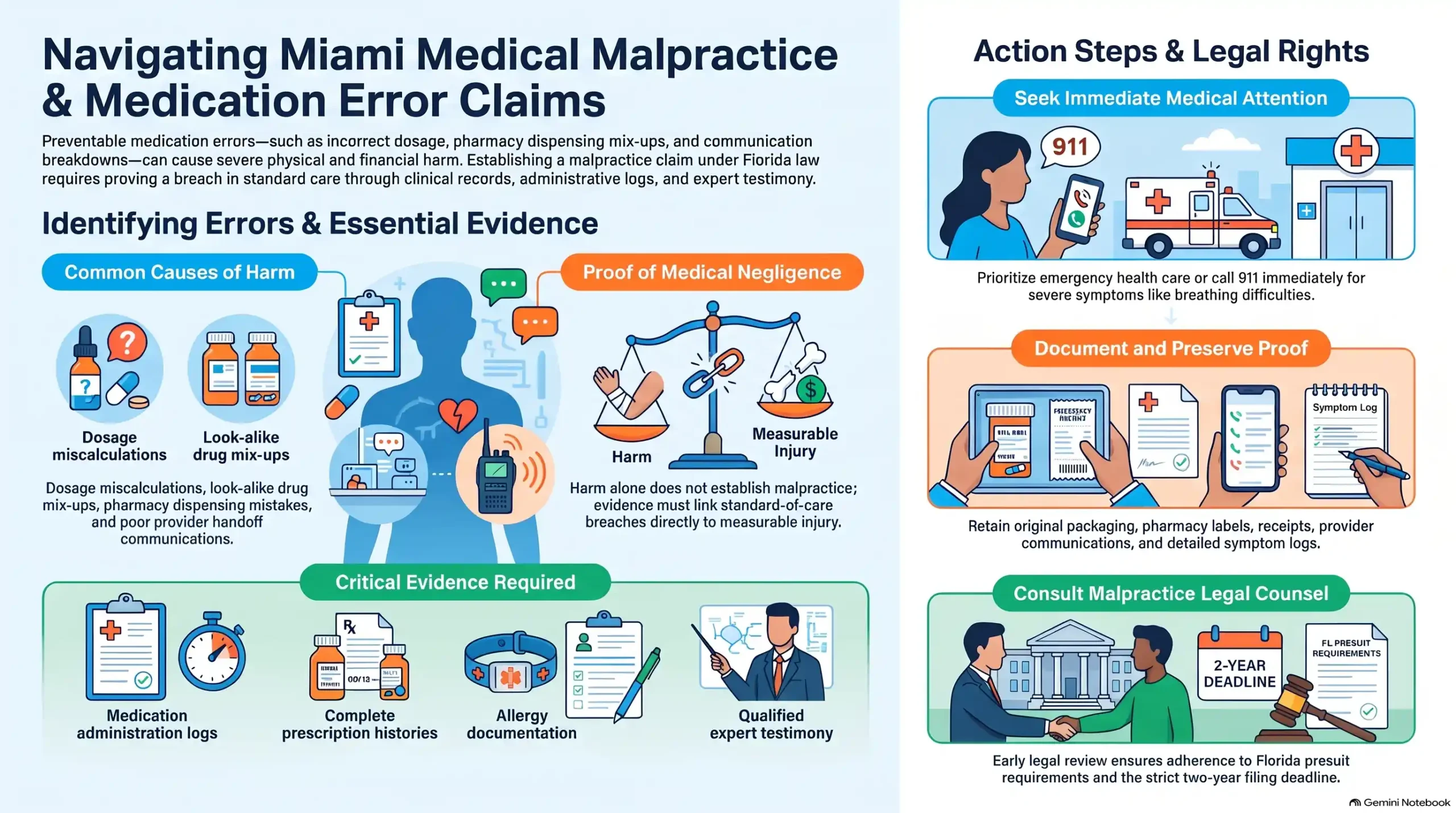
- A Miami medication-error malpractice lawyer can assess whether a preventable prescribing, dispensing, administration, or monitoring mistake caused measurable harm.
- A harmful outcome alone does not prove malpractice; claims require evidence of a breach in the standard of care and a link to the injury.
- Preserve prescriptions, medication labels, packaging, receipts, medical records, provider messages, and notes about symptoms and conversations.
- Seek urgent medical care for serious symptoms; call 911 for breathing difficulty, fainting, seizures, or sudden confusion.
- A legal review may examine medication records, dosage history, allergy documentation, verification procedures, communication, and follow-up.


How We Can Help With Your Miami Medical Malpractice Medication Errors Injury Claim
A Miami medical malpractice medication errors lawyer can investigate how an incorrect prescription, dosage, or administration caused harm and identify those who may be responsible. The lawyer can review available medical records, prescription information, and communications with care providers to assess whether the claim warrants further action. This Claim Evaluation may help clarify what information is missing and which questions require attention.
The lawyer can also explain potential legal options and outline a Case Strategy suited to the circumstances. That work may include obtaining relevant records, consulting qualified medical professionals, and organizing evidence that supports the patient’s account. Clear guidance can help a patient or family make informed decisions while managing the practical demands of pursuing a claim.
Throughout the process, the lawyer can communicate with involved parties, monitor deadlines, and address procedural requirements. A careful approach can preserve important information and help guarantee that the claim receives focused, respectful attention. This support allows affected individuals to concentrate on care and recovery while their concerns are assessed.
OUR CONSULTATIONSARE FREE
START YOUR FREE CASE REVIEW

Understanding Miami Medical Malpractice Medication Errors Injury Cases
When medication-related harm occurs, a Miami medical malpractice injury case examines whether a health care provider failed to meet the applicable standard of care and whether that failure caused injury. The review considers the patient’s medical records, treatment timeline, and the medication’s effects. It may also assess whether the provider responded appropriately as the patient’s condition changed.
Medication safety depends on careful clinical judgment, clear communication, and appropriate follow-up. A harmful outcome alone does not establish malpractice; the evidence must show that the care fell below accepted professional standards and contributed to a measurable injury. Medical experts may help explain what a reasonably careful provider would have done under similar circumstances and whether different care could have prevented the harm.
Adverse reactions can vary in severity and may require additional treatment or cause lasting effects. A case may address medical costs, lost income, pain, and other documented losses. Careful evaluation can clarify accountability and support efforts to protect patients and improve care.
Common Causes of Miami Medical Malpractice Medication Errors
Medication errors in Miami may result from incorrect dosages or prescription mix-ups that expose patients to the wrong medication or amount. Pharmacy dispensing errors can also occur when a prescription is filled inaccurately. Poor communication among healthcare providers, pharmacists, and patients may contribute to or worsen these mistakes.
Incorrect Dosage
Incorrect dosage is a common cause of medication errors in Miami medical settings and may expose patients to serious harm. A dose that is too high can cause toxicity, organ damage, or dangerous changes in breathing and heart function. A dose that is too low may fail to control an illness, allowing a patient’s condition to worsen. Errors can arise from inaccurate Dose calculation, especially when treatment requires weight-based dosing or adjustments for age, kidney function, or other health factors. Rushed care, unclear documentation, and failure to verify calculations may increase the risk. Healthcare professionals can help prevent these outcomes by checking the prescribed amount, confirming patient-specific measurements, and monitoring the response to treatment. When an incorrect dose causes injury, careful review may help identify how the error occurred.
Prescription Mix-Ups
Prescription mix-ups occur when a medication is prescribed, labeled, or dispensed for the wrong patient or when one drug is confused with another. These errors may arise from Similar Drug Names, unclear handwriting, incomplete patient records, or communication failures among healthcare professionals. Look-alike packaging can also make medications difficult to distinguish, particularly in busy clinical settings where staff must review many orders. A mix-up may expose a patient to an ineffective treatment, an unexpected drug interaction, or a harmful reaction. Careful verification of the patient’s identity, medication name, and documented treatment plan can reduce these risks. When a prescription error causes injury, reviewing medical records and communication history may help clarify how the mistake occurred and whether appropriate safeguards were followed. Such findings can inform accountability and patient safety.
Pharmacy Dispensing Errors
Pharmacy dispensing errors occur when a pharmacy provides the wrong drug, strength, dosage form, or instructions, or fails to include necessary warnings. Such mistakes may arise from similar packaging, inaccurate data entry, misread prescriptions, or interruptions during preparation. A patient may receive a medication intended for someone else, an incorrect concentration, or directions that lead to an unsafe dose. In Miami, these errors can cause allergic reactions, worsening illness, hospitalization, or other preventable harm, particularly when a patient depends on medication for a serious condition. Pharmacy workflow safeguards, including barcode checks, organized storage, and a final pharmacist review, can reduce the risk of an incorrect order reaching a patient. Dispensing label clarity also matters: precise directions and warnings help patients use medication safely. A careful review may identify whether a dispensing error contributed to injury.
Poor Communication
When medication instructions are not clearly communicated, patients may receive conflicting directions or lack information needed to use a drug safely. Poor communication can occur among physicians, nurses, pharmacists, and other care team members. In busy clinical settings, handoff breakdowns may leave incoming staff unaware of a patient’s allergies, current prescriptions, or recent dosage changes. Communication failures can also arise when providers use unclear language, omit important warnings, or do not confirm that a patient understands instructions. These gaps may contribute to incorrect doses, harmful drug interactions, delayed treatment, or avoidable complications. Patients who have limited access to interpreters or written guidance may face additional risks. Care teams can reduce preventable errors by documenting medication changes, promptly sharing relevant information, and confirming instructions with patients and caregivers. Such practices support safer, more coordinated care.
Don’t Wait. Call Our Florida Personal Injury Lawyers Now!


Legal Rights of Miami Medical Malpractice Medication Errors Injury Victims
Medication errors that cause injury may give Miami patients legal rights to seek compensation when a healthcare provider’s negligence contributed to the harm. A claim may address losses connected to the injury, while also supporting accountability and safer care for the community. Patient advocacy can help individuals understand available options and preserve information relevant to a potential case. Medication safety remains a shared concern, but legal responsibility depends on evidence and applicable Florida law.
Medication injury claims depend on evidence that negligence caused harm, while preserving accountability and safer care remains a shared concern.
Patients may have the right to:
- Request and review medical records, prescriptions, and billing documents related to treatment.
- Seek compensation for qualifying medical expenses, lost income, pain, and other legally recognized damages.
- Consult an attorney about deadlines, evidence, and whether professional negligence can be established.
- Participate in a claim without assuming that an adverse outcome alone proves negligence.
Each matter requires an individualized review of the provider’s duty, the care delivered, causation, and resulting harm. Prompt legal guidance can help protect a patient’s interests and clarify the steps available to pursue a fair resolution.
Why Do Miami Medical Malpractice Medication Errors Happen?
Why do medication errors injure patients in Miami? They often result from preventable failures in prescribing, dispensing, administering, or monitoring medicines. A prescription may contain the wrong drug or dose, while a pharmacy label may conflict with the clinician’s instructions. At the bedside, interruptions, rushed workflows, or inadequate identity checks can lead to a patient receiving medication intended for someone else.
Communication gaps also contribute. Providers may overlook allergies, duplicate therapies, or changes in a patient’s condition when records are incomplete or information is not shared promptly. These risks increase when multiple clinicians manage treatment without clear coordination.
High-risk medications, including anticoagulants, insulin, and opioid painkillers, require careful dosing and monitoring because mistakes can cause severe harm. A strong Medication safety culture supports reliable checks, clear documentation, and prompt communication among care teams. When staffing pressures, weak procedures, or insufficient training undermine these safeguards, patients may suffer injuries that could have been prevented through attentive, coordinated care.
What Should You Do After a Miami Medical Malpractice Medication Error Injury?
After a suspected medication error, the injured person should seek immediate medical care to address urgent risks and prevent further harm. They should document the medication, dosage, timing, symptoms, and related communications, while preserving relevant records and packaging. Once immediate health needs are addressed, consulting a malpractice lawyer can help assess the circumstances and explain potential legal options.
Seek Immediate Medical Care
When a medication error causes unexpected symptoms or a worsening condition, prompt medical evaluation should take priority. Emergency evaluation is appropriate for severe symptoms, including difficulty breathing, fainting, seizures, or sudden confusion. In Miami, the affected person should call 911 or go to the nearest emergency department rather than wait for symptoms to resolve. For a possible overdose or harmful drug interaction, poison control can provide immediate guidance, but it should not replace emergency services when symptoms are serious. The treating clinician needs accurate information about the medication, dose, and timing to assess potential risks and choose appropriate care. If the person cannot communicate, a caregiver should explain the suspected error and known symptoms. Prompt treatment can reduce the risk of complications and help protect the patient’s health and safety.
Document the Medication Error
Once the patient’s immediate medical needs are addressed, a clear record of the suspected medication error can help preserve relevant information. The patient or a trusted caregiver should write down what medication was prescribed, what was taken or administered, and when each dose occurred. Keep medication packaging, prescription labels, pharmacy receipts, and discharge instructions in their original form when possible. Photographs can document labels, pills, or written directions without altering the items. Also collect medical records and communications with providers, including dates, names, and the substance of each conversation. Consistent adverse reaction tracking should note symptoms, their onset, changes over time, and any treatment received. These records can help clinicians understand the patient’s course and support accurate review of the care provided.
Contact a Malpractice Lawyer
A Miami medical malpractice lawyer can assess whether a medication error may support a legal claim and explain the steps involved in pursuing it. Prompt legal guidance can help an injured patient and family understand available options while preserving information relevant to the case. The lawyer may review medical records, prescription instructions, pharmacy documentation, and the treatment timeline to determine whether further investigation is warranted. Patients should provide accurate details and avoid altering or discarding related records.
Many firms offer a Free consultation to discuss the circumstances and potential next steps. The patient can ask about the lawyer’s experience, communication practices, and expected process. Contingency fees may allow representation without upfront attorney fees, with payment generally tied to recovery. Clear discussion of fee terms helps patients make informed decisions and focus on their care.
Don’t Wait. Call Our Florida Personal Injury Lawyers Now!
Critical Evidence in a Miami Medical Malpractice Medication Errors Injury Case
A strong medication error claim depends on records and testimony that clarify what was prescribed, administered, and how the patient was harmed.
Crucial evidence may include:
- Medication administration records
- Prescription and dosage history
- Medical expert testimony
- Injury and treatment documentation
Together, these materials can help establish whether care fell below accepted standards and caused injury.
Medication Administration Records
How can investigators determine whether a medication was given correctly? Medication administration records provide a contemporaneous account of care, including the drug’s recorded delivery time, route, and the staff member who administered it. These entries can help establish whether a patient received a medication and whether required checks were documented. Investigators may compare the record with nursing notes, electronic medication systems, and relevant care records to identify omissions, conflicting entries, or unexplained changes.
Barcode verification may show whether staff scanned the patient’s identification and medication before administration. Electronic audit trails can preserve when entries were created, changed, or accessed, helping distinguish original documentation from later edits. Such records should be reviewed in context, since an entry alone may not prove that a dose reached the patient. Careful analysis can clarify events and support accountability while respecting the patient’s need for safe, compassionate care.
Prescription and Dosage History
Which prescription and dosage instructions were in effect when the medication was given? The answer may depend on the original prescription, subsequent changes, and the records available to the prescribing clinician and pharmacy. These documents can show the medication, strength, route, frequency, and duration authorized at each point in treatment. Comparing them with the dose administered may reveal whether an outdated instruction, transcription mistake, or unauthorized change contributed to harm.
A complete Refill chronology can clarify when prescriptions were issued, renewed, delayed, or changed, and whether the patient received consistent directions. The allergy history is also relevant because recorded reactions or warnings may have affected the decision to prescribe a particular drug or dosage. In combination, these records help establish what information was available and whether the medication plan was followed. Accurate documentation supports a careful review focused on patient safety and accountability.
Medical Expert Testimony
In a Miami medication error case, medical expert testimony can help explain whether the care fell below accepted professional standards and whether that failure caused the patient’s injury. A qualified physician or pharmacist may assess the prescribing, dispensing, or administration decisions at issue and clarify what a reasonably careful professional would have done under similar circumstances. Expert qualification depends on relevant training, experience, and familiarity with the applicable standards of care. The expert may also explain how the error could have produced the claimed harm, while addressing other reasonable explanations. Careful testimony preparation helps confirm opinions are grounded in reliable evidence and clearly presented to a judge or jury. By translating complicated clinical issues into understandable terms, an expert can support a fair evaluation of the patient’s claim and the professionals’ responsibilities.
Injury and Treatment Documentation
Clear injury and treatment records can be essential evidence in a Miami medication error case. Medical records may show when the incorrect medication was given, the symptoms that followed, and the care required to address the harm. A complete Treatment timeline can connect the medication error to later examinations, diagnoses, procedures, and changes in the patient’s condition. Pharmacy records, discharge instructions, and follow-up notes may also clarify what providers knew and when they acted.
Patients or caregivers can maintain a recovery journal documenting symptoms, missed work, daily limitations, and treatment experiences. These personal notes should be dated and factual, then compared with clinical records for consistency. Preserving bills, prescription labels, and communications with providers can help explain the injury’s practical effects. Organized documentation can help qualified professionals evaluate the claim and support efforts to protect patient safety.
Long-Term Effects of Miami Medical Malpractice Medication Errors Injuries
Medication errors may cause lasting physical complications, including organ damage or chronic health problems that require continued care. Some patients also experience cognitive changes or emotional effects that interfere with daily activities and relationships. Long-term treatment, rehabilitation, and related expenses can create substantial ongoing costs.
Lasting Physical Complications
Medication errors can cause physical complications that persist long after the initial injury. An incorrect drug, dosage, or administration method may damage organs, impair circulation, or disrupt normal bodily functions. Some patients experience permanent nerve damage, chronic pain, or reduced strength that interferes with routine activities. Others develop mobility limitations after muscle injury, prolonged hospitalization, or complications requiring surgery. The extent of harm depends on the medication involved, the patient’s health, and how quickly the error is identified and treated. Ongoing care may include rehabilitation, expert visits, assistive devices, or additional procedures. These needs can affect a person’s ability to work, provide care, and participate in community life. Accurate records and timely medical evaluation can help document lasting effects and guide appropriate support.
Cognitive and Emotional Effects
Beyond physical complications, medication errors may also affect memory, concentration, mood, or decision-making over time. Cognitive impairment can interfere with a person’s ability to manage daily responsibilities, communicate clearly, or return to familiar work and community roles. The effects may vary, depending on the medication involved, the duration of the error, and the individual’s health. Some people experience persistent confusion or difficulty processing information, while others notice changes in judgment or attention. Emotional distress may also follow a medication-related injury. Anxiety, depression, frustration, or loss of confidence can strain relationships and make ordinary activities more challenging. These changes may affect family members and caregivers as well as the injured person. Recognizing cognitive and emotional effects helps clarify how medication errors can alter a person’s independence, relationships, and participation in meaningful service to others.
Ongoing Treatment and Costs
How long-term treatment unfolds depends on the nature and severity of the injury caused by a medication error. Some patients recover after the harmful drug is stopped and the resulting condition is treated. Others may need rehabilitation, expert care, or medication to manage lasting organ damage, nerve problems, or changes in physical or cognitive function. Ongoing monitoring can help clinicians identify complications, assess treatment effectiveness, and adjust care as a patient’s needs change. These services may involve repeated appointments, diagnostic testing, prescriptions, home assistance, or time away from work. A careful record of treatment and related costs can clarify the support required over time. When another party’s negligence caused the injury, assessing future expenses may help account for ongoing care and preserve resources for recovery and daily needs.
Proving Liability in Miami Medical Malpractice Medication Errors Injury Cases
To establish liability in a Miami medication error case, the injured patient generally must show that a health care provider failed to meet the applicable standard of care and that the failure caused harm. Duty standards depend on the provider’s role and the circumstances, including prescribing, dispensing, administering, or monitoring a medication. Evidence may include medical records, medication orders, pharmacy documentation, and testimony from qualified professionals who can explain what reasonably careful providers would have done.
A causation analysis connects the alleged error to the patient’s injury. The evidence must show that the error was a substantial cause of harm, not merely that it occurred before it. Relevant records may document symptoms, treatment changes, and the injury’s progression. In some cases, expert review helps clarify whether a different medication, dose, or monitoring plan would likely have prevented the outcome. Preserving accurate records and obtaining a careful review can help patients and their families understand what occurred and support a fair assessment of responsibility.
Dealing With Insurance Companies After a Miami Medical Malpractice Medication Error Injury
After a suspected medication error causes injury, insurance companies may contact the patient or family while treatment and liability questions remain unresolved. Their representatives may seek information about the medication, symptoms, prior health conditions, and conversations with providers. Patients can respond politely while limiting discussion to facts they know and avoiding guesses about fault or recovery.
Claim Adjuster Tactics may include requesting broad medical authorizations, asking for a quick settlement, or suggesting that an injury resulted from an existing condition. These requests can affect privacy and the ability to evaluate losses. Before signing documents or accepting payment, the patient may consult a qualified attorney who can assess the request and explain its potential consequences.
Recorded Statements merit particular care. A patient is generally not required to provide an informal account without understanding how it may be used. Keeping copies of correspondence, bills, medication records, and treatment notes can help preserve accurate information while the patient focuses on care and recovery.
What to Expect During a Miami Medical Malpractice Medication Errors Injury Claim Process
A medication error claim typically begins with an initial case review to assess the circumstances and potential legal issues. The process may then involve collecting medical records and obtaining an expert opinion on whether the care met applicable standards. After these steps, the claim proceeds toward resolution through negotiation, settlement, or litigation when necessary.
Initial Case Review
During an initial case review, a Miami medical malpractice attorney examines how the medication error occurred, what injuries followed, and whether the available evidence supports a claim. The attorney may ask when the medication was prescribed or administered, who was involved, and how the patient’s condition changed afterward. Conflict screening helps determine whether the firm can assess the matter without a professional or financial conflict. An eligibility review considers whether the circumstances meet Florida’s requirements for a malpractice claim, including whether a provider’s conduct fell below accepted standards and caused harm. The review also identifies practical concerns, such as treatment needs, financial losses, and deadlines. This early assessment helps the patient and family understand possible next steps and make informed decisions about pursuing accountability and supporting safer care.
Medical Record Collection
Which records matter most depends on how and where the medication error occurred. A claim may require hospital charts, pharmacy records, prescription histories, medication administration logs, and discharge instructions. Records from primary care providers or emergency departments may also show prior symptoms, treatment decisions, and the error’s effects. A formal Record request identifies the facilities and providers holding relevant documents and seeks complete copies, including electronic entries and amendments. Some materials may be stored off-site or in older systems, requiring archive retrieval. The collection process can take time, particularly when several organizations are involved, or records require authorization. Careful organization helps establish a clear timeline of prescriptions, dispensing, administration, and follow-up care. Protecting privacy and preserving original records also supports an orderly claim review and accurate documentation of the injured person’s experience.
Expert Opinion
After relevant medical and pharmacy records are collected, qualified medical experts may review them to assess how the medication error occurred and whether it caused the patient’s injury. This independent medical review may examine prescribing decisions, dispensing practices, dosage instructions, and the patient’s response to treatment. Experts may also consider whether accepted professional standards were followed and whether another cause better explains the harm. Expert witness qualifications matter because the reviewer’s training and experience should match the medical issues involved, such as pharmacy practice or the relevant specialty. The expert may prepare a written opinion or explain the findings in a deposition if needed. Clear, evidence-based analysis can help the injured patient and legal team understand the claim’s strengths and limitations while supporting a careful, responsible evaluation of the circumstances.
Claim Resolution Process
Once the evidence and expert opinions have been reviewed, a medication error claim may proceed through settlement discussions, litigation, or both. The Claim Timeline depends on the medical records, the parties’ cooperation, and the intricacy of the injury. A claim generally begins with notice to the responsible providers or institutions, followed by investigation and an exchange of supporting information. Settlement discussions may resolve the matter without a trial, but any proposed agreement requires careful review of its terms and the documented losses. If the parties cannot agree, litigation may involve formal discovery, depositions, and court hearings before a judge or jury determines responsibility and damages. Resolution Options should be assessed in light of the injured person’s medical needs, financial impact, and interests, while preserving accurate records and meeting applicable deadlines throughout the process.
Compensation for Miami Medical Malpractice Medication Errors Injury Damages
Compensation for a medication error injury in Miami may cover medical expenses, lost income, reduced future earning capacity, and pain and suffering. The amount depends on how the error affected the patient and what losses records and other evidence can support. Medical expenses may include emergency treatment, corrective procedures, rehabilitation, prescription costs, and follow-up care. Future care needs may also be considered when an injury requires ongoing treatment or assistance.
A serious medication injury can disrupt a person’s ability to work, meet daily responsibilities, or continue serving others in the community. Lost wages and reduced earning capacity may reflect both time away from work and lasting limitations. The family impact may include added caregiving duties, schedule changes, and financial strain. Pain and suffering may include physical discomfort and the injury’s impact on daily life. Compensation is evaluated based on the individual circumstances, available evidence, and applicable Florida law. A lawyer can assess documented losses and explain potential recovery options.
Economic vs. Non-Economic Damages in Miami Medical Malpractice Medication Error Cases
In Miami medication error cases, economic damages may include medical expenses, lost income, and other measurable financial losses. Non-economic damages address harms such as pain, emotional distress, and reduced quality of life. Establishing either category generally requires evidence that connects the losses to the medication error and supports their extent.
Economic Damages
When a medication error causes injury, economic damages address the measurable financial losses linked to that harm. These losses may include additional medical care, rehabilitation, prescription costs, and transportation expenses required because of the mistake. A person may also seek compensation for Lost wages when the injury prevents work during treatment or recovery. If lasting limitations affect future employment, diminished earning capacity may account for reduced income over time. Records such as bills, pay statements, employment history, and medical evaluations can help establish the amount and connection to the medication error. In Miami malpractice cases, the evidence must support both the claimed expenses and their relationship to negligent care. A careful assessment can help injured patients and their families pursue financial resources needed for treatment and daily responsibilities.
Non-Economic Damages
Beyond measurable financial losses, medication errors may cause non-economic harm, including physical pain, emotional distress, loss of enjoyment of daily activities, and lasting limitations. These harms differ from economic damages, which reflect financial costs such as medical bills or lost income. Non-economic damages address how an injury affects a person’s comfort, independence, relationships, and ability to participate in meaningful routines. In medication error cases, painful limitations may interfere with work, family responsibilities, or activities that once brought fulfillment. A person may also experience anxiety, sleep disruption, or diminished enjoyment while coping with ongoing symptoms or treatment. Such effects can alter daily life even when they do not produce a direct financial charge. Recognizing these losses reflects the broader human impact of negligent care and the value of restoring dignity and well-being.
Proving Your Losses
Proving losses in a medication error case requires evidence that connects the harm to the negligent care and shows how the injury affected the patient. Medical records, pharmacy documentation, and expert opinions may help establish how an incorrect drug, dose, or administration caused injury. Economic damages include measurable financial losses, such as medical bills, rehabilitation costs, lost income, and reduced earning capacity. Future care expenses may require treatment plans and professional estimates that explain the support the patient will need. Non-economic damages address harms without a fixed price, including pain, emotional distress, and reduced ability to participate in daily life. Evidence from the patient, family, and treating professionals can clarify these effects. Documentation of lost opportunities, such as interrupted education or career plans, may also help show the injury’s broader consequences and support fair compensation.
Don’t Wait. Call Our Florida Personal Injury Lawyers Now!
When a Miami Medical Malpractice Medication Errors Injury Case Goes to Trial vs Settlement
A medication error case may resolve through settlement or proceed to trial, depending on the strength of the evidence, the extent of the injury, and whether the parties can agree on responsibility and compensation. Settlement can provide a more predictable resolution and avoid the time and uncertainty of a courtroom dispute. Negotiations may address medical expenses, lost income, and other documented effects of the injury. Strong records and clear evidence can improve Settlement Leverage, while a fair offer must reflect the person’s needs and losses.
If the parties cannot reach agreement, the case may proceed to trial, where a judge or jury evaluates the evidence and determines the outcome. Trial Preparation may include organizing medical records, consulting qualified experts, and preparing witnesses to explain how the medication error caused harm. A trial can take longer and carries uncertainty, but it may be necessary when settlement discussions fail. Careful evaluation of both paths helps injured patients and their families make informed decisions while pursuing accountability and support.
Florida Laws That May Affect Your Miami Medical Malpractice Medication Errors Case
When a medication error causes injury in Miami, Florida law may shape how a malpractice claim is investigated, filed, and resolved. Several rules may affect evidence, responsibility, and the steps required before a claim proceeds. Understanding them can help injured patients and families pursue accountability while supporting safer care for others.
- Florida presuit screening generally requires a claimant to investigate the basis of a medical negligence claim and provide notice before filing suit. Medical records and qualified expert review may be important during this process.
- Florida’s comparative fault rules may reduce damages if the injured person is found partly responsible for the harm, such as by disregarding clear medication instructions.
- Providers and facilities may have distinct duties, so identifying each responsible party can affect the claim.
- Florida law also governs expert testimony, admissible evidence, and damage assessments, which can influence how a case is presented and evaluated.
A lawyer can explain how these requirements apply to the specific facts and help preserve relevant records and communications.
The Statute of Limitations for Miami Medical Malpractice Medication Errors Injury Cases
Beyond the rules governing presuit review and responsibility, Florida’s filing deadlines can determine whether a medication-error malpractice claim may proceed. In general, a medical malpractice action must be filed within two years after the injury is discovered, or should have been discovered through reasonable diligence. Florida’s discovery rule does not necessarily begin the period when a patient first connects a medication to an injury; the relevant date may depend on when the patient knew, or reasonably should have known, that the injury might involve medical negligence.
A separate four-year statute of repose generally limits claims, even when an injury is discovered later. Exceptions may apply, including certain cases involving fraud, concealment, or a foreign object, and special rules may affect minors. Deadline calculation can be fact-specific, particularly when treatment continues, or records reveal an error later. Because missing a deadline can bar recovery, prompt attention to dates and applicable exceptions is important. These rules are general; case-specific facts may change the analysis.
How a Miami Medical Malpractice Medication Errors Lawyer Can Help You
Because medication-error claims often involve complex medical records and strict procedural requirements, a Miami medical malpractice medication errors lawyer can investigate how the mistake occurred and whether it caused harm. The lawyer can explain available legal options while helping the injured person and family pursue accountability without losing sight of ongoing care needs.
A lawyer can investigate medication errors, explain legal options, and help families pursue accountability while prioritizing ongoing care needs.
A lawyer may support a claim by:
- Reviewing prescriptions, dispensing records, treatment notes, and relevant communications to identify where the medication process failed.
- Consulting qualified medical professionals to assess whether the care met accepted standards and whether the error contributed to injury.
- Organizing evidence of medical expenses, lost income, and other documented losses, while considering the person’s future needs.
- Managing legal filings and communications with insurers, allowing caregivers to focus on recovery and practical caregiver support.
This work can also highlight medication safety concerns and encourage appropriate corrective measures. Each case depends on its facts, the available evidence, and applicable law. A lawyer’s role is to present the claim clearly and seek a fair resolution grounded in documented harm.
When to Contact a Miami Medical Malpractice Medication Errors Lawyer
Prompt legal guidance may help preserve evidence and clarify available options after a suspected medication error. A patient or family member may contact a Miami medical malpractice medication errors lawyer when a prescription, dosage, administration, or monitoring decision appears to have caused harm. Early Warning Signs can include unexpected symptoms after a medication change, worsening health, or an unexplained reaction. Urgent medical care should come first when symptoms are severe; legal discussions should not delay treatment.
Contact may also be appropriate when records conflict, a medication was given to the wrong patient, or a provider has not clearly addressed concerns. A lawyer can explain what information may be relevant and how to document events, including medication labels, discharge instructions, bills, and communications. Reporting Channels within the facility or pharmacy may provide a way to raise concerns, but patients should retain copies of submissions and responses. Timely consultation can help clarify deadlines and next steps while supporting accountability and safer care for others.
Why You Need an Experienced Miami Medical Malpractice Medication Errors Lawyer
An experienced Miami medical malpractice medication errors lawyer can assess whether a medication-related injury resulted from a provider’s failure to meet the applicable standard of care. Medication cases may involve prescribing, dispensing, administration, or monitoring, and each stage requires careful review. An attorney can examine medical records, consult qualified professionals, and identify how an error may have affected a patient’s health.
This work can help distinguish an unfortunate outcome from a breach of Care Standards. It may also clarify which parties had responsibility for preventing the error and whether the evidence supports a legal claim. By organizing complicated facts and explaining available options, counsel can help injured patients and families pursue accountability while focusing on recovery.
Medication errors can cause serious, avoidable consequences, including worsening illness or the need for additional treatment. Addressing Preventable Harm through a well-supported claim may encourage safer practices and protect others from similar risks. An experienced lawyer can also manage communications and deadlines, helping clients make informed decisions without navigating the process alone.
How to Choose the Right Miami Medical Malpractice Medication Errors Lawyer for Your Case
Choosing the right Miami medical malpractice medication errors lawyer requires more than reviewing a firm’s general experience with injury claims. A careful selection process can help patients and families pursue accountability while supporting safer care for others.
Attorney credentials should include experience with medical negligence claims involving incorrect prescriptions, dosage errors, or harmful drug interactions. The lawyer should be prepared to explain how the practice investigates medication records, consults qualified medical professionals, and evaluates whether a provider’s conduct caused injury. Experience handling cases with similar facts can also offer useful perspective.
Client communication is equally important. A suitable lawyer should explain the process, likely challenges, and available options clearly. The client should know who will provide updates, how questions will be addressed, and what decisions require the client’s input. During an initial consultation, prospective clients can ask about fees, case timelines, and the evidence needed. Comparing responses can help identify counsel who treats the matter with diligence, respect, and a commitment to informed decision-making.
About The Law Offices of Anidjar & Levine
For patients evaluating legal representation after a medication error, The Law Offices of Anidjar & Levine offers a point of contact for discussing potential medical malpractice claims.
The firm represents injured people and their families, including individuals seeking answers after a prescription, dosage, or administration mistake.
Its role may include reviewing the circumstances, explaining possible legal options, and helping clients understand what evidence could support a claim.
Firm history and attorney values can help prospective clients assess whether a legal practice aligns with their needs.
The firm describes its work as focused on advocating for people harmed by negligence and pursuing accountability through the legal process.
In medication error cases, that work may involve examining medical records, consulting qualified professionals, and identifying how an error affected a patient’s health and care.
People considering a claim can ask about relevant experience, communication practices, fees, and case strategy.
A direct discussion can clarify whether the firm’s approach suits the client’s circumstances and goals.

Frequently Asked Questions
Can a Pharmacist Be Held Responsible for a Medication Error?
Yes, a pharmacist can be held responsible when a medication error results from a failure to meet professional duties and causes harm. Pharmacist dispensing negligence may include supplying the wrong drug or dose, overlooking a dangerous interaction, or failing to clarify an unclear prescription. Pharmacy labeling errors may also contribute to injury. Responsibility depends on the evidence, applicable law, and whether the error was a substantial cause of the patient’s injury. A qualified legal review can assess potential claims.
What if I Took the Wrong Medication but Have No Symptoms?
Taking the wrong medication without symptoms does not rule out harm, because Possible delayed effects may develop depending on the drug, dose, and timing. The person should contact a pharmacist, prescriber, poison control center, or emergency service promptly for individualized guidance, and should not induce vomiting or take another dose unless instructed. Medication identification steps include checking the label, strength, amount taken, and time, then keeping the packaging available for responders.
Can a Medication Error Cause a Dangerous Drug Interaction?
Yes, a medication error can cause a dangerous drug interaction if a person receives incompatible medicines, an incorrect dose, or a drug that conflicts with an existing prescription or health condition. Such interactions may intensify side effects, reduce treatment effectiveness, or create urgent health risks. A pharmacist or clinician can review the medicines and advise on next steps. For severe symptoms, seek emergency care promptly; careful medication safety practices help protect patients.
Should I Report a Medication Error to a Regulatory Agency?
Yes, reporting a medication error to the appropriate regulatory agency can help protect other patients and identify unsafe practices. The affected person or a concerned witness may contact the state health department, pharmacy board, or relevant oversight body, depending on where the error occurred. Regulatory complaint deadlines and anonymous reporting options vary by agency, so the reporter should promptly review official guidance. Seek medical care immediately if anyone may have been harmed.
Can Family Members Pursue a Claim After a Fatal Medication Error?
Yes, eligible family members may pursue a claim after a fatal medication error, depending on state law and their relationship to the deceased. Wrongful Death Eligibility generally identifies who may seek compensation for losses caused by the death. The Estate Claim Process may also allow a personal representative to bring claims on behalf of the deceased’s estate. Prompt legal review can help preserve evidence, meet filing deadlines, and clarify each claimant’s role.
—————————
Medication errors can cause serious injuries, and patients harmed by negligent care may have legal options.
Reviewing medical records, treatment decisions, and resulting losses can help determine whether a claim is supported and what steps may follow.
The Law Offices of Anidjar and Levine represent injured patients in Miami medical malpractice matters.
Prompt legal guidance can help preserve evidence, address deadlines, and assess potential compensation.
Learn more about working with a Miami Personal Injury Lawyer.

