

If you suspect an anesthesia mistake in Miami, you’ll want a lawyer who can quickly secure anesthesia charts, monitoring strips, pharmacy records, and hospital logs before details disappear.
You can use a free consultation with Law Offices of Anidjar and Levine to share what happened, confirm deadlines, and learn whether expert anesthesiology review can prove a standard-of-care breach and causation.
You’ll also want counsel who handles insurer communications, documents damages, and stays trial-ready.
For more information, visit our Miami Medical Malpractice Lawyer page and continue to see what steps strengthen your claim.
Main Takeaways
- Seek a Miami anesthesia error injury lawyer offering a free consultation to review facts, answer questions, and explain next steps without pressure.
- Act quickly to preserve evidence by requesting anesthesia charts, monitoring logs, operative reports, pharmacy records, and equipment logs before entries disappear.
- A viable claim typically requires duty, breach of anesthesia standard of care, causation, and documented damages supported by qualified anesthesiology expert testimony.
- Common causes of negligence include dosing errors, inadequate monitoring, airway errors, ignored alarms, equipment failures, and poor supervision or communication among the surgical team.
- Choose a trial-ready firm that manages insurers, builds a clear timeline, provides regular updates, and explains contingency fees and case costs in writing.
How We Can Help With Your Miami Anesthesia Error Injury Claim
When an anesthesia mistake causes unexpected complications, you need a legal team that can move quickly to protect your rights and preserve essential evidence. You can count on us to secure records, identify key timelines, and coordinate timely communication so important details aren’t lost.
You’ll receive clear guidance on next steps, with steady support that respects your desire to serve and protect your family and community.
You’ll start with free consultations, where you can share what happened and ask direct questions without pressure. We’ll then build a focused case strategy, outlining responsibilities, documenting damages, and preparing for firm negotiations with insurers and defense counsel.


You’ll stay informed through regular updates, and you’ll have help gathering employment, medical, and financial documents. If litigation becomes necessary, you’ll have disciplined advocacy that aligns each decision with your goals and preserves your credibility throughout the process.
Understanding Miami Anesthesia Error Injury Cases
OUR CONSULTATIONSARE FREE
START YOUR FREE CASE REVIEW

After you’ve taken steps to protect records and define a clear case strategy, it helps to understand what legally qualifies as an anesthesia error injury case in Miami. You must show that a provider-patient relationship existed, that the anesthesia professional or supervising team owed you a duty of care, and that they breached the accepted medical standard.
You also need a clear link between that breach and measurable harm, supported by medical documentation, timelines, and qualified expert review.
You’ll often encounter Anesthesia Terminology in charts and reports, such as induction, airway management, monitoring, emergence, and post-anesthesia care, and you should treat these terms as evidence markers rather than obstacles. You can also learn from Case Studies, which illustrate how similar fact patterns are evaluated for negligence, causation, and damages.
Common Causes of Miami Anesthesia Error Injuries
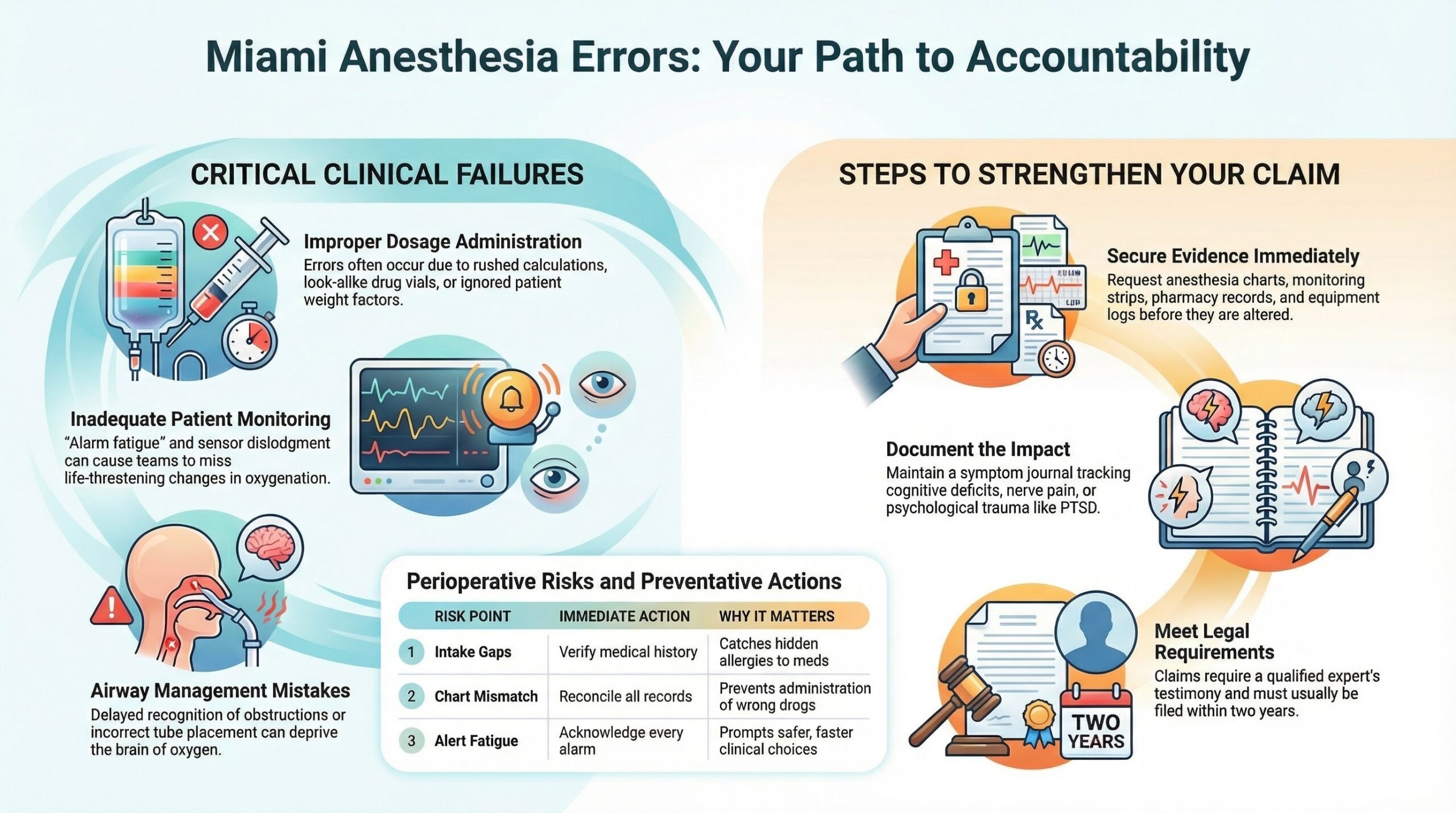
You may face serious harm when anesthesia is mishandled, and the most common causes often trace back to preventable clinical failures.
You can see these failures in improper dosage administration, inadequate patient monitoring during surgery and recovery, and missed allergy warnings that should’ve been flagged before medication is given.
You may also suffer injury when airway management mistakes occur, particularly during intubation or ventilation, where seconds and careful technique matter.
Improper Dosage Administration
How does a routine anesthetic dose become a life-altering injury? It can happen when you receive too much or too little medication, and the margin for error is small.
A rushed Dosage calculation may ignore your weight, age, or medication interactions, causing an excessive sedative effect or inadequate pain control during surgery.
Labeling errors also create risk, such as look-alike vials, unclear concentrations, or syringes prepared without proper identification, leading staff to administer the wrong drug or strength.
When a team fails to follow double-check protocols, infusion settings, or standardized dosing charts, you can suffer preventable harm that affects your recovery and your ability to serve others.
If you suspect improper dosing, you should preserve records, request the anesthesia chart, and seek counsel promptly.
Inadequate Patient Monitoring


When vigilant monitoring slips during anesthesia, small physiologic changes can escalate into catastrophic injury within minutes. You depend on continuous, attentive observation of oxygenation, ventilation, blood pressure, heart rhythm, and depth of anesthesia, because trends often matter more than single readings.
If a team drifts into alarm fatigue, repeated alerts can become background noise, and a true crisis may go unanswered.
Sensor dislodgement can also create false reassurance or false alarms, especially when probes loosen during positioning or draping. You reduce risk by confirming equipment function, verifying waveform quality, and responding promptly to unexpected values rather than silencing them.
When monitoring failures lead to brain injury, cardiac arrest, or awareness, you may need a lawyer who can prove preventable lapses in care.
Missed Allergy Warnings
Too often, allergy warnings are missed in the rush of pre-op turnover, and a routine anesthetic can become an avoidable emergency. When you serve patients, you rely on accurate histories, clear charts, and team communication, yet a Labeling oversight or incomplete intake can hide latex, antibiotic, or opioid sensitivities.
You can reduce harm by confirming the allergy list with the patient or family, reconciling records across facilities, and using Technology alerts without ignoring them as noise. When a reaction occurs, you document the triggers, report the event, and advocate for safer workflows to protect the next person.
| Risk point | What you do | Why it matters |
|---|---|---|
| Intake gaps | Verify history | Catches hidden allergies |
| Chart mismatch | Reconcile records | Prevents wrong drug |
| Alert fatigue | Acknowledge alerts | Prompts safer choices |
Airway Management Mistakes
Missed allergy warnings often reflect broader breakdowns in perioperative communication, and similar lapses can become even more dangerous during airway management.
When you serve patients in Miami, you rely on disciplined checks, clear role assignments, and immediate escalation when the airway becomes difficult.
Airway management mistakes often involve delayed recognition of obstruction, poor ventilation technique, or incorrect tube placement that deprives the brain of oxygen.
You also face risk when monitoring is misread, alarms are silenced, or crucial documentation is incomplete.
Equipment failure, including defective laryngoscopes, empty oxygen tanks, kinked circuits, or malfunctioning capnography, can compound a brief error into a catastrophic injury.
You can reduce harm by confirming placement with objective measures, rehearsing backup plans, and promptly documenting every corrective step.
Legal Rights of Miami Anesthesia Error Injury Victims
Although anesthesia errors often occur out of your view in the operating room, Florida law still gives you clear rights to seek accountability and financial compensation if substandard anesthesia care caused your injury.
Even if you never saw the mistake, Florida law may let you pursue accountability and compensation for anesthesia-related injuries.
You’re entitled to safe, competent treatment, and you can assert claims when an anesthesiologist, nurse anesthetist, or facility violates the accepted standard of care and causes harm.
You also retain the right to Informed Consent, meaning you should receive a clear explanation of material risks, reasonable alternatives, and expected outcomes before anesthesia is administered.
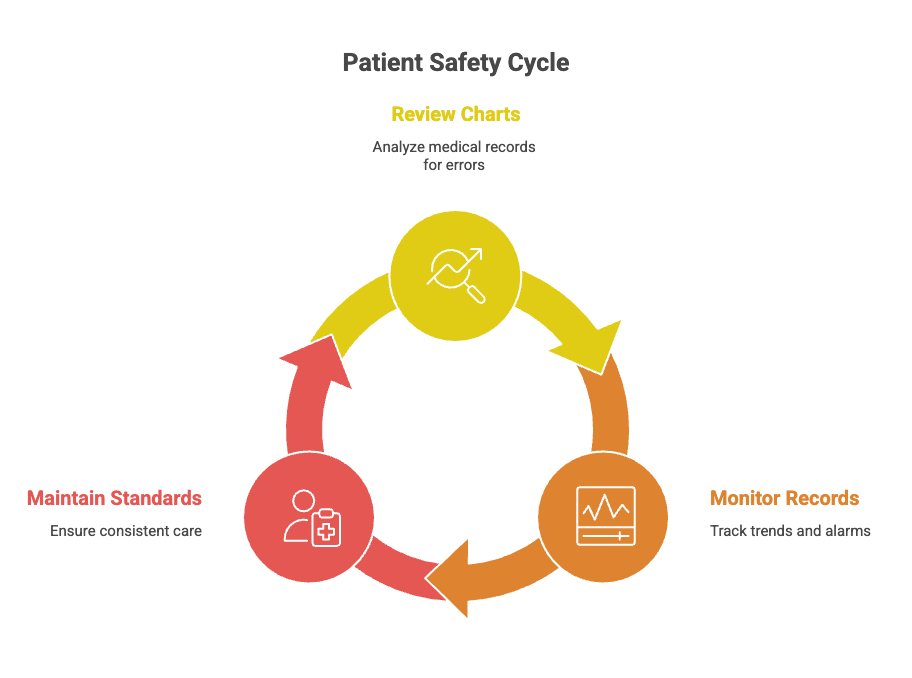
Your rights often look like this in real life:
- A chart reviewed like a timeline, exposing missed warnings and dosing errors.
- Monitoring records are reviewed as a dashboard, highlighting ignored alarms or misread trends.
- A care team held to consistent standards, so future patients receive safer treatment.
You also benefit from Privacy Protections, which limit improper disclosure of your medical information.
Steps to Take After a Miami Anesthesia Error Injury
After a Miami anesthesia error, you should seek immediate medical care to stabilize your condition and create a clear treatment timeline.
You should document your symptoms and preserve all related records, including discharge papers, medication lists, and follow-up instructions, because accurate documentation can prevent crucial details from being lost.
You should then contact a Miami lawyer promptly, so you don’t jeopardize evidence, deadlines, or your ability to pursue full compensation.
Seek Immediate Medical Care
Because anesthesia complications can escalate quickly, you should seek immediate medical care as soon as you suspect an error or notice unusual symptoms.
Call 911 if you have trouble breathing, chest pain, confusion, severe weakness, uncontrolled bleeding, or persistent vomiting, and request emergency transportation rather than driving yourself.
When you arrive, ask for a prompt triage assessment so clinicians can prioritize airway, circulation, and neurological status without delay.
Share your full medication list, allergies, and the exact timing of symptom onset, and make sure staff know you recently received anesthesia.
If you’re able, bring a trusted support person who can advocate calmly, relay critical facts, and help you follow instructions.
Acting quickly protects your health and helps prevent further harm.
Document Symptoms And Records
Start documenting immediately, as accurate notes and preserved records can clarify what happened and strengthen any future medical or legal review.
Write down the date, time, and setting of each symptom, and note any medication changes, follow-up visits, or new limitations that affect your ability to serve others safely.
Keep a Symptom Journal that tracks pain levels, breathing issues, confusion, weakness, or memory gaps, and record how long each episode lasts and what improves or worsens it.
If writing is difficult, create Voice Notes immediately after episodes, then transcribe them later for accuracy.
Request copies of discharge instructions, anesthesia records, operative reports, and lab results, and store them in one secure folder.
Photograph visible injuries, devices, or medication labels, and keep receipts for related expenses and travel.
Contact A Miami Lawyer
Well-kept notes and preserved medical records give your attorney a clear timeline, so you can take the next step and contact a Miami anesthesia error injury lawyer as soon as your condition allows.
You’ll want an advocate who can evaluate causation, identify responsible providers, and protect evidence before it disappears.
During Consultation Scheduling, ask what documents to bring, who’ll attend the meeting, and how quickly the firm can request hospital and anesthesia logs.
You should also discuss Fee Structures in clear terms, including contingency percentages, case costs, and whether you’ll owe anything if the claim doesn’t succeed.
If serving others motivates you, remember that pursuing accountability can improve safety standards and reduce future harm. Prompt legal guidance helps you act responsibly, efficiently, and with purpose for your community, too.
How a Miami Anesthesia Error Injury Lawyer Can Help You
When anesthesia goes wrong, how do you protect your health and your legal rights at the same time? You do it by partnering with a Miami anesthesia error injury lawyer who keeps your care first, while building a disciplined claim.
You’ll receive clear communication expectations, realistic timeline estimates, and guidance that honors your desire to protect others from preventable harm.
Your lawyer can help you by:
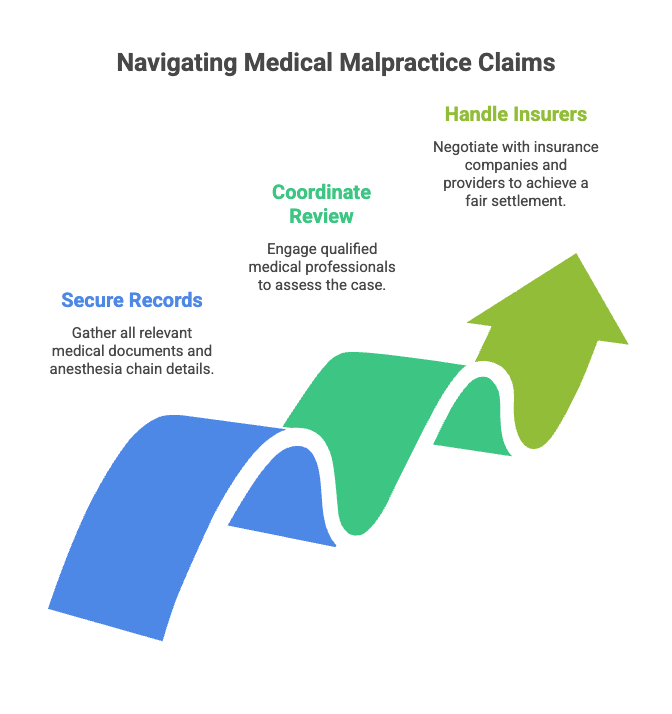
- Securing records and tracing the anesthesia chain, from pre-op screening to monitoring, is crucial so that crucial details don’t disappear.
- Coordinating qualified medical review, identifying deviations from accepted practice, and translating findings into a coherent legal theory.
- Handling insurers and providers, documenting damages, and negotiating firmly, so you can focus on recovery and family responsibilities.
You’ll also receive practical next steps, including evidence preservation and compliant filings, which reduce avoidable delays and strengthen credibility throughout the process.
Long-Term Effects of Miami Anesthesia Error Injuries
If you’ve suffered an anesthesia error in Miami, you may face lasting harm that goes far beyond the initial recovery period.
You can experience chronic neurological impairments, along with cognitive and memory deficits that affect your work, relationships, and daily decision-making.
You may also carry long-term psychological trauma, and recognizing these effects early helps you document their impact and plan for appropriate care.
Chronic Neurological Impairments
Although anesthesia is intended to protect your brain and nervous system during surgery, a preventable mistake can leave you with chronic neurological impairments that last long after the procedure ends.
You may face persistent weakness, numbness, tremors, nerve pain, or balance problems that disrupt work, caregiving, and community service.
Symptoms can stem from oxygen deprivation, medication mismanagement, or positioning injuries that affect nerves and spinal structures.
You can strengthen daily function through rehabilitation strategies that prioritize gait training, fine-motor retraining, and pain management, while setting measurable goals you can sustain.
You may also rely on assistive technologies, including braces, mobility aids, and adaptive tools that support safe movement and independence.
Document changes, follow treatment plans consistently, and seek legal guidance to secure resources for long-term care.
Cognitive And Memory Deficits
Chronic neurological symptoms don’t always stay confined to movement and sensation, because anesthesia errors can also change how your brain processes information.
You may notice slower thinking, reduced attention, and difficulty learning new tasks, even when you look physically recovered.
These cognitive changes can interrupt your ability to serve patients, lead teams, or manage demanding schedules with the reliability others count on.
You might also experience executive dysfunction, such as trouble planning, organizing, prioritizing, or switching between tasks without losing track.
Memory lapses can affect medication routines, documentation, and everyday responsibilities at home.
With early evaluation, structured memory rehabilitation, and practical accommodations, you can rebuild strategies for recall and decision-making.
You are also entitled to accountability when preventable errors create lasting cognitive harm.
Long-Term Psychological Trauma
Because an anesthesia error can feel sudden and life-threatening, the psychological impact often lasts long after the physical injuries stabilize. You may experience PTSD symptoms, including intrusive memories, panic in medical settings, or sleep disruption, and these reactions can strain your ability to care for others.
When you feel on edge, you may withdraw from service roles, lose confidence, or struggle with decision-making. Still, you can rebuild emotional resilience through consistent treatment, supportive community, and clear boundaries that protect your health.
Document symptoms, communicate with clinicians, and ask loved ones to observe changes, since trauma can be gradual and hard to measure.
| Trigger | Common reaction | Practical support |
|---|---|---|
| Hospital sounds | Flashbacks | Grounding plan |
| Follow-up visits | Avoidance | Advocate present |
Proving Liability in Miami Anesthesia Error Medical Malpractice Injury Cases
When an anesthesia mistake causes harm in Miami, you must show more than a bad outcome—you must prove legal liability through evidence that ties the provider’s conduct to your injury. You do this by establishing the standard of care, proving the clinician departed from it, and connecting that departure to the harm you suffered, not to an unavoidable complication.
You’ll often rely on expert testimony from a qualified anesthesiologist who can explain what a careful professional would’ve done, and why the choices made during induction, monitoring, or recovery fell short.
You should also secure complete records quickly, because chart discrepancies, missing physiological readings, late entries, and medication timing gaps can reveal unsafe practices or attempts to reconstruct events.
Witness statements from nurses and surgeons, equipment logs, and pharmacy records can further confirm dosing, alarms, and response times. By building a clear timeline and showing foreseeability, you help protect patients and promote safer care across Miami hospitals.
Compensation for Miami Anesthesia Error Damages
Although liability establishes fault, compensation determines what your anesthesia error injury has truly cost you in Miami, both now and in the years ahead.
Liability proves fault, but compensation shows what an anesthesia error has truly cost you in Miami—today and for years to come.
You should document every loss with care, because damages must be proven with clear records, credible testimony, and consistent timelines.
You can pursue economic damages for hospitalization, corrective procedures, medications, rehabilitation, and lost income, including diminished earning capacity if you can’t return to your prior work.
You may also seek non-economic damages for pain, suffering, disability, and loss of enjoyment of life, measured through the practical impact on your daily service to others.
When the evidence shows reckless misconduct, the court may allow punitive damages to deter similar harm and protect future patients.
A thorough claim also anticipates future care, such as long-term therapy, assistive devices, home modifications, and ongoing monitoring, so you’re not forced to shoulder costs that should never have been yours.
The Statute of Limitations for Miami Anesthesia Error Injury Cases
Even if you have strong evidence of an anesthesia mistake, Florida’s statute of limitations can still bar your Miami claim if you don’t file in time.
In most medical negligence matters, you must act within two years, and courts enforce these deadlines strictly to protect fairness and reliability in the process.
You should also understand when the clock starts.
Under the discovery rule, the limitations period may begin when you knew, or reasonably should’ve known, that an anesthesia error caused injury, not always on the procedure date.
Still, Florida imposes an outer deadline in many cases, even if discovery occurs later.
You’ll need to evaluate records, symptoms, and communications to identify the earliest legally significant notice.
Limited tolling exceptions can pause the running of time, such as certain fraud, concealment, or legal incapacity.
If you serve patients and families, treat timing as urgent, document promptly, and file within the safest window.
Why You Need an Experienced Miami Anesthesia Error Injury Lawyer
You also need a disciplined case strategy, because liability may involve the anesthesiologist, nurse anesthetist, surgeon, facility, or a combination of errors in supervision and communication.
An experienced attorney frames the standard of care clearly, anticipates defenses, and aligns your evidence with Florida’s medical negligence requirements.
With a strong expert network, your counsel can retain qualified anesthesiology and nursing reviewers to explain causation and damages in a way insurers and juries respect. That preparation helps you pursue accountability while honoring your goal of protecting others from preventable harm.
How to Choose the Right Miami Anesthesia Error Injury Lawyer for Your Case
Where should the search begin when an anesthesia mistake upends your health and finances?
You should start by confirming the lawyer’s focused experience with anesthesia and surgical injury cases, including results in intricate medical negligence matters.
Ask how they work with anesthesiology experts and how they evaluate causation, damages, and future care needs.
Next, compare Fee structures in writing.
You should understand whether the firm uses contingency fees, what costs you may advance, and how expenses are handled if the case doesn’t succeed.
Then set clear Communication expectations.
You merit a primary contact, predictable update intervals, and prompt responses to urgent questions.
You should also look for disciplined case management, accurate deadlines, and a willingness to prepare for trial while still pursuing a fair settlement.
Finally, choose counsel who treats your case as a service commitment, protecting your recovery and your community’s trust in safe care.
About the Law Offices of Anidjar and Levine
Experience matters when an anesthesia error turns a routine procedure into a long-term medical and financial crisis.
At the Law Offices of Anidjar and Levine, you work with a team that treats your case as service, not a transaction.
You’ll see their proven track record in disciplined case preparation, steady communication, and a focus on practical solutions that protect your family’s stability.
Their award recognition reflects consistent professionalism, but the priority remains your recovery and the wider good your claim can support.
| What you can expect | Why it serves you |
|---|---|
| Prompt case review | You gain clarity and direction early |
| Respectful client access | You stay informed, not sidelined |
| Thorough evidence gathering | You strengthen accountability and safety |
| Trial-ready advocacy | You’re prepared for settlement or court |
You’re guided to document harm, coordinate care needs, and pursue fair compensation with purpose and restraint.
Frequently Asked Questions
What Credentials Should I Look for in an Anesthesia Error Injury Lawyer?
You should look for a lawyer with a verified medical malpractice focus, strong courtroom experience, and a track record of anesthesia-related verdicts or settlements.
You’ll want board certification in civil trial law where available, plus peer recognition from respected legal organizations.
You should confirm they use qualified anesthesiology experts, understand hospital protocols, and communicate clearly.
You’ll also benefit from a client-centered practice that treats your case as service and stewardship.
Will My Case Require Testimony From a Board-Certified Anesthesiologist?
Often, yes, you’ll need testimony from a board-certified anesthesiologist, especially when standards of care and complicated physiology are disputed.
You must typically present expert testimony to explain what should’ve been done, and to prove medical causation between the anesthesia error and your injury.
If the mistake is obvious, you may rely on records and treating physicians, but insurers often require a specialist to protect patients and promote safer care.
How Long Do Anesthesia Error Malpractice Cases Usually Take to Resolve?
You can expect anesthesia error malpractice cases to take about 12–36 months to resolve, though complicated injuries may extend longer.
Your case timeline depends on the investigation period, records collection, expert review, and settlement discussions. If negotiations fail, you’ll proceed through discovery, motions, and trial scheduling, which adds time.
You can help shorten delays by organizing medical documents promptly and staying responsive, so you can better serve those relying on you.
Can I Pursue a Claim if I Signed an Anesthesia Consent Form?
Yes, you can still pursue a claim even if you signed an anesthesia consent form.
You must evaluate consent validity because consent doesn’t excuse negligent dosing, monitoring failures, or delayed intervention.
If you signed under pressure, sedation, or incomplete disclosure, coerced signatures may undermine the form’s legal weight.
You’ll strengthen your position by documenting what you were told, who was present, and your condition at signing, then obtaining records promptly.
What Costs Should I Expect, and Do You Work on Contingency?
You should expect two main categories of costs: attorney contingency fees and case expenses.
You don’t pay hourly rates, and you typically owe fees only if you recover compensation, which lets you focus on serving your family and community.
You may still front or reimburse case expenses, such as medical records, expert reviews, filing fees, and deposition costs.
You’ll receive a written agreement explaining percentages, timing, and any reimbursement terms.
—————————
When anesthesia errors disrupt your health, you can’t afford uncertainty or delay.
You should document symptoms, request complete medical records, and avoid statements to insurers until you’ve received legal guidance.
With Law Offices of Anidjar and Levine, you can evaluate liability, calculate full damages, and pursue compensation through negotiation or litigation with support from a Miami Medical Malpractice Lawyer.
You’ll also protect your claim by meeting Florida’s procedural requirements and deadlines.
If you act promptly, you strengthen your position and preserve vital evidence.

