

The Law Offices of Anidjar and Levine can investigate whether a healthcare provider’s conduct fell below accepted standards and caused a life-altering injury. A claim may involve reviewing medical records, consulting qualified medical professionals, and evaluating future care needs, lost income, and other losses.An unfavorable outcome alone does not establish negligence, and Florida deadlines may apply. Patients and families should seek urgent medical care first, preserve relevant records, and learn more about potential legal options with a Miami Personal Injury Lawyer.
Main Takeaways
- A Miami medical malpractice lawyer can assess whether substandard care caused a catastrophic injury and explain potential legal options.
- Claims may involve surgical errors, birth injuries, delayed diagnoses, medication mistakes, or inadequate monitoring.
- Medical records, expert opinions, witness accounts, and injury documentation can help establish negligence, causation, and damages.
- Eligible claims may seek compensation for medical expenses, lost income, pain and suffering, and future care needs.
- Prompt legal guidance can help preserve evidence, address Florida deadlines, and manage insurer communications; an adverse outcome alone does not prove malpractice.


How We Can Help With Your Miami Medical Malpractice Catastrophic Injuries Claim
When medical negligence causes a catastrophic injury, a Miami medical malpractice lawyer can help assess the claim, identify potentially responsible parties, and explain the legal options available. The lawyer’s role may include organizing records, reviewing relevant timelines, and communicating with medical providers and insurers on the client’s behalf.
A careful Claim investigation can help establish what occurred and preserve information needed to evaluate the matter. This process may involve obtaining medical records, consulting qualified professionals, and examining whether the care provided met applicable standards. A thorough liability assessment can clarify which individuals or institutions may bear responsibility and what evidence supports that conclusion.
Legal counsel can also manage deadlines, prepare required documentation, and respond to requests from opposing parties. By handling these demands, the lawyer allows injured people and their families to focus on care, rehabilitation, and daily responsibilities. The approach should remain attentive to the client’s goals, provide clear updates, and pursue a fair resolution through negotiation or litigation when appropriate.
OUR CONSULTATIONSARE FREE
START YOUR FREE CASE REVIEW

Understanding Miami Medical Malpractice Catastrophic Injuries Injury Cases
Understanding a Miami medical malpractice catastrophic injury case requires examining how the medical care may have caused severe, lasting harm. The central question is whether a healthcare provider failed to meet the accepted standard of care and whether that failure caused the patient’s injury. Medical negligence must be supported by evidence, not simply by an unfavorable outcome or a known treatment risk.
A careful review may consider medical records, professional opinions, and the patient’s condition before and after treatment. These details help clarify the nature of the injury, its connection to the care provided, and its likely long-term effects. Catastrophic harm can alter a person’s ability to work, live independently, or participate in family and community life. A thorough assessment also considers ongoing treatment needs, rehabilitation, and other future support.
For families seeking to protect a loved one, understanding these issues can help them make informed decisions and pursue accountability while respecting the patient’s dignity and needs.
Common Causes of Miami Medical Malpractice Catastrophic Injuries
Catastrophic injuries in Miami medical malpractice cases may result from surgical errors, birth injuries, diagnostic mistakes, or medication errors. These incidents can occur at different stages of care, from initial evaluation through treatment and follow-up. Identifying the cause requires examining the medical decisions and procedures involved.
Surgical Errors
How can a routine operation lead to a life-altering injury? Surgical errors may occur when a medical team fails to follow established safeguards or respond appropriately to complications. A surgeon may operate on the wrong site, damage nearby organs or nerves, or leave an instrument inside the patient. Defective or improperly used Surgical Instrumentation can also contribute to severe harm.
Operating Room Protocols are designed to reduce preventable mistakes through patient identification, site verification, equipment checks, and clear communication among staff. When these procedures are ignored, a patient may face infection, internal bleeding, permanent disability, or the need for additional operations. Such injuries can disrupt a person’s independence and ability to care for family or contribute to the community. A careful review of medical records and surgical practices may help clarify whether negligence contributed to the outcome.
Birth Injuries
Birth injuries can occur when preventable errors during pregnancy, labor, or delivery deprive an infant of timely care. In Miami, failures to monitor maternal or fetal health, respond to signs of distress, or manage complications may contribute to serious harm. Delayed decisions about an emergency cesarean delivery, improper use of forceps or vacuum devices, and medication errors can also cause injury. These events may result in Birth trauma, including fractures, nerve damage, or oxygen deprivation, as well as other neonatal injuries requiring extensive treatment. Some children face lasting physical or developmental effects and need ongoing support from medical professionals and caregivers. Careful review of prenatal records, delivery decisions, and hospital procedures can help determine whether negligent care contributed to an injury and identify options for accountability and assistance.
Diagnostic Mistakes
When a serious condition is missed or identified too late, diagnostic mistakes can delay treatment and allow preventable harm to worsen. A missed diagnosis may occur when symptoms are overlooked, test results are misread, or a provider fails to evaluate a serious condition. A delayed diagnosis can also result when necessary testing or referrals to specialists are not arranged promptly. In Miami, these failures may affect patients with conditions such as stroke, cancer, infection, or internal bleeding, where timely care can be essential. The consequences may include lasting disability, additional treatment, or loss of independence. Careful evaluation, appropriate testing, and clear communication among providers help reduce these risks. When a diagnostic error causes serious injury, a review of medical records and clinical decisions may help determine whether the care met accepted professional standards.
Medication Errors
Medication errors can cause catastrophic injuries when a patient receives the wrong drug or dose, or when a harmful interaction or allergy is overlooked. These events may result from prescribing mistakes, unclear instructions, pharmacy dispensing problems, or failures to monitor a patient’s response. Dosage errors can lead to organ damage, severe bleeding, respiratory failure, or other life-threatening complications, particularly when a medication has a narrow safety range. Medication reconciliation helps reduce risk by comparing a patient’s current medicines with new prescriptions during admission, transfer, or discharge. When providers omit this step or fail to communicate changes, patients may receive duplicate drugs or stop vital treatment. Hospitals and clinicians are expected to use reliable safeguards, verify prescriptions, and respond promptly to warning signs. A careful review can support safer care and accountability.
Don’t Wait. Call Our Florida Personal Injury Lawyers Now!


Legal Rights of Miami Medical Malpractice Catastrophic Injuries Injury Victims
Catastrophic injuries caused by medical negligence can leave Miami patients with permanent disabilities, substantial medical expenses, and lasting changes to daily life. Florida law may provide injured patients with options to seek accountability and compensation when substandard care causes harm. Understanding these rights can help patients and families make informed decisions while protecting their interests.
Miami patients harmed by medical negligence may have options under Florida law to seek accountability and compensation.
Depending on the circumstances, a patient may be entitled to:
- Request and review relevant medical records, bills, and treatment information.
- Seek an independent medical assessment to understand the injury and future care needs.
- Pursue a malpractice claim for eligible losses, including medical costs, lost income, and pain and suffering.
- Consult a qualified attorney about deadlines, evidence, and procedural requirements.
Patient advocacy can help ensure concerns are heard, and care decisions reflect the patient’s needs. Informed consent also protects a patient’s right to receive material information about proposed treatment and alternatives. Families supporting an injured person may help organize records and communicate with providers, while respecting the patient’s preferences and privacy. Legal rights depend on the facts, applicable law, and timely action.
Why Do Miami Medical Malpractice Catastrophic Injuries Happen?
Although medical care involves inherent risks, catastrophic injuries may occur when a provider fails to meet accepted standards and causes serious harm. These events can arise from delayed diagnoses, surgical errors, medication mistakes, or inadequate monitoring. A missed warning sign may allow a treatable condition to progress, while a preventable surgical error can cause lasting disability or organ damage.
Communication failures also contribute. When clinicians do not share important findings, clarify treatment plans, or respond to changes in a patient’s condition, necessary care may be delayed or omitted. Staffing shortages, rushed decisions, and incomplete records can further weaken patient safety. In some cases, insufficient training or failure to follow established protocols exposes patients to avoidable risks.
Healthcare Oversight and consistent safety practices help identify system weaknesses before they cause injury. When providers or institutions disregard accepted safeguards, the result may be Preventable Harm with profound effects on patients and families. Understanding these causes supports accountability and encourages safer care for the broader community.
Don’t Wait. Call Our Florida Personal Injury Lawyers Now!
What Should You Do After a Miami Medical Malpractice Catastrophic Injury?
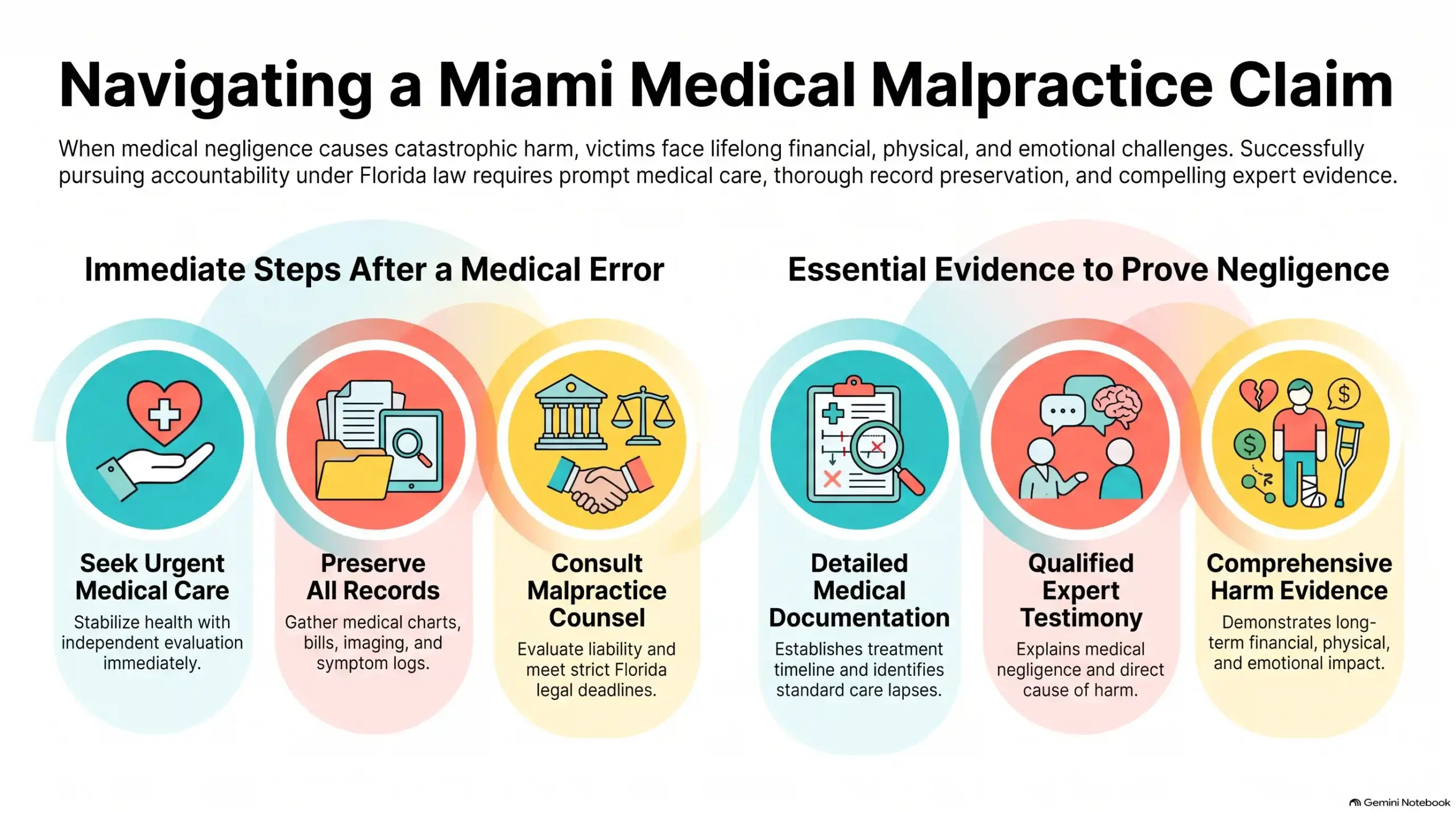
After a suspected medical error causes catastrophic injury, the injured person should seek immediate medical care to address urgent needs and document their condition. Preserving medical records, test results, bills, and communications can help clarify what occurred and support a later review. A qualified medical malpractice lawyer can assess the circumstances and explain potential legal options.
Seek Immediate Medical Care
When a medical error causes a catastrophic injury, prompt evaluation by an independent medical professional can help protect the patient’s health and identify urgent complications. The patient or a responsible caregiver should call 911 or go to an emergency department if symptoms are severe, worsening, or potentially life-threatening. Emergency stabilization takes priority over questions about responsibility or legal options. Clinicians can assess the injury, provide necessary treatment, and determine whether the patient needs admission or transfer to a facility with appropriate resources. Once immediate dangers are addressed, the patient should request a consultant referral when the injury requires focused knowledge, such as neurological, orthopedic, or cardiac care. A support person can help communicate symptoms and follow medical instructions. Timely, coordinated treatment may reduce further harm and support the patient’s recovery.
Preserve Medical Records
Once immediate medical needs are addressed, preserving records can help document the patient’s condition, treatment, and recovery. The patient or an authorized family member can request copies of hospital charts, discharge instructions, test results, imaging, medication lists, and billing statements. Records from follow-up providers, rehabilitation services, and emergency care may also help create a complete timeline. Record preservation should include keeping original documents secure and storing digital copies in a protected, organized location. A dated log of symptoms, appointments, communications, and changes in daily functioning can supplement clinical records without replacing them. Families should note which facilities provided care and when they submitted requests. Because providers may follow different retention policies, timely requests can reduce the risk that important information becomes unavailable. Records should remain unaltered and accessible to authorized caregivers.
Consult a Malpractice Lawyer
A consultation with a Miami medical malpractice lawyer can help a patient or family understand whether a catastrophic injury may have resulted from a medical provider’s negligence. During an Initial Consultation, the lawyer can review available medical records, explain possible legal issues, and identify information needed to assess the claim. The patient or family should describe the treatment, injury, and resulting care needs as accurately as possible, while avoiding assumptions about fault.
Attorney Selection warrants careful consideration. Relevant experience with medical negligence and catastrophic injury claims, clear communication, and a transparent explanation of fees can help a family choose appropriate representation. A lawyer may also explain deadlines, potential costs, and the process for obtaining expert review. Prompt advice can help preserve options and support an informed decision, allowing families to focus on the injured person’s care and well-being.
Critical Evidence in a Miami Medical Malpractice Catastrophic Injuries Case
Evidence is vital to establishing how a medical error occurred and the extent of the resulting catastrophic injury.
Relevant materials may include:
- Medical records
- Expert testimony
- Witness statements
- Injury documentation
Together, these sources can help clarify the standard of care, the cause of harm, and its impact.
Medical Records
In a Miami medical malpractice case involving catastrophic injuries, medical records can help establish what care was provided, when decisions were made, and how the patient’s condition changed. These documents may include physician notes, medication lists, test results, imaging reports, discharge instructions, and follow-up care records. Collectively, they can provide a timeline of treatment and show whether important symptoms or changes were documented.
Complete records may also help explain the lasting effects of an injury and the services a patient now needs. Missing entries, conflicting details, or delayed documentation may require careful review. Record retention practices can affect whether relevant information remains available, while privacy safeguards help protect sensitive patient information during collection and review. Organized records can support a clearer account of events and help families pursue accountability and appropriate care.
Expert Testimony
After medical records establish the sequence of care, expert testimony can help explain whether that care met accepted medical standards. In a catastrophic injury case, qualified medical professionals may assess diagnosis, treatment decisions, and whether a preventable error contributed to lasting harm. Their analysis can clarify intricate medical issues for a judge or jury without replacing the underlying records.
Expert qualifications matter. Relevant education, clinical experience, and familiarity with the applicable specialty help establish whether an expert can offer a reliable opinion. The expert must also connect the evidence to accepted standards and explain the reasoning behind each conclusion.
Careful testimony preparation supports accuracy and clarity. Counsel may review records and anticipated questions with the expert while preserving independent medical judgment. Clear, balanced testimony can help decision-makers evaluate responsibility and the injured person’s needs, supporting a fair resolution and informed accountability.
Witness Statements
Witness statements can help establish what occurred during a patient’s care and how a medical error affected the patient. In a catastrophic injury claim, accounts from people who observed treatment may clarify the sequence of events, communications, and decisions made. Eyewitness Accounts from family members or visitors can describe what they saw or heard, including concerns raised during care. Their statements may help explain whether important information was shared with clinicians and how staff responded.
Staff Observations can also provide relevant context. Nurses, technicians, and other employees may recall changes in a patient’s condition, handoffs, or instructions given by providers. An attorney can identify potential witnesses, preserve their recollections, and assess whether accounts are consistent with medical records and other evidence. Careful, respectful interviews help protect reliable information while supporting a fair evaluation of responsibility.
Injury Documentation
Injury documentation provides a detailed record of the harm a patient suffered and how it changed over time. Medical records, discharge instructions, test results, and treatment notes can establish the severity of an injury and the care required. Photographic documentation may show visible changes, such as wounds, swelling, or mobility limitations, when images are dated and preserved without alteration. A symptom journal can track pain, fatigue, cognitive changes, and effects on daily activities, giving clinicians and legal reviewers a clearer account of ongoing problems. Records should be organized chronologically and shared with treating providers so that care decisions reflect the patient’s condition. Consistent documentation can help explain losses, support an accurate claim evaluation, and inform efforts to secure resources that address the patient’s needs.
Long-Term Effects of Miami Medical Malpractice Catastrophic Injuries
Catastrophic injuries caused by medical malpractice may leave patients with permanent physical limitations that affect daily activities and independence. Many require ongoing medical care, rehabilitation, or expert support, creating substantial long-term costs. These demands can also place emotional and financial strain on patients and their families.
Permanent Physical Limitations
Permanent physical limitations can reshape nearly every aspect of a person’s life after a serious medical error. A person may experience reduced mobility, weakness, impaired coordination, or loss of function that restricts daily activities and independence. Tasks such as bathing, dressing, preparing meals, or returning to work may require new strategies or assistance from others. Adaptive equipment, including mobility aids and tailored household tools, can support safer participation in everyday routines. Accessibility modifications, such as ramps, widened doorways, and accessible bathrooms, may make a home or workplace more usable. These changes can also affect family responsibilities, social connections, and future plans. A careful assessment of the limitations and their practical consequences helps identify appropriate support and preserve dignity. Legal claims may account for lasting effects on independence, accessibility, and quality of life.
Ongoing Medical Care
After a catastrophic medical injury, ongoing care may remain necessary long after the initial treatment ends. Patients may need regular visits with specialists, medication management, diagnostic testing, or help from home health professionals. These services can address complications, monitor changes in health, and help preserve function over time. Care coordination helps make certain that treating providers share relevant information and follow a consistent plan. Rehabilitation planning may also evolve as a patient’s abilities and medical needs change. Physical, occupational, or speech therapy can support daily activities and promote safe participation in family and community life. A structured care plan can identify needed services, responsible providers, and follow-up schedules. When medical negligence causes lasting harm, clear records of ongoing treatment may help explain the injury’s continuing effects and care requirements.
Emotional and Financial Strain
Long-term effects of catastrophic injuries caused by medical malpractice can place substantial emotional and financial strain on patients and their families. Persistent pain, reduced independence, and uncertainty about recovery may contribute to anxiety, grief, or depression. Family members who provide daily assistance can experience Caregiver burnout, particularly when responsibilities continue without adequate respite or support. These demands may also affect employment, savings, and the ability to meet ordinary household expenses. As medical bills and lost income accumulate, household instability can threaten housing, education, and access to vital services. A careful assessment of future care needs, income losses, and available support can help families plan for long-term responsibilities. Attorneys, health professionals, and community organizations may assist by identifying resources and documenting the consequences of the injury, helping families pursue stability while preserving the injured person’s dignity and participation in care.
Proving Liability in Miami Medical Malpractice Catastrophic Injuries Injury Cases
Proving liability in a Miami medical malpractice case involving catastrophic injuries requires evidence that a healthcare provider failed to meet the applicable standard of care and that the failure directly caused serious harm. Establishing the Standard of care often involves reviewing medical records, treatment decisions, diagnostic results, and relevant clinical guidelines. Qualified medical experts may explain what a reasonably careful provider would have done under similar circumstances and identify any departure from accepted practice.
A thorough causation analysis connects that departure to the patient’s injury. The evidence must show that the provider’s conduct, rather than an unrelated condition or event, caused or substantially contributed to the catastrophic harm. This may require examining the patient’s condition before and after treatment, consulting experts, and evaluating how timely or appropriate care could have changed the outcome.
Careful documentation and objective expert opinions help clarify intricate medical facts. This process supports accountability and helps patients and families pursue answers while preserving the dignity and well-being of those affected.
Dealing With Insurance Companies After a Miami Medical Malpractice Catastrophic Injuries Injury
Once evidence of negligence and causation has been developed, communication with insurers becomes another important part of a Miami medical malpractice claim involving catastrophic injuries. Insurers may seek detailed statements, broad medical authorizations, or early discussions about resolving the matter. Each request can affect how the injured person’s account and health history are presented. Careful review helps guarantee responses remain accurate, relevant, and consistent with documented facts.
Insurer tactics may include questioning whether treatment was necessary, emphasizing preexisting conditions, or disputing the long-term cost of care. These issues matter when catastrophic injuries require rehabilitation, assistive services, or lifelong support. Families focused on protecting a loved one should avoid assuming coverage or accepting informal assurances as final.
Settlement pressure can arise before the full medical outlook is clear. A proposed payment may not reflect future care, lost earning capacity, or the practical burden placed on caregivers. Legal guidance can help assess communications and preserve the injured person’s interests while allowing families to focus on vital care and recovery.
What to Expect During a Miami Medical Malpractice Catastrophic Injuries Injury Claim Process
A catastrophic injury claim typically begins with an initial case evaluation, followed by a review of medical records to assess the injury, its cause, and potential damages. The process may then involve filing the claim and negotiating with insurers or other parties. If negotiations do not resolve the dispute, the case may proceed to trial or another resolution.
Initial Case Evaluation
How does an initial case evaluation begin after a catastrophic injury linked to medical care in Miami? During an Initial Consultation, the injured person or a representative describes what happened, when the injury became apparent, and how it has affected daily life. The legal team may ask about treatment providers, current needs, financial pressures, and the support required for recovery. This conversation helps identify the person’s immediate concerns and clarify what assistance may be appropriate.
A Case Assessment then considers whether the reported circumstances may support a medical malpractice claim, including whether harm appears connected to care that fell below accepted standards. The evaluation also considers the seriousness of the injury, potential losses, and relevant deadlines. No outcome is guaranteed at this stage. The purpose is to explain possible next steps, answer questions, and help the family make informed decisions while protecting the injured person’s interests.
Medical Record Review
Medical record review is a central step in evaluating a catastrophic injury claim involving medical care in Miami. The review may include hospital charts, physician notes, test results, medication records, and discharge instructions. These materials help clarify the patient’s condition, the care provided, and how the injury developed.
A Chart chronology organizes events by date, allowing reviewers to compare symptoms, decisions, and treatment against accepted medical practices. Provider communications, including referrals and documented discussions, may reveal what information was shared and when. Qualified medical professionals can assess whether the records support concerns about delayed diagnosis, treatment errors, or inadequate follow-up. They may also explain how the alleged lapse relates to lasting harm and future care needs. Careful analysis helps establish a reliable factual foundation while respecting the patient’s experience and the responsibilities of those entrusted with providing care.
Filing and Negotiations
Once the medical records and supporting evidence have been reviewed, the claim may proceed through Florida’s required pre-suit process before a lawsuit is filed. During this stage, the claimant generally provides formal notice to the health care providers involved, and the parties investigate the allegations under state requirements. Medical experts may assess whether the care fell below accepted standards and whether that failure caused the catastrophic injury. Pre-suit negotiations can begin as the investigation develops, allowing both sides to evaluate responsibility, damages, and available evidence. A careful settlement strategy considers long-term medical care, rehabilitation, lost earning capacity, and the injured person’s need for dependable support. Negotiations may involve requests for records, expert opinions, and responses from insurers or providers. If the matter does not resolve during presuit review, filing a lawsuit may become the next procedural step.
Trial and Resolution
If presuit negotiations do not resolve the claim, the case may proceed to trial in a Miami court. The parties present evidence about the medical care, the injury, and its effect on the patient’s life. Jury selection identifies impartial jurors who can evaluate the evidence and apply the law. Witnesses may include treating clinicians, medical experts, and family members who can explain the patient’s needs and daily challenges. After closing arguments, the jury deliberates and returns a verdict on liability and damages. If the patient prevails, the court may enter a judgment reflecting the awarded compensation. The next steps can include post-trial motions or an appeal, which may affect timing. Enforcing a verdict may require additional legal action if payment is delayed. A resolution can support ongoing care and household stability.
Compensation for Miami Medical Malpractice Catastrophic Injuries Injury Damages
Catastrophic injuries caused by medical negligence can require lifelong care, prevent a person from working, and permanently alter daily life. Compensation may help address the lasting effects and support access to dependable care. A strong claim should link the injury to negligent treatment and show how the harm affects the injured person’s needs, independence, and future plans.
Damage valuation requires a thorough review of medical records, expert assessments, and reliable projections of future care. The process may also consider rehabilitation, assistive services, home modifications, and other measures needed to preserve safety and dignity. Clear documentation helps decision-makers understand the injury’s full impact rather than focusing only on immediate treatment.
Florida law may impose compensation caps in certain medical malpractice cases, and applicable limits can depend on the claim and governing law. Because these rules may affect recovery, legal review is important. A well-supported demand can help pursue fair compensation while recognizing the person’s long-term needs and the responsibilities of those involved.
Economic vs Non-Economic Damages in Miami Medical Malpractice Catastrophic Injuries Cases
In catastrophic medical malpractice cases, damages generally include economic losses, such as medical expenses and reduced earning capacity, and non-economic losses, such as pain and diminished quality of life. Each category addresses a different effect of the injury and requires evidence suited to the loss claimed. Establishing the full extent of catastrophic losses may involve medical records, financial documentation, and expert testimony.
Economic Damages
When medical negligence causes a catastrophic injury, economic damages address the measurable financial losses that follow. These losses may include hospital bills, rehabilitation costs, prescription medications, assistive devices, and home modifications required for daily care. A damages assessment can also account for Lost earnings when the injured person cannot return to work, along with reduced future earning capacity if the injury limits employment over time. Future expenses may include ongoing treatment, specialized equipment, in-home assistance, and other reasonably anticipated needs. Medical records, employment information, expert opinions, and documented costs can help establish the amount and duration of these losses. In Miami medical malpractice cases, careful evaluation is important because catastrophic injuries may require support for many years. A thorough calculation helps clarify the financial resources needed to address the injured person’s care and stability.
Non-Economic Damages
Beyond measurable financial losses, non-economic damages address the personal effects of a catastrophic medical injury. Unlike economic damages, which cover expenses and lost income, these damages reflect harm that does not have a fixed price. They may include Pain and suffering, emotional distress, and loss of enjoyment of activities, relationships, or independence. A severe injury can alter daily routines and limit a person’s ability to participate in family life, community service, or meaningful work. The law recognizes that these consequences matter even when they cannot be calculated from bills or wage records. In Miami medical malpractice cases, non-economic damages may form a significant part of a claim involving lasting impairment. Their purpose is to account for the injury’s human impact, while economic damages address its measurable financial consequences.
Proving Catastrophic Losses
Catastrophic medical injuries can create losses that extend across a person’s finances, health, and daily life. Proving these losses requires clear evidence connecting the harm to negligent care and showing its likely long-term effects. Economic damages include measurable costs, such as hospital bills, rehabilitation, assistive equipment, and lost income. A Life Care plan may outline anticipated treatment, support services, and related expenses over time. Financial records and qualified expert assessments can also help estimate Future Earnings when an injury limits or ends a person’s ability to work.
Non-economic damages address harms that lack a precise price, including pain, emotional distress, loss of independence, and reduced quality of life. Medical documentation, testimony from the injured person and caregivers, and professional opinions may help explain these effects. Collectively, credible evidence allows a factfinder to assess the full scope of catastrophic losses.
Don’t Wait. Call Our Florida Personal Injury Lawyers Now!
When a Miami Medical Malpractice Catastrophic Injuries Injury Case Goes to Trial vs Settlement
In a Miami medical malpractice case involving catastrophic injuries, the decision to settle or proceed to trial depends on the strength of the evidence, the extent of the harm, and the parties’ willingness to accept uncertainty. A settlement may provide a defined recovery without the delay and unpredictability of a courtroom verdict. Settlement timing can depend on whether medical records, expert assessments, and future-care projections clearly establish the losses. A premature offer may not reflect the injured person’s long-term needs, while continued negotiations can prolong uncertainty for families seeking stability.
Trial may be considered when the parties dispute responsibility, the extent of harm, or the value of future care. It allows evidence to be presented to a judge or jury, but trial uncertainty includes the possibility of an unfavorable result and additional time before resolution. The choice should account for the injured person’s needs, the available evidence, and the practical consequences of each path. A careful evaluation can support an informed decision focused on lasting care and security.
Florida Laws That May Affect Your Miami Medical Malpractice Catastrophic Injuries Case
Whether a catastrophic injury claim resolves through settlement or proceeds to trial, Florida law shapes the evidence, deadlines, and potential recovery. Several rules can affect how a Miami medical malpractice case is prepared and evaluated. They also help confirm that claims are supported by reliable information and pursued with attention to patient welfare.
- Pre-suit Requirements: Before filing, a claimant generally must investigate the allegations and provide notice to the prospective defendant. Medical records and qualified expert review may be required.
- Expert Evidence: Florida law sets standards for expert witnesses, whose opinions can address whether care fell below the accepted standard and caused injury.
- Comparative Fault: If a patient is found partly responsible, that finding may reduce recoverable damages under applicable rules.
- Damage Caps: Limits on certain damages have changed through legislation and court decisions. Their application depends on the claim and current law.
These rules can influence case strategy, settlement discussions, and trial presentation. Careful legal review helps families seek accountability while protecting the injured person’s long-term needs.
The Statute of Limitations for Miami Medical Malpractice Catastrophic Injuries Injury Cases
How soon must a medical malpractice claim be filed in Miami? Florida generally requires a medical malpractice lawsuit to be filed within two years after the injury is discovered, or should have been discovered through reasonable diligence. A separate four-year limit usually runs from the date of the alleged malpractice, regardless of when the harm becomes apparent. These deadlines can affect patients with catastrophic injuries and families seeking accountability while protecting their ability to serve others.
The Discovery Rule may apply when an injury or its connection to medical care could not reasonably have been identified earlier. Florida law also provides limited Deadline Exceptions. For example, an extension may be available in cases involving fraud, concealment, or intentional misrepresentation, and special rules may apply to minors. A pre-suit investigation and notice process is also required before filing, and it can affect timing.
Because exceptions are narrow and deadlines depend on case-specific facts, early attention to the applicable dates is crucial. Missing a controlling deadline may bar recovery, even when the injury is severe.
How a Miami Medical Malpractice Catastrophic Injuries Lawyer Can Help You
After identifying the deadlines that may govern a claim, an experienced Miami medical malpractice lawyer can help families assess the evidence, investigate whether medical care fell below accepted standards, and determine how the injury affected the patient’s long-term needs. Counsel may coordinate with medical professionals to review records, explain the injury’s likely course, and identify the care and resources required. A considered Case strategy can address both legal responsibility and the practical consequences of catastrophic harm.
A lawyer may also help by:
- Gathering and organizing medical records, bills, and other relevant documentation.
- Consulting qualified experts to evaluate treatment decisions and explain possible negligence.
- Calculating present and future costs, including rehabilitation, assistive equipment, and ongoing care.
- Communicating with insurers and opposing counsel while keeping the family informed.
This work can ease administrative burdens for relatives who are focused on the patient’s welfare. Respectful family support includes clear explanations, careful attention to the patient’s priorities, and advocacy to secure resources that protect dignity, access to treatment, and long-term stability.
When to Contact a Miami Medical Malpractice Catastrophic Injuries Lawyer
When a medical error causes catastrophic harm, contacting a Miami medical malpractice lawyer promptly can help preserve records and clarify the options available to the patient and family. Early consultation may be appropriate when a patient suffers a severe, lasting injury after treatment, surgery, childbirth, or a delayed diagnosis. Early Warning Signs may include unexplained neurological damage, loss of mobility, organ failure, or a sudden decline following care. These outcomes do not establish negligence, but they can justify a careful review of what occurred.
Families may seek legal guidance while the patient continues receiving treatment. A lawyer can explain relevant deadlines, which may depend on the circumstances and applicable law, and identify records that should be retained. Attorney Selection should consider whether counsel handles medical malpractice claims involving catastrophic injuries and communicates clearly with the patient’s representatives. Prompt contact can help a family understand available next steps without interfering with medical care or delaying urgent decisions. Records, timelines, and questions can be organized for an initial discussion.
Why You Need an Experienced Miami Medical Malpractice Catastrophic Injuries Lawyer
Catastrophic medical injury claims often require an experienced Miami medical malpractice lawyer because they involve complicated medical evidence, substantial long-term needs, and strict legal requirements. Attorney Experience can help clarify how a provider’s decisions, facility procedures, and applicable standards relate to the harm suffered. A lawyer familiar with these claims can coordinate medical record reviews, consult qualified professionals, and identify the evidence needed to explain both liability and the injury’s lasting effects.
Careful Case Strategy is also important when a person faces ongoing treatment, rehabilitation, reduced earning capacity, or permanent disability. A thorough assessment can account for future care and support needs, rather than focusing only on immediate expenses. The lawyer can manage deadlines, address procedural requirements, and present the claim in an organized manner while the injured person and family focus on recovery and daily responsibilities. This work helps ensure the full impact of a catastrophic injury is clearly documented and that the claim receives informed, diligent attention.
How to Choose the Right Miami Medical Malpractice Catastrophic Injuries Lawyer for Your Case
Choosing the right Miami medical malpractice lawyer for a catastrophic injury case requires careful evaluation of the attorney’s experience, resources, and approach. Prospective clients can review Attorney credentials, including licensing, disciplinary history, and experience with medical negligence claims involving permanent or life-altering harm. Relevant case experience may help show whether the lawyer understands intricate records, expert testimony, and the long-term costs of serious injuries.
The attorney’s communication style also matters. Clear explanations, timely updates, and attentive responses can help families make informed decisions during a demanding process. A lawyer should describe potential steps, risks, and timelines without promising a particular result. The client may ask who will handle daily case work, how questions are addressed, and what information is needed to assess the claim.
A careful selection process should include discussing fees, investigation resources, and the lawyer’s plan for documenting future care needs. Comparing answers from several qualified attorneys can help families choose representation aligned with their priorities and the injured person’s interests.
About The Law Offices of Anidjar & Levine
Among the firms serving people affected by medical negligence, the Law Offices of Anidjar & Levine represents clients in Miami and throughout Florida.
The firm handles injury claims involving serious harm, including cases in which medical errors may have caused lasting physical, financial, or personal consequences.
Its attorneys review available records, explain legal options, and pursue compensation claims when supported by the evidence.
Firm history provides context for the firm’s work, while each matter requires an individual review of the facts, applicable law, and potential damages.
Clients may receive help communicating with insurers, gathering documentation, and understanding the steps involved in a claim.
The firm’s role is to provide legal representation, not to replace medical care or guarantee a particular result.
Community involvement is also part of its public presence.
For individuals and families seeking to protect their well-being and support those affected by serious injuries, the firm offers a point of contact for discussing legal concerns and possible next steps.
Frequently Asked Questions
Can I File a Medical Malpractice Claim if I Signed a Consent Form?
Yes, signing a consent form does not automatically prevent a patient from filing a medical malpractice claim. Informed Consent generally acknowledges disclosed risks and authorizes treatment; it does not excuse negligent care or cover risks that were not properly explained. Consent Misconceptions can lead patients to believe they waived all rights. A claim may depend on evidence of substandard care, injury, and a connection between the two. A qualified attorney can review the circumstances.
Can Multiple Healthcare Providers Be Responsible for the Same Catastrophic Injury?
Yes. Multiple healthcare providers may be responsible for one catastrophic injury if their separate acts or omissions contributed to the harm, such as a missed diagnosis, surgical error, or inadequate follow-up. Shared liability among providers depends on the evidence and applicable law. Comparative fault allocation may determine each provider’s share of responsibility. A careful review of medical records and expert opinions can help clarify how care decisions contributed to the injury and resulting losses.
What Happens if a Patient Dies Before a Malpractice Claim Is Resolved?
If a patient dies before a malpractice claim is resolved, the claim may continue through the patient’s estate, while eligible relatives may pursue a separate wrongful death action. An estate representative generally manages the existing claim and works with counsel to preserve evidence, meet deadlines, and address settlement or court proceedings. The available claims, damages, and authorized parties depend on state law and the circumstances of the death. Prompt legal guidance can protect those interests.
Can a Hospital Be Liable for the Actions of an Independent Contractor?
A hospital may be liable for an independent contractor’s negligence when its conduct or representations reasonably lead a patient to believe the clinician is a hospital employee. This apparent agency theory may apply if the patient relied on that impression and did not knowingly choose the contractor. Liability may also arise from negligent hospital credentialing or supervision. The outcome depends on the facts, applicable law, and evidence concerning the hospital’s role and the patient’s understanding.
Are Medical Malpractice Settlements Subject to Taxes in Florida?
Medical malpractice settlements in Florida are generally not taxable when they compensate for physical injuries or physical sickness. Tax treatment depends on what the settlement pays for: punitive damages and interest are typically taxable, while amounts for emotional distress may be taxable if not tied to physical injury. Settlement allocation matters, so the agreement should clearly identify each category of damages. A tax professional can review the terms and explain applicable federal reporting obligations to recipients.
—————————
Catastrophic injuries caused by medical negligence can require extensive treatment, long-term support, and significant financial resources.
A careful legal review can help determine whether a provider violated the applicable standard of care and caused harm.
The Law Offices of Anidjar and Levine can assess the available evidence, explain potential legal options, and pursue compensation when the facts support a claim.
Learn more about working with a Miami Personal Injury Lawyer.
Prompt consultation is important because Florida law sets deadlines for medical malpractice actions.