The Law Offices of Anidjar and Levine can help injured victims identify responsible parties, preserve evidence, and pursue compensation after a work-related vehicle crash. These cases may involve an employee driver, employer, insurer, maintenance contractor, or other motorist.
Legal review can address negligence, employer liability, comparative fault, medical expenses, lost income, pain, suffering, and future care needs.
A Florida Car Accident Lawyer can provide further guidance on prompt action to protect vehicle data, witness accounts, records, and filing deadlines.
Main Takeaways
- A Florida company vehicle accident lawyer can identify liable parties, including drivers, employers, insurers, contractors, or maintenance providers.
- Legal support may include preserving evidence like photos, witness statements, vehicle data, maintenance records, and employment documents.
- Injured victims may pursue compensation for medical bills, lost income, pain, suffering, and future care needs.
- Florida comparative negligence may still allow recovery, even if the injured person shares some fault.
- Prompt medical care, accident reporting, and consistent documentation can strengthen a Florida company vehicle injury claim.


How We Can Help With Your Florida Company Vehicle Accident Injury Claim
After a crash involving a company vehicle, an injury claim may require careful investigation into the driver’s conduct, the employer’s responsibility, insurance coverage, and the full extent of the injured person’s losses. A lawyer can provide structured guidance while protecting the claimant’s dignity, stability, and access to needed support.
Legal assistance often begins with evidence preservation, including vehicle data, photographs, witness accounts, maintenance records, and employment-related documents. Counsel may assess available insurance policies, document medical treatment, calculate lost income, and evaluate how the injury affects daily responsibilities. A focused Negotiation strategy can help present the claim clearly to insurers and corporate representatives, while preparing for liability defenses that may seek to shift blame or limit recovery.
The firm may also explain settlement options, compare risks, and pursue fair compensation through disciplined advocacy. This support allows injured individuals and families to make informed decisions while receiving steady professional care.
OUR CONSULTATIONSARE FREE
START YOUR FREE CASE REVIEW

Understanding Florida Company Vehicle Accident Injury Cases
Understanding Florida company vehicle accident injury cases begins with recognizing that these claims often involve more than a careless driver and a damaged vehicle. When a worker, contractor, or authorized representative operates a vehicle for business purposes, responsibility may extend to an employer, insurer, or other accountable party. Careful review of employment status, vehicle ownership, trip purpose, and insurance coverage helps determine who may be held liable for the harm caused.
These cases are guided by Florida negligence standards, which examine whether reasonable care was breached and whether that breach caused injury. A well-prepared claim also considers comparative fault basics because compensation may be affected if more than one person contributed to the crash. For those committed to serving injured individuals and families, understanding these legal foundations supports careful documentation, fair evaluation of damages, and informed advocacy. Each claim requires disciplined analysis, accurate evidence, and attention to the injured person’s long-term needs.
Common Causes of Florida Company Vehicle Accidents
Company vehicle accidents in Florida often result from preventable factors, including distracted employee drivers, poor vehicle maintenance, unrealistic delivery schedules, and inadequate driver training. These causes may reflect individual negligence, employer oversight failures, or unsafe business practices that increase the risk of crashes. Identifying the specific cause is critical because it can affect liability, insurance coverage, and the injured party’s legal options.
Distracted Employee Drivers
Frequently, Florida company vehicle accidents occur because an employee driver diverts attention from the road to a phone, navigation system, dispatch message, food, or another in-vehicle distraction. Phone distraction can be especially dangerous when workers feel pressure to answer calls, update routes, or respond to customers while driving. Inattentive driving reduces reaction time, increases following-distance errors, and places pedestrians, passengers, and other motorists at serious risk.
Employers serving the public should promote compliance with workplace policies by establishing clear rules that restrict device use while driving. Safety training enforcement also matters because written policies have limited value without consistent instruction, supervision, and accountability. When distracted driving contributes to a crash, investigators may examine driver conduct, employer expectations, and whether preventable distractions were reasonably controlled during work duties and throughout assigned travel.
Poor Vehicle Maintenance
Driver attention is not the only factor that can make a work-related vehicle unsafe; poor maintenance can also turn a routine trip into a serious collision risk. Companies that place vehicles on Florida roads have a responsibility to inspect, service, and repair them with reasonable care. When that responsibility is neglected, brake failure, tire blowouts, handling problems, worn lights, or faulty mirrors can endanger employees, clients, pedestrians, and other motorists.
Maintenance records may reveal missed inspections, delayed repairs, or repeated complaints that were not addressed before a crash. For service-minded organizations, dependable vehicles are part of protecting the public and supporting employees who carry out daily duties. When preventable mechanical defects contribute to a collision, liability may extend beyond the driver to the business.
Unrealistic Delivery Schedules
When delivery expectations are set beyond what ordinary traffic, distance, and safety rules allow, the schedule itself can become a cause of a Florida company vehicle accident. A driver pressured to meet an impossible route may speed, follow too closely, skip rest, or take unsafe turns through crowded areas. Employers serving customers, patients, or community members must balance prompt service with public safety. A written safety policy should clearly forbid deadlines that reward risky driving or punish reasonable caution.
If management knowingly assigns routes that cannot be safely completed, such conduct may support liability when a crash occurs. In some cases, unrealistic schedules combine with wrongful hiring, especially where an employer places an unsuitable driver into a demanding role. Careful planning protects workers, clients, and everyone who shares Florida’s roads.
Inadequate Driver Training
Although many crashes involving company vehicles involve a momentary mistake behind the wheel, inadequate driver training often creates conditions that make those mistakes more likely. Employers who place drivers in service without proper instruction may expose the public, passengers, and workers to preventable harm. Effective road safety programs should address vehicle handling, route risks, fatigue awareness, accident reporting, and compliance with Florida traffic laws.
Training should also include defensive driving, helping employees anticipate hazards, maintain safe distances, and respond calmly to careless motorists. When companies fail to reinforce these practices, drivers may rely on habit rather than sound judgment. This lack of preparation can be especially dangerous in congested areas, construction zones, and severe weather. Proper training reflects a company’s duty to protect others sharing the roadway.


Legal Rights of Florida Company Vehicle Accident Injury Victims
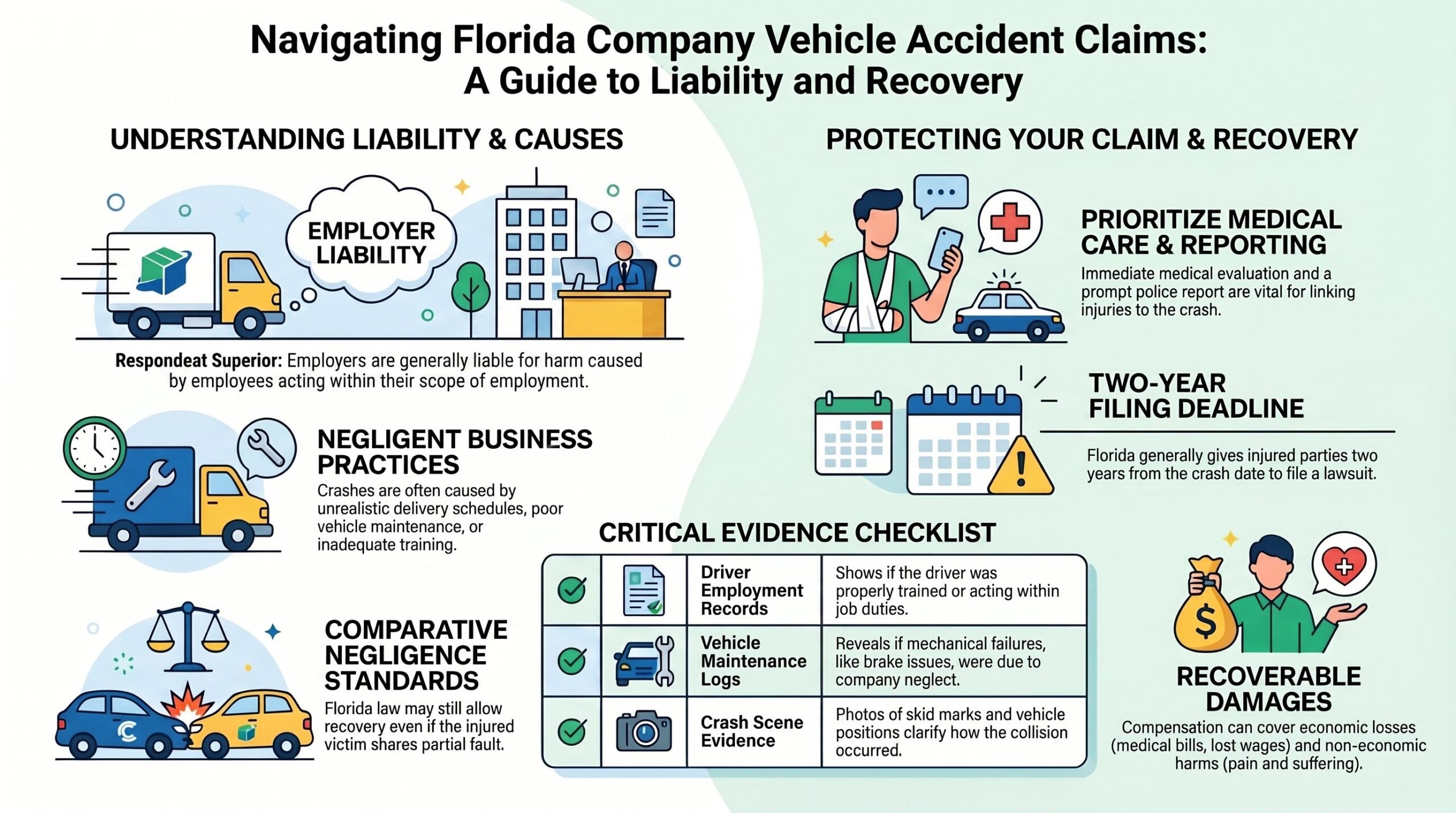
After a crash involving a company vehicle, injured victims in Florida may have the right to pursue compensation from more than one responsible party, depending on the facts of the case. Legal rights may include claims for medical expenses, lost income, pain, suffering, and future care needs. Under the doctrine of respondeat superior, an employer may be liable when an employee causes harm while acting within the scope of employment. Florida’s comparative negligence rules may still allow recovery even if the victim shares some fault, though compensation can be reduced.
Florida victims may seek compensation from employers, insurers, and other responsible parties after a crash involving a company vehicle.
- A delivery van stopped at a busy intersection
- Medical bills stacked beside a recovery bed
- A caregiver helping with meals, appointments, and daily tasks
- Insurance letters are arriving while the injured person recovers
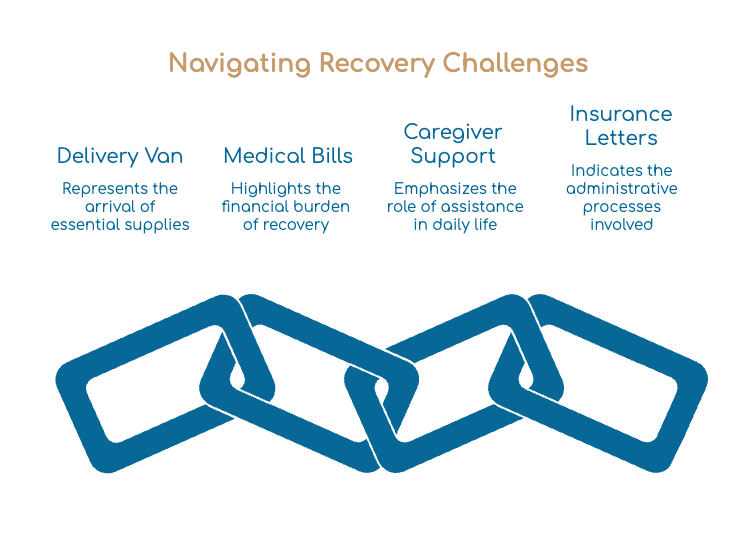
A careful legal review can identify available insurance coverage, responsible entities, and filing deadlines. For those committed to protecting families and communities, these rights help restore stability after preventable harm.
Why Do Florida Company Vehicle Accident Injuries Happen?
Why do company vehicle crashes occur so often on Florida roads? Many injuries arise from preventable choices made under business pressure. Delivery schedules, service calls, and client demands may encourage speeding, distraction, or unsafe lane changes. Driver Fatigue is also common when employees travel long distances, work irregular hours, or operate after physically demanding shifts.
Company vehicle accidents may also reflect poor Workplace Safety practices. Employers that fail to inspect vehicles, train drivers, enforce policies, or monitor unsafe conduct may increase the risk for employees, passengers, pedestrians, and other motorists. In some cases, contractors or third-party maintenance providers may contribute through negligent repairs or improper loading.
These causes matter because Legal Responsibility often depends on how and why the crash occurred. A careful review of employment duties, vehicle ownership, maintenance records, and company policies can shape the Claims Process. Understanding the source of failure helps injured victims pursue accountability while promoting safer service within the community.
What Should You Do After a Florida Company Vehicle Accident Injury?
After a Florida company vehicle accident injury, the injured person should take prompt steps to protect health, document the incident, and support any potential claim. Immediate medical care, timely accident reporting, and preservation of important evidence can considerably affect the outcome of the case. Each action helps create a clear record, which may be vital when determining liability and pursuing compensation.
Seek Immediate Medical Care
When a company vehicle collision occurs in Florida, the injured person’s first priority should be prompt medical evaluation, even if symptoms appear minor at the scene. Conditions such as concussions, internal bleeding, soft tissue injuries, and spinal trauma may not be immediately apparent, yet they can worsen without timely care. Emergency treatment protects health, supports recovery, and allows medical professionals to identify injuries that require ongoing attention.
For employees, passengers, or others harmed, seeking care also reflects responsibility toward family, coworkers, and those who depend on their continued service. Medical documentation created soon after the accident can also help link injuries to the collision, reducing disputes over timing or causation. Follow-up appointments, prescribed therapy, and medical referrals should be completed carefully and consistently.
Report The Accident
Once immediate medical needs are addressed, the company vehicle accident should be reported to the appropriate parties as soon as practicable. A prompt report helps ensure that supervisors, vehicle owners, and law enforcement receive accurate information while details remain fresh. If the injured person was working, the employer should be notified through established procedures, especially when others depend on timely service and responsible communication.
The report should include the time, location, vehicles involved, injuries observed, and any available Witness statement information. Clear reporting can reduce confusion later and may help prevent an insurance denial due to late notice or incomplete information. When police respond, the report number should be obtained. Each step should be handled calmly, respectfully, and with attention to truthfulness and duty.
Preserve Key Evidence
Because evidence can disappear quickly, preserving important information should begin as soon as it is safe to do so after a Florida company vehicle accident. Injured individuals should photograph vehicle damage, roadway conditions, skid marks, traffic signals, company markings, and visible injuries. When possible, they should document witness statements, including each person’s name, contact information, and what they observed.
They should also preserve medical records from every provider because treatment notes can connect injuries to the crash and show the extent of harm. Receipts, repair estimates, missed-work records, and communications with insurers or employers should be kept in an organized file. By protecting these materials early, the injured person helps counsel evaluate liability, identify responsible parties, and serve the interests of justice with accuracy and care.
Critical Evidence in a Florida Company Vehicle Accident Injury Case
Influential evidence in a Florida company vehicle accident injury case often determines how fault, employer responsibility, and damages are evaluated. Central records and physical evidence may indicate whether the driver, the company, or the vehicle condition contributed to the crash.
- Police accident reports documenting roadway conditions, statements, and citations
- Driver employment records showing job duties, training, and work status
- Vehicle maintenance logs revealing inspections, repairs, and known defects
- Crash scene evidence, including skid marks, debris fields, photographs, and video footage
Police Accident Reports
In a Florida company vehicle accident case, the police accident report is often among the earliest and most important records of the collision. It may identify the drivers, vehicles, location, road conditions, reported injuries, citations, and the officer’s initial observations. For injured individuals seeking fair treatment, this report can help organize the facts and preserve details before memories fade.
Witness statements noted by law enforcement may also support a clearer understanding of how the crash occurred. Although the report may not determine fault on its own, it can guide further investigation and assist attorneys in locating additional evidence. When disputes arise, expert testimony may help interpret physical findings, damage patterns, and crash dynamics in relation to the report, strengthening a careful pursuit of accountability.
Driver Employment Records
When a crash involves a company vehicle, driver employment records can reveal whether the driver was qualified, properly supervised, and acting within the scope of employment at the time of the collision. These records may include hiring documents, training history, licensing verification, disciplinary actions, performance reviews, and prior incident reports. For injured persons and those assisting them, this information supports a careful Risk Assessment by showing whether the employer ignored warning signs or failed to enforce safe driving standards.
Employment records may also clarify insurance issues, including applicable Liability Limits, as coverage may depend on the driver’s employment status. During the Claims Process, these materials help establish responsibility, strengthen documentation, and guide a measured Settlement Strategy focused on fair compensation and accountability for preventable harm under Florida law.
Vehicle Maintenance Logs
Because mechanical condition can influence both fault and damages, vehicle maintenance logs often serve as pivotal evidence in a Florida company vehicle accident injury case. These records may show whether brakes, tires, lights, handling systems, or other safety components were inspected, repaired, or neglected before the collision. A company that serves the public through careful operations should maintain accurate logs and respond promptly to known defects.
When maintenance gaps appear, they may support claims that preventable danger contributed to the harm. Attorneys may compare service histories with driver reports, inspection schedules, Medical records, and the timing of reported injuries. They may also evaluate whether weather conditions increased the need for proper equipment. Clear maintenance documentation can help identify responsible parties and promote accountability after a serious crash involving a company vehicle.
Crash Scene Evidence
Although many details can change quickly after a collision, crash-scene evidence may preserve important facts in a Florida company-vehicle accident injury case. Photographs of vehicle positions, skid marks, debris fields, traffic signals, road conditions, and visible injuries can help clarify how the crash occurred. Timely documentation may also reveal whether a company driver acted within the scope of employment or violated safety policies.
Eyewitness testimony can provide context that physical evidence alone may not show, including speed, lane changes, distractions, or statements made after impact. Attorneys may evaluate witness credibility by reviewing consistency, vantage point, bias, and prior statements. Police reports, surveillance footage, and 911 records may further support a careful reconstruction, allowing injured parties to seek accountability with accuracy and fairness.
Long-Term Effects of Florida Company Vehicle Accident Injuries
Florida company vehicle accident injuries may create lasting medical and personal consequences, especially when chronic pain complications interfere with daily functioning. Some victims experience permanent mobility limitations that affect employment capacity, independence, and long-term care needs. Emotional trauma effects, including anxiety, depression, or fear of driving, may also become significant factors in evaluating the full impact of the accident.
Chronic Pain Complications
After a company vehicle collision, chronic pain may become one of the most disruptive long-term consequences for an injured person. Persistent neck, back, shoulder, or nerve pain can affect sleep, concentration, work capacity, and the ability to care for family or community needs. These symptoms may continue even after visible injuries appear recovered, requiring ongoing medical care, therapy, medication, and lifestyle adjustments.
In Florida company vehicle accident cases, chronic pain evidence often includes diagnostic records, physician opinions, treatment history, and testimony regarding daily limitations. Such documentation may influence liability evaluations, damages calculations, Settlements and Trials, and related legal strategies. In severe matters, chronic pain may also appear alongside catastrophic harm connected to Wrongful Death Claims, requiring careful review of medical and legal issues.
Permanent Mobility Limitations
When injuries from a company vehicle crash affect the spine, hips, knees, or lower extremities, permanent mobility limitations can substantially alter an injured person’s daily life. Reduced walking tolerance, balance problems, wheelchair dependence, or the need for braces may affect employment, caregiving, transportation, and community involvement.
A careful legal review often includes Causation evidence basics, such as diagnostic imaging, surgical records, impairment ratings, and physician opinions connecting the crash to lasting restrictions. Witness testimony collection may also help describe functional changes observed at work, home, or service settings. Insurance coverage disputes can arise when carriers question permanency, prior conditions, or the value of future medical needs. Settlement negotiation strategies should account for accessible housing, mobility equipment, rehabilitation, lost earning capacity, and ongoing assistance required for dignity and independence.
Emotional Trauma Effects
Although physical injuries often receive immediate attention, emotional trauma may become one of the most persistent long-term effects of a Florida company vehicle accident. Victims may experience anxiety, depression, sleep disruption, irritability, or fear of driving, which can interfere with employment, caregiving, and community responsibilities. When workplace negligence contributes to the crash, the psychological harm may feel especially burdensome, as trust in professional safety systems can be deeply affected.
Careful documentation from mental health providers, physicians, and family members may help show how the trauma changes daily functioning. During settlement negotiation, these effects should be addressed with the same seriousness as medical bills or lost wages. A thorough legal evaluation can help guarantee emotional suffering is recognized, measured, and presented with dignity and accuracy in each claim.
Proving Liability in Florida Company Vehicle Accident Injury Cases
Because company vehicle crashes often involve both an individual driver and a business entity, proving liability in a Florida injury case requires a careful review of how the collision occurred and whether the employee was acting within the scope of employment. Evidence may include crash reports, witness statements, vehicle data, delivery records, maintenance logs, training materials, and employer policies. A careful advocate also examines whether the company failed to screen, supervise, or train the driver, or allowed unsafe scheduling that placed the public at risk.
Liability may extend beyond driver negligence when a business benefits from the trip or controls the vehicle’s use. Establishing these facts supports fair accountability and helps protect injured people seeking stability after harm. Strong proof also strengthens settlement negotiation strategies, especially when insurers dispute responsibility or minimize damages. If evidence suggests unreasonable claim handling, concerns about insurance bad faith may become relevant during a broader legal assessment of available remedies.
Dealing With Insurance Companies After a Florida Company Vehicle Accident Injury
A company vehicle accident often leads to immediate contact from multiple insurance representatives, including the driver’s insurer, the employer’s commercial carrier, and sometimes a third-party claims administrator. These communications require caution, because early statements may shape liability positions, damages assessments, and future defenses. Injured individuals are often asked to provide recorded statements, authorize medical record access, or accept payment quickly before the full impact is known.
Claim negotiations should be handled with a clear understanding of injuries, wage losses, vehicle circumstances, and available coverage. Insurers may question treatment choices, dispute causation, or rely on settlement timelines that pressure families before recovery is stable. Careful documentation helps protect the injured person’s interests while allowing legitimate claims to be evaluated fairly.
Insurance denials can arise from policy exclusions, employment disputes, or allegations of shared fault. A measured, evidence-based response helps preserve the opportunity for appropriate compensation.
What to Expect During a Florida Company Vehicle Accident Injury Claim Process
A Florida company vehicle accident injury claim typically begins with promptly reporting the accident, preserving critical details, and confirming which parties may bear legal responsibility. The process then moves to gathering evidence, including medical records, crash reports, witness statements, and employment-related information that may affect liability. Once the claim is supported, the injured party may enter negotiations for compensation that reflects medical costs, lost income, and other recoverable damages.
Reporting The Accident
After a company vehicle accident in Florida, prompt reporting is one of the first steps that can affect the direction of an injury claim. The injured person should notify law enforcement, the employer, and any appropriate insurer as soon as reasonably possible. A timely police report can preserve key facts, while an internal workplace notice may help confirm that the vehicle was being used for business purposes. Clear documentation also supports those tasked with helping the injured person handle the claim responsibly and with care.
Accurate reporting should include location, time, vehicle information, visible injuries, and available witness statements. Medical evaluation should also be noted, even when symptoms appear limited. Because insurance timelines may be strict, delayed notice can lead to avoidable disputes, reduce cooperation, or complicate the review of available benefits.
Identifying Liable Parties
Who may be responsible for a Florida company vehicle accident depends on how the collision occurred, who was operating the vehicle, and whether the driver was acting within the scope of employment. Potentially liable parties may include the employee driver, the employer, another motorist, a vehicle owner, or a maintenance contractor. When a worker causes harm while performing assigned duties, the employer may share responsibility under Florida agency principles.
If employer safety policies are ignored, liability concerns may become more serious, particularly when rules governing supervision, training, or vehicle use affect public safety. Co-worker witness statements may also help clarify whether the driver was completing work tasks or pursuing personal errands. Properly identifying each responsible party helps protect injured people and supports fair accountability.
Gathering Claim Evidence
Once the potentially liable parties have been identified, the claims process generally turns to gathering evidence explaining how the company vehicle accident occurred and how the injuries affected the claimant. This stage may include collecting police reports, photographs, vehicle data, maintenance records, employment records, and available surveillance footage.
Witness statements can help clarify traffic conditions, driver conduct, and the moments surrounding the collision. Medical documentation is also critical, as it connects diagnosed injuries, treatment needs, work limitations, and long-term effects to the accident. A careful review of records may reveal whether a company driver was acting within job duties or whether safety policies were ignored. Thorough evidence collection supports an organized claim and helps protect the injured person’s ability to seek accountability.
Negotiating Injury Compensation
When the evidence has been organized and the extent of damages is better understood, negotiations often begin with a demand to the applicable insurance carrier or responsible business entity. This demand may describe liability, injuries, wage loss, medical treatment, and future care needs, supported by evidence and documentation. In a company vehicle crash, claim negotiation may involve multiple parties, including the employer, the driver, the fleet insurer, or a third-party contractor. Each side reviews fault, policy limits, and the reasonableness of claimed losses.
A representative may respond with a lower offer, request clarification, or dispute causation. Careful evaluation helps protect the injured person from accepting an amount that fails to address long-term harm. The process should remain service-focused, seeking fair resolution while preserving dignity, accountability, and practical support.
Compensation for Florida Company Vehicle Accident Injury Damages
After a company vehicle accident in Florida, compensation may be available for both economic and non-economic damages, depending on the facts of the collision, the severity of the injuries, and the parties responsible. A careful claim evaluation may consider medical documentation, wage records, insurance coverage, crash reports, employer policies, and witness statements.
When the injured person was working at the time of the crash, workers’ compensation issues may affect available benefits and the order in which claims are pursued. If a commercial truck or delivery vehicle was involved, the determination of trucking liability may require review of driver conduct, vehicle maintenance, cargo practices, and company supervision.
For individuals focused on recovery and service to others, fair compensation can provide the stability needed when responsibilities are disrupted. A Florida company vehicle accident injury lawyer may help identify liable parties, preserve evidence, communicate with insurers, and, under Florida law, pursue recovery through settlement negotiations or litigation when necessary.
Economic vs Non-Economic Damages in Florida Company Vehicle Accident Cases
In Florida company vehicle accident cases, damages are generally divided into economic losses and non-economic harms, each requiring careful evaluation. Economic damages may include medical expenses, lost income, and property damage, while non-economic damages may address pain, suffering, emotional distress, and loss of enjoyment of life. Proving the value of these damages often depends on records, expert opinions, and evidence showing how the accident affected the injured person’s finances and daily life.
Economic Damage Examples
Because financial losses often begin immediately after a crash, economic damages in a Florida company vehicle accident case can include a wide range of measurable costs. These may include emergency treatment, hospitalization, surgery, medication, rehabilitation, and future medical care supported by professional evaluations. Lost wages may also be calculated when injuries prevent a person from working, while diminished earning capacity may apply when long-term limitations reduce future income.
Property damage, vehicle replacement, rental expenses, and transportation costs for medical visits may also be included. In fatal crashes, Wrongful death claims may seek funeral expenses, lost financial support, and related household services. Although punitive damages serve a different purpose, economic records can help clarify the full financial impact of misconduct and support responsible accountability in appropriate Florida cases.
Non-Economic Damage Examples
Financial records may show the cost of a company vehicle crash, but they do not fully measure how an injury changes daily life. Non-economic damages address human losses that do not carry a fixed invoice. These may include physical pain, discomfort during treatment, sleep disruption, anxiety, depression, loss of enjoyment of family activities, and reduced ability to serve others at home, work, or in the community.
A person injured in a business vehicle collision may also experience embarrassment from visible scarring, fear of driving, or strain in close relationships. Emotional distress documentation and pain impact statements can describe these experiences in practical terms, including limits on caregiving, worship, volunteering, recreation, and daily routines. Such harms reflect the personal burden created by injury beyond direct financial loss.
Proving Damage Value
After a company vehicle accident, proving damage value requires more than listing medical bills or describing pain. In Florida, economic losses may be shown through invoices, wage records, repair estimates, and Insurance documentation that confirms treatment, missed work, or property loss. Non-economic losses require careful evidence, including medical opinions, therapy notes, witness statements, and records documenting how the injury affected daily activities, family responsibilities, and community involvement.
A complete damage calculation connects each loss to the crash and explains why compensation is justified. This process may include future care projections, reduced earning capacity, and the severity of lasting discomfort or limitation. When presented clearly, the evidence helps insurers, employers, and courts evaluate the claim with fairness, accountability, and respect for the injured person’s needs.
When a Florida Company Vehicle Accident Injury Case Goes to Trial vs Settlement
A Florida company vehicle accident injury case may be resolved through settlement or proceed to trial, depending on liability disputes, insurance coverage issues, the severity of injuries, and the parties’ willingness to negotiate in good faith. Settlement often allows injured individuals to obtain compensation sooner, reduce uncertainty, and preserve resources needed for recovery and family support. It may be appropriate when evidence clearly establishes fault and damages are reasonably valued.
A trial may become necessary when the company, driver, or insurer denies responsibility, undervalues losses, or refuses to offer fair terms. The decision may involve Jury vs judge considerations, as a jury often decides disputed facts, while a judge may resolve legal questions and certain procedural matters.
The trial timeline can be longer, involving discovery, expert review, mediation, pretrial hearings, and courtroom presentation. Counsel evaluates whether trial risks align with the client’s needs, dignity, and long-term care interests before recommending a final strategy.
Florida Laws That May Affect Your Florida Company Vehicle Accident Case
Because company vehicle collisions often involve both traffic rules and employment-related liability, Florida law can materially affect how fault, insurance coverage, and compensation are evaluated. An injured person may face issues involving negligent driving, employer liability, vehicle maintenance, and available layers of insurance.
Under Comparative Fault, compensation may be reduced when the evidence shows the injured person shared responsibility. Florida Limitations may also influence how claims are investigated, documented, and presented, without diminishing the need for careful service to those harmed.
Florida company vehicle claims often require careful review of fault, employer liability, insurance coverage, and filing deadlines.
- A delivery van crosses wet pavement while another driver turns left.
- A supervisor’s truck carrying tools, logs, and inspection records.
- An insurance file showing commercial coverage and driver history.
- A roadside scene with skid marks, damaged cargo, and witness names.
These laws help determine whether an employer, driver, contractor, or insurer must answer for the harm. A careful legal review supports fair accountability and helps injured individuals regain stability.
The Statute of Limitations for Florida Company Vehicle Accident Injury Cases
When must an injured person act after a Florida company vehicle accident? Florida generally gives injured parties two years from the date of the crash to file a personal injury lawsuit. Missing this deadline can bar recovery, even when the harm is serious, and another party appears responsible. For families, caregivers, and community members focused on restoring stability, prompt attention to time limits helps preserve the ability to hold others accountable.
Certain facts may affect how the deadline is evaluated, including delayed discovery of injuries, claims involving government-owned vehicles, or the death of an injured person. Comparative negligence rules may also influence the value of a claim, but they do not extend the filing period.
Employer liability limits can affect available recovery when a worker causes a crash while performing job duties, yet those limits remain separate from the statute of limitations. Timely action supports evidence preservation and responsible decision-making.
How a Florida Company Vehicle Accident Injury Lawyer Can Help You
After a crash involving a company vehicle, legal guidance can help an injured person identify responsible parties, preserve key evidence, and evaluate available sources of compensation. A Florida company vehicle accident injury lawyer may examine driver conduct, employer policies, insurance coverage, and maintenance records to determine how the collision occurred and who should be held liable for the harm caused.
Legal guidance after a company vehicle crash can uncover liability, preserve evidence, and help injured people pursue compensation.
- A marked service van resting beside scattered tools and broken glass
- A delivery log showing routes, deadlines, and driver assignments
- A rental agreement raising Car Rental Liability questions
- An Employment Contract Review revealing job duties and vehicle rules
Through careful investigation, counsel can coordinate medical documentation, communicate with insurers, and present damages for lost income, treatment, and diminished daily functioning. For those committed to serving families, coworkers, or communities, this support can reduce administrative burdens so the injured person can focus on recovery. Legal advocacy may also clarify whether employer negligence, negligent entrustment, or third-party actions contributed to the crash.
When to Contact a Florida Company Vehicle Accident Injury Lawyer
In the days following a company vehicle accident, contacting a Florida company vehicle accident injury lawyer may be important if injuries require medical care, fault is disputed, or an employer, insurer, or commercial driver is involved. Prompt contact can support the preservation of evidence, including vehicle data, maintenance records, witness statements, delivery logs, and photographs, before they are lost or altered.
Early guidance may also help an injured person protect medical documentation, follow treatment plans, and keep accurate records of expenses, work limitations, and ongoing symptoms. These steps can be especially important when claims involve business insurance policies, employee conduct, or multiple responsible parties.
A lawyer may be contacted when an insurer delays communication, requests recorded statements, or offers payment before the full harm is known. Legal assistance may also be appropriate during underpayment disputes or before negotiating settlements, particularly when the injured person wants decisions to be informed, orderly, and focused on responsible recovery.
Why You Need an Experienced Florida Company Vehicle Accident Injury Lawyer
Because company vehicle accidents often involve more than a standard personal auto claim, experienced legal guidance can be important for identifying all available sources of responsibility and insurance coverage. A Florida company vehicle accident injury lawyer can assess whether the driver, employer, maintenance provider, contractor, or another party may bear legal responsibility.
These cases often require prompt Evidence preservation, including driver logs, vehicle data, maintenance records, dispatch information, and witness statements. When evidence is protected early, injured people and their families are better positioned to pursue fair accountability and continued care.
An experienced lawyer can also manage insurance negotiations involving commercial policies, personal coverage, and layered liability issues. Insurers may attempt to limit payment, shift blame, or undervalue long-term medical and service-related needs. Careful legal representation helps present the full impact of injuries, lost income, caregiving burdens, and future treatment needs in a clear, documented, and persuasive manner for all affected.
How to Choose the Right Florida Company Vehicle Accident Injury Lawyer for Your Case
Selecting the right Florida company vehicle accident injury lawyer begins with evaluating whether the attorney has direct experience handling commercial vehicle claims, employer liability issues, and disputed insurance coverage. A qualified lawyer should understand how company policies, driver conduct, maintenance records, and insurance layers may affect responsibility. This experience helps protect injured individuals while supporting families, caregivers, and communities seeking accountability.
Prospective clients should also consider how the lawyer approaches damages valuation and evidence documentation. Careful review of medical records, wage losses, crash reports, witness statements, and vehicle data can strengthen the claim. A lawyer’s Settlement strategy and negotiation tactics should reflect preparation, fairness, and readiness for litigation if insurers refuse reasonable compensation.
Clear communication is also vital. The attorney should explain deadlines, legal options, and case developments in practical terms. Choosing counsel with focused experience, disciplined preparation, and client-centered service can help an injured person pursue recovery with confidence and dignity after a serious accident involving a company vehicle.
About The Law Offices of Anidjar & Levine
The Law Offices of Anidjar & Levine represents injured individuals throughout Florida in cases involving company vehicle accidents, commercial drivers, and complex insurance disputes.
The firm assists clients harmed by driver negligence, unsafe business practices, and failures in Workplace safety, while identifying all parties that may bear responsibility.
Its legal team examines crash reports, employment records, vehicle maintenance history, and insurance policies to evaluate employer liability and available compensation.
This careful review helps determine whether a company, supervisor, contractor, or insurer contributed to the harm caused.
The firm also manages insurance negotiation, allowing injured clients and their families to focus on recovery, service, and daily responsibilities.
By handling communications, documentation, and claim strategy, the attorneys seek fair outcomes that reflect medical needs, lost income, and long-term consequences.
Their work supports individuals seeking accountability after preventable commercial vehicle collisions across Florida.
Frequently Asked Questions
Can Independent Contractors Be Liable in Florida Company Vehicle Accidents?
Yes. In Florida, an independent contractor may be liable for a company vehicle accident when negligent driving, unsafe conduct, or contract duties contributed to harm. Vicarious liability may also affect the company if it controlled the work or the use of the vehicle. Insurance coverage should be reviewed carefully, because commercial, personal, or contractor policies may apply. Shared fault can reduce recovery, so careful investigation helps protect injured persons and those serving them.
Are Rental Company Cars Treated Differently After a Crash?
Yes, rental company cars may be treated differently after a crash because responsibility depends on the rental agreement, driver authorization, and available coverage. Rental policy variations can affect whether the employer, renter, driver, or rental agency bears financial responsibility. Insurance claim handling often requires careful review of commercial policies, supplemental coverage, and contractual duties. Those assisting injured parties should promptly preserve records and coordinate claims with disciplined attention to detail.
Can I Sue if the Company Vehicle Lacked Proper Maintenance Records?
Yes, an injured person may sue if missing maintenance documentation suggests unsafe vehicle care contributed to the crash. Negligence evidence can include absent inspection logs, overdue repairs, ignored defects, or inconsistent service histories. A court may consider whether the company failed its duty to protect employees, passengers, and the public. Those seeking accountability should preserve records, photographs, repair invoices, and witness statements to allow responsible parties to be evaluated fairly.
What if the Company Driver Was off Duty During the Accident?
If the company driver was off duty, liability depends on Coverage vs employment, including whether the trip served any business purpose. Off-duty negligence may still implicate the employer if the vehicle was used with permission or under a company benefit. Company policy defenses can limit liability when personal use was prohibited. Workers’ compensation limits may affect injured employees, but third parties may still pursue claims against responsible parties.
Do Company Vehicle Accident Claims Affect My Own Auto Insurance?
Yes, company vehicle accident claims can affect a person’s own auto insurance, depending on policy terms and fault findings. Insurers may examine coverage implications, especially if personal coverage, uninsured motorist benefits, or secondary protection is requested. A claim denial may occur when policy exclusions apply, such as business-use limits or noncovered vehicles. Careful review helps the injured person protect available benefits while continuing to serve family, work, and community responsibilities.
—————————
A Florida company vehicle accident can create serious medical, financial, and legal challenges. Injured victims may have claims involving employers, insurers, negligent drivers, or commercial vehicle policies.
A knowledgeable attorney can investigate liability, preserve evidence, calculate damages, and pursue fair compensation through settlement or litigation.
The Law Offices of Anidjar and Levine provides guidance focused on protecting victims’ rights and advancing their recovery.
Working with a Florida Car Accident Lawyer can help preserve valuable claims and support a stronger case.