

The Law Offices of Anidjar and Levine can help you act quickly to protect evidence, secure medical records, consult experts, and prove how negligence caused catastrophic neurological harm. You can rely on counsel to manage insurers, document daily care needs, calculate present and future losses, and pursue compensation for treatment, supervision, home changes, and family support.
Early legal guidance also helps preserve deadlines and strengthen your claim before insurers shape the narrative. For more information, see our Orlando Medical Malpractice Lawyer. Additional points below explain what to expect.
Main Takeaways
- An Orlando vegetative state injury lawyer investigates the incident, preserves evidence, and gathers medical records and expert opinions to prove negligence and neurological harm.
- Attorneys calculate current and future damages, including lifelong medical care, rehabilitation, supervision, housing modifications, and caregiver support costs.
- Prompt legal help protects deadlines, manages insurer communications, and strengthens claims before evidence, surveillance footage, or witness memories are lost.
- Strong cases rely on hospital records, imaging, physician notes, rehabilitation assessments, and life-care expert testimony about prognosis and long-term needs.
- Many lawyers offer free consultations to review the injury, explain fees, discuss accountability, and outline options for compensation and long-term care planning.


How We Can Help With Your Orlando Vegetative State Injury Claim
Navigate through this process with a legal team that understands the medical, financial, and evidentiary issues involved in a vegetative state injury claim. You need counsel that acts with discipline, compassion, and a clear commitment to protecting your loved one’s dignity.
Your legal team can gather records, consult qualified medical experts, preserve essential evidence, and document the full impact of the injury on daily life. You can rely on them to communicate with insurers, calculate present and future losses, and pursue compensation for treatment, long-term care, and household support.
They can also help you coordinate practical resources, including family counseling and financial planning, so your family can make stable decisions while serving your injured relative with strength. When you face complicated paperwork, deadlines, and negotiations, your attorneys can keep the claim organized and moving forward. With focused advocacy, you can seek accountability while safeguarding the care your loved one will continue to require.
OUR CONSULTATIONSARE FREE
START YOUR FREE CASE REVIEW

Understanding Orlando Vegetative State Injury Cases
Because these claims involve severe neurological harm and long-term uncertainty, understanding how Orlando vegetative state injury cases work can help you make informed decisions from the outset. You need clear guidance on liability, medical documentation, prognosis, and the full impact of the injury on daily life and future needs.
Your case often depends on proving negligence, showing how the injury changed your loved one’s condition, and documenting expected lifelong losses. You may need testimony from physicians, rehabilitation experts, and life care experts who can explain treatment needs and financial impact. Strong evidence also addresses family support, since your role in advocacy and caregiving often becomes central.
Care planning is equally important because you must evaluate therapies, supervision, housing adjustments, and resources that protect dignity over time. When you understand these elements early, you’re better prepared to pursue accountability, secure meaningful compensation, and make decisions that honor your loved one’s welfare and long-term stability.


Common Causes of an Orlando Vegetative State
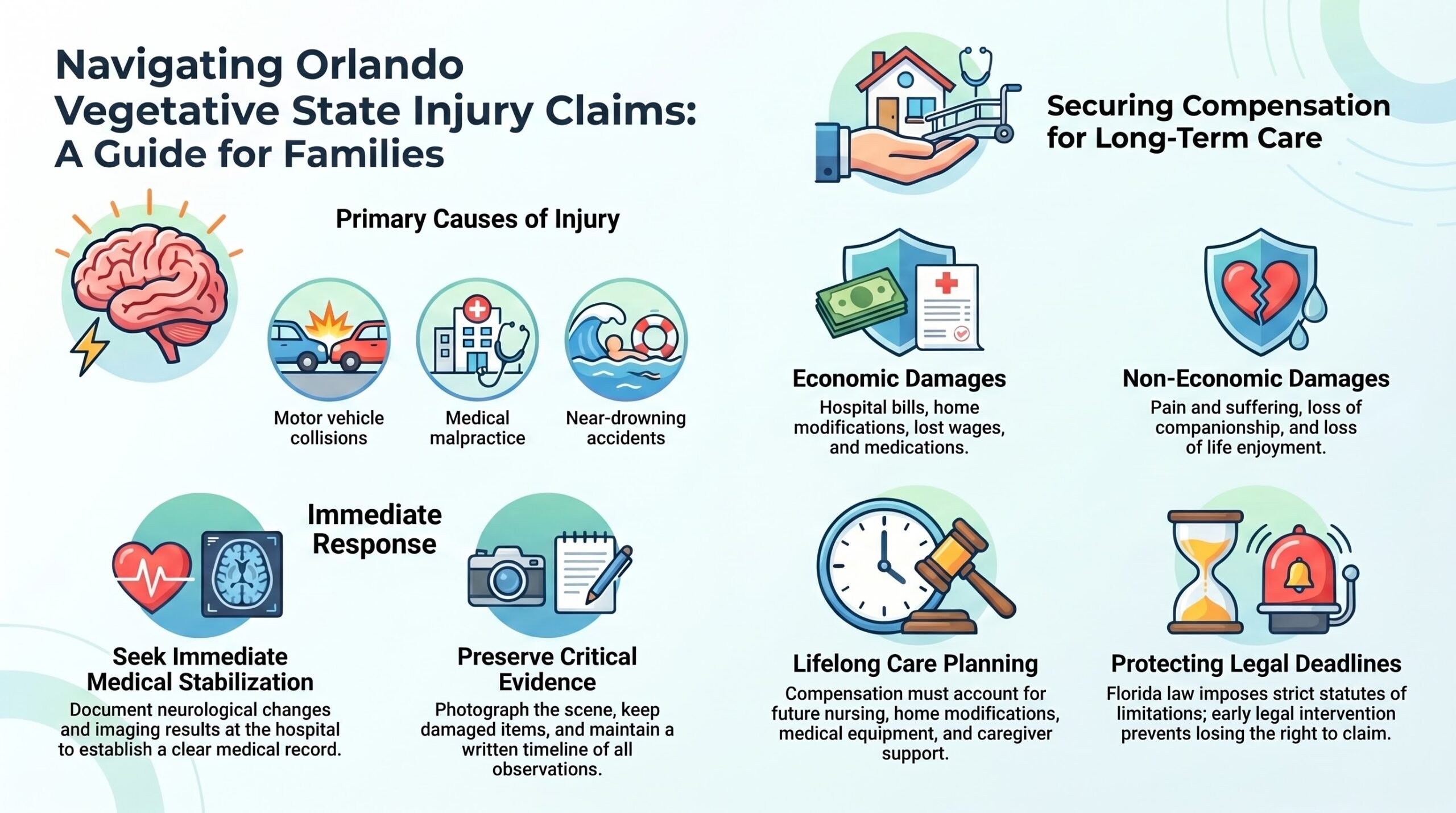
You should understand that a vegetative state often results from catastrophic events that interrupt normal brain function and cause lasting damage. In many cases, traumatic brain injuries, motor vehicle collisions, medical malpractice incidents, and near-drowning accidents are among the most common causes you’ll see in Orlando claims. When you identify how these incidents occur, you can better assess liability, damages, and available legal options.
Traumatic Brain Injuries
When a traumatic brain injury causes severe and widespread damage, it can disrupt the brain functions that control consciousness, breathing, and basic bodily responses, sometimes leaving a person in a vegetative state. You may see this outcome after falls, violent assaults, sports concussions, or blast injuries. In each situation, the brain can swell, bleed, or lose oxygen, causing lasting harm.
If you’re caring for an injured loved one, you need clear answers about how the trauma occurred and whether another party failed to protect them. Prompt medical evaluation, imaging, and ongoing neurological care can shape recovery and document the full extent of the injury. By understanding these mechanisms, you can better advocate for accountability, proper treatment, and the resources your family needs to provide compassionate, long-term support.
Motor Vehicle Collisions
Motor vehicle collisions are another leading cause of catastrophic brain injuries that can leave a person in a vegetative state. When you serve your family or community, you understand how quickly a crash can alter every life it touches. High-speed impacts, distracted driving, impaired motorists, and rollover crashes often cause severe trauma by violently shaking or striking the brain.
You may face overwhelming medical needs, lost income, and the daily burden of long-term care after a devastating collision. In many cases, these injuries occur because another driver ignored basic safety duties, putting others at risk.
By recognizing the dangers behind these crashes, you can better protect those you love and take informed action when negligence causes irreversible harm. Strong legal guidance can help your family pursue accountability and needed support.
Medical Malpractice Incidents
Although medical professionals are entrusted with protecting patient well-being, serious mistakes during diagnosis, treatment, surgery, anesthesia, or post-operative care can cause catastrophic brain damage that leaves a person in a vegetative state. When a provider fails to monitor oxygen levels, mismanages medications, delays emergency intervention, or commits diagnostic errors, you may face devastating, lifelong consequences.
You may also discover that physicians did not obtain proper informed consent before a high-risk procedure, depriving your family of meaningful decisions.
If you are serving a loved one after suspected malpractice, you need clear answers and accountable action. Careful legal review can uncover preventable failures, identify responsible parties, and preserve crucial evidence. By pursuing a claim, you can seek resources for long-term care while also encouraging safer medical practices that protect others in your community.
Near-Drowning Accidents
Near-drowning accidents can set off a rapid chain of oxygen deprivation that causes severe brain damage and, in the most tragic cases, leaves a victim in a vegetative state. When you witness or investigate these events, you see how quickly a moment of distress becomes a lifelong crisis for a family.
You may encounter incidents involving inadequate supervision, defective drains, unsafe barriers, or failures in pool safety procedures. In lakes, pools, and water parks, delayed water rescue efforts can worsen hypoxic brain injuries within minutes.
If negligence contributed to the incident, you can help protect the injured person’s dignity by seeking accountability and resources for long-term care. Your attention to facts, timelines, and safety failures can support a stronger claim and encourage safer practices that protect others in your community.
Legal Rights of Orlando Vegetative State Injury Victims
When a catastrophic injury leaves your loved one in a vegetative state, Florida law gives you the right to pursue compensation from the party whose negligence caused the harm. You may seek damages for medical care, long-term treatment, lost income, and the profound impact on your family’s daily life and future stability.
Your legal rights often include protection of Patient autonomy whenever prior directives exist, and support for Family guardianship when your loved one can’t make decisions.
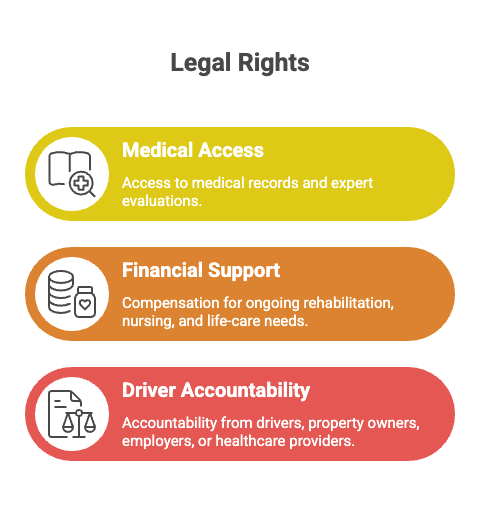
In Orlando claims, you may also assert rights involving:
- access to medical records and expert evaluations
- compensation for ongoing rehabilitation, nursing, and life-care needs
- accountability from drivers, property owners, employers, or healthcare providers
Steps to Take After an Orlando Vegetative State Injury
After an Orlando vegetative state injury, you should seek immediate medical care to protect the injured person’s health and create a clear record of the condition. You should also preserve crucial evidence, including accident reports, photographs, witness information, and all medical documentation, because these materials can strongly affect a future claim. As soon as possible, you should consult an injury lawyer, so you can protect your rights and make informed decisions from the outset.
Seek Immediate Medical Care
Because a vegetative state injury can involve oxygen deprivation and severe brain trauma, you should seek emergency medical care at once, even if the full extent of the harm isn’t yet clear.
Prompt treatment gives doctors the best chance to stabilize breathing, circulation, and intracranial pressure before complications worsen. You can serve your loved one best by calling 911, reporting every observed symptom, and requesting an urgent assessment without delay.
At the hospital, ask providers to document neurological changes, imaging results, and recommended interventions. You should also make sure discharge instructions are clear, medications are understood, and specialist referrals are scheduled.
Careful adherence to follow-up care supports recovery, protects long-term health, and helps your family make informed decisions during an extremely serious and demanding time ahead with confidence.
Preserve Critical Evidence
Gather and protect every piece of evidence you can as soon as your loved one’s condition is stabilized, since those records may become essential to proving how the injury occurred and who may be responsible.
You should photograph the scene, visible injuries, equipment, vehicles, and hazardous conditions before anything changes. Request copies of medical records, incident reports, care notes, and billing statements, and store them in a single secure location. Keep damaged clothing, assistive devices, medications, and personal items exactly as they were found to preserve chain integrity.
Create a written timeline that records names, dates, conversations, and observations while events remain fresh. Use careful document handling when sharing records with hospitals, insurers, or investigators, and keep duplicates for your files. By staying organized, you help protect the truth and support everyone working toward accountability.
Consult An Injury Lawyer
Contact an experienced Orlando vegetative state injury lawyer as soon as possible, since early legal guidance can protect your loved one’s rights and prevent costly mistakes. You need counsel who can evaluate liability, preserve claims, and coordinate evidence before insurers shape the narrative against your family’s interests.
During a Free consultation, you can explain what happened, share medical records, and ask how the attorney will pursue accountability for those responsible. You should also review Fee structures carefully, so you understand costs, contingencies, and litigation expenses before representation begins.
A qualified lawyer will communicate clearly, handle deadlines, and advocate for the resources your loved one needs for long-term care. By acting promptly, you strengthen your case and place your family in a better position to seek justice and meaningful support.
How an Orlando Vegetative State Injury Lawyer Can Help You
Guide this process with an Orlando vegetative state injury lawyer, and you can protect your rights while focusing on your loved one’s medical needs. Your attorney investigates the incident, preserves evidence, identifies liable parties, and manages communications with insurers so you do not face unnecessary pressure during a difficult time.
A skilled lawyer helps you pursue resources that strengthen daily care and practical stability, including:
- access to medical records, expert reviews, and documented proof of negligence
- financial recovery that supports rehabilitation access, treatment planning, and crucial household adjustments
- guidance that reinforces caregiver support, insurance coordination, and informed legal decisions
You also gain an advocate who values service, accountability, and careful preparation. Your lawyer calculates damages, organizes deadlines, negotiates from a position of strength, and, if necessary, prepares your case for trial. With focused legal help, you can make decisions that honor your loved one’s needs and protect your family’s future with confidence and clarity.
Long-Term Effects of Orlando Vegetative State Injuries
You may face lifelong medical complications after a vegetative state injury, including ongoing treatment needs, secondary infections, and extensive supportive care. You may also see severe financial pressure as medical bills rise, income changes, and your family takes on new caregiving responsibilities. Over time, you can experience lasting emotional and cognitive effects that alter your daily functioning, relationships, and overall quality of life.
Lifelong Medical Complications
Because a vegetative state often follows severe brain trauma, the medical consequences rarely end after the initial hospitalization. You may confront persistent seizures, respiratory instability, pressure injuries, muscle contractures, and nutritional deficits that demand vigilant, compassionate care over many years.
You also face heightened risks from chronic infection, especially pneumonia, urinary tract infections, and sepsis tied to immobility or medical devices. Limited mobility can weaken bones, impair circulation, and increase the risk of blood clots. Feeding tubes and tracheostomies require careful monitoring to prevent aspiration and airway complications.
As you coordinate treatment, you must also recognize caregiver burnout, because exhausted helpers may miss subtle warning signs. With consistent medical oversight, rehabilitation support, and attentive daily care, you can better preserve your loved one’s health, dignity, comfort, and long-term stability.
Financial And Family Strain
Although the medical needs often command immediate attention, the financial and family consequences of a vegetative state can become just as overwhelming over time. You may face mounting costs for in-home assistance, medical equipment, transportation, and home modifications, even when insurance provides partial support.
As responsibilities expand, your household may need to reduce work hours or leave employment to provide consistent care. That shift can disrupt income, savings, and long-term Financial planning. Family members often divide duties, manage appointments, and coordinate services, which can strain routines and create practical conflict.
When support remains limited, Caregiver burnout becomes a serious risk that affects the stability of care. By identifying these pressures early, you can pursue resources, protect your family’s capacity to serve, and make informed legal and financial decisions.
Emotional And Cognitive Impact
Beyond the financial and caregiving demands, a vegetative state injury often reshapes the emotional life of the entire family and raises difficult questions about long-term cognitive function. You may witness grief, uncertainty, and exhaustion affecting how you support your loved one and serve others around you.
Over time, emotional regulation can become a central concern for family members, especially when daily routines revolve around medical decisions and unanswered outcomes. You might also confront concerns about memory, awareness, and responsiveness, even when progress appears limited.
Cognitive therapy may become part of the broader care plan, helping assess retained abilities and guide meaningful interaction. As you advocate for compassionate care, you also protect your family’s emotional health, preserve dignity, and make informed choices that honor your loved one’s long-term needs and future.
Proving Liability in Orlando Vegetative State Injury Cases
When a vegetative state injury results from another party’s careless or wrongful conduct, proving liability requires a clear, evidence-based showing of how that conduct caused the catastrophic harm. You must connect duty, breach, causation, and damages through reliable proof that satisfies Florida’s evidentiary standards. Medical records, neurological evaluations, incident reports, expert testimony, and witness statements often establish what happened and why the injury led to permanent loss of awareness.
You should also preserve physical evidence, photographs, surveillance footage, and electronic data before they disappear. In many cases, reconstruction authorities and treating physicians help explain how the event produced severe brain trauma. If the defense raises comparative negligence, you’ll need facts that fairly address your loved one’s actions without minimizing the defendant’s responsibility.
Careful documentation of timelines, prior health status, and treatment progression strengthens credibility. By building a disciplined factual record, you place yourself in a stronger position to pursue accountability and protect your family’s long-term care needs.
Dealing With Insurance Companies After an Orlando Vegetative State Injury
Once you’ve assembled the evidence needed to show liability, you must also manage communications with insurance companies carefully, because their goal is often to limit payouts rather than account for the full cost of a vegetative state injury. You should keep every conversation focused, factual, and documented, since adjusters often use insurance tactics designed to minimize responsibility and pressure families into accepting inadequate terms.
You can protect your loved one by declining recorded statements until you understand the claim’s value and by avoiding speculation about prognosis, care needs, or fault. Request all important communications in writing, preserve emails and letters, and track medical updates, invoices, and caregiving expenses with care.
This discipline helps you serve your family well and supports a complete demand for compensation. You should also remain cautious about early offers and vague promises regarding settlement timelines, because delays and quick payments can both work against your long-term interests and financial stability.
What to Expect During an Orlando Vegetative State Injury Claim Process
You can expect your Orlando vegetative state injury claim to begin with an initial case evaluation, where your attorney reviews the facts, identifies liable parties, and outlines your legal options. From there, you’ll need strong medical evidence to document the full extent of the injury, while your lawyer handles insurance claim negotiations to pursue fair compensation. If the insurer won’t offer an appropriate settlement, your case may proceed to litigation and resolution through a negotiated agreement or court judgment.
Initial Case Evaluation
Because a vegetative state injury claim often involves complex medical evidence and substantial long-term damages, the initial case evaluation serves as a pivotal first step in evaluating the strength of your case.
During this meeting, you present the basic facts, the timeline, and the harm your loved one has suffered. Your attorney assesses liability, identifies potentially responsible parties, and explains whether your claim appears legally viable under Florida law.
You can also discuss the initial prognosis, expected care needs, and how the injury has affected your family’s ability to serve and support one another. This stage may include guidance about family counseling and practical planning for immediate responsibilities. By the end, you should understand your legal options, the likely path forward, and the questions that need to be answered before your claim proceeds further.
Medical Evidence Collection
Gathering medical evidence becomes one of the most important stages of an Orlando vegetative state injury claim, since the records must show both the cause of the injury and the full extent of the resulting impairment.
You should expect your legal team to obtain hospital charts, imaging studies, physician notes, rehabilitation records, and long-term care assessments. These materials help establish prognosis, daily limitations, and future medical needs.
You may also need statements from experts who can explain how the injury affects every aspect of the person’s life and ongoing care. Your attorney will focus on the chain of custody for physical evidence and digital records preservation for electronic files, because accuracy and authenticity matter. By organizing complete, credible medical proof, you strengthen the claim and support the resources needed to serve your loved one well.
Insurance Claim Negotiations
While insurers may present settlement discussions as routine, negotiations in an Orlando vegetative state injury claim are often complex and closely contested. You should expect adjusters to scrutinize medical records, projected care costs, and liability facts while testing the strength of your documentation.
During policy negotiation, you may receive early offers that undervalue lifelong treatment, rehabilitation, and support needs. You must review each proposal carefully, because insurers often frame limits and exclusions in ways that reduce payment. Clear demand packages, organized evidence, and consistent communication can strengthen your position.
You should also prepare for evolving settlement timelines, as carriers may delay responses while seeking additional reviews. By staying focused on documented losses and future care, you help protect the injured person’s dignity, resources, and long-term well-being, while supporting everyone involved with informed, steady decisions.
Litigation And Resolution
If settlement efforts don’t produce a fair result, your claim may move into litigation, where the court process can provide a structured path toward accountability and full compensation. You can expect discovery, depositions, expert review, and motions that clarify liability, damages, and future care needs.
Throughout litigation, your legal team gathers medical evidence, financial records, and testimony to demonstrate how the injury affects daily life and long-term support needs. You may also document rehabilitation progress, projected treatment costs, and family counseling needs to help the court understand the full scope of harm. Many cases still resolve before trial through mediation or renewed negotiations.
If a trial becomes necessary, you present a clear, service-minded case that seeks resources for dignified care, stability, and justice for your loved one while protecting your family’s future well-being.
Compensation for Orlando Vegetative State Injury Damages
Because a vegetative state injury often requires lifelong medical care and constant supervision, the compensation available in an Orlando claim must account for both the immediate losses and the profound long-term costs your family will face.
You may need recovery for emergency treatment, hospital stays, rehabilitation costs, medications, assistive equipment, home modifications, and transportation to specialized providers.
Your claim should also consider the practical demands placed on those who step forward to help. If you or your loved ones reduce work hours, leave employment, or arrange in-home assistance, those ongoing needs can shape the full value of compensation. Strong claims often include future medical planning, nursing support, therapy, and safeguards against caregiver burnout.
When you pursue compensation, you are not seeking excess. You are securing the resources needed to provide faithful care, protect dignity, and sustain your household over time. A careful legal evaluation helps make certain no essential need is overlooked now or in the years ahead.
Economic vs Non-Economic Damages in Orlando Vegetative State Cases
In your Orlando vegetative-state case, you may recover economic damages for measurable losses, such as medical care, rehabilitation, and long-term support costs. You may also seek non-economic damages for harms that don’t come with bills, including pain and suffering, loss of enjoyment of life, and emotional anguish. To prove these long-term damages, you’ll need strong medical evidence, expert testimony, and clear documentation that shows how the injury will affect your future.
Economic Damage Categories
When a vegetative state injury alters every part of your family’s daily life, the law separates damages into economic and non-economic categories so the full extent of the harm can be measured. Economic damages focus on tangible financial losses you can document with records, bills, and expert projections. These may include hospital charges, rehabilitation expenses, medications, in-home nursing care, medical equipment, transportation to treatment, and necessary home modifications.
You may also recover lost wages if you had to stop working to provide support or if the injured person can no longer earn income. In severe cases, claims often address diminished future earnings through vocational and economic analysis. By carefully identifying each measurable loss, you strengthen your ability to secure resources that protect your loved one’s care, stability, and long-term needs in the years ahead.
Non-Economic Losses
Although non-economic losses don’t appear on invoices or account statements, they often reflect the most profound consequences of a vegetative state injury. When you care for a loved one, you witness harms that money cannot neatly measure, yet the law still recognizes them as real and significant.
These damages may include pain and suffering, emotional anguish, and loss of enjoyment of life. You may also face the erosion of companionship, shared experiences, and the everyday dignity your family member once carried into your home and community.
In many cases, these losses affect how you serve, support, and connect with others around you. A claim for non-economic losses acknowledges that a catastrophic injury changes more than finances. It recognizes the human cost, the relational burden, and the lasting disruption to your family’s life and purpose.
Proving Long-Term Damages
Building on those personal and relational losses, you must also show how a vegetative state injury will affect your family over the long term, both financially and personally. Economic damages often require records, expert projections, and testimony that details future medical care, home modifications, medications, and lost household income. Through life care planning, you can present a clear picture of ongoing needs and costs.
You should also prove non-economic damages, including loss of companionship, dignity, enjoyment of life, and the emotional burden carried by those who now serve as caregivers. When the injured person has earning potential, vocational rehabilitation experts can explain how the injury ended meaningful work and service to others. Collectively, this evidence helps you seek full compensation that honors both your household’s practical needs and profound human loss.
When an Orlando Vegetative State Injury Case Goes to Trial vs Settlement
Because vegetative state injury cases often involve lifelong medical needs, disputed liability, and substantial damages, your Orlando claim may resolve through a negotiated settlement or proceed to trial if the parties can’t reach fair terms. Settlement timing often depends on medical clarity, expert evaluations, and the insurer’s willingness to recognize the full cost of care.
You may prefer settlement when it provides prompt financial support, protects privacy, and reduces stress on your family. A fair agreement can fund treatment, supervision, and home modifications without the uncertainty of court. Still, a trial may become necessary when the defense denies fault, minimizes future needs, or refuses meaningful compensation.
Jury dynamics also matter because jurors may respond differently to medical evidence, caregiver testimony, and competing expert opinions. Your attorney helps you weigh the risks, likely recovery, and the demands of litigation so you can pursue an outcome that honors your loved one’s dignity, long-term well-being, and compassionate service.
The Statute of Limitations for Orlando Vegetative State Injury Cases
When a vegetative state injury claim arises in Orlando, the statute of limitations sets a firm deadline for filing suit, and missing it can prevent you from recovering compensation altogether. If you are caring for a loved one, you must understand these filing deadlines because the court will usually dismiss a late case, regardless of its worth.
In Florida, the applicable deadline depends on how the injury occurred and whom you seek to hold accountable. A claim may involve general negligence, medical negligence, or a wrongful death action, and each can carry different timing rules. You should also know that certain tolling exceptions may pause or extend the limitations period in limited circumstances, such as delayed discovery issues or legal incapacity.
However, courts apply those exceptions narrowly. By tracking dates, preserving records, and confirming which statute applies, you protect your family’s ability to pursue accountability and secure resources needed for long-term care and dignified support.
When to Contact an Orlando Vegetative State Injury Lawyer
Although families often focus first on emergency treatment and daily care, you should contact an Orlando vegetative state injury lawyer as soon as you suspect that negligence, medical error, or another wrongful act caused your loved one’s condition. Prompt action helps preserve records, identify witnesses, and protect information that may otherwise be lost during the first days and weeks after the injury.
You should also seek legal guidance when doctors provide uncertain explanations, when an insurer requests statements, or when facility staff avoids direct answers. Early intervention can support informed decision-making while you continue to serve your loved one with compassion and stability. It can also help you coordinate caregiver planning, financial preparation, and communication with providers.
If the injury followed a crash, fall, surgical complication, medication mistake, or delayed treatment, do not wait for the situation to become clearer on its own. Reaching out promptly allows you to protect your family’s interests while focusing on care and long-term support needs.
Why You Need an Experienced Orlando Vegetative State Injury Lawyer
If your loved one’s vegetative state resulted from negligence, you need an experienced Orlando vegetative state injury lawyer to manage the legal and factual issues that often determine whether your family recovers full compensation. You face intricate medical records, disputed causation, and insurers focused on limiting payment. An experienced lawyer builds a clear evidentiary record, works with qualified experts, and presents the full extent of lifelong losses.
You also need counsel who understands how catastrophic injury claims affect every part of family life. A seasoned attorney addresses future medical care, rehabilitation, medical ethics questions, guardianship concerns, and the costs of family counseling. That guidance helps you protect your loved one’s dignity while pursuing accountability.
Your lawyer can also calculate lost earnings, home modifications, and long-term support needs with accuracy. When you serve a vulnerable family member, strong legal representation gives you structure, advocacy, and the resources needed to seek justice and sustain compassionate care over time.
How to Choose the Right Orlando Vegetative State Injury Lawyer for Your Case
Because vegetative state claims demand careful medical proof and long-term damage analysis, you should choose an Orlando vegetative state injury lawyer with a strong record in catastrophic injury litigation, access to respected medical experts, and the ability to manage complex liability disputes.
You should review case results, confirm trial readiness, and ask how the lawyer builds evidence that reflects your loved one’s lifelong needs. During attorney interviews, focus on communication, responsiveness, and the lawyer’s ability to explain strategy clearly and respectfully. A strong advocate will help you understand timelines, insurance issues, and potential barriers without making unrealistic promises.
You should also ask how the firm uses local resources, including rehabilitation specialists, life care planners, and Orlando-area medical providers, to strengthen your claim. Look for a lawyer who values service, listens carefully, and treats your family with dignity. When you choose counsel with skill, discipline, and compassion, you place your case on firmer ground for meaningful accountability.
About The Law Offices of Anidjar & Levine
Turn to The Law Offices of Anidjar & Levine for representation grounded in personal injury experience, disciplined case preparation, and client-focused service.
When you face a vegetative state injury case, you need counsel that treats your family with respect, urgency, and consistent attention.
You can rely on a team that understands catastrophic injury litigation and the lasting demands such harm places on those who care for others.
The firm’s approach emphasizes responsive communication, careful evidence development, and practical guidance at each stage of your claim.
Its firm history reflects sustained work on behalf of injured people across Florida, while its client testimonials highlight professionalism, compassion, and dependable advocacy.
You benefit from a structure designed to keep your matter moving, answer your questions promptly, and pursue accountability from negligent parties.
If your goal is to secure resources for long-term medical care and daily support, this firm offers experienced representation focused on service, stability, and results.
Frequently Asked Questions
Can a Vegetative State Diagnosis Change Over Time?
Yes, a vegetative state diagnosis can change over time. You should understand that prognostic uncertainty remains significant, especially early after injury, and careful reassessment matters. Recovery trajectories differ widely, with some patients later showing signs of minimally conscious awareness or limited functional improvement. If you support an affected person, you can serve them best by encouraging ongoing neurological evaluation, accurate documentation, and informed care planning based on updated clinical findings.
Which Medical Specialists Assess Patients in a Vegetative State?
You’ll typically see neurologists lead the evaluation, because a neurologist’s assessment helps determine consciousness, brain function, and prognosis. You may also work with rehabilitation experts, who examine physical responsiveness, therapy potential, and long-term care needs. Physicians in intensive care, neuropsychology, and speech pathology often contribute as well. By understanding each expert’s role, you can better support informed decisions and advocate for care that serves the patient’s best interests.
How Is a Vegetative State Different From a Coma?
A vegetative state differs from a coma because you may see wakefulness without meaningful awareness. In a coma, you remain unconscious, with no sleep-wake cycles and severely reduced brain function. In a vegetative state, your eyes may open, and basic reflexes may continue, yet your level of awareness shows no reliable response to people or surroundings. Understanding this distinction helps you support patients and families with informed, compassionate care and guidance.
Can Children and Adults Receive Different Care in a Vegetative State?
Yes, you can expect children and adults to receive different vegetative state care. Children often need pediatric rehabilitation tailored to growth, development, and changing neurological needs, while adults usually require care focused on stability, complications, and long-term support. You should also recognize that family counseling plays an essential role in both settings, helping you make informed decisions, coordinate compassionate care, and serve your loved one’s best interests with clarity.
What Technologies Assist Communication in Vegetative State Evaluations?
You rely on several technologies to assess communication in vegetative state evaluations. Clinicians use functional neuroimaging to detect purposeful brain activity when a patient cannot speak or move. They also test brain-computer interfaces, which may allow responses through measured neural signals. These tools help you identify hidden awareness, guide compassionate care decisions, and support families and professionals who seek to serve the patient’s best interests effectively.
—————————
If your loved one has suffered a vegetative state injury in Orlando, you need clear guidance and decisive legal support.
You can pursue accountability, protect your family’s financial future, and seek compensation for extensive medical and long-term care needs.
The Law Offices of Anidjar and Levine can evaluate your claim, explain your options, and act promptly on your behalf.
By contacting an experienced Orlando Medical Malpractice Lawyer, you position yourself to make informed decisions and protect your rights.

