

An Orlando amputation injury lawyer helps you protect vital evidence, identify liable parties, and pursue compensation for surgeries, prosthetics, rehabilitation, lost income, and future care.
The Law Offices of Anidjar and Levine can help you seek immediate medical treatment, preserve photos, equipment, and witness information, and avoid quick insurer settlements that undervalue your losses.
Your attorney can coordinate experts, document long-term limitations, and prepare your case for negotiation or trial.
Continue below to see how these claims are built and what steps matter most, or speak with an Orlando Medical Malpractice Lawyer.
Main Takeaways
- An Orlando amputation injury lawyer helps secure compensation for medical care, prosthetics, rehabilitation, lost income, and future treatment needs.
- Seek emergency medical attention immediately and follow through with care to protect health and create critical evidence for your claim.
- Preserve evidence by photographing the scene, keeping damaged equipment, and collecting witness names, incident reports, and medical records.
- Amputation claims may arise from workplace accidents, vehicle crashes, construction hazards, defective products, or other negligent conduct.
- A lawyer investigates liable parties, works with medical and vocational experts, and prepares strong negotiations or trial-ready cases.
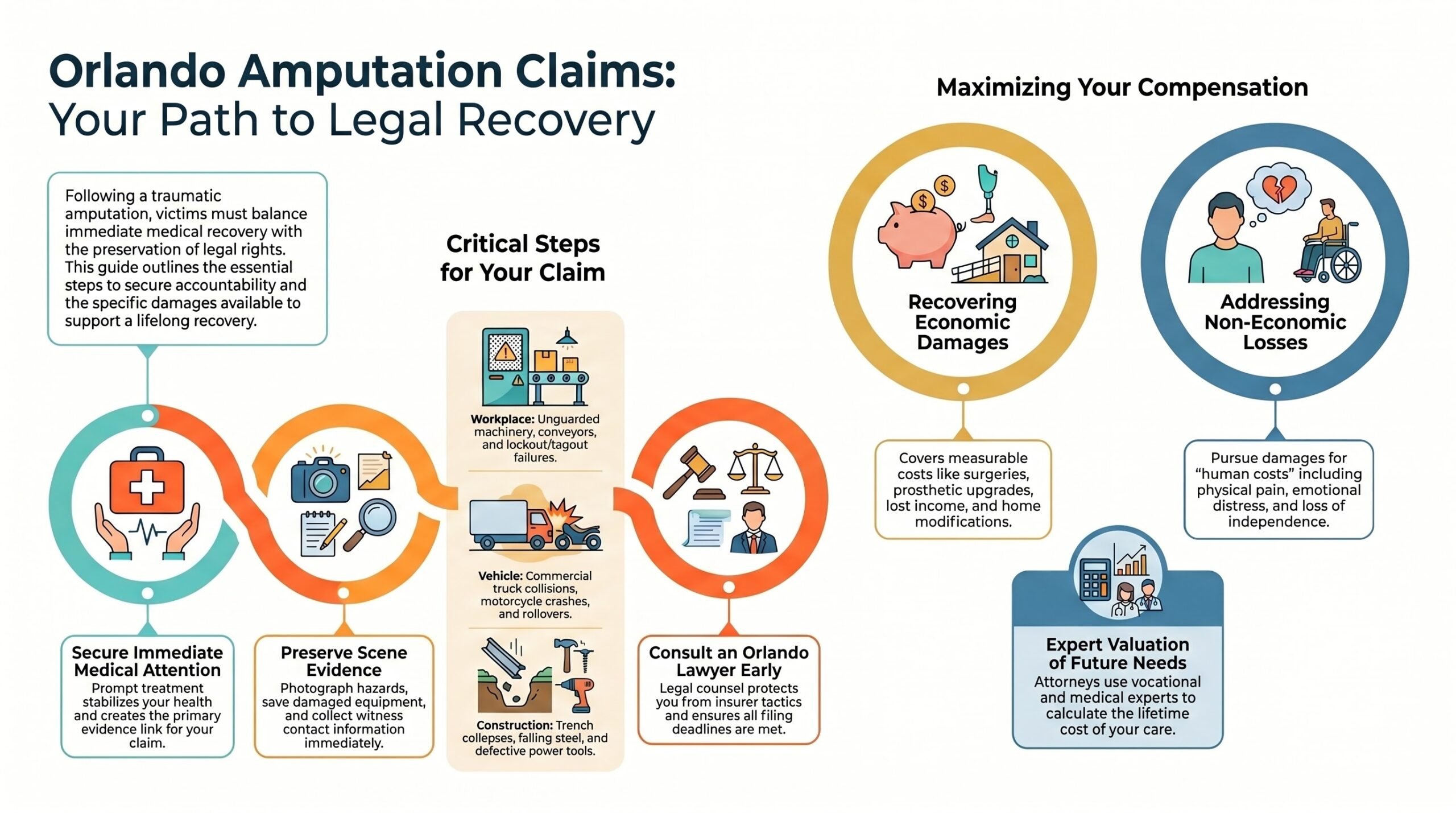


How We Can Help With Your Orlando Amputation Injury Claim
Guide this process with counsel that understands both the medical and legal stakes of an amputation injury claim. You need a team that listens carefully, organizes records, and builds a clear path forward while you focus on recovery and caring for those who depend on you.
We help you document treatment, ongoing limitations, lost income, and future needs with precision. We coordinate with medical providers, vocational experts, and life-care planners to present the full impact of your injury. You also receive guidance on rehabilitation options that support recovery, independence, and long-term stability.
Because service-minded people often carry others even while suffering themselves, we make communication direct, timely, and respectful. We answer questions, manage deadlines, negotiate firmly, and prepare every case as if trial may be necessary. When appropriate, we connect you with peer support resources that reduce isolation and strengthen practical coping. Our role is to protect your interests so you can rebuild with confidence, dignity, and purpose.
OUR CONSULTATIONSARE FREE
START YOUR FREE CASE REVIEW

Understanding Orlando Amputation Injury Cases
Because amputation cases often involve catastrophic harm and lasting consequences, understanding how Orlando amputation injury claims work is vital to protecting your rights and recovering full compensation. You need clear evidence showing the extent of your injury, the medical treatment required, and the long-term effect on your work, independence, and family responsibilities.
Your claim should account for present and future losses, including surgeries, prosthetics, therapy, lost income, and pain. Strong documentation also helps demonstrate the need for rehabilitation options that support your recovery and your ability to continue serving others in meaningful ways. Medical records, expert opinions, and vocational assessments often play central roles.
You should also understand that insurers may try to minimize what your case is worth. Careful patient advocacy can help guarantee your voice is heard and your needs are taken seriously. When your legal strategy reflects the full impact of the amputation, you stand in a stronger position to pursue fair financial recovery.
Common Causes of Orlando Amputation
You may suffer an amputation injury in several serious situations, including workplace machinery accidents, motor vehicle collisions, construction site hazards, and defective product incidents. Each of these events can expose you to crushing forces, sharp equipment, or catastrophic trauma that causes permanent loss. When you understand how these accidents occur, you can more accurately assess liability and protect your right to seek compensation.
Workplace Machinery Accidents
When workplace machines lack proper guards, shutoff features, or maintenance, a routine task can turn into a catastrophic amputation incident within seconds. You may face these hazards in factories, warehouses, construction sites, and food processing facilities, where conveyors, presses, slicers, and compactors can catch hands, arms, or fingers without warning.
If your employer ignores machine guarding standards or fails to enforce lockout/tagout compliance during cleaning, repairs, or jam removal, preventable harm can follow. You serve others by working hard each day, and you earn a workplace that protects your safety with training, inspections, and functioning emergency controls.
When a company places speed, output, or cost savings over proper safeguards, it may be liable for the life-changing losses you suffer, including medical care, lost income, rehabilitation, and lasting impairment.
Motor Vehicle Collisions
Although many people associate amputations with industrial settings, serious motor vehicle collisions also cause traumatic limb loss in Orlando. When a crash crushes a vehicle, pins you inside, or throws debris through the cabin, surgeons may have no choice but to remove a severely damaged arm, hand, leg, or foot.
You may face this harm after head-on impacts, rollovers, motorcycle crashes, pedestrian strikes, or collisions involving commercial trucks. Negligent conduct often plays a central role, including distracted driving, speeding, intoxication, and seatbelt misuse. If another person’s careless choices caused your loss, seeking legal guidance can help you protect your future and continue serving your family and community. Prompt action also helps preserve evidence, identify liable parties, and support a claim for medical care, rehabilitation, and lasting needs.
Construction Site Hazards
Construction sites expose workers to powerful machinery, unstable materials, and elevated work areas that can cause catastrophic limb injuries in seconds. If you serve on a construction crew, you face dangers from saws, forklifts, compactors, trench collapses, and falling steel. A single lapse in communication can cause your hands or feet to come into contact with crushing points or rotating parts.
You also confront hidden risks both above and below ground. Poor safety signage may direct you into active zones, while utility strikes can trigger explosions, electrocution, or sudden equipment movement. Inadequate training, rushed schedules, and missing lockout procedures often magnify these hazards.
When another party ignores established safety rules, your injury may reflect preventable negligence. By recognizing these construction site hazards, you can better protect others, document unsafe conditions, and pursue accountability after a life-changing amputation.
Defective Product Incidents
Because many serious amputations stem from products that fail under normal use, defective equipment and consumer goods remain a major source of preventable harm in Orlando. You may suffer life-altering injuries when guards break, blades engage unexpectedly, or machinery lacks adequate warnings.
Defective product incidents often involve power tools, industrial machines, lawn equipment, vehicles, and household devices. In many cases, design flaws create hidden dangers long before anyone notices a problem. Manufacturers may also ignore safer alternatives, delay repairs, or fail to issue timely product recalls.
When that happens, you and your family may carry the burden of medical care, lost income, and long-term rehabilitation. By identifying the product defect and preserving evidence, you help protect others from similar harm while strengthening your right to pursue accountability and fair compensation.


Legal Rights of Orlando Amputation Injury Victims
When an amputation results from another party’s negligence, you have the legal right to pursue compensation for the full extent of your losses.
Florida law allows you to seek damages that reflect both immediate harm and long-term changes to your life, livelihood, and ability to serve your family and community with dignity.
- You may recover medical costs, rehabilitation expenses, prosthetic care, and future treatment needs.
- You can pursue lost income, reduced earning capacity, and compensation for interrupted career goals.
- You have rights related to pain, suffering, Emotional support needs, and diminished quality of life.
- You may also seek resources for Disability accommodations, home modifications, and vocational assistance.
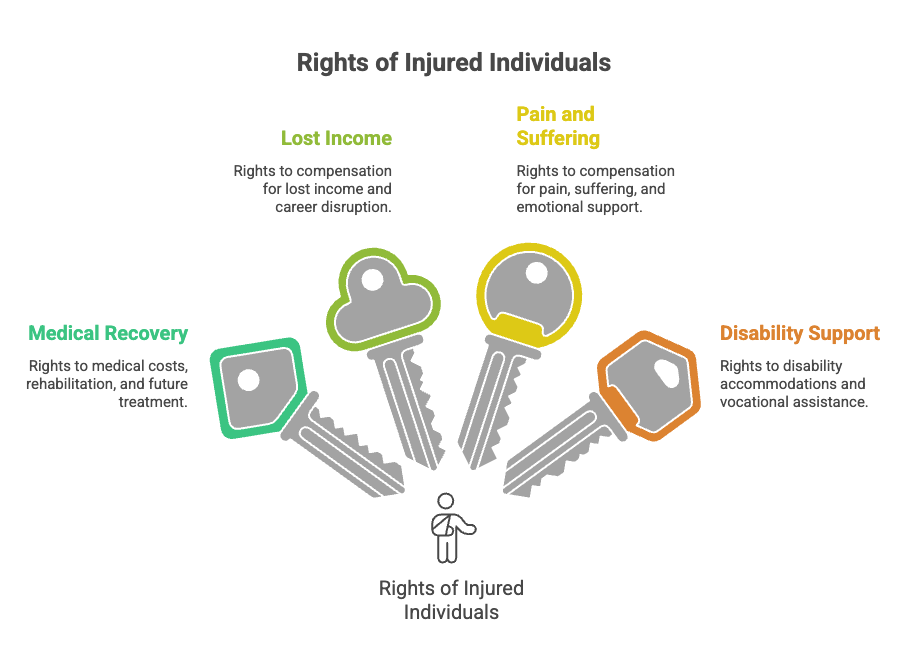
These rights exist to help restore stability and protect your future. If another person, business, or manufacturer caused your injury, the civil justice system gives you a path to demand accountability and secure the support necessary to rebuild your life with purpose and confidence.
Steps to Take After an Orlando Amputation Injury
After an amputation injury in Orlando, you should seek immediate medical care because prompt treatment protects your health and creates indispensable records of your injury. You should also preserve pivotal evidence, including photographs, witness information, and any equipment involved, so you don’t lose facts that may support your claim. As soon as possible, you should contact an Orlando lawyer who can protect your rights, guide your next steps, and help you pursue the compensation you’re owed.
Seek Immediate Medical Care
Get emergency medical attention at once, even if the full extent of the injury isn’t immediately clear. Prompt treatment can save your life, reduce blood loss, and improve your chances of stabilizing the injury. Call 911, request emergency transportation, and follow the dispatcher’s instructions carefully until help arrives.
Once you reach a hospital, let the medical team evaluate all symptoms, including shock, nerve damage, and the risk of infection. Accept recommended imaging, surgical care, and pain management so your condition is fully documented and treated.
If you’re able, share a clear account of how the injury occurred and provide your complete medical history. Prompt, thorough care also supports your ability to continue serving your family, workplace, and community. Your health must come first, because recovery begins with immediate, skilled medical attention.
Preserve Critical Evidence
Hold on to every piece of evidence you can, because early documentation may determine whether you can prove how the amputation happened and who bears legal responsibility. If possible, keep damaged equipment, clothing, safety gear, and any detached machine parts in the same condition you found them. Ask someone you trust to secure names and contact information for witnesses, and request incident reports from supervisors or property managers.
Use photo documentation to capture the scene, visible hazards, warning labels, blood patterns, and your injuries from multiple angles. Save medical records, discharge papers, receipts, and transportation logs, since they help connect the event to your losses.
Practice careful chain preservation by storing items safely, avoiding alterations, and noting who handled each piece. Your diligence can protect the truth and strengthen accountability for everyone affected.
Contact An Orlando Lawyer
Once you’ve secured the evidence, contact an Orlando amputation lawyer as soon as your medical condition allows, because early legal guidance can protect your rights and prevent costly mistakes. A lawyer can explain deadlines, identify liable parties, and help you avoid insurer tactics that may weaken your claim or reduce the support your family needs.
During a free consultation, you can describe the incident, review medical records, and ask how the attorney will pursue compensation for treatment, prosthetics, rehabilitation, lost income, and future care. You should also discuss fee agreements, communication expectations, and what documents to gather next.
By hiring counsel promptly, you strengthen your case and create space to focus on recovery, serving your loved ones, and rebuilding a stable future with confidence, purpose, and informed legal support.
How a Orlando Amputation Injury Lawyer Can Help You
When an amputation injury disrupts every part of your life, an Orlando amputation injury lawyer can help you pursue compensation for the medical care, rehabilitation, lost income, and long-term support you may need.
Your attorney helps you act with purpose, protect your family, and hold negligent parties accountable, while preserving your ability to continue serving others in your community.
- You receive a clear case evaluation, with evidence gathered from records, witnesses, and experts.
- Your lawyer identifies recoverable damages, including surgeries, rehabilitation options, prosthetic needs, home modifications, and psychological counseling.
- You gain strong negotiation support against insurers that may minimize your losses or delay payment.
- You obtain courtroom advocacy if a fair settlement is not offered, with your lawyer presenting a focused, persuasive claim.
With experienced legal guidance, you can make informed decisions, reduce uncertainty, and seek resources that support your recovery. That legal support also gives you time to care for yourself and those who depend on you.
Long-Term Effects of Orlando Amputation Injuries
An amputation injury can affect nearly every part of your life, from chronic pain and limited mobility to anxiety, depression, and the strain of adjusting to a new physical reality. You may also face ongoing challenges with prosthetic use, including discomfort, maintenance needs, and the time required to regain function and independence. Over time, these injuries can change your finances and daily routines, as medical costs, lost income, and lifestyle adjustments continue to shape your future.
Physical And Emotional Impact
Because an amputation changes far more than physical mobility, its long-term effects often extend into nearly every part of daily life. You may face chronic phantom pain, reduced stamina, disrupted sleep, and limits on work, caregiving, and community service. These physical changes can make once-routine tasks demand more planning, energy, and support.
The emotional impact can be just as significant. You may grieve the loss of independence, struggle with anxiety, or experience depression as relationships and responsibilities shift. For many people who value helping others, this adjustment can feel especially painful because it changes how you serve your family and community. Grief counseling often provides practical coping tools and a safe place to process identity changes. With proper medical care and emotional support, you can regain stability, purpose, and confidence over time.
Prosthetic Use Challenges
Adjusting to a prosthetic often brings challenges that continue long after the initial surgery and rehabilitation. You may face discomfort from pressure points, skin irritation, and swelling that change how the device fits from day to day. Proper Socket care becomes vital because even minor problems can lead to pain, sores, and reduced mobility.
You may also experience Phantom sensations, which can distract you during work, rest, or service to others. Learning to walk, balance, and complete routine tasks with confidence takes patience and ongoing adjustment. Your prosthetic may require repeated fittings, therapy, and training as your body changes over time. When these difficulties interfere with independence, relationships, or your ability to care for those who depend on you, they can become a significant part of your long-term recovery process.
Financial And Lifestyle Changes
Living with a prosthetic often affects more than your physical routine; it can also reshape your finances and daily way of life for years after the injury. You may face ongoing costs for replacement devices, therapy, transportation, and home assistance, which can require careful budget adjustments.
You may also need accessibility upgrades, such as ramps, widened doorways, modified vehicles, or adaptive tools at work. These changes can influence where you live, how you travel, and how you continue serving your family and community.
If your injury limits your prior employment, you may need retraining or a reduced schedule, which can affect long-term earning capacity. A strong legal claim can help you pursue compensation that reflects these lasting burdens and supports a more stable, dignified future after a serious amputation injury.
Proving Liability in Orlando Amputation Injury Cases
Establishing liability in an Orlando amputation injury case requires clear evidence that another party’s negligence, recklessness, or wrongful conduct directly caused your injury. To prove that connection, you must show duty, breach, causation, and damages through records, photographs, witness statements, and incident reports that accurately document what happened.
You strengthen your claim by identifying every responsible party, including employers, property owners, drivers, contractors, or manufacturers. In many cases, expert testimony helps explain how unsafe machinery, defective products, inadequate training, or hazardous conditions led to the amputation. Medical experts can also connect the traumatic event to your long-term physical limitations and future care needs.
Florida’s comparative liability rules may affect recovery if the defense argues that you shared some responsibility. Even so, careful investigation can clarify the fault and protect the full value of your case. By building a well-supported claim, you promote accountability and help create safer conditions for others in your community.
Dealing With Insurance Companies After an Orlando Amputation Injury
After an amputation injury in Orlando, insurance companies often move quickly to limit what they pay, even when your losses are severe and long-term. You may receive early calls, requests for recorded statements, or pressure to accept quick funds before you understand your future medical needs, prosthetic costs, lost income, and daily limitations.
You can protect yourself by staying cautious, organized, and deliberate. Keep records of treatment, expenses, work disruptions, and how the injury affects your ability to care for others and participate in your community. Do not assume an adjuster is focused on your recovery. Many use insurance tactics designed to minimize claims, question the necessity, or shift responsibility.
Be careful with authorizations and avoid casual comments that can be misinterpreted. Settlement timing also matters. If you agree too soon, you may forfeit support needed for later complications or long-term rehabilitation. A lawyer can communicate on your behalf and help preserve the full value of your claim.
What to Expect During an Orlando Amputation Injury Claim Process
You can expect your Orlando amputation injury claim to begin with an initial case evaluation, where your attorney reviews the facts, identifies liable parties, and explains your legal options. From there, you’ll need strong evidence and clear documentation, including medical records, accident reports, and proof of your losses, to support settlement negotiations with the insurance company. If a fair agreement isn’t reached, your case may proceed to trial, where you’ll present your claim before the court and seek full compensation under Florida law.
Initial Case Evaluation
When you begin an Orlando amputation injury claim, the initial case evaluation gives your lawyer a clear starting point to assess liability, damages, and the practical strength of your case. During this stage, you can expect an initial interview focused on how the injury occurred, who may be responsible, and how the loss has affected your daily life and ability to serve your family and community.
Your attorney also performs case screening to determine whether your claim meets legal requirements and warrants immediate action. You’ll discuss timelines, potential defendants, insurance issues, and the general path your claim may follow. This early evaluation helps you make informed decisions, set realistic expectations, and understand how a disciplined legal strategy can protect your interests while pursuing accountability and meaningful support for your future.
Evidence And Documentation
Because strong proof drives the value and direction of an Orlando amputation injury claim, evidence and documentation become central from the outset of the process. You should preserve every source of information that explains how the injury occurred, how treatment progressed, and how the loss affects your ability to serve your family and community.
Your lawyer will help you gather medical records, operative reports, billing statements, employment records, and witness accounts. Forensic photography can document the scene, equipment, and physical changes over time. If physical items are involved, maintaining a clear chain of custody helps protect reliability.
Expert affidavits may explain causation, future care needs, prosthetic costs, and vocational limits. By organizing these materials early, you strengthen credibility, support accountability, and create a factual foundation for each stage of your claim.
Negotiation And Settlement
With the supporting records in place, the claim usually moves into negotiation and possible settlement discussions with the insurer or other liable parties. At this stage, you and your attorney present a clear demand that reflects medical costs, future care, lost income, and the human impact of your injury.
You should expect counteroffers, requests for clarification, and careful review of liability and damages. Your lawyer uses settlement strategies designed to protect your long-term needs and preserve resources for those who depend on you. In some cases, mediation tactics help both sides evaluate risk, address disputed facts, and move toward resolution. You remain involved in pivotal decisions, while your attorney advises you on timing, value, and terms so you can pursue a fair outcome without accepting less than your claim merits.
Trial Process Overview
If settlement efforts don’t resolve your claim, the case may proceed to trial, where a judge or jury evaluates the evidence and decides liability and damages. You’ll prepare with your attorney through discovery, witness testimony, and review of exhibits, ensuring your account is clear, credible, and focused on service to your family and future.
During trial, each side presents opening statements, examines witnesses, and challenges evidence through objections and cross-examination. Jury dynamics can influence how testimony, expert opinions, and visual evidence are received, so your legal team tailors its strategy carefully.
After the closing arguments, the judge instructs the jury on the law, and deliberations begin. Verdict impacts may include compensation for medical care, lost income, prosthetics, rehabilitation, and pain. If necessary, your attorney can advise you about post-trial motions or an appeal.
Compensation for Orlando Amputation Injury Damages
Although no financial recovery can reverse the loss of a limb, compensation for an amputation injury can provide the resources you need to address medical treatment, prosthetic care, lost income, diminished earning capacity, pain and suffering, and the lasting effect the injury has on your daily life.
With proper recovery, you can pursue rehabilitation access that supports mobility, independence, and your ability to continue caring for others. Compensation may also help you secure home modifications, transportation assistance, and ongoing therapy tailored to your condition. In many cases, peer support plays an important role in adjustment, and financial recovery can make those services more available.
You may also need vocational guidance, assistive technology, and long-term care planning as your needs evolve. A thorough claim recognizes how this injury changes your routines, relationships, and responsibilities. By pursuing full compensation, you protect your future stability and gain practical support for the challenges ahead, while preserving your capacity to serve your family and community.
Economic vs Non-Economic Damages in Orlando Amputation Cases
In an Orlando amputation case, you may recover economic damages for measurable losses such as medical bills, rehabilitation costs, prosthetic devices, and lost income. You may also pursue non-economic damages for losses that don’t come with receipts, including pain and suffering, emotional distress, and loss of enjoyment of life.
To secure full compensation, you must prove the value of both categories with clear evidence, such as financial records, medical opinions, and testimony about how the injury has changed your daily life.
Economic Damage Categories
Several types of economic damages may apply in an Orlando amputation case, and they focus on the measurable financial losses you’ve suffered because of the injury. You may recover medical expenses for emergency care, surgeries, hospitalization, rehabilitation, prosthetics, medications, and future treatment needs. If your injury prevents you from working, lost wages can include missed paychecks, reduced hours, lost benefits, and diminished earning capacity.
Economic damages may also cover transportation to medical appointments, home or vehicle modifications, in-home nursing assistance, vocational retraining, and replacement services you now must hire.
These losses matter because they affect your ability to provide for yourself and continue serving those who depend on you. Careful documentation, including bills, receipts, employment records, and expert opinions, helps establish the full value of your financial harm.
Non-Economic Losses
Financial losses are only part of what an amputation can take from you. You may face lasting physical pain, emotional distress, loss of independence, and changes in your relationships. These harms affect how you live, serve your family, and participate in your community each day.
Non-economic losses recognize the human cost of your injury. They include suffering, anxiety, depression, disfigurement, and the loss of enjoyment in ordinary activities. You may also need Grief counseling as you adjust to a changed future and mourn abilities you once relied upon.
Pain valuation addresses the depth, duration, and daily impact of what you endure, not just what you spend. When your life has been permanently altered, these damages acknowledge the dignity of your experience and the personal burdens you continue carrying forward each day.
Proving Damage Value
Establishing the value of an amputation claim requires more than listing bills or describing your suffering in general terms. You must show how the injury affects your income, medical needs, mobility, independence, and daily service to others. Economic damages often include surgeries, prosthetics, therapy, home modifications, lost wages, and reduced earning capacity.
Non-economic damages require careful proof because pain, emotional distress, disfigurement, and loss of enjoyment do not appear on invoices. Your lawyer may use valuation methods such as medical testimony, vocational analysis, life care planning, and persuasive personal evidence from family, coworkers, and caregivers.
These materials help connect your losses to real-world consequences. They also address juror perceptions by giving a clear, credible picture of what you have endured and what future support your recovery will require over time.
When an Orlando Amputation Injury Case Goes to Trial vs Settlement
Although many Orlando amputation injury claims resolve through settlement, some proceed to trial when the parties can’t agree on liability, the severity of damages, or the long-term impact of the loss. You must weigh certainty against risk, while keeping your family’s needs and future care at the center of every decision.
Settlement can provide faster compensation, lower expenses, and more privacy. It also reflects Settlement psychology, because each side evaluates risk, credibility, and the cost of continued conflict. If the insurer disputes fault or minimizes lifelong limitations, a trial may become necessary.
In court, Jury dynamics matter. Jurors may respond strongly to clear medical evidence, honest testimony, and proof showing how the amputation affects your work, independence, and service to others. A trial can produce a larger verdict, but it also brings delay and uncertainty. With strong legal guidance, you can choose the path that best protects your recovery, dignity, and long-term stability after a serious injury.
The Statute of Limitations for Orlando Amputation Injury Cases
No matter whether your amputation injury claim ends in settlement talks or a courtroom, Florida’s statute of limitations sets a firm deadline for taking legal action. If you miss that deadline, the court may bar your case, regardless of how severe your losses are or how clearly another party caused them.
For most personal injury matters in Florida, timing rules merit close attention because nuances of the statute can affect your rights. The filing period may vary depending on how the injury occurred, who bears responsibility, and whether a government entity is involved. Certain filing exceptions may also apply in limited circumstances, such as delayed discovery issues or cases involving injured minors.
Because your goal may include protecting your family and preserving resources so you can continue serving others, you should keep records, track dates, and act carefully. A timely claim helps preserve evidence, supports witness recollections, and gives your case the strongest procedural foundation possible under Florida law.
When to Contact an Orlando Amputation Injury Lawyer
After an amputation injury, you should contact an Orlando amputation injury lawyer as soon as your immediate medical needs are under control. Prompt action helps protect your rights, preserve records, and support your ability to care for your family and community. Early intervention can also help identify witnesses, secure evidence, and address urgent questions before essential details are lost.
You should also reach out if you suspect medical negligence, if a workplace accident caused the loss, or if a vehicle collision changed your life. Insurance timing matters because adjusters may contact you quickly and request statements or releases that affect your claim.
By speaking with a lawyer early, you can make informed decisions while focusing on recovery and daily responsibilities. You may also need guidance when bills rise, employment becomes uncertain, or long-term rehabilitation begins. In a difficult season, timely legal counsel can provide structure, clear next steps, and emotional support for you and those who depend on you.
Why You Need an Experienced Orlando Amputation Injury Lawyer
Acting quickly protects your claim, but the quality of the lawyer you choose can shape the outcome just as much. An experienced Orlando amputation injury lawyer understands how catastrophic losses affect your health, work, family responsibilities, and long-term stability. You need counsel who can identify every liable party, preserve vital evidence, and measure damages beyond immediate medical bills.
You also need someone who can guide you with steady client counseling while building a case that reflects the full weight of your harm. Experienced counsel works with medical experts, vocational professionals, and life care planners to show what your future will require. That preparation strengthens settlement negotiations and supports a disciplined trial strategy if the other side refuses accountability.
When your injury limits how you serve your family, workplace, or community, strong legal advocacy helps protect the resources you need to reconstruct, continue contributing, and move forward with dignity, purpose, and financial security after a devastating loss.
How to Choose the Right Orlando Amputation Injury Lawyer for Your Case
Because the lawyer you hire will influence both the value of your claim and the stability of your recovery, you should evaluate more than reputation alone. Look for a lawyer who regularly handles amputation cases, explains medical and vocational damages clearly, and shows consistent courtroom and negotiation experience.
You should also examine communication habits, client selection, and fee structures before making a decision. A strong attorney will answer questions directly, return calls promptly, and set realistic expectations instead of promising quick results. Ask how the firm approaches expert witnesses, long-term care planning, and evidence preservation, since these issues often shape the outcome of serious injury claims.
Review testimonials with care, but rely more on your consultation experience and the lawyer’s ability to listen. When you choose counsel, seek someone who treats your case as a service to your future, your family, and the people who depend on your strength and stability each day.
About The Law Offices of Anidjar & Levine
Choose a firm that understands the full weight of an amputation injury and the legal work required to pursue fair compensation.
At The Law Offices of Anidjar & Levine, you receive responsive representation focused on your recovery, your family, and your future.
The firm investigates the cause of your injury, documents losses carefully, and pursues damages for medical care, prosthetics, lost income, and pain.
You also benefit from a team that values service beyond the courtroom.
Through community outreach, the firm demonstrates a broader commitment to helping people facing hardship and change.
That same commitment shapes how your case is handled, with clear communication, prompt updates, and attention to practical needs.
When you review client testimonials, you see consistent reports of professionalism, accessibility, and diligent advocacy.
If you want counsel that combines legal skill with genuine concern for those you serve and love, this firm offers trusted guidance during a difficult chapter in your life ahead.
Frequently Asked Questions
Can I Switch Lawyers During My Amputation Injury Case?
Yes, you can switch lawyers during your amputation injury case if doing so better protects your interests and supports those you serve. You should review your fee agreement, address any fee disputes promptly, and give written notice before you change counsel. Your new attorney can usually coordinate file transfer and protect deadlines. You’ll want a careful handover, because delays, lien issues, or strategy conflicts can affect your recovery and broader obligations.
Will Social Media Posts Affect My Amputation Injury Claim?
Yes, your social media posts can affect your amputation injury claim. Insurers and defense counsel may use photos, comments, and location tags as digital evidence to dispute your injuries, limitations, or credibility. Even with strict privacy settings, shared content can still become discoverable. You should avoid posting about your accident, recovery, activities, or emotions. Careful online conduct helps protect your claim and supports your broader responsibility to those who depend on you.
Are Prosthetic Upgrades Covered Years After Settlement?
Yes, they can be, but only if your settlement expressly includes future medical costs or long-term reimbursement terms. You should review the agreement carefully, because many settlements close claims for later prosthetic maintenance and upgrades. If your needs change markedly, structured settlements or trust arrangements may offer continued support. To support your long-term well-being, you should ask counsel and a benefits professional to thoroughly evaluate every available funding source.
Can Undocumented Workers File Amputation Injury Claims in Orlando?
Yes, you can file an amputation injury claim in Orlando even if you’re undocumented. Florida law generally allows undocumented plaintiffs to seek compensation for negligence, unsafe premises, or workplace harm, despite immigration barriers. You shouldn’t assume your status cancels your rights. By acting promptly, preserving records, and obtaining medical documentation, you strengthen your claim and help those serving injured workers pursue accountability, access to treatment, and fair financial recovery under the law.
What if My Amputation Worsens a Pre-Existing Disability?
Yes, you can still pursue benefits if an amputation causes pre existing aggravation of a prior disability. You must show how the new injury worsened your condition, increased your limitations, or created added medical needs. Strong medical records, expert opinions, and work history often prove that link. You may qualify for disability compensation covering the measurable worsening, even when you lived with a disability before the amputation.
—————————
If you’ve suffered an amputation injury in Orlando, you need clear guidance and strong legal support.
You can pursue compensation for your medical care, lost income, and lasting hardships, but acting promptly protects your rights.
An experienced Orlando amputation injury lawyer at the Law Offices of Anidjar and Levine can evaluate your claim, gather essential evidence, and negotiate with insurers on your behalf.
For related legal help, you may also speak with an Orlando Medical Malpractice Lawyer.
By choosing trusted counsel, you place yourself in the strongest position to seek the full recovery the law allows.

