

An Orlando bedsore injury lawyer from the Law Offices of Anidjar and Levine helps you act quickly when a preventable pressure wound suggests neglect in a nursing home, hospital, or care facility. Your attorney can protect your loved one, gather medical records, photographs, staffing logs, and expert opinions, and build a claim for medical costs, pain, and other losses.
You should seek counsel as soon as wounds worsen or staff avoid answers, because early action preserves evidence and strengthens your options. For related legal help, see our Orlando Medical Malpractice Lawyer.
Main Takeaways
- An Orlando bedsore injury lawyer investigates records, staffing, and facility policies to prove neglect and identify all responsible parties.
- Seek legal help immediately if wounds worsen, concerns go unanswered, or you suspect neglect in a nursing home or hospital.
- Prompt medical evaluation documents the injury, addresses infection risks, and helps protect the resident’s health and legal claim.
- Strong claims rely on organized evidence, including photographs, wound notes, care plans, staffing logs, bills, and witness observations.
- A lawyer can handle negotiations or file a suit to pursue compensation, accountability, and safer care for your loved one.


How We Can Help With Your Orlando Bedsore Injury Claim
When a nursing home or hospital allows a preventable bedsore to develop, you need a legal team that can act quickly to protect your interests. You merit counsel that listens carefully, responds decisively, and keeps your loved one’s well-being at the center of every step. Our work begins with patient advocacy, because protecting dignity and safety matters as much as pursuing accountability.
You can rely on us to gather records, preserve evidence, consult qualified professionals, and identify care failures without delay. We build a legal strategy tailored to your goals, whether you seek answers, financial recovery, or meaningful change for another vulnerable person. Throughout the process, you receive clear updates, honest guidance, and practical support, so you can make informed decisions with confidence.
By handling communications, deadlines, and negotiations, we reduce your burden and help you focus on recovery, service, and the needs of those who depend on your care each day.
OUR CONSULTATIONSARE FREE
START YOUR FREE CASE REVIEW

Understanding Orlando Bedsore Injury Cases
Because bedsore claims often involve both medical evidence and facility records, understanding how these cases work can help you protect your loved one’s rights and make informed decisions. You need to know how documentation, timelines, and care standards shape a claim from the beginning.
In these cases, you often review charts, photographs, wound notes, and staffing records to determine whether proper care was provided. A thorough skin assessment can show when tissue damage first appeared and whether staff responded appropriately. Pressure mapping may also help evaluate whether support surfaces matched the resident’s needs.
You should also understand that legal claims depend on proving harm, linking that harm to substandard care, and identifying the losses your family has suffered. When you recognize what evidence matters, you’re better prepared to advocate for someone who may not be able to speak for themselves. That knowledge can help you pursue accountability and promote safer care for others in your community.
Common Causes of Orlando Bedsore
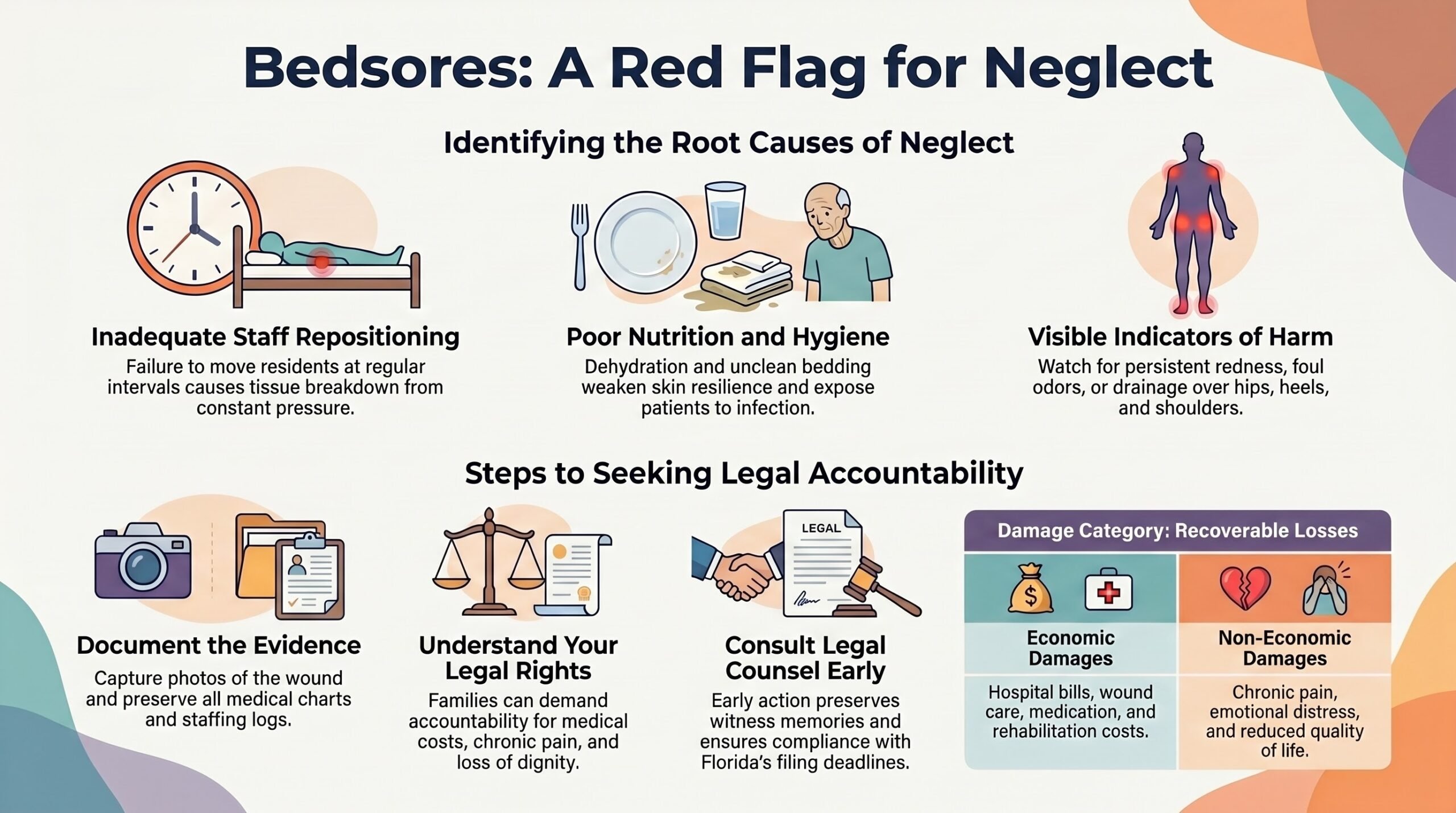
You may face serious bedsore risks when prolonged immobility puts constant pressure on the skin and underlying tissue. Your risk also rises when staff don’t reposition you as required, or when poor nutrition and hydration weaken your body’s ability to protect and repair skin. Unclean bedding conditions can further increase harm by exposing you to moisture, friction, and contamination, which often accelerate skin breakdown.
Prolonged Immobility Risks
Although prolonged immobility often begins as a medical necessity, it can quickly create the conditions for painful and preventable bedsores. When you remain in one position for extended periods, constant pressure reduces blood flow to vulnerable tissue, especially over the hips, heels, tailbone, and shoulders. That pressure can damage skin and deeper layers before visible warning signs appear.
If you care about protecting a loved one, you should understand how factors like moisture, heat, and friction worsen risk by disrupting the skin microclimate. Limited movement also makes it harder to relieve pressure naturally during sleep or recovery. Clinical tools such as pressure mapping can identify high-risk areas early, helping support safer care plans. Recognizing immobility hazards promptly allows you to advocate for dignity, comfort, recovery, and stronger daily preventive care.
Inadequate Staff Repositioning
Prolonged immobility creates the risk, but inadequate staff repositioning often turns that risk into a preventable bedsore. When caregivers fail to move a resident at appropriate intervals, pressure remains on vulnerable areas, and skin begins to break down. You trust facilities to protect those in their care, yet missed turns, understaffing, and poor communication can undermine that duty.
Proper prevention requires consistent repositioning schedules, careful documentation, and attentive follow-through during every shift. Without strong staff training, even well-meaning caregivers may overlook early warning signs or delay needed movement. You may notice redness, complaints of pain, or worsening wounds that should have been addressed sooner. When a facility ignores these basic standards, you have reason to question whether neglect contributed to a serious, avoidable injury and harm.
Poor Nutrition And Hydration
Neglect often appears in basic needs, and poor nutrition and hydration can sharply increase a resident’s risk of developing bedsores. When you serve a vulnerable person, you must recognize that the skin and underlying tissue need adequate protein, calories, vitamins, and water to remain resilient under pressure. Without proper meals and consistent fluid intake, the body weakens, circulation suffers, and wounds form more easily or heal more slowly.
You should also understand that attentive malnutrition prevention and careful monitoring of fluid balance are vital parts of quality care. If a facility ignores weight loss, dehydration, swallowing problems, or missed meals, that failure may reflect serious neglect. By watching intake, reporting changes promptly, and advocating for timely intervention, you help protect a resident’s dignity, comfort, and overall health every day.
Unclean Bedding Conditions
Clean bedding conditions also play a direct role in whether a resident develops painful pressure injuries. When you entrust a loved one to a facility, you expect staff to promptly replace unsanitary linens and keep sleeping surfaces dry, smooth, and free of contaminants. If caregivers leave moisture, debris, or wrinkles in the bed, friction and skin breakdown can begin quickly.
You should also watch for soiled mattresses, stained sheets, and odors that suggest neglect. These conditions expose fragile skin to bacteria, prolonged dampness, and avoidable pressure, especially when a resident cannot move without assistance. By insisting on clean bedding and timely changes, you help protect dignity, comfort, and wellbeing. When a facility ignores these basic duties, its failure may directly contribute to the development of serious bedsores and justify legal action.


Legal Rights of Orlando Bedsore Injury Victims
Accountability matters when a nursing home, hospital, or caregiver allows pressure ulcers to develop or worsen through substandard care. You have legal rights when preventable bedsores cause pain, infection, or loss of dignity.
Through patient advocacy and proper discharge planning, facilities must protect your health, inform you of risks, and provide treatment that meets accepted standards of care.
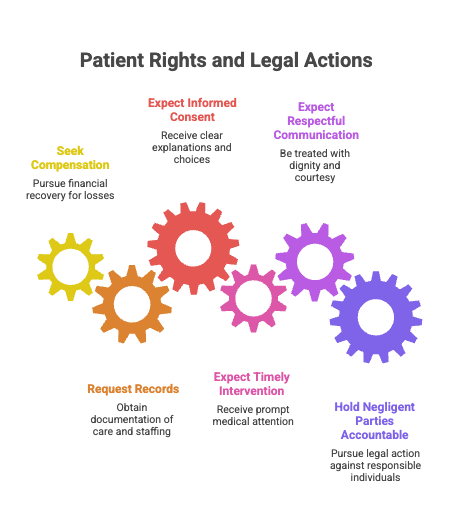
- You may seek compensation for medical costs, pain, disability, and related losses.
- You can request records showing staffing levels, wound care, repositioning, and physician orders.
- You have the right to expect informed consent, timely intervention, and respectful communication.
- You may hold negligent facilities, administrators, nurses, or contractors accountable under Florida law.
These rights do more than address harm. They support safer care for other vulnerable people, strengthen professional standards, and encourage institutions to serve each resident with competence, vigilance, and respect. Legal action can advance both justice and prevention.
Steps to Take After an Orlando Bedsore Injury
After an Orlando bedsore injury, you should seek immediate medical care to restore your health and create a clear record of the harm. You should also document the injury by preserving medical records, photographs, and notes about when the condition developed and how it was treated. Once you’ve taken those steps, you should consult an Orlando lawyer who can assess your claim and help you protect your legal interests.
Seek Immediate Medical Care
Because pressure sores can worsen quickly and lead to serious infection, you should seek immediate medical care as soon as you notice skin breakdown, swelling, drainage, or signs of deep tissue damage. Prompt treatment protects health, reduces pain, and may prevent hospitalization or life-threatening complications for your loved one.
Request an emergency assessment from a qualified physician, wound expert, or hospital team without delay. You should ask about infection control, pressure relief, nutrition, hydration, and whether the injury suggests neglect. If your family member cannot speak for themselves, your family advocacy matters.
You can communicate symptoms, report sudden changes, and insist on timely evaluation and appropriate treatment. Acting quickly helps medical providers stabilize the injury, address underlying causes, and create a care plan that supports recovery, dignity, and safer ongoing care.
Document The Injury
Carefully documenting the injury can preserve essential evidence and clarify how the bedsore developed over time. You should create a clear record that reflects the resident’s condition, daily care, and any warning signs staff may have missed. Use wound photography to capture the sore from multiple angles, on consistent dates, and with proper lighting. Keep copies of medical charts, care plans, prescriptions, and discharge instructions in one organized file.
You should also write a timeline describing changes in pain, mobility, appetite, and skin condition. Save messages, incident reports, and billing records that may confirm lapses in care. If others witnessed the decline, consider family interviews to gather observations respectfully and accurately. Careful documentation helps you advocate for dignity, accountability, and safer treatment for vulnerable loved ones and future residents.
Consult An Orlando Lawyer
When should you consult an Orlando lawyer about a bedsore injury? You should seek counsel as soon as you suspect neglect, worsening wounds, or unanswered concerns from a facility. Early action helps preserve records, photographs, and witness statements, which may protect your loved one and others in similar care settings.
During a Legal consultation, you can explain what happened, review medical treatment, and ask how Florida law may apply to the injury. You should bring documentation, care notes, billing records, and any communication with staff. A lawyer can assess liability, identify responsible parties, and outline next steps.
If representation makes sense, you may review a Retainer agreement that explains fees, services, and expectations. Prompt guidance supports accountability, informed decisions, and safer care for vulnerable residents throughout the Orlando community.
How an Orlando Bedsore Injury Lawyer Can Help You
Find your way through the legal process with greater confidence by working with an Orlando bedsore injury lawyer who can assess your claim, identify liable parties, and explain the options available to you.
You are entitled to guidance that respects your commitment to protecting a loved one and serving their daily needs with dignity.
- Your lawyer investigates records, staffing patterns, and facility policies to uncover neglect.
- Your lawyer identifies responsible parties, including nursing homes, hospitals, agencies, and contractors.
- Your lawyer values damages, gathers expert opinions, and builds a clear, persuasive claim.
- Your lawyer negotiates firmly or files suit when a fair resolution is denied.
You also gain practical guidance to support prevention, including family support resources and caregiver training that may strengthen advocacy during care discussions. With informed legal counsel, you can make evidence-based decisions, uphold accountability, and pursue financial recovery for medical costs, additional care needs, and other losses resulting from preventable bedsore harm.
Long-Term Effects of Orlando Bedsore Injuries
You may face lasting harm from bedsores, including chronic pain that affects your comfort, sleep, and daily function. If the wound worsens, you can also face serious infection and sepsis risks that threaten your overall health and require extensive treatment. Over time, these injuries can reduce your mobility, weaken your independence, and contribute to significant emotional recovery.
Chronic Pain Complications
Although a bedsore may begin as a localized wound, it can lead to chronic pain that persists long after the visible injury improves. You may experience burning, stabbing, or deep aching sensations that disrupt sleep, limit mobility, and make daily care tasks harder. When tissue damage reaches deeper layers, nerve damage can intensify pain and reduce your ability to sit, stand, or rest comfortably.
Over time, persistent pain can drain your strength and contribute to chronic fatigue, frustration, and reduced independence. You may need ongoing therapy, medication, assistive devices, and careful repositioning to manage symptoms and preserve function. If you serve a vulnerable loved one, unrelenting pain can also hinder meaningful interaction and emotional well-being. Recognizing these complications early helps you pursue appropriate treatment and stronger legal accountability.
Infection And Sepsis Risks
Progressing from a pressure injury to a systemic infection, a bedsore can expose deeper tissue to bacteria and create a serious risk of cellulitis, bone infection, and sepsis. If you care for a vulnerable person, watch for fever, foul drainage, redness, warmth, confusion, or a sudden decline in blood pressure, as these signs can signal a medical emergency.
Delayed treatment can allow infection to spread through the bloodstream and damage organs. Immune suppression, diabetes, and poor nutrition can increase the danger and complicate recovery. Prompt wound assessment, cleaning, pressure relief, and medical intervention can protect the person you serve. Providers should also follow antibiotic stewardship principles, since targeted treatment helps control infection while reducing avoidable resistance. Early action can save tissue, preserve health, and safeguard life.
Emotional And Mobility Decline
Often, the long-term effects of a bedsore extend well beyond the wound itself, reducing mobility, increasing pain, and placing a heavy emotional burden on the injured person. As you care for a loved one, you may see strength fade as sitting, standing, and repositioning become difficult and exhausting. Limited movement can increase dependence, reduce participation in daily routines, and weaken overall health.
You may also notice Emotional withdrawal, especially when pain, embarrassment, or isolation begins to affect confidence and personal dignity. In these moments, your attention matters. By encouraging treatment, documenting changes, and supporting Mobility aid awareness, you help protect comfort, safety, and independence. When caregivers or facilities ignore these warning signs, the decline often worsens, leaving your family to face preventable suffering and serious long-term consequences.
Proving Liability in Orlando Bedsore Injury Cases
When you pursue a bedsore injury claim in Orlando, proving liability requires more than showing that a pressure ulcer developed under a facility’s care. You must connect the injury to specific failures in treatment, supervision, and prevention. Facility negligence often manifests as missed turn schedules, poor skin assessments, inadequate staffing, or ignored warning signs. Your case should show that caregivers departed from accepted standards and failed to protect a vulnerable person.
You also need strong evidence of Medical causation. That means proving the ulcer worsened because of the facility’s actions or omissions, not solely because of an underlying illness. Medical records, wound documentation, staffing logs, photographs, and expert opinions can help establish that link.
You serve your loved one best by gathering clear proof of what happened, when it happened, and how proper care could have prevented harm. Careful documentation helps hold negligent facilities accountable and supports meaningful recovery for the person you seek to protect.
Dealing With Insurance Companies After an Orlando Bedsore Injury
Insurance companies may push back quickly after an Orlando bedsore injury, and you can’t assume their investigation will focus on the full extent of the harm. You should respond carefully, because early statements, broad medical releases, and rushed conversations can affect how your loved one’s suffering is valued. When you serve an injured family member, your careful records, photographs, and treatment updates help protect the truth.
You should also recognize common insurance tactics, including minimizing pressure injuries, questioning preventable neglect, and urging fast resolutions before damages are fully understood. Keep communications organized, remain factual, and avoid speculation.
If an adjuster asks for recorded statements or presses about settlement timelines, you should proceed cautiously and seek guidance before answering. A strong advocate can help you present the evidence clearly, protect your family’s interests, and keep the focus on accountability, dignity, and the care standards that vulnerable residents merit under Florida law and in every insurance communication.
What to Expect During an Orlando Bedsore Injury Claim Process
During an Orlando bedsore injury claim, you can expect your attorney to begin with an initial case evaluation to assess liability, damages, and the strength of your claim. You’ll then need to gather medical records, photographs, facility reports, and other evidence that supports how the injury occurred and how it affected you.
As the case moves forward, your lawyer will handle settlement negotiations and, if a fair resolution isn’t offered, prepare your case for trial with careful attention to each required step.
Initial Case Evaluation
At the outset, your attorney will sit down with you to review how the bedsore developed, the medical treatment involved, and the harm your loved one has suffered. During this initial meeting, you can expect a careful discussion of your goals, your family’s concerns, and the nursing home’s possible responsibilities. A free consultation lets you ask direct questions and understand whether your claim appears legally viable.
Your lawyer will also explain the case timeline, including the crucial stages, likely challenges, and the decisions that may arise as the matter moves forward. This evaluation helps you serve your loved one well by clarifying what legal action may accomplish. You’ll leave with a clearer sense of direction, the attorney’s preliminary assessment, and the next practical steps for protecting your family’s interests.
Evidence And Medical Records
Because a bedsore claim often turns on the quality of the proof, your lawyer will move quickly to collect the nursing home records, hospital charts, wound care notes, photographs, staffing logs, and any internal incident reports tied to your loved one’s condition. You can help by preserving bills, discharge papers, care plans, and the names of witnesses who saw neglect firsthand. Strong medical documentation shows when the pressure injury developed, how staff responded, and whether basic prevention measures were missed.
Your attorney may also request radiology reports, lab results, and consultant opinions to confirm severity, infection, or complications. As the file grows, each record helps tell a clear story of harm and responsibility. Careful evidence gathering honors your loved one’s dignity and supports your effort to protect others from similar mistreatment and future harm.
Negotiation And Settlement Talks
Expect settlement discussions to begin once your lawyer has assembled the essential records, evaluated the extent of the pressure injury, and calculated the financial and personal losses tied to the neglect. At this stage, you can expect a structured settlement strategy focused on accountability, care costs, pain, and the support your loved one needs moving forward.
Your attorney will present a demand, respond to offers, and explain each step in the negotiation timeline. You should expect candid advice on whether an offer reflects the harm suffered and the long-term needs resulting from the injury. Insurers and facilities may attempt to limit payment, so your lawyer will press for terms that honor dignity, safety, and proper care. Throughout talks, you remain informed and empowered to make decisions that protect your family and serve future wellbeing.
Trial Preparation Steps
If settlement efforts don’t produce a fair result, your lawyer will move into trial preparation by organizing evidence, identifying witnesses, and building a clear account of how the neglect caused the pressure injury. You can expect focused planning that supports both accountability and compassionate advocacy for your loved one.
Your attorney will prepare you for testimony, review medical records, and carefully organize exhibits so the facts are easy for a jury to follow. They’ll work with experts who can explain the standards of care, causation, and the resulting harm. You may also discuss jury selection, courtroom procedures, and likely defense arguments, so you feel informed rather than overwhelmed. Throughout this stage, your lawyer’s goal is to present a credible, service-driven case that seeks justice, protects dignity, and encourages safer care for others.
Compensation for Orlando Bedsore Injury Damages
Accountability matters when a bedsore injury results from neglect in an Orlando nursing home, hospital, or assisted living facility. When you pursue compensation, you help protect vulnerable residents and encourage safer care across the community. A claim can address the harm caused by delayed repositioning, poor hygiene, inadequate nutrition, and failures in caregiver training and insurance audits.
You may seek compensation through settlement negotiations or litigation, depending on how the facility responds and what the evidence shows. Strong medical records, photographs, witness statements, and expert review can support your position and demonstrate that neglect caused preventable pressure injuries. Your lawyer can identify responsible parties, preserve proof, and present a clear demand that reflects the full extent of the injury.
Economic vs Non-Economic Damages in Orlando Bedsore Cases
In an Orlando bedsore case, you may recover economic damages for measurable losses such as medical bills, rehabilitation costs, and related out-of-pocket expenses. You may also seek non-economic damages for pain, suffering, emotional distress, and the reduced quality of life caused by the injury. To secure full compensation, you must present clear evidence that proves both the financial value of your losses and the personal impact the bedsore has had on your life.
Economic Damage Categories
Because bedsore injuries often require extensive treatment and long-term support, economic damages focus on the measurable financial losses you can document, while non-economic damages address the human consequences that do not come with a fixed price. In your claim, these losses may include hospital bills, physician visits, prescription costs, rehabilitation, wound care, and infection treatment.
You may also recover the cost of medical equipment, such as specialized mattresses, cushions, wheelchairs, lifts, and home modifications that support safer daily care. If the injury keeps you from working, lost wages and reduced earning capacity can become significant parts of your damages.
Transportation to appointments, in-home nursing assistance, and future projected medical expenses may also apply. Careful records, invoices, and expert opinions help you prove these financial losses clearly and pursue full accountability.
Non-Economic Losses
While economic damages measure bills and other documented costs, non-economic losses address the personal harm a bedsore causes that you can’t capture with receipts alone. You may endure chronic pain, loss of dignity, emotional distress, disrupted sleep, and reduced enjoyment of daily life. These injuries often affect how you relate to loved ones and how confidently you participate in your community.
When you seek accountability, non-pecuniary losses recognize those human consequences. Pain valuation considers the severity and duration of suffering, but non-economic harm also includes anxiety, humiliation, and the loss of independence that pressure injuries can create. If you care for others or advocate for a vulnerable family member, understanding these damages helps you pursue a result that reflects the full weight of the injury, not just the financial impact alone.
Proving Damage Value
Clarity matters when you must prove what a bedsore injury has truly cost. You need records that show every financial loss, including hospital bills, wound care, medications, rehabilitation, and future treatment needs. Those economic damages provide the claim with a measurable basis and help challenge unfair insurance valuation methods.
You must also prove non-economic damages, such as pain, loss of dignity, emotional distress, and reduced quality of life. These harms are real, even when they do not appear on invoices. Strong photographs, medical charts, caregiver notes, and daily observations can support your account. In many Orlando bedsore cases, expert testimony connects the injury to preventable neglect and explains how the condition changed your life. Careful proof helps you seek justice while protecting those who depend daily on compassionate, accountable care.
When an Orlando Bedsore Injury Case Goes to Trial vs Settlement
Although many Orlando bedsore injury claims resolve through settlement, some cases proceed to trial when the parties dispute liability, the severity of the injury, or the full value of the losses involved. You should understand how that choice affects your ability to seek accountability and protect a vulnerable loved one.
Settlement timing often depends on the strength of the medical evidence, the credibility of witnesses, and whether the defense recognizes clear neglect. If the facility offers a fair amount, you may avoid the cost, delay, and uncertainty of trial. However, when the other side minimizes suffering or denies responsibility, a trial may become necessary.
At trial, jury dynamics can shape the outcome because jurors evaluate conduct, credibility, and the human impact of preventable harm. Your lawyer prepares evidence, expert testimony, and damages proof to present a clear case. Whether through settlement or verdict, your goal remains the same: securing justice and encouraging safer care for others.
The Statute of Limitations for Orlando Bedsore Injury Cases
In Orlando bedsore injury cases, the statute of limitations sets a strict deadline for filing a lawsuit, and missing that deadline can bar your claim entirely. Florida law generally allows a limited period to pursue compensation, so you must act with care and attention to timing.
If your loved one suffered avoidable pressure injuries in a nursing home, hospital, or assisted living facility, time matters. The exact deadline can depend on several factors, including when the injury was discovered, whether negligence continued over time, and whether the harmed person has died. These nuances of the statute can affect how courts calculate the filing window.
In some circumstances, filing exceptions may pause or extend the deadline, but you shouldn’t assume they apply without careful review. By understanding these limits, you protect your ability to seek accountability, recover damages, and support safer care for other vulnerable patients. Prompt action preserves records, witness memories, and treatment evidence for review.
When to Contact an Orlando Bedsore Injury Lawyer
Deadlines matter, but so does recognizing the point when legal guidance can protect your claim and your loved one’s well-being. You should contact an Orlando bedsore injury lawyer as soon as you notice unexplained skin breakdown, repeated infections, weight loss, dehydration, or sudden changes in mobility. Early action helps preserve records, photographs, and witness accounts before important details disappear.
You should also seek counsel when staff dismiss concerns, delay treatment, alter charts, or fail to explain how the wound developed. If a hospital or nursing home ignores care plans, turning schedules, nutrition needs, or hygiene standards, legal guidance can help you respond promptly and responsibly. Early detection supports medical recovery, while family advocacy helps make certain your loved one receives attention, dignity, and safer care going forward.
By reaching out when warning signs first appear, you create space to ask informed questions, document neglect carefully, and protect both your loved one’s health and your family’s ability to pursue accountability.
Why You Need an Experienced Orlando Bedsore Injury Lawyer
Because bedsore claims often involve complex medical evidence, facility records, and disputed timelines, you need an experienced Orlando bedsore injury lawyer who can identify neglect and connect it to the harm your loved one suffered.
You serve your family best when you have counsel who knows how to uncover patterns of preventable injury. An experienced lawyer can evaluate wound progression, staffing levels, repositioning schedules, and staff training to determine whether a facility failed to meet accepted standards. Your attorney can also secure records, question witnesses, and work with medical experts to show how delays in care worsened the condition.
You also need someone who can protect your financial interests while pursuing accountability. A seasoned lawyer can calculate damages for medical treatment, pain, and related losses, while addressing concerns about legal costs. With informed legal guidance, you can focus on your loved one’s well-being and advocate for safer care for others in the community.
How to Choose the Right Orlando Bedsore Injury Lawyer for Your Case
Selecting the right Orlando bedsore injury lawyer affects both the strength of your claim and your ability to hold a negligent facility accountable. You should look for an attorney with direct experience in nursing home neglect, medical evidence, and pressure ulcer litigation in Florida.
Ask how the lawyer investigates cases, works with experts, and explains Client rights in clear terms. You need someone who listens carefully, responds promptly, and treats your family’s concerns with respect and purpose. Review the firm’s record of settlements and verdicts, but also consider whether the attorney shows compassion for vulnerable residents and a commitment to protecting others from similar harm.
You should also discuss Legal fees early, including contingency arrangements and case costs, so you understand your responsibilities before moving forward. Choosing counsel with skill, integrity, and strong communication helps you pursue justice effectively and serve your loved one’s best interests with confidence.
About The Law Offices of Anidjar & Levine
Serving injured clients across Florida, The Law Offices of Anidjar & Levine represents families seeking accountability when nursing homes and care facilities allow preventable bedsores to develop or worsen.
When you turn to the firm, you receive responsive guidance, careful case preparation, and a legal team committed to protecting vulnerable people with dignity and purpose.
You can expect clear communication, practical counsel, and thorough advocacy tailored to your family’s needs.
The firm investigates records, consults qualified professionals, and pursues compensation for medical care, pain, and other losses caused by neglect.
If you want to learn more before calling, you can review client testimonials and staff bios to understand the firm’s service values and experience.
Those resources can help you evaluate whether the attorneys align with your desire to serve and safeguard others.
With a strong statewide presence and a client-centered approach, the firm works to hold negligent facilities accountable and pursue meaningful justice for your loved one.
Frequently Asked Questions
Can Family Members File a Bedsore Claim for an Incapacitated Loved One?
Yes, you can often file a bedsore claim for an incapacitated loved one if you have legal authority through family guardianship, power of attorney, or similar status. You should act promptly to protect your loved one’s rights and well-being. If a facility engaged in neglect or wrongful withholding of care, records, or treatment, you may pursue compensation. You’ll strengthen the claim by preserving medical records, photographs, and witness statements.
Are Bedsores Injury Claims Possible Against Assisted Living Facilities?
Yes, you can pursue a bedsore injury claim against an assisted living facility when staff negligence contributed to preventable harm. You should act promptly, because liability often depends on proving inadequate supervision, poor repositioning practices, or delayed treatment. Strong medical documentation helps establish when the bedsore developed, how it worsened, and whether proper care was ignored. By taking action, you can protect your loved one and promote safer care for others.
What Evidence Should Families Preserve Before Transferring a Patient?
Before transfer, you should preserve complete medical records, medication logs, care plans, incident reports, and staff communications. You should also collect photographic evidence of wounds, bedding, medical devices, and room conditions, using clear dates. Keep billing statements, admission agreements, and witness names, including family and caregivers. Ask for records in writing, retain copies, and document every conversation. These steps help you protect the patient’s interests and support accountable, informed care decisions.
Can Arbitration Agreements Affect Nursing Home Bedsores Lawsuits?
Yes, they can. If you signed binding arbitration terms, you may have to resolve a nursing home bedsore claim outside court, which can limit discovery and appeal rights. Still, pre-dispute waivers and arbitration clauses aren’t always enforceable. You should preserve every admission document, note who signed, and have counsel review capacity, pressure, and fairness issues. By acting promptly, you protect the resident and support accountable, service-centered care.
How Long Do Bedsore Settlements Typically Take in Orlando?
You can expect bedsore settlements in Orlando to take several months to more than a year, depending on liability, medical evidence, and damages. Your timeline expectations should account for investigation, record review, and settlement negotiation with insurers or defense counsel. If the facility disputes fault or the extent of the harm, resolution usually takes longer. By acting promptly and organizing documentation, you help your legal team pursue a fair, service-oriented outcome efficiently.
—————————
If you or a loved one suffered a bedsore injury in Orlando, you shouldn’t have to manage the legal process alone.
You can protect your rights by acting quickly, preserving records, and seeking experienced legal guidance.
The Law Offices of Anidjar and Levine can evaluate your claim, explain your options, and pursue the compensation you may be entitled to.
For help from an Orlando Medical Malpractice Lawyer, you need counsel that will advocate for your interests with skill, focus, and determination.

