The Law Offices of Anidjar and Levine helps Tampa car accident victims with internal bleeding protect their health and injury claim.
After emergency care, we preserve crash evidence, gather hospital records, imaging results, and physician notes, and identify liable parties before insurers control the narrative.
Our Tampa Car Accident Lawyer team handles adjuster communications, evaluates coverage, documents future care needs, and pursues compensation through negotiation or litigation.
Internal bleeding can worsen fast, and the sections below explain what steps matter most.
Main Takeaways
- Seek emergency medical care immediately because internal bleeding can be life-threatening and may not show obvious symptoms right away.
- A Tampa car accident lawyer can preserve crash evidence, medical records, imaging results, witness statements, and surveillance footage.
- Insurers may challenge delayed symptoms, prior conditions, medication history, or inconsistencies to reduce or deny compensation.
- Legal support can identify liable parties, calculate medical costs and future losses, and handle communications with insurers.
- Avoid recorded statements, broad medical authorizations, or early settlements before the full extent of internal injuries is known.


How We Can Help With Your Tampa Internal Bleeding Car Accident Injury Claim
Protecting your claim starts with understanding the medical and legal urgency of internal bleeding after a Tampa car accident. We help you act quickly, preserve evidence, and avoid mistakes that can weaken recovery. Our team gathers hospital records, emergency reports, imaging results, and physician notes to show how the crash harmed you and why prompt care mattered.
We also handle Medication disclosure carefully, because insurers may use prescriptions, blood thinners, or prior treatment history to question causation or damages. We present that information accurately, with context, so your records support your claim rather than create confusion.
When you focus on recovery and serving those who depend on you, we manage communications with insurers, identify liable parties, calculate losses, and prepare your case for negotiation or litigation. We work to protect your dignity, document your needs, and pursue compensation that reflects the seriousness of your injuries and future care.
OUR CONSULTATIONSARE FREE
START YOUR FREE CASE REVIEW

Understanding Tampa Internal Bleeding Car Accident Injury Cases
After explaining how we support your claim, it helps to understand why cases of internal bleeding after Tampa car accidents require immediate attention and careful legal review. We often see Hidden injuries that don’t appear serious at first, yet they may threaten your health within hours. When you seek emergency diagnosis, you protect yourself and create records that help us show the connection between the collision and your condition.
We encourage crash symptom tracking because small changes, such as dizziness, abdominal pain, weakness, or confusion, can reveal a worsening injury. These details help doctors treat you and help us present the full impact of your losses. Medical delays can make recovery harder and give insurers room to question your claim. We work with care, precision, and purpose, so you can focus on recuperation while we evaluate the evidence, address liability issues, and pursue compensation that reflects the seriousness of your injury.
Common Causes of Tampa Internal Bleeding Car Accidents
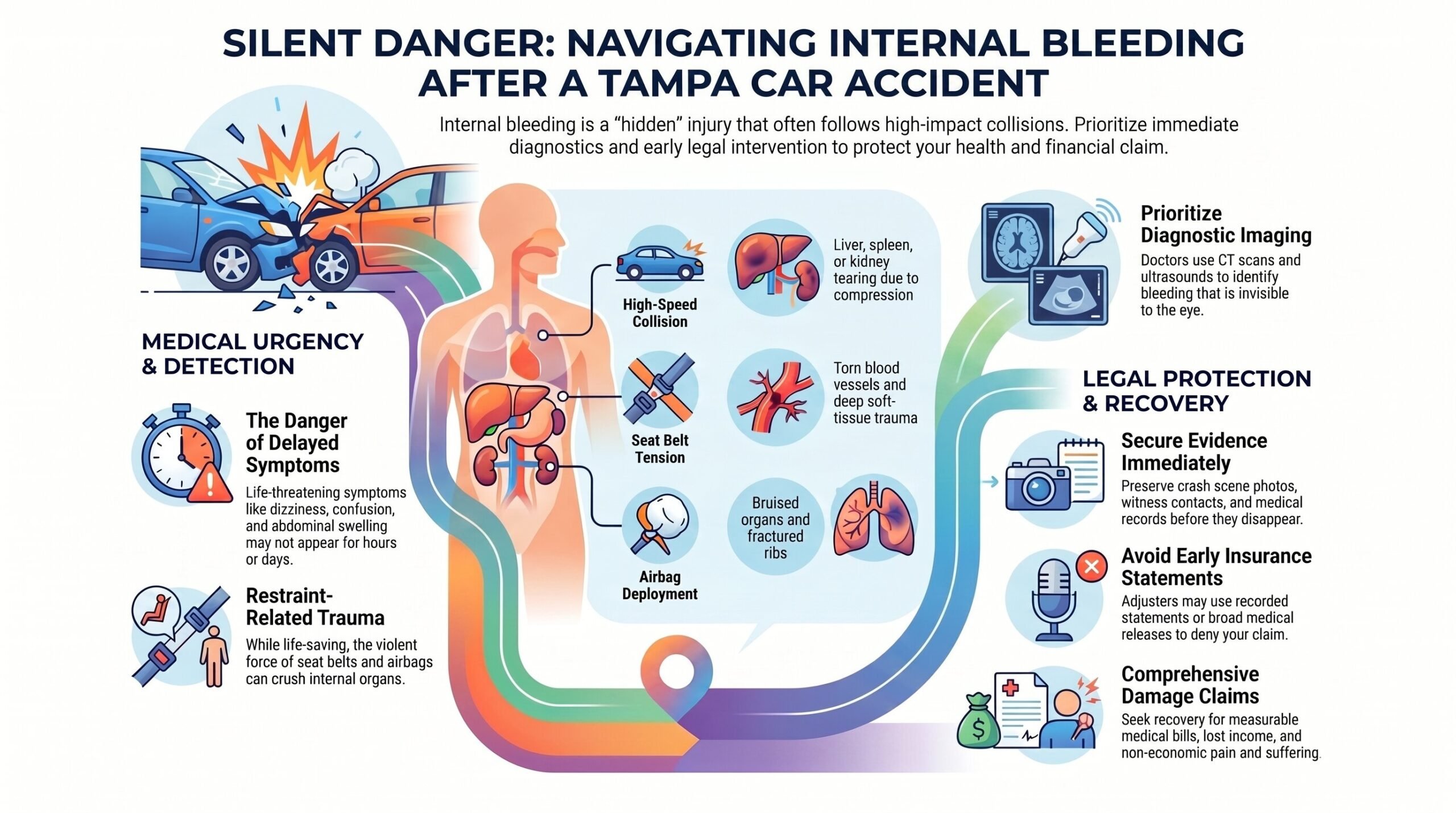
We often see internal bleeding arise from powerful crash forces, and we want you to understand how these injuries can occur after a Tampa car accident. High-speed collisions, seat belt trauma, airbag deployment impact, and pedestrian crash injuries can all damage organs or blood vessels, even when symptoms aren’t immediately obvious. By recognizing these common causes, we can better explain why prompt medical care and legal guidance may be essential after a serious collision.
High-Speed Collisions
When vehicles collide at high speeds, the force can violently compress the chest, abdomen, and pelvis, causing internal organs and blood vessels to tear without obvious external wounds. We grasp how quickly a serious crash can place you, your family, or those you serve in danger. Greater speed increases impact energy, making liver, spleen, kidney, and intestinal injuries more likely, even when first responders see limited external bleeding.
In Tampa, highway crashes, reckless driving, racing, and sudden lane changes can create these severe trauma patterns. Seatbelt enforcement helps reduce catastrophic movement inside a vehicle, while Airbag failure defects may worsen the body’s direct contact with hard surfaces. We evaluate crash dynamics, medical findings, and vehicle safety issues to identify every responsible party.
Seat Belt Trauma
Although seat belts save lives, the force of a serious Tampa car accident can concentrate pressure across the chest, abdomen, and pelvis, causing internal bleeding from torn organs, damaged vessels, or deep soft-tissue trauma. We often see victims who initially believe they’re stable because they can walk, speak, or help others at the scene. However, seat belt tension can leave internal bruising that signals deeper injury beneath the skin.
You should seek prompt medical evaluation after any crash involving sharp restraint pressure, abdominal pain, dizziness, swelling, or worsening tenderness. We also encourage careful documentation of visible belt marks, emergency care, and follow-up treatment. By recognizing these warning signs early, we protect your health, preserve evidence, and support a stronger injury claim for recovery.
Airbag Deployment Impact
Seat belt trauma isn’t the only restraint-related force that can cause internal injuries in a serious Tampa collision; airbag deployment can also create violent pressure against the chest, abdomen, and upper body. We often see this impact contribute to bruised organs, abdominal bleeding, fractured ribs, and breathing difficulty, especially when a crash occurs at high speed.
You may also experience Whiplash injuries as the body moves sharply before the airbag fully cushions the force. We carefully review crash data, medical imaging, emergency records, and vehicle evidence to determine how deployment affected your condition. This analysis helps us serve your recovery goals while building a focused settlement strategy. When internal bleeding is suspected, we encourage immediate evaluation because a delayed diagnosis can put your health and legal claim at risk.
Pedestrian Crash Injuries
Because pedestrians have little protection from impact, a Tampa crash can cause severe internal bleeding even at lower speeds. We often see injuries when a driver fails to yield, turns through a crosswalk, or overlooks a person near traffic. You may not see immediate symptoms, so prompt medical evaluation can improve your health and document the harm.
We help gather evidence that explains how the collision occurred and why the injuries matter. Witness statements, traffic camera footage, vehicle damage, and medical records can show the force involved and the driver’s conduct. If you’re caring for an injured loved one, we work to preserve proof, communicate with insurers, and pursue accountability so your family can focus on recovery, stability, and the support needed after a serious pedestrian crash.


Legal Rights of Tampa Internal Bleeding Car Accident Injury Victims
When internal bleeding follows a Tampa car accident, Florida law gives injured victims the right to seek compensation from the parties responsible for the crash.
We help you understand those rights so you can protect your health, your family, and your ability to continue serving others with dignity.
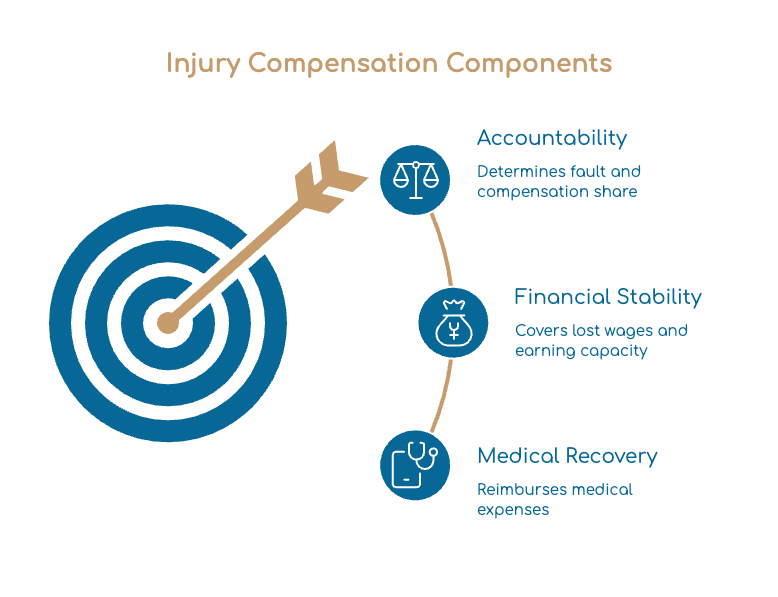
- Medical recovery: You may pursue payment for emergency care, surgery, hospitalization, imaging, follow-up treatment, and related expenses.
- Financial stability: You may seek lost wages, reduced earning capacity, and other losses caused by the injury’s disruption to your life.
- Accountability: Comparative negligence rules may affect recovery if more than one party shares fault, but partial responsibility doesn’t always prevent compensation.
We also track Insurance claim timelines because missed deadlines can limit your options. By acting promptly, preserving records, and documenting symptoms, we strengthen your claim and help ensure responsible parties answer for the harm they caused.
Why Do Tampa Internal Bleeding Car Accident Injuries Happen?
Why do internal bleeding injuries occur so often in serious Tampa car accidents? We see them when violent force crushes, twists, or sharply restrains the body. A seat belt, airbag, dashboard, steering wheel, or door frame can transfer impact to the chest, abdomen, pelvis, or head, damaging organs and blood vessels beneath intact skin.
These injuries also arise because collisions develop quickly, and the body absorbs energy it wasn’t built to withstand. High-speed impacts, rollovers, side-impact crashes, and multi-vehicle collisions can create severe internal harm. Hidden trauma symptoms may not appear immediately, which makes these injuries especially dangerous for people trying to care for families, coworkers, or others after a crash.
Negligence factors often explain why the collision occurred. Speeding, distracted driving, impaired driving, unsafe lane changes, tailgating, and failure to yield all increase the risk of catastrophic force. When careless choices cause internal bleeding, accountability matters.
What Should You Do After a Tampa Internal Bleeding Car Accident Injury?
After a Tampa car accident, we urge you to seek emergency medical care immediately, because internal bleeding can worsen quickly without obvious symptoms. We also recommend that you document accident details, including photos, witness information, and medical records, as soon as you’re able. Once your immediate health needs are addressed, we can help you contact a lawyer to protect your rights and preserve your claim.
Seek Emergency Medical Care
Because internal bleeding can progress quickly and without obvious symptoms, we should treat any serious car accident in Tampa as a medical emergency and seek immediate care. We should call 911, accept ambulance transport when advised, and allow trained providers to evaluate for pain, dizziness, weakness, confusion, bruising, or abdominal swelling. Symptoms vs diagnosis matters because feeling “mostly fine” doesn’t rule out bleeding inside the skull, chest, abdomen, or pelvis.
In Florida ER triage, medical teams prioritize patients based on risk, essential indicators, trauma severity, and reported symptoms, so we should communicate clearly and answer questions fully. By acting quickly, we protect your health and support your ability to care for family, work, and community. We shouldn’t drive ourselves if symptoms worsen; prompt evaluation can prevent life-threatening complications.
Document Accident Details
Once we’ve addressed urgent medical needs, we should begin preserving the facts that explain how the Tampa car accident happened and how the injury developed. Immediate documentation helps us protect your account while details remain clear and available. We should record the date, time, location, weather, traffic signals, vehicle positions, visible damage, and any statements made at the scene.
If safe, we should photograph vehicles, skid marks, road conditions, injuries, and nearby surveillance cameras. We should also gather names, phone numbers, insurance details, and witness contact information.
For insurance claim preparation, we should keep medical discharge papers, diagnostic results, prescriptions, and follow-up instructions. We should save repair estimates, towing records, and missed-work notes. Careful record-keeping supports accountability, helps others understand your needs, and strengthens the claims process.
Contact A Lawyer
When should we contact a lawyer after a Tampa car accident involving suspected internal bleeding? We should do so as soon as emergency medical needs are addressed, because early guidance helps protect the injured person and those depending on us. A lawyer can coordinate Risk assessment, explain deadlines, and identify coverage before insurers shape the record. We also need prompt evidence preservation, including vehicle data, crash photos, witness information, medical findings, and surveillance footage that may disappear quickly.
By reaching out to counsel early, we can focus on care, family responsibilities, and community obligations while an experienced professional handles communications and claims strategy. We shouldn’t give recorded statements or accept settlement offers without advice, since internal bleeding claims often involve delayed complications and significant future losses. Counsel helps us pursue accountability.
Critical Evidence in a Tampa Internal Bleeding Car Accident Injury Case
We build a strong Tampa internal bleeding car accident injury case by identifying the evidence that proves both the crash and the hidden harm it caused. Important evidence may include: 1. emergency medical records, 2. diagnostic imaging results, and 3. crash scene evidence, witness statements, and officer reports. When you act quickly, we can preserve crucial proof before records disappear, memories fade, or insurers challenge the severity of your injuries.
Emergency Medical Records
Because internal bleeding can progress rapidly after a crash, emergency medical records often become some of the most crucial evidence in a Tampa car accident injury case. We review these records to understand what symptoms you reported, how providers assessed your condition, and whether your injuries appeared consistent with crash-related trauma.
Triage notes, crucial signs, medication records, lab orders, and discharge instructions can show urgency, pain levels, and clinical concern. This injury documentation helps us serve you by preserving a clear timeline of what happened after impact. Emergency records may also reference Traumatic imaging orders without requiring detailed discussion of the results. When insurers question causation or severity, we use these records to link your medical needs to the collision and accurately protect your claim.
Diagnostic Imaging Results
How can imaging results change the direction of an internal bleeding claim after a Tampa car accident? We use them to connect symptoms, treatment, and causation with precision. CT scan timing can indicate whether bleeding occurred soon after impact, supporting prompt medical attention and limiting disputes about later causes.
MRI findings may reveal soft tissue injury, organ trauma, or complications that emergency notes did not fully explain. We also compare imaging with blood clotting tests, because abnormal results can affect bleeding severity, treatment choices, and prognosis.
A clear radiology interpretation helps us present the injury in terms that insurers and juries can understand. When we review these records with care, we protect your ability to seek fair recovery, while honoring the medical work done to stabilize and serve you.
Crash Scene Evidence
After a serious Tampa collision, crash scene evidence can show why internal bleeding developed and who caused the impact. We look for roadway gouges, vehicle resting positions, debris fields, and damaged barriers because these details help connect violent force to abdominal or chest trauma. Your quick action can protect important proof before traffic, weather, or cleanup crews change the scene.
We also value photograph preservation, including images of vehicle intrusion, seatbelt marks, airbag deployment, broken glass, and fluid trails. These records can support medical findings and clarify how your body absorbed the crash energy. Skid mark analysis may reveal braking, speed, evasive movement, or failure to react. When we gather this evidence promptly, we help serve your recovery by building a clearer, stronger injury claim.
Witness And Officer Reports
Physical evidence tells part of the story, but witness and officer reports often explain what happened in the moments before and after the crash. We review these accounts to identify speeding, distraction, impairment, unsafe lane changes, and delayed emergency response. When you’re facing internal bleeding, timing matters. A bystander may describe your pain, confusion, or visible injuries before Diagnostic imaging confirms the harm.
An officer’s report may document vehicle positions, citations, statements, road conditions, and first responder observations. We compare those details with Medical documentation to show how the collision caused your injuries and why prompt care was necessary. These reports also help us serve your case by preserving facts before memories fade, supporting liability, and challenging insurers that attempt to minimize the seriousness of your condition.
Long-Term Effects of Tampa Internal Bleeding Car Accident Injuries
We acknowledge that internal bleeding after a Tampa car accident can cause lasting harm, including organ damage risks that may not appear immediately. We also recognize how chronic pain complications can limit your mobility, work capacity, and overall quality of life. As we assess your claim, we consider the need for ongoing medical care, future treatment costs, and the full impact of your injuries.
Organ Damage Risks
When internal bleeding reduces blood flow or places pressure on nearby tissue, critical organs can suffer damage that isn’t always obvious at the crash scene. We often see risks involving the spleen, liver, kidneys, lungs, or brain, where delayed Symptoms may include weakness, confusion, shortness of breath, or abnormal swelling. If we serve injured clients well, we must treat these signs as urgent and encourage prompt medical evaluation.
Untreated bleeding can lead to organ failure, infection, or other serious complications that affect recovery and independence. We also help you consider how medical findings relate to insurance coverage, because organ damage may require hospitalization, surgery, monitoring, and follow-up care. Acting quickly also helps protect evidence and preserve claims before legal deadlines limit your options after a Tampa crash.
Chronic Pain Complications
Chronic pain can sometimes develop after internal bleeding from a Tampa car accident, especially if injured tissue, nerves, or organs don’t recover cleanly. We often see pain persist when inflammation, scar tissue, or altered movement patterns place continued stress on the body. Muscle strain may also develop as you compensate for abdominal, chest, or pelvic discomfort, creating secondary pain that limits work, caregiving, and service to others.
These complications can affect sleep, mobility, concentration, and emotional resilience. When pain persists after the initial injury has stabilized, we evaluate its impact on daily functioning and long-term independence. Rehabilitation therapy may help restore strength and flexibility and promote safer movement patterns, but chronic symptoms can still have serious consequences. We help you connect these lasting limitations to the accident with clear supporting evidence.
Ongoing Medical Care
Persistent pain after internal bleeding often requires continued medical oversight, especially when organ damage, surgical repair, anemia, or reduced mobility affect recovery. We help you understand why Diagnostic imaging, follow-up treatment, rehabilitation planning, and ongoing monitoring can become required after a serious Tampa car accident. These services identify complications, guide medication changes, and support safer return to work, caregiving, or community responsibilities.
We also recognize that long-term care can strain your finances and your ability to serve others. When doctors recommend therapy, consult visits, blood tests, or mobility support, we carefully document those needs. This evidence helps show how internal bleeding affects daily function, future health, and household stability. With organized records, we can pursue compensation that reflects the care your recovery truly requires.
Proving Liability in Tampa Internal Bleeding Car Accident Injury Cases
Because internal bleeding can be life-threatening and difficult to detect, proving liability in a Tampa car accident case requires immediate investigation, strong medical documentation, and clear evidence of how the crash occurred. We begin by preserving crash reports, photographs, witness statements, evidence of vehicle damage, and available video footage. These facts help us show who violated traffic laws, drove carelessly, or failed to protect others on the road.
We also link the collision to your internal injuries using emergency records, imaging results, surgical notes, and physicians’ opinions. This medical proof matters because delayed symptoms can create questions about causation. Comparative fault disputes may arise when another party claims you shared responsibility, so we address those claims with careful evidence and practical analysis. We also use reliable damages calculation methods to evaluate medical care, lost income, future treatment, and the human impact of your injuries, ensuring your claim reflects the full harm suffered.
Dealing With Insurance Companies After a Tampa Internal Bleeding Car Accident Injury
After a serious Tampa crash, insurance companies may move quickly to limit what they pay, even when internal bleeding has caused emergency treatment, hospitalization, or lasting complications. We help you protect your health, your family, and your ability to serve others by carefully handling communications with insurers.
Adjusters may request recorded statements, broad medical authorizations, or early settlements before the full extent of internal injuries is known. We understand Claim denial tactics often focus on delayed symptoms, prior conditions, or police report inconsistencies, even when medical evidence supports the crash-related injury. We work to correct inaccurate assumptions, preserve documentation, and prevent your words from being used against you.
You shouldn’t have to manage pressure from insurers while recovering from a life-threatening condition. We speak on your behalf, evaluate offers carefully, and demand that the insurer consider the full medical, financial, and personal impact of the crash and injuries.
What to Expect During a Tampa Internal Bleeding Car Accident Injury Claim Process
We guide you through each stage of a Tampa internal bleeding car accident injury claim, beginning with immediate medical evaluation and careful documentation of your condition. We then investigate the crash, gather evidence, and handle the insurance negotiation process, focusing on proving liability and damages. If the insurer won’t offer fair compensation, we prepare your claim for settlement discussions or litigation.
Immediate Medical Evaluation
When internal bleeding is possible after a Tampa car accident, immediate medical evaluation can repair both your health and your injury claim. We urge you to accept emergency care, report every symptom, and follow medical instructions, even when pain seems manageable. Internal bleeding may progress quietly, so prompt testing helps preserve your ability to serve your family, workplace, and community.
Doctors may order CT scans, ultrasounds, blood tests, or observation to identify hidden injuries. Diagnostic imaging importance cannot be overstated, because objective findings often connect the crash to your condition. We also emphasize the preservation of medical documentation, including discharge papers, imaging reports, prescriptions, and follow-up instructions. These records show timely care, support treatment decisions, and help us present your damages accurately without relying on memory alone.
Claim Investigation Steps
Strong medical records give the claim investigation a reliable starting point, but they’re only one part of proving a Tampa internal bleeding car accident injury claim. We review crash reports, scene evidence, vehicle damage, witness accounts, and available camera footage to determine how the collision occurred and who bears responsibility. We also gather employment records, billing statements, professional opinions, and follow-up treatment documentation to show how the injury has affected your health, work, and daily service to others.
When injuries prove fatal, we examine family impact, financial dependency, and statutory rights connected to Wrongful Death Claims. Throughout this stage, we preserve evidence before it disappears and identify every liable party. We also explain Contingency Fee Options, so you understand how representation can proceed without upfront legal fees.
Insurance Negotiation Process
After we’ve built the evidence file, the insurance negotiation process typically begins with a detailed demand package that explains liability, medical findings, wage loss, future care concerns, and the full impact of the internal bleeding injury. We organize Damage documentation so the insurer can evaluate the claim responsibly, including records, imaging, physician opinions, and proof of daily limitations.
We also review medical billing for accuracy, liens, and unpaid charges because clear numbers support fair evaluation. Through client preparation, we help you understand questions adjusters may raise, the reasons behind each demand, and the importance of consistent communication. We monitor settlement timelines carefully, respond to insurer requests, and press for a timely, well-supported review. Our goal is to serve you with diligence, accuracy, and steady guidance.
Settlement Or Litigation
If the insurer won’t offer a fair resolution, we evaluate whether settlement remains realistic or whether litigation offers the better path forward. We review the medical evidence, liability facts, policy limits, and long-term impact of your internal bleeding injury. Insurance negotiation may continue, but we don’t let delay tactics weaken your claim or burden your recovery.
When litigation becomes necessary, we prepare each case with purpose and discipline. We develop a trial strategy that clearly presents your losses, including emergency care, surgery, missed work, and future needs. We also consider how your injuries affect your ability to serve your family, workplace, and community. Whether we resolve the claim through settlement or court action, we pursue accountability with steady focus and careful preparation.
Compensation for Tampa Internal Bleeding Car Accident Injury Damages
Many internal bleeding injury claims involve substantial losses because these injuries often require emergency care, diagnostic imaging, surgery, hospitalization, and ongoing monitoring. We help you pursue compensation by identifying every responsible party, preserving records, and presenting the evidence needed to connect the crash to your medical condition.
In these cases, the negligent driver’s proof matters. We may use crash reports, witness statements, vehicle damage, medical findings, and expert analysis to show how careless conduct caused your injuries. We also review Insurance coverage limits early because available coverage can affect recovery strategy, settlement discussions, and whether additional sources of compensation may exist.
Our role is to serve you with diligence while protecting your claim from undervaluation. We communicate with insurers, document the seriousness of internal bleeding, and prepare each case as though litigation may become necessary. Through careful advocacy, we work to secure compensation that reflects the full impact of the harm you’ve suffered.
Economic vs Non-Economic Damages in Tampa Internal Bleeding Car Accident Cases
We separate your damages into economic and non-economic losses because each category affects the value of your internal bleeding car accident claim differently. We calculate economic damages through measurable losses, such as medical expenses and lost income, while non-economic damages address the personal impact of pain and suffering. We’ll evaluate both categories carefully, so your claim reflects the full scope of harm caused by the crash.
Medical Expenses
After a Tampa car accident involving internal bleeding, medical expenses often become the most immediate and measurable part of an injury claim. We help you document emergency transport, hospital care, imaging, surgery, expert visits, medication, rehabilitation, and future treatment needs. These costs show the financial burden created by another driver’s negligence, and they support the economic damages portion of your case.
Internal bleeding can require urgent evaluation, yet diagnosis delays may increase complications and treatment costs. We review records, bills, and physician opinions to connect each expense to the crash. When insurance denials interrupt care or undervalue necessary treatment, we challenge those decisions with organized evidence. Our goal is to protect your recovery, honor your needs, and pursue compensation that helps restore stability after serious trauma.
Lost Income
Medical bills show one part of the financial harm, but lost income can quickly deepen the hardship for someone recovering from internal bleeding. We help you account for earnings missed during hospitalization, follow-up care, and medically required rest. Lost wages may include hourly pay, salary, overtime, tips, bonuses, and self-employment income when records support the claim.
We also evaluate employment disruption when your injury limits duties, reduces hours, or prevents a return to your prior position. If complications create long-term work restrictions, disability benefits may affect the calculation, but they don’t erase the responsible party’s liability. Some clients also face job retraining needs after physically demanding work becomes unsafe. We document these losses carefully, so your economic damages reflect the real impact on your household.
Pain And Suffering
While economic losses can be measured through bills and wage records, pain and suffering reflect the personal harm that internal bleeding causes beyond direct financial costs. We help you account for physical pain, fear, reduced mobility, sleep disruption, and the strain placed on family responsibilities or service to others. Medical documentation and diagnostic evidence can connect these hardships to the crash, showing how symptoms developed, required treatment, and limited daily life.
In an injury settlement, these non-economic damages are often contested because insurers may undervalue suffering that doesn’t have a receipt. During insurance negotiation, we present clear records, consistent testimony, and physician findings to support the full impact of your injuries. Our goal is to pursue compensation that respects both your recovery and your dignity.
When a Tampa Internal Bleeding Car Accident Injury Case Goes to Trial vs Settlement
Because internal bleeding claims often involve serious injuries and disputed damages, the choice between settlement and trial can shape both the timeline and value of a Tampa car accident case. We help you weigh risk, cost, evidence, and your long-term needs before recommending a path forward.
A focused settlement negotiation strategy can resolve the claim without the stress of testimony, delays, or uncertainty. We present medical records, expert opinions, wage loss proof, and future care needs in a clear demand package, so the insurer understands the harm you’ve endured.
If the offer doesn’t fully reflect the impact, a trial may serve your interests better. Jury decision factors may include the crash facts, credibility of witnesses, severity of bleeding, treatment delays, permanent limitations, and how the injury affects your daily service to family, work, and community.
We prepare every case as if a trial is possible, which often strengthens settlement discussions.
Florida Laws That May Affect Your Tampa Internal Bleeding Car Accident Case
How do Florida laws shape the value and direction of an internal bleeding claim after a Tampa car accident? We review the legal rules governing medical benefits, fault, and recovery strategies because your ability to support your family and community may depend on timely compensation.
Florida law can determine how quickly medical benefits, fault issues, and compensation options move forward after internal bleeding.
- PIP coverage limitations may restrict immediate benefits, even when emergency care, imaging, surgery, or follow-up treatment costs far more than available coverage.
- Comparative negligence rules can reduce compensation if an insurer argues you shared responsibility for the crash, such as by speeding or delaying medical care.
- Florida injury thresholds may affect whether we can recover damages beyond basic no-fault benefits, such as pain and suffering and long-term physical limitations.
We evaluate these laws early, gather medical proof, and address insurer defenses directly. By doing so, we help protect your claim while you focus on recovery, stability, and continuing to support those who rely on you.
The Statute of Limitations for Tampa Internal Bleeding Car Accident Injury Cases
After a serious Tampa crash, the statute of limitations can determine whether you still have the right to file an internal bleeding injury lawsuit. In Florida, injured people generally have two years from the date of a car accident to bring a negligence claim. If that deadline passes, courts may refuse to hear the case, even when the injury is severe.
We encourage you to treat time as a vital resource, especially when internal bleeding may not appear immediately. Medical records, crash reports, witness statements, and vehicle data can become harder to obtain as weeks pass. Practical evidence preservation tips include keeping discharge papers, saving photographs, documenting symptoms, and avoiding repairs until the vehicle is inspected.
Comparative negligence rules may also affect recovery if fault is disputed. By acting promptly, we protect the ability to present facts clearly, support accountability, and pursue compensation that helps you recover and continue serving others.
How a Tampa Internal Bleeding Car Accident Injury Lawyer Can Help You
When internal bleeding follows a Tampa car accident, we can assist you in moving quickly to protect your health, your evidence, and your right to compensation. We focus on practical support, so you can keep serving your family, workplace, and community while your claim moves forward.
- We document your losses. We gather medical records, diagnostic results, wage information, and care needs to show how the injury affects your life and responsibilities.
- We manage insurer contact. We track Insurance claim timelines, respond to adjusters, and work to prevent statements or delays from weakening your position.
- We protect important proof. We provide evidence-preservation tips, request crash reports, secure photos or videos, identify witnesses, and review vehicle damage before key details disappear.
Our role is to build a clear claim, address liability, calculate damages, and pursue fair compensation through negotiation or litigation when needed.
When to Contact a Tampa Internal Bleeding Car Accident Injury Lawyer
Prompt legal guidance matters because internal bleeding can worsen quickly, and early action helps us preserve evidence before insurers, witnesses, or physical evidence becomes harder to access. We should be contacted as soon as you receive medical care, suspect hidden trauma, or learn that a crash caused organ damage, blood loss, or complications requiring monitoring.
You don’t need to wait for a full diagnosis before seeking direction. Medical records, crash reports, photographs, vehicle data, and witness statements can clarify what happened while you focus on restoring and caring for those who depend on you. Timing also affects your rights under Florida’s Statute of Limitations, which can limit how long you have to bring a claim.
Contact us promptly if an insurer requests a statement, disputes fault, or suggests you share blame. Florida’s Comparative Negligence rules may affect recovery, so early review helps protect your position from avoidable challenges later.
Why You Need an Experienced Tampa Internal Bleeding Car Accident Injury Lawyer
Because internal bleeding injuries often involve complicated medical evidence, we need experience that connects the crash mechanics, emergency care, diagnostic findings, and long-term consequences into a clear claim for compensation. We must show how a collision caused hidden trauma, why prompt treatment mattered, and how the injury affects your ability to work, care for family, and serve your community.
An experienced Tampa internal bleeding car accident injury lawyer helps protect your claim from common defense tactics. Insurers may argue symptoms came from a prior condition, delayed treatment, or another event. We address insurance denial disputes with organized evidence, medical opinions, and a focused damages presentation.
When internal bleeding leads to fatal complications, Wrongful death claims require careful proof of liability, losses, and the impact on surviving family members. We guide you through that process with discipline and respect, so your case reflects both the medical facts and the human harm involved.
How to Choose the Right Tampa Internal Bleeding Car Accident Injury Lawyer for Your Case
For a serious internal bleeding injury after a Tampa car accident, choosing the right lawyer starts with proven experience in high-stakes injury claims and a clear understanding of trauma medicine. We should look for counsel who can connect crash forces, delayed symptoms, emergency care, and long-term complications to the damages you need to recover.
A thorough case evaluation should include medical records, accident reports, witness accounts, insurance coverage, and future treatment needs. Strong Client communication also matters because you merit timely updates, clear guidance, and respectful answers while you focus on mending and supporting your family.
We should also consider fee transparency before signing any agreement. You need to know how costs work, when payment is due, and what services are included. Finally, choose a lawyer with a local court strategy, because knowledge of Tampa judges, insurers, and defense tactics can strengthen your position from the start.
About The Law Offices of Anidjar & Levine
The Law Offices of Anidjar & Levine represents injured clients across Tampa and throughout Florida, including those facing the severe consequences of internal bleeding after a car accident.
We recognize that you may be focused on recovery, family responsibilities, and helping those who depend on you. Our role is to carry the legal burden while you receive care and regain stability.
We use our Practice resources to investigate collisions, identify liable parties, and pursue compensation for medical costs, lost income, and related damages.
In the first case evaluation, we provide client guidance to help you understand your rights, deadlines, and available legal options.
We also emphasize injury documentation because medical records, diagnostic tests, and physicians’ opinions can establish the severity of internal bleeding.
When you work with us, we communicate clearly, prepare thoroughly, and advocate for the recovery you need to move forward with confidence after a serious Tampa car accident.

Frequently Asked Questions
Can Seat Belt Pressure Cause Internal Bleeding After a Tampa Crash?
Yes, seat belt pressure can cause internal bleeding after a Tampa crash, especially when force compresses the abdomen or chest. We urge you to watch for pain, bruising, dizziness, weakness, or shortness of breath, and seek prompt trauma imaging. We also consider Whiplash complications because multiple injuries often occur at once. When you serve others, protect your own health first, since delayed diagnosis can prevent serious, avoidable harm.
What Medical Tests Detect Hidden Internal Bleeding After a Car Accident?
Doctors detect hidden internal bleeding using CT scans, ultrasound imaging, MRI, and blood tests. We encourage you to seek prompt emergency care after a crash because symptoms may not appear immediately. CT scans show organ injury, ultrasound can identify abdominal fluid, MRI may clarify soft-tissue trauma, and blood tests track hemoglobin loss. We serve others best by taking unseen injuries seriously and documenting care carefully from the start.
Can Internal Bleeding Symptoms Appear Days After a Tampa Car Accident?
Yes, internal bleeding symptoms can appear days after a Tampa car accident. We urge you to prioritize recognizing delayed symptoms, including worsening abdominal pain, dizziness, fainting, deep bruising, weakness, confusion, or shortness of breath. Emergency warning signs require immediate medical attention, even if you initially felt stable. We serve best when we act promptly, document changes, and help you seek evaluation before hidden injuries become life-threatening or legally harder to prove.
Should I Avoid Social Media After an Internal Bleeding Injury Claim?
Yes, we’d avoid social media while your injury claim remains active. Even well-meant posts about recovery, service, family, or daily activity can become damaging evidence against you. We recommend strict post-claim privacy, including no photos, check-ins, comments, or injury discussions. Let attorney communications guide your choices, and share case strategy updates only with your legal team. Protecting the record helps us serve your claim with discipline.
Can Pre-Existing Conditions Complicate Internal Bleeding Car Accident Claims?
Yes, pre-existing conditions can complicate these claims because insurers may argue the crash didn’t cause the internal bleeding. We help you protect the truth through Insurance documentation, medical records, and physician opinions. These issues can create liability disputes, reduce the value of claims, or raise questions about treatment delays. You serve others best by seeking prompt care, following medical advice, and preserving evidence that connects your worsened condition to the collision.
—————————
If you suffered internal bleeding after a Tampa car accident, our team is ready to protect your rights and pursue the compensation you are entitled to.
These injuries can worsen quickly, and the legal process can become complicated without prompt action.
A Tampa Car Accident Lawyer from The Law Offices of Anidjar and Levine can investigate the crash, handle insurers, and build a claim that reflects your medical needs and losses.
Contact us today for a free consultation about your Tampa internal bleeding injury case.