The Law Offices of Anidjar and Levine can help injured people evaluate a claim when another party’s negligence caused the collision. Fractures may require surgery, rehabilitation, and follow-up care, while persistent pain or limited mobility can affect work and daily activities. Medical records, crash evidence, and documentation of expenses and lost income can support a damages assessment. Florida deadlines and comparative negligence rules may affect recovery. To learn more about legal options, contact a Tampa Personal Injury Lawyer.
Main Takeaways
- A Tampa car accident fractures lawyer can investigate how the crash happened and identify potentially responsible parties.
- Seek prompt medical care for suspected broken bones, and keep records of imaging, treatment, rehabilitation, and follow-up.
- Preserve crash evidence, including photographs, witness details, police reports, vehicle damage, and available video.
- A fracture claim may seek compensation for medical expenses, lost income, pain, mobility limits, and recommended future care.
- An attorney can assess evidence linking another party’s negligence to the collision and your injuries.


How We Can Help With Your Tampa Car Accident Fractures & Broken Bones Injury Claim
After a Tampa car accident causes a fracture or broken bone, an attorney can help you pursue compensation while managing the legal demands of the claim. An attorney can explain options, outline key deadlines, and organize claim materials so the injured person can focus on recovery and daily responsibilities.
A thoughtful Claim strategy begins with a careful review of accident records, medical documentation, and financial losses. The attorney can communicate with insurers, respond to information requests, and assess settlement proposals against the documented impact of the injury. When negotiations do not produce a fair resolution, counsel can prepare the matter for court and represent the client through each stage.
Effective client advocacy also includes clear updates and practical guidance. The attorney can coordinate with relevant professionals, preserve important evidence, and help identify the compensation supported by the claim. By handling procedural demands with care, counsel can serve the injured person’s interests while pursuing a fair, accountable outcome.
OUR CONSULTATIONSARE FREE
START YOUR FREE CASE REVIEW

Understanding Tampa Car Accident Fractures & Broken Bones Injury Cases
Tampa car accident fracture cases involve more than identifying a broken bone; they require examining how the collision occurred, how the injury was diagnosed and treated, and what losses followed. Medical records, imaging, treatment plans, and physician opinions can help establish the fracture’s nature and its effects on daily life.
Fracture classifications describe injuries by features such as whether the bone is displaced, whether the skin is broken, and which part of the bone is affected. These distinctions may influence treatment, recovery time, and the level of assistance a person needs. The bone mending stages also matter because progress can vary, and complications may delay recovery or require additional care.
A thorough injury assessment considers pain, mobility limits, follow-up treatment, rehabilitation, and time away from work or caregiving responsibilities. Clear documentation helps show how the injury affects both immediate needs and future plans. Understanding these medical and practical details can support a fair claim evaluation and help injured people access appropriate resources.
Common Causes of Tampa Car Accident Fractures & Broken Bones
Tampa car accidents can cause fractures when sudden force places excessive stress on a person’s bones. High-speed collisions, side-impact crashes, and rollovers may produce severe impacts, while distracted driving can increase the risk of these crashes. The circumstances of each collision help explain how broken bones may occur.
High-Speed Collisions
At high speeds, collision forces can place extreme stress on a vehicle and its occupants, increasing the risk of fractures and broken bones. Crash force physics helps explain why: as speed rises, the energy involved in a crash increases, and the body may be subjected to abrupt deceleration. Seat belts and airbags can reduce some injuries, but they cannot eliminate the risk of broken ribs, arms, legs, or facial bones. Vehicle safety ratings show how models perform in standardized crash tests, but real-world outcomes depend on factors such as impact speed, vehicle condition, and occupant position. In Tampa, excessive speed, unsafe following distances, and failure to adjust for traffic or weather can contribute to severe collisions. Identifying the cause may help injured people seek appropriate support and hold responsible parties accountable.
Side-Impact Crashes
Side-impact crashes can expose occupants to substantial force because the struck vehicle’s doors and side panels provide less space for impact absorption than its front or rear. These collisions often occur when a driver fails to yield, runs a red light, or turns across oncoming traffic. A vehicle struck at an intersection may transfer force directly to occupants seated beside the point of impact. The resulting lateral impact can cause fractures to the ribs, pelvis, arms, or legs, particularly when the body is pressed against a door or another passenger. Door intrusion may further reduce available space and increase injury severity. Prompt medical assessment can identify fractures that are not immediately apparent. Drivers and passengers injured through another party’s negligence may benefit from documenting the crash, treatment, and related expenses.
Rollover Accidents
Rollover accidents can place occupants at risk of fractures when a vehicle overturns after a sharp turn, collision, or loss of control. As the vehicle rolls, occupants may strike the roof, windows, doors, or other interior surfaces, placing substantial force on the arms, legs, ribs, and spine. Roof crush can reduce the space available for occupants and increase the likelihood of head, neck, or spinal injuries, sometimes accompanied by fractures. Ejection risks also arise when occupants are not properly restrained or when a window or door fails, exposing them to impact with the roadway or other objects. Prompt medical assessment can identify broken bones and related injuries that may not be immediately apparent. Careful investigation of the crash may help clarify how vehicle damage and safety systems contributed to the harm.
Distracted Driving
When drivers divert their attention from the road to a phone, navigation system, passenger, or other distraction, they may have less time to respond to changing traffic conditions. Driver inattention can prevent a motorist from noticing stopped vehicles, pedestrians, or sudden lane changes. A delayed response may lead to a rear-end or intersection collision, exposing occupants to forceful impacts that can fracture bones.
Phone distraction is especially concerning because reading or sending a message can take a driver’s eyes, hands, and focus away from driving. Even brief lapses may affect braking and turning decisions. Passengers, emergency responders, and other road users can also be harmed in a collision. Establishing how distraction contributed to a crash may require reviewing witness accounts, electronic records, and available video. Such evidence can help clarify responsibility and support an injured person’s efforts to seek appropriate compensation.
Don’t Wait. Call Our Florida Personal Injury Lawyers Now!


Legal Rights of Tampa Car Accident Fractures & Broken Bones Injury Victims
Tampa car accident victims who suffer fractures or broken bones may have the right to seek compensation from the party responsible for the crash. Florida law allows injured people to pursue damages when another party’s negligence caused their harm. A claim may address documented losses and support the victim’s recovery while protecting access to necessary care.
Potential compensation may include:
- Medical expenses, including emergency treatment, surgery, rehabilitation, and follow-up care.
- Lost income and reduced earning capacity when injuries limit work.
- Pain, suffering, and loss of normal activities, when supported by evidence.
- Available Insurance coverage, subject to policy terms and applicable legal limits.
- The effect of comparative negligence, which may reduce recovery if the victim shares responsibility.
Victims generally benefit from preserving medical records, bills, wage information, and communications with insurers. Florida deadlines can restrict the time available to file a lawsuit, so prompt legal review may help protect a claim. Each case depends on its evidence, applicable law, and the circumstances of the injury.
Why Do Tampa Car Accident Fractures & Broken Bones Injuries Happen?
Fractures and broken bones in Tampa car accidents occur when the force of a collision exceeds the body’s ability to absorb impact. Sudden deceleration can drive occupants into vehicle interiors, while seat belts and airbags may concentrate pressure on the chest, arms, or legs. Side-impact collisions can expose occupants to direct blows and compressive forces, and rollovers may cause repeated impacts or crushing injuries.
Crash biomechanics helps explain how collision direction, vehicle speed, restraint use, and occupant position affect the forces placed on bones. A person’s age, health, and Bone fragility can also influence whether an impact causes a fracture. Conditions such as osteoporosis may weaken bone structure, making a break more likely even in a collision that might not fracture stronger bones.
Fractures may involve the ribs, limbs, pelvis, or spine, depending on the crash forces and point of impact. Understanding these causes can support informed discussions about injury severity and the circumstances that contributed to harm.
Don’t Wait. Call Our Florida Personal Injury Lawyers Now!
What Should You Do After a Tampa Car Accident Fracture or Broken Bone Injury?
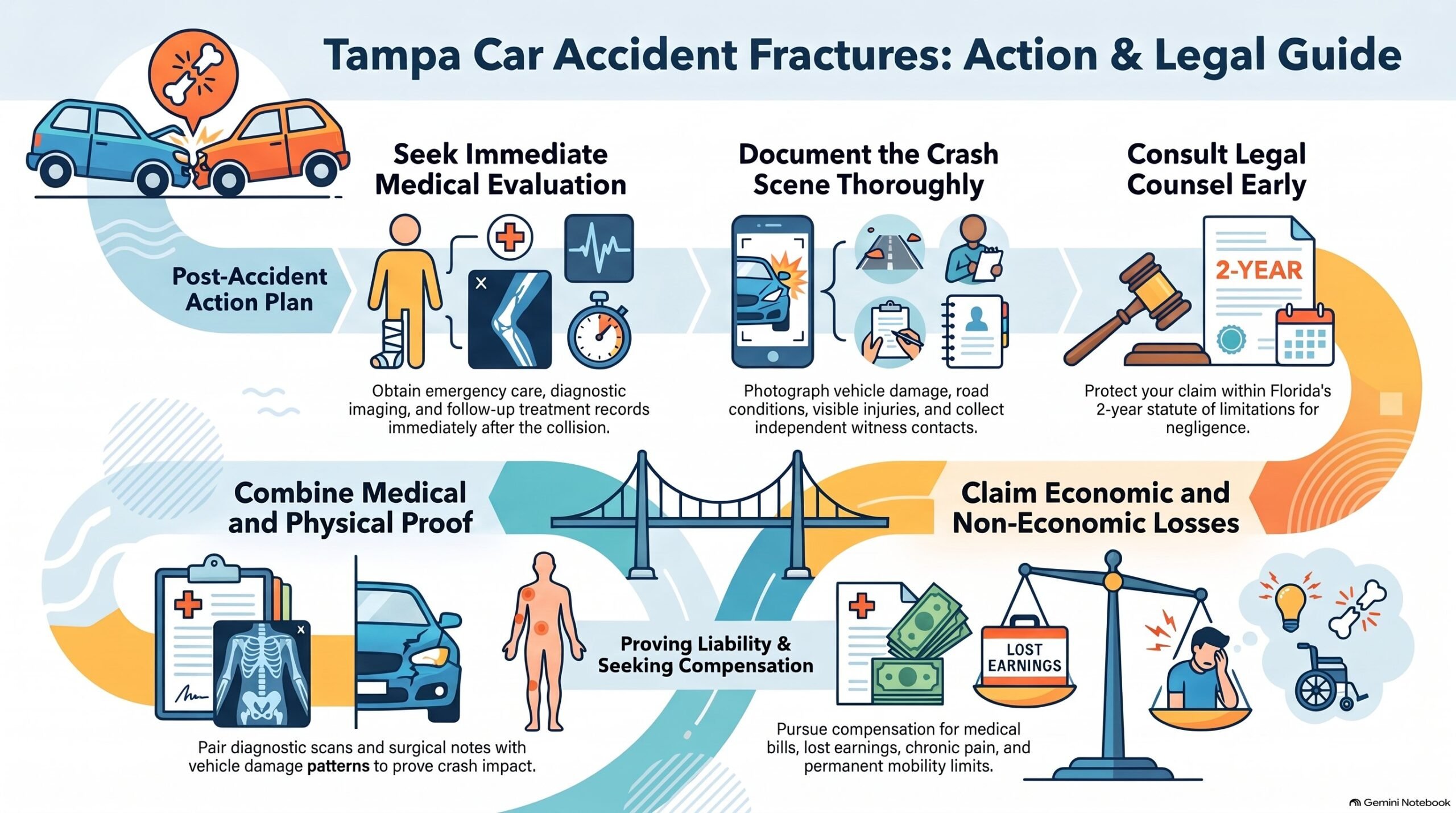
After a Tampa car accident, anyone with a suspected fracture should seek prompt medical care, even if the injury initially seems manageable. They should document the crash, their injuries, and related expenses while preserving relevant records. Consulting a lawyer can help clarify their legal options and protect their interests.
Seek Medical Care
Prompt medical care is essential when a car accident may have caused a fracture, even if the injury initially seems minor. A person should contact emergency services if there is severe pain, visible deformity, significant bleeding, numbness, or difficulty moving. Otherwise, prompt evaluation at an Emergency room or urgent care facility can help identify breaks that may not be obvious. Medical professionals can assess the injury, order imaging, and recommend appropriate treatment. Until help arrives, the injured person should avoid moving the affected area unnecessarily. Fracture stabilization may reduce further injury, but trained responders should perform it only as directed. Following medical instructions and attending recommended follow-up appointments can support recovery and help prevent complications. Timely care also provides clinicians with an early understanding of the injury’s severity.
Document The Accident
When it is safe, documenting the accident can help preserve information about how the collision occurred and the injuries sustained. The injured person or a companion can photograph vehicle damage, roadway conditions, traffic signs, and visible injuries, without delaying necessary medical care. Record names and contact details for witnesses, along with the other driver’s insurance and vehicle information. A written account made soon after the crash can capture the sequence of events while details remain clear. Notes should include the time, location, weather conditions, and any statements made at the scene. Nearby businesses or authorities may have Traffic camera footage, which could be overwritten or deleted, so identifying its location promptly may help preserve relevant evidence. Keep records secure for later reference.
Contact A Lawyer
A Tampa car accident lawyer can help an injured person understand legal options after a fracture or broken bone, particularly when fault or the extent of the losses is disputed. Prompt legal guidance can also help preserve evidence, organize medical records, and identify deadlines that may affect a claim. An injured person can prepare for a Free consultation by gathering the crash report, photographs, treatment records, insurance details, and a brief account of the injuries and recovery. The lawyer can explain how liability, medical expenses, lost income, and future care may be evaluated. The person should ask how communication will be handled and whether representation involves contingency fees, which are generally paid from a recovery under agreed terms. Careful counsel can support a fair process and help protect the injured person’s interests.
Critical Evidence in a Tampa Car Accident Fractures & Broken Bones Injury Case
Evidence can help establish how a Tampa collision occurred, the severity of a fracture, and the losses connected to the injury. A well-documented claim may draw on several sources, each supporting a different part of the case.
Crucial evidence may include:
- Medical records documenting diagnosis, treatment, and recovery
- Accident scene photos showing road conditions, vehicle positions, and visible injuries
- Witness statements describing the collision and its immediate aftermath
- Vehicle damage evidence that may help explain the force and direction of impact
- Related records, such as follow-up care notes and repair estimates, that support the injury timeline and crash details
Medical Records
Because fractures may require extensive treatment and can affect a person’s mobility and ability to work, medical records are vital to a Tampa car accident injury claim. Emergency department notes, imaging results, physician assessments, and surgical reports can document the injury’s nature and severity. Follow-up records and rehabilitation notes may show how the fracture affected daily activities and whether recovery required ongoing care.
Organizing medical records helps present these materials clearly and reduces the risk that important evidence will be overlooked. A consistent treatment timeline can connect the collision to diagnosis, treatment, and documented limitations. Records may also help explain medical expenses, missed work, and future care recommendations. Accurate, complete documentation supports a fair claim evaluation and helps those responsible for serving injured people understand the medical consequences without relying on unsupported estimates.
Accident Scene Photos
While medical records document the diagnosis and treatment of broken bones, photographs can preserve crash-scene details that may otherwise be lost. Images of vehicle damage, road conditions, debris, traffic controls, and visible hazards can help explain how a collision occurred and whether its force was consistent with the injuries. Useful Camera angles show the vehicles and surrounding roadway from several positions, including wide views and close details. Photographs taken promptly may capture conditions before vehicles are moved or the scene changes. Timestamp preservation helps establish when images were created and supports a clear record of their origin. When possible, retain original files without edits, and store backups securely. Accurate scene documentation can assist those evaluating responsibility and seeking fair support for an injured person’s recovery.
Witness Statements
Witness statements can clarify how a Tampa collision occurred and what witnesses observed before and after impact. Independent accounts may help establish traffic signals, vehicle movements, road conditions, and the timing of events. These details can support an injured person’s explanation of how the crash caused fractures or other broken bones, while helping those involved assess responsibility fairly.
Witness credibility depends on factors such as the person’s opportunity to observe, ability to recall events, and relationship to the parties. Statement consistency also matters. Accounts that align with other evidence may strengthen a claim, while differences may require careful review rather than immediate dismissal. Promptly recording each witness’s contact information and observations can preserve useful details. A lawyer may organize these accounts, identify relevant follow-up questions, and present them accurately to insurers or other decision-makers.
Vehicle Damage Evidence
Vehicle damage can provide physical evidence that complements witness accounts in a Tampa car accident fracture claim. Photographs, repair estimates, and vehicle inspections may help show where impact occurred and how force traveled through the vehicles. Vehicle crush patterns can help qualified experts evaluate collision direction, contact points, and impact severity. Paint transfer analysis may identify which vehicles made contact and support an account of how the crash unfolded. This evidence alone does not establish the cause or extent of a fracture. Investigators may compare damage findings with medical records, crash reports, and other evidence to evaluate whether the collision mechanism is consistent with the reported injury. Preserving damaged vehicles and promptly documenting their condition can help preserve reliable evidence for a fair claim review.
Long-Term Effects of Tampa Car Accident Fractures & Broken Bones Injuries
Fractures from a car accident may cause chronic pain and reduced mobility, even after the initial injury has recovered. These lasting effects can interfere with daily activities and may require ongoing medical care. Treatment depends on the fracture’s severity and the person’s recovery.
Chronic Pain
Although a broken bone may mend, chronic pain can persist after a Tampa car accident and interfere with daily activities long after the initial injury. Pain may stem from damaged nerves, changes in surrounding tissue, or complications during recovery. For some people, discomfort remains near the fracture; for others, it may spread or intensify over time. Pain flare-ups can occur with everyday tasks, prolonged activity, or weather changes, making symptoms difficult to predict. Persistent discomfort may also disrupt sleep, cause fatigue, and make it hard to concentrate, affecting work and family responsibilities. Medical evaluation can help identify the source of ongoing pain and guide appropriate treatment. Consistent documentation of symptoms, appointments, and related expenses may also help clarify the injury’s continuing effects for insurers or legal counsel.
Reduced Mobility
Reduced mobility can remain a long-term consequence of fractures sustained in a Tampa car accident, even after the bones have mended. Damage to nearby muscles, joints, or nerves may make ordinary movements difficult and restrict a person’s ability to work, travel, or manage household responsibilities. A fracture affecting an arm or leg can limit range of motion, while injuries to the pelvis or spine may interfere with walking, standing, or sitting comfortably. Some individuals also experience impaired balance, increasing the risk of falls and making routine activities less safe. These limitations can affect independence and participation in family or community life. Recognizing how reduced mobility changes daily functioning helps explain the lasting impact of a fracture and the practical challenges an injured person may face.
Long-Term Treatment
Even after a fracture has mended, some Tampa car accident survivors require ongoing treatment to manage pain, stiffness, or lasting damage to surrounding tissues. Recovery may involve Physical therapy to rebuild strength, restore joint movement, and improve balance. A therapist can tailor exercises to the injury and monitor progress, while physicians assess whether symptoms reflect delayed recovery or complications such as nerve damage or infection.
Some patients need medication, assistive devices, or additional procedures when an injury does not recover properly. In severe cases, follow-up surgeries may address hardware problems, correct bone alignment, or repair damaged tissue. These treatments can extend recovery and require further time away from work or caregiving duties. Consistent medical follow-up helps identify changing needs and document the continuing effects of the collision, supporting informed decisions about care and rehabilitation.
Proving Liability in Tampa Car Accident Fractures & Broken Bones Injury Cases
Proving liability in a Tampa car accident fracture case requires evidence that another party’s negligence caused the collision and resulting broken bones. A careful investigation can identify how the crash occurred and which actions contributed to the injuries. Relevant evidence may include police reports, photographs of vehicle damage and road conditions, witness statements, and Traffic camera footage. These materials can help establish whether a driver failed to follow traffic laws, maintain a safe speed, or yield when required.
In more complicated cases, accident reconstruction may clarify vehicle movements, impact points, and the sequence of events. Medical records can link the collision to the fractures and document the required treatment. The injured person’s account may also help explain what happened, while witness testimony can provide independent details. Preserve evidence promptly because video recordings and physical conditions may change or disappear. A thorough, fact-based review supports a fair assessment of responsibility and helps those affected pursue accountability for the harm they suffered.
Dealing With Insurance Companies After a Tampa Car Accident Fractures & Broken Bones Injury
After a Tampa car accident causes fractures or broken bones, insurance companies may request statements, medical records, and other information while evaluating a claim. Injured people should respond carefully and keep communications factual, consistent, and focused on the collision’s documented effects. Adjuster tactics may include asking questions that minimize pain, suggest an earlier injury caused symptoms, or encourage a quick settlement before the full medical picture is clear. A person should avoid guessing about details or downplaying limitations, particularly when treatment and recovery are ongoing.
Before providing recorded statements, signing releases, or accepting payment, the injured person may benefit from understanding what the insurer is requesting and how the information could be used. Share medical records only as needed to support the injury claim, since broad requests may expose unrelated private information. Organized copies of correspondence, bills, and treatment records can help prevent misunderstandings. Respectful, measured communication allows injured people to protect their interests while ensuring insurers receive accurate information about their fractures and related losses.
What to Expect During a Tampa Car Accident Fractures & Broken Bones Injury Claim Process
A fracture claim typically begins with an evaluation of the accident, injuries, and potential sources of compensation. Collecting evidence and thoroughly documenting medical treatment help establish how the collision caused the broken bones and the losses involved. The process may conclude with a negotiated settlement or proceed to litigation if the parties cannot reach an agreement.
Initial Case Evaluation
During an initial case evaluation, a Tampa car accident fracture lawyer reviews how the collision occurred, the nature and severity of the broken bones, and the treatment required. The intake consultation gives the injured person an opportunity to explain how the injury has affected daily responsibilities, work, and family care. The lawyer may ask about medical recommendations, recovery expectations, and any lasting limitations. This discussion helps clarify the person’s immediate concerns and the support needed during recovery.
A claim assessment then considers whether the available facts may support a legal claim and what issues could affect its value. The lawyer explains potential options, applicable deadlines, and the general steps involved in pursuing compensation. This early review also helps identify unanswered questions without promising a particular result. With clear guidance, the injured person can make informed decisions while focusing on recovery and responsibilities to others.
Evidence Collection
Because evidence can shape how a fracture claim is evaluated, a Tampa car accident fracture lawyer may begin by gathering records that document the collision, the injuries, and their effects. This process may include obtaining police reports, photographs of the vehicles and roadway, witness statements, and available surveillance footage from nearby businesses or traffic cameras. Evidence preservation is important because video recordings and physical materials may be lost, altered, or discarded over time. The lawyer may also request vehicle inspection findings, repair estimates, and records showing property damage. These materials can help clarify how the crash occurred and identify responsible parties. When appropriate, investigators may document road conditions, traffic controls, and other relevant features. Careful collection and organization of evidence can support a clear account of events and help protect the injured person’s ability to pursue a fair claim.
Medical Treatment Documentation
As treatment progresses, medical documentation can help establish the nature and extent of fractures caused by a Tampa car accident. Records may include emergency evaluations, imaging results, diagnoses, prescriptions, and notes describing pain or limits on daily activities. Consistent follow-up care can show how an injury changes over time and whether recovery follows the expected course. When a physician recommends Expert referrals, such as an orthopedic evaluation, records of the referral and resulting care may clarify the treatment required. Accurate treatment timelines can connect appointments, procedures, rehabilitation, and periods of restricted activity. Patients can support reliable documentation by attending scheduled visits, following medical instructions, and reporting new or persistent symptoms. Organized records help reviewers understand the care provided and the practical effects of the fracture without relying on incomplete recollections.
Settlement or Litigation
After a Tampa car accident fracture, an injury claim may resolve through settlement or proceed to litigation if the parties cannot agree. The process typically begins with gathering medical records, documenting expenses, and evaluating how the injury affects daily responsibilities and future care needs. The insurer may review the evidence and make an offer, which can be negotiated when it does not reasonably reflect the documented losses. Mediation preparation involves organizing records, evaluating settlement terms, and identifying disputed issues before a neutral mediator. If discussions fail, litigation may require formal discovery, depositions, and court hearings. A sound trial strategy presents clear evidence about liability, treatment, recovery, and financial impact. Either path requires careful preparation to support informed decisions and help injured people protect their ability to meet personal, family, and community responsibilities.
Compensation for Tampa Car Accident Fractures & Broken Bones Injury Damages
Compensation for fractures and broken bones sustained in a Tampa car accident may cover medical expenses, lost income, reduced future earning capacity, and pain and suffering. The amount depends on the injury’s severity, the treatment required, and its effect on the injured person’s daily life. Recoverable medical costs may include emergency care, surgery, medication, rehabilitation, and follow-up visits. Documentation can help connect these expenses to the collision and establish the need for continued care.
A fracture may prevent someone from working, caring for family members, or participating in community responsibilities. Claims may cover missed wages and, when supported by evidence, lasting limits on earning capacity. Pain compensation may also reflect physical discomfort and lifestyle disruption caused by recovery, restricted movement, or permanent impairment. Relevant records, professional assessments, and testimony can help describe these effects. A careful evaluation considers both present needs and reasonably anticipated consequences, so an injured person can pursue support that addresses the full impact of the collision.
Economic vs Non-Economic Damages in Tampa Car Accident Fractures & Broken Bones Cases
Damages in a Tampa fracture claim may include economic losses, such as medical expenses and lost income, as well as non-economic harm, including pain and reduced quality of life. Each category reflects a different effect of the injury and may require distinct evidence. Clear records and credible documentation can help establish the losses sustained.
Economic Damages
When a Tampa car accident causes a fracture or broken bone, the injured person may seek economic damages for measurable financial losses, such as medical bills, lost income, and future treatment costs. These damages may include emergency care, surgery, hospital stays, medication, rehabilitation, and assistive devices prescribed during recovery. Receipts, invoices, employment records, and medical documentation can help establish the amount and cause of each claimed expense.
Lost wages may be recoverable when an injury prevents the person from working during treatment or rehabilitation. If a fracture limits future job duties or reduces earning capacity, diminished earning capacity may also be considered. Calculations can account for expected recovery, work history, and medical assessments. Careful documentation helps present an accurate claim and supports fair compensation for collision-related financial losses.
Non-Economic Damages
Beyond measurable financial losses, a person with a fracture from a Tampa car accident may seek non-economic damages for harm that does not have a direct price, such as physical pain, emotional distress, and reduced ability to enjoy daily activities. These damages recognize how an injury can affect a person’s well-being beyond medical bills and lost income. A broken bone may cause persistent discomfort, limit mobility, interrupt sleep, or make routine responsibilities difficult. Emotional distress may also arise from the trauma of the collision, uncertainty about recovery, or dependence on others for everyday care. Loss of enjoyment of family activities, community involvement, or meaningful work may further reflect the injury’s personal impact. Such losses can be especially significant when recovery requires prolonged treatment or leaves lasting limitations. Non-economic damages address these human consequences within a claim.
Proving Your Losses
To prove losses after a Tampa car accident fracture, an injured person generally needs evidence linking the collision to the injury and showing how it affected finances and daily life. Medical records, imaging, treatment notes, and physician opinions can document the fracture, required care, and expected recovery. Economic damages may include hospital bills, rehabilitation costs, medication expenses, lost wages, and reduced future earning capacity. Pay records, employer statements, and income projections can help establish these financial effects. For lasting impairments, Life care planning may outline anticipated treatment, assistive devices, and related future costs. Non-economic damages address pain, physical limitations, emotional distress, and reduced enjoyment of daily activities. Consistent treatment records and testimony from the injured person and others familiar with their daily responsibilities can help explain these impacts clearly.
Don’t Wait. Call Our Florida Personal Injury Lawyers Now!
When a Tampa Car Accident Fractures & Broken Bones Injury Case Goes to Trial vs. Settlement
A Tampa car accident fracture claim may resolve through settlement or proceed to trial, depending on the evidence, the extent of the injuries, and whether the parties can agree on fair compensation. Settlement negotiations let both sides review medical records, treatment needs, lost income, and other documented harm. A resolution may provide compensation without the uncertainty, expense, and time associated with a courtroom case. However, an injured person need not accept an offer that fails to account for the full impact of a fracture.
When the parties cannot reach an acceptable agreement, the claim may go to trial. Trial preparation can involve organizing medical evidence, consulting qualified professionals, and preparing witnesses to explain how the collision affected the injured person’s daily life and ability to serve family or community. A judge or jury then evaluates the evidence and determines responsibility and damages. Each path has risks, so decisions should reflect the strength of the proof, the claimant’s needs, and informed legal guidance.
Florida Laws That May Affect Your Tampa Car Accident Fractures & Broken Bones Case
Whether a fracture claim settles or proceeds to trial, Florida law shapes who may recover compensation, what damages may be available, and how long the injured person has to act.
Several rules can influence how a Tampa claim is evaluated:
- No-fault coverage: Personal injury protection may pay a portion of medical expenses and lost income, regardless of fault, subject to policy limits and eligibility requirements.
- Serious injury threshold: A claimant generally must meet Florida’s statutory threshold, such as significant and permanent loss or injury, to seek pain and suffering damages.
- Comparative negligence: A person’s compensation may be reduced by their share of responsibility. Under current law, a claimant found more than 50 percent at fault generally cannot recover damages.
- Available damages: Evidence may support claims for treatment costs, future care, lost earnings, and other legally recognized losses.
- Insurance requirements: Florida’s coverage rules and policy terms can affect which insurer pays and how much compensation is available.
Careful documentation helps protect the injured person’s interests and supports a fair evaluation.
The Statute of Limitations for Tampa Car Accident Fractures & Broken Bones Injury Cases
How long does an injured person have to file a lawsuit after a Tampa car accident fracture? Under Florida law, most negligence claims arising from accidents on or after March 24, 2023, must be filed within two years. For accidents before that date, the former four-year period may apply. Missing the deadline can prevent recovery, regardless of the fracture’s severity or treatment costs.
Deadline calculation depends on the accident date and the claim’s circumstances. In a typical case, the period begins when the crash occurs, not when a fracture is diagnosed or treatment ends. A delayed diagnosis does not automatically extend the filing period, so injured people should identify the relevant dates promptly.
Certain statutory exceptions may alter the deadline. For example, different rules can apply when a claimant is a minor, the defendant is a government entity, or the responsible party cannot be located. These exceptions are narrow and fact-dependent. Timely review helps protect a person’s ability to seek compensation and maintain support for those who depend on them.
How a Tampa Car Accident Fractures & Broken Bones Lawyer Can Help You
After a Tampa crash causes a fracture, an attorney can help an injured person investigate fault, preserve evidence, and pursue compensation. Legal support can also reduce the burden on people balancing treatment, family responsibilities, and service to others.
Attorney advocacy may include:
- Gathering crash reports, photographs, witness accounts, and other evidence to clarify how the collision occurred.
- Reviewing medical records and consulting qualified professionals to explain the fracture, treatment, and lasting effects.
- Identifying responsible parties and applicable insurance coverage, including potential sources beyond the other driver’s policy.
- Calculating documented losses, such as medical expenses, lost income, rehabilitation costs, and effects on daily activities.
- Handling insurer communications and presenting a supported claim while the injured person focuses on medical care.
A lawyer can coordinate these steps with recovery planning, helping ensure legal decisions reflect current treatment needs and possible future limitations. Clear documentation and careful evaluation can support a fair assessment of the injury’s impact. This approach helps protect the injured person’s interests and supports informed decisions throughout the claim.
When to Contact a Tampa Car Accident Fractures & Broken Bones Lawyer
A person with a suspected or confirmed fracture may benefit from contacting a Tampa car accident fractures and broken bones lawyer once immediate medical needs are addressed. Early guidance can help preserve relevant records, identify deadlines, and clarify what information you may need to evaluate a claim. A person need not wait until treatment is complete or the full extent of an injury is known.
Early warning signs after a collision can include persistent pain, swelling, bruising, limited movement, or symptoms that worsen over time. These concerns call for prompt medical assessment; legal consultation should not delay care. If a fracture is diagnosed later, or complications arise, the person may still seek advice about available options.
Timely contact can be especially useful when fault is disputed, an insurer requests a statement, or bills and missed work create pressure. Choosing representation is a personal decision, and an initial discussion may help the injured person understand procedures, communication expectations, and possible next steps while focusing on recovery and family responsibilities.
Why You Need an Experienced Tampa Car Accident Fractures & Broken Bones Lawyer
When a collision causes a fracture, an experienced Tampa car accident lawyer can help clarify the legal and insurance issues that may affect a claim. Broken bones can require surgery, rehabilitation, time away from work, and continuing medical care. A lawyer can explain how these losses may be documented and considered under Florida law, while helping the injured person focus on recovery and family responsibilities.
Attorney experience matters because fracture claims can involve disputed fault, medical evidence, and insurer questions about the injury’s cause or long-term effects. Counsel can gather records, coordinate evidence, and communicate with insurers so important details aren’t overlooked. A thoughtful case strategy may account for current expenses and reasonably supported future needs, rather than treating the fracture as a short-term inconvenience.
Legal guidance can also help preserve deadlines and clarify available options. By managing claim-related tasks carefully, an attorney can support a fair process and help the injured person make informed decisions without unnecessary pressure.
How to Choose the Right Tampa Car Accident Fractures & Broken Bones Lawyer for Your Case
Choosing the right Tampa car accident fractures and broken bones lawyer requires carefully evaluating the attorney’s experience, communication style, and approach to injury claims. A careful review can help injured people identify counsel prepared to protect their interests while respecting their recovery needs.
Attorney credentials provide a useful starting point. Prospective clients can confirm that an attorney is licensed in Florida and examine relevant experience with car crashes, fractures, and intricate injury claims. They may also ask how the lawyer evaluates medical records, documents losses, and addresses disputes over fault or compensation. Clear answers can indicate whether the attorney understands the practical demands of these cases.
Communication style matters throughout a claim. A lawyer should explain available options in understandable terms, respond within a reasonable time, and provide updates as the case develops. During an initial consultation, clients can assess whether the attorney listens carefully and treats their concerns with respect. Comparing these factors helps people make an informed choice and pursue a fair resolution without losing sight of their health, responsibilities, and future needs.
About The Law Offices of Anidjar & Levine
The Law Offices of Anidjar & Levine represents people injured in motor vehicle crashes, including those who have suffered fractures and other broken-bone injuries.
The firm handles injury claims and helps clients understand the legal steps that may follow a collision.
Its attorneys can investigate crash circumstances, communicate with insurers, and pursue compensation for losses supported by the evidence.
These services may be important when an injury requires surgery, rehabilitation, or time away from work.
The firm’s history provides context for its approach to representing injured people.
Anidjar & Levine was founded by attorneys who sought to help individuals facing serious consequences after accidents.
The firm’s work includes cases involving car crashes and physical injuries, while its staff assists clients through the claims process.
The firm’s community involvement is also part of its public presence.
The firm has supported charitable initiatives and local organizations, reflecting its commitment to serving people beyond legal representation.
Prospective clients can review its experience, services, and resources when deciding whether to seek legal guidance.
Frequently Asked Questions
Can I Recover Compensation if My Broken Bone Required Surgery?
A person may recover compensation if another party’s negligence caused the crash and resulting fracture. Potential damages include Surgical recovery costs, hospital bills, rehabilitation, lost income, and pain and suffering. A claim may also account for future treatment or long-term mobility limitations when supported by medical evidence. Recovery depends on fault, available insurance, and applicable law. Prompt medical care, organized records, and legal guidance can help protect the injured person’s interests.
What if My Fracture Was Discovered Days After the Crash?
A fracture discovered days after a crash may still support a compensation claim, particularly when medical evidence connects the injury to the collision. Some fracture symptoms develop gradually or are initially obscured by other injuries, making prompt evaluation important once concerns arise. The injured person should seek medical care, follow treatment advice, and preserve records, imaging, and crash documentation. A delayed diagnosis may prompt questions about causation, so consistent medical documentation can help clarify the timeline.
Can a Preexisting Bone Condition Affect My Injury Claim?
Yes. A preexisting bone condition can affect an injury claim, but it does not automatically prevent recovery. A claim may still address harm caused when a collision worsens an existing condition, a principle known as Preexisting Condition Aggravation. Medical records, prior imaging, and treating-provider opinions can help distinguish earlier symptoms from crash-related changes. Bone Fragility Documentation may clarify vulnerability and support an accurate assessment of the injury’s cause, severity, treatment needs, and lasting effects.
Who Pays My Medical Bills While My Fracture Heals?
During fracture recovery, the patient may initially pay bills through health insurance, personal injury protection coverage, or available funds; payment depends on the policies and circumstances involved. Health insurance can cover eligible treatment, subject to deductibles and plan terms. Providers may also accept medical liens, seeking payment from a later settlement. The injured person generally remains responsible for charges not covered or reimbursed, so records and insurer communications should be carefully maintained.
Can I Pursue a Claim if a Defective Vehicle Part Caused My Fracture?
Yes, an injured person may pursue a claim if a vehicle defect caused or contributed to a fracture. A product liability case may involve a defective component, unsafe design, or inadequate warnings. The claimant generally must show that the defect existed, caused the injury, and resulted in losses. Preserving the vehicle and damaged parts, obtaining medical records, and documenting repair history can help establish the facts. Liability may involve manufacturers, distributors, or other responsible parties.
—————————
Fractures and broken bones from a Tampa car accident can require extensive treatment and affect a person’s ability to work and manage daily responsibilities.
An injured person may have legal options for pursuing compensation, but deadlines and evidence requirements can affect a claim.
The Law Offices of Anidjar and Levine can review the circumstances, explain available next steps, and represent injured clients in seeking accountability.
Speaking with a Tampa Personal Injury Lawyer can help protect important records and support an informed decision about the case.