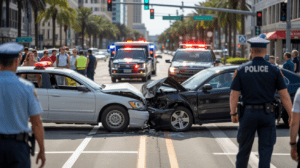
The Law Offices of Anidjar and Levine helps Tampa car accident victims with chest injuries pursue compensation by proving fault, preserving crucial evidence, and documenting the full medical impact of the crash.
Our Tampa Car Accident Lawyer team gathers police reports, witness statements, imaging records, photos, vehicle data, and treatment notes to connect your injuries to your losses.
We also negotiate with insurers for medical care, lost income, pain, limitations, and future needs.
Below, we explain how these claims work and what steps can protect your case.
Main Takeaways
- A Tampa car accident lawyer for chest injuries can identify liable parties and pursue compensation for medical care, lost income, and pain.
- Seek immediate medical attention for chest pain, breathing difficulty, dizziness, pressure, or worsening pain after a crash.
- Strong claims rely on police reports, medical records, imaging results, witness statements, photos, vehicle data, and available video.
- Chest injuries may involve ribs, lungs, sternum, soft tissue, internal bleeding, or cardiac complications requiring careful documentation.
- Avoid guessing about fault or injury severity when reporting the crash to insurers; provide basic facts and preserve evidence.


How We Can Help With Your Tampa Chest Injury Car Accident Injury Claim
After a serious crash, we help you take control of your chest injury claim by identifying every liable party, preserving necessary evidence, and building a case that reflects the full extent of your losses. We understand your focus may be on healing, supporting your family, and returning to the responsibilities that matter. Our role is to shoulder the legal burden with disciplined action and clear guidance.
We gather police reports, witness statements, medical records, vehicle data, and any available video footage before important evidence disappears. We also coordinate Independent medical evaluations when needed to document how the injury affects your work, service, mobility, and daily life. From the start, we develop an insurance settlement strategy that accounts for medical care, lost income, pain, limitations, and future needs.
When insurers undervalue your claim, we respond with evidence, not assumptions. We prepare every case for negotiation and, when necessary, litigation.
OUR CONSULTATIONSARE FREE
START YOUR FREE CASE REVIEW

Understanding Tampa Chest Injury Car Accident Injury Cases
Because chest injuries from car accidents can involve the ribs, lungs, heart, sternum, and surrounding soft tissue, we treat these cases as medically complex from the start. We help you understand how pain, breathing difficulty, bruising, dizziness, or pressure may indicate a chest injury that requires careful medical review. Some conditions appear immediately, while others develop after swelling, internal bleeding, or stress on vital organs.
We evaluate your records, imaging results, treatment plan, and work limitations to connect the injury to your recovery needs. Our approach considers damage assessment factors such as diagnosis, severity, future care needs, lost income, physical restrictions, and the impact on daily functioning in family, work, and community. We also assess how the injury affects your ability to assist others safely. By organizing evidence with precision, we help present the full impact of your chest injury and support a claim that reflects your losses.
Common Causes of Tampa Chest Injury in Car Accidents
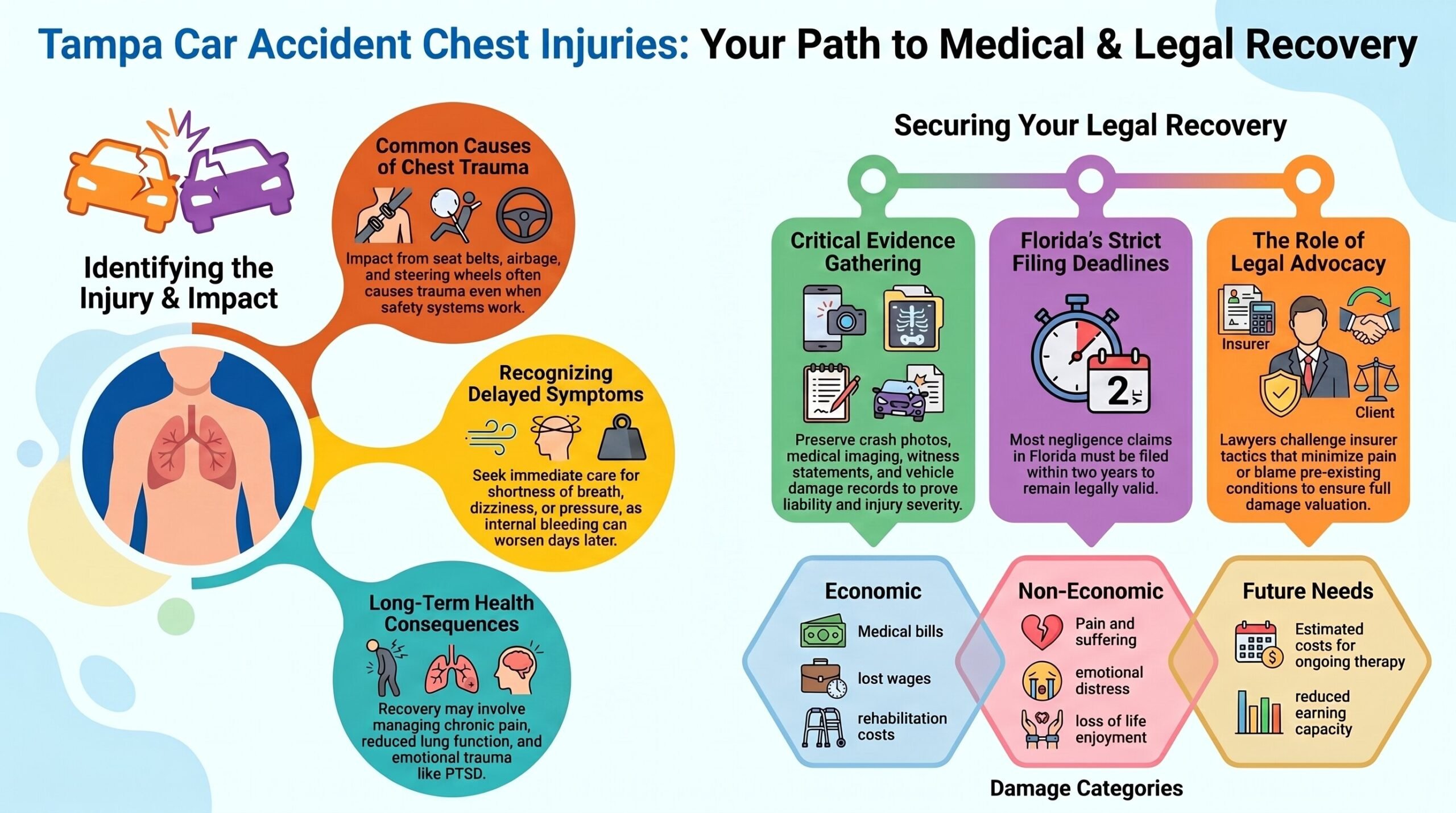
We often see chest injuries in Tampa car accidents arise from seat belt trauma, airbag impact injuries, wheel collisions, and high-speed crash forces. When these forces strike your chest, they can cause serious harm even when safety devices work as intended. We’ll examine these common causes so you can better understand how they may affect your injury claim.
Seat Belt Trauma
While seat belts save lives, the force of a Tampa car accident can drive the restraint across the chest with enough pressure to cause serious trauma. We often see bruising, rib fractures, sternum injuries, and damage to underlying organs when the body stops abruptly against the belt. Seat belt marks may help show the direction and severity of the crash forces, especially when you need clear evidence to support a claim.
We also examine whether improper restraint positioning, defective components, or safety system failure contributed to the injury. If you serve others through caregiving, ministry, public safety, or community work, chest trauma can limit your ability to help those who depend on you. We help protect your recovery, document losses, and pursue accountability.
Airbag Impact Injuries
When an airbag deploys during a Tampa car accident, it can strike the chest with significant force, especially in high-speed crashes or close-impact seating positions. We often see this force cause bruising, rib fractures, sternum injuries, and painful chest compression that may affect breathing. Although airbags save lives, they work best when combined with proper seatbelt safety and correct seating distance.
If you serve others as a caregiver, first responder, or family support person, you should encourage prompt medical evaluation after any airbag-related chest pain. We appreciate that symptoms may appear minor at first, yet internal injuries can worsen without treatment. By documenting pain, medical findings, and crash details, we help protect your claim and support your recovery with focused legal guidance after an accident.
Steering Wheel Collisions
After a sudden impact, the hand wheel can become a direct source of chest trauma, especially if the driver sits too close, braces before impact, or loses the protection of a properly positioned seatbelt. We often see rib fractures, sternum injuries, bruised lungs, and soft tissue damage when the chest strikes the wheel. You may feel pain, tightness, shortness of breath, or delayed soreness that is relieved with movement.
We encourage prompt medical care, because early records help relieve both your health and your claim. Our team reviews vehicle position, seatbelt use, airbag function, and property damage claims to understand how the collision harmed you. As with slip-and-fall liability cases, careful evidence connects unsafe conduct to real injuries and supports fair recovery.
High-Speed Crash Forces
Steering wheel contact can cause serious harm, but high-speed crash forces often injure the chest even without a direct strike to the wheel. When vehicles collide at elevated speeds, the body continues moving forward while restraints and interior structures stop that motion abruptly. We often see rib fractures, lung contusions, cardiac trauma, and internal bleeding from these violent deceleration forces.
You may serve an injured person best by recognizing that pain, shortness of breath, or dizziness after a crash requires prompt evaluation. Vehicle defects, including airbag failures or weak seat belts, can worsen these injuries and affect liability. We also consider whether neglect in the emergency room delayed diagnosis or treatment. By identifying every contributing factor, we help protect your rights and support full accountability after a Tampa crash.


Legal Rights of Tampa Chest Injury Car Accident Injury Victims
In Tampa, chest injury victims from car accidents have the right to pursue compensation when another driver’s negligence causes their harm. We help you understand these rights so you can protect your health, your family, and your future while serving those who depend on you.
A claim may include medical expenses, lost income, reduced earning ability, and Pain and Suffering. When a chest injury leads to a fatal outcome, surviving family members may also have rights through Wrongful Death Claims.
You should know these protections:
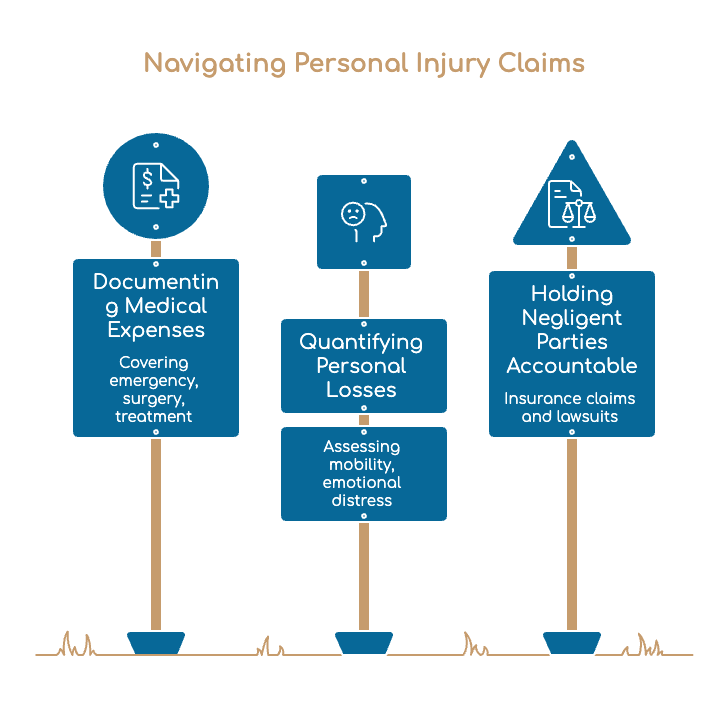
- You may seek damages for emergency care, surgery, rehabilitation, and ongoing treatment.
- You may document personal losses such as limited mobility, emotional distress, and daily life disruption.
- You may hold negligent parties accountable through an insurance claim or lawsuit.
We believe informed action helps restore stability, dignity, and responsibility after a serious crash. Legal guidance can preserve evidence and protect deadlines.
Why Do Tampa Chest Injury Car Accident Injuries Happen?
Why do chest injuries happen so often in Tampa car accidents? We see these injuries arise when sudden force drives the body into seat belts, airbags, steering wheels, dashboards, or doors. Even safety devices can exert intense pressure on the ribs, sternum, lungs, or heart during a crash at speed.
Distracted driving causes many collisions because a driver who looks away, texts, adjusts navigation, or reaches for an item cannot react in time. Rear-end crashes, intersection impacts, and T-bone collisions often create the blunt trauma that harms the chest. Road rage incidents also increase danger, as aggressive speeding, tailgating, and unsafe lane changes leave little room for correction.
We also recognize Tampa’s crowded roads, tourist traffic, work commutes, and sudden weather changes as factors that increase crash risk. When drivers fail to act with care, responsible people and families can suffer serious chest trauma while simply trying to travel safely.
What Should You Do After a Tampa Chest Injury Car Accident?
After a Tampa car accident, we must act quickly to protect your health and your potential claim. We’ll address why you should seek immediate medical care, report the accident, and preserve evidence that shows how the injury occurred. These steps can help establish the seriousness of your condition and support your right to compensation.
Seek Immediate Medical Care
If you feel chest pain, pressure, shortness of breath, dizziness, or pain that worsens with movement after a Tampa car accident, you should seek immediate medical care and avoid assuming the injury is minor. We encourage you to call emergency services, visit an emergency room, or see a qualified physician as soon as possible. Chest trauma can involve rib fractures, internal bleeding, lung injury, or cardiac complications that require prompt evaluation.
Medical care also creates records that protect your health and legal position. When we serve injured clients, we understand that delayed treatment can complicate late-stage medical documentation and strengthen insurers’ arguments. Early diagnosis supports treatment decisions, work restrictions, and insurance denial appeals. Keep follow-up appointments, report any changes in symptoms, and follow all medical instructions carefully.
Report The Accident
Once you’ve received urgent medical attention, report the Tampa car accident to the proper authorities and make sure the incident is formally documented. We should call law enforcement, remain at the scene when required, and provide accurate, respectful information to officers. These Accident reporting steps protect everyone involved, including injured passengers, other drivers, and the community we all share.
If chest pain, breathing problems, or emergency transport occurred, a police report can help connect the crash to the medical response. We should also notify our insurance carrier promptly because the timing of notice may affect coverage and claim handling. When speaking with insurers, we can give basic facts without guessing about fault or injury severity. Clear reporting supports accountability, fair treatment, and responsible resolution for all after a serious Tampa collision.
Preserve Injury Evidence
As medical care and reporting move forward, we should preserve every piece of evidence that may show how the Tampa collision caused or worsened a chest injury. We can help you gather photographs of vehicle damage, seat belts, airbags, bruising, swelling, and any visible signs of breathing difficulty. We should save discharge papers, imaging reports, prescriptions, and follow-up instructions, while respecting the Privacy of medical data at every step.
We also encourage you to keep damaged clothing, repair estimates, witness information, and a daily symptom journal. These records support capturing hidden damages, including delayed pain, reduced mobility, anxiety, and missed work. When we organize evidence early, we protect your ability to serve your family, meet obligations, and pursue accountability through a well-supported injury claim.
Critical Evidence in a Tampa Chest Injury Car Accident Case
We build a Tampa chest injury car accident case by securing the evidence that connects the crash to your injuries and losses. Essential proof may include: 1. crash scene photos, 2. medical treatment records, and 3. witness statements, along with vehicle damage evidence that helps establish impact severity. We use this information to present a clear, well-supported claim and protect you from disputes over fault, causation, or damages.
Crash Scene Photos
Because chest injuries can worsen quickly and leave limited visible proof, crash scene photos often become pivotal evidence in a Tampa car accident injury case. We use these images to show vehicle damage, seatbelt position, airbag deployment, debris fields, skid marks, and the force transferred into your body. When you serve your family, workplace, or community, clear proof helps protect the care you need after trauma.
Photos may also connect visible impact patterns with Emergency room documentation, strengthening the account of how rib fractures, lung trauma, or internal injuries began. We recommend preserving original images, timestamps, and witness photos before repairs or cleanup occur. Strong scene evidence can also support long-term rehab planning by showing why ongoing treatment, reduced capacity, and future care needs are reasonably connected to the collision.
Medical Treatment Records
When chest trauma follows a collision, medical treatment records often provide the strongest link between the crash and the injury claim. We review emergency evaluations, diagnostic imaging, physician notes, prescriptions, referrals, and follow-up care to understand how your injuries developed and how they affect your daily responsibilities. Accurate trauma care documentation helps show pain complaints, breathing limits, rib fractures, organ concerns, and the need for continued treatment.
A clear chest X-ray interpretation can also support the timing, severity, and medical cause of the injury. We use these records to serve your case with discipline and care, ensuring insurers and opposing parties see objective proof rather than assumptions. When records remain complete and consistent, they help protect your dignity, your recovery, and your right to fair compensation.
Witness Statements
Who saw the collision happen, and what did they notice in the moments that followed? We ask these questions because witness statements can clarify how your chest injury developed after impact. Bystanders, passengers, or responding helpers may describe your breathing trouble, pain, confusion, or need for immediate care. Their accounts can support timeline consistency, especially when medical treatment records, Doctor referrals, and imaging evidence show the same progression of symptoms.
We also evaluate witness availability early, because memories fade and contact information can become difficult to confirm. When witnesses provide prompt, specific statements, we can better connect the crash to your physical limitations and treatment needs. By preserving these accounts, we help present your claim with accuracy, dignity, and a clear focus on your recovery.
Vehicle Damage Evidence
After a serious collision, vehicle damage evidence can show how force moved through the car and contributed to a chest injury. We examine crushed panels, airbag deployment, seatbelt marks, handwheel deformation, and intrusion into the passenger space. These details help you connect the physical impact to fractured ribs, sternum injuries, lung trauma, or cardiac complications.
We act quickly because damaged vehicles can be repaired, sold, or destroyed. When needed, we send preservation letters to prevent Spoliation of evidence and protect your claim. We may also work with reconstruction experts who measure impact angles, speed indicators, and structural compromise. This evidence supports medical causation, challenges low settlement offers, and strengthens an insurance dispute strategy focused on accountability, fair compensation, and service to your long-term recovery and dignity.
Long-Term Effects of Tampa Chest Injury Car Accident Injuries
We recognize that chest injuries from a Tampa car accident can create lasting problems, including chronic pain complications, reduced lung function, and ongoing physical limitations. We also understand that emotional trauma can affect how you recover, work, and manage daily responsibilities. As we evaluate your claim, we consider these long-term effects carefully because they can materially influence the compensation you may need.
Chronic Pain Complications
Although some chest injuries appear to recover within weeks, many Tampa car accident victims develop chronic pain that affects breathing, movement, sleep, and daily activity long after the crash. We often see pain persist when rib fractures, cartilage injuries, nerve trauma, or soft tissue damage fail to repair properly. These conditions can limit your ability to work, care for family, and serve others in daily responsibilities.
We also recognize that overlooked diagnostic errors may leave untreated injuries to worsen over time. Delayed scar complications can create tightness, tenderness, and restricted motion around the chest wall. When pain becomes chronic, we help document its effect on your life, treatment needs, and future care. You merit a legal approach that accounts for lasting harm, not just immediate medical bills.
Reduced Lung Function
When a chest injury damages the lungs, ribs, diaphragm, or surrounding tissue, reduced lung function can become a lasting complication that affects far more than short-term recovery. We may see difficulty breathing, limited stamina, reduced capacity for work, and increased risk during routine activities. For those who serve families, patients, clients, or communities, these limitations can disrupt responsibilities that once felt manageable.
We help you understand how post-accident insurance issues may arise when treatment, testing, or therapy extends beyond initial emergency care. Strong medical documentation is crucial, including imaging, pulmonary evaluations, physicians’ notes, and records documenting how breathing limitations affect daily functioning. By connecting your reduced lung function to the collision, we work to protect your claim and support your long-term needs with precision and care.
Emotional Trauma Effects
Physical breathing limits often come with psychological strain, and emotional trauma after a Tampa chest injury car accident can persist long after visible wounds begin to recover. We recognize that pain, shortness of breath, and fear of another crash can disrupt your work, caregiving, and service to others. You may experience PTSD symptoms, including intrusive memories, sleep disturbance, irritability, or avoidance of driving.
Chest tightness can also trigger fear that feels like another injury, making panic attack recovery an important part of recovery. We help you document these effects through medical records, counseling notes, and daily limitations. By identifying emotional harm early, we can pursue compensation that reflects the full impact of the accident, not just the physical damage, and supports your long-term stability.
Proving Liability in Tampa Chest Injury Car Accident Injury Cases
Because chest injuries often involve significant force, proving liability in a Tampa car accident case requires a careful review of how the collision happened and who violated a legal duty on the road. We examine police reports, witness statements, vehicle damage, traffic camera footage, and medical records to connect your injury to the negligent act. When needed, we work with accident reconstruction experts to clarify speed, impact angles, braking, and lane position.
We also prepare for Comparative fault defenses, since another driver may claim you contributed to the crash. We address those claims with facts, not assumptions, and present evidence that accurately reflects responsibility. Our goal is to protect your right to recover damages while honoring the truth of what happened.
Strong liability proof also supports policy limits negotiation, especially when your chest injury requires serious care. We build the case with discipline, so decision-makers can understand fault, harm, and accountability.
Dealing With Insurance Companies After a Tampa Chest Injury Car Accident Injury
After a serious chest injury, insurers may move quickly to control the claim before the full medical picture becomes clear. We protect your interests by limiting recorded statements, reviewing coverage, and challenging overreaching requests. When adjusters minimize pain, dispute treatment, or blame preexisting conditions, we respond with organized records and firm advocacy.
A Wrongful denial can threaten recovery and family stability, especially when you’re trying to keep serving others despite pain. We address claim appeal filing with careful documentation, clear arguments, and attention to deadlines. We also help reduce financial pressure through medical bill negotiation when providers or billing departments demand payment before settlement.
If immediate payment isn’t possible, we can explore payment plan options that preserve access to care while your claim remains active. Our role is to keep insurers accountable, protect your dignity, and help you make informed decisions without unnecessary pressure or confusion during a difficult season.
What to Expect During a Tampa Chest Injury Car Accident Injury Claim Process
We guide you through each stage of a Tampa chest injury car accident claim, beginning with prompt medical treatment and careful documentation of your injuries. We use medical records, accident evidence, and financial losses to negotiate with insurance companies, while protecting you from tactics that may reduce your claim. If the insurer won’t offer fair compensation, we can file a lawsuit and pursue the recovery you’re entitled to seek under Florida law.
Seeking Medical Treatment
When chest pain, breathing trouble, bruising, or pressure develops after a Tampa car accident, you should seek medical care immediately, even if the symptoms seem manageable at first. We encourage prompt evaluation because rib fractures, lung injuries, and internal trauma can worsen without clear warning signs. Emergency physicians, urgent care providers, or other experts may order imaging, monitor oxygen levels, and develop pain management plans to support safe recovery.
We also help you understand why consistent follow-up matters. Missed appointments or Inadequate rehabilitation can limit recovery and create questions during the claim process. If your injuries affect work, treatment records may support disability benefits and reduce insurance claim delays. By prioritizing care, we protect your health, strengthen accountability, and help you continue serving your family, workplace, and community.
Documenting Injury Evidence
Strong medical care creates the foundation for a chest injury claim, but careful documentation helps show how the Tampa car accident caused the injury and how it affects your daily life. We help you gather records that document symptoms, treatment progress, missed work, and limitations in caring for family, serving clients, or meeting community duties. You should keep medical reports, diagnostic images, prescriptions, therapy notes, and discharge instructions in one secure place.
We also encourage written post-accident updates, including breathing problems, sleep disruption, bruising, anxiety, and reduced mobility. Photos of injuries, vehicle damage, and seatbelt marks can support the timeline. Pain management planning should also be documented, including medication changes, healthcare professional referrals, and home restrictions, so your claim reflects your recovery needs clearly and accurately.
Negotiating Insurance Claims
After your medical evidence shows the scope of a chest injury, the insurance claim process typically moves into detailed review, valuation, and negotiation. We prepare a demand that connects your diagnosis, treatment, pain limitations, lost income, and future needs to the crash evidence. By carefully documenting medical expenses, we help present a complete record that supports fair compensation and reduces confusion.
Insurers may question treatment gaps, argue that symptoms came from prior conditions, or use Policy denial tactics to delay payment. We respond with organized records, physician opinions, and clear explanations that keep the claim focused on your recovery. Throughout negotiations, we protect your interests while encouraging a resolution that serves your health, household, and long-term stability without unnecessary delay or pressure from adjusters or insurers.
Filing A Lawsuit
If negotiations don’t produce a fair settlement, we may file a lawsuit to move your Tampa chest injury car accident claim into court. We prepare the complaint, identify responsible parties, and present the facts supporting liability determination. After filing, we serve the defendants and manage deadlines, pleadings, and required disclosures.
During litigation, we continue gathering medical records, crash evidence, witness statements, and expert opinions. We also provide insurance claim support by showing how the collision caused your chest injuries, treatment costs, lost income, and ongoing limitations. The defense may request documents or testimony, and we guide you through each step with care and discipline. While many cases still settle before trial, filing suit shows we’re prepared to pursue accountability and protect your recovery.
Compensation for Tampa Chest Injury Car Accident Injury Damages
When a Tampa car accident causes a chest injury, we evaluate the full scope of damages by looking beyond the initial emergency treatment and considering the long-term effect on a person’s health, work, and daily life. We help you connect medical findings, provider recommendations, and daily limitations to the harm caused by the crash. This careful approach supports a stronger demand and helps protect your ability to recover fair compensation.
We also manage the claim timeline deliberately, because delayed treatment, missing records, or unclear documentation can weaken a case. Insurer tactics often focus on minimizing chest pain, disputing causation, or pressuring an early resolution before the injury’s impact is clear. We work to identify evidence gaps, gather records, consult appropriate professionals, and prepare for settlement negotiation. Our goal is to serve you diligently, preserve your rights, and pursue accountability from the responsible parties.
Economic vs Non-Economic Damages in Tampa Chest Injury Car Accident Cases
We evaluate chest injury claims by separating economic damages, such as medical bills and lost income, from non-economic harms, including pain, limitations, and reduced quality of life. We help you understand how insurers and courts may value these losses, especially when symptoms affect breathing, mobility, or daily activities. We also focus on proving chest injury losses with medical records, financial documentation, and clear evidence linking the crash to your damages.
Economic Damage Categories
Economic damages in a Tampa chest injury car accident case usually include the measurable financial losses tied to the crash, such as medical bills, lost wages, reduced earning capacity, rehabilitation costs, and out-of-pocket expenses. We document these losses carefully because clear proof helps protect your ability to recover what the collision has taken from your household.
Medical expenses may include emergency care, imaging, surgery, hospital stays, prescriptions, follow-up visits, and therapy needed to restore breathing function and mobility. Lost wages cover income missed while you attend treatment or recover at home. If chest trauma limits your ability to serve others through your work, we may also evaluate reduced earning capacity. We also track transportation, medical equipment, home assistance, and related costs that support your recovery.
Non-Economic Harm Valuation
Although medical bills and lost income show part of the harm, non-economic damages address the personal impact of a Tampa chest injury, including pain, physical limitations, emotional distress, loss of enjoyment of life, and the disruption of daily routines. We look at how the injury changes your ability to breathe comfortably, sleep, care for family, serve others, and participate in community life. These losses don’t come with receipts, yet they can define the true burden of recovery.
We also consider how Comparative fault defenses may reduce the damages you can recover if insurers argue you shared responsibility. In uninsured motorist claims, non-economic harm still matters, especially when the at-fault driver lacks coverage. We value these damages with disciplined judgment, careful context, and a clear focus on your lived experience.
Proving Chest Injury Losses
Proving chest injury losses requires more than describing pain or listing medical charges; it requires evidence that connects the crash, the diagnosis, the treatment, and the effect on your life. We help you organize Insurance claim documentation that shows both economic and non-economic harm. Economic losses may include emergency care, imaging, follow-up visits, medication, therapy, lost wages, and reduced earning ability. Non-economic losses address pain, breathing limitations, sleep disruption, anxiety, and the loss of activities that once helped you serve your family, workplace, or community.
We also gather medical opinions, employment records, photographs, and personal statements to support compensable damages. When insurers question your injuries, we use consistent documentation to explain what happened, what care you needed, and how the chest injury changed your daily responsibilities.
When a Tampa Chest Injury Car Accident Injury Case Goes to Trial vs Settlement
When a chest injury claim after a Tampa car accident reaches a critical stage, we evaluate whether settlement or trial best serves the injured person’s recovery, evidence, and long-term financial needs. We assess medical records, expert opinions, wage losses, pain limitations, and the insurer’s willingness to value the harm fully.
Settlement can provide certainty, privacy, and faster access to funds for treatment, household stability, and caregiving needs. Still, we do not recommend accepting an offer that fails to reflect the full impact of broken ribs, lung trauma, cardiac complications, or lasting pain.
Trial may become necessary when the defense disputes fault, minimizes the injury, or refuses fair compensation. Our Trial strategy begins early, because strong preparation often creates negotiation leverage before a courtroom is needed. We build each case to serve your wellbeing, protect your dignity, and present clear proof of the losses that changed your life.
Florida Laws That May Affect Your Tampa Chest Injury Car Accident Case
Because Florida law can directly shape the value and timing of a chest injury claim, we analyze each legal rule early and apply it to the facts of your Tampa car accident case. We help you understand how these rules affect medical bills, lost income, and the support your family may need while you recover.
Florida law can influence your chest injury claim, from available benefits to recovery timelines.
- No-fault coverage: We review available PIP benefits and coordinate documentation to ensure treatment providers receive accurate information.
- Comparative negligence rules: We address any claim that you shared fault, because a reduced fault percentage can protect compensation.
- Insurance claim deadlines: We track required notices and insurer response periods to help prevent avoidable delays.
We also examine coverage limits, policy exclusions, and evidence rules that may affect negotiations. Our goal is to serve you with steady guidance, preserve important records, and present your chest injury claim with clarity, accuracy, and purpose.
The Statute of Limitations for Tampa Chest Injury Car Accident Injury Cases
Although every case turns on its own facts, the statute of limitations sets a strict filing deadline that can control your right to pursue compensation after a Tampa chest injury car accident. We take this deadline seriously because missed filing dates can end an otherwise valid claim. In many Florida negligence cases, you must file within two years, though exceptions may apply.
We encourage prompt attention after a crash, especially when chest trauma affects work, caregiving, or service to others. Medical documentation should begin early and remain consistent, since delayed records can weaken the connection between the collision and the injury. The insurance investigation may also take time, particularly when liability disputes involve multiple drivers, unclear reports, or conflicting witness statements.
Settlement timing does not extend the filing deadline. Even if discussions continue, the court deadline remains separate. We focus on preserving that deadline, so your claim remains legally protected.
How a Tampa Chest Injury Car Accident Injury Lawyer Can Help You
After a serious collision, we can help you protect your chest injury claim by managing the legal, medical, and insurance issues that often determine its value. We serve you by building a clear record, so your pain, limitations, and financial losses are not minimized or ignored.
- We gather Medical evidence, including diagnostic tests, physician opinions, and treatment notes, to connect your chest trauma to the crash.
- We review billing records, proof of lost income, and future care needs so the claim reflects the full burden on your life.
- We challenge insurance tactics, manage adjuster communications, and prepare every case for settlement negotiation from a position of strength.
Our role is to reduce pressure on you while protecting your right to fair compensation. We coordinate with providers, document damages, and present your claim with accuracy, purpose, and respect for the recovery work ahead.
When to Contact a Tampa Chest Injury Car Accident Injury Lawyer
If you’re dealing with chest pain, breathing trouble, bruising, or worsening discomfort after a crash, you should contact a Tampa chest injury car accident lawyer as soon as your immediate medical needs are under control. We encourage you to act early, because delays can affect both your health and your claim. Prompt medical documentation helps connect your injuries to the collision, supports accurate treatment, and gives insurers less room to question what happened.
You should also reach out before giving recorded statements, signing releases, or accepting payment, as pitfalls in insurance communication can weaken your position. We can offer evidence preservation tips, such as saving photos, discharge papers, prescriptions, repair records, and witness information.
Early contact also supports a focused settlement negotiation strategy, allowing us to assess damages before insurers minimize your losses. When you serve your family, workplace, or community, protecting your recovery helps you continue those responsibilities with stability.
Why You Need an Experienced Tampa Chest Injury Car Accident Injury Lawyer
Because chest trauma can involve complicated, life-threatening injuries, you need an experienced Tampa chest injury car accident lawyer who understands both the medical complexity and the legal burden of proving your claim. We understand these cases often involve fractures, organ damage, breathing complications, and long recovery periods, all of which can affect your ability to work, serve your family, and support your community.
We build claims with careful evidence, including Medical expense documentation, physician opinions, imaging results, and records showing future treatment needs. We also present emotional distress evidence when pain, fear, loss of independence, or trauma changes daily life. Insurance companies may reduce serious injuries to numbers, but we connect the evidence to the real human impact.
When we advocate for you, we pursue accountability with purpose. We work to protect your health, your financial stability, and your ability to move forward with dignity after a serious Tampa car accident.
How to Choose the Right Tampa Chest Injury Car Accident Injury Lawyer for Your Case
How should you evaluate a lawyer when a chest injury has disrupted your health, income, and daily responsibilities? We suggest starting with experience in car accident claims involving rib fractures, organ trauma, breathing complications, and long-term pain. You need counsel who understands medical evidence, insurance tactics, and the practical burdens placed on families who serve and support others.
Ask how the lawyer investigates crashes, works with physicians, calculates future losses, and prepares negotiations from the beginning. Strong Client communication tips include confirming response times, asking who will handle updates, and requesting clear explanations before major decisions. We also recommend discussing the basics of courtroom strategy, even if settlement appears likely, because insurers often measure risk by trial readiness.
Choose a lawyer who listens carefully, respects your priorities, and explains each step without pressure. The right advocate helps you protect your recovery while you continue caring for the people who depend on you most.
About The Law Offices of Anidjar & Levine
When a serious chest injury affects your recovery, work, and family responsibilities, The Law Offices of Anidjar & Levine can help you pursue compensation with focused legal support.
We recognize how pain, medical visits, and financial strain can limit your ability to care for others and meet daily obligations.
Our team manages the legal process so you can focus on recovery and supporting those who depend on you.
We investigate the crash, gather medical records, communicate with insurers, and apply Florida personal injury statutes to protect your claim.
If a loved one passed away because of a collision, we also handle Wrongful death claims with care and diligence.
We keep you informed, answer your questions, and prepare each case for settlement or trial.
When you work with us, you receive attentive service, organized advocacy, and a commitment to pursuing the recovery you need.
Call us today for a free consultation.
Frequently Asked Questions
Can Seat Belts Cause Chest Injuries During a Car Accident?
Yes, seat belts can cause chest injuries during a car accident, but they often prevent far worse harm. We see Seatbelt mechanics spread crash forces across the chest, shoulder, and pelvis, which may cause bruised ribs, sternum fractures, or internal trauma. Injury severity depends on speed, positioning, and health factors. If you’re helping an injured person, encourage prompt medical evaluation because chest pain may signal serious underlying damage.
What Symptoms Indicate a Serious Chest Injury After a Crash?
Serious chest injury symptoms include Breathing difficulty, worsening chest pain, dizziness, coughing blood, fainting, or rapid heartbeat. We urge you to seek emergency care when pain increases with breathing, pressure spreads to the arm or jaw, or bruising expands. These signs may reflect broken ribs, lung damage, or internal bleeding. We should help others act promptly, document symptoms, and avoid moving an injured person unless necessary to avoid further injury.
Can Chest Injuries Worsen Days After a Tampa Car Accident?
Yes, chest injuries can worsen days after a car accident, and we encourage you to watch for Delayed internal injury warning signs. You may notice symptom progression, including increasing pain, shortness of breath, dizziness, coughing blood, or new bruising. These changes can signal a risk of complications, such as bleeding or lung injury. We recommend prompt medical evaluation, so you can recover your health and remain able to serve others.
Are Fractured Ribs Always Visible on X-Rays?
No, fractured ribs aren’t always visible on X-rays. We often see a Hidden rib fracture when pain, breathing limitations, or tenderness persists despite normal imaging. You shouldn’t ignore symptoms, especially when serving others requires your health and mobility. Doctors may use ultrasound imaging, CT scans, or repeat X-rays to confirm injuries. We recommend prompt evaluation, careful documentation, and follow-up care to protect your recovery and support any injury claim.
Should I See a Specialist for Post-Accident Chest Pain?
Yes, we recommend that you see a doctor for post-accident chest pain, especially if symptoms persist, worsen, or affect breathing. Emergency evaluation is critical for severe pain, shortness of breath, dizziness, or pressure. We urge pain monitoring, prompt medical follow-up, and clear documentation. Imaging concerns matter because fractures, organ injury, or complications may not appear immediately. By seeking proper care, you restore your health and your ability to serve others.
—————————
If you suffered a chest injury in a Tampa car accident, The Law Offices of Anidjar and Levine is ready to protect your rights and pursue the compensation you deserve.
Our Tampa Car Accident Lawyer team can investigate the crash, document your losses, handle insurers, and build a claim that reflects the full impact of your injuries.
Acting promptly can preserve evidence and strengthen your case.
Contact us today for a free consultation and let us help you move forward.