
The Law Offices of Anidjar and Levine can help injured people pursue compensation when another party’s negligence causes internal organ damage or burns. These injuries may not appear immediately, so prompt medical evaluation and follow-up care are important. Medical records, imaging, photographs, and accident evidence can help document the harm and connect it to the crash. Potential damages may include medical expenses, rehabilitation, lost income, pain, and scarring. The sections below explain legal rights, evidence, and how a Tampa Personal Injury Lawyer may assist.
Main Takeaways
- A Tampa car accident lawyer can assess whether another party’s negligence caused internal, organ, or burn injuries.
- Seek prompt medical care; internal injuries and serious burns may worsen before symptoms become obvious.
- Preserve medical records, imaging, photographs, symptom notes, and receipts to document injuries, treatment, and expenses.
- Compensation may address medical care, rehabilitation, lost income, pain, and lasting effects, depending on the evidence and applicable law.
- Ask a lawyer about deadlines, evidence preservation, and how the claim process may apply to your circumstances.


How We Can Help With Your Tampa Car Accident Internal, Organ & Burns Injury Claim
Internal injuries, organ damage, and burns from a car accident may be difficult to recognize at first, yet can require extensive treatment and cause lasting harm. A legal team can help an injured person manage the claim process while medical providers focus on care and recovery. Counsel may gather accident records, treatment documentation, photographs, and witness statements to organize evidence and communicate with insurers. This support can reduce administrative burdens for individuals and families facing demanding medical needs.
A Legal Consultation can clarify available options, explain important deadlines, and identify information needed to evaluate a claim. During this review, an attorney may assess Claim Eligibility by considering how the collision occurred, the documented injuries, and applicable legal requirements. The team can also track expenses and other losses, respond to insurer requests, and present a supported demand for compensation. If negotiations do not resolve the dispute, counsel can explain potential next steps. Each matter depends on its specific facts, and no outcome can be guaranteed. Clear guidance helps claimants make informed decisions throughout the process.
OUR CONSULTATIONSARE FREE
START YOUR FREE CASE REVIEW

Understanding Tampa Car Accident Internal, Organ & Burns Injury Cases
Because internal injuries, organ damage, and burns may not be immediately visible after a collision, their severity can be difficult to assess without prompt medical evaluation. A person may initially feel stable while Hidden trauma develops or symptoms emerge over time. Medical professionals can identify injuries through examinations and imaging, document findings, and recommend appropriate follow-up care and treatment.
Internal injuries may involve bleeding, damaged organs, or other conditions that require timely attention. Organ complications can affect recovery and may require additional care, especially if symptoms worsen or new concerns arise. Burns also vary in depth and extent; even injuries that appear limited can require specialized assessment to reduce risks and support recovery.
Clear medical records help explain the connection between the collision, diagnosed injuries, treatment, and lasting effects. Understanding these issues can help injured people and their families make informed decisions, communicate needs, and pursue appropriate support during recovery. Each case depends on its medical evidence and individual circumstances.
Common Causes of Tampa Car Accident Internal, Organ & Burns
Internal, organ, and burn injuries may result from high-speed collisions, which can subject occupants to severe impact forces. Vehicle fires and airbag deployment also pose risks, while seat belts can cause injuries when they restrain occupants during a crash. The circumstances of each collision help explain how these injuries occurred.
High-Speed Collisions
At high speeds, collision forces can cause severe injuries even when vehicle damage appears limited. Impact forces may compress the chest or abdomen against a seat belt, control wheel, or interior surface. Sudden deceleration can also cause organs to shift within the body, resulting in internal bleeding or damage that is not immediately apparent. Crash dynamics, including the angle of impact, vehicle size, and occupant position, influence the type and severity of injuries. Burns may occur when friction from restraint systems or contact with hot vehicle components injures the skin. Symptoms can be delayed, so prompt medical evaluation after a high-speed crash is important, even if a person initially feels well. Careful documentation can help clarify injury causes and support informed decisions about treatment and recovery.
Vehicle Fires
When a crash damages a vehicle’s fuel system, electrical wiring, or engine components, leaking fuel or sparks can ignite a fire. Fuel ignition can happen quickly, leaving occupants little time to escape. Fires can also begin when hot surfaces contact leaked fluids or when damaged batteries short-circuit. The severity depends on the vehicle’s condition, the materials involved, and how rapidly responders arrive. Smoke and heat can cause burns and harm the lungs or other organs, even when flames do not directly reach a person. When present, fire suppression systems may help limit flames, but they cannot guarantee safety. Emergency crews can secure the scene, extinguish the fire, and assist injured occupants. Prompt evacuation and medical assessment are crucial after a vehicle fire, including when symptoms appear minor.
Airbag Deployment
Although airbags are designed to reduce crash injuries, their rapid deployment can itself cause harm. The force of an inflating airbag may bruise the chest, injure the face, or damage internal organs, particularly in a severe collision. Hot gases and chemical residue released during deployment can also burn or irritate the skin and eyes. Airbag abrasions may occur when the fabric strikes or rubs against a person’s face, arms, or chest. In some cases, deployment defects, such as delayed inflation or unexpected activation, may increase the risk of injury. Medical evaluation can identify harm that is not immediately apparent and help document its connection to the crash. When an airbag-related injury results from a defective component or another party’s negligence, legal review may help clarify available options and support accountability.
Seat Belt Injuries
Seat belts reduce the risk of serious injury in a collision, but the force that restrains a person can also cause harm. A sudden stop may press the belt firmly against the abdomen or chest, causing bruising, fractures, or damage to internal organs. Abdominal Bruising can be an outward sign of deeper injury, including harm to the liver, spleen, bowel, or blood vessels. Seat Belt Syndrome describes a pattern of injuries associated with belt marks across the abdomen, sometimes accompanied by spinal or internal trauma. Symptoms may not appear immediately, so medical assessment is important after a significant crash, even when injuries seem minor. Prompt evaluation can identify complications and guide treatment. Clear records of symptoms, examinations, and care can also help injured people communicate their needs and pursue appropriate support.
Don’t Wait. Call Our Florida Personal Injury Lawyers Now!


Legal Rights of Tampa Car Accident Internal, Organ & Burns Injury Victims
Internal organ damage and severe burns from a Tampa car accident may not be immediately apparent, yet they can require extensive treatment and lead to lasting complications. Victims may pursue compensation when another party’s negligence in Florida caused their injuries. A claim may address documented losses and the effects of injuries on daily life, while allowing the injured person to focus on recovery and family responsibilities.
Important rights may include:
- Seeking payment for reasonable medical care, rehabilitation, lost income, and other proven damages.
- Requesting compensation for pain, scarring, disfigurement, and reduced ability to perform ordinary activities.
- Challenging a denial or inadequate settlement through negotiation or, when appropriate, a lawsuit.
Florida’s comparative fault rules may reduce recovery if an injured person shares responsibility for the crash, but partial fault does not automatically bar a claim. Evidence such as medical records, treatment costs, and employment documentation can help establish the extent of losses. Legal deadlines apply, so acting promptly can protect your options and support a fair resolution.
Why Do Tampa Car Accident Internal, Organ & Burns Injuries Happen?
Tampa car accident internal organ injuries and severe burns often result from the forces and hazards created during a collision. Impact forces can compress the chest or abdomen against a steering wheel, seat belt, or other surface, damaging organs even when the skin appears uninjured. Sudden deceleration may also cause organs to shift inside the body, leading to bleeding or tissue injury. These effects can create hidden trauma that is not immediately apparent at the scene.
Burn injuries may occur when collision damage exposes occupants to hot fluids, engine components, fire, or chemicals carried in a vehicle. Airbag deployment and friction against interior surfaces can also cause burns, although their severity varies. Vehicle fires may spread quickly when fuel systems or electrical components are damaged, placing occupants at risk. The combination of blunt impact, crushing, and heat can produce serious injuries requiring extensive medical care. Understanding these causes helps explain why occupant safety matters to families and communities.
What Should You Do After a Tampa Car Accident Internal, Organ & Burns Injury?
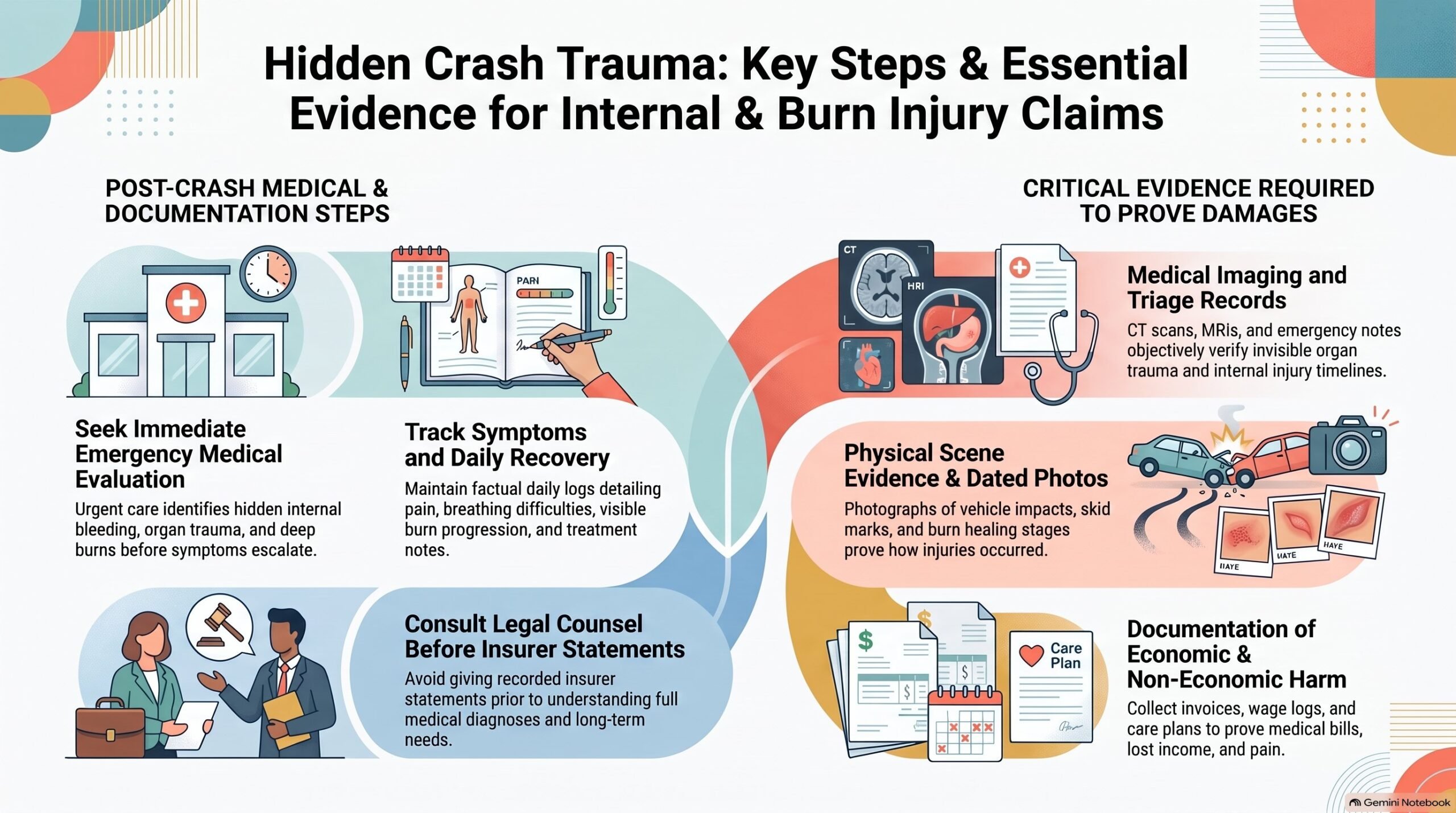
After a Tampa car accident involving possible internal, organ, or burn injuries, the injured person should seek emergency medical care, even if symptoms initially appear minor. They should document visible injuries, treatment, and related expenses to preserve an accurate record. A Tampa car accident lawyer can explain legal options and help protect the person’s interests.
Seek Emergency Medical Care
Because internal injuries, organ damage, and serious burns may not be immediately apparent, anyone involved in a Tampa car accident should seek emergency medical care without delay. A prompt evaluation can identify dangerous conditions before symptoms worsen and help clinicians begin appropriate treatment. Emergency symptoms may include difficulty breathing, severe or increasing pain, confusion, fainting, weakness, abdominal tenderness, vomiting, or burns with extensive blistering. These signs require urgent attention, but the absence of visible symptoms does not rule out internal harm. If someone is unconscious, bleeding heavily, struggling to breathe, or unable to move safely, a bystander should call 911 rather than attempt to transport that person. Ambulance transport allows trained responders to provide care en route and notify the receiving hospital. Seeking immediate help also protects others by reducing treatment delays.
Document Your Injuries
Once emergency care is underway, careful documentation can help create a clear record of injuries and their development. The injured person should keep copies of discharge instructions, test results, prescriptions, and follow-up recommendations. These records can clarify what clinicians observed and how treatment progressed.
Daily Journaling provides a consistent way to note pain, fatigue, breathing changes, bruising, burns, or other concerns. Symptom Tracking should include when symptoms began, how often they occur, their severity, and what makes them better or worse. Internal injuries may not be immediately apparent, so report new or worsening symptoms promptly to a medical professional.
Photographs can document visible injuries and changes over time. Entries should remain factual, dated, and private. Organized records help healthcare providers assess recovery and support accurate communication among those involved in the injured person’s care.
Contact a Tampa Lawyer
When internal injuries, organ damage, or burns follow a Tampa car accident, consulting a lawyer can help clarify the steps involved in protecting a potential claim. A lawyer can review medical records, accident reports, and available insurance information to identify relevant issues and explain possible next steps. Prompt advice may also help preserve evidence, meet filing deadlines, and avoid statements that could complicate a claim. The injured person should continue following medical guidance and keep records of treatment, symptoms, expenses, and time missed from work. A Free case consultation can provide an opportunity to discuss the circumstances without obligation, depending on the firm’s terms. When selecting counsel, individuals may consider experience with serious injury claims, communication practices, and fee arrangements. Clear guidance can support informed decisions while the injured person focuses on recovery and family responsibilities.
Critical Evidence in a Tampa Car Accident Internal, Organ & Burns Injury Case
A strong Tampa car accident injury claim depends on evidence that connects the crash to the injuries and documents their severity. Medical imaging records and emergency treatment documentation can establish internal or organ damage, while scene evidence may help clarify how the collision occurred.
Burn injury photographs can also show the extent and progression of visible harm.
- Medical imaging records and emergency treatment documentation
- Accident scene evidence, including photographs and witness details
- Dated photographs showing burn injuries and their progression
Medical Imaging Records
How can internal injuries be established when they are not visible at the crash scene? Medical imaging can reveal damage that a physical examination alone may not identify. In a Tampa car accident case, X-rays, CT scans, and MRI studies may document fractures, organ trauma, internal bleeding, or burn-related complications. These records can connect an injury to the collision and help show its severity and progression.
Radiology report interpretation helps clarify what the images demonstrate and whether the findings support the claimed injuries. A qualified medical professional can explain relevant findings, while comparisons between studies may show changes over time. Imaging record preservation is also important. Retain copies of original images, reports, and related records in usable form, with dates and sources documented. Accurate, complete imaging evidence can support fair evaluation and accountability while helping injured people obtain resources for recovery.
Emergency Treatment Documentation
After a Tampa car accident, emergency treatment records can provide an early, detailed account of internal injuries, organ damage, or burns. These documents may include Triage Records, initial observations, reported symptoms, essential signs, and the medical team’s first assessment. Their timing can help show how symptoms appeared and whether urgent care was provided. Emergency department notes may also record procedures, medications, referrals, and instructions for follow-up treatment. Collectively, these details establish a Treatment Timeline from arrival through discharge or transfer, helping clarify how clinicians responded to the patient’s condition. Accurate records can support a careful review of injury severity and ongoing needs. With appropriate authorization, preserving complete documentation can help those evaluating a claim and help ensure the injured person’s medical experience is represented accurately and respectfully.
Accident Scene Evidence
Accident scene evidence can help explain how a Tampa collision caused internal injuries, organ damage, or burns. Photographs, measurements, and witness accounts may preserve details that change as vehicles are moved and roadways are cleared. Tire marks and Skid patterns can help investigators assess braking, vehicle direction, and the sequence of impact. Vehicle damage, debris locations, traffic signals, and roadway conditions may also clarify how the crash occurred. These details can connect the force and circumstances of a collision to injuries documented during emergency treatment, even when those injuries were not immediately visible. Prompt documentation can support a careful review while respecting the needs of injured people and others affected. When available, police reports, scene diagrams, and vehicle data may provide additional context, but each source should be evaluated for accuracy and consistency.
Burn Injury Photographs
Photographs of burn injuries can document their appearance, location, and progression following a Tampa car accident. Images taken soon after the collision may show the initial injury, while later photographs can record changes during treatment and recovery. Consistent lighting, clear focus, and multiple angles help make the record useful to medical providers and others reviewing the claim. Photo preservation should include keeping original files, maintaining secure backups, and avoiding edits that could alter the evidence. Image metadata may help establish when and where a photograph was created, although it should not replace medical records or witness accounts. With the injured person’s consent, photographs can support accurate communication about the harm suffered and the care required. They should be stored privately and shared only with appropriate professionals.
Long-Term Effects of Tampa Car Accident Internal, Organ & Burns Injuries
Internal injuries from a Tampa car accident may lead to chronic organ damage that affects a person’s health and daily activities. Severe burns can leave lasting scars, limit movement, or require ongoing treatment. These long-term effects may involve continued medical care, rehabilitation, and monitoring.
Chronic Organ Damage
Although some internal injuries appear manageable at first, damage to organs such as the kidneys, liver, lungs, or spleen can lead to lasting complications after a Tampa car accident. Reduced blood flow, internal bleeding, or direct impact may impair organ function, sometimes with symptoms emerging only after the initial emergency has passed. Chronic kidney problems can require ongoing monitoring, medication, or dialysis, while liver impairment may affect digestion, energy, and the body’s ability to process substances. Lung damage can limit breathing capacity, and spleen injuries may increase vulnerability to infection if removal becomes necessary. These effects can disrupt work, caregiving, and daily responsibilities for injured people and those who depend on them. Prompt follow-up care helps identify changes, guide treatment, and document the injury’s long-term impact.
Lasting Burn Scars
When a Tampa car accident causes burns, the resulting scars may persist long after the wounds recover. These marks can remain raised, tight, discolored, or sensitive, depending on the burn’s depth and location. Scars across joints may restrict movement, while those on visible areas can affect confidence and social participation. Pigment changes may leave skin lighter or darker than surrounding tissue, and the difference can become more noticeable over time. Some scars gradually soften, but others remain prominent or cause discomfort. A qualified expert may assess whether scar revision could improve appearance or function. The effects can influence work, relationships, and everyday activities, especially when a person faces unwanted attention or difficulty using an affected area. Recognizing these lasting consequences helps families and communities provide respectful, practical support without defining someone by visible injuries.
Ongoing Medical Care
After a serious Tampa car accident, injuries to internal organs or extensive burns may require medical care long after the initial emergency treatment. Ongoing monitoring can help identify complications, assess recovery, and guide treatment changes. Follow-up appointments may involve experts who evaluate organ function, wound recovery, pain, and possible infection. Patients may also need medication management, additional procedures, or support for changes in mobility and daily activities.
Rehabilitation planning can coordinate physical therapy, occupational therapy, and other services according to each patient’s needs. Care teams may adjust these plans as recovery progresses, helping patients regain independence and participate in family, work, and community life where possible. Accurate medical records can document treatment, limitations, and future care needs. Consistent communication among providers, patients, and caregivers supports informed decisions and continuity of care throughout recovery.
Proving Liability in Tampa Car Accident Internal, Organ & Burns Injury Cases
Proving liability in Tampa car accident cases involving internal injuries, organ damage, or burns requires evidence that connects another party’s negligence to both the collision and the resulting harm. Investigators may review crash reports, vehicle damage, photographs, road conditions, and available video to determine how the accident occurred. This Negligence Evidence can help show whether a driver ignored traffic signals, followed too closely, or failed to maintain control.
Witness Testimony may clarify what happened before impact, including driver actions and roadway conditions. Medical records and assessments can then document the injuries, their severity, and whether they are consistent with the collision. In serious cases, qualified experts may explain how the crash caused internal trauma, organ damage, or burns and whether another party’s conduct contributed.
Liability may involve more than one responsible party, depending on the circumstances. Careful preservation and review of evidence can support a fair determination and help injured people pursue accountability while protecting their ability to focus on recovery and family responsibilities.
Don’t Wait. Call Our Florida Personal Injury Lawyers Now!
Dealing With Insurance Companies After a Tampa Car Accident Internal, Organ & Burns Injury
Insurance companies may contact injured people soon after a Tampa car accident involving internal injuries, organ damage, or burns, sometimes before the full extent of the harm is known. Early discussions may concern medical care, vehicle damage, or available coverage, but injured people should avoid guessing about diagnoses or future needs. Internal injuries and burns can require additional evaluation, so statements made before doctors understand the condition may not reflect its full impact.
Before providing Recorded statements or signing documents, an injured person may seek guidance from a qualified attorney. Insurers may request broad medical authorizations or ask questions that could affect how they assess the claim. Careful review helps protect privacy and supports accurate communication.
An attorney can examine the applicable policy limits, explain coverage terms, and communicate with insurers on the injured person’s behalf. This assistance can help preserve resources for medical treatment and recovery while allowing the person to focus on family, work, and serving others.
What to Expect During a Tampa Car Accident Internal, Organ & Burns Injury Claim Process
A claim involving internal, organ, or burn injuries typically begins with prompt medical care, which documents the harm and guides treatment. Evidence collection and claim investigation then help establish how the crash occurred, the extent of the injuries, and who may be responsible. The process may conclude with a settlement or proceed to trial if the parties cannot reach an agreement.
Immediate Medical Care
After a Tampa car accident, prompt medical care can be vital when internal injuries, organ damage, or burns are not immediately apparent. Emergency stabilization may address urgent threats, including breathing difficulties, blood loss, shock, or severe burns. Clinicians may use examinations, imaging, and laboratory tests to identify injuries that are not visible at the scene. Treatment can include wound care, surgery, medication, or observation, depending on the patient’s condition.
Once immediate needs are managed, expert referrals may connect patients with burn experts, surgeons, or other appropriate providers. Follow-up appointments help monitor recovery and identify later complications. Patients should follow medical instructions and report new or worsening symptoms promptly. Consistent care supports health and provides a clearer understanding of treatment needs as the injury claim process proceeds, without delaying necessary medical attention.
Evidence Collection
Once immediate medical needs are addressed, gathering evidence can help establish how the crash occurred and the extent of the injuries. Photographs of vehicle damage, road conditions, traffic signs, and visible burns may document important details before they change. Medical records, diagnostic imaging, treatment notes, and receipts can help show how internal or organ injuries affected the person’s health and daily responsibilities. Evidence preservation also includes keeping damaged clothing and personal items, along with copies of communications and expense records. Witness interviews may clarify what happened, identify hazards, and provide independent accounts of the collision. The injured person or a trusted representative can record names and contact information while memories remain fresh. Organized, accurate materials can support a clear account of the harm and help those assisting the person understand the practical needs involved.
Claim Investigation
How an insurer investigates a Tampa car accident claim can affect how fault, injuries, and financial losses are evaluated. The process may include reviewing the crash report, photographs, vehicle damage, medical records, and statements from those involved. Investigators may interview witnesses to clarify how the collision occurred and whether road or traffic conditions contributed. In complicated cases, Scene reconstruction can help assess vehicle movement, impact points, and timing. Claims involving internal organ damage or burns may require careful review of diagnostic tests, treatment records, and medical opinions because some injuries develop or become clear after the crash. The injured person’s account and documentation of daily limitations can also help explain the effects of recovery. Accurate, organized information supports a fair assessment and helps ensure the claimant’s needs are understood.
Settlement Or Trial
A well-documented investigation can help clarify the value of a Tampa car accident claim involving internal organ damage or burns, but it does not guarantee an agreement. Settlement discussions may begin after we assess medical records, treatment costs, lost income, and evidence of future care needs. Settlement timelines vary according to injury severity, recovery progress, insurer responsiveness, and the strength of the evidence. Accepting an offer generally resolves the claim, so the injured person should understand its terms and consider whether it accounts for ongoing needs.
If negotiations do not produce a fair resolution, the case may proceed to court. Trial preparation can involve reviewing medical testimony, organizing records, and preparing witnesses to explain the injuries and their effects. A judge or jury then evaluates the evidence. Each path requires careful decisions that support the injured person’s recovery and long-term well-being.
Compensation for Tampa Car Accident Internal, Organ & Burns Injury Damages
Internal injuries, organ damage, and burns from a car accident can require extensive treatment and may lead to lasting physical limitations. Compensation may account for the practical effects of these injuries on a person’s health, work, and daily responsibilities. Recoverable losses can include emergency care, hospitalization, surgery, medication, rehabilitation, and anticipated future treatment supported by medical evidence.
When injuries prevent a person from working, Lost wages may be considered, along with reduced future earning capacity when limitations affect employment over time. Household assistance may also be relevant if recovery prevents someone from completing routine tasks, such as cleaning, meal preparation, or caring for family members. Documentation can help show the services needed and their connection to the accident.
Burn injuries may require expert procedures, scar treatment, or ongoing care. Organ damage can require ongoing monitoring and activity restrictions. A careful claim evaluation considers the injury’s documented effects and the support required for recovery, while seeking a result that recognizes the person’s needs and responsibilities.
Economic vs Non-Economic Damages in Tampa Car Accident Internal, Organ & Burns Cases
Damages in Tampa car accident cases may include measurable economic losses, such as medical expenses, lost income, and future treatment costs. Non-economic damages address harm that is harder to quantify, including pain, emotional distress, and reduced quality of life. Valuing burn injuries requires consideration of their severity, treatment needs, lasting effects, and impact on daily activities.
Economic Losses
When a Tampa car accident causes internal organ damage or severe burns, economic losses include the measurable financial costs of the injury. These damages may cover emergency treatment, surgery, hospital stays, medication, rehabilitation, and follow-up care. Records such as invoices, medical reports, and payment statements can help establish the amounts incurred and the care still required. Lost wages may also be recoverable when injuries prevent a person from working during treatment or recovery. If the injuries limit future work capacity, diminished earnings may reflect the difference between prior income and expected income after the crash. Other documented costs can include transportation to medical appointments, necessary home assistance, and equipment prescribed for recovery. Carefully accounting for past and anticipated expenses helps show how the accident affected the injured person’s financial stability and ability to meet obligations.
Non-Economic Harm
Beyond measurable expenses such as medical bills and lost income, a Tampa car accident involving organ damage or severe burns may cause non-economic harm. These losses reflect how an injury affects a person’s daily life, relationships, and sense of well-being. Emotional Distress may include fear, anxiety, sleep disruption, or continuing psychological strain associated with the collision and recovery. A person may also experience Loss of Enjoyment when pain, scarring, limited mobility, or medical restrictions prevent participation in family activities, work routines, or community service. Unlike economic damages, these harms do not have a direct price shown by receipts or wage records. Evidence such as treatment notes, personal accounts, and statements from people familiar with the injured person’s life may help explain the impact. Each claim depends on its circumstances and supporting evidence.
Valuing Burn Injuries
How a burn injury is valued in a Tampa car accident case depends on both its financial consequences and its effects on daily life. Economic damages may include emergency treatment, surgery, medication, rehabilitation, and future care. Courts may also consider lost income and reduced earning capacity when burns prevent a person from returning to work or performing the same duties.
Non-economic damages address pain, emotional distress, disfigurement, and limitations on ordinary activities. Burn severity, including the depth and extent of tissue damage, can affect both categories. Scar valuation may consider a scar’s location, visibility, permanence, and effect on mobility or social interaction. Medical records, expert opinions, photographs, and testimony can help document these losses. A careful assessment recognizes the injured person’s practical needs and personal dignity while distinguishing documented costs from broader harm.
When a Tampa Car Accident Internal, Organ & Burns Injury Case Goes to Trial vs Settlement
For Tampa car accident cases involving internal injuries, organ damage, or severe burns, the choice between settlement and trial depends on the strength of the evidence, the extent of the harm, and the insurer’s willingness to make a fair offer. Settlement negotiations may resolve a claim more quickly and provide dependable compensation for medical care, lost income, and future needs. A settlement also avoids the uncertainty and demands of a courtroom proceeding. However, an offer may not adequately account for lasting impairment, extensive treatment, or the support a seriously injured person will require.
When the parties disagree about responsibility or the value of the losses, trial may become necessary. Trial preparation includes organizing medical records, consulting qualified experts, and presenting clear evidence about how the crash affected the injured person’s life. A judge or jury then evaluates the evidence and determines the outcome. Each path requires careful assessment, with the injured person’s recovery, dignity, and long-term well-being guiding decisions throughout the process.
Florida Laws That May Affect Your Tampa Car Accident Internal, Organ & Burns Case
Florida law can shape both the value and timing of a Tampa car accident claim involving internal injuries, organ damage, or severe burns. Florida’s no-fault system generally requires injured people to seek initial benefits through their own personal injury protection policy, regardless of who caused the crash. PIP coverage rules may limit payment to covered medical expenses and lost income, making prompt documentation important. Serious injuries may support a claim against an at-fault driver when statutory requirements are met.
Florida’s no-fault system may affect how Tampa crash victims access PIP benefits and pursue claims for serious injuries.
Other legal principles can affect recovery:
- The comparative negligence standard may reduce compensation according to an injured person’s share of responsibility.
- Medical records, diagnostic testing, and expert opinions can help establish the nature and extent of internal or burn injuries.
- Available insurance coverage and evidence of fault may influence the amount recoverable from responsible parties.
These rules can be complicated, particularly when severe injuries require continuing care. A careful review can help protect a claim while supporting access to treatment and services needed for recovery.
Don’t Wait. Call Our Florida Personal Injury Lawyers Now!
The Statute of Limitations for Tampa Car Accident Internal, Organ & Burns Injury Cases
Time limits can substantially affect a Tampa car accident claim involving internal injuries, organ damage, or severe burns. Under Florida law, a person generally has two years from the date of a negligence-based crash to file a personal injury lawsuit. This Filing deadline applies even when the full extent of an injury is not immediately apparent, so delayed medical findings may create serious timing concerns.
The Discovery rule may affect when a deadline begins in limited circumstances, such as when an injury could not reasonably have been identified earlier. However, it does not automatically extend the time to sue, and courts assess the facts and applicable law. Different deadlines may govern claims involving government entities or wrongful death, and missing a deadline can bar recovery. Prompt attention to deadlines also protects your ability to seek compensation for treatment, lost income, and lasting harm, while preserving resources for family members and others who depend on the injured person.
How a Tampa Car Accident Internal, Organ & Burns Lawyer Can Help You
When a Tampa car accident causes internal injuries, organ damage, or severe burns, an attorney can help the injured person understand legal options and manage the demands of a complicated claim. The lawyer can investigate the crash, preserve relevant evidence, and identify parties whose conduct may have contributed to the harm. This work can help ensure the injured person’s needs are represented accurately and that responsible parties are held accountable.
Legal support may include:
- Gathering medical records, expert opinions, and documentation of treatment needs.
- Evaluating lost income, future care costs, and other damages through careful Claim Valuation.
- Handling insurer communications and pursuing fair terms through Settlement Negotiation.
Because serious injuries may require extensive treatment and long-term assistance, a lawyer can coordinate evidence that explains both current losses and anticipated needs. The attorney can also review settlement proposals, clarify their potential consequences, and address disputes about fault or damages. This guidance allows the injured person and supporting family members to focus on recovery while the claim is managed with care and diligence.
When to Contact a Tampa Car Accident Internal, Organ & Burns Lawyer
After a Tampa car accident involving internal injuries, organ damage, or severe burns, contacting a lawyer promptly can help protect evidence and clarify available legal options. Early guidance can help while medical care is underway and important records, photographs, witness details, and insurance communications remain accessible. Do not delay seeking legal advice until treatment is complete, especially when injuries may affect work, daily responsibilities, or long-term health.
Some injuries are not immediately apparent. Delayed symptoms, including pain, breathing difficulty, or signs of internal bleeding, require prompt medical attention, followed by careful documentation of diagnosis and treatment. Expert referrals may be necessary to evaluate organ damage or burn complications, and those providers’ records can help establish the course and impact of the injuries.
Contacting counsel soon after the crash can also help preserve relevant information and organize questions about deadlines or insurer requests. A timely consultation allows injured people and their families to focus on recovery while understanding the steps available to pursue a claim.
Why You Need an Experienced Tampa Car Accident Internal, Organ & Burns Lawyer
Because internal injuries, organ damage, and severe burns can involve complex medical evidence and lasting effects, an experienced Tampa car accident lawyer can help establish how the crash caused the harm and what compensation may be available. These cases may require careful review of treatment records, imaging, expert opinions, and the injured person’s expected recovery. A lawyer can organize this evidence and explain how the injuries affect daily activities, future medical needs, and the ability to work.
Serious trauma may involve Surgical skill, extended hospitalization, or burn reconstruction. Legal counsel can account for these needs when documenting damages and communicating with insurers, while allowing the injured person and family to focus on care and recovery. The lawyer can also identify responsible parties, address disputed claims, and pursue compensation for medical expenses, lost income, rehabilitation, and other legally recognized losses. Experienced representation helps ensure the full scope of harm is presented clearly and that decisions are informed by the evidence and applicable law.
How to Choose the Right Tampa Car Accident Internal, Organ & Burns Lawyer for Your Case
Choosing the right Tampa car accident lawyer for internal injuries, organ damage, or severe burns requires more than reviewing general experience. A suitable attorney should understand how serious injuries affect medical needs, employment, and long-term recovery. The person seeking representation can review the Attorney’s credentials, including licensing, relevant case experience, and disciplinary history, and ask how the lawyer investigates complex crash claims and works with medical professionals.
Clear communication also matters. A lawyer should explain the process, respond to questions, and treat the injured person and family with respect. These qualities help guarantee that legal decisions reflect the client’s needs and circumstances.
Before signing an agreement, the client should understand the fee structures, including whether payment depends on a recovery and which case expenses may be deducted. The lawyer should provide these terms in writing and explain them plainly. Comparing several qualified attorneys can help you identify someone prepared to pursue fair compensation while you focus on treatment and recovery.
About The Law Offices of Anidjar & Levine
The Law Offices of Anidjar & Levine represents people injured in car accidents in Tampa and throughout Florida.
The firm handles claims involving serious injuries, including internal organ damage and burns, and helps clients understand the legal options available after a collision.
Its attorneys investigate accident circumstances, gather relevant records, and communicate with insurers on a client’s behalf.
When injuries require ongoing care, the firm can consider how treatment needs and related losses may affect a claim.
Firm history reflects a practice focused on representing injured people and pursuing accountability through the legal process.
The firm’s work may include negotiating settlements or presenting a case in court when necessary.
Its approach emphasizes clear communication about case progress, potential challenges, and available next steps.
Community involvement can also connect a law firm with local needs beyond individual claims.
Through service and outreach, the firm supports residents and families across Florida.
Clients can contact the firm to discuss their circumstances and determine whether representation may be appropriate.

Frequently Asked Questions
Can Internal Injuries Appear Days After a Tampa Car Accident?
Yes, internal injuries can appear days after a Tampa car accident because some symptoms develop gradually or remain unnoticed at first. Delayed injury symptoms may include worsening abdominal pain, dizziness, weakness, shortness of breath, or unusual bruising. These signs can indicate hidden trauma risks, including internal bleeding or organ damage. Anyone experiencing concerning symptoms should seek prompt medical evaluation, even if the collision seemed minor, to support timely treatment and reduce the chance of serious complications.
What Symptoms of Internal Bleeding Require Emergency Medical Care?
Warning Signs of internal bleeding include severe or worsening abdominal pain, swelling, fainting, confusion, weakness, pale or clammy skin, rapid heartbeat, shortness of breath, vomiting blood, or black, tarry stools. Any of these symptoms after a collision requires immediate Emergency Response; call emergency services rather than driving the injured person. Internal bleeding may develop without obvious wounds, so prompt professional assessment is crucial, even when symptoms initially seem mild or appear several days later.
How Are Burn Injuries Classified by Severity?
Burn injuries are classified by depth and extent, with severity increasing as damage reaches deeper tissue and covers more of the body. Burn depth classifications include superficial burns, partial-thickness burns, and full-thickness burns; the deepest may damage underlying structures. Clinicians also assess burn surface area, location, and the injured person’s age and health. Prompt medical evaluation is vital for deep, extensive, or sensitive-area burns, helping guarantee appropriate treatment and reduce complications.
Can I Pursue Compensation if I Had a Preexisting Medical Condition?
Yes, compensation may remain available when an accident worsens a preexisting medical condition. A claim generally must show that the incident caused a measurable aggravation, rather than attributing all symptoms to the prior condition. You can support a preexisting condition aggravation claim with medical history documentation, treatment records, and qualified medical opinions linking the injury to the change in health. Accurate disclosure and consistent care help clarify the extent of harm and support a fair assessment of damages.
How Are Attorney Fees Handled in a Personal Injury Case?
Attorney fees in a personal injury case are commonly paid through Contingency Fee Agreements, meaning the attorney receives an agreed percentage of any recovery rather than hourly payment. If no compensation is obtained, attorney fees may not be owed, subject to the contract’s terms. Case Expense Responsibility should also be clarified in writing, including who pays filing fees, medical record charges, and expert costs, and whether those expenses are deducted from any settlement.
—————————
Internal injuries, organ damage, and burns can require extensive treatment and may affect a person’s ability to work and manage daily responsibilities.
A Tampa Personal Injury Lawyer can review the available evidence, explain potential legal options, and pursue compensation for documented losses.
Prompt action can help preserve records and protect important deadlines.
The Law Offices of Anidjar and Levine can assess the circumstances of a crash and discuss the steps available to injured victims and their families.