

An Orlando sepsis injury lawyer at the Law Offices of Anidjar and Levine helps you determine whether delayed diagnosis, improper treatment, or other negligent care caused preventable harm. Your attorney can secure medical records, work with qualified experts, preserve crucial evidence, and handle insurers while you focus on recovery.
If negligence contributed to sepsis complications, you may seek compensation for medical costs, lost income, pain, and long-term care needs under Florida law. The sections below explain how these claims are investigated, valued, and pursued, and you can learn more from an Orlando Medical Malpractice Lawyer.
Main Takeaways
- An Orlando sepsis injury lawyer investigates delayed diagnosis, improper treatment, and preventable complications to determine whether providers breached the standard of care.
- The lawyer gathers medical records, lab results, timelines, and expert opinions to build a strong, evidence-based claim.
- They preserve critical evidence, handle insurer and provider communications, and track deadlines to protect your right to compensation.
- Compensation may include medical expenses, lost income, pain and suffering, disability-related losses, long-term care, and wrongful death damages.
- If settlement efforts fail because fault or causation is disputed, the lawyer prepares the case for litigation and trial.


How We Can Help With Your Orlando Sepsis Injury Claim
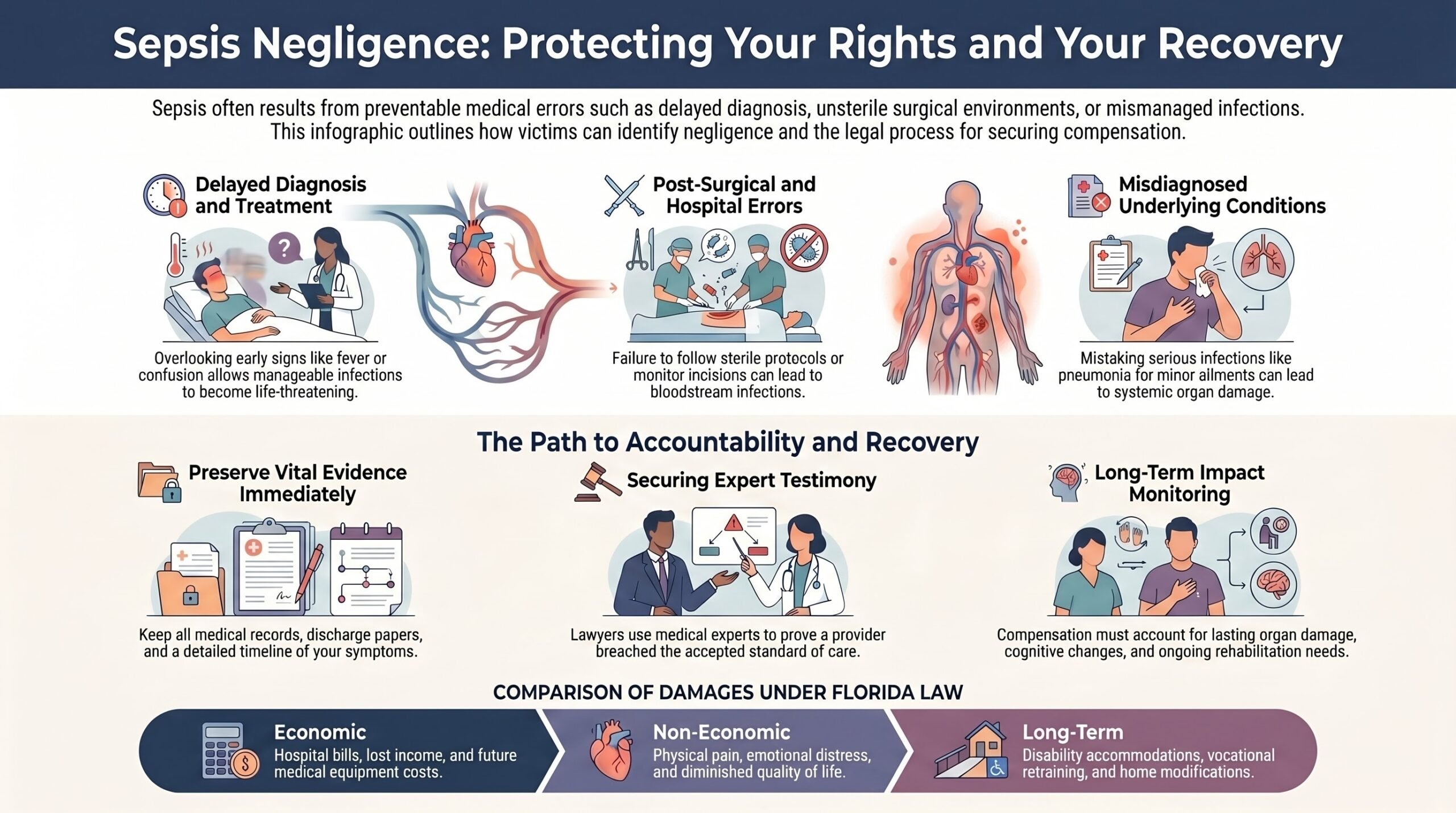
From the outset, we can help with your Orlando sepsis injury claim by investigating the medical care you received, identifying where providers may have failed to meet the accepted standard of care, and building a clear record of how that failure caused serious harm.
You merit guidance that reflects service, accountability, and respect for your family’s needs. We gather records, consult qualified medical experts, and preserve vital evidence before it disappears. We handle communications with insurers and providers, so you can focus on recovery and supporting those who depend on you.
Through strong Patient advocacy, we explain your options plainly, answer questions promptly, and help you make informed decisions at each stage. We also organize the Claim timeline, track deadlines, and prepare a persuasive demand that reflects your losses. If settlement efforts don’t succeed, we’re ready to present your case effectively in court. Throughout the process, we work to protect your voice and pursue a result that serves justice.
OUR CONSULTATIONSARE FREE
START YOUR FREE CASE REVIEW

Understanding Orlando Sepsis Injury Cases
To assess whether you have a valid Orlando sepsis injury case, you need to understand how sepsis develops, how medical providers should respond to its warning signs, and how delays or mistakes can cause severe harm. When providers miss escalating symptoms, fail to order timely testing, or delay antibiotics and supportive treatment, you may face devastating complications that proper care could have reduced.
In these cases, you must examine whether a provider acted as a reasonably careful professional would under similar circumstances. Your claim often depends on medical records, timelines, expert review, and evidence showing that preventable delays worsened your condition. Sepsis awareness matters because early recognition saves lives and protects families who rely on compassionate care.
Caregiver education also plays an important role, helping those who serve others recognize changes in breathing, confusion, fever, or low blood pressure and seek urgent evaluation before injury becomes irreversible or fatal.
Common Causes of Orlando Sepsis
You may develop sepsis from several preventable failures in medical care, including post-surgical infections, delayed infection treatment, and exposure to hospital-acquired bacteria. You can also face life-threatening complications when a provider misses or misdiagnoses an underlying condition that allows an infection to worsen. If that happened to you, identifying the cause is often crucial to evaluating whether medical negligence played a role.
Post-Surgical Infections
Post-surgical infections can set in quickly when bacteria enter a surgical site, contaminated instruments are used, or medical staff fail to follow proper sterilization and wound-care protocols. When that happens, you may face escalating complications that place your health and ability to serve others at risk.
You depend on surgical teams to maintain sterile conditions, monitor incisions, and provide clear wound care instructions. Hospitals should also follow antibiotic stewardship practices, because unnecessary or poorly managed antibiotics can increase resistance and complicate recovery.
If providers overlook drainage, redness, fever, or unusual pain after surgery, an infection may spread into your bloodstream and lead to sepsis. By understanding how preventable surgical errors contribute to infection, you can better recognize when medical negligence may have played a role in the mending you suffered.
Delayed Infection Treatment
When an infection isn’t treated promptly, a localized condition can worsen fast and progress into sepsis before the warning signs receive proper attention. If you seek medical care and providers overlook fever, pain, swelling, or abnormal lab results, a delayed diagnosis may allow a dangerous infection to progress. What began as a manageable illness can threaten your organs, your recovery, and your ability to keep serving those who depend on you.
You should expect timely evaluation, clear follow-up instructions, and treatment that matches the seriousness of your condition. Delays in prescribing antibiotics, ordering imaging, reviewing cultures, or responding to worsening symptoms can place you at severe risk. When preventable delay leads to sepsis, you may face extensive treatment, lasting complications, and legal questions about whether proper care was denied to you.
Hospital-Acquired Bacteria
Although hospitals exist to treat serious illness, they can also expose patients to dangerous bacteria that can trigger sepsis if staff don’t promptly prevent, detect, and address infections. You may face risk from contaminated catheters, ventilators, surgical sites, or unclean surfaces when caregivers fail to follow sterile protocols consistently.
When bacteria spread within a facility, your condition can worsen fast, especially if antibiotic resistance limits effective treatment options. You depend on nurses, doctors, and administrators to wash hands, isolate infected patients, disinfect equipment, and monitor early warning signs.
These steps protect not only you, but also every person your care seeks to uplift. If a hospital ignores basic infection-control duties, preventable harm can follow, and sepsis may develop before anyone recognizes the danger. Prompt accountability helps safeguard future patients and strengthens safer standards.
Misdiagnosed Underlying Conditions
Sepsis doesn’t arise only from hospital-acquired bacteria; it can also result from a provider’s failure to correctly identify the illness or injury that initiated the infection. When you seek care, you trust medical professionals to recognize warning signs and act promptly. If they mistake appendicitis, pneumonia, urinary tract infections, or wound complications for minor problems, Hidden infections may spread unchecked.
A delayed diagnosis can allow bacteria to enter your bloodstream, overwhelm your immune response, and cause organ damage. You may also face greater pain, longer hospitalization, and lasting complications that affect how you care for others. In many cases, proper testing, timely imaging, and careful follow-up would’ve exposed the true condition sooner. When that standard isn’t met, misdiagnosed underlying conditions can become a direct path to life-threatening sepsis and profound harm.


Legal Rights of Orlando Sepsis Injury Victims
Because a preventable medical error can turn a treatable infection into a life-threatening emergency, you have the right to seek compensation if negligent care contributed to a sepsis injury in Orlando. Florida law may allow you to pursue damages when a provider fails to diagnose, monitor, or treat an infection within accepted standards. Through patient advocacy, you can seek accountability to protect others from similar harm and support your family’s stability.
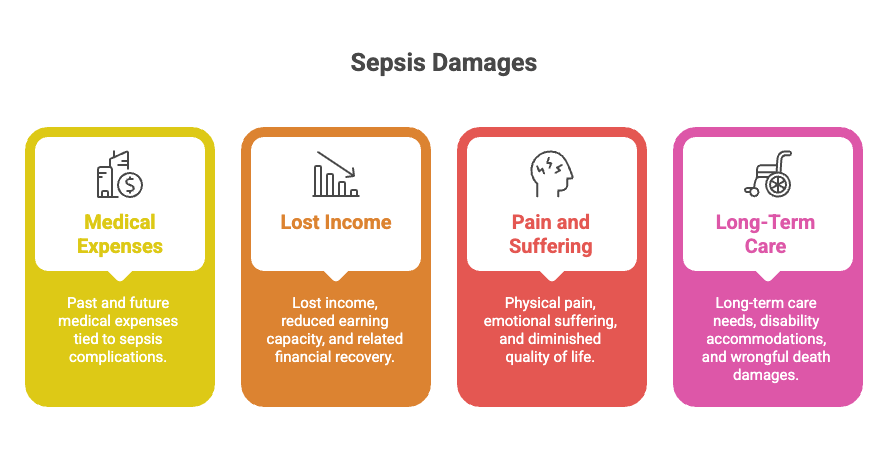
Your legal rights may include compensation for losses such as:
- Past and future medical expenses tied to sepsis complications.
- Lost income, reduced earning capacity, and related financial recovery.
- Physical pain, emotional suffering, and diminished quality of life.
- Long-term care needs, disability accommodations, and wrongful death damages.
You also have the right to demand evidence, question hospital decisions, and hold negligent parties responsible. By asserting these protections, you serve both your own recovery and the broader safety of patients throughout the Orlando community.
Steps to Take After an Orlando Sepsis Injury
After an Orlando sepsis injury, you should seek immediate medical care because prompt treatment protects your health and creates a clear record of your condition. You should also preserve crucial evidence, including medical records, discharge papers, prescriptions, and any written communication related to your care. Once your condition is stable, you should consult an injury lawyer to understand your options and protect your right to pursue compensation.
Seek Immediate Medical Care
Act quickly and seek emergency medical attention at the first sign of a severe infection, especially if you develop fever, confusion, rapid breathing, extreme pain, or unusual weakness. Recognizing these emergency signs early can protect your health and may prevent life-threatening complications from sepsis.
Call 911 or go to the nearest emergency room without delay. If you are helping another person, choose the safest mode of transport based on symptoms, mobility, and urgency. Tell medical providers when symptoms began, how they changed, and whether there was a recent surgery, wound, or infection. Prompt evaluation often includes blood testing, imaging, intravenous fluids, oxygen, and antibiotics.
By getting immediate care, you give doctors the best chance to stabilize your condition and support your recuperation, so you can continue serving your family, workplace, and community with strength.
Preserve Key Evidence
A careful effort to preserve evidence can markedly strengthen any future sepsis injury claim. You should keep every medical record, discharge paper, prescription label, bill, and insurance statement connected to your care.
Save photographs of visible complications, medication containers, and the treatment setting whenever possible. Write a clear timeline describing symptoms, provider visits, test results, and changes in your condition.
You should also protect physical items and digital records from alteration or loss. Store documents securely, back up emails and portal messages, and note who handled each item to support the chain of custody. Ask providers for complete copies of charts before preservation timelines create obstacles. If family members observed your decline, have them record factual statements promptly. Careful organization now can help you honor the truth and protect others from similar harm.
Consult An Injury Lawyer
Once you’ve gathered and protected the records tied to your sepsis injury, you should speak with an Orlando injury lawyer as soon as your condition allows. You are entitled to clear advice about your rights, your next steps, and the strength of a potential claim.
An attorney can review whether Medical malpractice contributed to delayed diagnosis, improper treatment, or preventable complications. You can also receive Statute guidance, so you don’t lose your opportunity to seek accountability under Florida deadlines. Early legal help often protects evidence, identifies witnesses, and supports a stronger case strategy.
As you recover, your lawyer can handle communications with insurers and providers, letting you focus on recuperating and serving your family and community. Prompt counsel helps you pursue justice with purpose, discipline, and informed direction during recovery.
How an Orlando Sepsis Injury Lawyer Can Help You
Guiding a sepsis injury claim can be difficult, especially when you’re dealing with serious medical complications, unanswered questions, and mounting financial pressure. An Orlando sepsis injury lawyer helps you act decisively, protect your rights, and pursue accountability with clarity and purpose. Your attorney strengthens patient advocacy, gathers vital medical documentation, and explains each step so you can make informed decisions while continuing to care for yourself and others.
An Orlando sepsis injury lawyer helps you protect your rights, understand your options, and pursue accountability with confidence.
- You receive a careful case review that identifies possible negligence, responsible parties, and available compensation.
- Your lawyer secures records, consults qualified medical experts, and builds a persuasive claim supported by facts.
- You gain a strong advocate for negotiations with insurers and healthcare providers who may resist responsibility.
- Your attorney prepares your case for litigation if a fair resolution is not offered.
With experienced legal guidance, you can focus on service, recovery, and protecting your family’s future while your claim moves forward efficiently and professionally.
Long-Term Effects of Orlando Sepsis Injuries
After sepsis, you may experience lasting organ damage affecting your kidneys, lungs, heart, or other essential systems. You may also experience cognitive and emotional changes, including memory problems, confusion, anxiety, or depression that disrupt your daily life. In many cases, you’ll need ongoing rehabilitation, medical monitoring, and supportive care to manage these long-term effects and protect your recovery.
Organ Damage Risks
Because sepsis can rapidly disrupt blood flow and trigger widespread inflammation, it may leave lasting damage to vital organs even after the initial infection is under control. You may face kidney impairment, lung scarring, heart weakness, or liver dysfunction that limits your strength and daily service to others.
When sepsis progresses, Organ failure can begin quickly, and some damage may persist despite proper treatment. Reduced oxygen delivery injures tissues, while clotting abnormalities strain already vulnerable organs. You may also experience immunosuppression, which can slow recovery and increase your risk of secondary infections that further delay recovery.
These complications often require ongoing monitoring, medications, rehabilitation, or assistive care. If medical negligence contributed to delayed diagnosis or treatment, you should understand how lasting organ damage can affect your health, responsibilities, and future needs.
Cognitive And Emotional Changes
Sepsis can affect more than your organs and physical strength; it may also change how you think, remember, and respond emotionally long after the infection has passed. You may notice memory loss, slower concentration, confusion, or difficulty following conversations that once felt routine. These changes can interfere with your ability to support loved ones, serve your community, or manage daily responsibilities with confidence.
You may also experience emotional lability, anxiety, irritability, or periods of depression that seem out of character. Even small stresses can feel harder to manage, and relationships may suffer when others don’t understand these hidden effects. Recognizing cognitive and emotional changes matters because they can influence your independence, judgment, and quality of life. Careful documentation of these symptoms can also help show the full impact of your sepsis injury.
Ongoing Rehabilitation Needs
Although the infection may resolve, many people still need structured rehabilitation to rebuild strength, mobility, and daily function over time. You may require physical therapy to improve endurance, occupational therapy to restore self-care skills, and speech therapy if sepsis affected swallowing or communication. Consistent treatment helps you regain independence and continue serving your family, work, and community with confidence.
Your recovery may also involve home modifications, such as ramps, grab bars, or accessible bathing areas, to reduce the risk of falls and support safe movement. If lasting limitations affect your employment, vocational retraining can help you shift into duties that match your current abilities. Careful planning, regular medical follow-up, and coordinated rehabilitation services often determine how fully you recover and how effectively you rebuild a stable, purposeful life after sepsis.
Proving Liability in Orlando Sepsis Injury Cases
When you pursue a sepsis injury claim in Orlando, proving liability requires more than showing that your condition became severe. You must connect the provider’s actions or omissions to a preventable delay in diagnosis, treatment, or monitoring. That means identifying the accepted standard of care, showing how it was breached, and proving that the breach caused measurable harm to you.
Your case often depends on complete medical records, timelines, and Expert testimony from qualified professionals who can explain what competent care is required under the circumstances. You also need to address Jurisdictional nuances, including Florida procedural rules, presuit requirements, and deadlines that can affect how your claim moves forward.
As you build your case, you serve both your own recovery and broader patient safety by holding negligent providers accountable. Clear evidence of causation, damages, and responsibility gives your claim strength and helps demonstrate that your sepsis injuries were not unavoidable but the result of substandard medical care.
Dealing With Insurance Companies After an Orlando Sepsis Injury
Sorting through insurance issues after an Orlando sepsis injury can feel overwhelming, but your approach in the early stages can markedly affect the value of your claim. You should report the injury carefully, keep every record, and avoid giving broad statements that insurers may later reinterpret. When adjusters contact you, stay respectful, but remain cautious about quick settlements or requests for unnecessary authorizations.
Your focus should be accuracy, consistency, and protection of your household’s stability. Preserve medical bills, treatment notes, work-loss information, and correspondence, because these documents often limit policy disputes and expose unfair claims tactics. If an insurer questions the seriousness of your condition, do not minimize your symptoms or accept blame without advice.
You can strengthen your position by organizing facts, documenting conversations, and seeking legal guidance before signing anything. That measured response helps you protect your recovery, support those who depend on you, and maintain the resources needed to continue serving others well.
What to Expect During an Orlando Sepsis Injury Claim Process
You can expect your Orlando sepsis injury claim to begin with an initial case evaluation, where your attorney reviews the facts and determines whether you have a strong basis for compensation. From there, you’ll need to gather medical records, treatment history, and other evidence that shows how the sepsis injury occurred and how it affected your health and finances. Your lawyer will then guide you through settlement negotiations, and if a fair resolution isn’t reached, you’ll prepare for the demands and timeline of trial.
Initial Case Evaluation
At the outset of your Orlando sepsis injury claim, your attorney will review the facts of your medical care, assess how the infection developed or worsened, and determine whether the evidence suggests negligence by a hospital, physician, or other provider. During this initial assessment, you can expect focused questions about treatment timing, symptoms, communication, and the harm you experienced.
Your lawyer will also conduct an eligibility screening to decide whether your claim appears legally viable under Florida malpractice standards. You will discuss who may be responsible, what losses have affected your life, and whether deadlines could limit your options.
This meeting helps you understand the path ahead so you can make informed decisions, protect your family, and pursue accountability in a manner that may also encourage safer care for others.
Evidence And Medical Records
Once your attorney determines that your sepsis injury claim may be legally viable, the focus turns to gathering the evidence and medical records needed to prove what happened and why it matters under Florida law. You can expect your legal team to request hospital charts, physician notes, medication logs, imaging, and infection timelines. These records help show whether providers recognized the signs of sepsis, ordered timely treatment, and monitored your condition responsibly.
Your attorney may also consult medical experts for lab result interpretation, especially when blood cultures, lactate levels, and organ function tests are central to causation. Because record retrieval challenges often delay access, your lawyer will track requests, follow up with providers, and preserve essential documentation. By organizing this evidence carefully, you strengthen your claim and help protect other patients from preventable harm.
Negotiation And Settlement Steps
Prepare for a structured phase in which your attorney presents the evidence, evaluates liability and damages, and begins settlement discussions with the hospital, provider, or insurer. You can expect a careful review of records, expert opinions, and losses tied to the sepsis injury.
Your lawyer then uses focused negotiation tactics to argue for fair compensation, answer defenses, and challenge attempts to minimize harm. You should stay available, provide updated treatment information, and review each offer with your attorney. Settlement timelines vary because insurers may request more documentation or dispute causation.
Even so, your legal team should keep the process moving, explain each step clearly, and recommend whether an offer serves your family’s needs and your broader goal of accountability. This phase often rewards patience, preparation, and consistent communication from everyone.
Trial Process Expectations
If settlement efforts don’t resolve your Orlando sepsis injury claim, the case may move into litigation, where your attorney presents evidence in court and argues why the provider or facility should be held liable. You should prepare for discovery, expert testimony, and strict scheduling orders that guide each phase of the trial. During Voir dire, your lawyer helps evaluate jurors and address Jury expectations about medicine, accountability, and patient safety.
As the trial begins, you’ll need to follow Courtroom etiquette, remain respectful, and respond clearly when questioned. Your attorney will present records, witness testimony, and expert opinions, while also addressing Evidentiary rulings that determine what the jury may consider. At each step, you can serve your family and community by upholding accountability, promoting safer care, and supporting standards that protect future patients.
Compensation for Orlando Sepsis Injury Damages
Accountability matters when sepsis results from medical negligence, because the harm often extends far beyond the initial infection and can disrupt every part of your life. When you pursue compensation, you seek resources that help mend stability, protect your family, and support your ability to continue serving others despite serious setbacks.
Your claim may address immediate and ongoing medical costs tied to hospitalization, surgery, rehabilitation, medications, home health assistance, and adaptive equipment. You may also pursue recovery for lost income, reduced earning capacity, and the practical burdens that follow lasting complications. Sepsis can leave profound emotional trauma, affecting your relationships, confidence, and daily functioning, so a thorough case should reflect that full impact.
An Orlando sepsis injury lawyer can gather records, work with qualified experts, and present clear evidence showing how negligence changed your health and future. With careful legal guidance, you can pursue fair compensation and hold the responsible parties fully accountable under Florida law.
Economic vs Non-Economic Damages in Orlando Sepsis Cases
In an Orlando sepsis case, you may pursue economic damages for measurable losses such as medical bills, lost income, and future care costs. You may also seek non-economic damages for the pain, emotional distress, and reduced quality of life you’ve endured. To recover full compensation, you must show clear evidence that proves both the type of loss and its value.
Economic Damage Categories
Because sepsis often leads to extensive medical treatment and lasting complications, damages in an Orlando sepsis case usually fall into two broad categories: economic and non-economic losses. Economic damages address the measurable financial harm you and your family sustain while working to recover and continue serving those who depend on you.
These losses can include hospital bills, specialist visits, prescriptions, follow-up care, and future treatment costs. You may also recover Lost Earnings if sepsis keeps you from working, as well as reduced earning capacity when a lasting impairment affects your career.
Property Costs may apply if personal items need to be replaced during emergency care. In serious cases, Medical Equipment such as mobility aids and home modifications, and Rehabilitation Expenses for therapy or skilled nursing, can constitute a substantial part of your claim and documented recovery needs.
Non-Economic Losses
Sepsis can cause harm that no invoice fully captures, and non-economic losses address the personal impact the illness has on your daily life. These damages recognize what you endure beyond medical bills and lost income, including physical suffering, diminished independence, and reduced enjoyment of family, work, and service to others.
If sepsis changed your mobility, sleep, confidence, or relationships, those losses matter. Pain valuation considers the severity and duration of your discomfort and the ways symptoms limit ordinary activities. Emotional distress includes anxiety, depression, fear, trauma, and the strain of adjusting to lasting complications.
You may also face loss of companionship, embarrassment from visible effects, or frustration when you cannot participate as you once did. Non-economic damages acknowledge these human consequences with seriousness and legal significance under Florida law.
Proving Damages Value
Although every sepsis case is different, proving the value of your damages requires clear evidence that connects the infection to both your financial losses and the personal harm you’ve endured. You’ll need records that show hospital bills, rehabilitation costs, medication expenses, and lost wages. If sepsis limits your ability to work or continue serving your family and community, experts may project your future earnings and long-term care needs.
You must also prove non-economic damages, including disability, emotional distress, and calculated pain from invasive treatment or permanent complications. Your testimony, family observations, and medical opinions can show how sepsis changed your daily life, relationships, and independence. When you present thorough evidence, you give the court or insurer a reliable basis to measure the full value of what you’ve lost.
When an Orlando Sepsis Injury Case Goes to Trial vs Settlement
When an Orlando sepsis injury case moves forward, it may end through a negotiated settlement or proceed to trial, and that decision usually depends on the strength of the evidence, the extent of your damages, and the defendant’s willingness to accept responsibility. If liability is clear, settlement often serves your needs faster, lowers litigation costs, and provides dependable compensation that helps you care for your family and continue serving others.
Trial becomes more likely when the defense denies fault, disputes causation, or minimizes the harm you suffered. In that setting, Jury dynamics can influence how testimony, medical records, and expert opinions are received. You and your lawyer must also evaluate Settlement timing, because early offers may undervalue future treatment, lost income, and long-term limitations.
A carefully prepared case increases pressure on the defense and strengthens your position at every stage. Whether your claim resolves privately or before a jury, your goal remains the same: securing accountability and the resources needed to rebuild.
The Statute of Limitations for Orlando Sepsis Injury Cases
Because filing deadlines can determine whether you have any legal remedy at all, the statute of limitations is one of the most important issues in an Orlando sepsis injury case. If you miss the applicable deadline, a court may dismiss your claim, even when the medical harm is severe and preventable. That is why you should understand how time limits affect your ability to seek accountability and protect your family.
In Florida, these cases often involve medical malpractice rules, which can shorten or complicate filing deadlines. The clock may begin when the injury occurred, yet discovery tolling may apply if you could not reasonably identify the sepsis-related negligence right away.
Even so, tolling has limits, and exceptions do not last indefinitely. You should preserve records, note crucial dates, and act with care, because every step you take can support a timely claim. Careful attention to deadlines helps you pursue justice responsibly and serve those who depend on you.
When to Contact an Orlando Sepsis Injury Lawyer
If you suspect that delayed diagnosis, improper monitoring, or inadequate treatment allowed sepsis to worsen, you should contact an Orlando sepsis injury lawyer as soon as possible. Prompt action helps preserve records, timelines, and witness accounts while your memory remains clear. You should also seek legal guidance when providers ignored early signs, dismissed worsening symptoms, or failed to respond to dangerous changes in essential signs.
You may need to reach out after an unexpected ICU transfer, prolonged hospitalization, amputation, organ failure, or a sepsis-related death. Contacting counsel is also wise when medical bills increase quickly, coverage questions arise, or insurance disputes begin delaying needed support. If your family member cannot advocate personally, you can take steps on their behalf and protect their interests.
Acting early allows you to organize documents, identify decision makers, and respond responsibly to urgent concerns. Timely legal guidance supports accountability, protects your household, and helps you pursue answers with confidence.
Why You Need an Experienced Orlando Sepsis Injury Lawyer
Although sepsis cases often appear straightforward at first, they usually involve elaborate medical timelines, competing clinical judgments, and records that require careful analysis. You need an experienced Orlando sepsis injury lawyer because your case may depend on showing exactly when warning signs appeared, how providers responded, and whether delays caused preventable harm.
An experienced attorney helps you connect complex facts to legal standards in medical negligence. You benefit from focused case investigation, informed review of hospital policies, and strategic use of qualified medical experts. Your lawyer also handles Evidence preservation, securing records, electronic data, and witness statements before vital details disappear or change.
When you seek accountability, you are often advocating not only for yourself, but also for safer care for others in your community. A seasoned lawyer strengthens that effort by building a clear, well-supported claim, protecting your rights, and positioning your case for meaningful resolution under Florida law and procedures.
How to Choose the Right Orlando Sepsis Injury Lawyer for Your Case
Selecting the right Orlando sepsis injury lawyer shapes how effectively your claim will be investigated, presented, and resolved. You should look for a lawyer with proven experience in medical malpractice, strong knowledge of sepsis complications, and a record of careful case preparation. Ask how the firm handles evidence, expert witnesses, and communication, because consistent guidance helps you make informed decisions while caring for your family and community.
You should also evaluate the attorney’s approach to client screening, since a thorough review often reflects diligence and honesty about your case’s strengths and risks. Review fee structures closely and confirm whether costs are advanced under contingency arrangements or under other terms.
Choose someone who listens respectfully, explains deadlines clearly, and responds promptly to your concerns. When a lawyer combines legal skill with dependable service, you gain an advocate who can pursue accountability and support your effort to protect others from preventable medical harm.
About The Law Offices of Anidjar & Levine
Client-centered representation defines The Law Offices of Anidjar & Levine, where you can work with a legal team that handles sepsis injury claims with close attention to medical evidence, case strategy, and client communication.
When you need guidance after a preventable medical crisis, the firm helps you pursue accountability while protecting your family’s well-being and future stability.
You benefit from a practice built on responsive service, disciplined preparation, and a clear commitment to those facing difficult circumstances.
The Firm’s history reflects years of advocating for injured clients across Florida, with a focus on practical solutions and strong case development.
You can expect updates, answers to your questions, and a strategy shaped around your needs rather than a one-size-fits-all process.
Client testimonials often highlight accessibility, professionalism, and the confidence people gain when they feel heard.
If you value serving others, you’ll appreciate a firm that approaches your case with purpose, respect, and steady legal direction.
Frequently Asked Questions
Can Sepsis Affect Eligibility for Future Life Insurance Coverage?
Yes, sepsis can affect your future life insurance coverage. Insurers often review your medical history, recovery, and any lasting complications when evaluating long-term eligibility. If sepsis caused organ damage or ongoing health issues, you may face limited policy options or a significant premium impact. You can improve your position by maintaining consistent treatment, documenting recovery, and demonstrating stable health. Careful preparation helps you protect those who depend on your support.
Are Sepsis Settlements Subject to Federal Income Taxes?
Sepsis settlements aren’t automatically subject to federal income taxes. You generally won’t owe taxes on compensation for physical injuries or related medical care, but taxable damages, such as punitive awards or interest, may be taxed. Your settlement structure also matters, especially if it allocates funds to lost wages or emotional harm unrelated to physical injury. To protect your recovery and serve your family’s future, you should review the settlement carefully with a qualified tax professional.
Can Social Media Posts Harm a Sepsis Injury Claim?
Yes, your social media posts can harm a sepsis injury claim. You may unintentionally share statements, photos, or activity that insurers use to dispute your injuries, credibility, or damages. Even with privacy concerns, opposing parties may still obtain relevant content through discovery. You should avoid discussing the case online and preserve existing posts as evidence. Careful restraint helps you protect your claim and better serve your family and community.
How Long Should Medical Records Be Kept After Sepsis Recovery?
You should keep medical records for at least seven to ten years after sepsis recovery, and longer if complications continue. Strong medical documentation supports follow-up care, future treatment decisions, and any insurance or legal needs that may arise. You should also follow state laws and provider policies on record retention, because requirements vary. If a child had sepsis, keep records until well into adulthood to protect long-term wellness interests.
Can Family Members Pursue Counseling Costs Related to a Sepsis Injury?
Yes, you can often pursue counseling costs for family members when a sepsis injury causes measurable emotional harm and related financial loss. Courts and insurers may consider family counseling and therapy expenses if you document the need, connect treatment to the injury, and show reasonable costs. Your claim’s strength depends on state law, available evidence, and whether the family member’s suffering qualifies as a compensable consequence of the underlying medical injury.
—————————
If you’ve suffered harm from sepsis in Orlando, you should act promptly to protect your health and legal rights.
A skilled attorney can assess your claim, gather crucial evidence, and pursue the compensation you may merit.
With experienced legal guidance, you can make informed decisions and hold the responsible parties accountable.
The Orlando Medical Malpractice Lawyer at Law Offices of Anidjar and Levine can help you move forward with a clear strategy and strong advocacy at every stage of your case.

