

You need the Law Offices of Anidjar and Levine to act fast, obtain emergency, inpatient, and lab records, and rebuild a precise timeline of vital signs, cultures, antibiotics, and escalation decisions.
You’ll want clear fee terms, written expectations about who handles daily work, and a team that coordinates expert review, documentation, and insurer negotiations.
Strong trial readiness and local hospital knowledge, much like the skills required of a West Palm Beach Medical Malpractice Lawyer, can shift settlement risk and strengthen the proof of causation.
Main Takeaways
- Choose a West Palm Beach sepsis lawyer who can rapidly obtain ER, inpatient, lab, and medication records before timelines and details fade.
- Look for focused experience proving sepsis delays using triage notes, vitals, cultures, antibiotic timing, and escalation decisions against accepted standards.
- Confirm access to credible local medical experts to establish breach, causation, and damages, including long-term organ injury and disability impacts.
- Demand fee transparency, clear written expectations, and clarity on who handles day-to-day case work and communication cadence.
- Prioritize trial-ready counsel who can negotiate with insurers, prepare demands, and litigate when hospitals or providers deny responsibility.


OUR CONSULTATIONSARE FREE
START YOUR FREE CASE REVIEW

How We Can Help With Your Claim
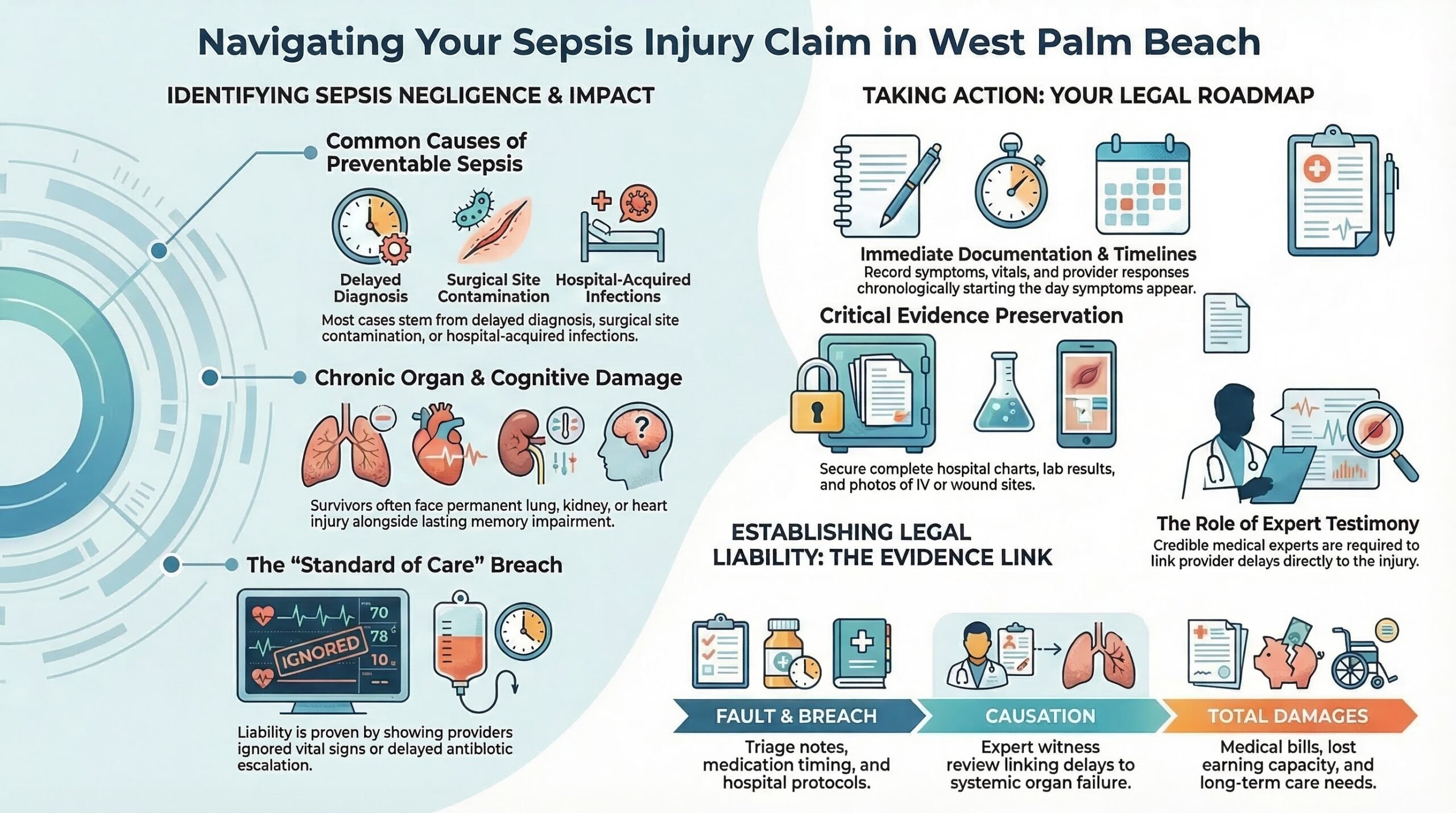
Although sepsis can progress rapidly and leave little time to correct earlier mistakes in care, you still may have a strong legal claim if a provider failed to recognize symptoms, order appropriate tests, or begin timely treatment.
You can turn that concern into purposeful action that protects your family and helps prevent similar harm to others.
You’ll receive a focused case review, and we’ll gather essential records, including emergency, inpatient, and laboratory documentation.
You’ll have support identifying where delays occurred, which providers were responsible, and how the breach affected the outcome.
You’ll also get clear guidance on damages, deadlines, and the steps required before filing.
To make the process accessible, we offer Multilingual consultations and Virtual meetings, so you can participate without added strain.
Throughout, you’ll receive timely updates, careful preparation for any statements, and a strategy designed to pursue fair resolution while honoring your service-minded values.


Understanding West Palm Beach Sepsis Injury Cases
Sepsis claims in West Palm Beach often center on what happened in the hours before a patient rapidly declined, and whether timely, reasonable care would’ve changed the course.
You’ll typically review triage notes, critical signs, lab results, medication timing, and escalation decisions to determine if care met accepted standards.
In these cases, you focus on measurable benchmarks, not hindsight, and you connect actions or omissions to the patient’s outcome.
Local Statistics can help you understand how frequently sepsis appears in emergency and inpatient settings, and why prompt recognition remains a public priority.
You also consider the human impact, because your advocacy can protect families while encouraging safer systems.
Prevention Strategies matter in evaluating what a reasonable team should have implemented, such as screening protocols, repeat assessments, and clear communication during handoffs.
When documentation is incomplete, you can still build a clear timeline through records requests and witness accounts

Common Causes of West Palm Beach Sepsis Injuries
In West Palm Beach sepsis injury cases, you’ll often see preventable medical events that allow infection to spread quickly and become life-threatening.
You may face hospital-acquired infections, surgical site complications, or delayed diagnosis and treatment, each of which can turn a manageable condition into sepsis.
You should also watch for untreated skin and wound infections, because when care is missed or postponed, bacteria can enter the bloodstream and escalate rapidly.
Hospital-Acquired Infections
When a hospital fails to control infection risks, you can develop a serious illness from germs introduced during routine care.
You may face bloodstream infections from contaminated IV lines, pneumonia from ventilator exposure, or urinary infections linked to catheters, each of which can escalate quickly into sepsis if staff miss early warning signs.
You can help protect vulnerable patients by understanding how prevention breaks down, including sterilization lapses, equipment handling issues, inadequate hand hygiene, and delayed isolation of contagious cases.
You’re also affected when antibiotic stewardship is ignored, because overuse can fuel resistant organisms that are harder to treat and more likely to spread across units.
If you suspect a hospital-acquired infection contributed to sepsis, document symptoms, request cultures, and seek prompt medical and legal guidance.
Surgical Site Complications
Hospital-acquired infections don’t only stem from IV lines, ventilators, or catheters; they also start in the operating room and can worsen quickly after surgery.
When your incision is contaminated, bacteria can seed deeper tissue, enter the bloodstream, and trigger sepsis. You reduce risk by insisting on proper sterile technique, timely dressing changes, and clear wound-care instructions before discharge.
You should also watch for drainage, spreading redness, or increasing pain, especially when anesthesia complications limit early mobility and breathing, which can strain recovery.
Effective scar management matters because poor closure or tension can reopen tissue and invite infection. If you serve others, protect your capacity to help by taking wound care seriously.
| Risk factor | What you see | What you can do |
|---|---|---|
| Poor closure | Gapping | Support incision |
| Contamination | Drainage | Keep clean |
| Hematoma | Swelling | Elevate area |
| Necrosis | Dark skin | Offload pressure |
Delayed Diagnosis And Treatment
Although sepsis can develop rapidly, delayed diagnosis and treatment remain one of the most common and preventable causes of serious sepsis injuries in West Palm Beach.
When you serve patients, you rely on timely recognition of infection, accurate triage, and prompt escalation of care, yet missed warning signs can allow organ damage to progress quickly.
Diagnostic errors often occur when symptoms resemble dehydration, influenza, medication reactions, or post-procedure fatigue, and when clinicians don’t reassess after initial tests.
Atypical presentations, especially in older adults or immunocompromised patients, can mask fever and produce subtle confusion, low blood pressure, or rapid breathing.
You can reduce harm by documenting changes, requesting repeat vitals, and urging immediate cultures, antibiotics, and fluids when sepsis is suspected.
Untreated Skin And Wound Infections
Because skin and wound infections can look minor at first, they often go untreated until bacteria spread beyond the local tissue and trigger sepsis.
If you serve others, you may ignore your own cuts, burns, or surgical sites, yet delayed care allows bacterial colonization to deepen and enter the bloodstream.
You should cleanse promptly, use topical antiseptics as directed, and seek evaluation when redness expands, drainage worsens, or fever appears.
When care falls below standard, accountability can protect future patients and families.
| What you may notice | What it can mean |
|---|---|
| Warmth and swelling | Rapidly advancing infection |
| Pus or foul odor | Aggressive bacterial growth |
| Spreading red streaks | Lymphatic spread toward blood |
| Confusion or fast breathing | Possible sepsis onset |
Legal Rights of West Palm Beach Sepsis Injury Victims
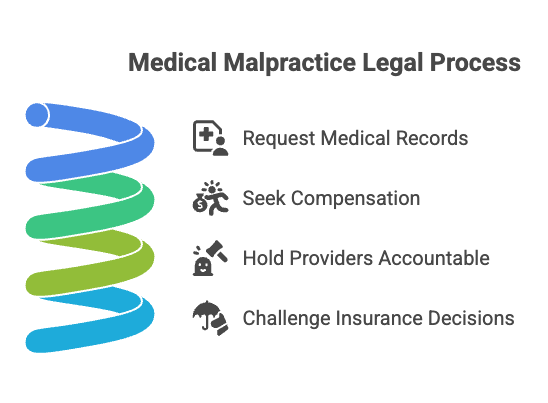
- You can request and review complete medical records to identify delays, missed warning signs, or improper infection control.
- You can seek compensation for medical costs, lost income, reduced earning capacity, and pain, including future care needs tied to sepsis complications.
- You can hold providers and facilities to professional standards through malpractice claims, settlement negotiations, and, when necessary, trial.
- You can challenge adverse insurance or billing decisions through established Appeal Options, preserving resources for recovery and family stability.
Steps to Take After a West Palm Beach Sepsis Injury
After a West Palm Beach sepsis injury, you must seek immediate medical care because prompt treatment can limit complications and clarify the severity of your condition.
You should document your symptoms and create a clear timeline of when they began, what care you received, and how your condition progressed.
You’ll also want to preserve all records and evidence, including hospital discharge papers, lab results, prescriptions, bills, and any communications with providers.
Seek Immediate Medical Care
While the shock of a sepsis injury can make it tempting to wait and see if symptoms improve, you should seek immediate medical care without delay. Call 911 or go to the nearest emergency department, and tell staff you’re concerned about sepsis so they can activate Emergency Response protocols.
Ask for Immediate Triage, because early evaluation and treatment can limit organ damage and reduce the risk of long-term complications.
If you’re supporting a loved one, stay present, communicate clearly, and help them get seen quickly without minimizing warning signs.
Follow discharge or transfer instructions precisely, including recommended follow-up or return precautions. Prompt care protects your health and preserves your capacity to serve others, at home, at work, and in your community.
Document Symptoms And Timeline
Documenting your symptoms and building a clear timeline can strengthen both your medical care and any later legal claim tied to a West Palm Beach sepsis injury.
Start the same day you notice fever, confusion, rapid breathing, or worsening pain, and record what happened in time order. Note when symptoms began, how they changed, and what you did in response, including calls for help, urgent care visits, and medication taken.
Use digital journaling to capture dates, times, and short descriptions, and add voice memos when writing feels difficult.
Track temperature readings, blood pressure if available, and any functional limits such as fatigue, dizziness, or inability to work. Share your timeline with your care team, so they can adjust treatment and better serve your recovery goals.
Preserve Records And Evidence
Because sepsis cases can turn on what was known, when it was known, and how providers responded, you should preserve records and physical evidence as soon as you’re able.
Request complete hospital and EMS charts, lab reports, medication administration records, imaging, discharge instructions, and all follow-up notes.
Keep copies of bills, insurance letters, and any written guidance you received.
Take photos of wounds, IV sites, devices, and medications, and note dates, times, and who provided them.
Use evidence labeling on every item and image so nothing becomes confused later.
Create digital backups in two secure locations, such as encrypted cloud storage and an external drive.
Don’t alter documents, and don’t discard containers or packaging, even if they seem routine.
How a West Palm Beach Sepsis Lawyer Can Help You
How do you protect your rights after sepsis turns a medical visit into a life-altering crisis?
You start by putting an experienced West Palm Beach sepsis lawyer between you and the institutions that may minimize what happened.
Your lawyer keeps the focus on accountability, so you can continue caring for your family, patients, or community without carrying the legal burden alone.
- You’ll get a prompt case review, including records analysis, timelines, and identification of potential breaches in care.
- You’ll receive fee transparency, with clear terms, written expectations, and no surprises throughout the case.
- Your lawyer will manage medical coordination, secure expert review, organize follow-up documentation, and clarify causation.
- You’ll gain strong advocacy, including insurer negotiations, demand preparation, and, when needed, litigation that protects your voice.
Long-Term Effects of West Palm Beach Sepsis Injuries
After a sepsis injury in West Palm Beach, you may face chronic organ damage that limits stamina and requires ongoing medical management.
You can also experience neurological and cognitive impairments, including changes in memory, attention, and mood that affect work and daily decisions.
As you recover, you’ll often need long-term rehabilitation services, structured therapy plans, and periodic reassessment to track progress and prevent setbacks.
Chronic Organ Damage
Although sepsis treatment may stop the immediate infection, it can still leave you with chronic organ damage that alters your health for years.
You may face reduced lung capacity, scarring, or Pulmonary Hypertension that limits stamina and complicates everyday service to others.
Your kidneys can lose filtering strength, forcing strict monitoring, medication changes, and frequent medical visits.
You can also develop lasting liver injury, including Liver Cirrhosis, which affects digestion, energy, and how your body processes medications.
Cardiac strain and vascular damage may persist, raising your risk of fatigue, swelling, and shortness of breath during routine tasks.
If this harm resulted from delayed diagnosis or improper care, you shouldn’t carry the burden alone.
Document symptoms, follow clinicians closely, and preserve records so you can pursue accountability and secure resources for ongoing treatment.
Neurological And Cognitive Impairments
When sepsis disrupts oxygen delivery and triggers widespread inflammation, it can also injure your brain and nervous system in ways that don’t resolve once the infection clears.
You may notice slowed thinking, persistent confusion, or memory gaps that interfere with daily responsibilities and your ability to care for others.
Many survivors experience executive dysfunction, making planning, prioritizing, and managing time unusually difficult.
You might also face language impairment, including word-finding problems, reduced comprehension, or trouble following conversations, which can strain relationships and service-oriented work.
Sleep disruption, headaches, dizziness, and heightened sensitivity to noise or light may compound these challenges.
Because these deficits can fluctuate, you may appear “fine” at times, yet still struggle with consistency, safety, and sound judgment under pressure.
Long-Term Rehabilitation Needs
Because sepsis can leave you deconditioned, weak, and vulnerable to relapse, long-term rehabilitation often becomes a necessary part of recovery rather than an optional add-on.
You may need structured physical and occupational therapy to rebuild endurance, restore balance, and safely relearn daily tasks.
If pain, fatigue, or shortness of breath persists, you’ll likely follow a paced program that protects your heart and lungs while steadily increasing activity.
You also serve others best when you plan for stability at home. Practical home modifications, such as grab bars, ramps, and safer bathing setups, can reduce fall risk and conserve energy.
Reliable caregiver support helps you manage medications, nutrition, appointments, and warning signs of reinfection, so you can focus on recovery and return to meaningful service.
Proving Liability in West Palm Beach Sepsis Car Accident Injury Cases
Establishing liability in a West Palm Beach sepsis car accident case requires a disciplined approach that links the crash to the infection and the resulting harm.
You’ll show the other driver breached a duty of care, then connect that breach to traumatic injuries, delayed treatment, or wound contamination that allowed sepsis to develop.
Use Traffic Reconstruction to document speed, impact angles, and right-of-way violations, and align those findings with EMS and hospital timelines.
| Proof Focus | How You Support It |
|---|---|
| Fault for the crash | Police reports, Traffic Reconstruction, video, witnesses |
| Medical causation to sepsis | Records, cultures, timeline, treating notes, Expert Witnesses |
| Avoidable breaks in care | Dispatch logs, ER triage data, follow-up instructions |
You serve others best by preserving evidence early, requesting complete records, and insisting on clear, chronological narratives. When facts stay organized, liability becomes measurable, and accountability follows through credible testimony and consistent documentation.
Compensation for West Palm Beach Sepsis Damages
Accountability shapes the compensation you can pursue for sepsis damages in a West Palm Beach car accident case.
You can seek recovery for emergency care, hospitalization, ICU treatment, infectious disease consults, rehabilitation, medications, and future monitoring when organ injury creates ongoing needs.
Recover damages for ER care, hospitalization, ICU treatment, infectious disease consults, rehab, medications, and ongoing monitoring after organ injury.
You can also pursue lost income, reduced earning capacity, and necessary household services, so your family can keep serving others without sacrificing stability.
You may recover for pain, disability, and diminished quality of life, especially when sepsis causes fatigue, cognitive changes, or amputations.
Your claim’s value often depends on clear medical proof linking the crash injuries to infection and systemic decline, with detailed billing and timelines.
Insurance coverage limits, policy exclusions, and comparative fault arguments can affect what’s available, so you’ll want a plan that addresses each barrier.
Medical liens from health insurers or providers may attach to settlements, and you should negotiate them to protect your net recovery.
The Statute of Limitations for West Palm Beach Sepsis Injury Cases
Even if your sepsis symptoms emerged days or weeks after a West Palm Beach crash, Florida’s statute of limitations still imposes a firm deadline for filing a personal injury lawsuit.
In most negligence cases, you generally have a limited time from the date of injury to begin formal legal action, and waiting can risk losing the right to seek accountability through the courts.
Because sepsis may develop as an infection progresses, documenting symptom onset, treatment dates, and causation evidence early helps you care for your family and protect others from preventable harm.
In certain situations, the discovery rule may affect when the clock starts, particularly if you couldn’t reasonably know that sepsis resulted from the underlying incident.
Florida law also recognizes tolling exceptions, such as when a responsible party can’t be located or a claimant is legally disabled. You should verify the applicable deadline promptly, since missed dates can end a case regardless of validity.
Why You Need an Experienced West Palm Beach Sepsis Lawyer
Meeting Florida’s filing deadline is only one part of protecting your rights after a sepsis injury, because these cases often rise or fall on fast, disciplined evidence work.
You need counsel who can secure records, timelines, and witness statements before details fade, then connect clinical decisions to the harm you now carry.
An experienced West Palm Beach sepsis lawyer brings Local Knowledge that strengthens your claim, including how area hospitals document care, which experts are credible, and what juries expect from clear accountability.
You’ll also benefit from Trial Experience, because insurers and providers evaluate risk differently when they know your attorney can present the story with precision in court.
Your lawyer can frame damages in a way that reflects the full impact on your ability to serve your family, workplace, and community.
With steady guidance, you can pursue justice while staying focused on recovery and helping others.
How to Choose the Right West Palm Beach Sepsis Lawyer for Your Case
How do you separate a capable advocate from a risky choice when your sepsis case may hinge on subtle clinical timing and documentation?
You start by confirming the lawyer’s focused experience in hospital negligence, sepsis screening, and rapid-response standards, then you test how clearly the lawyer explains causation and damages.
Ask for a plan that honors your goal of protecting future patients, not just winning a settlement. Use targeted Consultation Questions to gauge preparation, responsiveness, and respect for your family’s priorities.
| What You Check | What It Tells You |
|---|---|
| Case focus | Sepsis knowledge is current |
| Record review process | They’ll act quickly and thoroughly |
| Expert network | They can prove breach and timing |
| Communication cadence | You’ll stay informed and steady |
| Fee Structures | Costs are transparent and fair |
You should also confirm who handles day-to-day work, how deadlines get tracked, and whether you’ll receive honest risk assessments early.
About the Law Offices of Anidjar and Levine
Choosing the right sepsis lawyer means you also need to evaluate the firm behind the promise, including its resources, case management practices, and history with hospital negligence claims.
At the Law Offices of Anidjar and Levine, you can expect a team structure designed to keep your case moving, with clear communication, organized evidence collection, and consistent follow-through.
You should review the firm’s history to understand how the practice has handled complicated injury matters, including failures to diagnose or treat infections promptly.
You can also use attorney bios to confirm relevant experience, trial readiness, and commitment to client-centered service.
When you work with this firm, you’ll receive guidance that respects your desire to protect patients and promote safer care.
You’ll have help obtaining records, coordinating expert review when needed, and pursuing compensation in a way that reflects both accountability and public benefit.

Frequently Asked Questions
What Is Sepsis, and How Quickly Can It Become Life-Threatening?
Sepsis is your body’s dangerous, overwhelming response to infection, and it can become life-threatening within hours if you don’t act.
You’ll see it disrupt blood flow, trigger widespread inflammation, and progress to organ dysfunction, shock, or death.
You support others best through early recognition: watch for fever or low temperature, fast breathing, confusion, severe pain, clammy skin, or low blood pressure.
You should seek emergency care immediately.
Can I Sue if My Loved One Died From Sepsis After Hospital Discharge?
Yes, you can sue if you can show the hospital’s discharge planning or follow-up fell below the standard of care and caused your loved one’s death.
You’ll typically pursue a wrongful death claim, supported by records, discharge instructions, and expert review of sepsis warning signs.
You must act promptly because every state imposes a strict filing deadline, and delays can bar recovery and limit your ability to protect others.
Do I Need a Medical Expert to Prove Delayed Sepsis Diagnosis?
Yes, you’ll usually need a medical expert to prove a delayed sepsis diagnosis, because juries expect qualified expert testimony on the standard of care.
You must also show how the delay changed the outcome, and that requires a clear causation analysis linking missed signs, treatment timing, and harm.
If you’re pursuing accountability to protect others, retain an expert early so your claim stays focused, credible, and well supported.
Will My Prior Health Conditions Reduce My Sepsis Case Value?
Your prior health conditions can reduce your sepsis case value, but they don’t automatically control it.
You’ll need to show how the delay worsened your outcome beyond your baseline, and you can still pursue full, fair compensation.
Expect insurer tactics that blame preexisting illness and downplay preventable harm, while jury perceptions may vary based on clarity.
You should document symptoms, timelines, and functional losses, and align care needs with service.
How Are Sepsis Settlements Paid—Lump Sum or Structured Payments?
You can receive a sepsis settlement as a lump sum or through structured payments.
You’ll choose based on your needs and long-term stability.
A lump sum gives immediate access for care, debt, or mission-driven goals.
But you must plan for tax implications and budgeting.
Structured settlements use annuity options to provide predictable income, protect funds from overspending, and support ongoing treatment, rehabilitation, and family responsibilities.
—————————
If you’ve suffered a sepsis injury in West Palm Beach, you can’t afford delays or uncertainty. You should document symptoms, preserve medical records, and follow treatment instructions while you seek legal guidance.
The Law Offices of Anidjar and Levine can investigate lapses in care, consult qualified experts, calculate full damages, and pursue accountability through negotiation or litigation.
You’ll also need to act within Florida’s statute of limitations.
Whether you require a local team or a Miami Medical Malpractice Lawyer, with the right representation, you can protect your rights and strengthen your claim.

